A Fur Coat And No Knickers Station
St. Pancras station is not my favourite.
My hate affair with the station started when I wrote Could St. Pancras Thameslink Station Have Had An Island Platform?, where I first called the dreadful concoction a fur coat and no knickers station. I said this.
St. Pancras is very much a fur coat and no knickers station!
Show on top and draughty and lacking at the bottom!
I don’t take back one word of what I said.
The station is the interchange between the following lines.
- Metropolitan and Circle Lines of the Underground
- Midland Main Line to Corby, Derby, Leicester, Nottingham and Sheffield.
- Piccadilly Line of the Underground
- South-Eastern Highspeed services to Kent.
- Thameslink between Bedford and Brighton
- Victoria Line of the Underground.
So to say the least it’s complicated.
Problems For Train Operators
The three main operators of the services in the above ground station, must despair at how few platforms, they have been allocated.
If you catch a Midland Main Line train to Nottingham say, you often have to walk to the second train in the platform. If they had a couple more platforms, then this walk would be avoided and extra services like a Luton Airport Express, that I wrote about in Luton Trains Its Eye On Sub 30-Minute Express, would become possible.
It’s the same with South-Eastern Highspeed services on the other side of the station.
Eurostar is perhaps better. But, if other operators wanted to run services, is there the space to accommodate their trains and the services they require?
Endless Walking For Passengers
Problems for passengers are very much concerned with the difficulty of changing between the various lines at the station.
I’ll give exchanging between the Victoria Line and Thameslink as an example.
It’s a very long walk down a tunnel to get from the Victoria Line to St. Pancras station and then you have to descend into Thameslink.
I wonder how many trains out of St. Pancras are missed because first-time passengers, assume that the time they’d habitually allow at Waterloo, London Bridge or Euston, is totally inadequate?
Thameslink Is Not An Island Platform
Thameslink needs this so that passengers on the Bedford branch can easily walk across the platform to get the Cambridge/Peterborough branch.
But it’s all too late now to do anything.
Elizabeth Line
It is a mistake that the Elizabeth Line doesn’t call at King’s Cross St. Pancras station for Eurostar and East Coast services.
Crossrail 2
How do you fit Crossrail 2 into this mess?
What Would I Do?
I would ask a friendly earthquake to completely destroy the complex, so it is rebuilt as a properly functioning station.
My serious ideas follow.
Short Term Improvements To St. Pancras
These would mainly be concerned with handling passengers.
- Thameslink needs a link at the Southern end of the platforms to the Metropolitan Line Ticket Hall.
- The Metropolitan Line Ticket Hall is decluttered and just serves as an interchange between lines.
- Eurostar needs to educate its passengers, so they use contactless bank card ticketing or Oyster.
- Perhaps Eurostar in-train staff, should sell a suitably-valued Oyster on board.
- Less shopping and more ticket machines and staff to handle passengers from and to Eurostar.
- More escalators are needed to the Midland Main Line platforms.
I suspect all operators have their own pet projects.
A Luton/Gatwick Express
Four Thameslink trains an hour between Gatwick and Luton Airports could be dedicated as Luton/Gatwick Expresses.
- Paint them red, so passengers don’t end up in Peterborough instead of Luton.
- Use trains with tables, wi-fi and space for luggage.
- Run them between Bedford and Brighton.
- Stop at Luton, Luton Airport Parkway, St. Albans City, West Hampstead Interchange, St. Pancras, Farringdon, City Thameslink, Blackfriars, London Bridge, East Croydon, Gatwick Airport, Three Bridges and Haywards Heath or whatever travel patterns say.
This would give Luton Airport the service they desire, without needing any extra platforms in the Midland Main Line station.
Since the opening of the Luton DART, services to Luton Airport have improved.
It would be interesting to see the passenger patterns to and from the airports. Do they have a different pattern than that of commuters, so some degree of smoothing numbers, will be naturally applied?
A Heathrow Express
Four trains per hour to Heathrow via West Hampstead Interchange and Old Oak Common for HS2, would be what Heathrow and HS2 needs.
But where do you find the single platform to turn the trains at St. Pancras?
More Platforms At St. Pancras
On resource grounds alone this is essential.
Conclusion
The architects who created this mess, shouldn’t be let near a station again.
Progress On The Cowley Branch
I first wrote about the Cowley Branch in Oxford Takes A Leaf Out Of Cambridge’s Book In November 2014.
Much of my post was based on this article on the BBC, which is entitled Cowley line passenger train service planned for Oxford.
So how is the planning of the branch progressing?
In the November 2016 Edition of Modern Railways, there is an interview with Dave Penney of Chiltern Railways, as the company is opening their service to Oxford station on the twelve of December.
In Science Park Next?, this is a paragraph.
Extending services from Marylebone through Oxford’s platform 3 to Kennington Junctionfor the Cowley Branch might be trouble; the problem is coming back, with Oxford Parkway-bound services having to cross the main lines on the flat at Kennington and into constrained line capacity on the route into Oxford station Extending the down goods loop into the station would help here, but that is some way down Network Rail’s list of priorities, so an Ocford Science Park service seems unlikely to happen anytime soon.
But help might be at hand, in that a new Oxford station might be built, which I wrote about in Could This Be A Ground-Breaking Idea In Station Design?
Surely, if a new station is built, current and possible future services will be taken into account, in the design.
I have no idea if the Cowley Branch will be opened to passenger trains.
I do think that there could be good reasons to create this service.
- Oxford Science Park, Oxford Business Park, Oxford United Stadium and the Mini Factory would gain a passenger rail link.
- Extending Along The Cowley Branch may make operation easier.
- It fits well with the East West Rail Link
- It would greatly increase Chiltern’s catchment area in Oxford.
But, I don’t think we’ll see any progress until planning and building of the new Oxford station has started.
This is Google Map shows the route of the Cowley Branch.
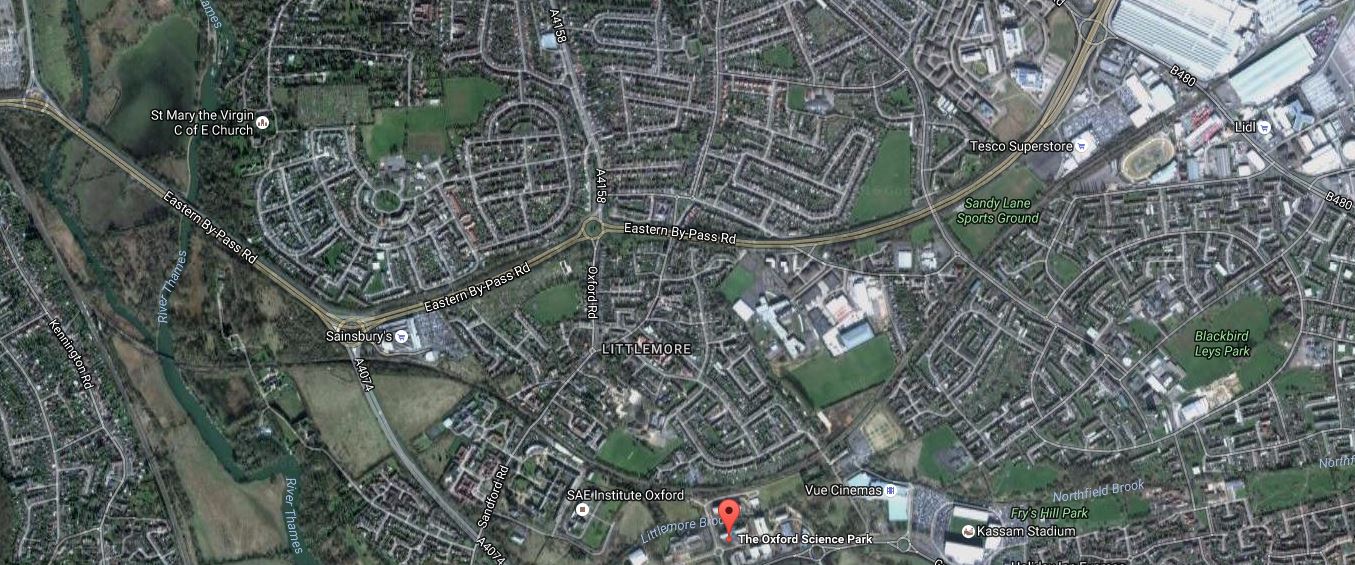
Kennington Junction is where the branch leaves the Oxford to Didcot Line and then curves across the South of the City to the Mini Factory, which is the massive set of light-coloured buildings in the North-East corner of the map.
The Oxford Science Park is indicated by the red arrow, with the stadium to its East.
Can All Bi-Mode Trains And Locomotives Do This?
The November 2016 Edition of Modern Railways has an article about the new Class 88 locomotive.
It is an electro-diesel locomotive, than can run on both overhead electric power or its own onboard diesel engine.
This is said.
The loco can transition from electric to diesel power on the move, dropping the pantograph without losing speed.
That must make operation very flexible.
I wonder if all bi-mode trains and locomotives can do this!
Will The Third Runway At Heathrow Be Actually Built In The Near Future?
If nothing else the 25th ofSeptember 2026 statement by the Government, stated that the UK is going to build another runway in the South-East.
But I have my doubts, that a third runway will be open at Heathrow in the near future.
Building The Third Runway
As I said in Building The Third Runway At Heathrow, I don’t believe that the actual construction of the Airport would present any problems for any large construction company or more likely consortium. This is illustrated today, by this article on the BBC, which is entitled New Heathrow runway may be built above the M25, which says to me that engineers are looking for easier and more affordable ways to build the new runway.
Rebuilding The Current Terminals
Heathrow are also disclosing a master-plan, for rebuilding a lot of the airport to make it more efficient and up with the best.
- There will be two main terminals; Heathrow West and Heathrow East with satellites in between handling the actual planes.
- These two terminals and the satellites will be between the two existing runways, with a passenger and baggage transport system beneath.
- Terminal Five will become Heathrow West.
- An extended Terminal Two will become Heathrow East.
- Crossrail, Heathrow Express and the Underground will serve both main terminals.
- A Terminal Six would be mainly for the third runway, would effectively be part of Heathrow West.
I believe that this rebuilding could start well before the third runway is even given the go-ahead, as many of the works will be within the current Airport boundary.
Rail Links To The Airport
Part of the master-plan is extensive rail links to the Airport.
- Crossrail, Heathrow Express and the Underground will serve London.
- There will be rail links to both the West and South.
- There will be a rail link to both HS1 and HS2.
- Could we even see a rail-based cargo transport system running under all the terminals, bringing in supplies for the terminals and the planes?
This map from carto.metro.free.fr shows the current rail links at Heathrow.
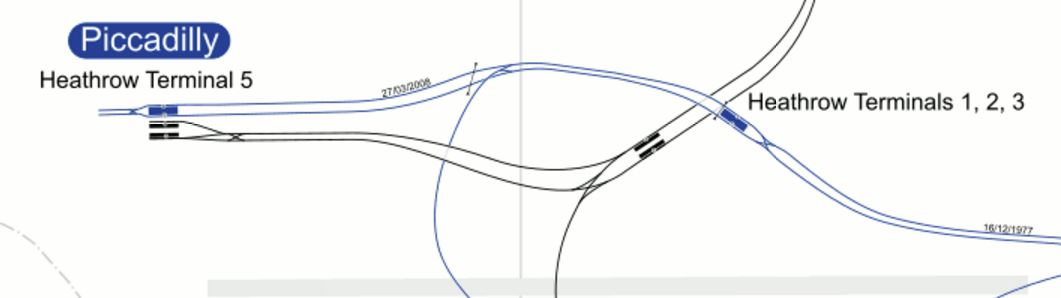
Rail Lines At Heathrow
Note.
- The Piccadilly Line is shown in blue.
- The lines going South lead to Terminal Four.
- Crossrail has Terminal Four as its terminus
- The Heathrow West and Heathrow East concept fits the rail lines well.
- Terminal Five station is ready for access from the West.
I think just as Gatwick are embracing rail with a vengeance, rail can be a major force in the development of Heathrow.
We could even be seeing the current rail line through Terminals Two and Five becoming a high-capacity rail line connecting all the terminals to the West, East and South.
A Greener Airport
If as many of the traffic movements in and around the airport could be moved from polluting road transport to electric trains, Heathrow’s pollution footprint could be reduced.
As an example, you could envisage a factory in a low cost area by a rail line to the West of Heathrow creating airline meals. These would be packaged by flight number and then taken by electric cargo train direct to the appropriate terminal or satellite, ready for loading onto the plane.
Could we even see an airport, where very few trucks and service vehicles, use the runways and aprons? You certainly see a lot less vehicles on an airport, than you did decades ago.
I found this page on the Heathrow web site, which is entitled Our Vehicle Fleet Is Making The Switch.
This is a paragraph.
850 vehicles in the airside fleet at Heathrow are electric, making it one of the largest fleets of electric airside vehicles in Europe. As well as electric tugs that move baggage around the airfield, we use electric cars and vans to transport our people. We are trialling electric specialist ground support vehicles such as belt loaders, cargo loaders and push back tractors.
I was surprised to see pushback tractors mentioned, as some weigh up to fifty tonnes. But according to the Wikipedia entry for pushback, there are interesting developments in this field. This is said about robotic push back tractors.
The Lahav Division of Israel Aerospace Industries has developed a semi-robotic towbarless tractor it calls Taxibot that can tow an aircraft from the terminal gate to the take-off point (taxi-out phase) and return it to the gate after landing (taxi-in phase). The Taxibot eliminates the use of airplane engines during taxi-in and until immediately prior to take-off during taxi-out potentially saving airlines billions of dollars in fuel that is used. The Taxibot is controlled by the pilot from the cockpit using the regular pilot controls.
Even as a trained Control Engineer and a private pilot with over a thousand hours in command, I can’t help but wonder at the concept.
As a final thought, surely if all unnecessary vehicles could be removed from air-side, this must improve safety and security.
What too, would low or even zero carbon operations, do for the image of the airport?
Travelling To The Airport
One consequence of the rebuilding of the terminals with rail links to both London and the West, will be a reduction in the number of travellers, who drive or are driven to to the airport.
In the London Olympics every event ticket came with a London Travelcard, so that you used public transport. Could we see public transport tickets bundled in with air tickets to cut the need for vehicles to drive to and from the airport?
I certainly think, that we’ll see rail-connected parking to the airport, just because land close to an airport is so expensive.
Local Transport To The Airport
I suspect that a lot of journeys to and from the airport are quite local, as they concern local residents, employees or travellers perhaps spending a night after or before a flight close to the airport.
These journeys have not been forgotten in the master-plan, as it talks of improving bus services.
But the most interesting development is the ULTra PRT system, I talked about in A Visit To Heathrow Terminal 5.
A Heathrow-wide system has been proposed. This is said in Wikipedia.
In May 2013 Heathrow Airport Limited announced as part of its draft five year (2014-2019) master plan that it intended to use the PRT system to connect terminal 2 and terminal 3 to their respective business carparks. The proposal was not included in the final plan due to spending priority given to other capital projects and has been deferred.
There have been suggestions that they will extend the service throughout the airport and to nearby hotels using 400 pods.
The system at Heathrow may not be built, but expect something like it at an airport near you.
Imagine turning up in a convenient car park or train station, with family and baggage, ready to travel on holiday. You scan your pre-printed boarding pass or click one on your phone and a pod arrives, which takes you to the satellite your flight will use.
As they travelled, passengers could scan passports and they would be given up-to-date flight information.
Flying is a total pain, best summed up by the old pilot’s moto.
Time to spare, go by air!
A decent system to bring people to the airport, could make flying more of a pleasure.
Integration With Thameslink
I believe that it would be possible to have a direct Thameslink connection into Heathrow using the |Dudding Hill Line to link to Crossrail.
In Could Thameslink Connect To Heathrow?, I show how it would be possible to create a four tph service between Heathrow and Thameslink.
This could create an easy link to and from Gatwick and Luton Airports and Kings Cross, St. Pancras and London Bridge stations.
Integration With HS2
I’m taking this first, as it’s probably easier than linking to HS1
When Phase 2 of HS2 opens, services Northward from Old Oak Common station are proposed to be.
- Birmingham – 3 tph
- Edinburgh – 2 tph
- Glasgow – 2 tph
- Leeds – 3 tph
- Liverpool – 2 tph
- Manchester – 3 tph
- Newcastle – 2 tph
- Preston – 1 tph
- Sheffield – 2 tph
- York – 1 tph
I estimate that Heathrow to Old Oak Common will be about 20 minutes by Crossrail and Heathrow Express.
As changing planes at Heathrow, according to the Airport takes between 75 and 90 minutes, using HS2 would be competitive.
,Especially if the interchange at Old oak Common was well-designed.
Leeds will be about ninety minutes from Old Oak Common. so if the interchange timings are right, a passenger could be in the centre of Leeds around two hours after coming through Arrivals at Heathrow. A chauffeur-driven Ferrari couldn’t do that legally.
Integration With HS1
This is more difficult, as neither Crossrail nor Heathrow Express serves St. Pancras.
There are a choice of routes.
- Crossrail to Farringdon and then Thameslink or the Metropolitan Line to Kings Cross St. Pancras.
- Heathrow Express to Paddington and then a taxi.
- Heathrow Express to Paddington and then the Metropolitan Line
- Piccadilly Line to Kings Cross St. Pancras.
Interchange could have been designed to be a lot better.
I seem to remember that original plans for the Heathrow Express envisaged St. Pancras as a second London terminal, using the Dudding Hill Line.
But this route is probably impossible owing to there not being enough platforms at St. Pancras, which is A Fur Coat And No Knickers Station.
As there are other operators, who need extra platform space at St. Pancras, perhaps a couple of extra platforms could be built.
But I doubt it!
If Heathrow were to be linked to Thameslink, as I indicated earlier, this would solve the problem.
Terminals And The Third Runway
Extra terminal capacity, will be able to handle more passengers, but will the runways be able to handle the extra planes?
I suspect there are various strategies, that will keep the number of flights within the capacity of a two-runway airport.
- Larger aircraft with more capacity, will make better use of slots. 737s and A320s are carrying more passengers.
- Quieter aircraft, linked to better air traffic control, might givenoise and capacity advantages. Thuis page on the Heathrow web site, is entitled Steeper approach trial report.
- Reorganisation of air cargo to release slots.
- Use of Crossrail and/or Heathrow Express to connect to HS1 and HS2.
The more Heathrow use their intelligence, the further into the future the date for the third runway will recede.
Looking At The Cash Flow
Obviously, I don’t have any figures, but sorting out the terminals early and creating extra passenger capacity, may give Heathrow better cash flow to generate the vast sums needed to build the completely new Terminal Six and the third runway.
I’d love to see their full cash flow, but I suspect that the third runway, will only be needed when to expand the traffic, they need m the slots it will deliver.
The early costs would and could be.
- Fighting the protestors and the politicians.
- Obtaining Planning Permission.
- Buying up the private .properties in the way.
- Rolling out an anti-pollution philosophy.
- Creating Heathrow West (Terminal Five) and Heathrow East (An Extended Terminal Two)
- Extending the rail network.
- Professional fees.
Perhaps by the early 2020s, they would have a strong cash flow and ownership of all the land they might need.
Then at an appropriate time, they would build the new runway and any terminals needed, in the space they had acquired.
As today’s article on the BBC indicated, they wouldn’t even have to build a tunnel for the M25.
It would hopefully be a large, but reasonable straightforward construction operation.
The Opposition Is Gathering
This article in the Independent is entitled Heathrow expansion: Airlines react to Government’s airport decision.
- Stewart Wingate of Gatwick of Gatwick is quoted as being disappointed and saying he’ll read the Government’s reasons in detail.
- Dame Carolyn McCall of easyJet, said their planned move to Heathrow is contingent on the right deal.
- Willie Walsh of BA’s parent said he was pleased a decision had been made.
- Craig Kreeger of Virgin Atlantic, said: “We support expansion, provided it delivers for our customers.”
- Nick Burton of Luton Airport said that we must now focus on demand before the new runway is built in 10-15 years time.
- Charlie Cornish, chief executive of Stansted’s owner, Manchester Airports Group, said that we should make the best use of the runways we’ve got.
That doesn’t sound like a vote of confidence to me.
And I haven’t included all those who will lose their homes, the environmental protesters and those like me who don’t like Heathrow’s attitude.
The statistics are also not on Heathrow’s side either, as traffic is growing fast and another runway is needed soon, with a second one perhaps ten years later, to satisfy rising demand for air travel.
So What Could Happen?
Much of this is speculation, but Nostradamus couldn’t predict this one.
- In The Planemakers’ View On The South East’s New Runway, I quoted from an article in The Times, which said that Heathrow’s hub model is superseded by the views of the planemakers, who think it’s all about point-to-point flights in appropriate aircraft.
- Gatwick could probably apply for permission for a second runway in 2019.
- Luton, Southend and Stansted Airports are ambitious and want to expand.
- Better rail services to Stansred Airport have been announced.
- Luton Airport wants a better rail service.
- Birmingham Airport gets a connection to HS2 in the mid-2020s.
- Eurostar and other companies will increasingly add rail services to Europe.
These and other factors will eat into Heathrow’s market share, thus delaying that crucial point, where the third runway needs to be built.
But that doesn’t really solve the short term problem The only way to satisfy that is to create a runway in the South-East as soon as possible.
And the only place that can be built is Gatwick.
The growth in air traffic will continue and a few years later, Heathrow will get its runway.
Luton Trains Its Eye On Sub 30-Minute Express
This was the headline on a small piece in The Times on Monday.
Luton Airport want the following from the new East Midlands Franchise.
- A dedicated fast train.
- Four trains an hour (tph) to and from St. Pancras.
- A journey time of less than thirty minutes.
The airport says it won’t need any new infrastructure, but they are planning a fast link from Luton Airport Parkway station, which I wrote about in Luton Airport Goes For Light Rail.
This is an extract from the article..
The move would add up to £110million of extra fare revenue to the government over ten years and take almost 1 million cars off the road, a study by North Star, the consultancy found.
At present there are two separate services to Luton Airport.
- Thameslink, which leaves from the low-level Thameslink platform takes 45 minutes to the airport, with a frequency of six tph.
- East Midlands Trains, which leave from the high-level platforms take around 30 minutes to the airport, with a frequency of 1-2 tph.
Note these points about the current service.
- The lack of a dedicated platform for the fast trains to the airport, must confuse occassional passengers.
- The time of sub-thirty minutes is certainly possible on East Midlands Trains.
- There is not enough platforms in the high-level station for a dedicated platform for an express Luton Airport service.
The problems are made worse by A Fur Coat And No Knickers Station at St. Pancras.
The new franchise will probably be buying new electric trains for the Midland Main Line services. These could be key to providing an express airport service to Luton Airport.
Abellio has stated that their new Flirts and Aventras for Greater Anglia, will have a very fast stop and restart time, thus enabling services like Norwich in Ninety and Ipswich in Sixty.
So we then have the possibility of similar trains on the Midland Main Line to Corby, Derby, Leicester, Nottingham and Sheffield stopping at Luton Airport Parkway, without adding a large delay to the service. This would give Luton Airport, the following express services.
- At least four tph to and from St. Pancras in under thirty ,minutes.
- At least two tph to and from Derby, Nottingham and Sheffield.
- At least three tph to and from Leicester.
The only complaints would come from East Midlands Airport.
As there will be at least eight tph on Thameslink, this should be enough trains for everyone.
The Future Of The Watford DC Line
Primrose Hill Station
I was looking at the tracks through Camden on carto.metro.free.fr, as I wanted to see how the former Primrose Hill station fitted into the knitting.

Lines Through Camden
Note the two orange tracks of the Watford DC Line from Euston curving to the West around the carriage sidings.
The line through Primrose Hill station from Camden Road is a connection that allows freight trains to go between the North London Line and the West Coast Main Line.
One of the plans for the area, is to reopen the station. This is said in the station’s Wikipedia entry under Plans.
It has been proposed to re-open Primrose Hill station by bringing the short stretch of line between South Hampstead and Camden Road stations back into the regular passenger service by incorporating it into the London Overground network.
South Hampstead station is just off the map to the West on the Watford DC Line.
No Infrastructure Required To Open Primrose Hill Station
Obviously, the station will have to be rebuilt, but look at this page from the Journey Planner for Sunday, the 2nd of October, when I enquired how you would get between Willesden Junction and Highbury and Islington stations.
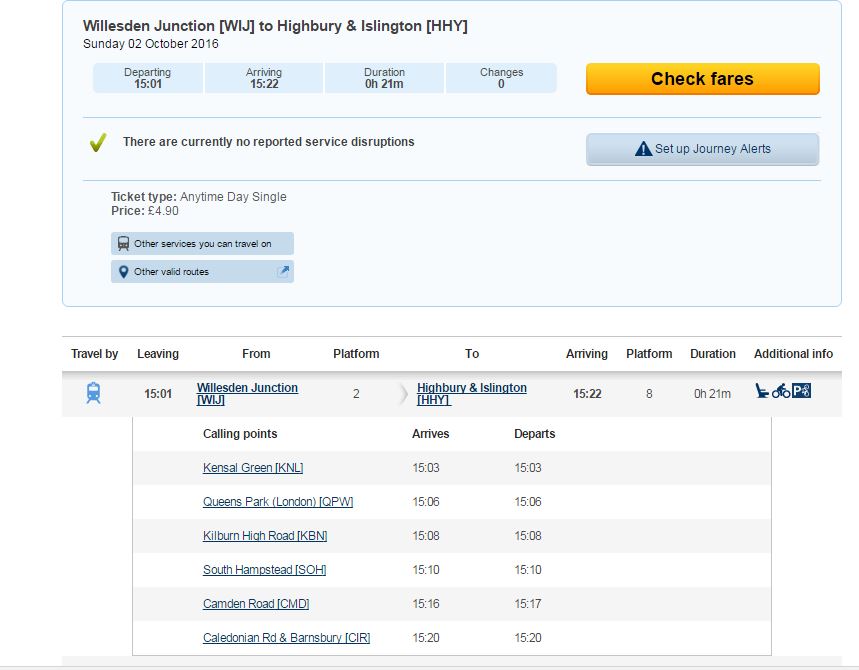
Willesden To Highbury and Islington
As the Class 378 trains can’t fly, the route via South Hampstead station must be open and available to the trains.
This sequence of pictures shows a train entering Camden Road station after coming through the site of the former Primrose Hill station.

Benefits And Disadvantages Of The Route
The current setup seems to be rather a waste of resources, with two tracks into Euston for the Watford DC Line and the need for platforms with third-rail electrification to handle the short four- and five-car trains.
Euston station is a very busy station and it would probably be glad to lose the Overground services.
So it might be a good idea to divert the three trains per hour (tph) between Watford Junction and Euston, through Primrose Hill and onto perhaps Highbury and Islington or even Stratford stations.
Others might not think so, as all those passengers along the Watford DC Line, would lose their direct connection to Euston.
But in a few years time, the following projects should have been completed or will be in progress.
- Crossrail will have opened.
- Plans for Old Oak Common station will be well advanced.
- El;ectrification of the Gospel Oak to Barking Line (GOBlin) will be complete.
- Rebuilding of Euston station for HS2 will have started.
- Capacity and station improvements at Highbury and Islington station will be known, which should give better access to the Victoria Line and the Great Northern Metro.
- The Metropolitan Line will have reached Watford Junction, by way of the Croxley Rail Link.
- The future of the Bakerloo Line will have been decided.
- West Hampstead Interchange might have been progressed.
These projects will mean that the Watford DC Line could and will have to be reorganised. If only to make sure there was enough capacity for commuters in the Peak and electric freight trains.
In my view the service on the Watford DC Line to London, should be as close to a high-capacity link running perhaps six to eight tph as is possible.
It is not as easy to achieve as many might think.
- London Midland services stop at stations on the Watford DC Line.
- The Bakerloo Line runs 6 tph on the line.
- The train size limit on the Watford DC Line is probably about six cars and might be possible to raise to say eight or ten.
- The train size limit along the North London Line is currently five-cars and all the Class 378 trains are this length.
- Six-car trains on the North London Line is probably an upper limit, although I wouldn’t be surprised to see longer platforms in my lifetime.
- There will be pressure to increase the number of freight trains on the North London Line.
- A Northern terminal for the Bakerloo Line must be provided.
- Third-rail electrification must be provided on all track shared with the Bakerloo Line.
- If possible, the route should avoid Euston, so that the HS2 rebuilding can proceed at a faster pace.
But I suspect an innovative solution will be found to provide a high capacity link between the stations on the Watford DC Line and Central London.
Crossrail
Crossrail will have a massive influence on how passengers use London’s rail network.
Plans have been talked about for extending Crossrail to the West Coast Main Line. Wikipedia says this.
Network Rail’s July 2011 London & South East Route Utilisation Strategy (RUS) recommended diverting West Coast Main Line (WCML) services from stations between London and Milton Keynes Central away from Euston, to Crossrail via Old Oak Common, to free up capacity at Euston for High Speed 2.
The previous Government rejected it as having a bad economic case
But Crossrail with its massive trains carrying fifteen hundred people a time, will strongly influence stations and routes it connects to Central London.
- At Abbey Wood, it is forcing an update to services on the North Kent Line, which could bring 6-10 tph through the Medway Towns.
- At Moorgate, it will bring passengers to an updated Great Northern Metro sending 8-10 tph to North London and South Hertfordshire.
- At Reading, it will bring passengers to updated Thames Valley and West Country services.
- At Shenfield, improvements are in progress to link Crossrail to Essex and East Anglia.
Where Crossrail will lead is an unanswerable question.
North-West from Old Oak Common, there are several stations that could be possible Crossrail termini.
- High Wycombe for Chiltern.
- Milton Keynes with its link to the East West Rail Link
- Tring, which was the original idea
- Watford Junction has been suggested before.
In the end, passenger numbers will decide where the trains go.
This map from carto.metro.free.fr shows the lines at Watford Junction station.
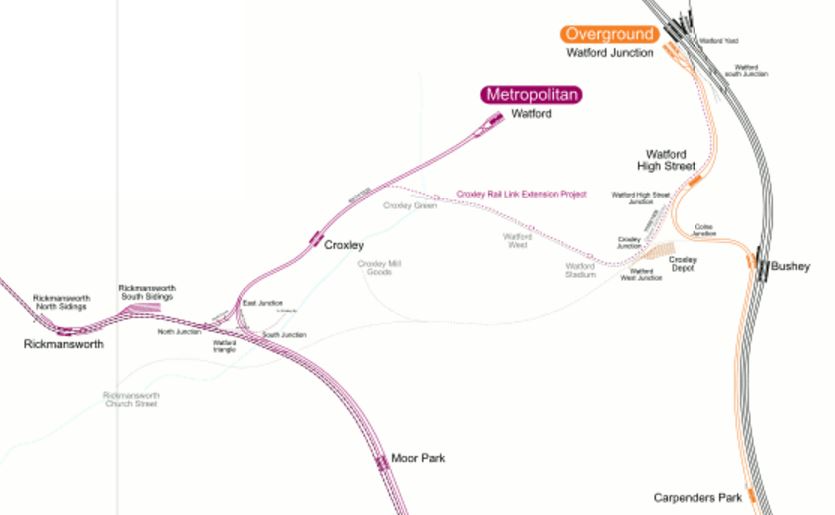
Rail Lines Around Watford
The North-South orange line is the Watford DC Line, which goes starts from Watford Junction station and goes through Watford High Street, Bushey and Carpenters Park stations.
Note the Croxley Rail Link going between Croxley and Watford Junction stations.
This short length of new line would also make possible direct services between Amersham and Watford Junction stations.
I’m not going to speculate on where trains on Crossrail and the Watford DC Line will go, but there are lots of possibilities.
I suspect that new housing developments will also be a driver of the routes of services.
The New Class 710 Trains
The Watford DC Line is going to see some some extra trains from the new fleet of Class 710 trains. If we see eight trains of the new dual-voltage fleet going to the GOBlin on a one-for-one replacement basis, that would mean a doubling of capacity on the line, that means that only six trains are left for the Watford DC Line.
But as the Watford DC line runs three tph currently in the Off Peak and the trip takes about fifty-five minutes, then perhaps those six four-car trains might be enough.
When I first read the specification for the Class 710 trains for the GOBlin, I was surprised to see that they were dual voltage. After all between Gospel Oak and Barking stations, there is precisely no third-rail lines.
But if you think about extending GOBlin services, the ability to run on third-rail lines would be needed on the following routes.
- Willesden Junction to Clapham Junction
- Willesden Junction to Richmond
- Willesden Junction to Watford Junction
- The Barking Riverside Extension to Abbey Wood.
Abbey Wood, Clapham Junction, Richmond and Watford Junction stations all have third-rail platforms.
I doubt all of these routes will be delivered, but at least by making the GOBlin trains with a dual-voltage capability, they are future-proofed for any possible services.
The Future Of The Bakerloo Line
The Bakerloo Line is a line, with spare capacity across Central London, according to many reports I’ve read.
Wikipedia has a section on the Future of the Bakerloo Line in its entry for the Watford DC Line.
This is said.
Various proposals have been made to alter services involving both extending or truncating Bakerloo Line services but there has been no basic change until 2015 other than to rolling stock and service patterns. As of 2015, plans and suggestions (from official bodies and others) connected to development of Crossrail and the Old Oak Common area have current potential consequences.
If the Bakerloo Line is extended into South London, this must have an effect.
Rumours are circulating as I write this, that this is being brought forward to 2029.
This article in New Civil Engineer is entitled £775M Paddington Cube gets green light. It says that the development by Paddington station, will be designed to enhance the area and will upgrade the Bakerloo Line station.
What Will Upgrades And Extensions To the Bakerloo Line Do To The Watford DC Line?
I suspect there’s both scope for rationalisation, increased capacity and faster services, along both lines, with the correct design.
There are other factors, that might create something special from an integrated Watford DC/Bakerloo Line.
- The Milton Keynes to East Croydon service might be increased in frequency and it might share the route.
- London Midland trains to Birmingham, Northampton and the Midlands could join the party.
- Train control and signalling is improving fast and might allow all these dissimilar services to share safely and give passengers better routes.
- Better train and station design could improve the terrible step-down and step-up access to Bakerloo Line trains at some stations.
The Watford DC/Bakerloo Line could end up as another important North South route.
- 27 tph on the Bakerloo Line.
- Same platform interchange with trains for Birmingham, Euston, Milton Keynes, Northampton and many other places.
- Quality step-free interchange to Crossrail and main line services at Paddington.
- Improved step-free access to main line services at Charing Cross, Marylebone and Waterloo stations.
- An improved interchange with the Victoria and Central Lines at Oxford Circus station.
- Interchange with Thameslink at Elephant and Castle station.
- Interchange with the East London Line at New Cross Gate station.
If all this happens by 2029, it won’t be soon enough!
The Bay Platform 2 At Willesden Junction Station
In posts like this one, entitled More Platform Action At Willesden Junction, I showed work to create a new bay platform 2 at Willesden Junction station.
On Sunday, the 2nd Of October 2016, I took these pictures of the station in use.


What are Transport for London’s plans for this platform, other than stock transfers and Rail Replacement Trains?
As they were doing on that Sunday, they could run a Willesden Junction to Stratford service via a rebuilt Primrose Hill station.
Platform Height Issues
At some stationS to get in to and out of the Bakerloo Line 1972 Stock trains, is quite a step and it would be difficult in a wheel-chair.
I have covered this in Platform Height Issues On The Watford DC Line and feel that dual-height platforms could be used.
Highbury And Islington Station
In some ways, Highbury and Islington station is the worst station in North London, as after war damage and then the addition of the Victoria, North London and East London Lines, it shows major evidence of Topsy at work.
With better connections between the deep-level Victoria Line and Great Northern Metro and the London Overground, it could be a very useful interchange. At the moment, there’s just too much walking in long underground passageways.
But as the Great Northern Metro will have new Class 717 trains giving a 10-12 tph link to Crossrail and the City at Moorgate, surely improvements at Highbury and Islington station would be worthwhile.
These services will be going through the station in a few years.
- 6 tph between Highbury and Islington and Crystal Palace – East London Line
- 4 tph between Highbury and Islington and West Croydon – East London Line
- 3+ tph between Stratford and Richmond – North London Line
- 3+ tph between Stratford and Clapham Junction – North London Line
- 10+ tph between Moorgate and Hertfordshire – Great Northern Metro
- 36 tph between Brixton and Walthamstow Central – Victoria Line
Admittedly, Crossrail will take some pressure off the station, by providing alternative routes via Moorgate and Stratford, but I can’t believe that Transport for London, aren’t looking to improve the interchange between the various lines. Especially, as with a few tweaks, Dear Old Vicky could possibly deliver forty tph or a train every ninety seconds, as opposed to the current hundred. These could include.
- A second entrance at Walthamstow Central station to provide step-free access and cope with the sheer numbers of passengers.
- A loop at Brixton, with a possible new station at Herne Hill to turn the trains at the Southern end.
- New trains with a higher performance.
- Improvements at certain busy stations like Oxford Circus, Euston and Kings Cross St. Pancras.
Other improvements like air-conditioned trains would attract passengers to the line and make greater capacity necessary.
This article on the authorative London Reconnections, which is entitled A Look At The World Class Capacity Upgrades, concludes its thoughts on the Victoria Line with this.
With the Victoria line pushing towards what must be the theoretical limit for a line with that amount of rolling stock and – more importantly – two-platform termini, there are no plans to further improve the service. Indeed the challenge of procuring more trains and finding the depot space for them would probably discourage any such plans on its own. This does not mean that the line will be forgotten, as both Oxford Circus and Walthamstow Central are on TfL’s top ten hit list of stations in need of a major capacity upgrade. Simply that the days of pushing more trains through the same stations more quickly have passed. In the case of Walthamstow Central it is highly likely that the next step will be making the station double-ended, with an entrance near or in the shopping centre.
I have a feeling that forty trains per hour will come sooner rather than later.
Oxford Circus Station
In two sections of my ramblings, Oxford Circus station has had a small mention.
An improved Oxford Circus station could benefit both the Bakerloo and Victoria Lines.
As the station is high on TfL’s list of stations for improvement, I would expect to see something planned to start here before the mid 2020s.
- Step-free access.
- Better interchange between Victoria and Bakerloo Lines in different directions.
- More space around the Central Line.
- An underground pedestrian link to Crossrail at Bond Street station.
- Extra entrance and exits to serve pedestrianised Oxford and Regent Streets.
I believe, that adding new passages, entrances, exits, lifts and escalators into the current complex can be organised in a similar way to how Bond Street station has been successfully upgraded over the last few years. Hopefully, Bank and Camden Town stations, will also be upgraded in the same way.
But Oxford Circus is the big one!
Conclusion
As I write this, the BBC is announcing that plans will be announced by Sadiq Khan today to bring the Bakerloo Line Upgrade forward to 2029.
I think that this will bring forward a lot of related work to improve the Watford DC Line and the related lines across North London.
The future is brown, with large splashes of orange!
Building The Third Runway At Heathrow
This is not concerned about the politics and protests of building the third runway at Heathrow, but about how it could be built and the options for transport to the Airport.
The Current Heathrow Airport
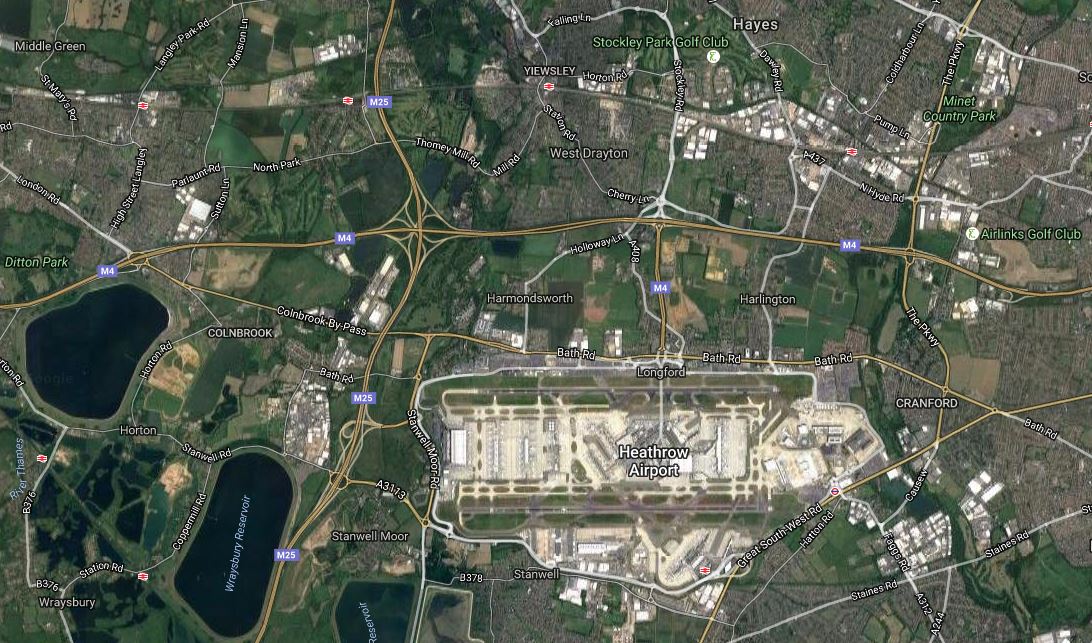
This is a Google Map of Heathrow Airport and the surrounding area.
Heathrow Airport
The Proposed Heathrow Airport
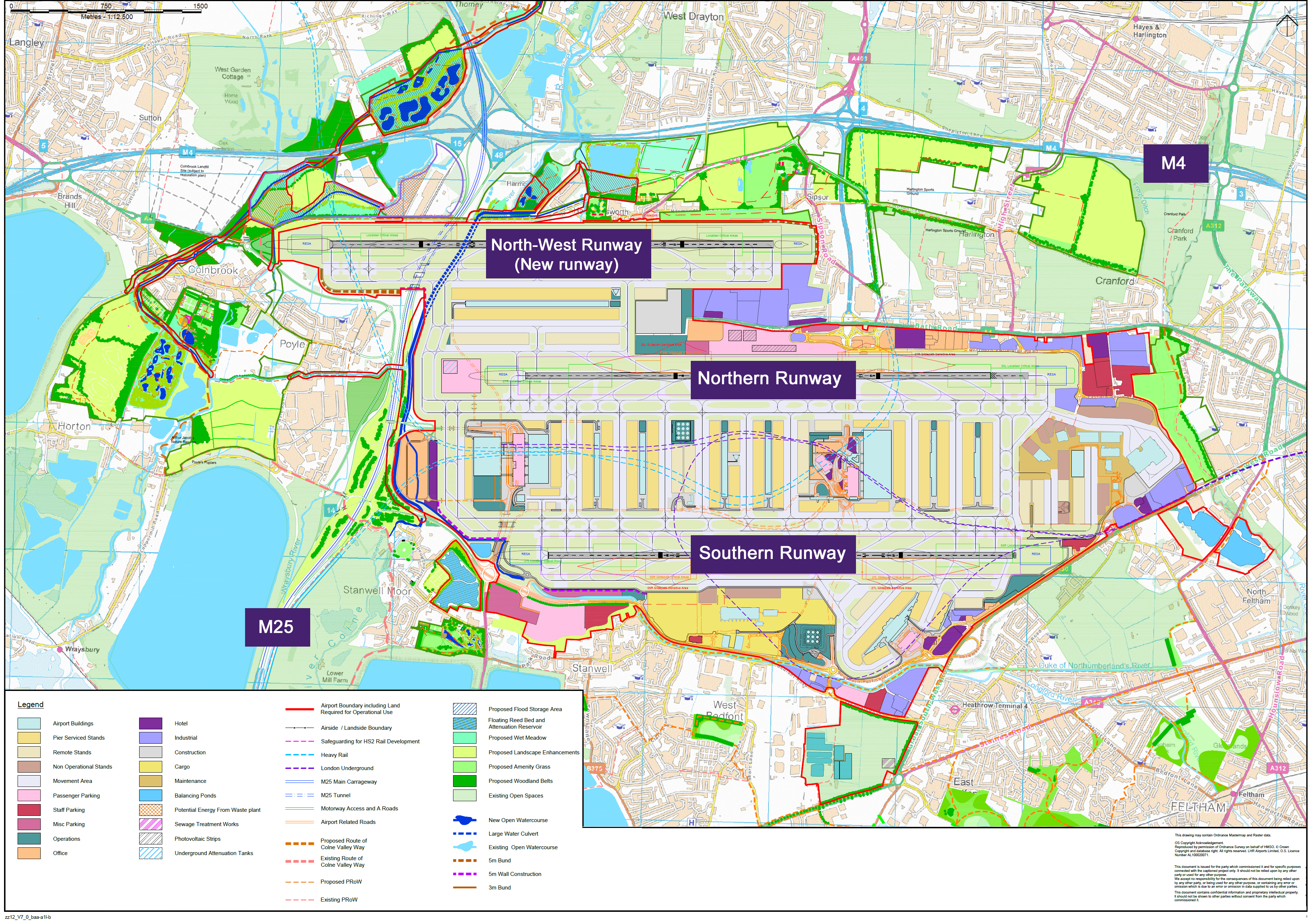
This map from the Heathrow web site, shows the position of the new runway and the expanded airport.
Heathrow Airport With Three Runways
Note.
- How the M25 is dropped into a tunnel.
- The village of Harmondsworth is no more.
- This page on the Heathrow we site gives a lot more details.
Construction
It looks to me, that the actual transformation of the Airport will be possible, as it looks like construction would just replace the housing with the new runway and associated works.
Diversion Of The M25
Cut and cover tunnels would carry the M25 under the new runway, but from the map, it looks like the motorway will only be in tunnel under the new part of the airport and for not that great a distance.
I think with careful planning, the M25 could be left functioning, whilst the tunnel and new runway are constructed, so it should be nothing like the problems of constructing Terminal 5.
Conclusion
The new runway and terminal shouldn’t be the world’s most difficult construction project.
The Heathrow Decision
Perhaps the best comment on the decision to go for the NW Runway at Heathrow, a this reasoned one from Construction News, which is headlined, Heathrow: Still ifs and buts.
That sums it all up.
This decision is still twenty years away from opening.
.But I suspect it won’t open, as there is too much opposition to the runway.
Draft Hackney Central And Surrounds Masterplan
Last week, I went to a consultation about the Draft Hackney Central And Surrounds Masterplan in the Narrow Way by HackneyCentral station.
If you want to see the full version of the masterplan it is available at www.hackney.gov.uk/spd.
About Myself
As this article will be sent to the Council Planning Department, I’ll say a little bit about myself.
- Widowed, in my seventieth year and living alone.
- I’m coeliac, which I inherited from my father.
- I always describe my politics as left-wing Tory and very radical.
- As someone, who has helped create two high class technology businesses sold for millions of pounds, I’m very entrepreneurial.
- My father and three of my grandparents were all born within the triangle based on the Angel, Dalston Junction and Highbury Corner.
- My father was the least racist person, I’ve ever met. I hope his attitude has rubbed off on me!
- My two grandfathers were of part-Jewish and part-Huguenot ancestry respectively.
- As my two grandmothers families came from Northants and Devon, I usually describe myself as a London mongrel.
- My late wife and myself partly brought our three sons up in the Barbican.
- My middle son talks of that time in a tower block with affection, so I’m not against well-designed tower blocks.
After a stroke, left me unable to drive, I returned to my roots.
My Views On The Masterplan
I like lots of things about it. And especially these!
- The prominence given to new workspace, shops and the creation of jobs.
- The creation of new housing, where I’m only against bad tower blocks.
- The opening up of the railway viaduct, so it becomes a feature. Network Rail get a lot of stick, but they know how to look after railway brickwork.
- The creation of a public square at the bottom of the Narrow Way.
- The creation of more pedestrian streets.
- Better use of the bus garage site.
- Improvement of Bohemia Place.
It wouldn’t be me, to not put in my own wish list.
The Overground
Truth be told, I don’t think Transport for London, thought the Overground would be the success, it has turned out to be. So the designers did the minimum they felt they could get away with and would satisfy their political masters!
But the London Overground’s success has been repeated in places like the Borders Railway, Electrification in Liverpool, new stations in Leeds and the Todmorden Curve, and it is now proven in the UK, that if you give the population a good train service, they’ll use it.
Now that the walkway has connected Hackney Central and Hackney Downs stations and other improvements to the complex are in the pipeline, I think that serious consideration should be given to creating a second entrance to Hackney Central from Graham Road.
Failing that, pedestrian routes should be improved, so that access to the cluster of buildings around the Town Hall and the Empire is easier.
Hackney Central As A Meeting Point
Once the public square is created at the bottom of the Narrow Way, use of the area as a meeting point should be encouraged.
Consider.
- Hackney Central is where two rail lines cross.
- The London Overground through Hackney Downs gets new trains in 2018.
- There are several bus routes passing through the area.
- Bohemia Place and the railway arches must have potential for specialist shops and cafe/restaurants like Leon.
- Leon was started by a Hackney resident.
Who said it’s all about location?
Learning From Other Cities And Towns
I travel extensively, in the UK and Europe and see both good and bad examples of how to develop cities and towns.
Recently, I went to Blackburn and I was totally surprised at the transformation since I last visited a few years ago.
A Landscaped square had been created between the station and the cathedral.The square is surrounded by a PremierInn, a new office block, a small bus station on one side and a pedestrian way to a supermarket on the other.
Hackney could do similar or even better.
Sculpture
My uncle was a very good sculptor and I feel it is a crime that works of art like large bronzes are kept in store because security and insurance is a problem.
However, there are places where they could be placed with little fear of theft or damage. And that is at carefully selected locations on the platforms of railway stations.
So why not?
Hackney Downs certainly has space for one, but the platforms at Central are too narrow!
Information
When I was on holiday in Iceland, every building with a historic connection, had full information displayed outside.
Is Hackney’s information up to scratch?
Other Thoughts
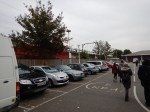
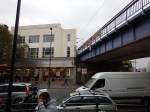
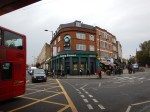
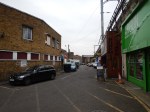
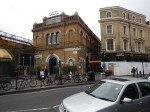
This is a series of pictures with comments.






Conclusions
Hackney Central has some interesting buildings on which to develop the area. Unfortunately, there is some bad examples of boring architecture.
Some sites definitely have potential.
- Could the top floors of the Iceland building, be converted into a Southern station entrance, with perhaps a cafe and a couple of shops that travellers like?
- Bohemia Place could be a nice oasis with cafes, workshops and individual shops, a bit like the Box Park at Shoreditch High Street station.
- Bohemia Place will be better, when the arches under the railway are opened up.
- The right architect could do a fine job on the M & S Building.
- The car park at Hackney Central station might be much better as a bus interchange.
In my view the key is Bohemia Place, as this could be a magnet for people of all ages, races and classes to come and shop and refresh themselves.
 The Anonymous Widower