Development Of Knightsbridge Station
Knightsbridge station is an important station on the Piccadilly Line.
It is unusual in that it is one of the few double-ended tube stations, with one entrance at Sloane Street by Harvey Nicholls and the other along the Brompton Road at Harrods.
I took these pictures on a Sunday morning as I walked around the station.
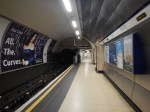

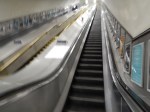




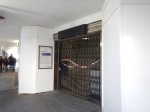








The existing building over the Sloane Street entrance is being redeveloped. Wikipedia gives these details.
The residential development of One Hyde Park opposite the station features an entrance to the station which is the diverted closed off exit. It re-opened in December 2010.
In 2017, a developer will refurbish the block above the station and close exits 3 and 4 that lead to Brompton Road and Sloane Street. When this work is complete, there will be a new entrance in Brompton Road, the two exits having been blocked permanently. The station will also feature Step Free Access available from a new entrance in Hooper’s Court, where the original station first opened, with lifts in the original lift shaft that will lead to the Piccadilly platforms.
This page on the TfL web site gives more details. This is said.
Knightsbridge Tube station will have step-free access in 2020, reached by a new entrance at Hooper’s Court.
Two new lifts will serve the Piccadilly line platforms, making the station step-free from street level to the trains.
A second new entrance will open at 15 Brompton Road in 2019, replacing the former entrance on the corner of Sloane Street and Brompton Road. The pavement on Brompton Road and Sloane Street will be widened, making more room for pedestrians.
Note that the new entrance at 15 Brompton Road will be about halfway between the corner and the LK Bennett store, which is at 39-41.
Conclusion
It looks as if Knightsbridge tube station will be very much improved.
But!
- Cutting the traffic through the area would help.
- I can’t say that I’m impressed with the new entrance to the station on the North side of Knightsbridge.
At least the entrance by Harrods, is much more in keeping with the area.
Two Units Of Adnams Beer
This picture shows eight bottles of Marks and Spencer’s 0.5% Southwold Pale Ale, which is brewed by Adnams.

Astonishingly, there are just 2 units of alcohol, which cost just £12.80 in total.
But even more astonishingly, the beer has a good taste for a low-alcohol beer.
Bond Street Station Gets A New Entrance
The new entrance to Bond Street tub station has now opened on the North side of Oxford Street.

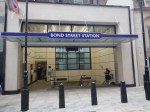
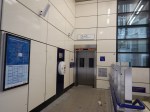
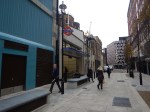
This makes it easier to enter and exit the station on the department store side of the street.
Transport for London have produced a video called Bond Street station redevelopment for 2017 – virtual tour walk-through – Tube improvements.
It illustrates several features of the enlarged station.
Steaming Along The Overground
According to this article on Ian Visits, the North London Line will have an unusual visitor on Saturday, December the 2nd.
A passenger steam train will be passing through on its way from Southend to Alton.
Useful timing are.
- 09:58 – Barking
- 10:03 – Woodgrange Park
- 10:08 – Forest Gate
- 10:14 – Stratford
- 10:26 – Canonbury
- 10:31 – Camden Road
- 10:48 – South Hampstead
- 10:54 – Kensal Green
- 11:07 – Acton Central
On December 2nd, 2012, I posted Tornado At Canonbury Station.
Boosting The Cross-Border Economy
The title of this post, is the same as this article on the BBC. It starts like this.
If they wanted a name-check in the budget, then they got it.
But there was little more detail – for the time being at least – about the growth deal for the Borderlands.
The chancellor announced the UK government would “begin negotiations” on it and work with local partners and the Scottish government.
I feel very strongly, that boosting this Borderlands could be of real value to both countries and obviously this is behind the Government’s thinking.
The article attempts to answer the questions it poses and proposes various transport upgrades.
I would do the following to the railways.
- Complete the Borders Railway to Carlisle.
- Create a rail link from Carlisle to Belfast with a bridge between Stanraer and Larne.
- Improve the Carlisle to Newcastle rail line.
- Electrify the Glasgow to Carlisle rail line via Dumfries.
- Improve operating speeds on both the West and East Coast Main Lines.
The BBC also suggests some roads for improvement.
This is an area to watch.
Northern Opens £23m Blackburn Depot As Part Of Great North Rail Project
The title of this post is the same as this article in Rail Technology Magazine. This is said.
Northern and Network Rail have spent £23m on a new train maintenance depot in Blackburn, opened by rail minister Paul Maynard last week.
The facility has been built with a range of modern equipment and will be used to maintain as many as 30 diesel trains.
In addition to the new King Street Depot, Northern will also open a new operations building opposite Blackburn station. The two facilities are part of NR’s Great North Rail Project, which is expected to invest more than £1bn in improvements by 2022.
It certainly looks like Network Rail and Northern are preparing well for more services in the North West.
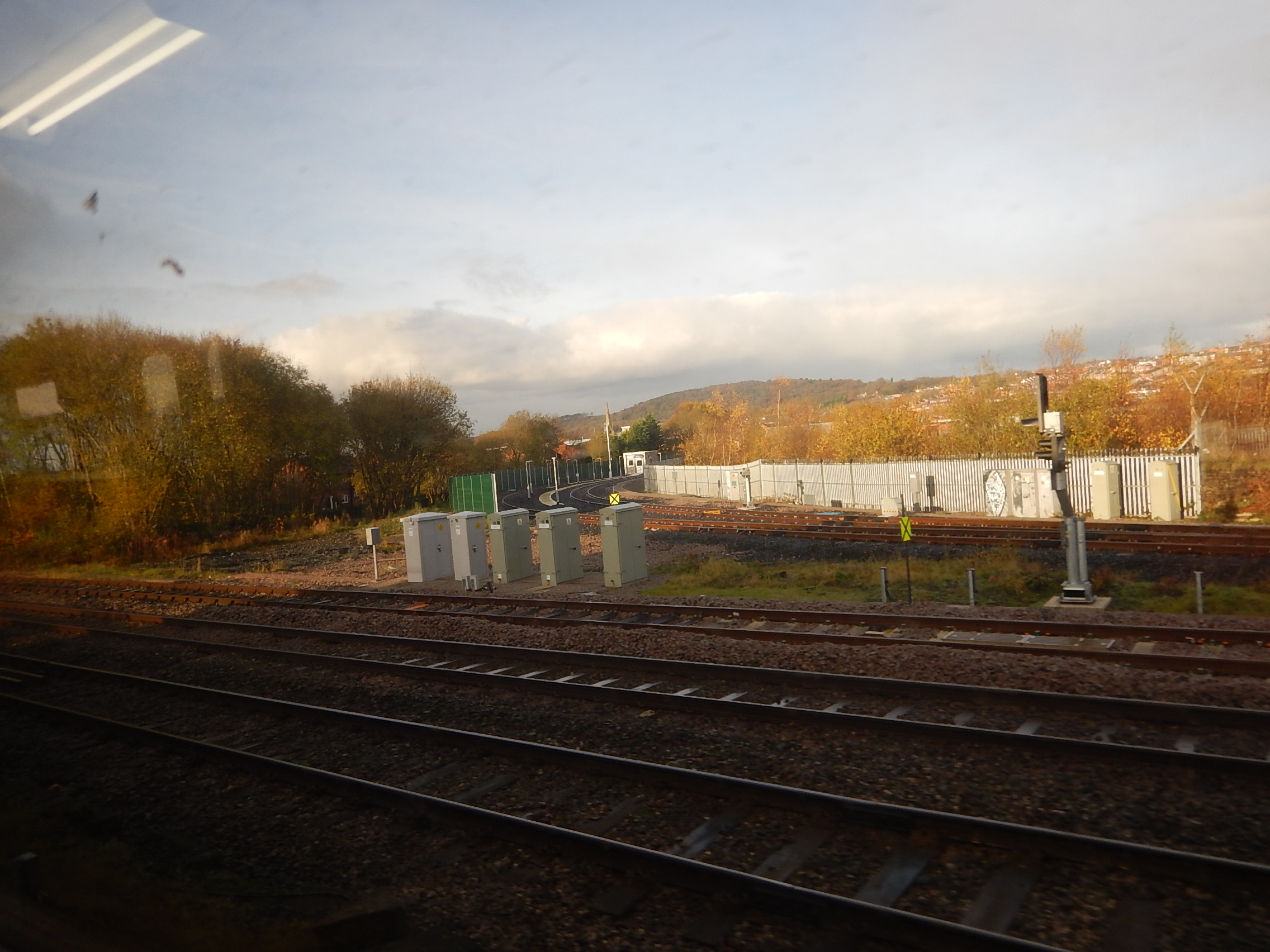
I took this picture as I passed on my way to Manchester Victoria, soon after I left Blackburn station.
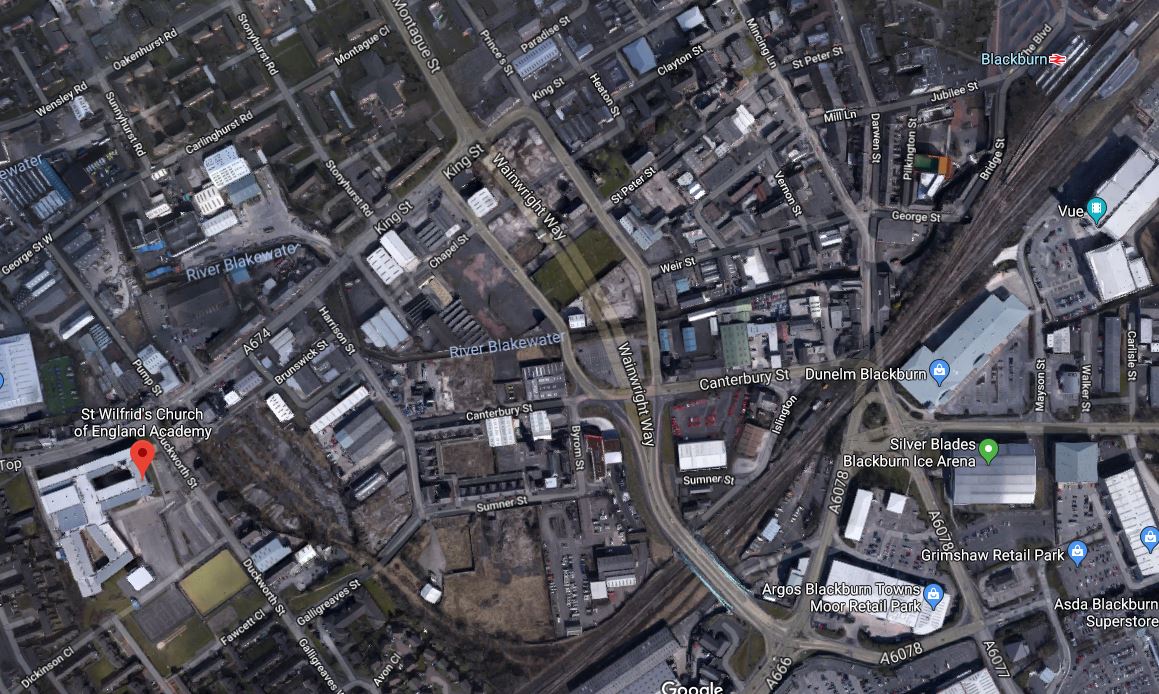
This Google Map shows the location of the depot with respect to Blackburn station.
Note.
- Blackburn station is in the North-East corner of the map.
- Burnley is to the North-East and Preston to the South West.
- The traincare depot was being built, when this map was taken and is to the right of the red arrow on the map.
From the picture, it would appear that trains have to go into and out of the depot in the Blackburn direction.
But if most trains start and finish their journeys at the station, that probably isn’t a problem.
Good points include.
- At least though the depot is probably within walking distance of the busy station and trains won’t have to go long distances to be services and refuelled.
- There would appear to be plenty of space.
- The depot is ready for Northern‘s new Class 195 diesel multiple units.
Will the depot be used to refuel thew Class 769 trains, if they work through Blackburn?
Good News For Southern Rail Users
In the December 2017 Edition of Modern Railways, there is an article entitled Thameslink Improvements – Coming In Stages.
The sarticle details how the Thameslink services will be introduced and finishes with a section entitled Southern Too, which gives a summary of complimentary changes on Southern.
Chris Gibb told Modern Railways this in an apparently chipper mood.
Whilst the Thameslink changes have caught the spotlight, changes on Southern in May 2018 are of an equally momentous nature. Next year will see the biggest change to the Southern timetable since privatisation, with operations simplified on the Metro network by minimising frequency changes and avoiding conflicts at flat junctions.
The idea is that longer, fixed formation trains will work on the same route all day with the same frequency at peak and off peak.
It certainly would cut out some of the long waits I’ve had on Southern.
I very much believe that in a station that serves say 50,000 residents, that to wait more than thirty minutes is a good reason to not go back again.
Will we see a frequency of four trains per hour, as favoured by Merseyrail and the London Overground?
The article also says that most of Chris Gibbs recommendations for Southern have been accepted!
So should we expect more changes?
- Ashford-Hastings to new Southeastern franchise
- Cambridge depot for Thameslink
- East Croydon to Milton Keynes to London Overground
- Gatwick Airport Station To Gatwick Airport
- Hoo Junction Depot
- Innovative electrification on the Uckfield Line
- Moorgate services to the Overground
- More station shelters
- Some little-used stations have too many services
- Too many off peak services
The Moorgate services have already been turned down, but that line generally needs a kick-up-the-backside and at least a good clean.
Hybrid Trains Proposed To Ease HS1 Capacity Issues
The title of this post is the same as an article in Issue 840 of Rail Magazine.
This is the first paragraph.
Battery-powered hybrid trains could be running on High Speed 1, offering a solution to capacity problems and giving the Marshlink route a direct connection to London.
Hitachi Rail Europe CEO Jack Commandeur is quoted as saying.
We see benefit for a battery hybrid train, that is being developed in Japan, so that is an option for the electrification problem.
I found this article on the Hitachi web site, which is entitled Energy-Saving Hybrid Propulsion System Using Storage–Battery Technology.
It is certainly an article worth reading.
This is an extract.
Hitachi has developed this hybrid propulsion system jointly with East Japan Railway Company (JR-East) for the application to next-generation diesel cars. Hitachi and JR-East have carried out the performance trials of the experimental vehicles with this hybrid propulsion system, which is known as NE@train.
Based on the successful results of this performance trial, Ki-Ha E200 type vehicle entered into the world’s first commercial operation of a train installed with the hybrid propulsion system in July 2007.
The trains are running on the Koumi Line in Japan. This is Wikipedia’s description of the line.
Some of the stations along the Koumi Line are among the highest in Japan, with Nobeyama Station reaching 1,345 meters above sea level. Because of the frequent stops and winding route the full 78.9 kilometre journey often takes as long as two and a half hours to traverse, however the journey is well known for its beautiful scenery.
The engineers, who chose this line for a trial of battery trains had obviously heard Barnes Wallis‘s quote.
There is no greater thrill in life than proving something is impossible and then showing how it can be done.
But then all good engineers love a challenge.
In some ways the attitude of the Japanese engineers is mirrored by those at Porterbrook and Northern, who decided that the Class 769 train, should be able to handle Northern’s stiffest line, which is the Buxton Line. But Buxton is nowhere near 1,345 metres above sea level.
The KiHa E200 train used on the Koumi Line are described like this in Wikipedia.
The KiHa E200 is a single-car hybrid diesel multiple unit (DMU) train type operated by East Japan Railway Company (JR East) on the Koumi Line in Japan. Three cars were delivered in April 2007, entering revenue service from 31 July 2007.
Note that the railway company involved is JR East, who have recently been involved in bidding for rail franchises in the UK and are often paired with Abellio.
The Wikipedia entry for the train has a section called Hybrid Operation Cycle. This is said.
On starting from standstill, energy stored in lithium-ion batteries is used to drive the motors, with the engine cut out. The engine then cuts in for further acceleration and running on gradients. When running down gradients, the motor acts as a generator, recharging the batteries. The engine is also used for braking.
I think that Hitachi can probably feel confident that they can build a train, that can handle the following.
- High Speed One on 25 KVAC overhead electrification.
- Ore to Hastings on 750 VDC third-rail electrification.
- The Marshlink Line on stored energy in lithium-ion batteries.
The Marshlink Line has a big advantage as a trial line for battery trains.
Most proposals say that services will call at Rye, which is conveniently around halfway along the part of the route without electrification.
I believe that it would be possible to put third-rail electrification in Rye station, that could be used to charge the batteries, when the train is in the station.
The power would only be switched on, when a train is stopped in the station, which should deal with any third-rail safety problems.
Effectively, the battery-powered leg would be split into two shorter ones.
OLE Changes To Boost Midland Main Line Speeds
The title of this post is the same as that of an article in Issue 840 of Rail Magazine.
Currently, the overhead line equipment (OLE) between St. Pancras and Bedford is rated at 100 mph.
But the new OLE between Bedford and Corby via Kettering is going to be built to a standard that will allow 125 mph running.
The article goes on to say that to make the best use of 125 mph bi-mode trains, the possibility of upgrading the St. Pancras to Bedford electrification to the 125 mph standard.
This must give advantages.
 The Anonymous Widower