The Right Attitude
Also in the diary in today’s copy of The Times, was this paragraph.
Gina Miller has just published a memoir and tell’s Spear’s magazine that opponents told her publisher that they were organising a mass burning of it.
This does not worry her. “It’s OK, they’ve got to buy the book first.” she says.
Never get angry with someone, who is paying you money, for which you are doing no extra physical or mental work!
Top Meerkats Like To Live Fast And Die Old
The title of this post is the same as that of an article in today’s copy of The Times.
Cambridge University researchers led by Dominic Cram, have found that the Alpha Male meerkats get all the meercrumpet, have a good life and live to an average of 4.4 years. Their subordinates have an average of 2.8 years.
I wonder if it applies to humans. Think David Attenborough, Clint Eastwood, Kirk Douglas, Bruce Forsyth, the Duke of Edinburgh and Mick Jagger.
If The Wig Fits, They’ll Wear It
The title of this post is the same as that of an article in the diary in today’s copy of The Times.
Apparently, there has been criticism, of the new film; The Children Act, about the wearing of wigs by barristers.
The tag line of the story, quoting a daily e-mail called The Brief is.
Who cares about accuracy?” The Americans expect to see English lawyers wearing bloody wigs.
C rarely wore her wig, if ever.
In fact, in one case that involved some Americans, they asked her, where they could buy one, so they could take it home as a souvenir.
Pick Your Own Hours With (Really) Flexible Working
The title of this post is the same as that of an article in today’s copy of The Times.
This is the first two paragraphs
More than 2,000 staff at PWC offices in Britain will be allowed to choose their own working hours under a scheme introduced by the accounting network.
PWC’s “flexible talent” initiative will allow people to apply for jobs, stating their skills and availability. It will then match the recruits to relevant projects on which they can work shorter weeks or work for only a few months a year
I think it’s a brilliant idea.
Although, in some ways, it’s a pity, that I’ve retired from programming.
Programming a computer system that could handle this problem, would have been right up my street.
Will PWC make me an offer I can’t refuse?
I doubt it, as they probably believe there are no capable programmers over thirty. And certainly not over seventy.
But then I’ve written four programs to allocate resources.
- A Space Allocation Program for ICI in the early 1970s
- PERT7 for Time Sharing Ltd.
- The original Artemis.
- Artemis for the PC.
All share the same basic algorithm that I first used for the Space Allocation Program.
But I’m certain, that everybody, who has programmed a resource allocation program, uses their own version.
Wonga Gets Its Calculations Wrong
I have just reread Some Financial Ramblings About Wonga, which I wrote in 2012.
This was a paragraph.
So this all makes me think that at some time, Wonga will be unable to sustain the current growth. Especially, if legislation to limit their interest rates of over two thousand percent was passed by parliament
The legislation didn’t happen, but publicity around a 2,000 percent interest rate didn’t help.
I used to part-own a finance .company and know from personal experience, that with such a company cash-flow is very easy to predict to the penny.
So when Wonga lost its sheen a few years ago, I suspect that the owners should have seen the writing on the wall.
Mathematics doesn’t lie!
But they didn’t and only last week, a group of mugs poured £10million on the fire.
RSC Urges GWR To Provide Stratford Improvements
The title of this post is the same as that of an article in Issue 860 of Rail Magazine.
This is the first paragraph.
The Royal Shakespeare Company and the Shakespeare Birthplace Trust have written a joint letter to Great Western Railway Managing Director Mark Hopwood, urging him to improve services between London and Stratford-upon-Avon should GWR retain the Great Western franchise.
Stratford-upon-Avon station may have step-free access, but the services are not of a level for such an important tourist destination.
- 2 trains per hour (tph) to Birmingham Snow Hill and Stourbridge Junction.
- 1 train every two hours to Leamington Spa with some continuing to London Marylebone.
It really isn’t enough trains.
Coventry And Stratford-upon-Avon
In 2021 Coventry will be the UK City Of Culture, so surely there should be a direct rail link between one of the most important cities of the West Midlands and one of its biggest cultural attractions.
But no there isn’t a direct link, despite the rail lines being in place.
You have to change at Leamington Spa. But the journey only takes a reasonable 70 minutes.
I have read somewhere, that West Midlands Trains are going to link up these two services.
- Nuneaton and Coventry
- Coventry and Leamington Spa
This would create a single service between Nuneaton and Leamington Spa stations..
Could this service be extended to Stratford-upon-Avon?
- They are acquiring eight Class 172 trains from London Overground, to run services in Warwickshire.
- All the tracks are in place.
- The service would connect the West Coast Main Line and the Chiltern Main Line to Stratford-upon-Avon.
How long would it take?
These are current average times for the three legs
- Nuneaton to Coventry – 22 minutes
- Coventry to Leamington Spa – 12 minutes
- Leamington Spa to Stratford – 35 minutes
This totals to 69 minutes.
- There are thirteen stations stops, one of which is a reverse at Leamington Spa station.
- There will be a need to add a few minutes for turnround at Nuneaton and Stratford-upon-Avon stations.
- The Class 172 trains are 100 mph trains, whereas the current Class 153 trains are only 75 mph trains.
- Much of the track has an operating speed of 100 mph.
If a round trip can be done in under three hours, the following number of trains would be needed.
- One tph would need three trains.
- Two tph would need six trains.
The number of trains are actually the same that would be needed, if the routes were run as three separate sections. But by joining them together passengers don’t need to change trains.
With the faster trains, I do wonder if a round trip of two hours is possible, which would mean that just four trains would be needed for a two tph service.
Hopefully, a better service will be in place before Coventry is UK City of Culture.
An Improved Chiltern Service
Chiltern Railways don’t have the capacity on the Chiltern Main Line to run more direct services to Stratford, but I feel they could improve the current service.
If you are going to Stratford from Marylebone, most of Chiltern’s Birmingham services offer a one-change route to Stratford. But it is not always the same interchange station and I have found routes with changes at Birmingham Moor Street, Dorridge and Leamington Spa.
The Chiltern service to Stratford could be improved by just ensuring that to go between Marylebone and Stratford, you always changed at the same station and waited just a few minutes.
This map from Wikipedia, shows the rail connections around Leamington Spa.

Note the lines to Stratford and Coventry.
The direct service to Stratford is one train every two hours, whereas the service to Coventry is two trains per hour running fifteen minutes apart.
As I said earlier, perhaps what is needed is a unified Nuneaton to Stratford service, which ideally should do the following.
- Run every thirty minutes.
- Be timed to connect with Chiltern’s London trains at Leamington Spa.
- Run a bit quicker than the current Class 153 trains.
The problem would be that a Chiltern service would be replaced with one run by West Midlands Trains.
Avon Rail Link
Under Possible Future Development in the Wikipedia entry for Stratford-upon-Avon station, this is said.
The Shakespeare Line Promotion Group is promoting a scheme to reopen the 9 miles (14 km) of line south of Stratford to Honeybourne where it would link to the Cotswold Line. Called the “Avon Rail Link”, the scheme (supported as a freight diversionary route by DB Schenker) would make Stratford-upon-Avon station a through station once again with improved connections to the South, and would open up the possibility of direct services to Oxford and Worcester via Evesham. The scheme faces local opposition. There is, however, a good business case for Stratford-Cotswolds link.
This is the scheme, that has prompted, the letter from the RSC and SBT to GWR.
The link would connect Stratford to Oxford, Reading and Paddington.
I suspect that you could argue that it would create a useful railway in an arc connecting the Thames Valley to the West Midlands.
A lot of things said about the East West Rail Link, would probably apply to this railway.
Honeybourne station on the Cotswold Line between Worcester and Oxford, would be the Southern end of the Avon Rail Link, where a connection to the privately-owned herotage raily; the Gloucestershire Warwickshire Railway, has been allowed for by Network Rail.
This section entitled North From Honeybourne on the Wikipedia entry for the Gloucestershire Warwickshire Railway, says this about building the extension.
The section between Stratford and Stratford Racecourse has been utilised to improve road access around the town, especially the A4390, making reinstatement of rail to the main station at Stratford extremely difficult.
Given the local opposition, it looks like it will be a struggle to get this line built.
Conclusion
There are three ways to improve rail access to Stratford-upon-Avon.
- The relatively easy and quick, enhancement of the rail services in Warwickshire.
- Provide better one-change routes using Chiltern Railways.
- The more difficult re-connection of Stratford to the Cotswold Line at Honeybourne.
As the last project will take years to implement, I feel, it is important that services to Stratford from Birmingham, Coventry, Leamington Spa and the West Midlands are substantially increased.
I also believe that the responsibility of providing a local service between Leamigton Spa and Stratford should be given to West Midlands Trains.
What Are Greater Anglia Going To Do With A Problem Like The Crouch Valley Line?
This post is effectively a series of sub-posts describing the problems of the Crouch Valley Line.
Platform 1 At Wickford Station
These pictures show Platform 1 at Wickford station, where services on the Crouch Valley Line terminate.
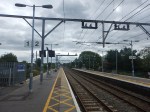

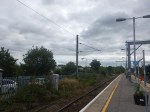
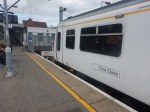
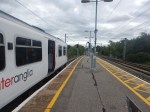
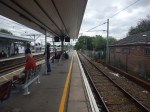

The train in the platform is a four-car Class 321 train, which is almost exactly eighty metres long.
After Greater Anglia has renewed the fleet, the shortest electric train they will have will be a five-car Class 720 train, which is over one hundred and twenty metres long.
I don’t think one of these shiny new trains will fit into the current platform.
Electrification
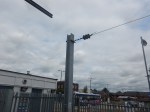
These pictures show the electrification at Burnham-on-Crouch station.
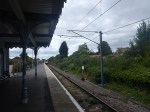
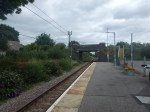
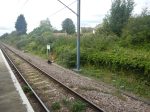
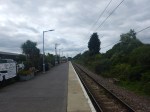
And these show Southminster station.
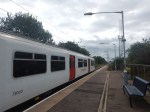
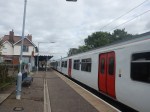
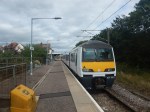
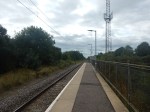
The overhead electrification on the Shenfield to Southend Line is being renewed and this section is supposedly finished. But it does look very similar to pictures I took in 2016, that are posted in Wickford Station. As the 25 KVAC overhead electrification was installed in 1979, when the line was converted from 6.25 KVAC, I do wonder about the age of some of the gantries.
On the trip, where I took these pictures staff were still complaining about the unreliability of the wires, as they have done before.
There doesn’t appear to have been any work done on the Crouch Valley Line, although the conductor did say that the route was being closed at times for work in the near future.
I do question, whether the overhead wires on the Crouch Valley Line are of a sufficient high and modern standard to be both reliable and easy and affordable to maintain.
Can the electrification handle regenerative braking?
The Timetable
The timetable East of Shenfield is as follows.
- Three trains per hour (tph) between Liverpool Street and Southend Victoria stations.
- A train every forty minutes between Wickford and Southminster stations.
- There are also some direct services between Southminster and Liverpool Street in the Peak.
Every time, I go use the line it seems, I always have a long wait at Wickford station.
Current services take thirty minutes between the two end stations with generous turnround times of about ten minutes at each end of the route.
Two trains are needed for the service, which are single-manned with a conductor checking and selling tickets appearing to float between the trains.
A New Nuclear Power Station At Bradwell
There is a possibility of building.of a new nuclear power station at Bradwell.
This Google Map shows the area.
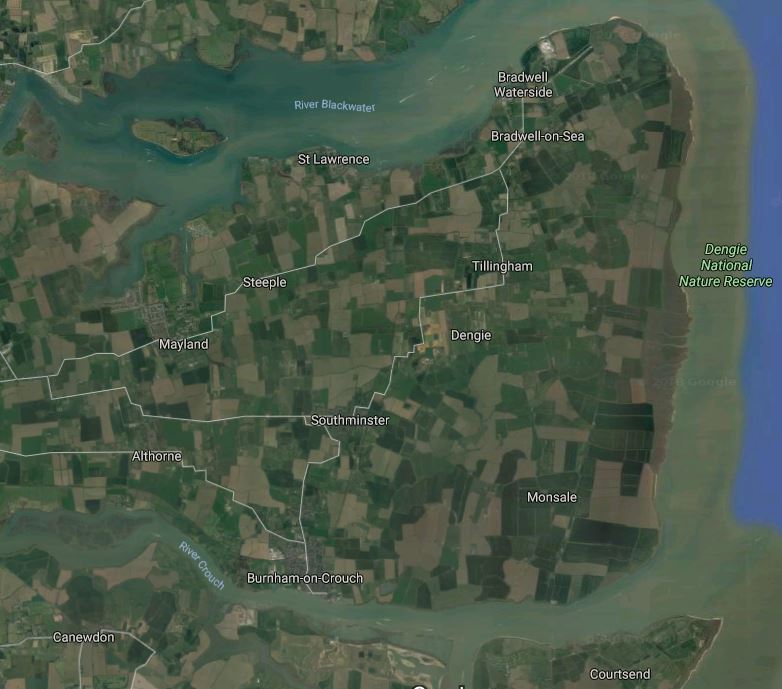
Note.
- Burnham-on-Crouch is the large village on the North Bank of the River Crouch.
- Southminster is a couple of miles to the North of Burnham on Crouch.
- Bradwell is in the North-East corner of the map alongside the River Blackwater.
- You can just see the World War 2 airfield, which was the site of the original Bradwell nuclear power station.
If a new power station is built at Bradwell, I doubt that it will require rail freight access at Southminster, as did the original station.
Transport technology has moved on and heavy goods will surely be taken in and out by barge from the River Blackwater.
But a new station or more likely ; a cluster of small modular reactors will require transport for staff, contractors and visitors.
Although, on balance, with the growth of renewable energy, I don’t think that many more nuclear power stations will be built.
A Battery Storage Power Station At Bradwell
I also wouldn’t rule out the use of Bradwell for a battery storage power station for the electricity generated by wind farms like Gunfleet in the Northern section of the Thames Estuary.
The number and size of these wind farms will certainly increase in the coming years.
Battery storage power stations are ideal partners for wind farms, as they help turn the intermittent wind power into a constant flow of electricity.
Currently, the largest battery storage power station is a 300 MWh facility that was built in 2016, at Buzen in Japan.
Energy storage technology is moving on fast and I would not be surprised to see 2000 MWh units by the mid-2020s.
Bradwell could be an ideal place to put a battery storage power station.
Passenger Numbers
Passenger numbers on the line over the last few years seem to have been fairly level although there appears to have been a drop in the last year or so. But this drop has happened in lots of places!
Various factors will effect the passenger numbers on the Crouch Valley Line in the future.
- New housing along the route.
- A large energy-based development at Bradwell will atract passengers.
- New trains will attract passengers.
- Will the Internet and new working practices affect passenger numbers?
- A two tph clock-face service will attract passengers.
- Faster and more frequent services between Liverpool Street and Wickford will make the line easier to access.
There is also the possibility of more visitors and tourists to the area. The RSPB have spent a lot of money developing Wallasea Wetlands, which is opposite Burnham-on-Crouch.
In future years, how many people will reach Wallasea, by ferry from Burnham-on-Crouch?
Adding up all these factors, I come to two conclusions.
Predicting the number of passengers will be difficult..
There will always be passengers who need this rail service.
It looks to me that Greater Anglia will have to plan for all eventualities from very low numbers of passengers to a substantial increase.
New Trains
Shenfield-Southend services and those on the Crouch Valley Line will be run using new Class 720 trains.
Bettween Liverpool Street And Southend Victoria
Currently, this service on the route is as follows.
Trains have a frequency of three tph.
- Each train takes an hour for the journey.
- All trains stop at the seven stations between Shenfield and Southend Victotria, Shenfield and Stratford.
- One train in three has an extra stop at Romford.
The new trains have a faster acceleration of 1 metre per second², as opposed to the current trains which can only manage 0.55 metre per second².
This property and their modern design, probably means that the new trains, can do a complete round trip between Liverpool Street and Southend Victoria stations in under two hours.
- The journey time between the two stations will be around fifty minutes.
- A three tph frequency will need a fleet of six trains.
- A four tph frequency will need a fleet of eight trains.
This service will be faster than the fastest services between Fenchurch Street and Southend Central stations.
I can certainly see a time, when the frequency between Liverpool Street and Southend Victoria stations is increased to four tph.
Passenger numbers are rising strongly at Southend Victoria station.
Southend Airport have big expansion plans and would welcome a better rail service, to and from their very convenient station.
At present times to their London termini from various airports are as follows.
- Gatwick Airport – 31 minutes (Express)
- Luton Airport – 28 minutes
- Southend Airport – 53 minutes
- Stansted Airport – 46 minutes
I think that Southend Airport times with the new trains could be about 43 minutes or less, which because of the closeness of the station to the terminal building could allow Southend Airport to claim faster times to Liverpool Street than Stansted Airport.
If the service does go to four tph, there will be a massive increase in capacity.
There will be 1145 seats in the new trains, as opposed to 927 in the current Class 321 trains.
With four tph. this would mean an increase in capacity of 40%.
I don’t think anybody in Southend will be complaining.
Between Wickford And Southminster
As I said earlier, the new longer Class 720 trains will have difficulty running the current service, as they don’t fit into Platform 1 at Wickford station.
Working the same timetable the new trains with their 544 seats will offer a 76% increase in train capacity.
Trains take thirty minutes with five intermediate stations.
Given the better acceleration and modern nature of the new trains, I wonder, if they will be able to do a round trip in an hour.
If they can do this, then it would be possible to run a two tph service on the route.
But it will be a tough ask!
That still leaves the problem of turning back the trains at Wickford.
Currently, trains between Liverpool Street and Southend Victoria going in opposite directions, pass at Wickford station.
If this could be arranged with four tph, then there would be up to fifteen minute windows, where no train was passing through Wickford station.
Suppose the Liverpool Street and Southend services passes through at XX:00, XX:15. XX:30 and XX:45.
Would it be possible for the Southminster trains to leave Wickford at XX:10 and XX:40 and arrive back at XX:05 and XX:35, thus giving five minutes for the driver to get to the other end.
As I said, it would be a tough ask!
But I suspect there is a plan to get two tph between Wickford and Southminster.
- The track could be improved.
- Some level crossings could be closed.
- Operating speed could be faster.
- Better step-free access could probably be arranged at the intermediate stations.
- A step-free bridge could be built at Wickford.
If two tph can be achieved, then this would increase capacity on the route by 134 %.
The Passing Loop At North Fambridge Station
This Google Map shows the station and passing loop at North Fambridge station.

Measuring from the map, I estimate the following.
- The length of the platforms are 160 metres.
- The length of the passing loop is in around 400 metres.
I also suspect that to save money was the line was singled in the 1960s, British Rail made the passing loop as short as possible to cut costs.
The current loop can handle eight-car Class 321 trains, so it can certainly handle a five-car Class 720 trains.
I do wonder if the passing loop were to be lengthened, this would ease operation on the line.
There might even be a length, that enable a two tph service with the current four-car Class 321 trains.
Thoughts On Speed Limits
The speed limit on the line is 60 mph between Battlesbridge and North Fambridge stations and 50 mph at both ends of the line.
Summarising sections of the line, their length and speed limits give.
- Wickford and Battlesbridge – 2 miles 38 chains = 4356 yards = 3983 metres – 50 mph
- Battlesbridge and North Fambridge – – 5 miles 67 chains = 10274 yards = 9395 metres – 60 mph
- North Fambridge and Southminster – 8 miles 15 chains = 14410 yards = 13177 metres – 50 mph
This gives totals of 17160 metres with a 50 mph limit and 9395 metres with a 60 mph limit.
- At 50 mph, the train would cover the 17160 metres in 12.8 minutes
- At 60 mph, the train would cover the 17160 metres in 10.7 minutes
- At 75 mph, the train would cover the 17160 metres in 8.5 minutes
Increasing the speed limit to 60 mph would save two minutes.
Network Rail must have all the figures and costs, but this could be a cost-effective way to save a couple of minutes.
But it does seem if the operating speed of the line were to be increased, time saving could be achieved, that would make a two tph timetable a reality.,
Could Electrification Be Removed From The Crouch Valley Line?
If the track is going to be improved with respect to line speed, level crossings and passing loops, then there will have to be changes to the layout of the overhead electrification.
Most of the serious changes that could be carried out, would be to the East of North Fambridge station.
Would it be sensible if the Class 720 trains have a battery capability, to remove the electrification to the East of North Fambridge station?
- 13.2 km. of single-track would have the electrification removed.
- Some of this electrification will need replacing soon.
- Trains could swap between power sources in North Fambridge station.
- The batteries would be charged between Wickford and North Fambridge stations.
- Only 16 miles in each round trip would be on batteries.
Removing some electrification would cut the cost of any works.
Conclusion
I’m sure Greater Anglia have a solution and it’s probably better than my rambling.
Crouch Hill Station – 28th August 2018
The bridge at Crouch Hill station has now been rebuilt and is complete.
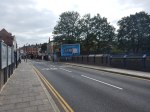
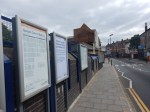
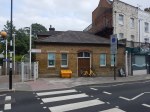
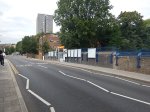
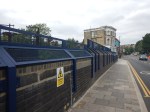
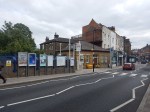
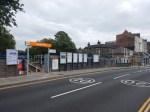
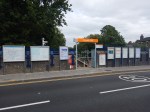
As can be seen it’s all clean and tidy.
Bombardier’s 125 Mph Electric Train With Batteries
In Bombardier Bi-Mode Aventra To Feature Battery Power, I said this.
The title of this post is the same as this article in Rail Magazine.
A few points from the article.
- Development has already started.
- Battery power could be used for Last-Mile applications.
- The bi-mode would have a maximum speed of 125 mph under both electric and diesel power.
- The trains will be built at Derby.
- Bombardier’s spokesman said that the ambience will be better, than other bi-modes.
- Export of trains is a possibility.
Bombardier’s spokesman also said, that they have offered the train to three new franchises. East Midlands, West Coast Partnership and CrossCountry.
It has struck me, that for some applications, that the diesel engines are superfluous.
In the July 2018 Edition of Modern Railways, in an article entitled Bi-Mode Aventra Details Revealed.
In a report of an interview with Bombardier’s Des McKeon, this is said.
Conversion to pure electric operation is also a key design feature, with the ability to remove the diesel engines and fuel tanks at a later date.
So why not swap the diesel engines and add an equal weight of extra batteries?
Batteries would have the following uses.
Handling Energy Generated By Regenerative Braking
Batteries would certainly be handling the regenerative braking.
This would give efficiency savings in the use of electricity.
The total battery power of the train, would have to be large enough to handle all the electricity generated by the regenerative braking.
In the Mathematics Of A Bi-Mode Aventra With Batteries, I calculated the kinetic energy of the train.
I’ll repeat the calculation and assume the following for a pure electric train.
- The train is five cars, with say four motored cars.
- The empty train weighs close to 180 tonnes.
- There are 430 passengers, with an average weight of 90 Kg each, with baggage, bikes and buggies.
- This gives a total train weight of 218.7 tonnes.
- The train is travelling at 200 kph or 125 mph.
These figures mean that the kinetic energy of the train is 94.8 kWh. This was calculated using Omni’s Kinetic Energy Calculator.
My preferred battery arrangement would be to put a battery in each motored car of the train, to reduce electrical loses and distribute the weight. Let’s assume four of the five cars have a New Routemaster-sized battery of 55 kWh.
So the total onboard storage of the train could easily be around 200 kWh, which should be more than enough to accommodate the energy generated , when braking from full speed..
Traction And Hotel Power
Battery power would also be available to move the train and provide hotel power, when there is no electrification.
In an article in the October 2017 Edition of Modern Railways, which is entitled Celling England By The Pound, Ian Walmsley says this in relation to trains running on the Uckfield Branch, which is not very challenging.
A modern EMU needs between 3 and 5 kWh per vehicle mile for this sort of service.
As the Aventra is probably one of the most modern of electric multiple units, I suspect that an Aventra will be at the lower end of this range.
An Intelligent Computer
The train’s well-programmed computer would do the following.
- Choose whether to use electrification or battery power to power the train.
- Decide when the battery could be charged, when electrification power was being used.
- Arrange, that when a train stopped at a station without electrification, the batteries were as full as possible.
- Manage power load, by shutting off or switching equipment to a low energy mode, when the train was running on batteries.
- Raise and lower the pantograph as required.
The computer could take account of factors such as.
- Passenger load and total weight.
- Route and train’s position.
- Weather.
- Future signals.
The computer would only be doing a similar job that is done by those in the flight control systems of aircraft.
Although, trains run in less dimensions and don’t need to be steered.
How Far Would This Train Go On Batteries?
This is question of the same nature as how long is a piece of string?
It depends on the following.
- The severity of the route.
- The size of the batteries.
- The load on the train.
- The number of stops.
- Any delays from slow-moving trains.
- The timetable to be used.
I would expect that train manufacturers and operating companies will have a sophisticated mathematical model of the train and the route, that can be run through various scenarios.
With modern computers you could do a Monte-Carlo simulation, trying out millions of combinations, which would give a very accurate value for the battery size to have a near hundred percent chance of being able to run the route to the timetable.
After all if you ran out of power with a battery train, you stop and the train has to be rescued.
Suppose you were going to run your 125 mph Electric Train With Batteries from Kings Cross to Middlesbrough.
- You would need a battery range of about fifty miles, to go between Northallerton and Middlesbrough stations and come back.
- You would also need to have enough power to provide hotel power in Middlesbrough station, whilst the train was turning back.
Certain things could be arranged so that the service runs smoothly.
- The train must leave the East Coast Main Line with a fully-charged battery.
- The train must leave the East Coast Main Line as fast as possible.
- The train should have a minimum dwell time at all the intermediate stops.
- The train could be driven very precisely to minimise energy use.
Some form of charging system could also be provided at Middlesbrough. Although it could be difficult as there are only two platforms and trains seem to turn round in a very short time of six minutes
Electrification could also be extended for two hundred metres or so, at Northallerton junction to ensure points 1 and 2 were met.
Effectively, trains would be catapulted at maximum energy towards Middlesbrough.
Points 3 and 4 require good signalling, a good Driver Advisory System and above all good driving and operation.
What Other Routes Could Use 125 mph Electric Trains With Batteries?
Use your imagination!
Opening Date Set For Hong Kong Section Of Guangzhou-Shenzhen-Hong Kong Express Rail Link
The title of this post is the same as that of this article on Global Rail News.
From September 23rd, passengers will be able to take 300 kph trains between Hong Kong and Guangzhou.
The Guangzhou-Shenzhen-Hong Kong Express Rail Link will give access to the Chinese High Speed Rail network for onward travel to places like Beijing and Shanghai.
I can see a whole new tourism market opening up.
- Fly to Hong Kong
- High Speed Rail to Beijing via Guangzhou and other places.
- Fly Home from Beijing.
Only two long distance flights and a wide-ranging itinerary, without the hassle of airports.
 The Anonymous Widower