Swiss Pass And Swiss Pocket Timetables
I used a Swiss Pass on my three day trip to Switzerland.
Wikipedia describes it like this.
The Swiss Travel Pass allows unlimited travel on the Swiss public transport network (trains, buses, ships and tramways) for a certain number of days (3, 4, 8 or 15 consecutive days), as well as free or discounted entry to most Swiss museums. Discounts apply to mountain transport (lifts, funiculars, cogwheel trains). Some mountain transport is free of charge.
The Swiss Travel Pass Flex works exactly like the Swiss Travel Pass, but can be used to travel on 3, 4, 8 or 15 consecutive or non-consecutive days within one .
Research the pass you need before you go.
I bought mine from athe SBB ticket office in Zurich Airport.
It also came with a map, where it could be used.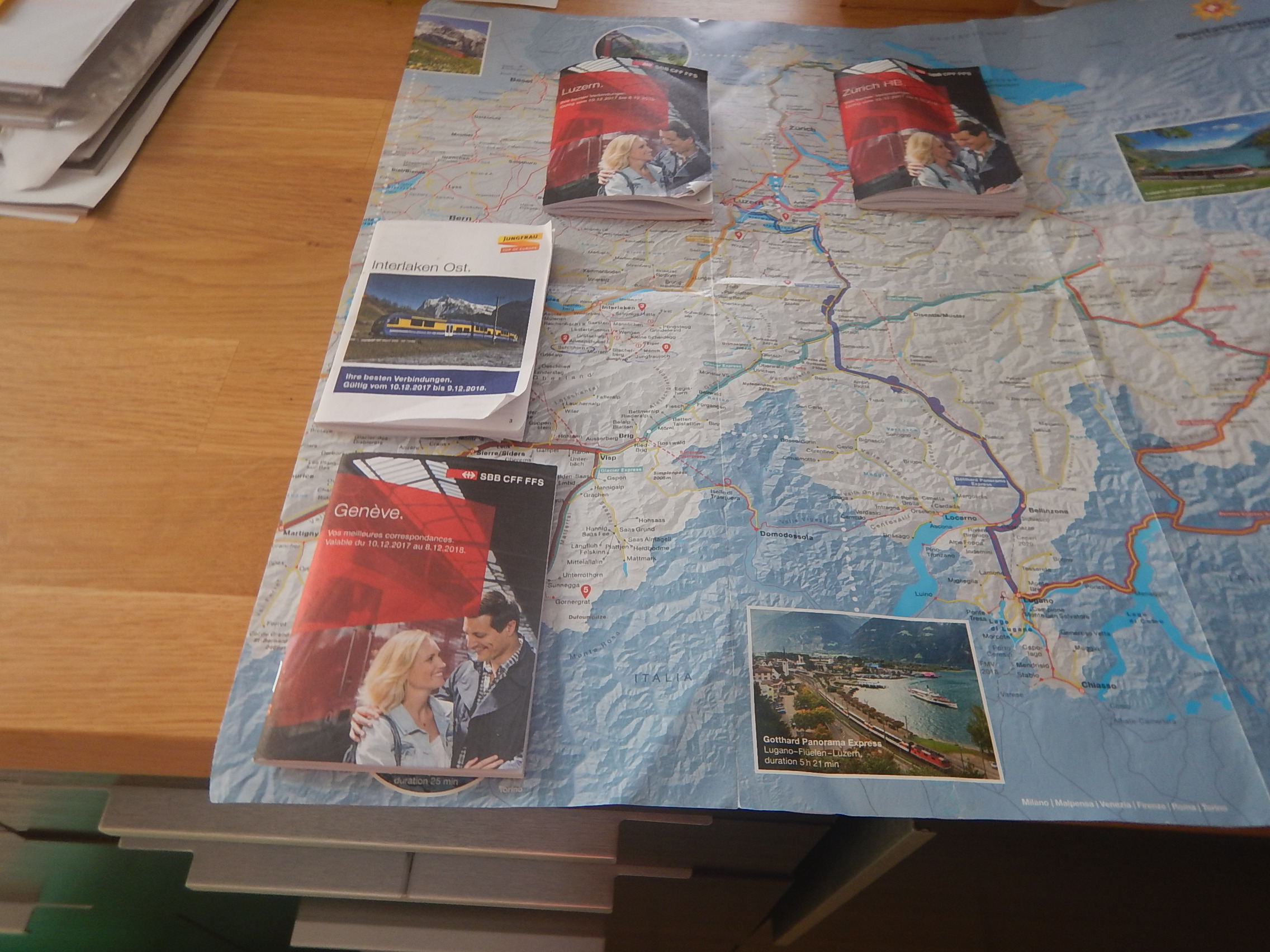
In the picture, there are four of the mini-timetables that seem to be available at most major stations.
These timetables give the times of trains from the station to other major cities. They also give the return trains, so are ideal for planning a day out.
The train companies in the UK, should copy this.
One thing that I found out about a Swiss Pass after I bought it, is that you can buy extension tickets for a journey from the Swiss border to say somewhere like Innsbruck, which is a few kilometres further on. It’s a bit like the ticket, I’ll buy in a few minutes to extend my Freedom Pass to Rayleigh.
The Swiss Pass may be pricey, but it’s worth it and is probably a lot cheaper than hiring a car.
Steelworm At Whitechapel Station
I took this picture at Whitechapel station.
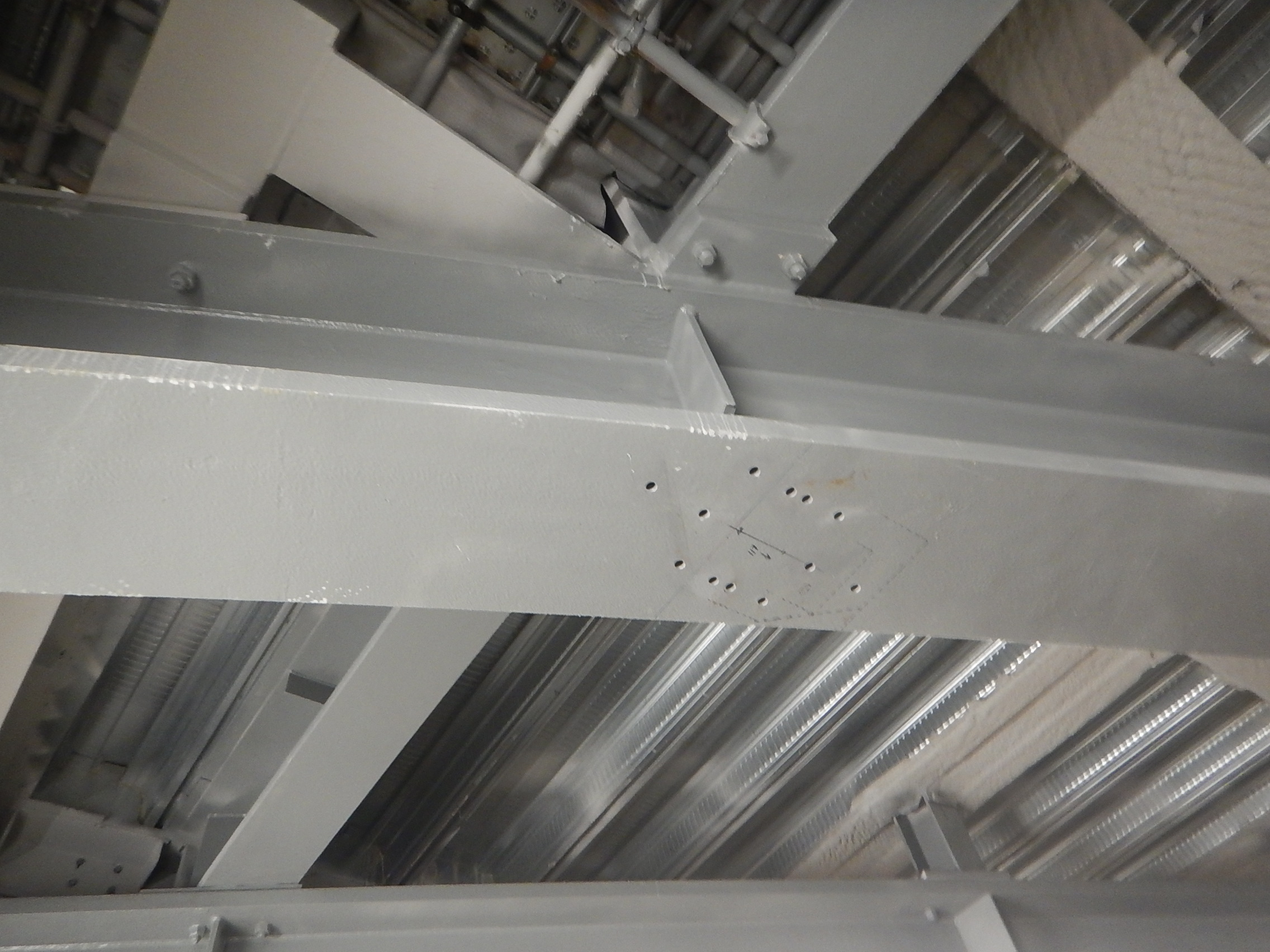
It looks like steel’s equivalent of woodworm has been at work!
What Is Happening (Or Not!) At West Ealing Station?
I took these pictures at West Ealing station a few days ago.
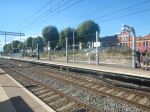

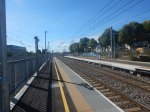
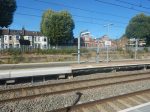



There appears to be no work going on to finish the station for Crossrail.
There has also been no announcement about what is happening to the Greenford Branch.
Surely, if the bay platform were to be electrified, it would be the ideal place to charge a battery shuttle train to Greenford station.
Should We Exempt Low Alcohol Beer And Wine From The Age Regulations
I drink Marks & Spencer ).5% Southwold Pale Ale for four main reasons.
- It is low alcohol and doesn’t interact with the Warfarin, that I am prescribed to control the INR of my blood, so I don’t have another stroke.
- Because it is made with less barley, it appears to be gluten-free to my body.
- It also has the proper taste of real beer.
- It is brewed by Adnams in Suffolk and I started drinking their beers at fourteen under supervision of my father, whilst we played snooker in Felixstowe Conservative Club.
As my GP says, at 0.25 alcohol units a 500 ml bottle, you’d have difficult drinking enough to affect your health.
There is one annoying thing about it and that is buying it.
This morning, I bought three bottles in the M & S store at the Angel, where my family has been shopping since before the First World War.
As I usually do, I used one of the automatic tills and had to wait for a minute or so, whilst the assistant verified that I was over eighteen.
The store was busy and she was helping someone with another till.
I wonder what would happen at the checkouts, if there was no age check on low alcohol beer and wine.
- It would obviously speed up the tills with some customers.
- But would it have the affect of brewers and winemakers, making more quality low alcohol products?
- And would these be purchased by those who knew they should cut their alcohol intake?
It’s probably one of those ideas, that would go down well in London boroughs like Barnet, Islington and Richmond, but how would it go down in places where alcohol was a necessary way of life for many?
How too, would such a drink fit with those of a Muslim faith?
Hybrid Regional Train To Be Tested
The title of this post is the same as that of this article on Railway Gazette.
This is the first two paragraphs.
Plans to convert a TER regional multiple-unit into a prototype overhead electric, battery and diesel hybrid unit were announced by SNCF and Alstom on September 17.
The Grand Est, Nouvelle-Aquitaine and Occitanie regions and Alstom are to spend €16.6m converting and testing the Régiolis unit, which will be taken from the Occitanie region’s fleet. Two of the four diesel engines will be replaced with high-capacity lithium-ion batteries able to store regenerated braking energy.
It looks to me, that each Régiolis train has four slots in which to put a diesel engine. So are they doing what Stadler are doing with the tri-mode Flirts for the South Wales Metro and allowing operators to fill each slot with a diesel engine and generator or a lithium-ion battery.
Hopefully, the modules are designed, so they are just Plug-and Play.
The train’s computer would decide what power is best and swap between electric/diesel and battery power automatically or under the control of the driver.
The concept is simple and it could have some interesting outcomes.
- The ability to use regenerative braking on an electrified line, that can’t handle the reverse currents.
- Extending routes efficiently on non-electrified lines, where noise and pollution could be a problem.
- As battery technology gets better and can hold more energy, all diesel engines might be replaced with batteries.
It does seem that Alstom are taking battery trains seriously.
It also appears that the number of existing trains, that are being improved by the addition of batteries is growing.
 The Anonymous Widower