East-West Rail: Aylesbury Spur
This map from East West Rail shows the complete route of the East West Railway between Oxford and Cambridge.

Note the spur to Aylesbury, which is shown dotted, which the legend says means it is a Potential Future Section of the EWR.
The papers in the area have different views.
- This article on Bucks Herald is entitled Aylesbury Spur Excluded From Government’s Latest East West Rail Route Outline.
- This article on Buckinghamshire Live is entitled East West Rail Aylesbury ‘Spur’ Plans Remain On The Table As Route Announced For £5bn Project.
So what do I feel about the Aylesbury Spur?
Train Services
In the Wikipedia entry for the East West Railway, it is stated that there will be an hourly service between Aylesbury and Milton Keynes Central stations, that would call at Aylesbury Vale Parkway, Winslow and Bletchley.
Wikipedia also states that there will be no Marylebone and Milton Keynes or Aylesbury and Manchester Piccadilly services.
I am surprised that a Marylebone and Milton Keynes service is ruled out, for these reasons.
- A Marylebone and Milton Keynes service would give Winslow a direct service to London.
- Aylesbury Vale Parkway has an hourly service from Marylebone, which could be extended to Milton Keynes Central to create the service.
- Aylesbury Vale Parkway and Marylebone have as many as three trains per hour (tph) in the Peak. Does this make timetabling of an hourly Marylebone and Milton Keynes service difficult?
The Wikipedia entry for Aylesbury Vale Parkway, says this about a Marylebone and Aylesbury Vale Parkway service.
It was proposed that, if services are extended to the north, trains between Milton Keynes Central and Marylebone would run via High Wycombe and not Amersham.
This dates from 2012.
But.
- There may be troubles with the timings of a Marylebone and Milton Keynes service between Aylesbury Vale Parkway and Milton Keynes.
- A separate Aylesbury and Milton Keynes service would give a half-hourly service between Aylesbury Vale Parkway and Aylesbury, whereas an extended service only gives the current hourly service.
This Google Map shows Aylesbury Vale Parkway station.

Note.
- The station only has a single bay platform.
- It appears that there is a step-free walk between the car park and the platform.
- There is no bridge or need for one.
- There is a single through line at the station on the opposite side to the car park, which is mainly used by trains going to the landfill at Calvert.
It looks from this map, that if the single platform were widened to an island platform, that both terminating and through trains could call in the station.
Perhaps though the modifications at Aylesbury Vale Parkway are too complicated or expensive?
The ruling out of the Aylesbury and Manchester Piccadilly service is probably easier to understand.
Consider.
- Milton Keynes Central will have a two tph service to Oxford and was planned to have an hourly service from Aylesbury.
- Milton Keynes Central has an hourly Avanti West Coast service to Manchester Piccadilly via Rugby, Stoke-on-Trent, Macclesfield and Stockport.
- Milton Keynes Central has an hourly Avanti West Coast service to Liverpool Lime Street via Crewe and Runcorn.
- Milton Keynes Central has a two-hourly Avanti West Coast service to Edinburgh Waverley via Rugby, Coventry, Birmingham International, Birmingham New Street, Sandwell and Dudley, Wolverhampton, Stafford, Crewe, Warrington Bank Quay, Wigan North Western, Preston, Lancaster, Oxenholme Lake District, Penrith, Carlisle, Haymarket
- Milton Keynes Central has a two-hourly Avanti West Coast service to Preston via Rugby, Coventry, Birmingham International, Birmingham New Street, Sandwell and Dudley, Wolverhampton, Stafford, Crewe, Warrington Bank Quay and Wigan North Western. Five trains per day (tpd) are extended to Glasgow and two tpd are extended to Blackpool North.
Note.
- A train running between Aylesbury and Manchester Piccadilly would probably need to be a 125 mph electric train, which would mean electrifying the East West Railway.
- A change at Milton Keynes Central would give access to trains for nearly all North-West England and Southern Scotland.
But because of all the connectivity at Milton Keynes Central, it surely puts pressure on providing an Aylesbury and Milton Keynes Central service.
The Track
It is possible to follow the track North from Aylesbury Vale Parkway until it joins the East West Railway to the West of Winsford station.
This Google Map shows the junction, just North of the hamlet of Calvert..
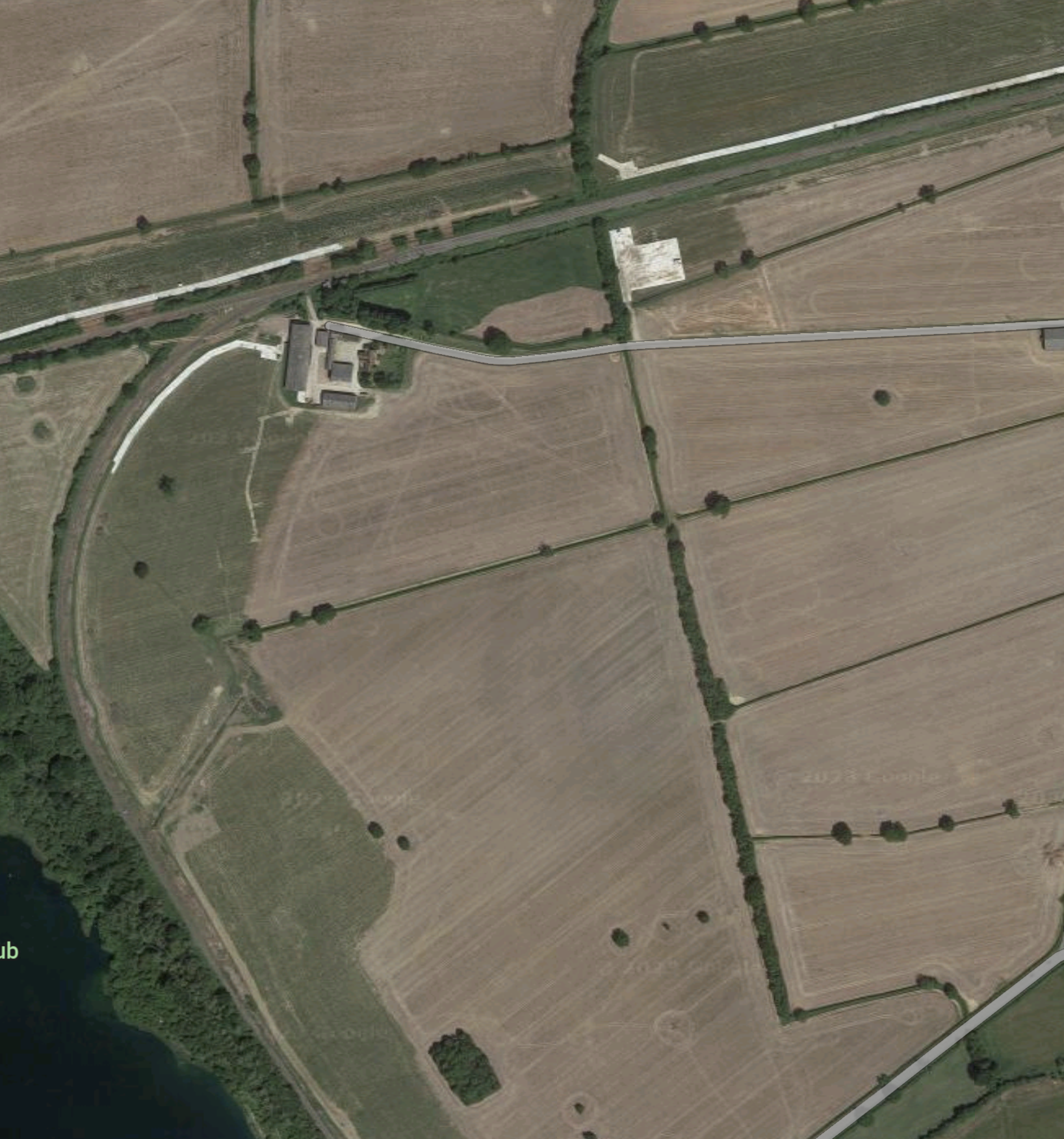
Note.
- The East West Railway going across the top of the map.
- The single track railway to Aylesbury Vale Parkway coming North and then turning East to join the East West Railway.
- The railway from Aylesbury Vale Parkway is still used by trains taking landfill.
The Wikipedia entry for Calvert, says this about the landfill site.
Another of the clay pits is now a landfill site. Waste is collected from Bristol, Bath and London each day and transported using rail via Aylesbury to Calvert. The site has a power station capable of producing 14 MWe of electricity from landfill gas, coming from the decomposition of organic matter to convert it into renewable electricity MW.
Looking at the map and the traffic on Real Time Trains, it would appear that there would be enough capacity for both the freight and an hourly passenger train between Aylesbury and Milton Keynes.
There is also the slight problem, that High Speed Two will be going through the area, as this map shows.
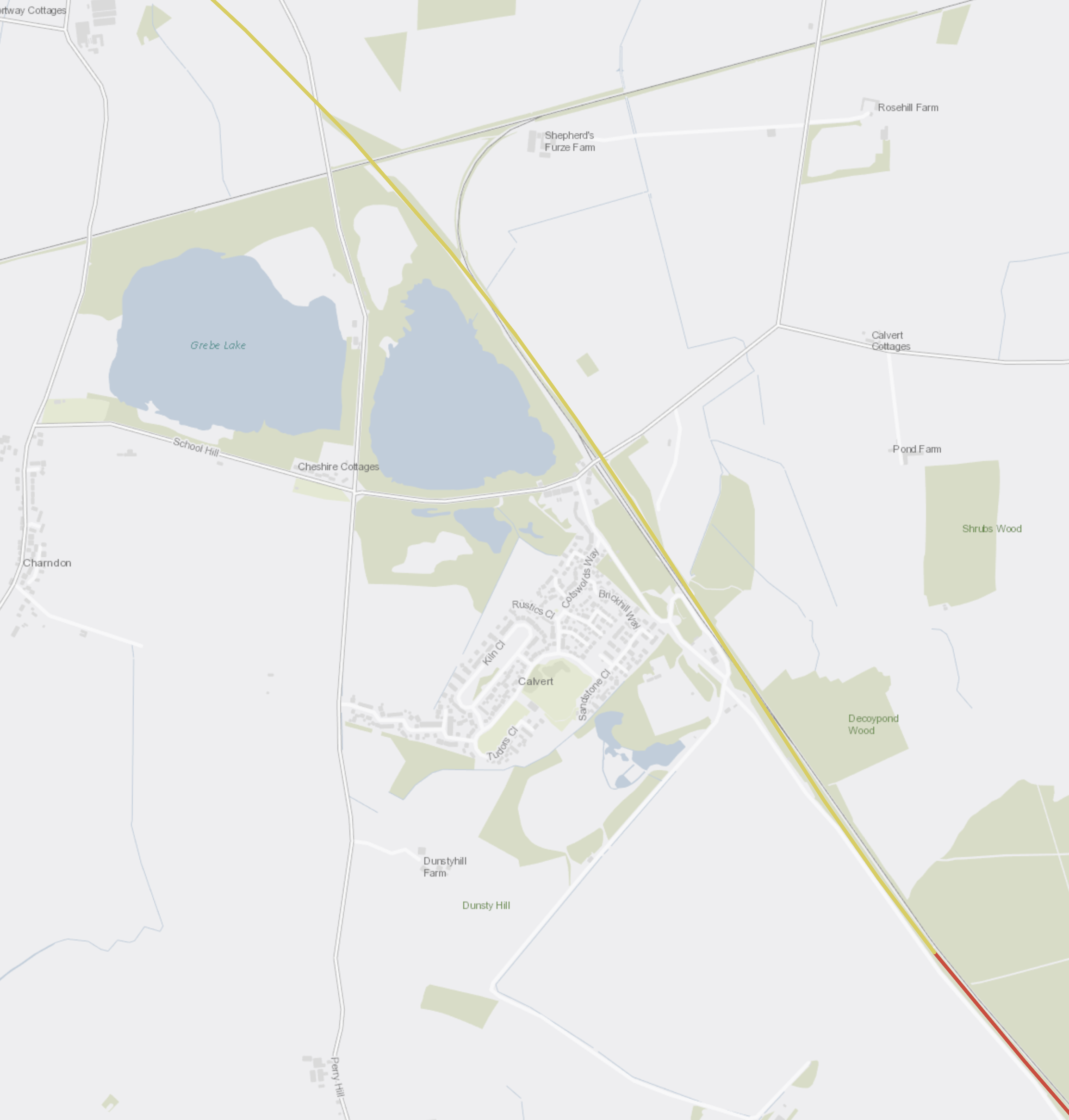
Note.
- High Speed Two is shown in yellow (cutting) and embankment (red).
- High Speed Two appears to run either on the same route or alongside the route to Aylesbury.
- The East West Railway goes across the top of thye map.
- The chord that connects the Aylesbury Spur to the East West Railway can clearly be seen.
- The Aylesbury Spur will run along the same route as High Speed Two.
- Aylesbury Vale Parkway will be just off the South-East corner of the map.
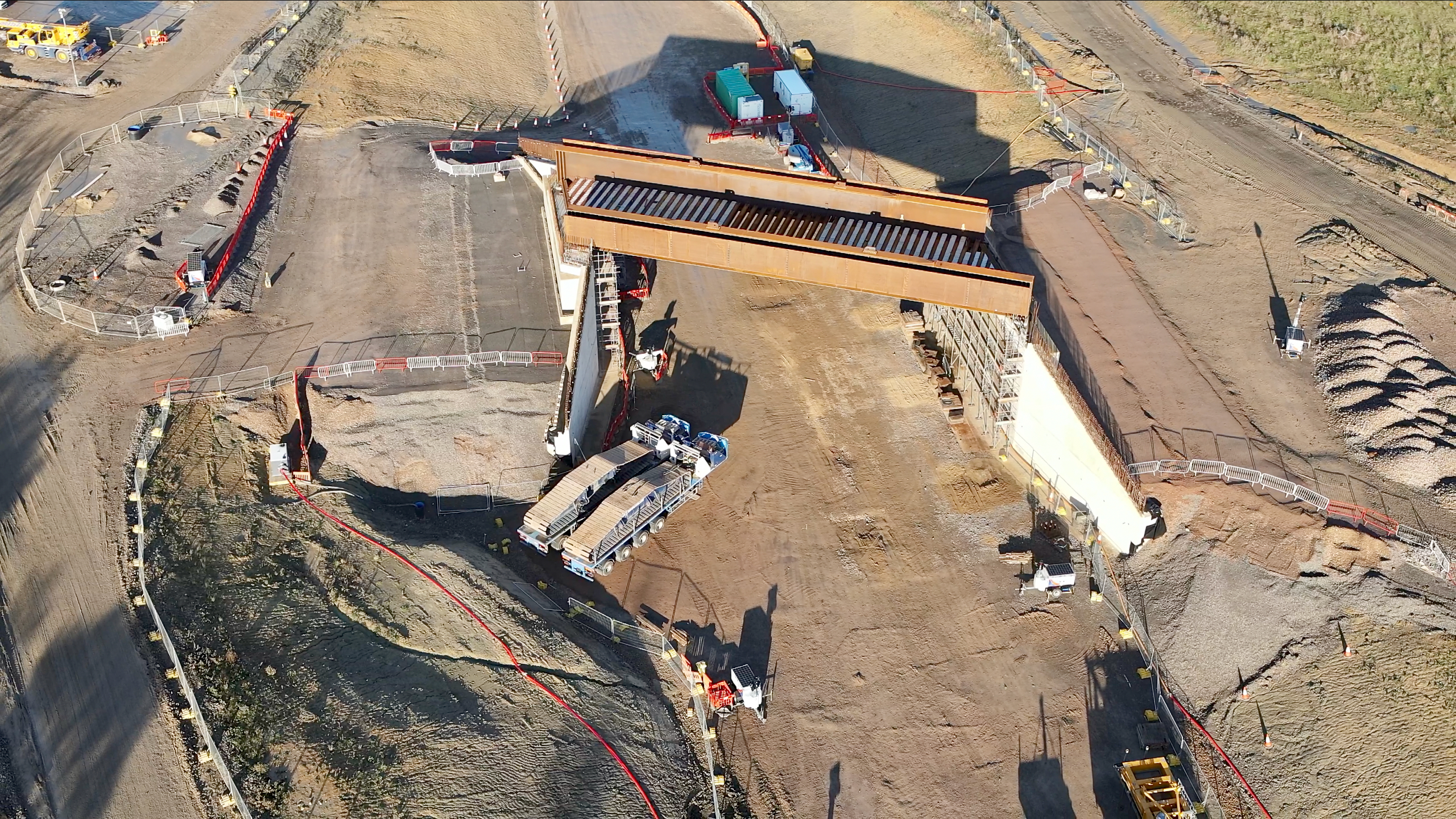
This page on the High Speed Two web site is entitled Boost for Oxford-Cambridge Connections As HS2 Builds Key East West Rail Bridge, describes the installation of a bridge to take the East West Railway goes over High Speed Two.
This picture is from High Speed Two.
As the landfill at Calvert will still need to be filled, I suspect that High Speed Two will leave the route between Aylesbury Vale Parkway and the East West Railway as a fully-serviceable railway, when they tidy up and leave this section of their route.
It looks to me, that once these tasks are complete.
- High Speed Two relay all the tracks between Aylesbury Vale Parkway and the East West Railway.
- The junction between the Aylesbury Spur and the East West Railway is completed.
- Aylesbury Vale Parkway station is updated.
The Aylesbury Spur as needed by the East West Railway to run passenger services between Aylesbury and Milton Keynes Central could be complete.
And all because of High Speed Two and a landfill site.
Conclusion
I am drawn to the conclusion, that the Aylesbury Spur would not be a difficult railway to build and because it links to the important interchange station at Milton Keynes Central, it could be delivered soon after High Speed Two are finished in the area.
It also appears that Avanti West Coast have already aligned their services with the East West Railway.
Denmark And Germany Sign Bornholm Energy Island Agreement, First Legally Binding Cooperation On Joint Offshore Renewable Energy Project In EU
The title of this post, is the same as that of this article on offshoreWIND.biz.
This is the sub-heading.
German Federal Minister for Economic Affairs and Climate Action, Robert Habeck, and Danish Minister for Climate, Energy and Utilities, Lars Aagaard, have signed an agreement for the Bornholm Energy Island in the Baltic Sea. This is the first legally binding cooperation agreement in Europe on a joint offshore energy project under the EU Renewable Energy Directive.
Bornholm is a Danish island between Denmark, Germany and Sweden, as this map shows.

Note.
- Malmo is in Sweden.
- Copenhagen is in Denmark.
- Germany is in the South-West corner of the map.
Bornholm is the island in the North-East corner of the map.
This paragraph gives the bare details of the generation and transmission capacities.
Bornholm Energy Island, located in the Danish sector of the Baltic Sea, will facilitate connecting at least 3 GW of offshore wind generation capacity to the grid by the early 2030s. The electricity will then be transported via new grid connections to Germany (2 GW ) and to the Danish mainland (1.2 GW).
The great advantage of an energy island, is that the electricity can be sent both ways according to where it is needed.
Some of the energy islands that have been proposed also include energy storage and/or hydrogen production.
This web site gives more details of the Bornholm Energy Island.
Under a heading of Why Build Energy Islands?, these reasons are given.
- Environment and climate
- Energy security in Europe
- Inspiration for the world
Under a heading of What is an Energy Island?, this is said.
An energy island makes it possible to establish large wind farms at sea far from the coast. The energy produced by the wind turbines is sent via cables to the energy island, from where it is sent out to consumers. On Bornholm, a high-voltage facility must therefore be established on the island which can receive and distribute the electricity. After that, green power can be sent from Bornholm to millions of consumers in Denmark and Germany. Bornholm’s Regional Municipality is working hard to seize the energy island’s potential for job creation and local business growth, and in turning Bornholm into the green business beacon and transport hub for green fuels in the Baltic Sea.
I suppose it could be argued that in the UK, Orkney and Shetland are already energy islands and will become more so in years to come.
Energy islands, whether real or man paid certainly seems to be a concept that is growing in populatity, with several being developed.
Close-Up: New Scour Protection Solution That Has Potential To Cut Costs By 70 Pct Inspired By Turtles
The title of this post, is the same as that of this article on offshoreWIND.biz.
This is the sub-heading.
At the beginning of May, Balmoral presented a scour protection solution that could replace rock dumping and is set to potentially cut costs by up to 70 per cent when compared to this conventional method. In an interview with offshoreWIND.biz, the company revealed that the initial concept behind its new HexDefence system was aimed at a solution for the oil and gas industry but was further developed with the offshore wind industry in mind and that its design was inspired by – turtles.
These first two paragraphs outline HexDefence.
As reported last month, the Scotland-based engineering company introduced HexDefence saying the solution could drastically reduce scour phenomena around fixed offshore wind turbines that cause seabed erosion and a reduction in foundation strength and stiffness.
The structure provides a non-invasive approach to protecting the monopile and the immediate surrounding area and eliminates the need for rock installation which can cost up to 70 per cent more when compared to this new solution, according to Balmoral.
HexDefence has its own section of the Balmoral web site.
In my long career, I have dealt with a lot of fluid flow and I like what Balmoral are doing.
Electra.aero
I have signed up to FutureFlight‘s weekly newsletter and this week it gave two articles about a new nine-seat airliner called an Electra.aero.
It must be the first airliner named after its web site or vice-versa.
The first article is entitled Electra.aero Gives A Glimpse If Its eSTOL Technology Development Aircraft.
It says this about the aircraft and the company.
As it works on plans for a nine-passenger eSTOL blown-wing aircraft, Electra.aero has posted a short video teasing followers with a glimpse of what it describes as a technology demonstrator. The video shows what appears to be a subscale model of the larger hybrid-electric design, but the Virginia-based company is giving very little away for now.
This week, the U.S. start-up announced the appointment of former Boeing Commercial Airplanes president and CEO James Albaugh to its board of advisors, along with the former Airbus America CEO and FAA Administrator Allan McArtor, and aircraft finance expert Kristen Bartok Touw.
You can also watch a video.
The second article is entitled Electra.aero Uses Truck To Test Gives A Glimpse If Its eSTOL Aircraft Propulsion System And Wing.
It says about more the aircraft.
Electra.aero’s planned nine-passenger eSTOL aircraft is expected to be able to operate from landing strips as short as 300 feet. The company’s blown-wing design and hybrid-electric propulsion system will be key factors in achieving this breakthrough performance for regional air services. At its base in Manassas Regional Airport in Virginia, the company is using a technology demonstrator and a truck to conduct ground testing key systems in preparation for anticipated test flights later this year.
You can also watch a video.
The home page also shows a visualisation of a flight between Washington DC and New York.
Note.
- Blown-wing and blown flaps have been used before on aircraft like the Lockheed F-104 Starfighter, the Boeing C-17 Globemaster and the Blackburn Buccaneer.
- Blown flaps’ use on the Electra.aero, seems to be the first application on a small propeller-driver airliner.
- Electra.aero seems well-connected, which helps in the aviation industry.
- Power seems to come from a hybrid-electric design.
- Being able to operate from landing strips as short as a football field is a unique characteristic.
- Pictures on the web site show the aircraft has eight propellers, with those close to the fuselage being larger.
- A 400 nautical mile range with a 45 minute reserve, a cruise speed of 175 knots and a quiet take-off are claimed.
As someone, who has over a thousand hours in command of a twin-engined Cessna 340A, this aircraft could be the real deal.
- The field performance is sensational.
- The range is excellent.
- Except for the number of electric engines, it looks like an aircraft and won’t put off the passengers.
- It could fly between Washington DC and New York or London and Paris.
According to their web site, they already have a $3 billion order-book.
Subsea 7 To Explore Pairing Floating Offshore Hydrogen With Floating Wind Farm Off Scotland
The title of this post, is the same as that of this article on offshoreWIND.biz.
This is the sub-heading.
Subsea 7, in collaboration with OneSea Energy, has secured GBP 150,000 (around USD 187,000) in funding from the Scottish government to investigate pairing a large-scale floating hydrogen production system with a floating wind farm offshore Scotland.
Looking at the home page of the OneSea Energy web site, these statements can be read.
- Large scale floating green hydrogen solutions
- OneSea build, lease and operate floating hydrogen production solutions.
- OneSea developed concepts to produce floating green hydrogen in shallow and deep waters.
- These concepts integrate decades of experience in designing, delivering and operating offshore energy production units worldwide.
- OneSea provides full turnkey floating hydrogen production solutions.
- The OneSea business model de-risks client’s financial exposure and offers a fixed rate solution that guarantees the delivery of the committed product output.
- The fast-track and plug-and-play nature of our design allows quick deployment of the units with minimum impact to an existing offshore energy generation project.
- OneSea appear to be a company based in the Netherlands.
Note.
- I like the build, lease and operate concept.
- Pictures indicate that their production units are based on ships.
- There appear to be three different sizes of production units.
Their production units seem to serve a similar purpose as a floating production storage and offloading (FPSO) unit does in the offshore oil and gas industry.
OneSea seems to have thought deeply about how to satisfy the offshore hydrogen production market as widely as possibly.
I could see this concept being employed in several places around the UK.
SWR Complete Major Refurbishment On 85-Year-Old Malden Manor Station
The title of this post, is the same as that of this article on Global Railway Review.
So I thought I’d go and take a look at Malden Manor station.
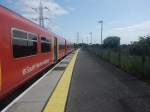
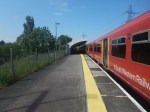



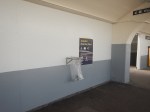


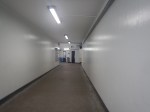








Note.
- The station was built in the 1930s.
- It will be part of Crossrail 2, if it’s ever built.
- The cafe is worth a visit.
The station certainly seems to have benefitted from a deep clean up and a new coat of paint.
 The Anonymous Widower