Wandering Around King’s Cross – 20th December 2021
I took these pictures, whilst I wandered around King’s Cross.
The unfinished building is Google’s large groundscraper.
I took these pictures as I wandered.
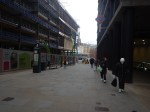
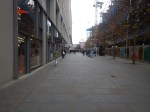
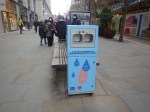
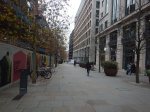
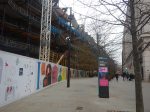
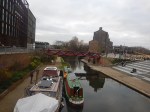
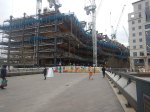
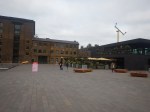


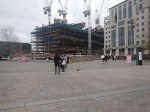
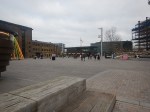

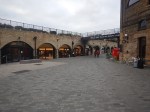
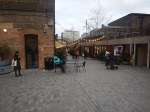
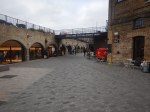
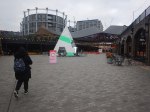
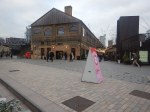
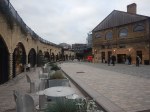
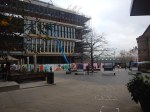
King’s Cross is on the up.
Green Trains On Their Way To Power One Of The World’s Most Abundant Mining Regions
The title of this post, is the same as that of this article on the Australian Broadcasting Corporation.
It is a comprehensive article, with maps, pictures and background information about the project I wrote about in Anglo American And Aurizon Look To Hydrogen-Powered Trains, that will create hydrogen-powered freight locomotives for Australia.
It should be noted that Aurizon operates a few hundred diesel-electric locomotives, so switching to hydrogen, would probably cut a lot of carbon emissions.
The Old Hackney Town Hall
These pictures show the Old Hackney Town Hall.
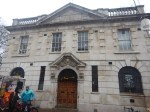

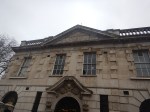


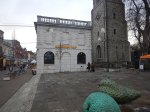
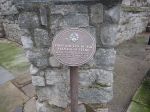
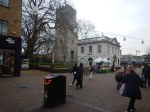
It is now a pub and Grade II Listed.
Behind the building is the Grade I Listed St.Augustine’s Tower, which is all that remains of the 16th Century parish church of St. Augustine.
Hackney Central Station New Entrance – 24th December 2021
The new entrance at Hackney Central station is moving on.
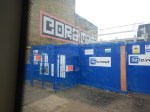


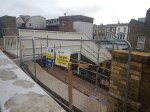
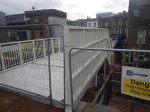
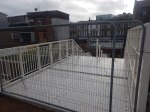
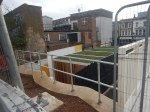

Parts of the structure can now be seen behind the hoardings.
This picture shows the new entrance from Graham Road.
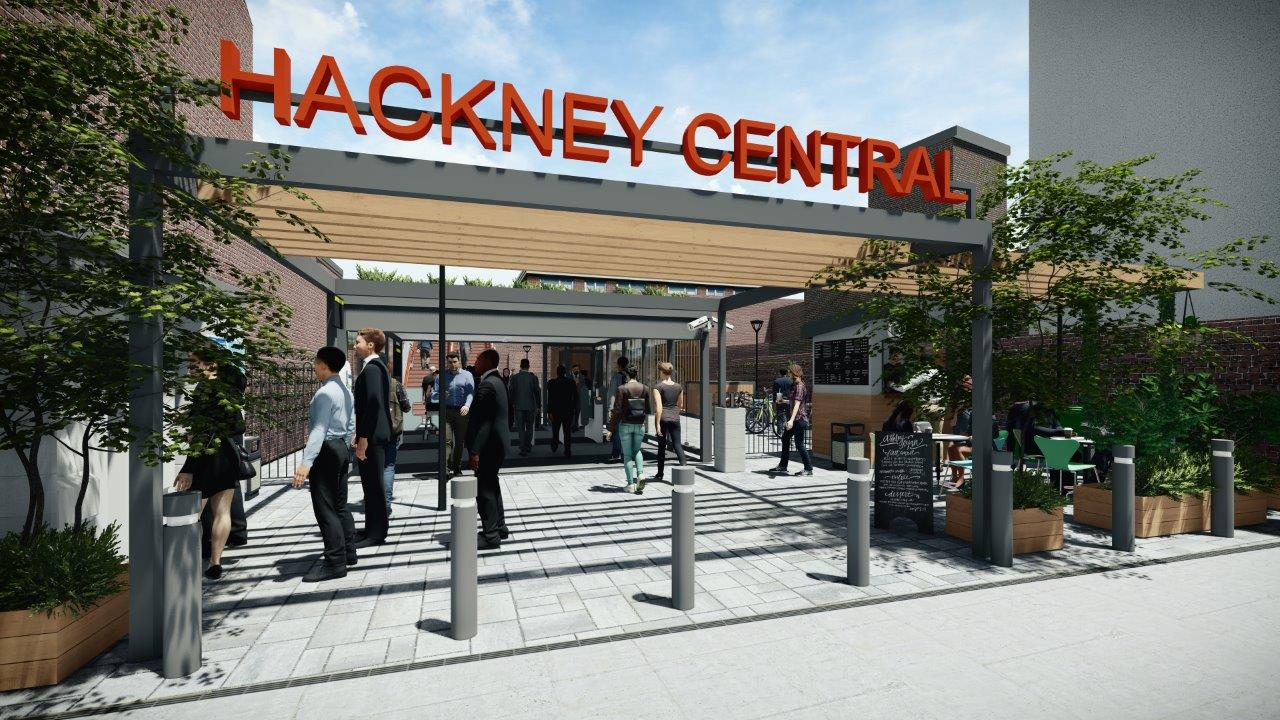
And this picture shows the entrance from above.
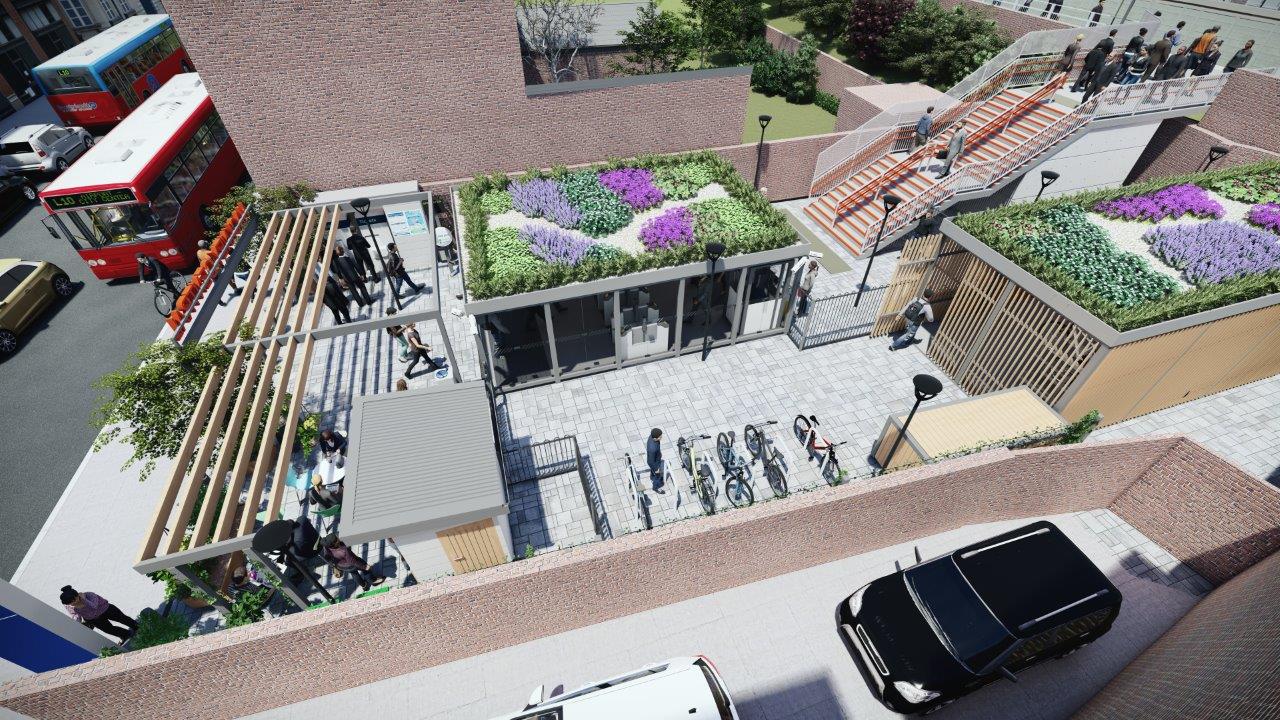
It does not look like step-free access is provided, but I suspect it could be added later.
Strangely, although Hackney Central station is to the East of where I live on the other side of Dalston Junction, it will be on a route, I might take, when I want to go West on the North London Line. I would just take a 38 bus direct to this entrance and then take a train to Richmond or Clapham Junction station as appropriate.
If Hackney Council put a light-controlled crossing over Graham Road, this will make it easy for me to come home from Stratford.
Walking The Line
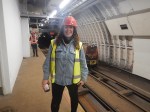
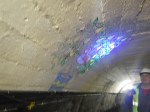
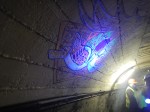
A friend asked, if I’d like to accompany her on a walk along the tunnels of the Post Office Railway.
I said yes, went along and took these pictures.

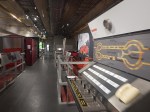
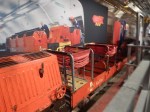
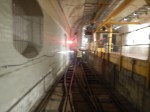
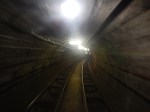
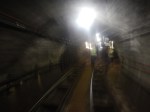
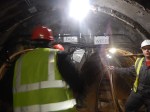


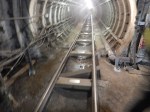
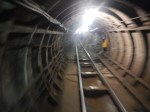
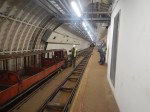
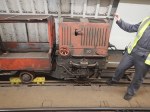
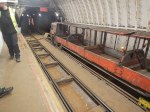
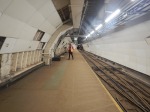
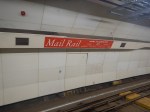

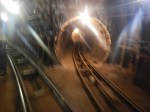
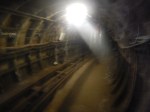
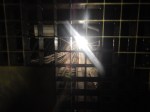
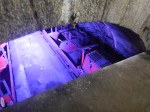

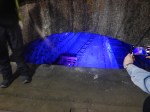
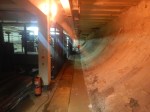
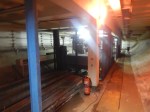
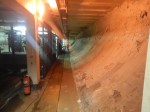
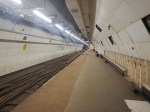
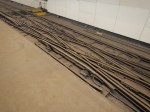
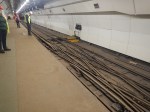
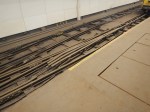
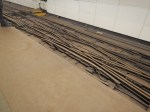
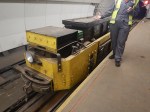
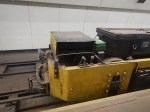
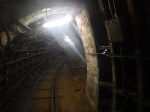
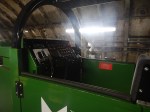
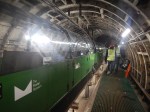


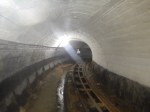
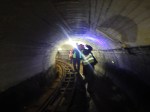
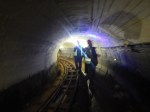

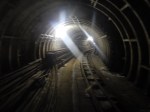
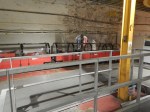
Note.
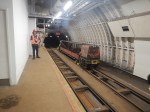
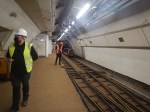
- The tracks are only two-foot gauge.
- The trains were driverless and electrically powered.
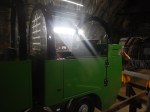
- The two modern trains with the plastic roofs; one of which is red and the other green, are used to take Postal Museum visitors along the tunnels.
- The yellow train was painted that colour for its part in the Bruce Willis film; Hudson Hawk.
- A large number of the sleepers had plaques on them, indicating their sponsors. The sleeps looked to be nearly all original.
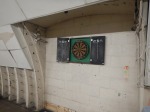
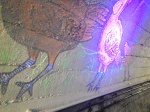
- The paintings on the wall show the Twelve Days of Christmas and date from when Christmas parties for children were held in the tunnels.
- The tunnels were dug by hand using a Greathead Shield.
- There was no evidence of rodents.
It is a unique railway that is well worth a visit.
A few other facts and thoughts.
New Tunnels
Most modern tunnels like Crossrail, High Speed Two and the Thames Tideway are now dug by tunnel boring machines or TBMs. These pictures show Millicent and Ursula preparing to start boring the Thames Tideway.
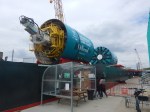
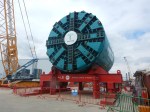
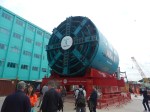
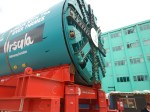
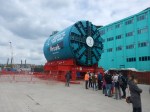
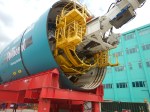

Not all tunnels though use a TBM. Recently, the new running tunnel at Bank and pedestrian tunnels at Paddington and possibly Moorgate have been dug in the traditional way, but probably with the aid of some of the likes of JCB’s finest.
There was also the innovative way, that Whitechapel station was built, that I described in Coal Mining in Whitechapel.
Tunnel Life Research
This is a paragraph from the Wikipedia entry for the Post Office Railway.
A team from the University of Cambridge has taken over a short, double track section of unused Post Office tunnel near Liverpool Street Station, where a newly built tunnel for Crossrail is situated some two metres beneath. The study is to establish how the original cast-iron lining sections, which are similar to those used for many miles of railway under London, resist possible deformation and soil movement caused by the new works. Digital cameras, fibre optic deformation sensors, laser scanners and other low-cost instruments, reporting in real time, have been installed in the vacated tunnel. As well as providing information about the behaviour of the old construction materials, the scheme can also provide an early warning if the new tunnel bores are creating dangerous soil movement
This is worthwhile research, as there have been some problems with London’s older tunnels.
Building The Paddington Bakerloo Line Link Project
This was done in and around the Paddington end of the Post Office Railway.
There is a link to a professional presentation about this complex project in Paddington Bakerloo Line Link Project, London.
Royal Mail Group assets at Paddington helped in the comstruction of the link.
The African Nation Aiming To Be A Hydrogen Superpower
The title of this post, is the same as that as this article on the BBC.
It is a fascinating tale of how Namibia aims to modernise its economy, by becoming a major producer of hydrogen using electricity generated by wind and solar power.
Conclusion
Could other countries follow Namibia’s lead?
Kawasaki’s Liquefied Hydrogen Carrier Departs To Pick Up First Cargo
The title of this post, is the same as that of this article on Green Car Congress.
This is the first paragraph.
Kawasaki Heavy Industries’ Suiso Frontier, the world’s first liquefied hydrogen carrier, has left Japan to pick up its first hydrogen cargo in Australia. A return to Japan is expected around late February.
As the cargo is only seventy-five tonnes of liquid hydrogen, I have my doubts about shipping hydrogen from Australia to Japan.
Late February is two months away, so this represents a production rate of 37.5 tonnes per month.
In Can The UK Have A Capacity To Create Five GW Of Green Hydrogen?, I said the following.
Ryze Hydrogen are building the Herne Bay electrolyser.
- It will consume 23 MW of solar and wind power.
- It will produce ten tonnes of hydrogen per day.
The electrolyser will consume 552 MWh to produce ten tonnes of hydrogen, so creating one tonne of hydrogen needs 55.2 MWh of electricity.
This would mean that if the Japanese built one Herne Bay-size electrolyser, then it would produce around three hundred tonnes of hydrogen in an average month.
The only possible use for this ship at the moment, is as a research project to identify the problems of the transportation of hydrogen over long distances by sea.
But we may need to use ships for the coastal transportation of hydrogen in the UK and to Europe.
Lumo Allows Passengers From London To Edinburgh To Pre-Order Meals
The title of this post, is the same as that of this article on Rail Advent.
I just tried it out and what I saw was a good start.
They even had gluten-free sandwiches and other items from Marks & Spencer.
You can access it here.
AstraZeneca May Explain Britain’s Lower Death Rate
The title for this post, is the same as that of this article on the The Times.
These are the second and third paragraph of the article.
Dr Clive Dix said he believed that the jab could help to stave off serious Covid-19 illness for longer than RNA-based alternatives made by Pfizer and Moderna. “If you look across Europe, with the rise in cases, there’s also a corresponding lagged rise in deaths, but not in the UK,” he told The Daily Telegraph. “I personally believe that’s because most of our vulnerable people were given the AstraZeneca vaccine.”
Dix suggested that the T cell response to the AstraZeneca jab may explain the lower level of hospital admissions and deaths.
Dr, Clive Dix is a former Deputy Chair of the Vaccines Taskforce.
I think that Dr. Dix may have a point.
I am coeliac and I know I have a strong immune system.
When I had my dose of AstraZeneca vaccine, I was fairly sure that my immune system gave the viral vector vaccine a good kicking, as it thought the chimpanzee adenovirus on which it is based could be a dangerous intruder.
But with the second dose, I got no reaction. Had my immune system decided that the vaccine was a friend?
I have mentioned this reaction to people and I have found some coeliacs, who had a similar reaction to the one that I had with the AstraZeneca vaccine.
But more significantly, this summer, I suffered badly from hay fever. My GP told me that the high level could have been because the AstraZeneca vaccine had boosted my immune system.
I’ve only had it as bad once before and I suspect that was a couple of years after I went gluten-free, after being diagnosed as a coeliac. I suspect that that would have boosted my immune system.
I can do a small calculation.
I suspect, that there are about 40,000,000 in the UK who have been vaccinated with two doses of the AstraZeneca vaccine.
If we assume coeliacs are 1-in-100 of the population, as stated on this page on the NHS web site, and most have been vaccinated, as they tend to be cautious about their food and health, that equates to 400,000 people who could be fully vaccinated and have an immune system with all the defensive strength of a whole regiment of special forces soldiers on steroids.
For some time now, various sources have been saying the models of the pandemic aren’t right.
I do wonder, if coeliacs with the AstraZeneca vaccine are super-immune and they are skewing the models. After all 400,000 with a super-immunity is a large number in comparison to the total number of deaths from the Covids in the UK, which stood at 171,801 with the Covids on their death certificate tonight.
Conclusion
I am drawn to one big conclusion and that is more research needs to be done.
It would be a great help, if we knew how many coeliacs on long-term gluten-free diets had ended up in hospital.
I wouldn’t ask the doctors, but the catering departments, who would be providing the gluten-free food, that the coeliacs will be demanding.
Road-Rail Services Inaugurated
The title of this post, is the same as that as this article on Railway Gazette.
This first paragraph tells all.
The start of regular road-rail services on the Asa Kaigan Tetsudo in southeast Shikoku was marked with a ceremony at Awa-Kainan-Bunkamura on December 25.
I have found this video of the vehicles.
I do wonder if there is a simpler way.
In Zwickau in Germany on the Vogtlandbahn, standard Stadler diesel multiple units, run through the streets from the main station to a tram-stop like station in the centre of the town.


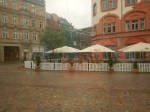
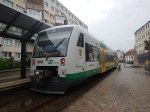
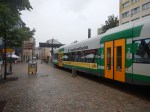
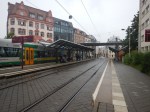
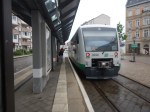

They are more of a train-tram, than a tram-train.
- The train is fitted with orange warning lights.
- The train shares the same corridor with a tram, that uses a different gauge, using three-rail track.
- Access between the train and platform is more-or-less level and as good as, if not better than most German trains.
- The platform at Zwickau Zentrum is an island platform, where the trams call at the other side.
- The concept would work with any independently-powered multiple unit.
I am sure, where there are places where this will work in the UK.
We almost do the same thing at some seaside stations like Saltburn, Sheringham and St. Ives.
 The Anonymous Widower