West Drayton Station – 22nd July 2021
West Drayton station is now substantially complete, as these pictures show.

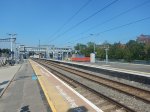
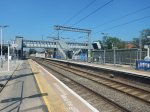

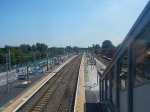

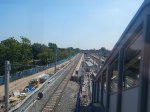

There is obviously work to do including.
- Finishing the station frontage.
- Completion of the building on Platform 4 and 5.
The map from carto metro shows the lines through the station.
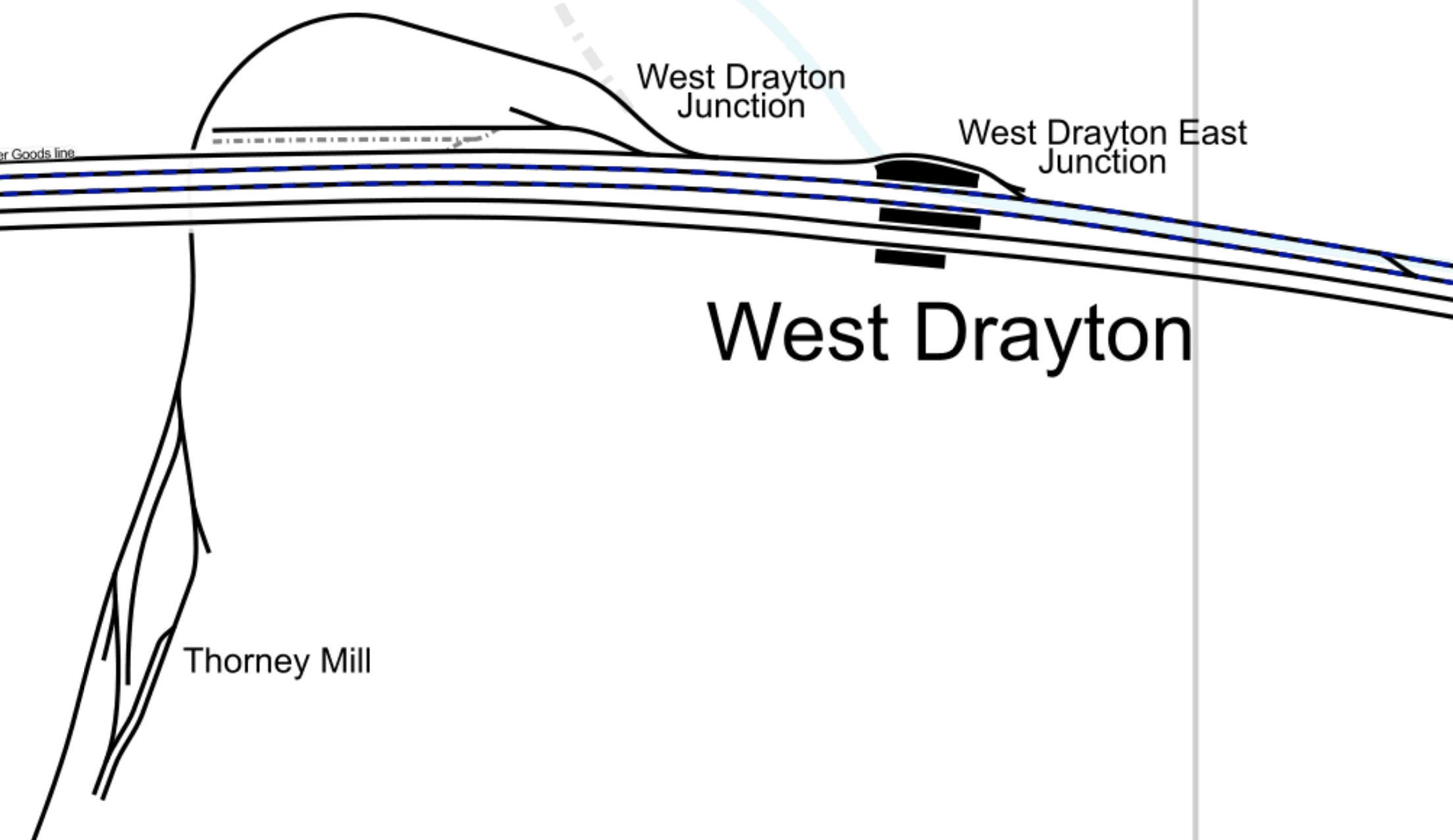
Thorney Mill is an aggregates depot on the former Staines and West Drayton Railway. There is also an aviation fuel terminal for Heathrow Airport at Colnbrook, which is further to the South.
I do wonder, if the former Staines and West Drayton Railway can be repurposed to improve the operation of Heathrow Airport.
Railway Engineers Build Beaver Pass On Highland Line
The title of this post, is the same as that of this article on the BBC.
This is the introductory paragraph.
Railway engineers have built what they believe is Scotland’s first ever ‘beaver pass’, to allow the animals to go under the Highland mainline.
Let’s hope the remedial action works, as otherwise, there’ll be increasing train delays caused by beavers, as their numbers and dams proliferate.
The Scottish NFU is also against the reintroduction of beavers, as this article on the Scottish Farmer, which is entitled Don’t Protect The Beaver illustrates.
I can see trouble ahead!
A Reminder Of The Sixties
This advert at Angel station has echoes of me of a series of jokes of the 1960s.
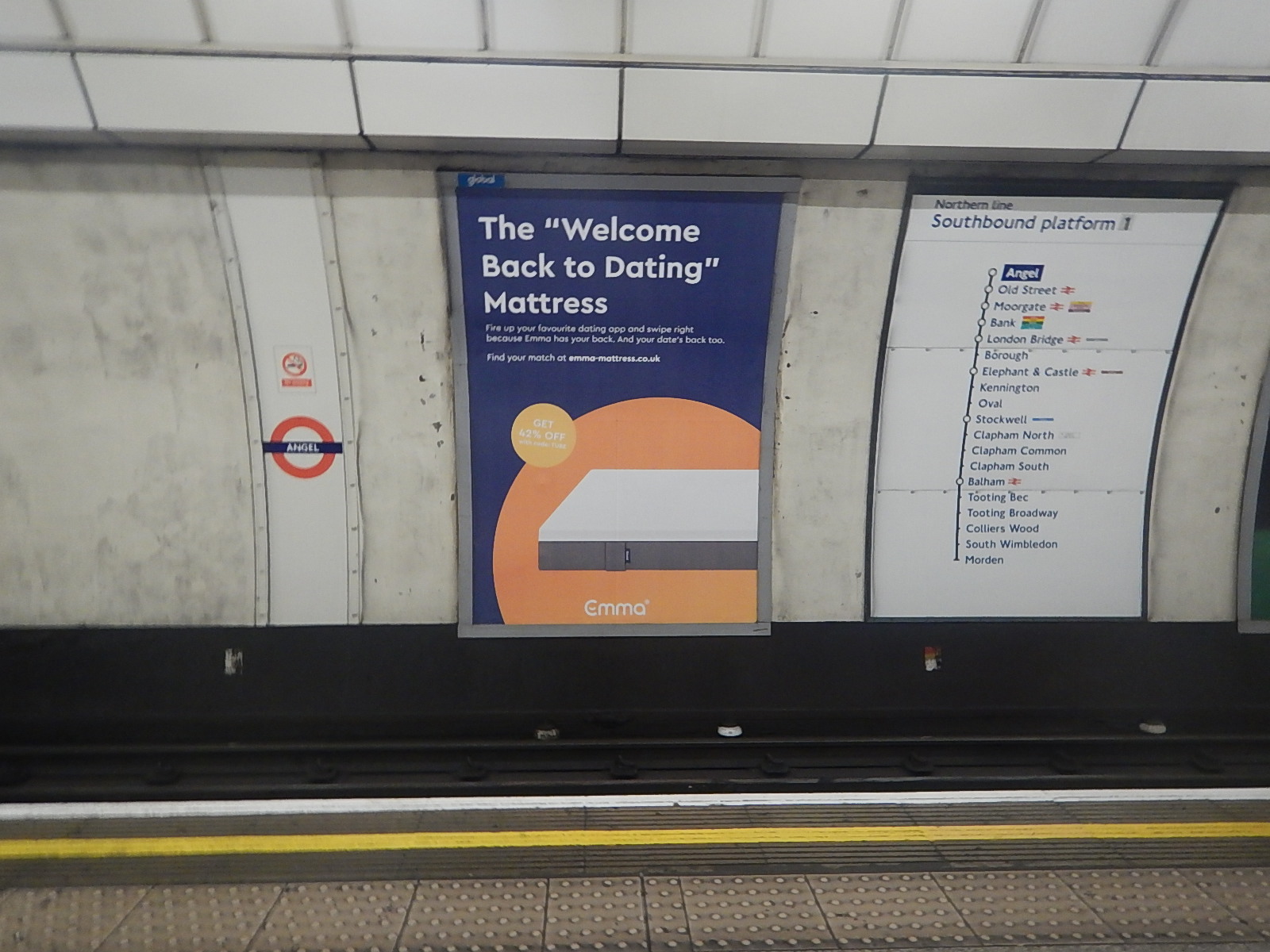
I can only remember one!
Question: What is the definition of a mistress?
Answer: Something that goes between a master and his mattress!
An Analysis Of The Train Service On The East Kent Line With Respect To The Three Options For Crossrail To Ebbsfleet (C2E)
Much of the analysis is an update of a post called Up To £3 Billion For Crossrail To Ebbsfleet, that I wrote in June 2019.
Current Services Along The North Kent Line
I shall start by looking at current services on the North Kent Line.
Thameslink – Luton And Rainham (Kent)
A Thameslink service
- Two trains per hour (tph)
- South of the Thames, the service calls at London Bridge, Deptford, Greenwich, Maze Hill, Whatcombe Park, Charlton, Woolwich Arsenal, Plumstead, Abbey Wood, Slade Green, Dartford, Stone Crossing, Greenhithe for Bluewater, Swanscombe, Northfleet, Gravesend, Higham, Strood, Rochester, Chatham and Gillingham.
- Eight-car Class 700 trains work the route, which have a 100 mph operating speed.
- The service calls at Northfleet for a possible interchange with services running from Ebbsfleet International station
- The service calls at Abbey Wood for interchange with Crossrail.
If there needed to be more capacity on this service, I suspect Thameslink could run twelve-car trains.
Southeastern – London Charing Cross And Gravesend
A Southeastern Metro service.
- Two tph
- Calls at Waterloo East, London Bridge, Hither Green, Lee, Mottingham, New Eltham, Sidcup, Albany Park, Bexley, Crayford, Dartford, Stone Crossing, Greenhithe for Bluewater, Swanscombe and Northfleet
- The service calls at Northfleet for a possible interchange with services running from Ebbsfleet International station.
- The service calls at Gravesend for interchange with Southeastern HighSpeed services between St. Pancras International station and North-East Kent, East Kent and soon-to-be East Sussex.
- Class 465 trains work the route, which have a 75 mph operating speed.
This picture shows a train for Gravesend in London Bridge station.
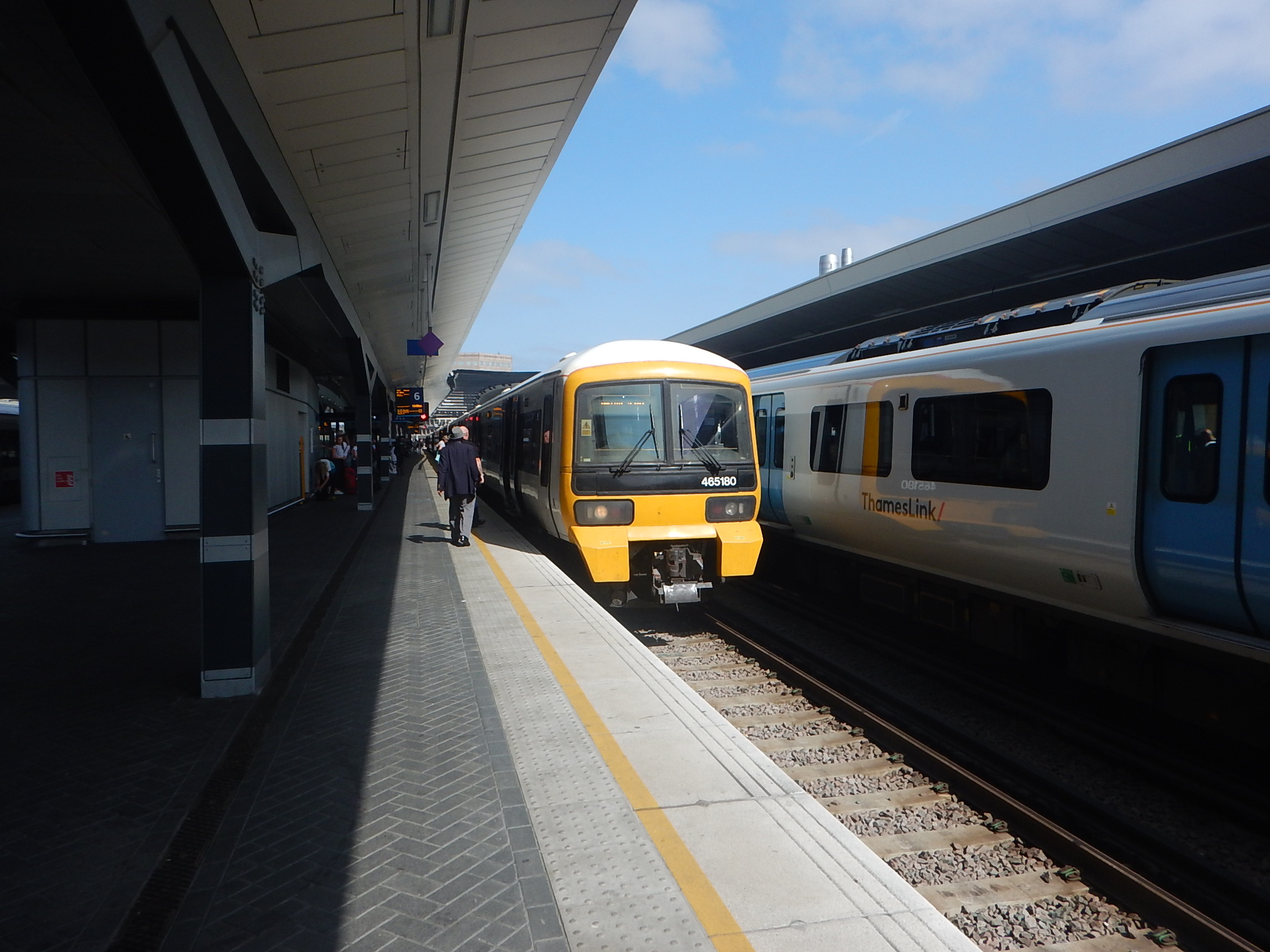
My feeling, is that the service would be improved by modern 100 mph trains, as these antique slow-coaches must restrict the speed of faster trains.
Southeastern – London Cannon Street And Dartford Loop Line
A Southeastern Metro service.
- Four tph in both directions.
- Calls at London Bridge, Deptford, Greenwich, Maze Hill, Westcombe Park, Charlton, Woolwich Dockyard, Woolwich Arsenal, Plumstead, Abbey Wood, Belvedere, Erith and Slade Green.
- Two tph return to Cannon Street via Crayford and Sidcup and two tph return to Cannon Street via Barnehurst and Bexleyheath.
- The service calls at Abbey Wood for a planned interchange with Crossrail.
- Class 465 trains work the route.
As I said with the previous service, these 75 mph trains need replacing with 100 mph trains.
Southeastern – London Charing Cross And Dartford
A Southeastern Metro service.
- Two tph
- Calls at Waterloo East, London Bridge, Lewisham, Blackheath, Charlton, Woolwich Dockyard, Woolwich Arsenal, Plumstead, Abbey Wood, Belvedere, Erith and Slade Green.
- The service calls at Abbey Wood for a planned interchange with Crossrail.
- Class 465 trains work the route.
As I said with the two previous services, these 75 mph trains need replacing with 100 mph trains.
Southeastern – London Victoria And Dover
A Southeastern Mainline service.
- Two tph
- Calls on the North Kent Line at Rochester, Chatham, Gillingham and Rainham.
- Class 465 trains work the route.
As I said with previous services, these 75 mph trains need replacing with 100 mph trains.
Southeastern – London Victoria And Ramsgate
A Southeastern Mainline service.
- One tph
- Calls on the North Kent Line at Rochester, Chatham, Gillingham and Rainham.
- Class 465 trains work the route.
As I said with previous services, these 75 mph trains need replacing with 100 mph trains.
Southeastern – London St. Pancras And Faversham
A Southeastern HighSpeed service.
- One tph
- Calls at Stratford International, Ebbsfleet International, Gravesend, Strood, Rochester, Chatham, Gillingham, Rainham and Sittingbourne.
- The service calls at Ebbsfleet International for an interchange with Continental services.
- Class 395 trains work the route, which have a 100 mph operating speed on lines electrified using a third-rail.
This picture shows a Class 395 train at Gravesend station.
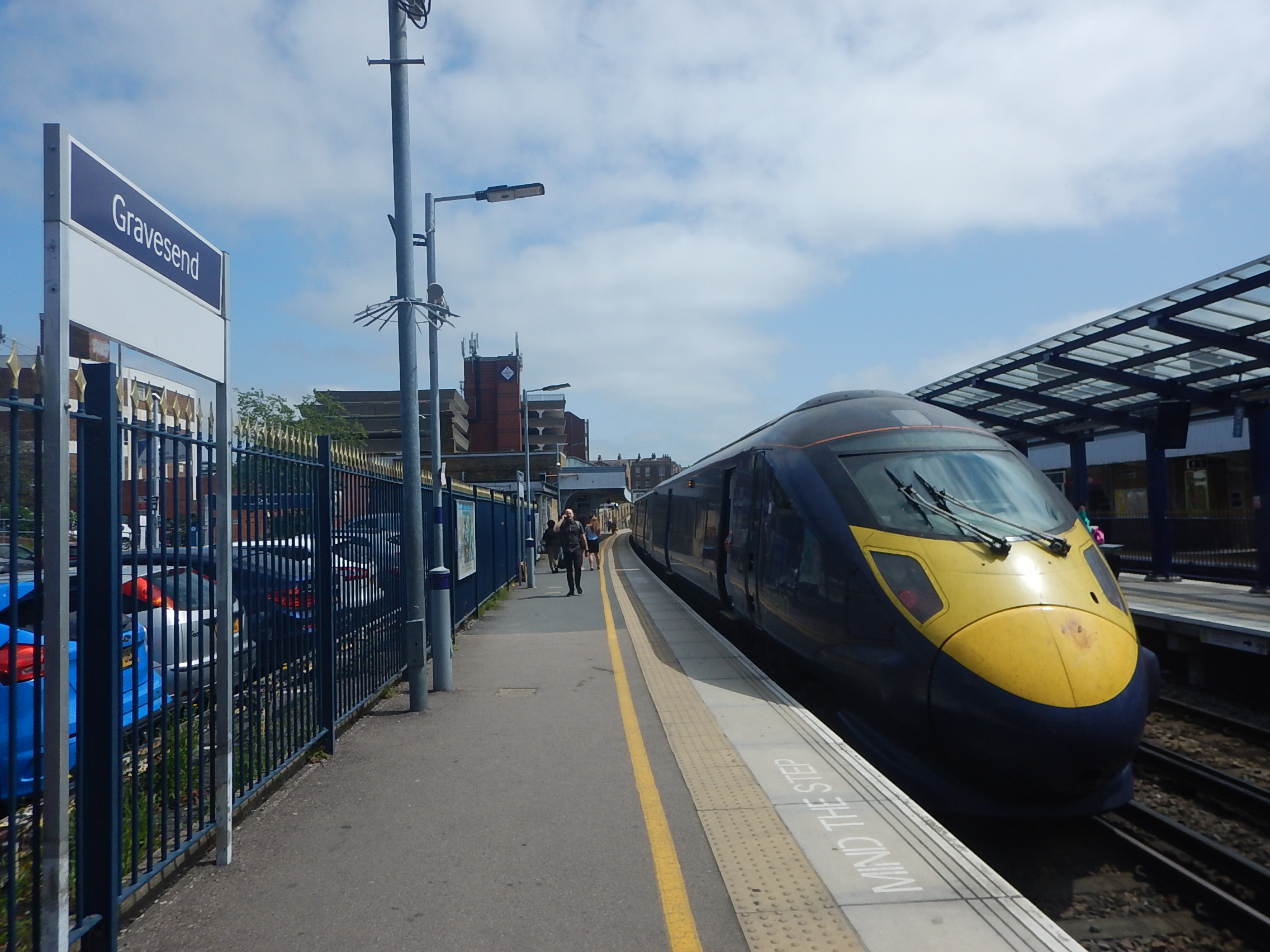
East of Ebbsfleet International, this service can be considered a 100 mph local train, that gets slowed by the 75 mph services.
Southeastern – London St Pancras International Loop Service
A Southeastern HighSpeed service.
- One tph
- Calls at Stratford International, Ebbsfleet International, Gravesend, Strood, Rochester, Chatham, Gillingham, Rainham, Sittingbourne, Faversham, Whitstable, Herne Bay, Birchington-on-Sea, Margate, Broadstairs, Ramsgate, Sandwich, Deal, Walmer, Martin Mill, Dover Priory, Folkestone Central, Folkestone West, Ashford International, Ebbsfleet International and Stratford International.
- The service calls at Ebbsfleet International and Ashford International for an interchange with Continental services.
- Class 395 trains work the route.
East of Ebbsfleet International, this service can be considered a 100 mph local train, that gets slowed by the 75 mph services.
Southeastern – London St Pancras International And Ramsgate
A Southeastern HighSpeed service.
- One tph
- Calls at Stratford International, Ebbsfleet International, Ashford International, Canterbury West, Ramsgate and Broadstairs
- The service calls at Ebbsfleet International and Ashford International for an interchange with Continental services.
- Class 395 trains work the route.
East of Ashford International, this service can be considered a 100 mph local train, that gets slowed by the 75 mph services.
A Summary Of Services By Station
I will look at the current number of trains at stations between London Bridge and Faversham.
- Deptford – 6 tph
- Greenwich – 6 tph
- Maze Hill – 6 tph
- Westcombe Park – 6 tph
- Charlton – 8 tph
- Woolwich Dockyard – 6 tph
- Woolwich Arsenal – 8 tph
- Plumstead – 8 tph
- Abbey Wood – 8 tph
- Belvedere – 6 tph
- Erith – 6 tph
- Slade Green – 6 tph
- Dartford – 12 tph to London and 6 tph to the East
- Stone Crossing – 4 tph
- Greenhithe for Bluewater – 6 tph
- Swanscombe – 4 tph
- Northfleet – 4 tph
- Gravesend – 6 tph to London and 5 tph to the East
- Higham – 2 tph
- Strood – 4 tph
- Rochester – 7 tph
- Chatham – 7 tph
- Gillingham – 7 tph
- Rainham – 7 tph to London and 5 tph to the East
- Sittingbourne – 5 tph
- Faversham – 5 tph
Note.
- This is almost a train every ten minutes all the way from London to Faversham.
- Between Gravesend and Faversham one tph is a Southeastern HighSpeed service.
- In addition Ebbsfleet International has four tph to and from London St. Pancras International.
This can be considered the base service to which Crossrail services can be added.
Service Frequency Of Option 1
The first option provides for an extension of Crossrail from Abbey Wood to Northfleet/Ebbsfleet and Gravesend, sharing the existing tracks with National Rail services.
- Of the 12 trains per hour (tph) that are planned to run to Abbey Wood. four tph will terminate at each of Abbey Wood, Northfleet/Ebbsfleet and Gravesend.
- Crossrail trains would call at all stations on the North Kent Line between Abbey Wood and Gravesend stations.
This gives a summary as follows.
- Deptford – 6 tph
- Greenwich – 6 tph
- Maze Hill – 6 tph
- Westcombe Park – 6 tph
- Charlton – 8 tph
- Woolwich Dockyard – 6 tph
- Woolwich Arsenal – 8 tph
- Plumstead – 8 tph
- Abbey Wood – 20 tph
- Belvedere – 14 tph
- Erith – 14 tph
- Slade Green – 14 tph
- Dartford – 20 tph to London and 14 tph to the East
- Stone Crossing – 12 tph
- Greenhithe for Bluewater – 14 tph
- Swanscombe – 12 tph
- Northfleet – 12 tph
- Gravesend – 10 tph to London and 5 tph to the East
- Higham – 2 tph
- Strood – 4 tph
- Rochester – 7 tph
- Chatham – 7 tph
- Gillingham – 7 tph
- Rainham – 7 tph to London and 5 tph to the East
- Sittingbourne – 5 tph
- Faversham – 5 tph
Note.
- Train frequencies between Abbey Wood and Northfleet have increased by 8 tph
- Train frequencies at Gravesend have increased by 4 tph.
- Train frequencies to the East of Gravesend are unchanged.
- Between Gravesend and Faversham one tph is a Southeastern HighSpeed service.
- Crossrail has a direct interchange at Gravesend with the Southeastern HighSpeed services.
I am fairly certain that signalling must be improved and train speeds must be increased for Option 1.
Service Frequency Of Option 2
The second option is to draw out Crossrail from south east London to Dartford using new dedicated tracks built next to the existing North Kent line, with increased rail service frequency between Dartford and Northfleet.
- All the 12 tph, that currently are planned to run ro Abbey Wood, all will terminate at Dartford station.
- Crossrail trains would call at all stations on the North Kent Line between Abbey Wood and Dartford stations.
- I will assume that Southeastern run an extra 4 tph between Dartford and Northfleet.
This gives a summary as follows.
- Deptford – 6 tph
- Greenwich – 6 tph
- Maze Hill – 6 tph
- Westcombe Park – 6 tph
- Charlton – 8 tph
- Woolwich Dockyard – 6 tph
- Woolwich Arsenal – 8 tph
- Plumstead – 8 tph
- Abbey Wood – 20 tph
- Belvedere – 18 tph
- Erith – 18 tph
- Slade Green – 18 tph
- Dartford – 24 tph to London and 10 tph to the East
- Stone Crossing – 8 tph
- Greenhithe for Bluewater – 10 tph
- Swanscombe – 8 tph
- Northfleet – 8 tph
- Gravesend – 6 tph to London and 5 tph to the East
- Higham – 2 tph
- Strood – 4 tph
- Rochester – 7 tph
- Chatham – 7 tph
- Gillingham – 7 tph
- Rainham – 7 tph to London and 5 tph to the East
- Sittingbourne – 5 tph
- Faversham – 5 tph
Note.
- There is a big increase in services to between Abbey Wood and Dartford.
- There is an increase of 4 tph in services between Dartford and Northfleet.
- There is no increase in services at Gravesend.
- Between Gravesend and Faversham one tph is a Southeastern HighSpeed service.
- Crossrail has no direct interchange with the Southeastern HighSpeed services.
I am fairly certain that signalling must be improved and train speeds must be increased for Option 2.
Service Frequency Of Option 3
A third option consists of improving the National Rail service between Abbey Wood and Northfleet, combined with a new Bus Rapid Transit service.
- It appears Crossrail services would stay the same at Abbey Wood, with all twelve tph terminating at the station, as are currently planned.
- Southeastern services to Dartford via Abbey Wood would be extended to Northfleet. This would increase the number of Southeastern trains to/from London serving stations between Northfleet and Dartford for connection to Crossrail at Abbey Wood from four to eight tph.
This gives a summary as follows.
- Deptford – 6 tph
- Greenwich – 6 tph
- Maze Hill – 6 tph
- Westcombe Park – 6 tph
- Charlton – 8 tph
- Woolwich Dockyard – 6 tph
- Woolwich Arsenal – 8 tph
- Plumstead – 8 tph
- Abbey Wood – 20 tph
- Belvedere – 6 tph
- Erith – 6 tph
- Slade Green – 6 tph
- Dartford – 8 tph to London and 10 tph to the East
- Stone Crossing – 8 tph
- Greenhithe for Bluewater – 10 tph
- Swanscombe – 8 tph
- Northfleet – 8 tph
- Gravesend – 6 tph to London and 5 tph to the East
- Higham – 2 tph
- Strood – 4 tph
- Rochester – 7 tph
- Chatham – 7 tph
- Gillingham – 7 tph
- Rainham – 7 tph to London and 5 tph to the East
- Sittingbourne – 5 tph
- Faversham – 5 tph
Note.
-
- There is a 4 tph increase in services between Abbey Wood and Northfleet.
- There is no increase in services at Gravesend.
- Between Gravesend and Faversham one tph is a Southeastern HighSpeed service.
- Crossrail has no direct interchange with the Southeastern HighSpeed services.
I am fairly certain that signalling must be improved and train speeds must be increased for Option 3.
Conclusion
I have come to several small conclusions about future services on the North Kent Line.
Improved Signalling
To handle the number of trains required, I am fairly certain that modern digital signalling as used on the central sections of Crossrail and Thameslink, should be installed on the route.
Faster Trains
The operating speed of the North Kent Line is 90 mph, which is not a good fit to the operating speed of the trains.
- Class 375 train – 100 mph
- Class 376 train – 75 mph
- Class 395 train – 100 mph
- Class 465 train – 75 mph
- Class 466 train – 75 mph
- Class 700 train – 100 mph
- Class 707 train – 100 mph
I’m sure that train capacity would be increased if trains could operate at 90 mph or even 100 mph on the route.
Only Option 1 Allows Interchange Between Crossrail And Southeastern HighSpeed Services
Option 1 allows this interchange at Gravesend and it could prove useful, when travelling between North-East Kent and Crossrail stations, including Paddington and Heathrow.
More Services East Of Gravesend
I suspect that there could be extra paths to the East of Gravesend.
These could be either classic or HighSpeed services.
In Kent On The Cusp Of Change – Highspeed Routes, I said this.
The Kent On The Cusp Of Change article in the July 2017 Edition of Modern Railways talks about the Southeastern Highspeed routes through Kent.
Some principles are laid down.
- All six-car services would be extended to twelve-car services.
- Trains could be divided at Ashford International station to serve multiple destinations.
- Maidstone West station would get an hourly Off Peak service.
The article gives an estimate that at least another twenty Class 395 trains are needed of which perhaps three would have batteries for operation along the Marshlink Line between Ashford International and Ore stations.
The new timetable proposed in the article is similar to that now, with the following changes in each hour.
- All Day – A St. Pancras – Ashford – Dover Priory service runs once per hour and splits at Ashford with one six-car train going to and from Hastings and the other six-car train going to and from Dover Priory.
- Off Peak – A new St. Pancras – Ashford – Canterbury West service runs once per hour.
- All Day – A new St. Pancras – Ebbsfleet service runs twice per hour.
- Off Peak – A new St. Pancras – Gravesend – Strood – Maidstone West service runs once per hour.
In addition all trains passing Thanet Parkway station will stop after it opens.
Note.
- Southeastern HighSpeed services will serve Hastings.
- Gravesend gets a second Southeastern HighSpeed service to St. Pancras.
I also wrote Kent On The Cusp Of Change – Fawkham Junction Link, which is about a Network Rail proposal to use Victoria as a second terminal for Southeastern HighSpeed services.
Little has been said about using Victoria as a second terminal, but if it was, it could free up space on the North Kent Lines, which would allow more paths for Crossrail.
Proposals For Crossrail Elizabeth Line Extension To Ebbsfleet Cut Down To Three Options
The title of this post, is the same as that of this article on Kent Online.
So what are the three options?
Crossrail To Northfleet/Ebbsfleet And Gravesend
The first option provides for an extension of Crossrail from Abbey Wood to Northfleet/Ebbsfleet and Gravesend, sharing the existing tracks with National Rail services.
- Of the 12 trains per hour (tph) that are planned to run to Abbey Wood. four tph will terminate at each of Abbey Wood, Northfleet/Ebbsfleet and Gravesend.
- A single platform at Abbey Wood, Northfleet and Gravesend would be capable of handling the required four tph.
- Crossrail trains would call at all stations on the North Kent Line between Abbey Wood and Gravesend stations.
- It looks like some form of people-mover will be needed between Northfleet and Ebbsfleet stations.
- Gravesend station could either turn the trains directly or have a turnback facility to the East of the station at Hoo, where provision has been made for train stabling.
- Extension of Crossrail’s digital signalling along the North Kent Line, at least as far as Hoo would probably be needed to cope with the extra trains.
This option would be feasible and would require just a new platform at Northfleet station, the people-mover and perhaps some work at Gravesend station.
Crossrail To Dartford And Northfleet/Ebbsfleet
The second option is to draw out Crossrail from south east London to Dartford using new dedicated tracks built next to the existing North Kent line, with increased rail service frequency between Dartford and Northfleet.
- All the 12 tph, that currently are planned to run ro Abbey Wood, all will terminate at Dartford station.
- Crossrail trains would call at all stations on the North Kent Line between Abbey Wood and Dartford stations.
- It looks like some form of people-mover will be needed between Northfleet and Ebbsfleet stations.
- Extension of Crossrail’s digital signalling along the North Kent Line, at least as far as Hoo would probably be needed to cope with the extra trains.
This option would be feasible and would require a new platform at Northfleet station, the people-mover and a lot of work between Abbey Wood and Dartford stations and at Dartford station.
A Lower Cost Option With Buses
A third option consists of improving the National Rail service between Abbey Wood and Northfleet, combined with a new Bus Rapid Transit service.
- It appears Crossrail services would stay the same at Abbey Wood, with all twelve tph terminating at the station, as are currently planned.
- Southeastern services to Dartford via Abbey Wood would be extended to Northfleet. This would increase the number of Southeastern trains to/from London serving stations between Northfleet and Dartford for connection to Crossrail at Abbey Wood from four to eight tph.
- There would need to be turnback facilities at Northfleet station for the Southeastern services.
- Extension of Crossrail’s digital signalling along the North Kent Line, at least as far as Hoo would probably be needed to cope with the extra trains.
- A Bus Rapid Transit service would be provided between Abbey Wood and Ebbsfleet stations via Slade Green, Dartford and Bluewater.
- A Bus Rapid Transit service would be provided between Slade Green and Ebbsfleet via Greenhithe and Northfleet.
- Both Bus Rapid Transit services would have a frequency of six buses per hour.
This option looks to be feasible and would only require a new platform at Northfleet station.
The Views Of New Civil Engineer
This article on New Civil Engineer gives its views on the three options.
It says this of the first option.
This option would require the construction of some sections of additional track and junction works within the existing rail corridor, significant works at Abbey Wood, Slade Green and Dartford stations and require additional land to accommodate additional train stabling facilities.
And this of the second option.
This option would require significant construction work to build a new two track rail alignment alongside the existing North Kent line, requiring potential compulsory purchase of land and property beyond the existing rail corridor in some areas and significant works at Abbey Wood, Slade Green and Dartford stations, as well as the provision of new train stabling facilities.
It doesn’t comment about the third option, which I take to mean, that all work for the trains can be done within the existing rail corridor.
Components Of The Options
Although the options are different there are some components that appear in more than one option.
Improved Digital Signalling
The number of trains running to the East of Abbey Wood station, will surely increase under all three options and I feel it is essential, that modern digital signalling be installed on the North Kent Lines.
More Train Stabling
Commenting on the first two options, New Civil Engineer says that more stabling will be needed.
In the Gibb Report, Chris Gibb looked at stabling problems with Thameslink and found there was a problem along the North Kent Line. I wrote about it in Gibb Report – Hoo Junction Depot.
I feel that a review of all train stabling in Kent should be performed, so that there is enough space to service and stable the trains of the various operators.
When Crossrail was originally planned, the route was safeguarded to Gravesend and Hoo Junction was put forward as somewhere to stable trains.
A Turnback Platform At Northfleet Station
All three options need a turnback platform at Northfleet station.
- In Option 1 it will be handling Crossrail trains.
- In Options 2 and 3, it will be handling Southeastern trains.
- It probably needs to handle four tph.
- Nine-car Class 345 trains used by Crossrail are 205 metres long.
- Twelve-car Class 377 trains used by Southeastern are 240 metres long.
This Google Map shows Northfleet station.
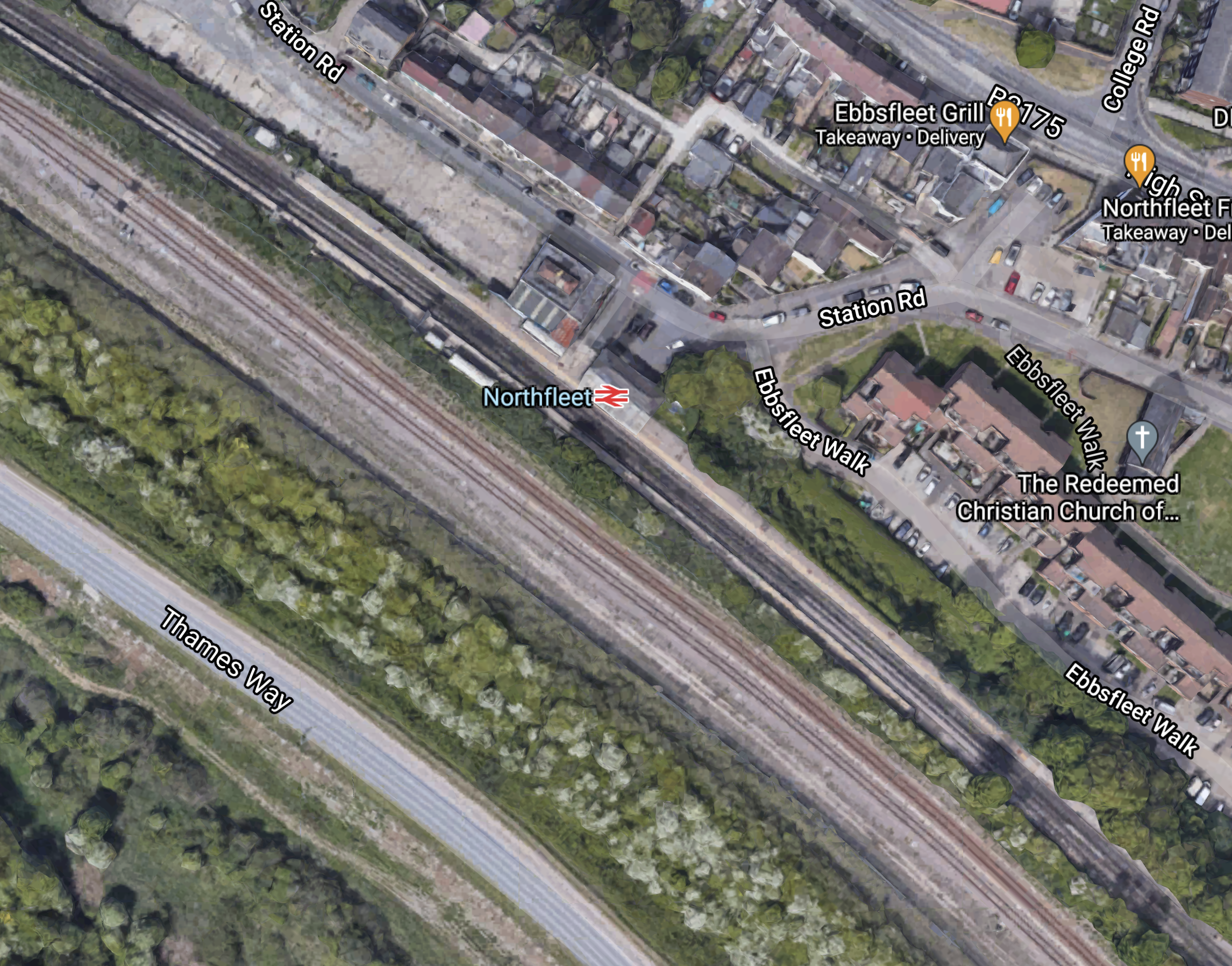
Note.
- The North Kent Line goes diagonally across the map from North-West to South-East.
- Northfleet station is a two-platform station.
- To the South of the station, there are sidings, which are connected to the North Kent Line.
This picture shows the sidings from Northfleet station, with Ebbsfleet station about a mile away.
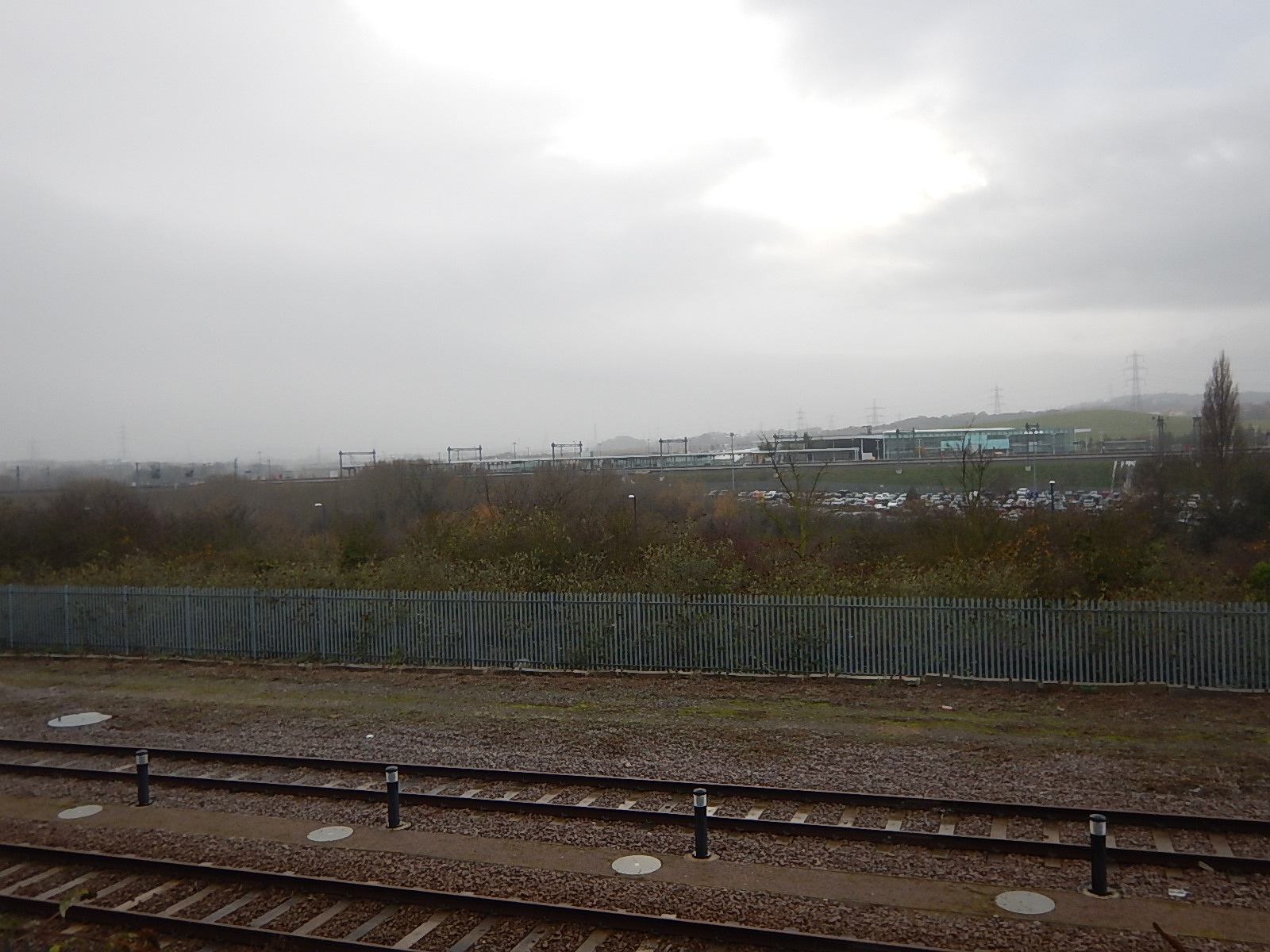
It appears that there would be space to add a well-appointed turnback platform at Northfleet station.
These pictures show some of the features of the current Northfleet station.
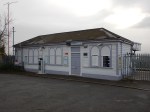
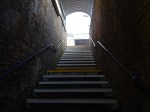
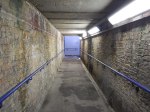
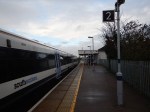
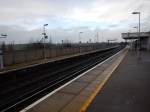
Rebuilding to add the turnback platform, could also include.
- Full step-free access
- Modern station buildings
- A deep clean of the pedestrian tunnel.
- An appropriately-sized bus station, with a zero-carbon shuttle bus to Ebbsfleet station.
- Future provision for a high-tech people-mover to Ebbsfleet station.
It is not one of the better stations on the Southeastern network.
But it certainly could be!
I very much feel that Northfleet station needs to be rebuilt with an extra platform.
A People-Mover Between Ebbsfleet And Northfleet Stations
I wrote So Near And Yet So Far! about the poor connection between Ebbsfleet And Northfleet stations.
It is a design crime of the highest order.
There has been a lot of pressure in the past to build a pedestrian link between the two stations, as reported by the Wikipedia entry for Northfleet station.
The station is very close to Ebbsfleet International station (the NNE entrance is only 334 yards (305 m) from Northfleet’s station), but passengers (using public transport) will find it far easier to access Ebbsfleet International from Gravesend or Greenhithe, as these stations are more accessible and offer easy access to Fastrack bus services. The walking route between the two stations is 0.6 miles (1 km) or 0.8 miles (1.3 km) and a suitable pedestrian link has not been built because of funding issues and objections from Land Securities.
Why when Ebbsfleet International station was built in the early 2000s for opening in 2007, was a pedestrian link not built between the two stations?
It sounds like it was a Treasury design for Civil Servants, who work in Westminster and wouldn’t dream of living in Gravesend.
How much did omitting the link save?
Probably in the the long term, about two-fifths of five eighths of f***-all!
The specialists in this type of people-mover are the Doppelmayr/Garaventa Group, who in the UK have built the Emirates Air Line and the Air-Rail Link at Birmingham Airport. Currently, they are building the Luton DART people mover.
Wikipedia says that the Emirates Air-Line cost £60million.

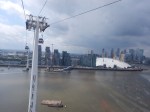
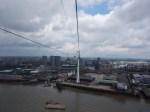


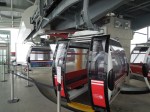
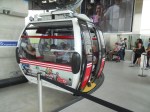
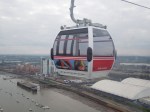
Wouldn’t something similar be an ideal way to welcome people to the UK?
The London Resort
The London Resort, is described like this in its Wikipedia entry.
The London Resort is a proposed theme park and resort in Swanscombe, Kent. The project was announced on 8 October 2012 and, if given planning permission, it is estimated that construction will begin in 2022, with a first gate opening in summer 2024 and a second gate by 2029.
It certainly sounds the sort of place I avoid, but just like Disneyland Paris, I feel the developers will want a rail connection.
They could even want to have another people-mover from Ebbsfleet station.
A Connection To The Bluewater Shopping Centre
The Bluewater Shopping Centre is not easy to get to by public transport and requires a bus from Greenhithe for Bluewater station.
Only Option 3 offered an improvement with a bus between Abbey Wood and Ebbsfleet stations via Slade Green, Dartford and Bluewater, that would run every ten minutes.
Conclusion
It seems that whatever option is eventually chosen, certain works will need to be performed as they are needed for all options.
- Extension of Crossrail’s digital signalling along the North Kent Line, at least as far as Hoo junction would probably be needed to cope with the extra trains.
- A review of train stabling in Kent should be carried out, to make sure there are enough places to service and stable the trains needed, by all the operators/
- Northfleet station needs to be rebuilt with an extra turnback platform for at least four tph.
- Provision should be made for a possible people-mover between Ebbsfleet And Northfleet stations.
The North Kent Line to the East of Abbey Wood station would now be ready for whichever option is chosen.
Because of the London Resort, which has still not been given a definite go-ahead we could see some changes and other options or even some that combine more than one option.
The New And Unusual Way Commuters Will Be Able To Get To Canary Wharf And Central London
The title of this post, is the same as that of this article on MyLondon.
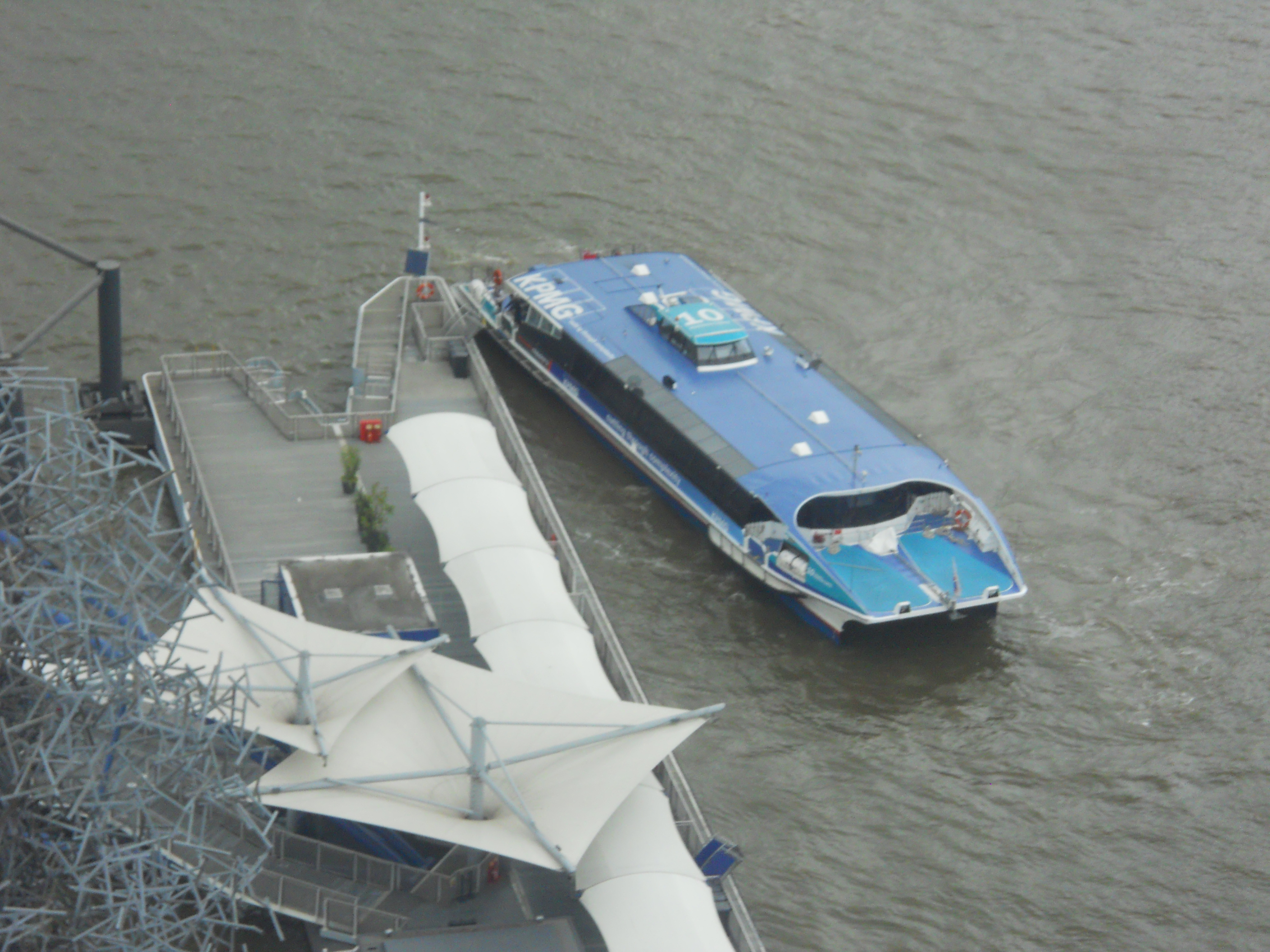
The image shows a Thames Clipper at Greenwich Pier.
A new pier for Thames Clippers is to be built at Barking Riverside, close to the new Barking Riverside station.
This will create a whole series of new routes to the East of Canary Wharf, Greenwich and the Thames Barrier.
Conclusion
I think the new pier will also be good for tourists, just as much as commuters.
I shall certainly use it to show visitors, the historic sites of the Thames.
It’s also good to see the Thames Clippers getting integrated with London’s more traditional public transport.
Stonehenge Tunnel Campaigners Win Court Battle
The title of this post, is the same as that of this article on the BBC.
This is the first part of the BBC article.
Campaigners have won a court battle to prevent the “scandalous” construction of a road tunnel near Stonehenge.
The £1.7bn Highways England project aimed to reduce A303 congestion but campaigners said it would detrimentally affect the world heritage site.
The government approved plans in 2020 for a two-mile (3.2km) tunnel to be created near the Wiltshire monument.
Mr Justice Holgate’s ruling means the order granted by transport secretary Grant Shapps has been quashed.
I obtained my driving licence in 1964 and since then the A303 past Stonehenge has been a worsening bottleneck.
I suspect that unreleased papers from successive governments since the 1960s would show that most Ministers of Transport hoped the problem of Stonehenge would be solved by the next Government of a different colour, which would hopefully lose them the next election.
If you read the whole of the BBC article you’ll see a large map from Highways England.
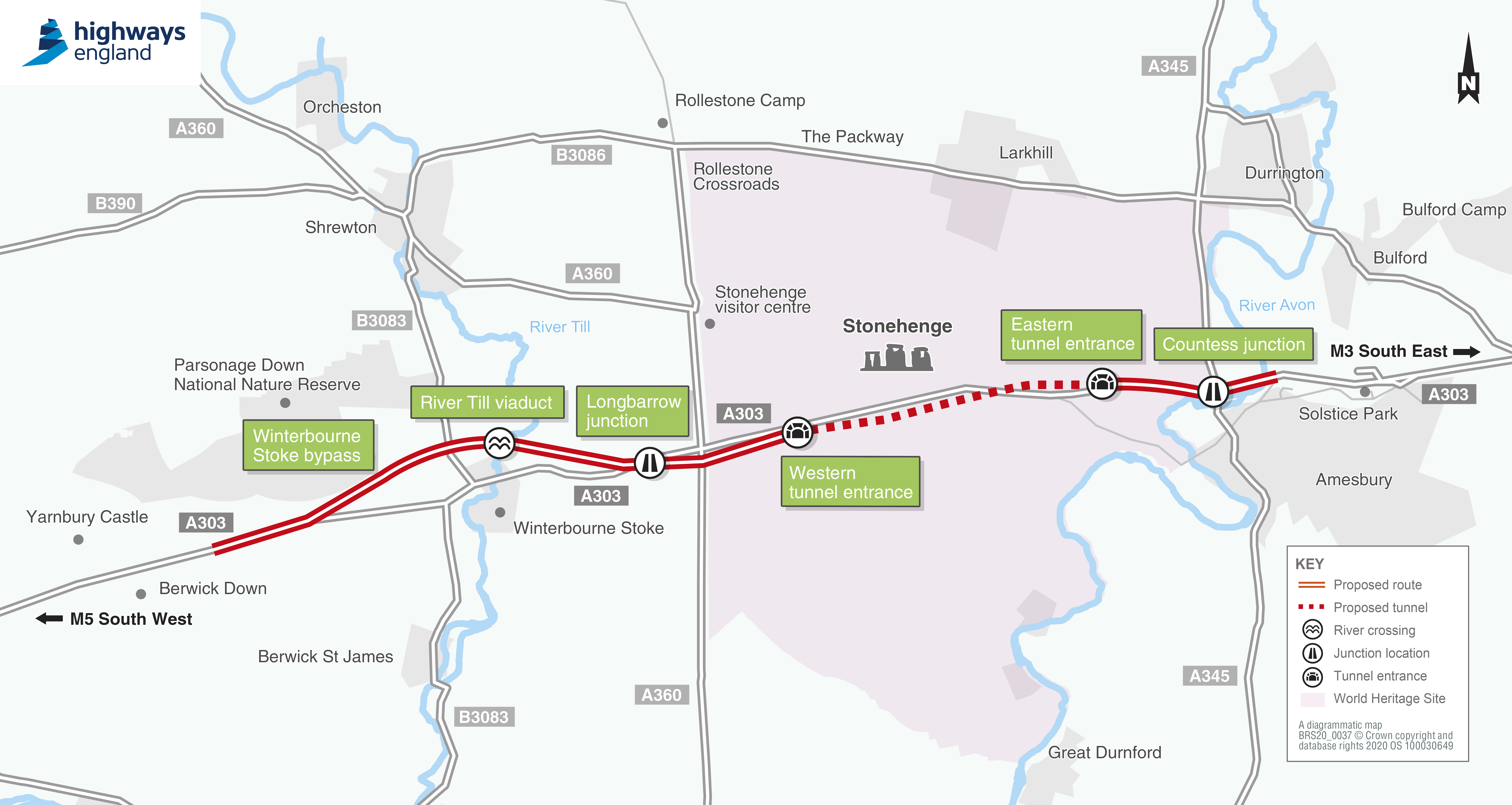
Note.
- The proposed tunnel is shown as a dotted red line to the South of Stonehenge, more or less following the line of the current A303.
- The Amesbury by-pass already exists in the East.
- A new Winterbourne Stoke by-pass will be built in the West.
Some feel that a longer tunnel might be the solution.
But it would probably need to start to the West of Winterbourne Stoke and be at least three times longer than the proposed tunnel.
So this short stretch of road would then probably cost around £5billion.
Can We Reduce The Traffic On This Road?
There are several ways that traffic might be reduced.
Universal Road Pricing
Every vehicle would be fitted with a meter, which charged drivers depending on the following.
- The type of vehicle.
- The congestion on the road.
- The speed, at which the vehicle is travelling.
It might work, but any government introducing universal road pricing would lose the next General Election by a landslide.
Tolls On Parts Of The A303
Again it might work and push drivers to find other routes.
Improve Other Routes Like The M4
As capacity is increased on other routes, drivers could be lured away from the busy section of the A303 around Stonehenge.
Improve Rail Services Between Paddington And West Of Exeter
I know because of friends, who regularly go to Devon and \Cornwall for both weekends and longer holidays, that many people go to the far-South West by car and most will use the A303 route to and from London.
These services are run by Great Western Railway and the destinations in the South West are not as comprehensive as they could be.
- GWR’s Class 802 trains can split and join efficiently, which could mean they could serve more destinations with the same number of trains.
- GWR seem to be in favour of developing more direct services between London and Bodmin, Okehampton and other places.
- GWR are adding stations to their network in the South-West.
But most importantly, GWR, Hitachi and the Eversholt Rail Group are developing the Hitachi Intercity Tri-Mode Battery Train, which will lower carbon-emissions on the route. This Hitachi infographic describes the train.

These trains could attract numbers of car drivers to use the train, rather than drive.
Improve The Night Riviera Between Paddington And Penzance
Most other sleeper trains in Europe have renewed their fleet.
An improvement in the rolling stock could encourage more people to travel this way.
Improve Rail Services Between Waterloo And Exeter
The rail line between Waterloo and Exeter via Basingstoke and Salisbury runs within a dozen miles of Stonehenge.
- The rolling stock is thirty-year-old British Rail diesel trains.
- It is not electrified to the West of Basingstoke.
- There are portions of single-track railway.
The Waterloo and Exeter line could be improved.
- Remove some sections of single track.
- Upgrade the operating speed to up to 100 mph in places.
- Use a version of the latest Hitachi Intercity Tri-Mode Battery Train
- Add some new stations.
I believe the quality, frequency and journey times of the service could all be improved.
Would this second fast route from the South-West encourage more to take the train?
Stonehenge And Wilton Junction Station
Stonehenge may be the problem, but it can also be part of the solution.
In The Proposal For Stonehenge And Wilton Junction Station, I write about an innovative proposal, that uses a car park at a new station to create a Park-And-Ride for both Stonehenge and Salisbury.
This could bring more visitors to Stonehenge without their cars.
Conclusion
None of these proposals will take vast amounts of pressure from the A303. But every little helps.
Some like the decarbonisation of rail services will have to be done anyway.
What Does 2.5 MW Look Like?
This press release on the Rolls-Royce web site is entitled Rolls-Royce Generator Delivered For Most Powerful Hybrid-Electric Propulsion System In Aerospace.
This Rolls-Royce picture shows the generator installed on a test bed.
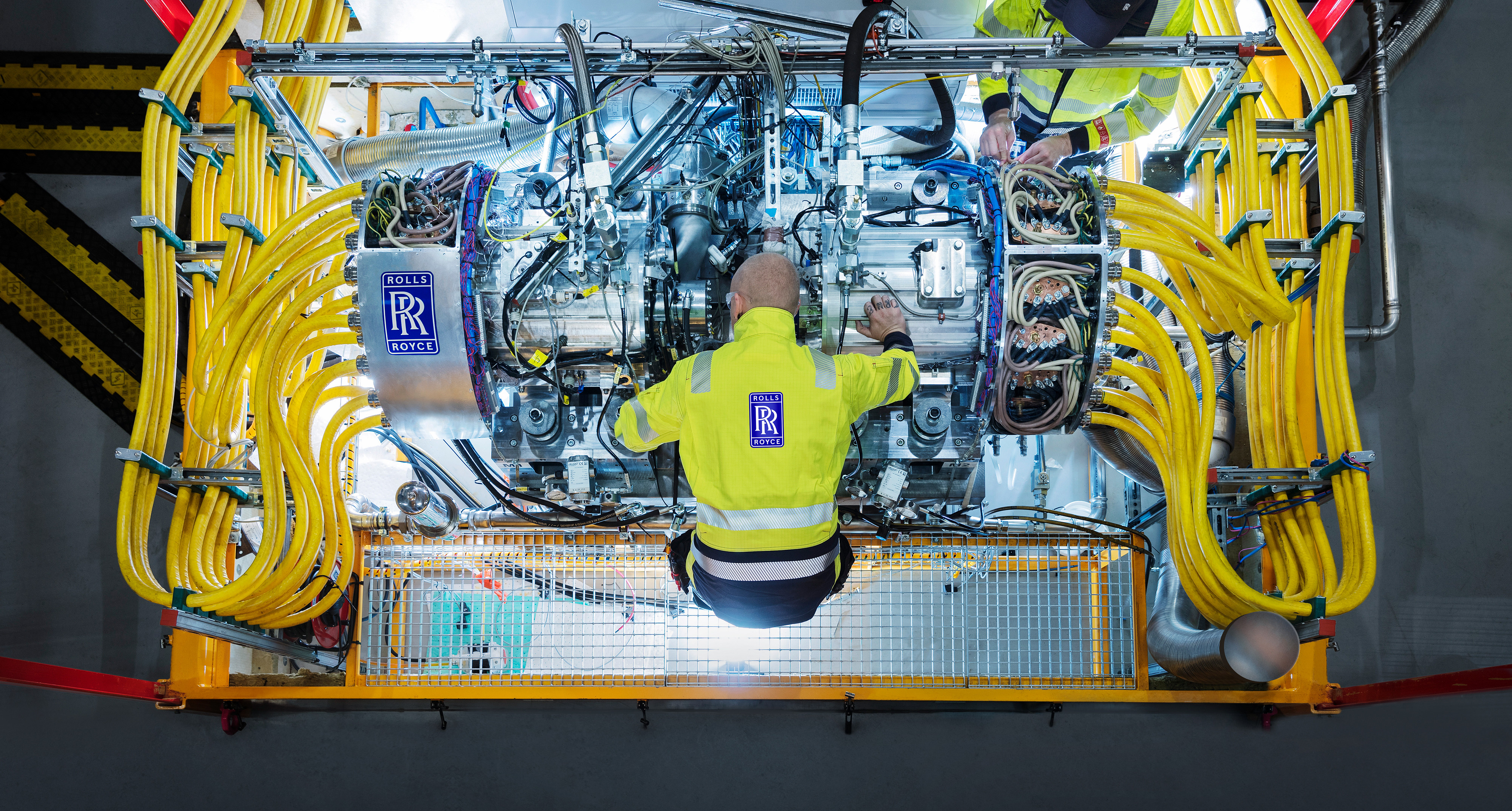
These are the first three paragraphs of the press release.
The generator that will be at the heart of the most powerful hybrid-electric aero power and propulsion system in aerospace has arrived for installation at our specialist testbed.
The generator, and related power electronics, was delivered to the newly-renovated Testbed 108 in Bristol, UK, from the Rolls-Royce facility in Trondheim, Norway, having completed an extensive development test programme. It will form part of the 2.5 megawatt (MW) Power Generation System 1 (PGS1) demonstrator programme, for future regional aircraft. In addition to hybrid-electric propulsion, the generator could also be used as part of a “more-electric” system for larger aircraft or within future ground or marine applications.
PGS1 forms an important element of our sustainability strategy, which includes developing innovative electrical power and propulsion systems.
I must say that as an engineer this 2.5 MW generator really excites me, as I see so many possibilities.
- I am fairly certain, that the generator can be powered by hydrogen, to create a true zero-carbon power generator.
- Rolls-Royce mention aerospace, ground and marine applications.
- The physical size must be an advantage, when it comes to some applications.
- The gas-turbine technology at the heart of the generator has been well-proven in the Lockheed Super Hercules.
But I do note in the press release that there is no mention of hydrogen or rail for which the generator must be eminently suitable.
- Rolls-Royce subsidiary; mtu are one of the leading companies, who power large rail locomotives.
- 2.5 MW is ideal for many rail locomotives.
- The small size must help integration into a rail locomotive.
- My calculations show that the generator and a hydrogen tank could be fitted into a typical modern rail locomotive.
- As electric transmissions can be used, the locomotive could also use electrification.
A lot of these arguments would also apply to the very large trucks used in the mining industries and ships of various sizes.
Conclusion
This Rolls-Royce 2.5 MW Generator will have lots of applications.
Whisky Galore!
The Levenmouth Rail Link has carried freight in the past.
Mainly in the past, it was coal to the now-demolished Methil power station.
But it has been known to carry whisky for Diageo.
This Google map shows the area.
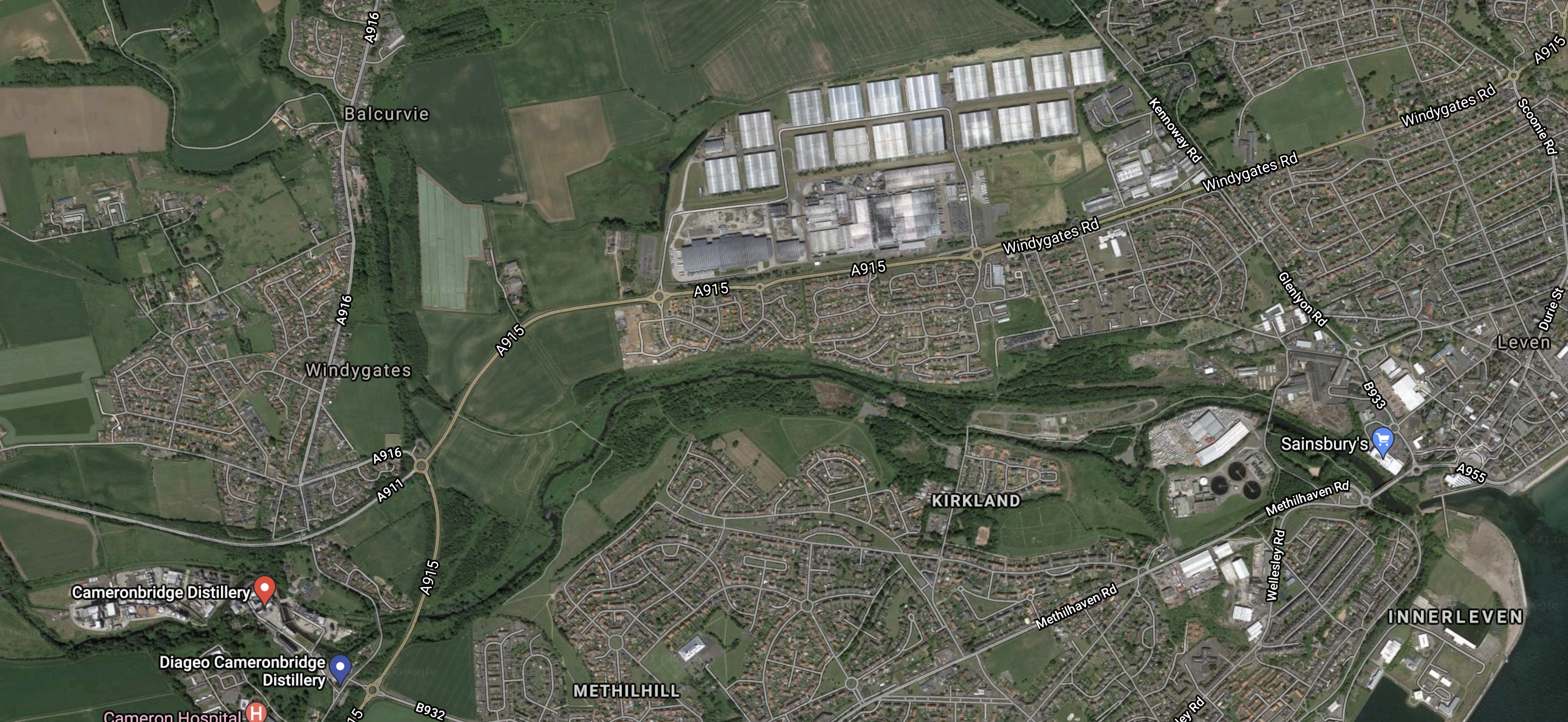
Note.
- The blue dot marking Sainsbury’s by the bew Leven station, by the mouth of the River Leven.
- The railway follows the river with Cameron Bridge station to the East of the A915 and the two Camero Bridge distilleries.
- The silver warehouses at the North side of the map are labelled Diageo Global Supply.
I wonder, if a siding can be provided for the distribution of products stored in the warehouses?
Companies are looking to lower their carbon-footprint and I wouldn’t be surprised, if Diageo were looking at rail distribution.
Modern Rail Freight Distribution
Companies are converting redundant electric multiple units into fast parcel delivery trains to replace diesel trucks.
- Typically, four-car trains are used.
- Trains have a 100 mph capability and can be 240 metres in length.
- Eversholt Rail Group are proposing adding battery power. This would be ideal to reach Cameron Bridge over the Forth Bridge.
These trains would be ideal for the delivery of Scotch Whisky.
They might even be capable of exporting product through the Channel Tunnel.
I don’t think the capacity of the Levenmouth Rail Link would be a problem, as it is a double-track railway, that can probably handle over four trains per hour and there is plenty of capacity for a number of freight trains.
Conclusion
I think freight will play a use in the future of the Levenmouth Rail Link.
Related Posts
The New Leven Station On The Levenmouth Rail Link
The New Cameron Bridge Station On The Levenmouth Rail Link
North From Thornton Junction
This Google Map shows how all the railways connect at Thornton junction.
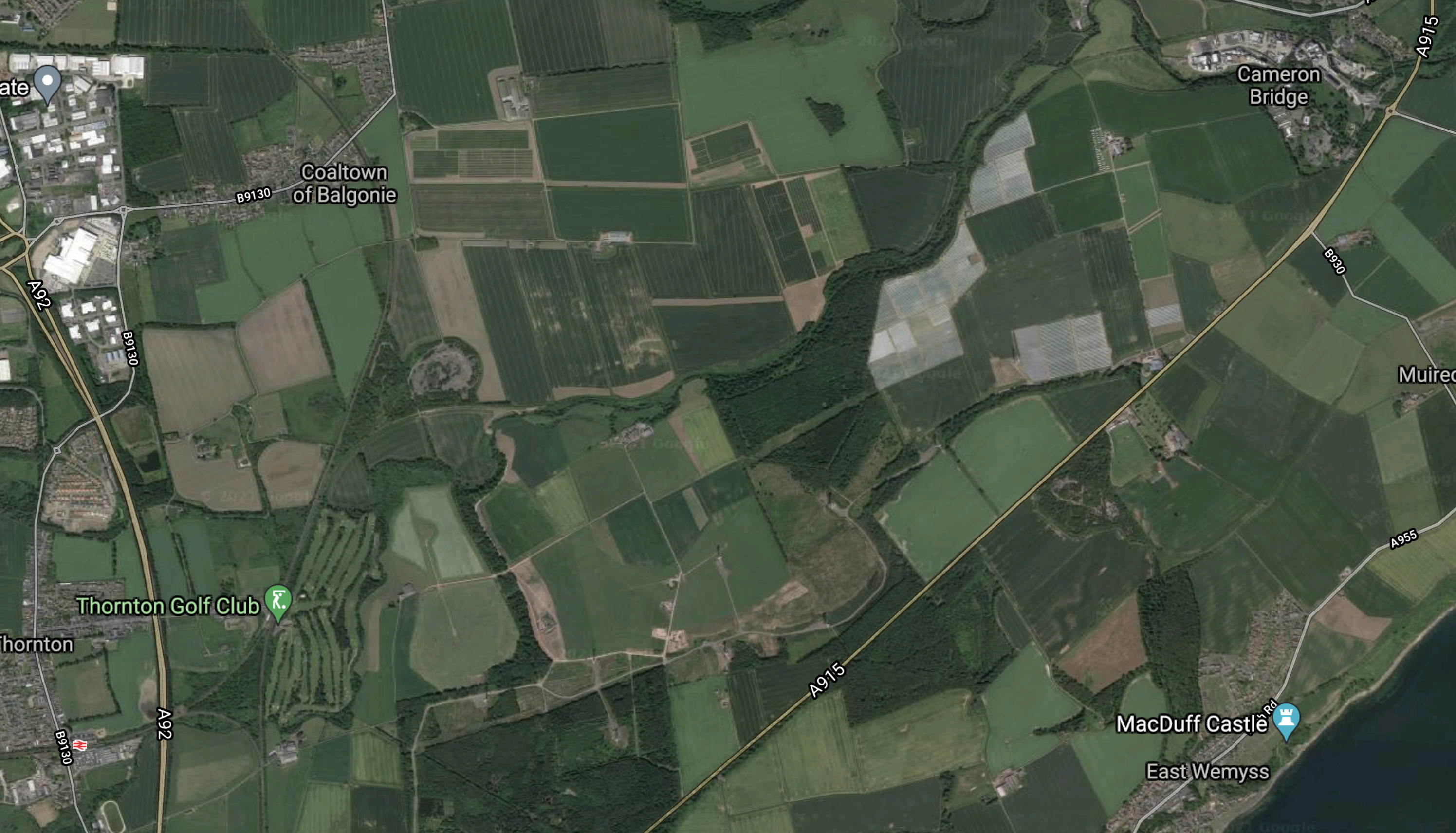
Note.
- The village of Cameron Bridge is in the North-East corner of the map.
- The A 915 running diagonally across the map and to the East of the village of Cameron Bridge.
- In The New Cameron Bridge Station On The Levenmouth Rail Link, I showed how Cameron Bridge station was positioned to the East of the A915 and the village.
- The Levenmouth Rail Link would appear to pass to the South of the village, according to a Network Rail map in the related post.
Thornton junction is a large triangular junction in the South-West corner of the map.
- Thornton North junction is close to Thornton Golf Club, which is shown by the green marker.
- Glenrothes with Thornton station is at the Eastern point of Thornton junction.
- Trains going West from Glenrothes with Thornton station go through Dunfermline and over the Forth bridge to Edinburgh.
- Thornton South junction is South of Thornton Golf Club and leads South through Kirkcaldy station and over the Forth bridge to Edinburgh.
This second Google Map shows the main Edinburgh and Dundee rail line between Thornton Golf Club (Thornton North junction) and Markinch station, which is the next station to the North.
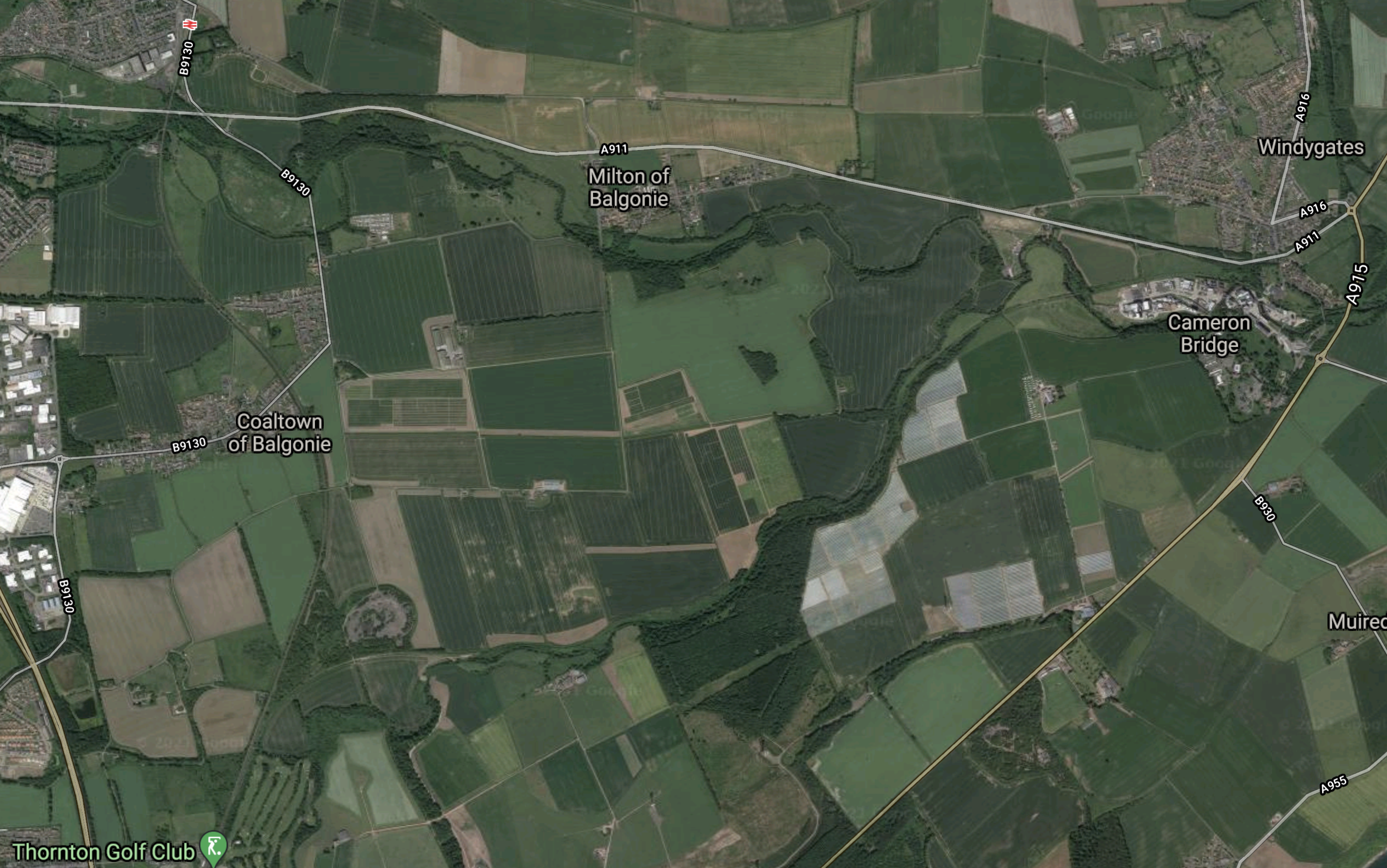
Note.
- The village of Cameron Bridge in the East of the map.
- Markinch station is in the North-West corner of the map.
- Thornton Golf Club (Thornton North junction) is in the South-West corner of the map.
Looking at various maps, Thornton Junction appears very complicated.
- The North-South leg of the junction is at least double-track.
- The North-East leg of the junction appears to be single-track.
- The South-East leg of the junction appears to be single-track.
- The former Levenmouth Rail Link appeared to join the main line at a single-track junction to the North of Thornton North junction
- There is lots of space.
.I’m sure Network Rail can come up with an efficient track layout, that will enable the following.
- Trains can go between Glenrothes with Thornton and Kirkcaldy stations in both directions, as they do now.
- Trains can go between Glenrothes with Thornton and Levenmouth Rail Link in both directions.
- Trains can go between Kirkcaldy station and Levenmouth Rail Link in both directions.
This would enable the service provision, that was specified in Service Provision On The Levenmouth Rail Link.
What Will Be Electrified At Thornton Junction?
This page on the Network Rail web site, says this about the trains that will run the service on the Levenmouth Rail Link.
And while the line will be electrified with overhead wires, services will be operated initially by battery electric units in order to reduce the number of diesels operating on the network as early as possible.
I wouldn’t be surprised to see full electrification between Glenrothes with Thornton and Leven stations, to make sure that the battery-electric trains had full batteries for the run South to Edinburgh.
- The other two legs of Thornton junction would also be fully electrified to give all passing trains a good charge.
- The distance between Kirkcaldy and Markinch stations is 7.3 miles and trains take about ten minutes. I suspect most of this section of the Edinburgh and Dundee line will be electrified. There looks to be about six overbridges that might need raising, but I suspect it would be nothing too terrible, with about the same degree of engineering difficulty as electrifying the Gospel Oak to Barking Line in London.
- I feel with good engineering and guile, enough electrification can be added to the route through Kirkcaldy to get the trains to the South.
- West of Glenrothes with Thornton station, the track looks to be good territory for electrification and enough wires can be added, so that by Cardenden station, there is enough power in the batteries to get the trains to the South.
I have a feeling that by intelligently using the two routes via Kirkcaldy and Dunfermline, Network Rail can increase the frequency of trains over the Forth Bridge.
- This probably partly explains, why trains to Leven go alternatively via Kirkcaldy and Dunfermline.
- 100 mph battery-electric trains help too with their sparkling acceleration.
- Who’d have thought, that at the age of one hundred and thirty, the Forth Bridge will be at the heart of an electrified local train network?
And the only new electrification is based on Thornton junction, over twenty miles to the North.
Electrification Between The Forth Bridge And Edinburgh
Without doubt, the electrification to the South of the Firth of Forth must reach as far North as possible.
Dalmeny station is the most Northerly station South of the bridge and I feel that this could be a practical place for the electrification to end.
Distances from Dalmeny to stations further North include.
- Leuchars – 41.4 miles
- Leven – via Dunfermline – 28.2 miles
- Leven – via Kirkcaldy – 27.3 miles
- Dundee – 48.8 miles
- Perth – 47.4 miles
All these destinations would be within range of Hitachi Regional Battery Trains, which are described in this Hitachi infographic.

Note that the range on battery power alone is 90 km or 56 miles.
Given that the battery-electric trains would be able to grab a battery charge as they passed through Thornton junction, I am fairly certain that Hitachi Regional Battery Trains could reach Leuchars, Dundee or Perth.
An Electric Service Between Edinburgh And Dundee
Dundee is a new station and I doubt, that it was rebuilt without provision for full electrification.
It has two through platforms for Aberdeen and Edinburgh services.
There are also two South-facing bay platforms for regional services from the South.
This picture shows the two bay platforms with an Edinburgh-bound train to the left.
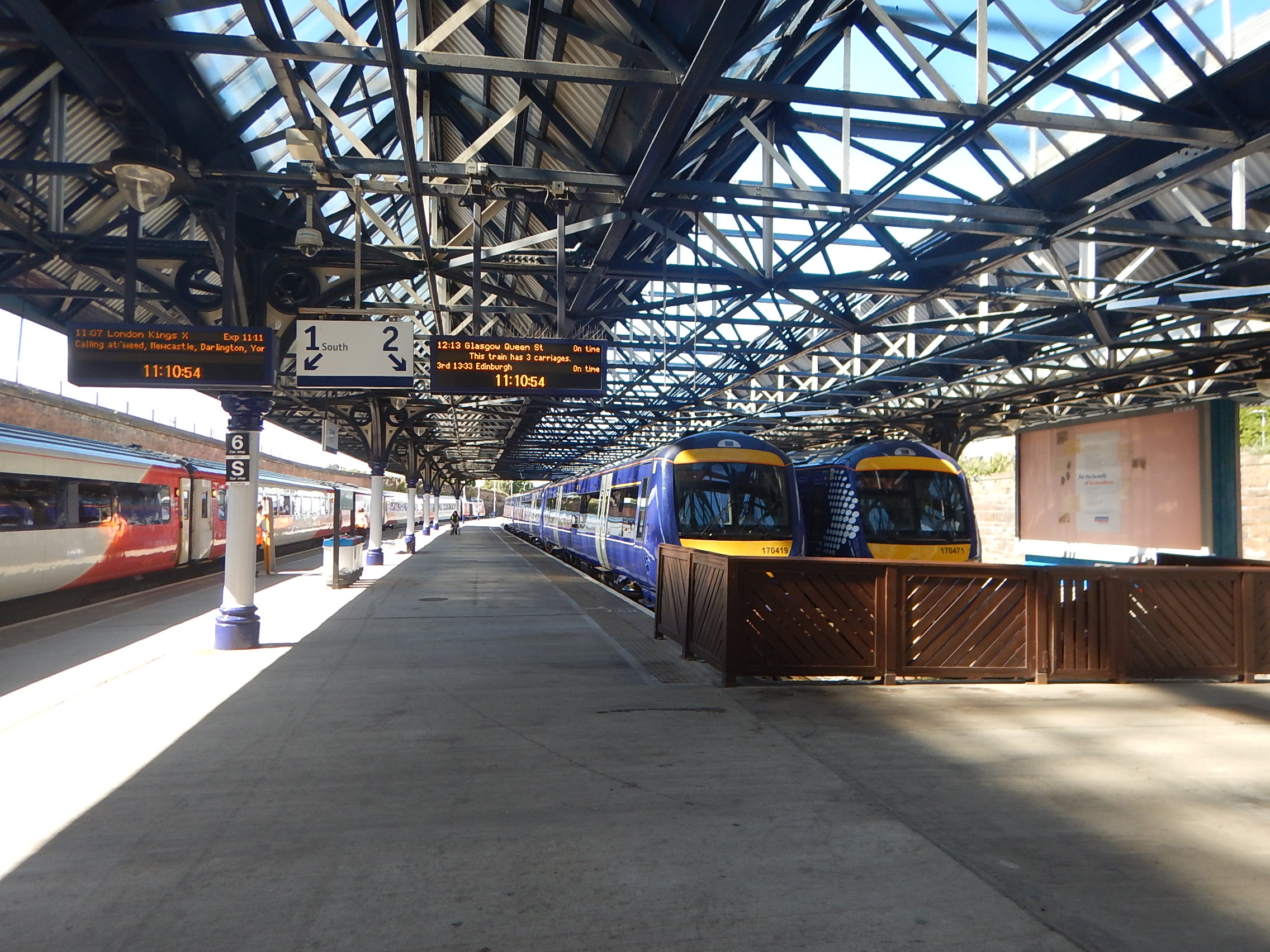
Note.
- In the picture the two Class 170 diesel trains will be going to Edinburgh or Glasgow.
- Scotrail’s plans include an hourly train to both of Edinburgh and Glasgow.
If these two bay platforms were electrified with 25 KVAC overhead wires, these battery-electric services will be possible.
- Edinburgh and Dundee via Haymarket, Kirkcaldy, Thornton junction and intermediate stations.
- Glasgow Queen Street and Dundee via Stirling, Dunblane, Perth, Gleneagles and intermediate stations.
I suspect other routes battery-electric will be possible.
An Electric Service Between Dundee And Aberdeen
The distance between Dundee and Aberdeen stations is 72 miles.
In Solving The Electrification Conundrum, I described techniques being developed by Hitachi Rail and Hitachi ABB Power Grids to electrify routes like Dundee and Aberdeen.
With Hitachi looking to give battery-electric trains a range of over forty miles, it could be just two hops between Dundee and Aberdeen.
I suspect Montrose could be the charging point, as it is forty miles South of Aberdeen.
Conclusion
It appears that the proposed electrification of Levenmouth Rail Link creates an electrification island at Thornton junction, that enables battery-electric trains to reach Dundee.
Coupled with plans to electrify between Stirling and Perth, this means that both Perth and Dundee will be connected to Scotland’s electrified rail network.
I suspect it is also possible to easily extend battery-electric trains all the way to Aberdeen, with only short sections of carefully positioned overhead wires.
Related Posts
The New Leven Station On The Levenmouth Rail Link
The New Cameron Bridge Station On The Levenmouth Rail Link
Service Provision On The Levenmouth Rail Link
 The Anonymous Widower