Is This The World’s Smallest Hydrogen Car?
I typed “World’s smallest hydrogen car” into Google and found this web page.
This is the first paragraph of the product description.
The smallest hydrogen fuel-cell car ever commercialized. A small-scale model of a hydrogen fuel-cell application. A funny didactical toy for kids and… adults too!
But it only costs € 99 with the VAT included.
For something more useful, this web page details a ride-on hydrogen fuel-cell lawnmower.
When I find products, like these that can be bought on-line, it strengthens my belief, that at some time in the next few years, someone will demonstrate an Issigonis Mini-sized car that will run on hydrogen.
We must all remember, that engineering is the science of the possible, whereas politics is dreams of the impossible.
OWLC Selling Rights To Gravity Tripod Offshore Wind Foundation
The title of this post, is the same as that of this article on offshoreWIND.biz.
This is the sub-heading.
The rights to the gravity tripod offshore wind foundation developed by the UK company Offshore Wind Logistics and Construction (OWLC) have been put up for sale following an appointment of administrators who initiated an accelerated sale of the business.
These two paragraphs give full details.
OWLC says its gravity tripod foundation can deliver a solution to the offshore wind industry that is quicker, cheaper and more environmentally friendly than monopiles or jackets.
The foundation, which uses concrete instead of steel, is said to reduce levelised cost of energy (LCOE) between 11 and 12 per cent, according to information on OWLC’s website, which cites BVG Associate’s study from 2020 that also found the gravity tripod to be 51 per cent cheaper than a jacket substructure and 36 per cent cheaper than a monopile to install.
The home page of the OWLC web site gives full details of their Gravity Tripod.
This is the company’s outline description of the foundation.
The Gravity Tripod™, globally patented, is an offshore subsea foundation structure designed to deliver up to 11.7% project cost reduction, to reduce project delivery times by up to 1/3 and create almost zero environmental impact.
The Gravity Tripod™ is a component base structure that benefits from the best aspects of other foundation concepts. It is a hydro-dynamic transparent structure which doesn’t require piling, is manufactured from low-cost tubular sections in a rapid assembly process and is installed with minimal seabed intervention.
The Gravity Tripod™ has two distinctive components that act together to ensure the structure has an extremely long design life (up to 100+ years) and is insensitive to turbine loads with a capacity of up to 25MWs. In addition, the structure has a low bearing pressure on the seabed and so is capable of accommodation a huge range of sediment types, with less seabed preparation required than other gravity-based designs.
Other points include.
- A design life of 100 + years.
- Biodiversity net gain.
- Sheaper to install.
- Designed for water depths of 20-75 metres.
- Easier to install
- No piling.
- Noiseless construction.
- Reduced embedded carbon
I like it and I hope someone buys it and turns it into a success.
Great Western Railway’s Battery Train Sets New Distance Record
The title of this post, is the same as that of this press release from Great Western Railway.
This is the sub-heading.
Great Western Railway’s innovative FastCharge battery trial has achieved another significant step – just days after laying claim to a battery train UK distance record without recharging.
These two paragraphs add more detail.
The train demonstrated its capability on Wednesday by travelling a UK record of 86 miles (138km) on battery power alone and without recharging.
Today the Class 230 battery train completed a 70-mile move from Long Marston to Reading Train Care Depot – using just 45 per cent of its battery capacity. GWR’s team of specialist engineers on board the train claim it could have travelled more than 120 miles on a single charge.
There is also this impressive video.
Note.
- In the video, the train is cruising at 36 mph.
- The top speed of the D78 Stock was 45 mph.
- The train looks in excellent condition.
This is a total game-changer for battery-electric trains in the UK.
The train makers, who have demonstrated battery-electric trains; Alstom/Bombardier, CAF, Hitachi, Siemens and Stadler will have to up their distances on battery power to at least 86 miles and possibly 120 miles, as who would want their new product to be outdistanced by second-hand forty-year-old upcycled London Underground trains?
I have some further thoughts.
The Trains Performance In The Real World
Dr. Simon Green, who is GWR’s Engineering Director, said this.
It’s also worth noting that in reaching the 86 miles on Wednesday, the train was operating in a real-world environment, at speeds of up to 60mph, stopping and starting over a hilly route, with elevation changes of up to 200m.
The train exceeded the 84 miles (135km) recorded by a Stadler Class 777 under test conditions in 2022 – believed to have been the greatest distance travelled by a battery train designed for the UK.
Note that the train was running at up to 60 mph.
Timings For The Mid-Cornwall Metro
This map shows the Mid-Cornwall Metro.

I have been looking at the Mid-Cornwall Metro and this service will share the Cornish Main Line with faster services between Par and Truro.
- Expresses and the Mid-Cornwall Metro will both stop at Par, St. Austell and Truro.
- Par and Truro is a distance of 19 miles.
- Expresses between Penzance and Plymouth take around 22-23 minutes to go between Par and Truro.
- This is an average speed of around 50-52 mph.
It looks to me, that there is scope for the Mid-Cornwall Metro and the express trains to run at similar speeds between Par and Truro.
- If the Mid-Cornwall Metro used Class 230 trains running on batteries, these trains should be fast enough to keep out of the way of the expresses.
- Par station has an island platform, where the Mid-Cornwall Metro uses one side (Platform 3) and expresses use the other (Platform 2).
Perhaps, if the timetable was something like this, it would give the best services to passengers.
- All expresses would use Platform 2, if they were stopping at Par station. The current track layout allows this.
- For Westbound passengers the Mid-Cornwall Metro would stop in Platform 3 and the express would stop in Platform 2, so that passengers going to beyond Truro on the Cornish Main Line could to the express on the other platform.
- Between Par and Truro, the Mid-Cornwall Metro would run a couple of minutes behind the express.
- Passengers for the Falmouth Branch could swap trains at Par on wait for the Metro at St. Austell or Truro.
- For Eastbound passengers, between Par and Truro, the Mid-Cornwall Metro would run a couple of minutes behind the express.
- At Par, the Mid-Cornwall Metro would stop in Platform 3 and the express would stop in Platform 2.
- The express would wait at Par for the Mid-Cornwall Metro.
- Passengers for Plymouth and London Paddington would change trains at Par for the express on the other platform.
- Passengers for the Newquay Branch on the express would swap trains at Par or wait for the Metro at St. Austell or Truro.
I suspect there are other patterns, but something like this will combine express services with the Mid-Cornwall Metro.
Simon’s Vision
Simon Green also says this about his vision of how the trains and the related FastCharge technology could be used.
GWR’s FastCharge technology has been designed to solve the problem of delivering reliable, battery-only trains capable of fulfilling timetable services on branch lines, eliminating the use of diesel traction and helping to meet the Government and wider rail industry’s target to reach net-zero carbon emissions by 2050.
The use of batteries for extended operation has typically been constrained by their range and meant widespread implementation has, until now, not been possible. It also negates the need for overhead electric lines which are expensive, time consuming to install and impact the landscape.
He’s judging the system as a whole, which is the only way to do it.
Where Could Class 230 Trains Be Used On The Great Western Railway?
These are a few ideas.
- Slough and Windsor & Eton Central – 2.8 miles – 3 cars – FastCharge at Slough
- Maidenhead and Marlow – 7.1 miles – 2 or possibly 3 cars – FastCharge at Maidenhead
- Twyford and Henley-on-Thames – 4.6 miles – 3 cars – FastCharge at Twyford
- Reading and Basingstoke – 15.4 miles – 3 cars – FastCharge at Basingstoke
- Weston-super-Mare and Severn Beach – 32.5 miles – 3 cars – FastCharge at Severn Beach
- Bristol Temple Meads to Avonmouth 8.9 miles – 2 cars – FastCharge at Avonmouth
Bourne End station, where there is a reverse may restrict the length of the service to Marlow.
France’s First And Only Operational Floating Wind Turbine Gets Lifetime Extension
The title of this post, is the same as that of this article on offshoreWIND.biz.
This is the sub-heading.
Floatgen, the demonstration floating wind turbine installed at the SEM-REV offshore test site in France, has completed its planned five-year run but will operate for another five years as the demo project was decided to get a lifetime extension.
These are the first three paragraphs.
The floater, which consists of a 2 MW Vestas V80 wind turbine mounted on BW Ideol’s Damping Pool foundation, reached electricity production milestones several times since going into full operation in September 2018.
According to BW Ideol, Floatgen’s cumulated production has now surpassed 30 GWh, which the company ascribes to “the hydrodynamic properties and excellent sea-keeping capabilities” of its floating foundation.
Floatgen’s availability averaged 92.18 per cent between January 2021 and January 2024, with December 2023 standing out with a monthly production record of 922.026 MWh and a 61.96 per cent capacity factor, BW Ideol says.
Note.
- A three-year availability average of 92.18 % is surely very good.
- A 61.96 % capacity factor is better than most other floating wind farms, which are generally in the fifties.
With those figures, I suspect BW Ideol will be expecting, some orders soon.
This video shows a Floatgen being constructed.
Funding Announced For First-In-Class Low-Carbon Installation Vessel For Floating Offshore Wind
The title of this post, is the same as that of this news item from Morek Engineering.
These two paragraphs outline the project.
The UK Government has awarded funding to a consortium led by Morek Engineering to design a new class of low-carbon installation vessel for the floating offshore wind market.
The consortium has won the funding through the UK Government’s Clean Maritime Demonstration Competition based on their proven track record in innovative vessel design and delivery of complex offshore operations. The consortium includes Morek Engineering, Solis Marine Engineering, Tope Ocean, First Marine Solutions and Celtic Sea Power.
Note.
- The design of the ship certainly seems to tick all the boxes.
- This is Morek’s web site.
Because of my experience of writing project management systems, I often wonder, whether some of my discarded ideas of the 1980s could be used in the deployment of floating offshore wind.
Moorgate Station’s Soldiers Are Now Painted
The City of London’s soldiers outside Moorgate station have now been painted.




But the plastic barriers haven’t been removed yet.
It looks like the station entrance could be finished soon.
If you want a bollard like this for your drive ATG Access make and sell them.
An Excursion To Retford And Worksop
Today’s excursion was designed to be simple.
- Take an LNER train or a Hull Train to Retford station.
- Travel to Worksop station, have a look and take a few pictures.
- Travel back to Retford and take the first train back to London.
- In one if my two visits to Retford, have a look and take a few pictures.
- Talk to passengers and railway staff about what they felt about FirstGroup’s Proposed Sheffield Service, that I wrote about in FirstGroup Applies To Run New London To Sheffield Rail Service.
These were my thoughts and observations.
LNER’s Improved Ticketing
These pictures show the tickets that I bought.




Note.
- I bought my ticket to Retford from the Ticket Office at King’s Cross station.
- The ticket seller gave me a well-designed folder for the tickets.
- I was also able to buy my return ticket between Retford and Worksop on the LNER train to Retford. I’ve tried doing that before and it wasn’t allowed.
Making ticketing easier must be a good thing for passengers, staff and LNER.
£24.75 With A Railcard From King’s Cross to Retford
- The second picture shows my ticket to Retford.
- It cost me just £24,75 with my Senior Railcard.
- I also bought it about half-an-hour before the train left.
- I bought the ticket in the Ticket Office.
- I got a forward-facing window seat with an unrestricted view.
How much would the 145 mile and nearly three-hour journey have cost in a car?
I Missed My Connection At Retford Station
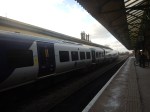
These pictures show my train to Worksop station in Platform 3 at Retford station, as I approached from the South.





Note.
The Northern Trains’s Class 195 train arriving on Platform 3 on the Sheffield and Lincoln Line.
- I arrived in Platform 2 at Retford station at 12:50
- There were three lifts or sets of stairs to negotiate between Platform 2 and Platform 3.
- It must take at least five minutes between the two platforms.
- One of the lifts was out of order and was being serviced by an engineer.
- There was no way, I could have caught the connection, which left at 12:51.
- At least one other passenger, had to wait the one hour and fifteen minutes I waited for the next train, which arrived at 14:03.
I feel that there needs to be a timetable adjustment here, so that as many passengers as possible avoid the long wait.
Retford Station
At least the long wait allowed me to take a lot of pictures and have a cup of coffee in the Costa Coffee on Platform 1.

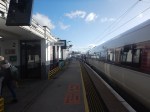








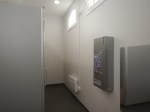



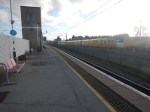
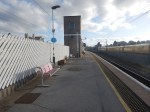

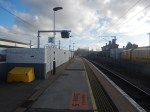
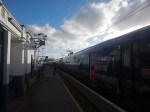
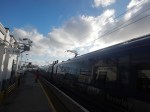









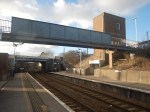

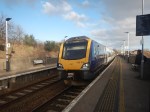
Note.
- The toilets were immaculate.
- The Costa Coffee had friendly and professional staff, but only rudimentary gluten-free options.
- The station is fully step-free with four lifts.
- Platforms 1 and 2 on the East Coast Main Line can take a pair of five-car Class 802 trains, as Hull Train demonstrated.
- The Hull Train in Platform 2 was using the electrification.
- The station is in very good condition.
- The station is Grade II Listed.
This Google Map shows the station.
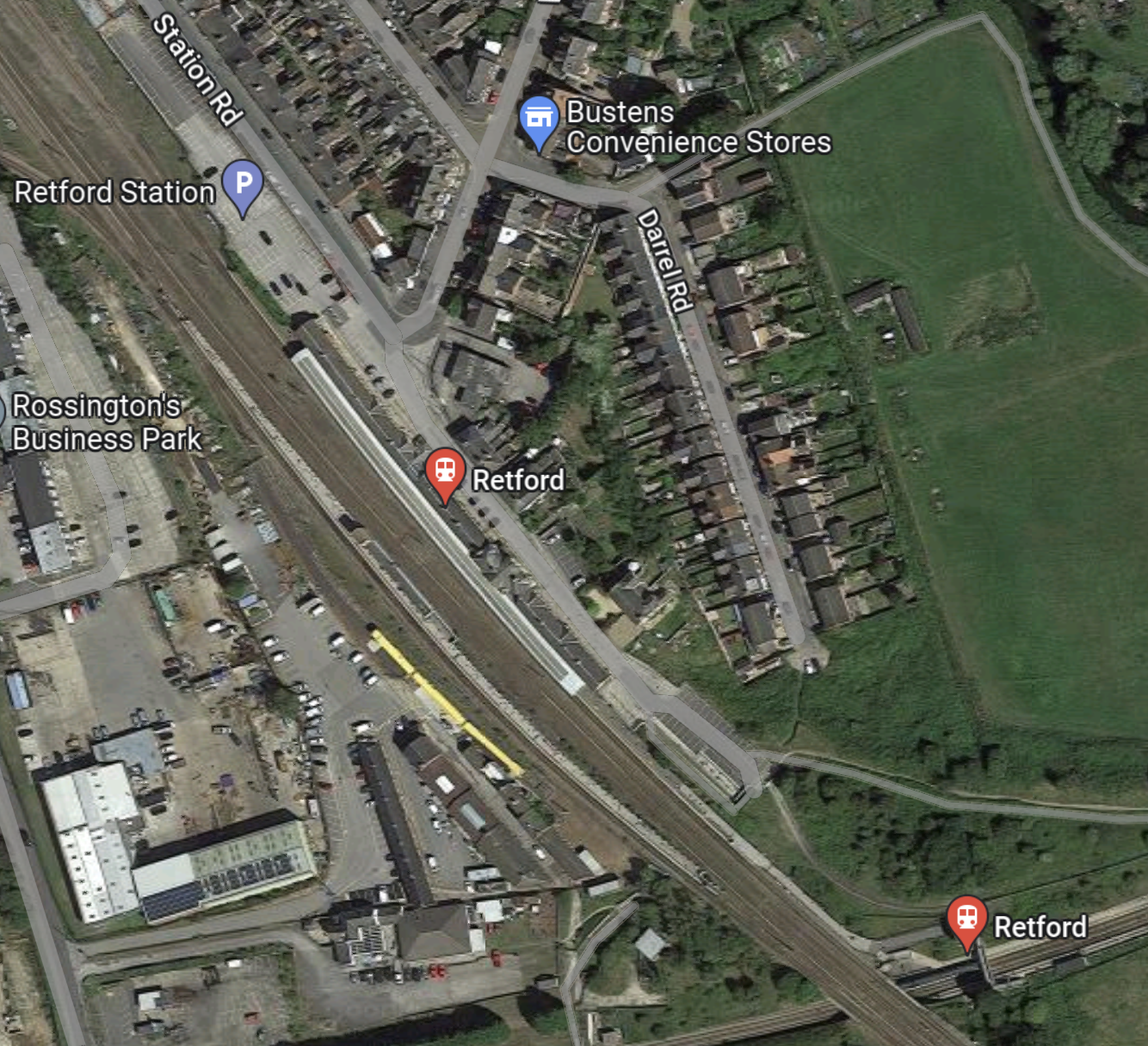
Note.
- The red arrow in the South-East corner are the low-level Platforms 3 and 4.
- The red arrow in the middle marks the low-level Platforms 1 and 2.
- Network Rail’s yellow Mobile Maintenance Train is visible in the siding opposite Platform 2.
- There is space around the platforms.
The station may have development possibilities. Especially, as there are signs of To Let over some of the buildings.
Ambitious Renewable Energy
Retford and Worksop are only eleven minutes away but there were a large wind farm and solar farms between the two stations.








Note.
- I was a bit slow on the uptake and missed the large wind farm.
- The strong sun was reflecting on the windows.
- They weren’t the best of photographs.
I had intended to take more and better pictures on the way back, but circumstances intervened.
This Google Map shows the wind and solar farms.

Note.
- The Sheffield and Lincoln Line going across the map.
- There are solar panels North and South of the railway.
- This is the Walkers Wood Solar Farm, which has a nameplate capacity of 27 MW.
- H M Prison Ranby is at the top of the map.
- The scars of the wind turbines are to the West of Babworth and the crematorium.
- At the moment, I can’t find any reference to the wind farm.
These wind and solar farms are probably a classic place to position a battery.
Prisons And Recycling
Worksop Station
I took these pictures during the time I spent at Worksop station.

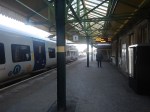

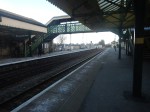




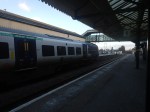
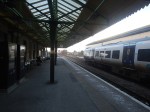







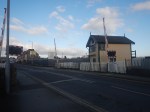









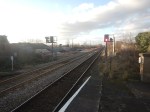



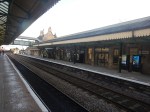
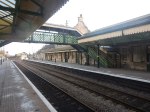



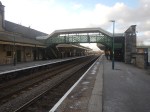



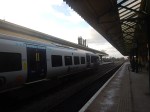
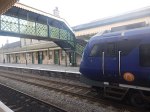
Note.
- The station is not step-free, although you can cross the tracks using the level-crossing.
- The station has a pub and a cafe.
- There are train services to Leeds, Lincoln, Nottingham and Sheffield.
- The station is in very good condition.
- The station is Grade II Listed.
- The platforms are long enough to handle a Class 802 train without any modification.
- Hull Trains could run their Sheffield service to Worksop station without any new infrastructure.
- Lidl are developing a site on the other side of the level crossing.
- There are 100 car parking spaces.
The station may have development possibilities.
Worksop Station Cafe
These pictures show the Worksop station cafe.











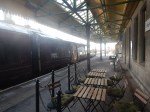
Note.
- It is run by two ladies; Jo and Lyndsey.
- As one is coeliac, there were lots of gluten-free cakes.
- It was cosy and warm on a cold day.
This is definitely one of the better station cafes.
A Double Incident
My journey back to the capital was I suspect untypical.
- I’d arrived at Worksop at 14:14 and finally left at 16:38 on a train for Retford and Lincoln.
- The delay was because someone had been hit by a train between Barnsley and Sheffield, which resulted in cancelled trains.
- When I arrived at Retford at 16:49, there was an LNER train in the platform.
- It was the 15:15 from Leeds and I was told by LNER staff to catch it and get my ticket on the train.
- The train finally left Retford for London 69 minutes late at 17:07.
- We arrived in Peterborough at 19:27, where the train was now 170 minutes late.
- The delay was because someone had been hit by a train at Newark, which results in delays everywhere.
- LNER decided to give up on the train and all passengers were put on other trains.
- I got on the 14:30 from Edinburgh, which arrived in King’s Cross at 20:22, which was 96 minutes late.
Worse things happen at sea.
I am adding this a day after my trip to the North.
This article on the BBC is entitled ‘Major Disruption’ After Person Hit By A Train.
These are the first three paragraphs.
Train services on the East Coast Main Line have been seriously disrupted after a person was hit by a train in North Yorkshire.
Network Rail said the incident happened just before 07:00 GMT between York and Thirsk, with emergency services attending the scene shortly afterwards.
The line was blocked, resulting in delays and cancellations.
Three in two days us three too many.
Offshore Wind Turbines In 2023: 16 MW Model Installed Offshore, 18 MW WTGs Selected For New Project, 22 MW Turbine Announced
The title of this post, is the same as that of this article on offshoreWIND.biz.
This is the sub-heading.
The biggest wind turbines also make for some of the biggest news on offshoreWIND.biz. In 2023, wind turbine OEMs continued making headlines with their models in development and on the path to commercialisation, and by announcing brand new wind turbine generators (WTGs) that further raise the bar in generation capacity and size. Here, we are bringing an overview of the biggest and most powerful wind turbines we reported about in 2023.
This is the first paragraph.
Some of the wind turbines from our lookback article from a year ago, which were announced or launched in 2022, have now advanced to being installed offshore and/or are already being selected for commercial offshore wind projects that are planned to be built in the not-so-distant future.
Offshore wind turbines are certainly getting larger.
- The Chinese seem to be leading the way with turbines that produce over 20 MW, but European and US manufacturers appear to be looking at 16-18 MW.
- This compares with typical farms commissioned in the last few years of about 13-14 MW, which is roughly a 26 % increase in size.
- In Crown Estate Mulls Adding 4 GW Of Capacity From Existing Offshore Wind Projects, I talk about how bigger turbine sizes could be increased in wind farms, that are being planned.
I feel the UK, could benefit from this increase in wind turbine size.
World’s Tallest Wooden Wind Turbine Starts Turning
The title of this post, is the same as that of this article on the BBC.
This is the sub-heading.
What is made from the same wood as a Christmas tree, held together by glue and manufactured in a Swedish factory for assembly later?
These three paragraphs outline the design of a revolutionary wind turbine tower.
If that calls to mind flat-pack furniture and meatballs, you’re wrong.
If you answered “a wooden wind turbine”, you could be a visionary.
According to Modvion, the Swedish start-up that has just built the world’s tallest wooden turbine tower, using wood for wind power is the future.
I feel that it is not as revolutionary as some people might think.
Forty years ago, I built an extension on my house that included a swimming pool and a barn. The swimming pool roof was based on laminated wood beams and the barn was constructed using traditional wooden beams, that were bolted together.
But surely the most amazing wooden structure of the last century is the DH 98 Mosquito.
This paragraph introduces the Wikipedia entry for this amazing aeroplane.
The de Havilland DH.98 Mosquito is a British twin-engined, multirole combat aircraft, introduced during the Second World War. Unusual in that its airframe was constructed mostly of wood, it was nicknamed the “Wooden Wonder”, or “Mossie”. Lord Beaverbrook, Minister of Aircraft Production, nicknamed it “Freeman’s Folly”, alluding to Air Chief Marshal Sir Wilfrid Freeman, who defended Geoffrey de Havilland and his design concept against orders to scrap the project. In 1941, it was one of the fastest operational aircraft in the world.
One of my friends from the twentieth century, had been an RAF Mosquito pilot in the 1950s and felt it was an unequalled design of aircraft.
The airframe of the Mosquito was built using similar materials and methods as Modvion’s turbine tower.
I have just found out, that the de Havilland Aircraft Museum, where the prototype Mosquito is displayed, is open at least until the 7th of January.
I shall be going by public transport and if anybody would like to accompany me, use the Contact Page to get in touch.
BP And EnBW To Run Suction Bucket Trials At UK Offshore Wind Farm Sites
The title of this post, is the same as that of this article on offshoreWIND.biz.
This is the sub-heading.
On 30 December, the vessel North Sea Giant is expected to start suction bucket trials within the array areas of the Mona and Morgan offshore wind farm sites, located off North West England and North Wales.
These are the first three paragraphs.
The trials will run for an estimated 32 days, during which time the vessel will be lifting a suction bucket and setting it down on the seabed, and using subsea pumps to drive the suction bucket into the seabed and back out.
The campaign is expected to consist of around 20 suction bucket trials, subject to weather conditions.
In their environmental impact assessment (EIA) scoping reports, issued last year, BP and EnBW state that a number of foundation types are being considered for the two proposed offshore wind farms and that the type(s) to be used will not be confirmed until the final design, after the projects are granted consent.
It sounds sensible to try out different types of foundations, but what is a suction bucket?
This page on the Ørsted web site is entitled Our Experience With Suction Bucket Jackets, explains how they work and are installed.
This is the first paragraph.
Monopiles (MPs) are currently the most commonly used foundation solution for offshore wind turbines with 81% of offshore wind turbines in European waters founded on MPs at the end of 2019 (Wind Europe, 2020). Where site conditions do not allow for an efficient or practical MP design, a number of alternative foundation solutions are available, including the suction bucket jacket (SBJ), piled jacket, gravity base or even a floating solution.
These two paragraphs, indicate when Ørsted has used SBJs.
Ørsted installed the world’s first SBJ for an offshore WTG at the Borkum Riffgrund 1 offshore windfarm in Germany in 2014.
Since the installation of the Borkum Riffgrund 1 SBJ, Ørsted has been involved in the design and installation of SBJs at the Borkum Riffgrund 2 and the design for Hornsea 1 offshore wind farms. At Hornsea 1, overall project timeline considerations and limitations of serial production capacities precluded the use of SBJs, and therefore the project chose an alternative foundation type.
It will be interesting to see how BP and EnBW’s trial gets on.

