Floating Foundation For 15+ MW Offshore Wind Turbines Launches
The title of this post, is the same as that of this article on offshoreWIND.biz.
This is the sub-heading.
Odfjell Oceanwind has launched the Deepsea Star™ harsh environment floating wind foundation designed to support wind turbines with a capacity of 15 MW and more.
Note.
- Odfjell Oceanwind is a Norwegian company and has this web site.
- This news item from Odfgell Oceanwind is entitled Odfjell Oceanwind Launches The Deepsea Star™ 15MW Floating Wind Foundation and was published on the 28th of February, 2023.
- The news item was the source of the iffshoreWIND.biz article.
- In the news item, one of the designers, explains some of the features.
I very much believe that ,my twenty-three-year-old self armed with ICI’s PACE 231-R would have had great fun examining the dynamic proiperties of a structure like this.
Is The Nightmare On The Buses Going To Get Worse?
This morning after photographing the finish of the Bank Station Upgrade, I walked down the side of the new Cannon Street entrance to catch a 141 bus from King William Street to my home.

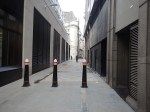


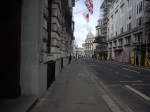
Note.
- There are two bus stops for the 21, 43 and 141 buses on King William Street; one Northbound and one Southbound.
- The bus stops are a two minute level walk from the gate-line at the Cannon Street entrance.
- To go between the gate-line and the Northbound stop requires no crossing of any road, but the route to the Southbound stop requires the use of a light-controlled crossing.
- The Cannon Street entrance is step-free and only a short walk, between the street and the platforms of the Docklands Light Railway and the Northern Line.
- The access to the Central Line is also easy, but a longer walk.
This afternoon, I walked the other way from the Southbound bus stop on King William Street to the new Cannon Street entrance of Bank station.





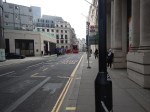






Note.
- It is a totally level walk.
- There are lights to help the crossing of King William Street.
- The concrete building on the other side of King William Street is the other end of the new station entrance.
- It looked to me, that there was a retail unit in the corner of that building. This was confirmed by station staff and it would surely be an ideal place for an upmarket takeaway.
- The building on the corner of Cannon Street and King William Street is a set of shared offices. Again it is in a prime position.
- You can also walk from the bus stop to the main Monument station entrance.
I timed myself from the Southbound stop on King William Street to the various platforms.
- Central Line – Under five minutes
- Dockland Light Railway – Under four minutes
- Northern Line – Under three minutes
Will these times encourage passengers to use the new entrance and its buses to North London?
If I was looking for offices for a foreign company, that wanted to be in the City, as I do occasionally for an American attorney, I would start in this area.
Step-Free Access On The Northern Line Is Rather Variable
If you look at the step-free access on this section of the Northern Line, you find the following.
- Euston – Escalators – No Lifts until High Speed Two
- King’s Cross – Escalators – One Lift to platform
- Angel – Escalators – No Lifts – Medium walk to the buses
- Old Street – Escalators – No Lifts – Medium walk to the buses
- Moorgate – Escalators – Long Lift route – Medium walk to the buses
- Bank (North) – Escalators – Lots of Steps – Medium walk to the buses
- Bank (Cannon Street) – Escalators – Two Lifts to platforms – Short walk to buses
- London Bridge – Escalators – One Lift to platform – Steps to buses
Note.
- If I was going between My House and the Northern Line South of Bank station, I’d change between the 141 bus and the Northern Line at the Cannon Street entrance to Bank station.
- Alternatively, I can take a 38 bus to the Angel and join the route there. But that route can be very slow coming North, as there is a lot of walking. Going South, it’s also likely to be blocked by a Tesco truck at the Angel.
- Between My House and the Docklands Light Railway, I’d change from the 141 bus at the Cannon Street entrance to Bank station.
- I might even take that route, if I wanted the Central Line out of Bank.
It does appear that as the new Cannon Street entrance to Bank station has been well-designed with full step-free access and short walks to the bus stops, that it will be the interchange of choice for many travellers to and from the area, who are using the buses.
Conclusion
I feel that a lot of passengers from North London will use the 21, 43 and 141 buses to access the Central and Northern Lines, and the Docklands Light Railway using the new Cannon Street entrance to the Bank station complex.
I very much feel that all three bus routes will have a lot more passengers, so the Nightmare On The Buses, is likely to get worse.
Into The Realm Of The Rabbits
The completed Bank Station Upgrade opened today and I went and took these pictures of what is now a rabbit warren of a station.

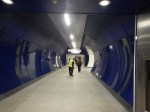
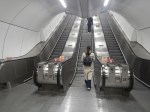
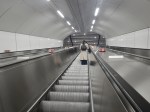
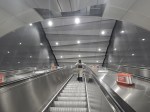
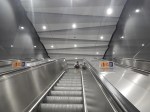




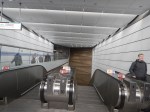
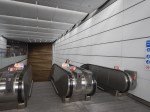

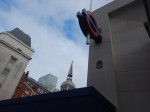
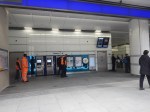






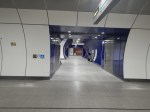
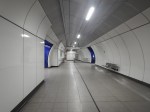
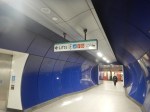
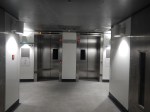
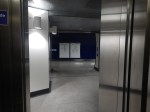
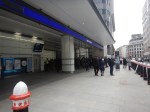
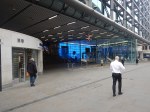

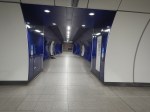
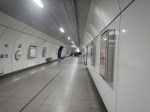
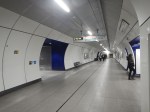
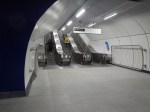
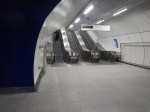
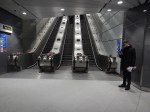
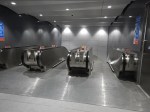
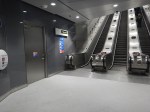

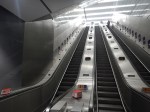
Note.
- There are now three cross passages between the two Northern Line platforms.
- There are two lifts between Cannon Street and the Northern Line and one extends to the Docklands Light Railway.
- The Northern Line and Cannon Street are now connected by two sets of three very long escalators.
- I took a walk to Cannon Street, whilst taking this pictures and from leaving the new entrance to being on a train out of Cannon Street, took mt five minutes.
- After photographing the station, I walked to the bus stop for the 141 bus, which took me home. As there is now a new passage between the gate-line and the bus stop, it took just two minutes.
The new Cannon Street entrance is a practical, stylish and well designed and built addition to the Bank station complex.
I would let the same architects and builders loose on Camden Town, Holborn and Oxford Circus/Bond Street stations.
Skegness Wind Turbine Trial To Light Up Pier In UK First
The title of this post, is the same as that of this article on the BBC.
This is the sub-heading.
A Lincolnshire seaside pier is being lit up at night with the help of a new mini wind turbine.
These are the first three paragraphs.
One of the 6ft (2m) vertical turbines has been installed on Skegness Pier with another fitted on a factory roof in Spalding.
They are able to capture wind from all directions without turning, making them low maintenance.
Both are made by Norwegian company Ventum Dynamics, which is testing the technology with local councils.
I believe it is one of those ideas, that proves the Sliced-Bread Theory of Innovation.
I have a few thoughts.
Design
The design looks clean, modern and unobtrusive.
I don’t know what the noise level is like, but I suspect good design means, it could be fairly low.
I’ll just have to visit Skegness on a windy day, which won’t be a difficult thing to arrange.
Easy To Add To An Existing Or New Building
The Ventum web site has some good pictures.
From my flying experience, I suspect that the higher a turbine is mounted, the more power will be generated.
The only problem would be the heritage lobby.
This picture shows Oakwood station on the Piccadilly Line.
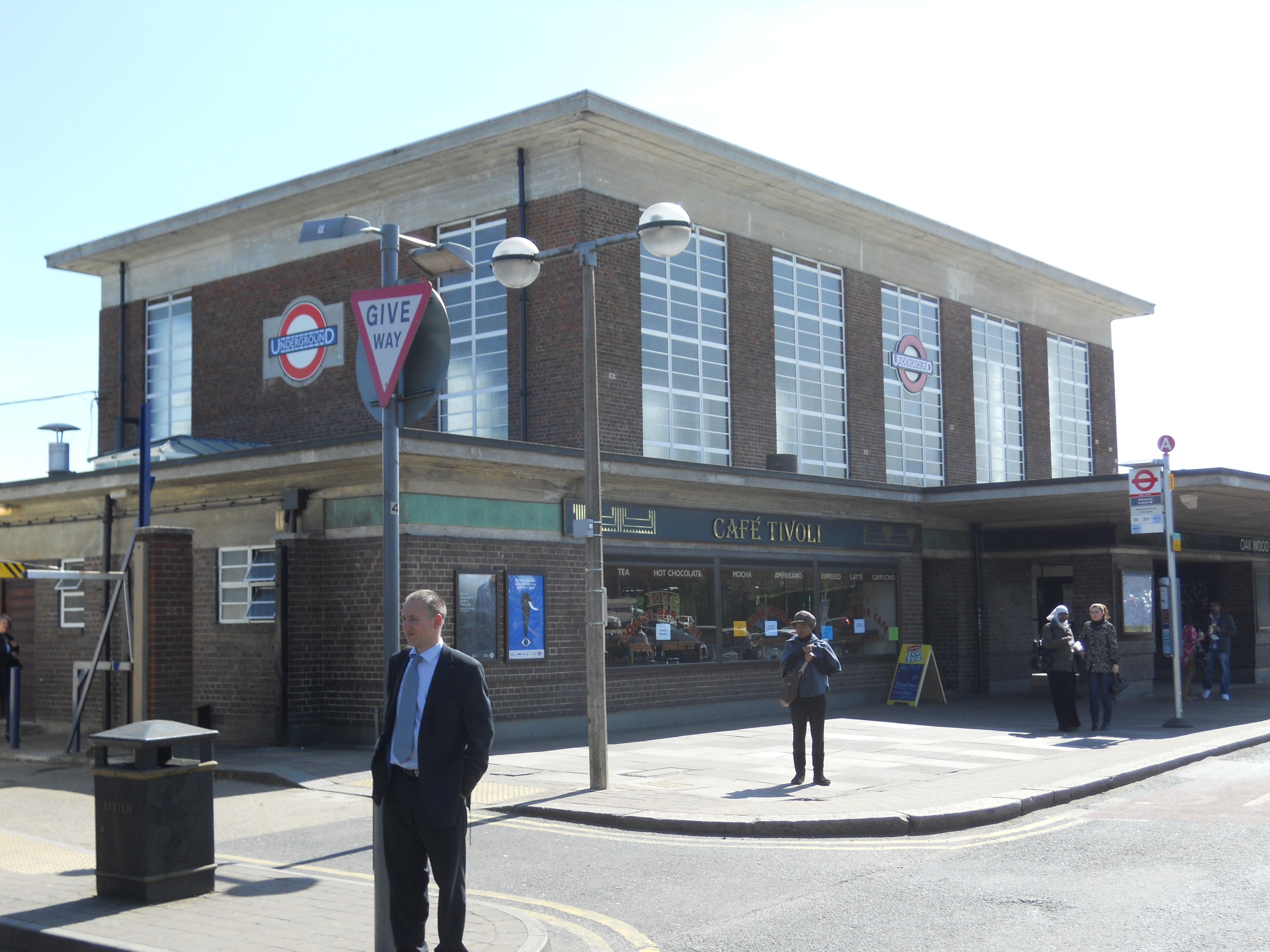
Note.
- The station is the second most Northerly on the line.
- It opened in 1933.
- It is a classic Charles Holden design.
- It is a Grade II* Listed building.
- The station is on top of a hill and has an elevation of 71 metres above sea level.
It might be the ideal place to put perhaps six turbines on the roof.
But would the heritage lobby allow it?
Remote Power
Teamed with a battery, they would be the ideal remote power solution for buildings and locations without a mains supply.
Finance
I used to part-own a finance company and feel that these turbines would be attractive to a finance company, if ethically sold.
Conclusion
I like them!
Floating Offshore Wind Could Reach Full Commercialisation By 2035, Research Says
The title of this post, is the same as that of this article on offshoreWIND.biz.
This is the sub-heading.
Floating offshore wind could reach full commercialisation by 2035, said 60 per cent of respondents in the latest research that was done by DNV, with 25 per cent believing it will be as early as 2030.
I’ll go along with that, but as a serial disruptive innovator, I believe full commercialisation could be earlier than 2027.
It will be for these reasons.
Capacity Factor
There is reason to believe from the figures from existing floating wind turbines, that the capacity factor is very good and could be higher than those of turbines with fixed foundations.
Wikipedia says this about the world’s first commercial floating offshore windfarm; Hywind Scotland.
In its first 5 years of operation it averaged a capacity factor of 54%, sometimes in 10 meter waves.
If other floating technologies show as good capacities as this, then the technology may well find it easier to attract finance.
Design
We have only seen a couple of designs deployed; Hywind and WindFloat.
There will be plenty more to come.
This visualisation shows five D-Floaters being transported on a ship.
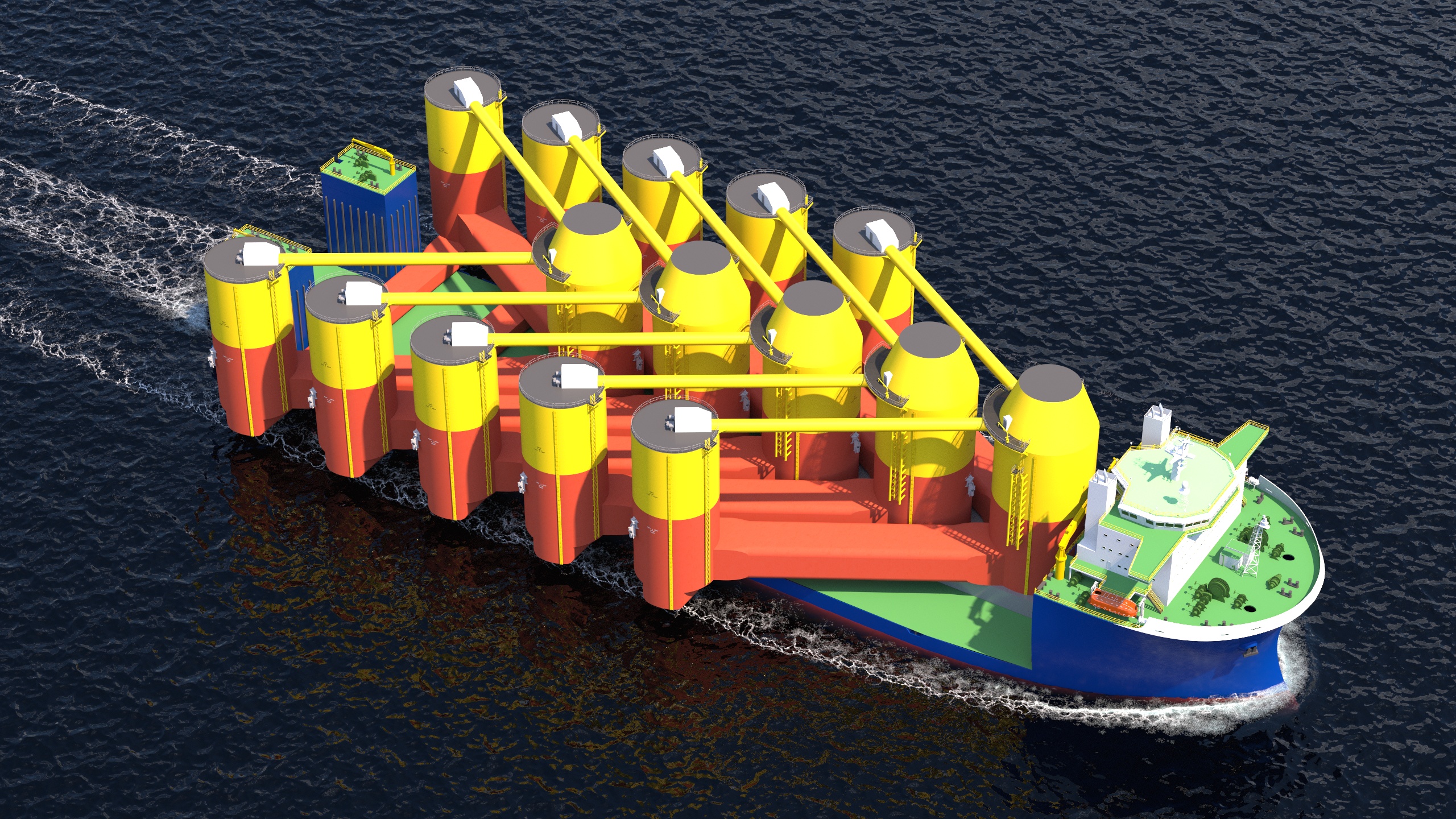
Note.
- D-Floaters are being developed by Bassoe Technology.
- As many floats will be manufactured, a long way from their final mooring, why not make them easy to transport.
- Other companies are developing floats that can be bolted or welded together from standard components.
I wouldn’t be surprised if one design came to dominate the market.
This might be a good thing, as it would surely speed up deployment of floating wind farms.
Construction And Installation
This video shows the construction and installation if Principle Power‘s, Windfloat prototype.
Note.
- All the construction and assembly is done in a dock with a suitable crane.
- This is much easier than doing it the assembly out at sea, as has to be done with turbines with fixed foundations.
- I suspect that with the best design of float and turbine, high rates of turbine assembly can be achieved.
- Health and Safety will prefer this type of assembly.
I suspect other floating wind turbines will be similarly assembled.
Suppose you were assembling 15 MW floating turbines at a rate of one per day, that would be a production rate of over 5 GW of turbines per year from just one dock.
Early Delivery Of Power
I suspect that to build a floating wind farm, one of the first things to be towed out would be the substation to which all the turbines will be connected.
- This could even be floating.
- I’ve seen floating sub station designs, that incorporate energy storage and hydrogen production.
Once the substation is fully-installed and tested, floating turbines could be towed out, anchored, connected to the substation and immediately start to produce electricity.
I have built a lot of cash-flow models in my time and I believe that one for say a 2 GW floating wind farm would be very friendly to proposers, investors and operators.
There’s A Lot Of Sea Out There!
And after nearly sixty years of offshore semi-submersible platforms in UK water, we now how to work in the conditions.
In ScotWind Offshore Wind Leasing Delivers Major Boost To Scotland’s Net Zero Aspirations, I said this, about the total capacity, that will be developed under the ScotWind leasing round.
- Adding up these fixed foundation wind farms gives a capacity of 9.7 GW in 3042 km² or about 3.2 MW per km².
- Adding up the floating wind farms gives a capacity of 14.6 GW in 4193 km² or about 3.5 MW per km².
Note.
- You appear to get ten percent more capacity in a given area of sea with floating wind farms.
- The energy density of floating wind farms is 3.5 MW per km².
I suspect investors will prefer the floating wind farms.
Lower Visibility
Floating wind farms will generally be further out to sea and less likely to be objected to, than installations nearer to land.
Maintenance And Updating
Floating wind farms can be towed into port for servicing and updating, which must ease the process.
Project Management
I believe that floating wind farms, are projects, that would benefit highly from good project management.
Sometimes, I wish I was still writing project management software and I am always open to offers to give my opinion and test anybody’s software in that area!
Finance
I can see that floating wind farms could offer better cash flows to investors and this will make them invest in floating wind farms at the expense of those with fixed foundations.
Conclusion
For all these reasons, but with my instinct telling me that floating wind farms could offer a better return to investors, I wouldn’t be surprised if floating wind farms came to dominate the market.
Riding In A Train Designed To Run On Battery Power
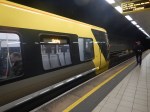
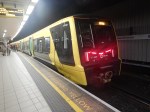
Today, I had my first ride in a train, that has been designed to be able to run on battery power.
- Merseyrail’s Class 777 trains run normally using third-rail electrification.
- But they are also designed to run on battery power.
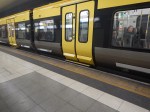
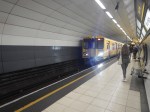
- I took these pictures of the train as it went from Liverpool Central station to Kirkby station and back to Moorfields station, from where I took a train back to Liverpool Lime Street station.
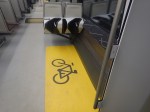
I took these pictures on the route.



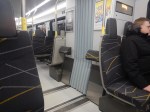
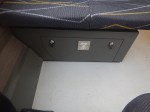

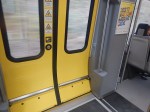

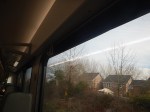
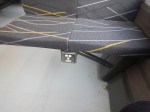
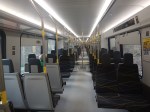
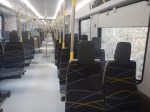
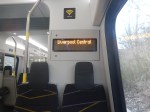
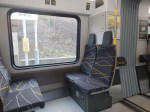





Note.
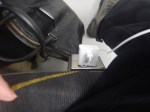
- Every seat has access to a power and USB socket.
- Every head-rest has leather facings.
- The end lights change from white for front, to red for back, when the train changes direction.
- Door lights are green when it is safe to enter.
- There is a lot of attention to detail in the design.
If there is a better suburban train in Europe, I’ve yet to see or ride in it.
Noise And Vibration
Consider.
- I have ridden in two trains converted to battery-electric operation and both were very quiet.
- This train was also very quiet, but it has been designed for battery operation.
- I suspect that the train is very frugal with electricity.
- I wonder, if the small battery, that is carried on the train for depot movements, is also used for regenerative braking.
- It might not be a traditional battery, but a supercapacitor, some of which are made from curved graphene.
This train certainly sets new standards in noise and vibration.
World’s First Offshore Wind Farm Using 16 MW Turbines Enters Construction In China
The title of this post, is the same as that of this article on the offshoreWIND.biz.
This is the sub-heading.
China Three Gorges Corporation (CTG) has started construction of the second phase of its offshore wind farm Zhangpu Liuao. The project will be both China’s and the world’s first wind farm to comprise 16 MW wind turbines.
I hope the Chinese have done all their calculations, research and testing. The dynamics of large wings are tricky and there are a lot of square law factors involved. I’d always be worried that at a particular wind speed a dangerous vibration will be setup.
How many Chinese engineers have seen videos of Galloping Gertie?
As the video says, no one was injured or killed, when the Tacoma Narrows Bridge fell into the river, but we nearly had a very similar disaster in the UK. I used to work at ICI in Runcorn and at the time, I lived in Liverpool, so every day, I went to work I crossed the Silver Jubilee Bridge twice.
One day, after a party in Cheshire, I even got so drunk, I had to stop the car on the bridge and was sick into the Mersey. It was before C and myself were married and she always claimed she nearly called the marriage off, after the incident.
But have you ever wondered, why that bridge is a through arch bridge rather than a suspension bridge as over the Forth, Hmber and Severn, which were all built around the same time?
Wikipedia has a section, which describes the Planning of the bridge.
The new bridge had to allow the passage of shipping along the Manchester Ship Canal. Many ideas were considered, including a new transporter bridge or a swing bridge. These were considered to be impractical and it was decided that the best solution was a high-level bridge upstream from the railway bridge. This would allow the least obstruction to shipping and would also be at the narrowest crossing point. The first plan for a high-level bridge was a truss bridge with three or five spans, giving an 8 yards (7 m) dual carriageway with a cycle track and footpaths. This was abandoned because it was too expensive, and because one of the piers would be too close to the wall of the ship canal. The next idea was for a suspension bridge with a span of 343 yards (314 m) between the main towers with an 8 yards (7 m) single carriageway and a 2-yard (2 m) footpath. However aerodynamic tests on models of the bridge showed that, while the bridge itself would be stable, the presence of the adjacent railway bridge would cause severe oscillation.
The finally accepted design was for a steel through arch bridge with a 10-yard (9 m) single carriageway. The design of the bridge is similar to that of Sydney Harbour Bridge but differs from it in that the side spans are continuous with the main span rather than being separate from them. This design feature was necessary to avoid the problem of oscillation due to the railway bridge. The main span measures 361 yards (330 m) and each side span is 83 yards (76 m).
But that misses out part of the story that I learned about at ICI.
I developed a very simple piece of electronics for ICI Runcorn’s noise and vibration expert. The equipment allowed the signals from two noise meters to be subtracted. This meant that if they were pointed in different directions, the noise generated by an object or piece of equipment could be determined.
The noise and vibration expert had tremendous respect from his fellow engineers, but his involvement in the design of the Runcorn bridge had elevated him to a legend.
The designers of the suspension bridge, that is detailed in the Wikipedia extract, presented their design to the ICI (Merseyside) Scientific Society.
The noise and vibration expert was at the meeting and questioned the design and said it would collapse due to oscillations caused by the presence of the railway bridge. He advised aerodynamic tests should be done on the bridge.
His back of the fag packet calculations were shown by tests to be correct and the bridge was built as a through arch bridge.
These pictures show the bridge.
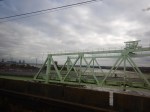
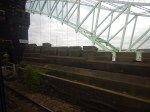
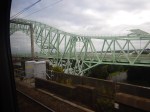
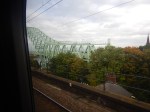

They were taken from a train on the railway bridge.
An Elegant Solution
There’s an old English expression about couples lying in bed like spoons.
I wonder, if this analogy is used in other languages like Swedish.
Swedish company; Bassoe Technology have certainly used the stacking technique of spoons or bodies in the design of their innovative wind-turbine floats, which they call D-Floaters.
This visualisation shows five D-floaters being transported on a ship.
Note.
- The D-Floaters do look strong and sturdy.
- There are several competing floats for wind turbines based on triangles.
- There is probably an optimal cost between transporter ships and D-Floaters.
Given that these structures may be moved thousands of miles before installation, this method of transportation must be economic.
The loaded ship does remind me of one of the bath toys my kids had in the 1970s.
Containerised Coal Overcomes The Break-Of-Gauge
The title of this post, is the same as that of this article on the Railway Gazette.
Innofreight containers are being transferred from broad to standard gauge trains as part of a through journey for the first time.
Russia’s attack on Ukraine has forced Poland to seek alternatives to Russian coal, but Polish ports have limited capacity to handle the required volumes.
As a result, coal is being imported via the Lithuanian port of Klaipėda. LTG Cargo’s 1 520 mm gauge trains are loaded with 60 Innofreight MonTainer XXL bulk goods containers of coal for transport to Kaunas or Šeštokai, where the containers are transferred to 15 standard gauge InnoWagons for onward transport to Braniewo in Poland.
It sounds like a simple solution, with advantages.
Innofreight says that this is faster than discharging the coal from one train and reloading it onto another, and also avoids creating dust.
On their home page, Innofreight describe themselves like this.
The focus of our corporate activity is the development of innovative wagons, containers and unloading systems for and in cooperation with our customers.
Certainly after the war in Ukraine is finished, there should be a large market for dual-gauge systems like that being used to get coal to Poland.
Recovering A Broken Down Battery-Electric Train
I was on a bus recently, where the brakes locked on and we had to all get off and wait to be rescued, by the next service.
To aid recovery on trains, it is usual for a broken-down train to be able to be rescued by another train of the same type.
But how do you rescue a battery electric train?
There will be two main groups of failures.
- Those where even the world’s most powerful locomotive will be unable to move the train.
- Those where a train with enough power can move the train to safety.
Let’s assume we have a four-car battery electric train.
- Trains can run for 40 miles, when starting with a full battery.
- Trains can run as pairs to provide higher capacity services or recover trains.
It is running on a ten-mile single-track branch line with a terminal station at the remote end.
It would be reasonable to assume, that the train could do two round trips before it needed a recharge.
The battery could also be said to have a capacity 160 car-miles.
Suppose a train broke down for some reason at the remote end, with a fault, that still allows the train to be moved, by towing.
- A second train can be used to remove the first train.
- It will use up 40 car-miles of energy to reach the first train.
- This leaves 120 car-miles of energy in the battery.
- When the two trains are connected, they are an eight-car train.
120 car-miles of energy in the battery, should be able to move the pair of trains fifteen miles.
I suspect that track layouts for battery-electric trains are designed with care, so that one train has enough battery capacity to rescue another.
 The Anonymous Widower