Zenobē Lands Financing For 400MW Eccles Project
The title of this post, is the same as that of this article on Solar Power Portal.
This is the sub-heading.
Battery energy storage system (BESS) developer/operator Zenobē has announced that it has successfully financed its Eccles BESS project in Scotland, in one of the biggest finance rounds in European history.
These two paragraphs add more details.
The total debt raised for the 400MW/800MWh project was £220 million, which the company says is one of the largest finance raises for a standalone BESS project ever made in Europe. The funding was provided by a group of lenders organised by National Westminster Bank and KKR Capital Markets Partners LLP. Additionally, Zenobē has announced that construction on the Eccles BESS—the company’s largest battery project to date—has begun.
The Eccles BESS is the final part of the firm’s £750 million investment in Scotland. Zenobē’s Blackhillock BESS, a 200MW/400MWh project located near Inverness, recently began commercial operations, and is set to expand to 300MW/600MWh later this year.
Zenobe seem to be able to finance these projects, without too much difficulty.
Construction seems to have started. But then, I suspect there are wind turbines in the vScottish Borders already lined up to use the batteries.
This Google Map shows an Eccles substation.
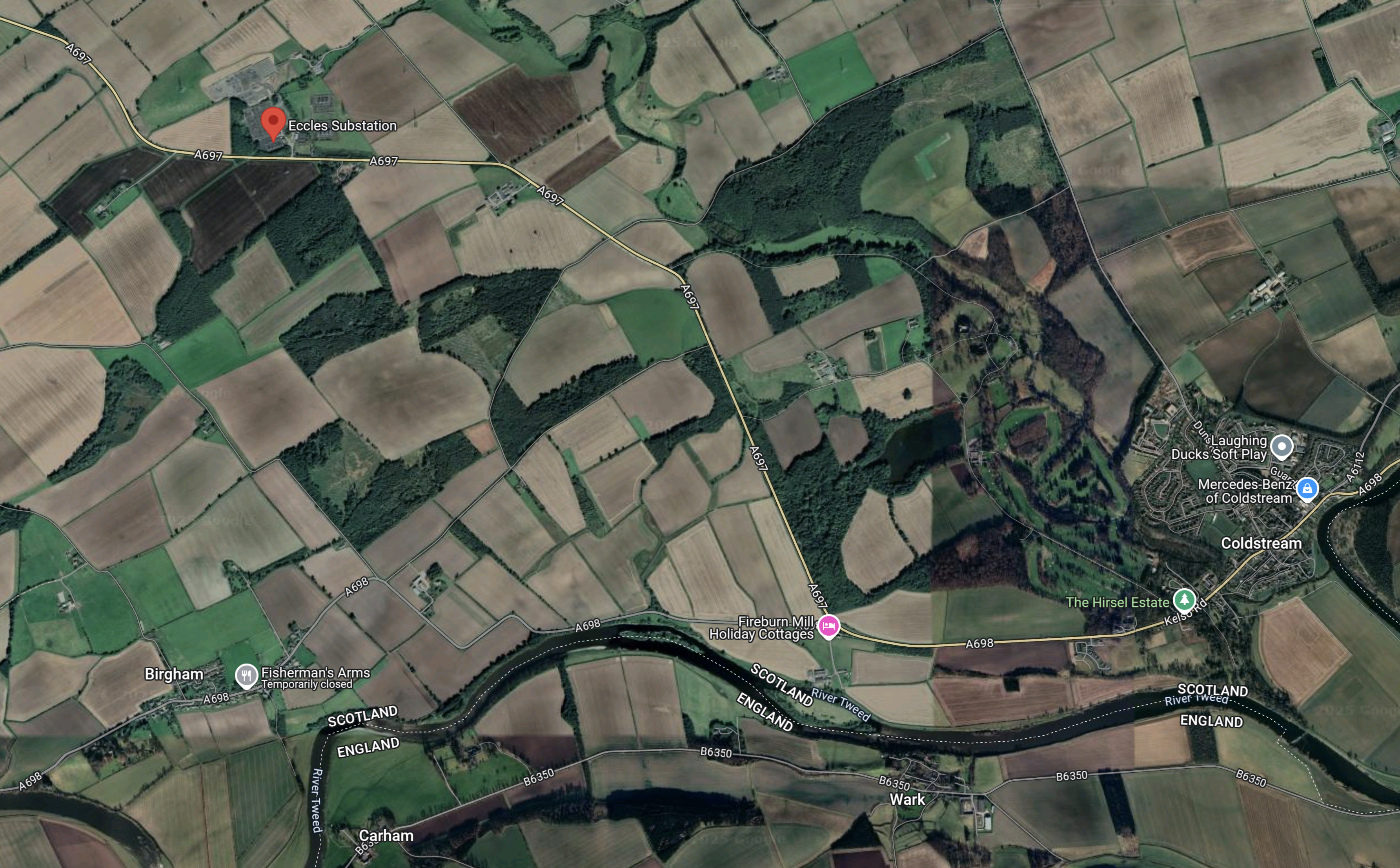
Note.
- The Eccles substation is marked by the red arrow.
- The town at the East edge of the map is Coldstream.
- The England-Scotland border is clearly marked.
This second Google Map shows a closer view of the Eccles substation.
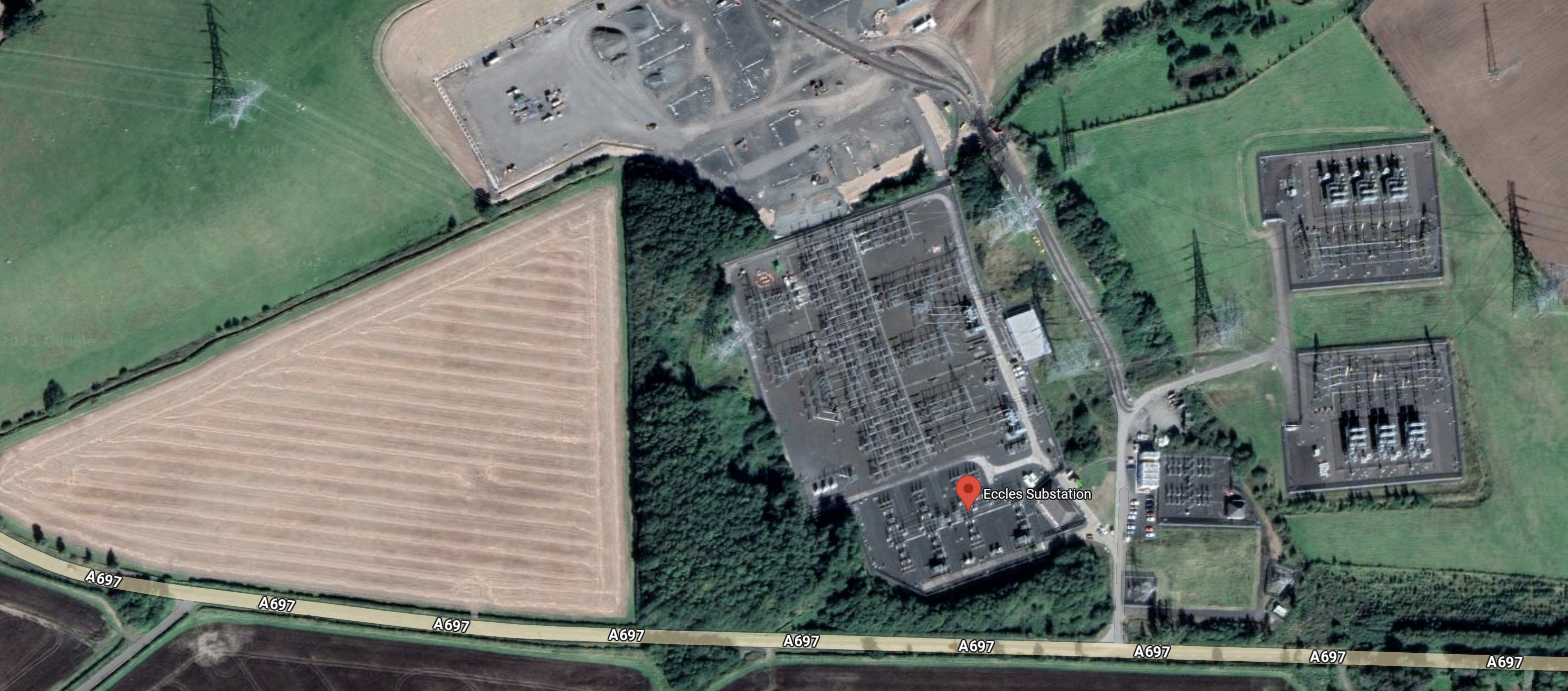
Note.
- t looks to be a substantial substation.
- There would appear to be plenty of space for a large battery.
- It is close to the A 597 road for the delivery of heavy equipment.
I suspect this substation could be the location of the battery.
It’s also right in the heart of Scottish onshore wind territory.
It is also according to the Solar Power Portal a £220 million project.
A project of this size will deliver substantial benefits in terms of work to the local community.
It will likely have a community benefit fund or something similar.
So you would expect the project would be welcomed into the local area.
But you would be wrong, if this article on the BBC, which is entitled Village ‘Heart Ripped Out’ By Battery Site Plans, is typical of the feeling about the batteries.
This is the sub-heading.
A rural community in the Borders is warning that Scotland’s renewable energy revolution is coming at a cost.
These three paragraphs add more detail.
Residents of Leitholm – a village between Coldstream and Greenlaw – claim the heart is being ripped out of their community with the arrival of battery storage facilities.
If all six proposed facilities are approved, more than 200 acres of farmland will be turned over to concreted compounds within a three-kilometre radius of their village.
Retired nursery owner Seonaid Blackie said: “This is not the place it used to be – people are worried sick.”
The residents view is balanced by industry expert Professor John Irvine, from St Andrew’s University, believes energy storage has a vital role to play in reaching net-zero targets.
My view is what is needed is an energy storage system, that can be built substantially underground.
If you look at large Battery Energy Storage Systems (BESS), they are best described as container parks.
We need energy storage systems, that fit in a single tennis court, rather than thirty football pitches.
Gravitricity is one possibility, who are also Scottish, who store energy using weights in disused mine shafts.
The French system; DELPHY is also a vertical system for storing hydrogen in a custom-built hole.
Practically, I believe the solution adopted will be to spread the batteries out and spend money on surrounding them with trees and other camouflage.
Back To The Dark Ages In West Virginia?
This article on WBOY is entitled West Virginia Senators Aim To Revitalize Coal Industry.
These are the introductory paragraphs.
If you’re tired of rising utility bills, you are not alone. West Virginia senators say they share the same feelings and believe the answer is right under our feet.
Revitalizing West Virginia’s coal industry and bringing down utility costs for customers is the goal of two pieces of legislation originating in the Senate.
A resolution known as the Coal Renaissance Act aims to keep current coal operations running as well as open up new opportunities for the industry, expanding mining in West Virginia.
According to Senators in support of the act, the optimum capacity factor for coal plants to run at is 69%. Currently, industry leaders say that number is down to around 30% to 40%.
A new bill known as the Reliable and Affordable Electricity Act incentivizes utility companies to rely on West Virginia coal.
There is also going to be a Senate bill, that will abolish tax breaks for wind farms.
In the UK, it is my belief, that coal died with the Aberfan disaster in 1966, which is described in this first paragraph of the disaster’s Wikipedia entry.
The Aberfan disaster (Welsh: Trychineb Aberfan) was the catastrophic collapse of a colliery spoil tip on 21 October 1966. The tip had been created on a mountain slope above the Welsh village of Aberfan, near Merthyr Tydfil, and overlaid a natural spring. Heavy rain led to a build-up of water within the tip which caused it to suddenly slide downhill as a slurry, killing 116 children and 28 adults as it engulfed Pantglas Junior School and a row of houses. The tip was the responsibility of the National Coal Board (NCB), and the subsequent inquiry placed the blame for the disaster on the organisation and nine named employees.
I do have memories of coal mining in my brain.
- As a young child, I can remember being driven past the Kentish collieries and seeing the blackened landscape of the Garden of England.
- Newspapers of the 1950s and 1960s published, their share of mining disasters.
- In the 1980s, I drove through coal mining country in the United States and was appalled at all the fumes and smoke from the coal-fired power stations and the trucks delivering coal. Nothing as civilised as a merry-go-round train was used.
- In 2015, I visited Katowice and wrote An Excursion In Katowice. The air was thick with coal smoke from the coal-fired power stations.
I also remember at the Jobs Fair, when I left Liverpool University in 1968, seeing the recruiter from the National Coal Board sitting there alone, as if he’d got the plague. Graduates had decided, that no way, were they going to work in the coal industry.
The West Virginia senators, should be certified, if they want to bring back coal.
The New Station With Wildflowers And No Car Park
The title of this post, is the same as that of this article on the BBC.
This is the sub-heading.
A new railway station with solar panels and wildflowers on the roof and no car park has been hailed as an example of sustainable transport
These three paragraphs, explain the thinking behind the design.
Cambridge South station, on Francis Crick Avenue, at the city’s Biomedical Campus, is expected to be completed by early 2026.
Designer and architect Jan Kroes said the site, which sits next to a nature reserve, would “fit in within the green belt”.
Network Rail said the site would be next to a guided busway system and connect with local cycleways and footpaths.
Regularly, when I lived nearly twenty miles from Cambridge, I would drive to Whittlesford Parkway station, which has 348 parking spaces and take the train to London.
This Google Map shows the area to the South-East of Cambridge.
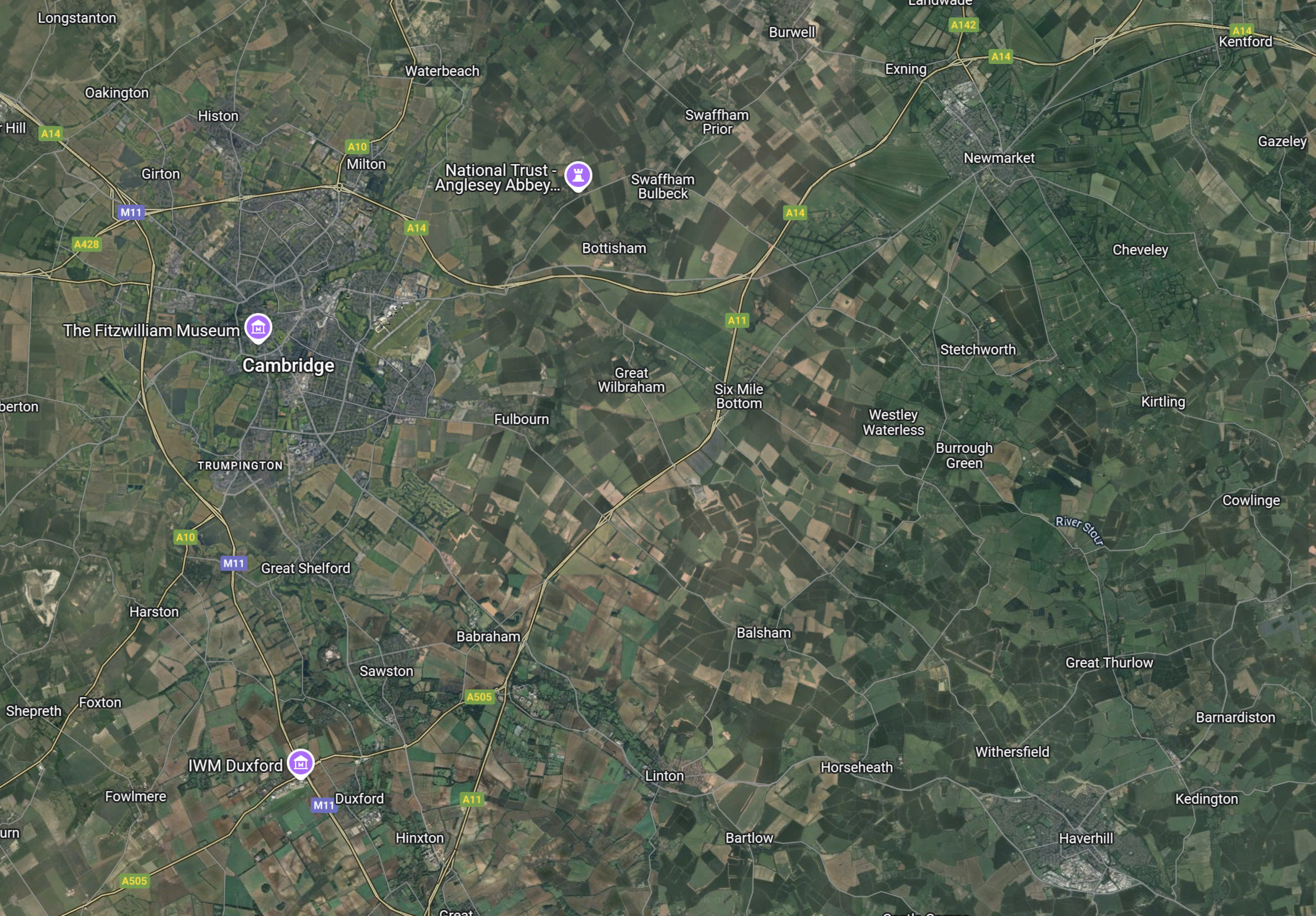
Note.
- Cambridge is towards the North-West corner of the map.
- Newmarket, which has a population of nearly 16,000, is towards the North-East corner of the map.
- Haverhill, which has a population of nearly 30,000, is towards the South-East corner of the map.
- Whittlesford Parkway station, is towards the South-West corner of the map close to the Imperial War Museum at Duxford
- I used to live at Great Thurlow between Newmarket and Haverhill.
The only railway stations on this map are Cambridge, Cambridge North, Dullingham, Newmarket, Shelford and Whittlesford Parkway.
As bus services are pretty thin on the ground, if you live to the bSouth-East of Cambridge, I can understand if there has been surprise, at the lack of parking at the new Cambridge South station.
- If you are travelling to London or Stansted Airport, you can still use Whittlesford Parkway, which has parking.
- But if when the East West Railway opens, you will need to use Cambridge or Cambridge South stations.
- Now that Cambridge North station is open, travelling to Norwich by train may be easier, unless there is not enough parking at Cambridge North station.
When I lived in the area, the most common excuse for not using the train, was the problems of parking at the stations.
I predict, that parking will be added to Cambridge South station.
How To Keep The Lights On When The Wind Doesn’t Blow
The title of this post, is the same as that of this article in The Times.
This is the sub-heading.
Britain came close to a blackout this month. Gas is being phased out and renewables are intermittent, so can energy storage stop us going dark?
These are the first two paragraphs.
It was 8.29pm on the first Tuesday in January when the alert was issued by the electricity control room. Freezing temperatures had coincided with unusually low wind speeds, and it was making the National Energy System Operator (Neso) jittery.
Engineers forecast a 1.6GW shortfall — the requirement for about 1.5 million homes — for a three-hour period from 4pm the following afternoon. “System operators are requested to notify Neso of any additional megawatt capacity,” the message said.
Luckily, the plea worked.
The article then goes on to describe the various technologies that are being deployed.
The article starts by talking about pumped storage hydroelectricity.
This paragraph gives a superb illustration about how things have changed in energy and energy storage in the UK in the last few decades.
In the past, when coal provided the bulk of British power, this system was used to meet fluctuating demand levels. But now it is also required to meet fluctuating supply levels from renewable sources. Martin Pibworth, chief commercial officer at SSE, started with the company as a trainee in 1998. “Back then, at our Foyers pumped storage plant [at Loch Ness] we would switch modes, from pumping to not pumping and back again, maybe 600 to 700 times a year. Last year we switched modes there 6,500 times. It’s an insight into how the market has changed and how much more flexibility is needed, and how responsive that has to be.”
We have to be more agile, with our handling of storage to back up the various methods of generation.
German Firm Plans To Build Britain’s Biggest Solar Farm
The title of this post, is the same as that as this article on The Times.
These three paragraphs outline the project.
The developers behind a controversial solar power project in Oxfordshire have submitted a planning application for what is thought will be the largest such scheme in western Europe.
The site in Botley West is being developed by Photovolt, a German company, and could generate 840 megawatts (MW) of electricity, enough to power about 330,000 homes.
However, the project has sparked a backlash among some local residents, who argue the scheme will blight the landscape.
A map shows the site and it is certainly a large one.
- The Botley West site will cover a total of about 3,200 acres.
- It will pass through 15 villages.
- About 1,235 acres will not be covered with solar panels.
- It has a web site, which gives more information.
- There is also a Stop Botley West web site.
I can certainly understand the opposition.
These are my thoughts.
I Would Add A Battery To The Panels
An added battery would undoubtedly smooth the output of the solar panels. Especially, when the sun is not out to play!
A total capacity of 840 MW is planned for Botley West and in my opinion as a Control Engineer, a sizeable battery is needed.
I would not use a Battery Energy Storage System or BESS based on lithium-ion batteries, as I believe that Highview Power’s liquid air batteries and others offer cost and environmental advantages. But that is one for the accountants and the environmentalists!
I Might Add A Few Appropriately-Sized Wind Turbines To The Farm
In Skegness Wind Turbine Trial To Light Up Pier In UK First, I discuss using small, vertical wind turbines from a Norwegian company called Ventum Dynamics.
This picture shows a Ventum Dynamics turbine on Skegness Pier.
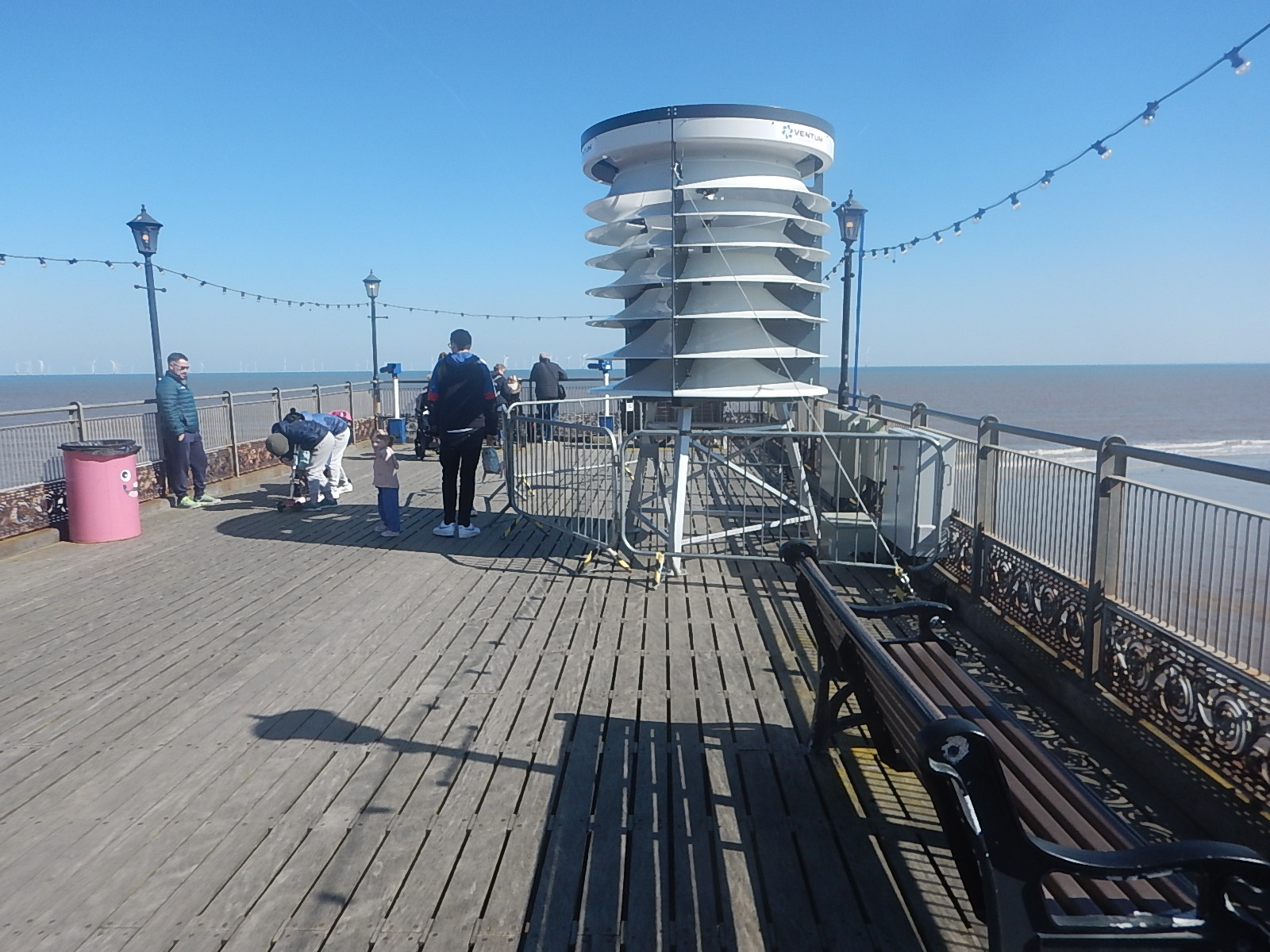
On the Ventum Dynamics web site, there are several pictures of buildings with flat roofs, that have several turbines on each.
Surely, if you’re installing a comprehensive electrical network, then it should be used to collect all the electricity it can.
I believe that Ventum’s turbines could be alternated in a line with trees, so that they merged more into the countryside. Some experiments need to be done.
I Would Also Fit Solar Roofs To Suitable Buildings
Every little helps!
Conclusion
When mixing solar panels and wind turbines into the countryside, you need to be bold and discard preconceived ideas.
England’s First Onshore Wind Farm Of A New Generation
This document from the Department of Business, Industry and Industrial Strategy lists all the Contracts for Difference Allocation Round 6 results for the supply of zero-carbon electricity.
There is only one English onshore wind farm listed in the document and it is the 8 MW Alaska Wind Farm in Dorset.
It has its own web site and this is the sub heading.
Alaska is a wind energy project comprising 4 wind turbines that are currently under construction at Masters Quarry in East Stoke, near Wareham, Purbeck. This website aims to update you on progress and provide ways to get in touch with the project team.
This is the introductory paragraph.
Alaska Wind Farm is the first of its kind in the county. Dorset has a limited potential for large-scale onshore wind development due to a variety of environmental and technical constraints, such as landscape designations and grid connection opportunities. Extensive technical assessments undertaken during the planning process have demonstrated that the quarry off Puddletown Road makes an excellent site for a wind farm. At present, all four wind turbines have been installed and the team is working on connecting them to the local electricity network. Grid connection is taking longer than anticipated, but the project team are working with the Distribution Network Operator, SSE Networks, to get the wind farm connected over the summer. Once operational, the amount of green electricity generated is expected to meet the annual demand of up to 5,200 average UK households every year*.
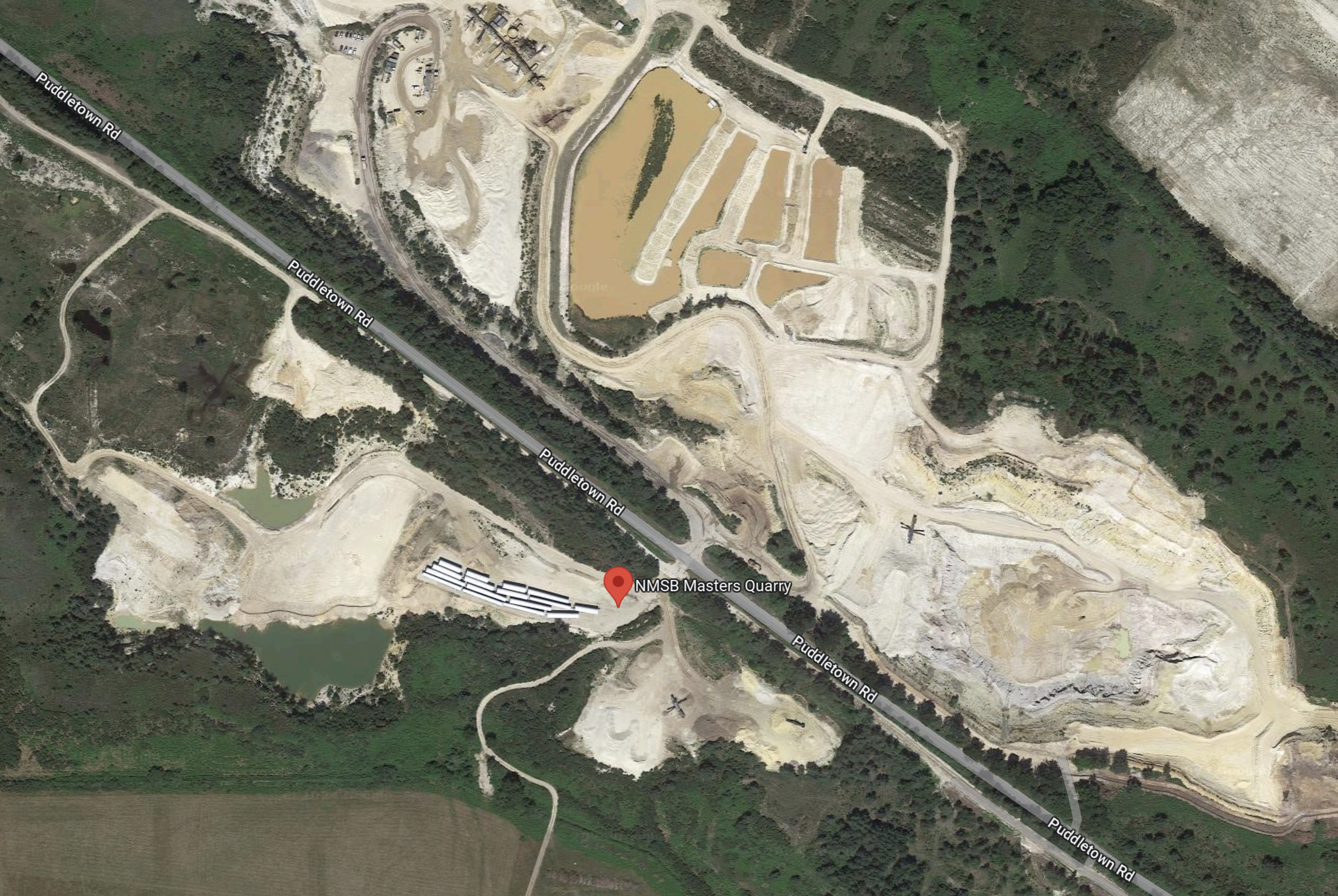
This Google Map shows the site on Puddletown Road.
This second Google Map shows an enlargement of part of the site.
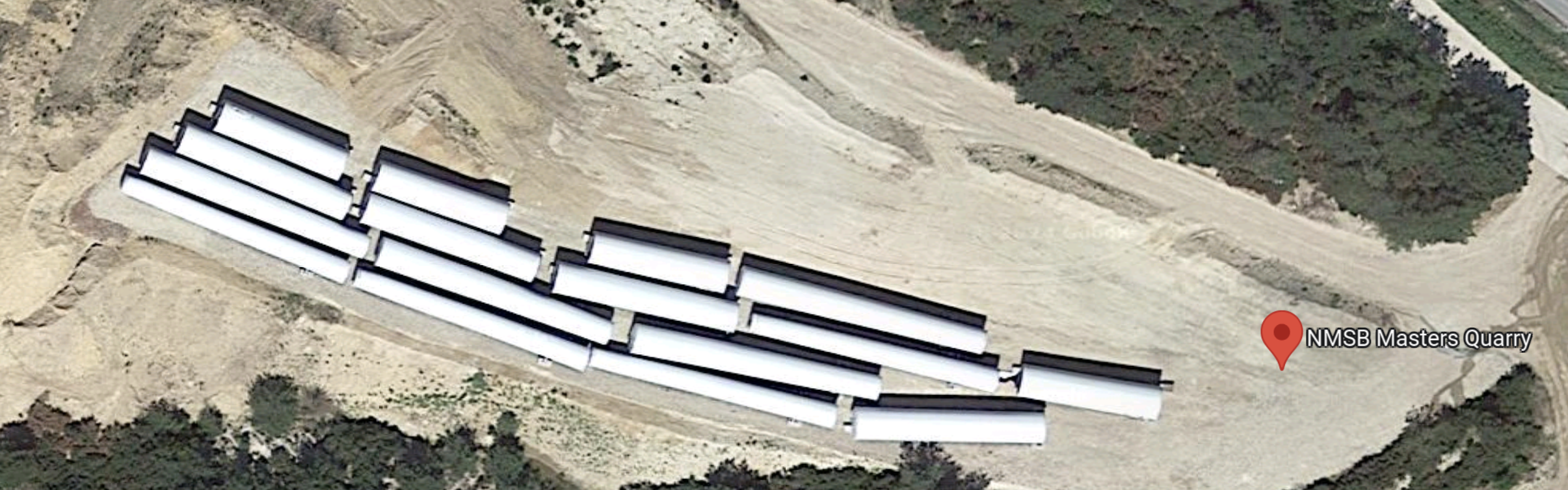
Note that are sixteen segments of wind turbine towers.
This article on the Swanage News is entitled Twenty Year Battle To Build Purbeck Wind Farm Is Finally Over.
It gives full details of the history of the wind farm.
The wind farm and a solar farm, will be surrounded by a new heath.
I particularly like this paragraph.
The new heath is expected to be home to all of Britain’s reptiles, including rare smooth snakes and sand lizards among other animals, as well as threatened butterflies, birds, bats and plants.
Renewable energy doesn’t have to wreck the countryside.I shall be watching how this project develops.
AI Tech Tracking Seabirds At Aberdeen Bay Offshore Wind Farm
The title of this post, is the same as that of this article on offshoreWIND.biz.
This is the sub-heading.
Vattenfall, Norwegian AI technology start-up Spoor, and British Trust for Ornithology have teamed up on a project that will test AI technology in tracking 3D flight paths of seabirds flying near the wind turbine blades at the Aberdeen Bay Offshore Wind Farm in Scotland.
This is the first paragraph.
The project has already started, with four cameras already installed and collecting data on birds’ 3D flight paths throughout the wind farm and in the immediate vicinity of the turbine blades. Data on seabird movements has already started coming in and validation trials have been completed both offshore, with an observer present, and onshore, with a drone, according to Vattenfall.
This looks like a very neat piece of technology, that hopefully will solve how birds interact with wind turbines.
From my experience of landing and taking off light aircraft at the old Ipswich Airport, where there were a lot of seabirds, my money would be on that birds will learn to use their AI (Avian Intelligence) to avoid the blades of wind turbines.
Dutch Stop Offshore Wind Turbines To Protect Migratory Birds In ‘International First’
The title of this post, is the same as that of this article on offshoreWIND.biz.
This is the sub-heading.
The wind turbines at Borssele and Egmond aan Zee offshore wind farms were stopped for four hours on 13 May, to help migrating birds pass by safely.
These three paragraphs outline the measures taken to protect the migrating birds.
According to the Dutch Government, this is the first time such a measure has been applied and is in line with the approach of the government and participating companies to increasingly focus on ecology and biodiversity in offshore wind farms.
The wind turbines’ speed will be reduced to a maximum of two rotations per minute during the predicted night-time peak migration to give the birds a safe passage.
The shutdown was part of a pilot phase, which could become standard this autumn and will also include wind farms that are still being built or will be constructed in the future.
I wonder how this Dutch action fits with research from Vattenfall, that I wrote about in Unique Study: Birds Avoid Wind Turbine Blades.
Unique Study: Birds Avoid Wind Turbine Blades
The title of this post, is the same as that of this media report from Vattenfall.
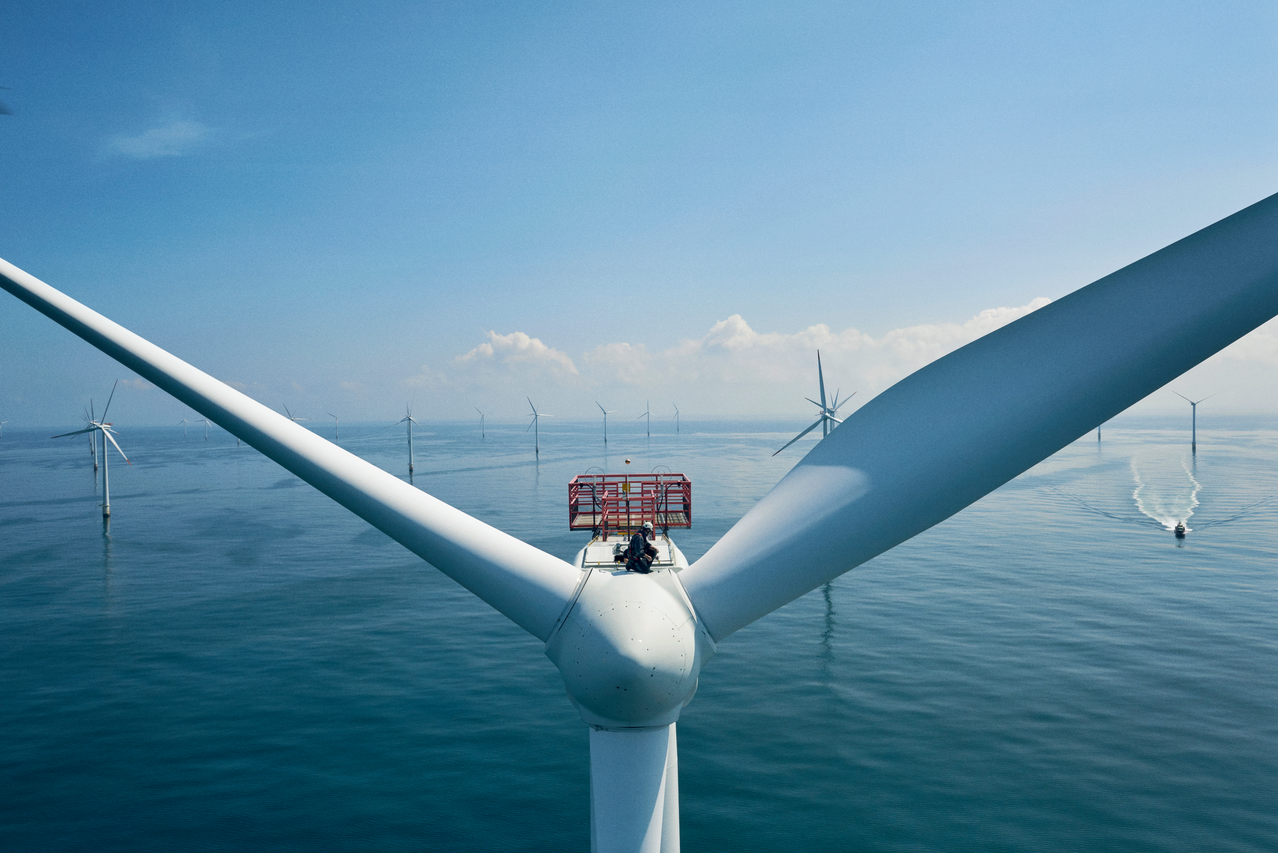
This is the sub-heading.
Seabirds deliberately avoid wind turbine rotor blades offshore – that is the main finding of a new study that mapped the flightpaths of thousands of birds around wind turbines in the North Sea. Most importantly, during two years of monitoring using cameras and radar, not a single bird was recorded colliding with a rotor blade.
I must admit I’m not surprised, as I’ve landed a light aircraft many times with birds flying above the runway and I can’t remember ever hitting one. But I have seen several dive out of the way.
The report is a fascinating read.

