Ventilators On Click
Click, the BBC’s technology program has just shown an item about ventilator development.
They showed a picture of the dyson machine and video of several others.
- One created its own oxygen.
- One was designed for developing countries.
- One was designed to be a minimal size.
- One was designed to be 3D printed.
- One cost around five hundred euros.
Developments were also from several countries in addition to the UK, including Canada, France and Spain,
I think the world is on a path to get enough ventilators.
The program will be repeated in BBC Breakfast tomorrow!
Boots March In To COVID-19 Testing
There has just been an item on BBC Breakfast, where the Managing Director of Boots claimed that the chemists were rolling out COVID-19 testing.
Only hundreds a day at the moment, but the plans seem impressive!
Lockdown ‘Is On Course To Reduce Total Death Rate’
The title of this post, is the same as that of this article on The Times.
This is the introductory paragraph.
Britain is on course for an estimated 5,700 deaths from coronavirus, far lower than originally predicted, experts believe.
It’s all contained in a paper by Tom Pike at Imperial College,
Apparently, it is based on the premise that the UK follows the lockdown and social distancing.
Here’s hoping!
The story is also in the Mail and the Express.
A Comment On The Dyson Ventilator
This comment was posted on this article in The Times talking about ventilators.
I work in ITU- I’m with the dyson option. Ventilators are mostly large cumbersome things complicated devices…. if he delivers in time I have no doubt they’ll be great…& maybe better than what we have now…
We have to assume it’s a genuine comment.
Note that the article gives a good description of a ventilator and how it works. As an engineer, it doesn’t seem to be the most complicated piece of equipment.
Think over the last two hundred years how many radical redesigns of common products have been made, that have changed markets.
- George Stephenson and the railway.
- Frank Whittle and the jet engine.
- Alexander Graham Bell and the telephone
- Alec Issigonis and the Mini
- Trevor Baylis and the wind-up radio and wind-up torch.
- James Dyson and the vacuum cleaner.
- Transistors and integrated circuits have taken over from electronic valves.
- Mini computers have taken over from mainframes.
- Flat screens have taken over from cathode ray tubes
- On-line systems like auctions. banking and peer-to-peer lending.
- High speed rail is taking over from short distance flights.
We can all nominate our favourite examples of disruptive innovation.
James Dyson and his team have probably looked at the current design of ventilator and concluded that it is complicated, expensive to make and difficult to use and have come up with a better design, that can be built quickly and easily in large numbers.
The Fastest Ambulance In The World
This article on CityLab is entitled To Fight a Fast-Moving Pandemic, Get a Faster Hospital.
This is the introductory paragraph.
To move Covid-19 patients from the hardest-hit areas, authorities in France turned one of the nation’s famous TGV trains into a very fast ambulance.
It appears that French COVID-19 outbreaks are as patchy, as they are in the UK, where some towns and cities like Hull, Blackpool and Middlesbrough have only a few COVID-19 patients and major hospitals.
Evening up the numbers is probably a good idea.
Could we see a spare InterCity 125 train fitted out as an ambulance train to move patients around the country?
My Hand Appears To Be Healed
I went to see the nurse this morning and the wound looked so bad and yellow, when she took the dressing off, she got another nurse for a second opinion.
But after a good scratch from a rubber-gloved hand, she said, I wouldn’t need to come back.
I took this picture, when I got home.
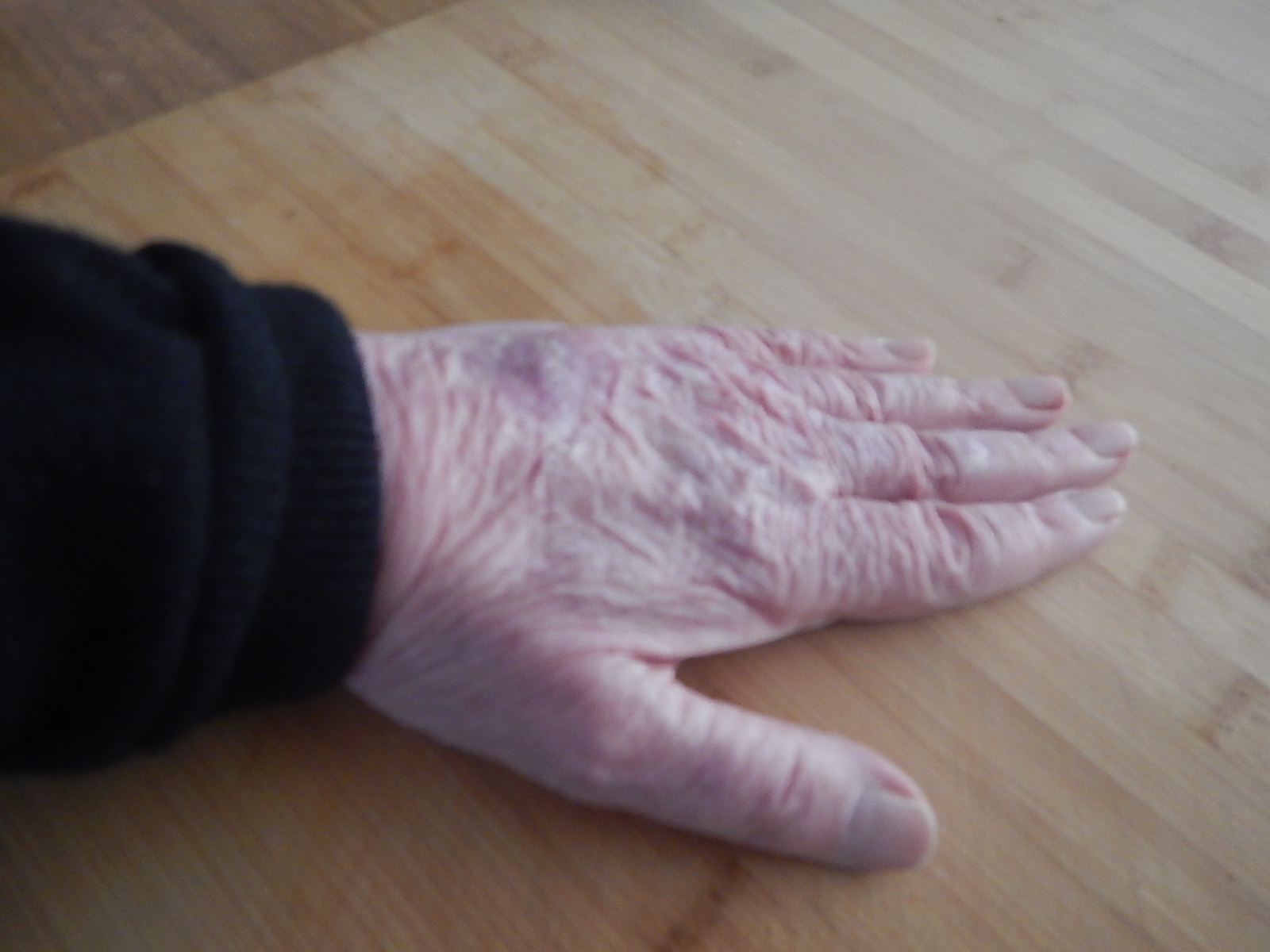
Obviously, my odd collection of Jewish, Huguenot and Devonian genes are using all their survival instincts to mend my secondary hand.
Government Orders 10,000 Ventilators From Dyson
The title of this post, is the same as that of this article on the BBC,
It may seem strange to some, that the government has turned to a vacuum cleaner manufacturer to build high-tech medical equipment for the NHS.
But.
- Look at the quality of the parts on your Dyson vacuum, where they all fit tightly together.
- I suspect that some of the principles about air-flow in a vacuum, apply to a ventilator.
- Advanced manufacturing has progressed a lot in recent years and it should be one of Dyson’s strengths.
The BBC are reporting that Dyson is working with The Technology Partnership, an innovation company based in Cambridge.
Enter The Polymath!
This article in today’s Times is entitled Pandemic Can Be Controlled, Says Scientist Michael Levitt.
Michael Levitt is no ordinary scientist.
- Born in South Africa
- Educated at Kings College and Cambridge
- Professor at Stanford
- A Nobel Laureate
He is also married to an expert in Chinese art, so visits China regularly.
This is the introductory paragraph to the Times article.
The world will beat coronavirus faster than most experts expect, provided that social distancing is observed, a Nobel laureate scientist who correctly forecast the pandemic’s trajectory in China has predicted.
This is the last section of the article, which has a headline of Levitt’s China Forecast.
- February 21 Professor forecasts 80,000 cases and 3,250 deaths
- March 23 Official figures from China say there have been 81,093 cases and 3,270 deaths. There have been 39 additional cases today and nine additional deaths
Whatever you do today, read the article.
It does look that his advice has been read by Boris! Or Boris’s advisors have come to the same conclusion.
UK To Raise Contactless Card Payment Limit To 45 pounds In April
The title of this post is the same as that of this report on Reuters.
This is the introductory paragraph.
Britain will raise the spending limit for contactless card payments to 45 pounds ($52) from 30 pounds on April 1 to support consumers during the coronavirus outbreak, the UK Finance industry association said on Tuesday.
I think this is a good thing.
When I go to Marks and Spencer to get my food, I have found that for the goods I buy, their average cost is two pounds. It is annoying the number of times I buy sixteen or seventeen items and I am just over the thirty pound limit.
So from April the first, I will be using chip-and-pin less often.
Surely, you’re more likely to pick up COVID-19 with chip-and-pin!
My Hand Is Mending Well
I took this picture in the GP’s surgery of my hand without a dressing.
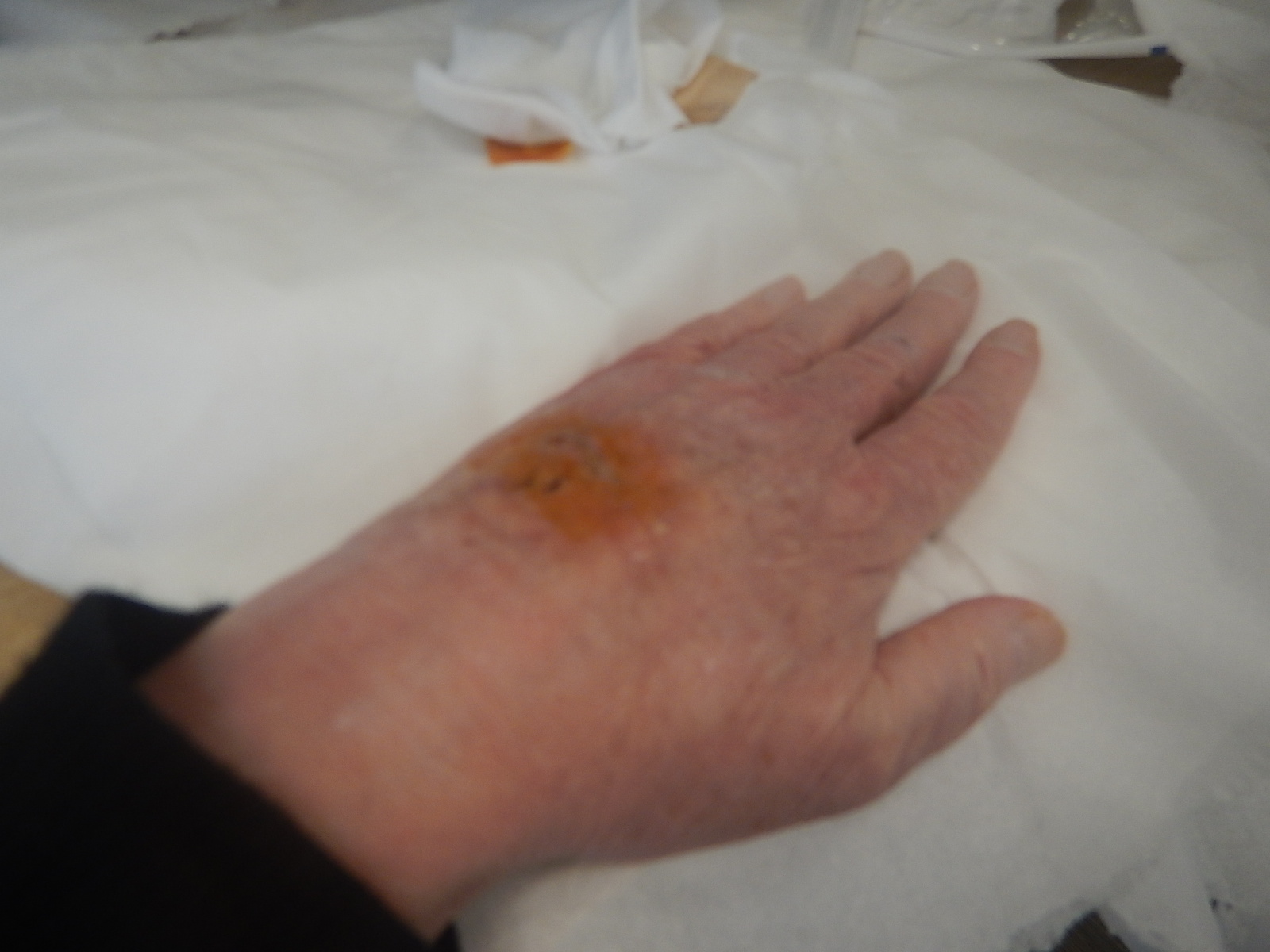
The nurse felt, that it won’t be long before I can dispense with the plaster.
Aren’t bodies wonderful, how they can heal themselves! That wound is about twenty days old!

