A Class 707 Train In Southeastern Livery
The Class 707 trains started running for Southeastern today and I photographed this example at Cannon Street station.
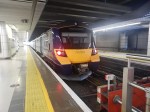
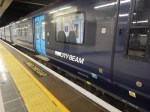
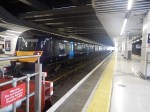
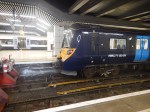
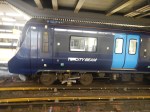
The trains have been branded as City Beam. I’m not sure I like it.
Thoughts On Splitting The Northern Line
In Battersea Power Station Station Opens, I talked about the scale of the new Battersea Power Station station.
- It looks like it could have three entrances.
- It’s got four escalators and two lifts to go to down to platform level.
- It has two terminal platforms.
I feel it has been designed to handle as many passengers and trains as Morden station.
- Morden station has five platforms.
- The station is step-free.
- The station handles ten million passengers per year.
The signalling can handle up to thirty trains per hour (tph) to Morden.
It looks to me that Battersea Power Station station has been designed to be big enough to take half the trains from North London with ease.
The Bank Station Upgrade
In the Bank Station Upgrade, nearly a mile of new train tunnel and several shorter pedestrian tunnels were built.
They were dug not with a tunnel boring machine, but by traditional methods, that would have been understood by Brunel and the ancient Egyptians; pick and shovel, but probably assisted by the best modern electrical diggers and trucks.
I would expect that any tunnelling needed to split the Northern Line will not use an expensive tunnel boring machine.
The Northern Line will be going back to the future.
The Proposed Split
There has been talk of splitting the Northern Line into two separate lines for some years.
- The Western Line (Charing Cross Line) would run between Edgware and Battersea Power Station via Camden Town, Euston, Charing Cross and Kennington.
- The Eastern Line (Bank Line) would run between High Barnet and Morden via Camden Town, Euston, Bank and Kennington.
Note.
- I will call the two lines the Bank and Charing Cross Lines.
- Both lines could have Victoria Line frequencies of at least thirty tph.
- It is generally felt that the split would need a rebuild at Camden Town station to handle the extra passengers.
- Camden Town station also needs better access between the trains and the street.
- There would need to be better connections at Kennington and Euston stations.
Surely, the main advantages of the split would be as follows.
- Trains on both lines would go end-to-end without crossing a junction, where signals and points were constantly switching trains. This is why the Victoria Line can handle more than thirty-three tph.
- Trains will run at Victoria Line frequencies on both lines.
- All trains at Camden Town and Kennington stations would use a route without points to go as fast as possible through the station.
- Eliminating the points, would make both lines more reliable.
- Euston station will have upwards at least sixty tph connecting it to Crossrail.
Effectively, the new Bank and Charing Cross Lines would be able to perform just like Dear Old Vicky.
I will now look at where work needs to or could be done to successfully split the two lines.
Kennington Station
In Could Access Between Platform And Train Be Improved At Kennington Station?, I outlined how passengers might use Kennington station to change between the Bank and Charing Cross Lines.
I developed this rule.
The rule would appear to be if you’re on one line and are going to a station on the other, you change at Kennington station.
Staff would need to be on the platform to help those, who were changing direction.
But I do think changing can be made to work well with step-free access between train and platform on all four platforms at Kennington station.
It will be interesting to see, what proportion of train changes at Kennington are simple cross-platform changes, where there is no use of the steep stairs. I think it could be quite high.
I believe Kennington station will grow into a very smooth interchange between the Bank and Charing Cross Lines.
Although, there’ll be a problem for some time, if you’re in a wheelchair and want to go between Morden and Battersea Power station.
This could be solved by lifts between each pair of platforms and the intermediate level passage, which connects to the lifts to the surface.
The Camden Town Problem
This map from cartometro.com shows the lines around and through Camden Town station.

Note.
- Camden Town station has four platforms.
- The Eastern pair are under Kentish Town Road and connect to High Barnet in the North.
- The Western pair are under Camden High Street and connect to Edgware in the North.
- In each pair of tracks the Northbound track is above the Southbound track.
- There is a level passage between the two Northbound tracks, so it is an easy interchange, if you’re on the wrong train going North.
- The passage between the two Southbound tracks has stairs at either end, if you want to change Southbound trains at the station.
But the real problem lies South of the station; the horrendously complicated Camden Town Junction.
The junction must be able to handle trains going between the following stations.
- Bank and Edgware
- Bank and High Barnet
- Charing Cross and Edgware
- Charing Cross and High Barnet
Note in the map, that the High Barnet tracks dive under the Edgware tracks so they can form two separate pairs of tracks to Euston, only one of which goes via Mornington Crescent.
If there was a similar junction on the motorways of the UK or the Interstate Highways of the US, it would have years ago been simplified.
The split will mean the following.
- The Eastern pair of platforms will still be connected to High Barnet as now, but will also be directly connected to the tracks that go directly to Euston and on to Bank.
- The Western pair of platforms will still be connected to Edgware as now, but will also be directly connected to the tracks that go to Euston via Mornington Crescent and on to Charing Cross.
- Camden Town Junction could be seriously simplified, with perhaps the ability to swap between routes only available for depot and engineering movements.
I do suspect, it would also mean all trains from High Barnet will go via Bank and all trains via Edgware will go via Charing Cross.
- A proportion of passengers would have to change at Camden Town.
- Both routes would connect to High Speed Two at Euston.
- Both routes connect to the Central, Jubilee, Piccadilly and Victoria Lines.
- Improvements promised for Euston will give better access to the Sub-Surface Lines.
I think it will be a case of winning some good routes and losing others. Disgusted from Finchley might complain.
But then there will be Crossrail, which as it connects to both lines at Tottenham Court Road and Moorgate could give serious advantages.
The split isn’t without passengers who will object to losing their preferred route.
Camden Town Station
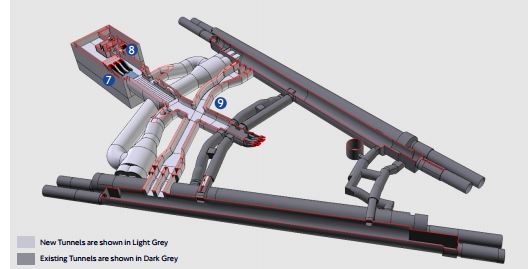
This document on TfL’s web site gives more details of the proposed capacity upgrade at Camden Town station. This schematic of the tunnels, platforms and walkways shows how the station could look in a few years time.
Note.
- New tunnels are shown in light grey.
- Existing tunnels are shown in dark grey.
- The Northbound platforms are above the Southbound ones.
- The tunnels in the foreground are those of the Charing Cross Line.
- The far tunnels are those of the Bank Line.
- The new Buck Street entrance is labelled 8.
- There is a new pedestrian tunnel between the two Northbound Lines.
- Below it is a new tunnel between the two Southbound Lines.
- There is an existing passage linking the four lines.
The full upgrade is very much on the back burner, but could Camden Town station be upgraded with the proposed extra cross passages.
- These would enable passengers to change lines easily on the level.
- Passengers changing between the Bank and Charing Cross Lines could be kept away from the existing escalators and the space at their bottom.
- The tunnels would increase the circulation area.
- The tunnels would be part of the new Buck Street entrance if it were to be built.
I feel with improved cross-platform interchange, Camden Town could function as an interchange station between the Bank and Charing Cross Lines.
A similar rule as I used for Kennington station would apply for passengers.
The rule would appear to be if you’re on one line and are going to a station on the other, you change at Camden Town station.
Staff would need to be on the platform to help those, who were changing direction.
But it would be a more comprehensive and easier interchange than Kennington, as all changes would be without steep stairs.
Once Camden Town station is working well with the new cross passages, I would then get a developer to put a large development on the proposed site of the Buck Street entrance, with a new entrance with lifts and escalators underneath, that reached down to the new cross tunnels.
After what the contractors did at Whitechapel, I suspect this could be achieved, whilst keeping the trains running and leaving the existing Camden Town station intact.
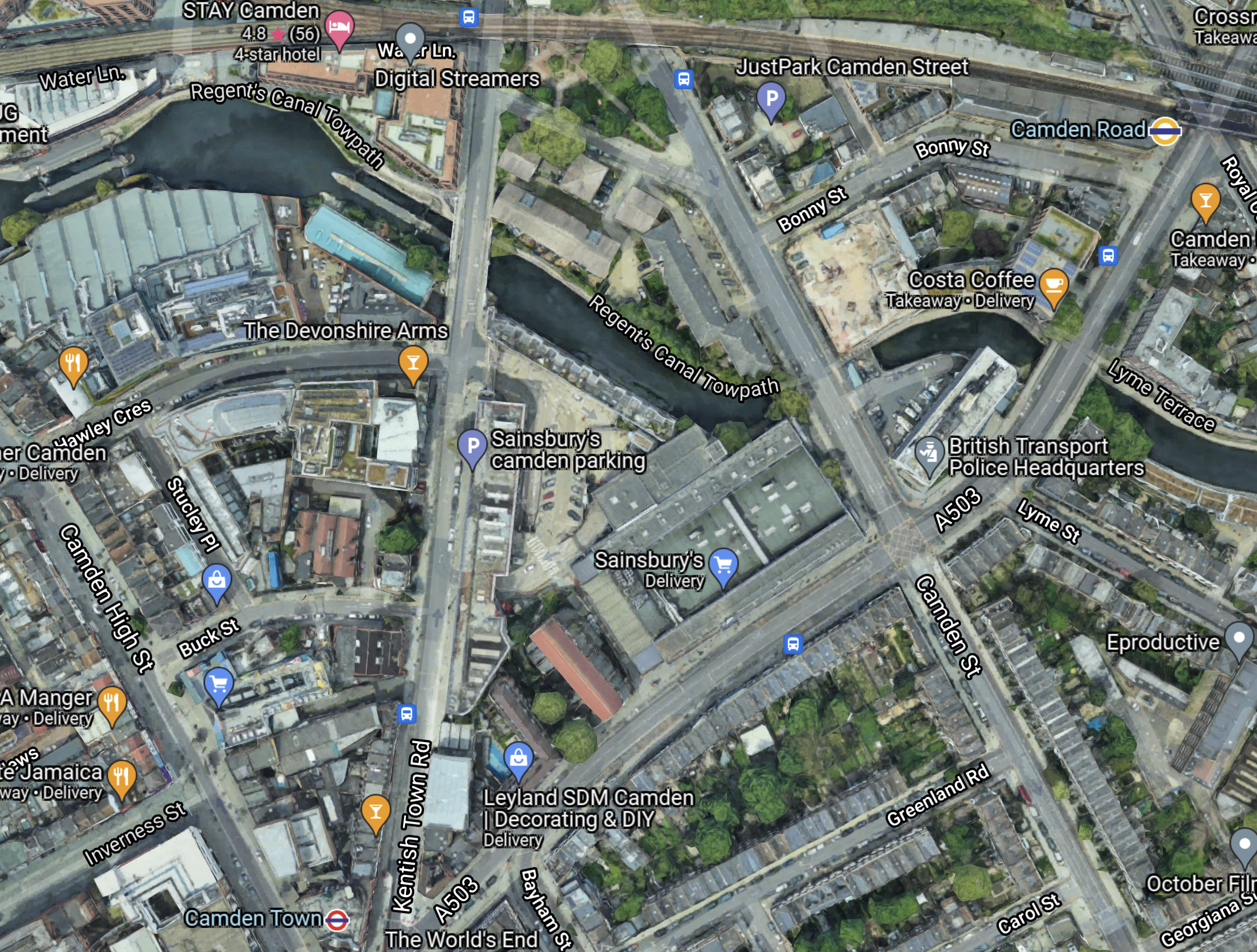
This Google Map shows the area between Camden Road and Camden Town stations.
Note.
- Camden Road station on the North London Line is in the North-East corner of the map.
- Camden Town station is at the bottom of the map towards the West.
- The Charing Cross Line to Edgware is under Camden High Street.
- The Bank Line to High Barnet is under Kentish Town Road.
- Buck Street is to the North of Camden Town station connecting Camden High Street and Kentish Town Road.
- The red-roofed building in Buck Street is the former Hawley School, which is now owned by Transport for London and is earmarked for the new station entrance.
- The Regent’s Canal, which has a convenient towpath, runs East-West across the map.
- A lot of development is happening on the North bank of the canal.
The map doesn’t show how difficult it is to walk between the two stations along the busy Camden Road.
In Between Camden Road And Camden Town Stations Along The Canal, I walked between the two stations along the canal and then up Kentish Town Road. It took me fourteen minutes in total with seven minutes between the canal and Camden Town station.
I believe the following will happen.
- People living and working in the new developments will need access to Camden Town station.
- The Regent’s Canal towpath will be updated into a safer walking route between Camden Lock and Camden Road station, that serves a lot of the developments.
- More tourists will need to get to Camden Lock and the markets.
These will increase the need for extra capacity at Camden Town station.
The only way it will get built is by a private developer, who puts a lot of housing on the Buck Street site and sells it as quality housing in an iconic location.
A lot of politicians won’t like it, but solving the problems at Camden Town station, which is an overcrowding accident waiting to happen, is more important than their egos.
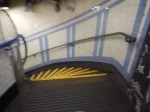
These pictures show some of the features of Camden Town station.
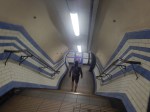
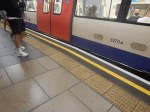
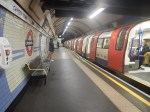
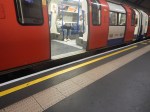

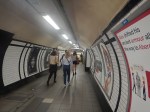
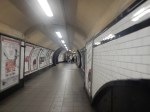
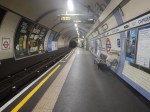
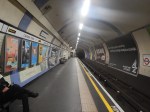


I believe Camden Town station could grow quickly into a very smooth interchange between the Bank and Charing Cross Lines.
In a few years time, when the Buck Street entrance is built, the capacity problems will be on their way to solution.
Finally, once the Buck Street entrance is complete, the original station can be refurbished.
Euston Station, Crossrail, Crossrail 2 and the Northern Line
Consider.
- Euston station is a very busy station and it will be even busier, when High Speed Two opens.
- Crossrail 2 will not be built before High Speed 2 opens.
- The Victoria Line doesn’t connect to Crossrail.
- The only connection between Euston station and Crossrail are the two branches of the Northern Line.
Splitting the Northern Line into the Bank and Charing Cross Lines will increase the number of Northern Line trains through Euston to at least sixty tph, if both lines can handle Victoria Line frequencies.
It looks to me, that making the Northern Line step-free at Euston is the best short-term alternative to building Crossrail 2.
Euston Station
Euston station is the third station, where the Bank and Charing Cross Lines connect.
This map from cartmetro.com shows the Northern Line through Euston station.
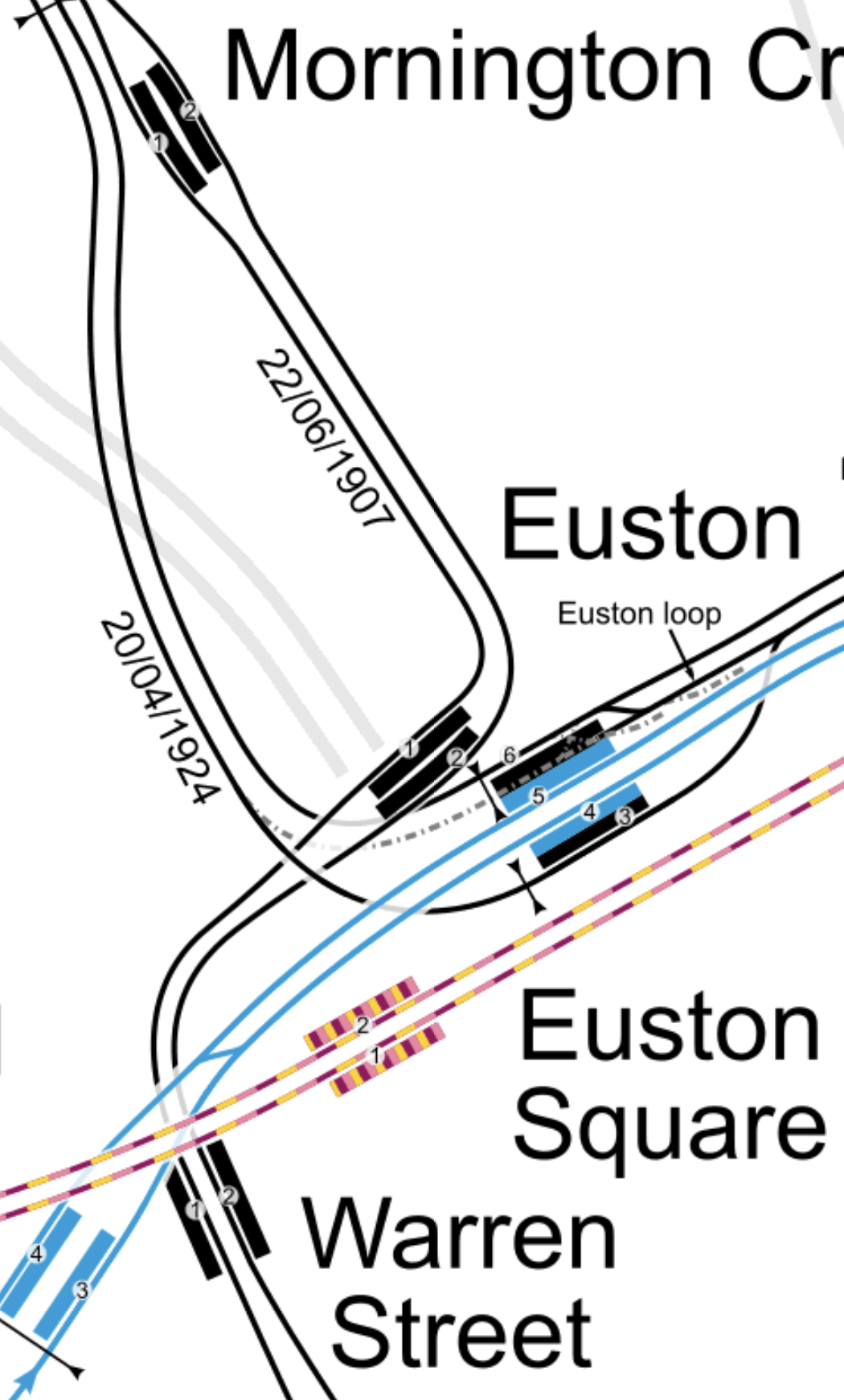
Note.
- The Northern Line is shown in black.
- The Victoria Line is shown in blue
- The Sub-Surface Lines are shown in purple and yellow.
In the map, the platforms are as follows going from top to bottom.
- Platform 1 – Northbound – Northern – Charing Cross to Camden Town
- Platform 2 – Southbound – Northern – Camden Town to Charing Cross
- Platform 6 – Southbound – Northern – Camden Town to Bank
- Platform 5 – Northbound – Victoria – Victoria to Walthamstow
- Platform 4 – Southbound – Victoria -Walthamstow to Victoria
- Platform 3 – Northbound – Northern – Bank to Camden Town
It is a bit unusual as the cross-platform interchange between Bank and Victoria Lines involves a change of direction.
With the development of Euston station for High Speed Two, I am sure interchange between the two branches of the Northern Line and the other lines at Euston will be made step-free.
Plans have already been published that will connect Euston Square station and Euston station. I wrote about it in The New Step-Free Entrance At Euston Square Station.
These pictures are of Euston station.
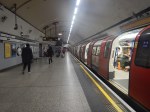
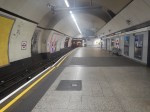
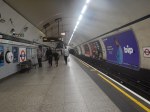
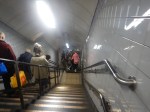
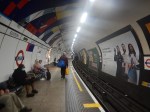
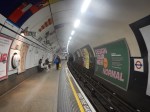
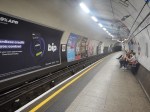
I feel the wide Platform 6 could give scope for innovation.
Level Access Between Train And Platform
I believe that many platforms on the Northern Line can be modified to give level access between train and platform.
In Could Access Between Platform And Train Be Improved At Kennington Station?. I outlined how it could be achieved at Kennington station.
At Kennington station, all platforms are straight and this is a prerequisite to making the access level.
I also feel that any straight platform with a Harrington Hump could effectively be given a full length hump.
I suspect that a lot of stations could be converted to level access between train and platform
Conclusion
I believe that splitting the Northern Line would be very worthwhile.
Would A North-East And South West Sleeper Service Be A Good Idea?
I ask this question as in the October 2021, there is an article entitled A New Sleeper, which has this explanatory sub-title.
Des Bradley describes his concept for a North-East to South-West Overnight Service
Paraphrasing his resume from the article, Des Bradley is probably best described as a rail enthusiast, who has travelled all over Europe by train, especially on sleeper trains. He has also worked recently with ScotRail, where he led their integrated travel activities.
I regularly use the Caledonian Sleeper on my trips to Scotland, often taking a sleeper one way and a day time train the other. Towards the end of next month, I have tickets booked for a low-cost Lumo train to Edinburgh and a sleeper back to London in the evening.
In this blog, I have regularly written about the sleeper trains being introduced across Europe and this summer I had intended to go via Eurostar and NightJet to Vienna. But the pandemic has kept me in England for two years.
An Edinburgh And Plymouth Sleeper
Des Bradley is proposing a sleeper train between Edinburgh and Plymouth.
- A typical daytime trip on this route takes eight hours and forty-five minutes.
- Intermediate stops would be Berwick-upon-Tweed, Newcastle, Durham, Darlington, York, Leeds, Sheffield, Derby, Birmingham New Street, Cheltenham Spa, Bristol Parkway, Bristol Temple Meads, Taunton, Exeter St. David’s and Newton Abbot.
- Journey time would be just over twelve hours.
- By comparison a sleeper between London and Edinburgh takes about seven hours and thirty minutes.
He calls the service the NESW Sleeper.
I have some thoughts on the proposal.
A Spine Route Between Edinburgh And Penzance
The route is effectively a spine between Edinburgh and Plymouth on which other services can be built.
Unlike the Caledonian Sleeper, Des Bradley doesn’t feel the train should split and join as it travels up and down the country.
But I do think that the NESW Sleeper can be timed to fit in with high-quality connecting services to extend the coverage.
An Innovative Timetable
Des Bradley’s timetable is innovative.
- Trains leave Edinburgh and Plymouth around 21:00.
- Trains arrive at their destination around 09:00.
- Trains stop for about two hours at Derby.
- After resting at Derby, the trains are effectively early morning trains.
Note.
- The wait at Derby, adds extra time, that can be used to make up for engineering diversions, which often happen at night!
- The trains could be used by non-sleeper passengers to get to Plymouth or Edinburgh early.
The consequence of the second point, is that the trains will have to offer some Standard Class seats.
Should The Train Serve Penzance?
The Great Western Railway’s Night Riviera sleeper train calls at Liskeard, Bodmin Parkway, Lostwithiel, St.Austell, Truro, Redruth, Cambourne, Hoyle and St. Erth between Plymouth and Penzance.
According to a proposed NESW timetable, the Night Riviera has long gone, before the NESW Sleeper arrives in Plymouth at 08:58.
But I’m sure Great Western Railway could arrange for a convenient service between Plymouth and Penzance to pick up passengers in the morning and deliver them in the evening. This picture taken at Plymouth, indicates that cross-platform interchange may be possible.
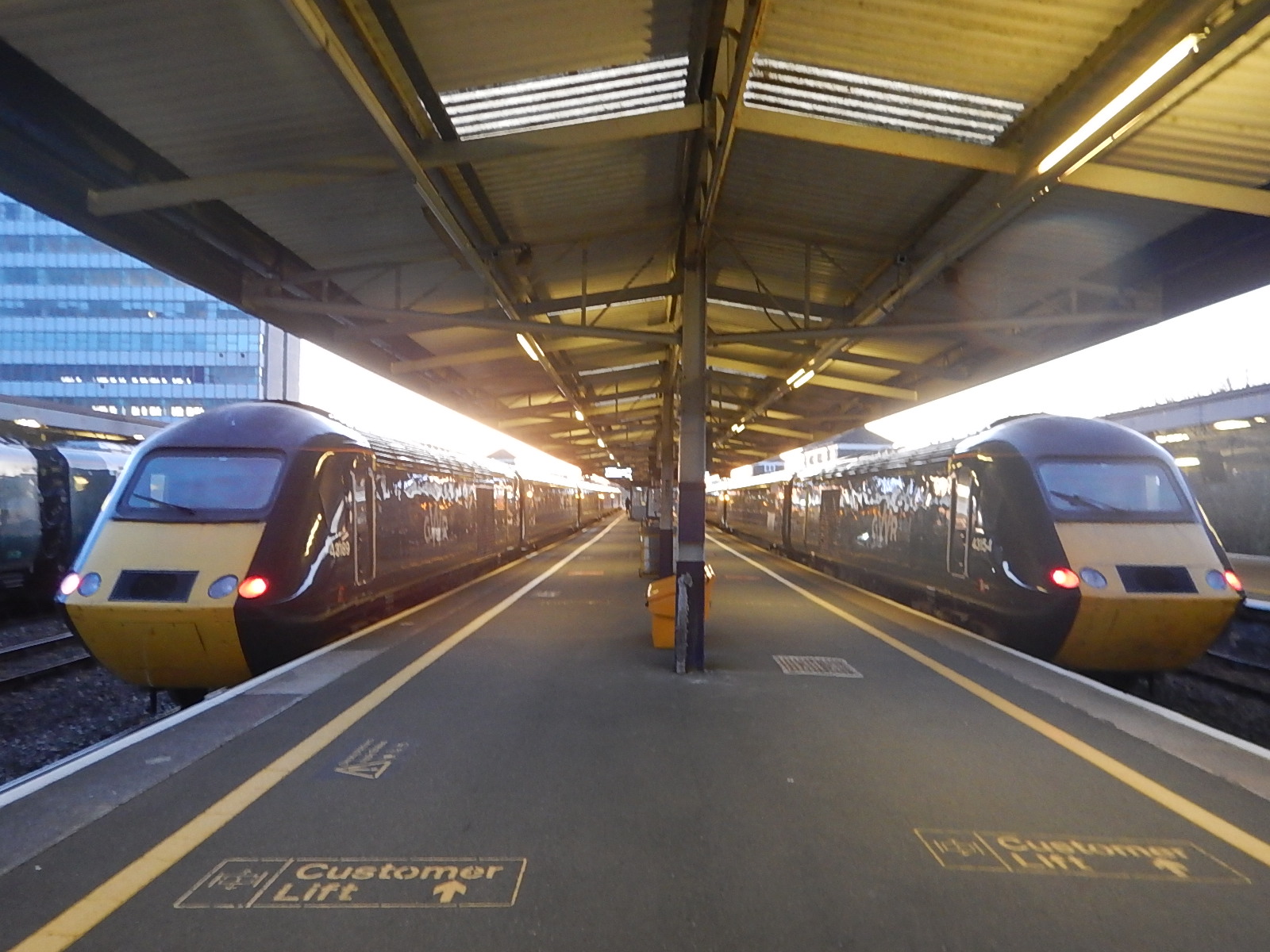
This picture shows a pair of GWR Castles, which regularly work additional services between Plymouth and Penzance.
What About Wales?
I suspect that Cardiff, Swansea and other towns and cities in South Wales, can be served in a similar way, by connecting with GWR services at Bristol Parkway station.
Other Connecting Services
Birmingham New Street, Derby, Leeds and Newcastle are important interchange stations and I can see services being timed to bring passengers to and from the NESW Sleeper.
Rolling Stock
The author offers choices for the trains, based on what is used currently in the UK and adding multiple units. But he is definitely tending towards fixed formations.
I feel that the trains should meet the following criteria.
They should be of similar standard as the Caledonian Sleeper.
They would need an independently-powered capability for sections without electrification.
They should be zero-carbon.
They should offer a range of accommodation including Standard Class seats to cater the early birds and budget travellers.
The possibility to run at 100 mph or faster might be useful to catch up time on some sections of the route.
I think that two trains could be possible.
- A rake of coaches hauled by a hydrogen-electric locomotive.
- A battery-electric Sleeper Multiple-Unit with a range of perhaps eighty miles on batteries.
This is a sentence from the article.
The concept of ‘Sleeper Multiple-Units’ has also emerged in recent years, and this idea could be attractive; although it has some inherent inflexibility, it could in the future allow multi-portion or experimental new routes to be tagged onto the core service.
Sleeper Multiple Units might enable a South Wales and Edinburgh service, that used the same train path between Edinburgh and Bristol Parkway, where the two trains would split and join.
Conclusion
I like this proposal and definitely think it is a good idea.
Between Camden Road And Camden Town Stations Along The Canal
This walk is preferable to walking along the busy Camden Road with its heavy traffic and narrow pavements.




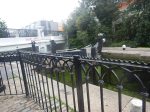
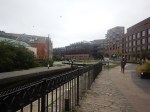
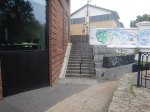
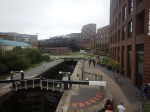
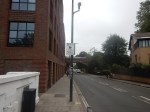
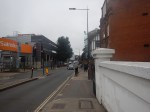

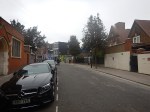
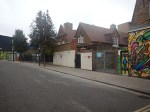
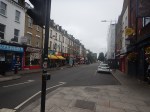
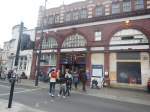
Note.
- The entrance is at the side of a Costa Coffee on the Camden Road.
- The canal seems to have more than its share of green algae.
- Hawley School in Buck Street will be the site of the new entrance to Camden Town station.
- Kentish Town Road could do with some decent buildings.
- It is not an area, that is short on graffiti.
- But is short on signage compared to some parts of the Regent’s Canal.
- It took me seven minutes walking along the canal and another seven minutes on Kentish Town Road. But I wasn’t walking fast.
The route is also an easy way to get to Camden Lock from Camden Road station, which avoids the chaos at Camden Town station.
Hydrogen Trains Planned For Apennine Route
The title of this post, is the same as that of this article on Railway Gazette.
The trains appear to be part of a project to bring a sustainable economic recovery to an area that has been affected by three earthquakes in recent years and suffered badly from depopulation.
There would appear to be four projects.
Refurbishment Of The Sansepolcro And Sulmona Railway
This 300 km railway will also switch from diesel to hydrogen trains.
- Sansepolcros is a town in the Eastern part of Tuscany, to the South-East of Florence.
- Sulmona is a city that is roughly East of Rome.
- The Northern section of the route is covered in Wikipedia by the entry for the Terni – Perugia – Sansepolcro Railway.
- The Southern section of the route is covered in Wikipedia by the entry for the Terni and Sulmona Ralway.
- There are connections to Rome at Terni and Sulmona.
This railway looks like it could be an interesting route for a railway tourist. In my past experience, Todi and Perugia were certainly worth a visit.
Two Seas Railway
The Railway Gazette article says this about the Two Seas Railway.
This would cross Italy from west to east, connecting Roma’s Fiumicino airport with San Benedetto del Tronto via Rieti, Amatrice and Ascoli Picen.
It has been proposed for a long time and could use hydrogen traction.
Building Back Sustainably
The Railway Gazette article says this about the third and fourth projects.
A third project will assess the potential for diffused green hydrogen manufacturing activity in the region, and a fourth will look at ways to apply new energy and environmental technologies in post-earthquake reconstruction.
It looks to me, that hydrogen will play a large part in restoring this region of Italy.
Conclusion
It sounds a bit like, the Italians are rebuilding their railways like the UK and several other countries are doing.
Isle Of Wight Rail Line Set To Reopen After 10-Month Closure
The title of this post, is the same as that of this article on the BBC.
It may have been a long time coming, but let’s hope it’s worth it.
I shall certainly going down, when it opens.
It would appear that the reason for the delay is partly down to software problems.
This seems to me an all-to-frequent occurrence these days.
Could this be that first generation programmers like myself, who honed our skills on small machines in the 1960s and 1970s have mostly retired and are not there to pass on expertise?
From Battersea Power Station Station To The River
I took these pictures as I walked from Battersea Power Station station to Battersea Power Station pier to get a Thames Clipper back to London Bridge.
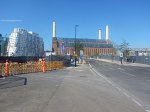




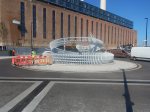


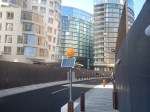
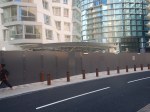

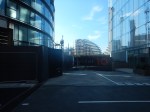








Note.
- There appears to be fake smoke coming out of the chimney in the third picture.
- I think the second entrance to the station will be close to where I walked.
- To my taste there appeared to be a lot of car parking.
The walk took me under ten minutes.
The Second Entrance At Battersea Power Station Station
In Battersea Power Station Station Opens, I said this.
There is also probably space to put another set of three escalators pointing the other way, at the other end of the intermediate level, away from the current set of three escalators, that lead to the surface.
So I went back today and had another look.


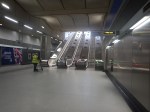
I was told by a member of the station staff, that a second entrance, where the posters are on the wall will lead to the power station, the shops and the river.
Could Access Between Platform And Train Be Improved At Kennington Station?
Before I look at the solutions, I will look at passenger flows around Kennington station, now that the extension to Battersea has opened.
- Passengers will enter the station and take a train.
- Passengers will arrive at the station and leave.
- Passengers will change trains going between say Morden and Battersea Power Station stations.
- Passengers will change between the two Northbound services through the station, by walking between Platforms 1 and 3.
- Passengers will change between the two Southbound services through the station, by walking between Platforms 2 and 4.
Kennington station has two major access problems for those of restricted mobility.
- Getting between street and platform
- Getting between platform and train
There used to be a third problem, which was that there wasn’t enough cross-platform access between Platforms 2 and 4 and Platforms 1 and 3, which has now been improved.
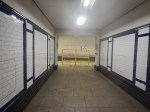
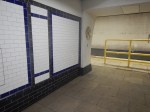

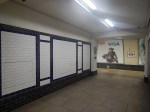
The pictures show the passage between Platforms 2 and 4, which seems to have been built to a high quality.
How will these access problems affect passengers and especially those with reduces mobility?
- Passengers with reduced mobility may avoid Kennington station, if they are using Routes 1 and 2, as the stairs are difficult.
- Passengers using Route 3 may find it easier to change at Waterloo, London Bridge or another convenient station.
- There are lots of buses, which may offer a convenient alternative.
Operating experience will give the correct answer, but I feel that passengers using the station will contain a large proportion, who are using Routes 4 or 5 and just changing from one train to another going in the same direction.
Access Between Street And Platform
These pictures show the stairs that give access to the platforms from the passageway leading to the lifts.

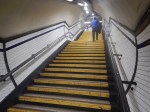
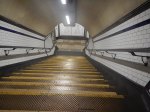
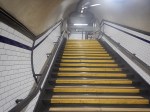
Note.
- The stairs are steep and not very wheelchair or buggy friendly.
- They are not all the same length.
Unless it is possible to sneak a lift down into the new cross-passages, I suspect that providing step-free access to the platforms will be a long time coming at Kennington station.
It will also probably need passengers to use two lifts between street and platform, which could encourage them to find a better route.
Access Between Platform And Train
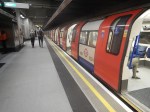
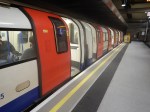
These pictures show trains in Kennington station.
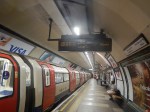
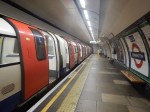
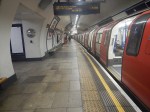
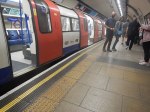
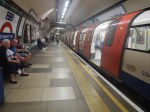
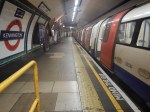
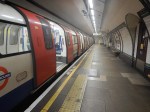
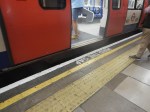
Note that a Harrington Hump is fitted to the platform to ease boarding for those in wheelchairs.
The map from cartometro.com shows the platform layout at Kennington station.
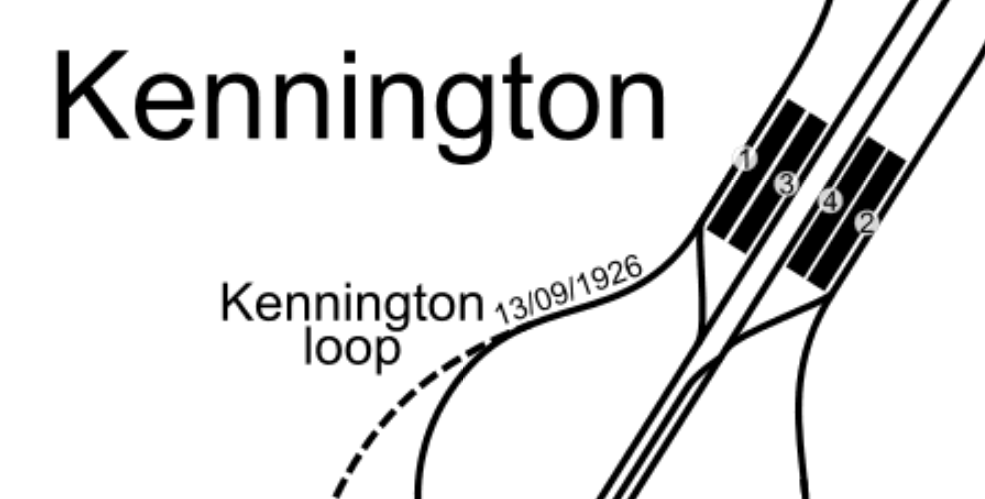
Note that in the pictures and this map the platforms are almost straight.
I wonder, if as at Battersea Power Station and Nine Elms stations, the platforms could be arranged so that there is step-free access between train and platform.
These pictures show level access at the two stations on the new extension.
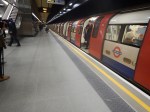
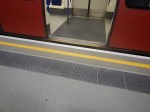
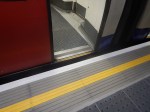
This would surely help those changing trains by walking between Platforms 2 and 4 or 1 and 3.
Conclusion
I am very doubtful, that large numbers of passengers with reduced mobility will use Kennington station, except to change from one train to another going in the same direction.
For that reason, I suspect Transport for London have not gone for full step-free access at Kennington station.
But I do think, that level access could be installed between the trains and all four platforms to make it easier for passengers with reduced mobility to change trains.
Passenger Flows If The Northern Line Is Split Into Two Lines
The Northern Line could be split into two.
- The Western Line (Charing Cross Line) would run between Edgware and Battersea Power Station via Camden Town, Euston, Charing Cross and Kennington.
- The Eastern Line (Bank Line) would run between High Barnet and Morden via Camden Town, Euston, Bank and Kennington.
Northbound routes through Kennington station would be as follows.
- Passengers between Battersea Power Station and a Bank Line station would change between Platforms 1 and 3 at Kennington.
- Passengers between Morden and a Charing Cross Line station would change between Platforms 3 and 1 at Kennington.
Southbound routes through Kennington station would be as follows.
- Passengers between a Bank Line station and Battersea Power Station would change between Platforms 4 and 2 at Kennington.
- Passengers between A Charing Cross Line station and Morden would change between Platforms 2 and 4 at Kennington.
All of these Northbound and Southbound changes are a level walk of perhaps ten metres.
Passengers between Morden and Battersea Power Station would change at Kennington, if they can manage the stairs.
Otherwise, they will need to do two cross-platform interchanges at Kennington and Waterloo.
The rule would appear to be if you’re on one line and are going to a station on the other, you change at Kennington station.
Staff would need to be on the platform to help those, who were changing direction.
But I do think changing can be made to work well with step-free access between train and platform on all four platforms at Kennington station.
Is Clapham Common Station Dangerous?
Clapham North and Clapham Common stations are the last two Northern Line platforms with an island platform in the tunnel and must be towards the top of any list. This map from carto.metro.free.fr shows their locations.

Note their closeness to Clapham High Street station, I am sure, that eventually a better solution to these two stations will come about because of property development in the area.
I passed through Clapham Common station this morning and took these pictures.
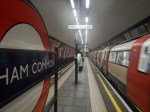
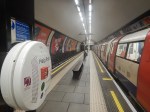
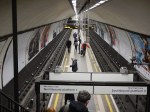
Well to be fair, the fourth picture is one I took earlier.
Using The Experience At Bank To Advantage
As I write this, there are underground construction workers starting the final push to rebuild Bank station. After dismantling a lot of the Northern Line through Bank station, I would expect that engineers and workers have ideas as to how they could sort Clapham Common station and its near neighbour to the North; Clapham North station.
There would appear to be two possible lines of thought.
One would be to apply the Bank solution of digging a new Northbound tunnel.
- It would by-pass the two current stations, by looping to the West.
- The current Northbound track would be filled in at both stations and used to widen the platform, which would handle Southbound trains on the current track.
- A new platform on the new Northbound track would be built outside the current tunnel and connected to the widened platform over the old Northbound track, by passageways through the tunnel wall.
- It should be possible to slip a lift down to the wide island platform to give step-free access.
Hopefully the current access to the surface could still be used.
I also wonder if engineers know enough about Victorian tunnel construction to just strip the tunnel and widen it
- The tracks would be moved further apart.
- The island platform would be widened.
- Step-free access might be difficult.
As with the other method, the current access to the surface could still be used.
 The Anonymous Widower