Morden South Station – 24th December 2019
These pictures were taken on the 24th December 2019, at Morden South station.





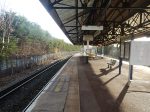



The station is based on an island platform like many on the Sutton Loop Line.
The station doesn’t have step-free access, but I suspect, that a lift could be installed between the tunnel and the island platform.
Morden Station – 24th December 2019
I have started to catch up on my old pictures, as I have confined myself to barracks.
These pictures were taken on the 24th December 2019 at Morden station.
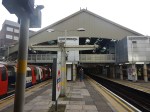



I may need them in the future and I can always find them here.
Electric Aircraft Pose New Challenges For Maintenance And Repair
The title of this post is the same as that of this article on the Institution Of Mechanical Engineers.
The article looks at the Maintenance, Repair and Operations (MRO) of electric aircraft.
It is a article very much worth reading!
Clean Air For All: Lampposts To Charge Electric Cars
The title of this post, is the same as that of this article on The Times.
This is the introductory paragraph.
An “electric avenue” has been developed where lampposts have been converted into chargers for battery-powered cars.
The project has been led by Siemens.
Surely, all lampposts should have an electric car charging point.
A Regret
I am limiting my travel because of COVID-19 and only using Shanks’s pony, so I will not be able to provide one of my pictures of the chargers.
BCRRE Recognised for its HydroFLEX Work
The title of this post, is the same as that of this article on H2-View.
This is the introductory paragraph.
The Birmingham Centre for Railway Research and Education (BCRRE) at the University of Birmingham has been recognised in the Guardian University Awards 2020 for its work in the UK’s first hydrogen powered train, HydroFLEX.
From my monitoring of the various hydrogen developments and their prominence, it appears that all questions are being explored and that hydrogen will have an extensive future on both rail and the road.
EWR Targets Short-Term Fleet Ahead Of Possible Electrification
The title of this post is the same as that of this article on Rail Magazine.
This is the introductory paragraph.
Electrification could yet be on the agenda for East West Rail, after Government ministers confirmed that the decision not to wire the reopened railway could be reversed.
East West Railway (EWR) also announced last week, that it was looking for second-hand diesel multiple units to start services.
- The lease will be for four years, with a possible extension of two years.
- The deal is worth £40million and will include maintenance.
- The deal will end on May the 10th 2028.
- 12 to 14 three-car trains are required.
- Services will start at the end of 2024.
It looks to me, that this deal has interim written all over it.
Could Class 170 Trains Be Used For East West Railway?
Class 170 trains come in two- and three-cars and by 2024 many could be being replaced by trains with a smaller carbon-footprint.
If you look at the three-car Class 170 trains, they are the following numbers of trains with various companies.
- Class 170/1 – CrossCountry – 10
- Class 170/2 – Transport for Wales – 8
- Class 170/3 – Abellio ScotRail – 26
- Class 170/3 – CrossCountry – 2
- Class 170/4 – Abellio ScotRail – 13
- Class 170/4 – Northern Trains – 16
There are also some Class 170/5 and Class 170/6 trains, that it appears will be consolidated into ten three-car trains for CrossCountry.
Could CrossCountry Provide The Trains For East West Railway?
I think one likely scenario would be for the trains for East West Rail to come from CrossCountry‘s mixed fleet of Class 170 trains.
Consider.
- CrossCountry need a bit of a fleet change as they still ten High Speed Trains, that will need to be replaced with more modern rolling stock.
- CrossCountry have been criticised for a lack of capacity.
- Several of CrossCountry’s services are run by diesel trains on electrified tracks.
Perhaps, if they replaced the fleet with a customised variant of Hitachi’s Class 800 trains, they might offer a better service to their customers.
- Each train would be five cars long.
- Trains would be able to work in pairs.
- Trains might have electric, battery and diesel capabilities.
- Some would be dual-voltage trains and able to work on both 25 KVAC overhead and 750 VDC third rail electrification.
I’m sure those clever people at Rock Rail are working on an appropriate specification, just as they did for Avanti West Coast with their customised variant of Hitachi’sClass 800 trains.
Looking at the delivery schedules for various fleets of Hitachi trains, we find.
- East Midlands Railway will be receiving 33 x five-car Class 810 bi-mode trains in 2020-2022.
- Avanti West Coast will be receiving 13 x five-car AT-300 bi-mode trains in 2020-2022.
- Avanti West Coast will be receiving 10 x seven-car AT-300 electric trains in 2020-2022.
Could the CrossCountry fleet be delivered in 2022-2024 to allow the Class 170 trains to be released?
Could Class 185 Trains Be Used For East West Railway?
TransPennine Express have a fleet of 51 three-car Class 185 trains.
The future of these trains is uncertain, as TransPennine Express is renewing their fleet.
- They are all fully-compliant with the latest regulations.
- They are 100 mph trains,
- They are the right length.
- They can work in pairs to increase capacity.
These trains would be easy to freshen up for East West Railway.
Could Bombardier Voyagers Provide The Trains For East West Railway?
There are four fleets of Bombardier Voyagers, that by the end of 2024 could be looking for a new home.
- Thirty-four Class 220 trains could be released by 2024 by CrossCountry, if they replace their fleet with new trains.
- Twenty-four Class 221 trains could be released by 2024 by CrossCountry, if they replace their fleet with new trains.
- Twenty Class 221 trains will be released by 2022 by Avanti West Coast, when they replace their fleet with new AT-300 trains.
- Twenty-seven Class 222 trains will be released by 2022 by East Midlands Railway, when they replace their fleet with new Class 810 trains.
These fleets could be updated for the East West Railway.
- They are all fully-compliant with the latest regulations.
- They are 125 mph trains.
- Bombardier have been working on various schemes to fit batteries to these trains, to reduce running on diesel.
They could also be rebuilt to any required length.
Fast Forward To May 2028
By 2028, the following will have happened.
- High Speed Two will have been substantially completed and electrified at Calvert, where it crosses the East West Railway.
- East West Railway will be connected to the electrified West Coast Main Line at Bletchley.
- East West Railway will be connected to the electrified Midland Main Line at Bedford.
- New Hitachi Class 810 trains will be running through Bedford.
- Future connections to the electrified East Coast Main Line at Sandy and the electrified West Anglia Main Line at Cambridge South will have been designed, if not well underway or even completed.
East of Calvert, there will be plenty of electricity to power any electrification.
The article also quotes a Government minister as saying there will be passive provision for electrification. This is sensible, as the clearances required for 25 KVAC overhead electrification are not that much higher, than those needed for the largest freight containers.
So the two major requirements for 25 KVAC overhead electrification; electricity supply and gauge-clearance, appear to be met in the basic design of the East West Railway.
The East West Railway will also have one characteristic, that has been lacked, by most of the railways we have electrified in the last few years.
It will be a substantially new railway, although quite a few miles will have been rebuilt on an existing track bed.
It is my view after looking at several electrification schemes in the last ten years, that when we have electrified a substantially new railway, we have made a much better fist of it, in terms of both cost and timescale.
Could this be, that if the track-bed has just been created or relaid, it is well surveyed and the engineers and workers, who laid it, can be asked their opinion, so fewer costly mistakes are made?
It should also be said, that the route of the East West Railway goes through fairly flat country, which probably doesn’t have the sewers and mine-shafts, that have plagued the erection of electrification in recent years.
I wonder, if having looked in detail at the costs, the builders of East West Railway have found that perhaps around 2023, after a detailed survey of the route, they can build the railway at a cost, which includes electrification, that still offers benefits.
What Would Be The Benefits Of Electrification Of The East West Railway?
The benefits of electrification are generally as follows.
- Faster passenger and freight trains because of higher cruising speed and greater acceleration.
- Lower carbon emissions.
Faster trains would lead to more trains running over the railway.
Will The Electrification Be Full Or Partial?
I believe that Hitachi and other ,manufacturers will produce passenger trains with the following abilities.
- To use either 25 KVAC overhead or 750 VDC third-rail electrification.
- To use onboard energy storage for running a number of miles.
- To charge onboard energy storage, whilst dynamically connected to electrification.
- To charge onboard energy storage, whilst stationary in a station or siding.
- To swap between electrification and energy storage modes at operating speed.
These trains will be able to run on partially-electrified lines, by using energy storage to bridge gaps in the electrification.
In Sparking A Revolution, I gave this specification for a Hitachi battery-electric train.
- Range – 55-65 miles
- Performance – 90-100 mph
- Recharge – 10 minutes when static
- Routes – Suburban near electrified lines
- Battery Life – 8-10 years
It looks like a route run by Hitachi battery-electric trains could have approximately sixty mile gaps in the electrification.
The trouble with gaps, is that they would mean that electric freight locomotives could not be used on the route.
One possibility could be the new tri-mode Class 93 locomotive, which has the following power sources.
- 1.3 MW on diesel
- 4.055 MW on electric
- A power boost on battery
Hopefully, it can switch seamlessly between the various modes at line speed.
Until we see these locomotives in operation, we will not know if they can haul a maximum weight freight train all the way from Felixstowe to Ipswich and on to London, Cambridge or Peterborough.
Freight Trains Through Cambridge And Onto The East West Railway
In Roaming Around East Anglia – Freight Trains Through Newmarket, I said this.
The East West Rail Consortium plan to change the route of freight trains to and from Haven Ports; Felixstowe, Harwich and Ipswich to the West of Kennett station.
In this document on the East-West Rail Consortium web site, this is said.
Note that doubling of Warren Hill Tunnel at Newmarket and
redoubling between Coldham Lane Junction and Chippenham Junction is included
in the infrastructure requirements. It is assumed that most freight would operate
via Newmarket, with a new north chord at Coldham Lane Junction, rather than
pursuing further doubling of the route via Soham.
How would these changes affect Newmarket and the horse-racing industry in the town?
I believe that many freight trains would go straight through Cambridge and Cambridge South stations and onto the East West Railway.
One point to note, is that all of the route between Felixstowe and Cambridge South station has been gauge-cleared for the largest container trains and electrification.
This would surely make it reasonably easy to electrify all the way between Felixstowe and Cambridge South station.
Conclusion
I am coming to the conclusion, that given the importance of the rail freight route between Felixstowe and the Midlands, that something like the following will happen.
- 2024 – Diesel passenger trains start running between Reading and Bedford via Didcot, Oxford and Bletchley
- 2026 – Opening of Cambridge South station.
- 2028 – Partial or full electrification is erected between Reading and Bedford
- 2028 – Battery-electric passenger trains replace the diesel passenger trains.
- 2030 – Opening of the full route between Reading and Cambridge.
- 2935 – Opening of a fully-developed route though Newmarket to allow freight trains to go between Felixstowe and the East West Railway.
It appears to me, that by using diesel trains for an interim period, they can open the Reading and Bedford service early, whilst they complete the East West Railway.
Red Diesel Cuts To Make Way For For Electric And Hydrogen
The title of this post is the same as that of this article on the Northern Echo.
It is an article worth reading, as Conservative MPs spread the message of the phase out of red diesel to their constituents.
- It will be painful.
- Farmers must be protected.
- Only one person in the audience had an electric car.
- The government is expected to enhance electric car incentives and provisions.
It was also disclosed that Teeside will be getting hydrogen-powered trains.
Volvo CE Unveils Electric Compact Wheel Loader Concept
The title of this post is the same as that of this Volvo CE press release.
This is the introduction.
Volvo Construction Equipment demonstrated the LX02 electric compact wheel loader at the Volvo Group Innovation Summit in Berlin. The prototype machine delivers zero emissions, significantly lower noise levels, improved efficiency and reduced operational costs.
I suggest that you read the press release, as it says a lot for Volvo’s plans for carbon, pollution and noise-free construction.
Batteries Come Of Age In Railway Construction
The title of this post is the same as that of this article on Rail Engineer.
It is very much a must-read article on the subject of constructing and repairing railways in a zero-carbon manner.
These are some extra comments of mine!
Smaller And Lighter First
This is a paragraph from the article.
Smaller and lighter equipment is getting the treatment first – the batteries and motors can be smaller. Volvo Construction Equipment has already supplied its first electric compact loader, to a customer in Germany.
Volvo seems to be busy creating electric loaders.
Size Appears To Be No Limit
This extract shows how a large dump truck can go electric.
If a 25-tonne excavator is not big enough, how about a Komatsu HD605-7 off-highway truck, which weighs 51 tonnes unladen and has a payload of 63 tonnes? Kuhn Switzerland, working with Lithium Storage and the Swiss Federal Office of Energy (SFOE), has converted this 111-tonne gross vehicle weight monster into an electric vehicle.
Out came the 23-litre, 778hp (578kW) diesel engine and in went a synchronous electric motor rated at 789hp (588kW) electric motors. An additional 120kW motor is fitted just to power the hydraulic systems. The battery was a challenge – the four large packs have a combined rating of 700kWh and weigh 4.5 tonnes.
Do you get much bigger than 111 tonne, nearly 600 kW and a 700 kWh battery pack?
Regenerative Braking
The article also says that in some applications, vehicles go up and down a route and can charge the batteries using regenerative braking on the downhill run. In one application batteries only need charging every three days.
Rail Application Of Off-Road Equipment
The article says this.
While an eDumper may be too large to use on the railway, it does show what can now be done. Between JCB’s mini-excavator and eMining’s dump truck, there is room to battery-power almost any item used on the railway today.
I would suspect that there are a lot of companies, including giants like Caterpillar, JCB, Komatsu. Volvo and others working to produce electric versions of their successful products.
What About The Workers
The article says this.
These new machines are only the tip of the ‘electric’ iceberg. As pressure mounts to cut carbon emissions and to protect workers from harmful fumes, there will be more to come.
Health and safety will lead to a big push towards electric, as electric vehicles are pollution, carbon and fume-free, with a substantial noise reduction.
Hydrogen Will Have A Part To Play
This statement is from the Wikipedia entry for ITM Power.
In March 2015 JCB made a strategic investment of £4.9M in ITM Power.
Why would a construction equipment company invest in a company, that makes equipment that generates hydrogen to power vehicles?
- It is known, that the Bamford heir has purchased Wrightbus and intend to make hydrogen-powered buses for the world.
- JCB have built their own diesel engines, so are they building their own hydrogen engine?
- JCB make tractors and I believe a hydrogen-powered tractor may be more than a niche market.
- Is it possible to build a hydrogen-powered JCB?
Buy any of these products and you get a gas station in the price.
To deliver hydrogen, all you need to do is connect it to the water and electricity mains and switch on.
If you’re using it to power rail or site construction equipment, the gas station could be on wheels, so it can be moved from site to site.
Conclusion
This is the writer’s conclusion.
It seems that ‘battery is the new diesel’. It will be fascinating to see how this sector develops over the next few years.
I don’t disagree, but would add, that I feel that JCB are the elephant in this room!
 The Anonymous Widower