A Freight Train With Four Locomotives
Every time, I go through Ipswich station, there are usually at least one pair of Class 86 locomotives stoating about.
But these pictures show four locomotives, bringing a train into Ipswich Yard.

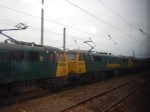
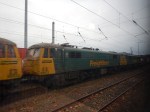


Much of the train was empty, so I suggest it was some kind of positioning move. It also looks like only two locomotives had their pabtographs up.
It seems that Freighliner must like the locomotives, as increasingly, I see pairs at Ipswich and going along the North London Line, with a heavy freight train in tow.
Wikipedia says this about their current use by Freightliner.
However, the class does still remain in use with the company, with Freightliner retaining a core fleet of 14 locomotives in service as of 2019, ensuring the class has been in service well over 55 years after first being introduced.
British Rail were obviously better at making locomotives, than sandwiches.
A pair of Class 86 locomotives, which each have 2685 kW, is a powerful pair and more than the 4,000 kWQ of the modern bi-mode Class 88 locomotive.
Freighliner also have ten Class 90 locomotives and will acquire another thirteen locomotives from Greater Anglia in the near future.
- These locomotives have a power output of 3,730 kW.
- They have an operating speed of 110 mph, which must be very useful on the higher speed main lines.
- For most operations, they probably don’t need to be used in pairs.
With all these electric locomotives, it looks like Freightliner are looking to reduce their carbon footprint.
A First Close-Up View Of A Class 745 Train
I was standaing on Stowmarket station and this Class 745 train came through.


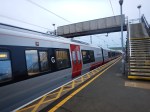
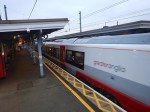


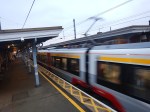

These twelve section trains will replace stakes of Mark 3 coaches, sandwiched between a Class 90 locomtives and driving van trailers.
Note.
- When I first saw the train, I thought it was a Class 755 train., as they look so similar. So I had to read the plate between the trains to check.
- Unlike most UK trains the number on the cab is not a full number and just the last three digits.
- If you look at the top of the train, it appears that the energy bus appears to be along the middle of the roof.
- Like most modern trains, they were quiet. Does this suggest efficient aerodynamics.
It bcertainly appears that Stadler have a selectio of sections, that can be connected together to create the trains.
The One Station I Never Use Coming Home Is Highbury & Islington
I am typing this post in Highbury & Islington station as my Overground train, skipped all stations North of Whitechapel, diue to congestion.
I always avoid this station, as getting between my house and the station is difficult as there is only one crowded 30 bus, every fifteen minutes. There used to be twice as many buses, as the 277 bus used to serve the route as well. But nearly a year ago, it was cut back to Dalston Junction making it as useful for me, as a chocolate tea pot.
So now after a ten minute wait, I’m taking the two stops back to Dalston Junction to get a bus home. That is only three routes now, due to the cutback of the 277.
I find it interesting, that North East London appears to have got more bus cuts, than Sadiq Khan’s patch of South London. And it was all to pay the bribe of the fare freeze, that got him elected.
So in the next Mayoral election, I shall be voting more a Mayor, who lives in the North.
We certainly, did better under Boris, who lived a mile towards the City of London.
A Solution To Hospital Car Parking Charges
If I need to go to my preferred hospital of University College Hospital, I walk round the corner from my house and get a number 30 bus, which stops outside the hospital.
If I want to go to the Royal London Hospital, I take the Overground four stops to Whitechapel.
I live in Dalston, which is reasonably close to Central London and I chose to live here, as I don’t drive.
Some other cities have good hospital access on public transport.
- Addenbroke’s Hospital in Cambridge has a fast guided busy to the City Centre and the North of the City. It also has it’s own bus station and may even get a railway station.
- The Queen’s Medical Centre in Nottingham has a tram stop with direct step-free access to the hospital. The tram system also has seven large Park-and-Ride sites.
- James Cook Hospital in Middlesbrough has its own railway station.
But how many hospitals and that includes many new ones have terrible public transport links?
Consider two elderly sisters; Elsie and Doris, perhaps living on opposite sides of the country.
Suppose one sister has a bad fall and ends up in the local hospital.
- The train system in the UK is improving and I’ve regularly met fellow train passengers well into their eighties travelling for four or five hours by train, to visit friends and relatives or have a holiday.
- Crossing London can be a problem for some, but my London-savvy eighty-five year old friend does it regularly.
It’s just the last link to the hospital, that can be a problem.
Norwich And Norfolk Hospital
The Norfolk and Norwich Hospital is a large teaching hospital, that was built in 2001 on the Western outskirts of the City.
It replaced a City Centre hospital.
There is a bus from the station, but finding details of the schedule is difficult, as the bus company’s web site, is more about selling you deals, that telling you how often the buses run.
I suppose the only way to find out is to go to Norwich station and do some bus spotting.
This Google Map shows the location of the hospital close to the University of East Anglia and the world-famous John Innes Institute.
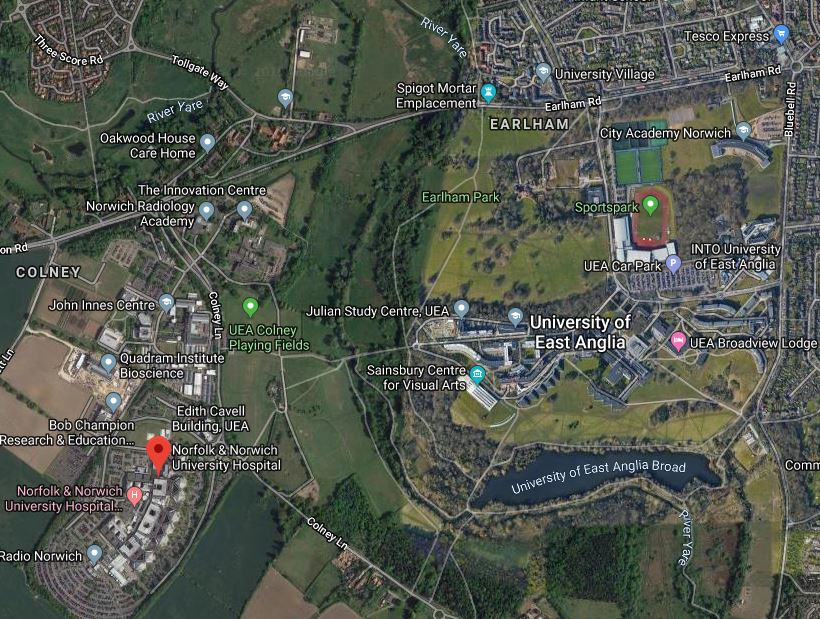
I’ve only ever been to the area by car and I do wonder what students without transport think about getting to the University of East Anglia.
It certainly, isn’t the sort of place, I’d have wanted to go to University. During our time at Liverpool, C and myself were always popping down Brownlow Hill to the City Centre.
In somewhere like Germany or Switzerland, there would be a tram from the train station.
A London Example Of Improvement
If I wanted to go to Barnet Hospital, I would take the Underground to High Barnet station and then get a bus. But the Underground and bus interchange at High Barnet is not easy, especially on a wet day.
But it does appear that there is a better route, which involves catching a 384 bus from Cockfosters station.
- The bus provides a feeder service direct to the hospital.
- Cockfosters station will be step-free in a few years.
- The bus stops at both Barnet Hospital and the A & E unit.
It’s certainly a lot better than when I lived in the area as a child.
Why Can’t All Hospitals Have Decent Public Transport?
Hospitals are important to so many people and although not every hospital can have a transport network as good as Addenbrooke’s, the Queen’s Medial Centre or University College Hospital, getting to some hospitals is a major logistics nightmare.
- Hospitals serving a large rural area, must be at the heart of the bus network.
- There should be a frequent bus or tram service to the city or town centre and the main railway station.
- There should be much better information.
- Hospitals could follow Nottingham’s and Cambridge’s .examples, where the hospital is on the city’s Park-and-Ride network.
How many hospitals in the UK meet this standard?
Conclusion
I believe that if decent public transport is provided to a hospital, that many patients, staff and visitors will use it, as they seem to do in Cambridge, London and Nottingham.
- In some places there is no easy way to get to the hospital and driving is the only way.
- Car parking is expensive to provide.
- Some hospitals have no space for car parking to be increased or added.
- How many are late for their appointments because the parking is full or they can’t find a space?
- Making car parking free will only make the problem worse, as everybody will drive.
Perhaps we should rate hospitals on the quality of the public transport, just as they are rated on care.
An Angry Sea At Dawlish
As I came back from Plymouth this morning, I came along the coast at Dawlish.
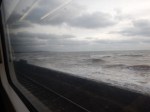
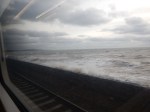
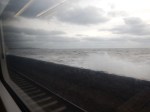
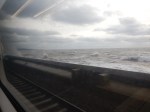
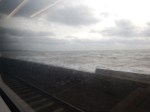
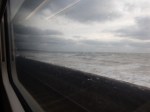
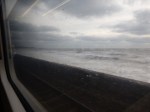
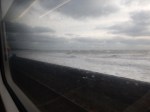
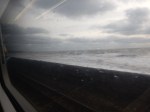
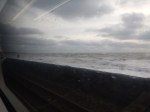
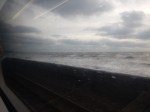
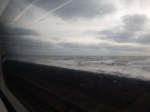
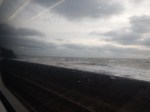
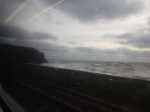

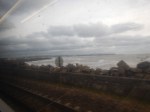
The sea was angry.
You could understand how the sea wall gets damaged by the sea.
New Trains Make Debut On Suffolk Route From Ipswich To Felixstowe
The title of this post, is the same as that of this article on the East Anglian Daily Times.
This introductory paagraph says it all.
The first new Greater Anglia train operating on Suffolk routes out of Ipswich has gone into service on the Felixstowe branch.
Frim the picture I’m sure it is a four-car Class 755 train.
Will Future Hitachi AT-300 Trains Have MTU Hybrid PowerPacks?
I have mentioned this possibility in a couple of posts and I feel there are several reasons, why this might be more than a possibility!
What Do We Know About The Second Iteration Of An AT-300?
The first order for East Midlands Railway is for thirty-three five-car trains.
- Four engines instead of three.
- 125 mph on diesel power.
- A modified nose profile.
I find the nose profile significant, as I don’t believe that the current trains are aerodynamically much more efficient than British Rail’s legendary InterCity 125 trains.
On the other hand, Bombardier’s Aventras look as if the company’s aerospace division has been involved in the design. They certainly are very quiet, when they pass close by.
The second order for West Coast Rail is thin on detail, but they do mention that services from Euston could reach as far as Godowen.
I would also feel that 125 mph on diesel could be very helpful on the North Wales Coast Line to Holyhead.
Will 140 mph Running Be Commonplace?
Very much so!
For 140 mph running by the current trains, the following is needed.
- Tracks able to accommodate that speed.
- ERTMS signalling
- In-cab signalling
Wikipedia speaks of unspecified minor modifications to the trains.
To answer my question, I believe there will be running over 125 mph, if not 140 mph on substantial stretches of the following lines.
- East Coast Main Line
- Great Western Main Line
- Midland Main Line
- West Coast Main Line
I also believe other routes could see large increases in operating speed on certain sections.
- Basingstoke and Exeter
- Breckland Line
- Bristol and Exeter
- East and West Coastways
- Golden Valley Line
- Great Eastern Main Line
- Hitchin and Kings Lynn via Cambridge
- North Wales Coast Line
- Reading and Exeter via Newbury
If trains are capable of 125 mph and faster running without electrification, I can see Network Rail, doing what they have shown they can do well on the Midland Main Line, which is increasing line speed.
Note that on my list, I have included the second route to Norwich via the East Coast Main Line, Cambridge and Thetford and Kings Lynn services.
I can envisage hourly 125 mph services to and from Norwich and Kings Lynn joining and splitting at Cambridge and then running at high speed between Kings Cross and Cambridge.
It would be a massive boost for West Norfolk and Norwich, but it would not require extra high speed paths on the East Coast Main Line.
There must be other routes that by proven conventional track engineering can be turned from 80-100 mph lines into 125-140 mph high speed lines. No problem electrification to promote, design and erect. It just needs appropriate trains.
I can see the following routes without electrification being run at 125-140 by the new AT-300 trains.
- Euston and Holyhead
- Kings Cross and Cleethorpes via Lincoln
- Kings Cross and Hull
- Kings Cross and Kings Lynn/Norwich
- Liverpool and Edinburgh via Leeds
- Paddington and Exeter via Basingstoke and Yeovil
- Paddington and Gloucester/Cheltenham
- Waterloo and Exeter via Basingstoke and Yeovil
There are probably other routes.
Without doubt, the new AT-300 trains must be able to run at 140 mph on lines without electrification, once Network Rail have raised the operating speed.
Thoughts On AT-300 TrainsWith MTU PowerPacks
These are my thoughts on various topics.
Weight
The data sheet for the MTU PowerPack gives the mass at around five tonnes for a diesel engine of 700 kW.
Depending on the way you read the figures this appears to be less than that of a similar power diesel..
Fuel Economy
This is obviously better and MTU are quoting a forty percent saving.
Regenerative Braking
This comes as standard.
One PowerPack Per Car
I always like this concept, especially as many trains these days seem to have a lot of powered axles.
It also reduces the energy losses in the cables between cars.
The East Midlands Railway trains seem to have five cars and four engines, so is that four motor cars and one trailer.
Would trains be lengthened by adding extra trailer and/or motor cars as appropriate in the middle of the train?
Simpler Control System
MTU will have responsibility for the software of the PowerPack and all Hitachi’s control system for the train, will need to do with the PowerPacks is tell them how much power is required.
Hopefully, this will help in the debugging of the train, for which Bombardier had so much trouble with the Aventra.
Batteries
It appears that the design of the PowerPacks is very flexible with respect to size and number of battery packs.
Would it be an advantage for a train builder or an operator to tailor the battery capacity to the speed and length of a route.
Compatible AT-200 Local Trains
The AT-200 is Hitachi’s smaller and slower train of which the Class 385 train is an example.
If a version were to be produced with say three or four cars and one or more MTU PowerPacks, Hitachi would have a very nice bi-mode with a lot in common with the new AT-300, which would ease servicing for train operators, who were running both trains
Hitachi’s Relationship With MTU
MTU engines are used in the current Hitachi trains, so unless I am told otherwise,I am led to believe they have a good working relationship.
Conclusion
I wouldn’t be surprised to see the next generation of AT-300 use MTU PowerPacks.
Electric-Powered Passenger Aircraft To Launch By 2022
The title of this post is the same as that of this article in The Times.
In the past few months, two serious electric small airliner projects have emerged.
- The Eviation Alice is a futuristic nine-cheater, designed from scratch around electric propulsion.
- Harbour Air are converting a de Havilland DHC-2 Beaver to electric propulsion and aim for a complete electric-powered fleet.
And now Cranfield University are launching Project Fresson, which aims to convert Britten-Norman Islanders to electric propulsion.
- There are hundreds of Islanders in service.
- They were designed in the 1960s and are still in production.
- They can carry nine passengers for nearly 900 miles.
In some ways, they are the Ford Transit of the small airliner industry. Unspectacular they may be, but they do what it says in the specification.
I’ve only flown in an Islander twice and that was between islands in the Caribbean.
There are several things to like about this project.
- Cranfield University have an excellent reputation in aerospace design.
- The project is well-backed by the British Government, Rolls-Royce, the University of Warwick and others.
- The batteries appear to be coming from motorsport.
- The Islander doesn’t have a reputation as a difficult or unsafe aircraft.
- Over the years, the aerodynamics seem to have been improved.
- There must be a large number of airlines around the world, who are satisfied with their current Islanders and would look seriously at an electric version.
- The Islander is still in production.
I don’t think it carries any high level of risk.
- The current aircraft structure will be virtually unchanged, but possibly uprated for a higher payload because of the weight of the battery.
- The electric motors must meet a power output, energy consumption and weight.
- The battery will probably be made from lots of standard small cells from a well-respected manufacturer like Hitachi, Samsung, Leclanche or others.
- The battery must hold enough energy, fit in a defined space and not be too heavy.
I suspect Cranfield have already written the specifications for the motors and the battery.
Conclusion
In some ways this project has a lot in common with Harbour Air’s project to convert a Beaver.
- Simple engineering with little risk.
- Proven airframe.
- No expensive airframe to certify.
- A lot of engine and battery testing can be done safely on the ground.
- Electric motor technology seems to be improving rapidly, with new ideas cropping up in trains, cars, boats, ships and planes.
- A waiting market.
- I think pilots and passengers will like the idea of an electric aircraft.
- Pilot conversion to the electric plane will not be a long and expensive process.
- Good green credentials.
I think both projects will succeed, if they go well in the next year or so.
Truro Station – 19th November 2019
I took these pictures as I changed trains at Truro station yesterday.


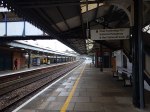
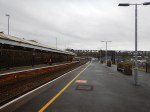
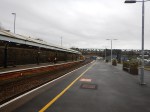
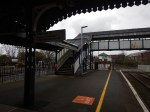
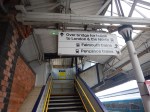
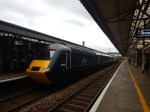
Note.
- The station has two footbridges, neither of which are step-free.
- There are two through platforms and a bay platform for the Maritime Line service to Falmouth Docks.
- The frequency of the main lines is two trains per hour (tph).
- As the frequency of the Maritime Line is rge same services should connect.
But I had to wait thirty minutes on both my changes at the station.
In some ways for people like me, the lack of a step-free bridge at Truro station is a pain.
In one of my waits, at the station, I was on a cold platform with the coffee shop on the other.
So I skipped coffee, as I didn’t want to spill it getting back over the footbridge.
This Google Map shows Truro station.
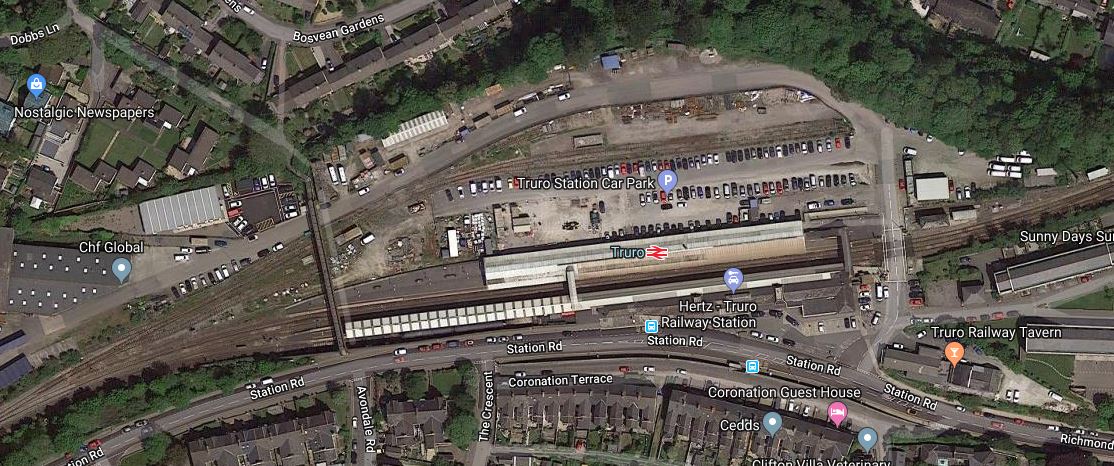
Note the level crossing at the Eastern end.
In Winner Announced In The Network Rail Footbridge Design Ideas Competition, I wrote how the competition was won by this bridge.
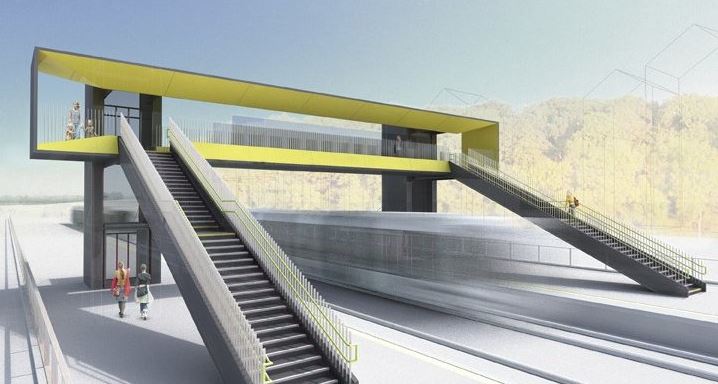
So could a factory-built bridge like this be installed at Truro station?
There could be possibilities at the Eastern end, especially, if the level crossing were to be improved.
Exploring Devon And Cornwall In Castles
Castle is the name given by Great Western Railway to their four- and five-car InterCity 125 trains, with which they run services in the West Country.
These pictures show the trains, as I meandered up and down the Cornish Main Line.


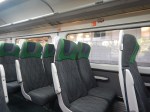

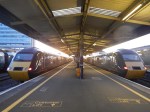










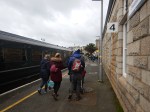

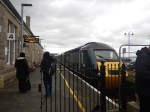
These are my observations.
The Doors
These trains now have electrically-controlled sliding doors and it seems to be a conversion, that has been carried out to a high standard.
Certainly, all the doors appeared to be working, as they should.
The Seats And Tables
The seats were comfortable, but not as comfortable as some seats I’ve used in Mark 3 coaches.
Could there be a few more tables?
The Ride
My pocket dynamometer was showing a speed of about 65 mph and the ride was as you’d expect from a well-maintained Mark 3 coach.
Access Between Platform And Train
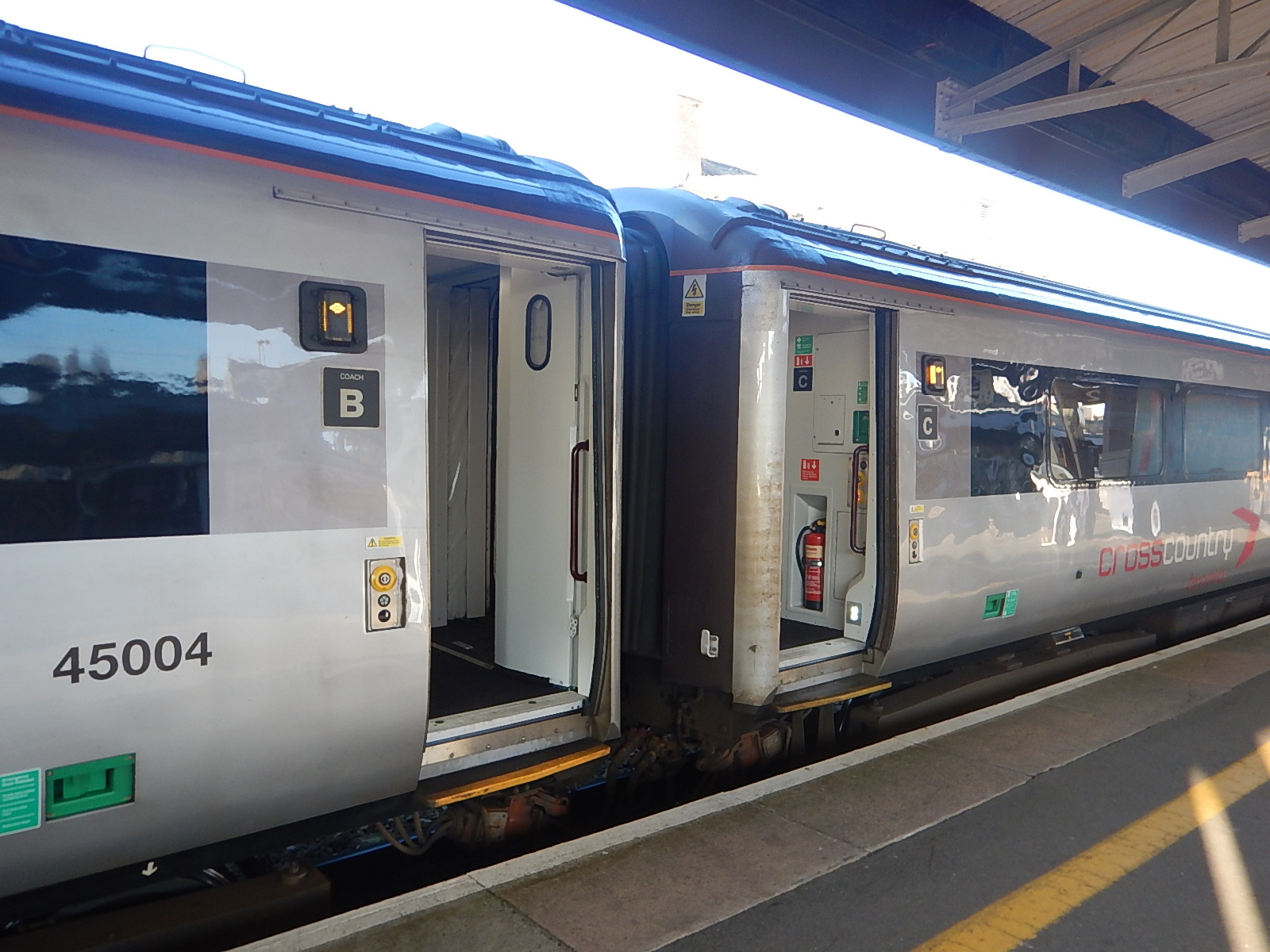
This is not good as the pictures show.
This is the step on a Castle.
And this is the step on a new Class 755 train
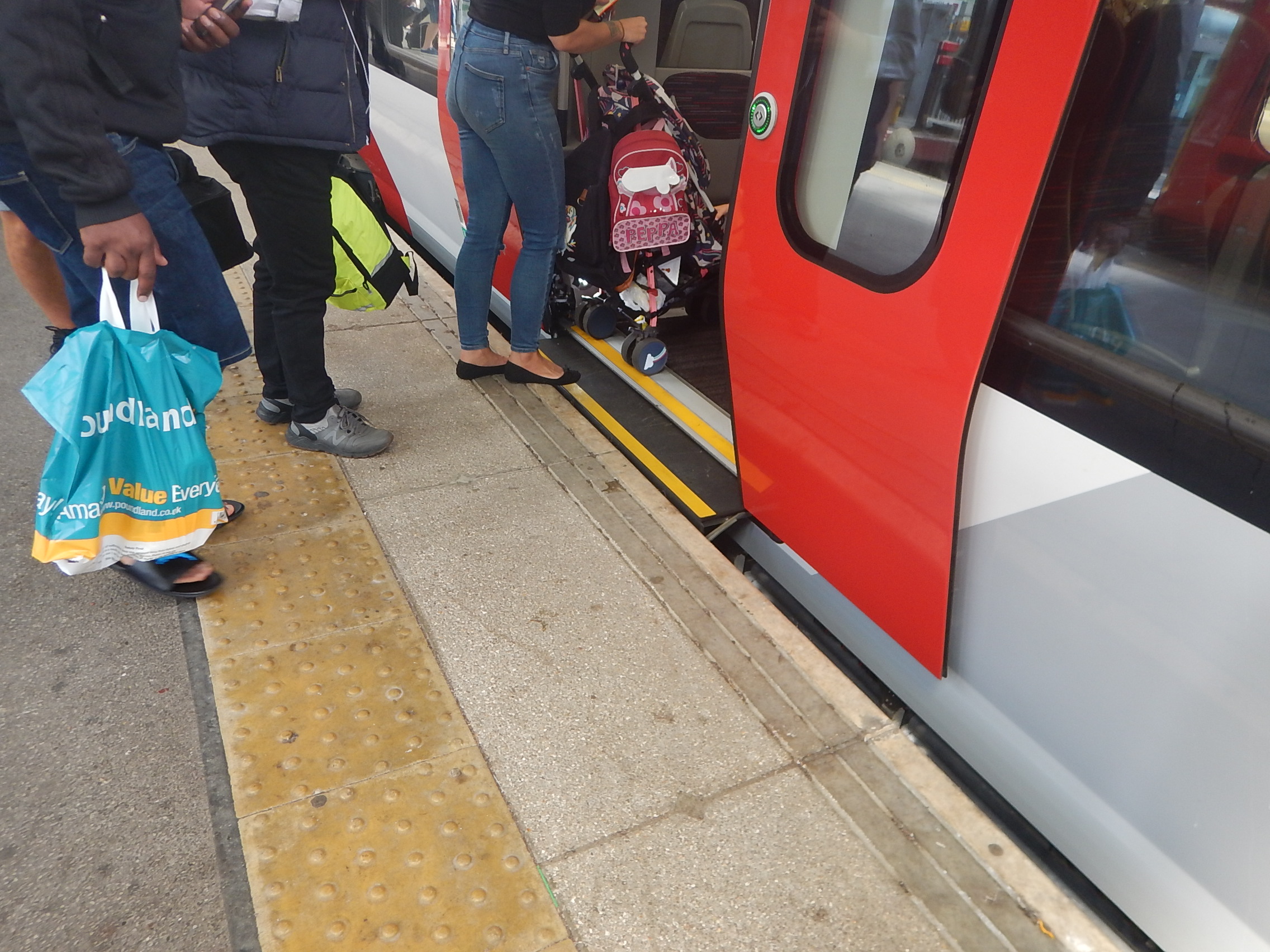
Think buggies, heavy cases and wheelchairs.
The Class 755 train, really is the Gold Standard of step-free access between platform and train.
Conclusion
These iconic trains will do a good job for Great Western Railway.
You could certainly find a good hotel in Devon or Cornwall and have a few enjoyable days riding between Penzance and Exeter, to explore the area
I do hope that they eventually put a catering trolley on the train.
 The Anonymous Widower