High Speed Urban Freight Logistics By Rail
The title of this article is the same as that of this article on World Cargo News.
It describes from a freight operator’s point-of-view, Rail Operation’s Group‘s plans to run freight services between London Gateway and Liverpool Street station, which I wrote about in A Freight Shuttle For Liverpool Street Station Planned.
Points include.
- Current operators are struggling to lower their carbon footprint.
- Congestion is affecting delivery times.
- Charges to use London’s ULEZ could add two hundred pounds per round trip to costs.
- To enter London, trucks will need high visibility cabs in a couple of years time.
- Last mile delivery would be by e-vans and cargo bikes.
- This initial service is about proving the concept and identifying the best techniques.
The article also discloses that Rail Operations Group are planning to run a high-speed overnight freight service between London Gateway and the Central Belt in Scotland, using their modified Class 769 trains.
- Journey time will be reduced from eleven-twelve hours by truck to five-and-a-half by rail.
- The deadline for guaranteed overnight delivery will go from 20:00 to 23:00.
- Trains will be running at 100 mph on electricity all the way.
- If it works going North, surely it will work going South.
I can see Rail Operations Group needing a lot more trains, than the two they have ordered.
Fuel Cell Train To Be Tested In The Netherlands
The title of this post, is the same as that of this article on Railway Gazette.
This is the introductory paragraph.
A Coradia iLint hydrogen fuel-cell multiple-unit is to be tested on the Groningen – Leeuwarden line after an agreement was signed at the Klimaattop Noord NL climate summit by manufacturer Alstom, the province of Groningen, local operator Arriva, infrastructure manager ProRail and energy company Engie.
You can get a flavour of some of the Dutch railways in the area from The Train Station At The Northern End Of The Netherlands.
Hydrogen powered trains are also part of the future plans for the use of hydrogen, which I wrote about in The Dutch Plan For Hydrogen.
The Railway Gazette article gives more details on how they will be introducing low carbon trains in the network around Groningen and the wider Netherlands.
These general points are made.
- The Netherlands has nearly a thousand kilometres of lines without electrification.
- Alstom has forty-one orders for their hydrogen-powered Coradia iLints.
They will also be refurbishing the 51 Stadler GTW trains in the area.
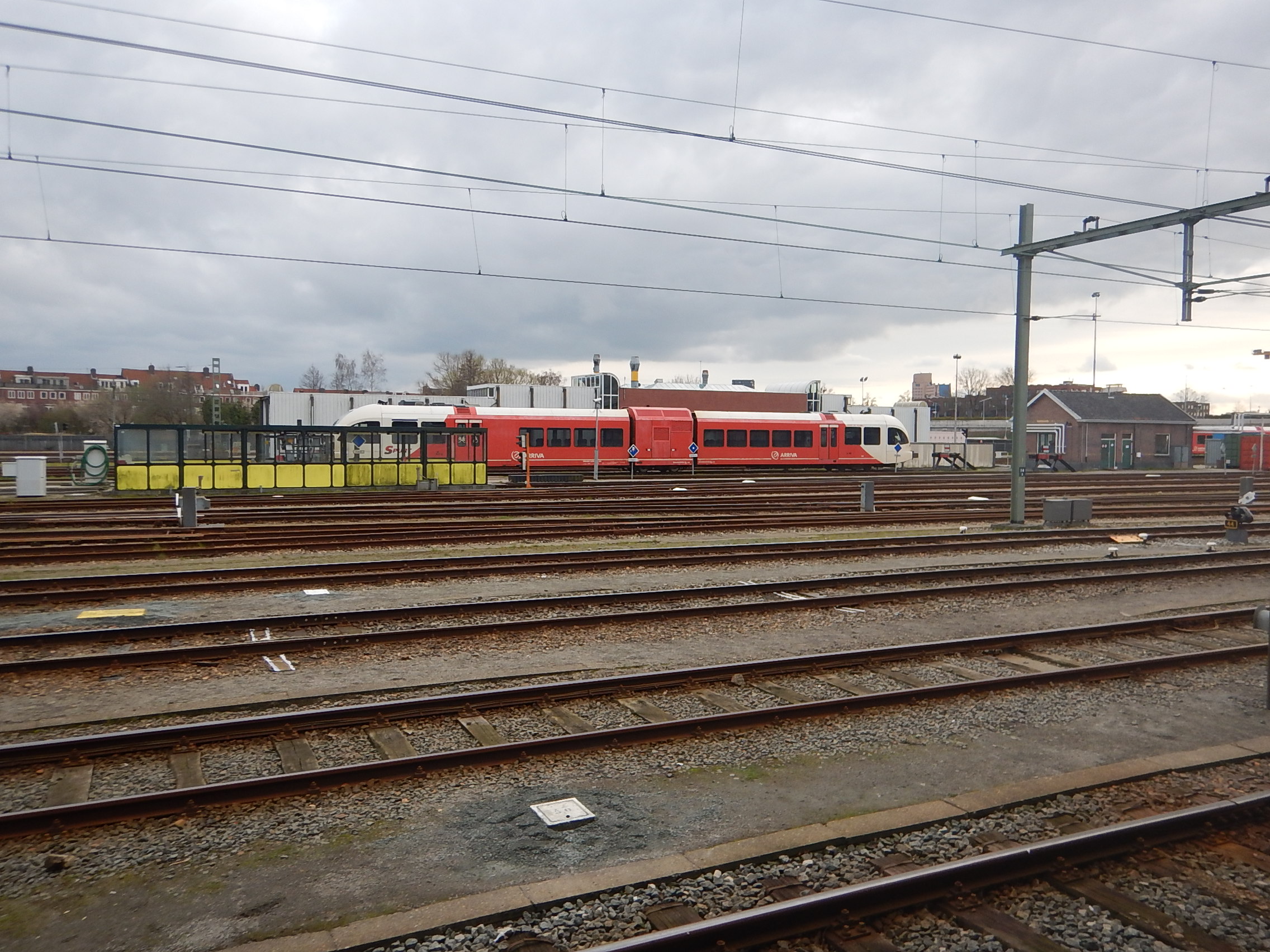
The main improvement, is that they will be fitted with batteries to handle regenerative braking and cut their carbon footprint.
The Railway Gazette article also says this.
A further 18 new Stadler Wink trainsets have been ordered which will be able use overhead electrification or hydrotreated vegetable oil fuel, with batteries for regenerated braking energy. These will be designed so that their engines can be replaced with larger batteries when the planned 1·5 kV DC discontinuous electrification of the routes is completed.
The Stadler Wink appears to be the another train from the Flirt family, which is the successor to the GTW.
The Dutch seem to be moving very firmly towards a zero-carbon railway in the North.
Collateral Benefits For The UK
What areas of the UK would be ideal places to adopt a similar philosophy to that which the Dutch are using in the North of the Netherlands?
I think they will be areas, where there are lots of zero carbon electricity, railways without electrification and terrain that’s not to challenging.
These areas come to mind.
- East Anglia
- Lincolnshire
- East Yorkshire
- Far North and North East Scotland.
Note.
-
- The only electrification in these areas is the main lines to Norwich and Cambridge in East Anglia.
- All areas have Gigawatts of offshore wind farms either operating or under development.
- Vivarail are proposing to run battery-electric trains between Wick and Turso, as I wrote about in Is This The Most Unusual Idea For A New Railway Service in The UK?
- With the exception of East Yorkshire, the train operating company is Abellio, who are Dutch railways, by another name.
- East Anglia is already using Stadler Flirt Class 755 trains, that can be fitted with batteries.
I also believe that Hitachi will soon be providing battery-electric versions of their AT300 trains. I wrote about this in Thoughts On The Next Generation Of Hitachi High Speed Trains.
Battery electric AT300 trains could provide long distance services to the areas I listed.
Conclusion
What is happening in the North of the Netherlands, will be watched with interest in the UK.
Williams Lifts The Veil On Forthcoming Rail Review
The title of this post, is the same as that of this article on Railnews.
This is the introductory paragraph.
Keith Williams has confirmed that the creation of a new national railway body is to be recommended in his forthcoming Review, and that he is looking at removing the profit motive from passenger train operating contracts, which could become ‘passenger service contracts’ instead.
These are my comments.
Passenger Service Contracts
These are used on some parts of the UK rail network.
Such a type of contract seems to work well on the train operating company I use most; the London Overground, where it is operated by Arriva Rail London.
I also think, that although the London Overground is a large network in terms of stations and passengers, it is quite geographically compact, so management of the strengths and problems is easier.
I remember when the Lea Valley Lines were run by Greater Anglia from Norwich, using an out of sight out of mind attitude. Since, the takeover, these stations have improved to a high degree.
The Profit Motive
In some instances the profit motive can be bad, as where a train operating company reduces staff at a little-used station, which may result in more crime or incidents.
On the other hand, the profit motive may lead to extra train or customer services.
For instance in LNER To Put Lincoln On The Rail Map, I talked about how LNER are increasing services between Kings Cross and Lincoln and about rumours that say the service could be extended to Grimsby and Cleethorpes.
Because there is stabling at Cleethorpes, but no facility at Lincoln, in this instance, there could be cost advantages to turning the last train at Cleethorpes, rather than sending it overnight to Doncaster or Leeds.
Using the stabling at Cleethorpes might make it easier to run the following trains.
- A n early morning direct train from Cleethorpes to Kings Cross via Grimsby and Lincoln.
- A n evening direct train from Kings Cross to Cleethorpes via Lincoln and Grimsby.
There must be a robust partnership between all stakeholders, so that everybody gets the most out of the operation.
Political Interests
I am also wary of politicians, who are peddling their constituency’s or their own interests, or have long held views, that certain places don’t need a train service. For many years,
Hackney was considered a sink borough and wouldn’t know how to use a train service, by Silverlink and politicians of all colours. But this all changed, when the Silverlink Metro routes were placed under the control of Transport for London (TfL)
Wikipedia says this.
TfL decided to let this franchise as a management contract, with TfL taking the revenue risk.
It certainly proved very successful for passengers, but lately because of funding shortages at TfL, expanding and improving the Overground seems to have slowed.
In my view, transport is too important a factor in everybody’s lives to be left to politicians of one flavour.
The Transport for London Model
This is an extract from the article.
He is in favour of the Transport for London model, and praised the large amount of innovation which TfL has achieved. He believes one of the new-style National Rail contracts could also include specific bonuses for innovation. He added: ‘TfL is still run like a network, so we need to take account of the national network as well. To some degree, TfL could form a model for the new guiding mind.’
My comments are.
Does The Transport for London Model Work?
Speaking as a Londoner, I think it does and I can’t understand why other large cities and metropolitan areas, don’t have similar transport networks with.
- Local trains, trams, light railways and buses under the same overall guidance.
- Unified contactless ticketing.
- Comprehensive information for all transport users, including pedestrians and those who are less mobile.
- Buses and trams with smooth wheelchair access.
- A policy to increase step-free access towards hundred percent.
Some cities are making a good fist of it, but some are downright terrible and very difficult for those with no local knowledge.
Compare Liverpool and Edinburgh!
Innovation
Williams mentions innovation and he is right.
But sometimes the innovation is an expensive idea, that is out of step with what is being done in other parts of the UK and the rest of the world.
- To my mind, the Cambridgeshire Guided Busway was an out-of-step development, which if it had been developed a few years later would have been a tram-train working on the Karlsruhe model.
- If Manchester had started to develop the Metrolink a few years later, it would probably use similar low-floor trams to Birmingham, Blackpool, Croydon, Edinburgh and Nottingham, which would surely ease the acquisition of new trams.
- Rhe Edinburgh tram system doesn’t use battery operation in the City Centre, as Birmingham and Cardiff will be doing soon and some European cities have done for years.
Partly, this is design by hindsight, but it does appear that the lessons have been learned by the designers of the South Wales Metro.
Contactless Ticketing
The biggest innovation by TfL has been the development of contactless ticketing across all modes of transport, using ordinary bank cards.
But why has it not been implemented in a similar comprehensive manner in other cities or areas of the UK?
I suspect it’s just a multiple case of NIH!
Conclusion
I await the full Williams review with interest.
Thoughts On LNER’s New Harrogate Service
I wrote about LNER’s improved service to Harrogate station in New Harrogate-London Rail Times Revealed.
If you look at each service, they have a very rel;axed stop at Leeds.
Northbound services are scheduled to take the following times.
- 0733 – 8 minutes
- 0933 – 7 minutes
- 1133 – 7 minutes
- 1333 – 7 minutes
- 1533 – 11 minutes
- 1733 – 13 minutes.
Sorthbound services are scheduled to take the following times.
- 0736 – 11 minutes
- 0936 – 10 minutes
- 1136 – 8 minutes
- 1336 – 9 minutes
- 1536 – 8 minutes
- 1736 – 9 minutes.
It seems a long time to pass through Leeds station.
But this is because the train reverses direction at Leeds station, so the driver has to change ends.
Will Azumas make any difference?
Azumas were designed around forty years after the current InterCity 125 trains that work the service. A five-car Azuma is also half the length of a two+eight InterCity 125.
So I wouldn’t be surprised to see in the new timetable, the 7-9 minutes reverse are timed for Azumas and the longer times are to allow InterCity 125 trains to run the service.
The Azuma services to Leeds seem to be run by two five-car trains, running as a pair.
Could this be, so that the train can split and join at Leeds?
- A pair of five-car Azumas would arrive in Leeds from London.
- A second driver gets in the rear cab of the rear train.
- The two trains automatically uncouple.
- The rear train drives off to the West to Bradford, Harrogate, Huddersfield, Skipton or wherever.
- The front train can drive off to the East to perhaps Hull, Middlesbrough, Scarborough, Scotland or Sunderland.
- If required the driver could change ends and continue to the East.
The process would be reversed when going South.
Possible Destinations
These are possible destinations, distances and times.
- Bradford – 13 miles – 25 minutes
- Harrogate – 18 miles – 30 minutes
- Huddersfield – 17 miles – 35 minutes
- Hull – 20 miles – 60 minutes
- Middlesbrough – – 76 miles – 84 minutes
- Scarborough – 67 miles – 75 minutes
- Skipton – 26 miles – 43 minutes
- York – 25 miles – 30 minutes
It looks to me that Leeds will become a very important station for LNER.
Their timetabling team will certainly be having a large amount of mathematical fun!
I can certainly see.
- Bradford,, Huddersfield and Skipton having similar service levels to those starting to and from Harrogste in December.
- Battery-electric Azumas handling the last few miles on battery power.
- Journey times of under two hours between Leeds and Kings Cross.
I also feel that LNER and TransPennine Express will create an integrated network between Leeds and Scotland along the East Coast Main Line.
Conclusion
This arrangement gives a large range of destinations from London and the South.
Passengers and train operators would like it.
Could Highbury & Islington And Canada Water Stations Be Connected By A Twelve Trains Per Hour Service?
This article on IanVisits, is entitled More Frequent Trains And A New Station For The London Overground.
This is said.
In a statement, the government agreed to requests for £80.8 million from the GLA to support transport upgrades so that 14,000 homes can be built along the East London Line.
Upgrades include
- New Bermondsey station, which was originally to be called Surrey Canal Road, will be built.
- A second entrance will be built at Surrey Quays station.
- Frequency between Dalston Junction and Clapham Junction stations will be increased from four trains per hour (tph) to six tph.
- Frequency between Highbury & Islington and Crystal Palace stations will be increased from four tph to six tph.
The frequency upgrades will mean twenty tph between Dalston Junction and Surrey Quays stations, or a tyrain every three minutes as opposed to the current three minutes and forty-five seconds.
Consider the section of the East London Line that I use most between Highbury & Islington and Canada Water stations via Whitechapel station.
- Highbury & Islington station has good connections to the Victoria Line, the Northern City Line and the North London Line.
- Highbury & Islington station is the thirteenth busiest station in the UK.
- Whitechapel station has good connections to the District and Hammersmith & City Lines, which have recently been increased in Frequency.
- Whitechapel station will be on Crossrail, when it opens.
- Canada Water station has a good step-free connection to the Jubilee Line.
- Canada Water station is the seventeenth busiest station in the UK.
- Currently, the frequency between Highbury & Islington and Canada Water station is eight tph and after the improvements it will be ten tph.
The frequency increase is to be welcomed but I wonder if it could be better.
Would it be possible that in addition to the proposed changes, the West Croydon and Clapham Junction services should swap Northern terminals, as they do on Sundays.
This would not affect any services South of Dalston Junction, but it would increase the number of services between Dalston Junction and Highbury & Islington via Canonbury to twelve tph.
This would give several benefits.
- Passengers changing from the North London Line to go South, would have an easier change at the less-crowded Canonbury station, rather than Highbury & Islington. Canonbury has only one Southbound platform, simpler passenger flows, is fully step-free and as the trains on the East London Line, will be at a higher frequency, the waiting time would be less and a maximum of just five minutes.
- Passengers could avoid the cramped Dalston Kingsland, which is not step-free, on many journeys.
- Half the trains going North through Dalston Junction would have a cross-platform interchange with the Westbound North London Line at Highbury & Islington.
- Passengers going South from Dalston Junction wouldn’t dither about at the bottom of the stairs, trying to ascertain, which train is going first. As there would be sixteen trains per hour leaving on the left island Platform 3/4, only passengers going to New Cross would go right.
- Dalston Kingsland and Highbury & Islington is one of the busiest Peak Hour services in the UK. Twelve trains per hour on the alternative route might ease the congestion.
- The increased frequency might help, when Arsenal are playing at home.
- In some ways, maximising the service between Dalston Junction and Highbury & Islington, compensates for the annoying cut-back of the 277 bus service.
I do feel that swapping the two services so that both six train per hour services terminate at Highbury & Islington could be beneficial.
Hopefully, TfL have got there first! Unless of course, there’s an operational reason, why the swap can’t be done!
‘Earthquake Mode’ Battery Packs To Be Fitted To N700S Shinkansen Fleet
The title of this post is the same as that of this article on the Railway Gazette.
The Japanese are fitting batteries into the latest N700S Shinkansen trains.
- Eight of the sixteen cars will be fitted with batteries.
- It is quoted that they may be for rescue modes at low speed.
- The batteries seem to be a proven component from Toshiba.
I would be very surprised if they didn’t handle the regenerative braking.
I feel in a few years time, no manufacturer will build a train without batteries, as it will save energy and provide a rescue mode.
Is The East-West Rail Link Going For The Freight Market?
I will deal with question in two main sections; West and East.
Freight In The West
In Shapps Supports Beeching Axe Reversals, I talked about the reopening of the Northampton and Marketharborough Line to connect the West Coast and Midland Main Lines..
- Passenger services could run between Market Harborough or Leicester and Marylebone, Milton Keynes, Oxford or Reading.
- Multi-modal services could run between freight terminals in the North Midlands and Yorkshire and Southampton Docks.
- With electrification, it could create the Electric Spine, that was cancelled a few years ago.
Judging by Grant Shapps comments, I do wonder if this scheme is part of the East-West Rail Link.
Look at freight trains between Sheffield or South Yorkshire and Southampton Docks.
- Currently, they seem to use a route via Chesterfield, Ilkeston, Toton, Burton-on-Trent, Bordesley, Solihull, Warwick Parkway, Banbury, Oxford, Reading and Basingstoke.
- After the East-West Rail Link and the Northampton and Market Harborough Line are opened, the trains would go via Chesterfield, Ilkeston, East Midland Parkway, Loughborough, Leicester, Market Harborough, Northampton, Milton Keynes, Bletchley, Bicester, Oxford, Reading and Basingstoke.
The advantages of the new second route would appear to be.
- It doesn’t involve a Grand Tour of Birmingham.
- It only involves the next phase of the East-West Rail Link.
- It is partially-electrified.
- It would be relatively easy to electrify between Didcot and Bletchley.
- Innovative locomotives like the Class 93 locomotive might be ideal for the route.
I do suspect that the new route will be substantially quicker.
Freight In The East
If the East-West Rail Link will improve freight services in the West, what will it do in the East?
I wrote about freight at the Eastern end of the route in Roaming Around East Anglia – Freight Trains Through Newmarket.
This was the introduction to that article.
The East West Rail Consortium plan to change the route of freight trains to and from Haven Ports; Felixstowe, Harwich and Ipswich to the West of Kennett station.
In this document on the East-West Rail Consortium web site, this is said.
Note that doubling of Warren Hill Tunnel at Newmarket and
redoubling between Coldham Lane Junction and Chippenham Junction is included
in the infrastructure requirements. It is assumed that most freight would operate
via Newmarket, with a new north chord at Coldham Lane Junction, rather than
pursuing further doubling of the route via Soham.How would these changes affect Newmarket and the horse-racing industry in the town?
I then examined the affects in detail.
My conclusions were that it will be a difficult project to get approved, as Newmarket won’t like a double-track freight railway through the centre.
Summary Of Freight Routes Using The East-West Rail Link
As far as I can see, these will be the major freight routes using the link.
Felixstowe and Birmingham
Ipswich, Newmarket, Cambridge, Bletchley, Nuneaton and Castle Bromwich
Felixstowe and Bristol
Ipswich, Newmarket, Cambridge, Bletchley, Oxford and Swindon
Felixstowe and Cardiff
Ipswich, Newmarket, Cambridge, Bletchley, Oxford, Swindon and Newport
Felixstowe and Glasgow
Ipswich, Newmarket, Cambridge, Bletchley, Stafford, Crewe, Preston and Carlisle
Felixstowe and Liverpool
Ipswich, Newmarket, Cambridge, Bletchley, Stafford, Crewe and Runcorn
Felixstowe and Trafford Park
Ipswich, Newmarket, Cambridge, Bletchley, Stafford Crewe, Manchester Piccadilly and Manchester Oxford Road
Southampton and Birmingham
Basingstoke, Oxford, Bletchley, Nuneaton and Castle Bromwich
Southampton and Glasgow
Basingstoke, Oxford, Bletchley, Stafford, Crewe, Preston and Carlisle
Southampton and Liverpool
Basingstoke, Oxford, Bletchley, Stafford, Crewe and Runcorn
Southampton and Sheffield
Basingstoke, Oxford, Bletchley, Northampton, Market Harborough, Leicester, East Midlands Parkway, Ilkeston and Chesterfield
Southampton and Trafford Park
Basingstoke, Oxford, Bletchley, Stafford Crewe, Manchester Piccadilly and Manchester Oxford Road
Note, that I have ignored routes like Felixstowe and Leeds or London Gateway and Trafford Park, which will avoid the East-West Rail Link.
Conclusion
The East-West Rail Link is going to be a very important freight route.
Winners And Losers
Will there be objections in places like Cambridge, Market Harborough and Newmarket, which will see a large increase in freight traffic?
On the other hand, some places like Banbury, Birmingham and North London will see a reduction in freight traffic.
Others like Oxford would see little difference in the numbers of trains.
Electrification
The East-West Rail Link connects to five electrified main lines at Oxford, Bletchley, Bedford, Sandy and Cambridge.
For freight’s sake, I think it should be electrified to make the most of new motive power, like the Class 93 locomotive and reduce pollution and carbon emissions.
Bristol Poised For Seven-Day Ban On Diesel Cars
The title of this post is the same as that of this article in The Times.
This is the introductory paragraph.
Bristol is set to become the first city in Britain to ban diesel cars under the toughest measures yet seen to combat air pollution.
A few points.
- It will apply to all diesels.
- It will apply in part the City Centre.
- Petrol cars will be exempt.
Although, I agree with the need to improve air quality, I doubt the measure will be passed. Selfish interests will prevail!
 The Anonymous Widower