On The Caledonian Sleeper To Glasgow
I started this post on the Caledonian Sleeper to Glasgow.
It’s one of the new Mark 5 trains and they are a great improvement, although one Scottish hard man, preferred the old Mark 3s.
Out of Euston we were doing 80 mph and the ride in the Lounge Car is good. At least up to the standard of a Greater Anglia Mark 3, which are some of the best!
These are some pictures of my train.
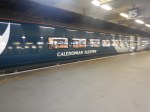

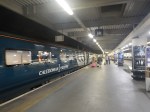



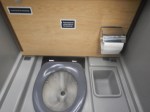
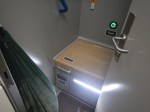
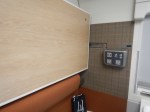
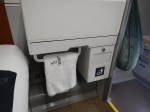
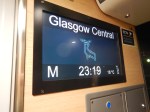
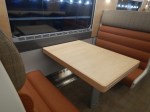
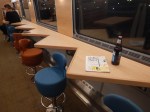



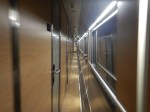
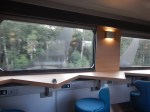
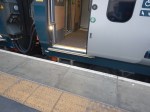

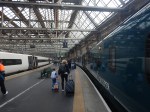
I don’t think I could fault the train.
But the service was rather sub-standard, due to a strike and I got a partial refund.
Metrolink Customers Complete 170k Trips Using Contactless System
The title of this post, is the same as that of this article on Rail Technology Magazine.
The high number of journeys is no surprise to me and Manchester should have introduced this system several years ago!
This post from September 2015 is ntitled Transport for London Are Leading The Contactless Revolution.
I’ll repeat the short post here.
This article from Rail Magazine is entitled Contactless Ticketing Booms In London.
It states the following.
- In the first year, 180 million journeys have been made using contactless cards.
- This accounts for a fifth of all pay-as-you-go journeys.
But what isn’t said is the fact that despite the predictions of some left-wing and green politicians, there has been no hint of any problems. If there had been, the various tabloids would have had a field-day.
When are the rest of the large cities of the UK going to copy London, so I don’t need to use that nineteenth century technology of paper tickets?
Manchester’s figure of 170,000 in four weeks is a rate of around two million in the first year.
- Greater Manchester is a lot smaller than Greater London.
- London had been running Oyster successfully since 2003.
- Oyster and contsctless ticketing could be used on the Underground, Overground, trams, trains and buses.
I will be very surprised if Manchester doesn’t expand their system.
This is said in the Wikipedia entry for Oyster card.
Since the launch of contactless payment in 2012, over 500 million journeys have been made, using over 12 million contactless bank cards.
Assuming the rate of use is level, which it isn’t as it’s increasing, this works out at 71.4 million journeys per year.
- Greater London’s population is 8.8 million
- Greater Manchester’s population is 2.8 million
Just doing a simple pro-rata means that Manchester should see 22 million journeys a year or 62,000 journeys a day.
According to Wikipedia, the Manchester Metrolink had 43.7 million riders in 2018/19.
Conclusion
Manchester must do the following as soon as possible.
- Extend contactless ticketing to all buses and trains in the Greater Manchester area.
- Make sure all taxis accept contactless cards.
- Extend the Mabchester Metrolink.
- Put in an order for some more trams, as soon as possible. They will be needed as traffic will grow exponentially.
- Purchase some vandal-proof terminals.
They should also enter into discussions with Cheshire, Lancashire, Leeds, Liverpool, Sheffield and Yorkshire about creating a common and integrated contactless card system for the North!
Contactless ticketing would transform lhe North!
Will Contactless Ticketing Generate Funding For Extensions?
Some extensions to the Manchester Metrolink will be fairly easy and not very costly to build. In Tram-Trains To Hale Station, I talked about a simple extension to Hale station, that could go a lot further to perhaps Northwich, Sandbach and Crewe.
When Transport for Greater Manchester get a decent financial model and data from a year of contactless ticketing, some of the routes for tram-trains might be possible to fund from a large insurance or pension fund.
I have used this tram-train extension as an example, as there is no need to lay a lot of new track, so costs can be less.
London should have been able to fund improvements, but Sadiq Khan brought in a fare freeze and Crossrail turned out to be late.
A Lesson For Brexit
Boris Johnson was Mayor of London, when full contactless ticketing was implemented in London.
- It was the first such system in the world.
- The left and the green were against it and said it would all end in tears.
- All Londoners and visitors have embraced the system and I’ve never found anybody who refuses to use it.
- Attacks on staff have dropped to a very low level, as there’s no money about.
- In my opinion it is one of the main reasons, that London has been so successful in recent years.
I voted Remain and still think, there are reasons we should stay in Europe.
- But the referendum went the other way and everyone must abide by the result.
- Boris probably had little to do with London’s contactless ticketing revolution, but if it had failed he would have got the blame.
- All politicians in London now embrace the technology and would be voted out of office, if they decided contactless bank cards couldn’t be used.
Boris is now in charge of Brexit and just like those of the left and the green who opposed contactless ticketing, those that oppose Brexit will be Yesterday’s Men.
Like contactless ticketing, it has nothing to do with Boris, but all to do with the power of the man and woman on the bus or in the voting booth.
I think it is too late to stop a No-Deal Brexit.
The Shuttle Train Between Stratford And Meridian Water Stations Has Appeared In The Timetable
In the Wikipedia entry for Meridian Water station, this is said about the initial service.
A seven day a week, half-hour service from 6am to 11pm is timetabled to start on 9 September 2019 to Stratford calling at Northumberland Park, Tottenham Hale and Lea Bridge which will start and terminate at Meridian Water from Platform two.
If you type this date and time into the on-line National Rail timetable, you get these trains.
- 06:22
- 07:08 and )7:38
- 08:08 and )8:38
The trains then seem to follow the eight minutes past the half hour pattern until 23:08
Each journey has the same characteristics.
- They leave from Platform 2 at Meridian Water
- They arrive in Platform 11 at Stratford fifteen minutes later at XX:23 and XX:53
- Times at Northumberland Park are XX:10 and XX:40.
- Times at Tottenham Hale are XX:13 and XX:43
- Times at Lea Bridge are XX:16 and XX:46
Return journeys have the following characteristics
- They leave from Platform 11 at Stratford at XX:17 and XX:47
- They arrive in Platform 2 at Meridian Water fifteen minutes later at XX:32 and XX:02
- Times at Lea Bridge are XX:23 and XX:53
- Times at Tottenham Hale are XX:26 and 56
- Times at Northumberland Park are XX:29 and XX:59
The timetable to provide the two trains per hour (tph) service looks to have been put together in a very simple way.
- Two trains are used.
- Train One works the XX:08 from Meridian Water and the XX:47 train from Stratford
- Train Two works the XX:38 from Meridian Water and the XX:17 train from Stratford
- Trains have six minutes to turn round at Meridian Water.
- Trains have twenty-four minutes to turn round at Stratford.
- Only one train is North of Lea Bridge at any one time and they are on the new third track.
- The two trains will pass between Stratford and Lea Bridge stations, where they will be on separate tracks.
There is one complication; the two tph service between Stratford and Bishops Stortford is still running and the timetable, says it will be using Platform 11 at Stratford.
- But as the Meridian Water shuttle train will wait for twenty-four minutes at Stratford, could the Bishops Stortford train share the same platform?
- Or will the signallers use Platform 12 as an overflow, when they need?
There must be a sound, safe and reliable plan, otherwise they wouldn’t run the trains.
Enfield Council has been promised four tph between Meridian Water and Stratford stations.
Sharing Platform 11 between the Meridian Water shuttle and the Bishops Stortford service might just fulfil Enfield’s needs.
- If the Southbound Bishops Stortford to Stratford service stopped at Meridian Water, if would stop in Platform 3, which shares an island with Platform 2, which will be used by the shuttle.
- The Southbound Bishops Stortford to Stratford service would probably stop at Meridian Water at XX:22 and XX:52, which would be conveniently between the shuttle services.
- Northbound Stratford to Bishops Stortford services would leave conveniently at XX:00 and XX:30 from the samr platform as the shuttle.
But I feel that this is very much an interim service until Greater Anglia have worked out what is possible with real trains and passengers and their new Class 720 trains have been delivered.
The Bakerloo Line Connection At Paddington Station
I use the Bakerloo Line to get to and from Paddington station for various reasons, and find myself in the narrow two-way passage between the Underground station entrance in the middle of the Paddington station and the top of the escalators to the Bakerloo Line.
These pictures show the route towards the Bakerloo Line.
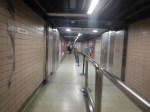


It strikes me that a certain amount of reorganisation is needed.
- In the narrow two-way passage signs tell people to keep left.
- On the escalators, the escalators are run on a keep right basis.
So everybody has to cross over in the area at the top of the escalators.
I’m sure, it could be better organised.
It should be noted that another pedestrian tunnel is being built to connect the Bakerloo Line to Crossrail.
I wrote about the Paddington Bakerloo Line Link in Paddington Is Operational Again!
bluecity
I came across these two cars by Brentford station.
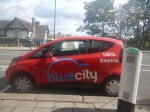
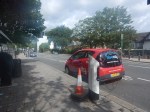
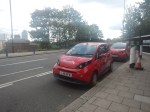
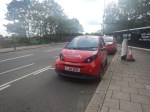
They are electric hire cars from a company called bluecity.
The concept should appeal to many living in London, and I might have been interested, if I still drove.
But I just have no interest these days, as life without a car is much more stress-free.
A Trip To Kingham Station
I visited Kingham station on a trip to have lunch with friends nearby.
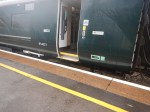
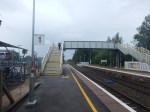
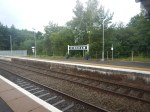


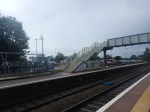

The station is not step-free, by any means.
Commuters or shoppers going to London, Reading or Oxford must use the bridge without lifts on the Outward journey, but at least when returning, it’s a level walk to the car park.
All services are run by Class 800/801/802 trains, which as the first picture shows don’t have step-free access between train and platform.
But there are many stations that are worse and more difficult to make step-free.
This Google Map shows Kingham station, with London to the South and Worcester to the North.
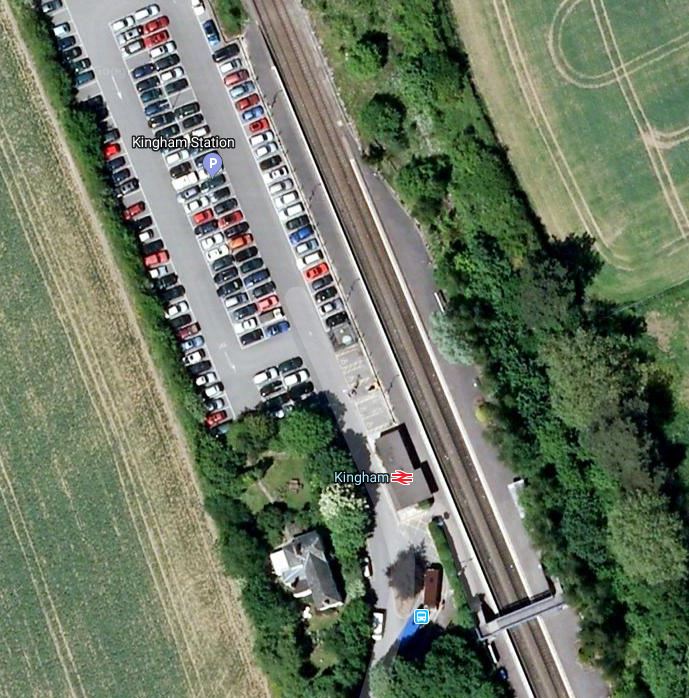
If you look at my pictures taken in 2019 and the Google Map, you’ll notice that the stairs on the bridge point the other way and that the bridge is the other side of the station building, which is indicated by the red logo.
This sentence in the Wikipedia entry for the station, indicates what is happening.
In 2015, a car park extension has been added with 100 car spaces, and a new footbridge is being added, with provision for passenger lifts.
This probably means the Google Map was created before 2015 and that lifts can be added on the Worcester side of the new footbridge.
It also gives Network Rail an unusual dilemma.
In Winner Announced In The Network Rail Footbridge Design Ideas Competition, I wrote how the competition was won by this bridge.
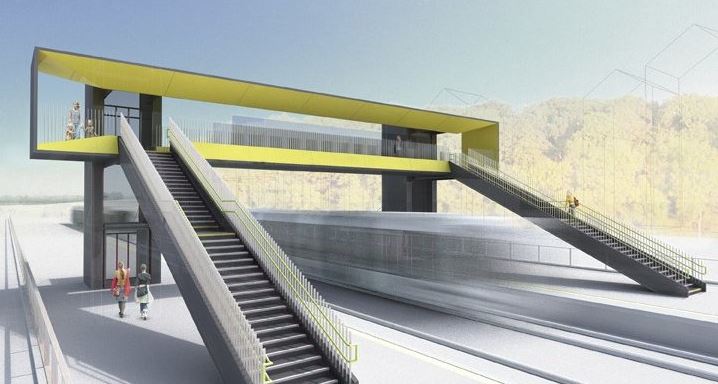
A factory-built bridge would be ideal for Kingham station and it could have easily been fitted in the space taken by the new bridge.
But in 2015, when the current bridge was installed, the new style of step-free bridge hadn’t even been designed.
Network Rail have two choices.
- Add traditional lifts to the current bridge.
- Swap the current bridge for one of the new design with lifts.
There may even be a third choice.
Could two lift towers designed for the winning design be erected and linked to the 2015 bridge?
- The lift towers appear to have been designed to be free-standing and be able support the weight of the bridge deck, perhaps with the stairs acting as a structural support.
- The 2015 bridge been designed to accept traditional lifts in brick or steel towers, so why can’t it accept modern steel and glass lifts?
I think it would be possible and at Kingham station, I suspect the lifts could be installed without disrupting the trains or passengers, during a short closure of the line or the station.
I suspect the cost would salso be more affordable.
Other Stations
There are probably several stations with a very serviceable footbridge, that are suitable for lifts to be added.
This picture shows the footbridge at Marks Tey station.

This could be an ideal candidate.
- The bridge appears sound.
- The bridge appears to meet all the regulations concerning electrification.
- The handrails on the stairs could be updated to a modern standard.
- It looks like there is sufficient space for the towers.
I doubt installation of lifts would be a difficult and expensive project.
There are probably several other stations with a similar design of bridge.
Conclusion
Could Network Rail’s new design of step-free bridge be applied to existing bridges in other stations?
A Garden Is Being Created Under London Bridge Station
I took these pictures as I walked in one of the tunnels under London Bridge station.
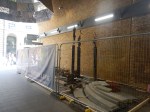
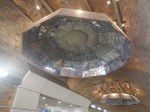

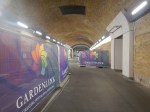
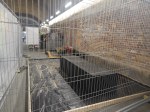

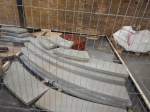
Somebody is doing a bit of garden creation.
Network Rail Teams Up With Local Council To Bring Happy Street To Battersea
The title of this post, is the same as that of this article on Rail Advent.
This is the first paragraph.
Network Rail has announced it has worked in partnership with Wandsworth Council to spread some joy in the Nine Elms area of Battersea with a stunning makeover of the Thessaly Road railway bridge.
These are some pictures I took last Sunday.


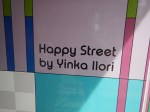
It’s certainly not dull!
Conclusion
We need more happy streets! And bridges!
 The Anonymous Widower