London City Airport Appoints Former Crossrail Boss Rob Holden As New Chairman
The title of this post is the same as that of this article on City AM.
If this doesn’t get the extra station on Crossrail at Silvertown, that London City Airport needs and wants, then nothing will.
Paddington Bakerloo Line Link Project, London
The title of this post is the same as that of this page on the Institute Of Civil Engineering web site.
The page contains a video presentation of the building of the Paddington Bakerloo Line Link, that will connect the Bakerloo Line to Crossrail sometime next year.
If you think the golden age of British improvised tunnelling finished with the end of World War Two, with the likes of the Wooden Horse and the Great Escape, then think again.
- A redundant Royal Mail building stars as the cookhouse, where the tunnel starts under the floor.
- The old Rail Mail tunnel, doubles for the sewers.
- Sections were dug by hand.
I wouldn’t be surprised to see more pedestrian tunnels dug with all the ingenuity of this one.
Is London Going To Get A Christmas Present From Michael Bloomberg?
I took this picture in June of the fire doors that connect to the new station entrance under the Bloomberg building from the travelator, the connecting tunnel and the Waterloo and City Line platforms.

I took this picture today.
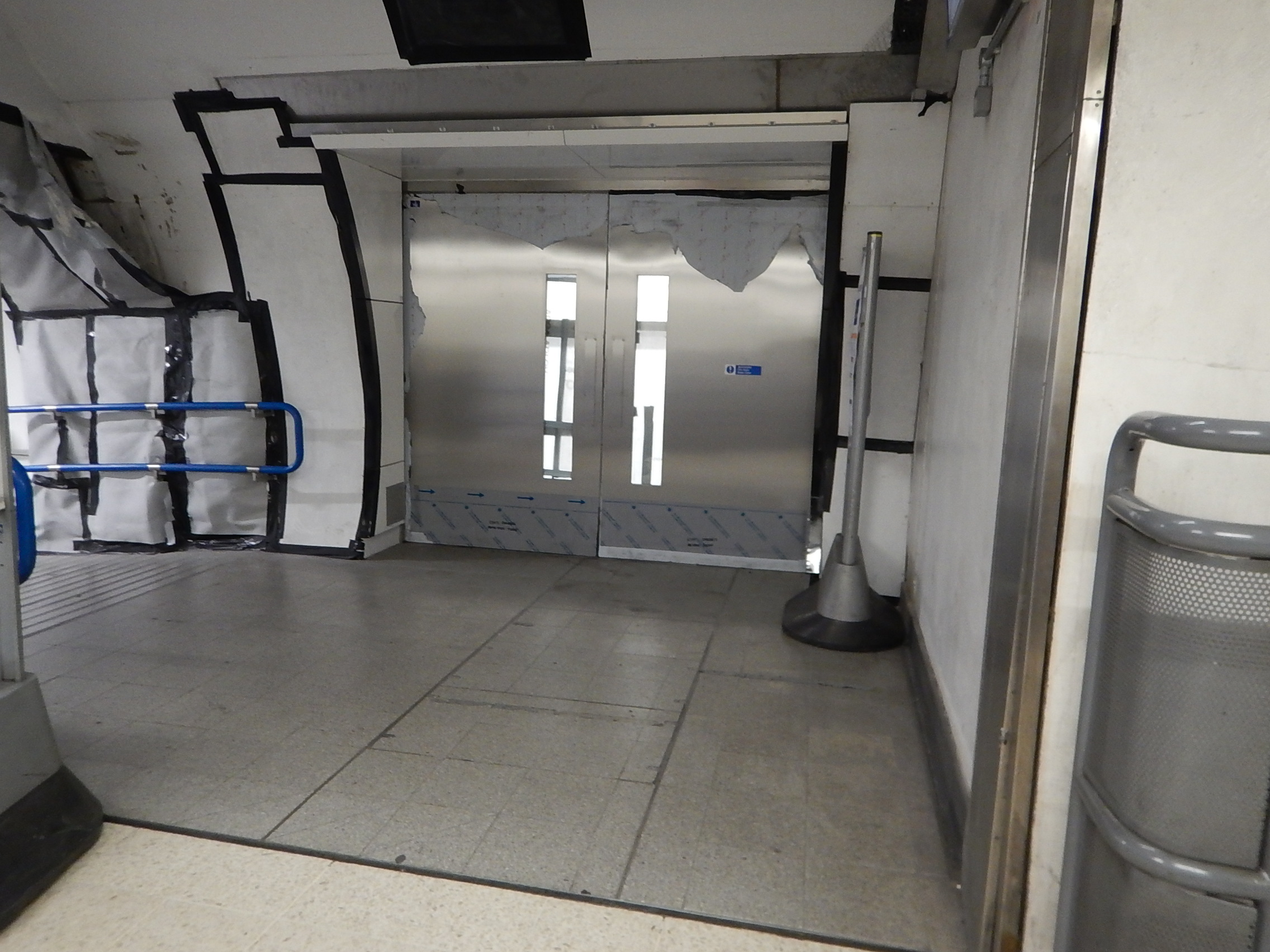
It looks like the entrance is nearer to completion.
I did ask a station-man and he thought it would open in a couple of weeks.
Excellent Tiling At Moorgate Station
These pictures show the renewed tiling on the Northern Line platforms and tunnels at Moorgate station, as the station gets ready for Crossrail.



My only thought is that compared to some London Underground tiling, is that it is rather unadventurous.
Major Overhaul Of One Of Country’s Longest Tunnels Sees Delays Fall By A Fifth
The title of this post is the same as that of this article on Rail Technology Magazine.
This is the first two paragraphs.
A major refurbishment of Sevenoaks tunnel has seen a 20% reduction in delays and halved journey times for passengers, even as the £21m infrastructure renewal nears completion.
One of the longest tunnels in southern England, Sevenoaks has been given a major overhaul which has included replacing thousands of sleepers, laying several miles of news track, and installing new drainage systems.
Sevenoaks tunnel is a single-bore tunnel, double-track tunnel about two miles long.
Obviously, this refurbishment has been worthwhile.
I do wonder how many other schemes, that are stuck in Network Rail’s pipeline would show similar improvements in the quality of the service?
Pedestrian Tunnels In London’s Transport System
I take particular interest in pedestrian tunnels, as I believe properly designed tunnels can be a solution to improving access to stations.
This list will be extended as I photograph more.
Bank – Bank And Monument Escalator Connection
I still think of this tunnel, as an escalator connection, as that was how it was marked on the tube map in the 1950s.



It is two escalators down a walk between the Docklands Light Railway platforms and then two escalators up at the other end.
Verdict – The connection is being upgraded.
Bank- Central To Northern Interchange Tunnel
This is the shortest way from the Central Line to the Northern Line.
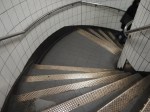

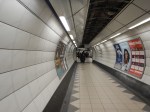

It does involve a descent of a circular staircase.
When the Bank station upgrade is complete this route will be replaced by an escalator connection between the two lines.
This visualisation shows the connecting escalators.
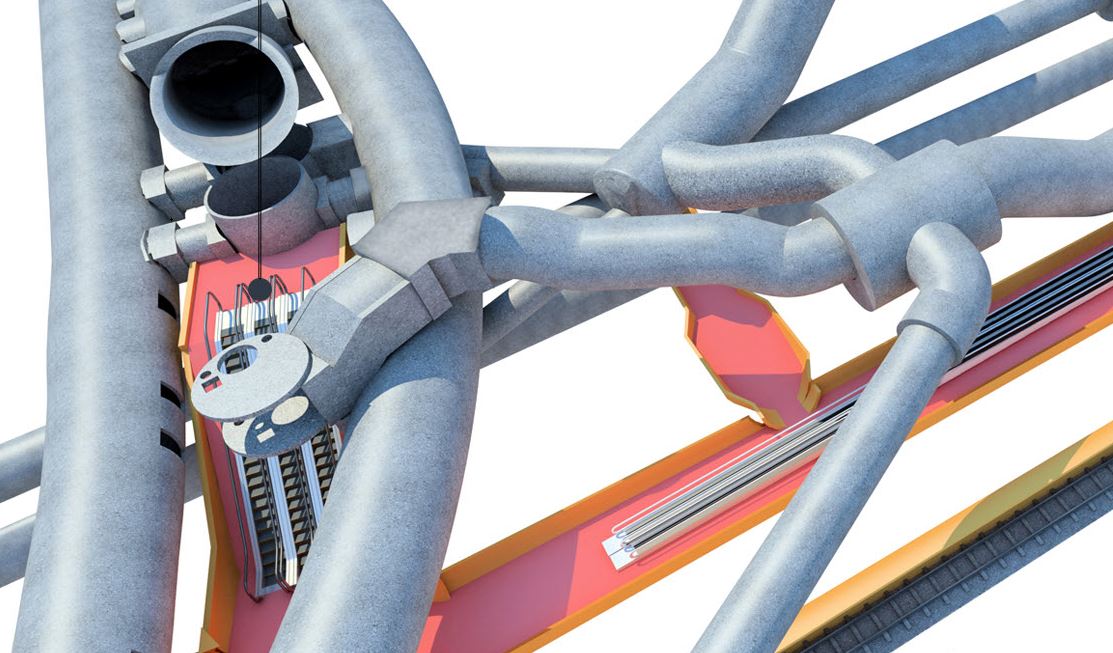
Note.
- The two wide highest level tunnels are the Central Line.
- The infamous curved Central Line platforms,create a large gap to mind.
- The two mid-level crossed tunnels are the existing Bank and Monument Escalator Connection and the Waterloo & City Tunnel.
- The four narrower lowest level tunnels are from bottom to top; the Southbound Northern Line, a new tunnel with a travelator; the old Southbound Northern Line tunnel and the Northbound Northern Line tunnel.
- The old Southbound Northern Line tunnel will become a passenger walkway.
Poking through all this spaghetti are the three escalators connecting the Central Line level with the Northern Line level.
Verdict – This connection will become much better.
Bank – Waterloo & City Inclined Travelator
The inclined travelators that link the Waterloo & City Line platforms and the main station entrances around Bank junction, are unique on the London Underground.
There are other travelators, but no others are inclined.


Verdict – I wonder why there are no others, as this pair seem to work very well.
Bank – Waterloo & City Tunnel
This tunnel connects the Waterloo & City Line platforms at Bank station to the central tunnel at Bank station.

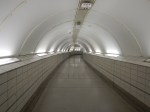


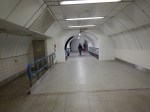
Verdict – It is a linear oasis in an otherwise dingy and cramped station.
Bond Street – Northern Entrance Tunnel
This new tunnel connects the new Northern entrance at Bond Street station to the platforms.


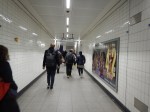
Incidentally, I’d arrived at Bond Street station through the main entrance and it was an awfully overcrowded scrum. The Northern entrance was quiet, as the pictures show.
The entrance is steps or a lift between the street and its own gate line and then a well-lit wide passage to the escalators.
In future, it will link to a wide tunnel to the Western end of the Crossrail platforms at the station.
It is much better way to enter Bond Street station.
Verdict – London and other cities with underground railways, need more new station entrances like this.
Green Park – Interchange Tunnel
This tunnel connects the Jubilee, Piccadilly and Victoria Lines at Green Park station.
The opening dates of the three lines, through the station were.
- Piccadilly Line – 1906 – Modernised in the 1930s with escalators.
- Victoria Line – 1969
- Jubilee Line – 1979
Since 1979 the station has been continually improved and is step-free.
This map from carto.metre.free.fr shows the lines at Green Park station.
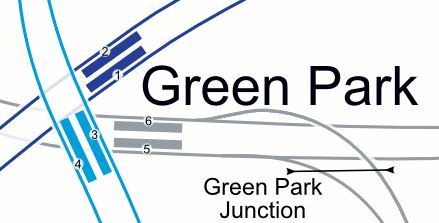
Note that the Jubilee Line is below the other lines and when the extension was built, it was a radical change to what was originally planned. The lines to the right lead to Charing Cross station and those going South to Westminster station.



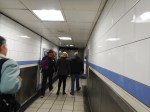

The interchange tunnel is long and usually very crowded. I had an incident recently, where I was walking slowly to the Victoria Line and a group of tourists all with four-wheeled cases, were nudging me to go faster. When we all got to the steps at the end, there was an enforced slow down.
Verdict – I avoid interchanging at Green Park like the plague.
Kings Cross – Eastern Tunnel
This tunnel runs which used to be part of the access to the old Kings Cross Thameslink station, runs from East of Kings Cross station and then has access to the main tunnel connecting the Northern, Piccadilly and Victoria Lines.

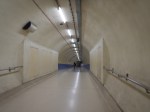

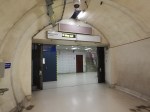

It has partial escalator access at the Eastern end, where the buses from Islington and the East stop outside the old station entrance. Although getting buses to the East mens crossing the busy Pentonville Road.
Verdict – Needs improvement
Kings Cross – Interchange Tunnel
This tunnel connects the Eastern Tunnel at Kings Cross to the escalators and lifts that lead to the Northern ticket hall Kings Cross St. Pancras tube station. On the way is connects to the Victoria, Piccadilly and Northern Lines.


It is a long walk, especially, if you have accessed it, as I often do, from the Eastern Tunnel which is convenient for buses from Islington and Dalston.
Verdict – Too long and boring
Kings Cross – St. Pancras Tunnel
This tunnel connects St. Pancras station to the Northern ticket hall at Kings Cross St. Pancras tube station.
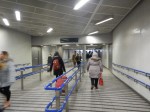


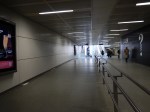

It is a wide, comfortable tunnel with a double handrail down the middle.
Note that the middle picture shows the connection to the next tunnel.
Verdict – Useful and a better walk than the surface alternative in cold or wet weather.
Kings Cross – Pancras Square Tunnel
This tunnel connects St. Pancras Square to the underground tunnel, that links St. Pancras station to the Northern ticket hall of Kings Cross St. Pancras tube station.


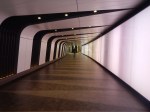

It is a good example of how to create a tunnel.
It has up and down escalators at the St. Pancras Square entrance.
Verdict – Good design and a pleasant walk.
Knightsbridge – Northern Exit Tunnel
This tunnel at Knightsbridge station was built in 2010 to connect the new entrance on the North side of Knightsbridge.


It looks to me that Transport for London had to make do with less space than they needed.
Verdict – Rather narrow and utilitarian.
Paddington – Bakerloo Line Link
This project to create a pedestrian link between the Bakerloo Line and Crossrail at Paddington is currently being built.
- It will be one hundred and thirty metres long.
- It will be twenty-five metres below the Paddington station concourse.
- The design uses a route to avoid existing station facilities.
- The tunnel is being built without major disruption to Bakerloo Line passengers.
- It will have lifts and escalators at both ends.
- The tunnel will handle five thousand passengers per hour in the Peak.
In August 2016, I wrote Paddington Is Operational Again, which describes the tunnel in detail.
Verdict – I have a feeling that this could be one of the most impressive parts of Crossrail.
I can’t wait for this tunnel to open.
South Kensington – Exhibition Road Pedestrian Tunnel
The Exhibition Road Pedestrian Tunnel at South Kensington station is unique in London, as it was built in 1885 and it is Grade II Listed.




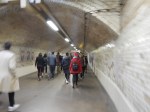
As the pictures show, it can get very busy.
Verdict – A Victorian idea, that hasn’t been copied much.
Tottenham Court Road – Interchange Tunnel
This tunnel connect the Central and Northern Lines at Tottenham Court Road station.



It is a bit lacking in colour to my liking. But at least there is some of Eduardo palotzi’s tiles at one end.
Verdict – Bland and too long.
Victoria – New Tunnels
Victoria station has had a new entrance at Cardinal Place and a lot of new tunnels to sort out the poor connectivity, added in the last couple of years.




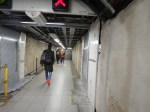
As the pictures show, not all the tunnels are finished.
Verdict – Victoria is no longer a station yo avoid
Waterloo – Interchange Travelator
This map from carto.metro.free.fr shows the Underground lines at Waterloo station.
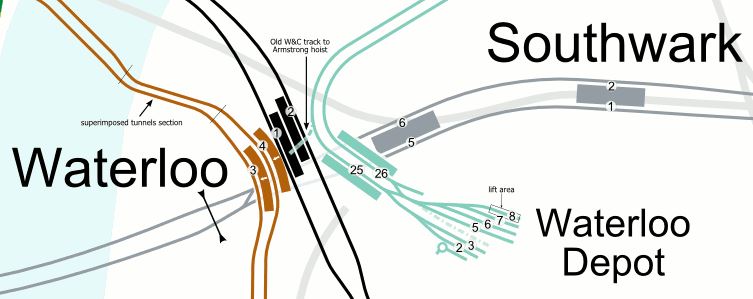
Note the large separation of the platforms of the Jubilee Line and those of the Bakerloo and Northern Lines.
The solution was to install a travelator, when the Jubilee Line Extension was built.


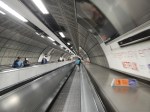
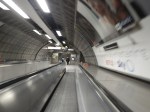
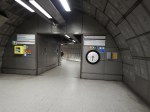


Although expense wasn’t spared on the project, I think we would give it a more decorative lining today.
Verdict – It works.
Whitechapel – Refurbished Overground Staircases
There are two staircases between the District/Hammersmith & City Lines and the East London Line, that are being refurbished for Crossrail.


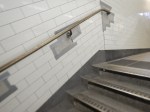

It looks like the work is of a high quality and that the old rails have not been replaced.
Verdict – These were scruffy tunnels a couple of years ago.
Summing Up
Some tunnels are obviously better than others, but what surprised me, was how well the Exhibition Rpad Tunnel to the museums coped with large numbers of passengers.
Perhaps, the Victorians got it right, as some of the best tunnels in my examples are the wider ones.
Comparing the Northern Exit Tunnel at Knightsbridge with the Northern Entrance Tunnel at Bond Street, shows how a wide tunnel and entrance, built with a lift, is a much better solution, than a narrow tunnel and entrance, without a lift.
The only narrow tunnel, that seems to work well is the tunnel connecting the Waterloo & City Line to the main Bank station complex.
But this tunnel is well-lit and I suspect tends to have passengers going the same way most of the time.
It also appears that recent tunnels like those at Bond Street and Victoria, are much better than those built about ten years ago, like the tunnel at Knightsbridge.
The Future
After Crossrail, London has a number of large station projects in the pipeline, some of which will require new connecting tunnels for passengers.
- The upgrading of Bank station is underway, where tunnels are being dug and escalators, travelators and lifts and being installed.
- The upgrading of Knightsbridge station is underway, but this will be simpler and I don’t think the upgrade includes more tunnels.
- The upgrading of Camden Town, Holborn and Walthamstow stations are in the planning stage. All will probably involve creating a new entrance connected to the existing platforms with lifts and escalators, but no long tunnels.
- Oxford Circus station is likely to be the subject of a major upgrade.
- Euston and Euston Square stations are being upgraded for the arrival of High Speed Two and there will be new tunnels to dig, between the two stations.
There are also possible new lines to consider, which may or may not be built.
- Bakerloo Line Extension
- Crossrail 2
- Docklands Light Railway to Thamesmead
- Docklands Light Railway to Euston, St. Pancras and Victoria.
All will be built with lots of entrances and exits, and interchanges with existing lines, so it is likely, there will be quite a few connecting tunnels.
Conclusion
I think that three tunnel projects will define a lot of the thinking about pedestrian access in the future.
- The Northern Entrance Tunnel at Bond Street, which surfaces in a commercial development.
- The Paddington Bakerloo Line Link, which appears to be setting new standards of design and construction.
- The narrow well-lit tunnel at Bank.
Could we see lessons learned with these newly-built tunnels applied to projects like Oxford Circus and Euston stations?
The Train-Platform Interface In London
I feel very strongly, that the floor of a train should be level with the platform, when you board a train.
This is mainly, because after my stroke, some said, that I could spent a lot of my life in a wheelchair. Luckily, the doomsters were wrong, but I do feel for those who have to use one or regularly push a buiggy on London’s extensive transport system.
So in this post, I shall be collecting examples of the good, the bad and the ugly.

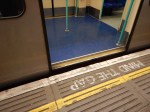
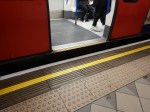
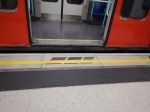
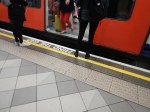

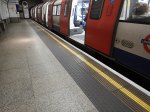



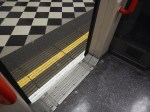
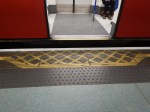
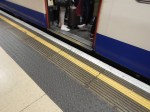
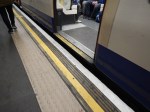
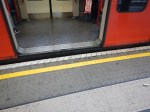
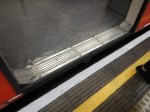
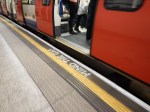


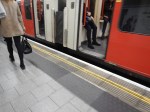
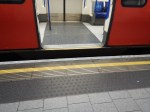


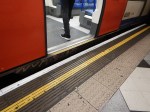
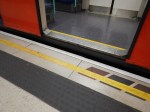
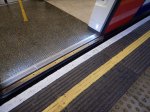
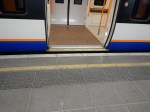
I have put a note by some of the pictures, which are as follows.
- Only one type of train calls at this platform and as the platform is straight, it could be better.
- This platform was built or rebuilt, when new trains started on a new line.
- Taken on a Harrington Hump
These are just the start.
Hydrogen Train Operation Planned
The title of this post is the same as that of this article on the Railway Gazette.
This is the first paragraph.
The Länder of Brandenburg and Berlin are planning the joint award of a contract for the development and operation of hydrogen fuel cell powered trains on the RB27 Heidekrautbahn route.
According to Wikipedia, the Heidekrautbahn looks to be an interesting rail line, which is used a lot for leisure and museum (heritage) trains.
Wikipedia also says this about the hydrogen trains.
At the end of 2017, considerations were presented for a pilot project to deploy four Coradia iLint vehicles manufactured by Alstom on the heather track, switching part of the rail service from diesel to hydrogen . This would take about 165 tons of hydrogen, reduce diesel consumption by about 552,000 liters and thus reduce the emission of CO 2 by about 2.5 million kg per year. In the case of a grant commitment, use from 2020 would be conceivable.
Note that this was translated by Google from the Wikipedia entry, which was in German.
The Railway Gazette article states that the trains will run from 2022.
So it looks like the Germans will be making haste slowly on this project.
The
Is Spain Looking Both Ways On Brexit?
This article on the BBC is entitled Spain Brexit: PM Sánchez Threatens To Vote No Over Gibraltar.
The title says it all.
On the other hand, Spanish rail companies seem to be very keen to invest in the UK and also create new and innovative trains for the British market.
- Amey, which is a subsidiary of the Spanish public company Ferrovial is heavily involved in big projects all over the UK, including the South Wales Metro.
- The train builder; CAF, is supplying lots of trains and coaches for UK operators and building a factory at Newport in South Wales.
- Another train builder; Talgo, is on the short list to build the trains for High Speed Two and is proposing to open a factory at Longannet in Scotland and a research centre at Chesterfield
It does appear, that big Spanish companies see the UK as a place to do business.
In connection with the Longannet factory, there is a feature article about the factory in Issue 866 of Rail Magazine.
This is the last paragraph.
As for Brexit, which is known to be a concern for other firms, Talgo said in a statement that its plans were “Brexit-free”, claiming there is a huge potential UK market as well as export opportunities.
The article also says that Talgo need more manufacturing capacity and the brownfield Longannet site, with its space and excellent access by rail and sea, fits their needs.
I also suspect that manufacturing in Scotland will help them secure sales in important English-speaking markets for their innovative high speed trains.
Bi-Mode Trains In Prospect As HS2 Northern Routes Confirmed
The title of this post is the same as that of this article on Railway Gazette.
Bi-Mode Trains On High Speed Lines
There are some, who believe that all trains should run on electrified lines.
But my belief is simpler – All trains should be electric, but they might be able to run on tracks with or without electrification.
There are currently, four proven ways to provide traction power on board an electrically-driven train.
- Diesel
- Hydrogen
- Gas Turbine
- Stored energy – Battery and/or capacitor.
Each have their advantages and disadvantages.
Talgo who are on the short list to build trains for High Speed Two, already make a train called RENFE Class 730, which has the following specification.
- 2.4 MW on 25 KVAC overhead electrification
- 3.8 MW on diesel
- Dual-gauge; Iberian and standard.
- Eleven coaches
- Maximum speed of 160 mph
High Speed Two is designed for 225 mph running, so the trains would need to be faster than these.
But suppose a train was to run say between Euston and Holyhead or any important place a hundred miles or so from High Speed Two.
It would be unlikely that the last part of the route without electrification, would be a high speed line, with a maximum speed in excess of 125 mph.
If it were a high speed line, then it would probably be electrified.
So a typical specification for a bi-mode for High Speed Two would probably be something like.
- Maximum speed of 225 mph on High Speed Two using the electrification.
- Maximum speed of 125 mph on the alternative power source.
- Ability to go between at least Crewe and Holyhead (84 miles) and back without refuelling.
Effectively, the train has two performance regimes; one for electrified high speed lines and one for classic lines without electrification.
A Possible Design For A Bi-Mode High Speed Train
Eurostar’s Class 374 train, which is one of the latest high speed trains is described like this in Wikipedia.
The Velaro e320, named because of plans to operate at 320 km/h (200 mph), would be 16 cars long, to meet the Channel Tunnel safety specifications but would have distributed traction with the traction equipment along the length of the train, not concentrated in power cars at each end.
Note.
- Distributed power gives better acceleration and smoother braking.
- The trains also appear to have at least six pantographs, so does that mean that each feeds a number of cars?
- I suspect there will be an electrical bus running the length of the train which will feed the traction motors.
- In my design of train, each car would have batteries and/or capacitors to handle the regenerative braking.
- The energy storage would give the train a limited range away from electrification.
For the required range between Crewe and Holyhead, there would probably be a need for diesel or hydrogen power.
I feel though, that in this day and age, no-one would build a new train that used diesel, if they could get the performance from hydrogen power or some other clean source.
Perhaps one of the middle cars of the train could be a power car fuelled by hydrogen.
This should be something that works, as British Rail and Stadler have both used this layout successfully.
On What Routes Would The Train Be Used?
I have used the service between London and Holyhead as an example and this is probably the longest route away from High Speed Two.
Any route that is in range from High Speed Two or a connected electrified route, could be served by these trains, if it was so desired and the train could be run on the route.
I wouldn’t be surprised to see one of these trains have the capability to go as far North as Aberdeen and Inverness.
Conclusion
Bi-mode high speed trains could be designed, if anybody needed them.
But for short extensions from High Speed Two, energy storage would probably suffice.
 The Anonymous Widower