Blankenberg Station
The Coast Tram connects to the Belgian Railway network at Knokke, Blankenberge, Oostende and De Panne.
These pictures show Blankenberge station and tram interchange.

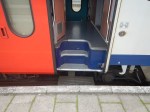
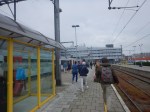







Blankenberge station and the tram stop are undergoing a degree of rebuilding and landscaping.
Note.
- The trams are metre gauge.
- They were a bit thin on the ground, as there was a strike.
- Many of the trams were covered in advertising, which made it difficult to see out.
I had taken a train from Bruges to Blankenberge.
Antwerp To Bruges
I took these pictures as my suburban train went between Antwerp Centraal and Bruges stations.
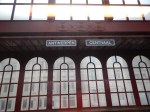
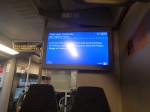





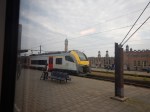
Note.
- The number of tall houses close to the railway.
- My train eventually went to Ostend.
- The route when through the town of Beveren, which gives its name to the Beveren rabbit.
- Compared to a UK route, like Ipswich to Cambridge, the route wasn’t busy.
When travelling by train in Belgium, the station names are sometimes different on the displays and your tickets, due to Belgium’s languages.
Around Antwerp Station
I took these pictures of the magnificent Antwerp station in the evening light.








I certainly haven’t seen a better station in Belgium.
Financial Trouble At TfL: Can It Stay Afloat?
The title of this post, is the same as that of this article on Railway Technology.
This is the first paragraph.
London’s public transport provider, TfL, is under increasing pressure. Not only has its government operating grant been slashed but a funding freeze is also expected to cost £640m across the course of the current mayoralty. Can TfL create the commercial income needed to keep it afloat or are there serious causes for concern?
The government is cutting subsidy to TfL, but Sadiq Khan knew that when he stood for Mayor.
So what did he do? He offered a fare freeze until 2020.
It looks like more fantasy Socialist accounting to me, to ensure victory in an election.
The article also says this about the future.
Nevertheless, TfL’s hopes for the future are pinned on the completion of its upcoming Elizabeth Line project, scheduled for the end of the year. The £14.8bn project, which will create a brand new line running underground across London, is expected to be a big revenue raiser. TfL predicts that ridership will increase from the current 46 million passengers on TfL Rail, to nearly 270 million by 2022-2023.
If these predictions are wrong, TfL will be in trouble.
For myself, I suspect that Crossrail will suffer with its own version of London Overground Syndrome, with passenger numbers much higher than predicted. In The Scottish Borders Have Caught London Overground Syndrome, I talked about an outbreak in the Scottish Borders, after the opening of the Borders Railway, and said this.
This disease, which is probably a modern version of the Victorian railway mania, was first identified in East London in 2011, when it was found that the newly-refurbished East London Line and North London Line were inadequate due to high passenger satisfaction and much increased usage. It has now spread across other parts of the capital, despite various eradication programs.
But for the Mayor to rely on that, is clutching at straws.
Sheffield Tram-Train Runs Onto Network Rail Infrastructure
The title of this post is the same as that of this article on Metro International.
This is the first paragraph.
One of Stagecoach Supertram’s Vossloh Class 399 Tramlink tram-train vehicles operated on the national railway network for the first time during the early hours of May 10.
It would appear that the tram-train is getting there.
£250m Bypass Will Destroy Woodland
The title of this post, is the same as that of an article in today’s copy of The Times.
This is the first paragraph.
A four-mile bypass will be built partly in the South Downs National Park under a plan that conservation groups fear will set a precedent for development in other protected areas.
This map shows the route of the proposed bypass.
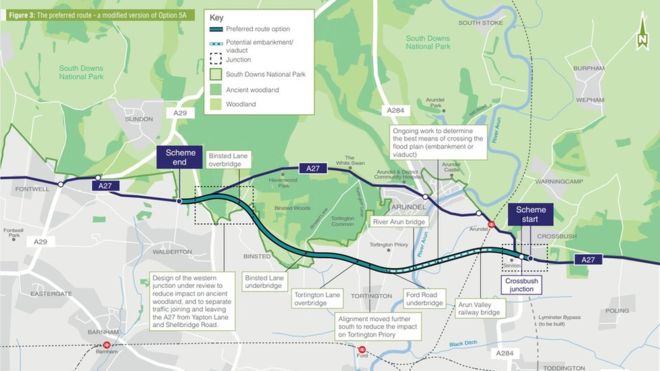
The route may be the best solution, but I believe we need to be more radical.
Overcrowded and inadequate roads exist all along the South Coast of England and in many other scenic places in the UK.
I think we need to develop a philosophy to solve the problems of roads in these crowded places.
Building a four-mile bypass at Arundel, may be needed, but we should do many other things to ease traffic congestion and improve transport capacity.
So what do I believe we should do?
We could introduce negative measures like road pricing or other restrictions, but I believe there are positive things we could do.
Broadband
You might think, what has broadband got to do with reducing the need to build roads.
I believe that as more houses and businesses get very high speed broadband, this will reduce the number of journeys taken.
Mobile Phone Coverage
I am not sure, what effect excellent mobile phone coverage will have on traffic, but it certainly will have one.
Cycling
We will all be cycling more and one of the consequences of excellent mobile phone coverage will be the growth of park-it-anywhere bike schemes like ofo and Mobike.
I think a few years time, many short distance journeys will be done by bicycle.
But expect some Luddite councils to legislate against ofo, Mobike and their ilk!
Rail
Fast forward five years and a train journey in an area like along the South Coast or in East Anglia or the West Country, will be very different.
- Digital signalling will increase the capacity of all lines and mean that most stations will have at least four trains per hour (tph) in both directions.
- Digital signalling will also allow more routes.
- Advances in train design will mean that journeys are faster.
- Ticketing will use contactless bank cards or mobile phone payment systems.
- Trains will be a much more comfortable and work-friendly experience, with wi-fi, 4G and power sockets.
- Track layouts will be improved and level crossings will be removed., to allow trains to operate more efficiently.
- Improved information on trains and stations.
- The improved dwell times of modern trains, will allow new stations to be added without degrading services.
The biggest development along the South Coast, will be an improved service between Ashford and Portsmouth/Southampton/Bournemouth.
- Existing tracks will be used, with the addition of short stretches of new track at possibly Brighton and Eastbourne.
- Line speeds will be at least 100 mph.
- Most stations will have a Turn-Up-And-Go four tph service.
There will also be other improved routes to and from London and Gatwick Airport for many of the coastal towns.
This improvement in rail services will be impossible with a rail company like Govia Thameslink Railway providing services.
- They are more conservative, than the RMT.
- They look after their core commuter traffic, at the expense of other passengers.
- The franchise is just too big.
However, digital signalling will allow Open Access Operators to compete and create new services geared to customers needs.
Thameslink
The current Thameslink service will have the following characteristics, when it is completed in December 2019.
- Twenty-four tph through London.
- A well-designed track layout at Bermondsey that unlocks London’s North-South railway.
- Services at a level of at least two tph to many stations in Kent, Surrey and Sussex.
- A set of uncomfortable Class 700 trains, designed by a moronic civil servant in the Department of Transport.
The major Thameslink upgrade was designed totally without vision and charisma.
However, the basics and possibilities are there to do the following.
- Increase the frequency to thirty tph through the Central London core.
- Increase the frequency on the Brighton Main Line through Gatwick, substantially, by using digital signalling.
- Rebuild the trains, with what passengers need.
- Add extra services all along the South Coast.
- Develop a massive rail-air interchange station at Gatwick.
I believe that Gatwick could develop into the busiest station in the UK.
I also think, that anybody going between London and the South Coast, will have a frequency of at least four tph from their local station, using either a direct service or a single change at Gatwick.
Freight
This Google Map shows the A27 through Arundel.

Note the number of trucks on the roads.
Where are they going?
The bypass would get the trucks out of Arundel, but would it just encourage more to use the South Coast route as a bypass for the crowded M25?
We need a proper philosophy for freight in this country.
- As much freight as possible should be by rail.
- Trucks should be for short distance or specialist needs only.
Does Southampton Docks have good enough access to the UK rail network?
I think not, especially as it would be very difficult to increase freight traffic through Southampton Central station, due to the restriction of the double-track Southampton Tunnel.
Conclusion
There is a lot to do, before we spend £250million n a bypass.
The United States Embassy Now Has Its Own Bus Stop
I passed the new United States Embassy today on a 156 bus.
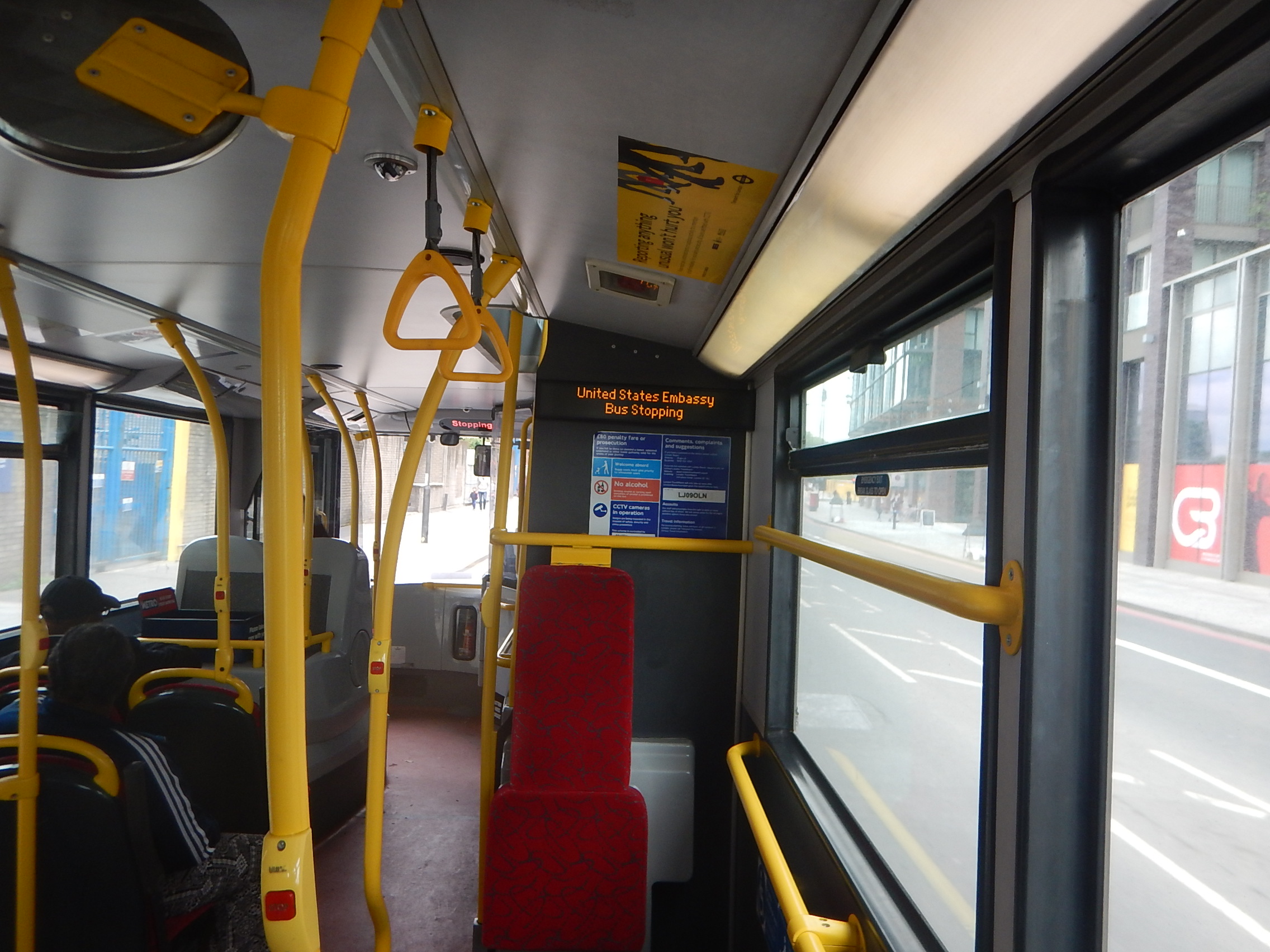
Will President Trump use it to get to the embassy?
Hydrogen Trains Herald New Steam Age
The title of this post is the same as that of an article on nearly half of Page 4 of today’s Sunday Times.
When I saw the article with its large graphic showing the working of a hydrogen train, the train seemed rather familiar.
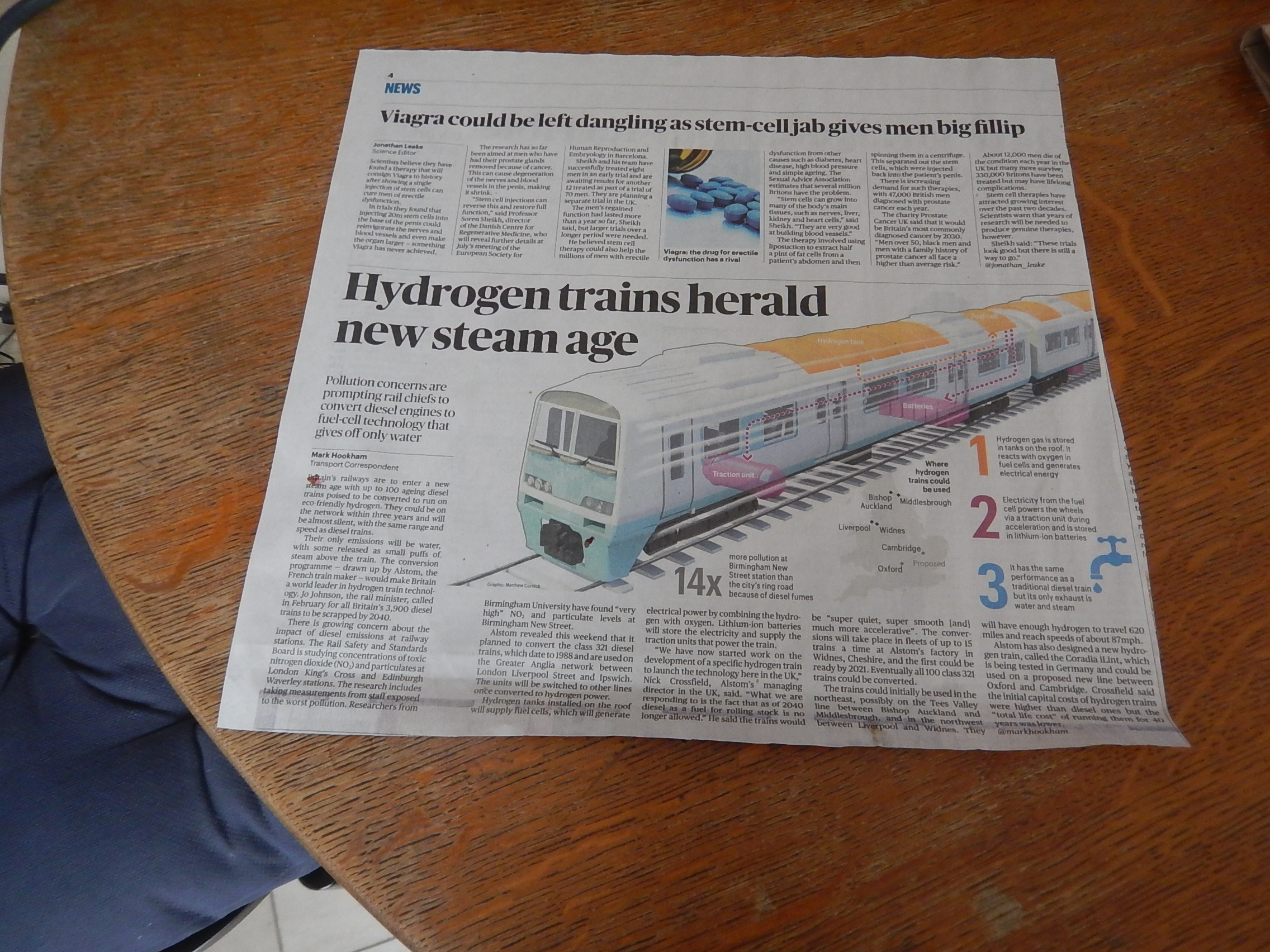
The leaning back front of the train with its two windows and the corrugated roof looked like a Class 321 train.
The large orange area on the roof is the hydrogen tank and the smaller one is the hydrogen fuel cell.
This is a paragraph from the article.
Alstom revealed this weekend that it planned to convert the Class 321 diesel trains, which date to 1988 and are used on the Greater Anglia network between London Liverpool Street and Ipswich. The units will be switched to other lines once converted to hydrogen power.
I suspect Mark Hookham, who wrote the article, has already been told by ninety percent of the train enthusiasts in this country, that Class 321 trains are electric multiple units.
This picture shows the first car of a Class 321 train in the sidings at Ipswich.
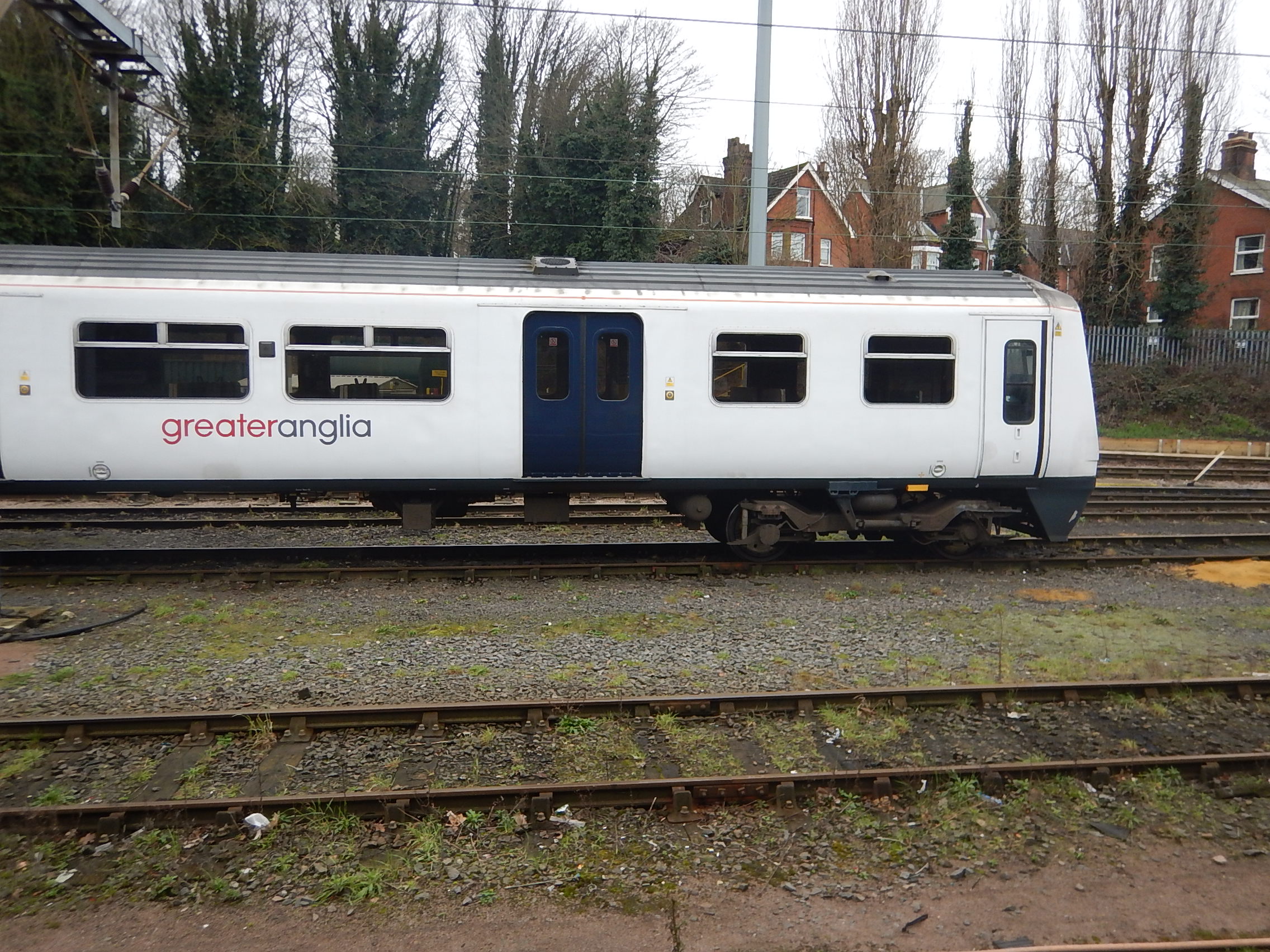
Note all the space, under the train, which would be an ideal place for the batteries and traction control, that are shown in that position, in pink, in the Sunday Times graphic.
But there are other reasons, why Class 321 trains may be ideal to convert to hydrogen power.
- Although they are thirty years old, they are a modern train, which meet all the latest regulations.
- They have a 100 mph operating speed on electricity.
- They operate on 25 KVAC overhead electrification.
- There are a hundred and seventeen four-car trains.
- Greater Anglia will be replacing over a hundred Class 321 trains, with new Class 720 trains in the next two years.
- A number of Greater Anglia’s trains have been upgraded to Class 321 Renatus. These trains are a substantial upgrade over the standard train..
- Greater Anglia’s trains appear to be in good condition.
- Designs have been tested to upgrade the traction motors and drive systems of the trains.
But most importantly, the trains are based on the Mark 3 coach, which gives the following advantages.
- An excellent ride and superb brakes.
- Bodies with a legendary strength and toughness.
- There is a vast amount of knowledge in the UK rail industry, that enables the trains to be kept at peak performance.
I doubt, that you could find a better fleet of a hundred trains to convert to hydrogen power anywhere in the world.
The article says or indicates the following.
- Hydrogen tanks will be mounted on the roof.
- An Alstom spokesman is quoted as saying. “We have now started work on the development of a specific hydrogen train to launch the technology here in the UK.”
- He also said that the trains would be super quiet, super smooth and much more accelerative. I assume that is compared to diesel.
- Conversion will take place in fleets of up to 15 trains a time at Alstom’s factory in Widnes.
- The first train could be ready by 2021.
- Eventually, all Class 321 trains could be converted.
- Initial routes could be on the Tees Valley Line and between Liverpool and Widnes.
- Range on a tank of hydrogen will be 620 miles.
- Top speed would be about 87 mph.
The article finishes with a quote from Alstom’s spokesman. “The initial capital costs of hydrogen trains were higher than diesel ones, but the “total life cost” of running them for 40 years was lower.”
I have my thoughts on various things said and not said in the article.
Alstom’s Widnes Factory
Alstom’s Widnes factory has just upgraded, Virgin Trains, fleet of Class 390 trains, so it does seem capable of handling heavy work on a number of trains at one time.
Train Certification
All trains have to be certified, as to being safe and compatible to run on the UK rail network.
Converting an existing train, must make this process a lot easier, especially as many of the hydrogen components and batteries have been used on trains in the EU.
The Proposed Routes
The routes named in the article are in the North East and North West of England, where hydrogen could be readily available from the petrochemical works, so fuelling the trains may not be a problem.
Power Supply
Class 321 trains were only built to work on lines with 25 KVAC overhead wires, but I suspect the parts exist to enable them to run on 750 VDC third-rail lines, if needed.
INEOS
INEOS is a very large multi-national petrochemical company, with a multi-billion pound turnover, which is sixty percent owned by Jim Ratcliffe, who has just been named the UK’s richest man.
So why would a company like that be involved in hydrogen-powered trains?
This news item from Reuters, is entitled AFC In Hydrogen Power Generation Deal With INEOS.
This is the first two paragraphs.
British budget fuel cell maker AFC Energy has signed a deal with British petrochemicals company INEOS to produce electricity using the hydrogen given off in chlorine manufacturing.
AFC said the project with INEOS ChlorVinyls would use surplus hydrogen from the chemical firm’s Runcorn facility in north-west England to supplement the plant’s energy needs.
I used to know the Runcorn plant well, when I worked there for ICI in the 1960s.
The hydrogen was produced when brine was electrolysed to produce chlorine.
So does Jim Ratcliffe, who is a qualified Chemical Engineer, see an opportunity to sell the by-product as train fuel to his neighbour; Alstom, on the other side of the Mersey?
Obviously, I don’t know what Jim Ratcliffe and INEOS are thinking.
But consider.
- The Sunday Times article says that the North West and the North East of England are two promising areas for hydrogen-powered trains.
- INEOS has large petrochemical plants on the Mersey and Teeside.
- I wonder how many plants owned by INEOS around the world have a surplus of hydrogen.
- Alstom would probably like to sell hydrogen-powered trains everywhere.
- A well-respected chemical engineer, once told me, that the only things that should go out of an integrated petrochemical plant is product that someone pays for, air and water.
As the other place in the UK, where INEOS have a large petrochemical plant is Grangemouth in Central Scotland, I wonder, if we’ll see hydrogen-powered trains North of the Border.
Availability of Hydrogen
This article on Process Engineering, which is entitled INEOS project reduces energy bill by £3m, starts with these three paragraphs.
INEOS Chlor is one of the major chlor-alkali and chlorine derivative producers in Europe. Its Runcorn site in north west England has two large chlorine plants: the original J Unit that uses a mercury cell electrolysis process route, and the more recently opened Genesis Membrane Chlorine Plant (MCP).
Continuous improvement of the manufacturing processes has taken the Runcorn site to a ’best in class’ cost base and environmental performance, and as part of this improvement programme the company wanted to minimise vented hydrogen and maximise the value of this resource at both plants.
Without a significant change in market demand for hydrogen, it was not possible to increase sales to existing customers. The only alternative was to increase the amount used as fuel to power on-site boilers, thereby reducing costs for purchased natural gas.
Burning the hydrogen in on-site boilers.obviously helps to reduce the energy bill, but surely, if the hydrogen could be sold to a local customer, that could be more profitable.
You certainly want to minimise the vented hydrogen!
A few days ago I wrote The Liverpool Manchester Hydrogen Clusters Project, which is a project to create a hydrogen network in the Liverpool Manchester area.
Surplus hydrogen from Runcorn and other placed would be piped around the area to augment the natural gas supply.
This network could supply Alstom’s new hydrogen-powered trains and INEOS have a new market for their surplus hydrogen.
I don’t know the petrochemical industry in the North East, but there are a lot of petrochemical plants and some are owned by INEOS.
Is there a surplus of hydrogen, that could profitably sold as fuel for Alstom’s hydrogen-powered trains. I don’t know!
And then there’s Grangemouth in Scotland! My Scottish agent in the Borderlands, used to work at the INEOS plant in Grangemouth and that had a hydrogen surplus.
Even, if we can’t pipe hydrogen to the various depots for the trains around the country, surely it can be transported by rail!
I think that we may be short of some things in this country, but hydrogen might not be one of them.
Given that Alstom have moved so quickly to start planning conversion of the Class 321 trains, they have probably identified sources of enough hydrogen to power the fleet, even if all are converted, as they hinted at in the Sunday Times article.
Eversholt Rail Group’s Involvement
All the trains are leased from the Eversholt Rail Group, who would probably like to see their assets continue to earn the best return possible.
A few days ago, I wrote Eversholt Joins Very Light Rail Consortium.
These two projects may be at both ends of the rail industry, but I believe, they show the willingness of Eversholt to invest in innovation, rather than allow an asset to drift towards the scrapyard.
The Class 321 Renatus
This page on their web site describes the Class 321 Renatus, which was an upgrade developed by Eversholt in conjunction with Greater Anglia, to improve the trains, whilst waiting for Greater Anglia’s new fleet to be delivered.
These are the listed improvements.
- New air-conditioning and heating systems.
- New, safer seating throughout
- Larger vestibules for improved boarding and alighting
- Wi-Fi enabled for passengers and operator
- Improved space allocation for buggies, bicycles and luggage
- Passenger power sockets throughout
- New, energy efficient lighting
- One PRM compliant toilet and a second controlled emission toilet on each unit
- Complete renewal and remodelling of all interior surfaces.
It would be a better interior than most British Rail-era trains.
Comparison With The Class 769 Train
The proposed hydrogen-powered Class 321 train, will inevitably be compared with Porterbrook‘s Class 769 train, which is a bi-mode upgrade of the Class 319 train.
Looking at operating speed on electricity and alternative fuel we find.
- Both trains can operate at 100 mph on lines with 25 KVAC overhead electrification.
- The Class 769 train can also operate at 100 mph on lines with 750 VDC third-rail electrification.
- According to the Sunday Times article, the Class 321 Hydrogen train can operate at about 87 mph on hydrogen.
- According to this article in Rail Magazine, the Class 769 train can operate at 91-92 mph on diesel.
So in terms of operating speed, the trains are more of less comparable, but emissions will be better with the hydrogen-powered train.
When it comes to interiors, as both trains are Mark 3-based, designed around the same time, train operating companies will have what their budget allows.
In the end the choice will come down to cost, which will surely be higher for the Class 321 Hydrogen, as this will require more expensive modifications and additional infrastructure for refuelling the train.
Could Any Other Trains Be Converted?
There are various other classes of electric multiple unit based on the Mark 3 coach.
I think there could be good reasons to only convert trains with the following characteristics.
- Four-cars or more.
- 100 mph capability
- Perhaps fifty or more trains to convert.
These rules would leave us with only the seventy-two Class 317 trains, many of which have been refurbished and are in very good condition.
Conclusion
I’m drawn to the conclusion, that Alstom and Eversholt are serious about producing hydrogen-powered trains for the UK.
I also think, they’ve identified enough hydrogen to power the whole fleet, if it’s converted.
Hackney Wick Station – 12th May 2018
The builders now seem to be on the home straight at Hackney Wick station.




The fitting out is well underway on the platforms and it appears that the ground level works are progressing.
Because of today’s weather, I didn’t really want to have a look at ground level.
Building A Station Without Closing The Railway Line
After the initial closure at Easter 2017, to install the subway, which I wrote about in A Tough Way To Spend Easter, I’m pretty certain, there has not been a major closure of the line and work to build the station has continued, whilst trains have continued to run on the railway and stop at the platforms for passengers.
I suspect that project managers have learned a lot from this project.
A Pit Stop At Hampstead Heath Station – 12th May 2018
I went for breakfast to a convenient Le Pain Quotidien near Hampstead Heath station.










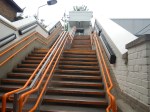

In addition to the Heath, the station is within walking distance, to a large number of eateries and shops, including a very large M & S Simply Food.
There is also the Royal Free Hospital.
When I go to Hampstead Heath, I tend to go to Hampstead station in the High Street, then walk down the hill and go home from the London Overground station.
 The Anonymous Widower