An Olympia Train Spotted At Whitechapel Station
This morning, as I passed through Whitechapel station, I saw a District Line train going to Olympia, in the Westbound District Line platform.


I would assume that the train went along the Southern side of the Circle Line to Earl’s Court and then on the branch to Kensington (Olympia) station.
If District Line trains are now using this route, it would certainly improve the less-than-perfect access by train to the Olympia Exhibition Centre, that I wrote about in Is This The Fastest Way To Olympia?.
There Was Only One Lion Of Vienna, But Fifteen Lions Were Too Much For Mexico, The Crowd And The Officials
One of my earliest memories of football in the 1950s, is the exploits of England centre-forward Nat Lofthouse of Bolton Wanderers.
- I have vague memories of watching the 1953 Matthews Final on our first television, where Lofthouse was on the losing Bolton side.
- I don’t have any memory of the infamous game for England, that gave Lofthouse his nickname.
- But I do remember the controversial 1958 Cup Final between Bolton and Manchester United, which came three months after the Munich disaster. The final was controversial because Lofthouse barged the Manchester United goalkeeper; Harry Gregg into the net for the second goal, in their 2-0 win.
But football was a much tougher game in the 1950s.
The Lion Of Vienna
This except from Lofthouse’s Wikipedia entry, explains how he received his nickname.
On 25 May 1952, Lofthouse earned the title ‘Lion of Vienna’ after scoring his second goal in England’s 3–2 victory over Austria. In doing so he was elbowed in the face, tackled from behind, and finally brought down by the goalkeeper.
I’m afraid some of the tactics of the Mexicans needed more punishment than the officials gave them. And where did the officials conjure up eleven minutes of added time from?
Perhaps Trump had promised a nice holiday in one of his resorts, if they could not stand in the way of a Mexico-USA final, or at least ensure, that England didn’t progress to the quarter-finals.
After all FIFA rescinded a red card for USA’s star forward. Read about this surprising decision in this article on the BBC, which is entitled Red Card System In Disarray Over Trump, Fifa And Balogun Decision.
Thomas Tuchel On The Officials
This article on the Independent is entitled Thomas Tuchel Hits Out At Mexico v England Referee In Furious Rant: ‘Everything Went Against Us’.
Meet The 6×6 Toyota Hilux Built To Tackle Electric Car Fires
The title of this post, is the same as that as this article on Select Car Leasing.
This is the sub-heading.
A car fire is never a good thing, and if the car is electric, the results could be even worse. If it all goes up in flames while the vehicle is in a multi-storey car park, then the consequences could be dire, with limited space available for fire services to control the situation.
This introductory paragraph adds some more details.
Such incidents happen — more than 1,000 cars were destroyed in a fire in Liverpool, while a multi-storey collapsed in Stavanger — so a UK company has converted a Toyota Hilux pickup into a six-wheel EV fire-fighting machine to keep us all safe.
A lot more details are given on the vehicle’s web site, which is called the 6 x 6 HILOAD.
I was alerted to the need for such a vehicle by this article in The Times, which is entitled How Scotland’s New £30k Fire Engines Left Crews Walking To Wildfires.
The pictures on the 6 x 6 HILOAD web site, show a vehicle with a Czechnia registration.
So, I typed “6 x 6 HILOAD Czechnia” into Google AI and received this answer.
The 6×6 Hiload (developed by Prospeed Motorsport) is a custom, six-wheeled conversion of the Toyota Hilux designed specifically for emergency response, particularly targeting electric vehicle (EV) battery fires.In Czechia, the 6×6 Hiload is undergoing trials with Czech Fire & Rescue Services (Hasiči) to test its capabilities in fast-response and confined environments. Key features of the vehicle in action include:
EV Firefighting: It utilizes specialized equipment like the Coldcut Cobra system, which pierces EV battery casings to extinguish fires directly with a minimal amount of water, reducing the risk of thermal runaway.
Low Profile: Standing at less than 1.9 metres tall, it can easily navigate low-clearance urban underground and multi-storey car parks that traditional, larger fire engines cannot access.
High Payload: The custom six-wheel chassis stretches the Hilux and increases its payload capacity to roughly 3,000kg, allowing it to carry heavy fire and rescue equipment without sacrificing off-road mobility.
This chassis will have more uses than a Swiss army knife.
I suspect the Ukrainians could find several uses.
How Is The Testing Of Babies In Italy For Coeliac Disease And Type 1 Diabetes Going?
I asked Google AI the question in the title of this post and received this reply.
Testing babies and children for coeliac disease and type 1 diabetes in Italy is progressing successfully, rooted in groundbreaking legislation. Italy is the first country to pass a national law (Law 130/2023) mandating mass screening for these conditions in children aged 1 to 17.
The pilot project, known as the D1Ce Screen, was rolled out in four key regions: Lombardia, Sardegna, Marche, and Campania. Testing is typically conducted at ages 2, 6, and 10.
Here is how the rollout is progressing based on interim data and reports:
Pilot Study Success: The screening involves a simple capillary (finger-prick) blood draw administered by primary care pediatricians. Participation in the initial phase was high, with over 75% of pediatricians and thousands of children successfully screened.
Higher-Than-Average Positivity Rates: Preliminary data revealed that approximately 2.8% to 2.9% of children tested positive for coeliac-specific antibodies—more than double the global average of 1% to 1.4%. Additionally, around 0.8% of children displayed markers for type 1 diabetes.
Early Detection: The pilot has proven highly effective at identifying asymptomatic or “silent” cases of both conditions early, which is vital for preventing acute complications like Diabetic Ketoacidosis (DKA) and avoiding the long-term impacts of undiagnosed coeliac disease.
High Public Acceptance: Surveys from the pilot regions indicate that more than 90% of parents are highly willing to have their children screened, though general public awareness of the national program is still being scaled up.
Following these successful pilot rollouts, the government continues to expand the screening program to ensure full, nationwide coverage to protect at-risk children before severe symptoms develop.
Cambridge South Station – 29th June 2026
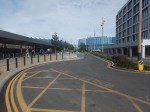
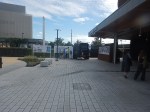
Today, I went to the new Cambridge South Station and took these pictures.
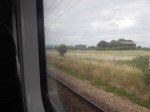
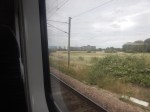
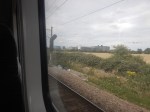
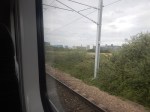

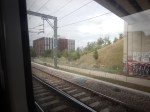
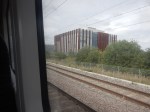
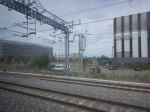

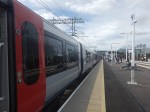
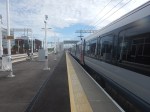
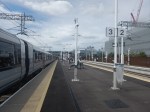
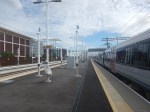
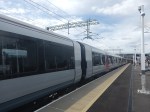

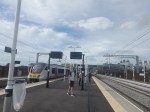
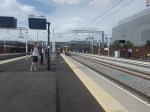
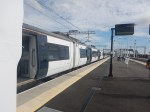
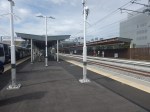
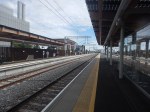
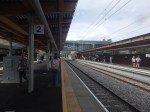
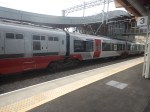
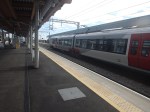
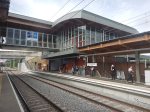
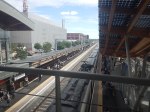
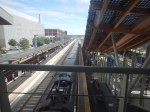
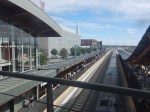



Note.
- Addenbrooke’s Hospital with the chimneys on the roof, is visible in the first few images as you approach the station.
- There are four through platforms, which as they can accommodate 12-car trains are between 240-260 metres long.
- The station has a solar roof.
- The station has a high degree of finish everywhere.
- The station has a thousand parking spaces for bicycles, but onlt five car parking spaces for blue-badge holders.
- Destinations in a typical day include Birmingham New Street, Brighton, Kings Lynn, London King’s Cross, London Liverpool Street, Norwich, Stansted Airport, Stratford
I suspect, this station, will at least be nominated for the Stirling prize.
An Avenue Of Trees, Cheered Me Up Today
I was feeling a bit down, after the loss of my phone on a train yesterday, as I cam back from Cambridge South station.
After reporting its loss at Liverpool Street station this morning, I thought I might be able to get something I needed at Sainsbury’s in Walthamstow.
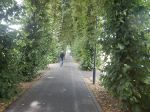
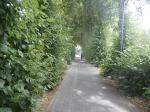
To get from Walthamstow Central station to Sainsbury’s I walked along this avenue of trees.






Note.
- It was lovely and cool on a hot day.
- There was a gentle breeze through the trees.
- Halfway along, I chatted to a guy with Indian heritage. He said he liked the trees at Chistmas, when the Council put lights on them.Now surely, that is multiculturalism.
I asked Google AI about the trees and got this reply.
The avenue of mature trees leading from Walthamstow Central Station towards the High Street consists of lime trees. Also locally referred to as Lime Tree Walk, these established trees are well known for soaking up pollution from the adjoining bus and transit areas.
Google AI estimates that the trees are at least a hundred years old.
I believe we should do things like this more often, as it is surely a scientifically-correct way to deal with the pollution of only a few vehicles emitting it.
Out of curiosity, I asked Google AI,”Are we doing research to increase the effectiveness of trees clearing pollution?” and received this reply.
Yes, there is extensive, ongoing scientific research dedicated to increasing the effectiveness of trees at clearing pollution. Studies focus on optimizing urban canopy cover, vegetative barrier design, and microbiome/soil enhancements to maximize both particulate matter (PM) capture and carbon sequestration.
Current research initiatives and findings include:
Vegetative Barriers & Species Traits: Research from the University of Surrey’s Global Centre for Clean Air Research (GCARE) has developed a plant selection framework. By evaluating traits like leaf hairs, canopy density, and seasonal leaf retention, they identify highly effective species (such as silver birch, elder, and yew) to act as physical green barriers that trap particulate matter and filter exhaust.
Tree Spacing & Dispersion: Studies on urban street canyons show that sparse or dense tree spacing can sometimes trap pollutants if the canopy blocks wind flow. However, “medium spacing” (where the gap between trees is roughly equal to the crown diameter) has been proven to optimize both airflow and particle reduction for pedestrians and cyclists.
Soil & Growth Interventions: Studies like the Glandwr Forest Carbon Study by Imperial College London and The Carbon Community are testing methods to boost young tree growth and carbon sequestration using enhanced rock weathering and microbial enrichment.
Cooling & Air Purification Pathways: Recent findings published in Landscape and Urban Planning highlight that trees reduce particulate pollution (PM10) not just by trapping it on leaves, but also through localized cooling. By mitigating extreme heat, trees promote the natural deposition of suspended particles.
It seems that the good citizens of Walthamstow and the nearby forest, probably achieved a result, that was very much in line with modern research.
One Of The Jobs I Did, That I’m Most Proud Of
In the early 1970s, I developed and attempted to market a simultaneous differential equation solving program called SPEED, which stood for Simple Program for the Efficient Evaluations of Differentials or something like that.
It wasn’t very successful, but two companies asked me to write some for them.
- For Time Sharing, I put the central algorithm into their simultaneous differential equation solver to move the program up to the next level.
- WS Atkins, asked me to install it on their computer.
SPEED had a few advantages over typical simultaneous differential equation solvers of the time like IBM/CSMP.
- IBM/CSMP needed at least an IBM 360/50 computer, which I ran it on at ICI in Welwyn Garden City, where I was a general mathematical dogsbody. But SPEED could run on a dial-up line to a time-shared computer like a PDP-10.
- The time-shared computers as used by Time Sharing and WS Atkins, gave the big advantage, that as the size of the computer increased, the size of the problem, that could be tackled in proportion.
- IBM/CSMP and SPEED both had a simple column-oriented report writer, which unsurprisingly ended up in Artemis, which I wrote a few years later.
- I can’t remember, who at ICI gave me the tip, but I used a sophisticated version of the Runga-Kutta algorithm, that everybody used and some probably still do today. The version, I used was called Runga-Kutta-England, where like me England, was a graduate of Liverpool University.
This summary by Google AI described the algorithm.
The England version of the Runge-Kutta method (developed by R. England) is a highly efficient 4th/5th order embedded numerical integration formula. By reusing intermediate slopes across two methods of differing orders, it provides a highly reliable built-in error estimate for adaptive step-size control.
Does anybody still use Runga-Kutta methods? I suspect not!
A breakthrough of sorts came, when WS Atkins asked me to produce a larger system of the SPEED software, that could handle several tens of thousands of equations.
- Atkin’s client was the Water Resources Board and they were modelling the water distribution system for a large part of the UK.
- Prominent in the project was a Dr. David A, Dimeloe and we became friends and had dinner with our wives a couple of times.
- But I never received a copy of the report, that was written or heard any more since about 1975.
- But judging by the fact, that we seem to have adequate supply of water in the UK and problems seem to be all about sewage, politics, management and finance, I feel that David and his team, must have done a good job.
- I was also never asked to fix any bugs in the software.
I did have some trouble getting the money I was owed from the intermediary in the deal, but I eventually retrieved it through the County Court without a solicitor.
Does BYD Stand For Bet On Your Destination?
Today I came back from Walthamstow Sainsbury’s to my home in Hackney, using two BYD electric buses on route W15, a diesel bus on route 488 and a Reliable Routemaster on Route 38.
Both the BYD electric buses stopped short of their final destination.
I also changed early to the 38, so I could have a Diet-Coke in a cafe that looked friendly.
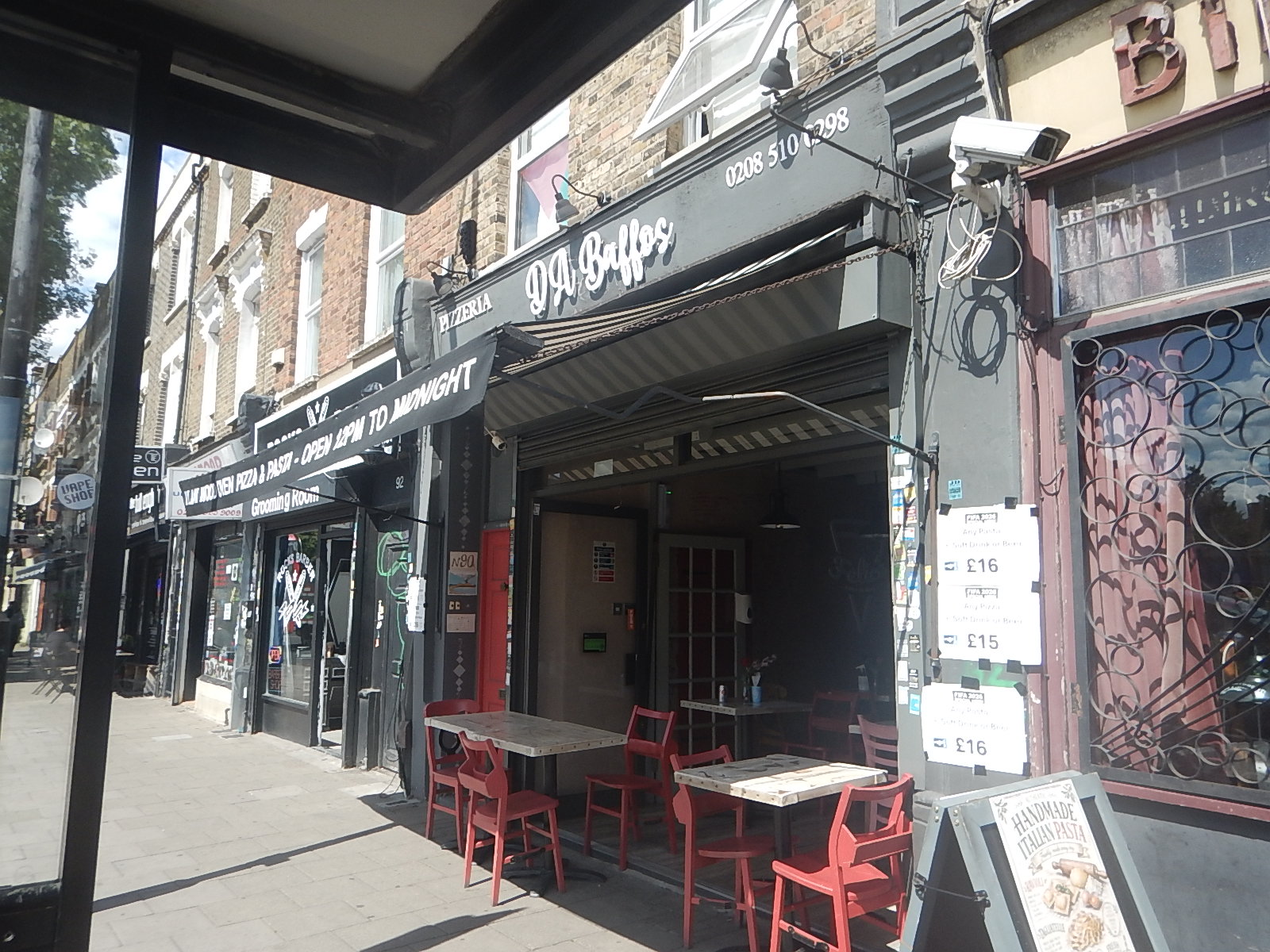
It was!
- As you can see, it was right by a bus stop, where luckily for me, 38 buses called.
- I have written a few posts about the horrid BYD electric buses on route 141, but London shouldn’t be made to suffer an inferior product.
- If Manchester and Leeds can have UK-built buses by Wrightbus, that are delivered as diesel and converted at an appropriate time to zero-carbon, why can’t London and the rest of the country?
London’s fleet of a thousand Routemasters, which were built by Wrightbus, a few years ago, seem to have found a new niche in the world of advertising and I wouldn’t be surprised to see an experimental fleet of zero-carbon Routemasters.
Here’s a few images of Routemaster paint schemes.
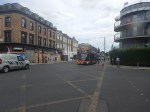
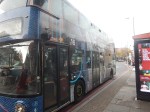
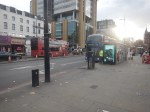


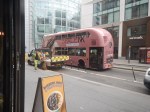
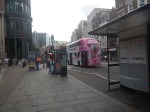
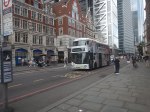
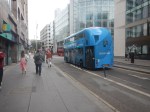
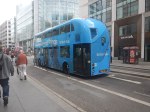
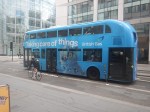


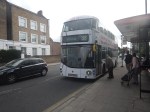
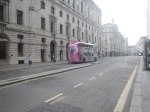
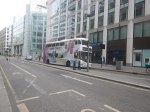

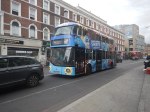
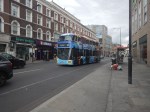
I like them. I wonder, if a bus has gone missing to have a special makeover, if England get to the latter stages of the World Cup?
Crown Estate’s Revenue From Existing Offshore Wind Farms 20 Pct Higher, Operating Profit Dips As Round 4 Projects Enter Construction Phase
The title of this post, is the same as that of this article on offshoreWIND.biz.
This is the sub-heading.
The Crown Estate reported a decline in annual operating profit to GBP 1.2 billion (approximately EUR 1.4 billion) from GBP 1.4 billion (approx. EUR 1.6 billion) in the previous year due to lower offshore wind Round 4 option fee income, as the Round 4 projects started entering the construction phase. Excluding the Round 4 option fees, operating profit rose 5 per cent to GBP 370 million (approx. EUR 435 million), while revenue from existing offshore wind farms increased 20 per cent to GBP 117 million (approx. EUR 138 million)
These four paragraphs add more details.
Over the year, the Crown Estate returned GBP 487 million (approx. EUR 573 million) to HM Treasury, bringing total contributions to GBP 5.1 billion (approx. EUR 6 billion) over the past decade, according to its financial report released on 25 June.
Alongside the financial results, the UK seabed manager highlighted that offshore wind capacity in its waters has reached 13 GW, up from 12 GW, with 36 wind farms now operating in its marine portfolio.
The pipeline of offshore wind capacity has increased to 56 GW, with an expanding offshore leasing and development programme as early Round 4 projects enter construction.
In the Offshore Wind Seabed Leasing Round 4, held in 2021, the Crown Estate selected six projects, which signed their Agreements for Lease in 2023, kicking off the three-year period during which the developers were paying annual option fees.
In Offshore Wind In 2030 – Calculated June 2026, I showed that the offshore wind capacity will have increased to 56 GW, sometime in 2031-2032.
How Much Income Will There Be In 2027-2032 from UK Wind Farms?
I asked Google AI the question in the title of this section and received this answer.
UK wind farm industry revenues are forecast to surpass £6 billion annually heading into 2027, driven by expanding capacity and inflation-adjusted contracts. Between 2027 and 2032, overall sector income will scale rapidly as capacity aims to double and up to £5 billion is pumped into the supply chain.
The economic landscape for UK wind generation features the following financial projections and parameters:
Industry Revenue & Growth: The UK wind power generation market is projected to expand at a Compound Annual Growth Rate (CAGR) of over 15% through 2031. The rapid expansion of both onshore and offshore capacity will push total market revenues well into the double-digit billions by 2032.
Contract for Difference (CfD) Revenues: Wind farms are heavily shielded from market volatility by index-linked strike prices. For instance, recent offshore projects have secured delivery rates as low as $37.35 per megawatt-hour (MWh). Conversely, older assets are transitioning out of initial subsidy schemes, moving into merchant wholesale pricing or new contracts by 2027.
Macroeconomic Contribution: Every additional gigawatt (GW) of offshore wind capacity adds an estimated £2 billion to £3 billion to the wider UK economy.
The Crown Estate Earnings: Acting as the UK seabed manager, The Crown Estate generates significant income from offshore wind leasing, having reported operating profits of over £1.2 billion and planning to retain up to 60% of its revenue to reinvest in the energy sector.
Landowner & Community Economics: For utility-scale farms, participating landowners generally earn between 5% and 6% of the annual turnover from wind farms, equating to around £40,000 per year for a single large turbine. Domestic turbines can earn up to £702 annually under the Smart Export Guarantee (SEG), depending on the specific supplier tariff.
I believe that with a similar growth of solar energy, the renewable energy produced in the UK in 2032 will be beyond our wildest dreams.
Was There Often A Barrel Of Beer Available In Places Like Foundries, Where The Work Was Hot And Hard?
Readers of The Times has been discussing electrolytes in this hot weather and especially the possibility that beer contains electrolytes.
This was posted.
My elder father informed me yesterday his fridge is full of alcohol free Erdinger wheat beer. It is marketed as good for replacing electrolytes.
So there could be something in it.
At the moment, as I type this the temperature is 35.5 degrees and the humidity is 26%, so I’m finishing off last night’s bottle of Adnam’s Ghost Ship Alcohol-Free 0.5 % Beer.
I asked Google AI, the question in the title of this post and received this reply.
Yes. In heavy industries like foundries, glassworks, and steel mills, consuming large volumes of liquid was a medical necessity to replace what was lost to sweat. Historically, workers frequently supplemented their diets with beer—sometimes supplied by the company, sometimes delivered by local pubs, and sometimes factored into their pay.
Historical Context & Working Conditions
The Thirst Quenchers: In sweltering industrial environments where temperatures could exceed \(65^{\circ }\text{C}\) (\(150^{\circ }\text{F}\)), workers suffered massive fluid loss. A furnaceman or steelworker could sweat out up to twenty pints a day.
The “Beer Allowance”: In places like Britain’s steelworks in Sheffield, it was customary for workers to receive a weekly beer allowance—sometimes up to forty pints—often supplied directly to the sweltering factory floor via young workers known as “bucket boys”.
Liquid Nutrition: Before the advent of modern refrigeration and reliable municipal water, low-alcohol table beer provided crucial calories and hydration without the risk of waterborne illnesses. It was treated more like a food source than an intoxicant.
The Shift to Modernity
The Temperance Movement: The availability of alcohol at work gradually changed during the 19th and 20th centuries. The rise of the Temperance Movement and stricter workplace safety regulations meant that by the mid-to-late 20th century, foundries began phasing out alcohol in favor of safer, hydration-focused alternatives.
Modern Replacements: Today, foundries and heavy industries prioritize hydration through water, electrolyte replenishment, and salt tablets rather than on-site alcohol.
I should say, the following.
- My paternal grandfather was an alcoholic and it eventually caused his early death at around 40.
- I lose a lot of water through my skin. See My Strange Skin.
- I’ve always preferred beer to any other drink. But I’ve never had an alcohol-related problem.
So do I drink beer and usually real beer because of its electrolytes?

