Battery-Powered Train Breaks Distance Record
The title of this post, is the same as that of this article on the BBC.
This is the sub-heading.
A battery-powered train has broken the world record for the longest railway journey on a single charge.
These three introductory paragraphs add more details.
The Great Western Railway (GWR) train – a specially adapted former District Line train – travelled overnight along a 200-mile (322km) route from Reading and back again, via London Paddington and Oxford.
It reached 140 miles (225km), breaking the record on Brunel’s Maidenhead Bridge at about 04:00 BST.
The previous record of 139 miles (224km) was set by German train company Stadler Deutschland in Berlin on 10 December 2021.
This was an impressive demonstration of the capabilities of battery-electric trains.
Will This Record Be Beaten?
200 miles is impressive, but there was also this paragraph in the article.
At the end of the journey GWR said there was a remaining battery charge of 22% which it estimated would have allowed the train to travel about a further 58 miles (93km).
So it looks like 258 miles should be possible.
Four other companies are also developing battery-electric trains.
- Alstom at Derby
- CAF at Newport
- Hitachi at Newton Aycliffe
- Siemens at Goole
- Stadler in Switzerland.
Note.
- All except Stadler have UK factories.
- Siemens and Stadler have delivered trains in Germany.
- This page on the Hitachi Rail web site is entitled Intercity Battery Trains.
- This page on the Hitachi Rail web site is entitled Hitachi Wins New UK Contract To Build Intercity Battery Trains. The customer is Grand Central Trains.
- Hitachi have been running a prototype for some months, in the UK.
The competition is hotting up and the record will certainly be soundly beaten.
Centrica Enters Into Long Term Natural Gas Sale & Purchase Agreement
The title of this post, is the same as this press release from Centrica.
This is the sub-heading,
Centrica plc today confirmed that its trading arm, Centrica Energy, has entered into a natural gas sale and purchase agreement with US-based Devon Energy Corporation.
This first paragraph adds a few more details.
Under the agreement, Devon Energy will supply 50,000 (MMBtu) per day of natural gas over a 10‑year term starting in 2028. This is equivalent to five LNG cargoes per year. The volumes will be indexed to European gas hub price (TTF). This sale and purchase agreement supports Centrica’s objective of managing market price risk in its LNG portfolio by aligning feed gas pricing with European gas prices whilst providing Devon Energy with international price exposure.
At a first look, it looks a lot of gas.
In Investment In Grain LNG, I talk about Centrica’s purchase of the Grain LNG Terminal from National Grid. But the Grain LNG Terminal comes with several things that Centrica might need for gas from Devon.
- A large amount of gas storage.
- The ability to convert liquid natural gas (LNG) into gas suitable for consumers.
- Space to build more storage if required.
- The ability to store LNG for other companies.
- Two jetties for delivering the LNG to the Grain LNG Terminal.
- The ability to load tankers with LNG, so that it can be sold on to third parties like say the Germans or the Poles.
Centrica also say this about their use of the Grain LNG Terminal in this press release, that describes the purchase of the terminal.
Aligned with Centrica’s strategy of investing in regulated and contracted assets supporting the energy transition, delivering predictable long-term, inflation-linked cash flows, with 100% of capacity contracted until 2029, >70% until 2038 and >50% until 2045.
Centrica have obviously modelled their gas supply and delivery and I believe they have come up with a simple strategy, that will work.
How Will Centrica Use The Gas From The Grain LNG Terminal?
The Wikipedia entry for the Grain LNG Terminal says this about the terminal delivering gas into the gas grid.
The terminal can handle up to 15 million tonnes per annum of LNG, has a storage capacity for one million cubic metres of LNG, and is able to regasify up to 645 GWh per day (58 million cubic metres per day) for delivery into the high pressure gas National Transmission System (NTS).
Note.
- This will be one of the major uses of the gas.
- I wouldn’t be surprised if these capacities will be increased significantly, so that more gas can be stored and processed.
In Investment in Grain LNG, I outlined how I believe that hydrogen and ammonia will be produced for the bunkering of ships on one of busiest sea lanes in Europe, if not the world.
Some LNG will be used to create these zero-carbon fuels.
Some modern ships, also run on natural gas, so I asked Google AI about their operation and received this answer.
Ships can run on natural gas, specifically liquefied natural gas (LNG), by using it as a fuel source in specially designed engines. LNG is natural gas that has been cooled to a liquid state at -162°C, making it easier to store and transport. This liquid form is then used to power the ship’s engines, either directly or by burning the boil-off gas (BOG) that naturally occurs when LNG warms up.
This means that some LNG could be used to directly fuel these ships.
What Is The Gas Capacity Of The Grain LNG Terminal?
I asked Google AI this question and received this answer.
The Grain LNG Terminal, the largest LNG import terminal in Europe, has a storage capacity of 1,000,000 cubic meters (m³) and an annual throughput capacity of 15 million tonnes of LNG. This is equivalent to about 20% of the UK’s total gas demand. The terminal also has the capacity to deliver 25% of the UK’s daily gas demand.
As the space is there, I wouldn’t be surprised to see Centrica increase the capacity of the terminal, as in cold weather, emergency gas for Germany can be delivered quicker from Kent than the United States.
Could The Grain LNG Terminal Accept Gas Deliveries From The United States?
I’m certain that it already does.
Could The Grain LNG Terminal Accept Gas Deliveries From The UK?
If we start extracting gas again from under the seas around the UK, could the Grain LNG Terminal be used to store it?
Yes, but it would have to be liquified first.
It would be more energy efficient to process the extracted gas, so it could be used directly and gasify enough gas at Grain LNG Terminal from storage to make up any shortfall.
Conclusion
Centrica have done some very deep joined up thinking, by doing a long term gas deal and the Grain LNG Terminal purchase so that they have the gas to supply and somewhere to keep it, until it is needed.
Investment in Grain LNG
The title of this post, is the same as that of this press release from Centrica.
This sub-heading outlines the deal.
Centrica plc (the “Company”, “Centrica”) is pleased to announce the acquisition of the Isle of Grain liquified natural gas terminal (“Grain LNG”) in partnership1 with Energy Capital Partners LLP (“ECP”) from National Grid group (“National Grid”) for an enterprise value of £1.5 billion. After taking into account approximately £1.1 billion of new non-recourse project finance debt, Centrica’s 50% share of the equity investment is approximately £200 million.
The press release lists these key points.
- Grain LNG delivers vital energy security for the UK, providing critical LNG import/export, regasification and rapid response gas storage capacity to balance the energy system.
- Aligned with Centrica’s strategy of investing in regulated and contracted assets supporting the energy transition, delivering predictable long-term, inflation-linked cash flows, with 100% of capacity contracted until 2029, >70% until 2038 and >50% until 2045.
- Opportunities for efficiencies to create additional near-term value, and future development options including a combined heat and power plant, bunkering, hydrogen and ammonia.
- Highly efficient funding structure, with Centrica’s equity investment of approximately £200 million alongside non-recourse project financing.
- Strong life of asset returns aligned with Centrica’s financial framework, with an expected unlevered IRR2 of around 9% and an equity IRR2 of around 14%+
Underpins delivery of £1.6 billion end-2028 EBITDA target3 – Centrica’s share of EBITDA expected to be approximately £100 million per annum and cash distributions expected to be around £20 million on average per annum for 2026-2028, representing an attractive yield on Centrica’s equity investment - Partnership with ECP (part of Bridgepoint Group plc), one of the largest private owners of natural gas generation and infrastructure assets in the U.S. with direct experience in supporting grid reliability.
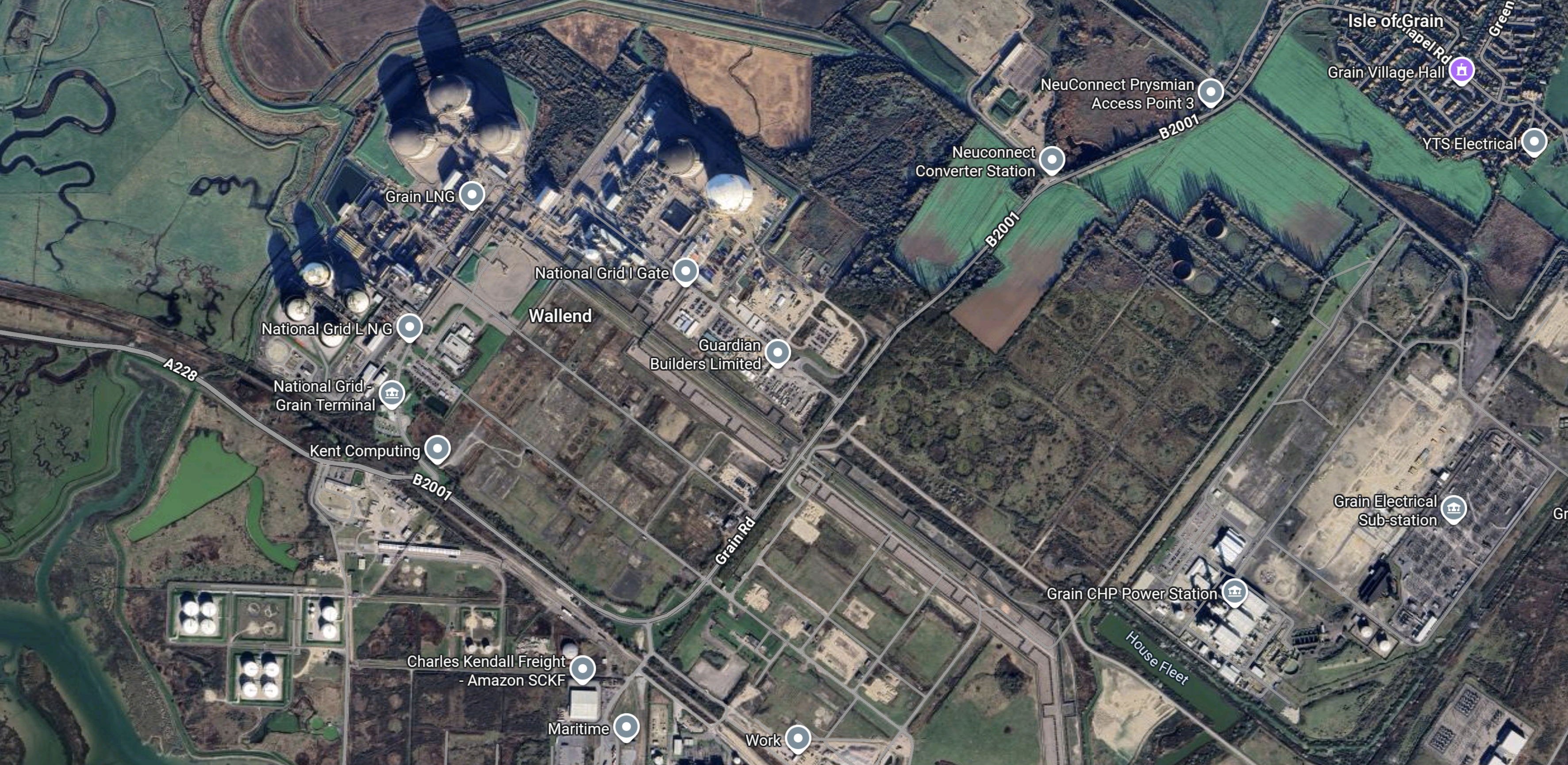
This Google Map shows the various energy assets on the Isle of Grain.
Note.
- It appears that works for the 1, 400 MW NeuConnect interconnector to Wilhelmshaven in Germany, are taking place in the North-East corner of the map.
- Grain CHP powerstation is a 1,275MW CCGT power station, which is owned by German company; Uniper, that is in the South-East corner of the map, which can also supply up to 340MW of heat energy recovered from the steam condensation to run the vapourisers in the nearby liquefied natural gas terminal.
- The Grain LNG terminal is at the Western side of the map.
- In the Thames Estuary to the East of the Isle of Grain, I estimate that there are about 1,500 MW of wind turbines.
I find it interesting that two of the assets are German owned.
I have some thoughts.
It Is A Large Site With Space For Expansion
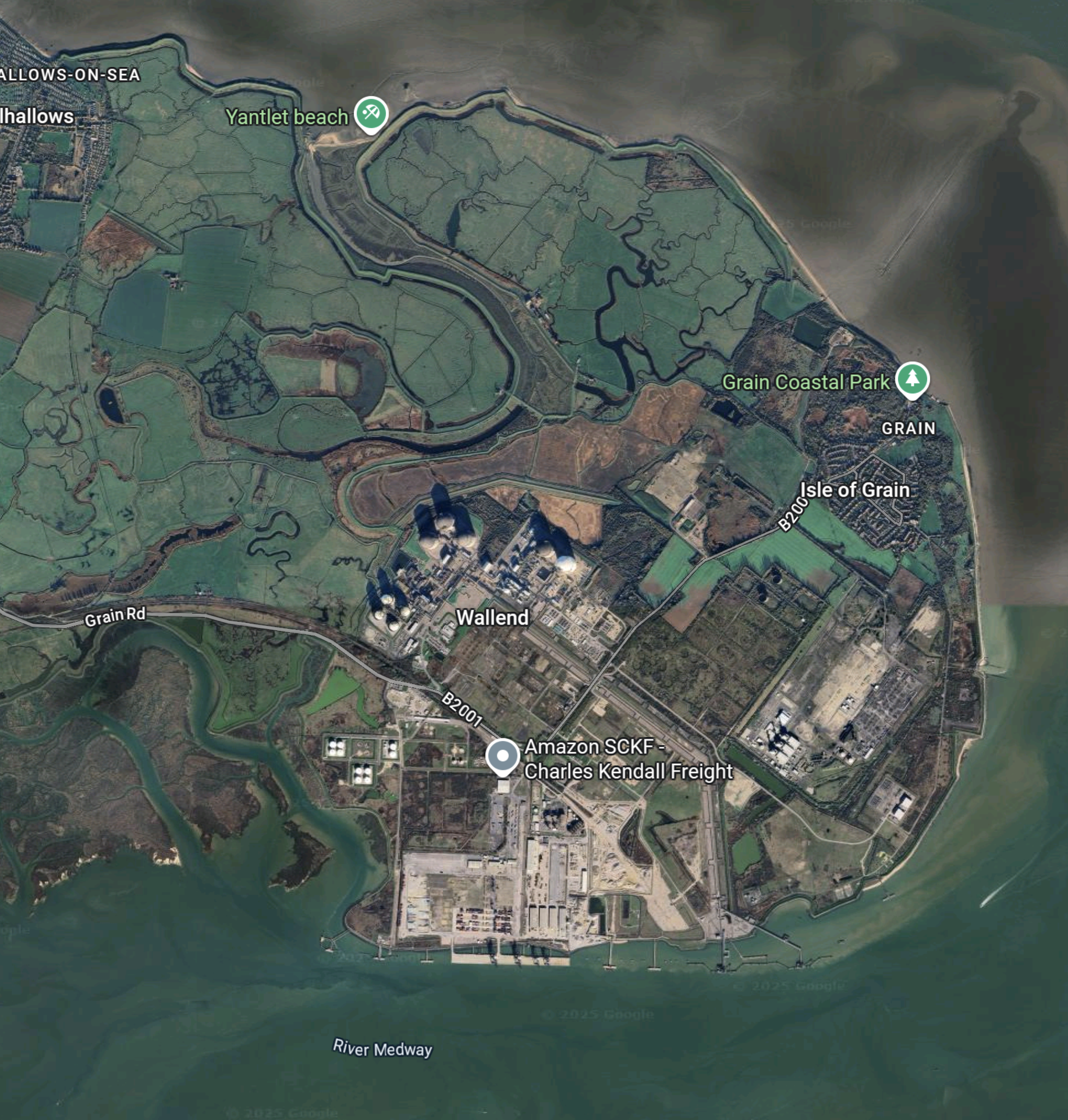
This Google Map shows the whole of the Isle of Grain.
Note.
- The Grain LNG terminal is around the label Wallend.
- The River Medway runs East-West at the bottom of the map.
- Gas tankers deliver and take on gas at jetties on the North Bank of the Medway.
There could be space to expand the terminal, if the RSPB would allow it.
As an example, I asked Google AI, if peregrine falcons nest on chemical plants and got this reply.
Yes, peregrine falcons do nest on chemical plants. They have adapted to using various urban and industrial structures, including chemical plants, for nesting. This is particularly true in areas where natural cliff habitats are scarce.
Peregrine falcons are known for their adaptability, and their population has seen a resurgence in recent decades, partly due to their ability to utilize man-made structures. These structures often mimic their natural cliffside nesting
Cliffs do seem scarce on the Isle of Grain. I also asked Google AI, if peregrine falcons ate small rodents, as several chemical and other plants, where I’ve worked, had a rodent problem. One plant had a cat problem, as there had been so many rats. This was the reply.
Yes, peregrine falcons do eat small rodents, though they primarily consume birds. While their diet mainly consists of other birds like pigeons, doves, and waterfowl, they will also hunt and eat small mammals, including rodents such as mice, rats, and voles. They are opportunistic hunters and will take advantage of readily available prey, including insects, amphibians, and even fish.
I’m sure if Centrica wanted to expand, they’d employ the best experts.
Who Are ECP?
One of the key points of the press release is that this deal is a partnership with ECP (part of Bridgepoint Group plc), one of the largest private owners of natural gas generation and infrastructure assets in the U.S. with direct experience in supporting grid reliability.
The Wikipedia entry for ECP or Energy Capital Partners has this first section.
Energy Capital Partners Management, LP (ECP) is an American investment firm headquartered in Summit, New Jersey. It focuses on investments in the energy sector. The firm has additional offices in New York City, Houston, San Diego, Fort Lauderdale and Seoul.
In August 2024, ECP merged with Bridgepoint Group to form a private assets investment platform.
The Wikipedia entry for the Bridgepoint Group has this first paragraph.
Bridgepoint Group plc is a British private investment company listed on the London Stock Exchange and is a constituent of the FTSE 250 Index.
The company had started as part of NatWest.
Are The Germans Going To Take Away Some Of Our Electricity?
Consider.
- Germany has a big need to replace Russian gas and indigenous coal, and to decarbonise.
- Neuconnect is a 1.4 GW interconnector between the Isle of Grain and Wilhelmshaven in Germany. It is scheduled to be completed in 2028.
- The Grain CHP powerstation is a 1,275MW CCGT power station, which is owned by German company; Uniper, could almost keep NeuConnect working at full power on its own.
- I said earlier, in the Thames Estuary to the East of the Isle of Grain, I estimate that there are about 1,500 MW of wind turbines. One of which is part German-owned.
The Germans are also building a large electrolyser at Wilhelshaven, which is described by Google AI like this.
The Wilhelmshaven Green Energy Hub will initially feature a 500MW electrolyzer, with plans to potentially expand to 1GW, according to Energy Monitor. The hub, a joint project between Tree Energy Solutions (TES) and EWE, aims to produce green hydrogen using renewable energy sources like offshore wind. The 500MW electrolyzer is scheduled to be operational by 2028.
I wouldn’t be surprised to see that the Wilhelmshaven electrolyser were to be powered by British-generated electricity flowing down NeuConnect.
Centrica Says Their Future Development Options Include A Combined Heat And Power Plant
This objective was set in one of the key points.
This is the first paragraph of the Wikipedia entry for the Grain LNG Terminal.
Grain LNG Terminal is a Liquefied Natural Gas (LNG) terminal on the Isle of Grain, 37 miles (60 km) east of London. It has facilities for the offloading and reloading of LNG from ships at two jetties on the River Medway; for storing and blending LNG; for truck loading; and regasifying and blending natural gas to meet UK specifications. The terminal can handle up to 15 million tonnes per annum of LNG, has a storage capacity for one million cubic metres of LNG, and is able to regasify up to 645 GWh per day (58 million cubic metres per day) for delivery into the high pressure gas National Transmission System (NTS). The facility is owned and operated by National Grid Grain LNG Ltd, a wholly owned subsidiary of National Grid.
Note.
- This paragraph was written before the Centrica takeover.
- The terminal also converts liquid natural gas into gas to be distributed around the UK.
The heat needed to convert the liquid natural gas to gas is provided by the Grain CHP power station.
- Currently 340 MW of heat is provided.
- If the Grain LNG terminal is expanded, it will probably need more heat.
I can see Centrica building a combined heat and power (CHP) power station, that can be expanded to meet the current and future needs of gasification at the Grain LNG terminal.
I wouldn’t be surprised to see the CHP power station fitted with carbon capture, as Kent is surely one county, where carbon dioxide can be used in food production, so we can generate our carbon dioxide and eat it.
Centrica Says Their Future Development Options Include Hydrogen
This objective was set in one of the key points.
Consider.
- Centrica are an investor in HiiROC, who have a unique method of generating affordable zero-carbon hydrogen called thermal plasma electrolysis, which uses a fifth of the electricity, that traditional electrolysis does.
- HiiROC can use natural gas as a feedstock. Centrica won’t be short of that at Grain.
- There is space to build a large HiiROC system at the Isle of Grain site.
- The hydrogen could be taken away by tanker ships.
Like the electricity , which will use the 450 mile NeuConnect interconnector, the hydrogen could even be exported to Wilhelmshaven in Germany by pipeline.
Wilhelmshaven is being setup to be a major German hub to both generate, import and distribute hydrogen.
I asked Google AI, how much hydrogen a GWh would produce and received this answer.
A GWh of electricity can produce approximately 20-22 tonnes of hydrogen through electrolysis, depending on the efficiency of the electrolyzer. Modern commercial electrolyzers operate at an efficiency of roughly 70-80%, meaning they require about 50-55 kWh of electricity to produce 1 kg of hydrogen. A GWh (1 gigawatt-hour) is equal to 1,000,000 kWh, and 1 tonne of hydrogen contains roughly 33.33 MWh of energy.
As it is claimed on the web that HiiROC is five times more efficient than traditional electrolysis, it could need around 10-11 kWh to produce one kg. of hydrogen.
1 GWh would produce between 90-100 tonnes of hydrogen.
Centrica Says Their Future Development Options Include Ammonia
This objective was set in one of the key points.
I asked Google AI if ammonia can be produced from hydrogen and received this answer.
Yes, ammonia (NH3) can be produced from hydrogen (H2) through a process called the Haber-Bosch process. This process involves combining hydrogen with nitrogen (N2) from the air, under high temperature and pressure, in the presence of a catalyst.
Ammonia has a large number of uses, including making fertiliser and the powering of large ships.
I asked Google AI, if there are small Haber-Bosch processes to make ammonia from hydrogen and nitrogen and received this answer.
Yes, there are efforts to develop smaller-scale Haber-Bosch processes for ammonia production. While the traditional Haber-Bosch process is typically associated with large industrial plants, research and development are exploring ways to adapt it for smaller, distributed production, particularly for localized fertilizer or fuel applications.
I wondered if Centrica are involved in the efforts to develop smaller-scale Haber-Bosch processes for ammonia production.
Google AI gave me this quick answer.
Centrica is involved in research related to the Haber-Bosch process, particularly in the context of transitioning to a low-carbon energy future. They are exploring how to adapt the Haber-Bosch process, which is crucial for fertilizer production but also a significant source of CO2 emissions, to utilize renewable energy sources. This includes investigating the use of green hydrogen produced from water electrolysis and renewable electricity. Centrica is also involved in research related to using ammonia as a fuel, including potentially for power generation
That looks to be a very positive answer. Especially, as local low-carbon fertiliser production could be a very powerful concept.
Centrica Says Their Future Development Options Include Bunkering
This objective was set in one of the key points.
Bunkering is the process of refuelling ships.
I didn’t know much about bunkering, when I started to read Centrica’s press release, but the Wikipedia entry, was a good way to get some information.
This section in the Wikipedia entry is entitled Two Types Of Bunkering, where this is said.
The two most common types of bunkering procedure at sea are “ship to ship bunkering” (STSB), in which one ship acts as a terminal, while the other moors. The second type is “stern line bunkering” (SLB), which is the easiest method of transferring oil but can be risky during bad weather.
Over the years, I have found, that two zero-carbon fuels are under development, for powering ships; hydrogen and ammonia. Others are developing ships powered by naturalo gas.
I asked Google AI if hydrogen can power ships and received this answer.
Yes, hydrogen can power ships. It can be used as a fuel for fuel cells, which generate electricity to power the ship’s propulsion and other systems, or it can be burned in modified combustion engines. Hydrogen offers a zero-emission solution for shipping, with water vapor being the only byproduct when used in fuel cells.
Google AI also told me this.
The world’s first hydrogen-powered cruise ship, the “Viking Libra”, is currently under construction and is scheduled for delivery in late 2026. This innovative vessel, a collaboration between Viking Cruises and Italian shipbuilder Fincantieri, will utilize hydrogen for both propulsion and electricity generation, aiming for zero-emission operation.
I also asked Google AI if ammonia can power ships and received this answer.
Yes, ammonia can be used to power ships and is considered a promising alternative fuel for the maritime industry. Several companies and organizations are actively developing ammonia-powered ship designs and technologies. While challenges remain, particularly around safety and infrastructure, ammonia is seen as a key potential fuel for decarbonizing shipping.
Finally, I asked I asked Google AI if natural gas can power ships and received this answer.
Yes, ships can be powered by natural gas, specifically in the form of liquefied natural gas (LNG). LNG is increasingly used as a marine fuel, offering environmental benefits over traditional fuels like diesel.
It would seem to be a case of you pays your money and makes a choice between one of four technologies; ammonia, hydrogen fuel-cell, hydrogen-ICE and LNG.
I looks to me, that if Centrica provide bunkering services for ships, they have the means to cover most of the market by providing hydrogen and ammonia, in addition to natural gas.
Although, I don’t know much about bunkering, I do feel that the two current methods, that work for oil, could be made to work for these fuels.
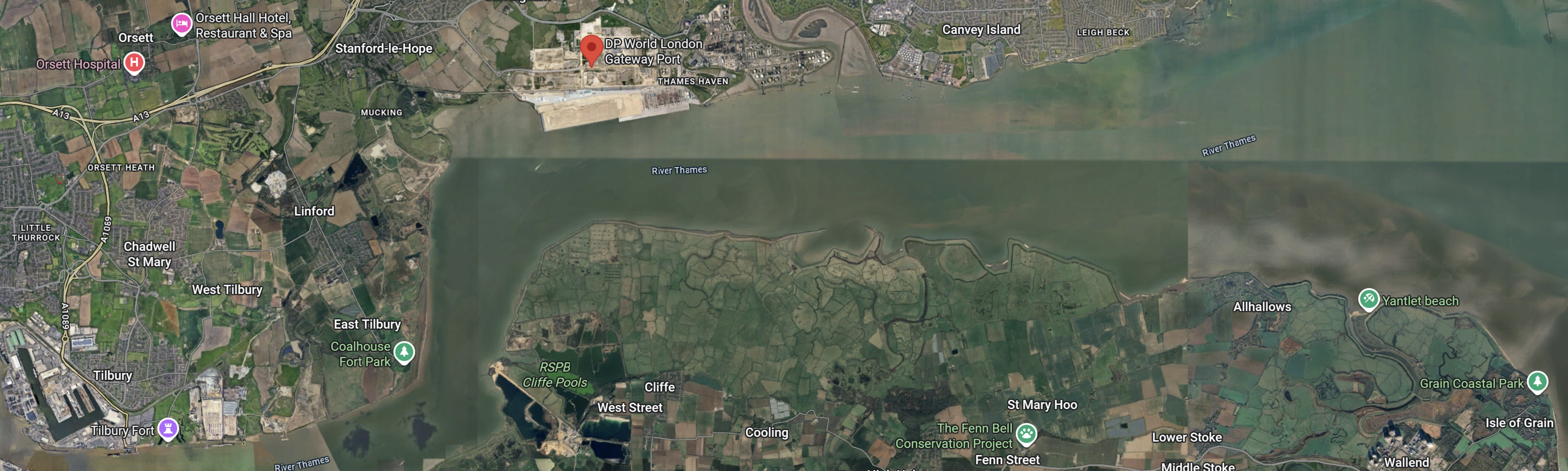
This Google Map shows the Thames Estuary.
Note.
- The Port of Tilbury is in the South-West corner of the map.
- London Gateway is indicated by the red arrow.
- The Isle of Grain is in the South-East corner of the map.
- Other ports between Tilbury and the Isle of Grain include Barking, Dagenham, Dartford, Erith, Greenwich, Northfleet, Purfleet, Silvertown and Thurrock.
There was never a more true phrase than – “Location, Location and Location”. And the Isle of Grain would appear to be in the right place to send out a bunkering tanker to a passing ship, that was calling at a port in London or just passing through the Strait of Dover.
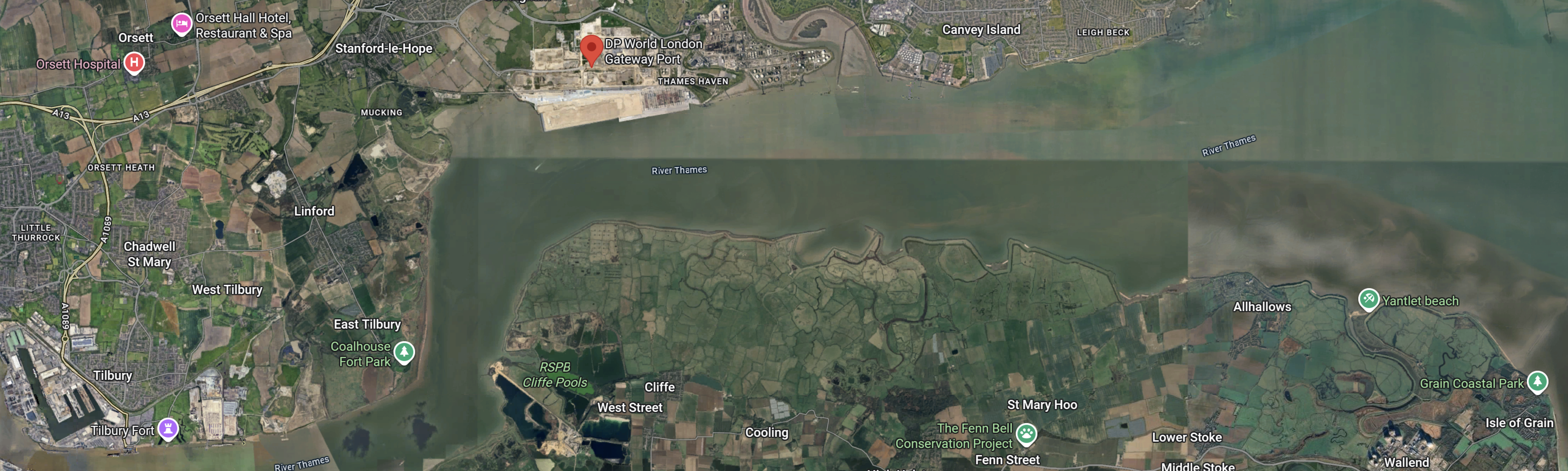
This Google Map shows the Thames between London Gateway and the Isle of Grain.
Note.
- London Gateway is indicated by the red arrow.
- The Isle of Grain is in the South-East corner of the map.
It seems to me, that a refuelling philosophy could easily be worked out.
How Large is The Bunkering Market?
I asked Google AI this question and received this answer.
The world bunker fuel market is a multi-billion dollar industry, with the market size valued at USD 150.93 billion in 2023. It is projected to reach USD 242.29 billion by 2032, growing at a CAGR of 5.4% according to SkyQuest Technology. In terms of volume, the global bunker demand was estimated at 233.1 million metric tons in 2023 according to the IMO.
The market is not small!
New Direct Rail Link To Seaham: How This Picturesque Seaside Town Will Connect To London Starting December 2025
The title of this post is the same as that of this article on Travel and Tour World.
This is the first paragraph.
Starting December 2025, the picturesque seaside town of Seaham in County Durham will become even more accessible with a new direct rail link to London. This marks an exciting chapter in the town’s history, as Seaham’s first direct rail service will make it easier for tourists and business travelers alike to visit this charming coastal destination. Known for its stunning clifftop vistas, rocky beaches, and no fewer than 10 fish and chip shops, Seaham is already a popular spot for day-trippers, and this new rail service will only add to its appeal.
This section in the Wikipedia entry for Seaham station, gives the current rail services from the town.
As of the May 2021 timetable change, the station is served by an hourly service between Newcastle and Middlesbrough. Most trains continue to Hexham (or Carlisle on Sunday) and Nunthorpe. Two trains per day (three on Sunday) continue to Whitby. All services are operated by Northern Trains.
With Grand Central trains, serving Seaham four times per day in each direction, Seaham could be a very convenient place to explore the North-East of England.
If the timing of the services is right, Seaham could also become popular with visiting football fans at Middlesbrough, Newcastle and Sunderland, wanting to combine an away match with a weekend away.
This Google Map shows the town.
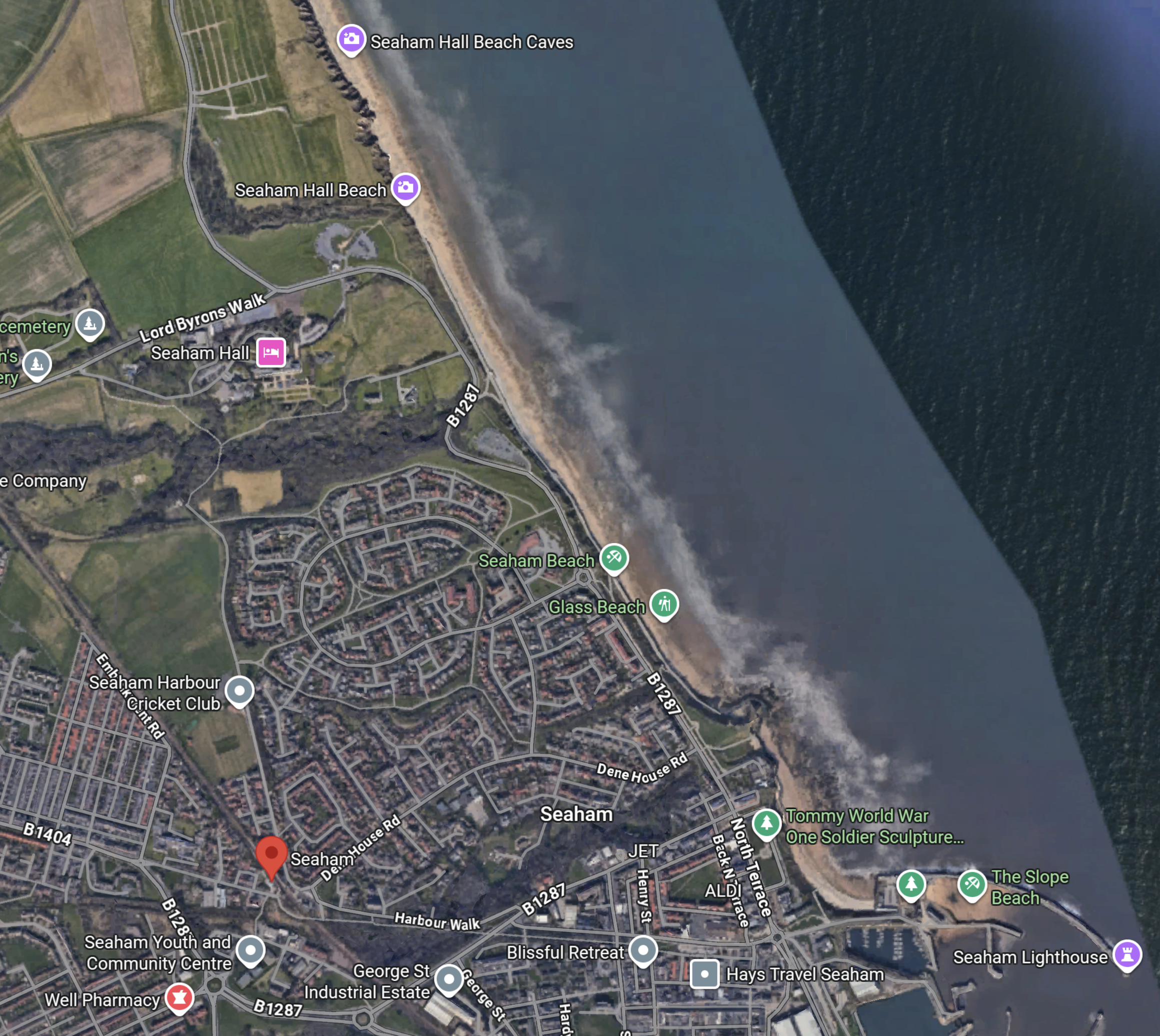
Note.
- The station is indicated by the red arrow.
- Beaches stretch along the town.
- There is a port with a lighthouse.
- There is even a 5-star hotel; Seaham Hall on Lord Byron’s Walk. The hotel has 21 suites and a spa.
- I can certainly see the hotel having a zero-carbon mini-bus meeting all eight Grand Central Trains.
I don’t think Grand Central Trains will be short of passengers on this route. Especially as from 2028, they will serving the town with new Hitachi battery-electric trains.
Conclusion
How many other towns in the UK could benefit from a four trains per day service to London?
A Long Ride In An Electric Bus
In the last few weeks, I’ve started to use the 243 bus, a lot more, as I’ve been on a course at St. Leonards Hospital and bus serves Dalston Junction, St. Leonards Hospital, Old Street station and a couple of other places I visit regularly.
On Thursday, I used it from my GP’s surgery and the William Harvey Heart Centre, where I volunteer.
I noticed that the buses on the route were now brand-new Wrightbus Streetdeck Electroliner battery-electric buses.
This morning, I took a ride on a 243 bus from ~Old Street to Wood Green to make a better assessment of the bus.
These were the pictures I took.












I can compare it with four other common London buses.
- In common with the 243 bus of a few weeks ago, the 141 bus, that I use regularly has a collection of Wrightbus hybrid buses of a certain age, which need to be replaced.There is no comparison between the two buses, as the Streetdeck Electroliner has better ride, seats and interior fittings and also comes with phone charging, with every passenger having their own USB port.
- In addition to being fully electric, the bus is a step-up from the New Routemaster, in that the Electroliner is much quieter.
- In British Buses For British Bottoms, I was impressed with the Electroliner’s single-deck sibling and as most would expect, the buses are of similar standard and quality.
- I regularly ride on 43 buses, which are based on a Chinese chassis. I would rate the ride on these buses to have inferior passenger ride, than both the Electroliner and the New Routemaster.
I have a few other thoughts.
Is The Range Sufficient?
The web page for the Wrightbus Streetdeck Electroliner, says this about range.
StreetDeck Electroliner is not a regular electric bus, its optimised power from a 454kW zero-emission battery electric power train is the ideal battery capacity for a UK Double Deck bus. It powers it to a range of up to 200 miles and a fast charge time of just 2.5 hours ensures daily scheduling aligning with driver breaks.
The buses are based at Tottenham Garage, which could mean they go back to there to charge, as it is on the route.
I asked Google AI, where the buses on route 243 were charged and got this answer.
London’s electric buses, including the route 243, primarily charge their batteries at bus garages using plug-in charging points. However, some routes, like the 358, utilize pantographs (overhead charging systems) at the ends of routes to provide rapid charging during the day, minimizing the need for lengthy garage charging. Arriva London, which operates route 243, has ordered new Volvo BZL electric buses for this route, and these buses will likely be charged using a combination of garage charging and opportunity charging via pantographs.
The answer is based on this article on this article on route-one.net which is entitled Arriva London orders 51 Volvo BZL Electric Double-deckers, where these are the first two paragraphs.
Arriva London has placed an order for 51 Volvo BZL battery-electric double-deckers. They represent the first order for the BZL from Arriva and will be deployed from Tottenham depot on Transport for London (TfL) routes 243 and 341.
Delivery is to commence in 2025 and the buses will be 10.9m long. High-backed seating will be fitted along with USB charging points and glazed skylights. Each will have 470kWh of energy storage with the 200kW driveline including a two-speed automated manual gearbox.
I have some questions.
- Has my camera lied about the buses it saw on the 243 route?
- Do the Wrightbus Streetdeck Electroliners use opportunity charging on the 243 route?
I shall investigate.
Hackney Downs Station To Aldgate By Volvo Electric Bus
I’d ridden one on route 242 earlier in the week, so on this trip I investigated them more.
Route 242 doesn’t normally serve Hackney Downs station, so I only got the change because of road works in Central Hackney,
These were the pictures I took.



















Note.
- It was a generally well-designed and well-riding bus, with some nice touches.
- But is the great lump at the front on the left the battery?
- I particularly liked the stop indicator above the door.
- The bus was built on a Volvo chassis by MCV in Egypt.
- I must add some exterior views of the buses.
It was a lot better than the earlier Egyptian buses on route 30.
Has Aldgate Bus Station Been Fitted With Opportunity Charging?
In Hackney Downs Station To Aldgate By Volvo Electric Bus, I described my second ride in a Volvo BZL electric bus.
When I arrived at Aldgate bus station, I asked the driver, if he would be charging the bus. He answered in the affirmative.
I then took these pictures.












Note.
- Some of the buses were backed into parking spaces, with their back wheels up against one of two raised strips.
- The 242 bus I’d arrived on parked that way.
- A couple of New Routemasters were also parked each side of it.
- The 242 bus, I’d arrived on appeared to shut off all power for a few minutes. Was it charging at that time?
This Google Map shows the layout of the bus station.
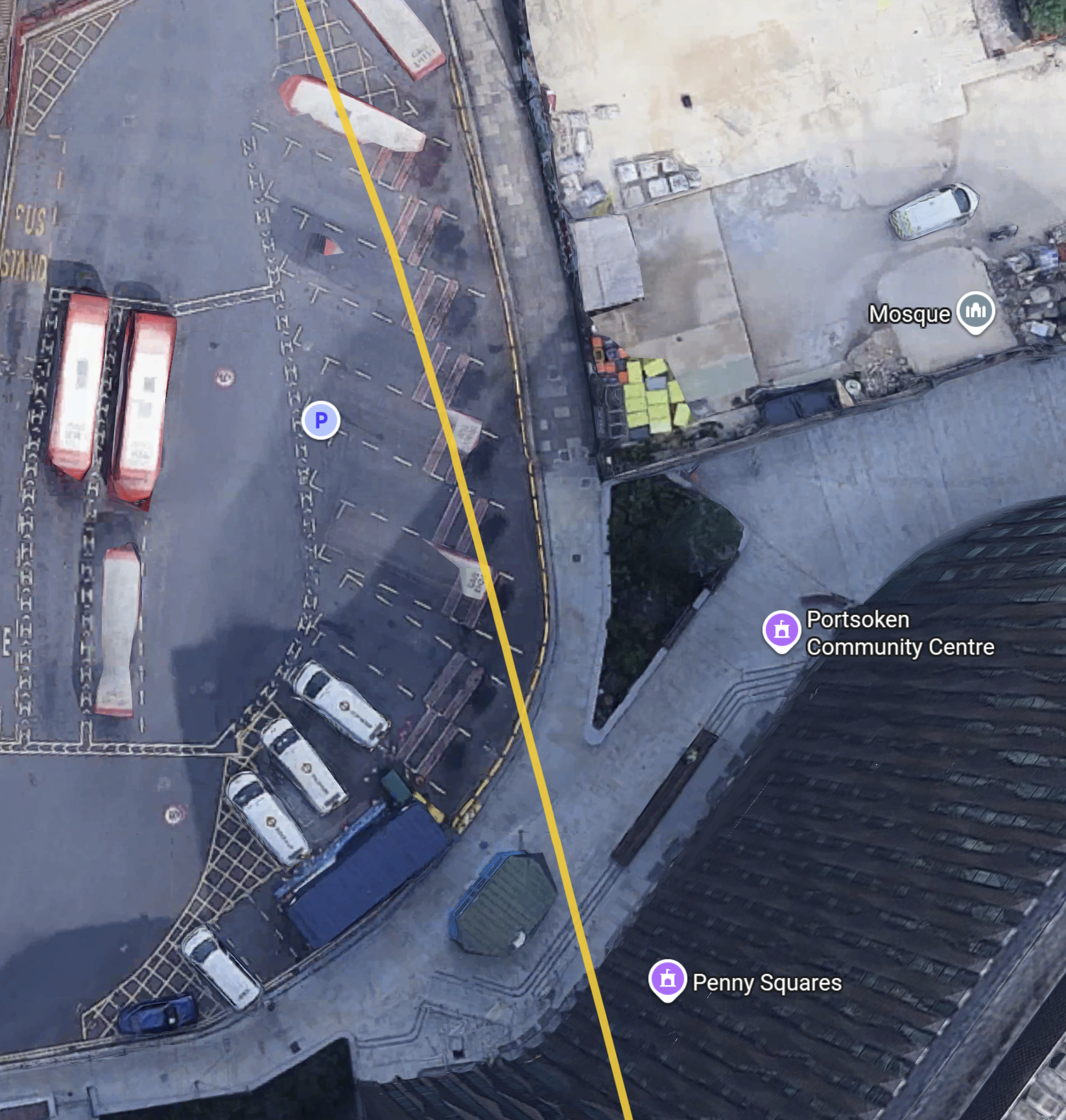
Note.
- Ignore the yellow line, as it just the route of the Circle Line, which runs underneath.
- The strips are clearly visible.
- It looks there are about ten of them.
- Click on the map to show it to a larger scale.
I suspect some form of contactless charging could be used, as some people do with their mobile phone.
Power for the charging could even be taken from the Circle Line.
Completing Northern Powerhouse Rail
The Northern Powerhouse Rail/High Speed Two Connection To Manchester Airport Station
This OpenRailwayMap shows the rail connections that terminate at Manchester Airport station.
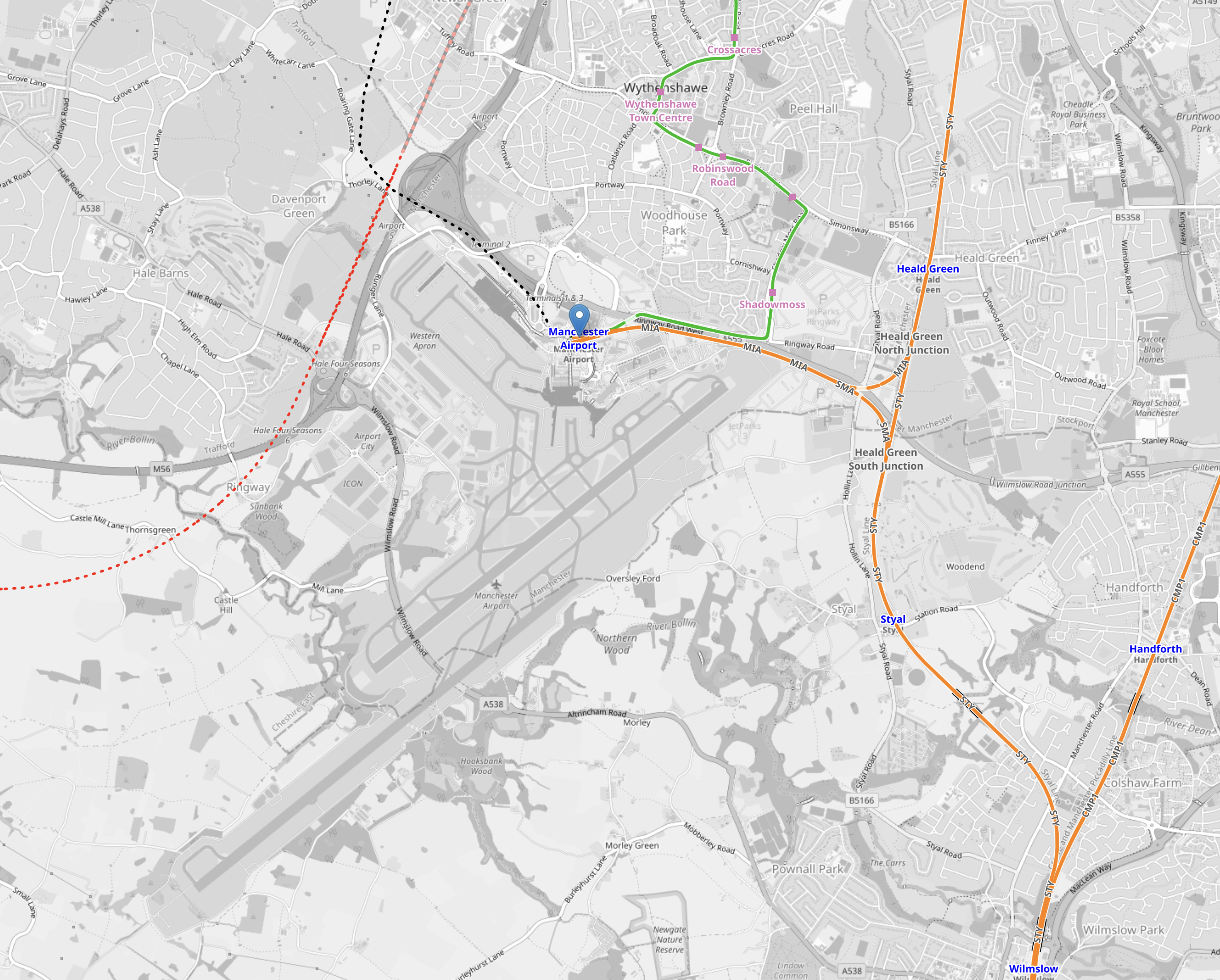
Note.
- The two runways are clearly shown.
- Manchester Airport station is indicated by the blue arrow near the top of the map.
- The orange tracks are rail lines.
- The green lines are Manchester Metrolink tracks.
- Rail and tram services approach the airport station from the East.
- The red dotted line is the current proposed path of Northern Powerhouse Rail/High Speed Two
- The black dotted line appears to be an extension of the tram line to the airport.
This second OpenRailwayMap shows the lines around the airport station to a larger scale.
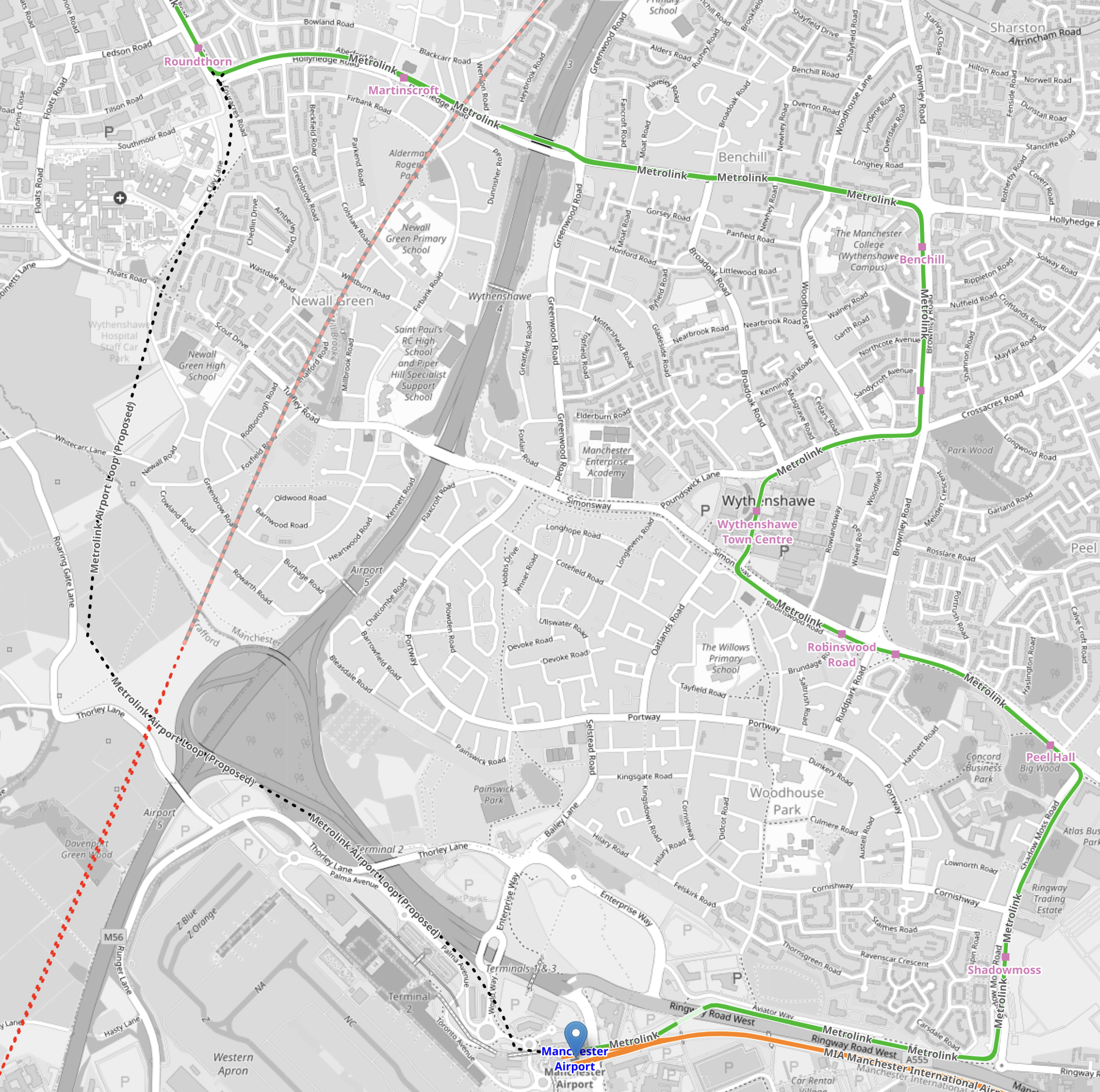
Note.
- Manchester Airport station is indicated by the blue arrow at the bottom of the map.
- The orange tracks are rail lines.
- The green lines are Manchester Metrolink tracks.
- The red dotted line is the current proposed path of Northern Powerhouse Rail/High Speed Two.
- The Manchester Metrolink now makes a loop around the Airport.
I think the following will happen.
- A large proportion of passengers and staff travelling between Manchester Airport and Manchester City Centre will use Northern Powerhouse Rail/High Speed Two.
- Passengers and staff, who live locally will use the Manchester Metro loop.
- Northern Powerhouse Rail/High Speed Two will replace some of the current train services.
- Some services on the Castlefield Corridor will migrate to Northern Powerhouse Rail/High Speed Two.
There could be as many as twelve trains per hour (tph) between Manchester Airport and Manchester City Centre on Northern Powerhouse Rail/High Speed Two. But a new urban line like that, which was mostly in a tunnel could probably handle 20 tph.
Manchester Airport And Crewe
This OpenRailwayMap shows the railways between Manchester Airport and Crewe stations.
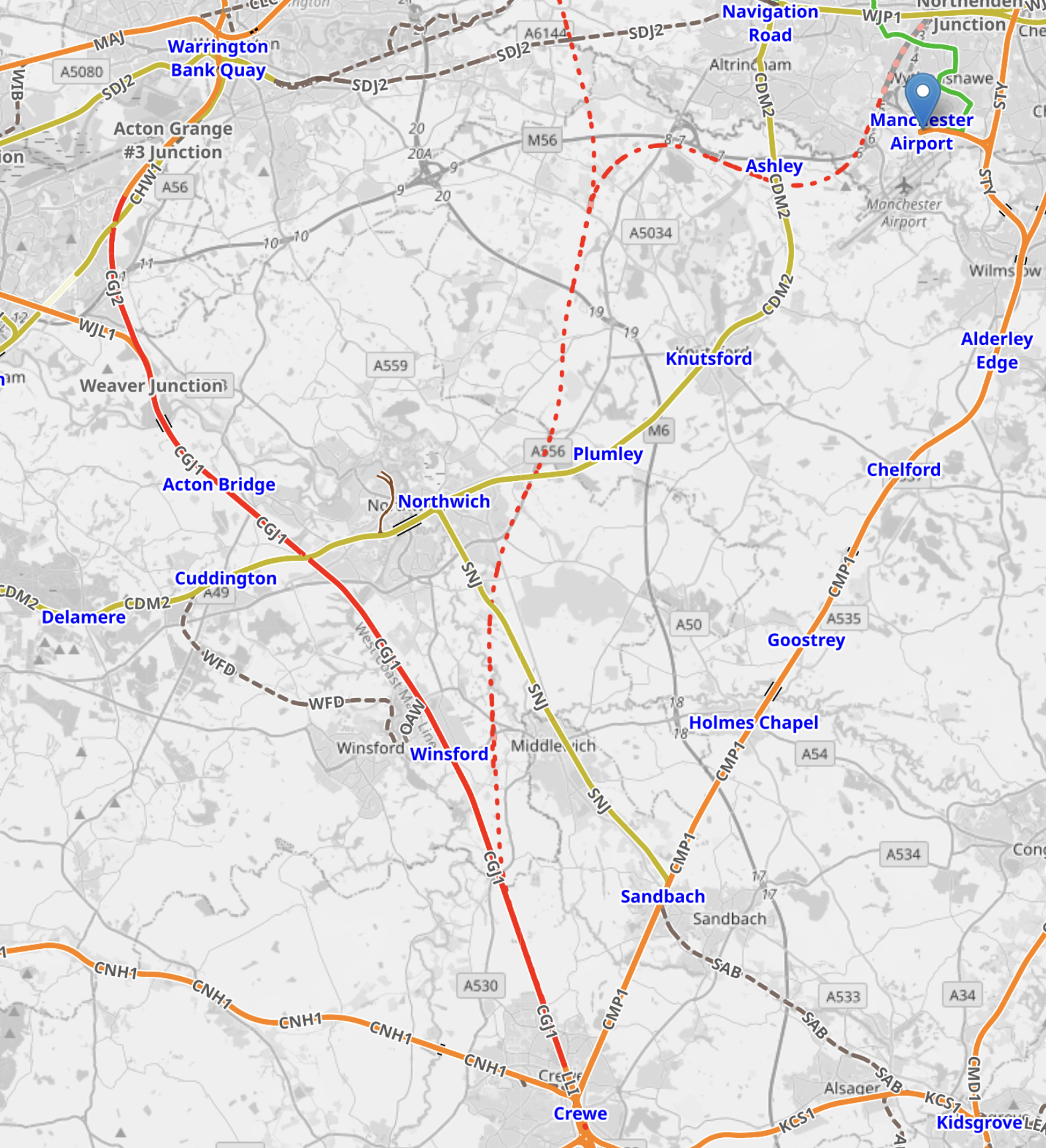
Note.
- Manchester Airport station is indicated by the blue arrow at the top of the map.
- The orange tracks are rail lines.
- The red track going down the left hand side of the map is the West Coast Main Line.
- The green lines are Manchester Metrolink tracks.
- The red dotted line is the current proposed path of Northern Powerhouse Rail/High Speed Two.
- Crewe station is at the bottom of the map in the middle.
There could be as many as 12 tph between Manchester Airport and Crewe.
Manchester Airport And Manchester Piccadilly
This OpenRailwayMap shows the railways between Manchester Airport and Manchester Piccadilly stations.
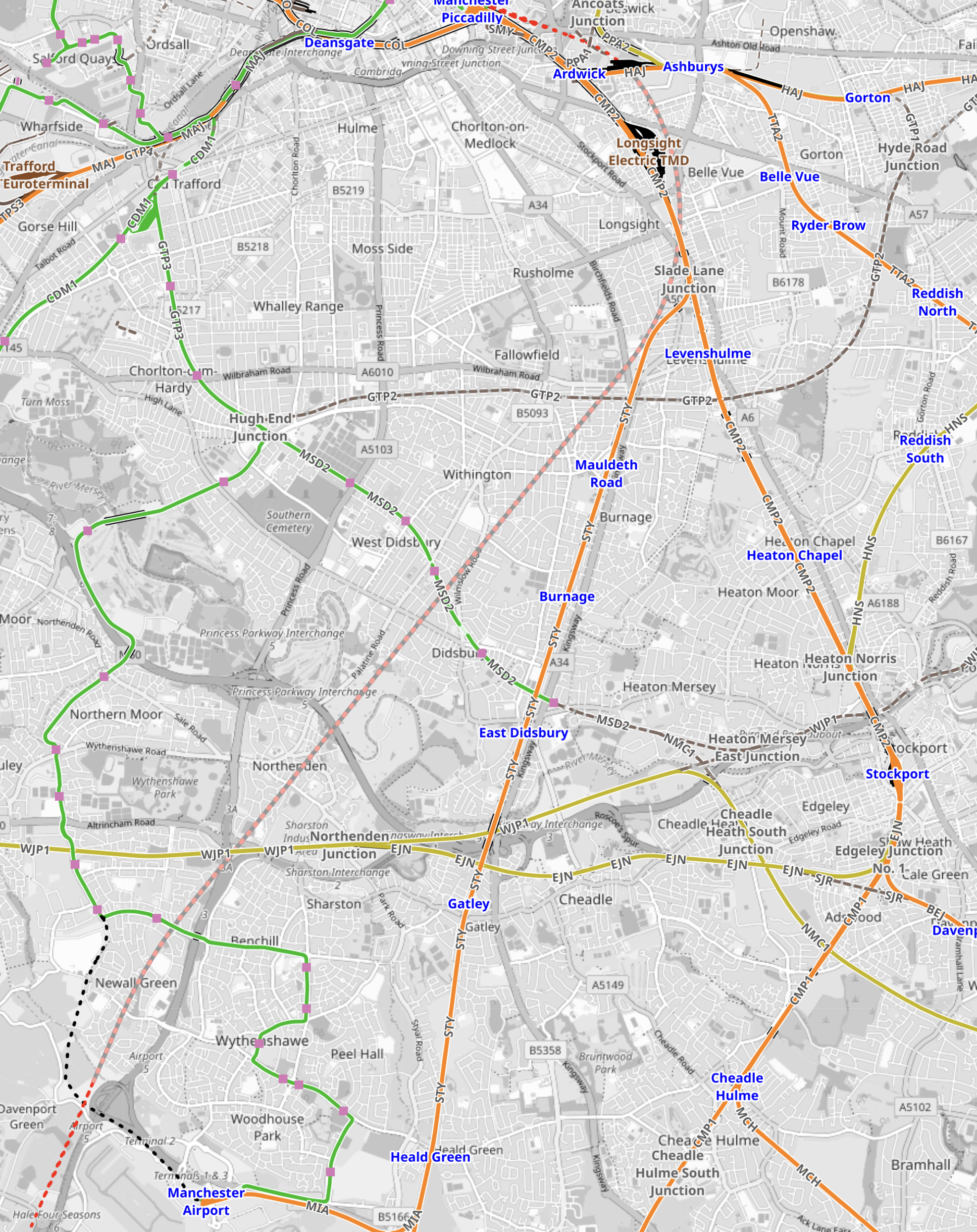
Note.
- Manchester Airport station is in the South-West corner of the map.
- The orange tracks are existing rail lines.
- The green lines are Manchester Metrolink tracks.
- The red dotted line going up the middle of the map is the current proposed path of Northern Powerhouse Rail/High Speed Two.
- Manchester Piccadilly station is at the Northern end of Northern Powerhouse Rail/High Speed Two.
This OpenRailwayMap shows the City Centre between Manchester Piccadilly and Manchester Victoria stations.

Note.
- Manchester Piccadilly station is in the South-East corner of the map.
- The red dotted lines creeping into the map is the current proposed path of Northern Powerhouse Rail/High Speed Two.
- All the platforms in Manchester Piccadilly station can be picked out, with the Castlefield Corridor breaking away to the West.
- The current plans will need demolition of buildings to the North of Manchester Piccadilly station.
- Manchester Victoria station is in the North-West corner of the map.
- The green line of the Manchester Metrolink route picks out the walking route between Manchester’s two main stations.
- About halfway between Manchester Piccadilly and Manchester Victoria stations is the open space of Piccadilly Gardens.
This Google Map shows Piccadilly Gardens.
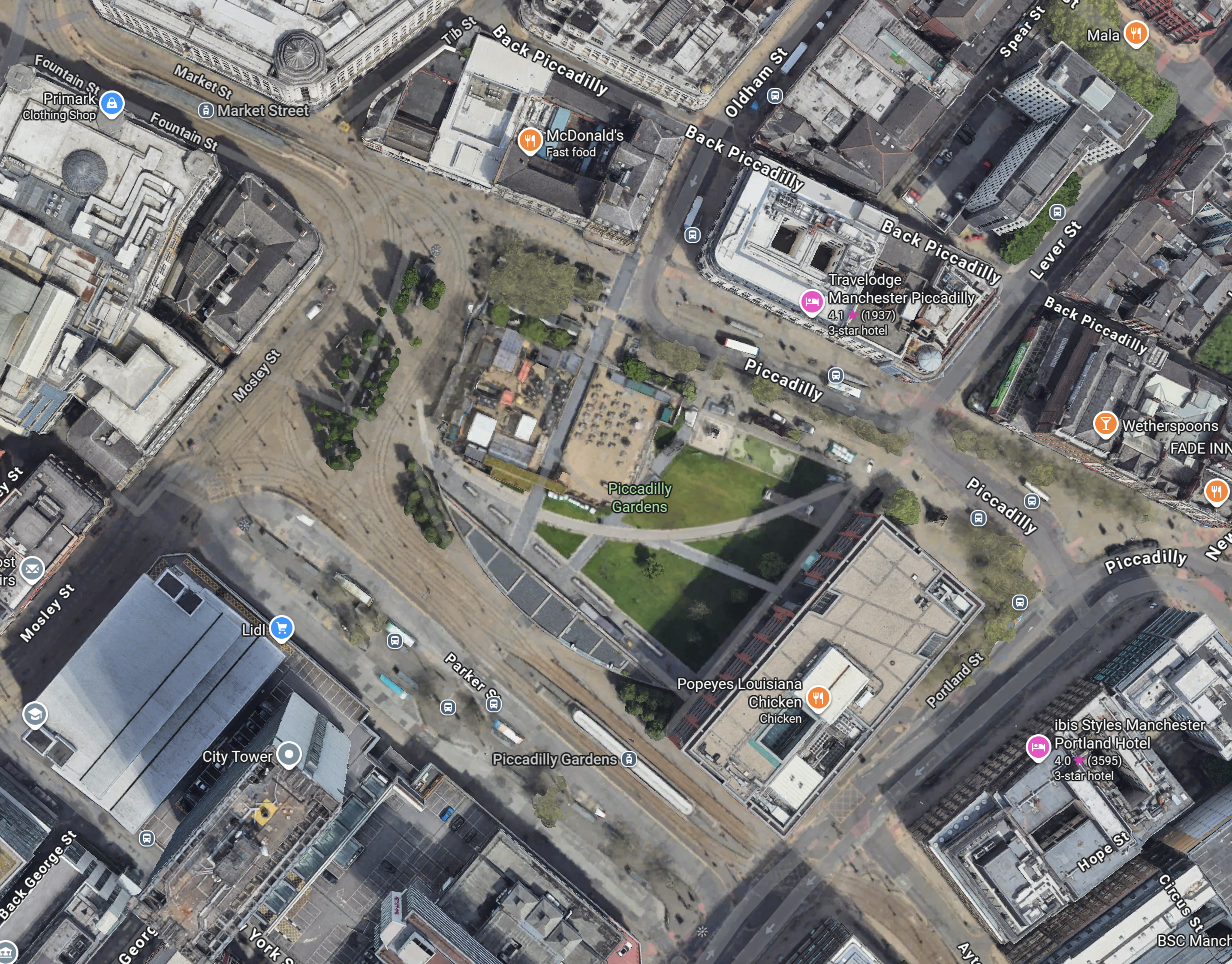
Note.
- The Manchester Metrolink running through.
- There are two Metrolink stops ; Market Street and Piccadilly Gardens, in the area.
- It appears any stop on the Manchester Metrolink can be reached with no more than a single change from one of these two stops.
Looking at the map showing Victoria and Piccadilly stations, I wonder, if a Lizzie Line of the North could be built under Manchester City Centre.
- There would be underground platforms at Piccadilly station, with two through platforms and two to terminate trains from the South.
- Local services from Piccadilly station could continue as now, although services to Manchester Airport could be simplified.
- There would be an underground station at Piccadilly Gardens with two through platforms , to connect with an expanded Manchester Metrolink, buses and walking routes.
- There would be underground platforms at Victoria station, with two through platforms and two to terminate trains from the East.
- Local services from Victoria could continue as now.
- There could be as many as 12 tph between Manchester Victoria, Piccadilly Gardens, Manchester Piccadilly and Manchester Airport.
Just as the Lizzie Line was slotted into London, with the minimum of disruption, I am fairly certain, a similar but smaller construction process could be carried out in Manchester City Centre.
- Manchester doesn’t have an Underground to avoid.
- The stations could be very similar to each other and like Custom House station on the Lizzie Line, they could be built with giant concrete Lego.
- There would only be four stations to create.
- The tunnel would be about fifteen miles at most.
- The tunnel would not need to be electrified as the trains could run on batteries.
As a Manchester Rail Tunnel has been talked about for decades, I suspect there is a big knowledge base of ground conditions, which would help with the design and construction.
Between Manchester Victoria And Leeds
Consider.
- The electrification between Manchester Victoria and Stalybridge stations has recently been switched on.
- Part of the electrification between Leeds and York stations has been switched on.
- Full electrification is being installed between Leeds and Manchester Victoria stations.
This OpenRailwayMap shows the Huddersfield Line between Manchester Victoria station and a few miles short of Huddersfield station.
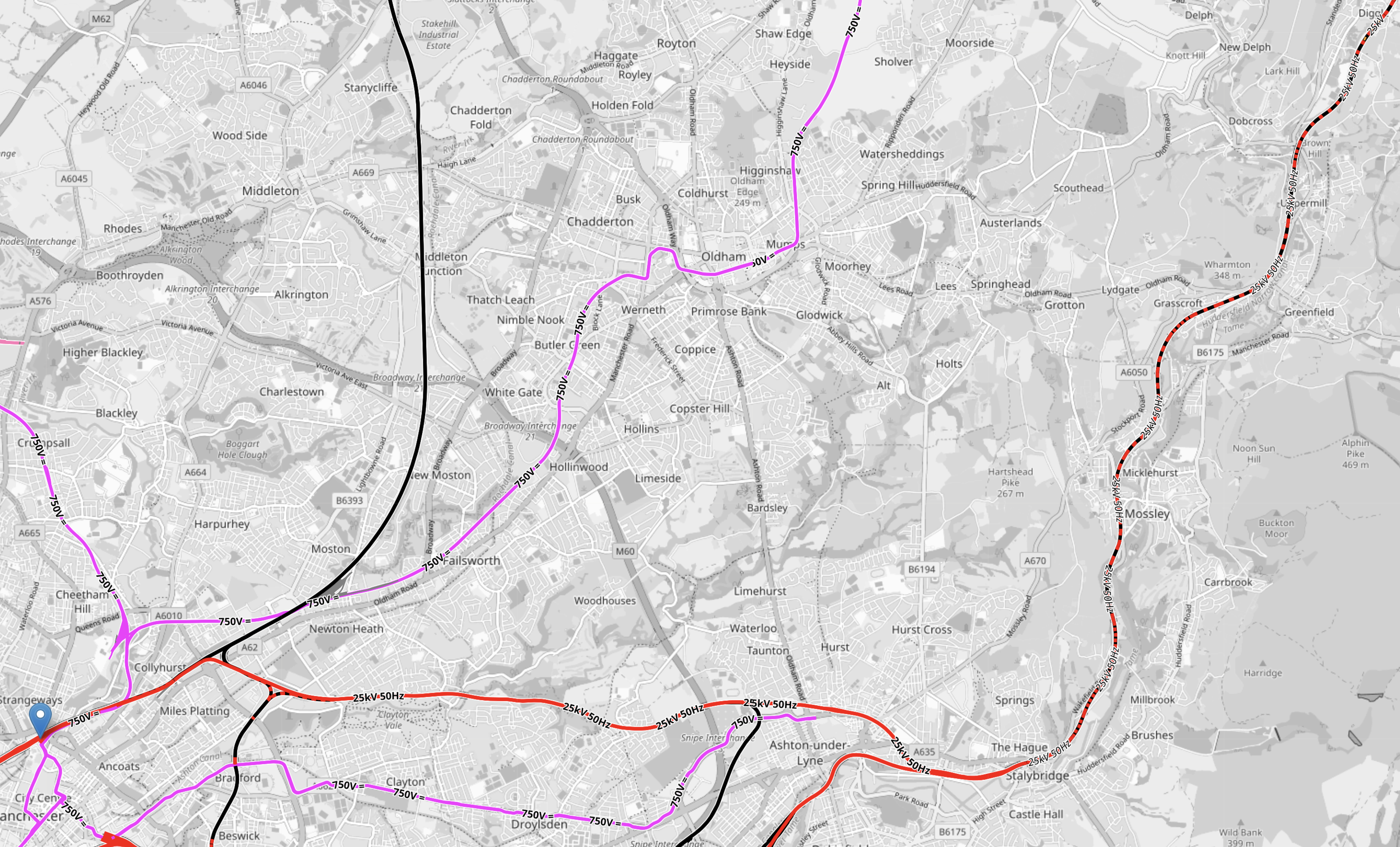
Note.
- Manchester Victoria station is indicated by the blue arrow in the South-West corner of the map.
- Huddersfield station is just off the map in the North-East corner.
- Manchester Victoria and Stalybridge stations is fully electrified and shown in red.
- Stalybridge and Huddersfield stations is being electrified and is shown as black and red dotted.
- Electrification between Huddersfield and Leeds is underway under the TransPennine Upgrade.
This section will be completed, when the Manchester City Centre Rail Tunnel is connected to the Huddersfield Line.
Connecting The Manchester City Centre Rail Tunnel To The Huddersfield Line
This Google Map shows where the Huddersfield Line crosses the M60 Motorway to the West of Ashton-under-Lyme.
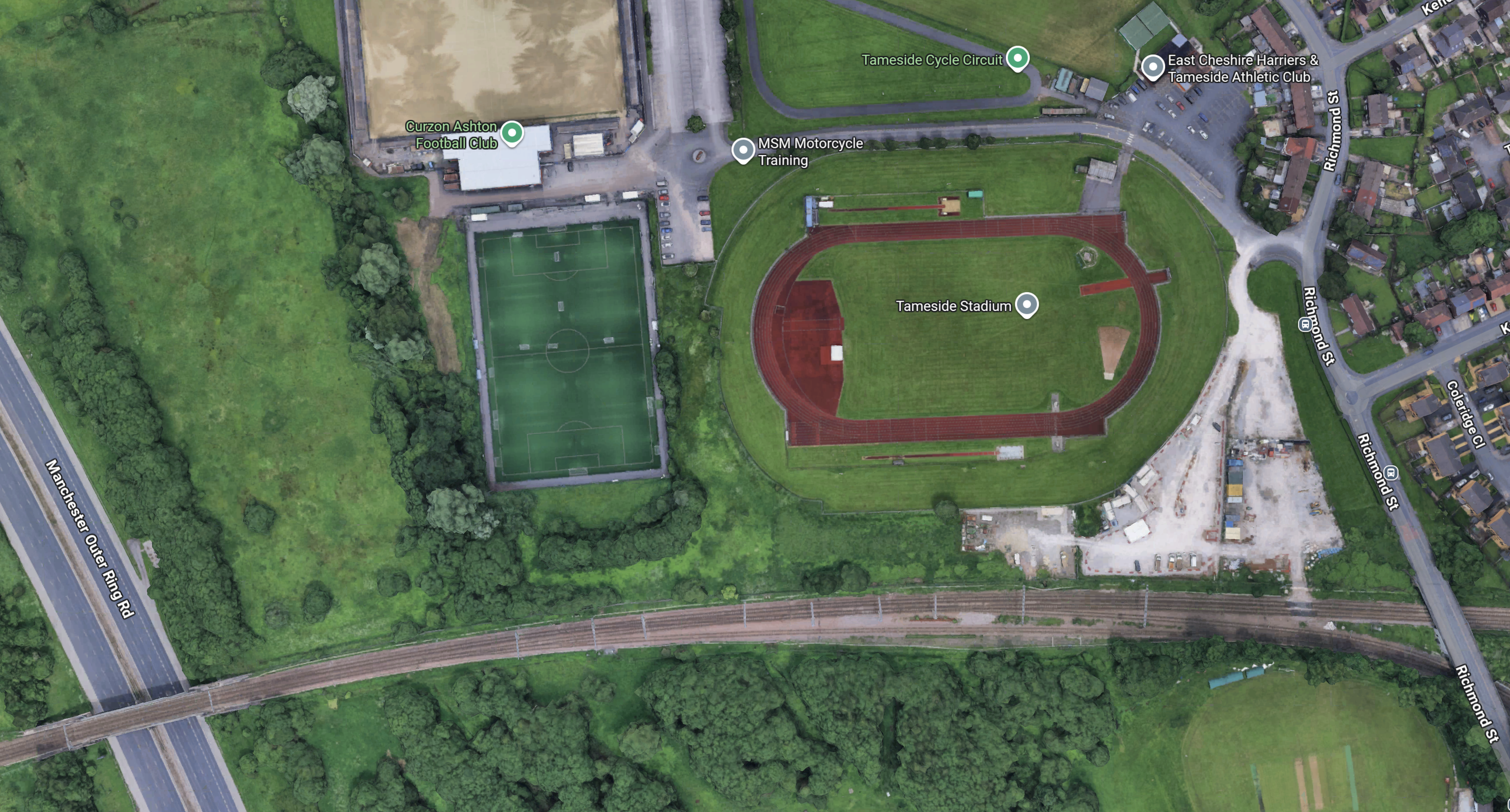
Note.
- The newly-electrified Huddersfield Line runs across the map.
- The M60 Motorway is on the left.
- There are facilities for athletics, cricket and football.
I wouldn’t be surprised if the Eastern portal of the Manchester City Centre Rail Tunnel was in this area.
But looking at Google Maps between this site and Manchester Victoria, there are other sites.
Conclusion
I now feel that it is possible to create a Northern Powerhouse Rail/High Speed Two route using a tunnel under Manchester.
Obviously, there is more work to be done.
German court Rejects Deutsche Bahn’s Appeal To Share Stuttgart 21 Cost Overruns With Partners
The title of this post, is the same as that of this article on Railway Gazette.
These three paragraphs add more details.
A court has rejected Deutsche Bahn’s argument that the financial responsibility for cost overruns on the Stuttgart 21 project should be shared with its partners, which include the Land of Baden-Württemberg, the Stuttgart regional authority, Stuttgart city council and Stuttgart airport.
When launched in 2010, the project to remodel the local rail network, which includes 57 km of new line and a rebuilt Stuttgart Hauptbahnhof with underground platforms, was expected to cost €4·1bn.
It has since undergone steady cost increases, and is now projected to cost more than €11bn. It was originally expected to be completed in 2019, but has been continually delayed and partial opening is now to take place in December 2026 with full completion in 2027.
With a prospective increase in costs of nearly three times and being eight years late, it does seem that we’re not alone in getting large projects spectacularly wrong.
Now My Kidneys Might Be Packing Up
I have just been told by my GP, that the blood tests they took showed my kidneys might be packing up.
But he also said it could be the heat.
So I asked Google AI “Can hot weather affect kidney functions?” and got this answer.
Yes, hot weather can negatively affect kidney function, primarily through dehydration and its impact on blood flow to the kidneys. Dehydration can lead to acute kidney injury (AKI), and studies show that the risk of AKI increases with rising daily temperatures.
That seems to backup what the GP told me.
They are going to repeat the tests.
When I had the blood test, they took the blood out of my right arm and afterwards gave my left arm, my three-monthly B12 injection.
So did the blood test, show low B12?
So I asked Google AI “Can low B12 affect kidney functions?” and got this answer.
Yes, low vitamin B12 can potentially affect kidney function, particularly in individuals with chronic kidney disease (CKD). While B12 deficiency is more commonly associated with neurological and blood-related issues, it can also impact kidney health and vice versa.
That’s better than a kick in the teeth, as C would say!
Can I take this line of thinking further?
I was fifty, when I was found to be coeliac and I had my stroke at 64, because of atrial fibrillation.
So I asked Google AI “Can low B12 affect heart functions?” and got this answer.
Yes, low vitamin B12 can affect heart function. Specifically, it can lead to symptoms like heart palpitations and shortness of breath, and in severe cases, it can contribute to conditions like heart failure. Vitamin B12 deficiency can also increase the risk of circulatory problems and potentially contribute to cardiovascular disease.
I certainly had palpitations and shortness of breath at times before I went on blood thinning drugs.
So did low B12 cause my atrial fibrillation
I asked Google AI “Can low B12 cause atrial fibrillation?” and got this answer.
While a B12 deficiency can indirectly contribute to atrial fibrillation (AFib) risk, it’s not a direct cause. Low B12 can lead to elevated homocysteine levels, which are associated with an increased risk of AFib and stroke. However, B12 deficiency is more directly linked to other cardiovascular issues like anemia and heart failure, which can indirectly increase the risk of AFib.
It would seem that fifty years of low B12 didn’t do my heart much good.
I have to finish with one last question for Google AI
I asked Google AI “Can coeliac disease cause atrial fibrillation?” and got this answer.
Yes, celiac disease can be associated with an increased risk of atrial fibrillation (AF), a type of irregular heartbeat. While the exact mechanisms are still being researched, chronic inflammation and shared risk factors are believed to play a role in this connection.
This paper on the National Institutes of Health is entitled Celiac Disease and Risk of Atrial Fibrillation, where this was the conclusion.
A significant association between celiac disease and risk of atrial fibrillation was reported in this study. There is a 38% increased risk of atrial fibrillation. Additional studies are needed to clarify the mechanistic link between atrial fibrillation and celiac disease. Some of the limitations of this study are that all were observational studies, some were medical registry-based and there was high heterogeneity between studies.
This was news to me, but the paper only dates from 2020.
 The Anonymous Widower