Uber Partners With Gemini For Channel Tunnel Train Plan
The title of this post is the same as that of this article on Railway Gazette.
These two introductory paragraphs give more details.
Ridesharing app company Uber has announced a co-branding partnership with Gemini Trains, which is developing plans to launch open access passenger services through the Channel Tunnel.
Gemini plans to purchase 10-newly designed trains to offer ‘comfortable high-quality and frequent’ services with competitive fares, running from London Stratford International station – which has never been used for international services – to Paris Nord and Brussels Midi. All trains would call at Ebbsfleet International, which Eurostar no longer serves. Gemini also plans to expand services to ‘further exciting European destinations’, suggesting that Paris and Brussels are ‘just the start’.
It looks like Gemini Trains will run the trains and Uber will help with marketing, publicity and ticket sales.
ENGIE And CDPQ To Invest Up To £1bn In UK Pumped Storage Hydro Assets
The title of this post, is the same as a news item from ENGIE.
These four bullet points act as sub-headings.
- Refurbishment programme to extend life of plants at Dinorwig and Ffestiniog will ensure the UK’s security of supply and support the transition to a low carbon energy future
- ENGIE owns 75% of the plants via First Hydro Company, a 75:25 joint venture with Canadian investment group CDPQ
- The two pumped storage hydro plants are the UK’s leading provider of power storage and flexibility, with 2.1GW of installed capacity
- They represent 5% of the UK’s total installed power generation capacity and 74% of the UK’s pumped storage hydro capacity
These three paragraphs give more details.
The preparation of a 10-year project of refurbishment at *ENGIE’s Dinorwig pumped storage station has begun, following an 8-year refurbishment at Ffestiniog, enabling the delivery of clean energy whenever needed.
These flexible generation assets, based in North Wales, are essential to the UK Government’s accelerated target of achieving a net zero carbon power grid by 2030. Together they help keep the national electricity system balanced, offering instant system flexibility at short notice. The plants are reaching end of life and replanting will ensure clean energy can continue to flow into the next few decades.
Re-planting could see the complete refurbishment of up to all six generating units at Dinorwig – a final investment decision is still to be made on the number of units to replace – while the re-planting at Ffestiniog will be completed at the end of 2025. The program also involves the replacement of main inlet valves – with full drain down of the stations – and detailed inspections of the water shafts.
It also looks like the complete refurbishment at Dinorwig will take ten years, as it seems they want to keep as much of the capacity available as possible.
When the replanting is complete, the two power plants will be good for twenty-five years.
Hopefully, by the time Dinorwig has been replanted, some of the next generation of pumped storage hydroelectric power stations are nearing completion.
The news item says this about Dinorwig.
Dinorwig, the largest and fastest-acting pumped storage station in Europe, followed in 1984 and was regarded as one of the world’s most imaginative engineering and environmental projects.
Dinorwig must be good, if a French company uses those words about British engineering of the 1980s.
UK Solar Applications Spike Ahead Of CP30 But Planning Process Remains Slow
The title of this post, is the same as that of this article on Solar Power Portal.
This is the sub-heading.
Solar Media Market Research analyst Josh Cornes tracks the time solar PV developments spend in the planning system, as delays and refusals slow the rate of buildout.
These three introductory paragraphs add more detail.
Solar PV buildout in the UK continues to pick up, with year-on-year growth forecast for 2025, the seventh year of growth in a row.
With government-led initiatives like Clean Power 2030 (CP30) encouraging buildout and the Contracts for Difference (CfD) mechanism incentivising development, this growth is unlikely to slow down.
However, there are several factors at play stunting this growth, hurting the UK’s chances of hitting the CP30 target of 45-47GW solar generation capacity by 2030.
The article also talks about the problems of grid connections and says that some solar farms will take thirty-three years to get a connection.
In Technology Behind Siemens Mobility’s British Battery Trains Hits The Tracks, I said this.
Cameron Bridge station is lucky in that there is already a 132,000 KVAC electricity connection to the distillery next door.
But at other places, where there is no connection, you could wait as long as seven years to be connected to the grid.
So could the clever engineers at Siemens, devise some sort of electrical gubbins, that connects a solar farm directly to Siemens innovative Rail Charging Converter?
Instead of needing two connections to the grid, the setup won’t need any.
Surely, other types of users could be driven directly, or through an appropriately sized battery?
British Soldiers Make Everest History Using New Method
The title of this post, is the same as that of this article on the BBC.
It is also a follow-up of Briton Attempts ‘Fastest Ever’ Everest Mission, Using Xenon Gas on this blog.
This is the sub-heading.
Four British former special forces soldiers have set a record by climbing Mount Everest in under five days without acclimatising on the mountain, as part of a high-speed expedition controversially aided by xenon gas.
These two introductory paragraphs add more detail.
The team, which included a UK government minister, summited the world’s highest peak early on Wednesday.
Xenon was used to help them pre-acclimatise to low oxygen at high altitudes. Climbers usually spend between six to eight weeks on Everest before summiting.
I still feel, that getting to the bottom of why xenon improves performance may have a medical application.
Bradford Forster Square Station – 20th May 2025
I took these pictures during my visit to Bradford Forster Square station today.
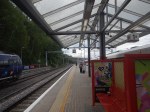
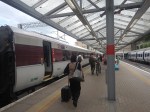
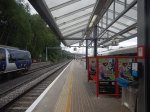
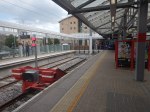
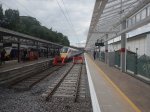
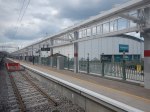
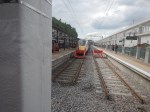
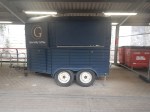








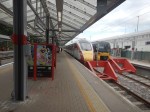
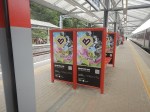
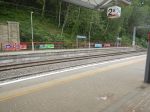

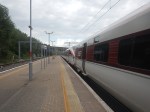
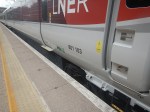
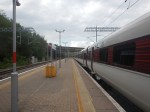
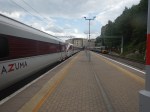

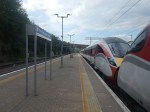

Note.
- The platforms are numbers 0-3, with the ten-car LNER train in platform 1.
- Platforms 0 and 1 can take ten-car LNER Class 800/801 trains.
- Platform 0 is the recently-built new platform.
- Poundland is alongside Platform 0.
- The Coffee seems to have bolted.
- As Bradford is this year’s City of Culture, someone has decorated the station’s benches.
I have some further thoughts.
Station Additions
The station needs a few additions, like a proper coffee shop, a better shop and toilets.
Platform Lengths
It would appear that Platforms 0 and 1 are able to take a pair of Class 800, 801 or 802 trains, which are just under 260 metres long and each can carry 604 passengers.
It would also be able to handle a single nine-car Class 800, 801 or 802 train, which are just under 234 metres long.
This would mean, that at a future date, the station could handle a 200 metres long High Speed Two Classic-Compatible half-train.
Number Of Services
It appears there were seven services to and from London, with about one every two hours.Going to London three were nine-car trains and four were ten-car trains.
I travelled both ways in the same ten-car train.
Technology Behind Siemens Mobility’s British Battery Trains Hits The Tracks
This title of this post is the same as that of this news item from Siemens, which was published in December 2024.
These three bullet points introduce the news item.
- The Mireo Plus B battery train is rolled out in the East Brandenburg network, Germany, using the same technology as the British Desiro Verve project.
- The Desiro Verve would save £3.5 billion and 12 million tonnes in CO2 emissions for Britain’s railways over 35 years.
- The development marks the latest step of this technology’s journey to Britain’s railways.
No-one, including me, seemed to have spotted this news item, especially, since it is significant to both the UK and Germany.
But then parts of Siemens’s home country; Germany and Yorkshire, where they are building, a train factory to build London’s new Piccadilly Line trains have something big in common – There is a distinct shortage of electric trains and the overhead wires to power them.
So did German engineers, egged on by pints of British real ale, realise that their battery-electric technology for the Mireo Plus B battery-electric train, would turn a Desiro City multiple unit, like the Class 700, 707 or 717 into battery-electric trains.
These are three paragraphs from the Siemens news item.
The innovative technology behind Siemens Mobility’s British battery trains has been rolled out in the East Brandenburg network in Germany.
31 of the company’s Mireo Plus B trains are being phased in to the Berlin Brandenburg metropolitan region, beginning on Sunday (15 December) and is the latest proof point of the technology that underpins the Desiro Verve project in Britain. This follows the debut of this technology on 27 new trains in the Ortenau region of Germany in April, with more set to arrive in Denmark in 2025.
The British Desiro Verve trains would be assembled at Siemens Mobility’s new Train Manufacturing Facility in Goole, East Riding of Yorkshire, formally opened by the Transport Secretary and Mayor of London in October.
I’d always wondered, what Siemens would do with this factory, when it had finished making the Piccadilly Line trains.
It also should be noted, that the boss of Siemens UK, when the Goole factory was planned was Jürgen Maier, who according to his Wikipedia entry has Austrian, British and German citizenship and is now the boss of Great British Energy.
I believe that Siemens have big plans for the Goole factory.
One thing it has, that at the present time could be a problem in Germany, is large amounts of renewable electricity and hydrogen, so will energy-intensive components for trains be made at Goole?
It will be interesting to see how the Goole factory develops.
The Desiro Verve Train For The UK and Ireland
In the Siemens news item, their Joint CEO for the UK and Ireland; Sambit Banerjee, says this.
The Desiro Verve would be assembled at our state-of-the-art Goole Rail Village in Yorkshire and offers an integrated solution to replace Britain’s aging diesel trains without having to electrify hundreds of miles of track, saving the country £3.5 billion over 35 years and providing a practical path to decarbonising British railways.”
In June, Siemens Mobility identified how the Desiro Verve could save Britain’s railways £3.5 billion over 35 years compared with using diesel-battery-electric ‘tri-mode’ trains. This would support the Government’s aim of removing diesel-only trains from Britain’s railways by 2040.
The British trains would be powered by overhead wires on already electrified routes, then switch to battery power where there are no wires. That means only small sections of the routes and/or particular stations have to be electrified with overhead line equipment (OLE), making it much quicker and less disruptive to replace diesel trains compared to full electrification.
I agree with his philosophy.
The Rail Charging Converter
When I wrote Cameron Bridge Station – 15th May 2025, I described how a short length of overhead electrification could be erected at the station to charge passing trains, using their pantographs.
Cameron Bridge station is lucky in that there is already a 132,000 KVAC electricity connection to the distillery next door.
But at other places, where there is no connection, you could wait as long as seven years to be connected to the grid.
So Siemens have come up with the Rail Charging Converter, that provides a local electricity supply to support the charger.
It is described in this paragraph from the news item.
This OLE can also be installed much more quickly using Siemens Mobility’s innovative Rail Charging Converter (RCC), which makes it possible to plug directly into the domestic grid – potentially cutting delivery times for OLE from seven years to as little as 18 months.
This Siemens visualisation shows a Verve train and an RCC.
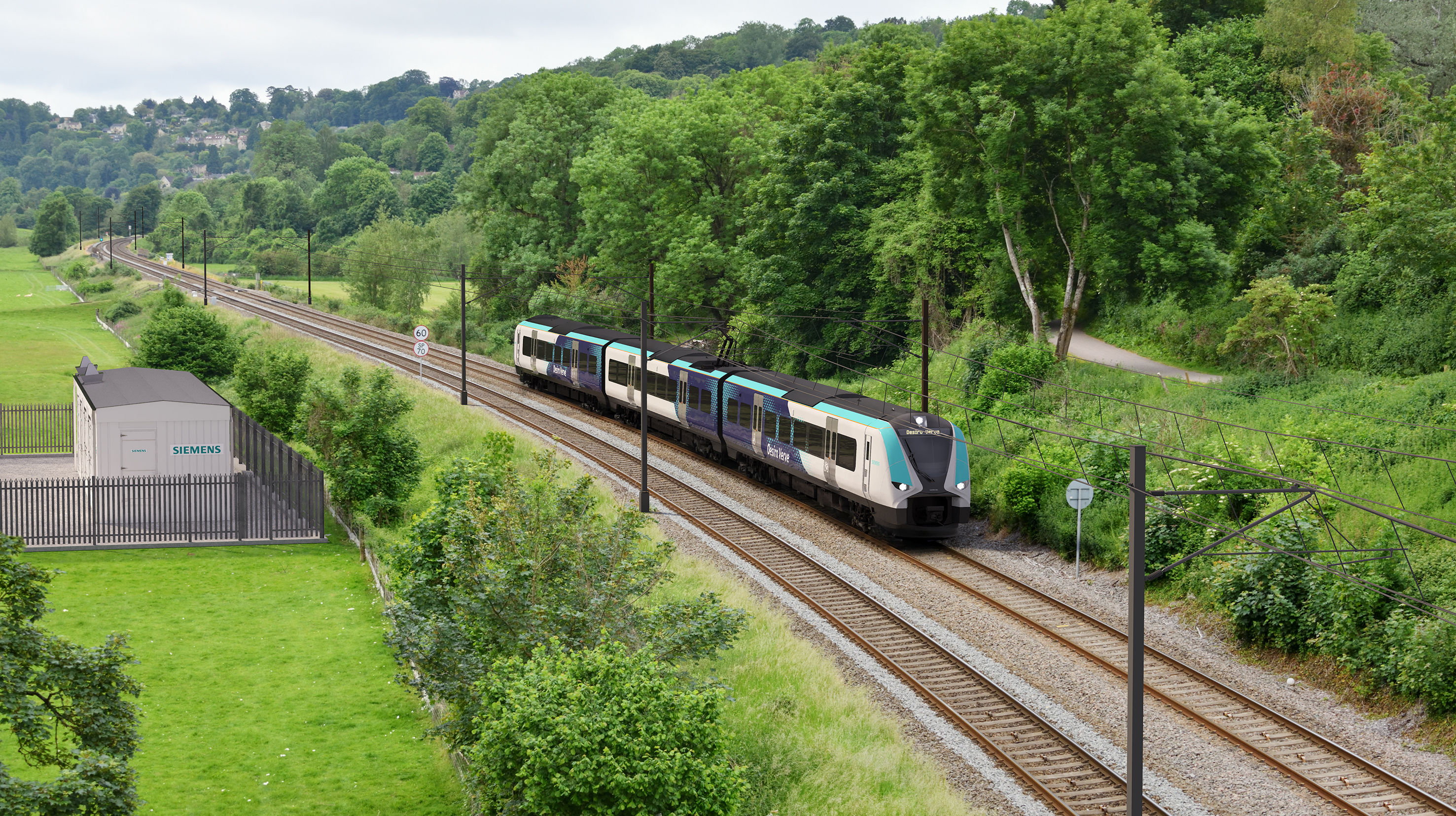
This arrangement could be used in sensitive countryside or close to historic buildings.
Modern Railways – June 2025
There is an article about the Siemens technology in the June 2025 Edition of Modern Railways.
It is called The Battery Revolution Starts In Long Marston for which this is part of the sub-heading.
New technology being installed by Siemens Mobility at Porterbrook’s test facility paves the way for widespread use of battery trains in the UK.
The article is a must-read.
Conclusion
Siemens appear to have the technology with their Rail Charging Converter and battery-electric trains like the Verve and the Mireo Plus B, to be able to decarbonise lines without electrification all over the world.
Would larger gauge trains be delivered from Germany and smaller gauge ones from Goole?
I wouldn’t be surprised that a version for a German S-Bahn could share more characteristics, with a small British train, than a large German one.
I can also see an underground railway, that was built without power in the tunnels. So if you were building the Waterloo and City Line today, would it be battery-electric and charged at each end of the line using a pantograph?
Where Have All The M & S Gluten Free Ginger Snaps Gone?
I eat a lot of Marks & Spencer’s gluten-free ginger snap biscuits.

Note.
- Three make a good snack.
- I find ginger is good for me.
- They are the best biscuits for dunking I’ve ever found.
But I’ve only found one lonely packet in the last two weeks.
And that was in Marks & Spencer’s Islington store, hidden away on the wrong shelf, all by itself.
Relief At Last
I was able to buy three packets in the Marks and Spencer Food Hall today, which is the 21st of May.
I Keep Getting Offers Like This
This is an offer, I received from Nationwide.
Make things happen in 2025. You could borrow £7,500 – £25,000 over 1 to 5 years with a rate of 5.9% APR Representative.
Note.
- I have banked with them for probably twenty-five years.
- I got this after, I had successfully logged in.
- I don’t really need the money.
I have also received unsolicited offers from other well-known banks.
In Is Internet Security Sometimes Over Secure?, I described how eBay seemed to have stopped me from using my credit cards on-line.
Marks & Spencer cleared that bother up for me and the offers started after they did.
But at least, since the trouble with eBay, I’ve not lost anything to scammers, although eBay might have.
Is it just a coincidence, that the offers started after Marks & Spencer cleared up my credit rating or does it always happen, when your credit rating improves?
It could also be that the banks have masses of money to lend and no-one is borrowing anything.
Support For Edinburgh Tram-Train Scheme
The title of this post, is the title of a third-of-a-page article in the June 2025 Edition of Modern Railways.
This is the first paragraph.
Final-Year civil engineering undergraduates at Heriot-Watt University’s Edinburgh campus have received warm support for a study in which they recommend reopening the city’s 7.5 mile South Suburban Railway, used for freight and diversions since 1962, using tram-trains.
It looks like they would start in the West at say Edinburgh Gateway or the Airport and would then turn South at Murrayfield to join the South Suburban Railway at Gorgie.
This OpenRailwayMap shows the tracks to the South of Murrayfield stadium.
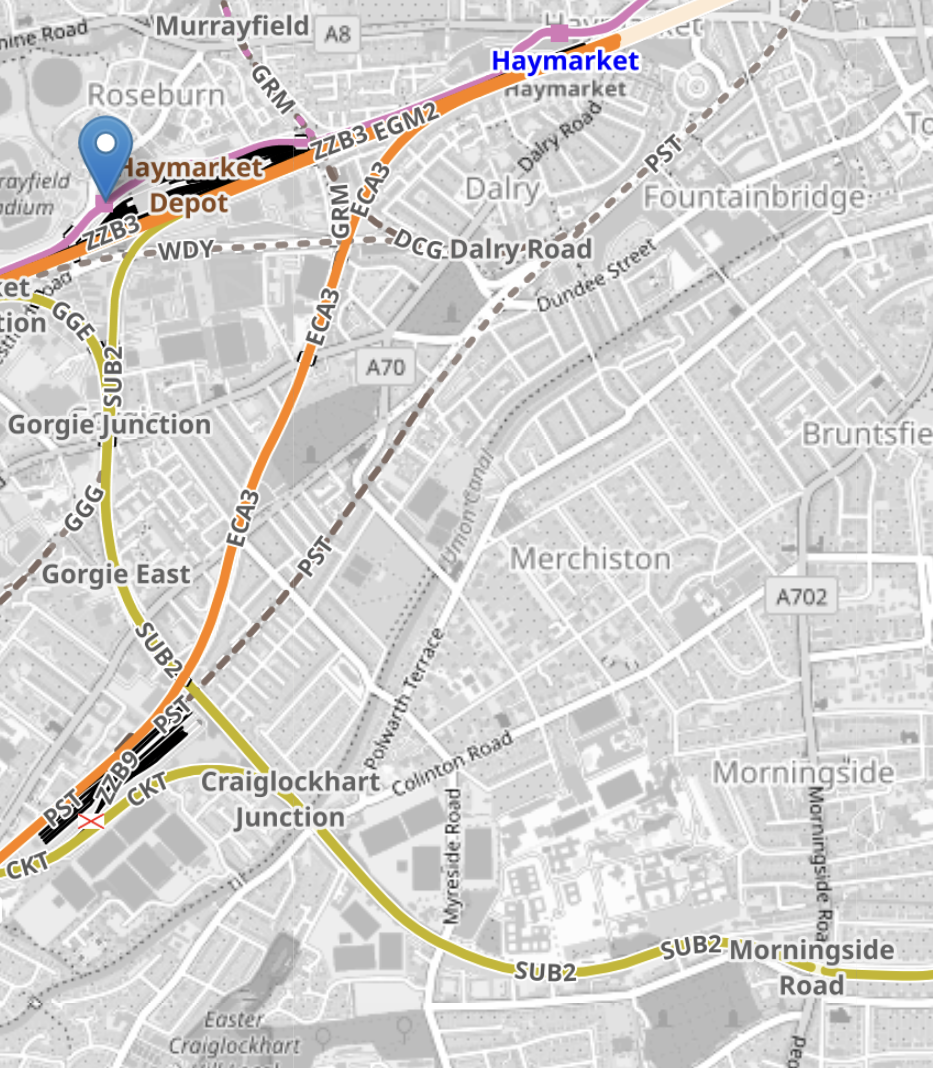
Note.
- The more Westerly-oriented orange tracks lead to Glasgow.
- The orange tracks running South-Westerly are the tracks to Carstairs.
- The yellow tracks are the South Suburban Railway.
- Tram-trains could then go all the way to Brunstane on the Borders Railway.
- The blue arrow indicates the tram-stop for Murrayfield.
- I would assume that the connection to the South Suburban Railway, is to the East of this stop.
- Gorgie East, Craiglockhart and Morningside Road were stations on the South Suburban Railway.
This map shows where the South Suburban and Borders Railways meet in a large triangular junction.
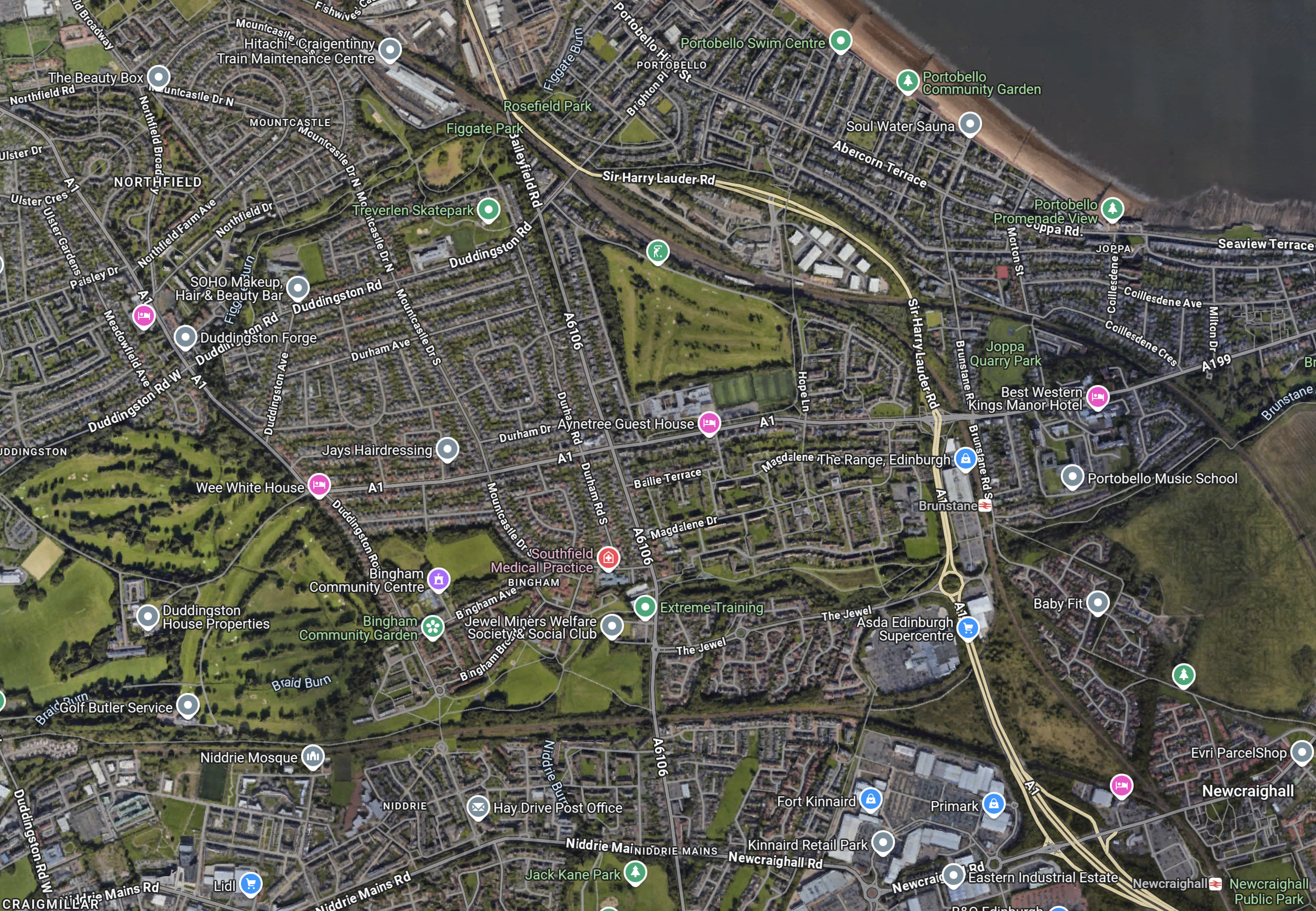
Note.
- Newcraighall station on the Borders Railway is in the South-East corner of the map.
- Brunstane station is to its North-West almost halfway up the map.
- The two stations are the North and South points of the triangular junction, where the South Suburban and Borders Railways meet.
- The South Suburban can be seen going West towards Gorgie and Murrayfield.
- Edinburgh’s beach at Portobello is in the North-East corner of the map.
- Between Murrayfield and Brunstane, there would be an appropriate number of tram stops and a tram-train every fifteen minutes.
Optionally, the route can be extended to Leith on a mothballed freight line.
This OpenRailwayMap shows the railways and tramways of Edinburgh between Brunstane, Edinburgh Waverley and Leith.
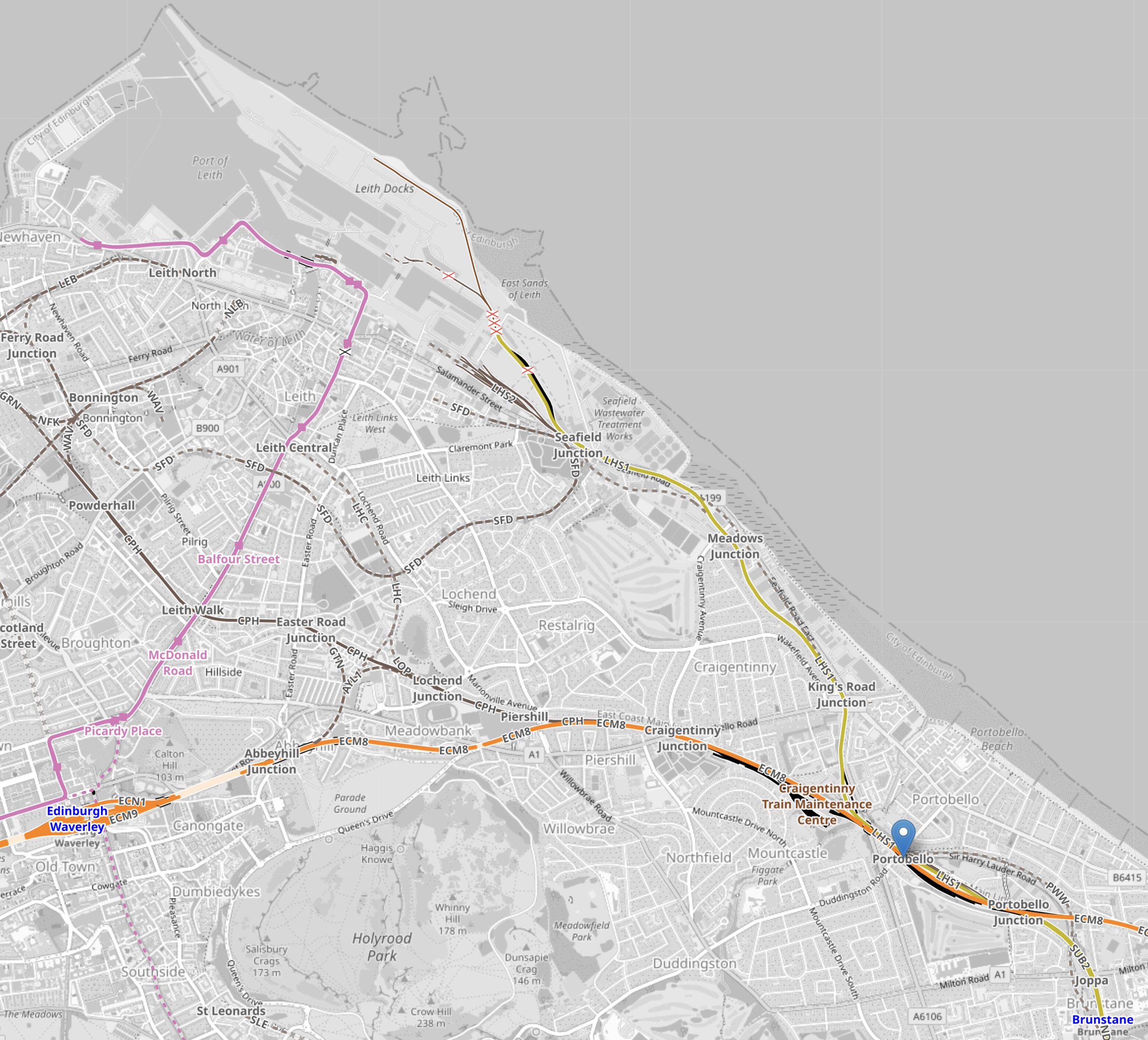
Note.
- The orange track running across the bottom of the map is the East Coast Main Line into Edinburgh Waverley station, which is clearly marked.
- The pink track is the Edinburgh tram to Newhaven.
- Brunstane station is in the South-East corner of the map.
- The site of the former Portobello station is marked by the blue arrow.
- The yellow track from Portolbello up the coast is a mothballed freight line to Leith Docks.
The proposal suggests that the tram-train route finishes at Leith Docks. One of the reasons, is that this part of Edinburgh, is not well served by public transport.
I have some extra thoughts.
Changing Between Borders Railway and the Tram-Train At Brunstane Station
Brunstane station, is a two-track station, with only one platform, so there may need to be track modifications.
Do Edinburgh’s Urbos Trams Have A Tram-Train Variant?
They do!
Do Edinburgh’s Urbos Trams Have A Battery Variant?
Battery tram-trains charged at either end of the route will be needed.
A battery-electric Urbos 3 tram, can be seen running through the City of Birmingham in England.
Conclusion
The proposal looks feasible to me. But the devil will be in the detail.
Leven Station – 15th May 2025
I was only at Leven station for a few minutes, but I was able to take these pictures.






Note.
- There are two platforms, one each side of a wide island.
- The platforms are 205 metres long.
- As four-car Class 385 trains are 93.3 metres long, each platform will be able to take a pair of four-car Class 385 trains.
- Will the station platforms be used to stable four trains overnight.
- The car park has 134 spaces.
- On approach to Leven station, there appears to be a crossover, which allows trains to use either platform.
From the Wikipedia entry for Leven station, it appears a second hourly service starts on the 18th May 2025, with services alternating between going via Kirkcaldy and Cowdenbeath.
It also appears that last night (17th May 2025) two trains spent the night in Platform 1 at Leven station.
In The Lack Of Information At Edinburgh Waverley Cost Me £55.10, I explain, why the chaos at Waverley station didn’t give me enough time to do more on Thursday.
 The Anonymous Widower