Zero Carbon? Not Here! Carbon-Fibre Bogie Frame
When I was at University in the 1960s, the big UK engineering project was the Rolls-Royce RB-211 turbofan engine.
One of the features of the engine was a carbon-fibre fan blade, which saved weight and thus made the engine lighter and more efficient.
However the blades were found to shatter with bird strikes and titanium had to be used instead.
At Liverpool University, we knew something was wrong, as a fellow student on our course was the son of the Manager of Tesco in Derby. What used to happen to Tesco’s out-of-date chickens? They ended up at Rolls-Royce, where they were used to test jet engines for bird-strikes. He told us the story of the failed testing one liquid lunch-time.
That was over fifty years ago and the RB-211 has morphed into the successful Rolls-Royce Trent engine, which first ran in 1990 and is still going strong.
Carbon-fibre has gone its own way and is used in many applications from cars to tennis rackets and golf clubs.
The title of this post is the same as that of this article on Rail Engineer.
The article describes work at Birmingham University to create a carbon-fibre bogie frame.
This paragraph from the article describes the outcome.
A major achievement is that the mass of the frame as built is 350kg, compared to the steel equivalent of 936kg. By the time the metal fittings were installed and paint applied, the mass had increased to 940kg compared with the steel equivalent of 1468kg, a reduction of over half a tonne per bogie.
Lighter bogies mean lower track-access charges.
I will be interesting to see how this project ends, when a prototype has been running in a real train.
The Definitive Hydrogen Train
There is only one hydrogen-powered train in service and that is the Alstom Coradia iLint, which is running in Germany.

I feel it is very much an interim design, as Alstom has taken a diesel-mechanical Lint train and swapped the diesel for a hydrogen-powered electricity generator and an electric motor.
Alstom are converting electric Class 321 trains into a hydrogen-powered version called Breeze.
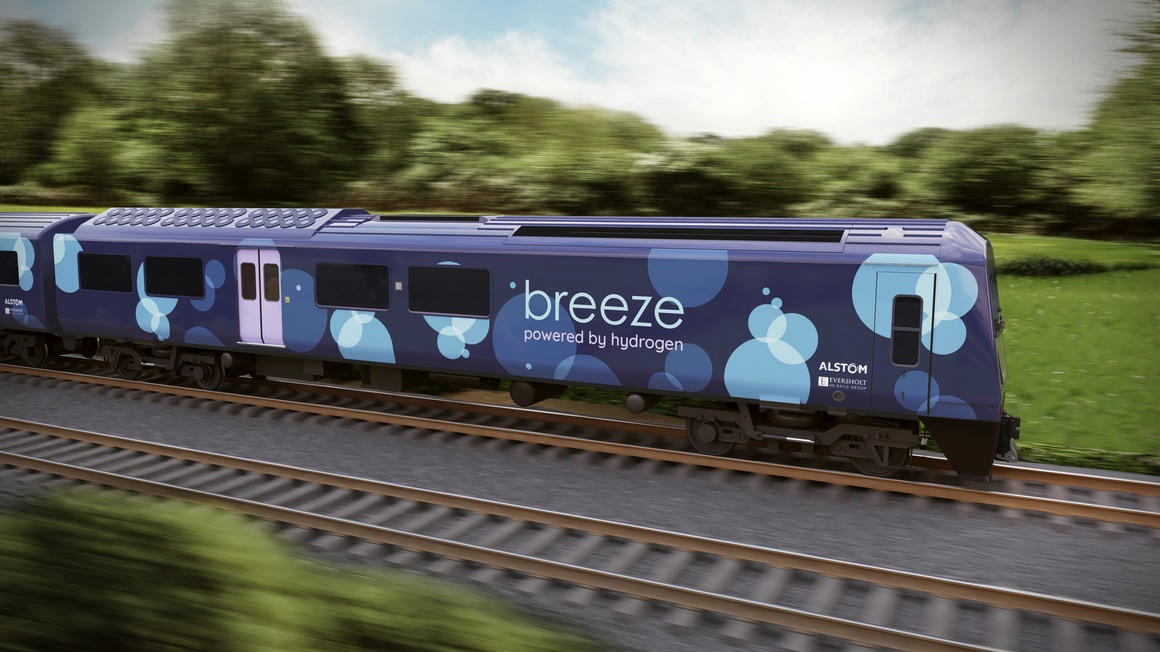
A typical train would be three cars. The visualisation shows one of the two driver cars, that contain a large hydrogen tank behind the cab.
Between the two driver cars would be a trailer car.
Using Electrification
Nothing has been disclosed yet, but it would surely be easy to allow this hydrogen train to keep its pantograph on the trailer car and be able to use electrification if it is installed.
This would increase the range of the train and might allow a version with a smaller hydrogen tank and a greater passenger capacity.
Charging Batteries
In a definitive hydrogen-powered train, which had been designed from scratch to use hydrogen, I could envisage, that the batteries could also be charged, when the train is connected to either electrification or a charging station.
A Smart Computer
The train would have a very smart computer, which would do the following.
- Manage the various power sources.
- Choose the appropriate source for the route, weather, passenger load, fuel and battery levels.
- Raise and lower the pantograph automatically.
- Control the trains systems to minimise electricity use.
This is little different to many trains, built in the last few years.
Conclusion
The definitive hydrogen-powered train will be a battery-electric-hydrogen hybrid train.
Hardly Any Passengers – But Greater Anglia’s Trains Are More Reliable
The title of this post is the same as that of this article on the Great Yarmouth Mercury.
This is the introductory paragraph.
It may be operating fewer trains and carrying a fraction of the passengers it was – but Greater Anglia’s trains are now much more reliable for essential workers, figures show.
Greater Anglia’s most punctual route was Manningtree to Harwich at almost 99 %.
Automated Vegetation Monitoring Technology Deployed In Train Cabs
The title of this post, is the same as that of this article on Railway Gazette.
This is the introductory paragraph.
Transport for Wales has worked with technology company One Big Circle Ltd to fit trains with ‘smart’ cameras designed to automatically record, analyse and report lineside vegetation risks.
This is surely, a simple application of technology, that will spot vegetation problems, before they cause serious trouble.
H2-Share Launches First Hydrogen Truck
The title of this post, is the same as that of this article on H2-View.
These are the two introductory paragraphs.
H2-Share’s first hydrogen-powered rigid truck has hit the road in the Netherlands.
The European project aims to facilitate the development of a market for low-carbon heavy-duty vehicles that run on hydrogen for logistic application.
It looks a well-thought out project to develop a market for hydrogen trucks.
- Looking at the picture, it appears that the project has taken an off-the-shelf DAF truck and modified it for hydrogen.
- The truck is a two-axle 27 tonne truck.
I shall follow this project.
Coming Or Going?
I took the pictures of this lorry carrying concrete staircases in the Balls Pond Road.
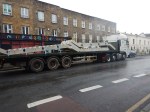
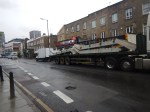
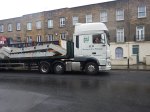
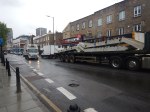
I like a good puzzle. So where were these three staircases going on a truck, that was obviously from Cornwall?
- They look to be very well-made, with a quality finish.
- Had they been made in Cornwall and were being delivered to a skyscraper in the City?
- Had they been made in East London and were being taken to Cornwall?
The truck was facing Highbury Corner, so would the second be the most likely?
On the other hand, Google found a company called Cornish Concrete Products at Bissoe, only a few miles from Redruth.
De Beauvoir Square
This is my local square, which is about fifteen minutes walk.
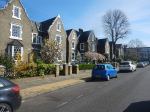
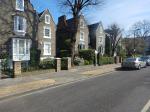




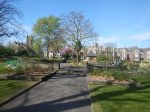

Note.
- C and I tried to buy one of the Dutch style houses in the square from the screenwriter; Alun Owen in about 1971.
- It would have cost just £7,500. Now a hundred times that, wouldn’t buy it!
- There was a gardener at work.
De Beauvoir Town is not what you’d expect in Hackney.
Queuing For Marks And Spencer In Dalston
I took this picture of the orderly queue waiting to get into Marks and Spencer in Dalston.

It does appear that everybody was obeying the rules and I only took twenty minutes to enter the store.
- The store was well-stocked, although there were very few ready meals with long Best Before dates.
- Gluten-free bread, biscuits and cereals were at near normal levels.
- There were about a dozen bottles of Adnams low-alcohol beer on the shelves, which I reduced by a couple.
- There were no gluten-free cakes. Not that I buy them often.
- Some lines like gluten-free sandwiches seem to have been dropped. Not that I wanted any, as I won’t be travelling.
- The staff were being very professional.
I was able to get enough food in my bag to get me through to the middle of next week.
Greater Manchester Police Warning After 660 Parties Shut Down
The title of this post, is the same as that of this article on the BBC.
This is the introductory paragraph.
Greater Manchester Police has warned people not to breach lockdown rules over Easter after it had to break up 660 parties last weekend.
This was also reported.
- There were 1,132 coronavirus-related breaches reported between Saturday and Tuesday.
- Some of the 494 house parties had DJs, fireworks and bouncy castles.
- There were also 166 street parties.
- One woman in Bury was arrested.
The force also had to deal with 122 different groups gathering to play sports, 173 more gatherings in parks and 112 incidents of anti-social behaviour and public disorder.
There have been some similar reports in London, but not on this scale.
So why is it, that Manchester disobeyed the rules so much?
Is it because the BBC is in Manchester and it’s easy to report?
A Bus For The Twenty-First Century
What puzzles me, is why bus drivers in London, seem to be suffering more from COVID-19 infection, than drivers elsewhere!
In London, all buses have two or three doors and contactless ticketing, whereas in many parts of the UK, there is often only one door and no contactless ticketing.
This must mean, that there is generally less interaction between the driver and passengers in the capital. So logic would say, that outside of London, there should be more passing of infections between everybody on the bus.
An Observation In Manchester
Ten years ago, I observed behaviour on a single-door Manchester bus going to Oldham, with a union rep for bus drivers, who by chance happened to be sitting beside me.
The scrum as passengers entered and left the bus by the same door was horrific and the rep told me, that the local riff-raff were always trying to nick the driver’s money.
He told me, that a London system based on contactless ticketing was union policy and would cut attacks on staff, which he said had virtually stopped in London.
A Bus For The Twenty-First Century
The government has said that millions will be available for new zero-carbon buses, powered by hydrogen. I doubt that batteries will be able to provide enough power for many years.
It is my belief that given the new circumstances, that the bus should also have the following features.
- It should be as infection-unfriendly as possible, as COVID-19 won’t be the last deadly infection.
- Contactless ticketing by credit card or pass.
- Full CCTV to identify non-payers or those with stolen cards.
- Two doors with one in the middle for entry and one at the back for exit.
- It would be possible on some routes for both doors to be used for entry and exit.
- Wheelchairs would enter and leave by the middle door, where the ramp would be fitted.
I would put the stairs to the top deck on the left hand side of the bus, with the foot of the stairs leading directly into the lobby by the middle door.
The Van Hool ExquiCity
The Van Hool ExquiCity is an alternative solution, that is already running in Belfast, where it is named Glider.
It is probably best described as a double-ended articulated bus, that runs on rubber tyres, that thinks it’s a tram.
This press release from Ballard is entitled Ballard-Powered Fuel Cell Tram-Buses From Van Hool Now in Revenue Service in France, describes the latest hydrogen-powered version of the Exquicity, which is now in service in Pau in France.
- Each bus appears to be powered by a 100 kW hydrogen fuel cell.
- The buses are over eighteen metres long.
- Twenty-four metre double-articulated tram-buses are available.
- The buses seat 125 passengers
- The buses have a range of 300 kilometres between refuelling.
I like the concept, as it brings all the advantages of a tram at a lower cost.
Here’s a video.
It certainly seems a quiet bus.
I desperately need to get to Pau to see these vehicles.
Conclusion
We could design a new bus for the twenty-first century, that tackles the problems facing the bus industry.
- Climate change and global warming.
- Control of deadly infections like COVID-19.
- Efficient, fast ticketing.
- Attacks on staff.
- Petty crime.
- Access to public transport for the disabled, the elderly and those with reduced mobility.
We certainly have the skills to design and manufacture a suitable bus.
 The Anonymous Widower