A Design Crime – The Average Smoke Detector
On Saturday Evening, the smoke detector in my bedroom decided to go off.
I was able to silence it about three times, but it refused to go off permanently.
I then decided to take it down, by standing on the bed.
Unfortunately, I slipped and broke the detector.
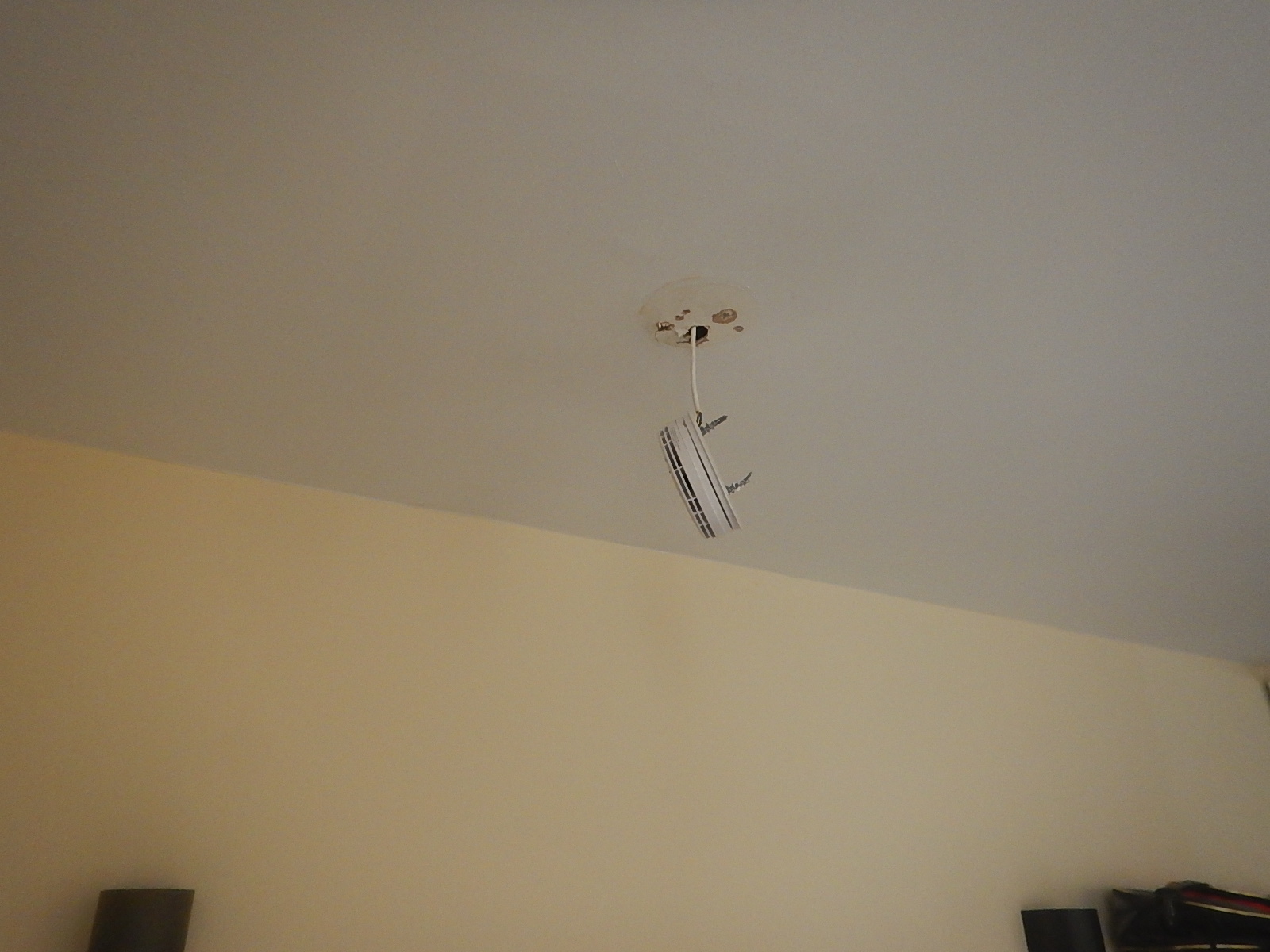
It is not the first altercation, I have had with the cheap and nasty smoke detectors in this house, which were probably bought in Istanbul market for a few pence.
- In my view, there is a need for a superior type of smoke detector wired into a building in a better way.
- It should be possible to replace a failed detector, like I had on Saturday in a simple operation without any tools.
- There should also be a master switch in the house, that switches off all the smoke detectors.
- Instructions on how to deal with the smoke detectors in case of failure should be in an obvious place in the house, like on the door of the meter cupboard.
Smoke detectors are too important, to be designed down to the cheapest possible station and most are a true design crime.
Marks And Spencer In Dalston Was On The Ball
This morning, I walked to Marks and Spencer in the Kingsland Road for essential supplies.

I got more than I needed and now have enough food in the fridge and my cupboards for the next ten days.
The hold-up in the store were the tills, but one of the assistants had taken control of the situation, by marshalling customers to spare self-service tills, scanning goods and helping to get the customers out of the store as fast as possible.
It was real East End spirit in action.
Remember that the BBC soap, was nearly shot in a real square close to Dalston and in some ways the chivvying and banter could have been transposed.
Is EastEnders dealing with COVID-19? I doubt it!
This Is My Second Lockdown
I can’t be the only person, but in the 1970s, I has locked myself away for nearly a year before. I did it to write the first version of the Project Management software; Artemis.
There are some differences between my situation then and my situation now.
- My wife was alive then and we saw each other for perhaps two days a week.
- I could drive and I occasionally went down the Clopton Crown for the odd pint and meal!
- I hadn’t been diagnosed as a coeliac, as that happened in 1997.
- There was no Internet or social media.
- There was no Radio 5 Live.
- I am a better cook now, than I was then.
- I am within walking distance of a Marks and Spencer Simply Food store.
I think the rules for surviving are as follows.
- Eat and drink enough.
- Have entertaining radio or television on.
- Break the day up with a bit of exercise.
- Get a good night’s sleep.
- Arrange good weather.
Let’s hope this lockdown turns out as well as the last.
Our Social Distancing Is Working, Says Sir Patrick Vallance
This is a headline on the front of today’s Times.
Sir Patrick is the government’s chief scientific adviser and I doubt he would use words like that lightly.
He noted these points.
- Hospital admissions are increasing by a stable amount each day.
- The NHS is coping as numbers have stopped accelerating.
- He felt that reductions in travel were working.
- Public transport usage has severely reduced.
He indicated that more of the same was needed.
I wouldn’t be surprised to see that by the end of this week, we’ll be able to make much better predictions on the progress of the COVID-19 virus through the UK population.
Here in the UK, we could be approaching the End of the Beginning!
Proudly South African Hydrogen Breakthrough With Shell’s Backing
The title of this post, is the same as that of this article on Creamer Media’s Mining Weekly.
This is the introductory paragraph.
At this time of huge coronavirus uncertainty, the chests of a group of engineers here must surely be bulging with pride following their major Proudly South African world breakthrough that could speed up the global deployment of hydrogen as a competitive universal and environment-friendly energy carrier.
I think it got a bit jumbled in the typing.
Reading the article it does seem that various developments are coming together in South Africa.
- A much simple electrolyser to produce hydrogen.
- South Africa’s platinum for catalysts.
- Large amounts of renewable energy.
The aim is to produce hydrogen at a comparable price with petrol.
This paragraph stands out.
South Africa has the combined solar and wind potential to produce competitive hydrogen, which can meet the world’s new environmental requirements.
The article talks about exporting hydrogen to Japan.
Conclusion
South Africa is a country that needs all the good news it can get.
This looks like it could be some of the best.
But how many other hot countries can take advantage of what looks like a breakthrough in the electrolysis of water to produce hydrogen for a fuel?
Testing Of Greater Anglia’s New Electric Trains Continues Amid Coronavirus Outbreak
The title of this post is the same as that of this article on itv.com.
These are the first paragraphs of the report.
Greater Anglia is continuing to test it’s new electric trains amid the coronavirus outbreak.
The company says they are following all government guidelines to ensure that the workforce is kept as safe as possible.
One of the new electric trains completed its maiden voyage to Liverpool Street recently – a journey the company says was a success.
Hopefully, the testing program won’t be delayed too long.
Tees Valley Wins £1.3million Project To Bring Hydrogen Vehicles To The Region
The title of this post, is the same as that as this article on the Tees Valley Combined Authority web site.
This is the introductory paragraph.
Hydrogen vehicles and refuelling stations will soon be coming to Tees Valley after it was today (February 5) announced that a £1.3million bid to Government had been successful.
The next two paragraphs give more detail.
Tees Valley Mayor Ben Houchen welcomed the result of a Government competition that will see two refuelling stations built in Middlesbrough and Redcar, plus a fleet of cars which use hydrogen technology for long-range travel (300+ miles) and fast refuelling capability.
The new refuelling stations could allow cars, buses, bin lorries and even trains to be powered by the super fuel.
This later paragraph details the expected economic benefits.
Figures from a draft report commissioned by the Combined Authority and produced by KPMG suggest that exploiting the opportunities of the hydrogen economy could add up to £7billion to the region’s economy by 2050, with the creation of as many as 1,000 jobs.
These figures seem to say hydrogen is good for the economy and jobs.
Coronavirus: Mercedes F1 To Make Breathing Aid
The title of this post is the same as that of this article on the BBC.
This is the introductory paragraph.
A breathing aid that can help keep coronavirus patients out of intensive care has been created in under a week.
From reading the article it appears that engineers from University College London, clinicians at University College Hospital and production engineers and specialists at Mercedes Formula One have combined to re-engineer and hopefully improve something called a Continuous Positive Airway Pressure (CPAP) device, which is already used in hospitals and has been used in China and Italy to combat the virus.
The new design would appear to have advantages.
- It doesn’t need an expensive ventilator.
- It doesn’t need an intensive care bed.
- From the pictures and video on a BBC Breakfast report, it looks to be quick and easy to manufacturer.
- A production rate of a thousand a day is claimed by Mercedes.
- The BBC Breakfast report also says, that patients don’t need to be sedated.
- It also looks like the NHS is going to fast-rack the device into use.
Will this rethinking of standard treatment increase hospital capacity and save lives?
I can’t answer the question, but given those behind the device, it must have a better than even chance of being a success!
Will The Railway Between Buxton And Matlock Be Reopened?
In Issue 901 of Rail Magazine in an article about reopening the Northern route between Exeter and Plymouth, this is said, about possible rail re-opening of Beeching cuts.
Although not yet confirmed, they are believed by RAIL to include bids to reinstate the former Midland Railway route from Matlock-Buxton, and the line between Lostwithiel and Fowey.
I have found this news story on the Matlock Mercury, which is entitled Quarry Firms And Heritage Operator Consider Peak District Railway Line.
This is the introductory paragraph.
Proposals to revive a disused rail line through the Peak District have moved a step forward, but not the passenger service some have called for.
The reasons for the reinstatement are given in the story.
- There is an enormous demand for stone from projects like Crossrail 2, High Speed Two and Heathrow Expansion and Derbyshire is a major source.
- Currently, stone trains between Derbyshire and the South-East take a roundabout route via the congested and unsuitable Hope Valley Line and Sheffield.
- A route via Matlock would join the Midland Main Line nearly thirty miles further South.
It should be noted that the original track-bed still exists and part is used for the double-track Peak Rail, with much of the rest being used for the cycling and walking route; the Monsal Trail.
Thoughts About The Design Of The Railway
In the June 2017 Edition of Modern Railways, there is an excellent article, which is entitled Connecting The Powerhouses, that was written by Colin Boocock.
I wrote a post with the same name, based on his article, from which a lot of the following thoughts are taken.
Colin Boocock’s Thoughts On The Design
I said this in my previous post.
The track bed of the Peak Main Line is still intact and the author of the article suggests that there could be two ways of rebuilding the railway.
- As a 75 mph single-track railway sharing the track-bed with the Monsal Trail.
- As a 90 mph double-track railway, after moving the Monsal Trail to a more picturesque route.
Four or five, reopened or new stations could be built with passing loops to enable the minimum service frequency to be achieved, which the author suggests should be the following in both directions in every hour.
- One fast passenger train
- One stopping passenger train.
- One freight train; full or empty.
But there are possible problems.
- The A6 has to be crossed.
- One local landowner didn’t allow consultants access to the line for an inspection.
- Severn Trent Water are digging a large pipe into the track-bed.
- Peak Rail have plans to extend their heritage line to Bakewell. Could both groups co-exist?
It sounds to me that everybody should find a good hostelry and thrash out a comprehensive co-operation agreement on the backs of engineering envelopes, fuelled by some excellent real ale.
But various improvements to the route and railway technology in general, in the last few years have probably made the reinstatement less challenging.
Ambergate Station And Junction
Ambergate station and the associated junction is where trains for Matlock station, leave the Midland Main Line and take the Derwent Valley Line.
This article on the BBC is entitled Major Rail Works To Affect Derbyshire Train Services and it describes work done to improve Ambergate Junction.
It is to be hoped, that the updating of the junction is at least well-documented, so that it can be updated easily to accept stone trains to and from the Derwent Valley Line.
Improved Handling Of Freight Trains At Buxton
In £14m Peak District Rail Freight Extension Unveiled, I indicated that the improvements at Buxton had been completed.
- There are now two long sidings, that can each take a 26 wagon stone train and allow them to reverse.
- Capacity has increased by 44 %
- No more trains will be running.
According to this document on the Network Rail web site, the sidings operate on a 24 hour basis and on average, accommodate 6-10 freight trains every 24 hour period.
I’m not sure, but it looks like the sidings also allow all stone trains to access the following.
- All quarries in the area with a rail connection.
- The Great Rocks Freight Line to access the Hope Valley Line and Sheffield
- The proposed reopened rail line to Matlock, Derby and the South.
The track layout at Buxton station would appear to allow trains to go between Manchester and Derby, once the Matlock and Buxton railway is reinstated.
Ambergate Station And Junction
Ambergate station and the associated junction is where trains for Matlock station, leave the Midland Main Line and take the Derwent Valley Line.
This article on the BBC is entitled Major Rail Works To Affect Derbyshire Train Services and it describes work done to improve Ambergate Junction.
It is to be hoped, that the updating of the junction is at least well-documented, so that it can be updated easily to accept stone trains to and from the Derwent Valley Line.
Signalling Improvements
One of Colin Boocock’s options for the route, is a 75 mph single-track railway sharing the track-bed with the Monsal Trail.
Single-track railways running an intense schedule could be a challenging signalling problem in the past, but with in-cab digital signalling, as used on Thameslink and the London Underground, it is much less onerous.
It should be possible to handle Colin Boocock’s desired minimum frequency of three trains per hour (tph) in both directions.
Colin Boocock’s second option of a 90 mph double-track railway, after moving the Monsal Trail to a more picturesque route, would be very much easier to signal to a very high degree of safety.
Electrification
Electrification would surely, be the best way to get heavy freight trains in and out of the area.
But I suspect the line could not be electrified in a traditional manner, as heavy gantries in the Peak District would not go down well!
But what about a design something like this?
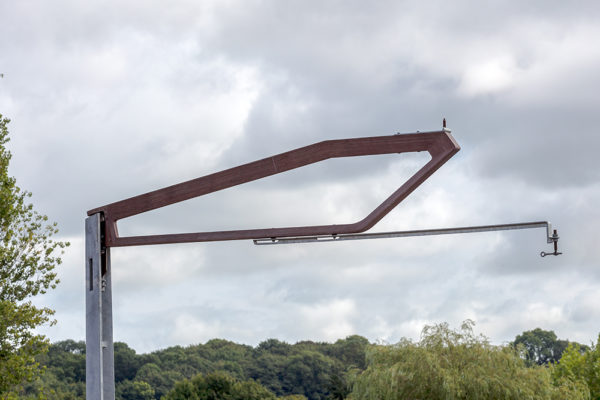
I talk about this design in Prototype Overhead Line Structure Revealed.
It does seem to be a good attempt to reduce the clutter of girders, gantries and wires!
Freight Locomotives
If electrification is not possible, which is probably the case, as the locomotives will need access to large amounts of freight sidings, then diesel power will be needed,
The current Class 66 locomotives are not the most environmentally-friendly locomotives, but hopefully in a sensitive area like the Peak District, some more advanced locomotives could be used.
Passenger Trains
Quiet battery-electric or hydrogen-powered trains would be ideal for the route.
How Many Stone Trains Will Use The Route?
With the current lockdown because of COVID-19, it’s a bit difficult to ascertain how many stone trains are currently going into and out of the quarries in an hour.
But from the Network Rail figures, I have found and Colin Boocock’s minimum figure, it looks like one tph would be a frequency for which to aim.
Could this frequency be handled between Matlock And Buxton?
Even if the route was single-track with passing loops, Colin Boocock’s minimum timetable could be achieved.
Note that the Great Rocks Freight Line will still be capable of handling trains via the Hope Valley Line and Sheffield.
Conclusion
I think that this scheme could be feasible, if engineers used modern signalling and other designs to blend in with the scenery.
Battery Storage Paves Way For A Renewable-Powered Future
The title of this post is the same as that of this article on Modern Diplomacy.
This is the introductory paragraph.
Battery storage systems are emerging as one of the key solutions to effectively integrate high shares of solar and wind renewables in power systems worldwide. A recent analysis from the International Renewable Energy Agency (IRENA) illustrates how electricity storage technologies can be used for a variety of applications in the power sector, from e-mobility and behind-the-meter applications to utility-scale use cases.
The article then goes on to outline a good summary of the uses and expected growth of battery storage.
 The Anonymous Widower