Hydrogen Refuelling In East Lothian
This article on Daily Business is entitled Hydrogen Refuelling Station Boost For Emission-Free Cars.
Hydrogen is coming!
BRP-Rotax Reveals Hydrogen-Powered Snowmobile
The title of this post, is the same as that of this article on H2-View.
This would appear to be s good example of the use of hydrogen-power, as it is both non-polluting and silent.




ÖBB To Test Hydrogen Multiple-Units
The title of this post is the same as that of this article on Railway Gazette.
This is the introductory paragraph.
The national operator’s passenger business ÖBB Personenverkehr has awarded sole bidder Alstom a contract to provide two hydrogen fuel cell multiple-units for trials.
The trial should start in April.
Will I Get Coronavirus?
Everybody is saying that washing hands regularly in soap and water, is the best defence against the coronavirus.
How do I wash this hand?

Wish great difficulty, I assume.
All Boots could sell me was a packet of Milton Baby Wipes.

Let’s hope they work.
An Accident In My Bedroom
I awork on Saturday morning to find myself in a bedroom covered in blood and a living room next door with half as much.



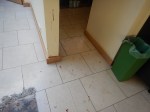




It appeared, that I’d fallen over the bathroom step in the middle of the night and banged my head on the toilet.
I ended up spending a night in the Royal London Hospital and they fixed me up well!
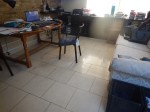
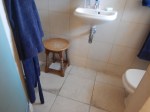
It is now Monday morning and the first picture says a lot. Note the the mat by the step is out of line. It slipped, I then tripped over the step and hit my head on the basin. There is olso an overturned stool in the bathroom, which I must have fallen on and this probably did more damage.
Next Stop, Hydrogen-Powered Trains
The title of this post is the same as that as this article on the BBC’s Future Platet web site.
This is the introductory paragraph.
As old diesel trains are phased out of rail networks around the world, the UK is about to test a new type of engine that could help to decarbonise railways – hydrogen-powered trains.
The article then goes on to summarise the current developments in hydrogen grains.
Northern’s Battery Plans
The title of this post, is half of the title of an article in the March 2020 Edition of Modern Railways.
It appears that CAF will convert some three-car Class 331 trains into four-car battery-electric trains.
- A three-car Class 331 train has a formation of DMSOL+PTS+DMSO.
- A fourth car with batteries will be inserted into the train.
- Batteries will also be added to the PTS car.
- The battery-electric trains would be used between Manchester and Windermere.
It looks like a round trip would take three hours including turnarounds, thus meaning three trains would be needed to run the service.
The article says this.
The branch was due to be electrified, but this was cancelled in 2017, and as a result 3×3-car Class 195 trains were ordered. As well as the environmental benefits, introduction of the battery ‘331s’ on Windermere services would free-up ‘195s’ for cascade elsewhere on the Northern network.
Note that the total length or the route is 98 miles of which only the ten miles of the Windermere Branch Line are not electrified.
What Battery Capacity Would Be Needed?
I reckon it will be fine to use a figure of 3 kWh per vehicle-mile to give a rough estimate of the power needed for a return trip from Oxenholme to indermere.
- Two x Ten Miles x Four Cars x 3 kWh would give 240 kWh.
- There would also be losses due to the seven stops, although the trains have regenerative braking, to limit losses.
Remember though that CAF have been running battery trams for several years, so I suspect that they have the experience to size the batteries appropriately.
In Thoughts On The Actual Battery Size In Class 756 Trains And Class 398 Tram-Trains, I say that four-car Class 756 trains will have 600 kWh of batteries and a range of 40 miles. I wouldn’t be surprised to find that a four-car Class 331 train had similar battery size and range on batteries, as the two trains are competing in the same market, with similar weights and passenger capacities.
Charging The Batteries
The Modern Railways article says this about charging the train’s batteries.
Northern believes battery power would be sufficient for one return trip along the branch without recharging, but as most diagrams currently involve two trips, provision of a recharge facility is likely, with the possibility that this could be located at Windermere or that recharging could take place while the units are in the platform at Oxenholme.
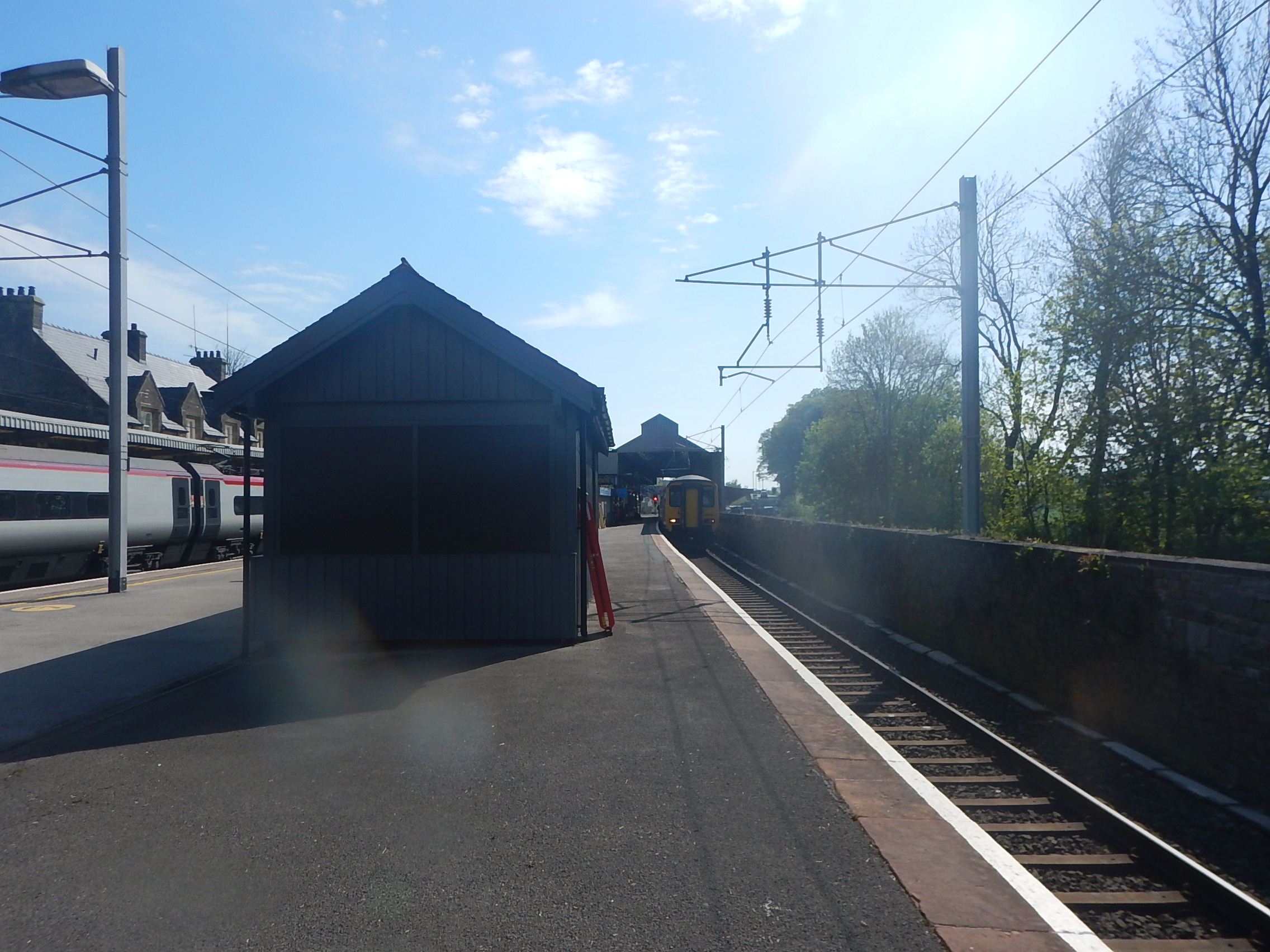
The bay platform 3 at Oxenholme station is already electrified, as this picture shows.
I particularly like Vivarail’s Fast Charge system based on third-rail technology.
A battery bank is connected to the third-rail and switched on, when the train is in contact, so that battery-to-battery transfer can take place.
It’s just like jump-starting a car, but with more power.
This form of charging would be ideal in a terminal station like Windermere.
- The driver would stop the train in Windermere station in the correct place, for passengers to exit and enter the train.
- In this position, the contact shoe on the train makes contact with the third-rail, which is not energised..
- The Fast Charge system detects a train is connected and connects the battery bank to the third-rail.
- Energy flows between the Fast Charge system’s battery bank and the train’s batteries.
- When the train’s batteries are full, the Fast Charge system switches itself off and disconnects the third-rail.
- The third-rail is made electrically dead, when the train has left, so that there is no electrical risk, if someone should fall from the platform.
Note that the only time, the third-rail used to transfer energy is live, there is a four-car train parked on top of it.
When I was eighteen, I was designing and building electronic systems using similar principles to control heavy rolling mills, used to process non-ferrous metals.
Changing Between Overhead Electrification And Battery Power
All trains running between Manchester Airport and Windermere, stop in Platform 3 at Oxenholme station to pick up and put down passengers.
- Trains going towards Windermere would lower the pantograph and switch to battery power.
- Trains going towards Mabchester Airport would raise the pantograph and switch to overhead electrification power.
Both changes would take place, whilst the train is stopped in Platform 3 at Oxenholme station.
Northern’s Hydrogen Plans
The title of this post, is half of the title of an article in the March 2020 Edition of Modern Railways.
I discussed Northern’s possible hydrogen trains in Fuelling The Change On Teesside Rails.
This new article gives a lot more detail in this paragraph.
Northern has submitted planning documents, with the preferred site for a maintenance and fuelling facility understood to be at Lackenby. As hydrogen units would have a more limited operating range than DMUs (around 600 miles), they would likely need to return to the depot every night. Northern believes the routes radiating from Middlesbrough to Nunthorpe, Bishop Auckland and Saltburn are ideal candidates for the operation, as they are unlikely to be electrified and can be operated as a self contained network using hydrogen trains. A fleet of around a dozen Breeze units is planned, with the possibility they could also operate services to Whitby and on the Durham Coast Line to Newcastle. Planning documentation suggested the first hydrogen train would be ready for testing in June 2021, but this was based on construction of the depot facility beginning in January this year.
It all sounds very comprehensive.
Capacity Comparison With The iLint
The Modern Railways article says this about the capacity of the Breeze.
A three-car Breeze is expected to have a similar passenger capacity to a two-car DMU.
A two-car Class 156 train, which currently work the lines around Middlesbrough, was built with 163 seats and the Lint 54, on which the iLint is based, has between 150 and 180 seats.
It will be interesting to see how actual seat numbers compare between the Breeze and iLint.
MAHYTEC Creates World’s First Hydrogen-Powered Riding Lawnmower
I searched for hydrogen-powered lawnmower and found this page.
Surely ideal for the Prince of Wales to buy for Camilla, when she does the mowing at Highgrove.
But seriously, if you can make a hydrogen-powered ride-on mower, you can make any number of smaller horticultural and agricultural vehicles, that run on hydrogen.
How long before John Deere or one of the big Japanese manufacturers releases a hydrogen-powered lawnmower, that takes the large grass-cutting market by storm?
It won’t be just the grass, that is green!
I suspect a company like ITM Power will provide the operator with their own hydrogen generator.
I can envisage the farm of the future, having the following.
- Hydrogen powered tractors, loaders and other powered machinery.
- Hydrogen-powered Range-Rover to speed through the lanes.
- Hydrogen-powered lawn mower to make the place look good.
- Hydrogen-powered vehicles for road use.
All would be powered by the farm’s own hydrgen generator, which might use their own wind turbine.
 The Anonymous Widower