Should The Borders Railway Be Extended To Carlisle Before The Opening Of High Speed Two?
The UK and Governments seem to be moving on extending the Borders Railway.
This article on the BBC is entitled Borders Railway Extension Study Supported.
This is the first two paragraphs.
The UK government has announced its backing for a feasibility study into extending the Borders Railway.
It could see the line from Edinburgh to Tweedbank taken to Hawick and Newcastleton and then on to Carlisle.
The promoters of High Speed Two have insisted that the High Speed Rail Line, is a line for all the UK.
By High Speed Two Between London And Carlisle
High Speed Two will have one train per hour between London and Glasgow, which will use the West Coast Main Line, to the North of Crewe.
This page on The Guardian is entitled How Will HS2 Change Journey Times To And From London?
The current time between Euston and Preston is two hours and eight minutes, which High Speed Two will reduce to one hour and twenty-four minutes.
Currently, the fastest trains between Preston and Carlisle take an hour and five minutes, so Carlisle is reached in three and a quarter hours.
I think it is a reasonable assumption to make that when High peed Two opens, Carlisle could be reached in two and a half hours, either direct or with a change at Preston.
West Coast Main Line Improvements
At the present time, the maximum speed on the West Coast Main Line, which is used by all trains between Preston, Carlisle and Glasgow is 125 mph.
But Virgin’s Class 390 trains could run at 140 mph with digital in-cab signalling. This improvement could reduce the time between Preston and Carlisle to an hour.
It is likely that before High Speed Two opens to Crewe in 2027, the Class 390 trains will be replaced.
As the West Coast Main Line and High Speed Two, will have the same operator, It would surely be sensible to replace the Pendolinos, with the High Speed Two classic-compatible rolling stock.
This is said in Wikipedia about High Speed Two rolling stock.
Alstom, one of the bidders for the contract to build the trains, proposed in October 2016 tilting HS2 trains to run on HS2 and classic tracks to increase overall speeds when running on classic tracks.
I wouldn’t be surprised to see the following.
- A single class of trains on High Speed Two handling all services.
- Classic services on the West Coast Main Line using High Speed Two rolling stock.
This approach has advantages.
- One type of train, must be more economic to operate.
- There would be timing improvements on West Coast Main Line services, due to the faster trains running under digital signalling.
- Trains could be introduced on West Coast Main Line services first.
, The trains might cost more, as Wikipedia points out.
But this will be a very large and important order for whoever wins the contract to build trains for High Speed Two and the West Coast Main Line!
So expect the bidders to submit some very innovative solutions for these trains!
No-one would change the fleet on the West Coast Main Line for a new fleet of faster trains, without doing the following.
- Removing some or all of the known problems with junctions and stations on the route.
- Installing digital signalling on the whole route and all trains.
- Introducing 100 mph freight locomotives and trains.
What would happen to timings to Carlisle?
I think the following would not be impossible, with new trains, digital signalling and selective route improvements.
- London and Carlisle in three hours using the West Coast Main Line.
- London and Carlisle in two hours using the High Speed Two to Crewe and then the West Coast Main Line.
Considering, that these trains could probably go between Carlisle and Glasgow in an hour, there could be some impressive times to Glasgow.
Extending The Borders Railway To Carlisle
As I said in the previous section, there will be a lot of improvement in the times between London and Carlisle in the next few years, with times possibly dropping to around two hours in 2027, when High Speed Two opens to Crewe.
Before 2027, it looks like there will be a steady reduction in journey times between London and Carlisle.
This will mean that increasingly the residents of the Borders will go to Carlisle, when they want to go South.
So I come to the conclusion, that it is absolutely essential, that the Borders Railway be extended to Carlisle as soon as is possible.
Improving The West Coast Main Line North Of Carlisle
To make best use of the new trains between Carlisle and Glasgow, there will probably be improvements to the West Coast Main Line through and to the North of the City.
The old MOD Depot at Longtown has been proposed as a new freight depot and this too will also require improvements, to the West Coast Main Line.
As the rebuilt Borders Railway will join the West Coast Main Line in the Longtown area, it looks to me, that a proper plan, would incorporate the Borders Railway connection in the West Coast Main Line improvements, that probably must be done.
Conclusion
High Speed Two will turn Carlisle into an important rail hub with links all over the Borderlands.
I believe it is essential that the Borders Railway should be extended to Carlisle as soon as possible and certainly before 2027.
With good planning, the Southern section could even be done as part of West Coast Main Line improvements for High Speed Two.
Is There A Connection Between The Rise Of Knife Crime And Brexit?
This may seem an outrageous suggestion to make!
However, serious knife crime seemed to increase around or just after the Brexit referendum.
But the Brexit Referendum on the 23 June 201, does seem to have brought out the worst in some people.
- Jo Cox was murdered just seven days earlier.
- Since then there has been the rise of the far-right.
- MPs of all colours have received terrible abuse on social media.
- Racist chants seem to have reappeared at some football matches.
- The Labour Party has had a row on anti-semitism.
I’m no psychologist, but it’s almost as if the Brexit result has said it’s alright to go against established norms.
I wonder if crime rose in the Phoney War in 1940.
This page on History Extra is entitled 10 Facts About Crime On The Home Front iI The Second World War.
Read it and see what you think!
Greater Anglia Train Drivers Taking Leap Into New Technology
The title of this post is the same as that of this article on Rail Engineer.
This is the first paragraph.
New state-of-the-art train simulators are being used to train 768 Greater Anglia drivers that will be driving the new trains due to replace all of the company’s existing fleet from later this year, when it starts to receive 38 bi-mode and 20 all-electric trains from Stadler followed by 111 more electric commuter trains from Bombardier.
The article is a must-read, as it gives a good insight into part of the process of getting mew trains into service.
Hitachi Plans To Run ScotRail Class 385 EMUs Beyond The Wires
The title of this post is the same as that of this article on Rail Engineer.
This is the first paragraph.
Hitachi are in discussions with the Scottish Government to run a Class 385 variant with underfloor batteries that could either be charged whilst under the wires or whilst stationary at the end of the route.
The article makes these points, about adding batteries to Class 385 trains.
- It would be straightforward to add batteries to give a range of twenty miles on batteries.
- Sixty miles would be possible but more difficult.
- Experience gained with the DENCHA trains in Japan would be used.
The article concludes with this paragraph.
Hitachi’s proposal to operate battery trains in Scotland is at an early stage. However, with their use being recommended by the rail decarbonisation task force and the Scottish Government about to pass new climate change legislation, it may not be long before battery trains are operating in Scotland.
I think it should be noted that Hitachi’s order book is rather thin these days and it appears that innovative technology will sell new trains.
Alstom, Bombardier, CAF, Siemens, Stadler and Vivarail have all designed, demonstrated or sold trains, where batteries are used improve efficiency or extend range.
As Scotland has several routes, where battery trains could provide a service, perhaps Hitachi thought it was time to do some marketing, to make sure that they got any orders for battery trains.
Scotrail would probably prefer to have a battery train similar to their largest fleet of electric trains.
Electric Trains On The West Highland Line Between Glasgow And Mallaig/Oban
This might be considered as difficult as putting a London bus on the Moon.
But consider.
- The West Highland Line is electrified as far as Helensburgh Central station.
- Electrification to Helensburgh Upper station would probably not be a difficult project for Network Rail in Scotland.
- Heleburgh Upper to Mallaig is just under 140 miles.
- Hellensuburgh Upper to Oban is around 76 miles.
- Crianlarich station, where the two routes divide is under forty miles from Helensburgh Upper.
- Fort William station is around halfway between Mallaig and Crianlarich.
- Trains take several minutes to reverse at Fort William.
Vivarail have developed fast charging for battery trains, that I wrote about in Vivarail Unveils Fast Charging System For Class 230 Battery Trains.
If Hitachi can develop a Class 385 train with batteries, that has a range of perhaps sixty miles on a full battery, then I believe it would be possible to run an electric train service between Glasgow and Oban and Mallaig.
- Charging stations would need to be able to fully charge the batteries in perhaps six minutes.
- Trains would leave Hellensburgh Upper with a full battery and charging stations at Crianlarich and Fort William would top up the batteries.
- The longest stretch is between Crianlarich and Fort William and it would probably need an additional charging station at perhaps Tulluch.
What would battery-electric trains to Oban and Mallaig do for tourism in the area?
Hitachi would have one of the most scenic and iconic test tracks in the world!
Go-op Plans New Services From Summer 2020
The title of this article is the same as that of this article on Modern Railways.
This is the first sentence.
Community-owned rail operator Go-op Co-operative Ltd is seeking views on proposed new open access rail services in Somerset and Wiltshire. Services, which it hopes could start in summer 2020, would be operated by two refurbished Class 769 units working ‘a complex series of trips between Oxfordshire and Somerset’
I wrote about this before in An Ambitious Proposal For A New Train Service?
In the intervening three years, their plans have developed with more detail and a change to Class 769 trains.
I suggested the latter trains in my original post about Go-op, would be an idea.
Given the proposed route structure, they would be able to run at 100 mph on the electrified sections.
The Shape Of Things To Come
Yesterday, I needed to go between Moorgate and Tottenham Hale stations.
It was just before the evening Peak and I took the escalators down to the Northern City Line platforms, where a new Class 717 train was waiting.
The increased capacity meant I got a seat and I took the train three stops to Highbury & Islington station.
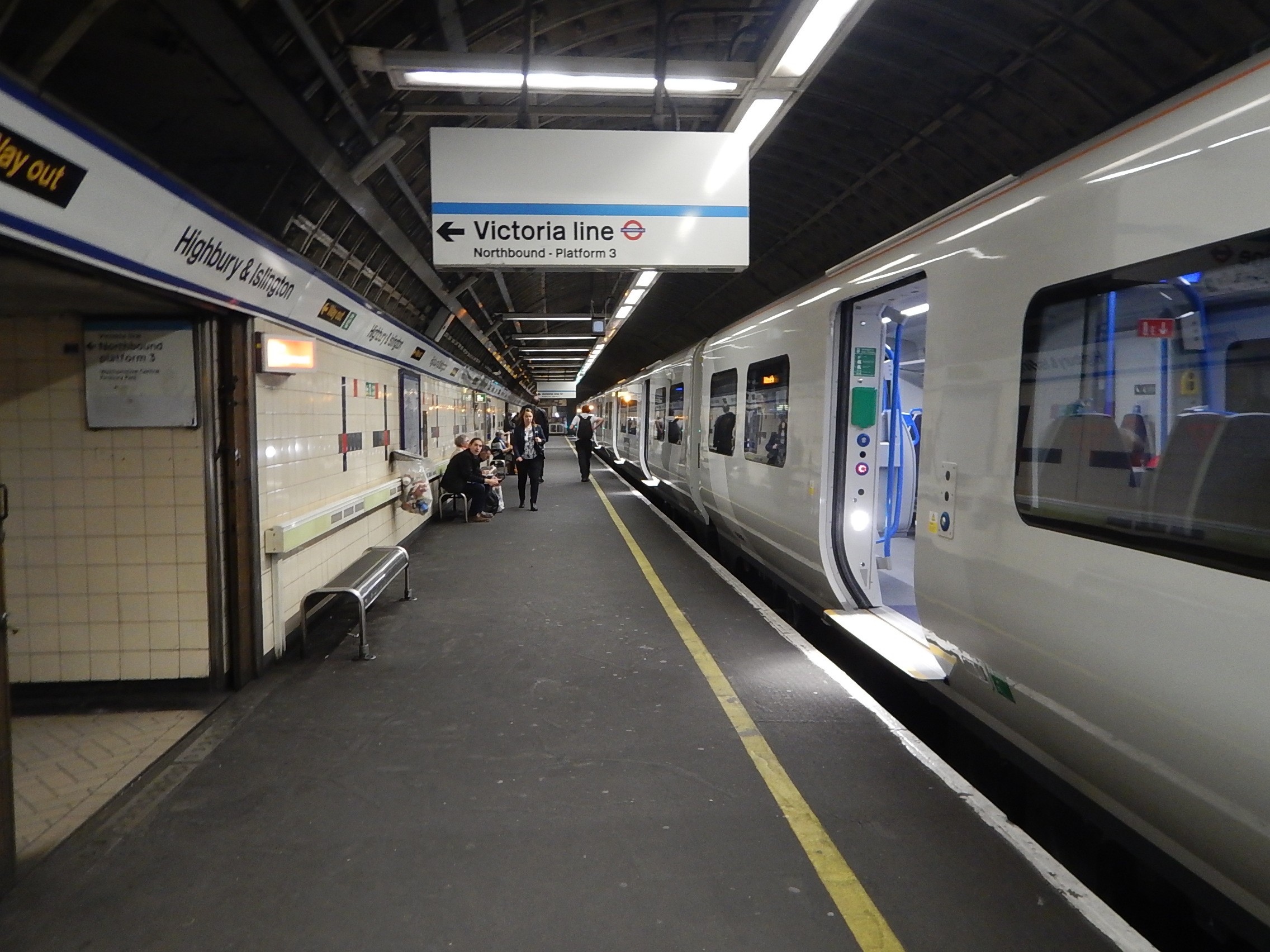
It was then just a walk through a very short tunnel to the Victoria Line and a train to Tottenham Hale.
It was so much more relaxed than squeezing into a crowded and very elderly Class 313 train.
After the timetable change in May, there will be eight trains per hour (tph), as there is now, but given the number of trains in the new fleet and signalling improvements in the pipeline, I feel that this frequency will be increased.
It should also be noted that in the Peak there are twelve tph, which in the future could be used all day.
But in the interim, trains with extra capacity will be very welcome.
From An Ugly Ducking To A Swan
These developments are either underway or planned for the next few years.
- Improved signalling on the Northern City Line.
- Full step-free interchange at Finsbury Park between Moorgate services and Thameslink, Piccadilly and Victoria Lines.
- Higher frequencies on Thameslink and the Piccadilly Line through Finsbury Park
- Full step-free access to the Northern City and Victoria Lines at Highbury & Islington station.
- Full step-free access at Old Street station.
- Hopefully, Essex Road station will be cleaned.
- Crossrail will finally arrive at Moorgate station.
North London’s ugly ducking, which has caused passengers, British Rail and London Underground, so much trouble, will finally have turned into a swan.
I always wonder if the City of London’s transport planners, wish that the Victorians had built the planned extension to a new Lothbury station, close to Bank.
What Will Be The Ultimate Frequency?
Currently the frequency between Alexandra Palace and Moorgate stations in the Peak is twelve tph.
Compare this with the following frequencies.
- Crossrail will be initially 24 tph.
- The East London Line is planned to go to 20 tph
- The Piccadilly Line is currently at 24 tph between Arnos Grove and Acton Town stations in the Peak.
- Thameslink will soon be at 24 tph
- The Victoria Line is currently at 36 tph.
I don’t think it unreasonable that a frequency of at least sixteen and possibly twenty tph between Alexandra Palace and Moorgate stations is achievable.
- Digital signalling and Automatic Train Control will be possible.
- If Dear Old Vicky can turn 36 tph at Brixton and Walthamstow Central stations, with two platforms, then surely 20 tph at Moorgate is possible, once there is better access for passengers to the platforms.
- Alexandra Palace to Moorgate is a double-track railway, that is almost exclusively used by Moorgate services.
- 16-20 tph would make the cross-platform interchange with the Victoria Line at Highbury & Islington station very efficient.
- There are two branches North of Alexandra Palace station. I’m sure each could handle 8-10 tph.
- The Hertford Loop Branch has three terminal stations; Gordon Hill, Hertford North and Stevenage stations.
- The East Coast Main Line has two terminal platforms at Welwyn Garden City station.
I could see the following frequencies.
- Moorgate and Gordon Hill – four tph
- Moorgate and Hertford North – four tph
- Moorgate and Stevenage – four tph
- Moorgate and Welwyn Garden City – four to eight tph
It will be a very high-capacity Metro into Moorgate. There could be a need for a few more trains.
But with increased speed.
Should The Northern City Line Be Shown On The Tube Map?
Increasingly, passengers will use the high-frequency Southern section of the Northern City Line between Alexandra Palace and Moorgate stations, as a new tube line.
So like Thameslink, the arguments will start as to whether this line should be on the Tube Map.
If Crossrail is to be shown, it is my view that nThameslink and the Northern City Line should be shown too!
McPhy Launches “Augmented McFilling”, Its New Smart Hydrogen Station Architecture For Heavy Duty Vehicles
The title of this post, is the same as that of this article on Nasdaq.
It shows the way that lots of individuals and companies are putting effort into the hydrogen economy.
From Groningen To Leer By Train
On my recent trip to the Netherlands and Germany, I didn’t get to do this trip by train and had to make do with a slow bus ride.
However I’ve just found this video on YouTube.
The Freisenbrücke is about an hour from the start of the video.
I should fast forward, as there is only so much travelling on a single-track rail line, that you can watch before falling asleep.
I got this impression of the route in the video, which was made in October 2014.
- The route is mainly single-track, with some passing loops at stations.
- the track is not electrified, except for short sections at either end.
- The track was almost straight.
- The track, stations and signalling appear to be in good condition.
- There were a large number of level crossings.
- The train took around one hour and twenty minutes between Groningen and Leer stations.
I can imagine that Deutsche Bahn and Arriva Netherlands were a good bit more and just annoyed, when the MV Emsmoon destroyed the bridge.
Wikipedia says this about the accident.
On 3 December 2015, Emsmoon collided with the Friesenbrücke [de], which carries the Ihrhove–Nieuweschans railway over the Ems. The cause of the accident was reported to be miscommunication between the bridge operator and pilot on board the ship. The bridge could not be raised as a train was due, but the ship failed to stop and collided with the bridge, blocking both railway and river. The bridge was so severely damaged that it will have to be demolished. Replacement is expected to take five years
I suspect, it’s not just an massive inconvenience for the railway, as a couple of miles South on the River Ems, is the Meyer Werft shipyard, where cruise ships up to 180,000 tonnes are built.
I found this document on the NDR.de web site and gleaned the following information.
- The cost of rebuilding could be up to eight million euros.
- The new bridge will be finished in 2024, if all goes well.
- Environmentalists are bringing lawsuits against the construction of the bridge.
It will be a challenge to rebuild this bridge.
This video shows the new bridge
Let’s hope that one of those large cruise ships doesn’t hit the bridge.
Conclusion
This surely has been a very costly accident.
Third Degree Murder
The title of this post is the same as that of an article by Ian Walmsley in the April 2019 Edition of Modern Railways.
In the article Ian has a heavyweight go at the Office of Road and Rail about their policy towards third rail electrification.
As a Control and Electrical Engineer, I agree with a lot he says, especially as I believe modern control systems and good design can improve safety of third rail systems to a high level.
I also believe the following.
- In some places third-rail electrification, which is only live when a train is protecting the rails from morons, is safer than any other electrification system.
- In some places, like on top of high viaducts third-rail electrification is safer for engineers installing and maintaining it, than overhead electrification.
- Some battery charging systems will be designed around third-rail electrification.
Ian’s article gives various reasons for using third-rail electrification.
He also proposes the radical innovation of using a voltage of 1500 VDC, which he calls 2XV.
I like it and agree with his reasoning..
It sounds radical, but it is not a new idea.
An article on Wikipedia is entitled Rail Transport In The Netherlands.
This is said.
Most of the network is electrified at 1.5 kV DC (which limits interoperability with neighbouring countries), although Belgian trains – built for 3 kV DC – can run on the Dutch network at reduced power. Both the HSL-Zuid and the Betuweroute have been electrified at 25 kV AC; although conversion of existing electrified lines to 25 kV AC was considered in 1997, 2005 and 2012 at a cost of over €10 billion, a 2015 proposal (revised in 2017) is to convert to 3 kV DC at a 2017 cost of €1 billion. The higher DC voltage would reduce power losses and have faster acceleration above 60 to 70 kilometres per hour (37 to 43 mph), so stopping trains would save seven to 20 seconds per stop.
Are the Dutch implementing their proposal?
 The Anonymous Widower