Huge Solar Farm Plan
The title of this post is the same as that of a small article in today’s copy of The Times.
This is said.
Plans for Britain’s largest solar farm have been submitted to the government. Cleeve Hill Solar Park between Whitstable and Faversham in Kent would be five times bigger than the present largest solar farm, in Wiltshire, and provide enough clean energy to power more than 91,000 homes. A ruling is expected by the end of 202.
According to this page on the OVO Energy web site, the average household in the UK used 3,940 kWh in 2014.
This is 0.45 kWh per hour.
On this figure, the 91,000 houses would use 358.4 GWH
Compare this output with the 240 MW of the world’s first nuclear power station at Calder Hall, which opened in 1956, which in a year would generate 2104 GWH
Cleeve Hill Solar Park has a web site, which together with other sites gives more details of the project.
- The project has an area of 360 hectares.
- The project will be connected to the grid using an existing sub-station, that is used to connect the London Array wind farm in the Thames Estuary to the grid.
- The solar panels are laid close together to create the maximum amount of electricity.
On this information it looks like a solar farm in the UK, which is the size of 360 football pitches, can generate a sixth of the power of the world’s first and admitted small nuclear power station.
The web site also includes this informative schematic of a typical solar farm.
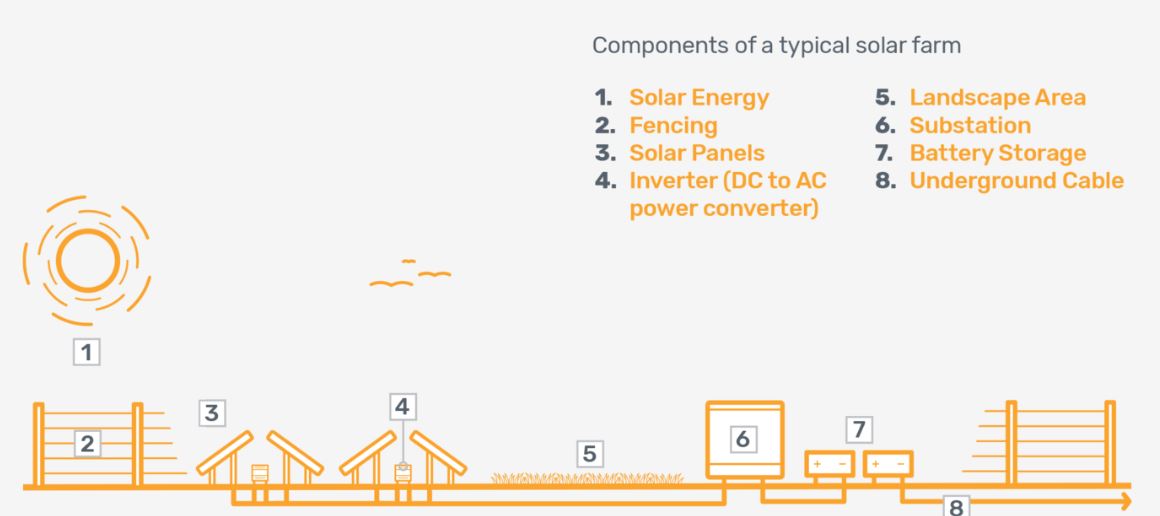
Note that battery storage is included, which I find significant.
- Battery or some other form of energy storage would be used to smooth the peaks and troughs of generation and use.
- Is it significant that it shares a sub-station that is used to connect wind turbines to the grid?
- So will the solar panels charge the batteries and then this energy will be sent to the grid, when the wind isn’t blowing?
The battery would be sized accordingly and calculating the size required is a the sort of problem that needs some comprehensive mathematical modelling.
- Using past sun and wind data, it would be possible to predict likely weather on a day-to-day basis.
- This data would be fed into a mathematical model of the wind and solar farms, with different sizes of batteries.
- A battery size would be chosen, that didn’t allow 91,000 houses in Kent to be without power.
But don’t worry, if you live in Kent, as there are other power stations nearby that could step in.
Having run mathematical models for complicated systems since the late 1960s, I know that this problem is within the capabilities of today’s mathematicians and computers.
The Potential Power Of The Cleeve Hill Solar Farm
The Internet entry for Solar Power In The UK has a section called Solar Potential, where this is said.
London receives 0.52 and 4.74 kWh/m² per day in December and July, respectively. While the sunniest parts of the UK receive much less solar radiation than the sunniest parts of Europe, the country’s insolation in the south is comparable with that of central European countries, including Germany, which generates about 7% of its electricity from solar power. Additionally, the UK’s higher wind speeds cool PV modules, leading to higher efficiencies than could be expected at these levels of insolation.
I’ll start by looking at December.
The solar array at Cleeve Hill will be 360 hectares, which need to be converted to square metres. A hectare is roughly the size of a football pitch like Wembley or 100 metres x 100 metres.
So I can say the following.
- The area of the Cleeve Hill solar farm is 3,600,000 square metres.
- If I assume that Cleeve Hill gets the same amount of sunlight as London, I can say that on each day in December the solar farm will receive an average of 0.52 * 3,600,000 kWh or 1872 MWh of solar energy.
- I have found web sites that say that the best solar panels are twenty percent efficient, which means that on an average December day 374.4 MWh will be generated.
- This is 4.11 kWh for each of the 91,000 households.
Looking at July, I can say the following.
- If I assume that Cleeve Hill gets the same amount of sunlight as London, I can say that on each day in July the solar farm will receive an average of 4.74 * 3,600,000 kWh or 17064 MWh of solar energy.
- Using the same twenty percent efficiency, which means that on an average July day 3412.8 MWh will be generated.
- This is 37.5 kWh for each of the 91,000 households.
I have created an Excel Workbook, that shows the energy generation for a 360 hectare solar farm, through a year.
- I obtained the insolation rates from this page on the Contemporary Energy web site.
- Other data came from Cleeve Hill Solar Farm.
- All parameters can be changed are and at the first part of the workbook.
- It is in Word 97 format
Click this link to download.
A Detailed Look At The Space Between Farringdon Station And The New Museum Of London Site
I took these pictures as I walked up Charterhouse Street beside the new site of the Museum of London.





Note.
- The buildings to be used for the museum need a lot of work.
- The two buildings which could both be cold stores on the railway side of Charterhouse Street wouldn’t appear to have much architectural merit.
- Once Crossrail works are finished, there will be two big gaps leading to the railway lines and Farringdon station.
This picture from Crossrail says it is the Chaterhouse Street ticket hall.
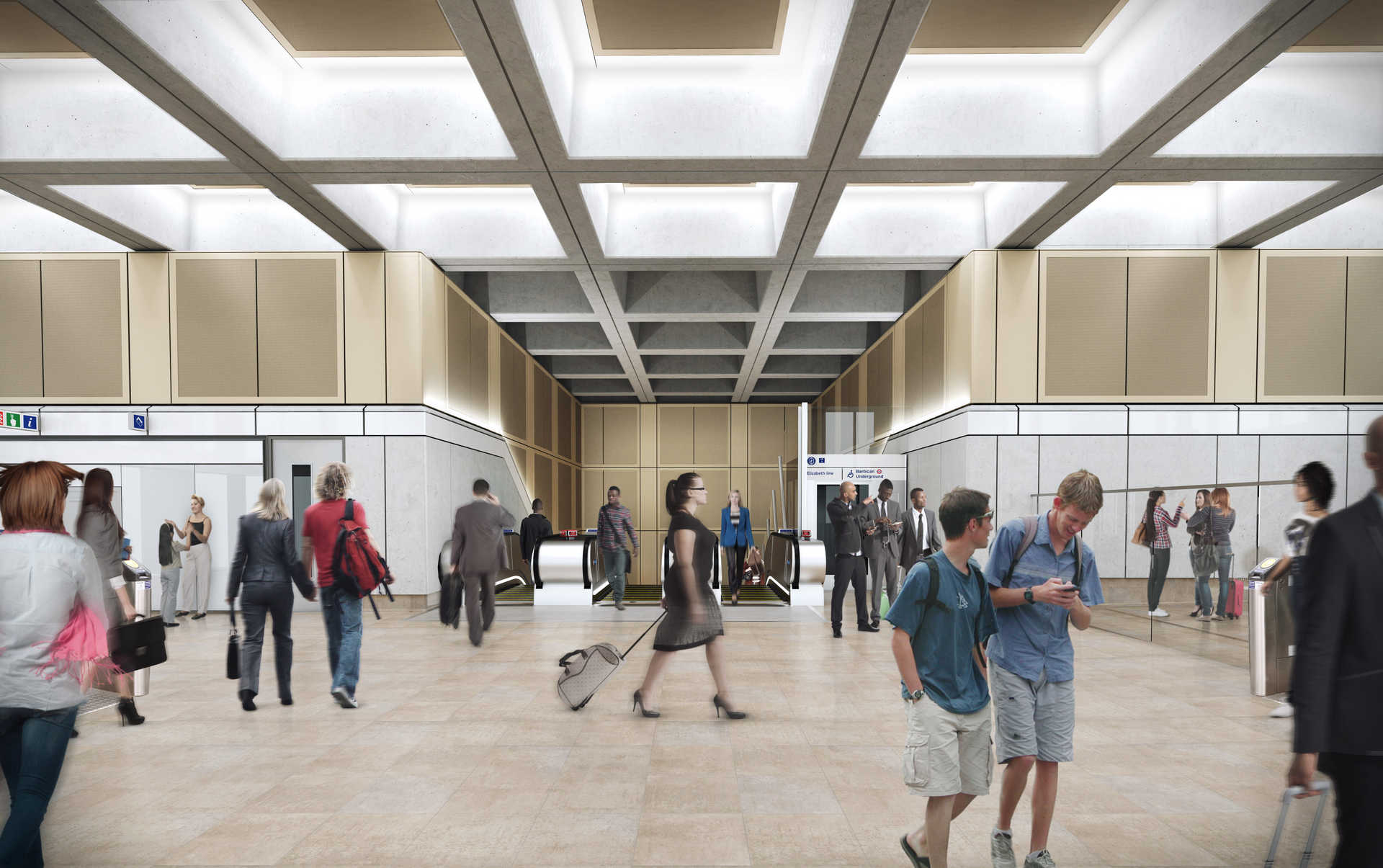
So it looks like that box in the third picture is an entrance to the station and it’s bang opposite the museum.
This Google Map shows the space on the railway side of Charterhouse Street.
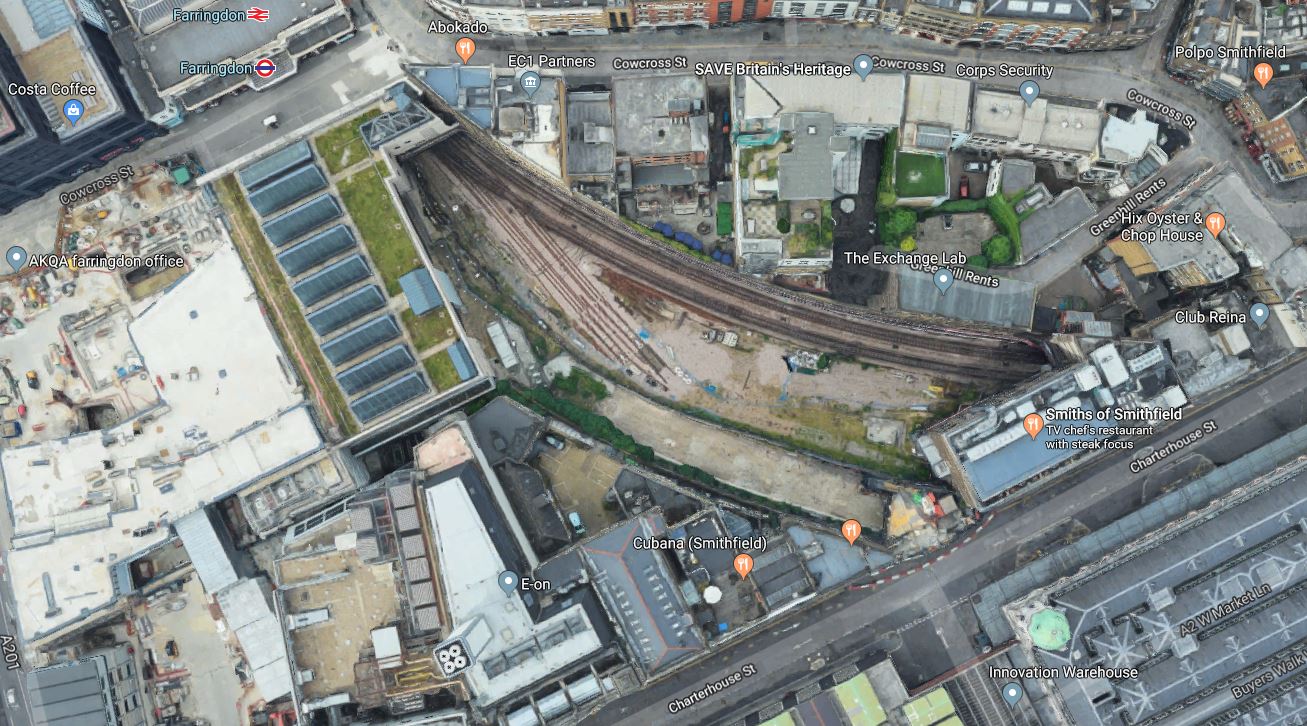
Note.
- Farringdon station at the top of the map towards the left.
- To the left of the station is the site I talked about in TfL Gives Go Ahead To Build Above Farringdon Station.
- Below that site, is another site on the corner of Charterhouse Street and Farringdon Road, that could either be developed in conjunction with the site above it or on its own.
- The Circle, Hammersmith & City and Metropolitan Lines curving between Farringdon and Barbican stations.
- What appear to be a couple of sidings are the remains of the Widened Lines, which used to lead to Moorgate.
- There is also a large curved space, which used to be which was used by services between Bedford and Moorgate, before Thameslink was created.
There’s a lot of space in the area to create a building or series of buildings that provide.
- A worthwhile amount of office space.
- A landmark hotel on one of the best-connected sites in London.
- The right amount of retail space, bars, cafes and restaurants.
But above all a short and pleasant walking route between Farringdon station and the new Museum of London could be designed.
An Encounter In A Lift
I don’t use lifts on the trains very often, except when I am lumbered with heavy shopping, or to use a lift is substantially quicker.
This morning my Northern Line train arrived at Kings Cross, so that I alighted right by the lift, in time to see two ladies with babies in buggies, leave the lift and get on the platform.
Now this was a time-saving that was too good to be true, as this lift drops you just by the ticket gates.
I waited to press the button, in case someone else needed the lift.
My only companion turned out to be an attractive tall lady about thirty, who was strikingly dressed, with a very short leather skirt and shoes with the some of the highest heels, I’ve ever seen on the street.
If I do travel in a lift, I like to not be youngest person in the lift, as one has to keep up standards and fight hard against anno domini.
So I said to the lady. “Thanks for coming in the lift, as I make it a rule not to use a lift, unless there’s someone younger than myself on-board!”
She smiled and replied. “I can’t climb the stairs in these f**king shoes!”
Trying to be sympathetic, I said. “Couldn’t you have worn something more comfortable?”
“No!” She replied! “I’m a backing singer going to an audition. One has to impress!”
I hope all her efforts were rewarded!
Most Zopa Plus Investors Earn “At Or Above” Target Rate
The title of this post is the same as that on this article on Peer2Peer Finance News.
I have not complained and I’ve been an investor for ten years.
Building New City-Centre Lines Instead Of Using Existing Network Inflates HS2 Cost By 15%
The title of this post, is the same as that of this article on Rail Technology Magazine.
This is the first paragraph.
HS2’s second phase will cost more compared to similar overseas schemes because it relies on new dedicated high-speed lines into city-centre terminal stations at Manchester and Leeds rather than using the existing conventional railway.
As the review of the costs of HS2, that showed this, was done by PwC, I suspect the figures can be believed.
Over the last few years, we’ve redeveloped or extended several busy stations like Derby, Kings Cross, Liverpool Lime |Street, London Bridge, Manchester Victoria, Nottingham, Reading and St. Pancras.
I like Reading and London Bridge the best, as the large concourse crossing either over or under the tracks with lots of escalators and lifts, seems to work well Liverpool Lime Street with a wide concourse at one end, seems to work well for a terminal station.
But St. Pancras is a mess for passengers and staff alike with effectively four stations in one one Victorian building.
It would have been better, if the station had been flattered and a new one built.
This approach is being taken at that 1960s monstrosity; Euston, which is being extended for HS2.
The four Northern stations in Phase 2 of HS2 are being treated differently.
- Leeds is getting a dedicated approach to new platforms at right angles to the existing ones.
- Liverpool Lime Street uses the existing approach and platforms have been extended for the new HS2 trains.
- Manchester Piccadilly is getting a dedicated approach to new platforms alongside the existing ones.
- Sheffield uses the existing approach and platforms will be extended for the new HS2 trains.
Liverpool Lime Street is already HS2-ready and can handle at least two normal expresses and one HS2 train in an hour.
The works were completed in a six-month blockade in the Summer of 2018.
I suspect Sheffield will be made HS2-ready, in a similar way.
Conclusion
Obviously, every station is different.
But Liverpool Lime Street has shown how it is possible to find an affordable, less disruptive approach to some stations.
A Glimpse Of 2035
Today, I was on the first direct train between London and Dublin.
I arrived at Euston early for the eight o’clock departure time and took my seat in First Class of the train built by Spanish company Talgo at Longannet in Fife.
The train appeared to be little different to the High Speed Two trains, that I have ridden extensively since they started running in 2029.
What differences there were, were in the decor and colour schemes, with the train wrapped in a rainbow of colours reflecting the red, white and blue of the UK and the orange, white and green of the Irish Republic.
We left on time and after a brief stop at Old Oak Common to pick up passengers we were soon speeding towards Birmingham whilst eating breakfast. I had requested a gluten-free Full English and the quality showed how far railway food has come in the two decades.
Birmingham at 08:40
Running at 225 mph, the spectacular Birmingham International station was reached on time at 08:40 and there were quite a few passengers who both left and joined.
Birmingham International
Since Heathrow’s plans for a third runway crashed in the planning process and the opening of Gatwick’s second runway, High Speed Two has enabled long distance travellers to use Birmingham Airport, which since the opening of High Speed Two in 2029 and its subsequent extensions to Manchester and Leeds, has grown at a fast pace.
As a jokey advert shown around the world by Visit Britain said, London now has three main airports; London South (Gatwick), London West (Heathrow) and London North (Birmingham).
On a recent trip to the Gambia, I used Birmingham Airport for both flights and coming back, I was in my house in East London, around an hour after I set foot in the terminal at the Airport.
High Speed Two and the expanded Birmingham Airport have certainly improved the economics of Birmingham and the wider West Midlands.
Crewe Before 09:00
Next stop was Crewe station, which from today has been renamed Crewe International, to indicate that you can get trains to England, Scotland, Wales and now Ireland.
The station is unrecognisable from the tired Victorian station, I first passed through in 1965 on my way to Liverpool University for the first time.
Like Birmingham and the West Midlands, the area around Crewe has benefited immensely from the arrival of High Speed Two in 2030 and the continuing expansion of Manchester Airport.
From today, Crewe is now served by these trains in both directions, in each hour.
- London – Belfast and Dublin
- London – Glasgow (2 trains)
- London – Liverpool (2 trains)
- London – Lancaster
The ticketing and capacity is such, that Crewe now has a genuine turn-up and-go service to the capital, which is just under an hour away.
Preston At 09:20
The train was now on the upgraded West Coast Main Line and the train was limited to 140 mph, but Preston was reached on time, just eighty minutes from London.
When High Speed Two opened to Crewe in 2030, the journey time was a few minutes longer, but improvements to trains, tracks and signalling in the intervening years, had reduced the time.
On the journey from Crewe, the train had passed the massive construction site of the new Central Lancashire station, or as Scouse comedians have dubbed it – Wigan International.
This new station will be a hub linking the following.
- The West Coast Main Line
- High Speed Three between Liverpool and Manchester.
- The M6 and M62 motorways
- Manchester Metrolink
- Merseyrail
The station should have probably been built years earlier, when High Speed Three opened in 2029, but all forecasts of the number of passengers who would use the new High Speed Lines, were much lower than they were in practice.
Preston station like Crewe is a station that has been rebuilt to handle two of the 200 metre long trains running as a pair.
These long platforms are now used at Preston to join and split some services, to give Blackpool, Blackburn and Burnley three fast services per day to and from London, in under two hours.
Carlisle At 10:20
We sped through the Lake District at 140 mph, to reach Carlisle in under two and a half hours from London.
It should be noted that timings North of Crewe have improved over the last couple of decades.
- All passenger trains running on the fast lines North of Crewe are capable of matching the speed of the High Speed Two trains
- Some of these trains used for services between Liverpool/Manchester and Glasgow/Edinburgh were built by Talgo to High Speed Two standards.
- The few freight trains running in the day are now hauled by 125 mph electric locomotives.
- The continuous upgrading of the Cumbrian Coast, Settle-Carlisle and Tyne Valley Lines has also allowed some trains to divert away from the West Coast Main Line.
Effectively, the West Coast Main Line North of Crewe has become a high-capacity 140 mph line.
Belfast At 11:30
When I saw that it was planned that trains would reach Belfast from London in the same time that it takes to go between London and Glasgow, I didn’t believe it would be possible.
But we arrived at the Belfast Parkway station on the outskirts of the City on time.
The journey between where we left the now-electrified Glasgow and South Western Line just to the West of Gretna to the bridge across the North Channel had been nearly all at 140 mph and there was little interruption before we ventured onto the bridge to Northern Ireland.
A few minutes later we were waiting to continue our journey at Belfast Parkway.
There had been political arguments about the gauge of the tracks on the thirty mile section between Scotland and Belfast.
But in the end the engineers got their way.
- There is a standard gauge line as far as Belfast Parkway.
- From Belfast Parkway, there is Irish gauge for the rest of the journey.
There would be no change of train at Belfast Parkway, as the Talgo High Speed Trains have had the ability to change gauge at a slow speed for thirty years.
Dublin At 13:30
This has been the slowest part of the journey, but we pulled into Dublin on time to a lot of celebrations.
Conclusion
This route has been a long time coming, since it was first seriously proposed in 2018.
There will be improvement in the next few years.
- A service between Edinburgh and Dublin via Glasgow and Belfast starts next year.
- The West Coast Main Line North of Crewe will allow faster and more trains.
- The EU are funding and building a High Speed Line from the Irish border to Dublin.
- This Irish High Speed Line will be linked to a new deep water port at Shannon.
I can see London to Belfast in three hours and London to Dublin in four.
A Spaniard In The Works!
Whilst it was pantomime season at Westminster today, with the usual fights over, who would be best at ruining this country, something more important was happening close by.
This article on Rail Magazine is entitled Talgo Names Longannet As Site Of New Train Factory.
This is the first two paragraphs.
Spanish train manufacturer Talgo plans to build trains in Longannet, in Scotland, after confirming that its preferred location for its UK factory will be at the site of the closed power station.
The company made the announcement at Westminster today (November 14), following an 18-month search for a UK site. It also confirmed that a Research and Development site would be built at Chesterfield, although it would not be drawn on the relationship between the two sites.
The article also says.
- Up to a thousand will be employed at the Scottish site.
- Construction starts in 2020.
- Work on trains starts eighteen months later.
- The factory will cost £40million.
- The branch line to the power station could be developed and used by passenger trains.
- The site was chosen because of good access by road, rail and sea.
The article is very much worth reading.
These are a few of my thoughts.
Did Or Does Brexit Affect The Investment?
Talgo are on the short-list for the trains for High Speed Two and have always said, that they would build the trains in the UK.
I suspect that if they were to be dropped from the short-list for High Speed Two or High Speed Two were to be cancelled, these would have a bigger effect. than Brexit.
What Are Talgo’s Strengths?
The company is strong on innovation and their trains are a bit different.
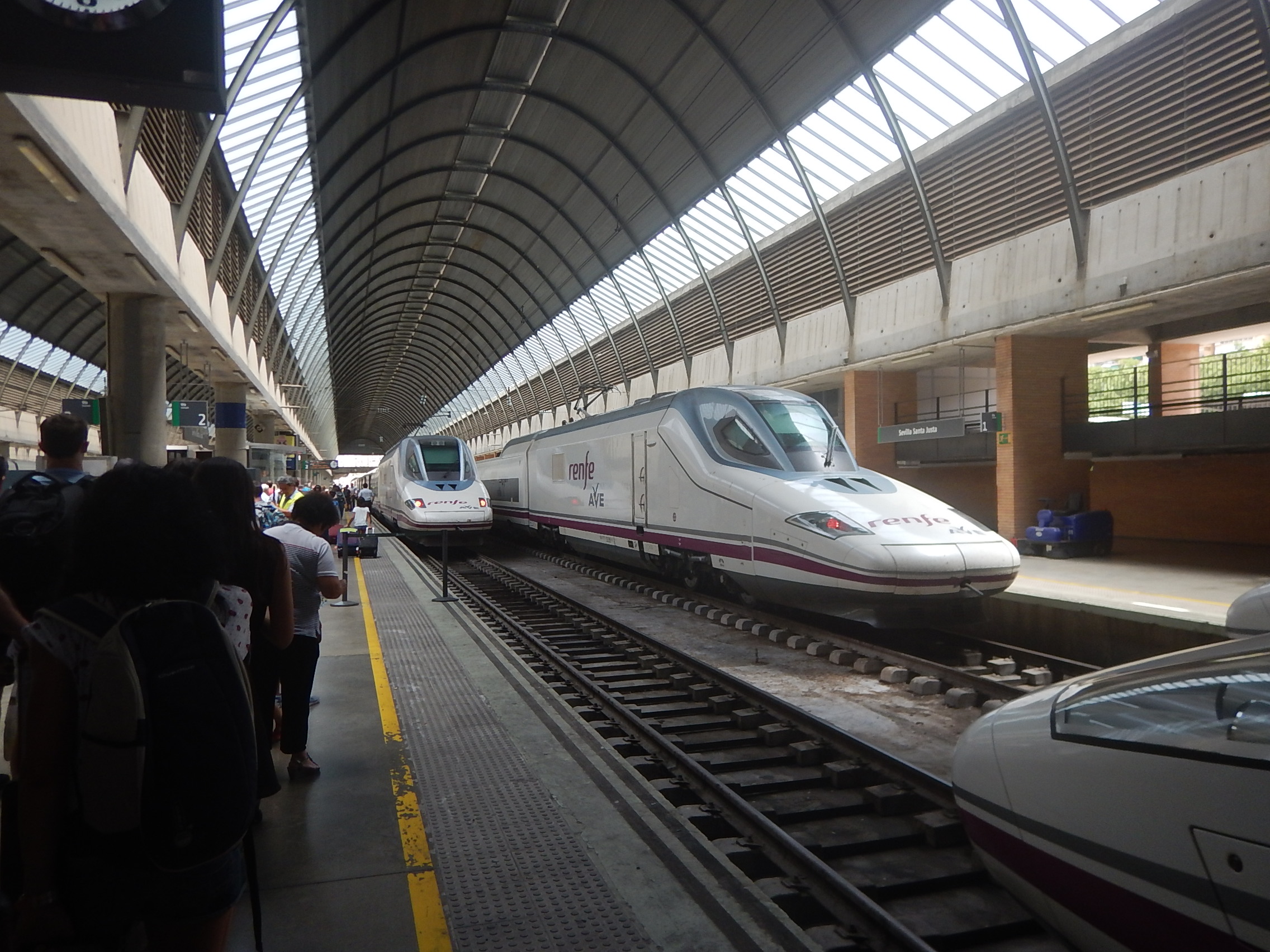
The picture of two of Talgo’s high-speed trains was taken in Seville.
I think it could be an AVE Class 102 train. They are nicknames pato in Spanish, which means duck!
I wonder why?
Talgo also makes trains, that can run on both Spanish and standard gauge, which enables trains to go direct between Madrid and Paris. The company is also targeting export orders in Russia and India.
They are very much an international company.
Why Choose Longannet?
If Talgo should get the order for the classic-compatible trains for High Speed Two, they have said the trains will be manufactured in the UK.
This article on Railway Gazette is entitled Joint Venture To Bid For HS2 Rolling Stock Contract.
This is an extract.
In November 2017 project promoter HS2 Ltd shortlisted Alstom, Bombardier Transportation UK, Hitachi Rail Europe, Patentes Talgo and Siemens for the rolling stock design, manufacturing and maintenance contract worth an estimated £2·75bn.
This would cover the supply of at least 54 trainsets with a maximum speed of 360 km/h for Phase 1 of HS2 between London and the West Midlands. The ‘classic compatible’ units would be able to run through from the new line onto existing infrastructure to serve destinations including York, Newcastle, Liverpool, Glasgow and Edinburgh.
The formal tendering process is due to start later this year, with the contract expected to be awarded in late 2019 and entry into service planned for 2026.
54 trains for a total of £2.75billion is not a small order.
And that is only this first order, as dedicated trains will be needed as well.
Talgo’s AVE Class 102 train already runs at 330 kph and trains can automatically join and split to make four hundred metre long trains, so they can probably demonstrate a train that would be suitable for High Speed Two.
Having a factory in Scotland would surely be a plus point in the bidding process.
Longannet also will have good access to the ports at Rosyth and Grangemouth, which could be a great help in importing anything from components or complete trains and perhaps exporting carriages and trains to places like Russia, which are easier by sea from Scotland, than from Spain.
Will Talgo Bid For Other Train Contracts?
Talgo have built 125 mph bi-mode trains in the past and there are other franchises that might need such a train.
- Southeastern to add extra capacity to domestic services on High Speed One and serve Hastings.
- Cross Country to replace their HSTs.
- West Coast Main Line to replace Voyagers.
- Midland Main Line to replace HSTs and Voyagers.
There could be other franchises and routes that could use their trains.
Conclusion
There’s a lot more to this announcement than meets the eye!
Are Crossrail’s Turnback Sidings At Westbourne Park Without Electrification?
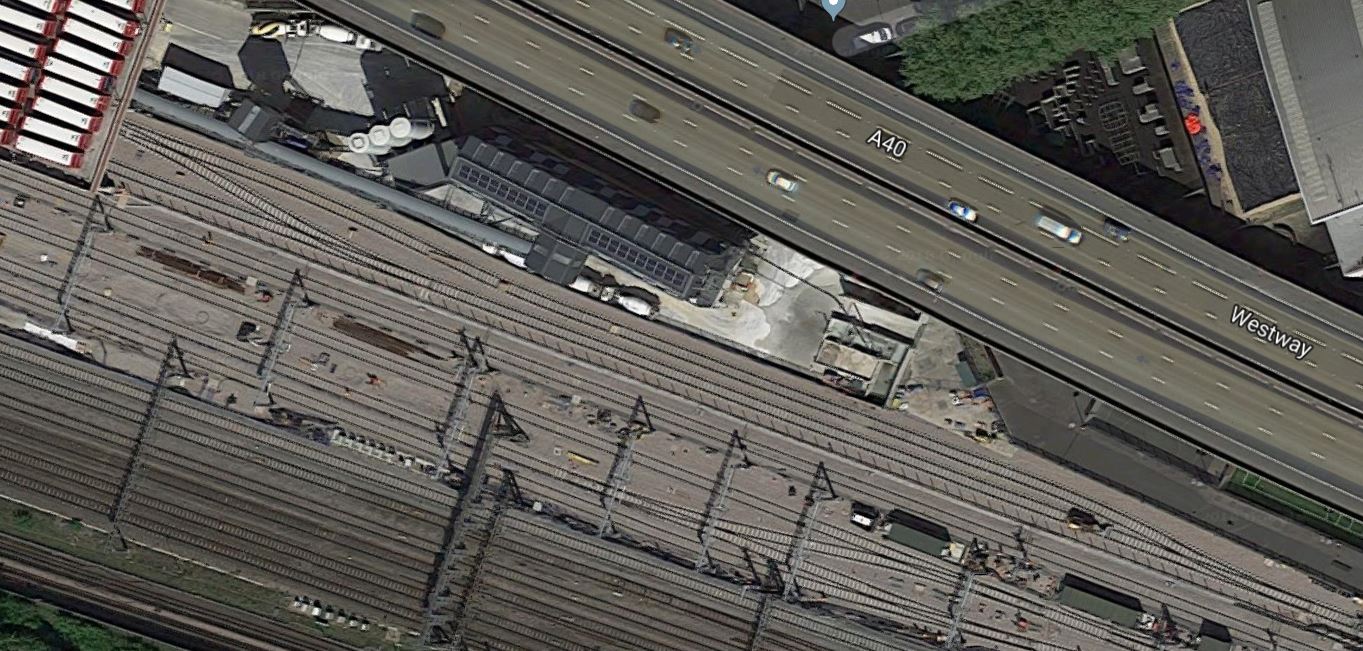
This Google Map shows Westbourne Park bus garage, nestled between the elevated M40 motorway and the rail lines out of Paddington station.
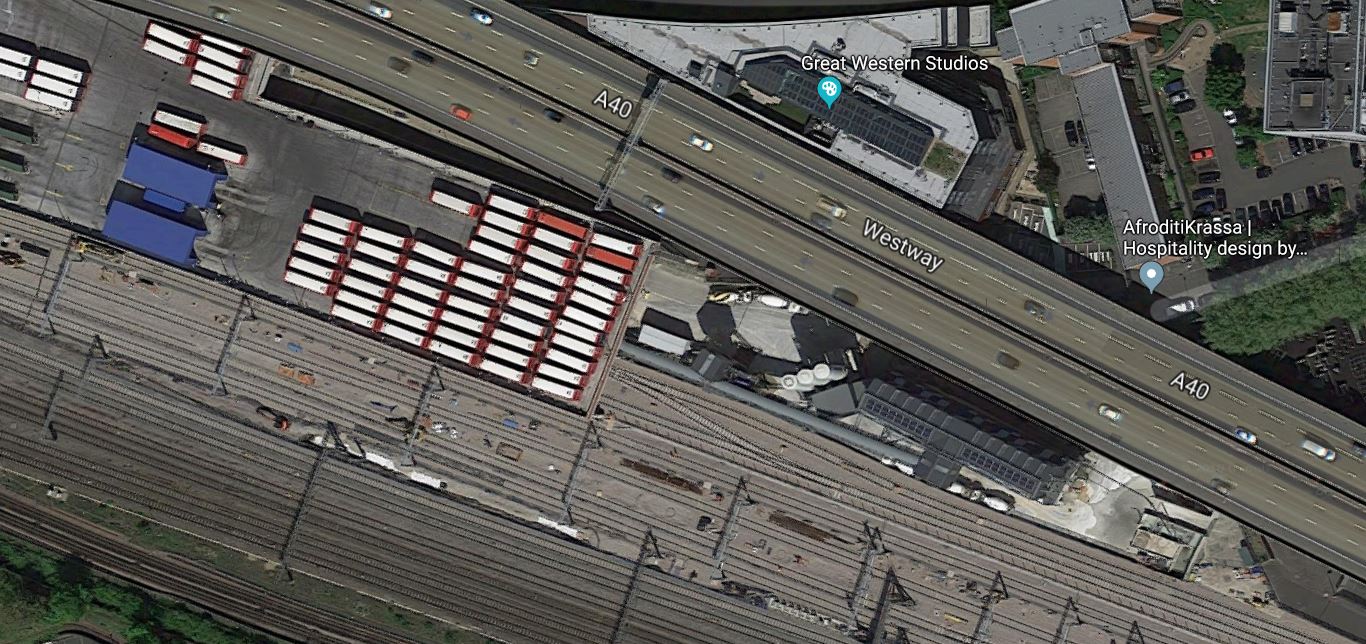
Note.
- All those white rectangles with red ends are buses.
- Running along the South side of the garage are the electrified Crossrail rail lines that go into the tunnel to Paddington and all points to the East.
- Below that are the electrified lines of the Great Western Main Line.
- The electrification gantries on both sets of lines are clearly visible.
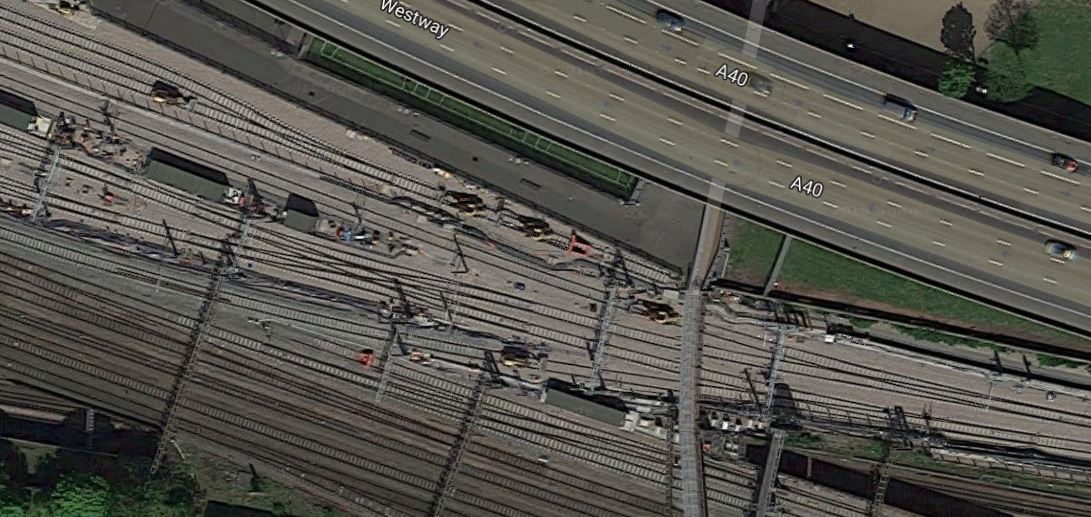
There are also some lines which appear to go under the bus garage.
This Google Map shows those lines in more detail.
The new Westbourne Park Bus Garage was built so that Crossrail sidings for trains turning back at Paddington would be under the buses.
The image is dated 2018, but it clearly shows that the sidings don’t have electrification.
Could this be deliberate or does the image predate the installation of the overhead wires?
This Google Map is a few more metres close to the portal, where the trains enter the tunnel.
Note the footbridge going North-South over the area.
These pictures were taken from the footbridge of the tracks beneath the footbridge.


Looking at the pictures, the following can be ascertained.
- The bus garage is a concrete structure in the distance, highlighted by a topping of red buses.
- The sidings that go under the bus garage are not electrified.
- The Northernmost of the tracks, that go past the bus garage is not electrified. Perhaps, this track is used to allow diesel-hauled service trains to access the tunnel.
There would certainly be an advantage in not electrifying the sidings, as working in effectively the basement of a bus garage, if a fault developed with 25 KVAC all around you, would be a Health and Safety nightmare.
Passing The Bus Garage
Later I took a train past the bus garage and took these pictures.




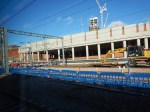
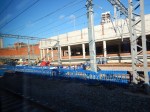

It is certainly, an impressive use of limited space.
Buses are lined up on the first floor of the garage.
I would suspect that the concrete plant will be dismantled, as this would allow more sidings to be laid out underneath the bus garage.
The Turnback
But did I get the answer to the question I posed?
From my observations on the bridge and after looking in detail at the Google Maps of the area, the turnback sidings are to the South of the bus garage. Note the intricate track layout in the third Google Map in this post.
The turnback also appears to be electrified.
Auto-Reverse
Perhaps the most interesting thing about the turnback, is contained in this article on Rail Engineer, which is entitled Signalling Crossrail. This is an extract.
A new facility called ‘auto reverse’ is being provided at Westbourne Park (no station) for turning the 14 trains per hour in the reversing sidings. The driver selects ‘auto reverse’ on leaving Paddington station and walks back through the train, obviating the need for drivers to ‘step-up’. By the time the train gets back to Paddington (about a mile) the driver should be in the other cab ready to form the next eastbound departure.
The facility has the capability to turn round a full 30 tph service. There is just time for the driver to walk back through the train whilst in the reversing siding but doing so on departure at Paddington gives that extra time that will also help recover from perturbation.
The article also says that Auto Reverse will not be provided on Network Rail infrastructure, but as these tracks between the bus garage and the Great Western Main Line are Crossral infrastructure, that would be irrelevant.
The Auto Reverse would appear to be a clever use of automation, which I suspect the driver can stop at any time using some form of remote control.
Is It Ready For Use?
I have to ask this question.
It looked to me, that there was still some work to do.
If Crossrail were to open in early December, then it looks that it could be impossible.
So were these works at Westbourne Park, the reason for the postponement?
TfL Gives Go Ahead To Build Above Farringdon Station
The title of this post is the same as this article on New Civil Engineer.
These are the first two paragraphs.
Transport for London (TfL) has signed an agreement with developer HB Reavis to build an oversite development above the new Farringdon Elizabeth Line station.
TfL said the new seven-storey, mixed use building was part of a huge programme of Elizabeth Line property development which could raise £500M to be reinvested into improving transport in London.
The article then goes on to add more detail about this development and a dozen or so others under development or construction.
I took these pictures at Farringdon station this morning.


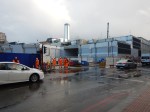
This Google Map shows the site.

The site is between the station and Farringdon Road.
I feel that the site will be a very well-connected one.
- There is a direct rail connection to Gatwick, Heathrow and Luton Airports.
- Eurostar is one stop away on Thameslink.
- There is a direct rail connection to Euston, Kings Cross, Liverpool Street, London Bridge, Paddington and St. Pancras stations.
- Many of London’s Central attractions are easy to access.
Could it become an up-market hotel?
 The Anonymous Widower