Tottenham Hale Station Becomes Clearer
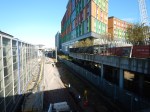
I went to Tottenham Hale station this morning and took these two series of pictures.
These were of the station itself.

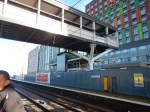

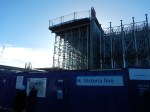
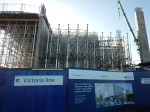



Note.
- The new step-free footbridge.
- The giant box of the new station under the scaffolding.
- The angular roof of the bus station.
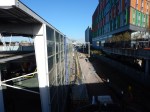
These pictures show the construction site of a new tower on the other site of the tracks.

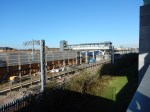
Note.
- A 32-storey tower is going on the site, so the foundations will be deep.
- The third track and the new platform 3 at Tottenham Hale station.
- The concrete structure between the tracks and the tower could be demolished.
This Google Map shows the area.
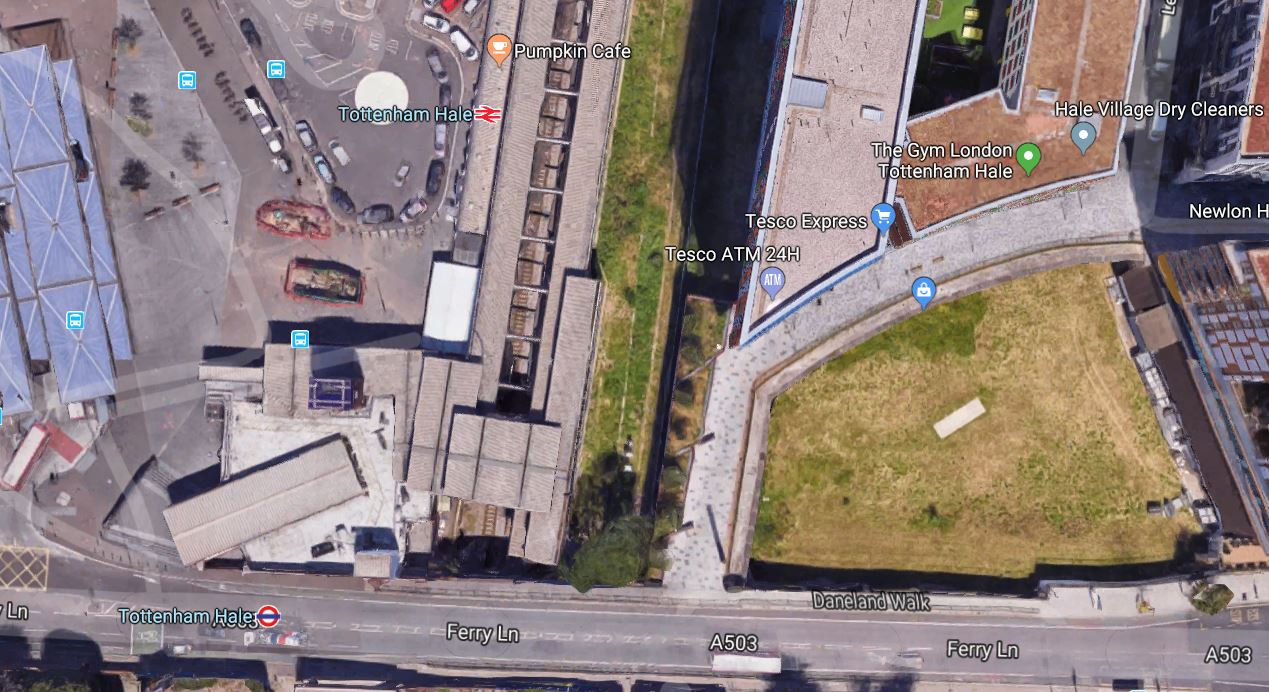
The new tower is going into the green space in the bottom-right of the map.
West Anglia Four-Tracking
It is an ambition of Newtwork Rail, Greater Anglia and Stansted Airport to have four tracks on the West Anglia Main Line.
It very much looks as if, the building of this tower will enable a fourth track to be threaded through alongside the third track being constructed at the present time for the new service between Stratford to Meridian Water stations.
I think though, that the bridge could be a bigger problem, as this picture shows.
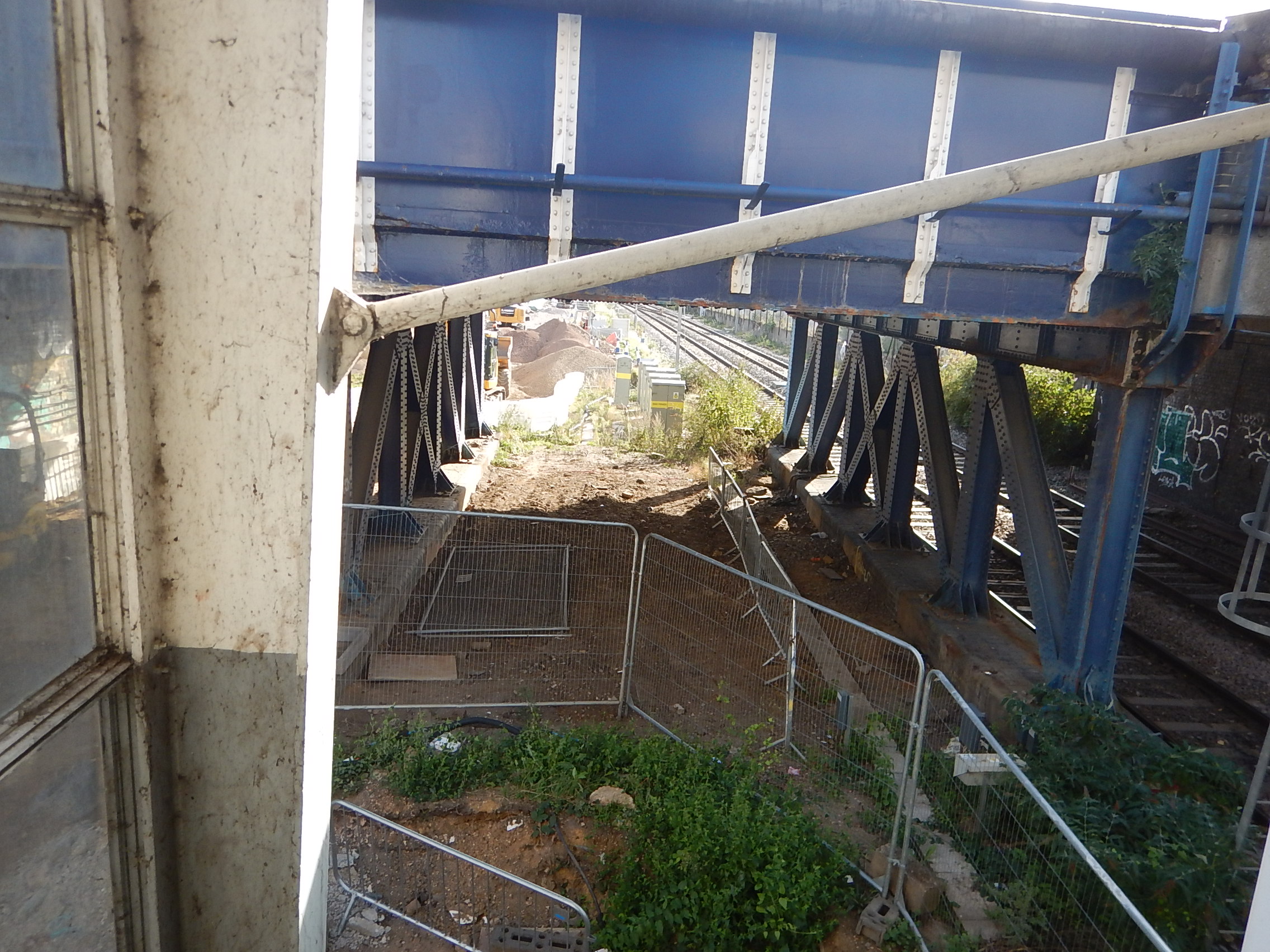
Could it be considered a bridge on crutches?
But a well-designed replacement bridge would probably allow a fourth track to be laid underneath!
Do Aventras Use Supercapacitors?
In this article in Global Rail News from 2011, which is entitled Bombardier’s AVENTRA – A new era in train performance, gives some details of the Aventra’s electrical systems. This is said.
AVENTRA can run on both 25kV AC and 750V DC power – the high-efficiency transformers being another area where a heavier component was chosen because, in the long term, it’s cheaper to run. Pairs of cars will run off a common power bus with a converter on one car powering both. The other car can be fitted with power storage devices such as super-capacitors or Lithium-ion batteries if required. The intention is that every car will be powered although trailer cars will be available.
Unlike today’s commuter trains, AVENTRA will also shut down fully at night. It will be ‘woken up’ by remote control before the driver arrives for the first shift
This was published over seven years ago, so I suspect Bombardier have refined the concept.
The extract makes three interesting points.
All Or Most Cars Will Be Powered
In A Detailed Layout Drawing For A Class 345 Train, I give the formation of a Crossrail Class 345 train.
DMS+PMS+MS1+MS3+TS(W)+MS3+MS2+PMS+DMS
Note.
- M signifies a motored car.
- Eight cars have motors and only one doesn’t.
- The train is composed of two identical half-trains, which are separated by the TS(W) car.
- There are four wheelchair spaces in the TS(W) car.
Are the MS!, MS2 and MS3 cars identical?
In addition, I have been told, that all cars in Class 720 trains are motored.
It does seem that Bombardier have fulfilled their statement from 2011.
Remote Wake-Up
This is mentioned in the extract, but there are few other references to it. I quoted a report from the Derby Telegraph, which has since been deleted, in Do Bombardier Aventras Have Remote Wake-Up?.
Supercapacitors And Lithium-Ion Batteries
According to the extract, the trains have been designed to accept supercapacitors or lithium-ion batteries if required.
As the other two statements in the extract appear to be likely, I will continue to believe that all Aventras can have some form of energy storage.
Crossrail
I’ll look first at Crossrail’s Class 345 train.
In How Much Energy Does A Crossrail Class 345 Train Use?, using the train’s data sheet, I came to the conclusion, that electricity usage of the trains is 2.67 KWh per car per kiometre or 3.29 KWh per car per mile.
In the linked post, I also calculate the kinetic energy of a fully-loaded nine-car Crossrail train.
I’ll repeat it.
- If I take a nine-car Class 345 train, this has a mass of less than 350 tonnes and a maximum speed of 145 kph.
- 1500 passengers at 80 kg each works out at another 120 tonnes.
- So for this crude estimate I’ll use 450 tonnes for the mass of a loaded train.
This gives the train a kinetic energy of 101 KWh.
As the Class 345 trains are effectively two half trains, with two PMS cars with pantographs, it is likely that they have at least two cars that are ready for supercapacitors or lithium-ion batteries.
The Design Of Crossrail
Crossrail could best be described as the Victoria Line on steroids.
- Both lines were designed to run in excess of twenty-four trains per hour (tph) across London.
- The Victoria Line was built to deep-level Underground standards, with one of the most advanced-for-its-time and successful train operating systems of all times.
- Crossrail is a modern rail line being built to National Rail standards, with world-leading advanced technology, that takes full account of modern environmental standards and aspirations.
Costs were saved on the Victoria Line by leaving out important parts of the original design..
- The route was cut back to Walthamstow Central, from the proposed terminus at Walthamstow Wood Street or possibly South Woodford or Woodford.
- Some stations like Highbury & Islington were built to a totally inadequate low-cost design.
- Third escalators at stations were changed into stairs.
- Step-free access was non-existent at the opening, but has been added to some stations since.
- Cross platform interchange with the Chingford Branch Line was left out at Walthamstow Central station.
Costs were saved on Crossrail, by using high-quality design.
- Crossrail and the Great Western Main Line electrification share a sub-station to connect to the National Grid.
- The number of ventilation and access shafts was reduced significantly, with one in a new office block; Moor House.
- Electrification uses a simple overhead rail, which is only fed with power at the ends.
I also believe that the Class 345 trains, which were designed specifically for the route, were designed to save energy and increase safety in the tunnels.
Regenerative braking normally saves energy by returning braking energy through the electrification, so it can be used to power other nearby trains.
Batteries For Regenerative Braking
However, in recent years, there has been increasing interest in diverting the braking energy to onboard energy storage devices on the train, so that it can be used when the train accelerates or to power systems on the train.
The system has these advantages.
- Less energy is needed to power the trains.
- Simpler and less costly transformers can be used for the electrification.
- The onboard energy storage can be used to power the train after an electrification failure.
- In tunnels, there is less heat-producing electricity flowing in all the cables.
Obviously, keeping the heat down in the tunnels is a good thing.
A Station Stop On Crossrail Using Regenerative Braking And Energy Storage
Imagine a fully-loaded train approaching a station, at the maximum speed on 145 kph.
- The train will have a kinetic energy of 101 kWh.
- As it approaches the station, the brakes will be applied and the regenerative brakes will turn the train’s energy into electricity.
- This energy will be stored in the onboard energy storage.
- As the train accelerates away from the station, the electricity in the onboard energy storage can be used.
The only problem, is that regenerative braking is unlikely to recover all of the train’s kinetic energy. But this is not a big problem, as the train draws any extra power needed from the electrification.
To make the system as efficient as possible, the following must be fitted.
- The most efficient traction motor.
- Onboard energy storage capable of handling the maximum kinetic energy of the train.
- Onboard energy storage with a fast response time.
The train will probably be controlled by a sophisticated computer system.
What Size Of Onboard Energy Storage Should Be Fitted?
Obviously, this is only speculation and a best guess, but the following conditions must be met.
- The onboard energy storage must be able to capture the maximum amount of energy generated by braking.
- The physical size of the energy storage system must be practical and easily fitted under or on the train.
- The energy storage system should be able to store enough energy to be able to move a stalled train to safety in the event of complete power failure.
Note that an energy storage system with a 100 kWh capacity would probably take the train somewhere around four to five kilometres.
Obviously, a series of computer simulations based on the route, passengers and various other conditions, would indicate the capacity, but I feel a capacity of around 120 kWh might be the place to start.
Where Would The Energy Storage Be Placed?
With nine cars, and with eight of them motored, there are a several choices.
- One energy storage unit in all motored cars.
- One energy storage unit in the three MS cars.
- One energy storage unit in each half train.
I’ve always liked the concept of an energy storage unit in each powered car, as it creates a nice tight unit, with energy stored near to where it is generated and used.
But there is another big advantage in splitting up the energy storage – the individual units are smaller.
Could this mean that supercapacitors could be used?
- The main need for onboard energy storage is to handle regenerative braking.
- The secondary need for onboard energy storage is for emergency power.
- There is no needon Crossrail as yet,to run the trains for long distances on stored power.
- Supercapacitors are smaller.
- Supercapacitors can handle more operating cycles.
- Supercapacitors run cooler.
- Supercapacitors have a fast response.
If running for longer distances were to be required in the future, which might require lithium-ion or some other form of batteries, I’m sure there will be space for them, under all those cars.
I wouldn’t be surprised to find out that Crossrail’s Class 345 trains are fitted with supercapacitors.
Note, that a Bombardier driver-trainer, talked of an emergency power supply, when I asked what happens if the Russians hacked the electrification.
Class 710 Trains
London Overground’s Class 710 trains are a bit of a mystery at the moment as except for a capacity of seven hundred passengers disclosed in this article on the International Railway Journal little has been published.
Here are my best guesses.
Formation
Based on the formation of the Class 345 trains, I think it will be.
DMS+PMS+MS+DMS
Effectively, this is a half-train of a seven-car Class 345 train, with a DMS car on the other end.
Dimensions
I have a Bombardier press release, which says that the car length is twenty metres, which is the same as Class 315, Class 317 and Class 378 trains and a whole load of other trains, as twenty metre cars, were a British Rail standard.
I doubt there will be much platform lengthening for these trains in the next few years.
Weight
The Wikipedia entry for Aventra gives car weight at between thirty and thirty-five tonnes, so the train weight can be anything between 120-140 tonnes.
Passenger Capacity
I wrote about this in The Capacity Of London Overground’s New Class 710 Trains.
This was my conclusion.
It appears that seven hundred is the only published figure and if it is, these new Class 710 trains are going to substantially increase public transport capacity across North London.
They are certainly future-proofed for an outbreak of London Overground Syndrome, where passenger numbers greatly exceed forecasts.
As some of the trains are being delivered as five-car units, there is always the option of adding an extra car. Especially, as the platforms on the line, seem to have been built for five or even six car trains.
London Overground have not made the platform length miscalculations of the North and East London Lines.
For the near future they’ll hold around 700 passengers at 80 Kg. each, which means a passenger weight of fifty-six tonnes.
Full Train Weight
For various train weights, the fully-loaded trains will be.
- 120 tonnes – 176 tonnes
- 130 tonnes – 186 tonnes
- 140 tonnes – 196 tonnes
Until I get a better weight for the train, I think I’ll use 130 tonnes or 186 tonnes, when fully-loaded.
Speed
I wrote about this in What Is The Operating Speed Of Class 710 Trains?.
This was my conclusion.
But what will be the operating speed of the Class 710 trains?
I said it will be somewhere between 145 kph (90 mph) and 160 kph (100 mph)
Consider.
- I think that 145 kph, will be able to handle the two planned increased frequencies of four tph.
- 145 kph is identical to the Crossrail trains.
- 160 kph is identical to the Greater Anglia trains.
- 160 kph seems to be the speed of suburban Aventras.
It’s a difficult one to call!
I do think though, that trundling around the Overground, they’ll be running at the same 121 kph of all the other trains.
Kinetic Energy
The kinetic energy of a 186 tonnes train at 121 kph is 29 kWh.
Could Supercapacitors Handle This Amount Of Energy?
I’m pretty certain they could.
Conclusion
Supercapacitors are a possibility for both trains!
I’ll review these calculations, as more information is published.
Thoughts On A Battery/Electric Train With Batteries And Capacitors
I’m going to use a Class 350/2 train as the example.
In Porterbrook Makes Case For Battery/Electric Bi-Mode Conversion, I calculated the kinetic energy of one of these trains at various speeds.
Wikipedia gives this information.
- Maximum Speed – 100 mph
- Train Weight – 175.5 tonnes
- Capacity – Around 380 passengers
If I assume each passenger weighs 90 Kg with baggage, bikes and buggies, the train weight is 209.7 tonnes.
This weight could be a bit high, bnut then the train must perform even when crush-loaded.
Using Omni’s Kinetic Energy Calculator, I get the following kinetic energies at various speeds.
- 80 mph – 37.2 kWh
- 90 mph – 47.1 kWh
- 100 mph – 58.2 kWh
- 110 mph – 70.4 kWh
In the video shown in A Must-Watch Video About Skeleton Technologies And Ultracapacitors., Taavi Madiberk of Skeleton Technologies likens a capacitor/battery energy store with Usain Bolt paired with a marathon runner. Usain would handle the fast energy transfer of braking and acceleration, with the marathon runner doing the cruising.
This would seem to be a good plan, as the capacitors could probably quickly store the regenerative braking energy and release it at a high rate to accelerate the train.
Once, up to operating speed, the lithium-ion batteries would take over and keep the train at the required speed.
Obviously, it would be more complicated than that and the sophisticated control system would move electricity about to keep the train running efficiently and to maximum range.
The capacitors should probably be sized to handle all the regenerative braking energy, so for a 100 mph train, which would have a kinetic energy of 58.2 kWh, a 100 kWh capacitor would probably be large enough.
In some ways the lithium-ion batteries can be considered to be a backup to the capacitors.
- They provide extra power where needed.
- If during deceleration, the capacitors become full, energy could be transferred to the lithium-ion batteries.
- If after acceleration, the capacitors have got more energy than they need, it could be transferred to the lithium-ion batteries.
- The lithium-ion batteries would probably power all the hotel services, like air-con, lights doors etc. of the train.
Note that the energy transfer between the capacitors and the lithium-ion batteries should be very fast.
A good Control Engineer could have a lot of fun with sorting the trains control system.
Mathematics Of Energy Storage
I am particularly talking about the sort of energy storage that is attracting the attention of Energy Storage Funds, that I wrote about in Batteries On The Boil As Fund Attracts Investors.
The Times article of the same name has this paragraph.
A typical 50-megawatt energy storage site of the kind the company intends to acquire hosts 19 containers each housing thousands of lithium-ion cells. A fully-charged container has the energy to boil 32,000 kettles.
This page on ConfusedEnergy.co.uk, says this.
We are often told to only use as much water as we need in a kettle and not to fill it to the top, but what are the potential annual saving in doing this. Well it takes roughly 4.5 minutes to boil a full (2 litre) kettle with a power rating of 3kW (kilowatts).
This means that to boil a kettle needs 0.225 kWh.
- Boiling 32,000 kettles needs 7200 kWh or 7.2 MWh
- Which means that the total capacity of the nineteen container energy storage facility is 136.8 MWh.
So the energy storage could provide the rated 50 MW for nearly three hours.
Lithium-Ion Batteries, Supercapacitors Or Both?
The article in The Times doesn’t mention supercapacitors.
If you watch the video in A Must-Watch Video About Skeleton Technologies And Ultracapacitors, Skeleton Technologies state the following about their ultracapacitors.
- They are more affordable.
- They generate less heat.
- They have a higher energy density.
- They can handle more charge/discharge cycles.
- They have a faster response time, so would respond better to sudden demands.
I suspect there may be several operational and financial advantages, in replacing some of the lithium-ion batteries with supercapacitors.
Batteries On The Boil As Fund Attracts Investors
The title of this post is the same as that of an article in the Business section of today’s Times.
This is the first two paragraph.
Investors have sunk £100million into a new listed company that aims to use shipping containers packed with lithium-ion batteries to buy, store and sell electricity.
Gresham House Energy Storage Fund claims that it will make a return of 15 per ceent a year by providing electricity when surges in demand coincide with periods when the wind is not blowing or the sun is not shining.
Gresham House Energy Storage Fund is the second listed energy storage fund in London, after Gore Street Energy Storage Fund , launched in May.
I think we’ll see more of these funds and use of the technology.
Suppose you were a farmer with a windy hill top farm, that had a heavy electricity bill.
Realistically, sized, priced and financed a wind-turbine and a container full of batteries, might be just what your finances wanted.
All you’d need now would be an electric Range-Rover and a fleet of electric tractors!
Bad Logic From Marks And Spencer
I am not the largest of individuals being around one metre seventy and sixty-one kilos.
But then many coeliacs are on the smallish side.
So when I saw this small meal which was entiled Beef Chilli & Cheese Filled Jacket Potato, I suspected that it could be gluten-free, as it seems most of Marks and Spencer’s beef chillis are made without gluten.

On turning the packet over, I found my reasoning was correct, as the dreaded g-word was missing.
Next to this baked potato on the shelf, was a Smoked Haddock Mornay Filled Jacket Potato.
Now this is where the logic is bad
- Some of their fish dishes with a Mornay sauce are gluten-free and others are not. This was one of the ones with gluten!
- Surely, if all chillis can be gluten-free, then all fish Mornays should be the same as to gluten.
- Perhaps, all baked potato dishes like this should also be the same as to gluten.
- I also think that with fish, shepherds and cottage pies with a potato topping, whether a pie is gluten-free or not depends on the range.
- And with sausages and burgers, they are all gluten-free.
If you are vegan or need to be dairy-free, I’m certain there are other examples of similar products varying as to acceptability.
How Was The Eating?
Not bad at all! I’ll try another, but I would love to try the smoked haddock variety!
Conclusion
I believe that a regular shopper in a particular supermarket chain, should be able to ascertain, if a product is suitable by just reading the title. They can always check by reading the detailed labelling
New Piazzas And Public Space Next To Historic Stephenson’s Bridge And Beneath Ordsall Chord Could Open ‘This Winter’
The title of this post is the same as that of this article in the Manchester Evening News.
This is the first paragraph.
It had been feared the space would remain closed for years – but Salford Council say they will make sure it opens as soon as they take ownership.
It is good news for those like me, who like interesting city walks.
It is also time for Network Rail and Lewisham and Southwark Councils to sort out what is to happen around London’s new rail structure; the Bermondsey Dive-Under.
This article on the Landscape Institute web site from 2017, is entitled New Railway Junction Gets Top Marks For Biodiversity., describes how the work at Bermondsey has won an award. This is said.
The project involved removal of 21,900 tonnes of contaminated material and eradicated the Japanese knotweed. To increase biodiversity, wildflower planting and green walls were installed to offset vegetation lost in the process of removing the contaminated soils. The project includes 765m2 of green walls under arches and access ramps, and the planting of wildflowers on the railway embankments to create green corridors and stepping stones to the wider area. The team also carried out extensive community engagement, including upgrading the garden in the Lewisham Community Centre.
I think there should be a public walking route through this area.
A Must-Watch Video About Skeleton Technologies And Ultracapacitors
This video is embedded in this page on the Skeleton Technologies web site.
Watch it!
A few points,
- Batteries have typically a life of between 3,000 to 5,000 cycles.
- Capacitors can achieve up to a million cycles.
- Used together batteries and capacitors complement each other.
- Used together can double battery life.
Taavi Madiberk of Skeleton Technologies likens a capacitor/battery energy store with Usain Bolt paired with a marathon runner. Usain would handle the fast energy transfer of braking and acceleration, with the marathon runner doing the cruising.
Ultracapacitors For The Rail Industry
The title of this sub-section is the same as this page on the Skeleton Technologies web site.
Noted applications include.
- Engine starting for diesel trains.
- Kinetic Energy Recovery System (KERS) for diesel trains.
- Onboard application for electric trains
- Stationary application for rail industry
- Independent power for level crossings.
I suspect these applications are just the start.
Conclusion
It appears to me, that the development of these large supercapacitors, is going to open up opportunities to develop energy storage systems for transport applications, that will give longer range and aincreased energy efficiency.
Werrington Dive-Under – 8th November 2018
In Issue 865 of Rail Magazine, there is an article, which is entitled NR Primed To Start Work On £200m ECML Dive-Under.
This is said about construction of the dive-under.
Devegetation has already commenced in the area, while work compounds and access roads are due to be constructed before the end of the year (when the main construction sequence is expected to begin).
The dive-under is expected to enter service in 2021.
The article also says that the Cock Lane footbridge will be replaced with a longer truss bridge to span the widened alignment.
These pictures show the current Cock Lane footbridge.

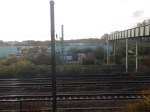
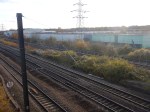
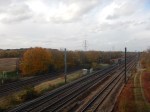

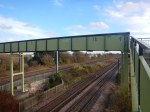
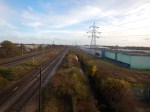
Whilst I took the pictures there was a lot of noise from chain saws and other machinery, as the vegetation was cleared.
The Track Layout
Note how the tracks are divided into a set of two on the Western side and three on the Eastern.
The Western pair are the so-called Stamford lines, which go off to the West through Stamford station.
A diagram in Rail Magazine shows how they will be moved apart and twenty-five metres to the West. This will enable the two new tracks to be laid between them, which will then dive under the East Coast Main Line and connect to the Great Northern Great Eastern Joint Line towards Spalding, Sleaford and Doncaster.
This Google Map shows the Cock Lane Bridge as it crosses the tracks.

The Cock Lane Bridge is at the bottom of the map.
Doing The Work
It looks a simple plan, that NR believes could be executed with a nine-day closure of the East Coast Main Line. This would be needed to tunnel under the three tracks of the main line.
But I suspect that Network Rail could have a series of cunning plans to keep a limited service going.
- There will probably be a number of bi-mode Class 800 trains available.
- Some of the sixteen InterCity 125 trains could be retained.
The diesels and bi-modes could be able to use the Great Northern Great Eastern Joint Line and other routes without electrification to sneak through.
They might also use an interim layout of lines at Werrington to keep the service going.
Extra Electrification
It appears to me that not all tracks are electrified.
The Northbound Stamford Line certainly has electrification, but it appears that the Southbound doesn’t.
Given that in the next decade, it is likely that battery/electric or electro-diesel trains or locomotives will use the route throughStamford station to Leicester and Nuneaton, would it be worthwhile to fully electrify the Stamford Lines.
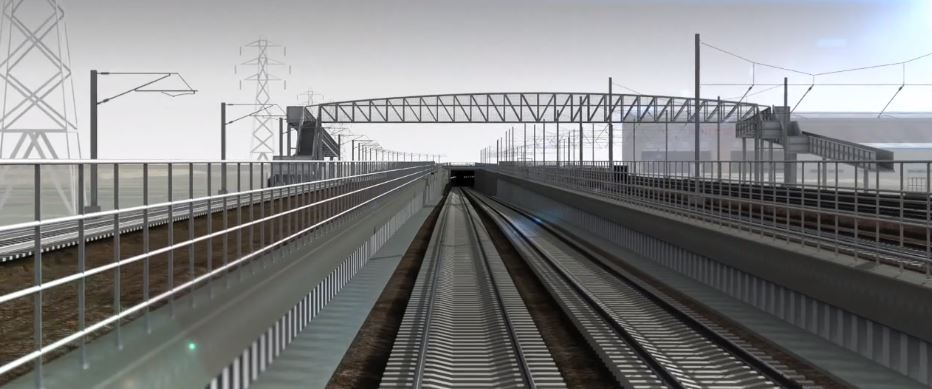
This image captured from a Network Rail video, clearly shows the new Cock Lane footbridge and that the following lines are electrified.
- The Northbound Stamford Line on the left.
- The three tracks of the East Coast Main Line on the right.
The actual dive-under and the Southbound Stamford Line appear not to have electrification.
Retention Of Diesel Trains
But surely, if there are a few extra diesel trains around for a couple of years or at least until the end of 2019, would it help to sort out some of the other problems on the East Coast Main Line.
 The Anonymous Widower