Sainsbury’s Now Sell Celias!
I took this picture in the Angel branch of Sainsbury’s.
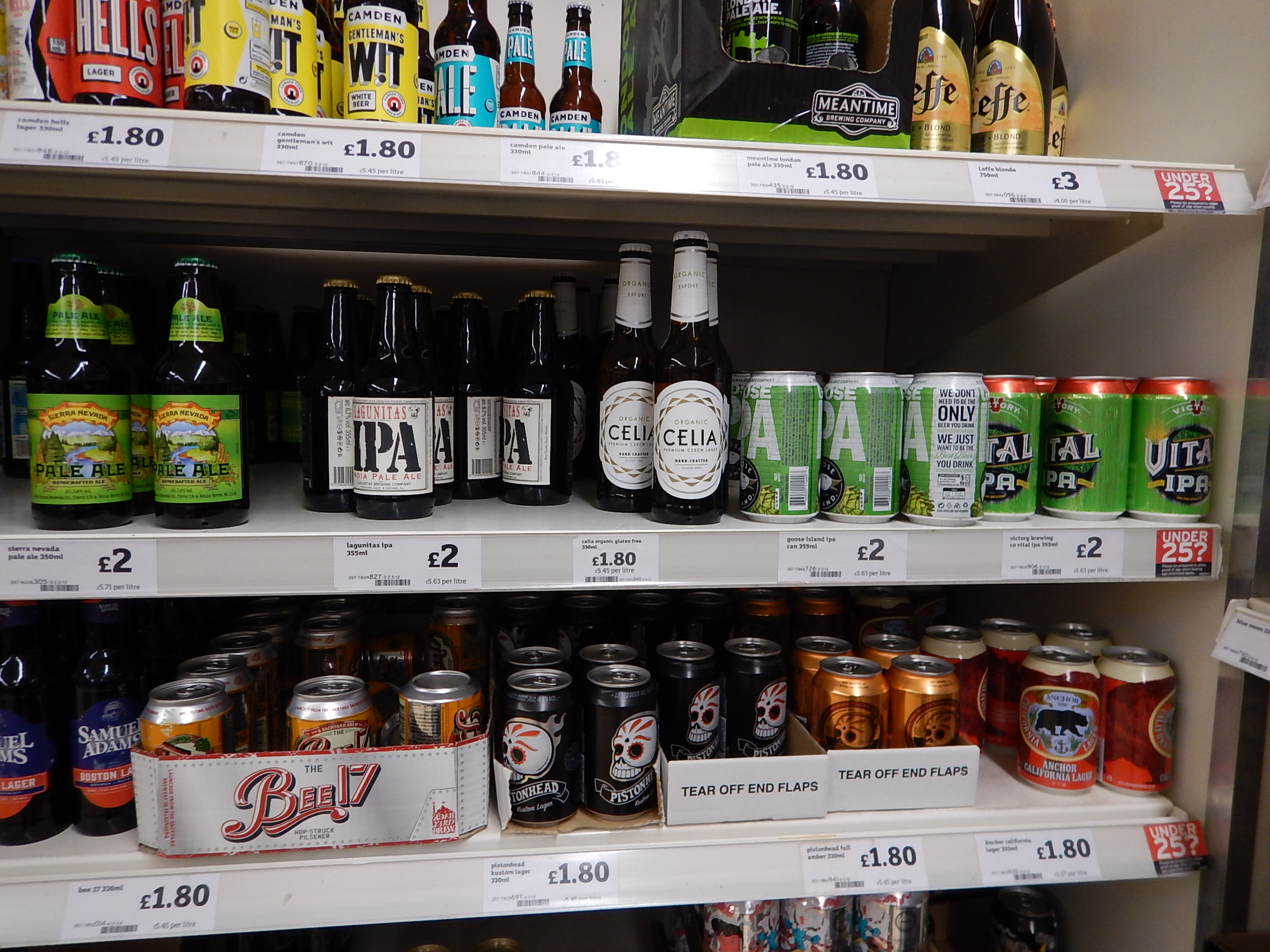
I only buy the odd bottle these days, as the Adnams Southwold Pale Ale 0.5%, which is available in Marks and Spencer is more to my taste.
Here Are 31 Better Names For City Thameslink, The Worst Name For A Railway Station Ever Devised
The title of this post, is the same as that of this article on CityMetrics.
I tend to agree, as the name doesn’t give too much information about the location, unless you’re a Londoner or someone, who knows about Thameslink.
Look at the passenger statistics for 2013-14 for the station and its neighbours.
- Farringdon – 5.45 million
- City Thameslink – 6.02 million
- Blackfriars – 14.4 million
They are in line with their neighbours, but nothing special.
So would a renaming help.
Of the thirty-one names proposed by CityMetric, one name stands out to me. This is St. Paul’s West.
These pictures show City Thameslink station.
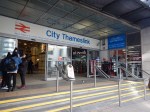



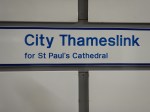

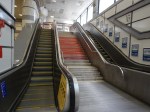

Note.
- It is a double-ended station.
- The Northern entrance is on Holborn Viaduct.
- The Southern entrance is on Ludgate Hill.
- There are escalators and lifts at both ends.
- The station name is given on the platform as City Thameslink for St. Paul’s Cathedral.
This is a Google Map of the area.

Note St. Paul’s cathedral and Southern entrance to City Thameslink station are connected by Ludgate Hill. As Ludgate Hill suggests, it is uphill to the cathedral.
So perhaps a name like Ludgate and St. Paul’s West, might be better.
There could always be a referendum or an on-line vote. But some wag would come up with an unsuitable name that would win.
City Thameslink station is a modern high-capacity station.
- The station is fully accessible.
- The platforms accept twelve-car Class 700 trains.
- Thameslink will soon be running twenty-four trains per hour (tph) in both directions.
- Northern destinations include Bedford, Cambridge, Luton Airport, Peterborough, Saint Pancras International and Stevenage.
- Southern destinations include Brighton, Gatwick Airport, Littlehampton, London Bridge, Maidstone, Rainham and Sevenoaks.
- There is commercial development over much of the station, some of which is better than others.
I have also read that the signalling of Thasmeslink could accept thirty tph through the Snow Hill Tunnel. So the station could see a twenty-five percent increase in train capacity.
What the station needs is better East-West connections to make better use of the station.
Crossrail
Crossrail connects to Thameslink, one station to the North at Farringdon station, which is not a long walk.
A Pedestrian Connection To St. Paul’s Tube Station
I believe this is possible and I wrote about it in A Pedestrian Connection Between City Thameslink Station And St. Paul’s Tube Station.
A Connection To The Docklands Light Railway
This map from Transport for London, shows the possible Western extension of the DLR.
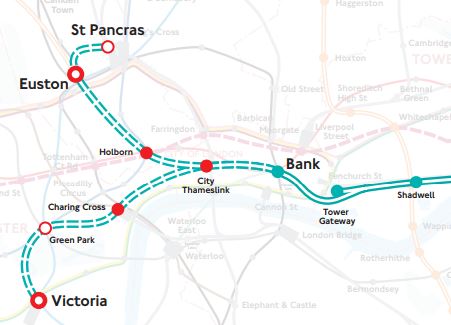
I wrote about this extension in detail in A Connection Between City Thameslink Station And The Docklands Light Railway.
Conclusion
City Thameslink station could grow significantly in importance.
As to the name, if it grows in importance, perhaps it deserves a more important name?
The French would name it after an important politician, artist, philosopher or soldier!
We don’t do that!
If City Thameslink station ends up with a good pedestrian connection to St. Paul’s station and the cathedral, perhaps the whole station complex should just be called St. Paul’s.
How Do Hydrogen-Powered Trains Work?
This promotional video shows how Alstom’s Coradia iLint works.
Note that it’s really a battery train, where the batteries are charged from the electrification or the hydrogen power-pack.
Alstom To Join Stagecoach’s Southeastern Franchise Bid
The title of this post is the same as that of this article in Global Rail News.
This is the first two paragraphs.
Stagecoach has announced that Alstom is to become part of its bid for the new Southeastern franchise.
The move, which is subject to approval by the Department for Transport (DfT), will make Alstom a 20 per cent shareholder in the new train operating company.
I think the pairing of a train manufacturer with a train operator could be something that we’ll see more often. Remember that two of Abellio’s UK franchises; Greater Anglia and West Midlands Trains, have placed substantial orders for Bombardier Aventras.
UK rail franchises are not very similar, with often a mixture of different types of route.
In the case of the Southeastern franchise, there are the following.
- High speed commuter routes.
- Intense metro services.
- Long-distance commuter routes.
- Branch lines with low frequencies.
- Extensions over lines without electrification.
Having a train manufacturer involved in the process, must help in formulating a high-class bid.
So how will Alstom’s expertise help in the formulation of the bid?
Highspeed Commuter Trains
The current fleet of Class 395 trains will need to be expanded, as the new franchise will be offering extra services to Hastings and Eastbourne, with the possible addition of a second London terminal.
The easy route would be to go to Hitachi and order some extra Class 395 trains. But these would have to be built with some method of using the Marshlink Line, which is not electrified. In Hitachi’s Thoughts On Battery Trains, I discussed Hitachi’s published thoughts on using battery trains on this line.
I don’t doubt that Hitachi could provide the trains.
Alstom have a lot of expertise in high speed trains and would have no problem producing a train with the following performance.
- 140 mph on high speed lines.
- 100 mph on third rail DC lines.
Could they have done the calculations and found that their hydrogen power technology could drive a train from Ashford to Ore at the 60 mph operating speed of the Marshlink Line?
In an article in the October 2017 Edition of Modern Railways, which is entitled Celling England By The Pound, Ian Walmsley says this in relation to trains running on the Uckfield Branch.
A modern EMU needs between 3 and 5 kWh per vehicle mile for this sort of service.
If I assume that the extra trains will be five cars and will be efficient enough to need only 3 kWh per vehicle mile for the 25 miles without electrification of the Marshlink Line, this gives an energy requirement of 375 kWh.
- Electrification between London and Ashford would charge the batteries at the Ashford end.
- Electrification between Hastings and Eastbourne would charge the batteries at the Hastings end.
- Hydrogen-power would continuously top up the batteries en-route between Ore and Ashford.
- Electrification at Ashford and Hastings would probably be able to do a lot of the acceleration to the 60 mph operating speed.
- Rye station could be electrified to make the stop easier.
Only Alstom know what size of battery and hydrogen power-pack would be needed.
If they could produce a high speed train, that could extend its range by the use of hydrogen power, it would be a very public demonstration of the capabilities of the technology.
Commuter Fleet Replacement
A lot of the current fleet is coming to the end of its life and I would expect the new franchise will replace the trains. A proportion of the trains also have an operating speed of 75 mph and are lacking in some of the features passengers like.
So perhaps, Alstom would be looking forward to building trains for the new franchise.
They’ve even got a suitable design in Siemens Class 707 train, that was built for South West Trains, which was run by Stagecoach.
Conclusion
It looks to me, that Alstom have two trains; one in reality and one on the drawing board, that could enable Stagecoach to put forward a creditable bid for the Southeastern franchise.
But these trains will not be one-off specials for the Southeastern franchise.
The high speed train with a range extended by hydrogen would be a unique bi-mode train for 125 mph routes like the East Coast Main Line, Great Western Main Line, Midland Main Line and West Coast Main Line.
Think.
- London Euston to Chester
- London Euston to Barrow-in-Furness
- London Kings Cross to Hull
- London Kings Cross to Sunderland
- London Paddington to Oxford
And that’s just the UK!
London St. Pancras to Hastings and Eastbourne would be the ideal route for a demonstrator. Especially, for the French!
The commuter unit may not be as unique, but the Siemens design is proven and it would be a competitor to Bombardier’s Aventra.
Alstom Wins The Europe 1 Mobility Trophy For Its Hydrogen Train
The title of this post is the same as that of this article on WebWire.
This is the first paragraph.
Alstom has been awarded the Mobility Trophy for Coradia iLint, its hydrogen train, in the context of the French leading radio Europe 1 Trophies of the Future.
Winning an award can be a mixed blessing.
For some it is a precursor to outstanding success.
But for others, the reverse is true!
I’ve never ridden on or even seen a Coradia iLint, but the theory behind the train is sound.
As soon as these trains are taking passengers in Germany, I’ll go and have a ride.
The Rather Ordinary Sunderland Station
The first impression given by a station when you arrive in a town or city is important.
Some like Cambridge, Kings Cross, Liverpool, London Bridge and Reading say you are arriving in a place that is important, but others fail to get over a positive message.
If you compare Sunderland station to those at Middlesbrough and Newcastle, it doesn’t score well.
This set of pictures shows the important Sunderland station, which serves a city of nearly 200,000 people.
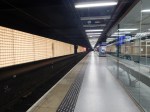
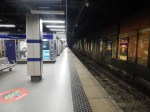
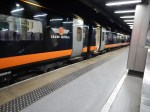
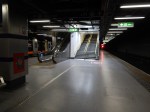
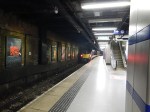
it is very disappointing.
- Passenger facilities are limited for a city, that is the size of Sunderland.
- The lighting levels are not as high as the other Tyne and Wear Metro stations, that are in tunnels.
- It needs double escalators.
- A coffee kiosk on the double platform would be welcome.
I get the impression that the station was designed down to a cost, rather than up to a passenger standard.
Station Capacity
The Metro currently runs five trains per hour (tph) between NewcastleAirport and South Hylton stations. I suspect that the number of trains will increase when new trains run on this branch.
The Metro has put forward proposals to run services on the Durham Coast Line to Seaham station. Four tph?
Northern will also be doubling the frequency of their hourly service between Middlesbrough and Newcastle.
These improvements could raise the train frequency from six to perhaps twelve tph.
Through trains will not be a problem, as with modern signalling and trains, the frequency of trains in both directions could be as high as the twenty tph, that will be running on the East London Line in a couple of years.
But would it be possible to turn Grand Central and Virgin services that terminate at Sunderland in the time available between Metro trains. The twelve minutes available at present with five Metro tph is obviously enough, but what if the Metro frequency were to be substantially increased?
As both Grand Central and Virgin would probably like to increase their frequencies to London, a solution will need to be found.
This diagram from Wikipedia, shows the track layout at Sunderland station.
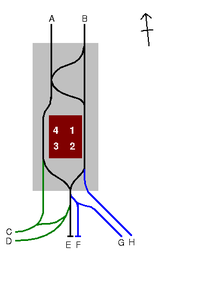
This is the key to the diagram
- Black lines: Track shared by Metro and mainline services, electrified at 1500 V DC overhead.
- Green lines: Track used by Metro services only, electrified at 1500 V DC overhead.
- Blue lines: Track used by mainline services only, not electrified.
- Grey area: covered station shed.
- Maroon area: Platforms.
- Platform 1: Southbound mainline services.
- Platform 2: Southbound Metro services.
- Platform 3: Northbound Metro services.
- Platform 4: Northbound mainline services.
- A: Towards Newcastle
- B: From Newcastle
- C: From South Hylton
- D: To South Hylton
- E: Electrified siding
- F: Non-electrified siding
- G: From Middlesbrough
- H: Towards Middlesbrough
I think an engineer named Baldrick has been at work and they’ve devised a cunning plan.
If you arrive from the South on the 16:38 Grand Central train, it appears that it returns at 17:31.
So does it use time profitably, by sitting in the non-electrified siding labelled F, where it is refuelled and restocked, whilst the crew get a well-needed rest?
Consider,
- Let us suppose the frequency through Sunderland is twelve tph or a train every five minutes.
- A train from London arrives in Platform 4 and would have five minutes to reverse into the siding.
- When it leaves for London, it would a five minute window to move into Platform 1, pick up passengers and proceed South.
- The current service is five trains per day.
It certainly looks possible, but as there are two sidings and twelve five minute slots in an hour, I suspect that theoretically at least four tph could be turned back South if required.
Note that if the trains had a degree of automation, this would make a higher frequency attaining a higher frequency a lot easier.
, I also suspect the capacity of the East Coast Main Line restricts services to Sunderland, more than the actual capacity at Sunderland station.
Conclusion
The track layout at Sunderland station seems to have been designed to handle many more through trains than it does now!
In addition, it has a large capacity to turn trains from the South.
Obviously, modern trains and signalling is required.
Sunderland station may appear to be rather ordinary, but the track layout can cope with a lot of trains.
Walking Around Sunderland
I took these pictures as I walked around Sunderland.
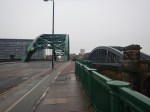
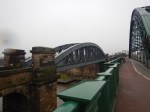

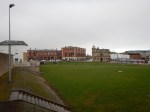



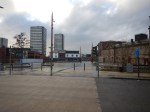

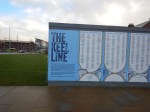













There is a lot of potential for improvement.
The Northern Spire Bridge
The Northern Spire Bridge is being built across the River Wear to the West of Sunderland.




The pictures were taken from the Tyne and Wear Metro between Pallion and South Hylton stations.
It will be a dual-carriageway with provision for pedestrians and cyclists.
Express London-Amsterdam Eurostar Service Being Explored
The title of this post is the same as the title of this article on Global Rail News.
This is the first paragraph.
Nederlandse Spoorwegen (NS) has said it is in discussions with Eurostar to boost the number of journeys from Amsterdam to London in 2019.
The aim is to do the following.
- Speed up the call at Brussels.
- Increase services from two to three per day.
- Reduce journey times from four to three and a half hours.
All very worthy, but I think Amsterdam even in three and a half hours may be a bit far, as the time by air is probably quicke.
London To Get Three New Market Halls
This article in the Standard, describes the start of an interesting new venture.
This is the first few paragraphs.
Mannequins will make way for food stalls at the former BHS store in Oxford Street as it transforms into a bustling hub for foodies under plans to open as the UK’s largest food hall.
BHS ceased trading in 2016 and the site sat largely empty until Polish fashion label Reserved moved in last year. Now, the remaining space at the beleaguered department store chain will be the flagship branch of a new venture bringing three permanent food markets to the capital.
A disused Tube station ticket hall in Fulham and a former nightclub in Victoria will also be transformed.
Between them the markets will feature more than 50 bars and eateries, including outposts of well-known London restaurants and street food traders as well as a smaller number of start-ups.
The venue in Oxford Street will certainly be handy if I need a spot of lunch, when I’m in the area.
But will it make the streets more crowded? Or will Crossrail and pedestrianisation give everybody a lot more space?
 The Anonymous Widower