Rayners Lane Station
These pictures show Raynes Lane station.


Note.
- The station, like many of the period, was designed by Charles Holden and is Grade II Listed.
- The Metropolitan and Piccadilly Lines divide to the East of the station.
- There is no step-free access.
- The pictures show the step-down into a Piccadilly Line train.
I don’t think it will be easy to convert this station to full step-free access for both Metropolitan and Piccadilly Line trains.
Is There Going To Be More Change At Ealing Broadway Station?
Ealing Broadway station is being upgraded for Crossrail.
In the November 2017 Edition of Modern Railways, there is a Capital Connection supplement, which discusses London’s railways.
On Page 7 in a section about the sub-surface lines, this is said.
One possibility being discussed is that the Piccadilly should take over the District’s Ealing Broadway service. This would free up space on the South side of the inner-London circle for more City trains off the Wimbledon branch, one of the sub-surface network’s most-crowded routes.
On Page 15 in a section about the Mayor’s plans, this is said.
It is suggested Piccadilly Line services run to Ealing Broadway instead of the District Line, enabling increased frequencies on the latter’s Richmond and Wimbledon branches.
As the plan is mentioned twice, certainly the proposal is being thought about.
The Lines At Ealing Broadway Station
This map from carto.metro.free.fr shows the lines at Ealing Broadway station.
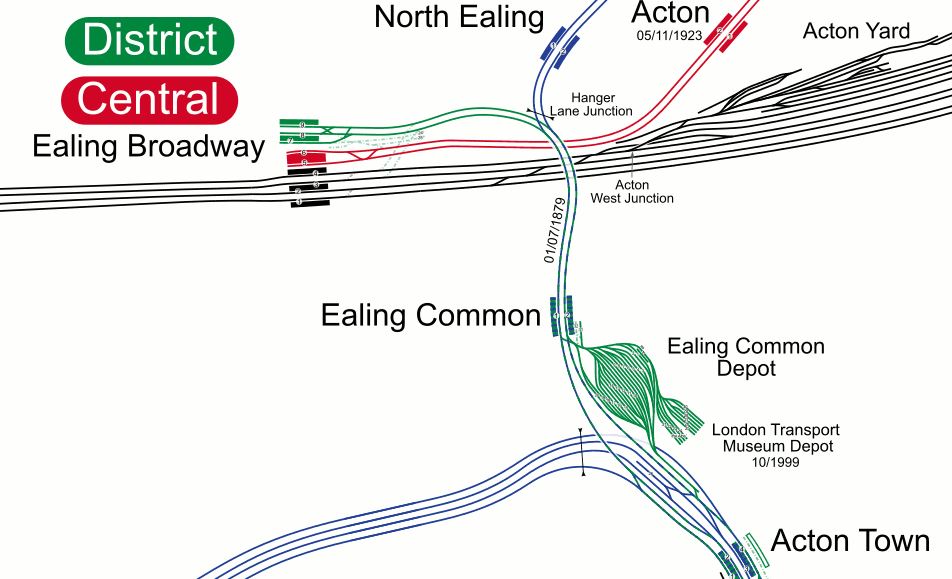
Note how the Piccadilly and District Lines share tracks from Ealing Common station, which then split with District Line trains going to Ealing Broadway station and Piccadilly Line trains going to Rayners Lane and Uxbridge stations.
If the change happened and Ealing Broadway station was only served by the Piccadilly and Central Lines of the Underground, then there might be opportunities to improve the efficiency of the Underground side of the station.
Crossrail Effects On Access To Heathrow
Crossrail will change the way a lot of passengers go to and from Heathrow Airport.
Crossrail To Heathrow
From May 2018, the service will be.
- 4 trains per hour (tph) between Paddington and Heathrow Central and Heathrow Terminal 4
After December 2019, the service will be.
- 4 tph between Abbey Wood and Heathrow Central and Heathrow Terminal 4
- 2 tph between Abbey Wood and Heathrow Central and Heathrow Terminal 5
In addition these services will serve all station including Canary Wharf, Liverpool Street, Bond Street,Paddington and Ealing Broadway.
Effect On Heathrow Express
It will be difficult to predict what will happen to Heathrow Express, but I suspect several groups of passengers will desert it.
- Passengers wanting to go anywhere East of Paddington without changing trains.
- Passengers wanting any Crossrail station.
- Passengers, who don’t like the prices of Heathrow Express.
- Passengers using Oyster or contactless cards.
- Passengers who want to ride on London’s spectacular new Crossrail.
After Old Oak Common station is opened, the numbers will further decrease.
Will Heathrow Express survive?
Effect On Piccadilly Line
The current Piccadilly Line route to the Airport will not be closed, as for many it will still be a convenient route to the Airport
- Passengers who live on the Piccadilly Line and don’t want to change trains. Think Southgate, Knightsbridge, Hammersmith and Osterley!
- Passengers to the East of Acton Town station.
- Passengers, workers and others needing to go to Hatton Cross station.
If Crossrail connected with the Piccadilly Line at say Holborn, it would be all so different.
Effect On District Line
When Crossrail opens, the District Line will become a loop from Crossrail, between Ealing Broadway and Whitechapel running along the North Bank of the Thames via Earls Court, Victoria, Charing Cross and Monument.
The step-free interchange at Ealing Broadway could become busy with passengers travelling to and from the Airport.
Effect On Piccadilly Line Overcrowding
Heathrow trains on the Piccadilly Line can get very overcrowded with so many passengers with heavy cases.
It must sometimes be very difficult to get on a Piccadilly Line train between Heathrow and South Kensington stations.
Crossrail should take the pressure from these trains, by allowing passengers to use the District Line with a change at Ealing Broadway.
Effect On My Personal Route
My personal route to the airport is to take a 141 bus to Manor House station and then get the Piccadilly Line. It takes 94 minutes.
After Crossrail fully opens, if I took the East London Line from Dalston Junction to Whitechapel and then used Crossrail, I’d take 57 minutes.
Conclusion
Crossrail will affect the way many get to Heathrow Airport.
But there are large areas of London, who still will need to change trains twice to get to the airport.
Piccadilly Line To Ealing Broadway Effects
Adding Ealing Broadway station as a fourth Western terminus to the Piccadilly Line will have effects, but not as important as the opening of Crossrail.
Some Improved Journey Times To Heathrow
Some Piccadilly Line stations will see improved journey times to Heathrow.
Hammersmith to Heathrow currently takes 37 minutes by the Piccadilly Line.
Taking a Piccadilly Line train to Ealing Broadway and then using Crossrail could save a dozen minutes.
The District Line Connection To Crossrail At Ealing Broadway Is Lost
Passengers along the District Line from Monument to Hammersmith will lose their direct access to Crossrail at Ealing Broadway.
Cross-platform access to the Piccadilly Line at Hammersmith and Turnham Green will probably be provided or improved, but it will be a second change.
Note that until the Piccafilly Line gets upgraded and new trains arrive around 2023, the District Line with new trains and the soon to be installed new signalling may well be a better passenger experience.
More Trains To Richmond
This will certainly be possible, if some Ealing Broadway trains are diverted to Richmond.
But Crossrail has another delight in its cupboard for Richmond.
Old Oak Common station is scheduled to open in 2026 and will offer an interchange between Crossrail and the North London Line.
Richmond will certainly be getting a better train service to Central and East London.
More Trains To Wimbledon
This will certainly be possible, if some Ealing Broadway trains are diverted to Wimbledon.
The Ealing Common Problem
At Ealing Common station, the Piccadilly and District Line share the same tracks and platforms.
Some commentators have suggested that the new trains on the Piccadilly Line will be designed to work with platform-edge doors for improved safety and dwell times.
So if platform-edge doors were to be fitted to all stations on the Piccadilly Line as has been suggested, there would be no way the doors would fit the new S7 Stock of the District Line.
Swapping Ealing Broadway from the District to Piccadilly Lines would solve this problem and give more flexibility, but it might give London Underground other problems with regard to access for District Line trains to Ealing Common depot.
These pictures show Ealing Common station.
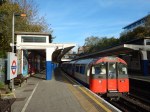

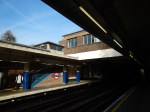

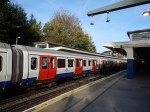
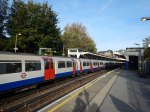
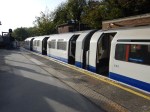
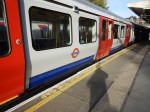
Note the difference of levels between the Piccadilly and District Line trains.
There would be no way to provide level access for both types of train using a Harrington Hump.
So is making a station that serves both deep-level and sub-surface lines, step-free, a problem that is still to be cracked?
This Google Map shows Ealing Common station.
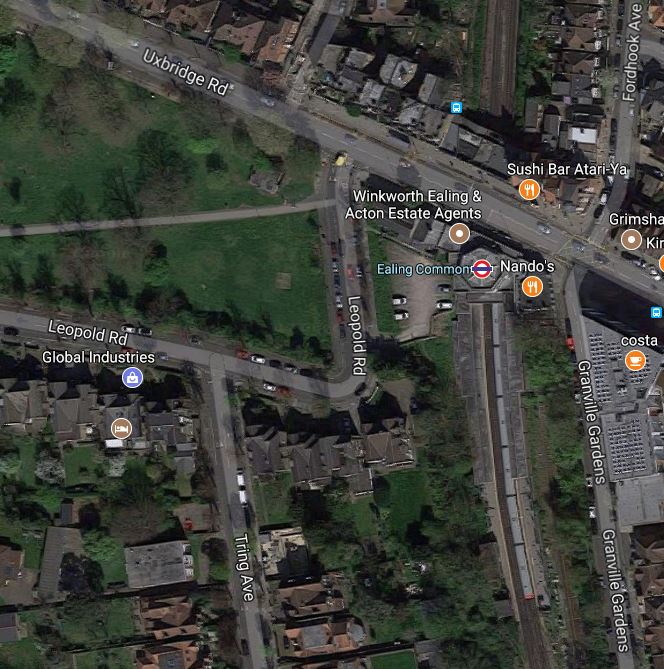
It doesn’t look that it is a station, where two extra platforms could be squeezed in, so both lines could have their own platforms.
Could Ealing Common station be one of the main reasons to serve Ealing Broadway station with the Piccadilly Line?
Acton Town Station
On a brief pass-through of Acton Town station, it would appear that the Ealing Common problem exists.
So making Acton Town station, a Piccadilly Line-only station, would ease making the station step-free, as it would only be served by one type of train.
Chiswick Park Station
Chiswick Park station only has platforms on the District Line and would need to be remodelled, if Ealing Broadway became the terminus of the Piccadilly Line.
One suggestion I found was to add two new District Line platforms to the Richmond branch.
This Google Map shows the station.
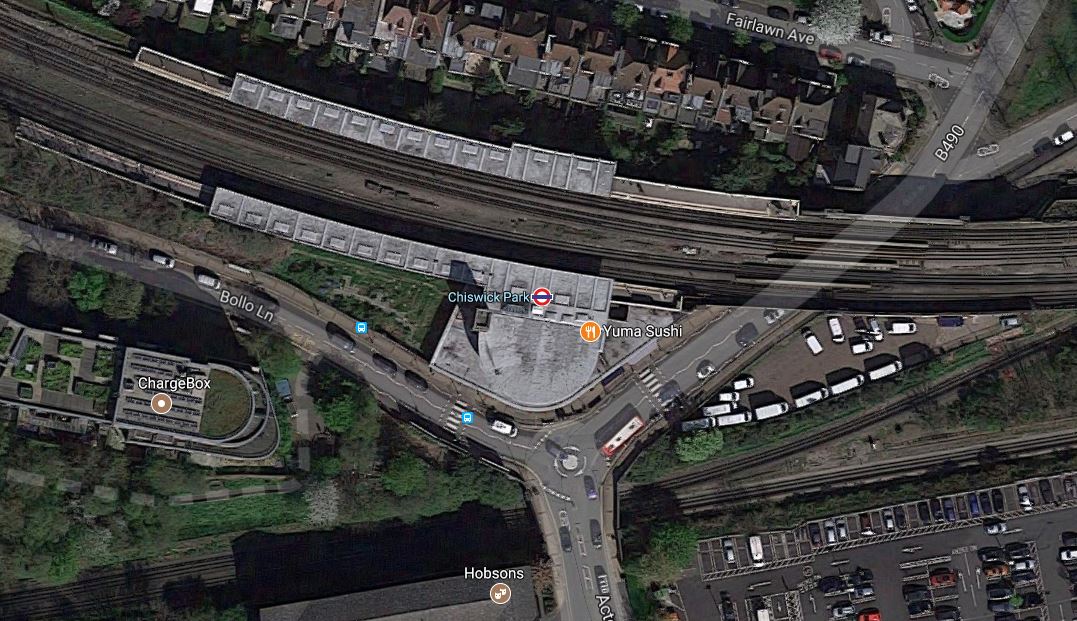
Note the Richmond branch passing South of the station.
Chiswick Park station is Grade II Listed and I’m sure that a good architect can find a more than acceptable solution.
Conclusion
It appears to me, there are two opposite forces on either side of a possible proposal to serve Ealing Broadway station with the Piccadilly Line, rather than the District Line.
- The District Line will form a loop South of Crossrail between Ealing Broadway and Whitechapel stations.
- Making a station step-free that handles both deep-level and sub-surface lines, is not an easy undertaking.
Running the Piccadilly Line to Ealing Broadway means that a change is required at Turnham Green, Hammersith or Barons Court stations to use the loop described in point 1.
But this change would enable the step-free access to be created in all stations in the area.
I think that the change of terminus will go ahead, with the following additions.
- Improved access to Ealing Common depot.
- Improved cross-platform access at Turnham Green, Hammersith or Barons Court stations.
- Two extra platform on the District Line at Chiswick Park station.
What started out as a simple change could end up as a substantial project.
But overall, because it sorts out step-free access in the area, I think it is a good proposal.
Could Bombardier Build A Hydrogen-Powered Aventra?
In Is A Bi-Mode Aventra A Silly Idea?, I looked at putting a diesel power-pack in a Class 720 train, which are Aventras, that have been ordered by Greater Anglia. I said this.
Where Would You Put The Power Pack On An Aventra?
Although space has been left in one of the pair of power cars for energy storage, as was stated in the Global Rail News article, I will assume it is probably not large enough for both energy storage and a power pack.
So perhaps one solution would be to fit a well-designed power pack in the third of the middle cars, which would then be connected to the power bus to drive the train and charge the battery.
This is all rather similar to the Porterbrook-inspired and Derby-designed Class 769 train, where redundant Class 319 trains are being converted to bi-modes.
I also suggested that a hydrogen power-pack could be used.
After writing Is Hydrogen A Viable Fuel For Rail Applications?, I feel that a similar hydrogen power pack from Ballard could be used.
Congestion Charge On Minicabs To Boost Buses
The title of this post is the same as an article in the Sunday Times.
As a non-driver, I don’t pay the Congestion Charge, but I do get fed up with both the mass of traffic and the pollution it causes in Central London. The former mainly for slowing the buses I use.
The article is saying the following.
- The Charge will be levied on mini-cabs.
- The Charge may be levied to 11 pm instead of 6 pm.
- The Charge msy be levied on Saturdays.
Why not Sundays as well?
And surely the Western Extension should be reinstated!
Is Hydrogen A Viable Fuel For Rail Applications?
Perhaps a good place to start is this article on Global Rail News, which is entitled In depth: What you need to know about Alstom’s hydrogen-powered Coradia iLint.
The article starts with this summary of where we are at present.
The global rail industry’s major players are competing to establish an affordable and green alternative to diesel.
Electric traction has been rolled out extensively but electrification can be very expensive – as the UK has learned – and a large part of Europe’s network remains unelectrified. In countries where the provision of electric services is patchy, bi-mode trains are a popular alternative.
I certainly believe that all trains should be powered by electricity, but then we have had diesel-electric locomotives in regular use pn the UK network since the 1950s.
The article mentions two alternatives to diesel.
Bombardier’s modified Class 379 train, which is now called an IPEMU, which I rode in public service in early 2015 is mentioned. I found this train impressive, as I reported in Is The Battery Electric Multiple Unit (BEMU) A Big Innovation In Train Design?. This was my conclusion.
Who’d have thought that such a rather unusual concept of a battery electric multiple unit would have so many possibilities.
I think I’ve seen the future and it just might work!
I still agree with that conclusion.
The second alternative has just arrived in the shape of the Alstom Coradia iLint, which is powered by hydrogen and just emits little more than steam and condensed water.
The Coradia LINT is a family of one and two car diesel trains.
Wikipedia has a section on the Coradia iLint and this is said.
The Coradia iLint is a version of the Coradia Lint 54 powered by a hydrogen fuel cell.[6] Announced at InnoTrans 2016, the new model will be the world’s first production hydrogen-powered trainset. The Coradia iLint will be able to reach 140 kilometres per hour (87 mph) and travel 600–800 kilometres (370–500 mi) on a full tank of hydrogen. The first Coradia iLint is expected to enter service in December 2017 on the Buxtehude-Bremervörde-Bremerhaven-Cuxhaven line in Lower Saxony, Germany. It will be assembled at Alstom’s Salzgitter plant. It began rolling tests at 80km/h in March 2017.
That sounds impressive.
The Global Rail News article gives a bit more detail, including the following.
- The train has no need for overhead catenary.
- The train has lithium-ion batteries to store generated energy.
- The train has a intelligent energy management system.
- Alstom propose to use wind energy to generate hydrogen in the future.
It also includes this promotional video for the Caradio iLint.
Some points from the video.
- The train has similar performance to comparable regional trains. Do they mean the Lint 54 on which it is based?
- The train captures regenerative braking energy.
- The train has been developed in co-operation with a Canadian company! Do they mean Ballard?
So what are my views about trains hydrogen power?
Hydrogen Power In Road Transport
London bus route RV1 has been run by hydrogen-powered buses since 2010.
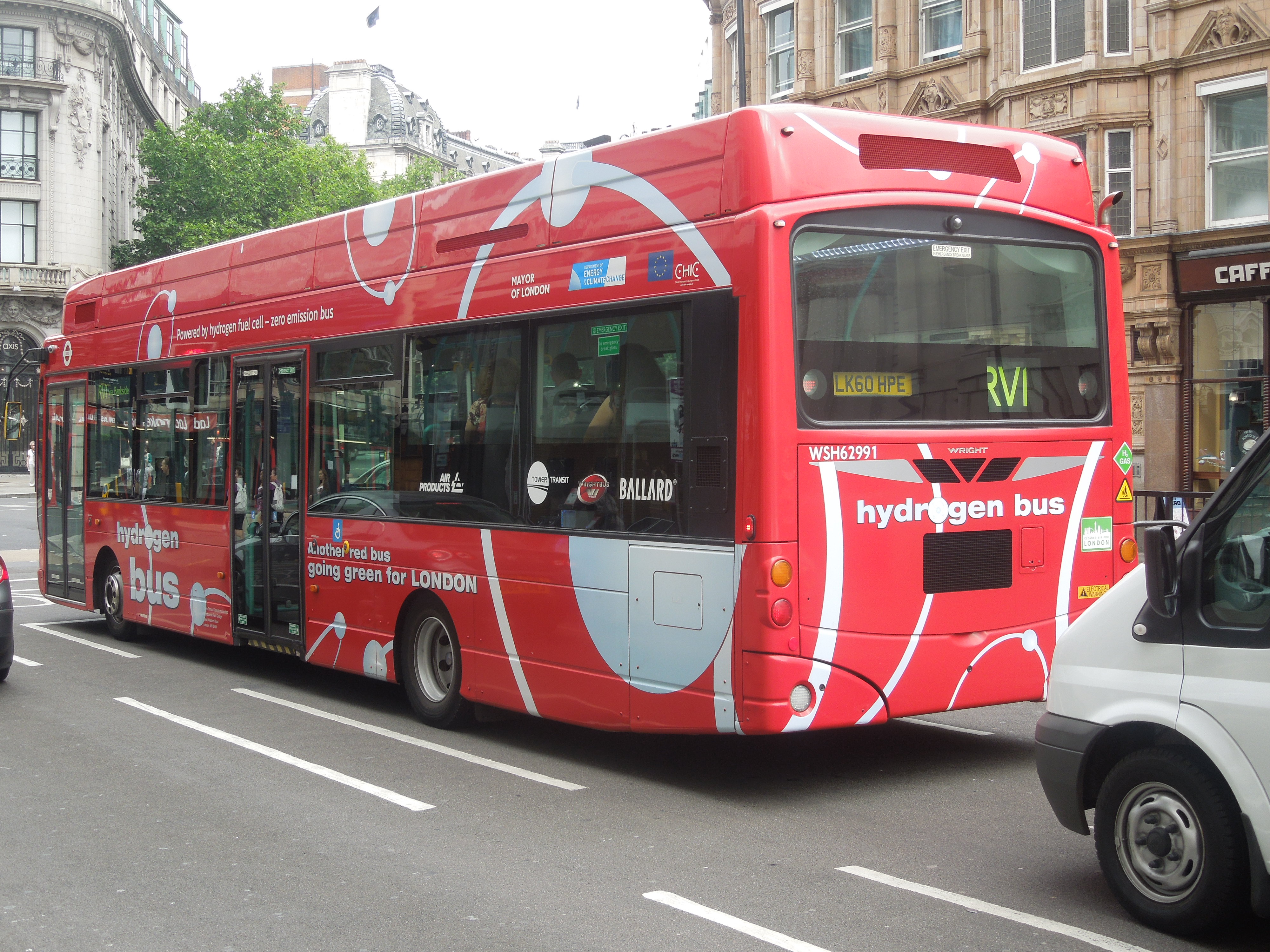
Note Ballard on the side of the bus!
There are also a number of hydrogen-powered cars including the Honda Clarity.
The latest Clarity has these characteristics.
- 4-door saloon.
- 366 mile range.
- 130 kW electric motor.
That seems very reasonable. But the car is only available in California, costs a lot and refuelling points are not everywhere.
The competition for the Honda and other hydrogen-powered cars is the electric car powered by batteries, where charging is getting much faster and easier and the price is getting more competitive.
I think that on the current technology, you’d have to be a very special individual to invest in a hydrogen fuel-cell car.
But use of hydrogen on a city-centre bus is more suitable.
- Pollution is often a problem in city-centres.
- Politicians like to show off their green credentials.
- Buses run fixed routes.
- Bus working schedules can be arranged, such that after a number of trips, they can return to a nearby garage for refuelling.
According to this fuel-cell bus entry in Wikipedia, there have been several trials with varying degrees of success.
My view is that with the current technology, there may be a niche market for hydrogen fuel-cell buses in city centres and environmentally-sensitive areas on defined routes, but that practically and economically, hydrogen fuel-cell cars are a non-starter.
There will be, improvements in current technology in the following areas.
- Vehicle design will result in lighter-weight vehicles and better aerodtnamics.
- Charging systems for electric vehicles will get more numerous and innovative.
- Batteries or energy storage systems will get smaller, lighter and will hold more energy.
Although these developments will also help hydrogen fuel-cell vehicles like buses, they will also help battery-powered vehicles a lot more.
So I would not be surprised to see hydrogen fuel-cell buses not being very successful.
The Advantage Of Rail Over Road
You can’t disagree with the laws of physics, although you can use them to advantage.
Rolling resistance is well described in Wikipedia. This statement starts the third paragraph.
Any coasting wheeled vehicle will gradually slow down due to rolling resistance including that of the bearings, but a train car with steel wheels running on steel rails will roll farther than a bus of the same mass with rubber tires running on tarmac. Factors that contribute to rolling resistance are the (amount of deformation of the wheels, the deformation of the roadbed surface, and movement below the surface. Additional contributing factors include wheel diameter, speed, load on wheel, surface adhesion, sliding, and relative micro-sliding between the surfaces of contact.
Also, as a tram or train system has control of the design of both the vehicle and the rail, it is much easier to reduce the rolling resistance and improve the efficiency of a rail-based system.
One factor; wheel load, is very important. Increasing the load on steel wheels running on steel rails can actually reduce the rolling resistance. So this means that a rail vehicle can better handle heavy components like perhaps a diesel engine, transformer, battery or hydrogen fuel-cell and tanks.
Hydrogen Power In Rail Transport
As Alstom appear to have shown, hydrogen fuel-cells would appear to be able to power a train at 140 kph. Although, there are no reports, that they have actually done it yet! But there has been an order!
The Coradia iLint
I will attempt to answer a few questions about this train.
How Much Power Will The Train Need?
The train is based on a Lint 54.
This document on the Alstom web site, is the brochure for the Coradia Lint.
This is said about the Lint 54.
Ideal for regional or suburban service: The two-car diesel multiple unit with four entrances per side combines all the advantages of its smaller brothers while offering space for up to 170 seats. The vehicle measures 54 m in length. Thanks to its powerful engines, the Lint 54 reaches a maximum speed of up to 140 km/h. With its three powerpacks, the vehicle has a performance of about 1 MW.
Does the iLint have a similar power of about 1 MW?
Could Ballard Power The Train?
If Ballard are Alstom’s Canadian partner could they power the train?
Searching the Ballard web site, I found a product called FCveloCity-HD, for which this document is the data sheet.
The data sheet shows that a 100 kW version is available.
I also found this press release on the Ballard web site, which is entitled Ballard Signs LOI to Power First-Ever Fuel Cell Tram-Buses With Van Hool in Pau, France.
The press release says that 100 kW versions of the FCveloCity-HD, designated FCveloCity-HD100, are used on the tram-buses.
All these applications lead me to believe that Ballard could meet the requirements of enough power for the train.
The video appears to show, that the fuel-cell charges the battery, which then drives the train.
This is not surprising, as most diesel-powered hybrid buses work the same way.
How Big Is The Fuel-Cell?
A Ballard FCveloCity-HD100 is 1200 x 869 x 506 mm. in size and it weighs 285 Kg.
The hydrogen tanks are probably bigger.
Would The Fuel-Cell Provide Enough Power For The Train?
Not on its own it wouldn’t, but adding in the lithium-ion battery and intelligent power management and I believe it would.
- The fuel-cell would generate a constant 100 kW assuming it’s a FCveloCity-HD100.
- The generated electricity would either power the train or be stored in the battery.
- The battery would handle the regenerative braking.
- Air-conditioning and other hotel functions for the train would probably be powered from the battery
The intelligent power management system would take the driver’s instructions and sort out how the various parts of the system operated.
- Moving away from a station with a full train would mean that the train used fuel-cell and battery power to accelerate up to line speed.
- Stopping at a station and the regenerative energy from braking would be stored in the battery.
- Running at 140 kph would need an appropriate power input to combat wind and rolling resistance.
- Any excess energy from the fuel-cell would go into the battery.
- Whilst waiting in a station, the fuel-cell would charge the battery, if it was necessary.
That looks to be very efficient.
How Big Would The Lithium-Ion Battery Need To Be?
I don’t know, but given the appropriate figures, I could calculate it. So Alstom have probably calculated the optimum battery size, based on the routes the train will serve.
Is The Coradia iLint A Battery Train With A Hydrogen-Powered Battery Charger?
I think it is!
But then many hybrid buses are battery buses with a diesel-powered charger.
In Arriva London Engineering Assists In Trial To Turn Older Diesel Engine Powered Buses Green, I wrote about a diesel-hybrid bus, that with the use of geo-fencing, turns itself into a battery bus in sensitive or low-emission areas.
How Would The Train Be Refuelled With Hydrogen?
The video shows a maintenance depot, where the train is topped up with hydrogen, probably after a day’s or a shift’s work.
The first iLint trains have been ordered for the Bremerhaven area, which is on the North Sea coast. So will the depot make its own hydrogen by electrolysis using local onshore or offshore wind power?
Some of that wind power could be used to charge the battery overnight in the depot.
It’s an excellent green concept.
What About The Hindenberg?
But then the very explosive use of hydrogen in the Space Shuttle External Tank never gave any trouble.
Does Alstom Have Any Plans For The UK?
This article on the Engineer web site is entitled Alstom Eyes Liverpool Hydrogen Train Trials.
It would appear to be a good chjoice for the following reasons.
Location
Alstom’s UK base is at Widnes, which is in the South-East of the Liverpool City Region.
Test Partner
Merseyrail have shown in recent years, that they can think out of the box, about using trains and would be a very able partner.
Test Route
The article suggests that Liverpool to Chester via the Halton Curve could be the test route.
- The route is partly electrified from Runcorn to Liverpool.
- The route passes close to Alstom’s base.
- The section without electrification from Runcorn to Chester is probably about twenty miles long, which is a good test, but not a very difficult one.
There would also be good opportunities for publicity and photographs.
Availability Of Hydrogen
Hydrogen is available locally from the various petro-chemical industries along the Mersey.
Incidentally, I used to work in a chlorine plant at Runcorn, where brine was split into hydrogen and chlorine by electrolysis. There were hydrogen tankers going everywhere! Does the industry still exist?
Where’s The Train?
Are Alstom going to build a new train as the Coradia iLint is not built for the British network? Or are they going to modify an existing train, they manufactured a few years ago?
Conclusion
Hydrogen would appear to be a viable fuel for rail applications.
Should Crossrail Be Extended From Old Oak Common?
In How Will Chiltern Railways Serve Old Oak Common?, I looked at the possibilities of how Chiltern Main Line services will use the Old Oak Common station complex as an additional London terminus to ease the overcrowding at Marylebone station.
In Will Crossrail Go Up The West Coast Main Line?, I looked at why the extension of Crossrail to Milton Keynes was announced and then cancelled as it was thought to be bad value for money.
But is the general principle of extending Crossrail from Old Oak Common onto a new branch or branches a good idea?
Crossrail Revenue And Profit
If you’re running any railway, you get the highest revenue by running as many trains as you can and making sure that they are full with passengers all the time.
The Central Section of Crossrail between Stratford and Paddington stations will be very heavily used, as it will have to handle the following passenger flows.
- Passengers from the Abbey Wood Branch going to and from Central London
- Passengers from Heathrow going to and from Central London
- Passengers from the Reading Branch going to and from Central London
- Passengers from the Shenfield Branch going to and from Central London
- Passengers from National Rail services at Liverpool Street going to and from Central London
- Passengers from National Rail services at Paddington going to and from Central London
In addition it will also be used as an extra Underground line in Central London
The Central Section will be a cash cow for the Crossrail operator!
The various branches to and from Abbey Wood, Heathrow, Reading and Shenfield, may well be less heavily used, but will probably see a different type of passenger to the Central Section, who might need more space and hopefully a seat.
The Class 345 Trains
The Class 345 trains have been designed for efficiency and flexibility.
- I believe that each car is a separate one-car electric train with its own function.
- Most cars will be motored to distribute traction and braking forces along the train.
- I wouldn’t be surprised to see a battery in each car to handle regenerative braking.
- Cars are joined together to make a train of an appropriate length.
- Initially, the trains are starting at seven cars, but will go to nine cars and possibly ten.
- The interiors have been designed to satisfy both needs of a long distance commuter train and a London Underground train.
The operator will be able to configure the trains as new routes are added and passenger levels change.
Comparing Crossrail And The Victoria Line
It is worthwhile to compare the Central Section of Crossrail with the Victoria Line.
Crossrail’s Central Section has the following characteristics.
- Twenty-four trains per hour (tph) in both directions
- Automatic train operation (ATO)
- Full-size trains of up to ten carriages long
- Platform-edge doors
- Large stations with lots of wide platforms and passages.
- Double-ended stations ay Liverpool Street-Moorgate, Barbican-Farringdon, Tottenham Court Road and Bond Street.
- Step-free access
- Easy access to connecting lines
- Cross-platform reverse at most stations
Whereas the Victoria Line has the following characteristics.
- Thirty-six tph in both directions
- Automatic train operation
- Tube-size trains of six carriages
- Small stations with lots of narrow platforms and passages
- Some step-free access
- Some easy access to connecting lines
- Cross-platform reverse at most stations
The two lines show a difference in design, very much in keeping with their construction dates.
One comparison is surprising.
Crossrail is planned to run twenty-four tph through the Central Section, but if Dear Old Vicky can manage 36 tph on a line built in the 1960s with generally cramped stations, surely Crossrail with the benefit of some of the best modern design can do a bit more.
I’ve read that Crossrail could handle thirty tph, but then we wondered in the 1960s at the Victoria Line’s fast trains and high frequency in the twenties between Seven Sisters and Brixton. And look at the old girl now!
Dear Old Vicky is second in frequency to parts of the Moscow Metro, which run a train every 95 seconds, as opposed to the 100 seconds of the Victoria.
I suspect that grates with the engineers of the London Underground, as no-one likes being second.
A few years ago, the engineers thought 33 tph between Brixton and Seven Sisters was the limit but now there is 36 tph all the way along the line.
So will we see further improvements to the Victoria Line like these?
- A loop at Brixton via Herne Hill station to turn trains at the Southern end of the line.
- Higher capacity stations at Oxford Circus, Euston, Kings Cross St. Pancras, Highbury and Islington, Finsbury Park and Walthamstow Central.
- Air-conditioned, walk-through articulated trains
- Full step-free access at all stations and platforms
- Improved train control software
- Improved methods of working
These and other improvements will push the frequency towards the magic forty tph.
Do I think that forty tph is achievable on a line built in the 1960s?
As a Control Engineer, trained in the 1960s, I can only give one answer. And that must be yes!
I feel that the stations are the key, as at times stations like Oxford Circus and Walthamstow Central are struggling to handle the number of passengers. Victoria was like that a few years ago, but the addition of a new entrance and more and wider passages has made the station seem a lot less crowded.
Surely, Dear Old Vicky has shown what is possible, when you take a well designed railway and try to ramp up the capacity!
Various commentators have said Crossrail will handle thirty tph, but why are they not being more ambitious?
Comparing Crossrail And Thameslink
Crossrail and Thameslink have a lot in common.
- Frequencies of twenty-four tph through their central sections
- High capacity step-free central stations
- High-capacity purpose-built trains
- Automatic Train Control in the central sections.
But there are differences.
- Crossrail’s central section is straight through from Paddington to Stratford, whereas Thameslink has a junction at Blackfriars.
- Crossrail’s central section has seven stations, whereas Thameslink has just five.
- Blackfriars station is also a terminal station on Thameslink’s central section.
- Crossrail’s stations are generally island platforms, which ease reversing direction, whereas Thameslink’s generally aren’t.
- Crossrail is 25 KVAC overhead electrification throughout, whereas Thameslink has a voltage change at St. Pancras.
I think that although both lines will be opened at a frequency of 24 tph, raising the frequency on Crossrail will be easier than Thameslink.
The Importance Of Increasing Frequency On Crossrail and Thasmeslink
The train capacity on the two routes are as follows.
- A nine-car Crossrail Class 345 train can carry 1,500 passengers
- A twelve-car Thameslink Class 700 train can carry 1,754 passengers
- A eight-car Thameslink Class 700 train can carry 1,146 passengers
Compare this with an eight-car Victoria Line 2009 Stock train, which holds just 876 passengers.
So if Crossrail went from 24 to 30 tph through the central section, that would add extra capacity for 9,000 passengers per hour, between Stratford and Paddington.
Building Crossrail and upgrading Thameslink will bring London two high-capacity cross-London Underground Lines.
The more the frequencies on those lines can be increased the higher will be the capacity of the Underground network in Central London.
Crossrail’s Shenfield Branch
The Branch to Shenfield station has the following characteristics.
- It is an almost completely separated double-track railway between Stratford and Shenfield.
- All stations will be step-free.
- Most trains on the route will be Crossrail’s Class 345 trains.
- A few of Greater Anglia’s similar Aventra trains may use the route.
- The route will have modern signalling and ERTMS.
- It is proposed that initially twelve tph will serve the branch
I believe the track, stations and signalling of the Shenfield Branch could handle up to twenty-four tph.
That figure might seem high, but consider the following.
- Shenfield station has three platforms where Crossrail trains can be turned back.
- Walthamstow Central and Brixton stations handle thirty-six trains tph with just two platforms.
- The track layout at Shenfield can accommodate through trains.
Passenger access to the platforms is probably more of a limiting factor, than the track and platforms.
Timings
Currently, Class 315 trains are scheduled to go between Stratford and Shenfield in thirty-six minutes, with faster Longer distance services doing the trip non-stop in fifteen minutes.
- Crossrail is claiming on their web site, that the Class 345 trains will do the trip in thirty-two minutes or four minutes less.
- But there are eleven station between Stratford and Shenfield. So that is a saving of only around twenty-two seconds a station.
I feel Crossrail is playing their timings very safe.
Future Services
I think the following will happen in a few years.
- The current proposal of twelve tph to Shenfield will be increased to something like fifteen or twenty tph.
- Crossrail timings between Stratford and Shenfield will approach the current fastest time of fifteen minutes between the two stations.
- Fast services to and from North of Chelmsford will stop at Shenfield to enable faster and easier journeys.
- Crossrail could be extended to stations like Beaulieu and Southend Victoria.
- Shenfield will become a major rail interchange.
The East of England will see major changes to its rail network.
Crossrail’s Abbey Wood Branch
The Branch to Abbey Wood station has the following characteristics.
- It is a tunnelled double-track railway between Whitechapel and Abbey Wood stations.
- All stations will be step-free.
- All trains on the route will be Crossrail’s Class 345 trains.
- The route will have modern signalling and ERTMS.
- It is proposed that initially twelve tph will serve the branch
I believe the track, stations and signalling of the Abbey Wood Branch could handle up to twenty-four tph.
Future Services
I think the following will happen in a few years.
- The current proposal of twelve tph to Abbey Wood will be increased to something like fifteen or twenty tph.
- Services on the Abbey Wood Branch will continue to match those on the Shenfield Branch, as this makes journeys between the two Eastern branches easier.
- Crossrail could be extended to stations like Ebbsfleet and Gravesend.
- Abbey Wood will become a major rail interchange.
South East London and Kent will see major changes to its rail network.
Summing Up The Two Eastern Branches
The two Eastern Branches can probably provide as many as twenty-four tph for Crossrail.
As the maximum frequency through the Central Section is probably in the thirties, they can allocate services according to where the traffic lies.
It would also appear that as the two services will use the same platforms at Whitechapel station and trains will be every few minutes, that Crossrail is designed to make journeys between say Ilford and Abbey Wood much quicker than by car.
Crossrail’s Reading Branch
The Branch to Reading station has the following characteristics.
- It is a semi-separated double-track railway between Paddington and Reading.
- All stations will be step-free.
- Most trains on the route will be Crossrail’s Class 345 trains.
- Other services may share the tracks.
- The route will have modern signalling and ERTMS.
- It is proposed that initially six tph will serve the branch; four to Reading and two to Maidenhead.
I believe the track, stations and signalling of the Reading Branch could handle up to twenty-four tph,
Future Services
I think the following will happen in a few years.
- The current proposal of six tph to Reading and Maidenhead will be increased increased.
- Crossrail could be extended to stations like Basingstoke and Oxford.
- Reading will become an even more major rail interchange.
West London and Berkshire will see major changes to its rail network.
Crossrail’s Heathrow Branch
The Branch to Heathrow has the following characteristics.
- It is a fully-separated double-track railway between Airport Junction and Heathrow.
- All stations are step-free.
- Most trains on the route will be Crossrail’s Class 345 trains.
- Other services may share the tracks.
- The route will have modern signalling and ERTMS.
- It is proposed that initially six tph will serve the branch.
I believe the track, stations and signalling of the Heathrow Branch could handle in excess of twelve tph.
Future Services
I think the following will happen in a few years.
- The current proposal of six tph to Heathrow is increased.
- Crossrail could be extended to stations beyond Terminal 5.
- Heathrow Express will fade away.
Heathrow will see major changes to its rail network.
Turning Back Crossrail Trains At Paddington
These services will call at Paddington from the East.
- 12 tph from Abbey Wood
- 12 tph from Shenfield
And these from the West
6 tph from Heathrow
2 tph from Maidenhead
4 tph from Reading
This gives an imbalance, so twelve tph will have to be turned back to the East at Paddington.
Crossrail Services
The provisional service pattern is shown in the Wikipedia entry for Crossrail under Services.
It effectively shows the following services, with times are from Crossrail’s provisional journey time calculator.
- 4 tph – Reading to Abbey Wood – 80/78 minutes
- 2 tph – Maidenhead to Abbey Wood – 67/66 minutes
- 4 tph – Heathrow Terminal 4 to Abbey Wood – 60/60 minutes
- 2 tph – Heathrow Terminal 5 to Abbey Wood – 60/60 minutes (assumed same as previous)
- 12 tph – Paddington to Shenfield – 51/51 minutes
It should also be noted that Paddington to Abbey Wood is 29/28 minutes.
Note.
- The first figure is for the West to East journey.
- The second figure is for the East to West journey.
- There isn’t much difference between West to East and East to West journeys.
This leads me to give these numbers for the trains on each route.
- Reading to Abbey Wood – 12 trains
- Maidenhead to Abbey Wood – 5 trains
- Heathrow Terminal 4 to Abbey Wood – 10 trains
- Heathrow Terminal 5 to Abbey Wood – 5 trains
- Paddington to Shenfield – 24 trains
This totals up to 56 trains.
Note.
- My numbers of trains figures, are very rough and are minimum numbers.
- Provisionally, Crossrail will also be running 4 tph between Liverpool Street and Gidea Park in the Peak, which could need four trains.
- Crossrail have ordered 70 trains.
- Some trains will be in maintenance and others will be held in reserve.
Crossrail seem to have ordered a sensible number of trains for the initial services.
Ceossrail Extension To Gravesend
It would appear that a typical Abbey Wood to Gravesend service takes just under half an hour.
This is with slower twenty-five year old Class 465 trains, so extending services to Gravesend would just add an hour to the round trip.
This would make train timetabling easy.
If the Heathrow Terminal 4 service to Abbey Wood was extended to Gravesend, it would require another two trains.
In addition.
- The Class 345 trains have been designed to run on 750 VDC third-rail electrification, with the addition of third-rail shoes.
- I think that the new track layout at Abbey Wood station could cope with four tph running to Gravesend using the North Kent Line.
- A single platform at Gravesend could turn back four tph.
It does look that to choose Gravesend as an extension for Crossrail could be a very good decision.
The New South Eastern Franchise
This will be a key factor in extending Crossrail to Gravesend and I suspect all bidders will give co-operation with Crossrail, a high priority.
I suspect a new franchise will replace a large proportion of the train fleet with new 100 mph traqins and that the Class 465 trains will be retired.
The new franchise is due to start in December 2018.
When Could A Crossrail Service To Gravesend Start?
I believe that the following infrastructure is ready for a four tph Crossrail service to Gravesend.
- The link between Crossrail and the North Kent Line at Abbey Wood station.
- Platform 0 at Gravesend is a twelve-car London-facing bay platform, that could handle the trains.
- Dartford, Gravesend, Greenhithe stations are step-free.
However, certain things must happen before a Crossrail service to Gravesend could start.
- The new Southeastern franchise must be up and running.
- ERTMS must be installed along the North Kent Line.
- All trains running along the North Kent Line must be 100 mph trains, able to take advantage of modern signalling.
- All stations between Abbey Wood and Gravesend must be made step-free.
The new franchise will probably have its new service pattern and modern trains in place by the end of 2023, which would probably make the Crossrail extension easier.
Before a decision is made on the extension, Crossrail needs a couple of years to find out how passengers use the new line and the other services, which will include Thameslink, that call at Abbey Wood station.
Can Crossrail Be Extended From Old Oak Common?
Before answering the question, the related question of whether it is possible should be answered.
Extending Trains From Paddington
Current proposals envisage twelve trains turning back at Paddington.
It would not be difficult if a number of these trains continued to Old Oak Common station.
Can Paddington To Old Oak Common Handle The Extra Trains?
The current proposals envisage just twelve tph using the route between Paddington and Old Oak Common station, with perhaps a few wxtra trains going to and from Old Oak Common Depot.
As the tunnelled section of Crossrail can handle double that frequency, I suspect there will be no problems extending extra trains to Old Oak Common station.
It would appear that there would be no problems extending services to Old Oak Common station.
Where Would The Extra Services Go?
The choices lie between the Chiltern Main Line and the West Coast Main Line.
If we take Crossrail’s well-thought out choice of Gravessend, I think we need a destination, that is ideally just under thirty minutes from Old Oak Common station.
In the next few sub-sections, I’ll look at possibilities.
Extending To High Wycombe On The Chiltern Main Line
A service between High Wycombe and Wembley Stadium stations takes 27 minutes with stops at Beaconsfield, Gerrards Cross and South Ruislip stations. Taking the Acton-Northolt Line and even with stopping at Seer Green and Jordans, Denham Golf Club, Denham, West Ruislip and Greenford, I’m pretty sure, that a train could go from Old Oak Common to High Wycombe and back in comfortably under an hour.
Four tph between High Wycombe and Shenfield would require twelve trains, which is four more than would be needed for the same service between Paddington and Shenfield.
Consider.
- Four tph could easily be turned back in a single platform at High Wycombe station.
- High Wycombe station has plenty of space.
- However, it would need the route between Old Oak Common and High Wycombe to be electrified.
- But, it is a long-term aim of Chiltern Railways to electrify the Chiltern Main Line.
I believe that High Wycombe station could be a viable terminal for Crossrail.
Extending To Milton Keynes Central On The West Coast Main Line
A service between Milton Keynes Central and Wembley Central stations takes 51 minutes with seven stops.
This would mean that a train could go from Shenfield to Milton Keynes Central in comfortably under two hours.
Four tph between Milton Keyns Central and Shenfield would require sixteen trains, which is eight more than would be needed for the same service between Paddington and Shenfield.
Consider.
- Four tph could easily be turned back in a single platform at Milton Keynes Central station.
- Milton Keynes Central station has space for a terminal platform.
- Except for creating the connection at Old Oak Common and updating stations to full step-free access, the infrastructure is pretty good.
- Crossrail would be linked to the East-West Rail Link.
I believe that Milton Keynes Central station could be a viable terminal for Crossrail.
Should Crossrail Be Extended From Old Oak Common?
It is certainly possible to extend to either High Wycombe or Milton Keynes Central.
If a decision were to be made to extend Crossrail, passenger statistics would probably decide, which would be the extra terminal or terminals.
Australia’s Dual Citizenship Row
This article on the BBC is entitled Barnaby Joyce: Australia Deputy PM Disqualified From Office. This is said.
Australian Deputy PM Barnaby Joyce and four other politicians were wrongly elected because they held dual citizenship, a court has ruled.
The High Court of Australia decision means three of the politicians, including Mr Joyce, are disqualified from office. The others quit in July.
Australia’s constitution prohibits dual citizens from being elected.
So what are the rules in the UK?
This page on the UK Parliament web site is entitled Who Can Stand As An MP?. This is said.
People wishing to stand as an MP must be over 18 years of age, be a British citizen or citizen of a Commonwealth country or the Republic of Ireland
Candidates must be nominated by ten parliamentary electors of the constituency they wish to stand in.
There of course a few other rules with respect to things like criminal records.
But it would appear that Barnaby Joyce would be free to stand in a UK Parliamentary election, as he is an Australian citizen.
Andrew Bonar Law, who up until now, is the only Prime Minister born outside the British Isles, was born in Canada.
Welcome To The Future, New York City
The title of this post is the sub-title of this article on the Inverse web site.
It describes how New York City is changing its public transport ticketing from a card-based system to a Tap-and-Ride system based on london’s Oyster technology.
Is this one of the first steps to the world becoming London’s Oyster?
Regenerative Braking On A Dual-Voltage Train
Yesterday, I found this document on the Railway People website, which is entitled Regenerative Braking On The Third Rail DC Network.
Although, the document dates from 2008, it is very informative.
Regenerative Braking On 25 KVAC Trains
The document says this.
For AC stock, incoming power from the National Grid at high voltage is stepped down by a transformer. The AC power is transmitted via OHL to the trains. When the train uses regenerative braking, the motor is used as a generator, so braking the axle and producing electrical energy. The generated power is then smoothed and conditioned by the train control system, stepped up by a transformer and returned to the outside world. Just about 100% of regenerated power is put back into the UK power system.
But I have read somewhere, that you need a 25 KVAC overhead electrification system with more expensive transformers to handle the returned electricity.
Regenerative Braking On 750 VDC Trains
The document says this.
After being imported from the National Grid, the power is stepped down and then AC power is rectified to DC before being transmitted via the 3rd rail. Regenerated Power can not be inverted, so a local load is required. The power has to be used within the railway network. It cannot be exported.
So the electricity, is usually turned into heat, if there is no train nearby.
The Solution That Was Applied
The document then explains what happened.
So, until such time as ATOC started to lobby for a change, regenerative DC braking was going nowhere. But when they did start, they soon got the backing of the DfT and Network Rail. It takes a real combined effort of all organisations to challenge the limiting assumptions.
In parallel, there were rolling stock developments. The point at which all the issues started to drop away was when the Infrastructure Engineers and Bombardier, helped out by some translating consultants (Booz & Company), started to understand that new trains are really quite clever beasts. These trains do understand what voltage the 3rd rail is at, and are able, without the need to use any complicated switch gear – just using software, to decide when to regenerate into the 3rd rail or alternatively, use the rheostatic resistors that are on the train.
Effectively, the trains can sense from the voltage if the extensive third-rail network can accept any more electricity and the train behaves accordingly.
As most of the electric units with regenerative braking at the time were Bombardier Electrostars, it probably wasn’t the most difficult of tasks to update most of the trains.
Some of the Class 455 trains have recently been updated. So these are now probably compatible with the power network. Do the new traction motors and associated systems use regenerative braking?
This document on the Vossloh-Kiepe web site is entitled Vossloh Kiepe enters Production Phase for SWTs Class 455 EMU Re-Tractioning at Eastleigh Depot and describes the updating of the trains. This is said.
The new IGBT Traction System provides a regenerative braking facility that uses the traction motors as generators when the train is braking. The electrical energy generated is fed back into the 750 V third rail DC supply and offsets the electrical demands of other trains on the same network. Tests have shown that the energy consumption can be reduced by between 10 per cent and 30 per cent, depending on conditions. With the increasing cost of energy, regenerative braking will have a massive positive cost impact on the long-term viability of these trains. If the supply is non-receptive to the regenerated power, the generated power is dissipated by the rheostatic brake.
So thirty-five year old British Rail trains now have a modern energy-saving traction system.
Has The Solution Worked On The Third-Rail Network?
The Railway People document goes on to outline how they solved various issues and judging by how little there is about regenerative braking on the third-rail network, I think we can assume it works well.
One Train, Two Systems
If you have a train that has to work on both the 25 KVAC and 750 VDC networks, as Thameslink and Southeastern Highspeed trains do, the trains must be able to handle regenerative braking on both networks.
So is there a better way, than having a separate system for each voltage?
In Do Class 800/801/802 Trains Use Batteries For Regenerative Braking?, I investigated how Hitachi’s new Class 800 trains handle regenerative braking.
A document on Hitachi’s web site provides this schematic of the traction system.

Note BC which is described as battery charger.
The regenerative braking energy from the traction motors could be distributed as follows.
- To provide power for the train’s services through the auxiliary power supply.
- To charge a battery.
- It could be returned to the overhead wires.
Hitachi’s system illustrates how using a battery to handle regenerative braking could be a very efficient way of running a train.
Hitachi’s diagram also includes a generator unit or diesel power-pack, so it could obviously fit a 750 VDC supply in addition to the 25 KVAC system on the Class 800 train.
So we have now have one train, with three power sources all handled by one system.
What Has Happened Since?
As the Hitachi document dates from 2014, I suspect Hitachi have moved on.
Siemens have produced the Class 700 train for Thameslink, which is described in this Siemens data sheet.
Regenerative braking is only mentioned in this sentence.
These new trains raise energy efficiency to new levels. But energy efficiency does not stop at regenerative braking.
This is just a bland marketing statement.
Bombardier are building the first batches of their new Aventra train, with some Class 345 trains in service and Class 710 trains about to enter testing.
Nothing has been said about how the trains handle regenerative braking.
But given that Bombardier have been experimenting with battery power for some time, I wouldn’t be surprised to see batteries involved.
They call their battery technology Primove and it has its own web site.
There is also this data sheet on the Bombardier web site.
Class 387 Trains
There is another train built by Bombardier, that is worth investigating.
The Class 387 train was the last and probably most advanced Electrostar.
- The trains have been built as dual-voltage trains.
- The trains have regenerative braking that works on both electrification types.
- They were built at around the time Bombardier were creating the Class 379 BEMU demonstrator.
- The trains use a sophisticated propulsion converter system called MITRAC, which is also used in their battery trams.
On my visit to Abbey Wood station, that I wrote about in Abbey Wood Station Opens, I got talking to a Gatwick Express driver about trains, planes and stations, as one does.
From what he said, I got the impression that the Class 387/2 trains, as used on Gatwick Express, have batteries and use them to keep the train and passengers comfortable, in case of an electrification failure.
So do these trains use a battery to handle the regenerative braking?
How Big Would Batteries Need To Be On A Train For Regenerative Braking?
I asked this question in a post with the same name in November 2016 and came to this conclusion.
I have a feeling that using batteries to handle regenerative braking on a train could be a very affordable proposition.
As time goes on, with the development of energy storage technology, the concept can only get more affordable.
Bombardier make a Primove battery with a capacity of 50 kWh, which is 180 mega-Joules.
So the braking energy of what mass of train could be stored in one of these batteries?
I got these figures.
- 100 mph – 180.14 tonnes.
- 110 mph – 148.88 tonnes.
What is the mass of a Class 387 train?
This is not available on the Internet but the mass of each car of a similar Class 378 train averages out at 32 tonnes.
Consider these points.
- A Class 387/2 train, has 219 seats, so if we assume each passenger and baggage weighs eighty kilograms, that adds up to 17.5 tonnes.
- As the Class 387 trains have a maximum speed of 100 mph on third-rail electrification, it would appear that a Primove 50 kWh battery could handle the braking energy.
- A Primove 50 battery with its controller weighs 827 Kg. according to the data sheet.
It all looks like using one of Bombardier’s Primove 50 batteries on a Class 387 train to handle the regenerative braking should be possible.
But would Bombardier’s MITRAC be able to use that battery power to drive the train in the most efficient manner? I suspect so!
If the traction layout is as I have outlined, it is not very different to the one published by Hitachi in 2014 on their web site for the Class 800 train.
Conclusion
Hitachi have got their traction layout right, as it can handle any number of power sources.
 The Anonymous Widower