Andrew Forrest, AGL Partner To Explore Hydrogen Option For Hunter Valley Coal Plants
The title of this post, is the same as that of this article on abc.
This is the first paragraph.
Mining billionaire Andrew Forrest said hydrogen would eventually “dwarf” the coal industry as he announced plans to develop a green hydrogen hub in the New South Wales Hunter Valley.
I wish Forrest well with this venture, because if he makes a success of it, it could form a model for lots of other places in the world.
He’s certainly a man on a mission.
Fortescue Unveils Green Investment Framework
The title of this post, is the same as that of this article on Mining Weekly.
This is the first paragraph.
Iron-ore major Fortescue Metals this week launched its Sustainability Financing Framework, enabling the future issuance of green and social debt instruments that will support investments in eligible green and social projects.
I have to admit, that I thought something like this might happen, after seeing all the Fortescue Future Industries publicity on a bus, which I wrote about in Green Hydrogen Can Save Us. But Waiting For It Won’t.
I did say this in that post.
Andrew Forrest is intending to get his message across to the City.
But I didn’t take any action.
I can see other companies and investment trusts following Andrew Forrest’s lead.
Fortescue Future Industries As A First Mover In Global Green Hydrogen And Next Generation Mining Equipment
The title of this post, is the same as that of this article on International Mining.
This is the most significant sentence in the article.
Fortescue has set an industry leading target to be carbon neutral by 2030.
The article details how Andrew Forrest’s company intends to do it.
I found the article a fascinating read.
‘Unique’ Solar-Storage Solution Providers Plot 300MW / 3.6GWh Australia Project
The title of this post, is the same as that of this article on Energy Storage News.
The first two paragraphs outline the system.
A 1,200 hectare site in South Australia has been secured by a developer hoping to use it to build a 300MW solar power site with 3.6GWh of energy storage, based on a novel technology solution.
Europe-headquartered renewables company Photon Energy is working to roll out the technology created by Australian company RayGen. It combines a kind of concentrating solar power (CSP) + solar photovoltaics (PV) hybrid that RayGen calls ‘PV Ultra’, paired to a long-duration energy storage tech dubbed ‘thermal hydro’.
Thermal hydro appears to be an interesting concept, which uses hot and cold water reservoirs to store energy. Electricity is retrieved using a Rankin cycle engine and the claimed roundtrip efficiency is seventy percent.
This power plant might seem to be very futuristic, but a 4MW solar with 3MW / 50MWh of energy storage project is already under construction and should go on-line in the middle of next year.
The developer; Photon Energy hopes to get the giga-plant ready-to-build by the end of 2023.
This concept could be a very useful one, where there is enough sun for concentrating solar power.
Mineral Carbonation International Win COP26 Clean Energy Pitch Battle
The title of this post, is the same as that of this article on Gasworld.
I have been following Australian company; Mineral Carbonation International for a few months and I am glad to see their technology, which turns carbon dioxide into bulk solid materials like building blocks and plasterboard, has now been recognised at a high level.
This is a screen capture of their home page.

The company certainly has a dream!
Read the website.
I believe that it is technology like this that will help to save the world from climate change.
I am glad that the great and good at COP26 are thinking along the same lines as myself!
Australia’s FFI Plans $8.4 Billion Green Hydrogen Project In Argentina
The title of this post, is the same as that of this article on S & P Global.
A couple of weeks ago I had not heard of Fortescue Future Industries (FFI), but then they did the deal with JCB, that I wrote about in JCB Signs Green Hydrogen Deal Worth Billions.
This paragraph gives a few more details of the deal with Argentina.
The Australian company, which produces green hydrogen from electrolysis powered by renewable electricity, first plans to test the wind power potential in Rio Negro, a southern province in Patagonia, before building a pilot facility and then shifting into full-scale development.
This Google Map shows the Rio Negro province.
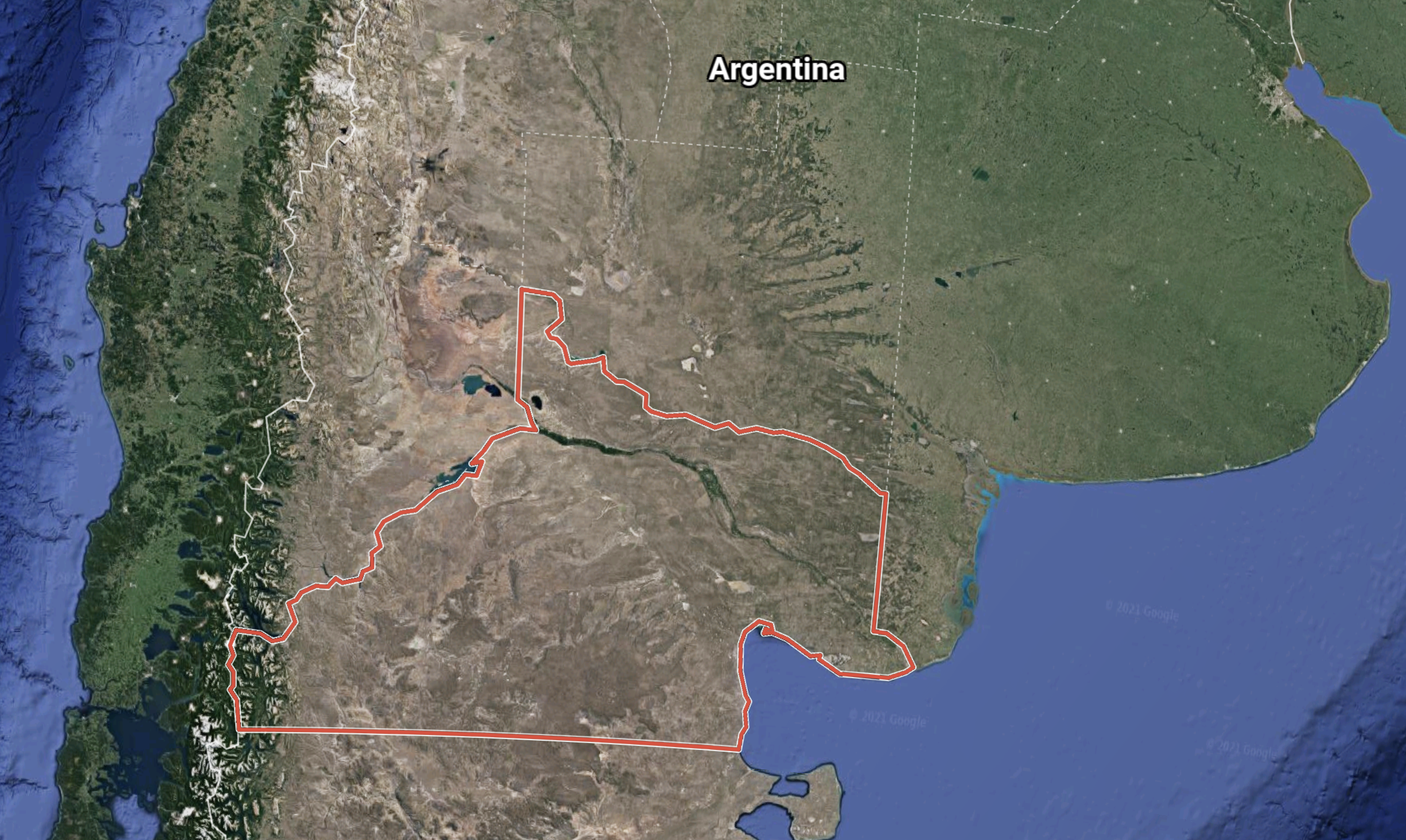
Note.
- The province is outlined in red.
- Buenos Aires is on the estuary of the River Plate in the North East corner of the map.
- Puerto Madryn is a convenient port to the South of Rio Negro, which was founded by the Welsh.
According to the article, it looks like much of the hydrogen will be shipped to Germany.
Conclusion
Fortescue Future Industries is extremely serious about hydrogen.
New $1 billion-plus Project In Queensland To Double World’s Green Hydrogen Production Capacity
The title of this post is the same as that of this article on ABC News.
Sun Cable’s Australia-Asia PowerLink
Two weeks ago, in How Clean Energy And Jobs Can Flow From Morocco to The UK, I talked about a plan to generate electricity using solar arrays in Southern Morocco and use an underwater interconnector to bring it to the UK.
If you think that project was ambitious and distinctly bonkers, then that project is outshone by Sun Cable‘s Australia-Asia PowerLink, which is shown in this SunCable graphic.
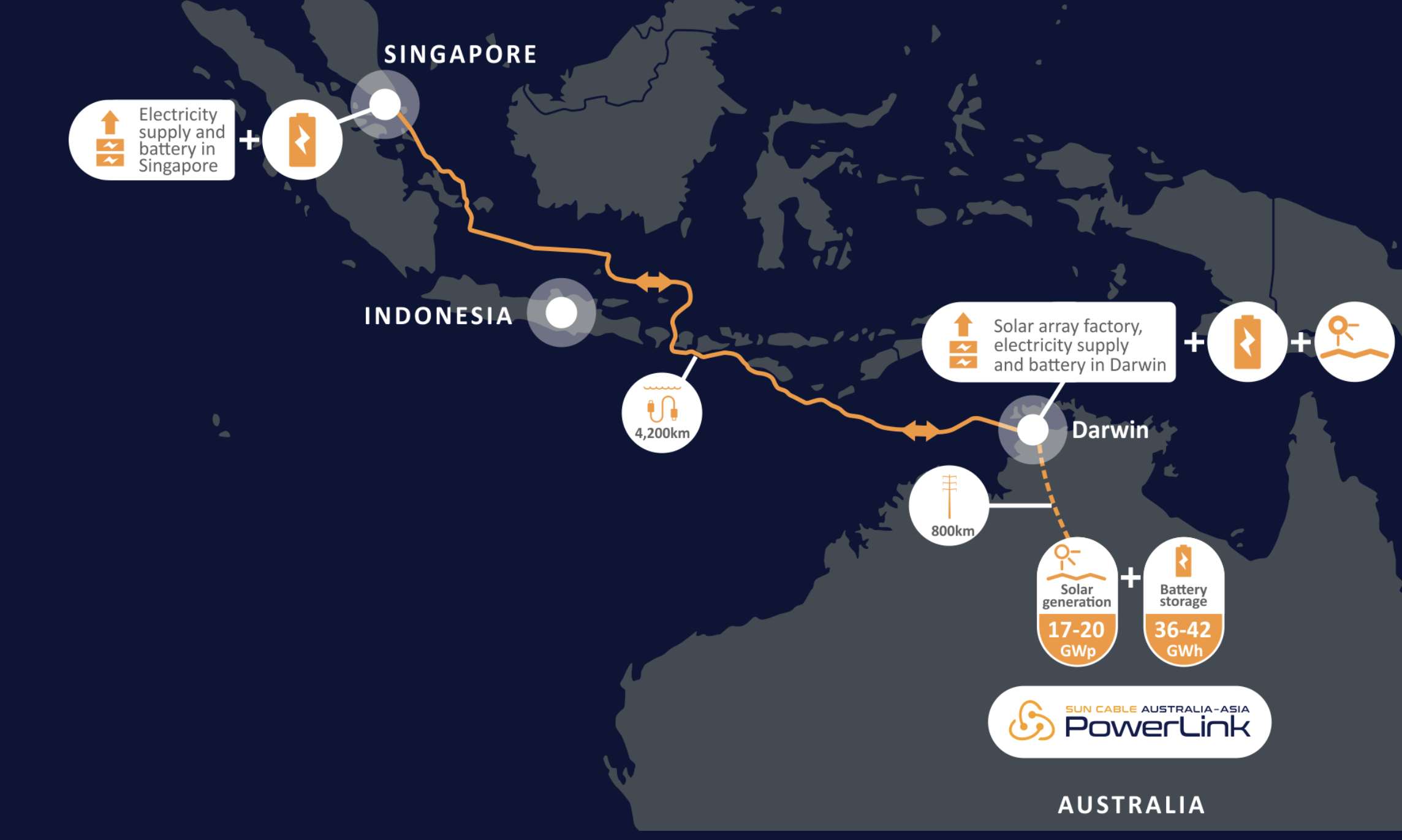
These are a few facts about the project.
- Electricity will be generated by solar panels in the Northern Territories of Australia.
- There will be 12,000 hectares of solar panels in Australia, which will create 3.2 GW of electricity for distribution.
- There will be a 36-42 GWh battery in Australia.
- There will be 4,200 km of submarine HVDC cable to deliver the electricity to Singapore and Indonesia.
- It looks like there will be batteries in Darwin and Singapore.
- The link could supply up to fifteen percent of Singapore’s electricity.
It is certainly an ambitious project, that will contain the world’s largest solar array, the world’s largest battery, and the world’s longest submarine power cable.
Note.
- Currently, the largest solar park in the world is Bhadia Solar Park in India, which is half the size of the solar array proposed.
- At 720 km, the North Sea Link is the largest undersea HVDC is operation.
- The largest battery in the UK is Electric Mountain in Snowdonia, which is only 9.1 GWh.
- A Tesla Megapack battery of the required size would probably cost at least ten billion dollars.
This is certainly, a project that is dealing in superlatives.
Is The Australia-Asia PowerLink Possible?
I shall look at the various elements.
The Solar Panels
I have flown a Piper Arrow from Adelaide to Cairns.
- My route was via Coober Pedy, Yulara, Alice Springs and Mount Isa.
- There didn’t seem to be much evidence of rain.
- The circle from South to East took four days of almost continuous flying, as Australia is not a small country.
- It left me with the impression of a flat featureless and hot country.
Having seen solar panels on flat areas in the UK, the Australian Outback could be ideal for solar farms.
Sun Cable are talking about 10,000 hectares of solar panels, which is roughly 38.6 square miles or a 6.2 mile square.
Given enough money to source the solar panels and install them, I would expect that the required solar farm could be realised.
The Cable
Consider.
- The North Sea Link is a 1.4 GW cable that is 720 km. long.
- I would size it as 10008 GW-km, by multiplying the units together.
- The Australia-Asia PowerLink will be 4200 km or nearly six times as long.
- But at 3.2 GW as opposed to 1.4 GW, it will have 2.3 times the capacity.
- I would size it as 13,400 GW-km.
Whichever way you look at it, the amount of cable needed will be massive.
The Battery
Currently, the largest battery in the world is the Bath County Pumped Storage Station, which has these characteristics.
- Peak power of 3 GW
- Storage capacity of 24 GWh.
Sun Cable’s 36-42 GWh battery will be the largest in the world, by a long way.
But I don’t think pumped storage will be suitable in the usually dry climate of Northern Australia.
The largest lithium-ion battery in the world is the Hornsdale Power Reserve in South Australia, which is only 150 MW/194 MWh, so something else will have to be used.
As Highview Power are building a CRYOBattery for the Atacama region in Chile, which I wrote about in The Power Of Solar With A Large Battery, I wonder, if a cluster of these could provide sufficient storage.
Iron Ore Miner Orders Heavy-Haul Battery Locomotive
The title of this post, is the same as that of this article on Railway Gazette.
This is the first two paragraphs.
Mining company Roy Hill has ordered a Wabtec FLXdrive battery-electric heavy-haul freight locomotive. This will replace one the four ES44ACi diesel-electric locos used to haul its 2 700 m long iron ore trains, and is expected to reduce fuel costs and emissions by ‘double digit’ percentages while also cutting maintenance costs.
The locomotive is scheduled to be delivered in 2023. It will have a capacity of 7 MWh, an upgrade from the 2·4 MWh prototype which Wabtec and BNSF tested in revenue service in California earlier this year.
Note.
- It will have a 7 MWh battery.
- 2700 metres is 1.6 miles.
It looks to me, that the three diesel locomotives and one battery locomotive are arranged as a massive hybrid locomotive and I suspect that with sophisticated control systems, those double digit cuts in fuel costs and emissions would be possible.
A couple of years ago, I took this picture near Shenfield.
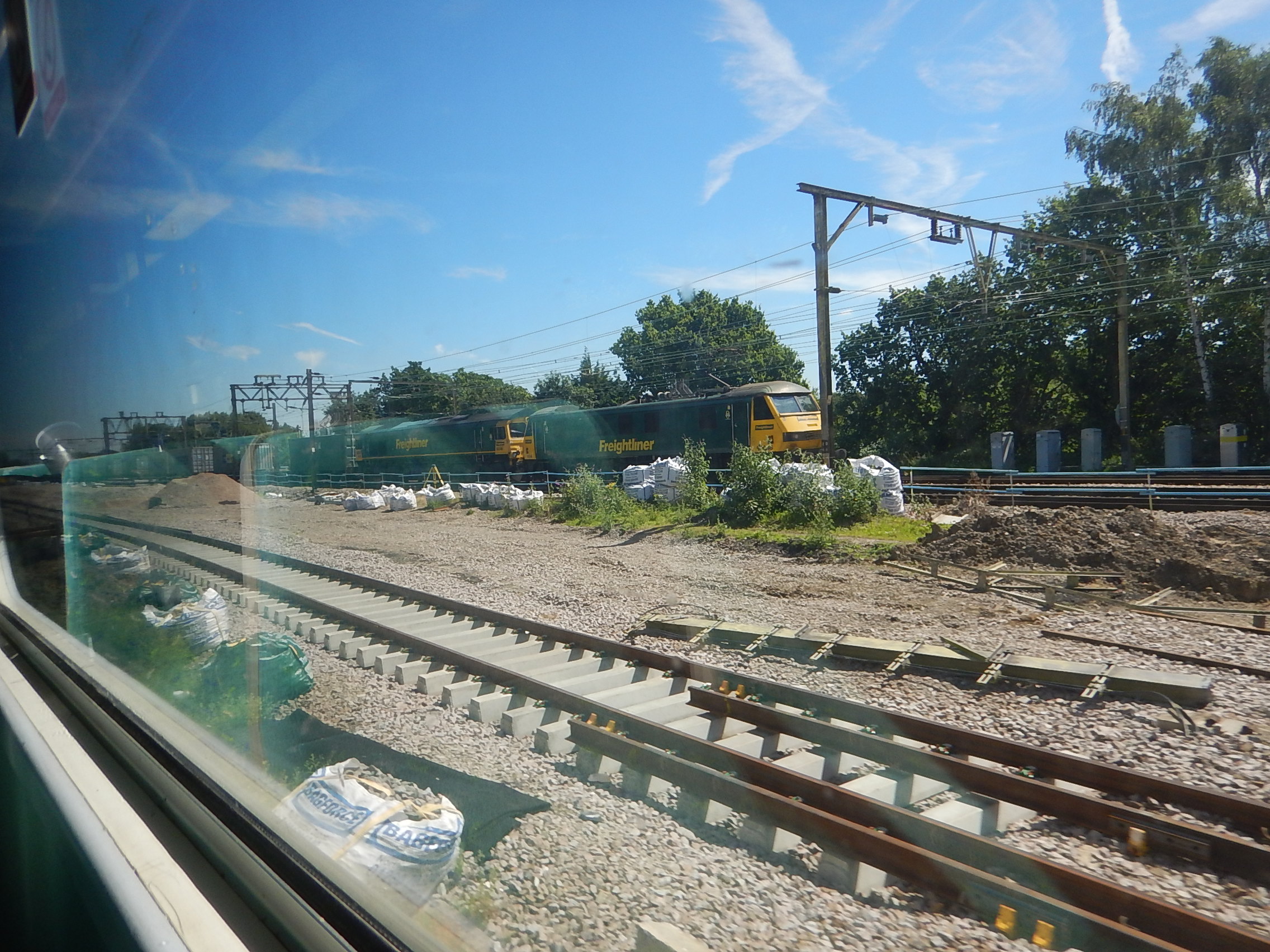
This double-headed train has a Class 90 electric locomotive and a Class 66 diesel locomotive at the front of a long freight train.
- The Class 90 locomotive has an TDM system for multiple working.
- The Class 66 locomotive has an AAR system for multiple working.
So does this mean that the two locomotives can’t work together, which if it does begs the question of what is happening.
- Had the Class 66 locomotive failed and Class 90 was acting as a Thunderbird?
- Was the Class 66 locomotive being moved from one depot to another for maintenance or repair?
- Was it an experiment to see if the two locomotives could work together?
I sometimes think that I didn’t see this unusual formation, but then the camera doesn’t lie.
But could we learn from what Wabtec are doing for Roy Hill in Australia?
The Class 93 Locomotive
Rail Operations Group have already ordered thirty Class 93 tri-mode locomotives from Stadler, which have following power ratings.
- Electric – 4000 kW
- Diesel – 900 kW
- Hybrid – 1300 kW
If this locomotive is capable of hauling the heaviest intermodal freight trains out of Felixstowe, Southampton and other ports and freight terminals, it could contribute to substantial reductions in the diesel fuel used and emissions.
As an example, I will use a freight train between Felixstowe North Terminal and Trafford Park Euro Terminal.
- It is a route of 280 miles.
- I will ignore that it goes along the North London Line through North London and along the Castlefield Corridor through Manchester Piccadilly station.
- There is fifteen miles without electrification at the Felixstowe end.
- There is under three miles without electrification at the Manchester end.
On this service , it could be as much as 94 % of diesel and emissions are saved, if the Class 93 locomotive can haul a heavy freight train out of Felixstowe. A few miles of strategically-placed electrification at the Ipswich end would help, if required.
It must also be born in mind, that the Class 93 locomotive is a 110 mph locomotive on electric power and could probably do the following.
- Run at 100 mph on the busy Great Eastern Main Line.
- Run at faster speeds on the West Coast Main Line.
- Fit in well with the 100 mph passenger trains, that run on both routes.
So not only does it save diesel and carbon emissions, but it will save time and make the freight train easier to timetable on a route with lots of 100 mph passenger trains.
The Class 93 locomotive looks like it could be a game-changer for long-distance intermodal freight, especially, if there were short sections of strategically-placed electrification, added to the electrified network.
Emissions could also be reduced further by using some for of sustainable fuel.

The picture shows a Class 66 locomotive, which is powered by Hydrotreated Vegetable Oil or HVO.
I can see that all diesel-powered trains and locomotives will be powered by sustainable fuels by the end of this decade.
A Wabtec Battery-Electric Locomotive
Wabtec is building a battery-electric locomotive for Roy Hill in Australia.
This article on Railway Age talks about Wabtec’s FLXdrive battery locomotives and describes some features of the locomotive for Roy Hill in Australia.
It mentions pantographs and overhead wires to charge the batteries.
- Wabtec’s prototype battery locomotive has a power output of 3.24 MW and a battery size of 2.4 MWh
- The Roy Hill battery locomotive has a power output of 3.24 MW and a battery size of 7 MWh
I could envisage Wabtec designing a UK-sized battery-electric locomotive with these characteristics.
- 2.5 MW power output, which is similar to a Class 66 locomotive.
- A battery size of perhaps 1.8 MWh based on Wabtec’s FLXdrive technology.
- A pantograph to charge the batteries and also power the locomotive where electrification exists.
- 75 mph operating speed.
- Ability to work in tandem with a Class 66 locomotive.
All technology is under Wabtec’s control.
This locomotive could have a range of at least fifty miles on battery power.
I think this locomotive could handle these routes.
- Peterborough and Doncaster via the Great Northern and Great Eastern Joint Line via Lincoln, with some form of charging at halfway.
- Felixstowe and Nuneaton, with some extra electrification at some point between Peterborough and Leicester.
- Oxford and Birmingham, with possibly some extra electrification in the middle.
One option for charging electrification, would surely be to electrify passing loops.
I think a battery-electric locomtive based on Wabtec’s FLXdrive technology could be a very useful locomotive.
Could Wabtec’s Battery-Electric Locomotive Pair-Up With A Class 66 Locomotive?
Roy Hill will use their locomotive to form a consist of three diesel locomotives and one battery locomotive to obtain double-digit savings of fuel and emissions, when hauling iron-ore trains that are 1.6 miles long on a route of 214 miles.
We don’t have massive iron-ore trains like this, but we do move huge quantities of segregates and stone around the country in trains generally hauled by Class 66 locomotives.
So could a Class 66 or another suitable locomotive be paired-up with a battery-electric locomotive to make savings of fuel and emissions?
I would suggest that if it works in Australia, the technology will probably work in the UK.
The biggest problem for Wabtec is that the heavy end of the market may well be a good one for hydrogen-powered locomotives. But Wabtec are going down that route too!
Conclusion
I am convinced that the two decarbonisation routes I have outlined here are viable for the UK.
But I also feel that locomotive manufacturers will produce hydrogen-powered locomotives.
Other companies like Alstom, Siemens and Talgo will also offer innovative solutions.
The Power Of Solar With A Large Battery
This post is based on this press release from Highview Power, which is entitled Highview Enlasa Developing 50MW/500MWh Liquid Air Energy Storage Facility In The Atacama Region Of Chile.
This is the first paragraph.
Highview Enlasa, the 50/50 joint venture between Highview Power, a global leader in long duration energy storage solutions, and Energía Latina S.A.-Enlasa, the largest backup power generation provider in Chile, is pleased to announce that it is developing the first liquid air long duration energy storage project in Chile. This 50MW/500MWh (10 hours) CRYOBattery™, which represents an estimated investment of USD $150 million, will be located in Diego de Almagro in the Atacama Region.
Ican deduce these points from this paragraph.
The power output of 50 MW appears to be standard for all of Highview Power’s CRYOBatteries, which is not surprising as the centre of each system appears to be a standard turbomachinery solution from MAN Energy Solutions, as I wrote about in MAN Energy Partners With Highview Power On Liquid-Air Energy-Storage Project.
But whereas the first system at Carrington, near Manchester, can only store 250 MWh, this plant in Chile is twice the size and can provide 50 MW of electricity for ten hours. The Chile plant will just have twice the number of storage tanks for liquid air.
I can no reason, why if Carrington needed to store more electricity, that more tanks couldn’t be added.
This Google Map shows the area around the city of Diego de Almagro.
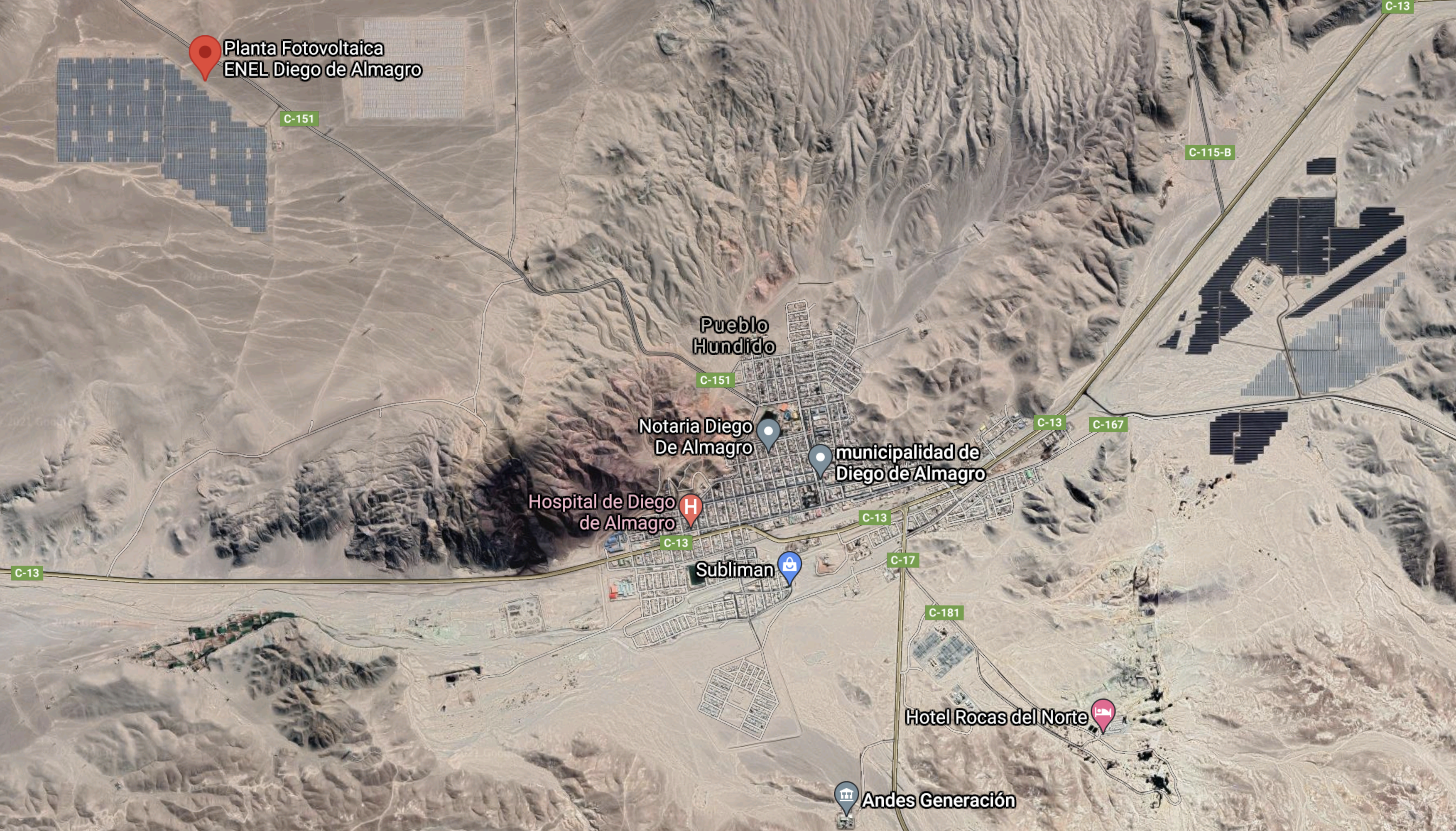
Note.
- The city of Diego de Almagro is in the centre of the map.
- In the North-Western corner is the Planta Fotovoltaica ENEL Diego de Almagro, which even my rudimentary Spanish, identifies as a solar power plant.
- In the North-Eastern corner of the map, is appears that a second solar power plant is under construction.
The city is surrounded by the large Atacama Desert.
This second Google Map shows the location of Diego de Almagro, with respect to the Chilean Coast.
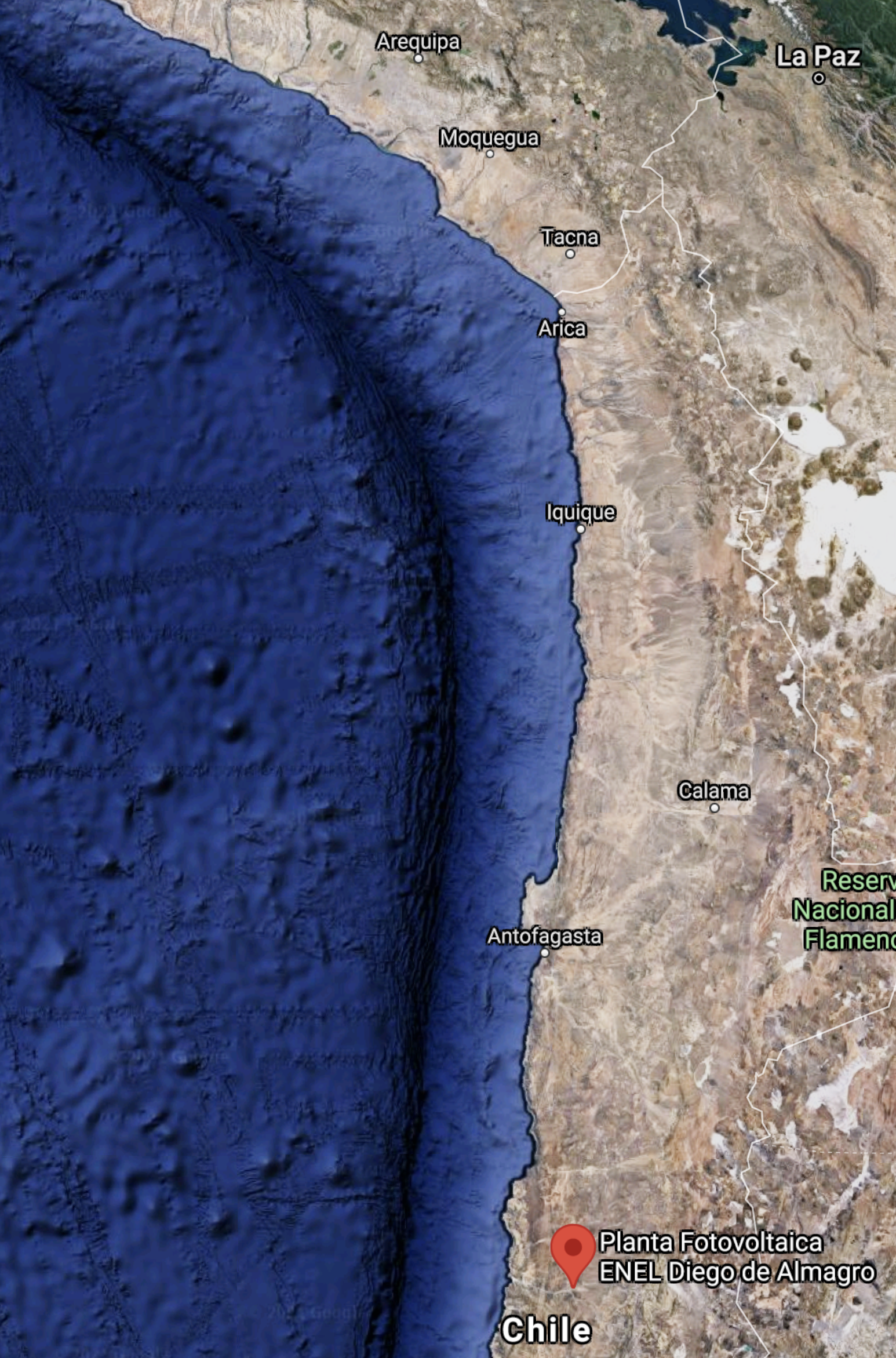
Note.
- The red arrow indicates the solar powerplant at Diego de Almagro.
- La Paz in Bolivia is in the North-East corner of the map.
- The sandy-beige colour indicates the Atacama Desert.
The area would appear not to lack sun.
This extract is from the press release.
With one of the highest solar irradiations in the world, the Atacama Region has the potential to generate all the country’s electricity. By pairing solar with cryogenic energy storage, Chile can benefit from 24/7, 100% renewable energy.
The Wiukipedia entry for Solar Power In Chile, is not as optimistic as the press release, but does show the rapid growth in the amount of solar power.
Conclusion
Solar power installed with large batteries, will transform the electricity supply in countries like Australia, Chile and India and those in Africa and other places, where there are large hot deserts.
In Europe, Spain is investing heavily in solar power and is a big innovator in solar technology.
 The Anonymous Widower