Bombardier On Track For Record Sale Of New Aventra Trains
The title of this post is the same as the title of this article in the Daily Telegraph.
This is the last paragraph.
Aventra trains use energy efficient measures such as regenerative braking, which collects energy generated by the trains slowing down and stores it for later use. They will also offer wifi, and USB sockets in seats.
Does that mean that the trains are fitted with energy storage or in simple terms; batteries.
The Automatic Splitting And Joining Of Trains
Hitachi And Automatic Splitting And Joining Of Trains
The Hitachi Class 395 train was the first train in the UK to be able to automatically split and join in service.
In The Impressive Coupling And Uncoupling Of Class 395 Trains, I linked to this video.
Impressive isn’t it?
In Do Class 800/801/802 Trains Use Batteries For Regenerative Braking?, I quoted this comment from a public on-line Hitachi document.
Because the coupling or uncoupling of cars in a trainset occurs during commercial service at an intermediate station, the automatic coupling device is able to perform this operation in less than 2 minutes.
This is definitely in line with Class 395 train performance.
This document from the Hitachi web site talks about the design of Hitachi’s Class 385 trains for Scotland. This is said.
The lead and rear railcars have an automatic coupler at the front and walk-through gangway hoods. When train sets are coupled together, the hoods fit together as part of the automatic coupling operation to provide access between train sets, meaning that passengers and staff are able to move freely from one train set to another.
Obviously, Hitachi have got automatic splitting and joining of trains spot on!
Current Split/Join Services
There are several places in the UK network, where splitting and joining of trains is used.
- Southeastern Highspeed do it at Ashford.
- Great Northern Kings Lynn do it at Cambridge.
- Southern do it at Haywards Heath.
- Virgin Trains do it at Crewe.
- South West Trains do it at Southampton.
But currently only the Class 395 trains can do it automatically.
The in-service entry of the Class 800 trains will change everything, as it will make a lot more new routes possible.
Virgin Trains East Coast
Currently, Virgin Trains East Coast (VTEC) run two trains per hour (tph) between Kings Cross and Leeds. In the Peak, some services are extended to Bradford Forster Square, Skipton and Harrogate, where the last route is not electrified.
Will some services to Leeds be run by two five-car Class 800/801 trains working together as a ten-car train?
- Class 800 trains are electro-diesel which could work to Harrogate under diesel power.
- Class 801 trains are all-electric, which could work all electrified routes from Leeds.
At Leeds the two trains could separate, with each train going to a different destination. Reading Hitachi’s published documents, the split would take under two minutes at Leeds and I don’t think there would be a restriction of a Class 800 and a Class 801 working together between Kings Cross and Leeds using the overhead electrification.
VTEC gets advantages by using this split and join approach.
- Frequencies and train length to the eventual destinations can be adjusted to what the market will sustain.
- Extra expensive train paths between the split/join station and London are not needed.
- Between the split/join station and London, the train can usually run using electrification.
- Costs are probably saved, if only a half-train is run to some destinations, as track access charges are based on weight.
- A five-car electro-diesel could probably access more routes than a nine-car train.
This is the fleet that VTEC have ordered.
- Class 800 – 10 x five-car
- Class 800 – 13 x nine-car
- Class 801 – 12 x five-car
- Class 801 – 30 x nine-car
These Class 800 and Class 801 trains give VTEC all sorts of of possibilities.
The backbone of the service which is a half-hourly service to Edinburgh probably needs about 35 nine-car trains, some of which would be electro-diesels to work North of the electrification to Aberdeen and Inverness.
But that still leaves quite a few five-car trains available for other services.
Great Western Railway
Great Western Railway (GWR) will probably use their Class 800/801802 trains in a similar manner.
This is the fleet that GWR have ordered.
- Class 800 – 36 x five-car
- Class 800 – 21 x nine-car
- Class 802 – 22 x five-car
- Class 802 – 14 x nine-car
Note that the electro-diesel Class 802 train is similar to the Class 800, but with the engines tuned for more power and larger fuel tanks, so it can handle Devon and Cornwall routes easier.
I think that given the number of five-car trains on order and the lack of promised electrification, I think that GWR will be using splitting and joining in some surprising places, to make sure that as many routes as possible get the new trains.
The Stadler Flirt
This article on Railway Technology describes the Stadler Flirts built for Swiss Federal Railways. This is said.
The train consists of articulated train sets, which contains light rail cars attached semi-permanently sharing a common bogie. The trains are available in two to six car combinations with two to six motorised axles. The automatic couplers, installed at both the ends of the trains, permit connection and disconnection of up to four train cars easily and quickly.
Does this mean that two trains can split and join like the Hitachi trains?
The Bombardier Aventra
The Aventra is a train that has been designed to have everything that customers might need. This is the description of the train in Wikipedia.
The train has been designed to be lighter and more efficient, with increased reliability. It will have lightweight all-welded bodies, wide gangways and doors to shorten boarding times in stations, and ERTMS. The design incorporates FlexxEco bogies which have been used in service on Voyagers and newer Turbostars. The gangway is designed to allow maximum use of the interior space and ease of movement throughout the train.
As Hitachi have published a lot of their thinking on Class 800/801 trains on the Internet, I would find it astounding that Bombardier and the other train building companies haven’t read it.
There have been four orders for the Aventras so far, which total over two thousand carriages.
Two of these orders are for mixed fleets of five-car and ten-car trains.
Are these trains and half-trains just like with the Hitachi trains?
If the answer is in the affirmative, I think it is very likely that Aventras will have the capability of splitting and joining automatically.
Greater Anglia
Greater Anglia has a complex route structure that fans out from a very busy electrified core into Liverpool Street on both their main lines.
They have ordered 89 x five-car and 22 x ten-car of Class 720 trains.
Many of their outer-suburban routes currently run twelve-car services and as their two main lines are only double-track, I can see a lot of five car trains working in pairs.
In Harlow Council Leader Jon Clempner Hopes Crossrail 2 Will Extend To Town, I suggested that Greater Anglia might use splitting and joining on the West Anglia Main Line to get four tph on the Hertford East Branch.
It may not be practical in that case, but Greater Anglia have several electrified branches.
South Western Railway
South Western Railway have a similar route structure to Greater Anglia, with a very busy electrified core into Waterloo.
They have ordered 30 x five-car and 60 x ten-car of Aventra trains.
In Waterloo Upgrade August 2017 – Virginia Water Station, I talked about used splitting and joining to provide a better service on the Waterloo to Reading Line and the Chertsey Branch.
However, I think that most services will be run by ten-car trains given the make-up of the fleet.
The five-cars could generally run on routes where the capacity only needs five-car trains or the infrastructure wouldn’t allow anything longer.
They could then split and join to maximise the capacity and use only one path from the split/join station to Waterloo.
The 10:35 From Liverpool Street To Shenfield
I took these pictures on the untimetabled 10:35 TfL Rail service between Liverpool Street and Shenfield stations and on the return to Liverpool Street.


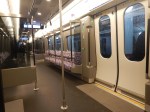
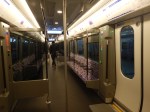


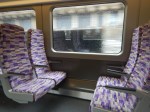
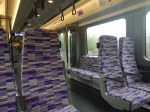

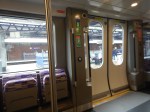


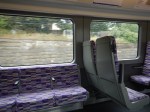
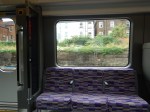


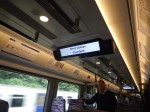


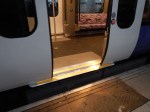

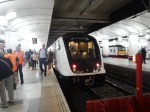
As you can see it is a new Class 345 train.
There were a lot of Crossrail and Transport for London staff about, talking to passengers.
These are my thoughts on various issues.
Ride Quality
This is up with the best or the legendary British Rail Mark 3 coach, which was designed in the 1960s.
One of the Crossrail staff was wearing stiletto heels close to four inches and she was walking up-and-down with no difficulty.
For someone who suffered a bad stroke, my balance is good and I had no difficulty walking along the seven-car train.
Cabin Height And Width
I don’t know how Bombardier have done it, but the cabin seems higher and wider than any other train I’ve ridden in the UK.
Next time, I ride one, I’ll take a couple of tall guys and a tape measure.
Information
The current on-train information is simple, but then as I suspect the screens are software driven, any degree of required complication can be added.
I don’t know whether it is deliberate but everything is large and easy to read. There is also no maps or exhortations about security.
Long may it stay that way!
Simple is efficient!
Seats
Not everybody was completely satisfied with the seats, but I found them much more comfortable than those in the Class 700 trains on Thameslink.
There were some good points.
- The sets of four seats were arranged as they were in the original InterCity 125 around a large window.
- The metro-style seating had a wide aisle in the middle, that would satisfy a basketball team.
- An amply-proportioned man, thought the seats comfortable.
- Most seats had well-designed armrests.
- There was plenty of space under the seats for airline-size carry-on baggage or a labrador.
On the other hand, there were no cupholders, tables or litter bins. But there aren’t any on the Class 378 trains or London Underground‘s S Stock.
Entry And Exit
I feel that trains should be a level step across from the platform.
This train wasn’t as good as a Class 378 train on many Overground stations, but it was better than some.
As many Crossrail stations will be one train type only there is probably scope to get this better.
I regularly see a lady in a simple wheel-chair on the Overground and I feel she would probably be able to wheel herself in and out, which she does at Dalston Junction station with ease.
It should be noted that each coach has three sets of wide double doors and a large lobby, so perhaps a mother with triplets and a baby in a buggy would find entry easier than any train on the Underground.
Walking Up And Down The Train
I found this very easy on a train that was no more than a third full, as it was an extra service to introduce the train to passengers.
There were numerous hand-holds and vertical rails in the centre of the lobbies. Unlike on some trains in France, Italy or Germany, the rails were very simple. They also borrowed heavily from the Overground’s Class 378 trains.
Wi-Fi And 4G
I didn’t try the wi-fi, as it is not something I use very often.
But I was getting a strong 4G signal all the way to and from Shenfield. Was this direct or was I picking up a booster in the train? I suspect it was the latter at some points close to Liverpool Street.
Windows
The windows on the train are large and well-positioned.
The simple seat and window layout, seems to appeal to all classes of rail user.
A Train For Families
When Celia and I had three children under three, with two able to toddle-along (they had too!) and the youngest in his McClaren, I could imagine us taking a train from Barbican station to perhaps go shopping on Oxford Street, sitting in one of those set of four seats by that large window.
A Train For Commuters
The Class 378 trains of the Overground cram them in and the metro layout of much of the Class 345 train will accommodate large numbers of commuters.
I would question, if there are enough seats, but the proof should be apparent by the end of the year, as eleven of the current seven-car trains will be in service between Liverpool Street and Shenfield.
For the full Crossrail service, they will be lengthened to nine cars and there is a possibility of adding a tenth.
A Train For Shoppers
If say, I’d been to Eastfield at Stratford and was coming back to Moorgate heavily loaded with shopping to get a bus home, I could probably put some bags under the seat. Try that on the Underground!
A Train For The Not-So-Young
From what I saw today, I couldn’t make too many observations, as the train wasn’t crowded, but the few older travellers that I did see were smiling at the experience.
A Train For The Disabled
As I’m not disabled, I can’t comment and would love to hear from those who are.
A Train For The Tall
Compared to other trains in London, the headroom seemed to be generous, but then I didn’t see anybody who was much more than six foot.
A Train For The Airport
Class 345 trains will serve Heathrow Airport. I feel they will cope, as the metro layout of the Class 378 trains, seems to accommodate large cases well!
Comparison With A Class 700 Train
The Thameslink Class 700 trains are designed for running over a longer distance at a higher speed and they have toilets.
But for a thirty minute journey through a busy part of London, there is no doubt in my mind, as to which train I would choose.
The Class 345 train, with its large windows, more comfortable seating, space for bags, uncluttered views and the appearance of more space, is undoubtedly in my view a better designed train.
Incidentally, for every metre of a nine-car Class 345 train, 7.31 passengers can be accommodated, as opposed to 7.07 in an eight-car Class 700 train.
I think we can put all this comparison down to Derby 1 – Krefeld 0!
Comparison With A Class 387 Train
The trains will be compared with Bombadier’s last Electrostar, the Class 387 train, which will be in service with GWR between Paddington and Reading, alongside the Class 345 train.
Passengers will be able to take whichever train they want on this route.
Will they choose the Class 387 train, with its tables, very comfortable seats and toilets or the Class 345 train?
I’d choose the Class 387 train, as I like to lay out my newspaper for reading.
No matter what happens Derby wins again.
Moving Forward On Approach To Liverpool Street
I was surprised how many people walked to the front as we approached Liverpool Street.
But were they only demonstrating the Londoners’ ducking and diving ability of getting to the right place for exit.
Regular passengers on regular routes will anticipate their stops and I will be interested to see how much passenger behaviour increases the capacity of the train.
Conclusion
This first Aventra feels like it is a very good train.
Consider how Bombardier improved the Electrostar since it was first produced in 1999.
So what will an Aventra be like in 2035?
Railbaar In Rail Engineer
In January 2016, I wrote How To Charge A Battery Train, in which I described a Swiss idea called Railbaar.
This article in Rail Engineer is entitled RailBaar – Rapid Charge Station and it describes the technology in detail.
The article gives the impression, that respected Swiss company; Furrer+Frey, have a product that is ready to be rolled out.
This is said.
Furrer+Frey feels that the system could be a game changer, dramatically reducing the cost of electrification, and thus the feasibility of new electrification projects.
Read the article and see if like me, you agree with Furrer+Frey, like I do.
The Felixstowe Branch Line
I will use the twelve mile long Felixstowe Branch Line as an example, because I know the branch line well and spent some miserable days trapped in the town as a teenager because of the inadequate rail service to Ipswich.
The train service is better now, but it would be better if every thirty minutes one of Greater Anglia’s new Aventras was to shuttle along the branch.
But the line is not electrified and there is very little change it will happen.
Bombardier showed with their Class 379 BEMU trials in January 2015, that a four-car and probably a five-car version of the Avenytra could be fitted with a battery that would take the train reliably between Ipswich and Felixstowe.
But the problem with say electrifying a platform at Ipswich station and charging the train there, is that the battery needs to be sized to do two trips along the branch line.
By using a charging station like Railbaar at both ends of the line, the train would always leave the station with a full charge.
Currently, trains between Felixstowe and Ipswich take 26 minutes, so if the battery could be charged in four minutes, then a train could do a return trip in an hour.
This would mean that two trains would be needed to provide a two trains per hour service.
Sudbury And Colchester Town
Greater Anglia have indicated that they might replace the shuttle between Sudbury and Marks Tey stations, with a direct service between Sudbury and Colchester Town stations.
They could run this service with bi-mode Stadler Flirts.
On the other hand, the Gainsborough Line between Marks Tey and Sudbury is only eleven miles long, which is well within the range of a train running on stored energy.
It currently takes nineteen minutes for a train to go between Marks Tey and Sudbury, so a battery train would have twenty-two minutes in every hour for charging.
Operation could be as follows.
- 10:00 Leave Colchester Town running on current electrification.
- 10:08 Call Colchester station.
- 10:16 Arrive Marks Tey station with a full battery, after charging it on the main line.
- 10:35 Arrive Sudbury station after running from Marks Tey on battery power.
- 10:40 Leave Sudbury station after charging the batteries using a Railbaar.
- 11:59 Arrive Marks Tey station after running from Sudbury on battery power.
- 11:02 Leave Marks Tey station, raise the pantograph and travel to Colchester.
- 11:10 Call Colchester station.
- 11:18 Arrive back at Colchester Town station.
Note.
- The trains pass each other on the main line.
- I have used the times for the current trains.
- Only one Railbaar would be needed at Sudbury.
,Perhaps Aventras and with a faster charge at Sudbury could save a few minutes.
Aventras And Railbaar
The Aventra has a slightly unusual and innovative electrical layout.
This article in Global Rail News from 2011, which is entitled Bombardier’s AVENTRA – A new era in train performance, gives some details of the Aventra’s electrical systems. This is said.
AVENTRA can run on both 25kV AC and 750V DC power – the high-efficiency transformers being another area where a heavier component was chosen because, in the long term, it’s cheaper to run. Pairs of cars will run off a common power bus with a converter on one car powering both. The other car can be fitted with power storage devices such as super-capacitors or Lithium-Iron batteries if required.
This was published six years ago, so I suspect Bombardier have improved the concept.
So in a battery version of the Aventra would this mean that the pantograph is on the car with the high-efficiency transformer and the battery is in the second car?
So if the train is going to work with Railbaars, then the contact points on the roof of the train for the Railbaar would be on the car with the batteries.
All of the 25 KVAC and its handling is in one car and all the batteries and their charging is in another, with the only connection being the common power bus connecting everything on the train.
I suspect that with careful positioning of the Railbaar at each end of the route and an aid for the driver so that the train is positioned accurately and it would create a reliable charging system.
Obviously, there is nothing to stop, the trains charging their batteries, when they are using overhead wires or third rails.
Conclusions
So what do we know about using batteries on trains to work routes?
- Bombardier showed in their trial, that a battery train can run the eleven miles of the Mayflower Line, starting with a full battery.
- Batteries are getting more powerful and more affordable every year.
- The Bombardier Aventra would be ideal for a Railbaar-type charging system.
- Battery trains can charge their batteries running on electrified lines.
- The bus version of Railbaar is in use charging electric Volvo buses at a rate of 360 kW. See the Opbrid web site.
- The physics of steel wheel on steel rail is efficient, as George Stephenson knew.
Put this all together and I think that by the end of 2018, we’ll be seeing Aventra trains, running services on a twenty mile branch line without electrificaton.
The Four-Car Bi-Mode Train
The Class 319 Flex train is an affordable four-car bi-mode or electro-diesel train, promoted by Porterbrook and to be used by Northern.
- The train is affordable, as it is based on a refurbished Class 319 train, which was built thirty years ago.
- The train is a dual-voltage unit and can be powered by either 25 KVAC overhead or 750 VDC third-rail electrification.
- Each unit also has two rail-proven MAN diesel engines, for powering the train on lines without electrification.
If there is a drawback, it is that with their interiors so far, Northern have opted for a no-frills interior with no wi-fi.
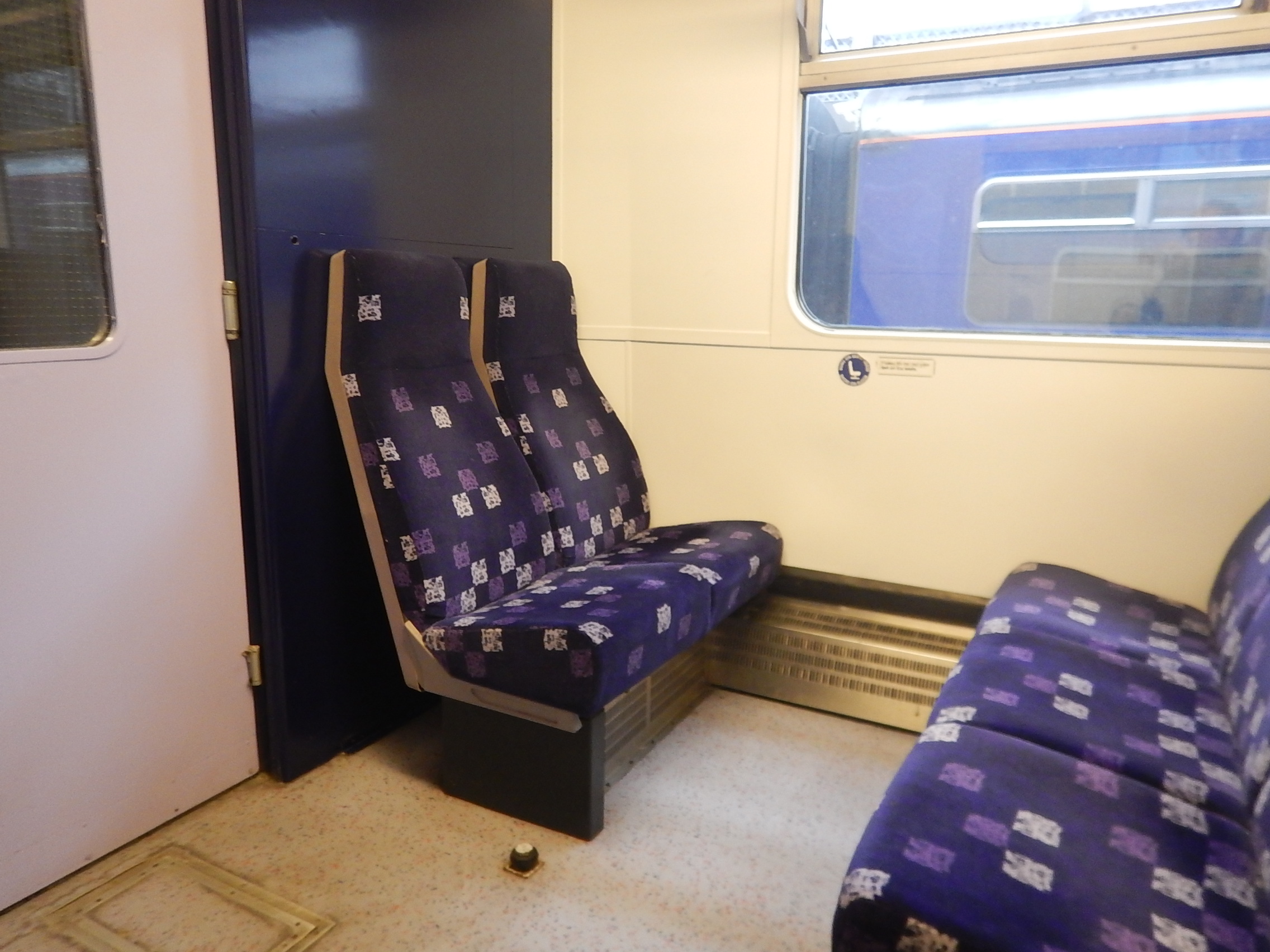
Compare this with the interior of a Class 455 train.
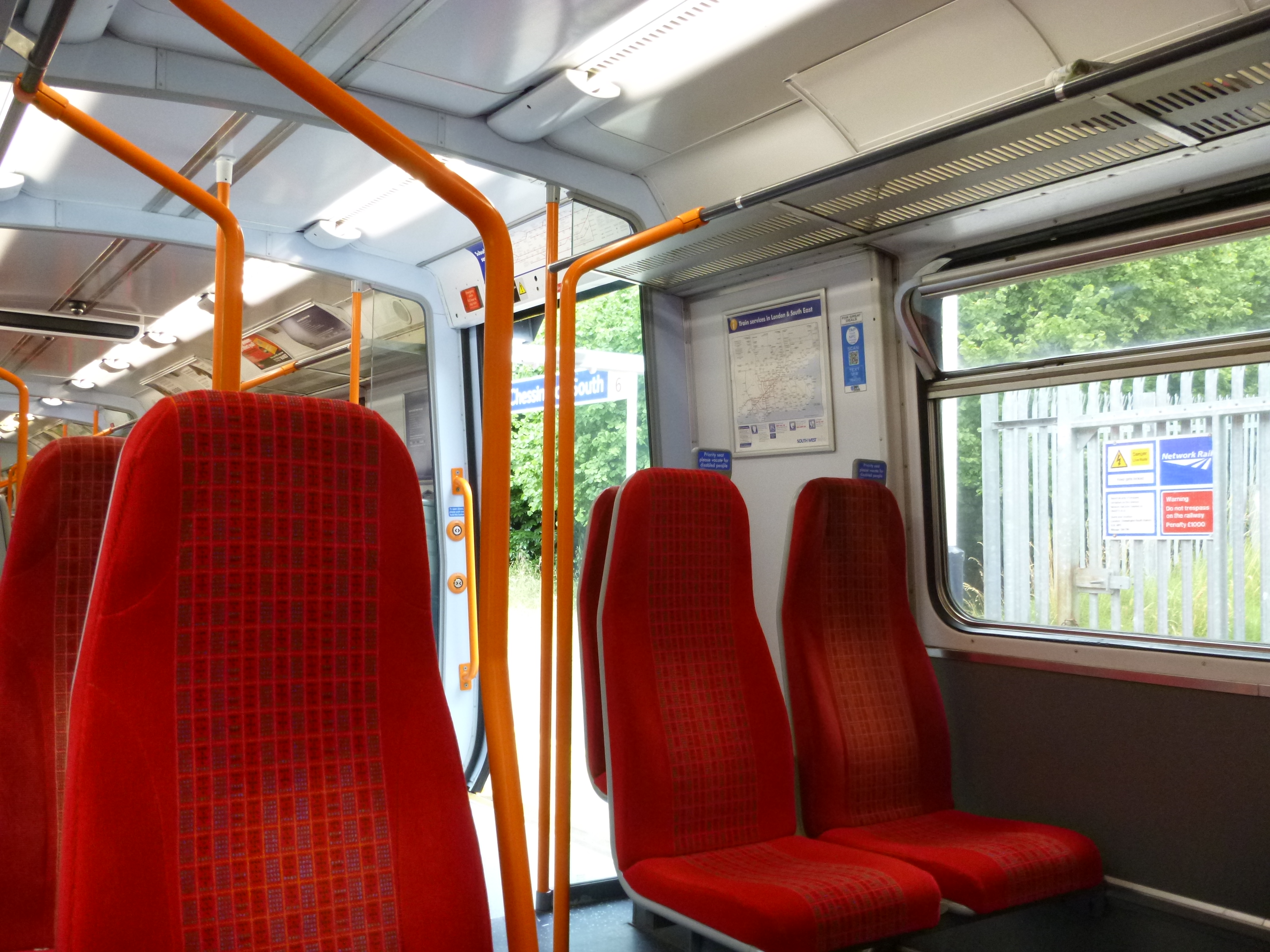
The trains were originally built within a couple of years, but the updated interior specified by South West Trains is much more impressive and passenger-friendly than that used by Northern.
Both trains are four-car units and are based on the Mark 3 coach, so underneath the skin, they probably have a lot in common.
There are a large number of four-car trains on UK railways so it must be a train length that is convenient for operators.
But strangely until now there has not been a four-car bi-mode train.
But then bi-mode trains are not that common, with the only UK train of that type; the Class 800 train, yet to enter service.
But the Class 800 train is for the long distance market and is a five-car or nine-car 125 mph train.
I do wonder, if the reason we have no four-car bi-mode trains, is that no-one has bothered to design one so no-one has wanted one.
But Porterbrook own 86 of these Class 319 trains, which are reliable 100 mph trains, that drivers tell me they like, because of their performance and excellent brakes.
Because of their age, they’re probably not worth a great deal more than scrap value, but because of the depth of knowledge of what can be done with Mark 3 coaches, they can be turned into a useful train by quality engineering.
Porterbrook have seen a gap in the market with Northern for a train specifically designed to be able to handle their toughest route, which is Manchester Piccadilly to Buxtonup the very steep Buxton Line. But the train is no one-trick pony and can run on virtually any of Northern’s routes, whether they are electrified or not.
So Northern can use the train for a variety of purposes.
- Running services on routes, that are not fully electrified.
- New route development.
- Extension of existing electrified routes.
- Replacement of a failed unit, which could be electric or diesel
Northern will have two versions of the Class 319 train; electric and bi-mode, just like other train operating companies will have electric and bi-mode versions of the Class 800 train.
I suspect that to passengers and all train staff except the driver, there will not be many obvious differences between the two versions.
Some routes will probably be able to be served by both versions.
The Bombardier Aventra
I feel very much that the Aventra will have one or more independently-powered versions.
The Aventra has a slightly unusual and innovative electrical layout.
This article in Global Rail News from 2011, which is entitled Bombardier’s AVENTRA – A new era in train performance, gives some details of the Aventra’s electrical systems. This is said.
AVENTRA can run on both 25kV AC and 750V DC power – the high-efficiency transformers being another area where a heavier component was chosen because, in the long term, it’s cheaper to run. Pairs of cars will run off a common power bus with a converter on one car powering both. The other car can be fitted with power storage devices such as super-capacitors or Lithium-Iron batteries if required.
This was published six years ago, so I suspect Bombardier have improved the concept.
Perhaps instead of a power storage device, they could squeeze in a small diesel engine and an alternator.
I’ve believed for a long time, that the Class 710 train being built by Bombardier for the London Overground, has onboard energy storage and that I wouldn’t be surprised if it used the storage to capture energy from regenerative braking, just as a lot of hybrid vehicles, like a London Routemaster and a Toyota Prius.
It won’t be a high-power bi-mode like the Class 319 Flex train, but it could have a useful range on the stored energy.
But it will be an all-electric train and probably more energy-efficient.
Other Four-Car Bi-Modes
I can’t believe that other train manufacturers are not looking at various forms of bi-mode trains.
Hitachi make the Class 800 trains at Newton Aycliffe, where they also make the four-car Class 385 train for ScotRail.
And what about Alstom, CAF, Siemens and Stadler?
What About Five Cars?
Four-car trains mean that operators can run eight and twelve car trains, when they are convenient. But other companies prefer five-car and ten-car trains.
We have the Class 800 trains, which are a 125 mph bi-mode, but we don’t have a five-car bi-mode suburban trundler. A few would surely be useful for Southern to handle Uckfield and the Marshlink Line.
I also believe that Greater Anglia’s five-car Aventras could have the limited independent capacity given by onboard energy storage.
I suspect that what the train operators need, the train operators will get!
Conclusion
We will see a complete spectrum of bi-mode four-car trains. And a few fuve-cars too!
, o
West Anglia Route Improvement – Modern Railways March 2017
The March 2017 Edition of Modern Railways sheds some more light on what is happening at the between Angel Road and Tottenham Hale stations.
They state the following about the current works.
- The Stratford area and its station is growing in importance.
- The line is slated for improvement under the Stratford-Tottenham-Angel Road (STAR) project.
- STAR will involve laying a third track between Stratford and Angel Road, alongside the West Anglia Main Line and the Temple Mills Branch to Stratford.
- STAR will be completed at the end of 2018.
- STAR will run at a frequency of four trans per hour (tph)
A picture in the magazine taken from a footbridge shows very much what my pictures show.
They also state this about Crossrail 2
- Crossrail 2 would be overlaid on the existing network serving both Liverpool Street and Stratford stations.
- Coppermill junction could be converted to a grade-separated rather than a flat junction.
- Crossrail 2 would emerge from the tunnel South of Tottenham Hale.
- The project would quadruple the West Anglia Main Line from the tunnel portal to Broxbourne.
- STAR would be built to facilitate this.
- A turnback platform is being considered at Tottenham Hale
- A turnback platform is being considered at Enfield Lock
- Turnback platforms and stabling sidings are considered at Broxbourne.
So how does all this fit with my observations?
STAR
I very much feel that STAR could be only a stop-gap development until Crossrail 2 arrives. In What Is STAR?, I give a few basic details.
After all will it still be needed to run just four tph between Angel Road and Stratford, when there could be upwards of 10-15 tph on Crossrail 2 and other services between Tottenham Hale and Stratford?
Something is needed immediately to serve Angel Road station and the massive Meridian Water development, which will result in the renaming of Angel Road station to Meridian Water,
The timings from Tottenham Hale are currently as follows.
- Stratford – 14 minutes
- Lea Bridge – 4 minutes
- Northumberland Park – 2 ,minutes
- |Angel Road – 4 minutes
Modern Railways states STAR will use a third track between Stratford and Angel Road. So if it was designed to be straight and flat and if it is running new Aventra trains from either London Overground or Greater Anglia with a fast stop capability, I wonder if timings could be achieved, which would enable just two trains to run the required service.
But I also suspect that STAR would provide a valuable service to link Meridian Water to Tottenham Hale and Stratford stations, even after Crossrail 2 opens.
STAR At Tottenham Hale
This picture shows the available space at Tottenham Hale station, which doesn’t appear to be enough for two lines.
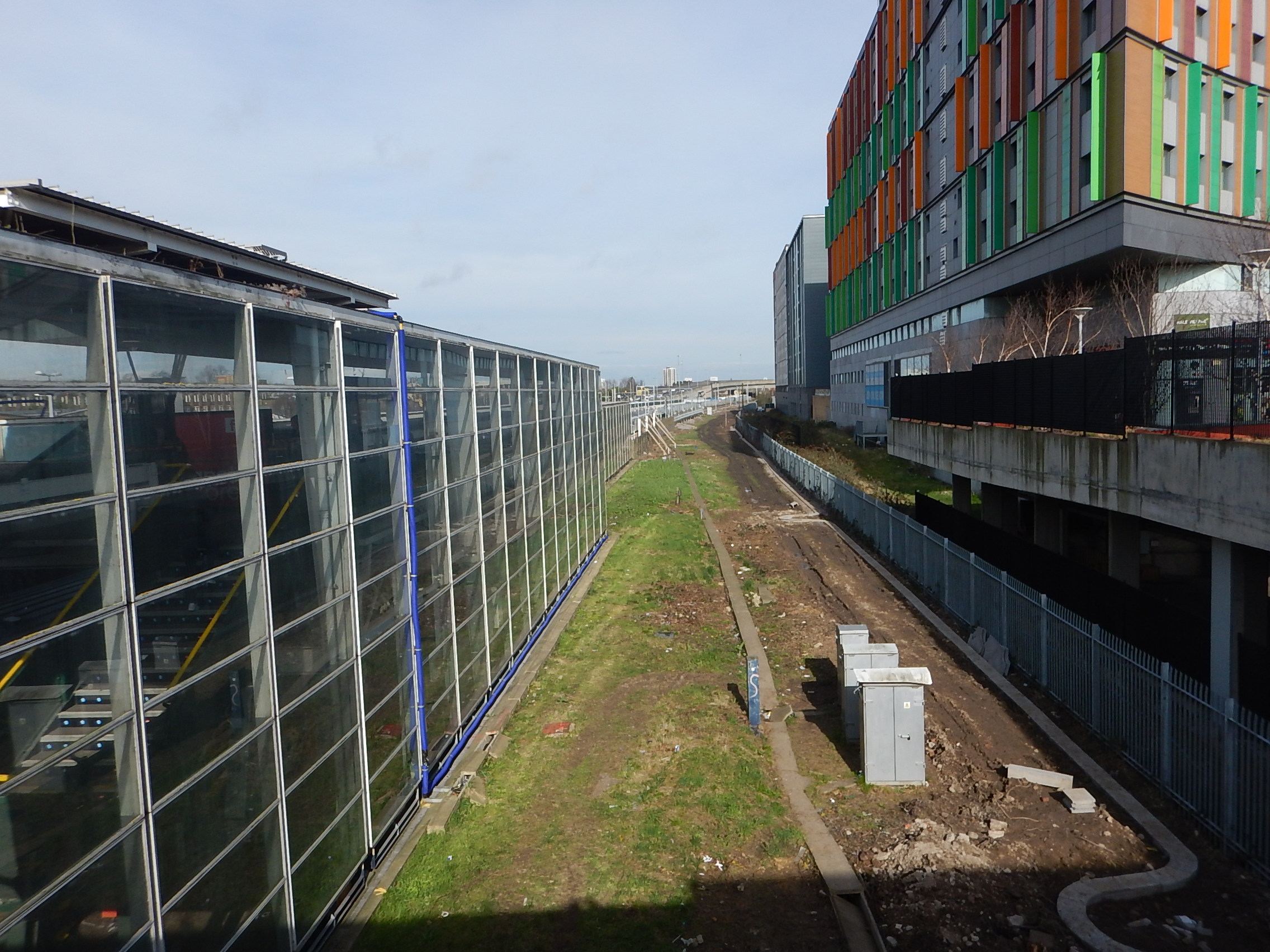
Note the newly-installed cable ducts.
Modern Railways states STAR will use a third track between Stratford and Angel Road. A single track would certainly fit through here.
Suppose the current platform 1 on the left, was made an island platform for the existing London-bound line and the track for STAR going along the route that now almost looks like freshly-mowed grass.
- The new platform could be Platform 0
- STAR would be worked in a bi-directional manner, always calling at Platform 0
- When Tottenham Hale station is re-built in the near future, Platform 0 will have full step-free access to the Victoria Line, courtesy of Platform 1.
- It would have cross-platform access to Liverpool Street services on Platform 1.
- Moving some Stansted or Cambridge service from Liverpool Street to Stratford might be operationally worthwhile after Crossrail opens.
Platform usage at Tottenham Hale would be as follows.
- 0 – All STAR services.
- 1 – Services to Liverpool Street
- 2 – Northbound services except STAR.
That would be very logical for passengers and not the most complicated of construction projects.
STAR At Angel Road
If the third track continued to Angel Road station as seems to be proposed, then a single bay platform could handle the four tph.
Space would have to be left for the two future new lines that will be installed, when the full West Anglia four-tracking takes place.
The STAR track could be close to the current West Anglia Up Line, as it will be at Tottenham Hale with the two new lines on the Eastern side of the station.
If the STAR track was on the outside, there would have to be a flat junction, where the STAR track crossed the two extra lines.
Until Crossrail 2 is built, I also suspect that STAR could be only service calling at Angel Road.
So there will be a lot of flexibility on how the station is built.
STAR At Northumberland Park
This picture shows the current works at Northumberland Park station.
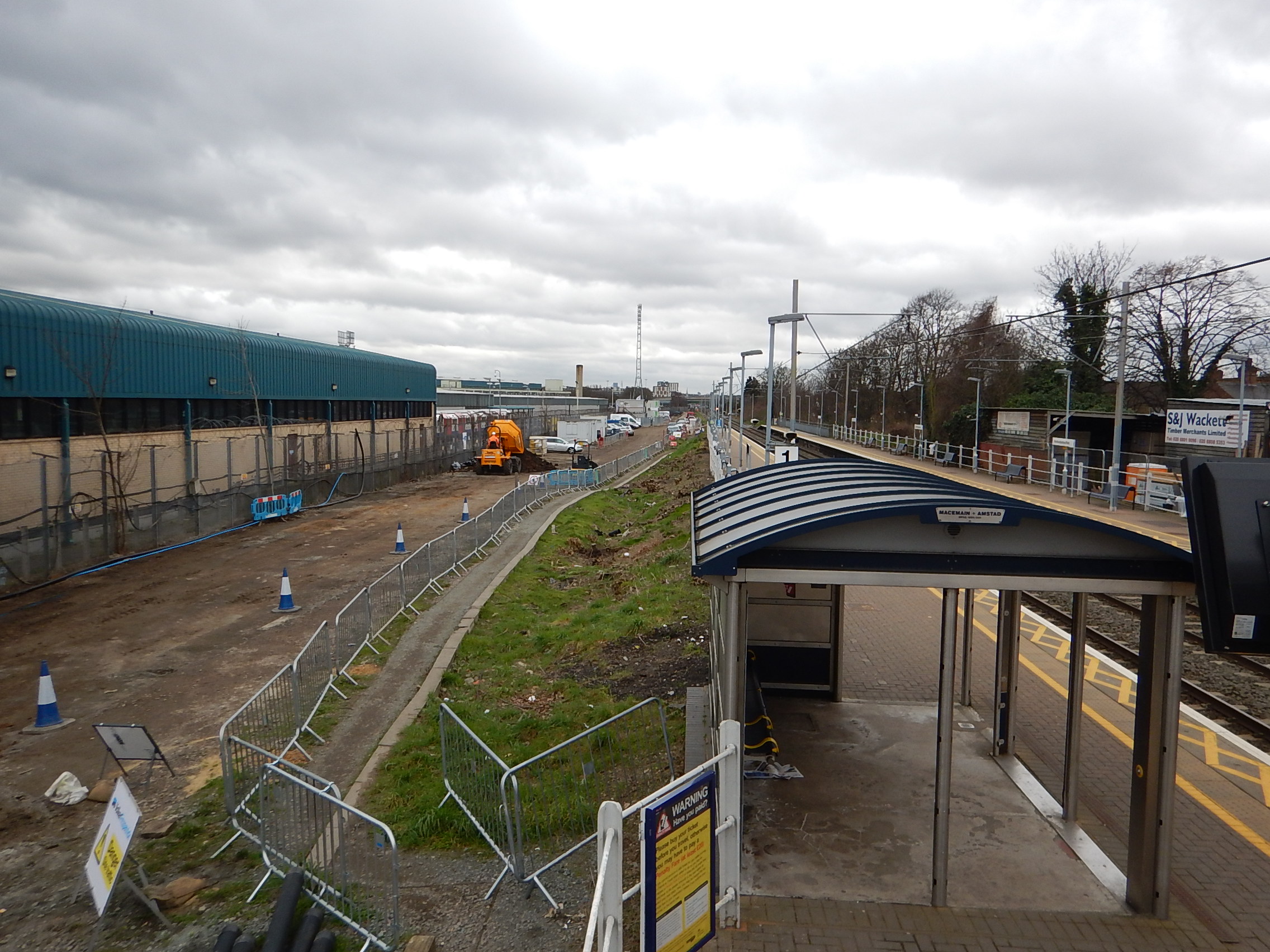
This picture was taken from the footbridge in the station.
Could the current platform 1 at the station be converted into an island platform between the current West Anglia Up Line and a STAR track between the West Anglia Main Line and the Northumberland Park Depot for the Victoria Line?
I suspect the answer is in the affirmative.
There might even be space for more lines through the area, when the West Anglia Main Line is four-tracked.
STAR At Lea Bridge Station
Lea Bridge station is a recently-opened station on the Temple Mills Branch between Tottenham Hale and Stratford and I doubt there is sufficient space for a separate track for STAR with its own platform through the station.
This picture is from A Look At Lea Bridge Station, which shows the station in detail.

The STAR track would have to go through here and would probably mean substantial rebuilding of a brand-new station.
So all services to Stratford will call at Platform 1 and all services from Stratford will call at Platform 2.
This will mean a junction North of Lea Bridge station, so that services can get themselves to the right lines for Tottenham Hale or in future the Chingford Branch along a rebuilt Hall Farm Curve.
- Southbound STAR, Chingford Branch Line and other services to Stratford will merge before Lea Bridge station to pass through Platform 1.
- Northbound STAR and Chingford Branch Line services will pass through Platform 2 and then cross over the Temple Mills Branch Up Line to the bi-directional STAR track alongside the main lines to Tottenham Hale.
- Northbound Chingford Branch Line services will take the Hall Farm Curve to get to St. James station and the Chingford Branch Line.
- Other Northbound services from Stratford will stay on the Temple Mills Branch Down Line and go straight to Platform 2 at Tottenham Hale.
Traffic crossing from the Temple Mills Branch Down Line over the Up Line to get to the STAR track would include.
- STAR services of four tph.
- Services from Stratford to Walthamstow and Chingford, which could be between two and four tph.
Due to restrictions on capacity caused by the level crossing at Highams Park station on the Chingford Branch Line, I suspect this could initially be just 2 tph, until a solution for the restriction is found.
STAR at Stratford
One possible problem is the capacity at Stratford station, which only has two possible terminal platforms 11 and 12.
Platform 11 is used for the current two tph that go up and down the West Anglia Main Line, but Platform 12 is currently just giving out messages saying “I’m Free!”
Platforms like these can generally handle four tph, as they do at stations like Highbury and Islington or Dalston Junction. But is a capacity of eight tph enough if some Stansted and Cambridge services are added to the mix.
But there may be other possibilities!
In High Meads Loop, I look at how an existing loop around Eastfield and Stratford International station could be used to turn trains.
This map from carto.metro.free.fr , shows the High Meads Loop.
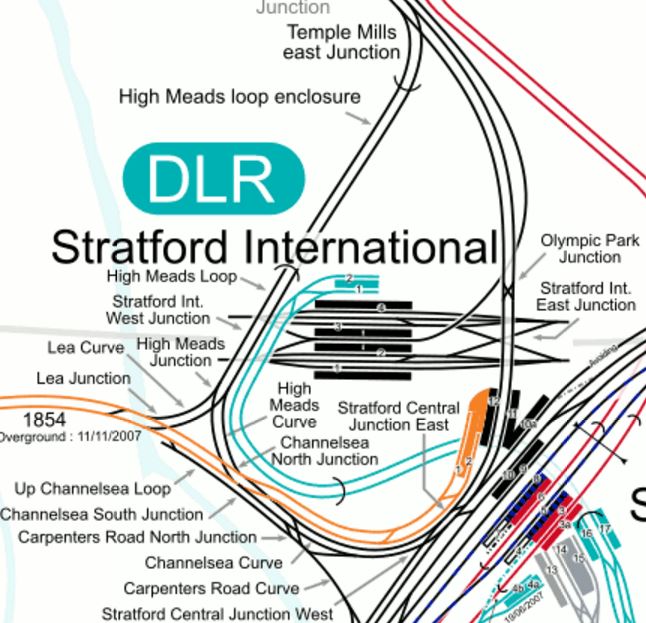
Use of the High Meads Loop would enable the following.
- Probably upwards of 10-12 tph to be turned back at Stratford.
- Trains would call in either Platform 11 or 12 at Stratford station.
- Trains could call at Stratford International station.
Currently Platforms 11 and 12 can only handle eight-car trains, but they could be lengthened for the the new 12-car Stadler Flirts, that will work the London to Cambridge and Stansted services in a couple of years.
Cambridge, Stansted and Lea Valley services would have simple changes to the following services at Stratford.
- Central Line
- Crossrail for City and East London, Essex, Heathrow, Paddington and the West End.
- DLR for Docklands and South East London.
- European services, if they were to call at Stratford International. As they should!
- Greater Anglia for Chelmsford, Colchester, Ipswich, Norwich and all the branches.
- Jubilee Line for Canary Wharf, London Bridge, Waterloo and Westminster.
- North London Line for Clapham Junction, Old Oak Common and West and South West London.
- Southeastern Highspeed to Ebbsfleet, Kent and East Sussex.
I suspect that London Overground and/or Greater Anglia have a cunning plan to collect all of these services and platforms together in an optimal manner for the benefit of all stakeholders.
But it’s really just the East End of London asserting its true place in London’s hierarchy.
The Stratford/High Meads Advantage
Using the High Meads Loop at Stratford to turn trains from the West Anglia Main Line could be a big advantage in the next few years.
All of these construction projects need to be carried out.
- Rebuilding of Tottenham Hale station.
- Updating of Coppermill Junction.
- Four-tracking of the West Anglia Main Line.
- Lengthening of platforms at Liverpool Street station.
- Connection of Crossrail 2 to the West Anglia Main Line.
If a connection between Tottenham Hale and Stratford via Lea Bridge can be maintained at all times during this massive amount of construction, which given the space available is very possible, then Stratford could be an alternative destination for diverted West Anglia Main Line and local services, that are unable to connect to Liverpool Street.
STAR And Electrification
This picture shows where the single STAR track will pass under the Ferry Lane Bridge at Tottenham Hale station
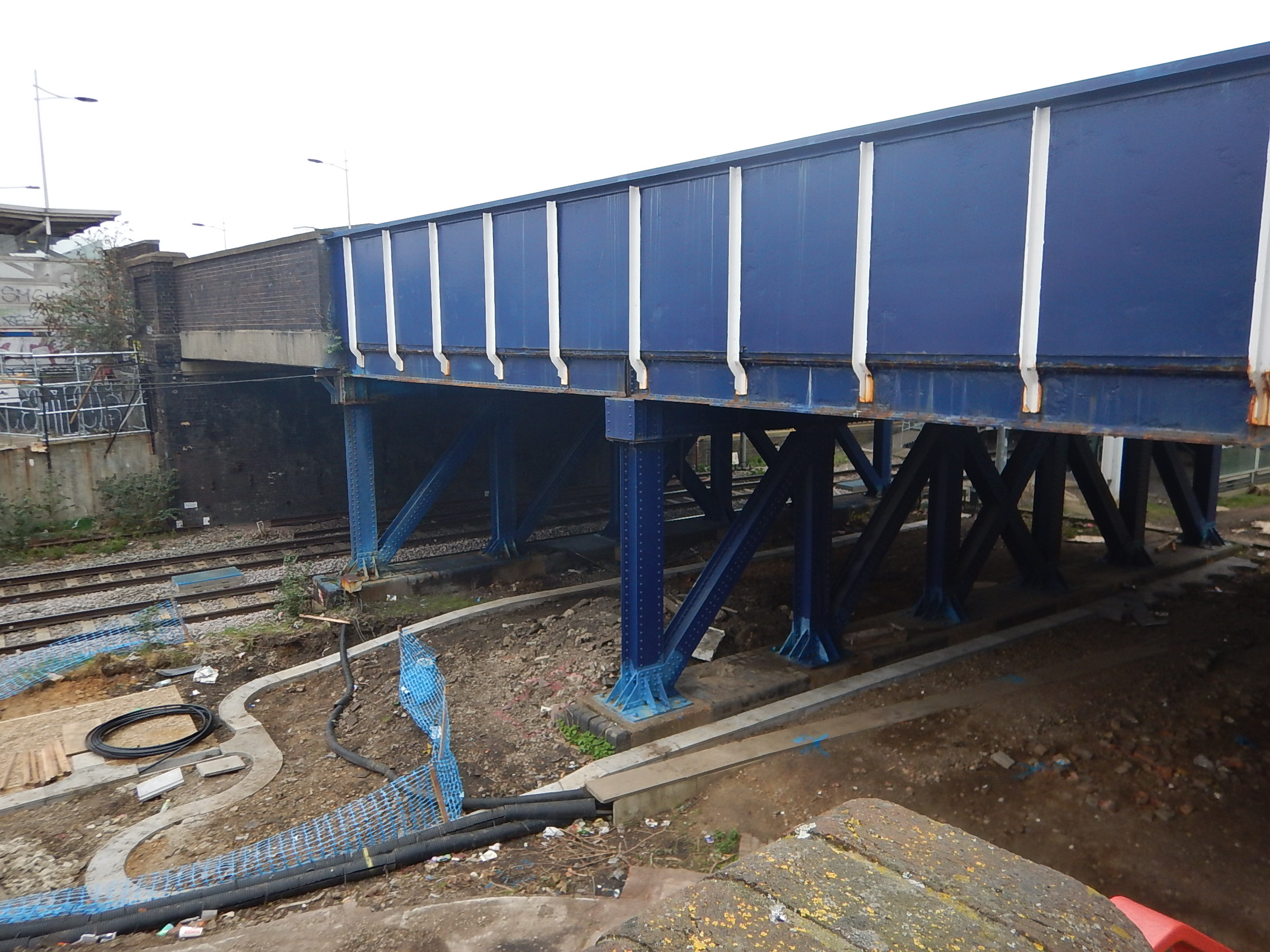
When I first looked at this bridge and saw the height of the overhead electrification on the existing West Anglia Main Line under the far span, I immediately questioned if they could fit the electrification under either of the blue steel bridges, where STAR might pass, in a manner that would meet all the Health and Safety regulations.
The only way to electrify and be certain of the safety would be to replace the bridge with a modern structure. But this would take a couple of years and can it be built without closing an important route to and from London for a couple of months?
So I come to the conclusion that the STAR line will not be electrified and the line will use electric trains with onboard energy storage or IPEMUs.
- I have been told by the manufacturer that all Aventra trains are wired for onboard energy storage.
- Both possible operators of the star service; Greater Anglia and London Overground are obtaining sizeable fleets of suitable Aventra trains,
- Greater Anglia’s Aventras are five-car trains.
- London Overground’s Class 710 trains are four-car trains.
- Delivery of London Overground’s trains is scheduled to start in 2018, so they are a just-in-time delivery.
- The route between Lea Bridge and Stratford is fully electrified, so trains could charge the batteries South of Lea Bridge station.
- Diesel trains would be an alternative, but probably not appropriate in the Lea Valley.
For added safety, the well-proven method of slab track will be used under the bridge to ensure the train stays stable.
The outcome will be the ecologically sustainable development of Meridian Water gets appropriate electric trains to shuttle residents to Crossrail and the Eastfield Shopping Centre at Stratford.
Crossrail 2
I shall make a few comments about what the article says about Crossrail 2.
Crossrail 2 Would Be Overlaid On The Existing Network
How else is there to do it without building a whole new line on a different route up the Lea Valley?
Incidentally, plans used to exist for extending the Chingford Branch Line to Stansted Airport through Epping Forest. I doubt that will ever happen, especially as Queen Victoria is supposed to have said no!
Coppermill Junction Could Be Converted To A Grade-Separated Rather Than A Flat Junction
These pictures were taken from a train, that was going from Lea Bridge to Tottenham Hale, through the area of Coppermill Junction.
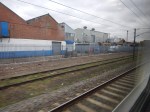
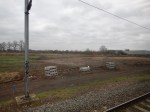

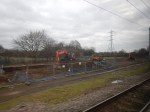
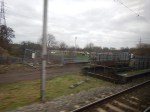
At present the following happens at Coppermill Junction.
- Trains between Liverpool Street and Chingford pass straight over the junction.
- Trains from Liverpool Street to Tottenham Hale curve left from the Chingford Branch Line to join the West Anglia Main Line.
- Trains from Tottenham Hale to Liverpool Street cross in a flat junction over the West Anglia Down Line and the Chingford Branch Down Line to get on track for Liverpool Street.
When the West Anglia Main Line has been four-tracked and the STAR track has been inserted alongside the current tracks, the fast tracks will probably be the two most Easterly tracks through Tottenham Hale.
This will mean that the West Anglia Up Fast will have to cross the following lines to get on the Chingford Up Line.
- The bi-directional STAR line.
- The double-track of the Temple Mills Branch to Stratford.
- The Chingford Down Line.
In the opposite direction, the following tracks will have to be crossed.
- The double-track of the Temple Mills Branch to Stratford.
- The bi-directional STAR line.
These movements will need a very complicated Coppermill Junction.
As four-tracking is all about faster services between Liverpool Street and Cambridge and Stansted, it would be detrimental to not have an efficient Coppermill Junction, with some grade separation.
I think we probably need flyovers or dive-unders on the following routes.
- West Anglia Up Fast to Chingford Branch Up.
- Chingford Branch Down to West Anglia Down Fast.
Routes would probably need to be provided so that the trains could go between the West Anglia Slow Lines and the Chingford Branch towards London.
In addition, I’ve heard rumours that trains will be able to go both ways between Tottenham Hale and Walthamstow/Chingford.
There is certainly lots of space to build a complicated junction, as the pictures show.
Crossrail 2 Would Emerge From The Tunnel South of Tottenham Hale
I think that has been known for some time and the possible site is full of London’s demolition rubble.
However, the junction with the West Anglia Slow Lines would probably need to be grade separated and integrated with the spaghetti that Coppermill Junction will probably have become.
The Project Would Quadruple The West Anglia Main Line From The Tunnel Portal To Broxbourne
If fast services to Cambridge and Stansted are to be retained, surely this must be done.
Just imagine 10-15 Crossrail 2 trains and ten fast trains, every hour sharing a pair of lines up the Lea Valley.
In my view the fast lines would be the two most Easterly lines and they probably wouldn’t stop very often, if at all between Liverpool Street or Stratford and Broxbourne.
,
STAR Would Be Built To Facilitate Four-Tracking
Everything I’ve seen leads me to think, that the single STAR track will be next to the West Anglia and Temple Mills Branch Up Line, with the two new lines outside to the East.
I also feel that these new lines will be the fast ones and possibly will have few if any platforms between Tottenham Hale and Broxbourne.
STAR could be an independent line, well out of the way operationally of other lines.
- STAR will be bi-directional North of Lea Bridge station.
- STAR could share island platforms with the West Anglia Up Line at Angel Road, Northumberland Park and Tottenham Hale stations.
- There could be no points on the route once it separates North of Lea Bridge station.
- The fast lines between Liverpool Street and Tottenham Hale could cross the Temple Mills Branch and the STAR line at Coppermill Junction using a flyover.
The last point probably explains the grade-separated junction, I mentioned earlier.
I said earlier that it could be difficult to put extra tracks through Tottenham Hale station. These pictures show the area, where the STAR line and the two new lines will go and also what lies on the other side in the new housing development of Hale Village.
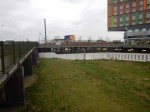
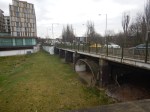
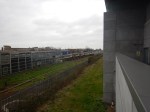
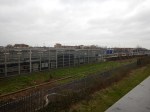
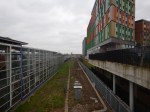
There is more space than I thought earlier. As some of the concrete decking will probably be demolished or modified to build the new entrance and pedestrian bridge for the station, I suspect that the space between the current station and Hale Village can be made wide enough for at least the new lines needed to four-track the West Anglia Main Line.
But I suspect that a way will be found to get the STAR line and the two other lines in what space can be created.
This would mean.
- The STAR service can continue, as long as it’s needed.
- There certainly wouldn’t be space for platforms on the two other lines between the current station and Hale Village.
- So as the slow lines will need platforms, the two new lines will be the fast lines.
North from Tottenham Hale, there is slightly more space, as my picture at Northumberland Park station showed.
As the STAR line is currently planned to terminate at Angel Road station, North from there, the requirement is only the easier one of two tracks and not three.
But if the requirement for three tracks should prove too difficult, as the four-tracking will see Crossrail 2 implemented, I’m sure that the STAR line can be sacrificed to make space. But that would create difficulty in maintaining an adequate service between Angel Road and Stratford whilst the four-tracjing is being carried out.
In some ways STAR has the feel of one of those temporary diversions you get in road works to keep the traffic moving.
- Tottenham Hale station is going to be rebuilt.
- Transport is needed urgently for Meridian Water.
- STAR connects Angel Road to Stratford with all its connections and Crossrail from 2018.
- When Crossrail 2 is opened, Angel Road, Northumberland Park and Tottenham Hale stations will have a frequent high capacity service.
- Greater Anglia might move some Cambridge and Stansted services from Liverpool Street to Stratford.
I wouldn’t be sure that STAR would still exist after Crossrail 2 opens.
- There will be well upwards of ten tph Crossrail 2 trains in both directions calling at Angel Road station.
- STAR connects Meridian Water with Stratford.
- STAR gives a four tph connection between Crossrail 2 at Tottenham Hale and Crossrail at Stratford.
Passenger numbers and patterns will decide.
A Turnback Platform Is Being Considered At Tottenham Hale
Tottenham Hale station is being rebuilt and I suspect that if a turnback platform is being considered the station will have provision for the extra platform to be built.
This picture shows the Southern end of Platform 2 at the station with the Ferry Lane Bridge behind.
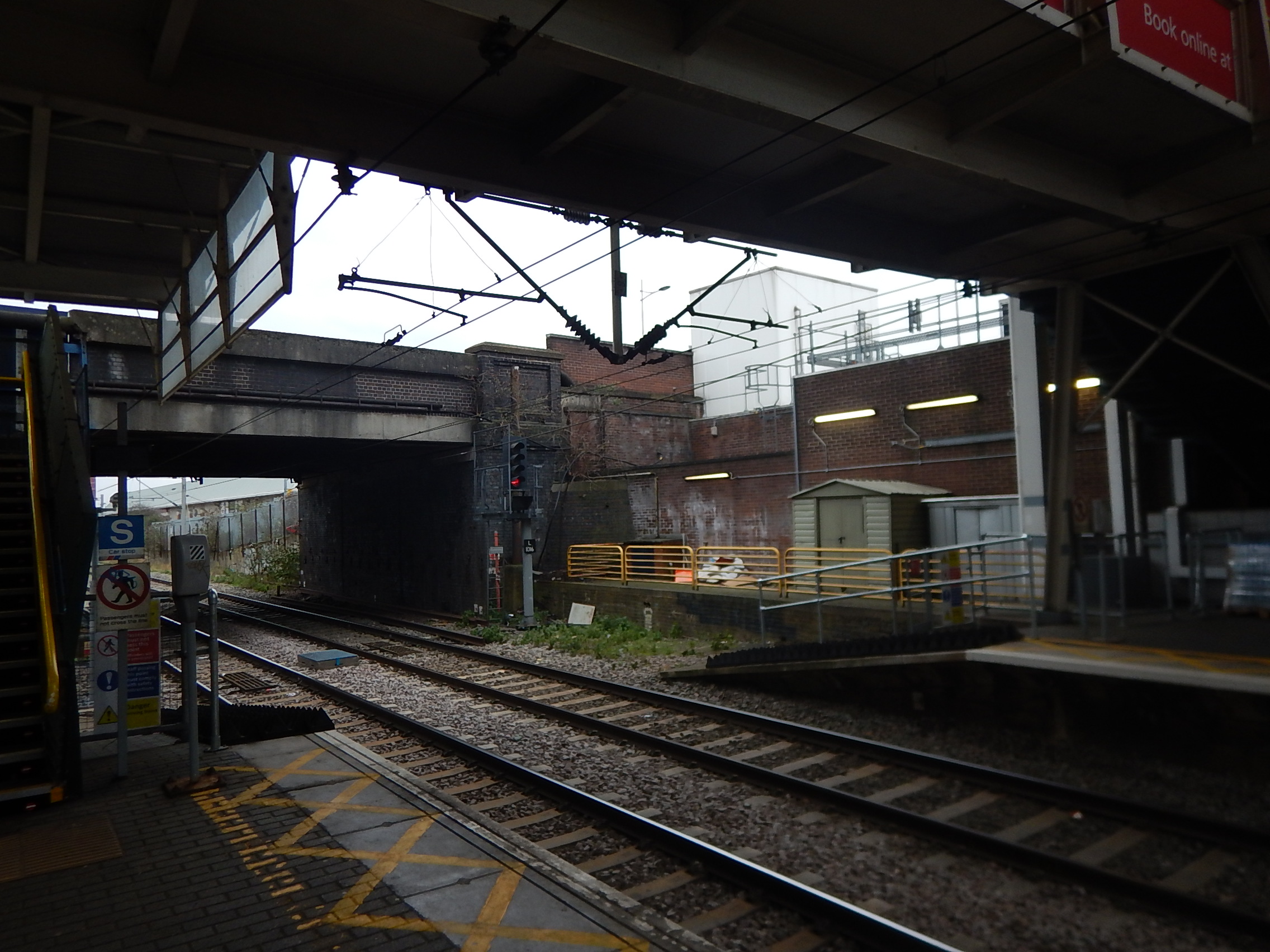
It certainly couldn’t be described as good engineering.
Connecting the two current platforms is a 1960s bridge, which has steps at both end and a single escalator to bring passengers arriving from the North onto the bridge to walk to the Victoria Line.
Plans for the station envisage a lot of work being done before the end of next year. Future in the Wikipedia entry for the station includes these plans.
- creating a new landmark entrance to the Station;
- increasing the capacity of the Station concourse, by doubling the size of the current ticket hall;
- improving interchange by relocating the Greater Anglia and London Underground gatelines;
- providing new access to platforms via the new Access for All (AfA) bridge being delivered separately by Network Rail;
- removing the existing subway which links the south side of Ferry Lane with the Station;
- extending the existing bridge to form a new Station entrance from Hale Village, providing improved access from the east to Tottenham Hale transport interchange;
- re-routing the London Underground escape route and relocating the vent shaft;
- providing a new, upgraded Station control facility; and
- retail units.
Nothing is said about a turnback platform.
But I think if the Ferry Lane Bridge was to be rebuilt and the new station was modified appropriately, the turnback platform could be positioned behind and alongside the current platform 2.
- It would share step-free access with that provided for platform 2.
- There would be cross-platform for passengers arriving in the turnback platform, with services going further down the line.
- The current waiting room would be demolished.
- There would be space for the platform.
Current works at the station are moving the taxi rank, which would help the provision of a turnback platform and other features.
A Turnback Platform Is Being Considered At Enfield Lock
When I looked at Enfield Lock station, I showed this Google Map of Enfield Lock station.
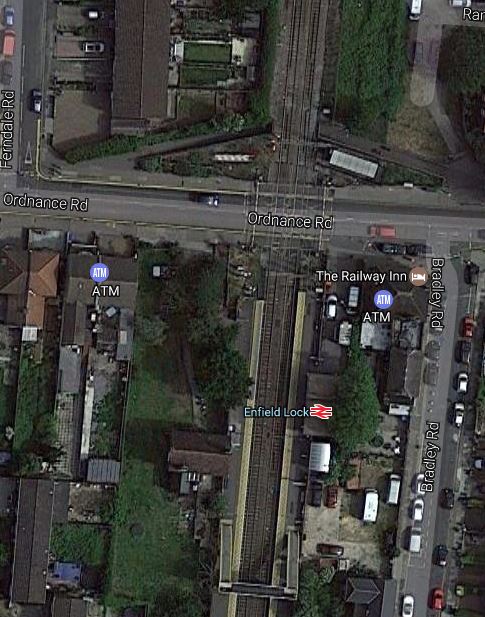
Given that there will be two extra lines through the area, will there be any space for a turnback platform?
In Level Crossing Issues, I said this.
The Southernmost three of these crossings; Enfield Lock, Brimsdown and Northumberland Park, are close to the A1055 which is variously called Meridian Way or Mollison Avenue, which was built to serve the various industrial and residential sites between Tottenham Hale and Waltham Cross.
This road should obviously be improved, but look at this Google Map of the Northern End of the road.
Note the West Anglia Main Line crossing the map, in a North-South direction. Waltham Cross station is on the other side of the M25.
Surely this could be a site for a new Park-and-Ride station for Crossrail 2!
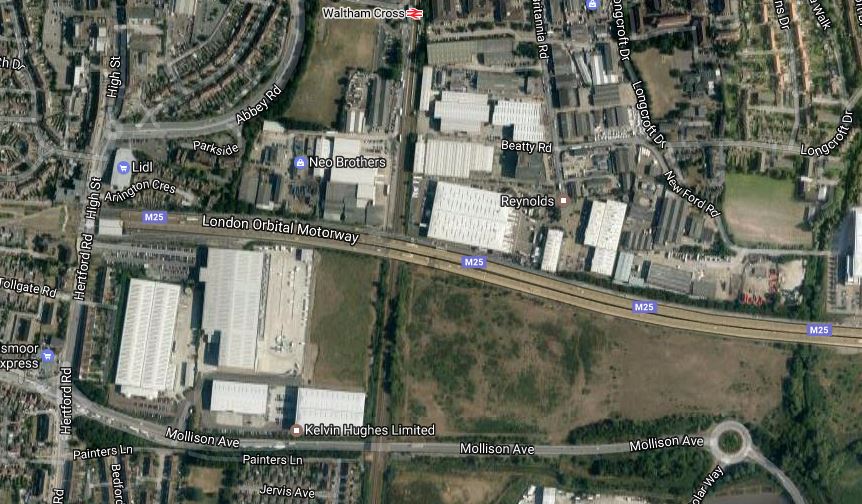
Could this be where the turnback platform at Enfield Lock will be located in a new station?
Turnback Platforms And Stabling Sidings Are Considered At Broxbourne
Broxborne station has everything needed to be turned into a superb Northern terminus for Crossrail 2.
- The station has four platforms; two fast and two slow, with cross-platform change.
- The station is step-free.
- There is space to add extra through and turnback platforms.
- There is space for stabling sidings.
- There is space for masses amounts of parking.
- The station has a large water feature including the River Lea and the New River.
The station is even Grade II Listed.
I said more in this post called Broxbourne Station. The final paragraph is.
It would not need a massive amount of money to be spent at Broxbourne to make the station a superb Northern terminus for Crossrail 2. It makes Shenfield and Abbey Wood look decidedly second-class now.
It is not often that the terminus of a new rail line is so easy to develop.
Other Questions And Issues
As I have written this post, several questions and issues have suggested themselves.
- What will be done about the noise of 100 mph plus trains every few minutes on some parts of the route, like through Enfield Lock and Waltham Cross?
- Could the two new fast lines be placed in a cut-and-cover tunnel through Tottenham Hale?
- Do any plans exist for the replacement of the Ferry Lane Bridge at Tottenham Hale?
- Could the High Meads Loop be used to turn trains at Stratford?
- Will a station be built on the High Meads Loop to serve Stratford International station?
Like Coppermill Junction, it will all get very complicated.
Conclusion
STAR, Crossrail 2 and four-tracking the West Anglia Main Line will probably bring a lot of benefits, but it is not a simple project.
Class 710 Trains And Regenerative Braking
The new Class 710 trains for the London Overground, will be a next generation train, which could set new standards of energy efficiency. This is from a Bombardier Press release, that the company released when they received the order from London Overground.
The new trains will have similar features to the existing London Overground fleet (also manufactured by Bombardier), including walk-through carriages, air-conditioning and improved accessibility. These next-generation AVENTRA trains will feature an innovative design with optimised performance, including reduced weight, energy consumption, maintenance costs and high reliability, providing substantial benefits to both TfL and its passengers traveling on key London Overground routes, including the newly acquired West Anglia Inner Metro Service.
Note that there is no mention of regenerative braking, but this is mentioned in relation to the other Aventra trains on order; the Class 345 trains for Crossrail.
The Aventra has a slightly unusual and innovative electrical layout.
This article in Global Rail News from 2011, which is entitled Bombardier’s AVENTRA – A new era in train performance, gives some details of the Aventra’s electrical systems. This is said.
AVENTRA can run on both 25kV AC and 750V DC power – the high-efficiency transformers being another area where a heavier component was chosen because, in the long term, it’s cheaper to run. Pairs of cars will run off a common power bus with a converter on one car powering both. The other car can be fitted with power storage devices such as super-capacitors or Lithium-Iron batteries if required.
This was published six years ago, so I suspect Bombardier have improved the concept.
Could it be that the Class 710 trains consists of a two-car power unit sandwiched between two indentical driving cars.
The train could have a formation defined by something like.
DMSO+PMSO+TSO+DMSO or DTSO+PMSO+MSO+DTSO
The cars are as follows.
- DMSO – Driving Motor Standard Open
- PMSO – Pantograph Motor Standard Open
- DTSO – Driving Trailer Standard Open
- TSO – Trailer Standard Open
I’ve assumed there are a lot of powered axles as there are with the Class 345 train, but an appropriate number of trailer instead of motor cars can be used according to the demands of the route.
Search the Internet for “Class 710 train regenerative braking” and you find nothing official of with provenance.
I don’t believe that the Class 710 trains are not fitted with regenerative braking, as if you want to save energy on an electric train, it is one of the must-have features in the design.
But you need to be able to handle the electrical energy generated under braking.
Normally, the electricity is fed back into the overhead wires or third rail, so that it can be used by another train nearby. This technique is used extensively on the London Underground and third-rail electrification systems. Although, it is used on some 25 KVAC overhead systems like c2c, it means that the braking energy has to be converted to a high voltage to feed the electricity back.
So on the Aventra are Bombardier taking an alternative approach of using onboard energy storage to handle the energy generated by the braking?
Consider.
- Braking energy generated at a station stop, is immediately available to accelerate the train back to line speed.
- The onboard energy storage is designed to work with the traction motors.
- It is irrelevant to the drive system, if power comes from 25 KVAC overhead or 750 VDC third-rail.
- The overhead or third-rail power supply doesn’t need to be able to handle return currents.
- The train probably has enough onboard power to get to the next station at all times, should the power supply fail.
But the biggest factor is the amount of energy needed to be handled.
In How Big Would Batteries Need To Be On A Train For Regenerative Braking?, I calculated that the energy of a fully-loaded Class 710 train travelling at 100 kph is around 15 KwH.
So when a train stops, this energy will be released.
To get a better handle on how much energy is involved let’s look at these specifications for a Nissan Leaf car.
Nissan talks about 24 and 30 kWH versions of the car, So if this is the battery size, then one of Nissan’s batteries could store all the braking energy of a four-car Class 710 train.
This sounds absolutely unbelievable, but you can’t argue with the Laws of Physics. or the performance of modern automotive battery technology.
There are five lines, where the new Class 710 trains will run.
- Gospel Oak to Barking
- Chingford Branch
- Liverpool Street to Cheshunt
- Romford to Upminster
- Watford DC Line
How many of these lines are setup with the capability of accepting the return currents of regenerative braking?
The question is irrelevant if the Class 710 trains handle their own braking energy.
Conclusion
As the energy of a laden Class 710 train going at line speed is around 15 kWh, which is well within the capability of an automotive battery from a quality electric vehicle, I feel very strongly, that the Class 710 trains will handle regenerative braking using onboard energy storage.
Seamless Interchangeability
At several places on the UK rail network, two trains running as a pair will split, with one train going to one destination and another going to another.
I wrote about trains splitting and joining in Trains Uncoupling and Coupling at Cambridge.
In the past, UK railways used to use the concept of slip coaches, so that coaches could be dropped from an express without stopping. But the last time it was used in the UK was in September 1960 at Bicester North station.
I have just read this article on the Rail Engineer web site, which is entitled Seamless Interchangeability.
The article talks about a concept of dynamic coupling, where trains are automatically coupled and uncoupled at line speed.
It also talks about the issues this would raise.
As a Control Engineer, I’m fairly certain, that it would be very easy to create a system, where say an eight-car Kings Lynn train could split just before Cambridge station, with the front four-car train going to Kings Lynn and the other four-car train stopping in Cambridge station.
It could either be done using two drivers or by driver-less trains. Although the unions would have a lot to say about the latter.
I also believe that if the trains could uncouple, then coupling at line speed would also be possible.
So what is the point?
An Example From The Brighton Main Line
To make full use of the capacity available, Southern serve Littlehampton and Ore, with a train that divides at Haywards Heath. It is a well-proven technique that has been used for decades.
Automatically splitting the two trains at line-speed, can give journey time advantages.
Take the 19:47 from Victoria, which arrives at Haywards Heath at 20:30 as an example.
The following is taken from the timetable.
- The front portion to Ore leaves at 20:34.
- The rear portion to Littlehampton leaves at 20:36.
- Stops at East Croydon and Gatwick Airport take about a minute.
This leads to the following, if the two trains split immediately after stopping at Haywards Heath and before the trains take different directions after Keymer Junction where the East Coastway Line divides from the Brighton Main Line, a few miles South.
- The Ore train performs a one-minute stop instead of one of four minutes, thus saving three minutes.
- The Littlehampton train performs a one-minute stop instead of one of six minutes, thus saving five minutes.
- The platform at Haywards Heath is only occupied for a minute, as opposed to six.
- The Littlehampton and Ore portions must be capable of providing enough capacity for their route.
For those worried about driver-less trains, the driver of the second train for Littlehampton, would probably step up at the previous stop at Gatwick Airport or at Haywards Heath.
But the outcome would be a small increase in capacity on the line, due to the platform at Haywards Heath being occupied for five minutes less.
Coming North, take the 09:47 from Littlehampton as an example.
The following is taken from the timetable.
- The first train arrives at Haywards Heath at 10:35 and leaves at 10:45.
- The second train arrives at Haywards Heath at 10:41.
The pattern of the trains would be different.
- Whatever was the front portion of the train would go through Keymer Junction first
- The train forming the rear portion would be the next train through the junction.
- The rear portion could catch the front portion and the two trains would be automatically coupled together before Haywards Heath.
- The joined train would stop at Haywards Heath for a minute.
- The driver of the second train could step-down at Gatwick Airport or Haywards Heath.
In some ways the mathematics involved in the coupling, are not unlike those for a fighter jet connecting with a tanker aircraft. Except that speeds are a lot lower and there is no need to control direction only closing speed.
Haywards Heath station would be occupied for up to nine minutes less, thus creating capacity.
This simplistic analysis, shows how automatically coupling and uncoupling trains at line speed can create capacity and decrease journey times.
- Journey time from Victoria to Ore would be reduced by three minutes.
- Journey time from Victoria to Littlehampton would be reduced by five minutes.
- In the Down direction the platform at Haywards Heath station would be occupied for just one minute instead of six.
- Journey time from Littlehampton to Victoria would be reduced by nine minutes.
- Journey time from Ore to Victoria would be reduced by three minutes.
- In the Up direction the platform at Haywards Heath station would be occupied for just one minute instead of ten.
Obviously strategies would have to be developed for various eventualities including.
- Unsuccessful coupling or uncoupling.
- Late trains.
- Signalling and train failures.
- Leaves on the line.
- Extreme weather.
But as during all coupling and uncoupling operations, both trains would have a driver in the cab, keeping an expert eye over the procedure and each train could be driven independently, I think all safety issues could be overcome, to the satisfaction of all parties.
If you read the full article, you’ll see that there are some much more exciting possibilities, than the simple ones I have outlined here.
But I do believe that line speed uncoupling and coupling of trains with a driver in the cab of both trains involved, can be a very powerful tool in creating capacity on the UK’s railways.
The Great Eastern Main Line
I know the Great Eastern Main Line well and several trains are coupled and uncoupled regularly on this line.
As Greater Anglia has ordered new five-car Aventra trains and nearly all platforms can take 12 -car trains, running these trains in pairs and coupling and uncoupling appropriately, is probably in their plans for the line.
As on the Brighton Main Line, could coupling and uncoupling at line speed, unlock capacity on the line?
A few weeks ago, I caught a train from Chelmsford to Manningtree, that divided at Colchester, with the front four-car train going to Clacton and the rear four-car train going to Harwich.
The 16:44 from Liverpool street is a train that divides at Colchester, when it arrives at 17:40. These timinings are from the timetable.
- The Clacton portion of the train leaves at 16:44.
- The Harwich portion of the train leaves at 16:47.
As the Sunshine Coast Line for Clacton leaves the Great Eastern Main Line immediately after Colchester station, it would appear that the two trains must uncouple during the stop at Colchester.
Surely, an improved and well-designed automatic uncoupling system could separate the trains faster, saving minutes on both services.
Towards London, two trains leave Harwich and Clacton at 07:16. The timetable shows.
- The Harwich train arrives at Colchester at 07:47 and leaves at 07:54.
- The Clacton train arrives at Colchester at 07:50 and leaves at 07:54.
Surely, an improved coupling system, could join the trains faster, saving minutes on both services.
The time savings will not be as great as those at Haywards Heath, but automatic coupling and uncoupling must be a worthwhile feature of the new trains.
|As Bombardier are adding automation to the Aventra, could they be adding the ability to automatically couple and uncouple trains, both in the station and at line speed?
The West Coast Main Line
I have seen Class 221 Trains, join at Crewe, but I don’t think this is done any more.
However, with the need for direct services from London to places like Blackpool, Burnley and Huddersfield, the ability to be to couple and uncouple trains quickly must be something that would be useful to make optimal use of the valuable train paths on the line.
The East Coast Main Line, Midland Main Line, Great Western Main Line And South West Main Line
If the West Coast Main Line could benefit, then surely these lines could as well.
Class 800/801 Trains
The Class 395 train is very much related to the Class 800 and Class 801 trains, that are being built by Hitachi for the East Coast Main Line, Great Western Railway and other routes.
In The Impressive Coupling And Uncoupling Of Class 395 Trains, I talked about the design of the coupling system for the Class 395 trains.
I would be very surprised if this feature was not incorporated in the Class 800 and Class 801 trains.
So will we be seeing two five-car Class 800/801 trains dividing and joining at a convenient station and then running as a ten-car train to and from London?
Class 385 Trains
What about the Class 385 trains for Scotland?
- These are another version of Hitachi’s A-Train, like 395s, 800s and 801s.
- These will come in two lengths; three-car and four-car.
- Edinburgh-Glasgow services will need at least two units to be coupled together.
- The trains are being introduced from Autumn next year.
It seems to me, that Scotrail are acquiring a very flexible fleet that can run in various lengths.
Will they have the ability of the 395s to couple and uncouple in under a minute?
And if they do, will Scotrail use this ability to adjust train formation to the traffic?
Aventras
There are three definite orders for Bombardier’s new Aventra train at the present time.
- Class 345 trains for Crossrail.
- Class 710 trains for London Overground.
- Five and ten car units for Greater Anglia.
All trains are fixed formations in a mixture of lengths.
Will Aventras have similar coupling and uncoupling performance to Hitachi’s Class 395 trains?
I suspect normally, the Crossrail trains will never be coupled together, as where are platforms for a four-hundred metre long train?
But suppose a train fails in the central tunnel, will the quickest way to remove it, be to attach it to another train and drag it out?
The routes where the London Overground trains will run, are currently served by a mixture of four-car and eight-car trains. So will London Overground, adjust train length to the known traffic patterns?
Greater Anglia do couple and uncouple trains at present to serve Harwich. So I suspect, we’ll see use of an automatic and fast coupling and uncoupling feature to create a more efficient timetable.
Cross City Lines
There are several cross-city lines in the UK.
- Cross-City Line – Birmingham
- Crossrail
- North Berwick Line – Edinburgh
- Northern Line – Merseyrail
- Snow Hill Lines – Birmingham
- Thameslink
One of the characteristics of cross-city lines, is they are busiest in the centre of the city, where passengers tend to use the trains for short hops , as well as longer distances. Then in the suburbs, outside of Peak hours the trains could run almost empty.
Crossrail’s trains are designed so that hopefully they could cope with the variable traffic, but would it be possible to have half trains, which join and split at outer stations.
Thameslink
I think that Thameslink could be the line that might benefit most, as it would probably want to serve more places.
In All Change On Thameslink, I detailed the current proposed schedule of trains.
- 4 trains per hour (tph) – Sutton to St. Albans (2 tph via Wimbledon, 2tph via Mitcham)
- 2tph – Brighton to Bedford
- 2 tph – Three Bridges/Gatwick Airport to Bedford
- 2 tph – Brighton to Cambridge North
- 2 tph – Horsham to Peterborough
- 2 tph – Maidstone East to Cambridge
- 2 tph – Sevenoaks to Blackfriars
- 2 tph -Orpington to Kentish Town/West Hampstead
- 2 tph – Rainham to Luton (via Dartford and Greenwich)
- 2 tph – East Grinstead to Bedford
- 2 tph – Littlehampton to Bedford
This makes a total of twenty-four tph, which is the design limit for the central tunnel.
In this schedule 4 tph go to Cambridge and 2 tph go to Peterborough. Suppose, it was decided that Peterborough needed 4 tph.
The path limit of 24 tph through the central tunnel makes this impossible, but if Peterborough and Cambridge services joined and split at perhaps Stevenage, then both Cambridge and Peterborough would get 6 tph through the core tunnel.
It would need new six-car trains, that could couple and uncouple quickly.
Conclusion
I believe that improving the coupling and uncoupling of all modern trains to the standard of that of the Class 395 trains could be very beneficial, to train operators, staff and customers.
If coupling and uncoupling could be done at line speed, this might bring extra benefits.
 The Anonymous Widower