East-West Rail: Electrification
The first paragraph of the Wikipedia entry for the East West Railway, says this about electrification.
As of March 2020, electrification of the line is not planned, but the 2019 decision (to rule it out) is under review.
But I don’t think it’s a simple decision of electrify or not!
These observations are guiding my thoughts.
Milton Keynes Central Station
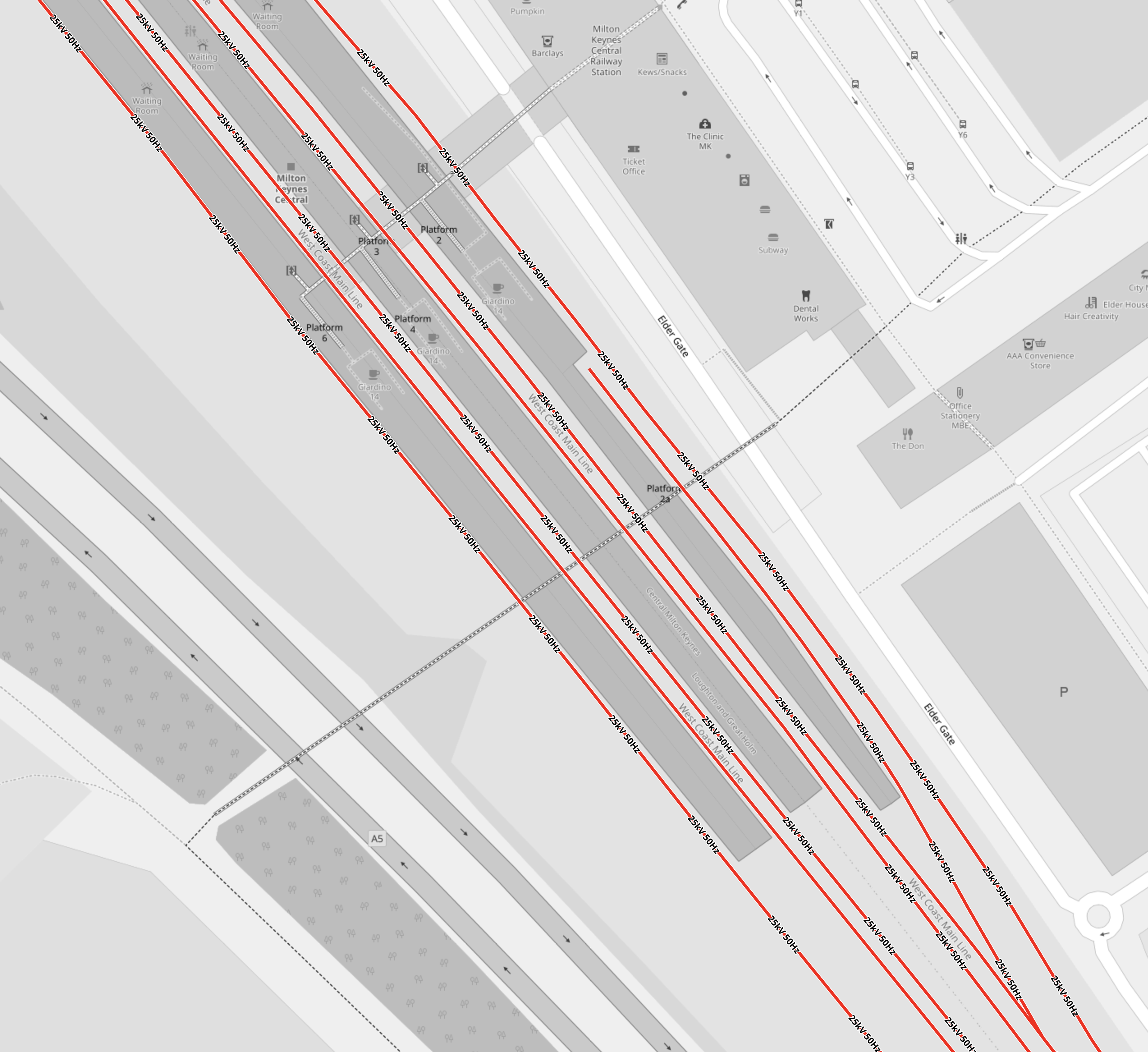
This OpenRailwayMap shows the platforms and whether they are electrified in Milton Keynes Central station.
Note.
- Lines shown in red are electrified with 25 KVAC overhead wires.
- The short platform is Platform 2A, which can take a five-car train and was built recently to terminate the Marston Vale Line service.
- Could Platform 2A be ideal for handling and charging, battery-electric trains, that terminate in Milton Keynes station?
The Wikipedia entry for Milton KeynesCentral station, has a section called Platforms and Layout, which gives full details.
Bletchley Station
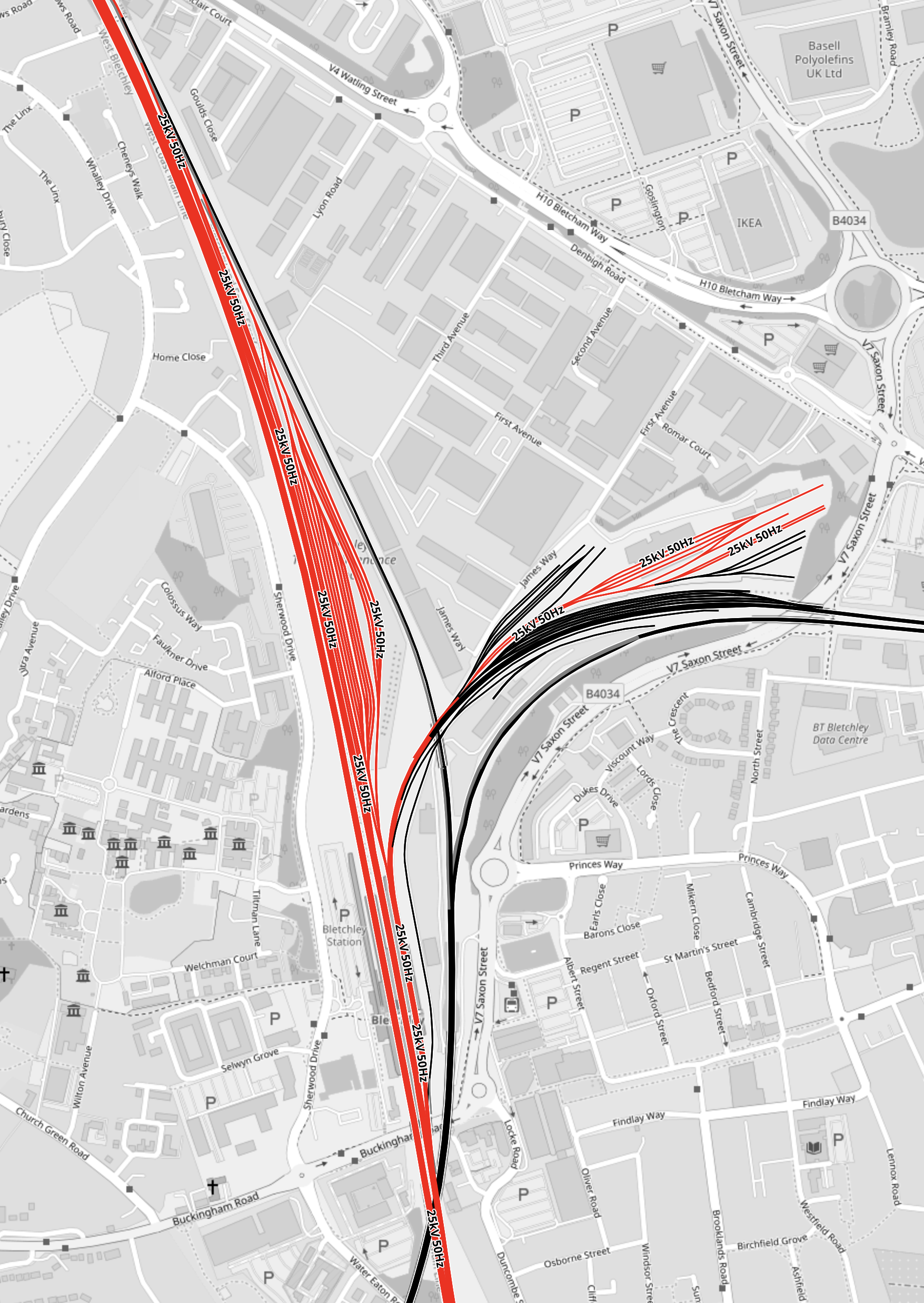
This OpenRailwayMap shows the platforms and whether they are electrified in Bletchley station.
Note.
- Lines shown in red are electrified with 25 KVAC overhead wires.
- The wide swath of red going North is the West Coast Main Line.
- The smaller patch of red to the East of the West Coast Main Line are electrified sidings.
- All low-level platforms at Bletchley station are electrified.
- The viaduct platforms, are shown in black as they are not electrified.
- A non-electrified line leads North-West from the viaduct towards Milton Keynes Central.
- The Milton Keynes end of the line between Milton Keynes Central station and the viaduct is electrified.
- A non-electrified line leads North-East from the viaduct towards Fenny Stratford and Bedford.
The Google Map shows a 3D visualisation of Bletchley station.
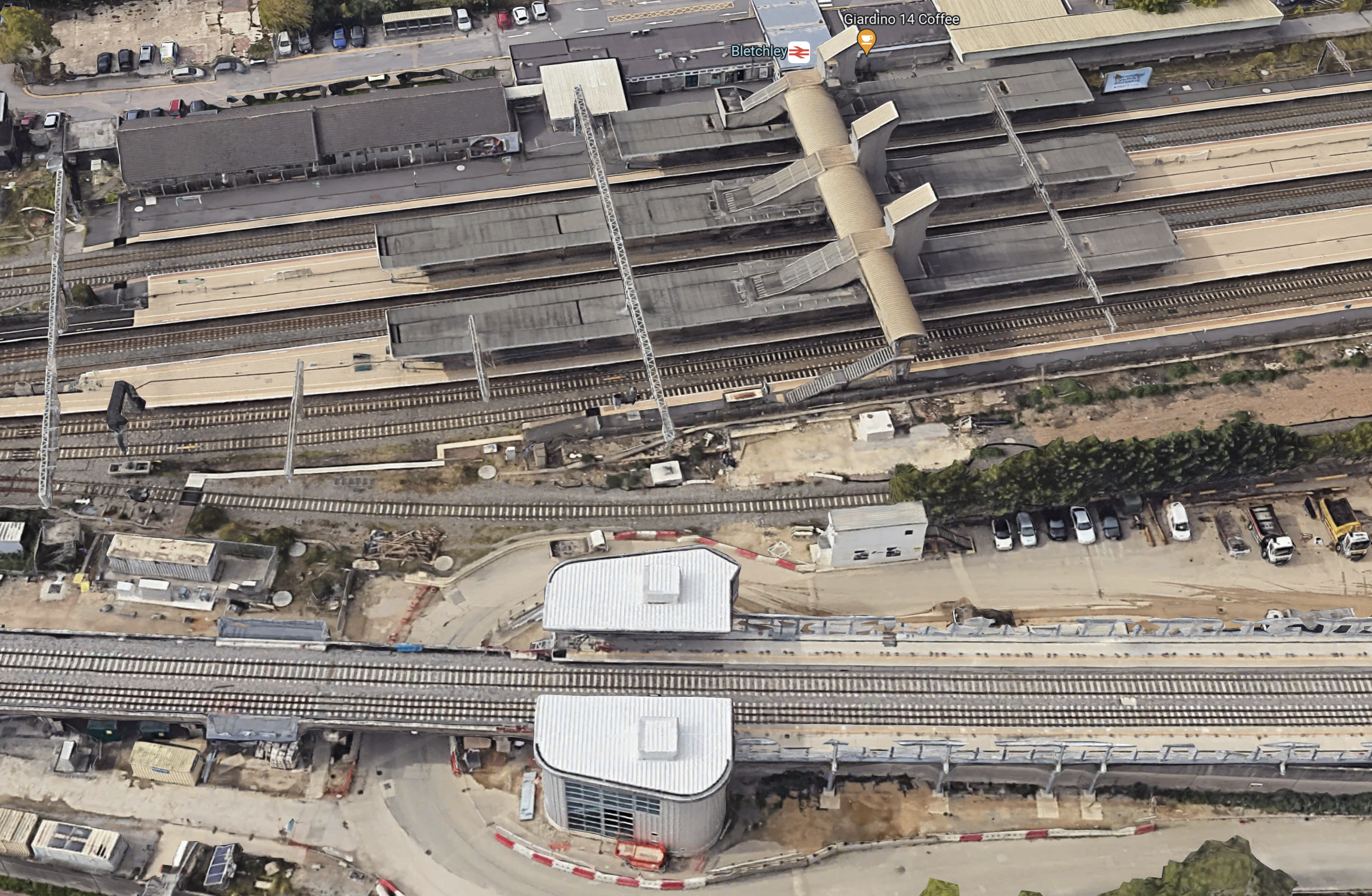
I can’t see much sign of any electrification.
Bedford Station
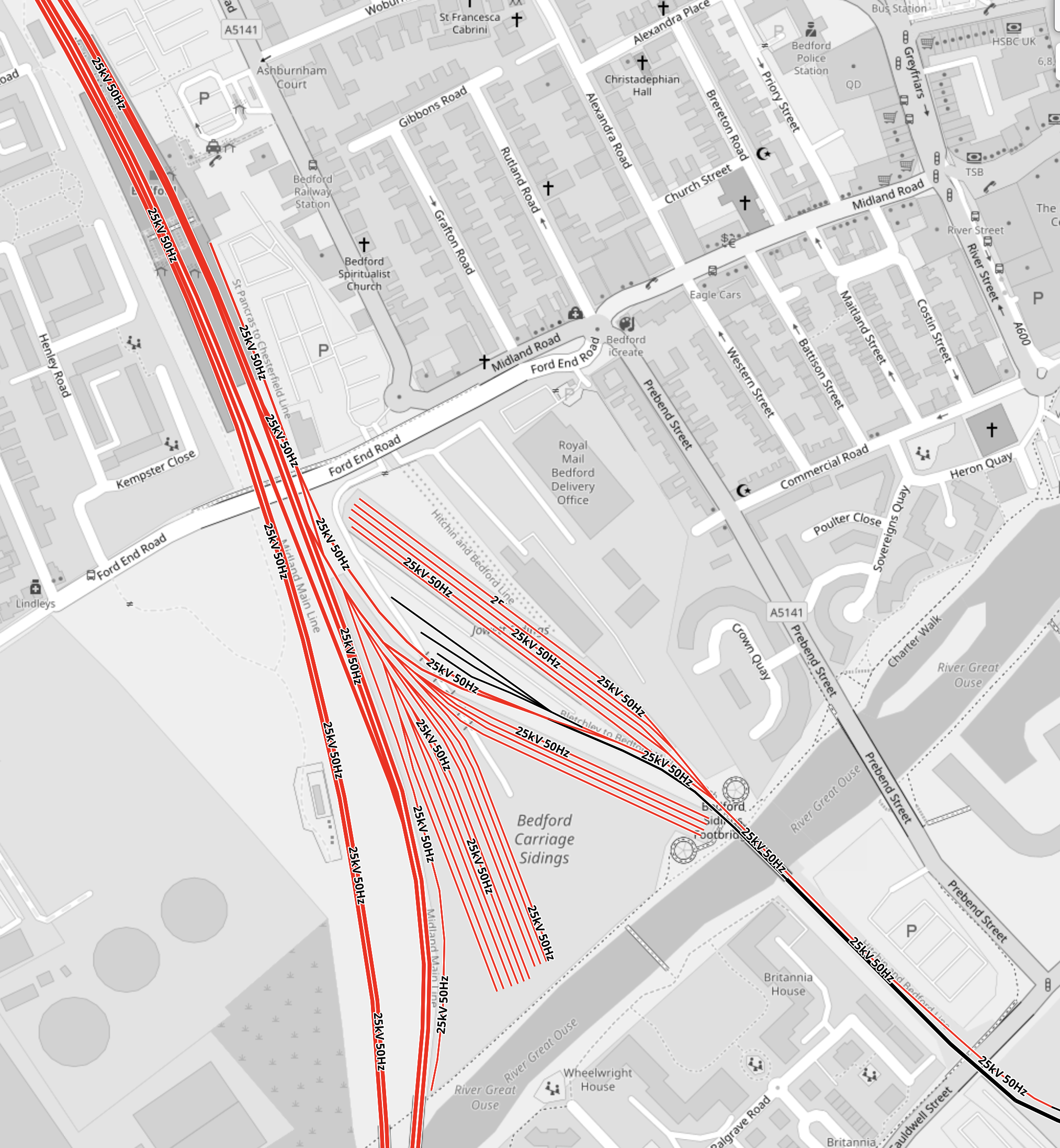
This OpenRailwayMap shows the platforms and the electrification around Bedford station.
Note.
- All platforms at Bedford station are electrified.
- The lines to the West of the station are the electrified Midland Main Line.
- The Marston Vale Line services terminate in the short Platform 1A, which is the South-East corner of the station.
- The track into Platform 1A is electrified for about two hundred metres, through the sidings South of the station.
This picture shows the electrified track as it crosses over the river.
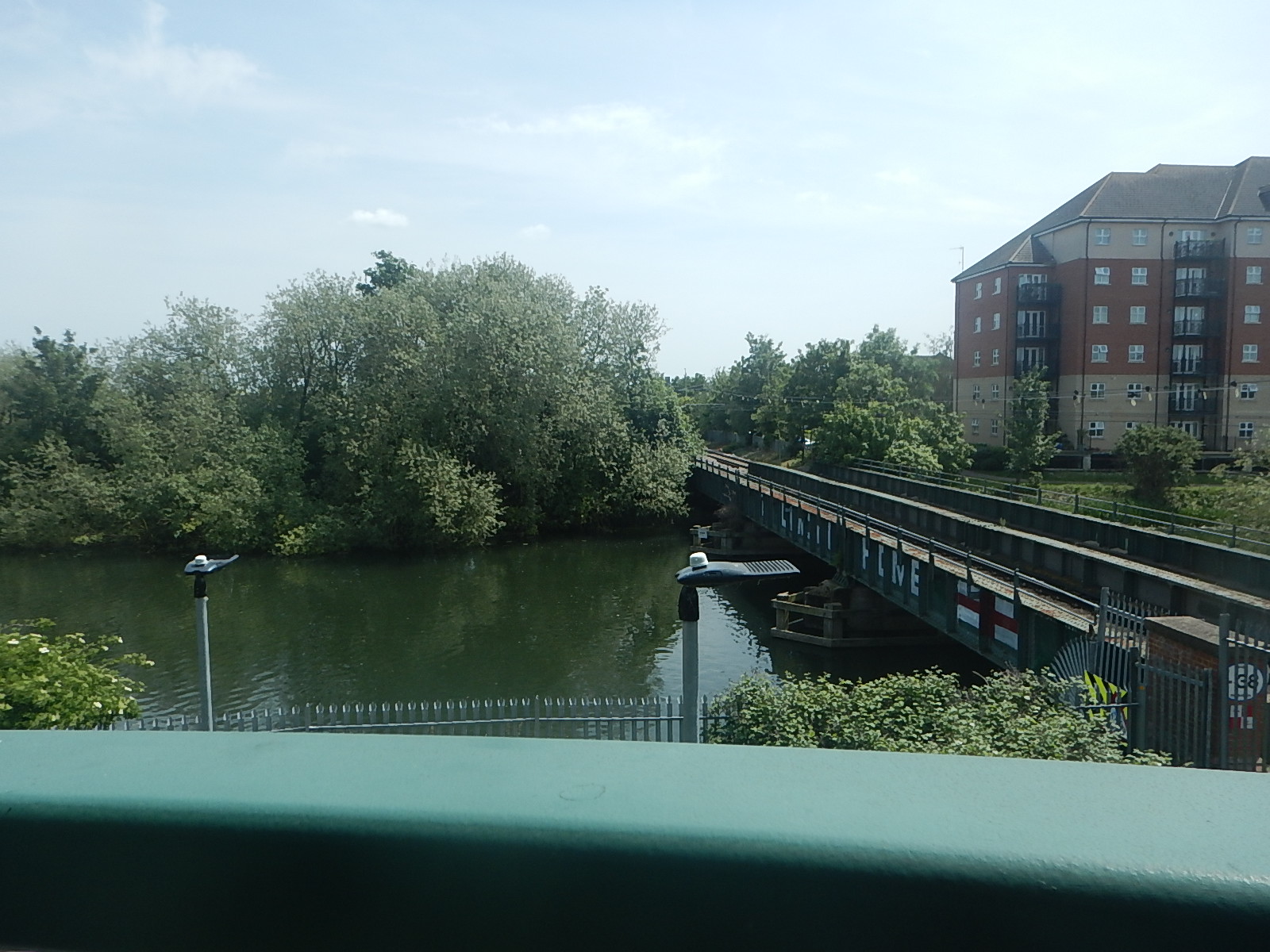
Could Platform 1A be ideal for handling and charging, battery-electric trains, that terminate in Bedford station?
It’s odd that there is the same platform layout at both ends of the Marston Vale Line.
Is it just a coincidence or does Engineer Baldrick have a cunning Plan?
Oxford Station
This OpenRailwayMap shows the platforms and the electrification around Oxford station.
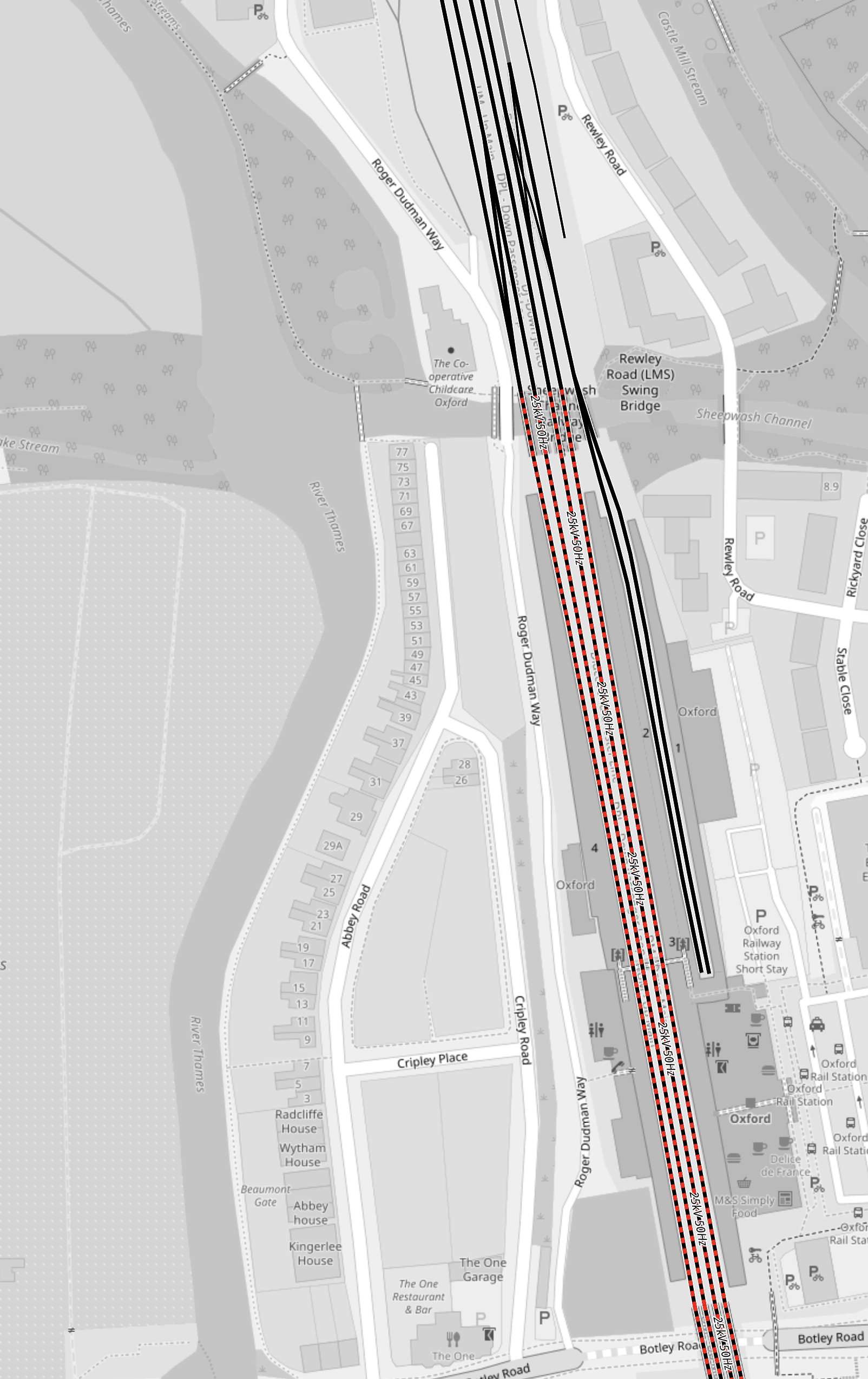
Note.
- The dotted red and black tracks, indicate electrification is planned.
- The planned electrification will connect Oxford station to Didcot Junction station.
- The two bay platforms at the North of the station are not electrified and Platform 2 is now used by Chiltern’s London services.
- Platform 1 could be used by trains on the East West Railway that terminate at Oxford.
When Oxford station is electrified, it wouldn’t be the largest project to add 25 KVAC overhead electrification to the two bay platforms.
Aylesbury Station
This OpenRailwayMap shows the platforms and the lack of electrification around Aylesbury station.
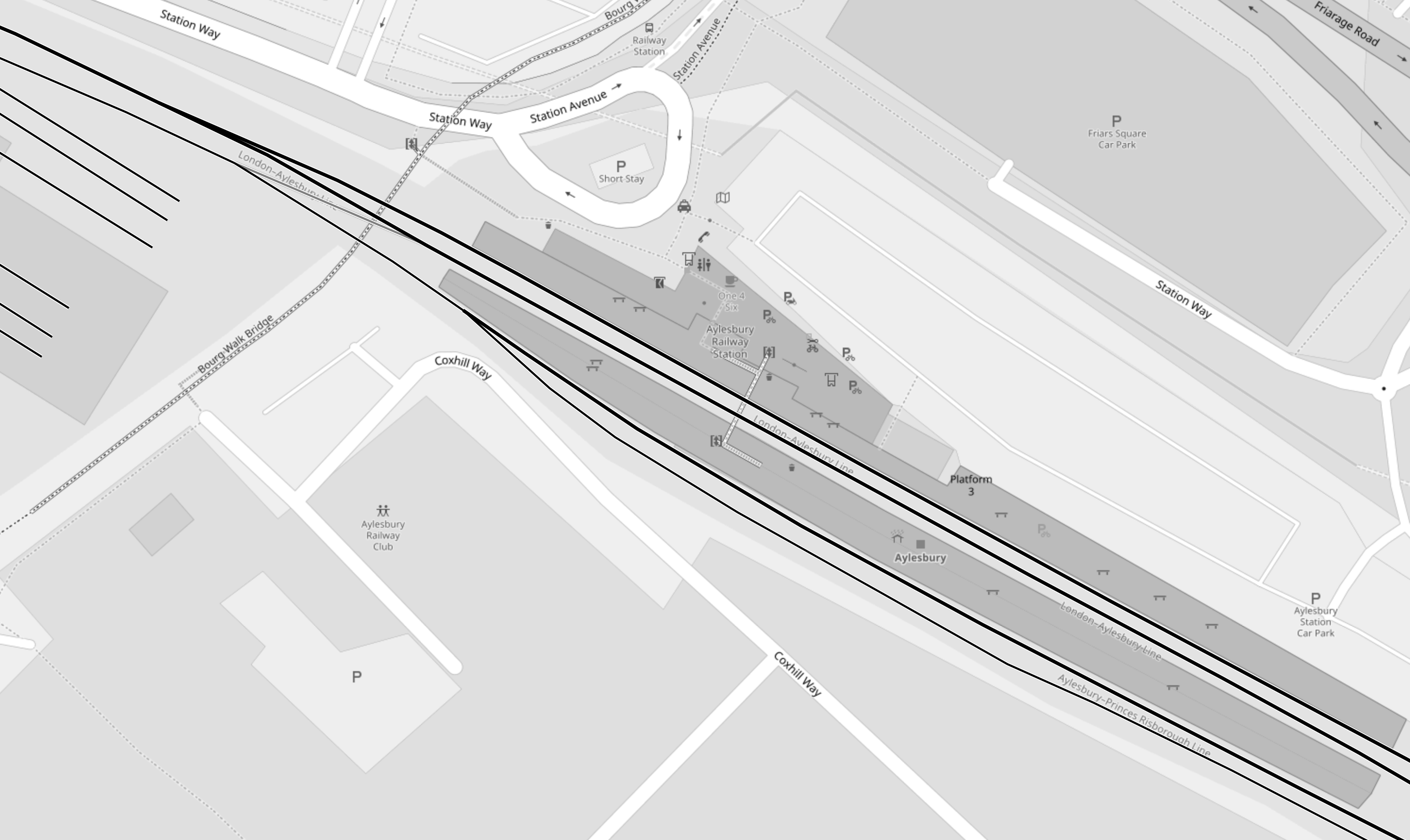
Note.
- No tracks are electrified.
- Platforms are numbered 3, 2, 1 from the top, so 2 and 3 are paired in the middle.
- All freight trains go through Platform 2 and most seem to go via Princes Risborough and High Wycombe.
- Chiltern services use Platforms 1 and 3.
Putting a charging system in Aylesbury station could be tricky.
I wonder if the simplest system for East West Railway would be to electrify between Aylesbury and Aylesbury Vale Parkway stations.
Chiltern Railway’s time between the two stations is as much as seven minutes.
Some trains to Aylesbury take over twenty minutes to do the short journey to Aylesbury Vale Parkway and return, which is more than enough to fully-charge a battery-electric train.
You can even have Chiltern’s hourly Aylesbury Parkway service, sharing the same stretch of electrification with East West Railway’s Aylesbury service, as there is a loop, which creates double-track for some of the way.
It should be noted that between Marylebone and Aylesbury Vale Parkway stations is only 41.1 miles, so some battery-electric trains could do that with a full charge at one end.
East West Railway Distances
In Trains Needed For The East West Railway, I calculated some of these distances.
- Oxford and Bedford – 46.8 miles
- Oxford and Milton Keynes – 33.4 miles
- Aylesbury and Milton Keynes – 25.9 miles
With charging at both ends, all of these routes are possible using modern battery-electric trains, where even a Class 777 IPEMU, designed for extending Merseyrail’s suburban network has done 84 miles on one charge.
On To Cambridge
In this document on the East-West Rail Consortium web site, these services are suggested, for when the East West Railway is complete.
- An hourly train via Norwich terminating at Great Yarmouth.
- An hourly train via Ipswich terminating at Manningtree.
These are distances on these routes that are not electrified, that are to the East of Cambridge.
- Ely and Norwich – 53.7 miles
- Norwich and Great Yarmouth – 18.3 miles
- Cambridge and Haughley Junction – 40.3 miles
Note.
- The Manningtree service would be able to charge its batteries after passing Haughley junction going East and it would be nearly an hour before it needed to use the battery for traction.
- If the Yarmouth service could handle the full route on batteries, then it could return to Cambridge with an efficient charger at Great Yarmouth, which for 25 KVAC overhead electrification trains is an off the shelf item.
- But it does look to me that the trains must leave Cambridge with full batteries, so they can reach electrification at Bedford, Haughley or Norwich.
This map shows the route of the East West Railway between Bedford and Cambridge.
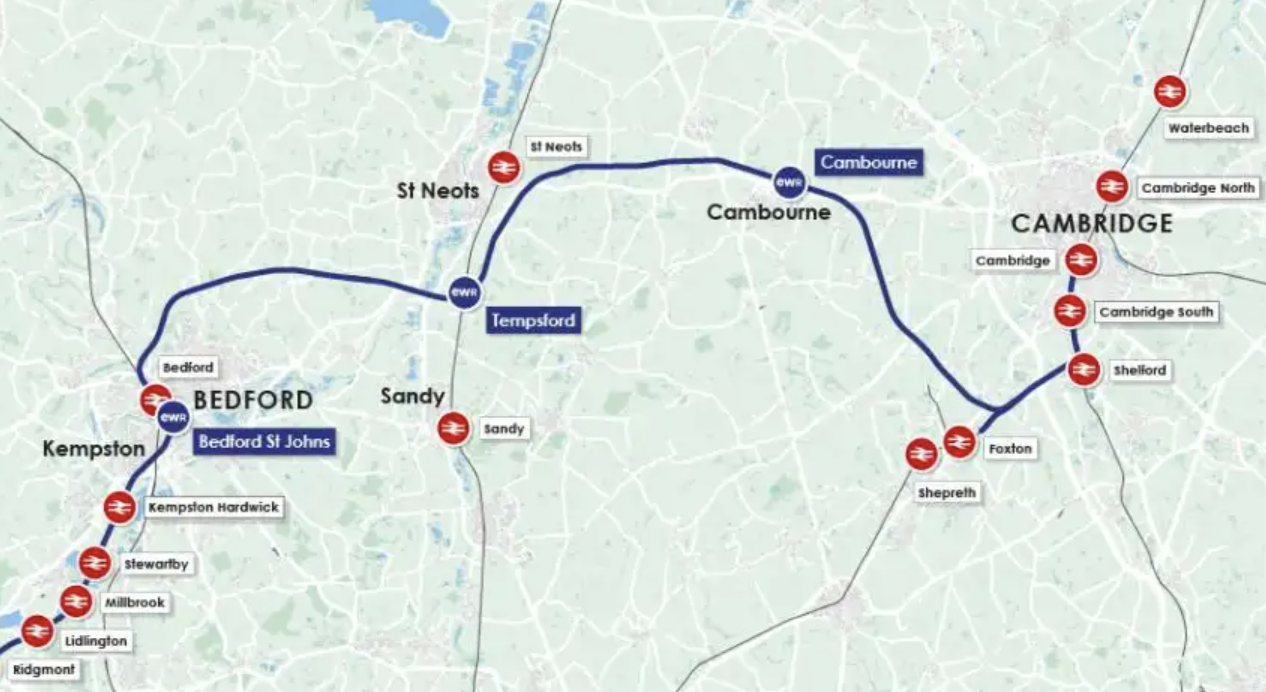
Note.
- Bedford is on the electrified Midland Main Line to London.
- Tempsford is on the electrified East Coast Main Line to London.
- Cambridge has two electrified main lines to London.
- These connections should ensure a good power supply to the East of Bedford for electrification.
I suspect the easiest option will be to add some more electrification at one or more of these places.
- At the Eastern end of the Bedford and Cambridge section.
- To the West of Haughley junction, when it is rebuilt.
- To the North of Ely, when the railways in that area are improved.
Although, as it will be a new route, it might be best to build Bedford and Cambridge as an electrified railway.
Hitachi Rail Names Preferred Supplier For Battery System Development For UK Trial
The title of this post is the same as that of this article on Rail Technology Magazine.
These are the first two paragraphs.
Hitachi Rail UK is continuing its commitment to electrification and sustainability as it has teamed with a UK based Technology firm to design and supply its traction and battery systems for its intercity battery train trial which it hopes to run in the future.
Working with the North East England Partnership and Turntide Technologies, Hitachi UK Rail are working towards a UK trial for its battery technology which is engineered to reduce emissions and fuel costs. It is hoped, that if successful, it’ll advance the UK’s position as a global leader in battery train technology.
Note.
- Turntide Technologies took over Hyperdrive Innovation.
- Turntide Technologies have designed and built systems for JCB.
Up until now, we have been told very little about the batteries.
I have the following questions.
Is The Battery System In The Class 803 Trains For Lumo By Turntide Technologies/Hyperdrive Innovation?
The Wikipedia entry for Lumo, says this about the design of the Class 803 train.
Services are operated by a fleet of 125 mph (200 km/h) Class 803 electric multiple unit trains, ordered in March 2019 at a cost of £100 million, financed by the rail leasing company Beacon Rail.[15] While based on the same Hitachi AT300 design as the Class 801 Azuma trains operated on the East Coast Main Line by franchised operator London North Eastern Railway (LNER), they are not fitted with an auxiliary diesel engine, but instead feature batteries intended solely to power onboard facilities in case of overhead line equipment failure.
The maker of the batteries has not been disclosed.
If they have been made by Turntide, then they would certainly have had a good vibration testing.
Is The Battery System In The Class 803 Trains Similar To That Proposed For Class 800/802/805/810 Trains?
It would seem sensible, as this would mean that Hitachi would only be introducing one type of battery into the various fleets.
Supporting structures and wiring harnesses would then be identical in all trains, whether diesel engines or batteries were to be fitted.
Are The Batteries Plug Compatible With Similar Performance To The Diesel Engines?
I have never driven a train, but I have ridden in the cab of an InterCity 125, as I wrote about in Edinburgh to Inverness in the Cab of an HST.
The driver controls the two locomotives individually, just like I controlled the two engines in my Cessna 340 with two separate throttles.
So how does a driver control all the three engines in a five-car Class 800 train or the five engines in a nine-car?
Put simply, the driver just tells the computer, what speed or power is required and the train’s computer adjusts al the engines accordingly.
I believe it would be possible to design battery packs that are plug-compatible with similar performance to the diesel engines.
Hitachi could be playing an old Electrical/Electronic Engineer’s trick.
As a sixteen-year-old, I spent a Summer in a rolling mills, building replacement transistorised control units for the old electronic valve units. They had been designed, so they were plug-compatible and performed identically.
The great advantage of this approach, is that no changes were needed to the rolling mill.
So if Hitachi are using a similar approach, there should be very few or even no changes to the train.
What Range Will A Class 800 Train Have On Batteries?
This article on Focus Transport is entitled 224-kilometre Battery Range For FLIRT Akku – Stadler Sets World Record For Guinness Book Of Records.
I would be very surprised if Hitachi don’t break that record of 224 kilometres or 139 miles.
Conclusion
I belive we’re going to see a real revolution in rail transport.
Do Network Rail Have A Cunning Plan To Run Battery Electric Trains To Wigan Wallgate And Blackburn?
This news story, which is entitled £72 million Boost For Train Services In Manchester And The North, was released by the government today.
This is the sub-heading.
This package will improve the passenger experience by having more reliable trains and fewer delays.
These two paragraphs describe the work.
The funding will deliver a third platform at Salford Crescent station and track improvement work across north Manchester to help reduce delays, bottlenecks and station overcrowding, meaning passengers will enjoy more comfortable and reliable journeys.
Manchester Victoria Station will also benefit from extra entry and exit points to platforms, making it easier for passengers to travel through the station during busier periods.
These are my thoughts.
Battery-Electric Trains
New Merseyrail Train Runs 135km On Battery says a lot about the capabilities of modern battery-electric multiple units.
135 km is 84 miles and if you look at services in the Wigan and Blackburn area, these are the services, currently run by diesel trains on lines without electrification.
- Blackburn and Bolton – 13.9 miles
- Blackburn and Manchester Victoria – 39.4 miles
- Hindley and Salford Crescent – 16.2 miles
- Southport and Wigan Wallgate – 17.4 miles
- Kirkby and Wigan Wallgate – 12 miles
- Clitheroe and Bolton – 23.7 miles
- Manchester Piccadilly and Buxton – 19 miles
I believe that a modern battery-electric train would be able to handle all these routes, with assistance from regenerative braking and Newton’s friend.
I also believe that CAF, Hitachi, Siemens and Stadler would be capable of building a battery-electric train for these routes.
This OpenRailwayMap shows the electrification between Wigan and Lostock Junction.
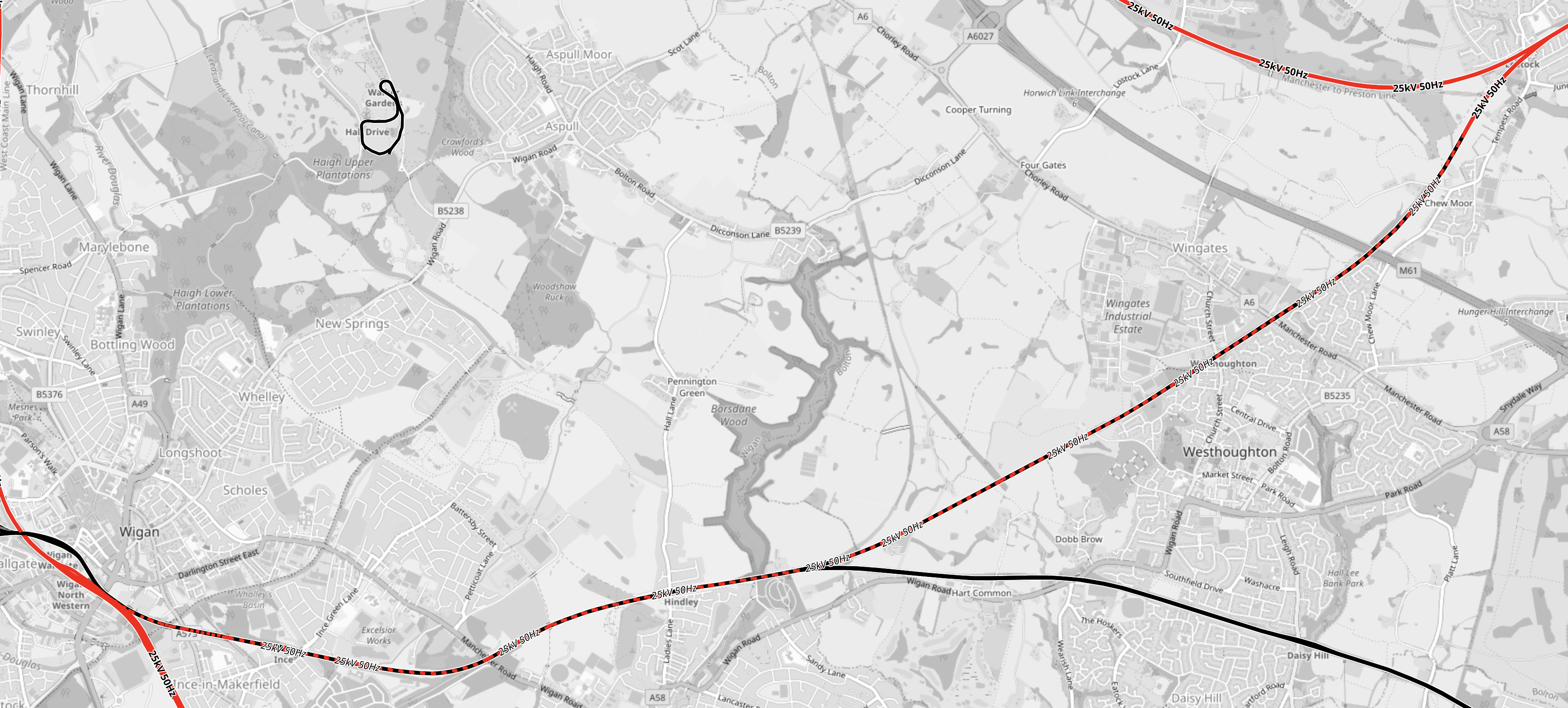
Note.
- Wigan is in the South-West corner of the map.
- Lostock Junction is in the North-East corner of the map.
- The black and red line between Wigan and Lostock Junction indicates the track is being electrified with 25 KVAC overhead electrification.
- The black line going East to the South-East corner of the map is the unelectrified line to Salford Crescent via Atherton.
- At Lostock Junction the line joins the electrified Manchester and Preston Line via Bolton.
Network Rail’s layout means that trains to Kirkby, Southport and Salford Crescent via Atherton can all charge their batteries in a convenient station before embarking to their destination without electrification.
The Third Platform At Salford Crescent Station
Three platforms at Salford Crescent will give capacity advantages.
But it will also mean, that if all battery-electric trains for Wigan Wallgate via Atherton can have a dedicated platform, that if necessary, they can use to top up the batteries.
Northern’s Trans-Pennine Services
Northern Trains run four hourly trains across the Pennines.
- York and Blackpool North via Church Fenton, Garforth, Leeds, New Pudsey, Bradford Interchange, Halifax, Sowerby Bridge, Hebden Bridge, Burnley Manchester Road, Accrington, Blackburn, Preston, Kirkham & Wesham and Poulton-le-Fylde.
- Leeds and Manchester Victoria via Bramley, New Pudsey, Bradford Interchange, Halifax, Hebden Bridge, Todmorden and Rochdale.
- Leeds and Wigan Wallgate via Morley, Batley, Dewsbury, Ravensthorpe, Mirfield, Brighouse, Sowerby Bridge, Mytholmroyd, Hebden Bridge, Todmorden, Walsden, Littleborough, Smithy Bridge, Rochdale, Manchester Victoria, Salford Central, Salford Crescent, Swinton, Moorside, Walkden, Atherton, Hag Fold, Daisy Hill, Hindley and Ince.
- Leeds and Chester via Bramley, New Pudsey, Bradford Interchange, Low Moor, Halifax, Sowerby Bridge, Mytholmroyd, Hebden Bridge, Todmorden, Rochdale, Manchester Victoria, Newton-le-Willows, Earlestown and Warrington Bank Quay.
Note.
- All routes are partly electrified.
- Hebden Bridge gets four trains per hour (tph).
- Bradford Interchange, Halifax, New Pudsey Rochdale, Sowerby Bridge, Todmorden and Manchester Victoria get three tph.
- It is a comprehensive set of routes serving nearly fifty stations in the North.
Stretches of line without electrification include.
- Chester and Earlstown – 23 miles
- Leeds and Manchester Victoria – 49.8 miles
- Leeds and Blackburn – 50.2 miles
- Hindley and Salford Crescent – 16.2 miles
There may be a need to electrify Blackburn and Preston or some other short sections.
Conclusion
I have a feeling that most of the diesel services in Manchester could be replaced by battery-electric trains.
A Waste Of Valuable Resources Between Paddington And Heathrow
Much of my working life was spent in writing project management software.
I like to think, I was an expert at writing software to juggle resources.
I wrote my first piece of software in that field in ICI, to get my boss out of trouble, after he’d promised the department a program to allocate the department’s office space more efficiently.
Unfortunately, the student, who’d written the software, without leaving anything that worked or any decent instructions.
So I told my boss;Colin, that I’d have a go.
In my previous position at ICI in Runcorn, I’d worked out an algorithm to decode mass spectrometer traces, which started with a rough idea of what was there, which was entered by an operator and then used permutations and combinations to fit the output.
I used the algorithm in every resource scheduler, I ever wrote and it worked a treat.
So when I see a waste of resources, I get angry, as I know those who devised the system could have done a lot better.
Look at these pictures, I took of a Heathrow Express, that I took today.
It is barely ten percent full.
It has become a waste of resources; train, valuable paths in the Heathrow tunnel, and platform space at Paddington.
These are a few thoughts.
Capacity To And From Heathrow
Consider.
- Heathrow Express uses twelve-car Class 387 trains, with a capacity of 672 seats, that run at a frequency of four trains per hour (tph), which is 2,688 seats per hour.
- The Elizabeth Line uses nine-car Class 345 trains, with a capacity of 454 seats, that run at a frequency of six tph, which is 2,724 seats per hour.
- The Class 345 trains can also carry another 1046 standing passengers on each journey, which adds up to a maximum of 6276 standees per hour.
- The Piccadilly Line uses 73 Stock trains, with a capacity of 684 seats, that run at a frequency of twelve tph, which is 8,208 seats per hour.
This gives a capacity of 19,896 passengers, staff and visitors per hour, or which 13,620 get seats.
Expressed as percentages, the four modes of transport are as follows.
- Heathrow Express – 13.5 %
- Elizabeth Line – Sitting – 13.7 %
- Elizabeth Line – Standees – 33.8 %
- Piccadilly Line – 41.2 %
In Effects Of The ULEZ In West London, I said this about journeys to and from the airport.
Heathrow Airport is one of the world’s busiest airports and 76,000 people work at the airport, with many more employed nearby.
The airport handled 61.6 million passengers in 2022, which is a few short of 170,000 per day.
If you consider that those that work at the airport do two trips per day and passengers generally do one, that means there are 322,000 trips per day to or from the airport.
But as it now so easy to get to the Airport using the Elizabeth Line will more people use the new line to meet and greet and say goodbye to loved ones or business associates. Since the Elizabeth Line opened, I’ve met a couple of friends at Heathrow, who were passing through.
I wonder, if that daily journey total of 322,000 could be nearer to 350,000 or even 400,000.
If the ULEZ charge makes some passengers and staff switch from their car to using a bus or train, this probably means that public transport to and from the airport, will need to be boosted by a substantial amount.
322,000 trips per day is 13,416 per hour assuming a 24 hour day.
Consider.
- The ULEZ will drive employees and passengers to trains to Heathrow.
- A lot of would-be travellers to Heathrow have had a tough couple of years.
- Because of the Elizabeth Line more meeters and greeters will go to the airport.
- The Elizabeth Line is making it easy to get to Heathrow for a large proportion of those living in the South-East.
- There have been numerous car parking scandals at Heathrow and other airports.
- Are there enough charging points for electric cars in Heathrow’s parking?
- Parking at Heathrow is expensive.
- Taxis to the airport are very expensive.
- Passengers with large cases can use the Elizabeth Line.
- Good reports of the Elizabeth Line will push people to use it.
- The Elizabeth Line serves the City, Canary Wharf and the West End.
- The Elizabeth Line has a step-free connection with Thameslink.
- Passengers seem to travel with very large cases.
- Passengers seem to be deserting Heathrow Express, as I wrote in Elizabeth Line Takes Fliers Away From Heathrow Express.
Note.
- The train, I took back from Heathrow this morning was full with all seats taken and quite a few standees.
- And it was a Sunday morning!
- We won’t know the effect of the ULEZ until August, but I believe it will be significant.
Obviously, I’m only using rough figures, but they lead me to believe that in a few months, the Elizabeth Line will be at full capacity to and from Heathrow.
Heathrow Express’s Train Paths Should Be Re-Allocated To The Elizabeth Line
This would increase hourly passenger capacity from 19,896 to 23,208 or by seventeen percent.
Great Western Railway would get two extra platforms at Heathrow and the Class 387 trains could be reallocated.
Where Would Great Western Railway Run Trains From Two Extra Platforms?
Consider.
- Various government levelling up funding has been allocated to Wales and the West.
- I talk about the Mid-Cornwall Metro in Landmark Levelling Up Fund To Spark Transformational Change Across The UK.
- The Mid-Cornwall Metro could include direct trains between London and Newquay.
- There are also plans for a new station at Okehampton Parkway.
- Given all the wind farm development in the Celtic Sea, I can see more trains between London and Pembrokeshire.
- Cardiff and Bristol would probably welcome extra services.
I don’t think Great Western Railway will have problems finding destinations to serve from two extra platforms.
What Will Happen To The Class 387 Trains?
Currently, twelve Class 387 trains are used for Heathrow Express.
In The Future Of The Class 387 And Class 379 Trains, I said this.
The Battery-Electric Class 379 Train
I rode this prototype train in 2015.

An Outwardly Normal Class 379 Train
I think it is reasonable to assume, that as battery technology has improved in the seven years since I rode this train, that converting Class 379 trains to battery-electric operation would not be a challenging project.
Creating A Battery-Electric Class 387 Train
If the Class 387 train is as internally similar to the Class 379 train as it outwardly looks, I couldn’t believe that converting them to battery-electric operation would be that difficult.
I could see a lot of the Class 379 and Class 387 trains converted to 110 mph battery-electric trains.
Would Heathrow Express Completely Disappear?
If the Elizabeth Line trains are going between Heathrow Airport and Central London, at a frequency of 10 tph or one train every six minutes, I feel there may be scope for marketing and operational reasons to create a sub-fleet of the Class 345 trains.
The trains would be identical to the Elizabeth Line’s current fleet, except for livery, seating and some internal passenger features.
- Perhaps, they could be called the Heathrow Train boldly on the outside, so even the dimmest passenger didn’t get on a Reading train instead of a Heathrow one.
- All trains would have wi-fi and 4G connectivity. These features have been promised for the Class 345 trains.
- Some coaches would be fitted with luggage spaces for the outsize cases people carry.
I could envisage the Heathrow Trains terminating at a wide number of places in addition to Abbey Wood and Shenfield. Possibilities must include Beaulieu Park, Ebbsfleet, Gravesend, Northfleet and Southend Victoria
Govia Thameslink Railway Issues a Prior Information Notice For New Trains
This article on Railway Gazette is entitled UK Railway News Round-Up and contains this section.
Govia Thameslink Railway has issued a prior information notice seeking the provision of between 21 and 30 four-car 25 kV 50 Hz 160 km/h through-gangwayed EMUs with air-conditioning and toilets for use on existing and/or additional Great Northern services from May 2024. Maintenance would be undertaken in-house at Hornsey depot, supported by a Technical Support & Spares Supply Agreement.
I find this all a bit puzzling.
- The trains that need replacing are surely the eighteen Class 313 trains, that run on the West Coastway Line, as they are some of the oldest trains on the UK network.
- If Govia Thameslink Railway were serious about decarbonisation, they would also replace the Class 171 diesel trains, that work the Marshlink Line and the Uckfield branch, with electric trains with a range of thirty miles on batteries.
How many trains would be needed to replace the Class 313 and Class 171 trains?
- The eighteen three-car Class 313 trains could be replaced with an equal number of new four-car trains and this might result in a rise in passenger numbers.
- I would assume the eighteen trains includes allowances for trains in maintenance and spare trains for when a train fails.
- It may be possible to replace the six four-car Class 171 trains used on the Marshfield Line with three new four-car trains, which have a range of thirty miles on batteries.
- The eleven two-car Class 171 trains used on the Uckfield branch could be replaced with three new four-car trains, which have a range of thirty miles on batteries and would run as four-car trains.
- If eight-car trains were needed on the Uckfield branch, there would be a need for six new four-car trains.
- If twelve-car trains were needed on the Uckfield branch, there would be a need for nine new four-car trains.
Note.
- If four-car trains are needed on the Uckfield branch, this means a total of 18+3+3 or 24 trains.
- If eight-car trains are needed on the Uckfield branch, this means a total of 18+3+6 or 27 trains.
- If twelve-car trains are needed on the Uckfield branch, this means a total of 18+3+9 or 30 trains.
Trains on these Southern routes wouldn’t be stabled at Hornsey depot, but could be moved to Hornsey for maintenance using Thameslink.
But the puzzling bit is that the prior information notice says that the trains will be.
Four-car 25 kV 50 Hz 160 km/h through-gangwayed EMUs with air-conditioning and toilets for use on existing and/or additional Great Northern services from May 2024.
Note.
- There is no mention of the trains being able to run on 750 VDC third-rail infrastructure.
- The trains will run on Great Northern services and the Class 313 and Class 171 trains run on Southern routes.
- The only Great Northern services, that have not been moved to Thameslink are Kings Cross and Cambridge, Ely and King’s Lynn and services to Moorgate.
- The Moorgate services have their own dual-voltage Class 717 trains.
- Govia Thameslink Railway have ambitions to double the frequency of trains to King’s Lynn.
- Two eight-car trains per hour (tph) between King’s Cross and King’s Lynn would need sixteen operational four-car trains.
- Two twelve-car trains per hour (tph) between King’s Cross and King’s Lynn would need twenty-four operational four-car trains.
If Govia Thameslink Railway are thinking of thirty new trains, they must have other destinations in mind.
Could we be seeing a double swap?
- An appropriate number of new trains are procured to run Great Northern services between Kings Cross and Cambridge, Ely and King’s Lynn.
- The Class 387 trains released will be moved to the South to replace the Class 313 and Class 171 trains.
- Some or all of the transferred Class 387 trains will be fitted with batteries to give a range of thirty miles without electrification.
Note.
- Could the new trains be Siemens Desiro City trains like the Class 700 and Class 717 trains, which are already maintained at Hornsey depot? It would surely be more efficient and save money.
- Class 387 trains are dual voltage and would need little or no modification to replace the Class 313 trains.
- Uckfield and Hurst Green junction is 24.7 miles.
- Ashford International and Ore is 25.4 miles
- Adding a battery to a Class 387 train has not been done, but Bombardier converted a near-identical Class 379 train to battery-electric operation over eight years ago.
- Converting a Class 387 train gives a dual-voltage battery-electric train.
- I suspect a charger would be needed at Uckfield. Could it be a short length of 25 KVAC overhead electrification?
Could all the Class 387 trains, that will replace the Class 313 and Class 171 trains be identical to ease the problems, when a train develops a fault?
Conclusion
It looks a good plan.
It also opens up the following possibilities.
- Deployment of 750 VDC battery-electric trains on other routes.
- Deployment of 25 KVAC overhead battery-electric trains on other routes.
- Deployment of tri-mode battery-electric trains on other routes.
- Charging of battery-electric trains using a short length of 25 KVAC overhead electrification.
- Fitting of batteries to Class 379 trains to create a 25 KVAC overhead battery-electric train.
It might be possible to convert other Electrostars to battery-electric operation.
Ignoring Class 387 trains on dedicated services like Heathrow and Gatwick Express, these trains are available for conversion.
- Class 379 trains – Stored – 30 trains
- Class 387 trains – Govia Thameslink Railway – 40 trains
- Class 387 trains – Great Western Railway – 33 trains
Note.
- This gives 103 trains.
- They all have good interiors.
- They are all 100/110 mph trains.
- All trains could be updated to 110 mph.
- All trains can use 25 KVAC overhead electrification.
- The Class 387 trains can also use 750 VDC third-rail electrification.
- The Class 379 trains were built in 2010-2011.
- The Class 387 trains were built from 2014.
I believe both classes will make excellent battery-electric trains.
Where will they be deployed?
These are a selection of routes starting in the South-East of England.
- Ashford International and Eastbourne.
- Gravesend and Hoo.
- London Bridge and Uckfield.
- London Paddington and Bedwyn.
- London Paddington and Oxford.
- Reading and Basingstoke.
- Reading and Gatwick.
- Reading and Redhill.
- Slough and Windsor & Eton Central.
- Twyford and Henley-on-Thames
I’ve only added routes which are less than thirty miles.
Adding Buxton And Manchester Piccadilly To The Bee Network
This article on the Railway Gazette has a list of the lines, that will be transferred between Northern Rail and the Bee Network.
Included in the list is this line.
Buxton And Manchester Piccadilly
I think this route would be the following.
- The Southern terminus would be Buxton.
- The Northern terminus would be Manchester Piccadilly.
- Intermediate stations would be Dove Holes, Chapel-en-le-Frith, Whaley Bridge, Furness Vale, New Mills Newtown, Disley, Middlewood, Hazel Grove, Woodsmoor, Davenport, Stockport, Heaton Chapel and Levenshulme.
- he route is fully electrified with 25 KVAC overhead between Hazel Grove and Manchester Piccadilly.
- Most of the route has a range of operating speeds. up to 90 mph.
- The distance is 19 miles
- Trains take 62 minutes
- Trains are often two-car Class 150 trains working as a pair.
- The Buxton Line is one of the stiffest routes on the UK rail network.
The route is the same as the current Northern Trains service.
This is my thought.
Trains
I think there are three choices.
- Electrify the line fully and use 100 mph electric trains like Class 331 trains.
- Use 100 mph battery-electric trains, with large enough batteries to climb to Buxton.
- Use 100 mph hydrogen-electric trains, with enough power on hydrogen to climb to Buxton.
Note.
- The current diesel trains could be used until a zero-carbon solution is delivered.
- 100 mph trains would be needed because of the 90 mph section around Stockport.
- The stiffness of the line makes the choice difficult.
- Regenerative braking would allow trains to coast down the hill.
- Battery-electric trains would not need charging at Buxton.
I’m sure that the deal that will be setting up the Bee Network, would have a plan for the Buxton Line.
Platform Canopies To Be Renovated For Passengers At Lancaster Station
The title of this post is the same as that of this press release from Network Rail.
These are the first two paragraphs.
Station platform canopies are being renovated at Lancaster to improve passenger journeys on the West Coast Main Line.
Network Rail is investing £9.5m to restore and upgrade the station building for the future.
This picture from Network Rail shows an aerial view of the station.
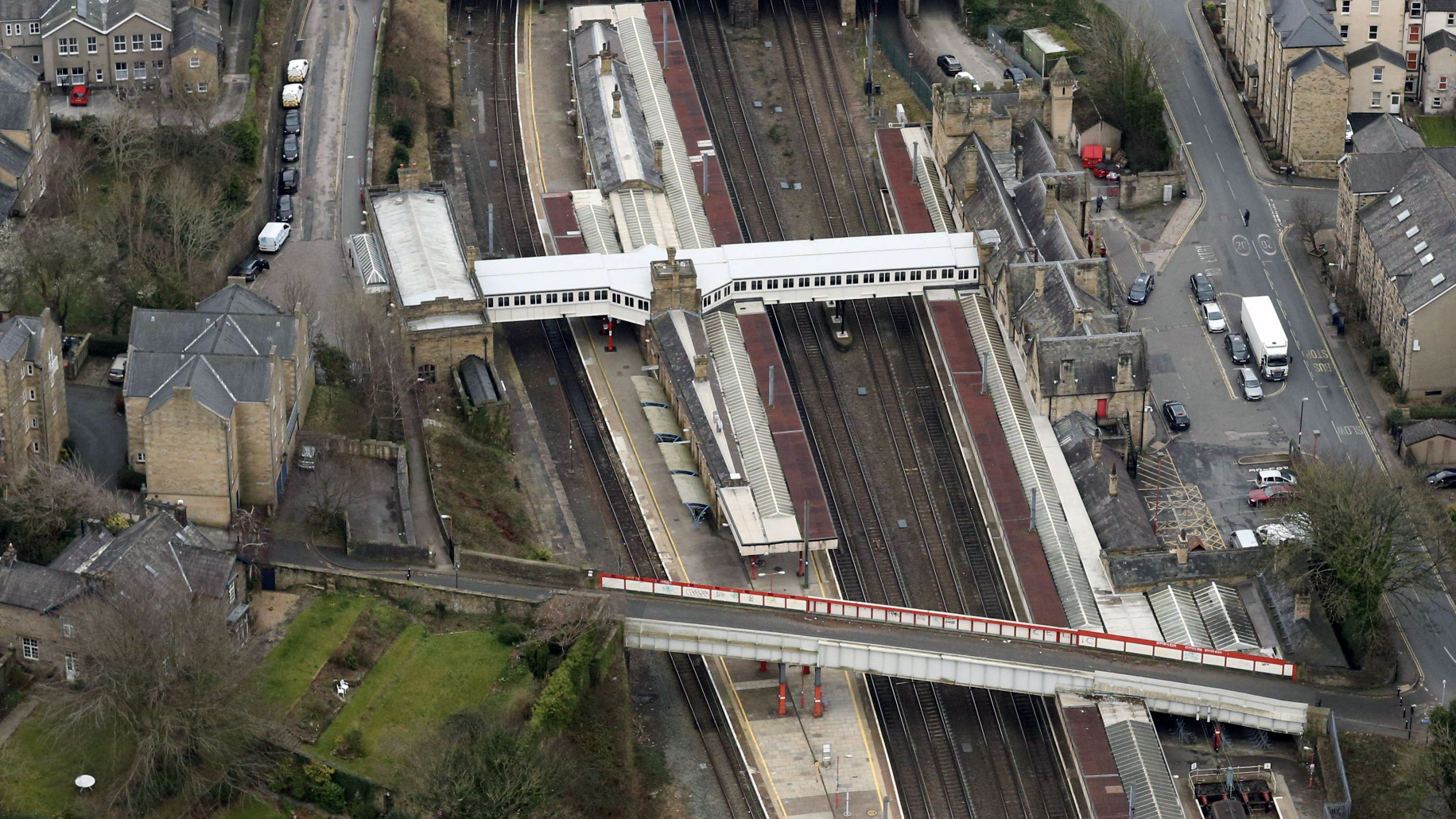
Note that the camera is looking South.
This picture shows the current canopies.
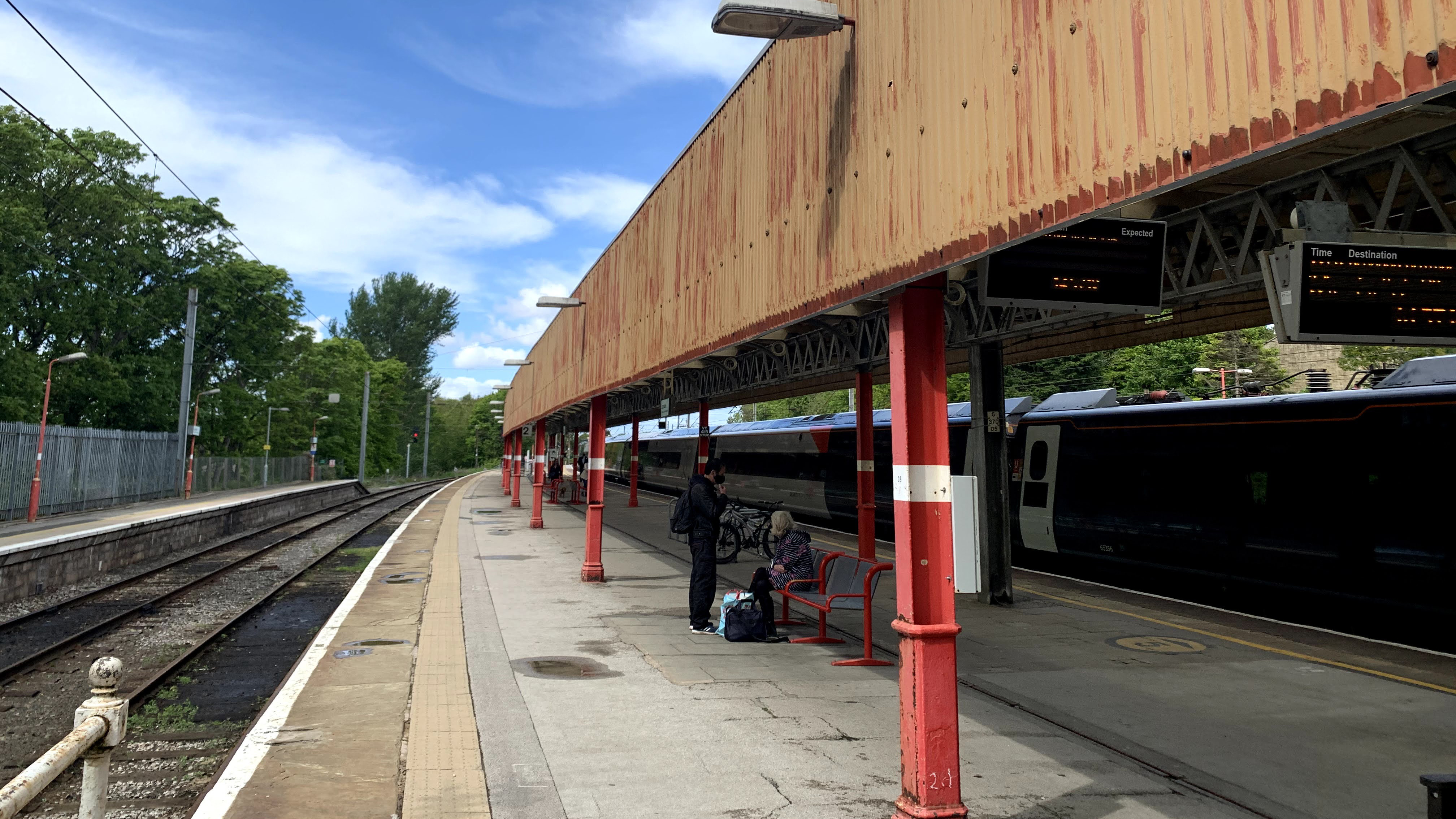
Network Rail can surely do better on a Grade II Listed Building.
The press release lists that this work will be done.
- Replacing all glazing in the platform canopies
- Repairing and strengthening the structure of the canopy structures
- Repainting across the station
The press release says the work won’t affect train services, but will be done when trains aren’t running.
These are my thoughts.
Lancaster Station and High Speed Two
Lancaster station will be a terminus on the High Speed Two Network.
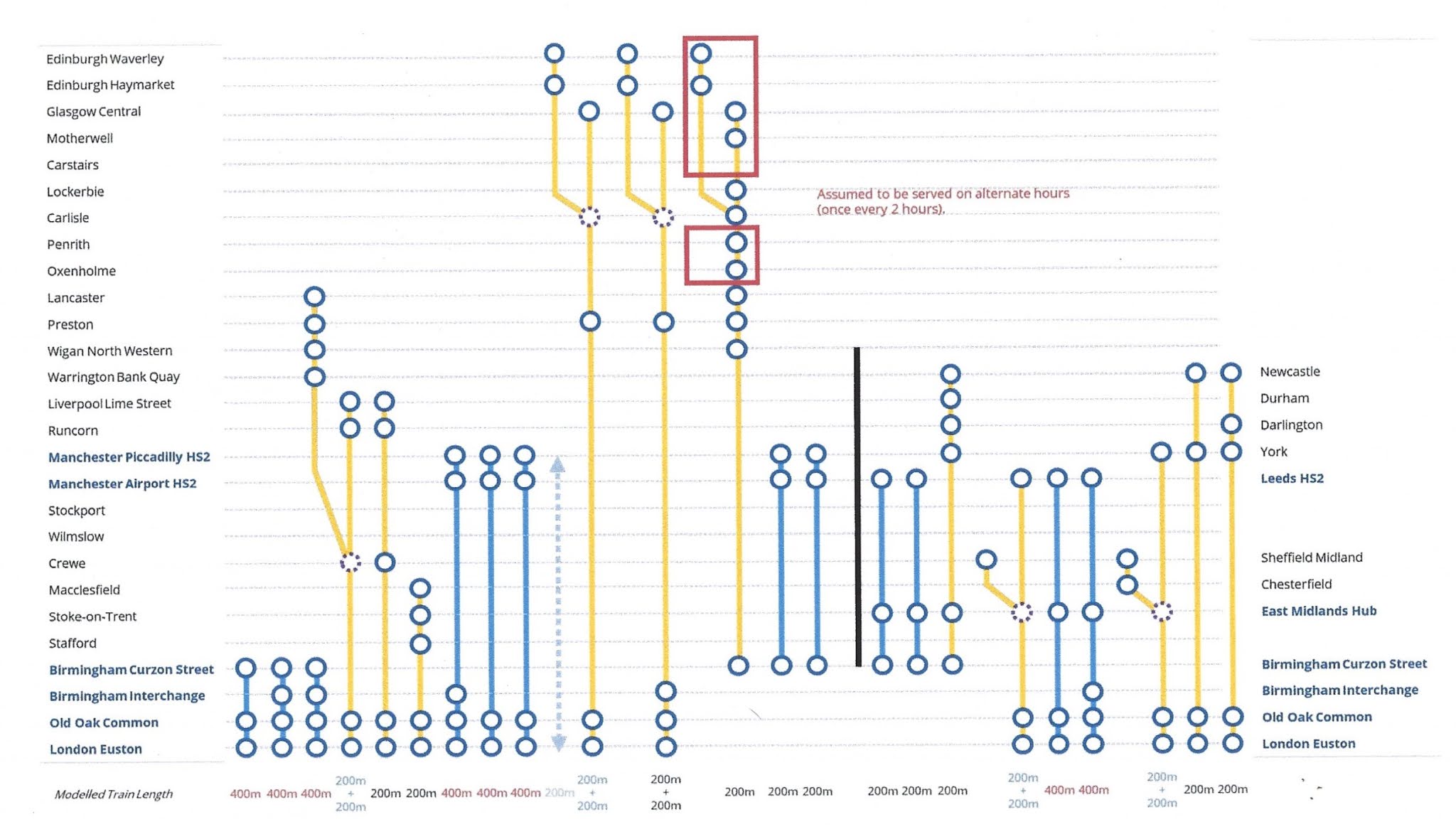
Note.
- Train 4 , which is a pair of 200 metre High Speed Classic Compatible trains, leaves London Euston and splits at Crewe, with one train going to Liverpool Lime Street and the other to Lancaster.
- Train 12, which runs between Birmingham Curzon Street and Scotland, also calls at Lancaster.
Both trains will be single 200 metre High Speed Classic Compatible trains at Lancaster station and platforms 3, 4 and 5 can handle them.
But how will the Lancaster train terminate?
This map from OpenRailwayMap shows the lines through Lancaster station.
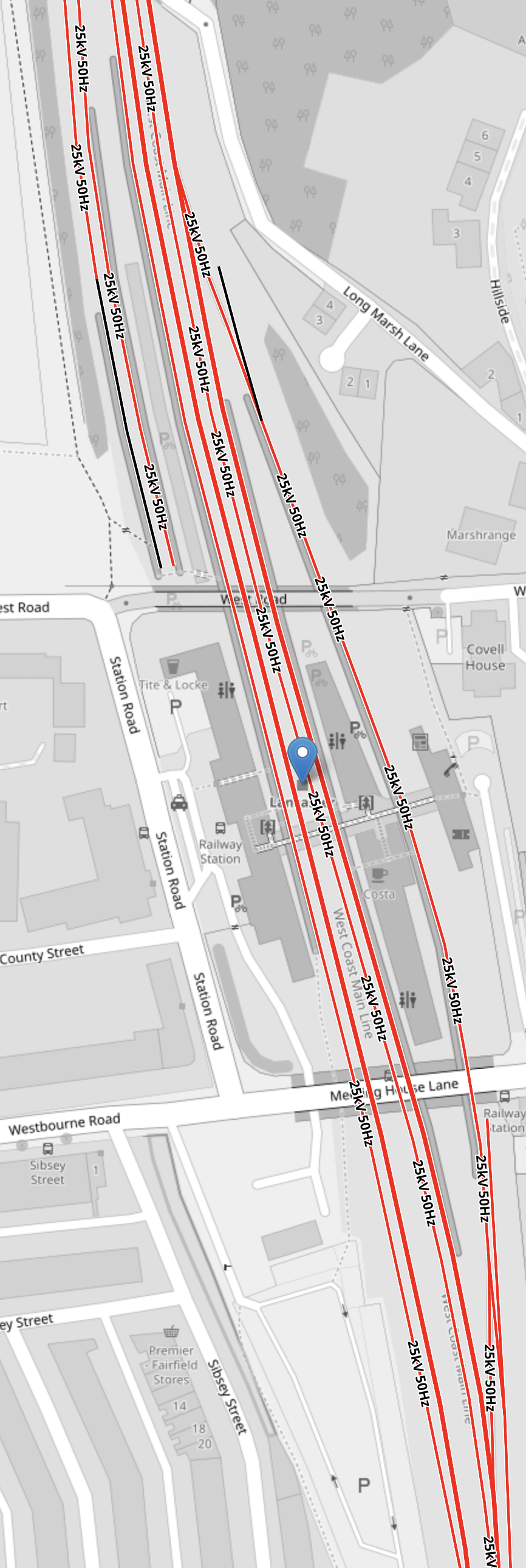
Note.
- The red lines are electrified with 25 KVAC overhead wires.
- In the North-West corner of the station are the bay platforms 1 and 2, which handle Morecambe services.
- West Coast Main Line services between London Euston and Scotland, go through platforms 3 and 4 in the middle of the station.
- On the East side of the station is platform 5 which is on a loop off the West Coast Main Line.
I would expect that the London Euston and Lancaster service will generally terminate in platform 5.
Wikipedia says this about platform 5 and the signalling.
Platform 5, which can be used by both northbound and southbound trains or by terminating services.
All platforms are signalled for arrivals and departures in either direction.
That all sounds very convenient.
There may be some minor changes for the longer High Speed Two trains, but I doubt it would be too challenging.
Onward To Morecambe
The Eden Project North at Morecambe could attract a lot of traffic.
- Lancaster will be just two hours and three minutes from London by High Speed Two.
- There are numerous rail connections from Lancaster to all over the North of England and Scotland.
- Would you drive for two hours to the Eden Project North, if there was a convenient and quicker train?
- Train companies may offer combined tickets for the attraction with rail tickets.
Wikipedia says this about the development and opening of the attraction.
Having been granted planning permission in January 2022 and with £50 million of levelling-up funding granted in January 2023, it is due to open in 2024 and predicted to benefit the North West economy by £200 million per year.
I’ve always wanted to go to the Eden Project in Cornwall, but it’s difficult if you don’t drive.
However, I might manage to get to Eden Project North.
Trains between Morecambe and Lancaster are at least hourly.
- I think they can use any platform at Lancaster.
- Morecambe station has two platforms.
- Morecambe and Lancaster stations are four miles apart, with probably half electrified.
- A battery-electric train could work between Morecambe and Lancaster.
I can envisage two main ways to arrange the connection between Morecambe and Lancaster.
- Trains arrive in Lancaster and passengers for Morecambe catch the next Morecambe train for two stops, that take ten minutes.
- When High Speed Two serves Lancaster from Euston, the shuttle train can wait in the Northern end of Platform 5 and when the High Speed Two train arrives passengers can just walk up the platform to the shuttle.
But if the Eden Project North is as successful as the Cornish original, there is going to be a need for more trains between Morecambe and Lancaster.
This Google Map shows Morecambe station.
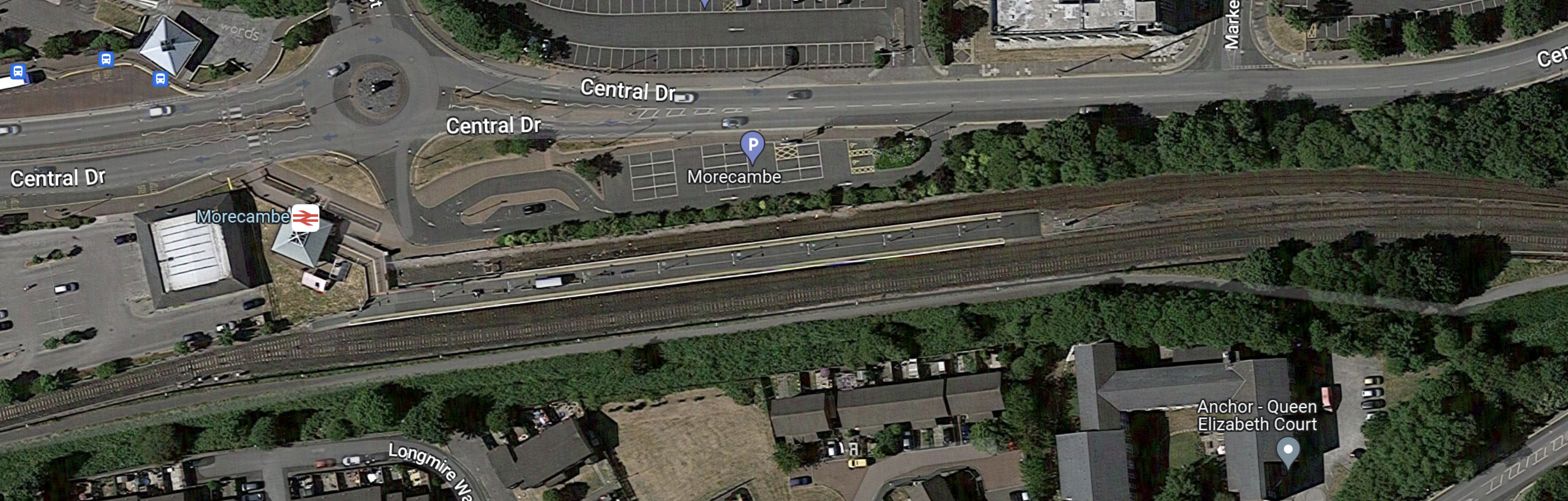
Note that the island platform is probably about 160 metres long.
This would accommodate.
- A five-car Class 802 or Class 805 train.
- A pair of four-car Class 319, Class 321 trains.
- A pair of three-car Class 331 trains.
But why not be bold and lengthen at least one platform to the full two hundred metres, so that it can accommodate a High Speed Classic Compatible train?
This would also accommodate.
- A seven-car Class 807 train.
- A pair of four-car Class 331 trains.
All of these electric trains would need the Morecambe branch line to be electrified to Morecambe station.
But the Eden Project North would get the public transport access it needs.
Electrifying To Morecambe
This map from OpenRailwayMap, shows the Morecambe Branch Line between the West Coast Main Line and Morecambe station.

Note.
- The tracks shown in red on the Eastern side of the map are the West Coast Main Line.
- The black lines are the unelectrified tracks of the Morecambe branch line.
- Morecambe station is marked by the blue arrow.
- Much of the Morecambe branch line is single track, with some sections of double track.
- The distance between the West Coast Main Line and Morecambe station is around 2.1 miles.
I don’t think it would be the most challenging of electrifications.
A Green Route To The Isle Of Man And Ireland
This map from OpenRailwayMap, shows the terminal of the Morecambe Branch Line at Heysham Port.
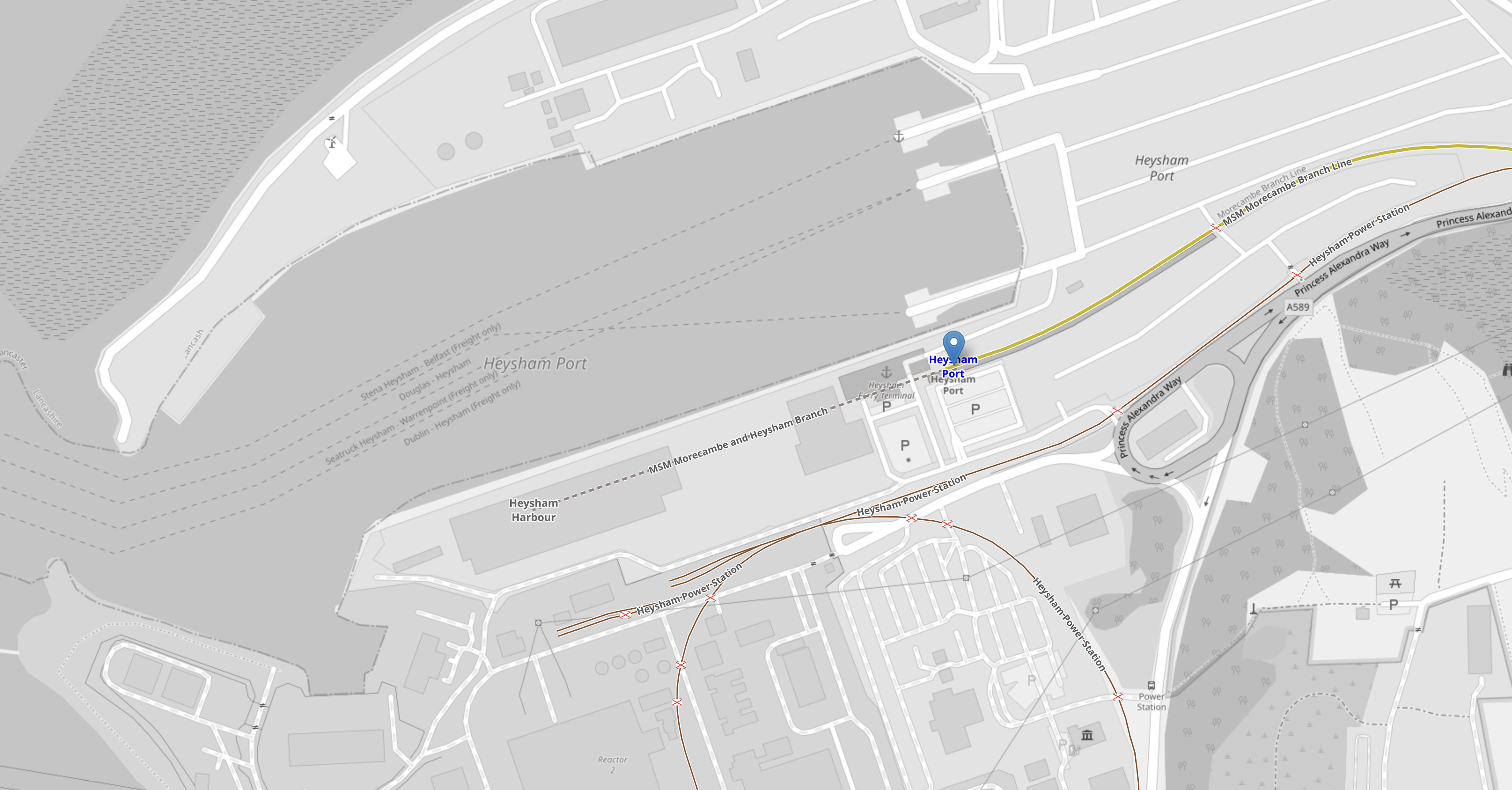
Note.
- There is a rail connection to the West Coast Main Line via Morecambe, which is shown in yellow.
- The port appears to have three berths for ferries.
- There are only a couple of train services per day.
- South of the port is the Heysham nuclear power station, which has a capacity of 2.5 GW.
At a first glance, it would appear, that a rail-served passenger terminal could be built close to the port.
I suspect most passengers using Heysham are travelling with a vehicle.
The problem is also that the ferry crossing to Belfast takes around eight hours and there are faster and more convenient routes.
The ferries could be decarbonised by using ammonia or hydrogen fuel, but I doubt that they would be any faster.
I suspect that getting more passengers to use Heysham for the Isle of Man or Ireland will be a difficult proposition to sell to passengers.
And it is made even more difficult with such an infrequent train service.
Before High Speed Two
Avanti West Coast might like to run a train between Euston and Morecambe for the Eden Project North.
Are National Rail Promoting Theme Parks?
I found this page on the National Rail web site, which is entitled Theme Parks.
It gives a list of most theme parks and their nearest stations.
Does such a page exist for hospitals, cathedrals and other similar groups.
Could A Battery-Electric High Speed Two Classic-Compatible Train Be Developed?
A Battery-Electric High Speed Two Classic-Compatible Train, would not be needed for High Speed Two, as it is currently envisaged, as all lines will be electrified.
But Hitachi have already said that they are developing the Hitachi Intercity Battery Hybrid Train, which is described in this infographic.
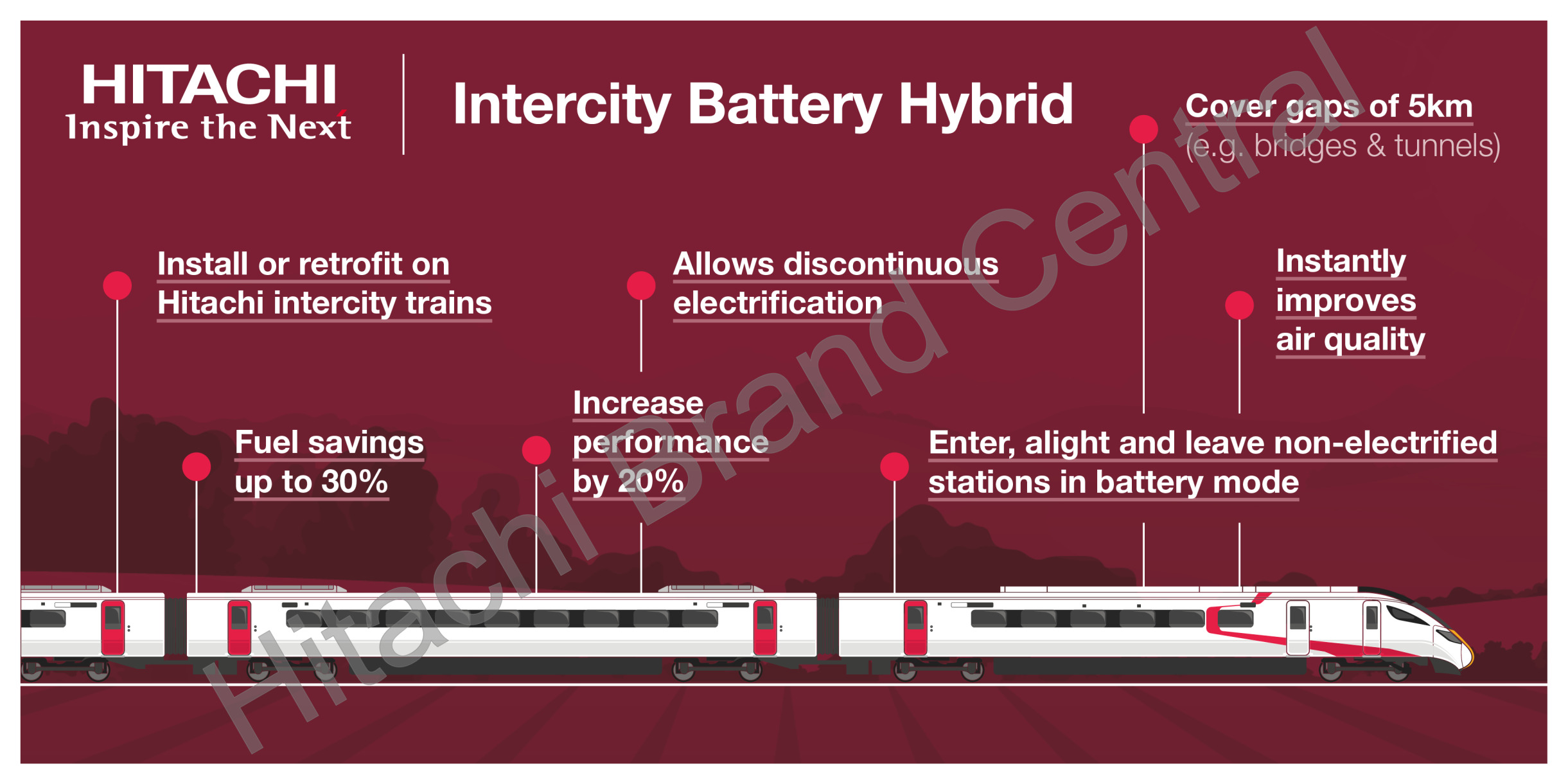
This page on the Hitachi Rail web site gives this description of the Hybrid Battery Train.
A quick and easy application of battery technology is to install it on existing or future Hitachi intercity trains. A retrofit programme would involve removing diesel engines and replace with batteries.
Hitachi Rail’s modular design means this can be done without the need to re-engineer or rebuild the train, this ensures trains can be returned to service as quickly as possible for passengers. Adding a battery reduces fuel costs up to 30% or increase performance.
These trains will be able to enter, alight and leave non–electrified stations in battery mode reducing diesel emissions and minimising noise – helping to improve air quality and make train stations a cleaner environment for passengers.
Our battery solution complements electrification, connecting gaps and minimising potential infrastructure costs and disruption to service.
It looks to me, that Hitachi are playing an old Electrical/Electronic Engineer’s trick.
As a sixteen-year-old, I spent a Summer in a rolling mills, building replacement transistorised control units for the old electronic valve units. They had been designed, so they were plug-compatible and performed identically.
It appears, that Hitachi’s battery supplier; Hyperdrive Innovation of Sunderland has just designed a battery pack, that appears to the train to be a diesel engine.
In the Technical Outline, this is said.
- Train Configuration: 5 – 12 car
- Nominal Vehicle Length: 26m
- Power Supply: Battery
The AT-300 trains generally have twenty-six metre cars.
In How Much Power Is Needed To Run A Train At 125 Or 100 mph?, I calculated that a Class 801 train uses 3.42 kWh per vehicle mile, at 125 mph.
- This means that a five-car train will use 1710 kWh to do 100 miles at 125 mph.
- The train has three diesel engines, so three batteries of 570 kWh would be needed.
- Alternatively, if a battery was put in each car, 342 kWh batteries would be needed.
- In the Wikipedia entry for battery-electric multiple unit, there are two examples of trains with 360 kWh batteries.
I believe building 570 kWh batteries for fitting under the train is possible.
What would be the maximum range for this train at 100 mph?
- I will assume that five batteries are fitted.
- As drag is proportional to the square of the speed, I’ll use a figure of 2.07 kWh per vehicle mile, at 100 mph.
This is a table of ranges with different size batteries in all cars.
- 50 kWh – 24.1 miles
- 100 kWh – 48.3 miles
- 200 kWh – 96.6 miles
- 300 kWh – 145 miles
- 400 kWh – 193.2 miles
- 500 kWh – 241.5 miles
They are certainly useful ranges.
LNER Will Be Ordering Ten New Bi-Mode Trains
In LNER Seeks 10 More Bi-Modes, I discussed LNER’s need for ten new bi-mode trains, which started like this.
The title of this post, is the same as that of an article in the December 2020 Edition of Modern Railways.
This is the opening paragraph.
LNER has launched the procurement of at least 10 new trains to supplement its Azuma fleet on East Coast Main Line services.
Some other points from the article.
- It appears that LNER would like to eliminate diesel traction if possible.
- On-board energy storage is mentioned.
- No form of power appears to be ruled out, including hydrogen.
- LNER have all 65 of their Azumas in service.
I believe that ten trains would be enough to handle LNER’s services on lines without electrification to the North of Scotland.
- London and Aberdeen has 130 miles without wires.
- London and Inverness has 146 miles without wires.
- Electrification plans are progressing North to Perth and to Thornton Junction.
I suspect both routes could be upgraded to under a hundred miles without wires.
I believe, that if Hyperdrive Innovation pull out every trick in the book to save power in their batteries that a five-car Azuma with a 300 kWh battery in each car, will have sufficient range with reserves to go between Edinburgh and Inverness or Aberdeen at 100 mph.
A Battery-Electric High Speed Two Classic-Compatible Train
Consider.
- I am a great believer in regenerative breaking to batteries on the train, as my experience says it the most efficient and also gives advantages, when the catenary fails.
- Stadler’s approach with the Class 777 train, where all trains have a small battery for depot movements, is likely to be increasingly copied by other train manufacturers.
- Hitachi have also designed the Class 803 trains for Lumo with emergency batteries for hotel power.
I could envisage provision for batteries being designed into a High Speed Two Classic-Compatible Train.
Suppose it was wanted to run High Speed Two Classic-Compatible Trains between Crewe and Holyhead.
- The train has eight cars.
- The route is 105.5 miles.
- I will assume an average speed of 100 mph.
- A Class 801 train uses 3.42 kWh per vehicle mile, at 125 mph.
- As drag is proportional to the square of the speed, I’ll use a figure of 2.07 kWh per vehicle mile, at 100 mph.
- This means that an eight-car train will use 1747.08 kWh to do 105.5 miles at 100 mph.
- I would put a traction battery in each car, to distribute the weight easily.
Each battery would need to be 218.4 kWh, which is totally feasible.
How far would the train travel on 300 kWh batteries at 100 mph?
- Total battery capacity is 2400 kWh.
- One mile will use 16.56 kWh.
- I am assuming the train is using regenerative braking to the battery at each stop.
The train will travel 145 miles before needing a recharge.
On the Crewe and Holyhead route, there would be a reserve of around 40 miles or nearly 500 kWh.
Conclusion
I am convinced that Hitachi and their highly regarded partner; Hyperdrive Innovation, have developed a battery pack, that gives enough power to match the performance of Class 800/802/805/810 trains on diesel and give a range of upwards of a hundred miles on battery power at 100 mph, if you put a 300 kWh battery pack in all cars.
- But then Stadler have run an Akku for 115 miles and a Class 777 for 84 miles on battery power alone.
- I think the key is to put a battery in each car and harvest all the electricity you can from braking.
- Remember too that Hitachi can raise and lower their pantographs with all the alacrity of a whore’s drawers, so strategic lengths of overhead electrification can also be erected.
Hitachi and Hyperdrive Innovation appear to have invented the High Speed Battery Train.
We’ll know soon, when the order for the LNER bi-modes is announced.
Whatever works on LNER, should work on High Speed Two.
Should There Be Five-Car High Speed Two Classic-Compatible Trains?
The High Speed Two Classic-Compatible Trains have the following characteristics.
- Eight cars.
- 200 metres long.
- 550 passengers.
- Two can be coupled together to make a 16-car train, that is 400 metres long.
- Trains can join and split en route.
This graphic shows the preliminary schedule.
Note that Train 4, starts as a pair of trains, before splitting at Crewe, with one train going to Lancaster and the other to Liverpool Lime Street.
I wonder, if some trains were to be five-cars, would this give the operator more flexibility, by allowing three trains to be coupled together to serve three destinations.
This could be a simple example.
- A three train formation could leave Euston.
- At Crewe one train would detach and go to Liverpool Lime Street, with stops at Runcorn and Liverpool South Parkway.
- At Preston, the two remaining trains would split, with one train going to Lancaster and the other going to Blackpool with appropriate stops.
Three trains might give the operators more flexibility in providing appropriate capacity to various destinations.
Other Applications
I believe these trains would have other applications.
These are a few thoughts.
Battery-Electric High Speed Train
Battery technology is improving and I believe that a train could be designed with the following specification.
- Five cars
- High-Speed Two Classic-Compatible performance.
- A battery pack in each car.
- Up to maximum operating speed of digitally-signalled high speed lines.
- 140 mph on digitally-signalled classic high speed lines, like the East and West Coast Main Lines. the Midland Main Line and the Great Western Railway.
- Range on battery of around 120 miles at 100 mph.
- Ability to work with fully-electric versions.
Note.
- I suspect that like current Hitachi AT-300s and Bombardier Aventras, the onboard computer would know what cars have been coupled together and what the train can do.
- A battery in each car would distribute the extra weight of the batteries equally and not affect the handling too much.
- These trains would allow High Speed Two services to be extended onto non-electrified lines.
I suspect that an eight car battery-electric High-Speed Two Classic-Compatible train would also be possible for working with the standard length trains.
Thoughts On Watford DC Line Electrification At Euston Station
I was in Euston station this morning and took these pictures of the electrification on Platform 9.
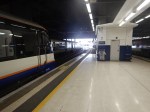
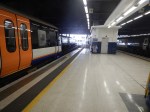
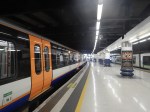
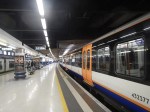
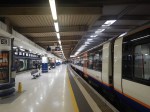
Note.
- Watford DC Line trains usually use Platform 9.
- The first two pictures show the 750 DC third rail electrification.
- The last three pictures show the 25 KVAC overhead electrification.
- The train is a five-car Class 710/3 train, which is a dual-voltage train.
The train’s pantograph was in the down position, as far as I could see.
This Google Map shows the ends of Platforms 6 to 11 at the station.

Note.
- The platforms have their numbers painted on the end.
- The train in the top-left corner of the image is in Platform 5.
- Platforms 9 and 10 appear to be fitted with 750 VDC third-rail electrification.
- All Platforms also seem to have 25KVAC overhead electrification.
So platforms 9 and 10 appear to be able to handle trains which need either form of electrification. When I took the first set of pictures, there was a Class 350 train in Platform 10.
These dual voltage platforms 9 and 10, may help with the operation of the station.
I have some questions.
Do TfL Intend To Increase Watford DC Line Services?
Currently, the services on the Watford DC Line are as follows.
- Four trains per hour (tph) between Euston and Watford Junction stations.
- In the last few weeks, I’ve seen both four-car Class 378 and five-car Class 701 trains on the route.
- All trains that work the route appear to be dual voltage.
This TfL infographic illustrates their plans.
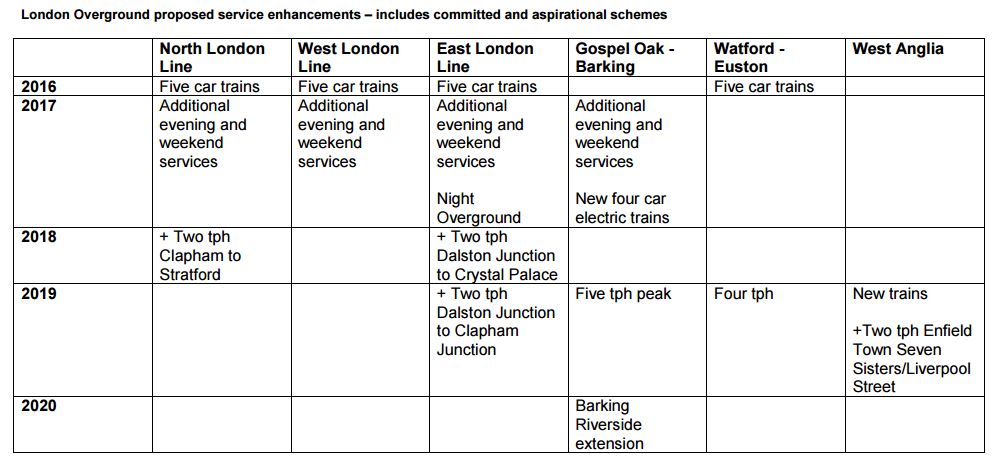
It says Watford and Euston would be run by five-car trains at a frequency of four tph.
TfL have ordered six five-car Class 701/3 trains for the Watford DC service.
Will The Watford DC Platforms Be Moved In The Euston High Speed Two Rebuild?
The operation of the Watford DC Line works well at present, but as Euston station is going through a major rebuild for High Speed Two, the platforms could be moved or rebuilt.
Would Health and Safety object to laying third-rail electrification and insist that Watford DC services used 25 KVAC to access Euston?
They could do this, as all trains running on the Watford DC Line are dual-voltage trains.
Would Removing Third-Rail Electrification From Euston Station Improve Safety?
Health and Safety would say it did and as the trains are dual-voltage, they could transition at Queen’s Park or South Hampstead stations.
An Alternative To Changing The Electrification
The distance between Euston and Queen’s Park stations is just under four miles.
In Will London Overground Fit On-board Energy Storage To Class 378 Trains?, I asked whether it would be worthwhile.
I finished with these two sentences.
I have no idea how much electricity would be saved by regenerative braking on the London Overground, but various applications of regenerative braking technology talk of electricity savings of between ten and twenty percent.
I think it is only a matter of time before the technology is proven to be sufficiently reliable and the numbers add up correctly for the Class 378 trains to be fitted with on-board energy storage.
What would be the advantages from fitting on-board energy storage?
- There would be the savings of electricity by the use of regenerative braking to the batteries.
- Trains could be rescued from the Thames Tunnel, if there was a power failure.
- Hotel power would be maintained, if there was a power failure.
- Trains can be moved in depots and sidings without power.
- Trains would be able to move in the event of cable theft.
- The battery would probably have sufficient capacity to move the train into and out of Euston.
There could be a saving in train operating costs and safety would be improved.
 The Anonymous Widower