Railway Restored: Regular Trains To Run On Dartmoor Line For First Time In 50 Years
The title of this post is the same as that of this press release from Network Rail.
These are the three main points of the press release.
- First passenger train on the first Restoring Your Railway reopening will run on Wednesday 17 November, ahead of public services resuming on Saturday 20 November
- Restored in just nine months, and delivered £10m under budget, transforming a mothballed former freight railway to regular services.
- Reopening is the first of the Government’s Restoring Your Railway schemes to return to service, fulfilling a manifesto commitment.
This Network Rail picture shows the first train.
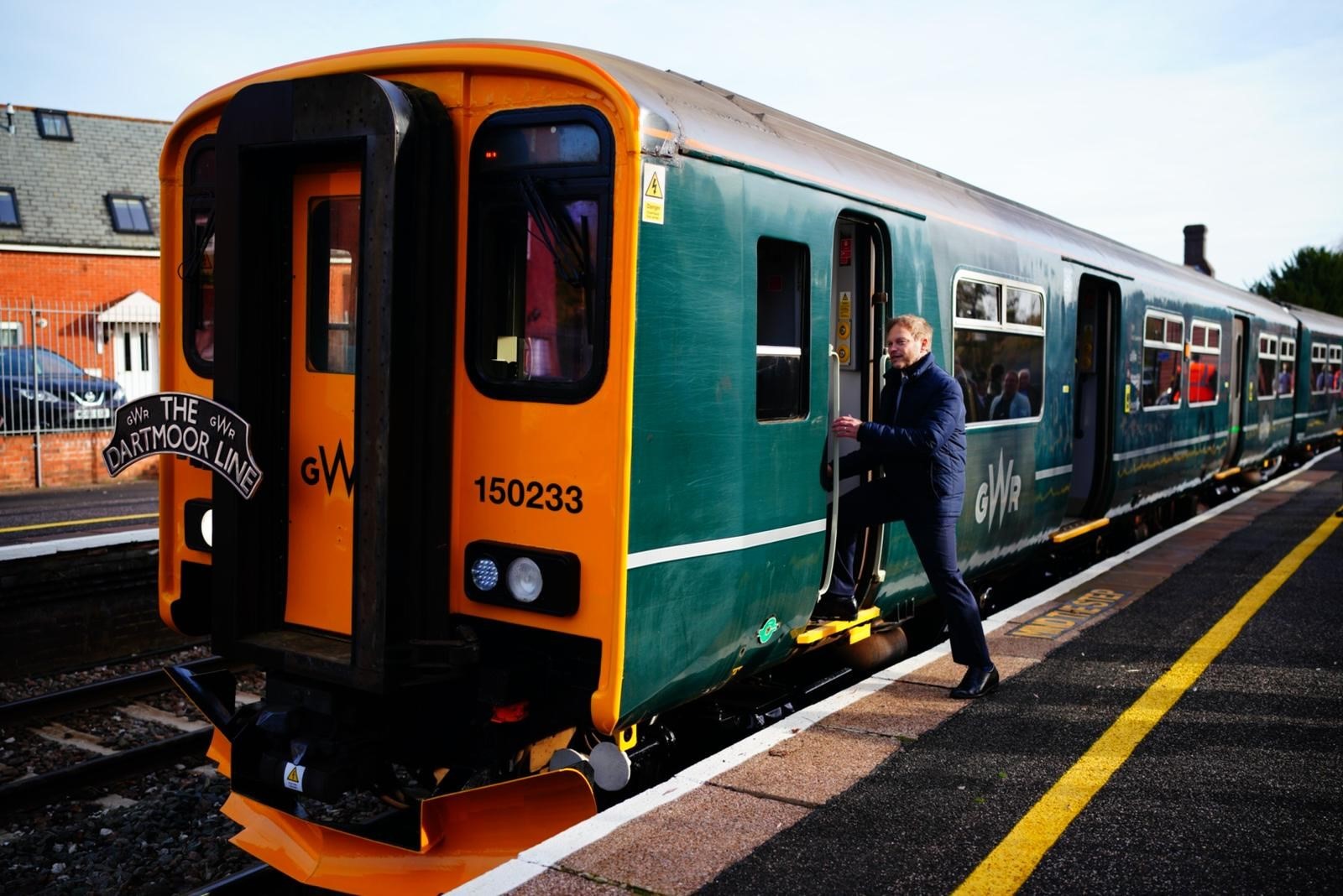
It’s good to see, GWR made a name plate.
Network Rail have set themselves a good precedent to open the line in nine months and £10 million under budget.
Let’s hope they repeat this performance on other reopened lines.
Restoring Your Railway Planning Funds Allocated
The title of this post, is the same as that of this article on Railway Gazette.
This is the first paragraph.
The Department for Transport has announced the successful bidders for the third ’and for the foreseeable future final’ round of funding from the Restoring Your Railway programme’s Ideas Fund.
The DfT received eighty-nine applications and these were the lucky thirteen.
Reopening The Darlington – Weardale Line To Passenger Services
I haven’t covered this one before, so I have written a new post.
See Reopening The Darlington – Weardale Line To Passenger Services
Reopening The Ashton – Stockport Line To Passenger Services
I wrote about this line in July 2020 in Beeching Reversal – Stockport And Ashton Line.
Reopening The Middlewich Line To Passenger Services
I wrote about this line in July 2017 in Business Case Requested For Middlewich Reopening.
Introducing Passenger Services On The East Lancashire Railway Between Rawtenstall And Buckley Wells Near Bury
I wrote about this in January 2019 in Rossendale Reopening Prospect.
Reopening Corsham Station
I haven’t covered this one before, so I have written a new post.
Reopening Stonehouse Bristol Road Station
I haven’t covered this one before, so I have written a new post.
See Reopening Stonehouse Bristol Road Station
Reinstating The Line Between Tavistock And Bere Alston And Providing New Services To And From Plymouth
This would appear to be a change of emphasis, so I have written a new post.
Reopening The Gaerwen – Amlwch Line On Anglesey
I wrote about this in March 2017 in Reopening The Anglesey Central Railway
Reopening The Oswestry – Gobowen Line
I haven’t covered this one before, so I have written a new post.
See Reopening The Oswestry – Gobowen Line
Reopening the Stoke – Leek Line
I haven’t covered this one before, so I have written a new post.
See Reopening the Stoke – Leek Line
Reopening The Askern Branch
I haven’t covered this one before, so I have written a new post.
See Reopening The Askern Branch
Reopening The Don Valley Section Of The Former Woodhead Line Between Stocksbridge and Sheffield Victoria To Passenger Services
I haven’t covered this one before, so I have written a new post.
Reinstating the Beverley – Market Weighton – York Line
I wrote about this in July 2020 in Beeching Reversal – Reinstatement Of The Beverley And York Rail Line
The DfT will provide up to £50 000 to cover 75% of the cost of developing early-stage proposals and business cases for each scheme.
Reopening The Don Valley Section Of The Former Woodhead Line Between Stocksbridge and Sheffield Victoria To Passenger Services
On October 27th this Beeching Reversal Project was given £50,000 to build a case for reopening.
Stocksbridge is introduced like this in its Wikipedia entry.
Stocksbridge is a town and civil parish, in the City of Sheffield, in South Yorkshire, England. Historically part of the West Riding of Yorkshire, it lies just to the east of the Peak District. The town is located in the steep-sided valley of the Little Don River, below the Underbank Reservoir. It blends into the areas of Deepcar, Bolsterstone and the eastern end of Ewden valley around Ewden village, which are also within the civil parish. The population of the civil parish as of the 2011 census was 13,455.
This Google Map shows the area.
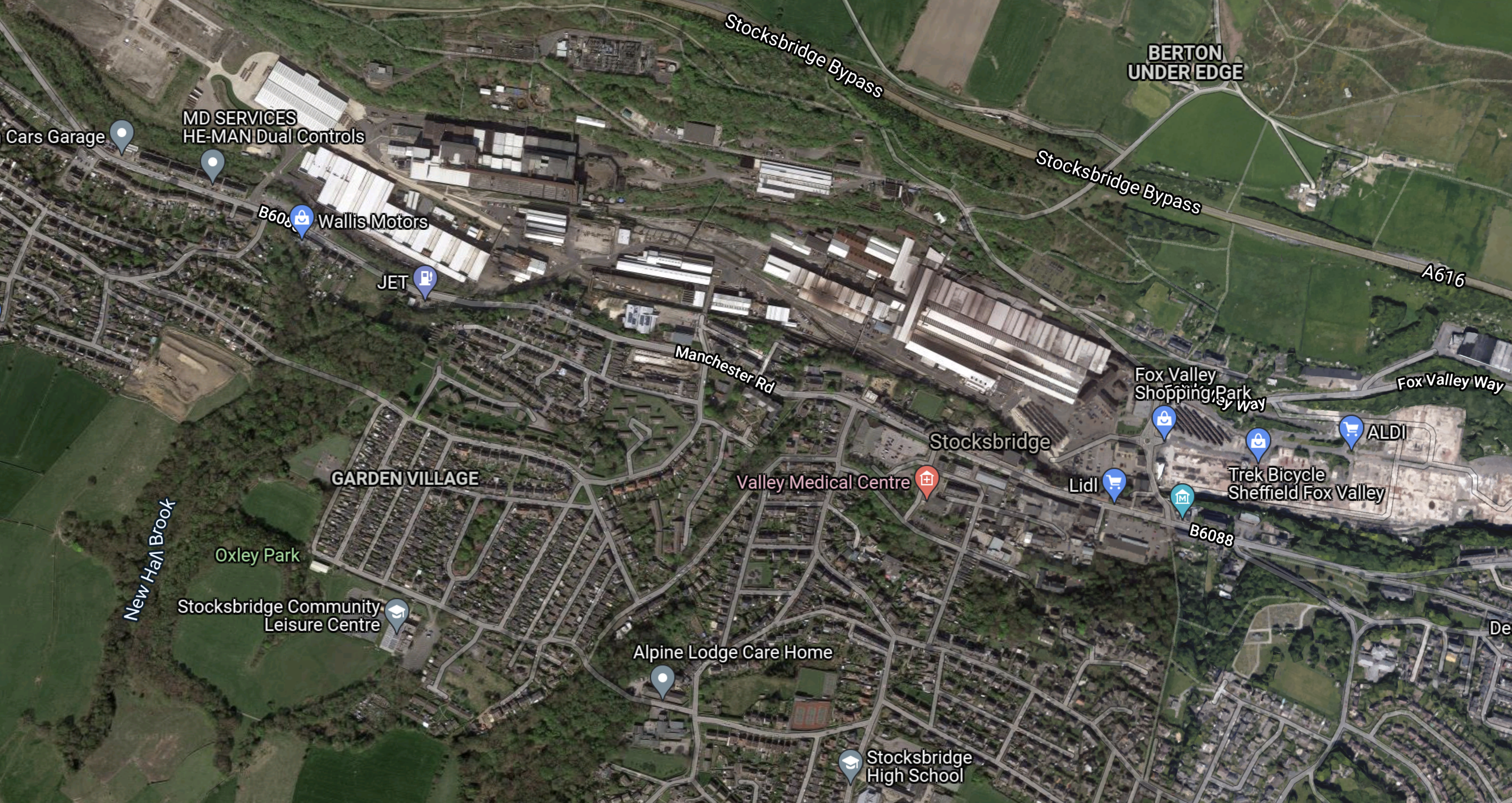
Note there are a large number of steel related industries all connected by an extensive railway system.
This Google Map shows part of the area to a more detailed scale.
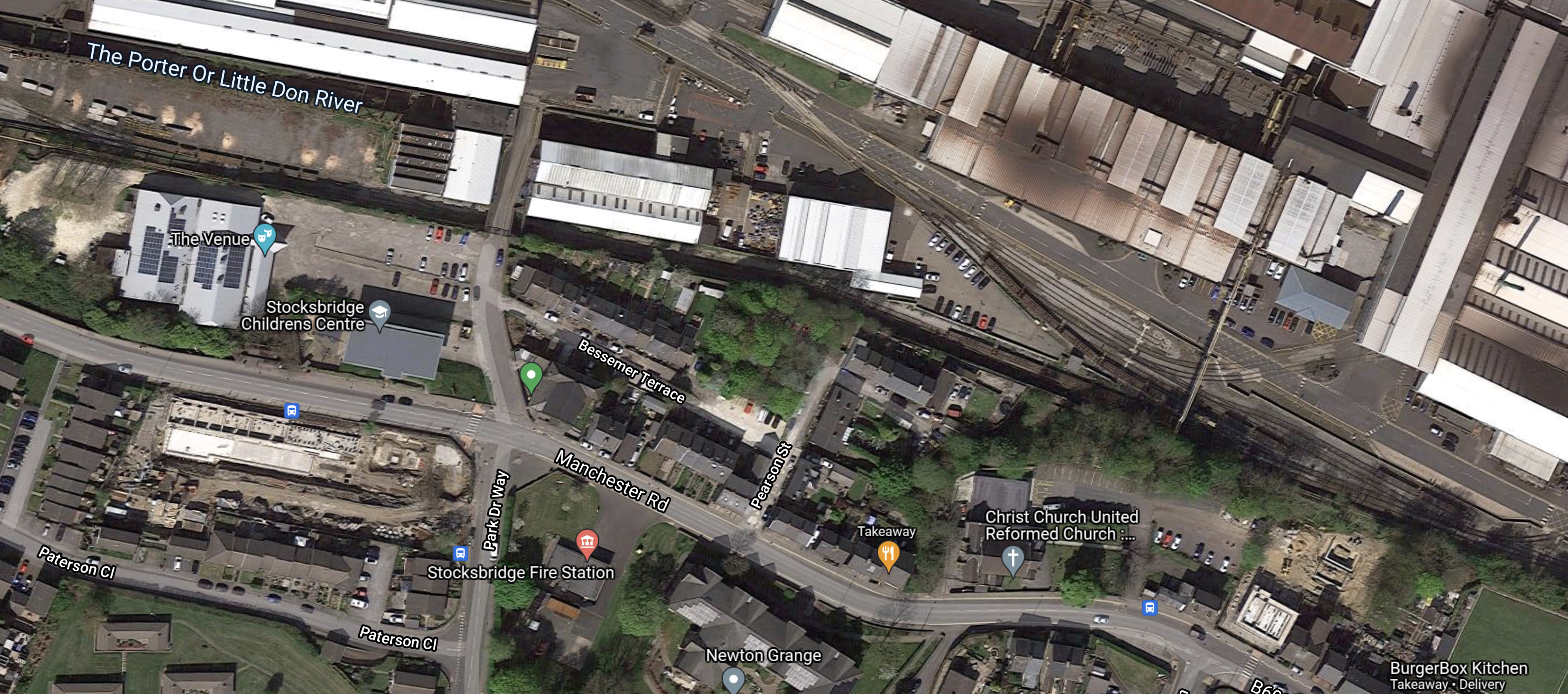
I suspect that a station could be built somewhere to the South of the works.
I have followed the Stocksbridge Railway out to the East and it takes a loop to the South to Deepcar Tram and Railway station, as is shown on this Google Map.
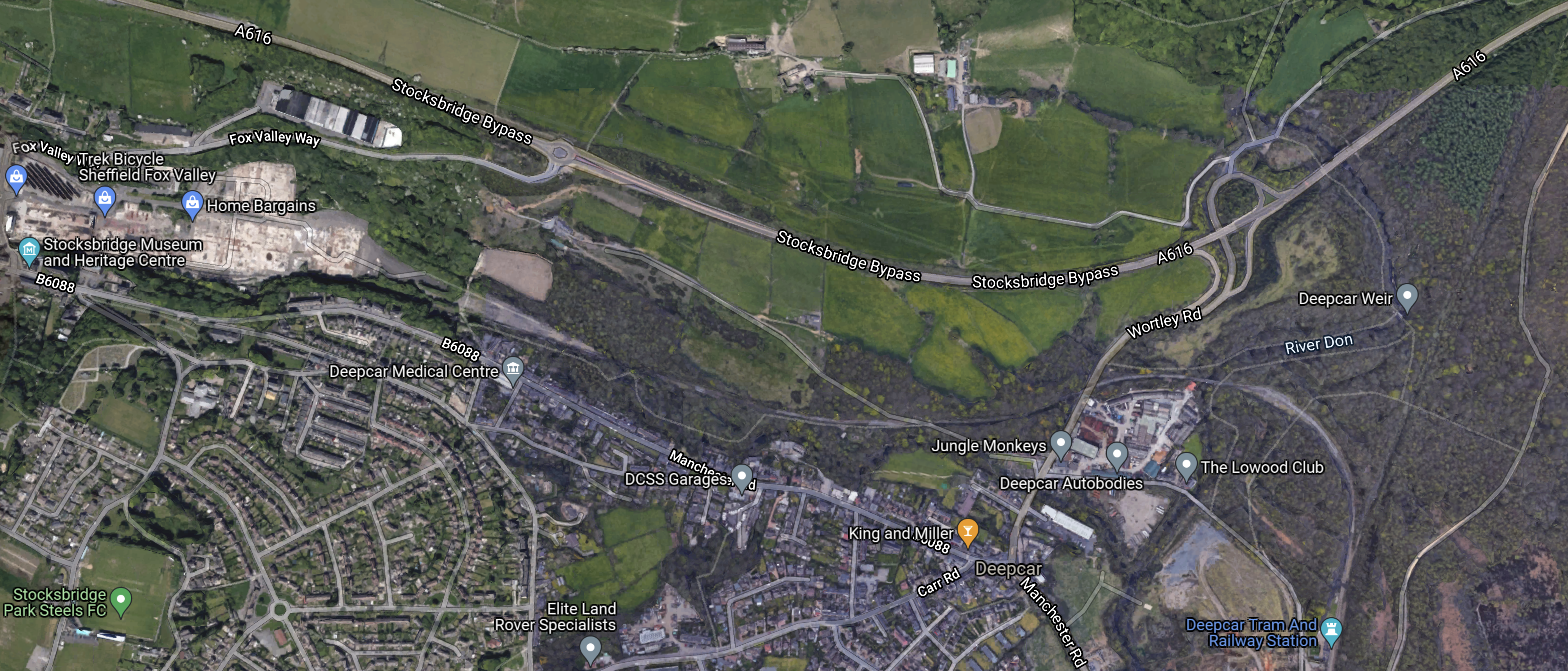
Note.
The Eastern end of the Stockbridge site is in the North-West of the map.
Deepcar station is shown by a blue dot in the South-East corner of the map.
This Google Map shows Deepcar station in greater detail.
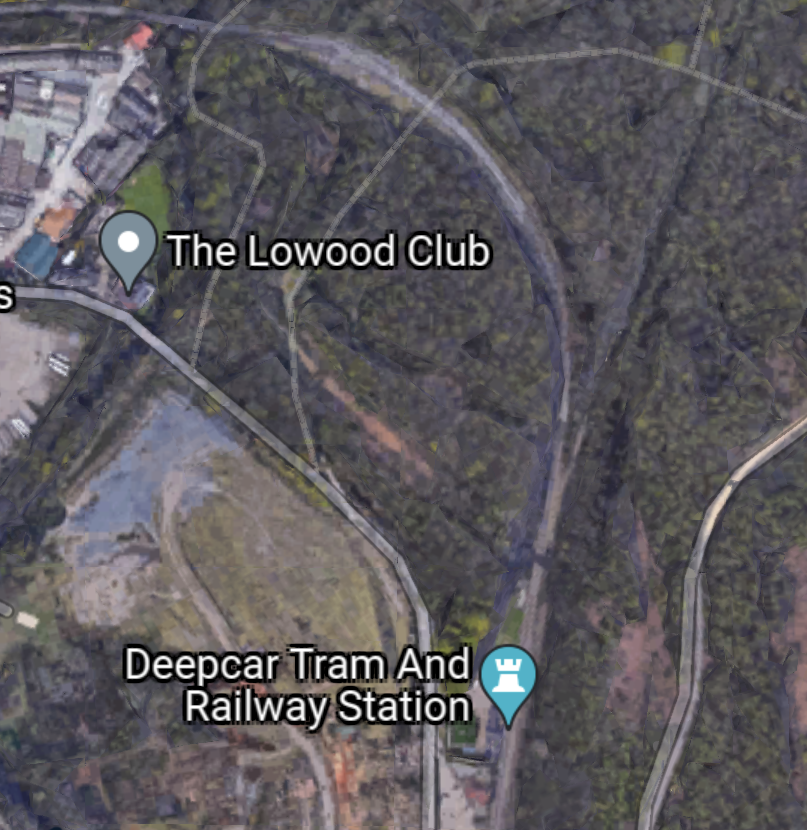
Note.
- The Stocksbridge Railway curving to the West is clearly visible.
- The other railway going North is the former Woodhead Line to Manchester.
This map clipped from Wikipedia shows the Lines through Deepcar station.
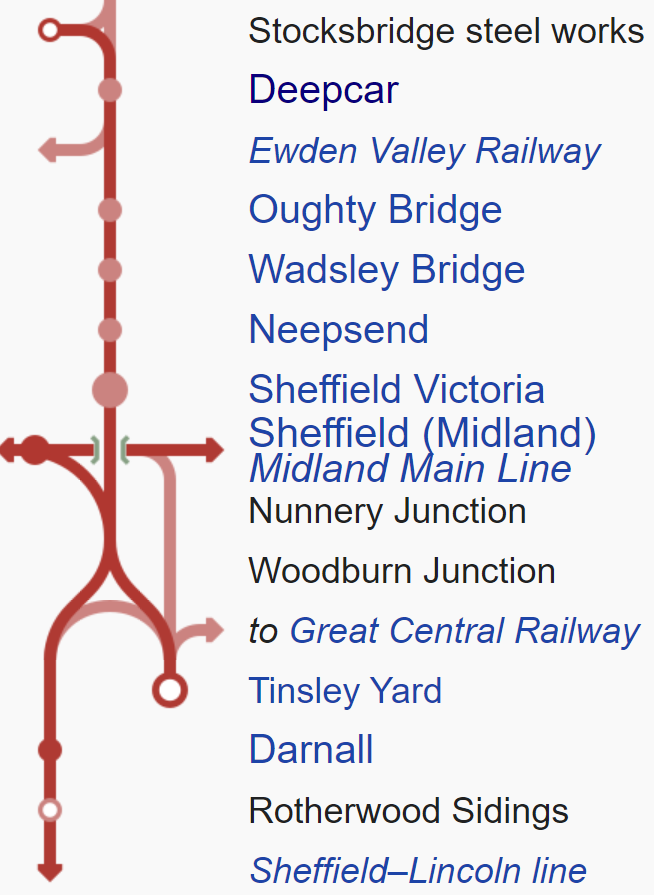
This shows the route between Stocksbridge and the former Sheffield Victoria station.
I have also found this article on the Sheffield Star, which is entitled Passenger Trains Could Return On Sheffield To Stocksbridge Don Valley Railway Line After major Funding Boost.
This is a paragraph.
The plans also involve reopening Sheffield Victoria station, which could serve a new Barrow Hill line to Chesterfield, stopping at Darnall, the Advanced Manufacturing Park, Woodhouse and other new stations, similar funding for which was granted last year.
This would seem to be a sensible plan.
These are my thoughts.
Sheffield Victoria Station
This Google Map shows the site of the Stocksbridge Line going through the centre of Sheffield.

The line starts in the North-West corner of the map and goes diagonally across.
The site of Sheffield Victoria station is at the Eastern edge of the map and is shown enlarged in this Google Map.

The street and hotel names are a giveaway.
There would appear to be space for a simple station with one or two platforms on the single-track through the area.
My preference would be for a single bi-directional platform, as has been used successfully at Galashiels station.
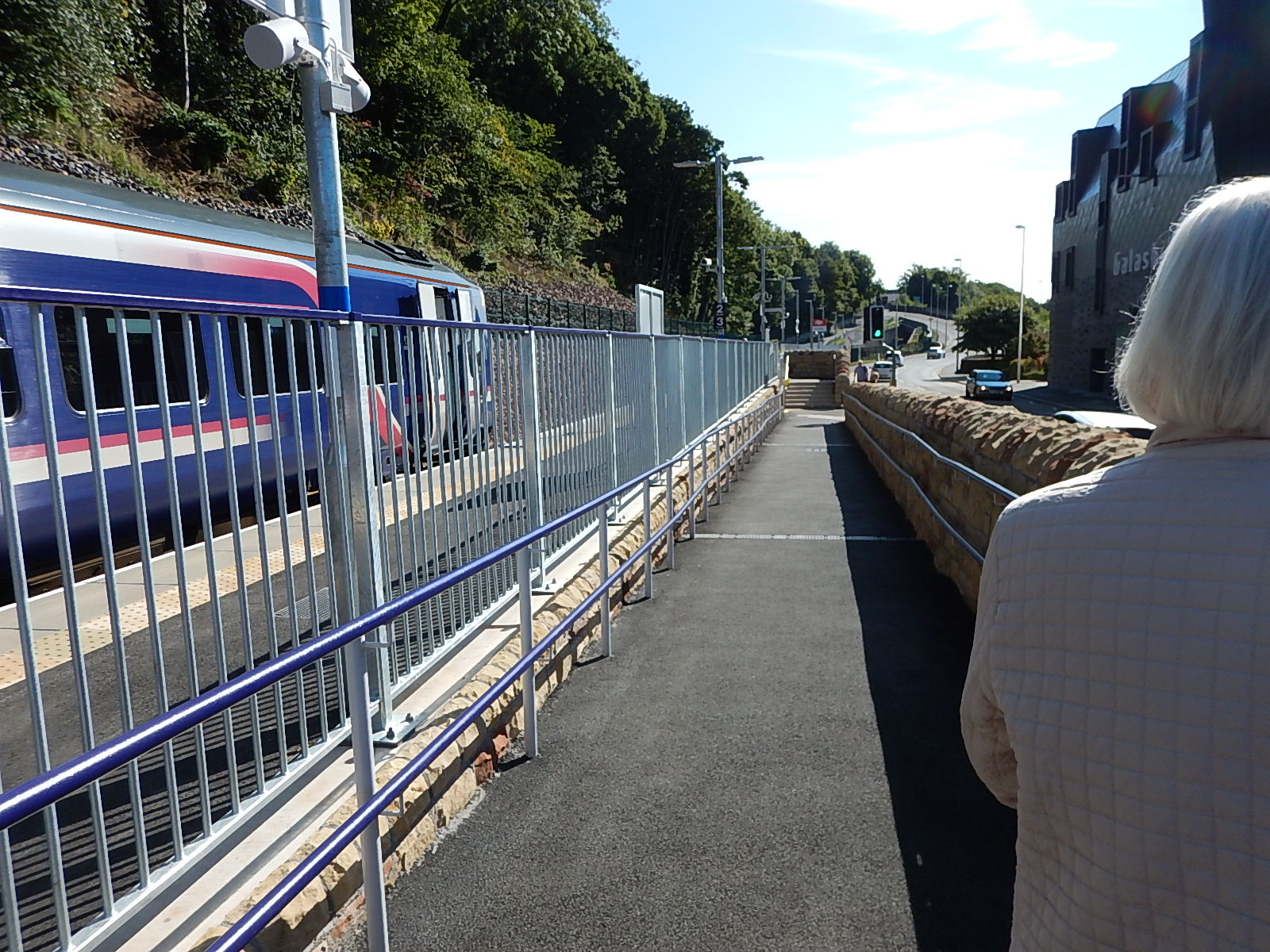
With well-placed passing loops, stations like these can handle two trains per hour (tph) and they can be step-free for all users.
Onward To Chesterfield
The plans as laid out in the paragraph in the Sheffield Star would appear to be feasible.
Darnall and Woodhouse are existing stations.
It would serve the proposed new station at Waverley, that I wrote about in Sheffield Region Transport Plan 2019 – A New Tram-Train Route To A New Station At Waverley.
Chesterfield station will be rebuilt for High Speed Two, so extra platforms could surely be added.
I wrote about plans for the Barrow Hill Line in Reinstatement Of The Barrow Hill Line Between Sheffield And Chesterfield.
It certainly looks to me, that taken together the Barrow Hill and Stocksbridge schemes could be a valuable new railway for Sheffield.
Rolling Stock
I have ridden all over Karlsruhe in Germany on their tram-trains, which are a German variant of Sheffield’s Class 399 tram-trains and I can see no reason, why the combined route couldn’t be designed and built for these trains.
- They are very good on hills.
- They can work on both 750 VDC and 25 KVAC overhead wires.
- The closely-related Class 398 tram-trains in Cardiff will have batteries.
- They are already working successfully in Sheffield.
- There must be design advantages for stations.
- Travellers in Sheffield are used to the tram-trains.
- There is maintenance and operational experience in Sheffield.
It is also my belief, that Class 399 tram-trains would make excellent replacements for Sheffield’s current trams. I wrote about this in Sheffield Region Transport Plan 2019 – Renewal Of Supertram Network.
Electrification
Looking at the Stocksbridge and Barrow Hill Lines together, I believe there is a strong case for electrification of both routes with 25 KVAC overhead wires.
This would enable the following.
- Class 399 tram-trains to work the combined route.
- East Midlands Railway’s Class 810 trains to access Sheffield station via the Barrow Hill Line on electricity.
- Electrified freight trains could use the route.
It could also be an easy route to electrify and be a good start to the electrification of Sheffield, which will happen in the future.
Electrification Between Sheffield And Clay Cross North Junction For High Speed Two
This electrification is needed for High Speed Two’s connection to Sheffield. It will also entail a lot of disruption for trains between Derby and Sheffield.
For these reasons, I believe that opening up the Barrow Hill route early between Sheffield and Chesterfield could be an excellent blockade buster.
Conclusion
There’s more to reopening the Stocksbridge Line, than as a local service in Sheffield.
Reopening The Askern Branch
On October 27th this Beeching Reversal Project was given £50,000 to build a case for reopening.
These are my thoughts.
The Askern Branch Line
This description of the Askern Branch Line is from Wikipedia.
The Askern branch line is a railway line which runs in North, South and West Yorkshire in England. The stretch of track runs from Shaftholme Junction north of Doncaster (on the East Coast Main Line between Doncaster and York), via Askern, Norton and Womersley to Knottingley, where it joins the Pontefract Line.
This map was also clipped from Wikipedia.
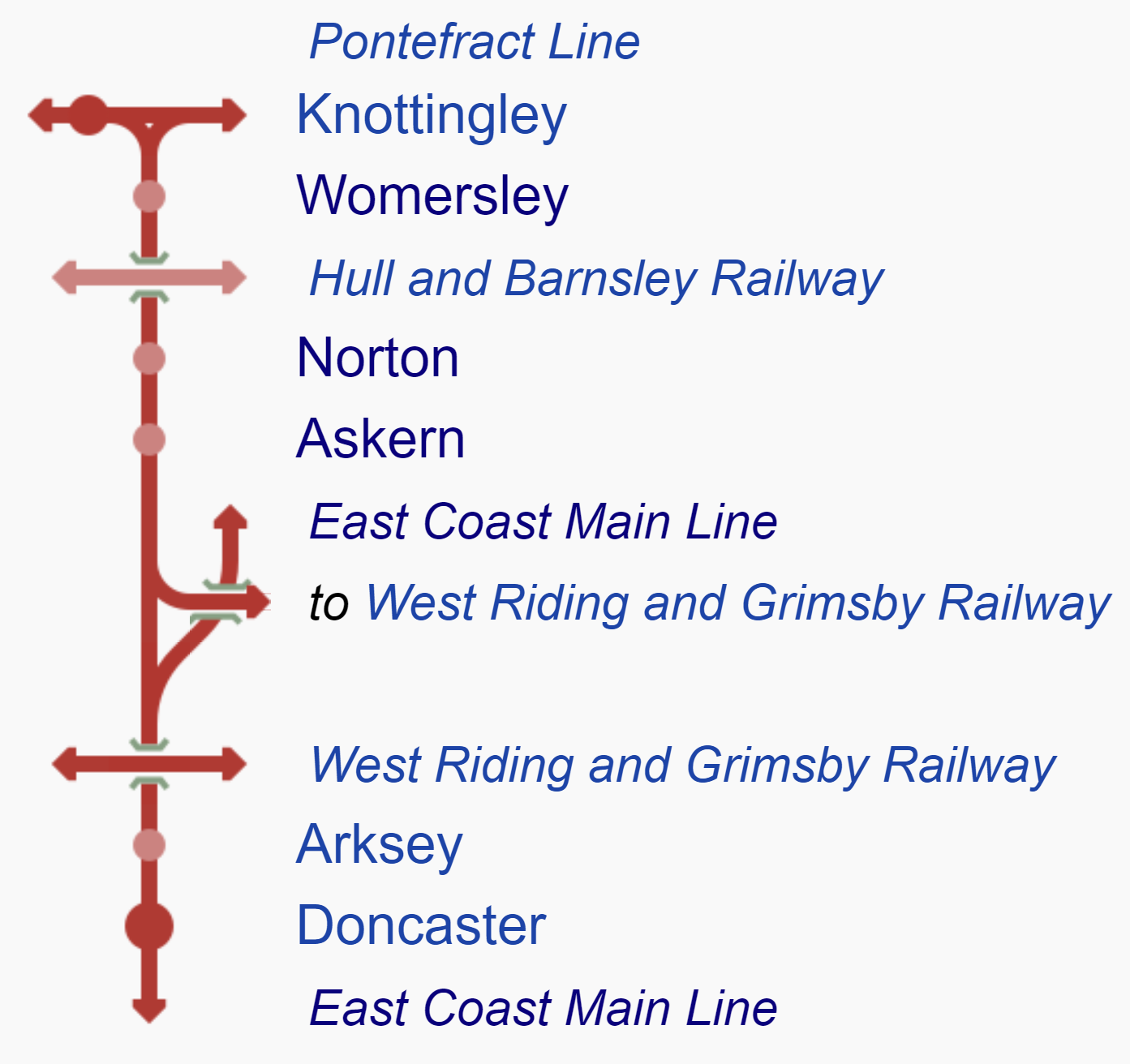
Note.
- Shaftholme junction is where the Askern Branch splits from the East Coast Main Line.
- There are three closed stations on the Askern Branch; Askern, Norton and Womersley.
- Between Shaftholme junction and Knottingley West junction, on the Pontefract Line is 10.7 miles.
- The operating speed of the line is between twenty and fifty mph.
Unbelievably, in those 10.7 miles there are nineteen level crossings.
Current Passenger Services
The only passenger services on the line are Grand Central‘s services between London King’s Cross and Bradford Interchange.
- Grand Central are an open-access operator.
- Grand Central ran the first service in 2007.
- There are four trains per day (tpd) in both directions.
- They call at Doncaster, Pontefract Monkhill, Wakefield Kirkgate, Mirfield, Brighouse, Halifax and Low Moor.
Perhaps, if they stopped at a station on the Askern Branch Line, it would give their finances a lift.
Freight Services
There are up to four freight services per hour on the line.
Askern Station
Askern station used to serve the village of Askern.
- Askern has a population of about 6,000.
- Askern used to be a spa town.
- But then coal was discovered and it became a mining village.
- Do spas and coal mining make a good mix? I doubt it.
- Eventually the station closed in September 1948.
- There is a level crossing at the station.
The village is now developing and there is pressure for the reopening of the station.
Railfuture has backed the reopening.
Norton Station
Norton station used to serve the village of Norton.
- Norton has a population of about 5,000.
- The station closed in September 1948.
- There is a level crossing at the station.
There appears to be no pressure to reopen the station, although the site is protected.
Womersley Station
Womersley station used to serve the village of Womersley.
- Womersley has a population of a few hundred.
- The station closed in September 1948.
- There is a level crossing at the station.
There appears to be no pressure to reopen the station.
Would This Project Be Better Described As Reopening Askern Station?
I can’t find any reference to reopening Norton and Womersley stations, so perhaps Reopening Askern Station would be closer to the reality.
A New Askern Station
This Google Map shows the site of the former station.
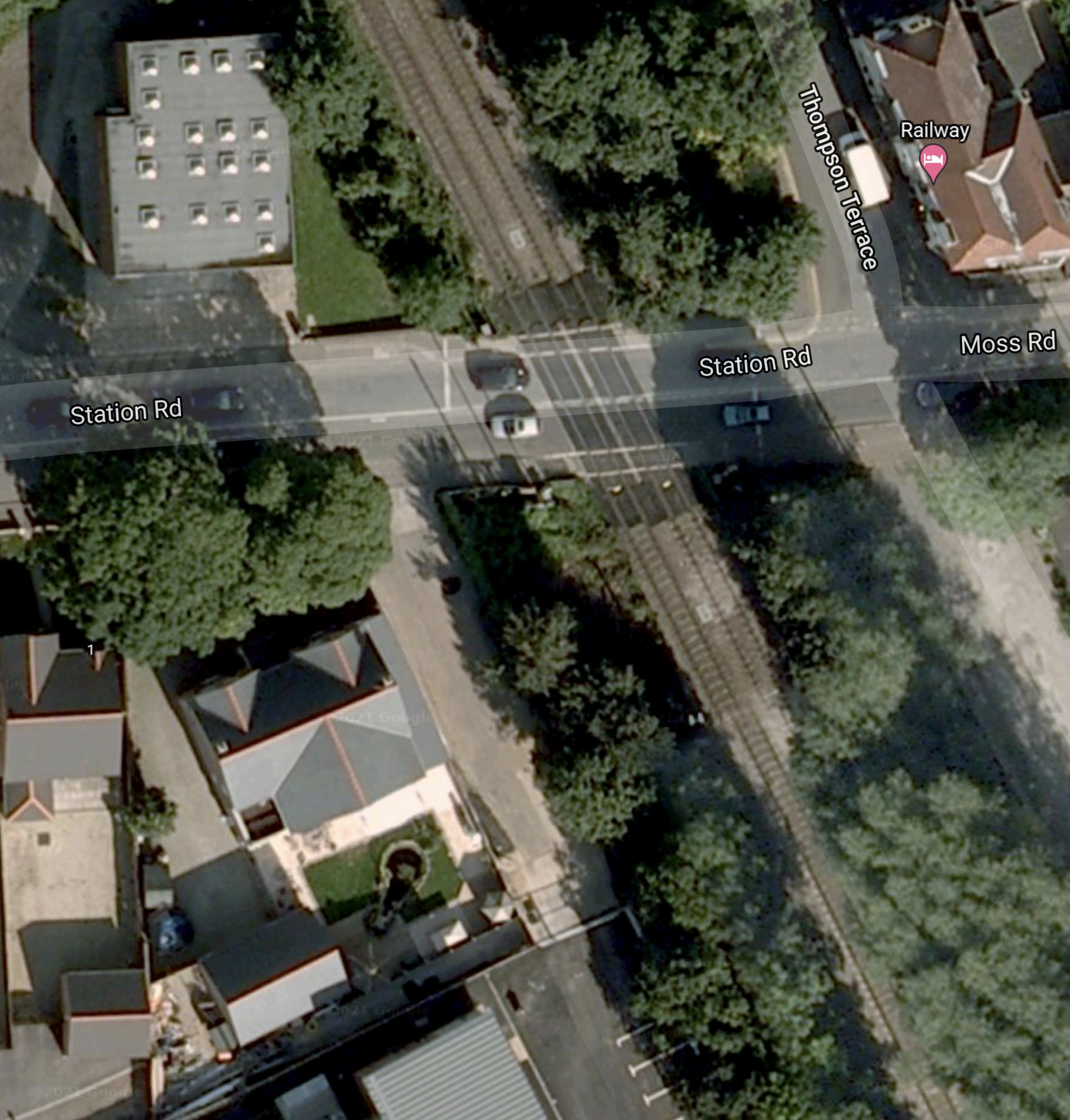
This could be a challenging station to design depending on the brief.
Services At A New Askern Station
I suspect that some or perhaps all of Grand Central’s Kings Cross and Bradford Interchange services will call.
But these don’t go to Leeds and I suspect that a service is needed to and from Leeds.
Will The Askern Line Be Electrified?
Who knows?
Reopening the Stoke – Leek Line
On October 27th this Beeching Reversal Project was given £50,000 to build a case for reopening.
These are my thoughts.
The State Of The Line Today
This sentence describes the Stoke Leek Line in Wikipedia.
The Stoke to Leek line is a mothballed railway route, which up until 1988 was used by BR freight trains to reach the quarries at both Cauldon Lowe and Oakamoor.
This map was also clipped from Wikipedia.

Note.
- Leek is at the top of the map.
- Leek is a town of 21,000 people.
- The distance between Stoke-on-Trent and Leek is about eleven miles by road.
- The Waterhouses branch Line leads to the quarries.
- The Churnet Valley Line is a heritage line.
I have flown by virtual helicopter along the line and you can see a single-track railway amongst the weeds.
Leek
This Google Map shows Leek.
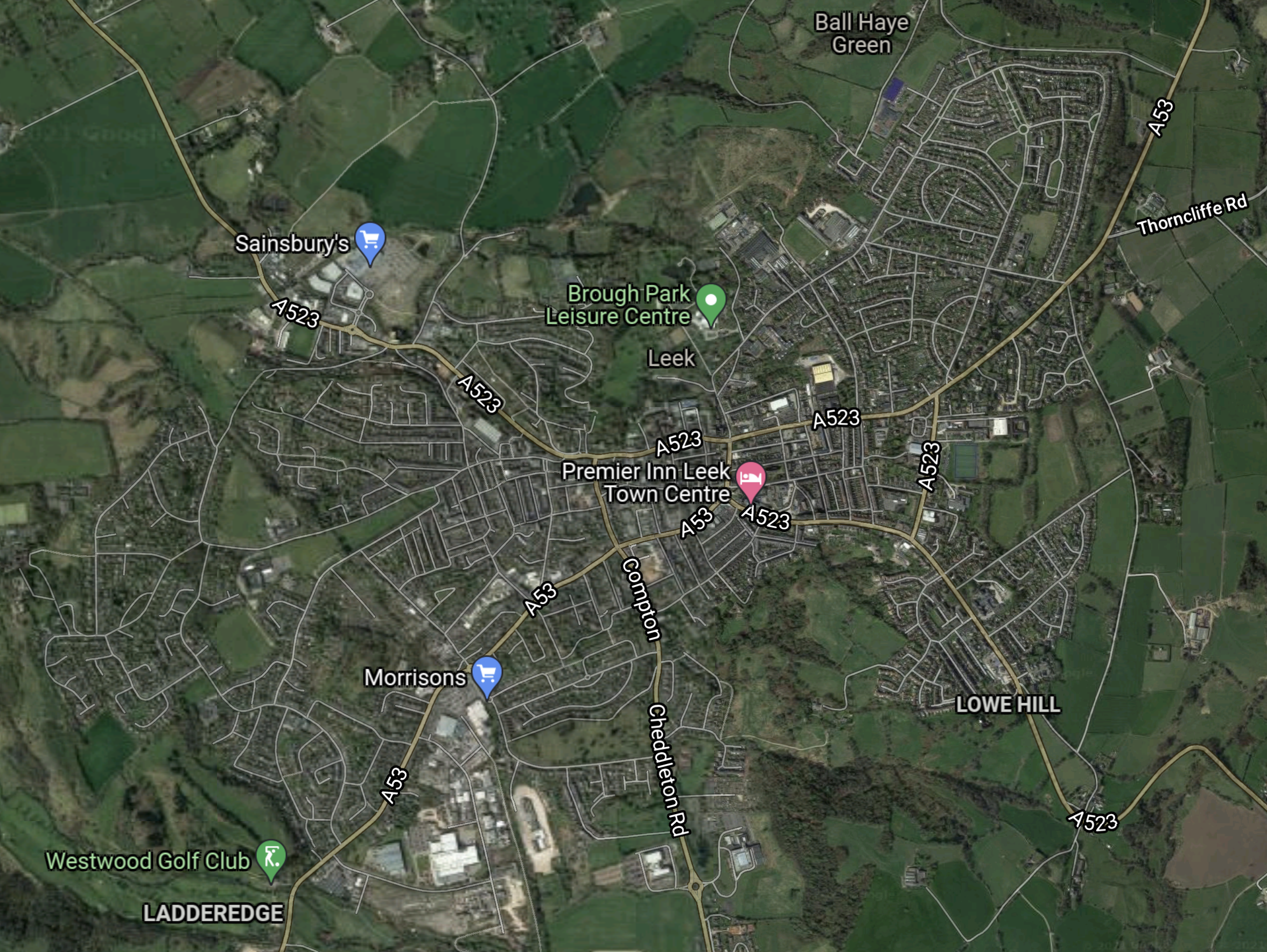
The original station was demolished to make way for the Morrisons supermarket.
I suspect that there is sufficient space close to the supermarket to fit in a simple single-platform station for the single-track from Stoke-on-Trent.
Rolling Stock
I suspect this line would best be served by battery-electric trains.
- It’s no more than a dozen miles.
- There is electrification at Stoke-on-Trent station.
- Leek has the lower altitude by 220 ft.
I suspect a charging system would be needed at Leek.
Vivarail’s Class 230 trains could be ideal for this line.
Freight
Reading about the line, it appears that there are plans that propose reopening the line for traffic from the quarries.
It would need to be decided, if freight were to be allowed on the line.
Conclusion
This could be a useful passenger line, with a freight capability, if that were needed.
Reopening The Oswestry – Gobowen Line
On October 27th this Beeching Reversal Project was given £50,000 to build a case for reopening.
These are my thoughts.
Gobowen Station
Gobowen station appears to be a fine station.
- It is Grade II Listed.
- It has two platforms.
- It is on the Shrewsbury-Chester Line.
- Transport for Wales run trains to Birmingham New Street, Cardiff Central, Chester, Holyhead and Shrewsbury.
- Avanti West Coast will start running services to and from London Euston via Wrexham in December 2022.
Wikipedia says this about the future of the station.
Gobowen station may become the northern terminus of the proposed Cambrian Heritage Railways line to Llynclys, Pant and Blodwel via Oswestry. Shropshire Council was to acquire the coal yard at Gobowen for railway-related uses, including car parking for the station. If the plans are fully realised, the station would have three platforms, one of which would be for the Heritage Railway.
It does look as if, Shropshire Council have got the money for a full study.
This Google Map shows Gobowen station.

Note.
- The two tracks of the Chester-Shrewsbury Line each have a platform.
- Step-free access is by the level crossing, which is at the North end of the station.
- It looks like it would be space to convert the Northbound platform into an island platform, where the Western platform face would be for the heritage trains.
This second Google Map shows the tracks at the South end of Gobowen station.
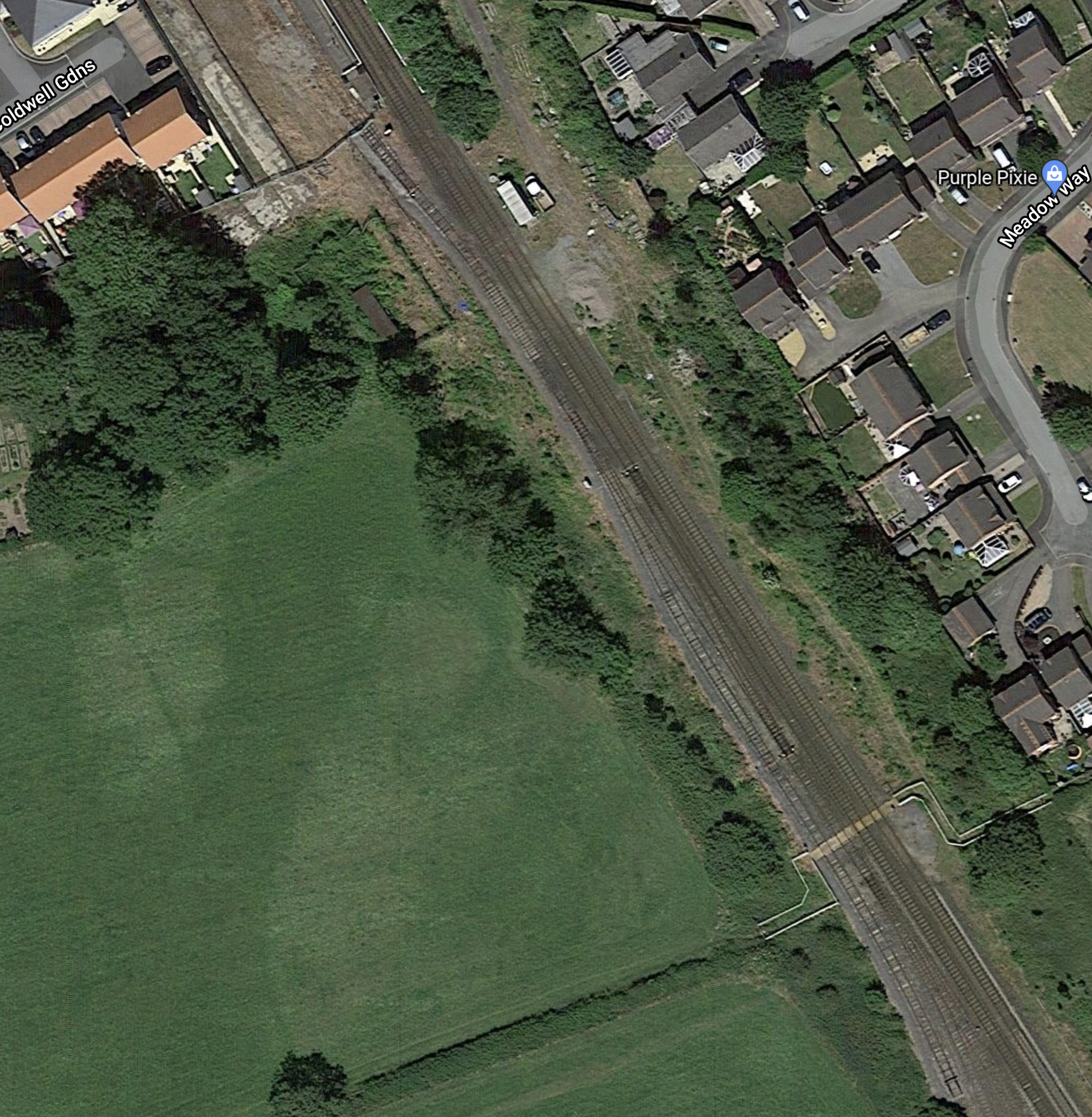
Note.
There is a set of points to allow trains to access a third platform at Gobowen station.
The single-track line to Oswestry branches off to the West at the bottom of the map.
It would appear that a bay platform at Gobowen station can be created to handle trains to Oswestry.
Oswestry Station
Oswestry station appears to be another fine station.
- It is also Grade II Listed.
- It has just a single platform.
- It appears to be owned by the local authority.
This Google Map shows the station.

Note.
- The station is the large building with the chimneys in the South-East corner of the map.
- The single platform is behind it.
- The platform is long enough to take a 1200 metre long train.
This station would make an ideal terminus.
The Track Between Oswestry And Gobowen
The track is single-track with a couple of foot crossings, so I don’t think it will need much to bring it up to a modern standard.
A Shuttle Service Between Oswestry And Gobowen
I suspect a two-car shuttle train between the two stations would suffice for most of the day.
Transport for Wales have some Class 230 trains and these would be ideal. They could even be battery-electric trains if a battery charging system were to be installed at one station.
Could Avanti West Coast Run A Service To London?
It looks like Avanti West Coast’s Class 805 trains could run along the line between Gobowen and Oswestry.
So could Avanti’s planned service to Gobowen terminate at Oswestry instead?
It would all depend on the passenger forecasts and actual numbers
Could Avanti West Coast Run A Battery-Electric Service To London?
Consider.
- Oswestry is a town of 17,500 people, so probably has a reasonable electricity supply, especially if it were to be backed up by a battery.
- The amount of renewable electricity produced over the border in Wales is only going to grow.
- There is plenty of space at Oswestry to put in a charging system to replace the batteries.
Distances are as follows.
- Crewe and Chester – 21.1 miles
- Chester and Gobowen – 24.6 miles
- Gobowen and Oswestry – 3.3 miles
This is a total distance of 49 miles.
Avanti West Coast have ordered thirteen bi-mode Class 805 trains, which will replace the diesel Class 221 trains currently working between London Euston and Chester. Holyhead and Shrewsbury.
- They will run at 125 mph between Euston and Crewe using electric power.
- If full in-cab digital signalling were to be installed on the electrified portion of the route, they may be able to run at 140 mph in places under the wires.
- They will use diesel power on the North Wales Coast Line to reach places like Chester, Holyhead and Wrexham.
- According to an article in Modern Railways, the Class 805 trains could be fitted with batteries.
I wouldn’t be surprised that when they are delivered, they are a version of the Hitachi’s Intercity Tri-Mode Battery Train, the specification of which is shown in this Hitachi infographic.

Note.
- I suspect that the batteries will be used to handle regenerative braking on lines without electrification, which will save diesel fuel and carbon emissions.
- The trains accelerate faster, than those they replace.
- The claimed fuel and carbon saving is twenty percent.
- It is intended that these trains will be introduced next year.
But Hitachi have not given any predictions of the range of these trains on battery power alone.
However, they do claim a battery range of 56 miles for the Hitachi Regional Battery Train, which is based on similar technology.
I believe it would be possible to run a zero-carbon London Euston and Oswestry service.
- The trains would be Class 805 trains fitted with batteries.
- Trains could stop at Milton Keynes Central, Lichfield Trent Valley, Stafford, Crewe, Chester, Wrexham General and Gobowen.
- Trains would use electrification between London Euston and Crewe.
- Trains would recharge their batteries South of Crewe and at Oswestry.
I doubt that a battery-electric zero-carbon train serving Cheshire, Shropshire and North-East Wales would have a negative effect on the area.
Just as Hull and Lincoln seem to be moving towards a frequency of one train per two hours from London, I wonder if this service could ever attain the same frequency.
Onward From Oswestry
Cambrian Heritage Railways are planning to run services past Oswestry on their heritage railway.
Will this be a good idea?
Where Now For First Group?
First Group are a shareholder in Avanti West Coast.
They also own Lumo, who last week launched their open-access service between London and Edinburgh. Their marketing is all about being green and sustainable.
I just wonder if a battery-electric service to Gobowen is successful, they will apply this model all over the group.
Hull Trains service between London and Hull is an obvious possibility for a battery-electric zero-carbon service.
Conclusion
It looks to me, that reopening of the Oswestry – Gobowen Line opens up other possibilities.
Reopening Stonehouse Bristol Road Station
On October 27th this Beeching Reversal Project was given £50,000 to build a case for reopening.
Stonehouse is a town in Gloucestershire.
It has a population of just under 8,000.
Stonehouse station has direct connections to Cheltenham Spa, Gloucester, London and Swindon.
Stonehouse Bristol Road station used to be a station in the town on the Cross Country Route, with direct connections to Birmingham. Bristol, Cheltenham Spa and Gloucester.
This Google Map shows the town, the current station and the proposed station.
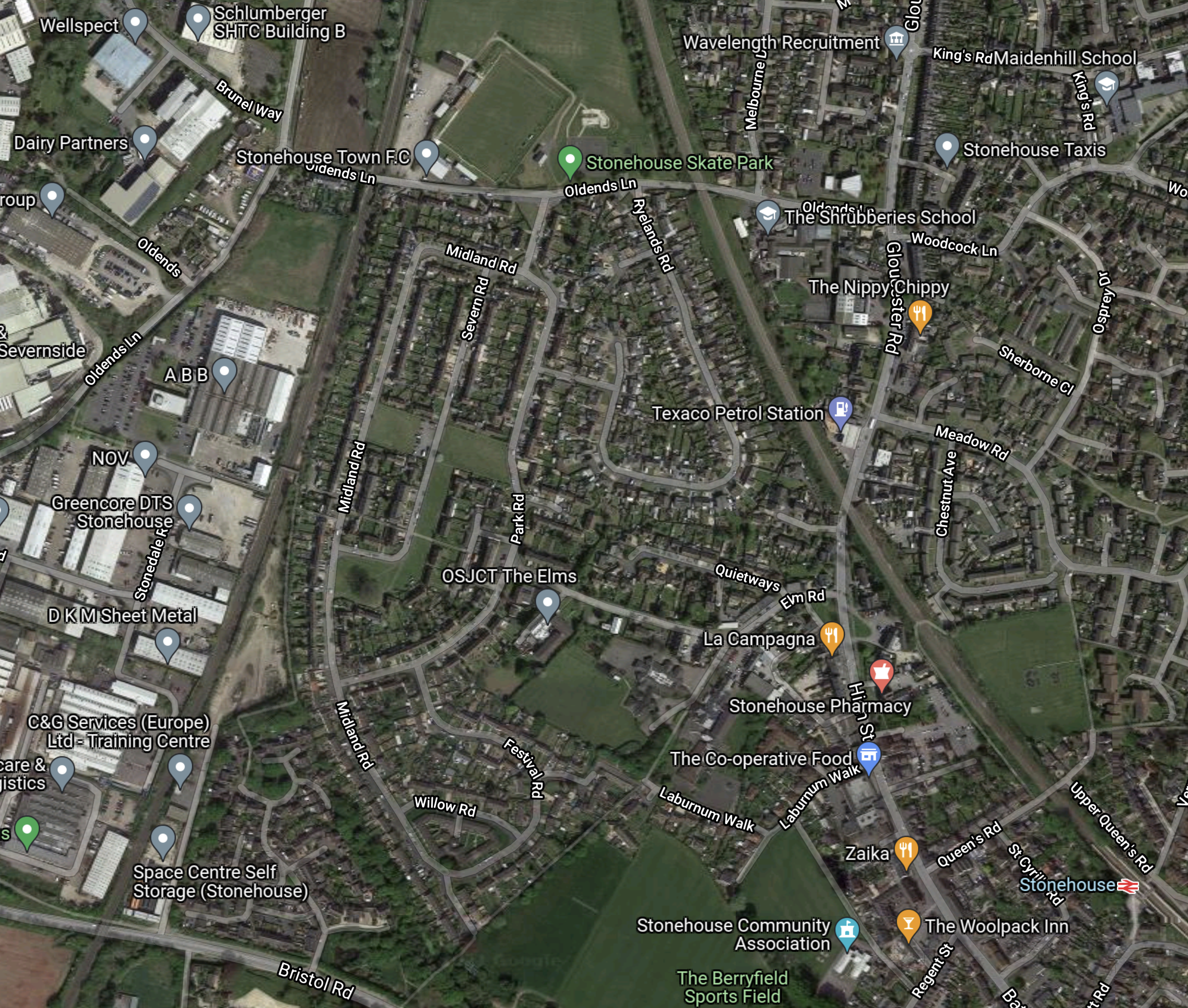
Note.
- The Golden Valley Line between Gloucester and Swindon runs vaguely down the East side of the map.
- Stonehouse station is in the South-East corner of the map on the Golden Valley Line.
- The Cross Country Route between Gloucester and Bristol runs vaguely down the West side of the map.
- Stonehouse Bristol Road station will probably be in the South-West corner of the map, where the Cross-Country route crosses Bristol Road.
- The two railway lines join North of Stonehouse and go to Gloucester.
This second Google Map shows the site of Stonehouse Bristol Road station to a larger scale.
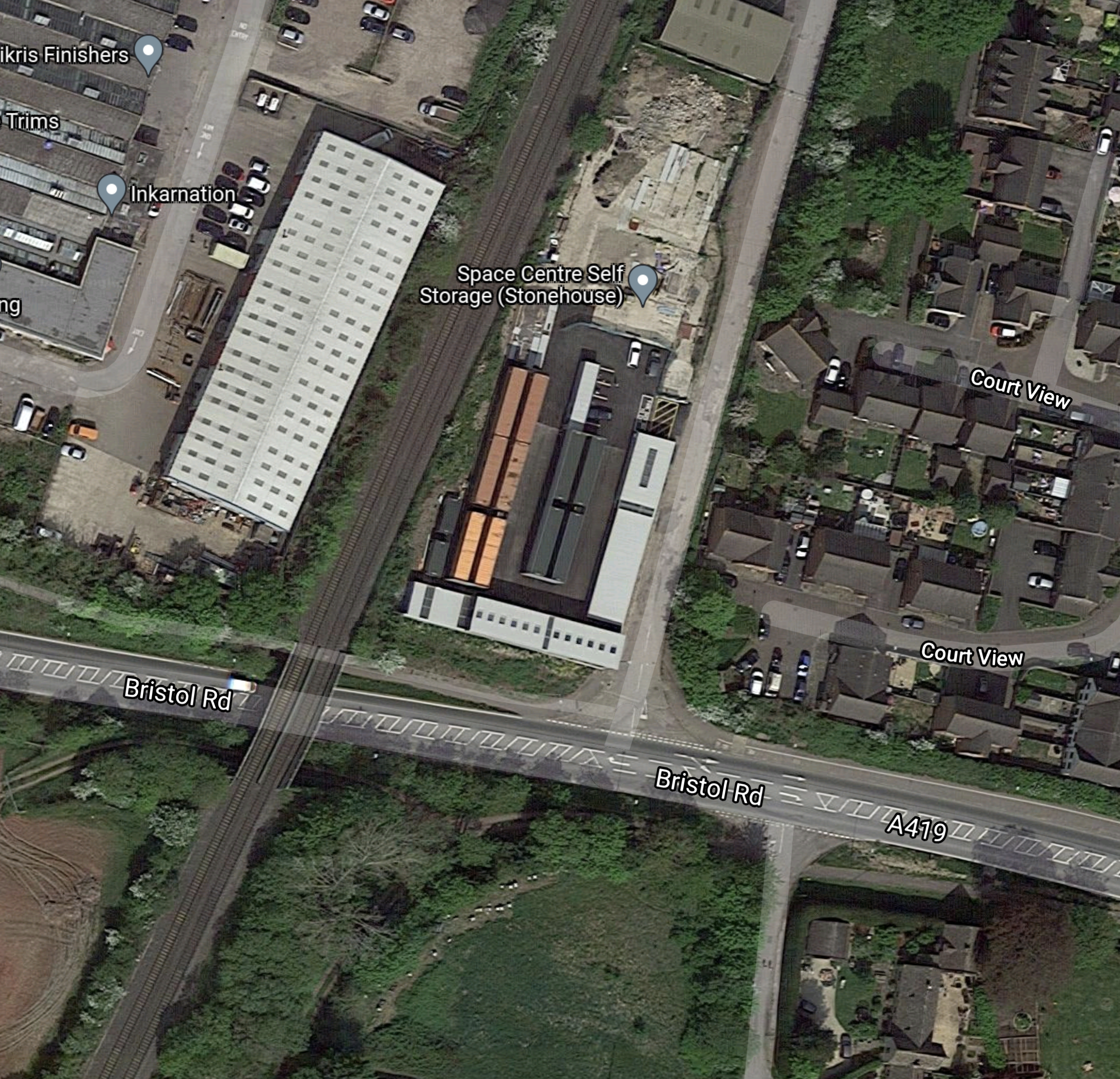
It shouldn’t be too much of a problem to fit a station where the railway crosses Bristol Road.
These are my other thoughts,
Services
The next station towards Bristol is Cam & Dursley and this station has an hourly service between Bristol and Gloucester.
Cross Country trains pass but don’t stop, but would they stop at a new station?
Car Parking
Will there be enough space for car parking bear the station?
New Housing
Wikipedia mentions that three thousand new houses may be built in Stonehouse.
This would surely be a reason for a new station.
Conclusion
It does look like the new housing is the main reason to reopen this station.
Reopening Corsham Station
On October 27th this Beeching Reversal Project was given £50,000 to build a case for reopening.
Corsham is a town in Wiltshire.
- It has a population of 13,000
- It is very much a military town, with numerous defence establishments, some of which are deep underground in former bath stone quarries.
- Corsham station closed in 1965.
As this Google Map shows the Great Western Railway passing through the town.
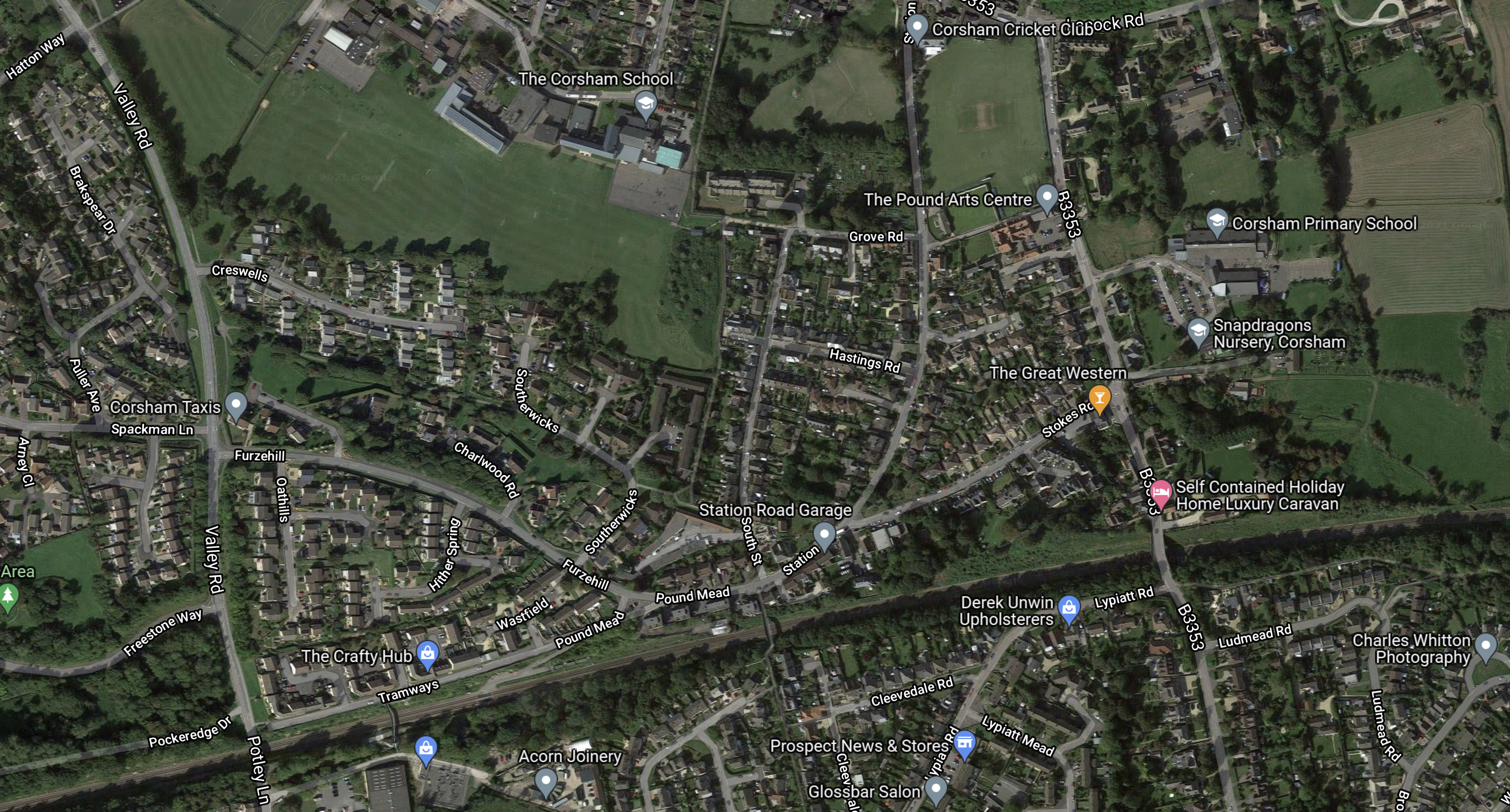
The dark scar of the railway across the map towards the bottom is clearly visible.
This second Google Map shows the site of the former station.
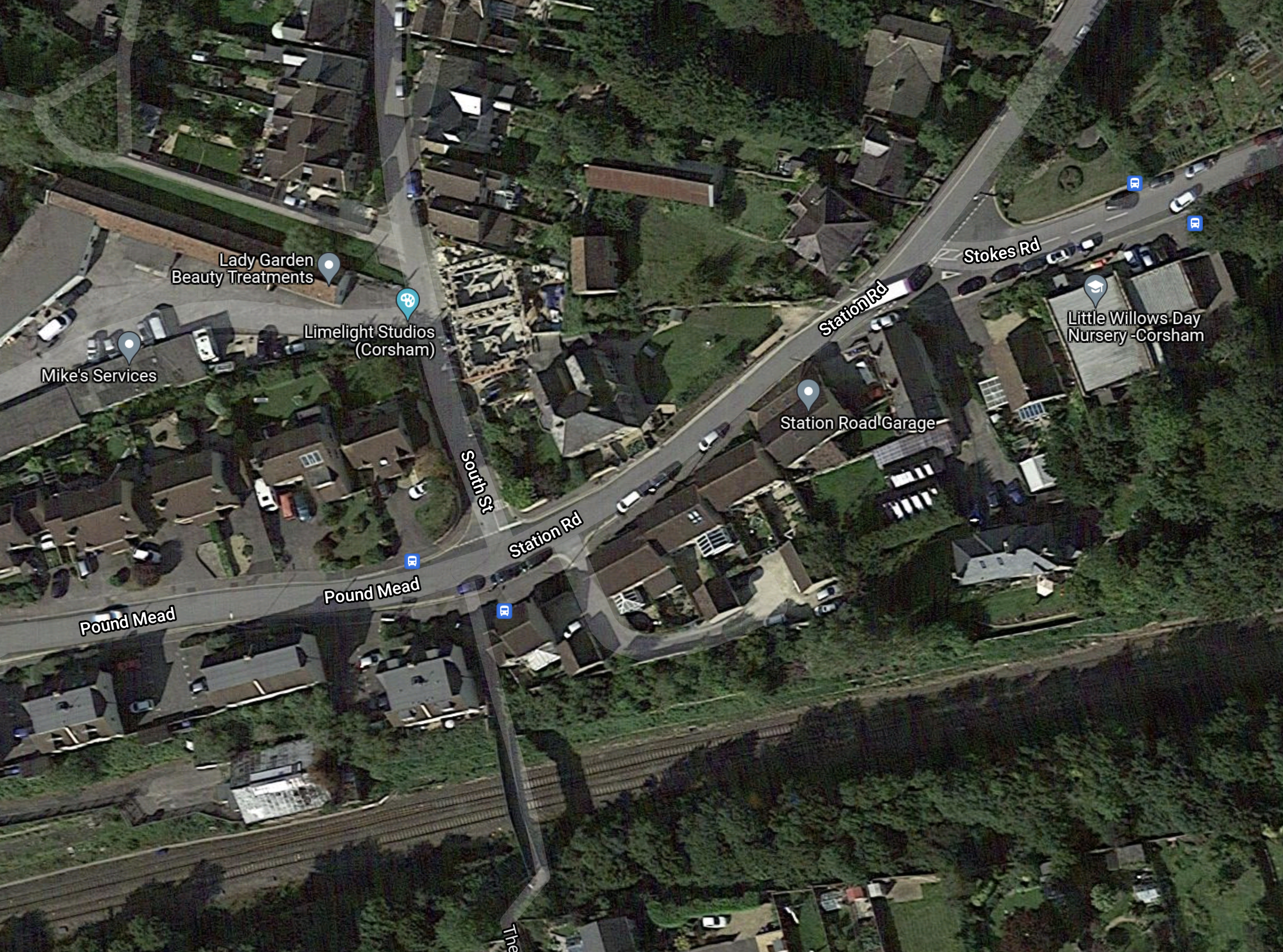
Note.
- Station Road is a bit of a giveaway.
- There is a footbridge over the double-track railway. Note the shadow.
- The railway is not electrified, but could be in the future.
- Chippenham station is to the East and Bath Spa station is to the West.
- The station was in a deep cutting on the approach to Box Tunnel, which is to the West.
I doubt that designing and building a new Corsham station will be a challenging project.
These are my thoughts on other issues.
Military Issues
The Wikipedia entry for Corsham has a section called Defence, which lists well over half-a-dozen defence sites.
Could these be a reason for the new station?
- Just like many other businesses and families, does the Ministry of Defence feel it should decarbonise?
- Are large numbers of employees and visitors driving in from Swindon and Bristol?
How many new stations would cut the country’s carbon footprint?
Services
Currently, it appears the only services going through Corsham are the Paddington and Bristol Temple Meads service
- There are two trains per hour (tph)
- The trains call at Reading, Didcot Parkway, Swindon, Chippenham and Bath Spa.
- Between Chippenham and Paddington is fully-electrified
- Trains run between Bristol Temple Meads and Chippenham, which is a distance of 24.4 miles on diesel.
These trains could stop, but would that slow the services?
Perhaps alternate services would stop at only one of Corsham and Chippenham. But that would mean the train couldn’t be used between those two stations.
An alternative philosophy would be to electrify between Chippenham and Bath Spa, so that the stops would be faster , as acceleration would be under electric power.
- Box Tunnel has been prepared for electrification.
- This would be thirteen miles of new electrification.
- Trains would run between Bristol Temple Meads and Bath Spa, which is a distance of 11.5 miles on diesel.
But the good citizens of Bath, might object to electrification through Sydney Gardens and the City Centre.
If they do object, an alternative would be to electrify between Bathampton junction and Chippenham.
- As before Box Tunnel would be electrified.
- This would be eleven miles of new electrification.
- Trains would run between Bristol Temple Meads and Bathampton junction, which is a distance of 13.7 miles on diesel.
Bath would not be despoiled by electrification.
Battery-Electric Trains
I touched on electrification in the previous section and I believe it would be reasonably easy to electrify between Chippenham station and Bathampton junction.
This would mean that there would be just 13.7 miles for the train to power itself between Bristol Temple Meads and Bathampton junction.
As it is 27.4 miles in total with perhaps a twenty minute wait in Bristol Temple Meads station, I believe this would be within the battery range of a Hitachi Intercity Tri-Mode Battery Train, which is described in this Hitachi infographic.
Note.
- Hitachi haven’t disclosed the range of the train on battery power alone.
- Twenty minutes in Temple Meads station is enough to fully charge the battery.
If the train could be recharged at Temple Meads station, the battery range needed would be just fifteen miles.
Conclusion
All stakeholders would appear to benefit from this new station.
Reopening The Darlington – Weardale Line To Passenger Services
On October 27th this Beeching Reversal Project was given £50,000 to build a case for reopening.
The current Weardale Railway is a heritage line, that extends the current National Rail service between Darlington and Bishop Auckland stations further up Weardale.
- It is a single track railway.
- The current operational length is 18 miles between Bishop Auckland West and Stanhope stations.
- The line could be extended a few miles to the site of the former Wearhead station.
- Thre is a station at the village of Stanhope which i has a castle, a community hospital and a population of 1,600.
- There is a station at the village of Frosterley which has a population of 700.
- There is a station at the village of Witton-le-Wear which has a population of 700.
- There seem to be lots of caravan parks along the river.
- From my virtual helicopter, the track looks in reasonable condition.
- There appear to be a couple of passing loops.
- There don’t appear to be any tunnels.
- The Weardale Railway has several bridges over the River Wear.
- I suspect the scenery is not bad.
To my untrained eye, this section of railway would appear to have possibilities for reopening, without any serious engineering problems.
These are a few of my thoughts.
The Connection To National Rail
This Google Map shows Bishop Auckland station, where the Weardale Railway connects to the National Rail network.
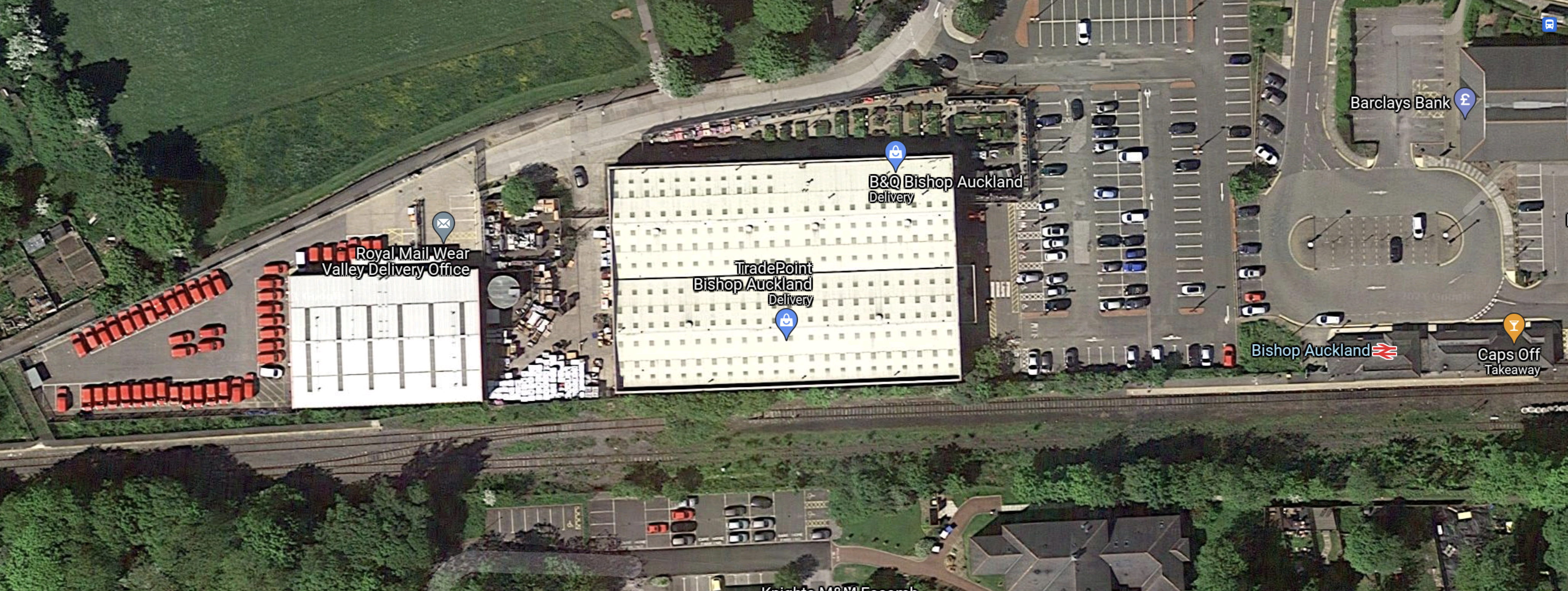
Note.
- The station appears to be well-placed in the town.
- There is plenty of space for tracks connecting the two systems.
I suspect that building a combined through and terminal station that would satisfy the needs of all stakeholders would not be the most challenging of tasks.
Could The Extended Line Have A Japanese Fairy Godmother?
Consider.
- Hitachi’s train factory at Newton Aycliffe is five miles to the South of Bishop Auckland.
- Hitachi have stated that they are developing battery-electric trains for lines without electrification.
- Developers of modern trains with complicated computer systems seem to go through many software versions.
I have to ask the question, if Hitachi would like to have a twenty-mile test track on their doorstep?
If they were testing trains that were agnostic about their power supply, the Weardale Railway would not need to be electrified, although there could be a couple of charging systems.
Would Access To The Quarries At Wearhead Be Needed?
The original Weardale Railway was built to access the quarries at Wearhead, but they switched to road transport some years ago.
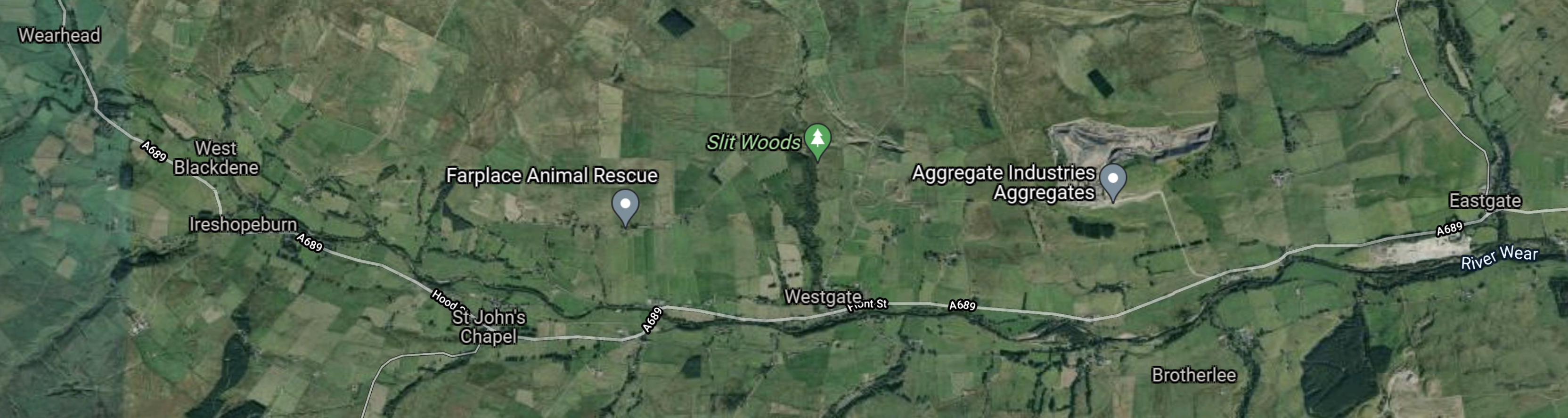
This Google Map shows the Wearhead area.
Note.
- Wearhead is in the North-West corner of the map.
- There is a quarry and there used to be a fluorspar mine.
- The white scar at the East of the map was a cement works.
Is there something, that could possibly be mined in this area, that could be taken out by train.
I think it should be born in mind, that mining and quarrying used to be a very dirty and carbon-intensive industry, but big mining companies are now embracing zero-carbon technology.
Could A Holiday Company Like Center Parcs Develop A Site In The Wear Valley?
I noticed a lot of caravans and chalets, as I examined the line.
Could a big operator like Center Parcs develop one of their holiday centres?
It could even be developed with a station.
Is New Housing Needed?
Does the local authority want to develop housing along the line?
What Rolling Stock Will Be Used?
There is no point in extending the line in these days of global warming without providing zero-carbon trains.
The Tees Valley Combined Authority is keen on hydrogen and there are good reasons.
- There is hydrogen available from chemical plants on Teesside.
- Hydrogen will give the trains a long range.
- The trains would probably only need refuelling once a day.
- In addition, Alstom are looking for an order for their Class 600 train, which is a conversion of a Class 321 train.
But I have my doubts about Alstom’s trains and Hitachi have doubts about hydrogen.
Consider.
- Do you really want to run hydrogen trains on a line where steam trains run?
- Darlington station is fully-electrified and it is also to be remodelled for more capacity and High Speed Two.
- Bishop Auckland and Darlington is just twelve miles.
- Darlington and Saltburn is just thirty miles.
With charging systems at Bishop Auckland, Saltburn and Stanhope, I am fairly sure Hitachi could develop an electric train for Teesside’s railways.
Conclusion
Hitachi could be key to the design of the reopening of the Darlington and Weardale Line.
Anglesey Hydrogen Can Bridge UK’s Energy Gap Says Economics Expert
The title of this post, is the same as that of this article on the University of Bangor web site.
This is the sub title.
Anglesey can become a UK leader in hydrogen energy technology, cleaning up the transport sector and creating high quality jobs across North Wales, according to a leading Welsh economic expert.
The University of Bangor is a respected university, that goes back to the nineteenth century.
But for Liverpool giving me an unconditional offer, as Bangor was one of the universities on my UCCA form, I could have studied in the North-West corner of Wales.
After a resume of where we are with hydrogen in the world, Dr. Edward Jones of Bangor University outlines how North West Wales can be turned into a hydrogen hub, to join similar hubs at Deeside in Flintshire and at Milford Haven in Pembrokeshire.
This is a paragraph of the article.
Dr Jones believes hydrogen could also hold the key to powering transport in future through a Welsh invention from the 19th century (the hydrogen fuel cell was developed in Swansea by William Grove in 1842).
William Grove was an interesting lawyer and scientist.
Dr. Jones would appear to be very much in favour of using hydrogen to take Wales forward to being zero-carbon in 2050.
I have written a few posts about the transformation of Anglesey and North West Wales, as Wales moves towards this goal. I also have some other thoughts of my own.
Holyhead Hydrogen Hub
This is happening and I wrote about it in Holyhead Hydrogen Hub Planned For Wales.
High Speed Two To Holyhead
I believe this could be a way to create a zero-carbon route between London and Dublin in under five hours and I wrote about it in Could High Speed Two Serve Holyhead?.
- London and Holyhead in a battery-equipped High Speed Two Classic-Compatible train should be under three hours.
- A single High Speed Two Classic-Compatible train would run between London and Holyhead, with a passenger capacity of around five hundred. It would probably split and join with another service at Crewe.
- Discontinuous electrification would be provided along the North Wales Coast Line.
- The trains could call at Old Oak Common, Birmingham Interchange, Chester, Crewe, Llandudno Junction and Bangor.
A High Speed catamaran would speed passengers between Holyhead and Dublin in under two hours.
Hydrogen-Powered Catamarans From Holyhead
The dynamics of a diesel-powered high speed catamaran are well-proven, with some large craft transporting passengers and vehicles on sea crossings all over the world.
Type “hydrogen-powered high speed catamaran” into Google and you get several hits to research and development projects, but no-one appears to have taken a large high speed craft and converted it to hydrogen.
But I do believe that someone somewhere is developing a hydrogen-powered catamaran with something like the following specification.
- 200 passengers
- 100-mile range
- 60 knot operating speed.
The HSC Francisco is a high speed craft that plies between Buenos Aires and Montevideo carrying over a thousand passengers and a hundred cars at 58 knots. It is powered by gas-turbine engines running on liquified natural gas.
I believe I’m not asking for the impossible.
Anglesey Airport As A Zero-Carbon Airport
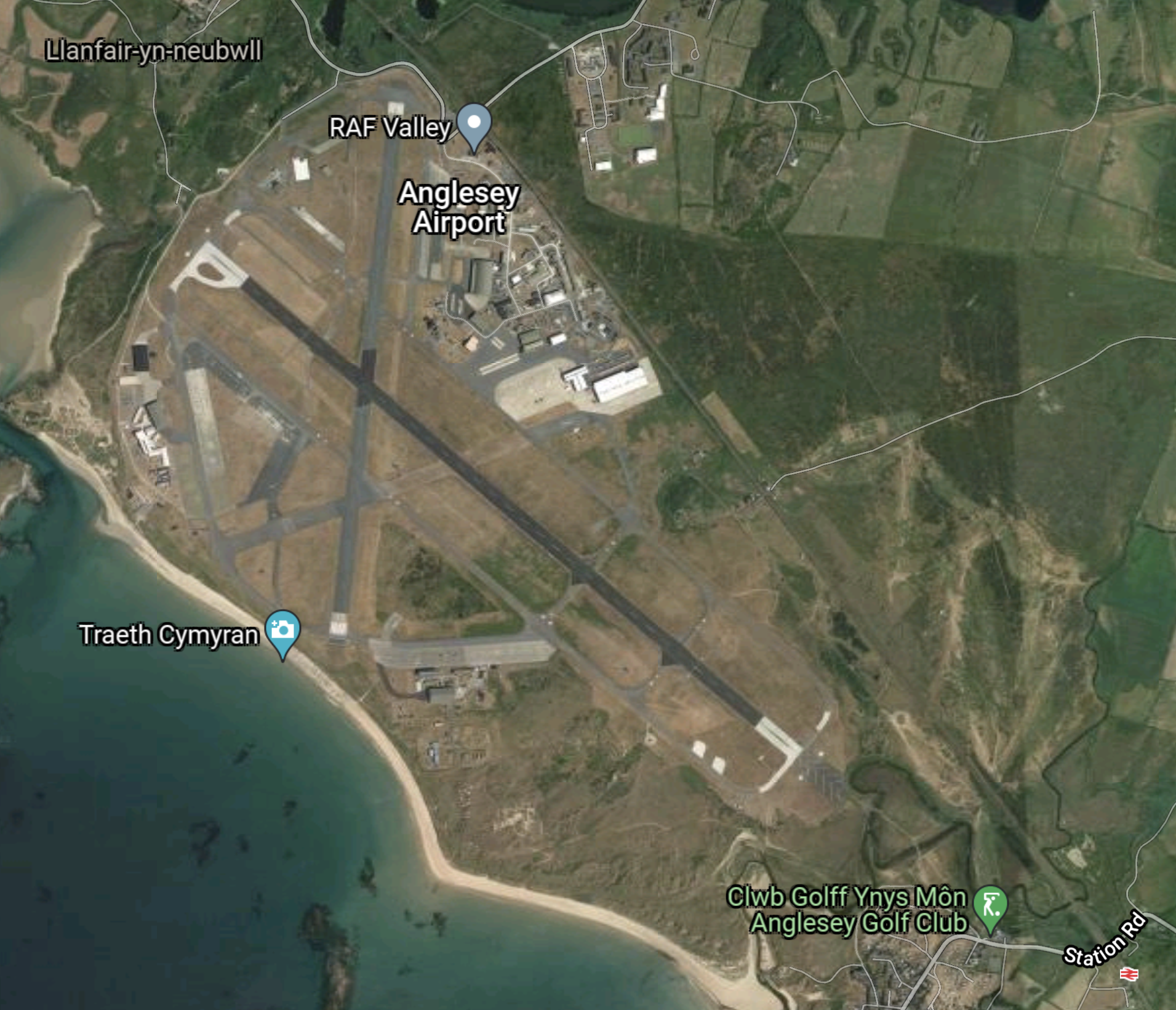
Anglesey Airport uses part of RAF Valley and has hosted services to Cardiff.
This Google Map shows the runways of RAF Valley.
Note.
- The longest runway 14/32 is over two thousand metres long.
- Rhosneigr station in the South East corner of the map.
- The facilities of Anglesey Airport to the North-East of the runways.
The railway forms the border of the airport, as this second Google map shows.
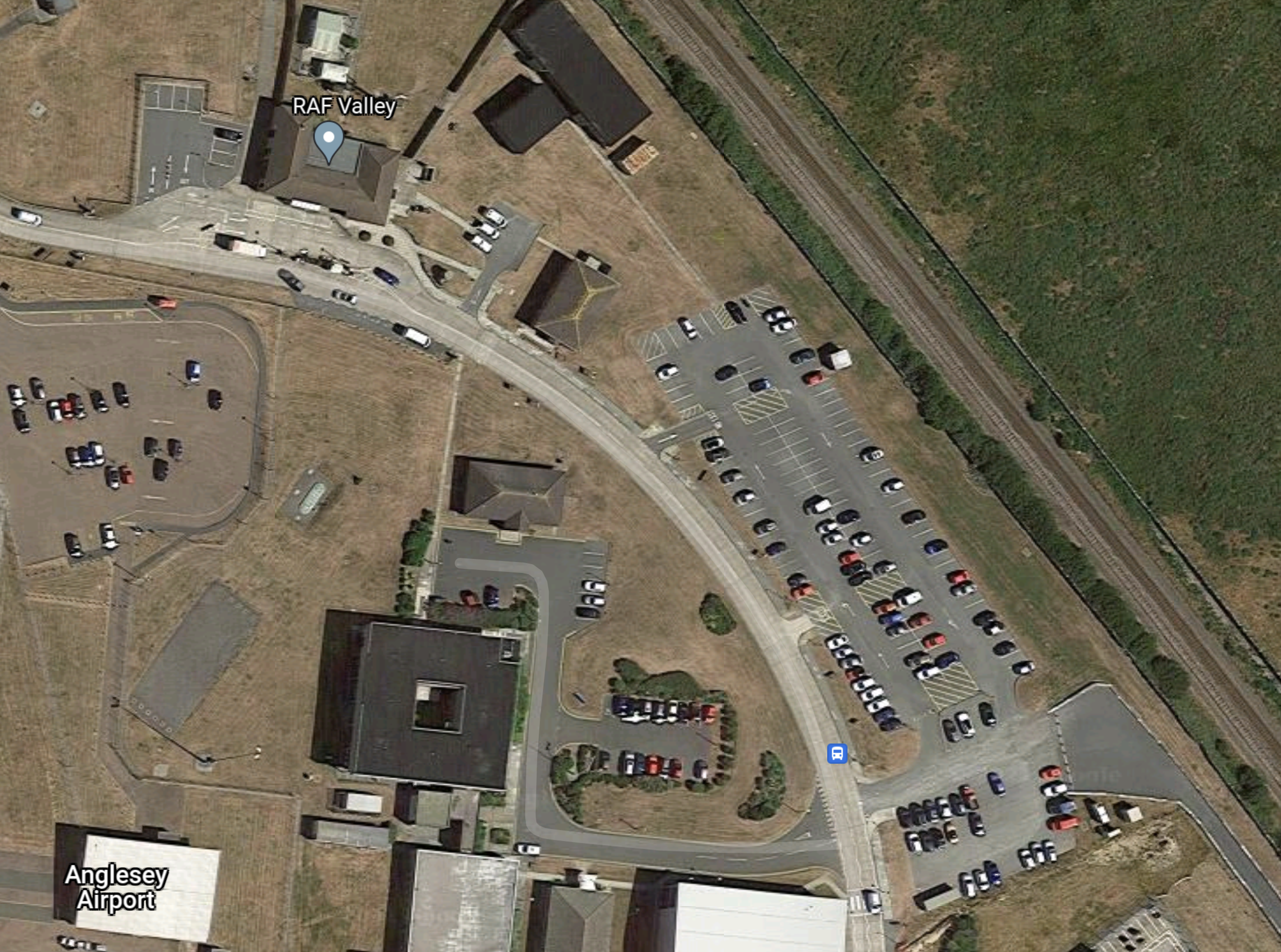
The railway is straight as it passes the Airport and there would be space for a two-hundred metre bi-directional step-free platform for passengers for the Airport.
Airbus are proposing a hydrogen-powered ZEROe Turbofan.

If you think it looks familiar, I believe that Airbus are proposing to develop the aircraft out of the current Airbus A320neo.
- The capacity will be up to 200 passengers.
- The range will be up to 2000 miles.
- Dublin and Anglesey Airports are just 71.5 miles apart.
- The cruising speed of Mach 0.78 would be irrelevant on this route, as it would probably fly a route to minimise noise.
The plane would probably be able to do several trips between Anglesey and Dublin without refuelling.
As the Port of Holyhead is developing a hydrogen infrastructure, I suspect that to provide hydrogen refuelling at Anglesey Airport would be possible.
I believe that by combining hydrogen-powered aircraft with battery-electric trains, some difficult sea crossings can be made carbon-free.
I believe that Anglesey Airport could be key to a zero-carbon London and Ireland service.
- Airbus are also proposing a 100-seat ZEROe Turboprop.
- Belfast, Cork, Derry and Shannon would also be in range.
Flights could also continue to and from Cardiff.
Reopening The Anglesey Central Railway
This has been proposed as a Beeching Reversal project.
I wrote about it in Reopening The Anglesey Central Railway.
It could be reopened as a zero-carbon railway.
Conclusion
There is a lot of scope to use hydrogen in North West Wales and Anglesey.
 The Anonymous Widower