Is The Silvertown Tunnel A Silver Elephant?
I have been through the Silvertown Tunnel several times now and every time the bus has never really slowed for lots of traffic.
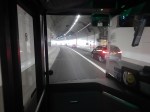
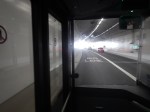
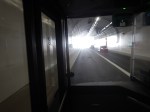
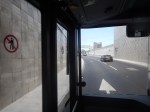
I went through this morning on Easter Sunday and these pictures show all the other traffic I saw.
Note.
- I was sitting in the front passenger seat of a 129 bus, which is on the left of the bus.
- We were going from South to North through the Silvertown Tunnel.
- I could read the driver’s speedometer and it showed within a mile per hour of thirty all the way.
- We were passed by only one car in the tunnel.
- There were about a dozen passengers on the lower deck of the bus.
- I didn’t check how many were on the top deck of the bus.
Even on an Easter Sunday, I would have thought the service would have been busier.
Is The Silvertown Tunnel A Silver Elephant?
There are two answera to this question.
- Yes – A lot of money has been spent for just a few cars and bus passengers to have an easy ride through the tunnel.
- No – As traffic is flowing freely through the tunnel, it shows the tunnel is doing its job and freeing up traffic in East London.
But whatever view you take, a lot of money has been spent for a small number of vehicles and passengers to pass through the tunnel.
I also suspect very little extra revenue is being generated.
The Jubilee Line Was Busy
The complete route I took this morning was as follows.
- Home To Angel – 38 bus – Not very busy.
- Angel to London Bridge – Northern Line – Not very busy.
- London Bridge to North Greenwich – Jubilee Line – All seats taken.
- North Greenwich to West Silvertown – 129 bus – Not very busy.
- West Silvertown to Canning Town – Docklands Light Railway – Not very busy.
- Canning Town to Canada Water – Jubilee Line – All seats taken.
- Canada Water to Dalston Junction – Overground – Not very busy.
- Dalston Junction to Home – 30 bus – Not very busy.
Note.
- Only the sections on the Jubilee Line were really busy, with all seats taken.
- London Bridge, Stratford and Waterloo stations on the Jubilee Line are also busy National Rail stations.
- London Bridge, Canada Water, North Greenwich, Canning Town and Stratford all have large modern well-designed bus stations within easy walking distance of the Jubilee Line.
- Given, that there is now a charge to cross the river, have a lot of people decided to take the Jubilee Line rather than their car to go to the O2 at North Greenwich and the Olympic Park and Eastfield at Stratford?
I strongly feel, that more capacity is needed on the Jubilee Line, as no matter what time I use it, I never seem to get a seat.
Taking The Dover Road
This Google Map shows how the A2 ( the Dover Road) links up with the Silvertown and Blackwall Tunnels.
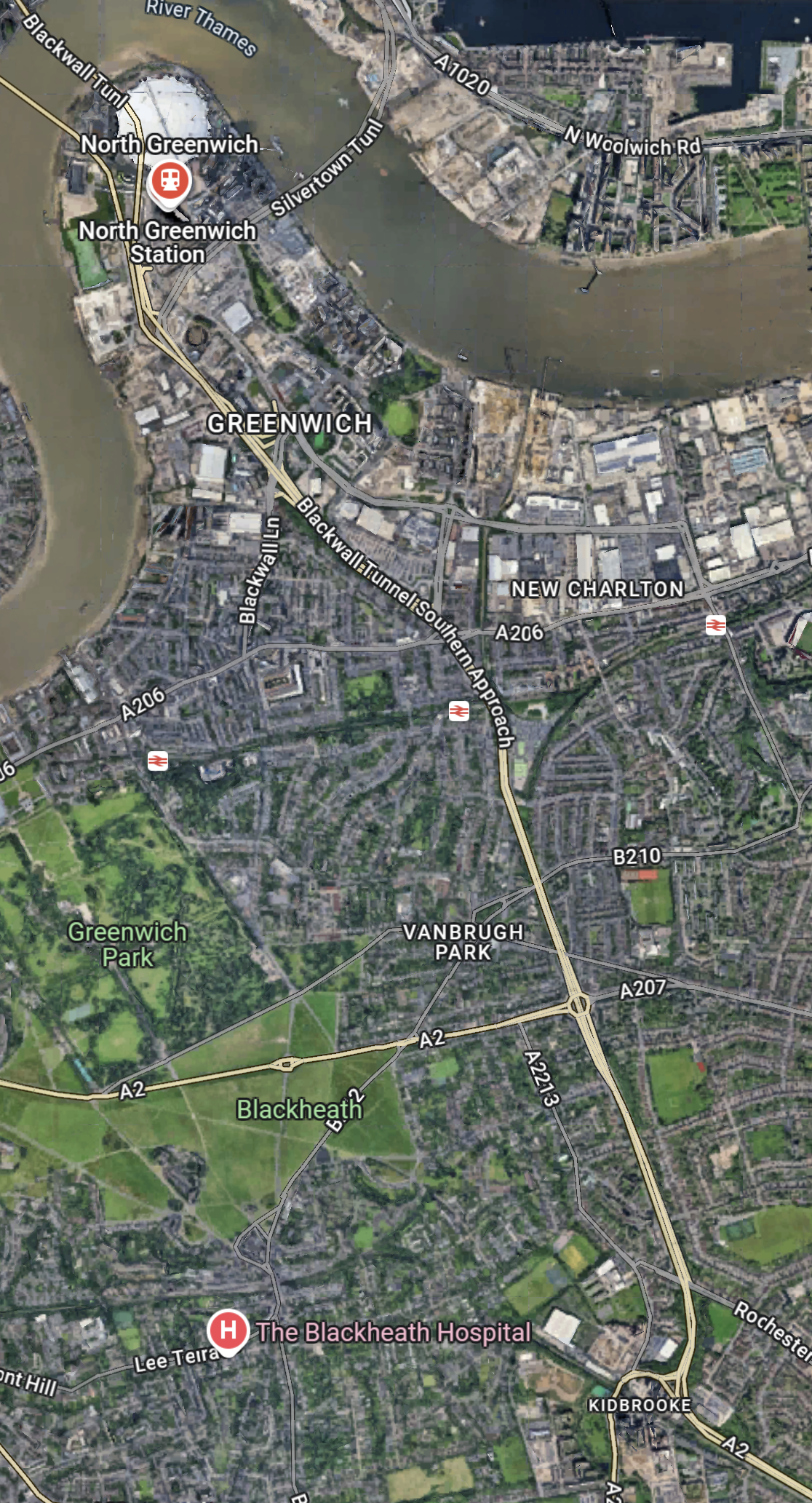
Note.
- The O2 in the North-West corner of the map, with North Greenwich station in red under it.
- The Blackwall Tunnel crosses the river to the North-West of the O2.
- The Silvertown Tunnel crosses the river to the East of the O2.
- Running diagonally across the map is the Blackwall Tunnel Southern Approach, which also serves the Silvertown Tunnel.
- The station to the West of the Southern Approach is Westcombe Park station.
- Click the map to show it to a larger scale.
This second Google Map shows the O2, North Greenwich station and the approaches to both tunnels.
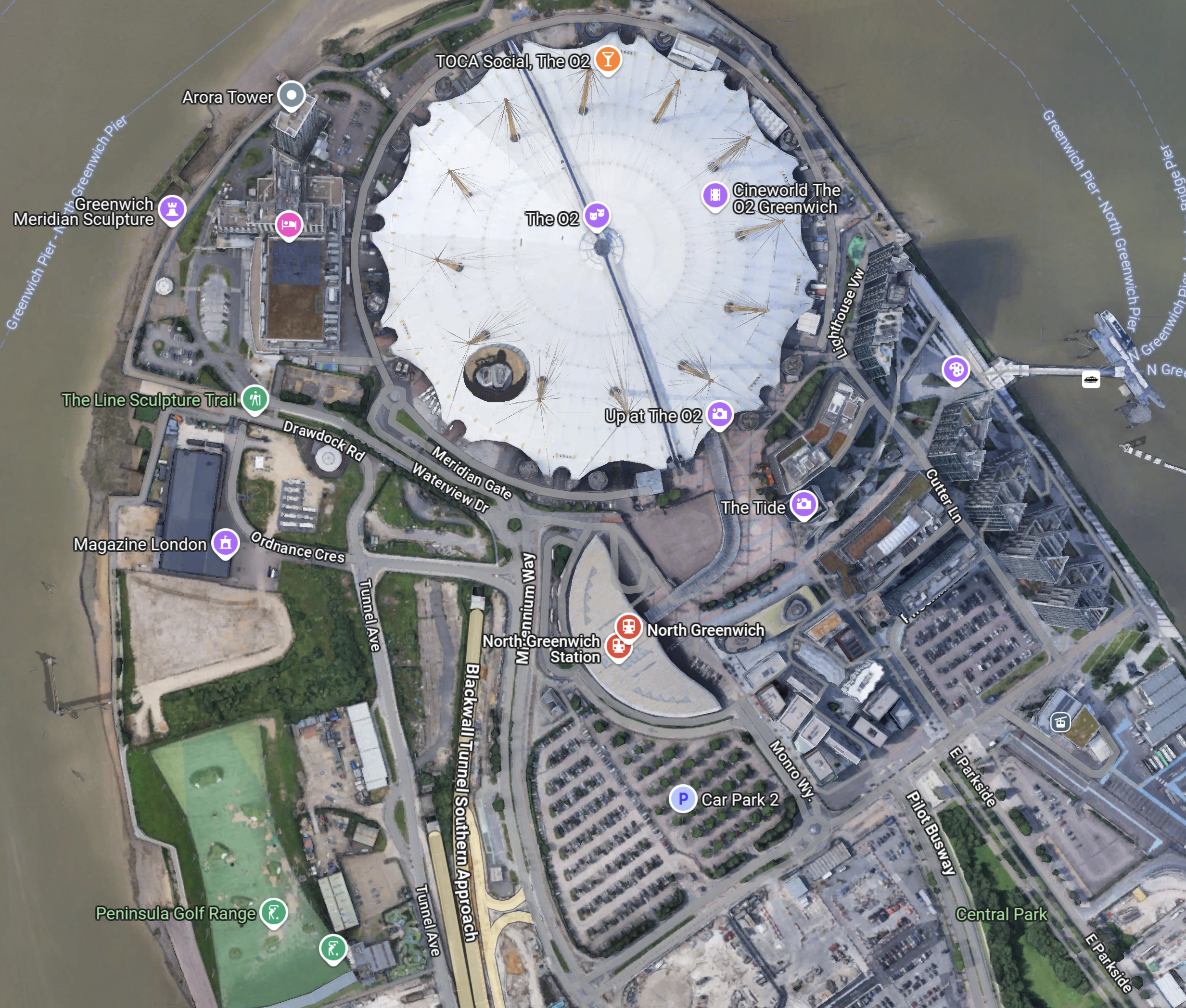
Note.
- The half-moon-shaped building is North Greenwich station.
- The tunnel approaches are rather complicated, but seem to be working well.
- There is lots of car parking.
- The Blackwall Tunnel Southern Approach leaves the tunnles in a Southerly direction.
- Click the map to show it to a larger scale.
This third Google Map shows how the A2 (Dover Road) and A20 (Folkestone Road) link up to the Blackwall Tunnel Southern Approach.
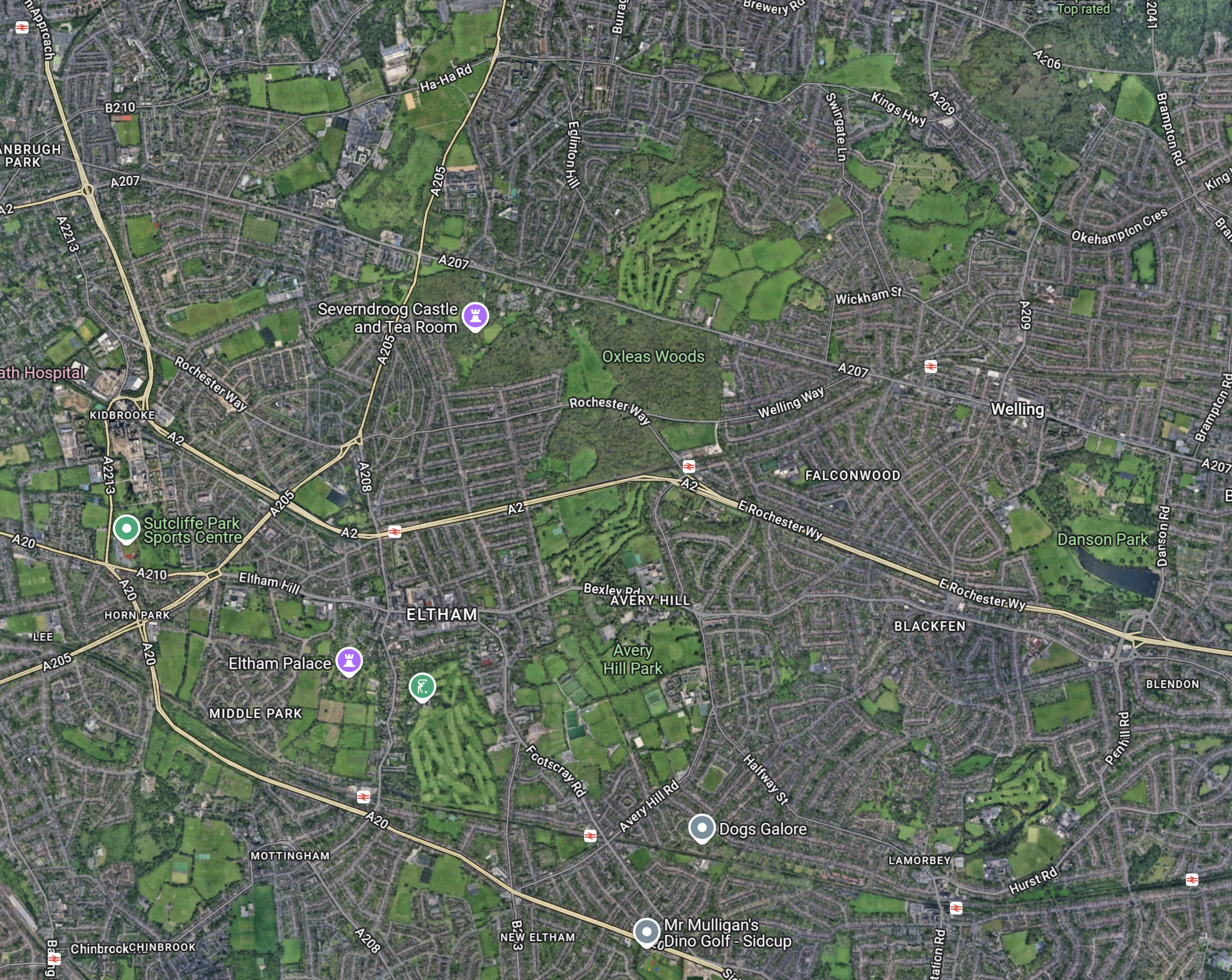
Note.
- The station in the North-West corner of the map is Westcombe Park.
- The road running diagonally South-East from the corner is the Blackwall Tunnel Southern Approach.
- The Blackwall Tunnel Southern Approach then turns East to join with the A2 (Dover Road).
- The Blackwall Tunnel Southern Approach also links up with the A20 (Folkestone Road) , which is the other road running diagonally at the bottom of the map.
In some ways, I am rather surprised at how little traffic is passing through the tunnels given this double dual-carriageway/motorway connection to East Kent, the Channel Tunnel and the Continent. It also has a double connection at both the A2 and A20 to join the M25.
Perhaps, it does mean that the charges are frightening drivers away.
The Roads To The North
This Google Map shows the main approach road to the Blackwall Tunnel.
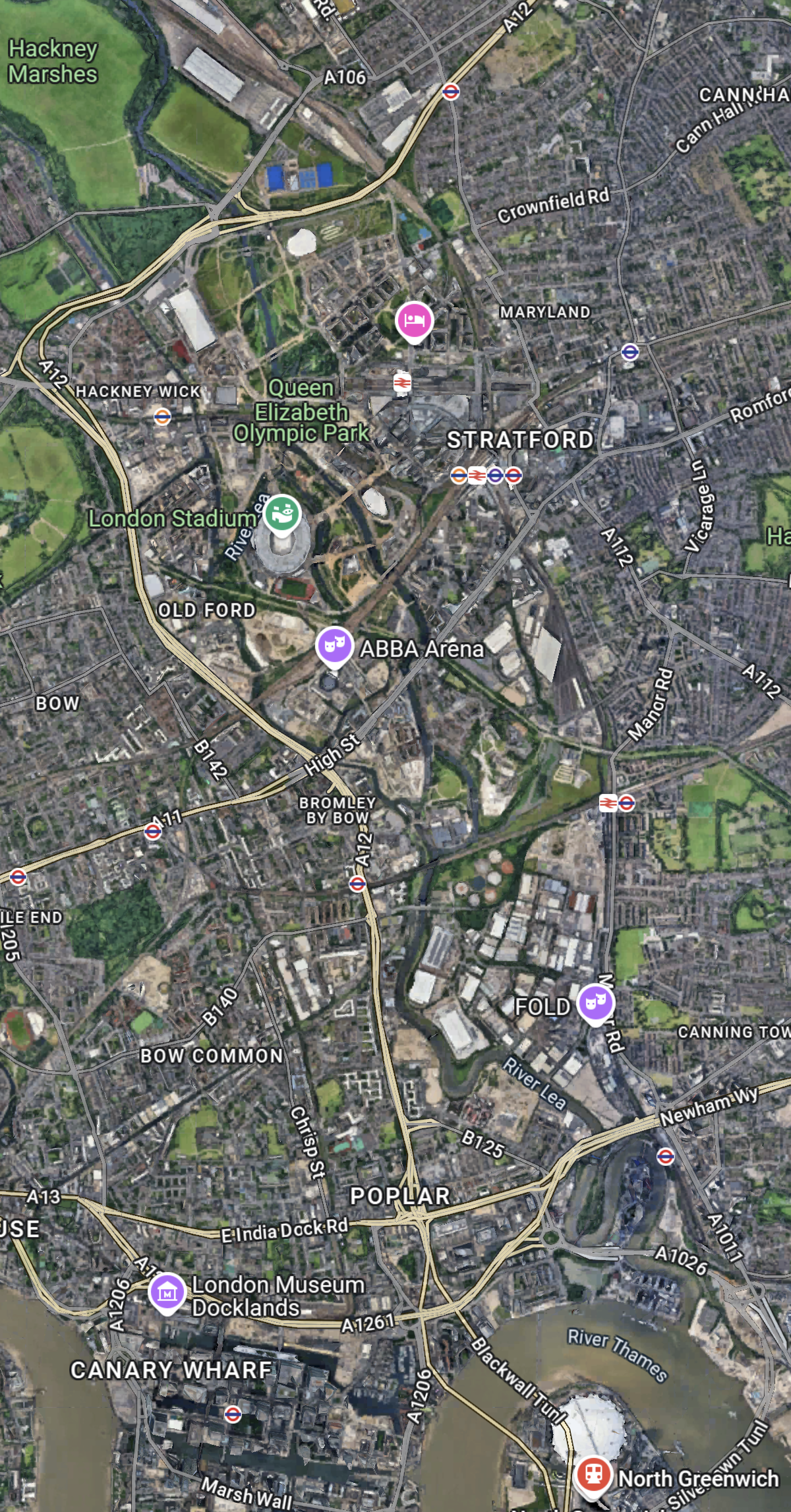
Note.
- The O2 and North Greenwich station in the South-East corner of the map.
- The Blackwall Tunnel crosses the river to the North-West of the O2.
- The A12 dual-carriageway runs North up the Lea Valley through Hackney.
- There is a dual-carriageway/motorway box formed by the M11 in the West, A12 in the East, M 25 in the North and A 406 in the South to speed traffic on its way, including to the two main routes to the North; the M1 and the A1.
I have lived for thirty years of my life in North London, and I feel, that although the roads to the North of London could be improved, I don’t suspect they are the reason drivers are not using the Silvertown and Blackwall Tunnels.
I would suspect that drivers don’t like or trust the charging system, or could it be that the public transport system in London and especially the East of London is too good?
But we do need to increase the capacity of the Jubilee Line either directly or would a high-capacity bus-route shadowing the line, be able to add the extra capacity needed?
My First Trip Through The Silvertown Tunnel – 7th April 2025
These pictures show my first trip through the Silvertown Tunnel.
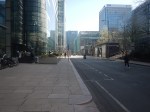
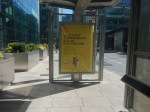

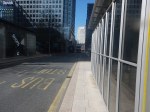
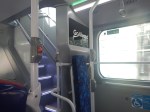
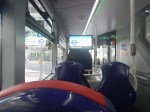
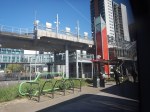
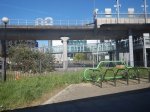
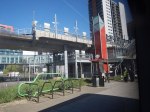

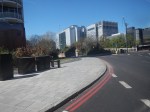
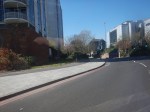
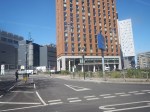



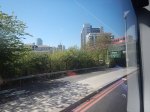
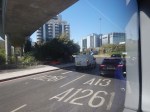
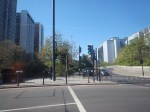

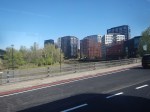

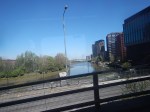
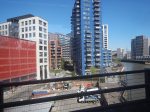
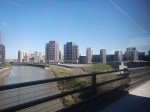
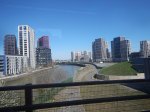
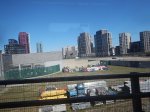
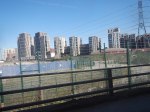

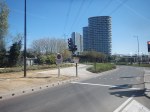
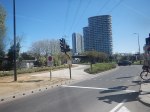
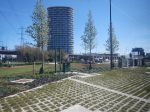
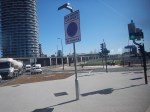
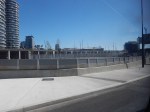
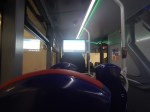
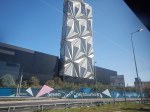
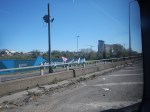
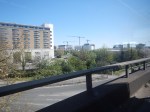
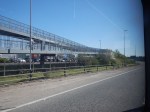

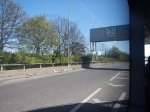


Note.
- The two S4 Bus Stops are not far from the Waitrose At Canary Wharf.
- I picked up the S4 Bus in the North Collonade At Canary Wharf at stop H.
- Coming North I would have been dropped at Stop J, which is close to the plaza of the famous clocks.
- Unfortunately, I was given bad information by station staff and I took a roundabout route to stop H, but a helpful security guard put me right.
- One of the first stops of the bus was East India station, which looks a good accessible interchange with the Docklands Light Railway.
I got out of the bus at Blackheath station, which was a short walk across the road from the bus stop.
I have some thoughts.
Who Chose The Chinese Buses?
On a prestige project like this it is a classic opportunity to show off, the best of British design and technology.
So undoubtedly, it was a mistake that the buses through the tunnel are Chinese.
I doubt the French, German or Spanish would have chosen Chinese buses on such a project.
Are There Enough Stops At Stations Close To The River?
There seem to be quite a few small hotels between the Silvertown Tunnel and Blackheath and I wondered if there were enough stops.
There also doesn’t appear to be a stop by Westcombe Park station.
Thirty mph Seems Fast Enough In The Tunnel
Everything seemed to be going smoothly in the tunnel.
Conclusion
I shall be writing more about the Silvertown Tunnel.
But from a first ride-through, it looks a well-built tunnel.
London Overground Train Makes Rare Diversion To London Bridge Station
The title of this post, is the same as that of this article on Ian Visits.
This is the sub-heading.
On Sunday morning, a London Overground train paid a visit to London Bridge station — a station that the Overground doesn’t usually visit.
These were the first two paragraphs.
It was here for a test run ahead of a special service that will run on Easter Sunday, and the test was needed to ensure that what worked on paper also worked in practice.
The reason for the Easter Sunday special is weekend engineering works elsewhere which would mean no Southern trains between Victoria and London Bridge, while at the same time, the London Overground south of the river can’t go north.
Note.
- Judging by Ian’s pictures, it was a very thorough test of clearances and ramp functions.
- According to Real Time Trains, the two services used platform 5 at Crystal Palace and Platform 13 at London Bridge.
- The distance was 7.5 miles.
- Services took 23 minutes to London Bridge and 19 minutes for the return.
This image shows a London Overground train in Platform 5 at Crystal Palace station.
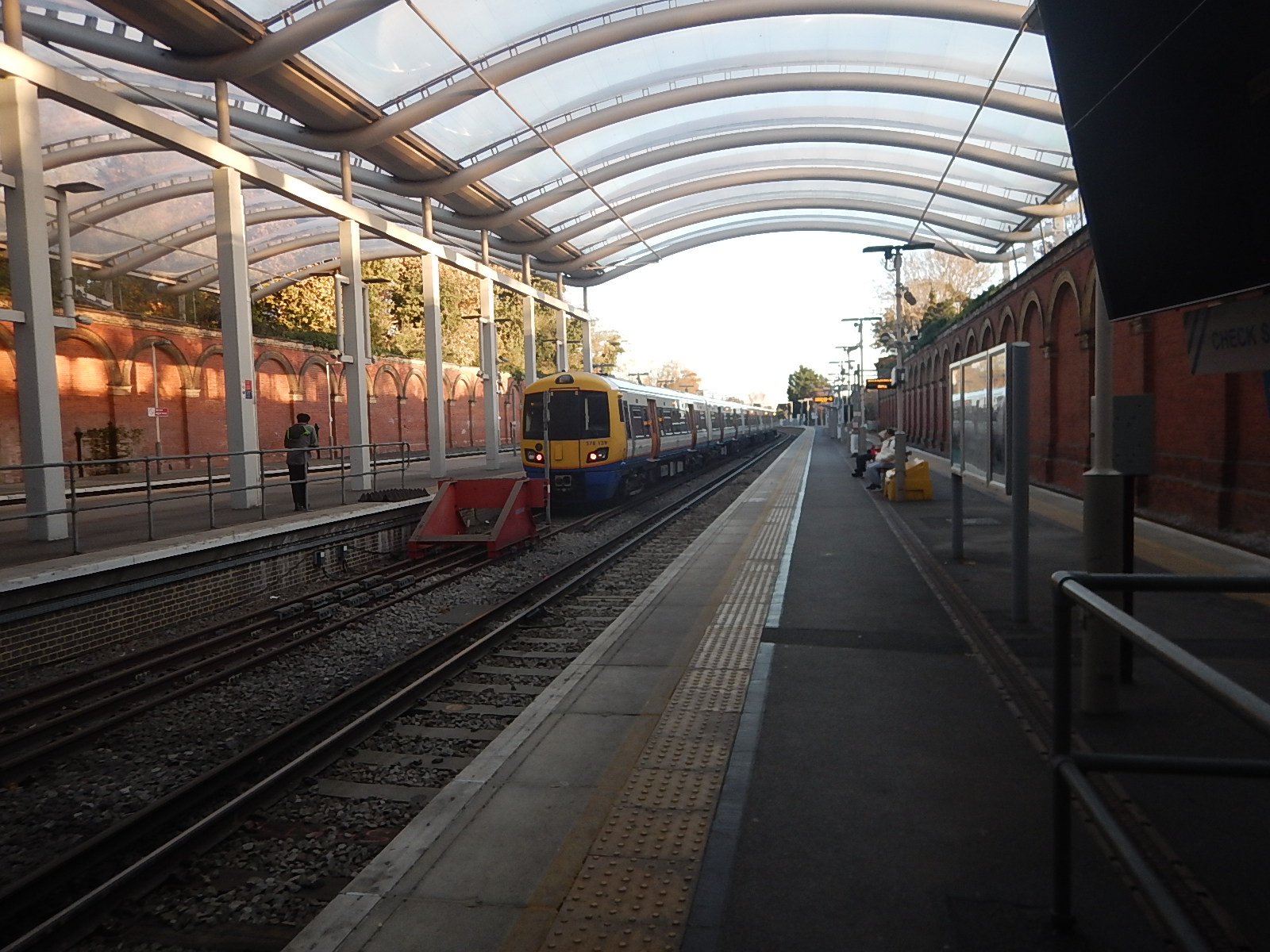
In Overground To London Bridge Under Consideration, I talked about how Transport for London were thinking about creating a new Overground service between London Bridge and Crystal Palace.
Sunday’s test also shows that if the paths are available, London Overground can run a service between London Bridge and Crystal Palace.
Given that the times for the out and return trips were 23 and 19 minutes on Sunday, it appears to me, that the following is possible.
- One train could run an hourly service.
- Two trains could run a two trains per hour (tph) service.
Trains could terminate in platform 3, which is on the right in the image and only has two trains per day.
There would be the following trains to London from Crystal Palace.
- London Overground – Four tph to Canada Water, Whitechapel and Highbury and Islington.
- London Overground – Two tph to London Bridge
- Southern – Two tph to London Bridge
- Southern – Four tph to London Victoria
These would total to.
- Canada Water – four tph for Jubilee Line
- Highbury & Islington – four tph for Victoria and North London Lines
- London Bridge – four tph for Thameslink, Jubilee and Northern Lines
- London Victoria – four tph for Victoria, Circle and District Lines
- Whitechapel – four tph for Elizabeth, Victoria, Circle, District and Hammersmith & City Lines
Note.
- The two extra tph to London Bridge even everything up to four tph.
- The London Bridge and Crystal Palace service could be run by any suitable train and I suspect it could be eight cars. What about using some of the spare Class 379 trains?
The London Bridge and Crystal Palace service wouldn’t need trains with a tunnel evacuation capability, so could use Class 378, 379, 387 or 710 trains.
Canary Wharf Move Means Expansion For Drug Trials Operator
The title of this post, is the same as that of this article on The Times.
These three paragraphs outline the story.
An Aim-listed company that tests infectious and respiratory disease products on volunteers is preparing to move its operations to Canary Wharf.
Amid booming demand for its services, hVIVO, which infects volunteers with safe doses of virus agents, then quarantines them before testing the efficacy of vaccines and antivirals — in so-called human challenge trials — will move from its clinics in Whitechapel, east London, to a new larger facility near by owned by Canary Wharf Group early next year.
Canary Wharf is aiming to attract businesses from the life sciences and health sectors in a drive to become a sciences hub and less reliant on the financial services industry.
This is the second story about life science companies moving to Canary Wharf after Canary Wharf Boosts Its Science Ambitions.
I have my thoughts.
Canary Wharf Is A Transport Hub
Canary Wharf is served by the following transport links.
- Buses
- Docklands Light Railway
- Elizabeth Line
- Jubilee Line
- Thames Clipper
It is very well-connected, which means that staff and volunteers can get there easily.
Canary Wharf Is A Leisure Destination
Canary Wharf is very much more than a collection of expensive offices.
There are shops, bars, restaurants, a museum and a cinema complex.
There Is A Shortage Of Lab-Rats
I volunteer for medical research and regularly, I’m called in to help with the recruitment of more volunteers.
I suspect, that many would prefer to volunteer at Canary Wharf, rather than some parts of London.
Conclusion
I suspect that we’ll see an expansion of medical research of all kinds at Canary Wharf.
Could The Giant Station At Bank, Liverpool Street, Monument And Moorgate Be Considered A Superhub?
In Is The City Of London Moving Towards One Giant Station?, I showed how the four stations were being drawn together and developed as one large station that served the heart of the City of London.
London is also developing other large interchange stations that could claim because of their connectivity could be classed as London superhub stations.
- Canary Wharf stations, which connect the Elizabeth and Jubilee Lines, and the Docklands Light Railway.
- Old Oak Common station, which could bring together the Central, Chiltern and Elizabeth Lines, the London Overground and High Speed Two.
- Stratford station, which connects the Central, Elizabeth and Jubilee Lines, the Docklands Light Railway, the London Overground, High Speed One and the Great Eastern Main Line.
- Whitechapel station, which connects the Circle, District, Elizabeth and Hammersmith & City Lines, and the London Overground.
But what are the characteristics of a superhub station?
A Lot Of Lines And Services
Obviously, it must have a lot of lines and services, so perhaps Clapham Junction station is the original superhub station.
All Lines Should Have Step-Free Access
This surely, goes without saying.
There Should Be Lots of Information
If the station is large it needs a lot of information and there’s probably the space to put it.
Helpful Staff
Should we have a fully-staffed kiosk at superhub stations, as there are at some main line stations?
Good Bus Connections
Bus connections at a superhub station must be comprehensive and probably connect to other superhubs.
There Should Be A Selection Of Shops For Travellers
I do my daily food and other shopping, as I travel around London. I’ll often use a station like Paddington with a good selection of shops.
Toilets
There are not enough public toilets in London.
Cash Machines
I know we’re using less cash, but a large station is a secure place to put a cash-machine.
Works Of Art
I also believe that railway stations are a secure place to put some of those large bronze sculptures and other works of art, that are currently locked away in the storerooms of galleries.
I Can’t Wait Until The Sixth Of November
This morning, I wanted to go between Moorgate and Romford stations.
Because the Elizabeth Line is not fully joined up, I wanted to avoid a long walk.
So I had decided, that the best way to go would be.
- Hammersmith and City Line from Moorgate to Mile End.
- Central Line from Mile End to Stratford.
- Elizabeth Line from Stratford to Romford.
Note that both interchanges are cross-platform ones, so it is certainly a route with the minimum of walking.
When I got to Moorgate station, it appeared that there were problems with the Hammersmith and City Line, so assuming that things would be OK from Whitechapel, I took the Lizzie Line one stop to try my luck from there.
But my luck was out and after waiting for about twenty minutes in a stationary District Line train for a lift to Mile End station, I gave up and returned to the Lizzie Line, where I took a train to Canary Wharf station.
I’d changed between the Lizzie and Jubilee Lines before and wrote about it in Changing Trains At Canary Wharf Station – 13th June 2022.
I had not been impressed, as I’d found it a long walk.
But this time, I followed a route between the Eastern ends of both stations, which goes past Waitrose in the shopping centre. Opposite Waitrose was this stall.


That looks good for a pit stop. Badiani 1932 appear to have realised that London has a chronic shortage of ice cream and have opened a number of shops.
Once on the Jubilee Line, I finally got to Stratford and walked to the Lizzie Line for Romford Station.
What Had Caused All The Delays?
It appeared there had been a power supply problem on the Hammersmith and City Line.
Conclusion
Once Crossrail is fully open, it will be a bypass around problems like today.
London Now Has A Large Communal Cool Room For The Elderly And Disabled
I would suspect that most elderly and disabled people, who live in the London boroughs have a Freedom Pass entitling them to free public transport.
London’s new cool room is large and fully air-conditioned, and stretches eight miles right across the city between Paddington and Canary Wharf.
It is officially called the Elizabeth Line, but others call it Crossrail or the Lizzie Line.
Perhaps, the seats in the stations are hard, to discourage overstaying in the well-controlled cool atmosphere.
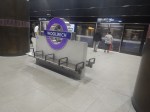
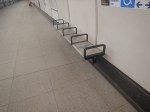
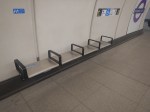
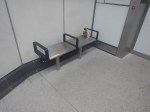
These seats are used on most stations.
I wonder how many passengers will choose the Elizabeth Line in this heat?
I certainly will!
Using The Elizabeth Line Between London City And Heathrow Airports
Today, I went from London City Airport to Heathrow using the Docklands Light Railway, the underground section of the Elizabeth Line and Heathrow Express.
London City Airport And Poplar Stations
I took these pictures on this section of the route using the Docklands Light Railway.










Note.
- I started my journey at 13:15.
- I arrived at Poplar at 13:27.
- The journey took twelve minutes, which agrees with the timetable.
This is a route, that gives a view of London’s rebuilding in the East.
Poplar And Canary Wharf Stations
I walked this section.
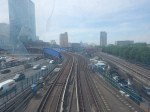

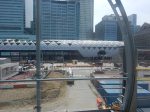
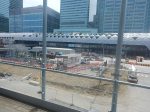
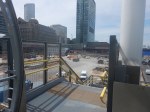
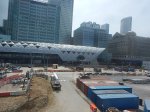
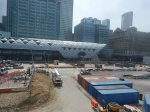
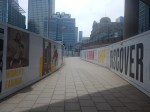
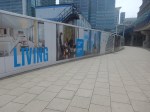
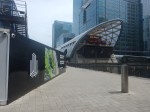
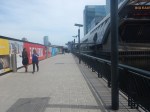
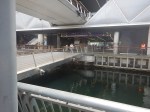

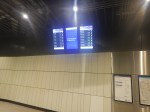
Note.
- I started my walk from Poplar station at 13:27.
- I was on the platform at Canary Wharf station at 13:39.
- I used a lift at Poplar station and the escalators at Canary Wharf station.
- The walk took twelve minutes, but it was a roundabout route.
- It looks like a level walkway is to be built between the two stations.
This Google Map shows the are between the two stations.
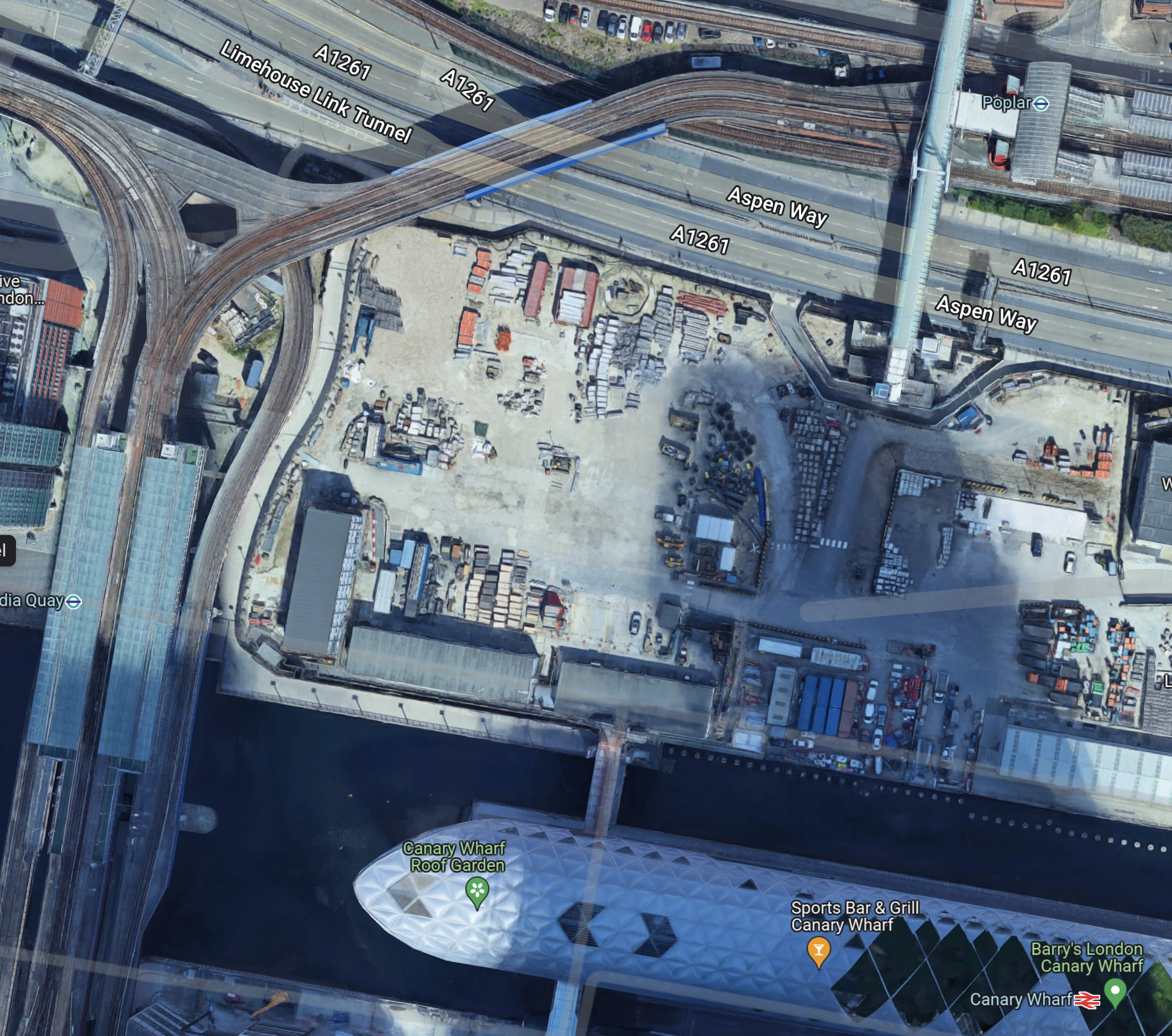
Note.
- Poplar station in the North-East of the map.
- The bridge at Poplar station, that provides the route I took over Aspen Way.
- After crossing the bridge and using the lift, I walked along the South side of Aspen Way.
- I then walked South down the path at the East side of the site, where it appears from the hoardings, flats will be built.
- Finally, I turned left to walk along the dock and then right to cross into Canary Wharf station.
Work appears to have started at Canary Wharf on the Southern end of an extended walkway, that will link to the bridge over Aspen Way.
This direct route could be nearly two hundred metres shorter and would shorten the connection by several minutes.
Canary Wharf And Paddington Stations
This section of the journey took nineteen minutes and I arrived at Paddington at 13:58, as this picture shows.
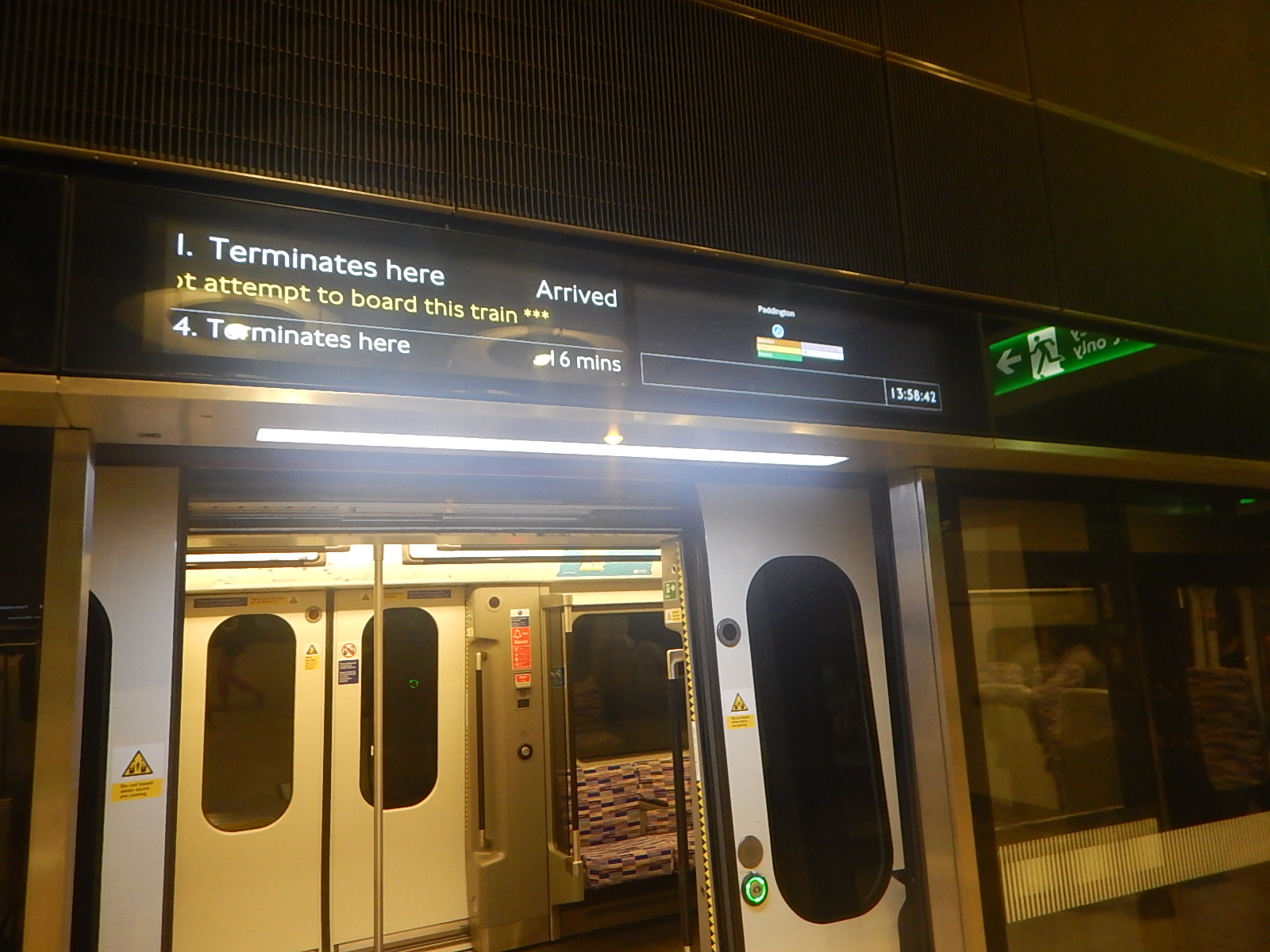
It had taken forty-three minutes between London City Airport and Paddington stations.
Paddington And Heathrow Airport By Heathrow Express
I took the 14:10 Heathrow Express to the Airport and took these pictures.
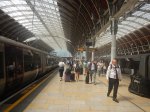

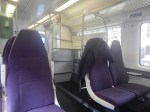
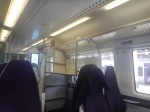
Note.
- It took about six minutes to walk between the Elizabeth Line and Heathrow Express.
- This was my first ride on Heathrow Express, since the service has started using Class 387 trains.
- The trains are fine, but where are the tables, that I like so much in the other Class 387 trains?
- The train arrived at Heathrow Central at 14:29.
This meant my journey between the two airports had taken an hour and fourteen minutes.
Canary Wharf to Heathrow using Heathrow Express and the Elizabeth Line had taken thirty-four minutes.
Return To Paddington On The Elizabeth Line
I came back from Heathrow on an Elizabeth Line train, which took 29 minutes.
That would mean that today using the Elizabeth Line to Heathrow.
- Heathrow and Canary Wharf will take 48 minutes.
- Heathrow and London City Airport will take one hour and twenty-nine minutes.
The difference in time between the two trains is solely down to the times of the Heathrow Express and the Elizabeth Line trains between Paddington and Heathrow.
What Difference Will A Direct Elizabeth Line Connection Make?
Canary Wharf are giving a figure of thirty-nine minutes between Canary Wharf and Heathrow, when the Elizabeth Line fully opens.
This would appear to indicate that fully opening the Elizabeth Line connection at Paddington will save nine minutes and the Elizabeth Line will only be a few minutes slower than Heathrow Express, if you can cut out the change at Paddington.
This table compares times between Canary Wharf and Heathrow.
- Elizabeth Line with a change at Paddington – 48 minutes
- Elizabeth Line and Heathrow Express with a change at Paddington – 34 minutes
- Elizabeth Line direct – 39 minutes
How many passengers will swap from Heathrow Express to a complete Elizabeth Line?
Is There Going To Be A Pedestrian Bridge Between Poplar And Canary Wharf Stations?
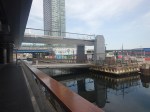
This Google Map shows the bridge that leads South from Canary Wharf station.
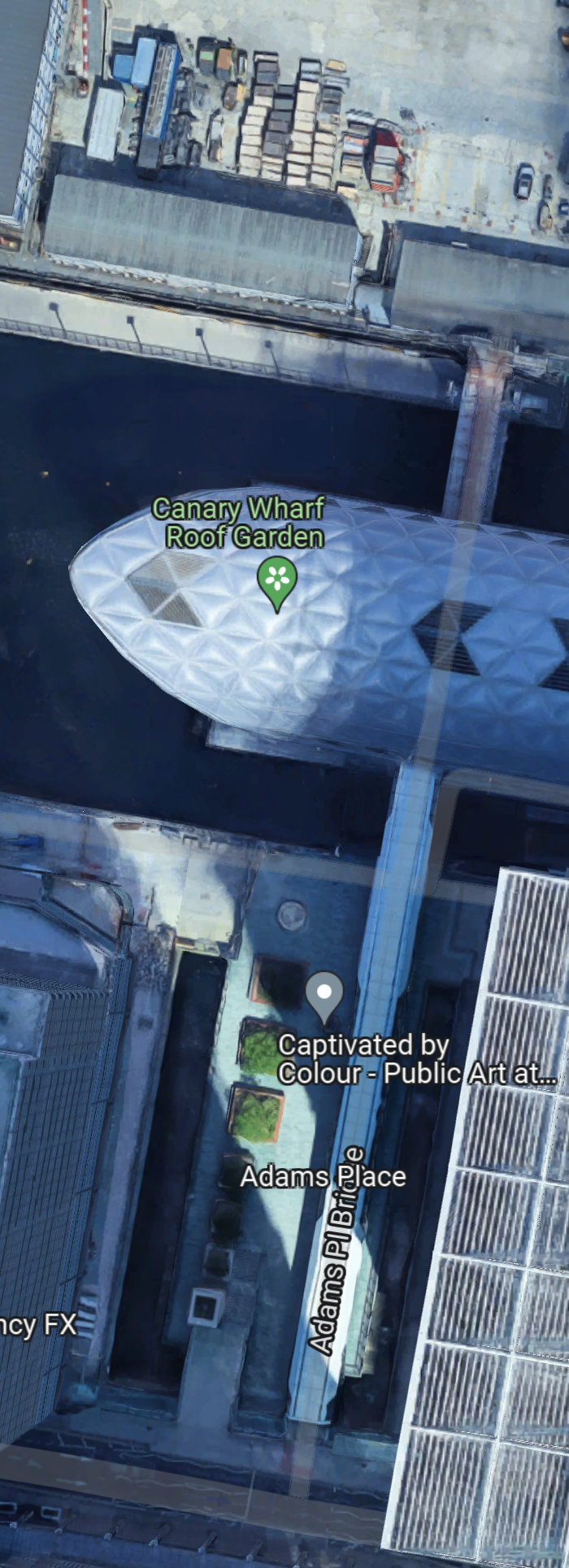
Note how the bridge could have been designed to go through the station to the housing to the North and perhaps ultimately to Poplar DLR station.
These pictures show the complete bridge on the South side and what could be the start of construction on the North side.
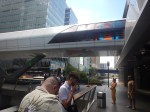
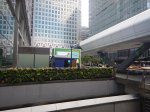

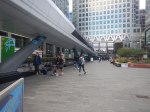
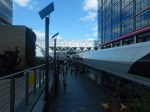
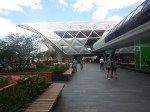
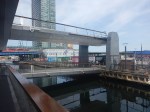
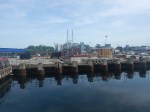
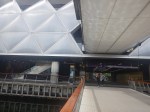
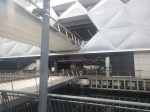
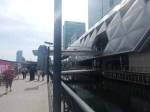
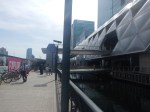
Note.
- This pictures were taken on two dates.
- A full bridge would connect the new housing to the shopping centre and the Jubilee Line station.
- Between Poplar and Canary Wharf stations would be around 120 metres.
- There would be a straight and level walking route between Poplar DLR station and the two Canary Wharf Jubilee and Elizabeth Line stations.
- A short branch would lead to Canary Wharf DLR station.
- Stairs would lead to the buses that run through Canary Wharf.
It does appear that the North and South bridges will form a continuous straight route.
The bridge would create a comprehensive transport interchange for East London.
Changing Trains At Canary Wharf Station – 13th June 2022
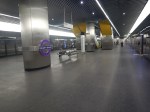
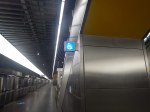
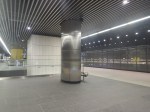
I took these pictures around the new Canary Wharf station on the Elizabeth Line.


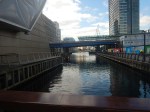
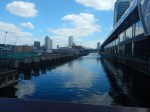

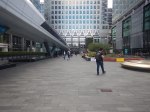


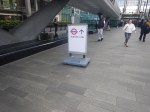
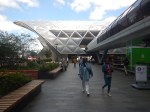
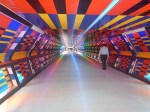
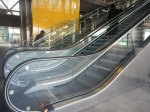

Note.
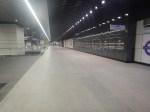
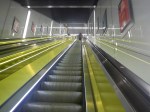
- The station appears to follow, a very similar design to some of stations on the Jubilee Line.
- Changing to various lines at Canary Wharf would appear to be a bit of a walk, that is very much in line with say a connection between the Jubilee Line and the Docklands Light Railway.
- The connection to the Jubilee Line appears to be a tunnel under the offices.
- For West India Quay DLR station, you walk along the dock.
These are some of the routes that you would use from Canary Wharf.
- Bank – DLR
- Battersea Power Station – DLR – Change at Bank – Northern Line
- Clapham Junction – Elizabeth Line – Change at Whitechapel – East London Line
- Croydon – Elizabeth Line – Change at Whitechapel – East London Line
- Crystal Palace – Elizabeth Line – Change at Whitechapel – East London Line
- Enfield – Elizabeth Line – Change at Liverpool Street – Enfield Town or Cheshunt Line
- Euston – DLR – Change at Bank – Northern Line
- Heathrow Airport – Elizabeth Line
- King’s Cross – DLR – Change at Bank – Northern Line
- Liverpool Street – Elizabeth Line
- London Bridge – Jubilee Line
- London City Airport – Jubilee Line – Change at Canning Town – DLR
- Marylebone – Elizabeth Line – Change at Paddington – Bakerloo Line
- Moorgate – Elizabeth Line
- Paddington – Elizabeth Line
- St. Pancras – DLR – Change at Bank – Northern Line
- Victoria – DLR – Change at Bank – District/Circle Line
- Walthamstow – Elizabeth Line – Change at Liverpool Street – Chingford Line
- Waterloo – Jubilee Line
Note.
- The new escalator connection between the DLR and the Northern Line at Bank station will enable easier journeys to Euston, King’s Cross, St. Pancras and many other Northern Line stations.
- The excellent connection between the Elizabeth Line and the East London Line at Whitechapel station, will get a lot of use.
- The DLR features in several routes, including the important one to London City Airport.
In A Short Cruise At Greenwich, I said this about the DLR.
The Docklands Light Railway is often thought by Londoners, commuters and visitors as a bit of a Cinderella.
However, like Cinderella she works hard all day and provides reliable and efficient transport, where the only alternatives are buses, bicycles, taxis and Shank’s pony.
Just after the 2012 Olympics, I met a big cheese in Transport for London on a DLR train. He felt that the DLR had been the star in getting everybody to the games.
It must be one of the most successful light railways in the world!
And yet, no-one has ever thought to build another running on the same principles.
So why does it work so well?
This article on Intelligent Transport is entitled Celebrating 30 years Of The DLR, where this is said, under a heading of Customer Satisfaction.
One of the biggest successes of the DLR over the last 30 years has been its high levels of reliability, with over 99% of its trains departing on time.
The DLR has also had consistently good feedback and engagement with its customers, with high satisfaction ratings averaging at 89 out of 100.
Do these numbers mean that people trust Cinderella and will trust her to get through even in the most difficult of circumstances?
Conclusion
Canary Wharf station could develop into a very important interchange.
Crossrail’s Fans At Canary Wharf Station
I have just watched today’s episode of The Fifteen Billion Pound Railway on the BBC.
In one storyline, they negotiate a giant ventilation fan into Canary Wharf station.
Installing the fans is a fascinating tale, where in the end the last movements are performed using hover-pads and several strong men.
I am reminded of a tale I heard in my youth.
- At the age of 15 and 16, I spent two summers working at a company in North London called Enfield Rolling Mills.
- The boss of the company was John Grimston, who was a friend of my father and ERM were the largest customer of his printing business.
- I got a superb introduction to working in a large factory, where I installed simple valve-based electronic control systems on heavy machinery.
The most important rolling mill in the company, was a mill, that reduced copper wirebars to wire about half a centimetre in diameter.
- The machine had been acquired from Krupp, as war-reparations after the First World War and was still marked with Krupp’s trademark of three interlocked railway tyres.
- Enfield Rolling Mills had a trademark of four rings.
- The hot wire zig-zagged from one side to the other and it was turned by men using tongs.
- The machine was powered by a massive flywheel driven by an electric motor.
At some time in the 1950s, the flywheel needed to be replaced, by a new 96-ton wheel.
The Chief Engineer of the company was an Austrian Jew, known to all as Shimmy, which was a contraction of his surname Shimatovich.
- He had spent some time in a Nazi concentration camp and walked with a distinct stoop.
- He was widely recognised as one of the experts on roll grinding and very much respected by management, staff and workers alike.
- He had supposedly calculated, that if the new flywheel had come off its bearings at full speed, it would have gone a couple of miles through all the housing surrounding the factory.
There was very much a problem of how the new flywheel would be installed until Shimmy announced at a Board Meeting. “We will do it the way, we’d have done it in the concentration camp. We will use men! But our men are fit, well-fed and strong.”
So one Sunday morning, a large force turned up and rolled the flywheel off the low loader and into position using ropes, blocks and tackle and other equipment, that would have been familiar to ancient builders, after which it was duly fixed in place.
The job was completed just before one and the Managing Director of the company then asked if anybody would like a drink and indicated that everybody follow him to the company’s social club.
They arrived just as the steward was cleaning the last of the glasses and getting ready to lock up. On being asked to provide a large number of pints of bitter, he announced he was closed.
On this the Managing Director, by the name of Freddie Pluty, who was a strong man picked up the steward and sat him on the bar.
He then asked the two large workers at the front of the queue. “Are you going to hit him or shall I?”
They got their drinks.
 The Anonymous Widower