Is There A Plan To Increase The Capacity Of the Elizabeth Line?
On Sunday, when I came back from West Ealing station to Moorgate station on Sunday after taking the pictures, that I used in West Ealing Station – 1st February 2026, I was at the wrong end of the train for getting out at Moorgate.
So I had to walk from one end to the other of one of the most crowded Elizabeth Line trains, I’ve ever been on.
If it was as crowded as that on a Sunday morning, then it would appear, that the capacity of the line needs to be increased.
So I asked Google AI, the title of this post and received this reply.
Yes, there is a firm plan to increase the capacity of the Elizabeth line, driven by high demand and to support the future opening of the HS2 station at Old Oak Common. Transport for London is producing 10 new Class 345 trains to boost service, with expected delivery in 2026-2028.
But is 2026-2028 going to be early enough?
Details At Hayes And Harlington Station
Yesterday, on my way to Reading, I changed trains at Hayes and Harlington station and took a few pictures.
An Ideally-Placed Waiting Room
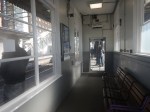
These pictures show a waiting room on the Westbound platform of the Elizabeth Line.
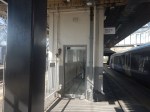
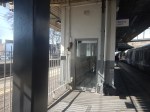
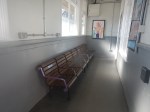

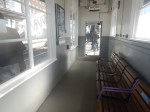


The Elizabeth Line has these Western destinations.
- Heathrow Terminal 4
- Heathrow Terminal 5
- Maidenhead
- Paddington
- Reading.
Note.
- If you are travelling to any of the Heathrow destinations and you are riding on a Maidenhead or Reading train, then Hayes and Harlington station is the last station you can change for the Airport.
- If you are travelling to any of the destinations on the Reading branch and you are riding on a Heathrow train, then Hayes and Harlington station is the last station you can change for the Airport.
- If you are travelling from any of the Heathrow destinations to any of the destinations on the Reading branch, then Hayes and Harlington station is the first station you can change for the Reading branch.
- If you are travelling from any of the Reading branch destinations to any of the Heathrow destinations, then Hayes and Harlington station is the first station you can change for the Heathrow destinations.
- To aid the change of platform in the third and fourth changes, there is a step-free footbridge at Hayes and Harlington station.
The waiting room at Hayes and Harlington station, which is complete with heating could be a welcome refuge whilst changing trains at Hayes and Harlington station.
The golden rule seems to be, that if you’re on the wrong train on the Elizabeth Line, then change for your desired destination at Hayes and Harlington station.
Track Warnings
These pictures show the bilingual track warnings at Hayes and Harlington station.
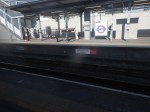
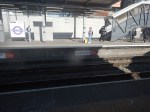
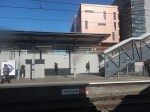
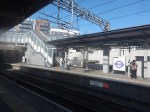
I hope Network Rail are analysing, if the warnings work.
The Main Step-Free Route Across The Tracks
These pictures show the main step-free route at Hayes and Harlington station.
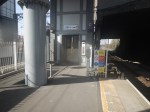
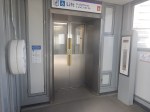
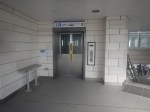
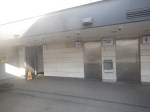
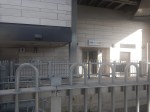

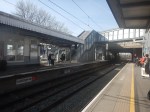
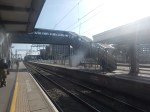
Note.
- The route with lifts, is rather tucked in at the Western end of the station.
- There are toilets under the bridge on the Eastbound platform.
- The steps are rather steep, so if you have any issues, I would use the lifts.
The golden rule is if you are going between the Reading and Heathrow branches with a change of direction from Eastbound to Westbound at Hayes and Harlington station, then make sure, you start your journey in the back of the train.
The Secondary Route Across The Tracks
These pictures show the secondary route at Hayes and Harlington station.
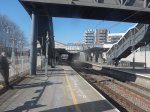
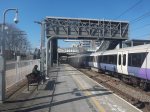
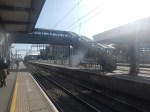
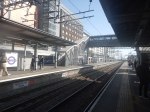
Note.
- I believe this bridge is better placed for some travellers, who need to reverse direction at Hayes and Harlington station.
- It is also convenient for the waiting room.
In Heathrow Rail Link Withdrawn, But MP Vows To Carry On, I asked this question.
Could Hayes And Harlington Station Become A Transport Hub For Heathrow?
I said this.
This Google Map shows Hayes and Harlington station.
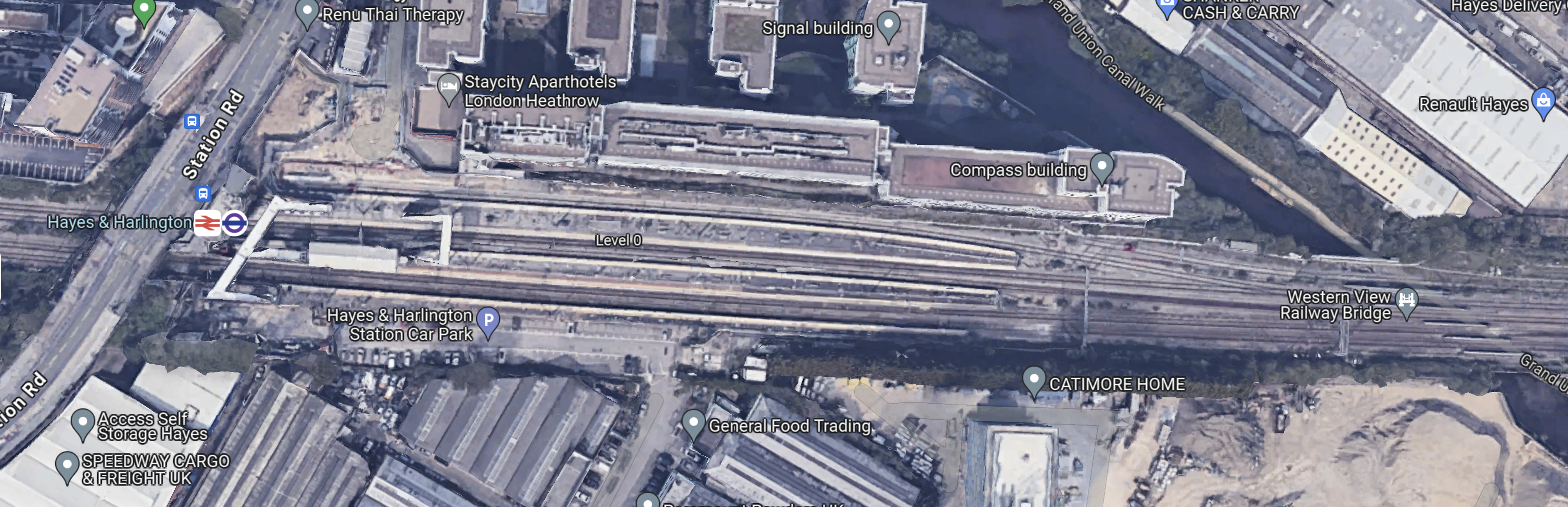
Note.
- It has platforms on all four tracks of the Great Western Main Line.
- There is a London-facing bay platform to terminate Elizabeth Line trains, if needed.
- The land to the North of the station has been developed.
- There is land to the South of the station that could be developed.
Could the space above the tracks, with some of the land to the South of the station be developed into a transport hub for Heathrow?
I took these pictures to answer my question.
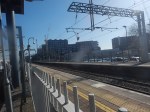
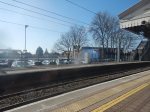
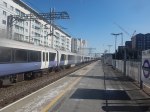
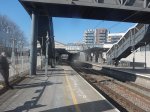
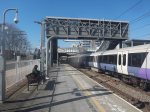
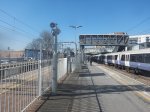
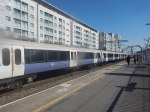
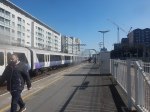
I don’t think there would be enough space to put a combined bus and coach station at Hayes and Harlington station.
Does The Elizabeth Line Need More Frequent Trains In The Central Section?
Currently, the Off Peak service on the Elizabeth Line is at follows.
- Reading and Abbey Wood – 2 tph
- Maidenhead and Abbey Wood – 2 tph
- Heathrow Terminal 4 and Abbey Wood – 4 tph
- Heathrow Terminal 5 and Shenfield – 2 tph
- Paddington and Shenfield – 6 tph
Note.
- tph is trains per hour.
- There are eight tph to Abbey Wood and Shenfield.
- There are six tph to Heathrow Airport.
But there are only 16 tph through the Central Tunnel between Paddington and Whitechapel stations.
These are typical Off Peak frequencies on other Underground and rail services across London.
- Bakerloo Line – 16 tph – Queen’s Park and Elephant & Castle – 20 tph in the Peak.
- Central Line – 24 tph – White City and Leytonstone – 35 tph in the Peak.
- Jubilee Line – 24 tph – Stratford and West Hampstead.
- Northern Line – 16-20 tph – All routes except Kennington and Battersea Power Station.
- Piccadilly Line – 21 tph – Arnos Grove and Acton Town.
- Thameslink – 16 tph – St. Pancras and Blackfriars.
- Victoria Line – 33 tph – Seven Sisters and Brixton – 36 tph in the Peak.
From these figures, it appears that the Elizabeth Line’s 16 tph is on the low side, when compared to the Central, Jubilee and Victoria Line.
This morning about 11:00, I went between Moorgate and West Ealing stations.
- I went to see FirstGroup’s fast-charge system for battery-electric trains.
- The trains were full both ways.
- There was only the odd seat available.
I know it’s Half Term, but I do think that more services need to run on the Elizabeth Line.
The Long Platforms At Liverpool Street Station
I was on Liverpool Street station today and I took these pictures.
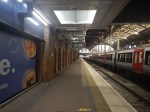

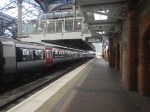
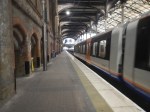

It got me thinking.
- I was standing On Platform 1 and on Platform 2 was a pair of five-car Class 720 trains coupled together.
- The pair of five-car Class 720 trains would be 244 metres long, which mean that the platforms could handle nine-car Class 800 or Class 345 trains.
- There would appear to be plenty of platform space in Liverpool Street station.
- In Azuma Test Train Takes To The Tracks As LNER Trials Possible New Route, I talked about how LNER were checking an Azuma train could use the route to Cleethorpes.
- In London North Eastern Railway Runs Trial Train To Liverpool Street, I talked about how LNER had ran a train into Liverpool Street.
The general consensus seems to be, that points 3 and 4, are about several things.
Adding Grimsby and Cleethorpes to LNER’s list of destinations.
Possibly adding Spalding, Sleaford, Market Rasen and Barnetby to LNER’s list of destinations.
Providing a faster service between London and Grimsby/Cleethorpes.
Providing a diversion route because of engineering or blockades on the East Coast Main Line.
Nearly twenty years ago, I used to play real tennis, with a guy, who was on a committee, that planned the future of the Cambridge region.
- One of the things he said was that Cambridge was full and there is not enough lab space, factories and housing.
- He felt that Peterborough would make an excellent satellite for Cambridge.
- However, transport links and especially the trains are not the best between Cambridge and Peterborough.
- I wonder, if Cambridge’s overcrowding is spreading the Cambridge Effect into Lincolnshire and the number of rail passengers between Lincoln and Cambridge is growing.
So have LNER taken the bull by the horns and are planning to run a London Liverpool Street and Cleethorpes service via Cambridge?
- It might perhaps run at least six trains per day (tpd) in both directions.
- Stops could include Stratford, Cambridge South, Cambridge, Cambridge North, Ely, March, Peterborough, Spalding, Sleaford, Lincoln, Market Rasen, Barnetby and Grimsby Town.
- Trains could be a five-car Class 800 train.
- The route is fully-electrified between London and Ely.
Note.
- The London King’s Cross and Lincoln service could be discontinued.
- Connection between Cambridge and Lincolnshire is much improved.
- The developing energy powerhouse in North-East Lincolnshire gets a connection to Cambridge and London.
- There could be same-platform interchange at Peterborough for passengers between Cambridge and the North.
- By going via Cambridge, one less train needs to use the bottleneck over the Digswell viaduct.
LNER are trying to get the most out of the new December 2024 East Coast Main Line timetable and I do wonder if a London Liverpool Street and Cleethorpes servce is part of that exercise.
Extending The Elizabeth Line – Could Open Access Services Use The Elizabeth Line?
In the February 2024 Edition of Modern Railways, there is an article which is entitled First Bid For Sheffield To King’s Cross Paths.
The article is mainly about FirstGroup’s proposal for a new Sheffield and London service, running under the Hull Trains brand.
But, this is the last paragraph.
Modern Railways understands First is working on a number of proposals for additional open access services, and this is an early statement of intent. Other existing open access proposals include Grand Union Trains’ plans for London to Stirling and Cardiff to Edinburgh services, along with an already approved London to Carmarthen service, and the recently submitted Wrexham, Shropshire and Midland Railway application for a London to Wrexham service. It is understood other organisations, including MTR and Virgin, are also working up plans for new open access services.
The respected Modern Railways magazine seem to think, that we’ll be seeing more open access services on UK railways.
These are my thoughts.
A Simple Example – London Crosslink
In Extending The Elizabeth Line – London Crosslink, I said this.
In the Wikipedia entry for the London Crosslink, this is the introduction.
London Crosslink was a passenger train service operated by Anglia Railways between Norwich and Basingstoke, using the North London Line to bypass central London. Class 170 Turbostar diesel multiple units were used, and the service operated between 22 May 2000 and 28 September 2002, supported by funding from the Strategic Rail Authority through its Rail Passenger Partnership fund.
As it was discontinued and it doesn’t seem to be sadly missed, I’m not advocating its reinstatement, but just looking how it might be run after the full opening of the Elizabeth Line.
But surely, there were good reasons, why the service was run in the first place and there might be a need in the future.
These are some characteristics of the service.
- There were about half-a-dozen services in both directions every day.
- At its full length it ran between Norwich and Basingstoke.
- Stops included Diss, Stowmarket, Ipswich, Colchester, Witham, Chelmsford, Ingatestone, Romford, Stratford, Highbury & Islington, Camden Road, West Hampstead, Brentford, Feltham, Staines, Woking and Farnborough (Main).
- Each service seemed to have a different stopping pattern.
- The timetable wasn’t very regular.
- The route wasn’t fully electrified.
It appears that it may have been a difficult service to timetable.
I lived North of Ipswich for some years.
I never used the London CrossLink service, as I had moved away before the service started in 2000.
- I would have found the change to the Central Line at Stratford station useful.
- I would have found the change to the Victoria Line at Highbury & Islington station useful.
- I would have found the change to Thameslink at West Hampstead station useful.
- Basingstoke would have given access to Greater South-West England.
- I could have got a bus to Heathrow from Feltham.
But getting to Marylebone, Paddington and Waterloo would have still been tedious.
Could a replacement for the London CrossLink be routed via the Elizabeth Line?
- The service would use the Elizabeth Line between Stratford and Reading.
- The service would use the Reading and Basingstoke Line between Reading and Basingstoke.
The route has some advantages over the original route.
- Except for the 13.6 miles between Southcote Junction and Basingstoke, the route is fully-electrified.
- Whitechapel will give access to London Overground services.
- Farringdon will give access to Thameslink services.
- There will be a lot of connections at Tottenham Court Road and Bond Street.
- Paddington and Reading will give access to Heathrow, Oxford and West of England services.
- Basingstoke will give access to Greater South-West England.
It is certainly an as-useful route as the original, if not more so.
The Trains
In Extending The Elizabeth Line – Will There Be A Need For Long Distance Class 345 Train?, I set out how a standard Class 345 train could be updated with faster running and a more appropriate interior.
As the Elizabeth Line is likely to need some more trains if High Speed Two is delayed, perhaps some extra trains should be ordered fairly soon.
The Routes
Consider.
- A terminal station would probably need to be electrified to the Elizabeth Line route.
- It would need the infrastructure to turn the trains.
These stations could probably be used as terminal stations.
- Basingstoke
- Bristol
- Cardiff
- Colchester
- Faversham
- Hoo – See Extending The Elizabeth Line – A Branch To The Isle Of Grain.
- Ipswich
- Northfleet – For European services at Ebbsfleet International.
- Norwich
- Oxford
- Rochester
- Southampton
- Southend Victoria
There will certainly be others.
Why Use Open Access?
Suppose an operator wants to run a service between Bristol Parkway and Northfleet to give the West Country access to European services.
- The operator takes all the risk and Network Rail get track access charges.
- Do Transport for London get track access charges for the Elizabeth Line tunnels?
- If they get their predictions and sums wrong, they lose the money.
But if they get it right, they probably sell it to an infrastructure company at a profit.
Conclusion
I think open access operation might work through the Elizabeth Line Tunnels.
Are The Elizabeth Line Trains Ready To Be Lengthened?
When Transport for London updated the North and East London Lines of the London Overground in the early years of this century, they felt that four-car Class 378 trains would have enough capacity for the lines. But the lines proved more popular than, they had expected and the trains were very overcrowded. So it was decided to lengthen the trains to the five cars they are today.
This wasn’t as easy as it seems, as platforms at several stations had to be lengthened, which was disruptive and expensive.
One day last week, I was in Farringdon station and took these pictures of the platform edge doors at the back end of a Class 345 train.
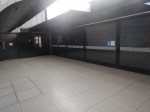
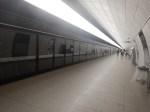
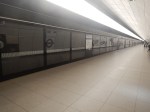
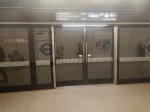
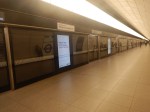
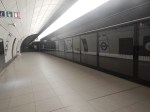
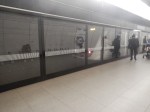
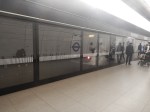
Note how, that when a train is in the station, it doesn’t reach to the end.
But this is not always the case, as this picture from Paddington station shows.
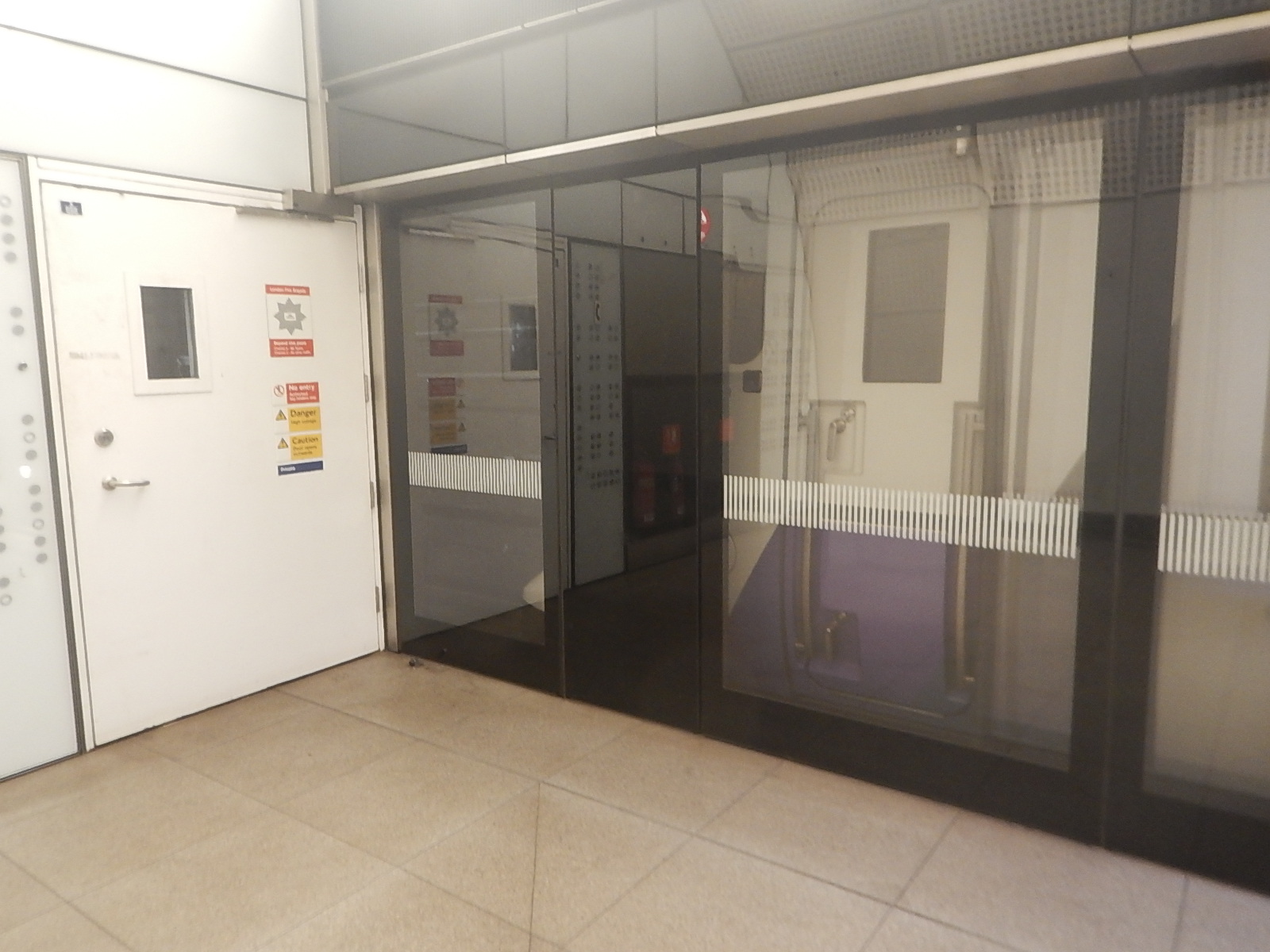
Does this mean that some underground Elizabeth Line platforms are longer than others?
In Bombardier’s Plug-and-Play Train, I discuss the plug-and-play design of Aventras.
- This plug-and-play design allows trains to be lengthened or shortened by adding or removing carriages.
- Class 345 trains are actually two half-trains, with a trailer car in between them.
So is this why Class 345 trains have run services as both seven-car and nine-car trains?
The former have three-car half-trains and the latter have four-car half-trains, with an extra MS car.
Talk Of Eleven-Car Trains
If you search the Internet, you’ll find forums and web pages speculating about. whether the trains will be lengthened to ten-cars or even eleven-cars.
Consider.
- The current trains are 204.73 metres long.
- Extra intermediate cars are all 22.5 metres long.
- The trains also are probably fitted with selective door opening or can be as most modern trains have it.
This would mean, that a ten-car train would be 227.23 metres long and an eleven-car train will be 249.73 metres.
The eleven-car figure is just 27 centimetres short of 250 metres.
I wouldn’t me surprised if the maximum train length was given to Bombardier as 250 metres.
I certainly feel, that if it should be decided to lengthen the trains by adding another carriage or two, that this will not be a problem.
The Elizabeth Line’s Two Problems
These posts talk about the two problems.
In TfL Needs More Elizabeth Line Trains Because Of HS2 Delays At Euston, I talked about what happens, if High Speed Two doesn’t link initially to Euston.
In Elizabeth Line: Commuters Say Service ‘Not What Was Promised’, I talked about problems of overcrowding at the Western end of the line.
The solutions to both problems are either more trains or adding more carriages to existing trains.
In this article on Ian Visits, which has the same title as the first post, Ian says this about ordering more trains.
Although HS2 isn’t expected to open until some point between 2029-33, TfL is warning that it will need to place the orders for the new trains soon, as the cost of doing so later will be significantly more expensive. That’s because the factory lines to build Elizabeth line trains at Alstom’s factory in Derbyshire are still in place, but will be demobilised soon. If the trains aren’t ordered before that happens, then the cost of reactivating the factory lines has to be included in the bill.
I suspect, it probably applies to an order for extra carriages as well.
Problems For Alstom
But will a substantial order for more Class 345 trains or carriages cause problems for Alstom at Derby?
This extract from the Wikipedia entry for High Speed Two rolling stock, describes how the Hitachi-Alstom joint venture will build the Classic-Compatible trains for High Speed Two.
Vehicle body assembly and initial fitting out of the trains will take place at the Hitachi Newton Aycliffe factory, the bogies will be manufactured at the Alstom factory in Crewe, and final assembly and fit-out, including the interiors, electronics and bogies, will take place at Alstom’s factory in Derby.
If more Class 345 trains are to be built at Derby, does it mean a rethink by the joint venture?
In Battery EMUs Envisaged In Southeastern Fleet Procurement, I talked about how Southeastern were looking for new trains. Given that Aventras from Alstom could be in the frame for these new trrains for Southeastern, does that give Alstom more complications?
A Fraught Journey Between Worcester Shrub Hill And Reading Stations
My train home from Worcester Shrub Hill station didn’t make the most impressive of starts to my journey back to Reading.
- The five-car train was supposed to leave at 15:15.
- It was also supposed to arrive in Reading at 16:58.
- But the relief driver was delayed.
Eventually, we left at 15:31.
The train didn’t appear to be running at full speed and around Moreton-in-Marsh, staff started distributing water, which in my view is always a sign that all is not well.
I measured the temperature and humidity at 26.7 °C and 40% respectively, so the water was welcome.
I asked one of the staff what was up and was informed, that two of the engines were overheating because of the heat, so were we effectively running on the remaining cool engine?
Eventually, we were informed that the train would terminate at Charlbury station, where we would all be picked up by the following train, which would have nine cars.
After Charlbury, things didn’t get much better.
- The rescue train eventually left Charlbury at 17:38, which was twenty-six minutes late.
- The train wasn’t full and I had a table to myself, but after Oxford, there wasn’t a seat anywhere.
- We missed out the stop at Didcot Parkway station because of flooding, caused because of a violent thunder storm.
- The rescue train didn’t even make Paddington and it was terminated short in the bi-directional Platform 7 at Reading, because of an unwell passenger.
Eventually, when I arrived in Reading station at 18:55, the rescue train was fifty-five minutes late.
As my original train, should have arrived at 16:58, I was actually, three minutes short of two hours late.
By the time, I got to Platform 14 for the 16:59 Elizabeth Line train to Central London, it had gone, so I had another thirty minute wait.
I finally arrived home at 21:00, after a nearly 5¾ hour journey.
I have a few thoughts.
Changing At Reading
Part of the reason, that I missed my Elizabeth Line train, was that the escalators to Platform 14 were out of action and I had to wait for the lift, as I don’t trust myself going down stairs.
I have said before that if you need a ticket in your change a Reading, there should be a ticket machine on the bridge.
As Reading station is managed by Network Rail, perhaps, they should examine the operation of the station with a good dose of old-fashioned time and motion in more detail.
The Elizabeth Line Frequency To London
The Elizabeth Line only runs two trains per hour (tph) between London and Reading.
This may be fine when everything is going well, but on days like Sunday, when trains aren’t performing well and the weather is not behaving itself, would four tph be better?
Perhaps, the two extra trains would run between Reading and Abbey Wood, and only stop at say Twyford, Maidenhead, Slough, Hayes & Harlington, Southall, Ealing Broadway, Old Oak Common, Paddington, Bond Street, Tottenham Court Road, Farringdon, Liverpool Street, Whitechapel, Canary Wharf, Custom House and Woolwich.
Great Western Railway Trains Between Oxford, Reading and Didcot Parkway and London
The three terminals get the following services to and from London
- Didcot Parkway – 4 tph
- Oxford – 4 tph
- Reading – 11½ tph – 8½ fast and 3 slow
Consider these questions.
- How many travellers between Didcot Parkway, Oxford and Reading and Paddington, now use the Elizabeth Line for onward travel from Paddington?
- How many of the endless visitors to Oxford start their journey on the Elizabeth Line?
- How many visitors to Oxford combine a trip with one to Bicester Village?
- How many travelling by train between Oxford and Cambridge will use part of the Elizabeth Line for the journey?
- Is it fair, that Cambridge is connected to four London rail terminals; King’s Cross, Liverpool Street, London Bridge and St. Pancras and Oxford is connected to just two; Marylebone and Paddington?
I suspect there’s considerable scope to reorganise services between the three stations and London to provide a better service.
GWR’s Paddington and Didcot Parkway service, which has a frequency of two tph, could be moved to the Elizabeth Line and possibly extended to Oxford, once Didcot Parkway and Oxford is electrified.
This would give.
- Didcot Parkway would have two fast tph to Paddington and two stopping tph on the Elizabeth Line with all its connectivity and delights.
- Oxford would have two fast tph to Paddington and two stopping tph on the Elizabeth Line.
- Reading will have a much-needed Elizabeth Line frequency of four tph.
Note.
- Terminating the Elizabeth Line at Oxford, means that there are services connecting Oxford and Cambridge, with a single change at either Farringdon or Liverpool Street.
- Oxford would also get one change connectivity to Gatwick, Heathrow and Stansted Airports.
- The slow lines between Oxford and Maidenhead typically have operating speeds of 90-100 mph. So if the Class 345 trains on the Elizabeth Line and the track were upgraded to 100 mph, this might save a few minutes in the outer reaches of the Elizabeth Line.
- The Elizabeth Line could terminate in one or two South-facing bay platforms on the East side of the station. This position would reduce passenger traffic on the crowded footbridge.
- If all the bay platforms were on the same East side of the station, this would simplify and ease passenger flows.
- Chiltern and East West Railway services could be timed for an easy interchange.
- The proposed Cowley Branch could also use the South-facing bay platforms.
The more I look at it, the more I like the idea of running the Elizabeth Line to Oxford.
The Heat Problem On The Class 800 Trains
The Wikipedia entry for the Class 800 trains has this paragraph on the overheating of the engines or generator units (GUs) on the trains.
The GU is installed on vibration-isolating mountings, and fitted with side-mounted cowls to reduce external noise. Heat management measures include thermal insulation around key areas such as cable ducts. According to Modern Railways magazine, the limited space available for the GUs is responsible for them being prone to overheating. It claimed that, on one day in summer 2018, “half the diagrammed units were out of action as engines shut down through overheating”.
That was in 2018, which was five years ago. But it appears to be still happening.
Would Overheating Happen With Battery Units?
One of the reasons, I went to Worcester was to assess the feasibility of battery-electric trains on the route.
This article from EV-Lectron is entitled Electric Cars in Hot Weather – What You Need To Know, gives a detailed set of answers.
But it probably comes to the conclusion, that cold weather with the extra heating load might be more of the problem.
I suspect, that if you were running battery electric trains on a route of over fifty miles, the best thing would be to have electrification at both ends of the route.
If, as I have calculated in Reading And Oxford – 10th June 2023, that to run battery-electric trains to Hereford needs a length of electrification between Worcester Shrub Hill and Great Malvern stations, then when they leave the electrification, they should have the interiors at the right temperature for staff and passengers.
I also suspect that battery-electric trains need to be well insulated to cope better with cold weather.
Elizabeth Line Takes Fliers Away From Heathrow Express
The title of this post, is the same as that of this article on The Times.
These three paragraphs add details to the story.
The opening of the Elizabeth Line has eaten into the revenues of Heathrow Express, the country’s most expensive railway service per mile travelled.
Filings reveal that Heathrow Express, which offers a 15-minute service between London Paddington and Heathrow, has failed to recover to pre-pandemic levels despite flight volumes at the airport returning to near-normal. Heathrow said revenues from Heathrow Express in the first three months of the year were £22 million.
While that is 50 per cent more than in the same period last year, when Covid-19 travel restrictions were beginning to be relaxed, it is almost a third down on the £31 million of revenues in the first quarter of 2019.
Considering how air travel is on the upturn, Heathrow Express would not appear to be performing as the airport expects.
Remember, that First Group are paid by Heathrow Airport to run the service, which is owned by the airport.
In So Many Cases On A Train!, I wrote about a trip from West Ealing to Moorgate station. These were my opening sentences.
This afternoon about three, I went to West Ealing station to see what it was like to transfer between the Elizabeth Line Central Tunnel and the Western Branch at Paddington.
Coming back, I took an Elizabeth Line service that had started from Heathrow Airport and it was one of the busiest Lizzies, I’d ever ridden!
To get on the train at West Ealing station, I got in to probably coach 4 of 9, as that was in the dry and the back end of the train I needed for Moorgate station was certainly in the wet.
I then had to walk half the length of the train to get to the back of the train.
It was not easy, as the train was full of scores of passengers with large wheelie cases.
It certainly got me thinking about how passengers were getting to and from Heathrow and I came to this conclusion.
Lizzie will start a revolution in travel to and from Heathrow.
Judging by the title of the article in The Times, the revolution has already started.
Consider these reasons.
- Heathrow Express is overpriced.
- It doesn’t go where many passengers want to go.
- It’s not the best way to get workers to and from the airport.
- The ULEZ will discourage passengers and staff from driving to the airport.
In Effects Of The ULEZ In West London, I said this about journeys to and from the airport.
Heathrow Airport is one of the world’s busiest airports and 76,000 people work at the airport, with many more employed nearby.
The airport handled 61.6 million passengers in 2022, which is a few short of 170,000 per day.
If you consider that those that work at the airport do two trips per day and passengers generally do one, that means there are 322,000 trips per day to or from the airport.
But as it now so easy to get to the Airport using the Elizabeth Line will more people use the new line to meet and greet and say goodbye to loved ones or business associates. Since the Elizabeth Line opened, I’ve met a couple of friends at Heathrow, who were passing through.
I wonder, if that daily journey total of 322,000 could be nearer to 350,000 or even 400,000.
If the ULEZ charge makes some passengers and staff switch from their car to using a bus or train, this probably means that public transport to and from the airport, will need to be boosted by a substantial amount.
I can see airport workers lobbying for free tickets on Heathrow Express, but they probably live closer to the airport than Paddington or perhaps even in the Eastern areas of London served by the Elizabeth Line.
The Elizabeth Line Is Showing Signs Of Running Out Of Capacity
In the last few weeks, I’ve been on some very full Elizabeth Line trains.
Articles, like this one on Rail Advent, which is entitled Transport for London Looks Into Funding For Additional Elizabeth Line Trains, are also starting to appear.
These three paragraphs explain the problem.
Transport for London has announced that they are looking for confirmation from the Government regarding funding so that they can look into the possibility of purchasing additional Elizabeth Line trains.
The news from TfL comes after the recent announcement of delays to HS2 terminating at London Euston.
TfL says that without the extra trains, there is insufficient capacity on the Elizabeth Line (until HS2 is extended to Euston in the 2040s) for passengers looking to use HS2 and the Elizabeth Line to get into Central London.
Alstom also appear to want the space in the factory to build other trains.
So it appears that Transport for London must act soon.
Heathrow Express Needs To Be Repurposed
In Extending The Elizabeth Line – High Speed Trains On The Elizabeth Line, I talked about running faster trains through the Central Tunnel of the Elizabeth Line.
As any train would have to be compatible with the platform-edge doors in the central tunnel of the Elizabeth Line, the trains would have to be dimensionally identical to the current Class 345 trains.
- Nine cars
- Possibility of lengthening to ten cars.
- 204.73 metres long.
- 6 sets of doors per carriage
- Ability to run under full digital signalling.
- The trains would be designed for a higher speed of at least 110 or 125 mph, to enable running on the fast lines of the Great Western Main Line.
- The trains would have Heathrow Express branding and interior.
Services could be as follows.
- Heathrow Terminal 4 and Southend Victoria via Bond Street and Liverpool Street for the City and Stratford.
- Heathrow Terminal 5 and Ebbsfleet International via Bond Street and Liverpool Street for the City and Canary Wharf.
Note.
- Both services would be two trains per hour (tph)
- Traffic would determine, which Eastern terminal is paired with which Western terminal.
- Each route would also have two Elizabeth Line tph on the same route.
The Heathrow Express services would run as follows.
- Between Heathrow Airport and Paddington, they would run as now.
- I believe that by using the power of the digital signalling, they could be slotted into the queue of Elizabeth Line trains taking the Central Tunnel.
- They would run through the Central Tunnel, as just another Elizabeth Line train, stopping at all stations.
- Southend Victoria trains would stop at Stratford, take the fast lines to Shenfield, after which they would stop at all stations to Southend Victoria.
- Ebbsfleet International trains would stop at all stations from Abbey Wood to Ebbsfleet International.
Note.
- Trains would stop at Old Oak Common after it opened for High Speed Two and GWR.
- All ticketing would be contactless.
- Passengers using Heathrow Express to the West of Paddington, would pay an extra fee, but nothing like today’s price.
These Heathrow Express routes would have advantages.
- Southend Airport and Southend Victoria would get a direct fast train to Central London and High Speed Two.
- Heathrow would have a direct connection with Continental train services at Ebbsfleet International.
- Capacity could be increased by going to ten-car trains.
- Heathrow Express could release their platforms at Paddington.
- There would be two fast tph between Heathrow and Stratford.
- There would be two fast tph between Heathrow and Canary Wharf.
- There would be four fast tph between Heathrow and Bond Street for the shopping and Liverpool Street for the City of London.
- There would be four fast tph between Heathrow and Farringdon for Thameslink, Gatwick and Luton Airports.
Heathrow Express trains will be fifteen minutes faster to all destinations.
I don’t think there would be any major disadvantages.
TfL Needs More Elizabeth Line Trains Because Of HS2 Delays At Euston
The title of this post, is the same as that of this article on Ian Visits.
This is the first paragraph.
Transport for London (TfL) is warning that delays to the HS2 railway may require it to buy more Elizabeth line trains to cope with the thousands of people dropped off at Old Oak Common needing to get into central London.
Given, the way they got the project management and the cost and schedule so wrong, I wonder if we can rely on this assertion.
I certainly find fault with this statement.
In an ideal world, TfL would be able to send some empty Elizabeth line trains stabled in a depot to the west of Old Oak Common station, but the location of the main depot rules that out.
The Wikipedia entry for the Elizabeth Line says this about the future service.
In May 2023, it is planned to allow trains to run from both eastern branches to west of Paddington. This will allow both more flexible, and higher frequency, services: 24 tph peak, 20 tph off-peak, and direct services between Shenfield and Heathrow. In the longer term, when Old Oak Common opens, all trains will serve Old Oak Common, with those not serving the Reading or Heathrow branches reversing there.
The service changes for 21 May 2023 were confirmed in February 2023. The peak timetable will increase to 24 trains per hour. Off-peak service level will remain at 16 trains per hour, with two Shenfield–Paddington trains extended to Heathrow Airport Terminal 5 and two Abbey Wood–Terminal 5 trains switching to Terminal 4.
Consider.
At present 8 trains per hour (tph), pass through the site of Old Oak Common station.
By reversing the trains at Old Oak Common, rather than Paddington, this will surely mean that after the 21st of May 2023, 24 tph in the Peak and 20 tph in the Off Peak will pass through Old Oak Common.
If eight tph, still go on to Heathrow, Maidenhead and Reading, 16 tph will be turned in the Prak and 8 tph in the Off Peak.
This would give more capacity, as more trains would be running between Old Oak Common and Whitechapel.
If TfL have collected the right statistics, I’m sure they can predict the number of trains needed.
It seems to me, that the most important thing that TfL can do is make sure they can turn all the trains they need to at Old Oak Common station.
How Are Trains Going To Be Reversed At Old Oak Common?
The Victoria Line can handle 33 tph between Brixton and Walthamstow Central and the Elizabeth Line could use a similar method to handle the 16 tph, it needs to turn at Old Oak Common.
A process called stepping-up is used on the Victoria Line.
- On arrival in the terminal platform, the driver shuts the train down and leaves the cab.
- A second driver gets in the cab at the other end of the train and readies the train for departure.
- When instructed by the signalling, the new driver initiates the process by which the train leaves the station.
The original driver of the train, walks to the other end of the platform, to get themselves ready to be called to step-up to another train, at an appropriate time in the future.
I suspect to use stepping-up at Old Oak Common for the Elizabeth Line will need four platforms; two through platforms for services beyond Old Oak Common and two adjacent bay-platforms for services to be turned.
In Crossrail Trains Cleared To Use The Heathrow Tunnel, I gave this detailed description from Ian of the Class 345 trains‘ Auto-Reverse feature.
Around half of westbound trains will terminate at Paddington, but to head back eastwards, once all the passengers are off, they carry on westwards to Westbourne Park, then return back to Paddington on the eastbound line.
Normally that means the train driver would drive to Westbourne Park, stop, walk through the train to the other end, then drive back. But with “auto-reverse”, as soon as the train leaves Paddington, the driver switches to automatic and starts walking through the train to the other end. By the time the train arrives at Westbourne Park sidings, the driver will be sitting in the drivers cab at the other end of the train ready to head back into Central London.
I suspect that the Elizabeth Line will use Auto-Reverse or some other nifty piece of automation at Old Oak Common.
Could The Fenchurch Street And Grays Service Be Handed Over To The Elizabeth Line?
Before I discuss the suggestion in the title of this post, I will write down some thoughts.
The Capacity And Connection Problems At Fenchurch Street Station
If you read the Wikipedia entry for Fenchurch Street station, this paragraph sums up some of the problems of the station.
Fenchurch Street is one of the smallest railway terminals in London in terms of platforms, but one of the most intensively operated. It is the only London terminal with no direct interchange with the London Underground. Plans to connect it stalled in the early 1980s because of the lack of progress on the Jubilee line, but it is close to Tower Hill on the Underground and to Tower Gateway on the Docklands Light Railway.
I live in Dalston and if I want to use the services out of Fenchurch Street station to get anywhere it is a struggle.
As all services out of Fenchurch Street station stop at Limehouse, West Ham and Barking stations on the approach into London, I will usually go via either West Ham or Barking stations. As the three services out of Fenchurch Street are each two trains per hour (tph), this can mean a near-thirty minute wait at either West Ham or Barking stations, which at some times of the year are not the most customer-friendly of stations.
More services out of Fenchurch Street station would help to ease the problem, but the station is at capacity and nothing short of a complete rebuild of the station will solve the problems the capacity and connectivity..
There is a section called Future in the Wikipedia entry, where this is said.
There have been proposals to move the station 380 yards to the east to allow the station to expand to 6 platforms, (up from the current 4) and would be built partly on the site of Tower Gateway DLR station, which would likely be permanently closed.
The new station could be built with direct interchange with Tower Hill tube station, which could also have a replacement DLR station for Tower Gateway as Transport for London have looked into closing Tower Gateway and constructing a replacement on the Bank branch to increase capacity.
This project sounds like it would take a long time and cause a lot of disruption and inconvenience. But it would add capacity and connectivity.
This Google Map shows the location of the station.
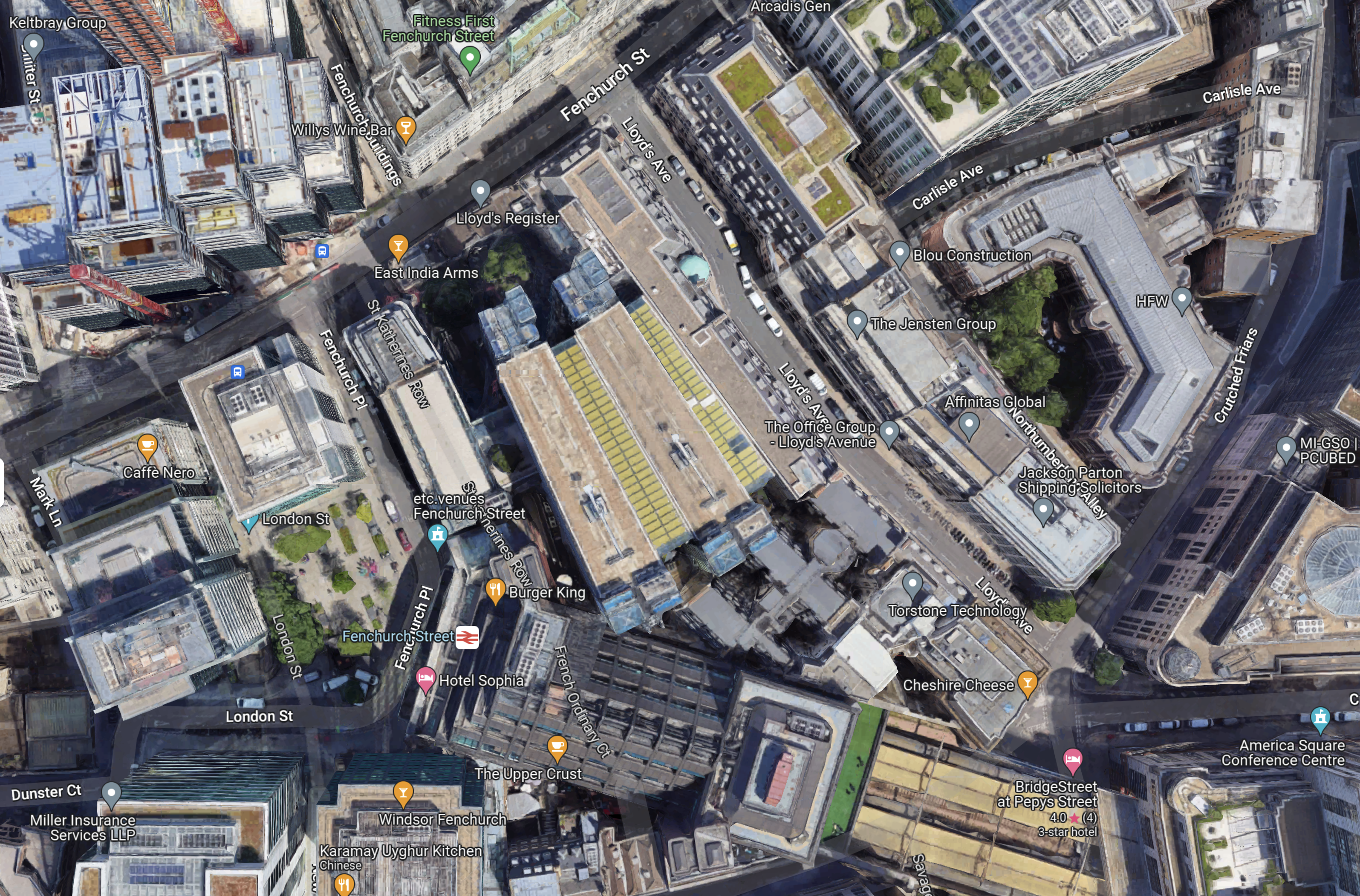
Note.
- Fenchurch Street station is towards the bottom of the map in the centre.
- It is completely hemmed in by buildings.
- There is just a small square in front.
I feel it would be very difficult to rebuild a larger station in the same place.
Services Into Fenchurch Street Station
Currently, there are three services into Fenchurch Street station.
- Fenchurch Street and Shoeburyness via Limehouse, West Ham, Barking, Upminster, West Horndon, Laindon, Basildon, Pitsea, Leigh-on-Sea, Chalkwell, Westcliff, Southend Central, Southend East and Thorpe Bay.
- Fenchurch Street and Southend Central via Limehouse, West Ham, Barking, Upminster, Ockendon, Chafford Hundred Lakeside, Grays, Tilbury Town, East Tilbury, Stanford-le-Hope, Pitsea, Leigh-on-Sea, Chalkwell and Westcliff
- Fenchurch Street and Grays via Limehouse, West Ham, Barking, Dagenham Dock, Rainham and Purfleet.
Note.
- All services are two tph.
- All services call at Limehouse, West Ham and Barking.
Each station gets the following frequency of trains.
- Barking – 6 tph
- Basildon – 2 tph
- Benfleet – 2 tph
- Chafford Hundred Lakeside – 2 tph
- Chalkwell – 4 tph
- Dagenham Dock – 2 tph
- East Tilbury – 2 tph
- Grays – 4 tph
- Laindon – 2 tph
- Leigh-in-Sea – 4 tph
- Limehouse – 6 tph
- Ockendon – 2 tph
- Pitsea – 4 tph
- Purfleet – 2 tph
- Rainham – 2 tph
- Southend Central – 4 tph
- Southend East – 2 tph
- Stanford-le-Hope – 2 tph
- Thorpe Bay – 2 tph
- Tilbury Town – 2 tph
- Upminster – 4 tph
- Westcliff – 4 tph
- West Ham – 6 tph
- West Horndon – 2 tph
c2c would appear to be offering a service, that is well-balanced about the stations it serves.
Can Elizabeth Line Trains Reach Barking?
This map from cartometro.com shows Woodgrange Park junction, where the Gospel Oak and Barking Line crosses over the Great Eastern Main Line.
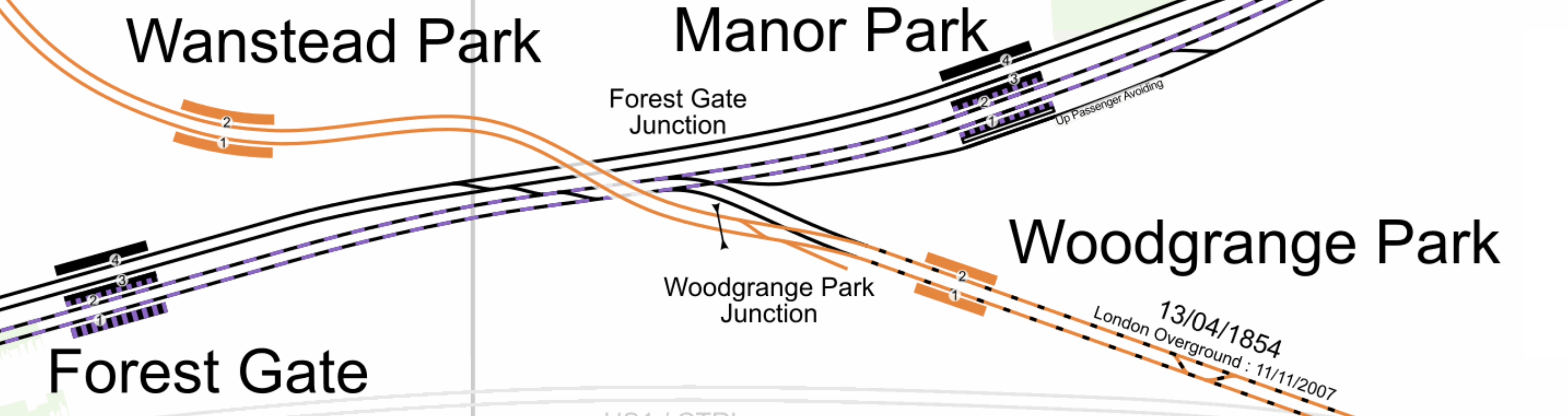
Note.
- The Gospel Oak and Barking Line is shown in orange.
- Gospel Oak station is to the North-West and Barking is to the South-East.
- The Elizabeth Line tracks are shown with a dash of purple.
- It looks to me, that a train on the Elizabeth Line going East could come through Platform 2 in Forest Gate station and then take the Gospel Oak and Barking Line through Platform 2 at Woodgrange Park station.
- It also looks as if trains could go through Platform 1 at both Woodgrange Park and Forest Gate stations to go West on the Elizabeth Line.
I don’t know whether they still do, but c2c trains used to use Woodgrange Park junction to access Liverpool Street station, when Fenchurch Street was closed or at weekends.
At Barking station, they would take the flyover over the station call in Platforms 7 and 8 in the station.
From the Eastern ends of Platforms 7 and 8, trains can use one of three routes.
- The London Overground route to Barking Riverside station.
- The c2c route to Grays via Purfleet.
- The c2c route to Upminster.
Note.
- The platforms at Barking Riverside station are probably too short for the Elizabeth Line trains.
- The Class 345 trains would fit into the bay platforms at Grays and Southend Central.
The simplest thing to do would probably be to divert the two tph between Fenchurch Street and Grays to either Liverpool Street or Paddington at the London end.
Each station would now get the following frequency of trains.
- Barking – 6 tph
- Basildon – 2 tph
- Benfleet – 2 tph
- Chafford Hundred Lakeside – 2 tph
- Chalkwell – 4 tph
- Dagenham Dock – 2 tph
- East Tilbury – 2 tph
- Grays – 4 tph
- Laindon – 2 tph
- Leigh-in-Sea – 4 tph
- Limehouse – 4 tph
- Ockendon – 2 tph
- Pitsea – 4 tph
- Purfleet – 2 tph
- Rainham – 2 tph
- Southend Central – 4 tph
- Southend East – 2 tph
- Stanford-le-Hope – 2 tph
- Thorpe Bay – 2 tph
- Tilbury Town – 2 tph
- Upminster – 4 tph
- Westcliff – 4 tph
- West Ham – 4 tph
- West Horndon – 2 tph
Only Limehouse and West Ham would get fewer trains.
But there would surely, be an extra pair of paths between Fenchurch Street and Barking.
I have also looked at trains through Pitsea, Upminster and Westcliff it appears that nearly all of the traffic is c2c’s passenger trains.
So would it be possible, with perhaps improved signalling to add an extra two trains between Fenchurch Street and Shoeburyness?
Each station would now get the following frequency of trains.
- Barking – 8 tph
- Basildon – 4 tph
- Benfleet – 4 tph
- Chafford Hundred Lakeside – 2 tph
- Chalkwell – 6 tph
- Dagenham Dock – 2 tph
- East Tilbury – 2 tph
- Grays – 4 tph
- Laindon – 4 tph
- Leigh-in-Sea – 6 tph
- Limehouse – 6 tph
- Ockendon – 2 tph
- Pitsea – 6 tph
- Purfleet – 2 tph
- Rainham – 2 tph
- Shoeburyness – 4 tph
- Southend Central – 6 tph
- Southend East – 4 tph
- Stanford-le-Hope – 2 tph
- Thorpe Bay – 2 tph
- Tilbury Town – 2 tph
- Upminster – 4 tph
- Westcliff – 6 tph
- West Ham – 6 tph
- West Horndon – 4 tph
More stations are getting four and six tph.
Conclusion
There are certainly possibilities to improve c2c by running services on the Elizabeth Line route.
 The Anonymous Widower