10 Exciting New Train Journeys Coming To The UK In 2026
The title of this post, is the same as that of this article in The Telegraph.
The journeys are.
South Wales Metro (The ‘Welsh Tube’)
Effectively, what the Welsh have done is turn the railways radiating from Cardiff into the sort of metro that Birmingham, Glasgow, Liverpool and Tyne-Tees have created over the last few decades.
- They are replacing a large proportion of the rolling stock, with new electric or hybrid-electric trains and tram-trains.
- Some of the lines are notably scenic.
- Some new stations have been added.
- There are attractions to visit.
- A Day Ranger ticket is available.
A few times in the past few years, when I feel I need some fresh air, I’ve taken a train to Cardiff, bought a Day Ranger and climbed a few hills in a train, as in my seventies, I’m too old to walk up.
I wouldn’t be surprised that the forthcoming Leeds Metro borrows heavily from ideas developed on the South Wales Metro.
London To Stirling
Stirling is one of those towns and cities, like Barrow-in-Furness, Blackpool, Shrewsbury and a few others, that Virgin and Avanti West Coast seem reluctant to serve.
I feel by choosing Stirling for a service, Lumo have just done the obvious.
- The route is fully-electrified.
- Stops will be Milton Keynes, Nuneaton, Crewe, Preston, Carlisle, Lockerbie, Motherwell, Whifflet, Greenfaulds, and Larbert.
- There will be four trains per day.
- The initial trains will be Class 222 trains.
- The electric Class 803 trains are on order.
- Hitachi are developing battery-electric trains for Lumo on the East Coast to be able to use the diversion via Lincoln, which would probably reach Perth.
- Car-hire companies will do well in Stirling.
- Stirling has onward train connections to Aberdeen, Dundee, Inverness, Montrose, Perth and Stonehaven.
- I wouldn’t be surprised to see FirstGroup, who are Lumo’s parent or another coach company, creating a hydrogen-powered coach network for the North of Scotland.
- The service will start in May 2026.
That really shows how railways can be used to boost growth. But will the SNP get the message?
I will use this service to have a few days in Stirling and explore the Southern part of the Scottish Highlands by train.
Caledonian Sleeper from Birmingham
This looks to be obvious addition to the Caledonian Sleeper.
The Telegraph says this.
The joys of the Caledonian Sleeper to Scotland, well known to travellers from London, are to be extended for the first time to those wanting to alight at Birmingham International. This change – the biggest in the Caledonian Sleeper schedule for 30 years – will mean that greeting the dawn approaching places as far flung as Fort William, Aberdeen and Inverness will be a far more realistic prospect for fans of this form of travel who live in the Midlands.
Note.
- The Birmingham stop will be at International not New Street.
- The service starts on January 16.
- Only the Highlander will stop at Birmingham International.
It seems to be a well-thought out simple addition to the service.
Newquay And Falmouth
The Telegraph says this.
Exciting news for fans of Cornwall where a new direct service linking the north and south coasts this year will make travelling by train between the key towns of Newquay and Falmouth considerably easier. The improvement to the current journey, frequently involving multiple changes and lasting two and half hours, will start with an increase in services between Newquay and Par in the spring and, by the end of the year, the commencement of the direct link all the way through to Falmouth.
Note.
The project is named the Mid Cornwall Metro.
The project has cost £57 million.
The route will be Newquay and Falmouth Docks via Quintrell Down, St. Columb Road, Roche, Bugle, Luxulyan, Par, St. Austell, Truro, Perranwell, Penryn, Penmere and Falmouth Town.
For more information, see midcornwallmetro.com
The journey time between Newquay and Falmouth will be cut by forty-five minutes.
I am sure that there are other rail systems in the UK, Ireland and in the wider world, that could benefit from a
High Speed Sonnet (Weardale To Stratford-upon-Avon)
The Telegraph says this.
And now for something completely different: a one-off charter train from the dales of County Durham to Stratford-upon-Avon, the heart of Shakespeare country. This journey, dubbed the “High Speed Sonnet”, comes as part of the 50th anniversary celebrations of the introduction of the legendary InterCity 125 high speed trains, one of which will be deployed on the run from Stanhope to the birthplace of the bard.
This train journey, although it is probably very nice is not really my scene.
- I don’t have a partner.
- I don’t live near to Weardale or Stratford-on-Avon.
- As I’m coeliac and low alcohol, I’m not really keen on gourmet dining events.
But the train is an Intercity 125, so some might like to take a ride.
For more details see excursionsbyrail.co.uk
West Highland Line, Scotland
The Telegraph says this.
A journey along the West Highland line, the most scenic stretch of track in Britain, and a visit to the Royal waiting room used by Queen Victoria during visits to Balmoral are two of the highlights of a new tour for 2026, offered by small group Scotland and UK specialists McKinlay Kidd.
Similar comments to the previous journey apply, except that it is West Scotland.
But the train is steam-hauled over the Glenfinnan Viaduct of Harry Potter fame, so some might like to take a ride.
For more details see mckinlaykidd.com
Mid Wales Explorer
The Telegraph says this.
Another new tour for 2026, this one run by The Railway Touring Company, has as its focus the central part of Wales. Highlights include a journey along the Welsh Highland line on the “Harbourmaster”, shorter trips on the celebrated little railways of Llangollen, Bala Lake, Talyllyn, Vale of Rheidol and Welshpool, and a narrowboat ride across world heritage Pontcysyllte Aqueduct located 38 metres above the River Dee. Tidy.
I might go on this one if the date of June 10th fits.
For more details see railwaytouring.net
Newcastle And Brighton
The Telegraph says this.
How about this for a tantalising prospect – a direct service between Newcastle and Brighton calling at York, Sheffield, Birmingham New Street, Oxford, Reading, and Gatwick Airport – with no need to change trains in London? This is the new route proposed by open-access operator Grand Central (part of Arriva UK Trains) and currently awaiting approval from the Office of Rail and Road.
All going well, services – five trains each way daily – should start by the end of the year. A potential game changer and, following the commencement of the direct link between Seaham and London in December 2025, a further example of Grand Central’s drive to connect underserved communities.
For more details see grandcentralrail.com
London And Cleethorpes
The Telegraph says this.
Another Grand Central proposal that whets the appetite is the application to run direct services (for the first time since 1992) between London and the Lincolnshire seaside town of Cleethorpes. While not without its critics, Cleethorpes is an old-school British resort with pier, promenade and the Cleethorpes Coast Light (miniature) Railway service. If approved, four services a day would be up and running by the end of 2026; additional stops would include Doncaster, Scunthorpe, Grimsby, Thorne South, Crowle and Althorpe.
For more details see grandcentralrail.com
Note.
Althorpe is not to be confused with the burial place of Princess Di.
In Lunch On The Pier In Cleethorpes, I wrote about excellent gluten-free fish and chips on the pier.
Champagne Moments On The Northern Belle
The Telegraph says this.
The late Queen Mother famously enjoyed G&Ts while seated in carriages which now form part of the the Northern Belle. This in mind, she would likely have approved of the latest innovation on one of Britain’s plushest trains: the addition of a “Krug class”, which includes one bottle of Krug Grande Cuvée Champagne per couple, to enjoy over a multi-course meal and seating in Duart (formerly a carriage on The Royal Train) or Glamis, named after the Queen Mother’s childhood home.
The train operates a number of day trips on scenic routes to landmark cities such as York, Edinburgh and Bath, and to colourful events such as the RHS Chelsea Flower Show.
For more details see 95pp; northernbelle.co.uk
Taking Pictures In Doncaster And Cleethorpes Today
My faith was restored a bit in UK railways today.
I had to go to Cleethorpes at the last minute to take some pictures for this blog.
I went with a change at Doncaster each way.
- I bought the single ticket to Doncaster from a person in King’s Cross for £28.55 on LNER.
- I bought the return ticket to Cleethorpes from a person in Doncaster for £20.55 on TransPennine Express.
- I bought the single ticket to King’s Cross from a person in Doncaster for £15.30 on Hull Trains.
I bought all tickets with my railcard on a walk up basis.
All four trains were on time.
The only problem was the weather in Cleethorpes and the pictures could have been better.
Lunch On The Pier In Cleethorpes
I took these pictures as I walked along the sea front, where I had lunch at a restaurant called Papas.
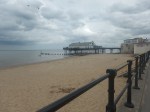
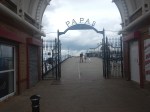
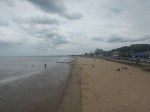
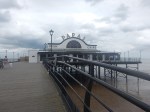






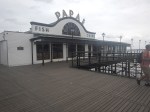


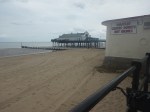
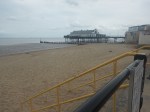
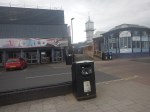
Note.
- As you can see, I had some excellent gluten-free fish and chips, which I washed down with a zero-alcohol beer.
- The service was good, friendly and fast.
- I needed it fast, as I had a train to catch and if I missed it, it would be a two-hour wait.
Strangely, I don’t think, I’ve ever eaten a proper meal on a pier.
This Google Map shows the location of the pier with respect to the station.
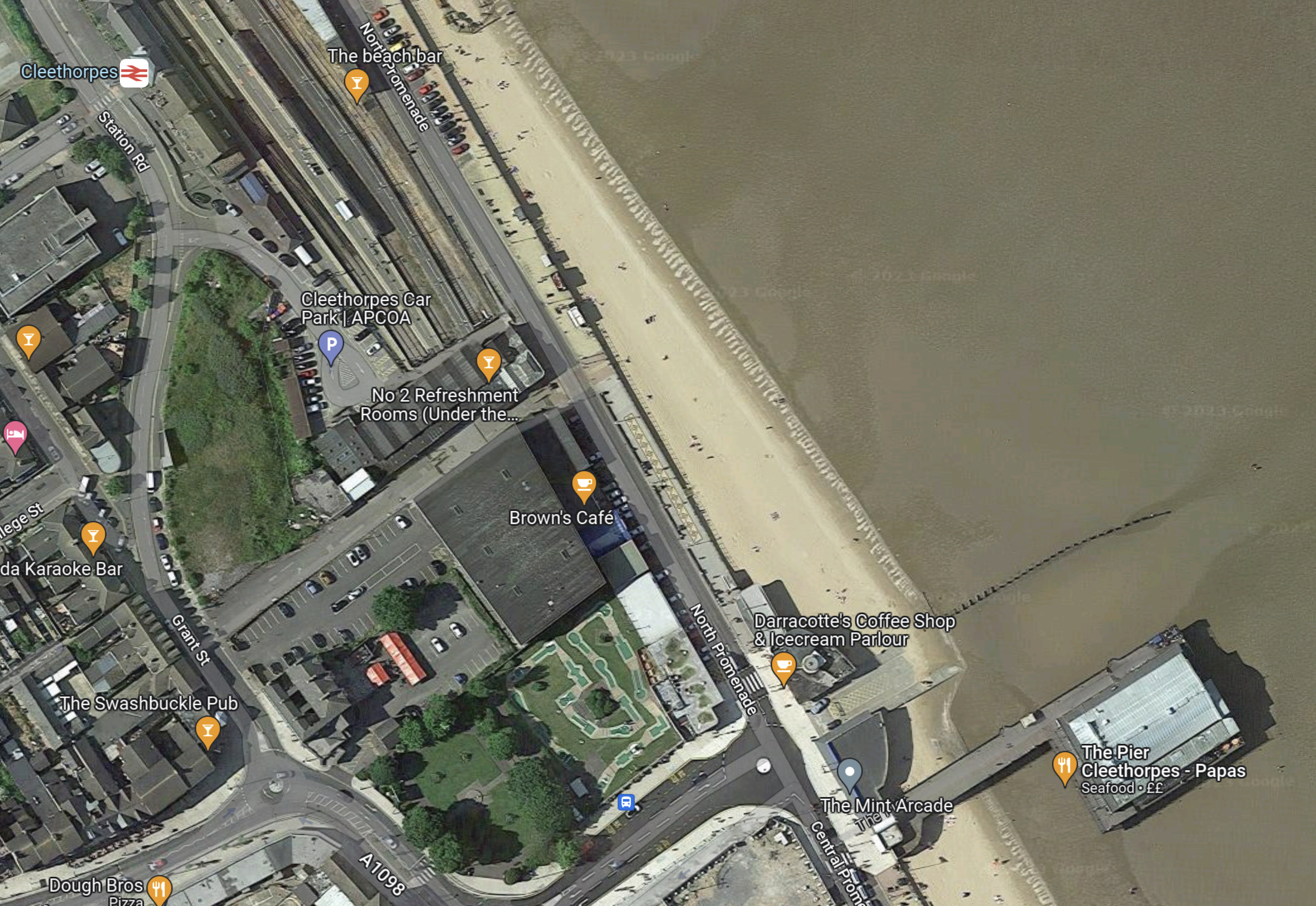
Note.
- The station is in the North-West corner of the map.
- The pier and restaurant is in the South-East corner of the map.
It is a very easy level walk from the station to the restaurant.
Gluten-Free Fish And Chips In Old Fashioned Seaside Towns
This is the third time in recent years, when I’ve had excellent gluten-free fish and chips in an old-fashioned seaside town.
The other two places were Lowestoft and Skegness.
Incidentally, from what I remember of the taste of ordinary fish and chips, I prefer the taste of the gluten-free version, which I’ve had perhaps a dozen times in the last twenty0five years.
But then some gluten-free versions taste better than the ordinary version. Egg sandwiches are one.
Suzie’s Cup Of Joy
It must be very difficult for small cafes in this pandemic, but Suzie’s Cup of Joy in Cleethorpes seemed to be managing. They were certainly doing all the right things.



I had a gluten-free breakfast there on Wednesday.
I would have sat outside, but it was rather breezy.
Beeching Reversal – Restoring A South Humber Link
This is one of the Beeching Reversal projects that the Government and Network Rail are proposing to reverse some of the Beeching cuts.
The project is described by these two paragraphs in this article in the Yorkshire Post, which is entitled Government Announce Yorkshire Rail Schemes That Could Receive ‘Reverse Beeching’ Funding.
North Lincolnshire Council have bid for funding to subsidise a new train service that would allow passengers from Barton-on-Humber to travel to Gainsborough, from where they would be able to catch direct services to Sheffield.
This would be achieved by diverting the existing Barton to Grimsby and Cleethorpes trains up a freight-only section used by traffic heading to Immingham docks. There have never been passenger trains using this path before.
This rail map clipped from Wikipedia shows the Barton Line to Barton-on-Humber station.
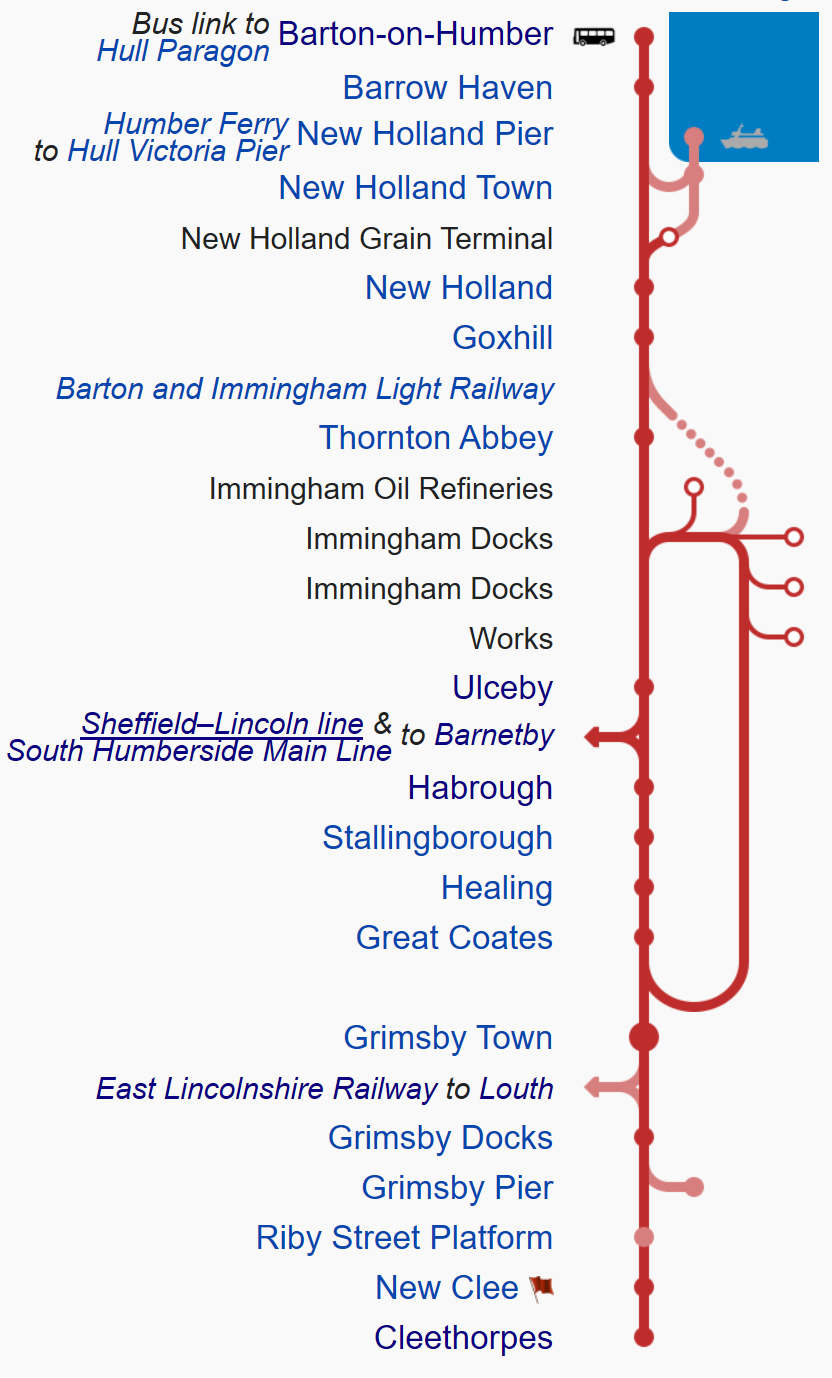
Note.
- Barton-on-Humber station has a bus link to Hull station.
- The loop gives a grand tour of the Port of Immingham on what is now a freight-only line.
- There is a lot of development going on in the area including the AltAlto aviation biofuel, that I wrote about in Grant Shapps Announcement On Friday.
Perhaps all this development is causing a lot of small problems.
- Is it causing congestion on the roads?
- Are workers difficult to find in the Immingham area?
- Is commuting over the Humber Bridge expensive?
- Is parking difficult in the Port?
North Lincolnshire Council could feel that a better rail connection serving the Port of Immingham, would be an asset, that reduces these problems.
I suspect the current two-hourly service between Barton-on-Humber and Cleethorpes stations, will be replaced by an hourly one, between Barton-on-Humber and Gainsborough Lea Road stations, that takes the following route.
- Barton-on-Humber to Ulceby
- At Ulceby station the train will reverse and go clockwise around the loop.
- After calling at Great Coates, Healing, Stallingborough and Habrough stations, the train would go West to Barnetby and Gainsborough Lea Road stations.
- Passengers wanting to go from Barton-on-Humber to Grimsby Town or Cleethorpes, would change at Great Coates station.
It may look a rather round-about route, but I suspect that the plan includes some stations to serve the Port of Immingham and the industrial development.
I suspect that some of these port, oil, chemical and energy companies can afford to pay a contribution.
Gainsborough Lea Road Station
Gainsborough Lea Road station is a mix of architectural styles.
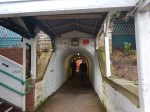
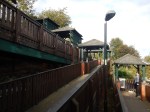
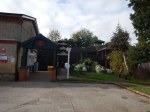
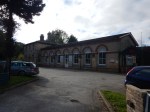
But with the addition of a friendly café and some other facilities, it would be a good interchange between the Immingham area and Sheffield and the county town of Lincoln.
Future Trains
Lincolnshire is an energy-rich county, which partly explains all the industrial development in the North-East of the county around Grimsby, Immingham and Scunthorpe.
- Immingham is a large importer of biomass for power generation.
- There are off-shore and on-shore gas fields connected to Theddlethorpe gas terminal.
- There is the large power station complex at Keadby.
But the energy mix is a-changing.
- Keadby now includes a solar farm.
- Wind turbines are springing up both on land and in the sea.
If I was to make a prediction, it would be that more and more large energy-related businesses will develop in the area.
- In recent months, Altalto’s waste-to-aviation biofuel plant has been given national and local government backing to be built at Immingham.
- ITM Power are involved in a hydrogen development project in the area.
- I wouldn’t be surprised to see hydrogen produced for transport from all this energy.
I think it will be inevitable, that zero-carbon battery electric or hydrogen-powered trains will run in the area.
- Cleethorpes and Doncaster via Scunthorpe 52 miles apart.
- Cleethorpes and Barton-on-Humber are 23 miles apart
- Lincoln and Newark are 16.5 miles apart.
- Lincoln and Doncaster are 37 miles apart.
- Lincoln and Sheffield are 48 miles apart
- Lincoln and the electrification at Peterborough are 54 miles apart.
- Skegness and Sleaford are 41 miles apart.
- Sleaford and Grantham are 18 miles apart.
With charging facilities at Barton-on-Humber, Lincoln, Skegness and Sleaford, the whole of Lincolnshire could be served by zero-carbon battery electric trains.
I suspect LNER could lead the way, as a five-car Class 800 train equipped with batteries, is predicted to have a 56 mile range away from the wires, which would easily handle a return trip between Newark and Lincoln.
There could be a small problem, in that the first train of the day, between Lincoln and London Kings Cross positions from Doncaster Carr IEP Depot, so running Doncaster to Newark via Lincoln might challenge the battery range of the train. I suspect, that the positioning could be performed via Newark with a reverse, prior to the installation of a charging facility at Lincoln Central station.
I estimate that Barton-on-Humber and Gainsborough Lea Road stations are about 35 miles apart, so with today’s battery technology, I suspect that a round trip in a battery electric train would be on the limit. But with charging facilities at Gainsborough, there would be no problems.
I suspect that East Midlands Railway would use several of their forty diesel Class 170 trains on this and other routes in Lincolnshire, so perhaps a good interim solution would be to run the Class 170 trains on Altalto’s biodiesel, that will be produced at Immingham.
There is also the possibility, that some or all of the Class 170 trains will be retrofitted with MTU Hybrid PowerPacks, which would cut their diesel consumption.
Surely, with all Lincolnshire’s energy, hydrogen-powered trains must be a possibility. But they seem to be stuck in a siding!
The MTU Hybrid PowerPack and Altalto’s bio-diesel seems a more affordable and less risky route.
A Direct Connection To London
In the Wikipedia entry for Gainsborough Lea Road station, there is a section called Future Services, where a direct connection to London is mentioned.
Conclusion
Given that the likes of East Midlands Railway, Hull Trains, LNER and TransPennine Express are improving their services to Hull, Lincoln, Cleethorpes and Grimsby, this local North Lincolnshire Metro serving the Port and the industrial development, could well be welcomed by those that live and work in the area.
I doubt that the infrastructure cost will be very high.
Thoughts On Powering Electrification Islands
In The Concept Of Electrification Islands, I didn’t say anything about how electrification islands would be powered. Although, I did link to this post.
The Need For A Substantial Electrical Supply
Electrification can use a lot of electricity.
This was illustrated by the electrification of the Midland Main Line, where a high-capacity feed from the National Grid had to be provided at Market Harborough.
But then the Government cancelled electrification North of Kettering leaving a twelve mile gap to be filled. I wrote about the problem in MML Wires Could Reach Market Harborough. In the end the sensible decision was taken and the electrification will now reach to Market Harborough station.
So places like Cambridge, Darlington, Doncaster, Leeds Norwich and York. which are fully electrified and on a main route probably have enough electrical power to charge passing or terminating battery-electric trains on secondary routes.
In Thoughts On The Actual Battery Size In Class 756 Trains And Class 398 Tram-Trains, I quoted the reply to a Freedom of Information Request sent to Transport for Wales, which said.
A four-car Class 756 train will have a battery capacity of 600 kWh.
A Class 756 train is similar to a Greater Anglia Class 755 train, which in Battery Power Lined Up For ‘755s’, I estimated weighs about 135 tonnes when full of passengers.
Weights for the Hitachi trains are difficult to find with a figure of 41 tonnes per car given for a Class 801 train on Wikipedia. In Kinetic Energy Of A Five-Car Class 801 Train, I estimated a full weight of a five-car Class 801 train at 233.35 tonnes.
Based on the Stadler figure, I would estimate that every train passing an electrification island will need to pick up as much as somewhere between 600-1000 kWh.
An Electrification Island At Sleaford
In The Concept Of Electrification Islands, I proposed an electrification island at Sleaford station.
- Sleaford is a market town of around 18,000 people.
- I doubt the power in the town has much surplus capacity.
- This station is served by four trains per hour (tph), one to each to Lincoln, Nottingham, Peterborough and Skegness.
- So it looks like a feed of three to four MW will be needed to charge passing trains.
Can the electricity supply in a town like Sleaford provide that sort of power for perhaps eighteen hours a day?
The only ways to provide that sort of power is to build a new power station or provide energy storage capable of boosting the supply.
Could Highview Power Provide The Solution?
I have been following Highview Power and their CRYOBatteries for some time.
They have already built a 5 MW pilot plant in Manchester and are currently aiming to build a plant with 250 MWh of energy storage, that can supply up to 50 MW. The company and this plant is discussed in this article on The Chemical Engineer.
One of these CRYOBatteries, would surely be ideal to power an electrification island, like the one at Sleaford.
- It could be scaled to the electricity needs of the town and the railway.
- It would be charged using renewable or excess energy.
- There is a lot of wind power in Lincolnshire and just off the coast, which needs energy storage.
- Similar systems could also be installed at other electrification islands at Cleethorpes, Lincoln, Skegness and other places, where the grid needs strengthening.
I have used Highview Power in this example, but there are other systems, that would probably boost the electricity just as well.
Welcome To The LNER Stadium… Train Operator Sponsors Lincoln City Football Club Stadium
The title of this post, is the same as that of this article on Rail Advent.
Sincil Bank willnow be the LNER Stadium.
In LNER To Put Lincoln On The Rail Map, I detailed LNER’s plans to run five trains per day in each direction and also to increase weekend services.
I also speculated that LNER might extend the service to Grimsby and Cleethorpes.
Conclusion
It does appear that the extra services between London and Lincoln and the sponsorship of the stadium are part of a larger plan.
This might fit in with an extension of the service to Grimsby and Cleethorpes.
LNER To Put Lincoln On The Rail Map
This article on Rail Magazine is entitled LNER To Run New Azumas To Lincoln.
The article says that from October 21st, 2019, the service between London and Lincoln would be.
Southbound
- HST – 0730
- Azuma – 1118
- Azuma – 1323
- Azuma – 1526
- Azuma – 1714
The only current service; the HST takes four minutes under two hours.
Northbound
- Azuma – 1006
- Azuma – 1206
- Azuma – 1406
- Azuma – 1606
- HST – 1906
The only current service; the HST takes three minutes under two hours.
In both directions Azumas appear to be a few minutes slower in the timetable.
But these improved services are not all, as this is a paragraph, which sums up further changes after December 2019.
A sixth daily weekday service will be introduced as part of the December timetable (leaving London at 0806 and returning at 2025), along with five additional Saturday services. Azumas will start serving Lincoln on weekends from December 7.
Lincoln will get a large increase in the number of direct services to and from London.
- The weekday service will be approximately one train every two hours.
- The weekday service will be boosted, by extra services which will require a change at Newark, Peterborough or Retford.
- Lincoln will be getting more weekend services.
There must be other large towns and cities served by LNER, who wish they could have a service as good as Lincoln’s.
Onwards To Grimsby And Cleethorpes
Under Proposed Services And Future Changes, in the Wikipedia entry for Cleethorpes station, this is said.
Informed sources close to LNER reported in June 2019, that LNER would like to extend a number of trains from Lincoln Central to Cleethorpes in the future, but it would take time to do this as the route will need to be checked to see whether the Azuma trains are cleared to use the route.
Consider.
- The distance between Lincoln and Cleethorpes is forty-seven miles.
- The trip takes five minutes over the hour, with four stops.
- I would feel that it is feasible that Kings Cross and Cleethorpes could be a few minutes under three hours using an Azuma.
TransPennine Express also has a stabling, cleaning and refuelling facility at Cleethorpes. Would they be able to accommodate an overnight Azuma?
As an example, the current HST service could become the following Azuma-operated service.
- Leave Cleethorpes around 0630.
- Call at Lincoln at 0730.
- Arrive in Kings Cross at 0926.
- Evening return from Kings Cross at 1906.
- Call at Lincoln at 2103.
- Arrive at Cleethorpes around 2200.
The train could be cleaned and refuelled at Cleethorpes or it could take a trip to and from the main Azuma base at Doncaster Carr, which is just over an hour away from Cleethorpes.
I could see LNER running a couple of services in each direction every day, if the demand is there.
Splitting And Joining
LNER seem to be proposing to increase services on the East Coast Main Line.
One problem will be the number of paths available to and from London.
Could this be solved by services splitting and joining trains en route, so that one service from Kings Cross serves two destinations?
As a simple example, Lincoln and Hull services could work together.
- Each city would get a five-car service to and from London.
- Services would run South of Newark as ten car trains.
- Services would split and join at Newark North Gate station.
- Services would run North of Newark as five car trains.
- Only the Hull service would need a path North of Newark on the East Coast Main Line.
- The Lincoln service would be on the Newark and Lincoln Line.
The number of paths needed between London and Newark would not be increased, from the current requirement.
I noted earlier that some Lincoln services run by Azumas will be a few minutes slower than those run by HSTs. Could this be because LNER are planning to run Lincoln services in conjunction with other services, by using splitting and joining at Newark?
As some Lincoln services have a longer stop than others at Newark, perhaps timings have been arranged for possible splitting and joining.
It should also be noted, that the design of Kings Cross station, has pedestrian access in the middle of a ten-car train, courtesy of a step-free footbridge. This makes joining the front train easier.
Surely, the ultimate service could be to combine Lincoln and Hull services, so that both cities got a two-hourly or even hourly London service, courtesy of a split and join at Newark.
Conclusion
Lincoln is getting an excellent, more frequent service to and from London.
Extending some services from Lincoln to Grimsby and Cleethorpes could be the icing on the cake!
C
 The Anonymous Widower