Metrolink Customers Complete 170k Trips Using Contactless System
The title of this post, is the same as that of this article on Rail Technology Magazine.
The high number of journeys is no surprise to me and Manchester should have introduced this system several years ago!
This post from September 2015 is ntitled Transport for London Are Leading The Contactless Revolution.
I’ll repeat the short post here.
This article from Rail Magazine is entitled Contactless Ticketing Booms In London.
It states the following.
- In the first year, 180 million journeys have been made using contactless cards.
- This accounts for a fifth of all pay-as-you-go journeys.
But what isn’t said is the fact that despite the predictions of some left-wing and green politicians, there has been no hint of any problems. If there had been, the various tabloids would have had a field-day.
When are the rest of the large cities of the UK going to copy London, so I don’t need to use that nineteenth century technology of paper tickets?
Manchester’s figure of 170,000 in four weeks is a rate of around two million in the first year.
- Greater Manchester is a lot smaller than Greater London.
- London had been running Oyster successfully since 2003.
- Oyster and contsctless ticketing could be used on the Underground, Overground, trams, trains and buses.
I will be very surprised if Manchester doesn’t expand their system.
This is said in the Wikipedia entry for Oyster card.
Since the launch of contactless payment in 2012, over 500 million journeys have been made, using over 12 million contactless bank cards.
Assuming the rate of use is level, which it isn’t as it’s increasing, this works out at 71.4 million journeys per year.
- Greater London’s population is 8.8 million
- Greater Manchester’s population is 2.8 million
Just doing a simple pro-rata means that Manchester should see 22 million journeys a year or 62,000 journeys a day.
According to Wikipedia, the Manchester Metrolink had 43.7 million riders in 2018/19.
Conclusion
Manchester must do the following as soon as possible.
- Extend contactless ticketing to all buses and trains in the Greater Manchester area.
- Make sure all taxis accept contactless cards.
- Extend the Mabchester Metrolink.
- Put in an order for some more trams, as soon as possible. They will be needed as traffic will grow exponentially.
- Purchase some vandal-proof terminals.
They should also enter into discussions with Cheshire, Lancashire, Leeds, Liverpool, Sheffield and Yorkshire about creating a common and integrated contactless card system for the North!
Contactless ticketing would transform lhe North!
Will Contactless Ticketing Generate Funding For Extensions?
Some extensions to the Manchester Metrolink will be fairly easy and not very costly to build. In Tram-Trains To Hale Station, I talked about a simple extension to Hale station, that could go a lot further to perhaps Northwich, Sandbach and Crewe.
When Transport for Greater Manchester get a decent financial model and data from a year of contactless ticketing, some of the routes for tram-trains might be possible to fund from a large insurance or pension fund.
I have used this tram-train extension as an example, as there is no need to lay a lot of new track, so costs can be less.
London should have been able to fund improvements, but Sadiq Khan brought in a fare freeze and Crossrail turned out to be late.
A Lesson For Brexit
Boris Johnson was Mayor of London, when full contactless ticketing was implemented in London.
- It was the first such system in the world.
- The left and the green were against it and said it would all end in tears.
- All Londoners and visitors have embraced the system and I’ve never found anybody who refuses to use it.
- Attacks on staff have dropped to a very low level, as there’s no money about.
- In my opinion it is one of the main reasons, that London has been so successful in recent years.
I voted Remain and still think, there are reasons we should stay in Europe.
- But the referendum went the other way and everyone must abide by the result.
- Boris probably had little to do with London’s contactless ticketing revolution, but if it had failed he would have got the blame.
- All politicians in London now embrace the technology and would be voted out of office, if they decided contactless bank cards couldn’t be used.
Boris is now in charge of Brexit and just like those of the left and the green who opposed contactless ticketing, those that oppose Brexit will be Yesterday’s Men.
Like contactless ticketing, it has nothing to do with Boris, but all to do with the power of the man and woman on the bus or in the voting booth.
I think it is too late to stop a No-Deal Brexit.
Is Manchester Metrolink Expensive?
On my trip to Manchester earlier this week, I used contactless ticketing for two trips on the Manchester Metrolink.
- Piccadilly to Velopark
- VeloPark to New Islington
It cost me £7.40.
On the same day, I went, I took a trip to Glossop and the return cost me £4.30 with a Senior Railcard.
Manchester’s Contactless Ticketing
In Manchester yesterday, I used their new contactless ticketing.

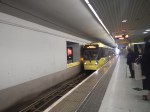

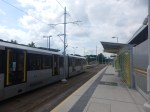
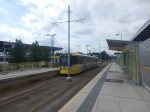
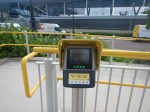
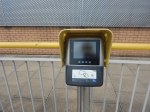
The system appeared to be working well, but I do have reservations.
Use On The Trains
I went up to Glossop on the train. As both Glossop and Manchester Piccadilly stations have tiket barriers, why can’t I use contactless ticketing on that type of journey?
Consider.
All of the barriers I saw, were the same as London’s, so they can also read contactless bank cards.
Not all stations in London have ticket barriers. You’re just expected to touch in and touch out, as you do with Manchester’s system.
Surely, the software can and will be extended!
Damage To The Terminal
Two of the four terminals I looked at were damaged; possibly by a sledgehammer or a Size 10-boot.
Are they robust enough.
Instructions For Users
I didn’t see any posters, describing how to use the system in English.
Surely, as Manchester, is receiving a lot more visitors, comprehensive instructions in several languages.
Terminal Design
I came across a couple of first time users, who were both locals and they weren’t sure, where to put their card.
I’d be interested to know, why they didn’t use London’s design of terminal.

I’ve only ever seen a technician fixing one broken terminal in London.
No Staff
I didn’t see any staff! The stop under Piccadilly had no staff there to help visitors.
What About Those With Poor Vision?
I have a friend, who is registered blind and has a guide dog. But he can see a bit and has no trouble using contactless in London, especially as the dog leads him to wide gates.
Would my friend cope in Manchester?
Conclusion
It’s a good start, but some details haven’t been properly thought through!
At least, I won’t need to buy a ticket in Manchester again, unless I’m using a train.
Do Tourists To The UK Get Bad Advice On How To Use The Trains?
I travelled out to Oxford with a Chinese family from Hong Kong.
- They were going to Oxford and home via Bicester Village.
- They had actually flown into Edinburgh and after spwnding a few days in the City, they had taken the train to London, where they were spending another few days.
- They were going to spend a day in Paris using Eurostar.
I think they had booked most of the tickets in Hong Kong before they left.
Knowing, what I know about ticketing, I would have organised things a bit differently.
Family And Friends Railcard
Purchase of a Family and Friends Railcard can give discounts for a one-off fee of £30.
To find out ticket orices with the Family and Friends Railcard web site.
Splitting A Journey
Most tickets other than Advance tickets allow the ticket holder to break a journey and then carry on later.
Because I am a coeliac and need gluten-free food, if I’m travelling a long distance, I may break the journey in say Birmingham, Glasgow, Leeds or Manchester, where I know I can get a quality gluten-free meal.
Tourists might want to break a journey between Edinburgh and London at York or Durham. This is possible on an Off Peak or Anytime ticket.
Tickets To Or From Stations Or Terminals
This ticket is a First Class Off Peak ticket between Manchester Stations and London Terminals, using Any Permitted Route.
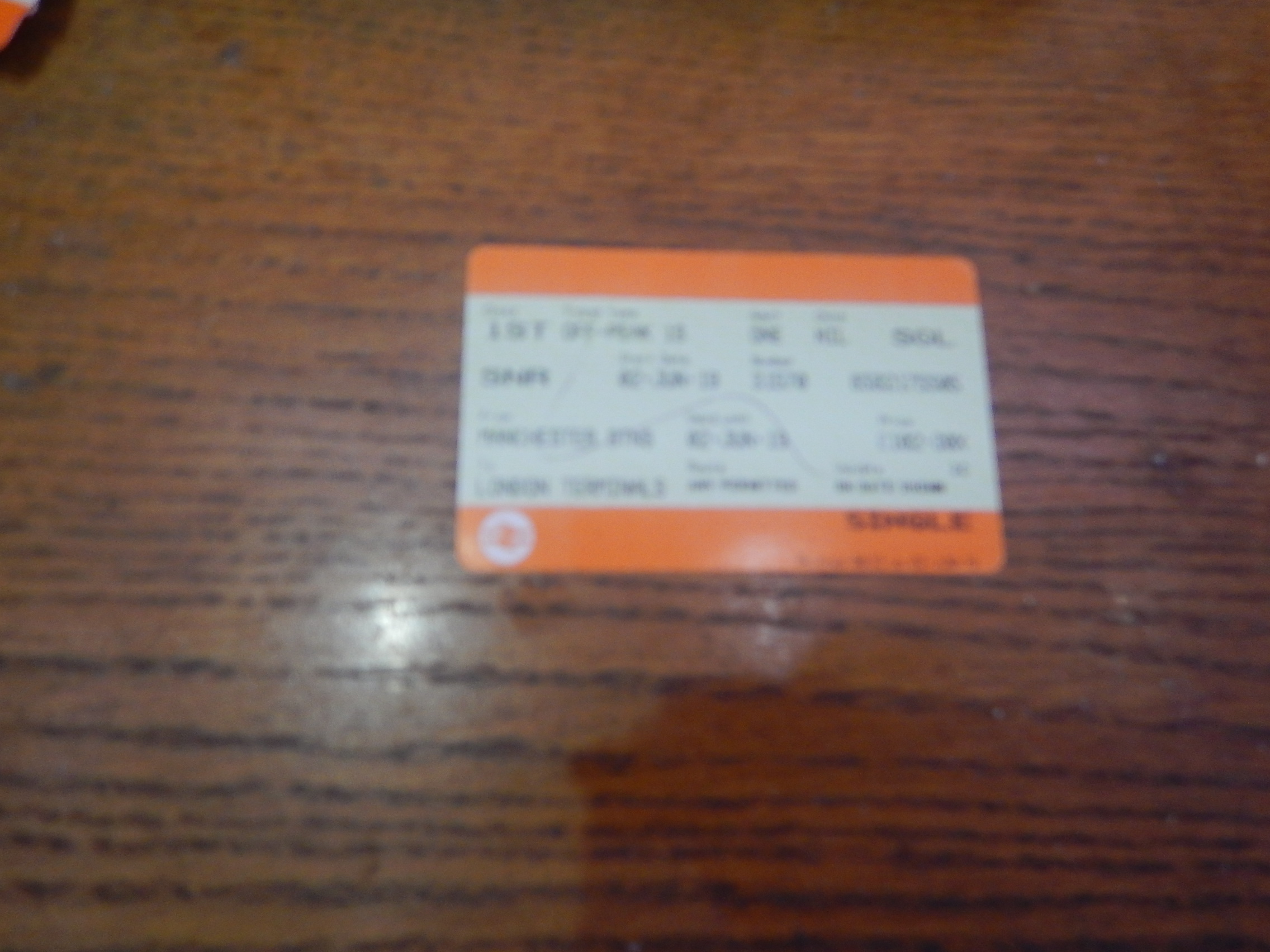
I actually used it between Manchester Piccadilly and London Euston stations, but I could have used the ticket to go via Birmingham and then take Chiltern Railways from Birmingham to London Marylebone.
I think the general rule is if your ticket is marked Any Permitted Route and you keep going in the same direction, most routes are possible.
I always ask first, as some companies have different rules.
Visiting Bicester Village, Oxford And Windsor In One Day
The Hong Kong family I met were visiting Oxford and Bicester Village.
The best way to do this is to make sure you have a Day Return ticket between London Terminals and Oxford, which is marked Any Permissible Route.
This will enable you to do the following three journeys.
- London Paddington to Oxford.
- Oxford to Bicester Village
- Bicester Village to London Marylebone.
With a Railcard, this ticket will cost £18.10.
If you want to visit Windsor, this can be done on the outward journey, by splitting the trip at Slough. There is a branch line to Windsor at Slough worked by a shuttle train, which costs £1.90 for a return trip with a Railcard.
Ranger And Rover Tickets
Check these tickets out, if you’re staying in a town or city for a few days, as they may be a cheaper option.
The various Rovers and Rangers are detailed on this web page.
London
The Oyster card in London is dying.
- But don’t worry, as the same prices are available by using a contactless bank card.
- Contctless bank cards have the same daily and weekly cap as Oyster.
- Contactless bank cards also work on the Underground, Overground, buses, Docklands Light Railway and the Emirates Air Line.
- You can now use contactless bank cards at London City, Gatwick, Heathrow and Luton Airports.
- If you want to use Gatwick and Heathrow Express services, these can be accessed using contactless ticketing too!
It appears there are very few complaints.
If you want to read a detailed analysis of London ticketing, read this page on the Finding The Universe web site.
Summing-Up
I shall be adding to this page, as it is only a rough general guide.
Use the Contact form to send any suggestions or questions.
TfGM Announces Contactless Payments On Metrolink Trams
The title of this post, is the same as that of this article on Rail Technology Magazine.
This is the first paragraph.
Passengers will be able to ‘touch-in’ using their contactless cards on Manchester Metrolink trams from July 15, Transport for Greater Manchester (TfGM) announced today.
I shall be there with my contactless credit card on Monday week, to check that this is not fake news.
I look forward to the day, when Liverpool, Manchester, Sheffield and Leeds are all one contactless card area for trams, trains and buses.
When you consider that the combined area will be smaller than Greater London’s contactless area and that the distance between Lime Street and Leeds or Sheffield, is less than Reading to Shenfield, which will be contactless when Crossrail opens, the problems can’t be technological.
If the leaders of the four major Northern cities can agree this advance in ticketing, they will do more for the North, than any other short-term transport development will achieve.
Funding Secured For New Entrance At Stratford Tube Station
The title of this post is the same as that of this article on IanVisits.
The new entrance will give those coming from the Carpenters Estate direct access to Stratford station.
This Google Map shows the South East section of the station.
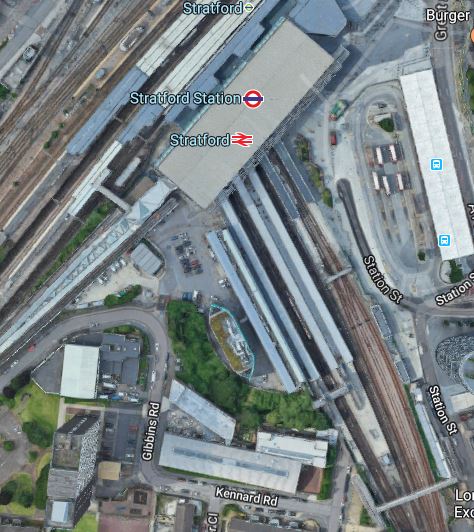
The main station building has the two station symbols on the top and the Jubilee Line platforms run Southwards from the building.
It would appear that the new entrance will be close to the Southernmost corner of the station building in a staff car park.
Knowing the station well, I suspect it will be a very useful new entrance for both residents and visitors to the Olympic Park.
It will make it easier to avoid the clutches of Eastfield.
The only details on the cost of the scheme is this sentence from Ian’s article.
Newham council has agreed to contribute £1 million to the scheme, which is being funded from its Community Infrastructure Levy.
As it incorporates some extra lifts in the station, the scheme is probably going to be more than a million pound one, but the London Legacy Development Corporation (LLDC) is involved, I suspect that everything is securely funded.
Should There Be Other Small Schemes Like This?
At Shepherd’s Bush station on the Overground, in 2015, a new entrance was built to give better access to Westfield. It is not very busy during the day, but I suspect that workers at Westfield use it more than shopper. Wikipedia says it cost £1.35 million, so I should think that the Stratford scheme wouldn’t cost a great deal more.
I believe there are other places, where extra entrances could be built.
Simple Ungated Entrances
Entrances don’t have to be grand, as I showed in An Ungated Entrance Used To Create Step-Free Access At Crofton Park Station.
These two entrances are just a hole in the station fence, Oyster readers and a bit of tarmac. There must be other places, where these entrances can be installed.
An Entrance At Hackney Central Station Into Graham Road
In It Looks Like The Hackney Downs/Central Link Is Ready To Open, I also talk in detail about adding a Southern entrance to Hackney Central station, that would lead directly into Graham Road. Eith a pedestrian crossing and changes to the bus stops, it would be a very useful step-free entrance for those living between the centres of Hackney and Dalston.
A Second Entrance At Highbury & Islington Station
In Could We Create A Second Entrance To The Overground At Highbury And Islington Station?, I investigated creating a West-facing entrance at Highbury & Islington station, that would improve access for those going to football.
Conclusion
I believe that a lot of stations can be improved, by adding extra entrances in convenient places.
It is probably easier to do in London’s Oyster/contactless card area, as a couple of readers can sort out ticketing.
Mayor Drops Plans To Close London Overground Ticket Offices
The title of this post is the same as that of this article on the BBC.
This is the first two paragraphs.
The Mayor of London has dropped plans to close ticket offices at 51 London Overground stations.
Busy stations will continue to operate as usual, though many will have opening hours reduced to just two-and-a-half hours per day, City Hall said.
Although the Unions objected to the Mayor’s original plans and this has probably prompted the Mayor’s U-turn, I think that staff in ticket offices will disappear within perhaps five years.
The only time, I see anyone use the Ticket Office at Dalston Junction station, is probably to sort out a ticketing issue with the machines, which are becoming increasingly rare, as Transport for London are increasing their numbers and replacing older machines with better designs.
Also as Dalston Junction is a busy station, there is usually someone manning the gate-line, who can help.
But over the next few years, the following will happen.
- More and more passengers will use contactless ticketing with bank cards.
- Contactless ticketing will expand widely, so that for most journeys in the UK, you would just touch-in and touch-out.
- Oyster will cease to be used and be withdrawn.
- Gateline technology will get better.
- Staff working on the gateline and platforms, will be better equipped with mobile technology to sort out problems.
- Ticket machines will develop into sophisticated multi-language help points.
- Cash will disappear from daily life and stations.
- Train companies will continue to be short of drivers and will look for other staff that can be retrained.
On a related note, increasingly, London Underground and Overground are being targeted by organised gangs of beggars. This means they need more staff on the gateline to control the problem.
I can see a time, when working in a ticket office will be a very lonely and boring job, that no-one will want to do.
So like the dinosaurs, they will just die out!
An Ungated Entrance Used To Create Step-Free Access At Crofton Park Station
Crofton Park station is not step-free and has the usual staiircases.
As I passed through today, I noticed that an ungated entrance had been used to create step-free access.
Passengers are expected to touch-in and out on the touch pads.
I suspect most do!
But it’s a clever idea to build an affordable step-free entrance.
I suspect this type of entrance might become more common in the Oyster-card area.
After all, there are several Overground stations without ticket gates.
Should High Speed Two Use Contactless Ticketing?
Ask Londoners what they think of contactless ticketing and the views, will generally be positive.
Londoners are also increasingly travelling with their credit and debit cards instead of London’s Oyster Card.
Other city’s like New York, are also going London’s way and are basing ticketing around bank cards.
High Speed Two’s Phase One Network
IWhen Phase One hopefully opens in 2025, according to this section in Wikipedia, this could be the service pattern in trains per hour (tph)
- 3 tph – Birmingham Curzon Street calling at Old Oak Common (OOC) and Birmingham Interchange
- 3 tph – Birmingham Interchange calling at OOC
- 2 tph – Liverpool Lime Steet calling at OOC, Stafford (1tph), Crewe (1tph) and Runcorn
- 3 tph – Manchester Piccadilly calling at OOC, Wilmslow (1tph) amd Stockport
- 1 tph – Preston calling at OOC, Crewe, Warrington Bank Quay and Wigan North Western
- 1 tph – Glasgow calling at OOC and Preston
This is a very simple network and consists of the following stations.
- 3 tph – Birmingham Curzon Street
- 5 tph – Birmingham Interchange
- 2 tph – Crewe
- 2 tph – Liverpool Lime Street
- 3 – tph – Manchester Piccadilly
- 13 tph – Old Oak Common
- 2 tph – Preston
- 2 tph – Runcorn
- 1 tph – Stafford
- 3 tph – Stockport
- 1 tph – Warrington Bank Quay
- 1 tph – Wigan North Western
- 1 tph – Wilmslow
This is just thirteen stations..
Fitting these large and medium-sized stations with ticket barriers able to accept all forms of ticketing, that can handle hundreds of passengers is the sort of operation, that Transport for London has been doing for years.
High Speed Two’s Phase Two Stations
After completion of Phase Two, these stations will be added to the High Speed Two Network.
- Carlisle
- Carstairs
- Chesterfield
- East Midlands Parkway
- Edinburgh
- Edinburgh Haymarket
- Leeds
- Manchester Airport
- Newcastle
- Sheffield
- York
This is another eleven stations.
Fares On High Speed Two
Wikipedia has a Section called Fares in their entry for High Speed Two.
This is said.
There has been no announcement about how HS2 tickets will be priced, although the government said that it would “assume a fares structure in line with that of the existing railway” and that HS2 should attract sufficient passengers to not have to charge premium fares. Paul Chapman, in charge of HS2’s public relations strategy, suggested that there could be last minute tickets sold at discount rates. He said, “when you have got a train departing on a regular basis, maybe every five or ten minutes, in that last half hour before the train leaves and you have got empty seats…you can start selling tickets for £5 and £10 at a standby rate.
I also have my views.
Capacity
I will look at current and future capacity to Birmingham, Liverpool and Manchester
Note the following capacities of the various trains.
- Class 390/0 – 9 cars – 469 seats
- Class 390/1 – 11 cars 589 seats
- High Speed Two – 1000 seats.
I am not making any class distinction.
Capacity To Birmingham
Currently, Virgin run three tph to Birmingham, which if they were all eleven car trains, which they aren’t would be a capacity of 1,767 seats per hour.
Phase One of High Speed Two will have six tph to the two Birmingham stations, which would be a capacity of 6,000 seats per hour.
This will be an increase in capacity of over three times.
Capacity to Liverpool
Currently, Virgin run one tph to Liverpool, which if it is an eleven car train, this would be a capacity of 589 seats per hour.
Phase One of High Speed Two will have two tph to Liverpool, which would be a capacity of 2,000 seats per hour.
This will be an increase in capacity of over three times.
Capacity to Manchester
Currently, Virgin run three tph to Manchester, which if they were all eleven car trains, it would be a capacity of 1,767 seats per hour.
Phase One of High Speed Two will have three tph to Manchester, which would be a capacity of 3,000 seats per hour.
This will be an increase in capacity of nearly twice.
Is Manchester Missing Out?
Mancunians will probably say they are being short-changed as their capacity increase is less than Birmingham and Liverpool.
But it should also be noted that Preston will have a High Speed Two service of two tph from London and Warrington Bank Quay and Wigan North Western, will each have one tph.
So travellers will be able to use High Speed Two without going to Manchester Piccadilly.
Fares And Ticketing
If I want to buy an Off Peak Return ticket on Virgin between Euston and Birmingham for a few days in the future, it will cost me £56.70 without a railcard.
Off Peak Returns to Liverpool and Manchester are £89.60 without a railcard.
Paper And E-Tickets
The current ticketing systems will probably still be available and just as you do with airlines, you will probably be able to buy tickets over the Internet and douwnload to your phone or print a paper ticket.
Contactless Cards
I would think, that it would be very likely that an Off Peak Single ticket to Birmingham will be under the contactless payment limit.
We don’t know how contactless is going to advance in the next few years, but, I suspect certain companies will be allowed a higher limit, if they take some of the risk.
I also think systems will get more sophisticated, so your bank might allow a railcard to be associated with your bank card.
This would reduce your Liverpool/Manchester fare to £59.15, which means each way is under the current contatless limit.
The longest Off Peak Return journey from Euston to Glasgow is only £98.00 with a raiicard.
Given these current ticket prices, I believe that contactless ticketing could be used to sell tickets on High Speed Two.
What Advantages Would Contactless Tickets Have For Passengers?
Convenience would be at a high level. You would do the following.
- Turn up at the gate, where a display might say, that the current Single fare to Birmingham is £20 and the train leaves at 10:20.
- Touch in at the gate.
- Go through the gate, after your bank card had been checked.
- Get on the train and find your seat.
- Travel to Birmingham
- Get off the train.
- Touch out at the gate.
- Go through the gate, after your bank card has been successfully debited with the fare.
What could be simpler?
Earlier, I indicated that Wikipedia says that standby fares will be available.
But imagine, if High Speed Two’s computer, adjusted the fares, so that the trains attracted a high level of passengers. Ryanair and EasyJet have been doing something similar for years.
So I think, that if High Speed Two get this right, they will do that difficult trick of making money and giving passengers low prices.
But the biggest advantages for passengers, is that they won’t have to plan their journeys in advance.
So supposing you work for a software company and one of the company’s clients in Birmingham, needs an urgent visit.
You can just go and know you’ll get the cheapest fare.
What Advantages Would Contactless Tickets Have For High Speed Two?
Contactless ticketing is so much more affordable than using paper or e-tickets.
IIt should also attract more passengers to use the train.
Conclusion
There are winners all round.
p
Oyster Card Scheme Extension Agreed
The title of this post is the same as that of this article on the BBC,
This paragraph describes the extensions.
Its extension, due in early 2019, will include Hertford North, Welwyn Garden City, Luton Airport Parkway and Epsom.
As the Oyster Card extension will also include intermediate stations, the following stations will be included on the four routes.
- Hertford North – Crews Hill, Cuffley and Bayford.
- Luton Airport Parkway – Radlett, St. Albans City and Harpenden
- Welwyn Garden City – Potters Bar, Brookmans Park,Welham Green and Hatfield
All intermediate stations to Epsom are already in the Oyster Card Scheme.
Fourteen new stations will be added.
These are a few random thoughts.
Contactless And Oyster
Oyster card and most contactless payment methods with a card or mobile device can be used on Oyster Card reader, so in this post, I will use contactless to cover all methods.
I believe that in a few years, Oyster could be phased out, as cards and mobile devices will take over the ticketing.
Luton Airport Parkway
Adding Luton Airport Parkway station to the network, brings Luton Airport in line with Gatwick and Heathrow Airports.
This is very much a logical extension.
Airport Services
This is a list of the current times for airport services from London.
- Gatwick – Express – 29 minutes – Thameslink – 39-60 minutes
- Heathrow – Express – 15 minutes – Crossrail – 28 minutes
- Luton – East Midlands Trains – 21 minutes – Thameslink 30-47 minutes
- Southend – 52-53 minutes
- Stansted – 49-52 minutes
If you look at the passenger statistics for Gatwick Airport station, they have been rising at around a million passengers a year for the past few years. How much of the recent rises have been due to the station going contactless in January 2016?
Certainly, if you’re late for a plane, contactless ticketing might save a couple of minutes.
I always remember an incident at Southend Airport station.
My plane was late and arrived very close to the departure time of the last train to London. There had recently been a lot of arrivals and the queues for tickets were long.
So a Greater Anglia employee took the decision to tell everybody to get on the train and we all went to London without tickets.
If ticketing had been contactless, Greater Anglia might have collected some fares.
But contactless at an airport is not solely about making money, but getting the passengers away from the airport quickly.
Hertford East And Hertford North Stations
Hertford East station accepts contactless cards.
Adding the facility to Hertford North station may open up some journey possibilities and ease ticketing.
The National Rail web site recommends that to go between Ware and Bayford stations on either side of Hertford, that you walk between the East and North stations.
An anytime ticket will cost you £19.50.
But buy two separate tickets between Ware and Hertford East stations and Hertford North and Bayford stations and it’ll cost £6!
Using contactless ticketing and touching in at all stations will save £13.50! Will this cost difference encourage more journeys with a walk in the middle?
When I visited the Hertford East Branch recently in mid-morning, I thought that it was surprisingly busy. Does lower-hassle contactless ticketing encourage more passengers?
Analysis of contactless touches will provide the answers to my two questions.
St. Albans City And St. Albans Abbey Stations
The Abbey Line between Watford Junction and St. Albans Abbey stations is not contactless, although Watford Junction station is so enabled and St. Albans City station will be.
There is surely a case for adding contactless ticketing to this short line of five intermediate stations.
Welwyn Garden City Station
Enabling Oyster on the route to Welwyn Garden City station, will mean that all stations on the Great Northern Route from Moorgate station will be enabled except for Watton-at-Stone and Stevenage.
This would surely be less confusing for passengers, than the current arrangement, where Oyster tickeing is stopped at Hadley Wood and Gordon Hill stations.
Hopefully a suitable announcement would wake-up accidental fare avoiders at Hertford North station.
Epsom Station
The two routes to London from Epsom station are both fully Oyster-enabled, so surely adding one station to the routes shouldn’t be a difficult problem technically.
Further Routes For Oyster
Distances of the new Oyster-enabled stations, with a few existing ones, by rail from Central London are as follows.
- Epsom – 16 miles from Victoria.
- Gatwick Airport – 26 miles from Victoria
- Hertford North – 20 miles from Moorgate
- Luton Airport Parkway – 29 miles from St. Pancras
- Shenfield – 20 miles from Liverpool Street
- Welwyn Garden City – 20 miles from Kings Cross
So what other stations could be added?
Southend And Stansted Airports
Airports seem to like Oyster and as I said earlier, it can help to sort out ticketing problems at certain times.
- Southend Airport station is 39 miles from Liverpool Street and there are five other stations between Southend Airport and Shenfield stations.
- Stansted Airport station is 36 miles from Liverpool Street and there are six other stations between Southend Airport and Broxbourne stations.
This story on ITV is entitled Rail Minister Urged To Roll Out Oyster Card Payments To Stansted, Luton And Southend Airports.
Luton Airport will soon be Oyster-enabled, so hopefully Stansted and Southend Airports will be enabled soon.
Thirty Miles From London
There are a lot of places within thirty miles of London on commuter routes, that I’m sure eventually will be Oyster-enabled.
- High Wycombe and Aylesbury – Chiltern have ambitions for this.
- Rochester – 30 miles from London and on Thameslink.
- Windsor
There will be other suggestions.
Extending Freedom Pass
I’d like to be able to just touch-in and touch-out to go to any station in the Oyster card area.
My Freedom Pass would be connected to a bank or credit card and I would be charged beyond the Freedom Pass area.
If Oyster cards can be linked to a bank or credit card, surely London’s control computer can be programmed to do something very powerful for Freedom Passes.
It could be a nice little earner for cash-strapped Transport for London.
Conclusion
Oyster is extending its reach and after this flurry of extensions in the next few months, lot of places will be wanting to be Oyster-enabled.
I suspect the only objector to this roll-out, will be the RMT, who have made the Luddites look like pussycats!
 The Anonymous Widower