Rail Line To Reopen After 60 Years In £120m Project
The title of this post, is the same as that of this article on the BBC.
This is the sub-heading.
An Oxford railway line closed to passengers since 1963 is being reopened.
These three paragraphs add detail to the story.
The Cowley Branch Line is currently only used by freight going to and from the BMW Mini Plant, but new stations will be opened in Cowley and Littlemore in south-east Oxford.
The government has pledged £120m in funding, part of a £500m investment in infrastructure to link up Oxford and Cambridge and turn the region into the “European Silicon Valley”.
Anneliese Dodds, MP for East Oxford, said the Cowley Branch Line was “finally going to become a reality”.
Have the Government finally got the message that reopened branch lines are good for growth, like I believe the Dartmoor and Northumberland Lines have been?
The Wycombe Railway
The Cowley Branch Line was originally the Wycombe Railway and ran all the way via Thame, Princes Risborough, Saunderton, West Wycombe, High Wycombe, Marlow and Bourne End to Maidenhead station, as detailed by a map in its Wikipedia entry.
It looks to me, that this was a railway, that could have been developed, rather than closed.
Plans For Powering Trains And Details Of Our Upcoming Consultation
The title of this post, is the same as that of a news item on the East West Rail web site.
This is the sub heading.
We’re pleased to share plans for how we’ll power trains on East West Rail, as well as information and dates of our public consultation on latest proposals for the project.
These are the first two paragraphs.
As part of our latest proposals, which we’ll be sharing for public consultation from 14 November, we’re providing information on our preference for green traction power in the form of discontinuous electrification with hybrid battery-electric trains, after the Chancellor confirmed government support for the project in yesterday’s budget.
As well as reducing carbon emissions, discontinuous electrification would mean overhead lines would only need to be installed along some sections of the route, which would reduce disruption to existing structures and potentially reduce visual impacts in more sensitive locations on the new railway between Bedford and Cambridge. This option would also cost less than full electrification and would need less land for things such as mast foundations.
There is also a short video, which explains discontinuous electrification.
I feel that to use discontinuous electrification and hybrid battery-electric trains is the way to go on this railway between Oxford and Cambridge.
- It is a zero-carbon solution.
- There is electrification at Reading. Didcot, Bletchley, Milton Keynes, Bedford and Cambridge along the route, so grid connections will be already available.
- Sandy, where East West Rail crosses the East Coast Main Line, is fully electrified and must have a grid connection.
- A small article in the November 2024 Edition of Modern Ralways, says that Hitachi are developing a smaller battery for commuter and suburban trains.
- Didcot to Oxford could be electrified and there is already a grid connection at Didcot.
Discontinuous electrification could be used to extend East West Rail to Norwich, Ipswich and Colchester.
These are my detailed observations and thoughts.
Existing Electrification
This OpenRailwayMap shows the electrification between Oxford and Bedford.
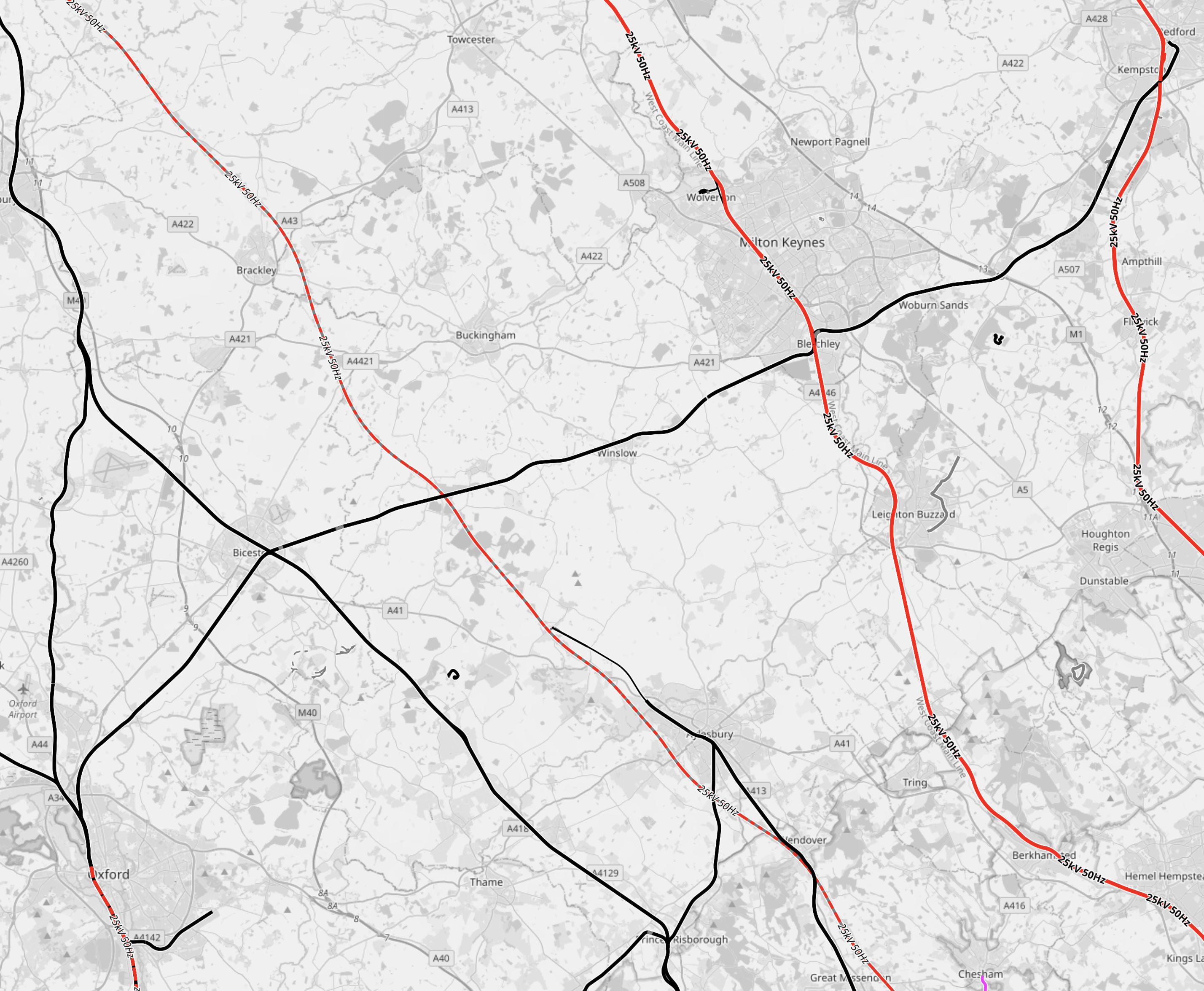
Note.
- Bold red lines are tracks electrified at 25 KVAC.
- Bold black lines are tracks without electrification.
- Oxford is in the South-West corner of the map.
- Bedford is in the North-East corner of the map.
- The bold black line of the Western section of the East West Rail connects the two cities.
- The lines through Oxford are shown as being electrified. The black stub pointing East to the South of Oxford is the Cowley Branch.
The rail lines crossing East West Rail from West to East are as follows.
- Chiltern Main Line – Not Electrified
- High Speed Two – Will Be Electrified
- West Coast Main Line – Electrified
- Midland Main Line – Electrified
I suspect all lines, except for the Chiltern Main Line, will be able to provide a grid connection for East West Rail.
This second OpenRailwayMap shows the electrification between Bedford and Cambridge.
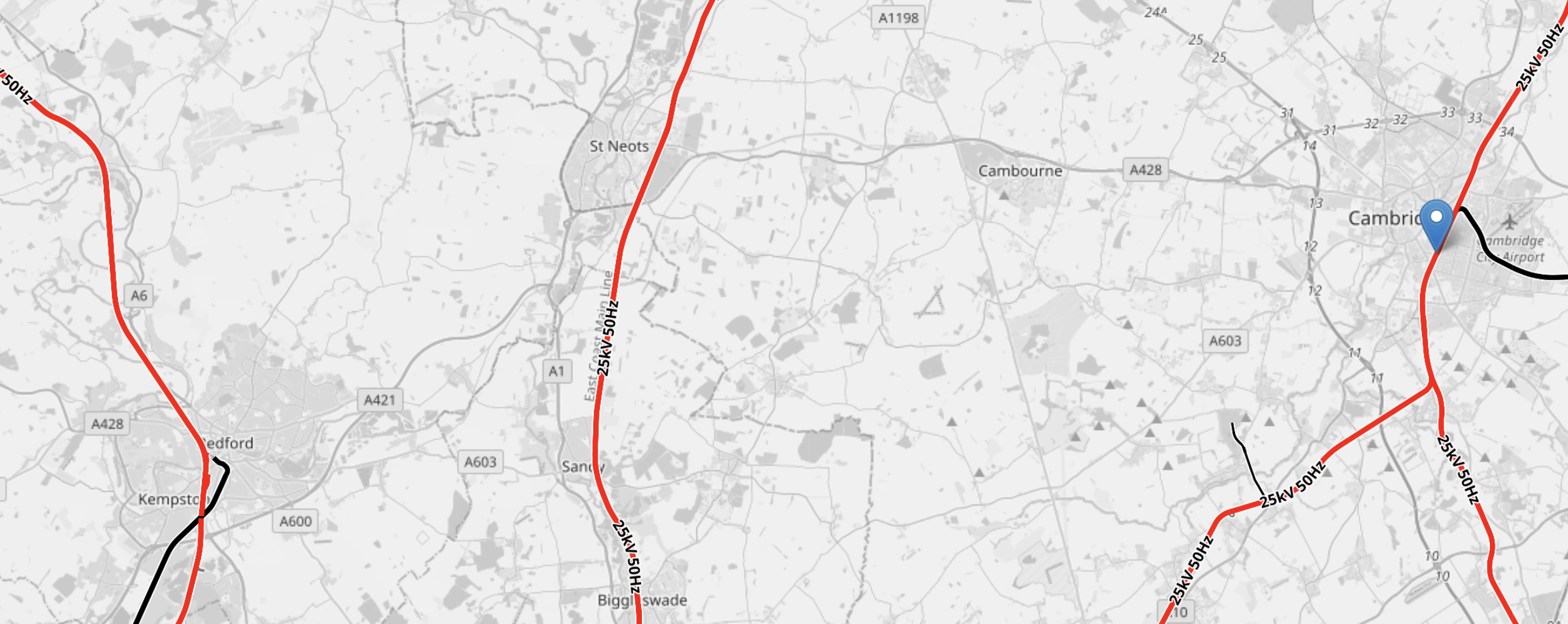
Note.
- Bold red lines are tracks electrified at 25 KVAC.
- Bold black lines are tracks without electrification.
- Bedford is in the South-West corner of the map.
- Cambridge is in the North-East corner of the map.
- The Eastern section of the East West Rail connects the two cities.
- Both maps are to the same scale
The rail lines crossing East West Rail from West to East are as follows.
- Midland Main Line – Electrified
- East Coast Main Line – Electrified
- West Anglia Main Line – Electrified
I suspect all lines will be able to provide a grid connection for East West Rail.
Distances Without Electrification
These sections are not electrified.
- Oxford and Bletchley – 47.2 miles
- Bletchley and Bedford – 16.5 miles
- Bedford and Cambridge – 29.2 miles
- Ely and Norwich – 53.7 miles
- Norwich and Great Yarmouth – 18.4 miles
- Cambridge and Haughley Junction – 41.3 miles
I am assuming that the East West Rail could extend past Cambridge on these two routes.
- Ely, Thetford, Norwich and Great Yarmouth.
- Newmarket, Bury St. Edmunds, Stowmarket, Ipswich, Manningtree and Colchester.
All sections have electrification at both ends, if Didcot Junction and Oxford is electrified, as is expected to happen.
Train Battery Range Needed
The route layout, I have proposed means that if you go for the battery-electric train with the longest battery range you can afford and it can’t handle Ely and Norwich, the existing electrification can be extended to bridge the gap.
Application Of Discontinuous Electrification To Greater Anglia And Chiltern Railways
If discontinuous electrification can be applied to East West Rail, it can surely be applied to Greater Anglia and Chiltern Railways, given the fact that the route networks of all three companies overlap and share tracks.
Greater Anglia already have a fleet of Class 755 trains, which are designed to be converted to battery-electric operation.
With batteries fitted, I believe that these trains could handle most of the current routes they do now.
The other routes would be handled with selective lengths of overhead electrification in terminal stations to charge the trains before return.
Electrification Between Oxford And Bicester Village Stations
Oxford station has two North-facing bay platforms, that are used by Chiltern and other services terminating at the station from the North.
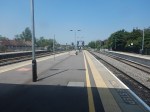
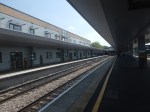
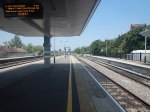
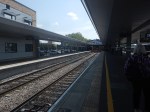
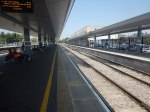

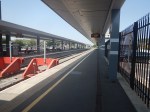
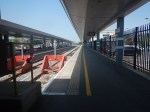
Note.
- Chiltern Railways already run two trains per hour (tph) between these platforms and Marylebone.
- I would assume the platforms will be used by East West Rail services, that terminate at Oxford station.
- If discontinuous electrification is to be used, then these two platforms could be electrified to charge trains before they return.
- East West Rail have not published their proposed services yet, but it could be one tph to both Milton Keynes Central and Bedford stations.
I can see Chiltern buying battery-electric trains to run services between Marylebone and Oxford, and some other routes.
Marylebone and Oxford is 66.7 miles, which is probably two far for even Stadler’s remarkable battery-electric trains, but if say between Oxford and Bicester Village station were to be electrified, would it make it possible to run battery-electric trains between Marylebone and Oxford with charging at both end of the route.
In Chiltern Sets Out New Fleet Ambitions, I talk about Chiltern’s possible new fleet, as proposed by their MD in September 2023.
A Fraught Journey Between Worcester Shrub Hill And Reading Stations
My train home from Worcester Shrub Hill station didn’t make the most impressive of starts to my journey back to Reading.
- The five-car train was supposed to leave at 15:15.
- It was also supposed to arrive in Reading at 16:58.
- But the relief driver was delayed.
Eventually, we left at 15:31.
The train didn’t appear to be running at full speed and around Moreton-in-Marsh, staff started distributing water, which in my view is always a sign that all is not well.
I measured the temperature and humidity at 26.7 °C and 40% respectively, so the water was welcome.
I asked one of the staff what was up and was informed, that two of the engines were overheating because of the heat, so were we effectively running on the remaining cool engine?
Eventually, we were informed that the train would terminate at Charlbury station, where we would all be picked up by the following train, which would have nine cars.
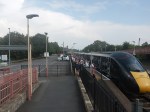
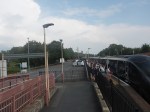
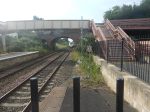
After Charlbury, things didn’t get much better.
- The rescue train eventually left Charlbury at 17:38, which was twenty-six minutes late.
- The train wasn’t full and I had a table to myself, but after Oxford, there wasn’t a seat anywhere.
- We missed out the stop at Didcot Parkway station because of flooding, caused because of a violent thunder storm.
- The rescue train didn’t even make Paddington and it was terminated short in the bi-directional Platform 7 at Reading, because of an unwell passenger.
Eventually, when I arrived in Reading station at 18:55, the rescue train was fifty-five minutes late.
As my original train, should have arrived at 16:58, I was actually, three minutes short of two hours late.
By the time, I got to Platform 14 for the 16:59 Elizabeth Line train to Central London, it had gone, so I had another thirty minute wait.
I finally arrived home at 21:00, after a nearly 5¾ hour journey.
I have a few thoughts.
Changing At Reading
Part of the reason, that I missed my Elizabeth Line train, was that the escalators to Platform 14 were out of action and I had to wait for the lift, as I don’t trust myself going down stairs.
I have said before that if you need a ticket in your change a Reading, there should be a ticket machine on the bridge.
As Reading station is managed by Network Rail, perhaps, they should examine the operation of the station with a good dose of old-fashioned time and motion in more detail.
The Elizabeth Line Frequency To London
The Elizabeth Line only runs two trains per hour (tph) between London and Reading.
This may be fine when everything is going well, but on days like Sunday, when trains aren’t performing well and the weather is not behaving itself, would four tph be better?
Perhaps, the two extra trains would run between Reading and Abbey Wood, and only stop at say Twyford, Maidenhead, Slough, Hayes & Harlington, Southall, Ealing Broadway, Old Oak Common, Paddington, Bond Street, Tottenham Court Road, Farringdon, Liverpool Street, Whitechapel, Canary Wharf, Custom House and Woolwich.
Great Western Railway Trains Between Oxford, Reading and Didcot Parkway and London
The three terminals get the following services to and from London
- Didcot Parkway – 4 tph
- Oxford – 4 tph
- Reading – 11½ tph – 8½ fast and 3 slow
Consider these questions.
- How many travellers between Didcot Parkway, Oxford and Reading and Paddington, now use the Elizabeth Line for onward travel from Paddington?
- How many of the endless visitors to Oxford start their journey on the Elizabeth Line?
- How many visitors to Oxford combine a trip with one to Bicester Village?
- How many travelling by train between Oxford and Cambridge will use part of the Elizabeth Line for the journey?
- Is it fair, that Cambridge is connected to four London rail terminals; King’s Cross, Liverpool Street, London Bridge and St. Pancras and Oxford is connected to just two; Marylebone and Paddington?
I suspect there’s considerable scope to reorganise services between the three stations and London to provide a better service.
GWR’s Paddington and Didcot Parkway service, which has a frequency of two tph, could be moved to the Elizabeth Line and possibly extended to Oxford, once Didcot Parkway and Oxford is electrified.
This would give.
- Didcot Parkway would have two fast tph to Paddington and two stopping tph on the Elizabeth Line with all its connectivity and delights.
- Oxford would have two fast tph to Paddington and two stopping tph on the Elizabeth Line.
- Reading will have a much-needed Elizabeth Line frequency of four tph.
Note.
- Terminating the Elizabeth Line at Oxford, means that there are services connecting Oxford and Cambridge, with a single change at either Farringdon or Liverpool Street.
- Oxford would also get one change connectivity to Gatwick, Heathrow and Stansted Airports.
- The slow lines between Oxford and Maidenhead typically have operating speeds of 90-100 mph. So if the Class 345 trains on the Elizabeth Line and the track were upgraded to 100 mph, this might save a few minutes in the outer reaches of the Elizabeth Line.
- The Elizabeth Line could terminate in one or two South-facing bay platforms on the East side of the station. This position would reduce passenger traffic on the crowded footbridge.
- If all the bay platforms were on the same East side of the station, this would simplify and ease passenger flows.
- Chiltern and East West Railway services could be timed for an easy interchange.
- The proposed Cowley Branch could also use the South-facing bay platforms.
The more I look at it, the more I like the idea of running the Elizabeth Line to Oxford.
The Heat Problem On The Class 800 Trains
The Wikipedia entry for the Class 800 trains has this paragraph on the overheating of the engines or generator units (GUs) on the trains.
The GU is installed on vibration-isolating mountings, and fitted with side-mounted cowls to reduce external noise. Heat management measures include thermal insulation around key areas such as cable ducts. According to Modern Railways magazine, the limited space available for the GUs is responsible for them being prone to overheating. It claimed that, on one day in summer 2018, “half the diagrammed units were out of action as engines shut down through overheating”.
That was in 2018, which was five years ago. But it appears to be still happening.
Would Overheating Happen With Battery Units?
One of the reasons, I went to Worcester was to assess the feasibility of battery-electric trains on the route.
This article from EV-Lectron is entitled Electric Cars in Hot Weather – What You Need To Know, gives a detailed set of answers.
But it probably comes to the conclusion, that cold weather with the extra heating load might be more of the problem.
I suspect, that if you were running battery electric trains on a route of over fifty miles, the best thing would be to have electrification at both ends of the route.
If, as I have calculated in Reading And Oxford – 10th June 2023, that to run battery-electric trains to Hereford needs a length of electrification between Worcester Shrub Hill and Great Malvern stations, then when they leave the electrification, they should have the interiors at the right temperature for staff and passengers.
I also suspect that battery-electric trains need to be well insulated to cope better with cold weather.
Alstom Hydrogen Aventras And Great Western Branch Lines Between Paddington And Oxford
In Alstom And Eversholt Rail Sign An Agreement For The UK’s First Ever Brand-New Hydrogen Train Fleet, I give my thoughts on Alstom’s new hydrogen train, which I have called the Alstom Hydrogen Aventra.
One reader suggested these lines in a comment, as they are all run by diesel Class 165 trains.
These are the lines, that could be converted to Hydrogen operation.
Greenford Branch
The branch runs between West Ealing and Greenford via Drayton Green, Castle Bar Park and South Greenford.
- It has a frequency of two trains per hour (tph).
- The branch is 2.5 miles long.
- Services take eleven minutes.
- It needs a single train to run the service.
Note.
- In GWR To Test Battery Train On Branch Line, I wrote about Great Western Railway’s plans to test battery-eclectic trains on this line.
- The platform at Greenford station may need lengthening to accommodate the Alstom Hydrogen Aventra.
- It is my view that the branch needs four tph.
- It might also be possible to run Peak hour services to and from Paddington.
I do think that if the train length issue is solved that a single Alstom Hydrogen Aventra could work this branch.
A two-car Class 230 train would certainly fit.
Windsor Branch
The branch runs between Slough and Windsor & Eton Central.
- It has a frequency of three tph
- The branch is 2.8 miles long.
- Services take six minutes.
- It needs a single train to run the service.
Note.
- The extra capacity of the Alstom Hydrogen Aventra could be welcome.
- Prince Charles would like it.
I do think that a single Alstom Hydrogen Aventra could work this branch.
Marlow Branch
The branch runs between Maidenhead and Marlow via Furze Platt, Cookham and Bourne End.
- It has a frequency of one tph
- The branch is 7.1 miles long.
- Services take twenty-three minutes.
- The service reverses at Bourne End.
- It needs a single train to run the service.
Note that the three-car Alstom Hydrogen Aventra may be too long to execute the reverse at Bourne End.
I do think that if the Bourne End problem can be solved that a single Alstom Hydrogen Aventra could work this branch.
The two-car Class 165 train, that currently works the branch is 46 metres long, so a two-car battery-electric train may be needed for this branch. A two-car Class 230 train would certainly fit.
Regatta Line
The branch runs between Twyford and Henley-on-Thames via Wargrave and Shiplake.
- It has a frequency of two tph
- The branch is 4.6 miles long.
- Services take twelve minutes.
- It needs a single train to run the service.
Note.
- If this line needed more capacity trains could be doubled up, as there are no length issues.
- It might also be possible to run Peak hour services to and from Paddington.
I do think that a single Alstom Hydrogen Aventra could work this branch.
North Downs Line
The line runs between Reading and Gatwick Airport via Wokingham, Crowthorne, Sandhurst, Blackwater, Farnborough North, North Camp, Ash, Guildford, Shalford, Chilworth, Gomshall, Dorking West, Dorking Deepdene, Betchworth, Reigate and Redhill
- It has a frequency of two tph
- The route is 53.1 miles long.
- The route is partially-electrified with 750 VDC third-rail electrification.
- The route has been planned for 100 mph trains.
- Services take eighty-two minutes.
- It needs six trains to run the service.
Note.
- The route is proposed to be run by four-car Class 769 bi-mode trains.
- Would a three-car train be sufficient for this route?
- The Alstom Hydrogen Aventras are only 90 mph trains and would they be fast enough?
I do think that Alstom Hydrogen Aventras could work this route, but given the number of trains and possible capacity and speed issues, a four-car battery-electric train could be better suited to the route.
Reading And Basingstoke Line
This line runs between Reading and Basingstoke via Reading West, Mortimer and Bramley
- It has a frequency of two tph
- The route is 15.4 miles long.
- There is 25 KVAC overhead electrification at Reading.
- There is 750 VDC third-rail electrification at Basingstoke, but the platform used by the service is unelectrified.
- The route has been planned for 100 mph trains.
- Services take twenty-eight minutes.
- It needs two trains to run the service.
Note.
- For a battery-electric train to work this route, it might need a charging system at Basingstoke.
- The Alstom Hydrogen Aventras are only 90 mph trains and would they be fast enough?
I do think that a pair of Alstom Hydrogen Aventras could work this service.
Oxford Canal Line
This route runs between Didcot Psrkway and Banbury via Appleford, Culham, Radley, Oxford, Tackley, Heyford and Kings Sutton.
- It is effectively two routes with a combined frequency of two tph between Didcot Junction and Oxford and half that between Oxford and Banbury.
- The full route is 33 miles long.
- There is 25 KVAC overhead electrification at Didcot Parkway.
- Services take forty-one minutes.
- It probably needs four trains to run the service.
I do think that a small fleet of Alstom Hydrogen Aventras could work this service.
Some General Thoughts
These are a few general points.
Stabling And Hydrogen Fuelling
Reading Train Care Facility is a large depot to the west of Reading.
- It is ideally placed for all the lines, that I’ve mentioned.
- It is connected to all the lines by electrified lines.
I am sure that it would be possible to build a hydrogen fuelling facility at the depot.
Two-Car Battery-Electric Trains
It looks like the Greenford and Marlow Branches might need to be served by two-car battery-electric trains.
Four-Car Trains
Some of the services might be run by four-car trains, as these would be more suitable for the number of passengers.
Total Number Of Trains
My rough estimates of numbers of trains are as follows.
- Greenford Branch – 1 train
- Windsor Branch – 1 train
- Marlow Line – 1 train
- Regatta Line – 1 train
- North Downs Line – 6 trains
- Reading And Basingstoke Line – 2 trains
- Oxford Canal Line – 4 trains
This would be a total of sixteen trains or ten, if the Class 769 trains were used on the North Downs Line.
Additional Routes
There may be other routes, where the trains could be used, that are handy for Reading Train Care Facility.
Hydrogen or battery power may give advantages in opening new routes.
Would Hydrogen Trains Attract Passengers And Tourists?
I think they could, as if nothing there is a curiosity value.
Conclusion
This collection of routes surround Reading Train Care Facility and would be a nice package to run with hydrogen or battery-electric trains.
Calls For Major Enhancement To Oxford And Didcot Route
The title of this post, is the same as that of an article in Issue 899 of Rail Magazine.
This is the introductory paragraph.
A major upgrade to the line between Didcot and Oxford is needed to deliver the benefits of East West Rail, according to a new report funded by the Department for Transport, Network Rail and local authorities.
Some points from the article.
- At peak times the double-track railway is congested.
- The route was planned for electrification, but it was cancelled.
- By 2028 services between Cambridge and Bristol and Southampton via Oxford are possible.
- Capacity through Oxford would increase to fifteen tph.
- There will be three tph between Marylebone and Oxford by 2028, with two continuing along the Cowley Branch.
- Services will also run between Birmingham Moor Street and Oxford and Bristol.
- It is likely that there will be extra tracks on the route.
- Grade separation is also possible at Didcot.
- A service between Oxford and Swindon is proposed.
- A new station at Grove is mentioned, as is improvements at Culham station.
- The study supports an Oxford to Northampton service via Milton Keynes
One thing, that is not mentioned, is the promised rebuilding of Oxford station.
Conclusion
It is certainly a long wish list and would transform rail traffic through Oxford.
Could Battery-Electric Hitachi Trains Work Chiltern Railways’s Services?
Before I answer this question, I will lay out a few specifications and the current status.
Hitachi’s Proposed Battery Electric Train
Based on information in an article in Issue 898 of Rail Magazine, which is entitled Sparking A Revolution, the specification of Hitachi’s proposed battery-electric train is given as follows.
- Based on Class 800-802/804 trains or Class 385 trains.
- Range of 55-65 miles.
- Operating speed of 90-100 mph
- Recharge in ten minutes when static.
- A battery life of 8-10 years.
- Battery-only power for stations and urban areas.
For this post, I will assume that the train is four or five cars long.
Chiltern Railways’ Main Line Services
These are Chiltern Railways services that run on the Chiltern Main Line.
London Marylebone And Gerrards Cross
- The service runs at a frequency of one train per hour (tph)
- Intermediate stations are Wembley Stadium, Sudbury & Harrow Road, Sudbury Hill Harrow, Northolt Park, West Ruislip, Denham and Denham Golf Club
The service is nineteen miles long and takes thirty minutes.
It should be possible to run this service with trains charged at one end of the route.
London Marylebone And High Wycombe
- The service runs at a frequency of one tph
- Intermediate stations are Wembley Stadium, South Ruislip, Gerrards Cross and Beaconsfield
- Some services terminate in a bay platform 1 at High Wycombe station.
The service is twenty-eight miles long and takes forty-two minutes.
It should be possible to run this service with trains charged at one end of the route.
London Marylebone And Aylesbury Via High Wycombe
- The service runs at a frequency of one tph
- Intermediate stations are Gerrards Cross, Seer Green and Jordans, Beaconsfield, High Wycombe, Saunderton, Princes Risborough, Monks Risborough and Little Kimble
- This service usually terminates in Platform 1 at Aylesbury station.
The service is 43.5 miles long and takes sixty-six minutes.
It should be possible to run this service with trains charged at both ends of the route.
London Marylebone And Banbury (And Stratford-upon-Avon)
- The service runs at a frequency of one tph
- Intermediate stations for the Banbury service are Denham Golf Club, Gerrards Cross, Beaconsfield, High Wycombe, Princes Risborough, Haddenham & Thame Parkway, Bicester North and Kings Sutton.
- Intermediate stations for the Stratford-upon-Avon service are Denham Golf Club, Gerrards Cross, Beaconsfield, High Wycombe, Princes Risborough, Haddenham & Thame Parkway, Bicester North and Kings Sutton, Banbury, Leamington Spa, Warwick, Hatton, Claverdon, Bearley, Wilmcote and Stratford-upon-Avon Parkway.
The Banbury service is 69 miles long and takes one hour and forty-five minutes.
The Stratford-upon-Avon service is 104 miles long and takes two hours and twenty-two minutes.
Running these two services will need a bit of ingenuity.
Leamington Spa And Birmingham Moor Street
- The service runs at a frequency of one train per two hours (tp2h)
- Intermediate stations for the service are Warwick, Hatton, Lapworth, Dorridge and Solihull.
The service is 23 miles long and takes forty-one minutes.
It should be possible to run this service with trains charged at one end of the route.
London Marylebone And Birmingham Moor Street
- The service runs at a frequency of one tph
- Intermediate stations for the service are High Wycombe, Banbury, Leamington Spa, Warwick Parkway and Solihull.
The service is 112 miles long and takes one hour and forty-four minutes.
It should be possible to run this service with trains charged at both ends of the route and also fully charged somewhere in the middle.
Distances from London Marylebone of the various stations are.
- High Wycombe – 28 miles
- Bicester North – 55 miles
- Banbury – 69 miles
- Leamington Spa – 89 miles
- Warwick – 91 miles
- Warwick Parkway – 92 miles
- Solihull – 105 miles
Consider.
- It looks like a fully-charged train from London Marylebone could reach Bicester North, but not Banbury, with a 55-65 mile battery range.
- Travelling South, Bicester North could be reached with a fully-charged train from Birmingham Moor Street.
But it would appear to be too marginal to run a reliable service.
London Marylebone And Birmingham Snow Hill
- The service runs at a frequency of one tph
- Intermediate stations for the service are Bicester North, Banbury, Leamington Spa, Warwick, Warwick Parkway, Dorridge, Solihull and Birmingham Moor Street
The service is 112 miles long and takes two hours and a minute.
It should be possible to run this service with trains charged at both ends of the route and also fully charged somewhere in the middle.
London Marylebone And Kidderminster
Some services between London Marylebone and Birmingham Snow Hill are extended to Kidderminster.
The distance between Kidderminster and Birmingham Snow Hill is twenty miles and the service takes forty-two minutes.
London Marylebone And Oxford
- The service runs at a frequency of two tph
- Intermediate stations for the service are High Wycombe, Haddenham & Thame Parkway, Bicester Village, Islip and, Oxford Parkway.
- The service runs into dedicated platforms at Oxford station.
The service is 67 miles long and takes one hour and nine minutes.
It should be possible to run this service with trains charged at both ends of the route and some supplementary charging somewhere in the middle.
Chiltern’s Aylesbury Line Services
These are Chiltern Railway‘s services that run on the London And Aylesbury Line (Amersham Line).
London Marylebone And Aylesbury (And Aylesbury Vale Parkway) via Amersham
- The service runs at a frequency of two tph
- Intermediate stations are Harrow-on-the-Hill, Rickmansworth, Chorleywood, Chalfont & Latimer, Amersham, Great Missenden, Wendover and Stoke Mandeville.
- It appears that there is sufficient time at Aylesbury Vale Parkway in the turnround to charge the train using a Fast Charge system.
The Aylesbury service is 39 miles long and takes one hour.
The Aylesbury Vale Parkway service is 41 miles long and takes one hour and twelve minutes.
It should be possible to run both services with trains charged at both ends of the route.
Chiltern Railways’ Future Train Needs
Chiltern Railways will need to add to or replace some or all of their fleet in the near future for various reasons.
Decarbonisation
Chiltern are probably the passenger train operating company, with the lowest proportion of zero-carbon trains. It scores zero for zero-carbon!
Government policy of an extinction date of 2040 was first mentioned by Jo Johnson, when he was Rail Minister in February 2018.
As new trains generally last between thirty and forty years and take about five years to design and deliver, trains ordered tomorrow, will probably still be running in 2055, which is fifteen years after Jo Johnson’s diesel extinction date.
I feel that, all trains we order now, should be one of the following.
- All-electric
- Battery-electric
- Hydrogen-electric
- Diesel electric trains, that can be converted to zero-carbon, by the replacement of the diesel power, with an appropriate zero-carbon source.
Hitachi seem to be designing an AT-300 diesel-electric train for Avanti West Coast, where the diesel engines can be replaced with batteries, according to an article in the January 2020 Edition of Modern Railways.
Pollution And Noise In And Around Marylebone Station
This Google Map shows the area around Marylebone station.
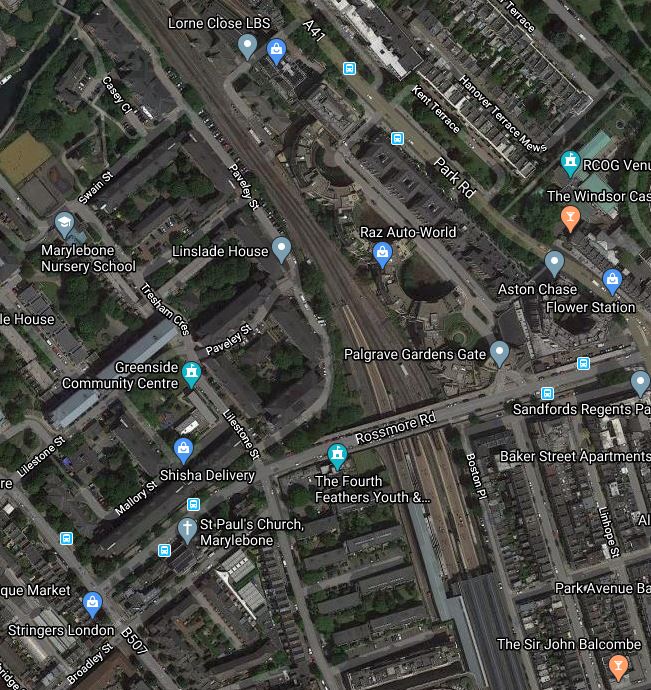
Cinsider.
- Marylebone station is in the South-East corner of the map.
- The station is surrounded by some of the most expensive real estate in London.
- A lot of Chiltern’s trains do not meet the latest regulations for diesel trains.
- Blackfriars, Cannon Street, Charing Cross, Euston, Fenchurch Street, Kings Cross, Liverpool Street, London Bridge, Paddington, St. Pancras, Victoria and Waterloo stations are diesel-free or have plans to do so.
Will the residents, the Greater London Council and the Government do something about improving Chiltern’s pollution and noise?
New trains would be a necessary part of the solution.
New And Extended Services
Consider.
- Chiltern plan to extend the Aylesbury Parkway service to Milton Keynes in connection with East West Rail. This service would appear to be planned to run via High Wycombe and Princes Risborough.
- There has also been proposals for a new Chiltern terminus at Old Oak Common in West London to connect to Crossrail, High Speed Two and the London Overground.
- Chiltern could run a service between Oxford and Birmingham Moor Street.
- With the demise of the Croxley Rail Link around Watford, Chiltern could be part of a revived solution.
- In Issue 899 of Rail Magazine in an article entitled Calls For Major Enhancement To Oxford And Didcot Route, it states that there will be three tph between Oxford and Marylebone, two of which will start from a new station at Cowley.
Chiltern certainly have been an expansionist railway in the past.
I wouldn’t be surprised to see Chiltern ordering new trains.
As I said earlier, I suspect they wouldn’t want to order some new short-life diesel trains.
125 mph Running
Consider.
- The West Coast Main Line has an operating speed of 125 mph.
- East West Rail is being built for an operating speed of 125 mph.
- Some parts of the Chiltern Main Line could be electrified and upgraded to 125 mph operation.
For these reasons, some of Chiltern’s new fleet must be capable of modification, so it can run at 125 mph, where it is possible.
100 mph Trains
Around half of Chiltern’s fleet are 100 mph trains, but the other half, made up of Class 165 trains only have a 75 mph operating speed.
Running a fleet, where all trains have a similar performance, must give operational and capacity improvements.
Increasing Capacity
Chiltern’s Main Line service to Birmingham is run using six Mark 3 carriages between a Class 68 locomotive and a driving van trailer.
These trains are 177.3 metres long and hold 444 passengers.
These trains are equivalent in length to a seven-car Hitachi Class AT-300 train, which I estimate would hold just over 500 passengers.
Changing some trains for a more modern design, could increase the passenger capacity, but without increasing the train length.
Aventi West Coast And High Speed Two
Chiltern’s services to Birmingham will come under increasing pressure from Avanti West Coast‘s revamped all-electric fleet, which within ten years should be augmented by High Speed Two.
It will be difficult selling the joys of comfortable diesel trains against the environmental benefits of all-electric zero-carbon faster trains.
Great Western Railway And Possible Electrification To Oxford
Chiltern’s services to Oxford will also come under increasing pressure from Great Western Railway’s services to Oxford.
- When Crossrail opens, Paddington will be a much better terminal than Marylebone.
- Crossrail will offer lots of new connections from Reading.
- Great Western Railway could run their own battery-electric trains to Oxford.
- Great Western Railway will be faster between London and Oxford at 38 minutes to Chiltern’s 65 minutes.
Will new trains be needed on the route to retain passengers?
Will Chiltern Have Two Separate Fleets?
Currently, Chiltern Railways have what is effectively two separate fleets.
- A Chiltern Main Line fleet comprised of five sets of six Mark 3 coaches, a Class 68 locomotive and a driving van trailer.
- A secondary fleet of thirty-four assorted diesel multiple units of various ages and lengths, which do everything else.
But would this be their fleet, if they went for a full renewal to fully-decarbonise?
Would they acquire more Main Line sets to work the services to Birmingham, Kidderminster and perhaps some other Midlands destinations?
Do the Oxford services require more capacity for both Oxford and Bicester Village and would more Main Line sets be a solution?
What destinations will be served and what trains will be needed to work services from new destinations like Milton Keynes and Old Oak Common?
I can see Chiltern acquiring two fleets of battery-electric trains.
- Chiltern Main Line trains based on Hitachi AT-300 trains with between five and seven cars.
- Suburban trains for shorter journeys, based on Hitachi Class 385 trains with perhaps four cars.
Both would be fairly similar under the skin.
Conclusion On Chiltern Railways’ Future Trains
I am very much drawn to the conclusion, that Chiltern will have to introduce a new fleet of zero-carbon trains.
Electrification would be a possibility, but have we got enough resources to carry out the work, at the same time as High Speed Two is being built?
Hydrogen might be a possibility, but it would probably lead to a loss of capacity on the trains.
Battery-electric trains might not be a solution, but I suspect they could be the best way to increase Chiltern’s fleet and decarbonise at the same time.
- Hitachi’s basic train design is used by several train operating companies and appears to be well received, by Train operating companies, staff and passengers.
- Hitachi appear to be well-advanced with a battery-electric version.
- Hitachi seem to have sold the concept of battery-electric AT-300 trains to Avanti West Coast to replace their diesel-electric Class 221 trains.
The sale of trains to Avanti West Coast appears to be very significant, in that Hitachi will be delivering a diesel-electric fleet, that will then be converted to battery-electric.
I like this approach.
- Routes can be converted gradually and the trains fully tested as diesel-electric.
- Electrification and/or charging stations can be added, to the rail network.
- As routes are ready, the trains can be converted to battery-electric.
It would appear to be a low-risk approach, that could ensure conversion of the fleet does not involve too much disruption to passengers.
Possible Electrification That Might Help Chiltern Railways
These lines are or could be electrified in the near future.
Amersham Line Between Harrow-on-the-Hill and Amersham Stations
The only electrified line on the Chiltern Railways network is the section of the Amersham Line between Harrow-on-the-Hill and Amersham stations.
- It is electrified using London Underground’s system.
- It is fourteen miles long and trains take twenty-two minutes.
- London Marylebone and Harrow-on-the-Hill is a distance of only nine miles
- Aylesbury and Amersham is a distance of only fifteen miles.
Could this be of use in powering Children Railways’ trains?
The maths certainly look promising, as if nothing else it means the maximum range of one of Hitachi’s proposed battery-electric trains is fourteen miles further, which may enable Chiltern’s proposed service between London Marylebone and Milton Keynes to reach the 25 KVAC electrification at Bletchley.
But if the new trains were to use the London Underground electrification, they would have to be dual-voltage units.
As Hitachi have already built dual-voltage Class 395 trains for the UK, I don’t think, that this will be a problem.
Dorridge/Whitlock’s End And Worcestershire via Birmingham Snow Hill
In the February 2020 Edition of Modern Railways, there is a feature, which is entitled West Midlands Builds For The Future.
This is said about electrification on the Snow Hill Lines.
Remodelling Leamington is just one of the aspirations WMRE has for upgrading the Great Western’s Southern approach to Birmingham, which serves a number of affluent suburbs, with growing passenger numbers. “Electrification of the Snow Hill Lines commuter network is something which we are keen to explore.’ says Mr. Rackliff.
As well as reducing global carbon emissions, yhis would also help reduce air pollution in central Birmingham and local population centres. ‘From a local perspective, we’d initially want to see electrification of the core network between Dorridge/Whitlock’s End and Worcestershire via Birmingham Snow Hill as a minimum, but from a national perspective it would make sense to electrify the Chiltern Main Line all the way to Marylebone.’
Note the following distances from Dorridge.
- Leamington Spa – 13 miles
- Banbury – 33 miles
- Bicester North – 47 miles
- High Wycombe – 74 miles
It looks as if, electrification of the Snow Hill Lines would allow trains to travel from Bicester or Banbury to Birmingham Moor Street, Birmingham Snow Hill or Kidderminster.
Reading And Nuneaton via Didcot, Oxford, Banbury, Leamington Spa And Coventry
This route, which is used by CrossCountry services and freight trains, has been mentioned in the past, as a route that may be electrified.
Note the following distances from Didcot.
- Oxford – 10 miles
- Ayhno Junction – 27 miles
- Banbury 32 miles
- Leamington Spa – 52 miles
- Coventry – 62 miles
- Nuneaton – 72 miles
Electrifying this route would link together the following lines.
- Trent Valley Line through Nuneaton
- West Coast Main Line through Coventry
- Chiltern Main Line through Banbury and Leamington Spa.
- Great Western Main Line through Didcot.
Note that Aynho Junction is only 36 miles from High Wycombe and 64 miles from London Marylebone.
Fast Charging At Terminal Stations
Chiltern Railways use the following terminal stations.
- Aylesbury station, where a bay platform is used.
- Aylesbury Parkway station
- Banbury station, where a bay platform is used.
- Birmingham Moor Street station, where all bay platforms are used.
- Birmingham Show Hill station
- High Wycombe station, where a bay platform is used.
- Kidderminster station
- London Marylebone station, where all platforms are used.
- Oxford station, where two North-facing bay platforms are used.
- Stratford-upon-Avon station
I suspect that something like Viviarail’s Fast-Charge system, based on well-proven third-rail technology could be used.
- This system uses a bank of batteries to transfer power to the train’s batteries.
- The transfer is performed using modified high-quality third-rail electrification technology.
- Battery-to-battery transfer is fast, due to the low-impedance of batteries.
- The system will be able to connect automatically, without driver action.
- The third-rail is only switched on, when a train is present.
- The battery bank will be trickle-charged from any convenient power source.
Could the battery bank be installed under the track in the platform to save space?
If Network Rail and Chiltern Railways would prefer a solution based on 25 KVAC technology, I’m sure that Furrer + Frey or another electrification company have a solution.
Installing charging in a platform at a station, would obviously close the platform for a couple of months, but even converting all six platforms at Marylebone station wouldn’t be an impossible task.
Possible Electrification Between London Marylebone And Harrow-on-the-Hill
Consider.
- All trains to Aylesbury have to travel between London Marylebone and Harrow-on-the-Hill stations, which is nine miles of track without electrification. It takes about twelve minutes.
- Trains via High Wycombe use this section of track as far as Neasden South Junction, which is give miles and typically takes seven minutes.
- Leaving Marylebone, these trains are accelerating, so will need more power.
This map from carto.metro.free.fr shows the lines around Neasden.
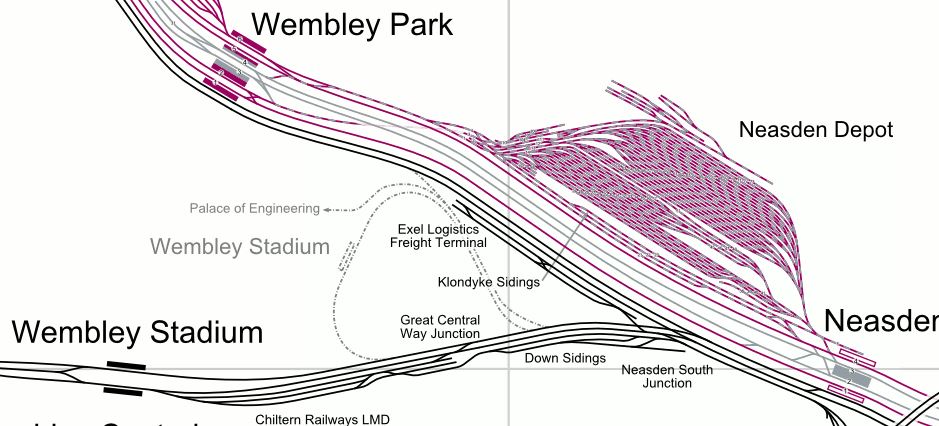
Note.
- The Chiltern Railways tracks are shown in black.
- Two tracks continue to the North-West to Harrow-on-the-Hill and Aylesbury.
- Two tracks continue to the West to Wembley Stdium station and High Wycombe.
- Two tracks continue South-East into Marylebone station, running non-stop.
- The Jubilee Line tracks in the middle are shown in silver,
- The Metropolitan Line tracks are shown in mauve.
These pictures were taken of the two Chiltern tracks from a Jubilee Line train running between West Hampstead and Wembley Park stations.

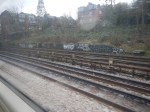

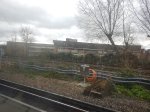
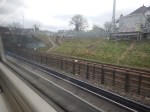

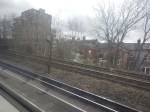
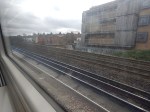
Note, that the tracks have no electrification and there is plenty of space.
I feel that to accelerate the trains out of Marylebone and make sure that the batteries are fully charged, that these tracks should be electrified.
There is space on this section for 25 KVAC overhead, but would it be better to use an electrified rail system?
- As you approach Marylebone there are several tunnels, which might make installation of overhead wires difficult and disruptive.
- There are London Underground tracks and their third and fourth rail electrification everywhere.
- Between Harrow-on-the Hill and Amersham stations, Chiltern and Metropolitan Line trains share the same track, which is electrified to London Underground standards and used for traction power by the Metropolitan Line trains.
- Trains connect and disconnect to third-rail electrification, without any complication and have been doing it for over a hundred years.
On the other hand, there are arguments against third-rail systems like safety and electrical inefficiency.
Running Chiltern’s Routes Using A Battery-Electric Train
I will now take each route in order and look at how battery-electric trains could run the route.
London Marylebone And Oxford
Consider.
- This route is 67 miles.
- An out and back trip is 134 miles.
- The route is probably too long for the proposed Hitachi battery-electric train, without some intermediate charging.
- Trains currently wait in the bay platforms at Oxford for up to thirty minutes, which is more than enough time to fully-charge the train for return to Marylebone.
When I outlined this route, I said this.
It should be possible to run this service with trains charged at both ends of the route and some supplementary charging somewhere in the middle.
I’m discussing this route first, as it has the complication of needing some form of intermediate charging.
The obvious place for some intermediate charging would be High Wycombe station.
- It is 28 miles from Marylebone
- It is 38 miles from Oxford
- Trains seem to stop for a couple of minutes at High Wycombe.
As trains would only need to pick up a half-charge at the station, would it be possible for a train passing through High Wycombe to be able to use a Fast-Charge system, to give the battery a boost?
As a Control and Electrical Engineer by training, I think that this is more than possible.
It leads me to believe that with Fast Charging systems at Marylebone, Oxford and High Wycombe, Hitachi’s proposed battery-electric trains can run a reliable service between Marylebone and Oxford.
London Marylebone And Gerrards Cross
Consider.
- This route is just nineteen miles.
- An out and back trip is thirty-eight miles.
- Trains appear to use a reversing siding to change tracks to return to London. They wait in the siding for up to thirty minutes, which is more than enough time to fully-charge the train for return to Marylebone.
I am fairly sure, that this route could be run by trains charged at Marylebone station only.
However, if charging is needed at Gerrards Cross, there is plenty of time, for this to be performed in the reversing siding.
It might even be reversed with all charging taking place at Gerrards Cross, so that fast turnrounds can be performed in Marylebone station.
London Marylebone And High Wycombe
Consider.
- This route is just twenty-eight miles.
- An out and back trip is fifty-six miles.
- Trains wait in the bay platform for up to thirty minutes, which is more than enough time to fully-charge the train for return to Marylebone.
Everything said for the Gerrards Cross service would apply to the High Wycombe service.
London Marylebone And Banbury
Consider.
- This route is 69 miles.
- An out and back trip is 138 miles.
- The route is probably too long for the proposed Hitachi battery-electric train, without some intermediate charging.
- Trains wait in platform 4 at Banbury for around thirty minutes, which is more than enough time to fully-charge the train for return to Marylebone.
- Trains call at High Wycombe station.
As with the Marylebone and Oxford route, this route will need some intermediate charging and as with the Oxford service, High Wycombe is the obvious choice,
High Wycombe is only 41 miles from Banbury, which is well within range of Hitachi’s proposed battery-electric train.
London Marylebone And Stratford-upon-Avon
Consider.
- This route is 104 miles.
- An out and back trip is 208 miles.
- The distance between Stratford-upon-Avon and Banbury is 35 miles.
- The route is probably too long for the proposed Hitachi battery-electric train, without some intermediate charging.
- Trains wait in Platform 1 at Stratford-upon-Avon for over thirty minutes, which is more than enough time to fully-charge the train for return to Marylebone.
- Trains call at Banbury station, where they wait for several minutes.
- Trains call at High Wycombe station.
As with the Marylebone and Oxford and Marylebone and Banbury routes, this route will need some intermediate charging and as with the Oxford and Banbury services, High Wycombe is the obvious choice,
But this route could also use the Fast Charging system at Banbury.
London Marylebone And Birmingham Moor Street
Consider.
- This route is 112 miles.
- An out and back trip is 224 miles.
- The distance between Birmingham Moor Street and Banbury is 43 miles.
- The route is probably too long for the proposed Hitachi battery-electric train, without some intermediate charging.
- Trains wait in the bay platform at Birmingham Moor Street for thirteen minutes, which is more than enough time to fully-charge the train for return to Marylebone.
- Trains call at Banbury and High Wycombe stations.
As with the Marylebone and Stratford-upon-Avon route, this route will need some intermediate charging and as with the Stratford-upon-Avon service, High Wycombe and Banbury are the obvious choice,
London Marylebone And Birmingham Snow Hill
Consider.
- This route is 112 miles.
- An out and back trip is 224 miles.
- The distance between Birmingham Snow Hill and Banbury is 43 miles.
- The route is probably too long for the proposed Hitachi battery-electric train, without some intermediate charging.
- Trains wait in the bay platform at Birmingham Snow Hill for ten minutes, which is more than enough time to fully-charge the train for return to Marylebone.
- Trains call at Banbury and High Wycombe stations.
As with the Marylebone and Stratford-upon-Avon route, this route will need some intermediate charging and as with the Stratford-upon-Avon service, High Wycombe and Banbury are the obvious choice,
London Marylebone And Kidderminster
Consider.
- This route is 132 miles.
- An out and back trip is 264 miles.
- The distance between Kidderminster and Banbury is 63 miles.
- The route is probably too long for the proposed Hitachi battery-electric train, without some intermediate charging.
- Trains call at Banbury and High Wycombe stations.
As with the Marylebone and Stratford-upon-Avon and Birmingham routes, this route will need some intermediate charging and as with the Stratford-upon-Avon and Birmingham services, High Wycombe and Banbury are the obvious choice,
London Marylebone And Aylesbury Via High Wycombe
Consider.
- The route is 43.5 miles
- An out and back trip is 87 miles.
- The route is probably short enough for the proposed Hitachi battery-electric train, to run the route without intermediate charging.
- This service usually terminates in Platform 1 at Aylesbury station, where trains wait for up to thirteen minutes, which is more than enough time to fully-charge the train for return to Marylebone.
- The train will also be fully-charged at Marylebone.
It looks that this route could be easily handled with charging at both ends of the route, but if there has been a charging error, the train can obviously make a pit-stop at High Wycombe to give the battery a top-up.
London Marylebone And Aylesbury Via Amersham
Consider.
- The route is 39 miles
- An out and back trip is 78 miles.
- The route is probably short enough for the proposed Hitachi battery-electric train, to run the route without intermediate charging.
- This service usually terminates in Platform 3 at Aylesbury station, where trains wait for up to twenty minutes, which is more than enough time to fully-charge the train for return to Marylebone.
- The train will also be fully-charged at Marylebone.
It looks that this route could be easily handled with charging at both ends of the route, but if there has been a charging error, the train can obviously make a pit-stop at High Wycombe to give the battery a top-up.
London Marylebone And Aylesbury Vale Parkway Via Amersham
Consider.
- The route is 41 miles
- An out and back trip is 82 miles.
- The route is probably short enough for the proposed Hitachi battery-electric train, to run the route without intermediate charging.
- This service usually terminates in Platform 1 at Aylesbury Vale Parkway station, where trains wait for up to nine minutes, which is more than enough time to fully-charge the train for return to Marylebone.
- The train will also be fully-charged at Marylebone.
It looks that this route could be easily handled with charging at both ends of the route, but if there has been a charging error, the train can obviously make a pit-stop at Aylesbury to give the battery a top-up.
Leamington Spa And Birmingham Moor Street
Consider.
- The route is 23 miles
- An out and back trip is 46 miles.
- This service usually terminates in a bay platform at Birmingham Moor Street station, where trains wait for up to twenty minutes, which is more than enough time to fully-charge the train for return to Leamington Spa.
I am fairly sure, that this route could be run by trains charged at Bitmingham Moor Street station only.
New And Extended Services
These services are planned or have been mentioned as possibilities.
London Marylebone And Milton Keynes Via High Wycombe, Princes Risborough, Aylesbury And Aylesbury Vale Parkway
This is the new service that Chiltern will start running in the next few years.
Consider.
- I estimate the distance between Aylesbury Vale Parkway and Bletchley, where 25 KVAC overhead electrification starts is 18 miles, with Milton Keynes a further three miles.
- The distance between Marylebone and Bletchley via High Wycombe would be 63.5 miles.
- The route is probably short enough for the proposed Hitachi battery-electric train, to run the route without intermediate charging.
- Charging would normally be in Milton Keynes and Marylebone, with a certain amount of charging from the 25 KVAC between Bletchley and Milton Keynes.
It looks that this route could be handled with charging at both ends of the route, but if there has been a charging error, the train can obviously make a pit-stop at High Wycombe or Aylesbury to give the battery a top-up.
Birmingham Moor Street And Oxford
Consider.
- Birmingham Moor Street station could have more South-facing bay platforms.
- Birmingham Moor Street station is only a short walk from the new High Speed Two station at Birmingham Curzon Street.
- Oxford station has two North-facing bay platforms.
- Oxford station and Aynho Junction is only twenty miles and well within battery range, if High Wycombe and Banbury is electrified.
- Banbury and Oxford currently takes 23 minutes.
- Banbury and Birmingham Moor Street currently takes 44 minutes
It looks like a Birmingham Moor Street and Oxford service would take one hour and seven minutes.
London Marylebone And The Cowley Branch
This proposed service is probably about four to five miles further on from Oxford station.
There may be problems with how the track is laid out, but with a charging station at the end of the branch, I doubt that distance would be a problem.
Croxley Rail Link Proposal
I said this earlier.
With the demise of the Croxley Rail Link around Watford, Chiltern could be part of a revived solution.
The original plan died a long time ago, but could there be a simpler Chiltern-based solution?
- Rebuild the railway between Croxley and Watford High Street stations.
- Build new stations at Watford Vicarage Road and Cassiobridge.
- A single track link would be more affordable could certainly handle two tph and possibly four.
- Chiltern would run a two tph service between Watford Junction and Aylesbury stations.
- The service would call at Watford High Street, Watford Vicarage Road, Cassiobridge, Croxley, Rickmansworth, Chorleywood, Chalfont & Latimer, Amersham, Great Missenden, Wendover and Stoke Mandeville.
I’m sure a more comprehensive scheme than the original one can be devised.
Important Stations
These are some of the more important stations and a few notes.
Aylesbury
As Chiltern develops the network in the next few years, these services could run to and/or through Aylesbury station.
- One tph – London Marylebone and Aylesbury via High Wycombe
- One tph – London Marylebone and Aylesbury via Amersham
- One tph – London Marylebone and Aylesbury Vale Parkway via Amersham
- One tph – London Marylebone and Milton Keynes via High Wycombe and Aylesbury Vale Parkway (new service)
I could also see a two tph service between Watford Junction and Aylesbury via Amersham.
Summing all this up means that two tph go via High Wycombe and four tph go via Amersham.
This Google Map shows Aylesbury station.
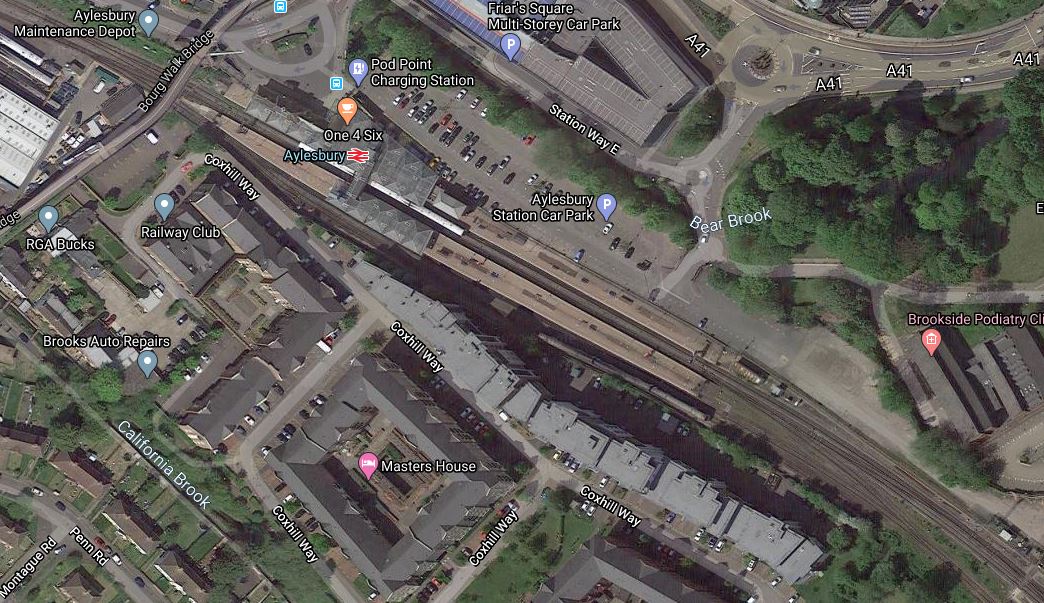
Note.
- Platforms are numbered 1 to 3 from South to North.
- Trains going South via High Wycombe call in Platforms 1 or 2.
- Trains going South via Amersham call in Platforms 2 and 3
- Trains going North call in Platforms 2 and 3.
These pictures show the station.

It is a spacious station, with step-free access and I feel that it could handle more services.
Banbury
I am sure that Banbury station, will be an important charging point for Chiltern’s battery-electric trains going North of Banbury.
This Google Map shows the layout of the recently-refurbished Banbury station.
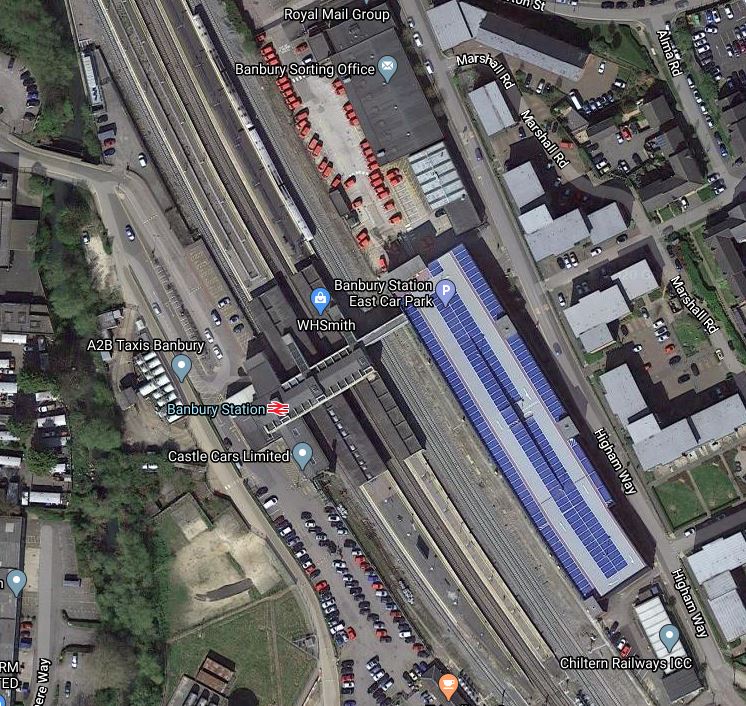
Note.
- Platforms are numbered 1 to 4 from West to East.
- Trains going North call in Platforms 1 or 2.
- Trains going South call in Platforms 3 or 4.
- The Marylebone and London service usually turns back in Platform 4 after waiting there for over half-an-hour.
- Northbound Stratford-upon-Avon services generally use Platform 1, but most others generally use Playform 2.
- Southbound Stratford-upon-Avon services generally use Platform 4, but most others generally use Playform 3.
It looks to me, that Banbury station could handle the charging of trains as they pass through, as all of Chiltern’s services that serve destinations to the North of Banbury, stop at the station.
Hitachi are saying, that one of their proposed battery-electric trains needs ten minutes to be fully-charged.
So there may need to be some adjustment to the time-table to lengthen the stops at Banbury, to give ten minutes of charging time.
Alternatively, a few miles of electrification could be centred on Banbury, perhaps between Aynho Junction and Leamington Spa, which is a distance of twenty-six miles, which takes one of Chiltern’s trains around twenty-three minutes.
This would surely give enough time to fully-charge the batteries, but would also benefit CrossCountry, if they should go the battery-electric route.
I have followed the route between Aynho Junction and Leamington Spa in my helicopter and it would appear to be a fairly straight and uncomplicated route. I would say, it is about as difficult to electrify, as the Midland Main Line between Bedford and Kettering/Corby, which appears to have been one of Hetwork Rail’s better electrification projects, which should be delivered on time and has been installed without too much disruption to trains and passengers.
High Wycombe
It looks to me, that High Wycombe station will be an important charging point for Chiltern’s battery-electric trains going North to Oxford and Banbury.
Unlike Banbury, High Wycombe has not seen many changes over the years.
This Google Map shows High Wycombe station.
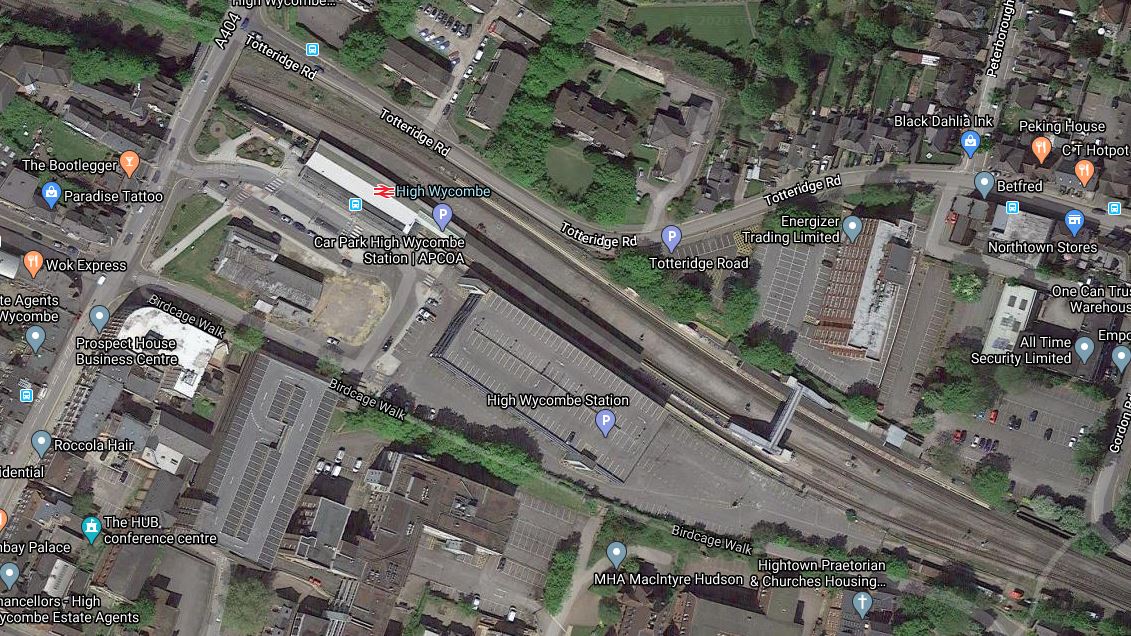
Note.
- Platforms are numbered 1 to 3 from South to North.
- Platform 1 is a bay platform that faces London.
- Platform 2 is the Westbound platform.
- Platform 3 is the Eastbound platform.
- High Wycombe has five tph in both directions, with an upgrade to six tph possible, after two tph run to the Cowley Branch.
The frequency of the trains through High Wycombe station could probably be handled by a Fast Charging system, but it would be tight to fit all current five services into an hour. It would appear to preclude any extra services going through High Wycombe, as there just isn’t enough time in an hour.
For this reason, I think that High Wycombe station needs full electrification, so that all passing trains can top up their batteries.
This gives the interesting possibility, that a train leaving High Wycombe for London with a full battery, would probably have enough charge in the battery to travel the 28 miles to London Marylebone and return. The train could always have a top-up at Marylebone.
So how far would the electrfication, through High Wycombe run?
Given that for operational reasons, it is probably best that pantographs are raised and lowered in stations, it is probably best if the various routes were electrified to the next station.
- The Chiltern Main Line route would be electrified as far as Banbury station, where all trains stop. The distance would be 41 miles.
- The Oxford route would be electrified as far as Bicester Village station, where all trains stop. The distance would be less than two miles from the Chiltern Main Line
- The Aylesbury route would be electrified as far as Princes Risborough station, where all trains stop. This would be included in the Chiltern Main Line electrification.
It looks to me, that just 43 miles of double-track electrification would enable Hitachi’s proposed battery-electric trains to reach all parts of the Chiltern network.
Distances of the various destinations from the electrification are as follows.
- Birmingham Moor Street – 43 miles
- Birmingham Snow Hill – 43 miles
- Kidderminster – 63 miles
- Marylebone – 28 miles
- Milton Keynes – 27 miles
- Oxford – 38 miles
- Oxford – Cowley – 43 miles
- Stratford-upon-Avon 35 miles
Only Kidderminster could be tricky, but not if the Snow Hill Lines are electrified through Birmingham.
Electrification of the Chiltern Main Line between High Wycombe and Banbury with a number of Fast Charging systems in selected stations, would be my preferred option of enabling Hitachi’s proposed battery-electric trains to work the Chiltern network.
These pictures show High Wycombe station.

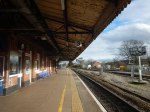


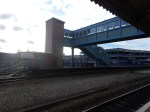
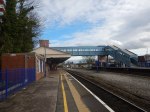
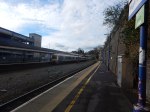
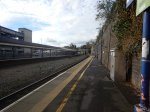
It does appear that the bridge at the Western end of the station my need to be modified, so that overhead wires can be threaded underneath.
Conclusion
Quite unexpectedly, I am pleasantly surprised.
Chiltern Railways’ current network can be run by Hitachi’s proposed battery-electric AT-300 trains.
- Fast charging systems will be needed at Aylesbury, Aylesbury Vale Parkway, Banbury, Birmingham Moor Street, Birmingham Snow Hill, Gerrards Cross, High Wycombe, Kidderminster, Marylebone, Milton Keynes and Oxford.
- Banbury and High Wycombe will need to be able to top-up trains as they pass through.
- No large scale electrification will be needed. Although any new electrification will be greatly accepted!
As I indicated earlier, I would electrify the core part of the Chiltern Main Line route between High Wycombe and Banbury.
It would probably be a good idea to electrify a few miles at the Southern end of the line, where it runs into Marylebone station.
- Marylebone and Harrow-on-the-Hill.
- Marylebone and West Ruislip
- Old Oak Common and West Ruislip.
I would use third-rail electrification to be compatible with London Underground and because of the automatic connection and disconnection.
But most surprisingly, there are already generous turnround times at most terminal stations, which give enough time to charge the trains.
It’s almost, as if Chiltern are preparing for battery-electric trains.
Progress On The Cowley Branch
I first wrote about the Cowley Branch in Oxford Takes A Leaf Out Of Cambridge’s Book In November 2014.
Much of my post was based on this article on the BBC, which is entitled Cowley line passenger train service planned for Oxford.
So how is the planning of the branch progressing?
In the November 2016 Edition of Modern Railways, there is an interview with Dave Penney of Chiltern Railways, as the company is opening their service to Oxford station on the twelve of December.
In Science Park Next?, this is a paragraph.
Extending services from Marylebone through Oxford’s platform 3 to Kennington Junctionfor the Cowley Branch might be trouble; the problem is coming back, with Oxford Parkway-bound services having to cross the main lines on the flat at Kennington and into constrained line capacity on the route into Oxford station Extending the down goods loop into the station would help here, but that is some way down Network Rail’s list of priorities, so an Ocford Science Park service seems unlikely to happen anytime soon.
But help might be at hand, in that a new Oxford station might be built, which I wrote about in Could This Be A Ground-Breaking Idea In Station Design?
Surely, if a new station is built, current and possible future services will be taken into account, in the design.
I have no idea if the Cowley Branch will be opened to passenger trains.
I do think that there could be good reasons to create this service.
- Oxford Science Park, Oxford Business Park, Oxford United Stadium and the Mini Factory would gain a passenger rail link.
- Extending Along The Cowley Branch may make operation easier.
- It fits well with the East West Rail Link
- It would greatly increase Chiltern’s catchment area in Oxford.
But, I don’t think we’ll see any progress until planning and building of the new Oxford station has started.
This is Google Map shows the route of the Cowley Branch.
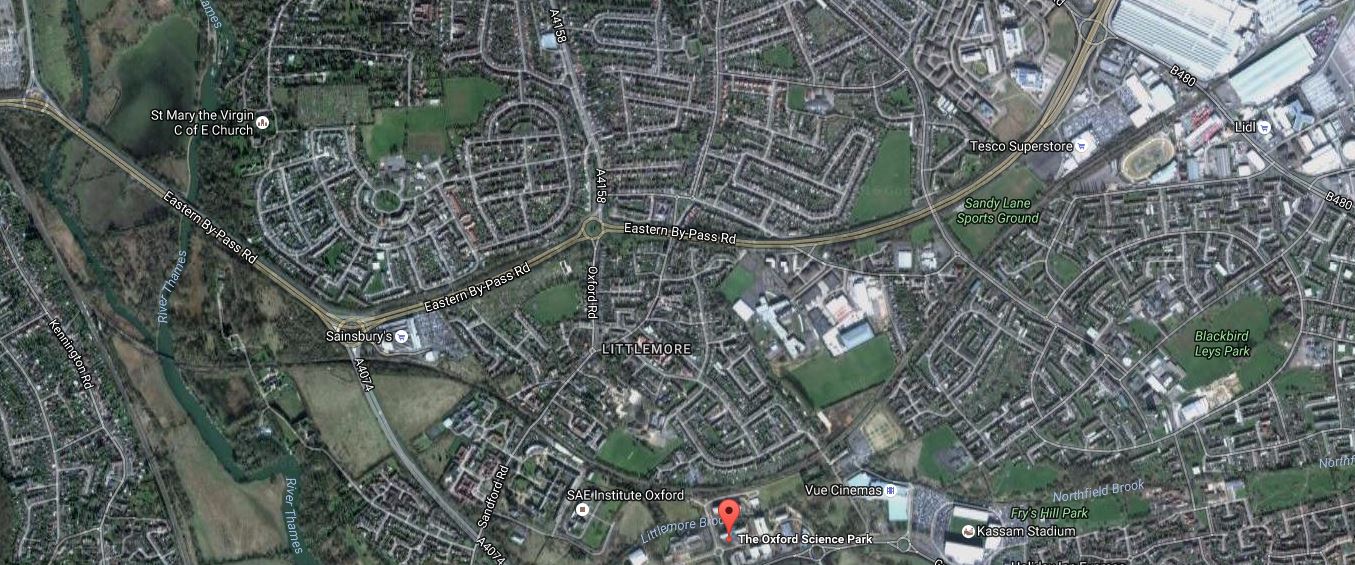
Kennington Junction is where the branch leaves the Oxford to Didcot Line and then curves across the South of the City to the Mini Factory, which is the massive set of light-coloured buildings in the North-East corner of the map.
The Oxford Science Park is indicated by the red arrow, with the stadium to its East.
A Trip To Aylesbury Vale Parkway Station
Aylesbury Vale Parkway station is one of Chiltern Railway’s termini in Buckinghamshire.
It is on the London to Aylesbury Line with services to Marylebone via Amersham, with a journey time of five minutes over the hour.
Plans also exist for the station to be calling point on the proposed service between Marylebone and Milton Keynes. The plans for the station in Wikipedia say this.
East West Rail plans to extend passenger services northwards to Bletchley and Milton Keynes by 2019 using parts of the former Varsity Line. The platform has been built to accommodate a second track if ever implemented, which would create an island platform. At present trains (currently run only as specials onBank Holidays) between Aylesbury and Quainton Road cannot serve Aylesbury Vale as there is no platform on the through route.
The track between Aylesbury and the new station was upgraded to continuous welded rail with a maximum line speed for DMU passenger trains of 60 mph (97 km/h). It is proposed that when services are extended to the north, trains will run via High Wycombe and not Amersham. Trains currently serving the station will thereafter terminate at Aylesbury.
These are some pictures I took of the station.


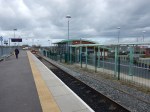
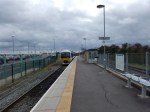


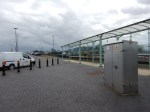
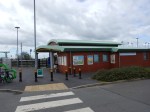
It is just a simple affair with a bus stand, car parks and the usual facilities, that appears will be soon surrounded by houses.
Chiltern Railways And Electrification
Before discussing how services will link up and down the London to Aylesbury Line, I will look at Chiltern Railways and electrification.
Under Developments and Announcements in the Wikipedia Entry for the East West Rail Link, this is said.
On 10 January 2013 Network Rail announced its intention to construct the western section between Bedford and Oxford, Aylesbury and Milton Keynes, as part of their five-year strategic business plan (2014–2019). The target date for train services to be operational on this section is December 2017. Electrification of the line between Oxford and Bedford was also included in the budget and target completion date was March 2017.
So electrification of the East West Rail Link is included in the project, even if the dates in the announcement are very much out of date now.
Given the following facts about the Chiltern Main Line, I believe it is likely that at some point, everybody will look seriously at providing electric trains from Marylebone to Birmingham Snow Hill station.
- The line has a close relationship with the East West Rail Link and other electrified or soon-to-be electrified lines.
- Chiltern finds it difficult to acquire more diesel-powered trains to fulfil their ambitions.
- Chiltern would like to run faster, larger, more efficient and greener electric multiple units.
Under Electrification in the Wikipedia entry for Chiltern Railways, this is said.
No section of the line is electrified, but in 2010 the chairman of Chiltern Railways, Adrian Shooter, indicated that electrification is being considered, though not in the immediate future. He added: “We could do some very interesting things with high-acceleration EMUs and possibly some further infrastructure work.
At some time in the next ten years, we’ll probably see electric trains between Marylebone and Birmingham Snow Hill.
But there will not necessarily be full electrification, as I believe IPEMU technology will change the way electrification is carried out.
Consider as well that the Chiltern Main Line is just one hundred and eighty kilometres long and the current maximum range of an IPEMU is being quoted as about sixty miles or just under a hundred kilometres, so with the following electrification.
- Marylebone and for perhaps twenty miles or so to handle local metro services.
- Birmingham Snow Hill, Birmingham Moor Street and the Snow Hill Lines, where there are local metro services.
- Banbury to Leamington Spa and other places, so that freight trains powered by bi-mode Class 88 locomotives, could use the line efficiently.
The Local lines from Marylebone and the Snow Hill Lines would be electrified using the techniques in A Modern Electrified Metro Network Using IPEMU Technology
IPEMUs would be able to run the full length of the line without the need for full electrification in an environmentally-sensitive area, inhabited by touchy people.
Northward To The East West Rail Link And Milton Keynes
Northward from Aylesbury Vale Parkway station, the Wikipedia entry for East West Rail Link, says that the line will be single track and allow 90 mph working. But as my pictures and a quick gander on Google Maps show, there is quite a bit of space available around the current single track. So as the East West Rail Link seems to be being designed as a double-track 100 mph railway, with full electrification, I think there are three possible options between the East West Rail Link and Aylesbury Vale Parkway and Aylesbury stations.
- Double-track 100 mph with electrification.
- Single-track 90 mph with electrification.
- Single-track 90 mph without electrification.
I think the line will be built with some form of electrification, so that electric trains can run from Aylesbury to Milton Keynes.
The line is also used by some freight trains, so double-track might be a good idea.
Aylesbury To London Via Amersham
Returning from Aylesbury today, I was surprised to see that the train ran from Amersham to Harrow-on-the-Hill on the same tracks as the Metropolitan Line. In fact for sixteen of the thirty-nine miles of the line from Marylebone to Aylesbury Vale Parkway, the line has full London Underground electrification.
Amersham to Aylesbury is about fifteen miles, with the distance between the two Aylesbury station being four miles, which means that Harrow-on-the-Hill to Marylebone is just a few miles.
So if an IPEMU could use the London Underground’s rail-based electrification, starting at Milton Keynes the train would easily arrive at Harrow-on-the-Hill with a full battery, that would take the train to Marylebone and back.
I don’t believe that the technical problems of an IPEMU starting at any station between Aylesbury and Milton Keynes and going to Marylebone and back are insurmountable.
Aylesbury To London Via High Wycombe
This uses the single-track Aylesbury to Princes Risborough Line, which is about a dozen miles long, before running to Marylebone along the Chiltern Main Line, which is another forty miles or so.
So some electrification will be needed.
According to Wikipedia, Chiltern have various plans to improve their network.
- The restoration of the quadruple track between South Ruislip (Northolt Junction) and West Ruislip, allowing trains to call at both stations without blocking the line. Triple track currently exists at West Ruislip, with the up platform loop still in situ, and at South Ruislip, with the Down Main through line also in situ. This would involve the reconstruction of the new down platform at West Ruislip, and the reconstruction of the up platform at South Ruislip. This ‘Chiltern Metro’ service was not programmed into the last round of franchising agreements.
- Restoration of fast through lines at Beaconsfield as part of a longer-term aspiration for a 90-minute journey time between London and Birmingham
- Double-track the line from Princes Risborough to Aylesbury.
- New Chiltern Metro Service that would operate 4+tph for Wembley Stadium, Sudbury & Harrow Road, Sudbury Hill Harrow, Northolt Park, South Ruislip and West Ruislip. This would require a reversing facility at West Ruislip, passing loops at Sudbury Hill Harrow, and a passing loop at Wembley Stadium (part of the old down fast line is in use as a central reversing siding, for stock movements and additionally for 8-car football shuttles to convey passengers to the stadium for events)
Some would also fit well with adding electrification, so I think that enough electrification can be added to allow an IPEMU to go from Aylesbury to Marylebone.
Oxford To London
Given that there will be electrification between Oxford and Bicester Village stations courtesy of the East West Rail Link, IPEMUs could start at Oxford and reach Princes Risborough, from where they used the same methods as Aylesbury and Birmingham services to get to London.
This article on the BBC, which is entitled Cowley line passenger train service planned for Oxford, says this.
Chiltern Railways has revealed plans for a passenger service to run on the Cowley branch in Oxfordshire.
The line, currently only used for freight, would see two new stations on the route at Oxford Science Park and Oxford Business Park.
So if this service goes to London, it would certainly be another job for an IPEMU.
Watford Junction To Amersham And Aylesbury
The Croxley Rail Link has been designed so it can have a link to Amersham. Wikipedia says this about the link.
A further proposal is to use the existing but seldom-used Metropolitan line chord which allows trains to run from Watford towards Amersham via Rickmansworth. In conjunction with the Croxley Rail Link, this route would allow direct services between Watford Junction and Amersham, thus improving local public transport in Hertfordshire and Buckinghamshire.
These are pictures I took, as the train passed the junction of the branch line to Watford.
It would certainly be a new use for a substantial piece of infrastructure, but would it do much more than link Amersham to Watford Junction.
Chiltern Trains could run an IPEMU from Watford Junction to Aylesbury Vale Parkway calling at all stations, but as passengers could also get to Aylesbury from Milton Keynes, I wonder if it would be well used.
Network Rail’s Problems In Oxford
Oxford is going to be a big rail hub with over the next few years the following projects being completed or at least underway.
1. Chiltern Railways from Oxford Parkway to Oxford station. Services to Oxford Parkway station will start on October 26th 2015, with services to Oxford city centre starting in spring 2016. I’ll believe the last part of that, when a Chiltern Railways train takes me to Oxford. When I visited in March 2015, little seemed to be happening at Oxford station in preparation for the arrival of this service.
2. Oxford station to be substantially upgraded with more platforms and possibly two island platforms for through trains. Again in March 2015, little seemed to be happening.
3. Chiltern Railways from Oxford station to the Science Park on the Cowley branch.
4. Electrification between Didcot and Oxford.
5. The creation of the East-West Rail Link
But according to the August 2015 of Modern Railways, they are having severe problems in the area North of the station, which I explored in a walk in March 2015. This is said.
On top of that, there is a hint of exasperation with the local authorities about the glacial pace of the planning process: it took two and a half years to get approval for a pedestrian crossing to replace a footbridge for Chiltern’s mew line to the city centre, because allotment holders used to wheeling barrows of compost across the line were complaining about the new up-and-down route they would have to take over the bridge. New railway staff accomodation in Oxford is mired in similar planning mud.
Cambridge have upgraded their railways in recent years, and although they have had delays on the new Cambridge North station, there doesn’t seem to have been the same planning mud.
The question has to be asked if the good burghers of Oxford would prefer that money was spent on improving transport infrastructure in more welcoming places. The writer obviously feels strongly as he goes on to say this.
While not wishing to stand in the way of democracy , Network Rail is pointing out that there is a window of opportunity for modernising the route to Oxford that could be lost unless local authorities embrace it wholeheatedly. With NR’s spending plans under pressure, there is a danger that Oxford will be put in the “too difficult” pigeonhole and the caravan will move on. Then it would really be back to the 1970s, with changing at Didcot becoming the best option to reach Paddington at some times of day.
I had a friend who lived in Oxford and he used to say that the Council liked to keep cars out of the City. Perhaps, it is more fundamental than that, and the Council would prefer to keep everybody out of the city, so they can continue to lead their cloistered lives, untroubled by the Twentieth Century, let alone the twenty-first.
Do the same people, who blame Network Rail for their well-documented problems, like these at Oxford and those at Manchester, fully support the improvements in the first place or do they really want money to be spent on their own pet projects?
We certainly need a planning system that allows people to air their views and protest, but also one that takes more account of the good of the majority after all contra-arguments have been rejected.
The Reality Of The East West Rail Link
Earlier this week, I took pictures of the work going on at Bicester to connect the Chiltern Line to Oxford.
The railway passing underneath the Chiltern Line will become part of the East West Rail Link, which will hopefully link Oxford and Cambridge within the next ten years.
Modern Railways this month has a welcome page to the magazine entitled A Mini Adventure, which describes a promotional trip by Chiltern Railways on the possibly-to-be-reopened Cowley Branch. James Abbott, the Editor, says this.
A railway linking the ‘technology crescent’ – an arc about 60 miles from London stretching from Harwell and Didcot through Oxford and Milton Keynes to Silicon Fen – is well on the way to becoming reality.
He then goes on to say that he can see an East West railway starting at a Reading linked to Heathrow, giving international access for the technology crescent with just one change.
 The Anonymous Widower