Some Pictures Of Platform Edges On The Uckfield Branch
I took these pictures on my visit to Eridge station yesterday.
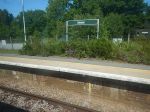

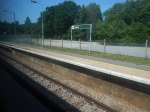

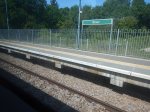


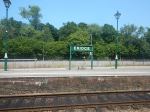
The platform edges are a very mixed bunch.
- Some are only a couple of years old and were built, as part of new platform extensions.
- Some were built using pre-fabricated components.
- Some are of fairly indeterminate age.
- The ones at Eridge station probably date from when the station was opened in 1868.
I would suspect that your patio is in better condition than some of these important interfaces between train and platform.
So why did I photograph them?
In First Of A Kind Funding Awarded For 25 Rail Innovation Projects, Project Number Number 4 from Sheffield Hallam University was entitled Illumin Heated Concrete Platform Coper Slabs and was described like this.
Illuminated and heated low-energy concrete slabs for station platforms, which automatically switch on in freezing conditions to help prevent passengers from slipping on ice.
Some more information was given in Heated Railway Platforms Tested To Avoid Ice Accidents.
Could these platforms be fitted to a set of platform edges like these?
I would hope so.
If so, new smoother platforms and not just the edges, would also hope to cut small falls.
15 More Fuel Cell Electric Buses For UK Roads
The title of this post, is the same as that of this article on H2 View.
This is the introductory paragraph.
A further 15 fuel cell electric buses (FCEBs) are planned for the UK this year, as the country works towards its goal of deploying 4,000 zero emission buses over the next five years.
These futher points are made.
The fuel cells are 85KW heavy-duty FCveloCity®-HD fuel cell modules from Ballard Power Systems.
This will take Wrightbus’s order book for hydrogen-powered buses to fifty. all of which will be delivered this year.
Twenty buses are for London and fifteen are for Aberdeen.
I have some thoughts on the 85KW heavy-duty FCveloCity®-HD Fuel Cell Module.
This pdf file on the Ballard web site is the data sheet and this is selected data.
- The net power is 85 kW
- The fuel cell weighs 256 Kg.
- It needs a coolant sub-system that weighs 44 Kg.
- It needs an air sub-system that weighs 61 Kg.
- It is a true zero-emission product.
It is worth looking at the power train of a New Routemaster bus, which although very different will probably give clues as to the weight that can be carried and the power and battery size needed for a full-size bus.
- The Cummins ISBe diesel engine develops 138 kW and weighs 499 Kg.
- The engine is mounted half-up the back stairs.
- The Microvast Lithium Titanate battery has a capacity of 18 kWh.
- The battery is placed under the front stairs.
- The braking on the New Routemaster bus is regenerative.
These are some of my observations.
- If you sit at the back of a New Routemaster bus, you can hear the engine, when it is running. On most routes in Central London, it certainly isn’t running all the time.
- The battery doesn’t seem very large at 18 kWh.
- The fuel cell with its sub-systems would appear to be lighter than the diesel engine, but of less power.
- The fuel-cell won’t need the generator of the diesel bus.
I very much feel getting all the components into a standard double-decker bus will be a tight squeeze, but none of the individual components are that large or heavy.
Conclusion
I can’t wait to have my first ride in a hydrogen-powered double-decker bus.
The World’s First Bi-Mode Hydrogen-Electric Train
This news page on the University of Birmingham web site is entitled HydroFLEX Secures Funding For Hydrogen-Powered Train Design.
The page is mainly about the new funding from Innovate UK, that I wrote about in First Of A Kind Funding Awarded For 25 Rail Innovation Projects, but it also includes this significant paragraph.
As well as being the UK’s first hydrogen-powered train, HydroFLEX is also the world’s first bi-mode electric hydrogen train. It will be undergoing mainline testing on the UK railway in the next few weeks.
One of my disappointments in the design of the Alstom Coradia iLint, is that, it is designed as a hydrogen-power only train, where it could surely have had a pantograph fitted, for more efficient working.
Consider.
- I suspect many hydrogen-powered trains will only be doing short distances, where electrification is not available, so daily distances under hydrogen power could be quite short.
- In the UK, a smaller hydrogen tank would certainly ease the design problems caused by a large fuel tank.
- There have been improvements in hydrogen storage in recent years.
The funding award to the project talks about raft production, so are the engineers, aiming to design a hydrogen power-pack on rafts, that could be fitted underneath the large fleets of retired electric multiple units, that are owned by Porterbrook.
Now that would be a game changer.
- Porterbrook have thirty-seven Class 350 trains, that will be replaced in the next few years by new trains. The electric trains are less than a dozen years old and Porterbrook have been talking about fitting batteries to these trains and creating a battery/FLEX train. Would making these trains bi-mode hydrogen-electric trains be better?
- Birmingham wants to open up new rail routes in the city on lines without electrification. What would be better than a hydrogen powered train, designed in the city’s premier university?
- Routes from Birmingham to Burton-on-Trent, Hereford, Leicester, Shrewsbury, Stratford-on-Avon and Worcester would be prime candidates for the deployment of a fleet of bi-mode hydrogen-electric trains.
- Birmingham have already asked ITM Power to build a hydrogen filling station in the city for hydrogen buses.
UK Diesel-Battery Hybrid Locomotive Lease Fleet Ordered
The title of this post, is the same as that of this article on Railway Gazette.
This is a visualisation of the CBD90 from Clayton Equipment.
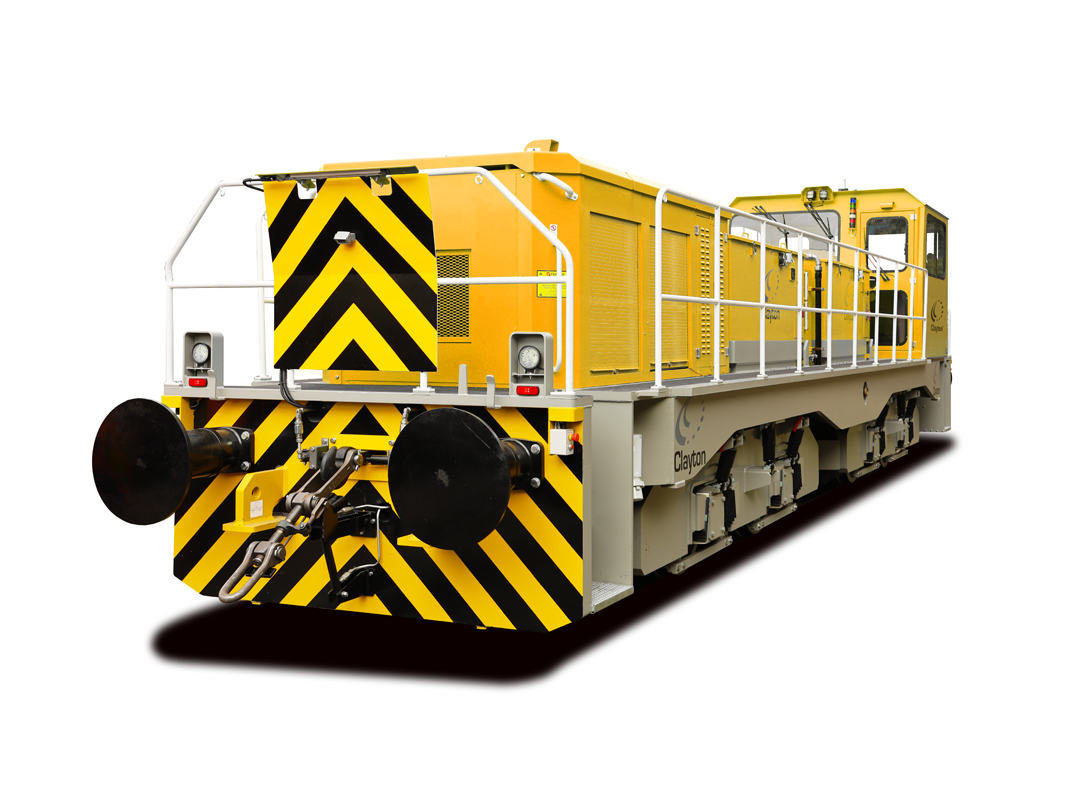
It certainly looks purposeful!
This is the introductory paragraph.
Beacon Rail Leasing has awarded Clayton Equipment a contract to supply 15 diesel-battery locomotives, with options for more to be ordered over three years.
These points are made.
- The locomotive is mainly for industrial shunting applications.
- These are the largest locomotives built in the UK for twenty years.
- It has an onboard diesel to charge the batteries.
- Batteries can also be charged directly from a three-phase supply.
Beacon’s CEO is quoted as saying
It was seeing increased demand for lower emissions, new technology, more capacity and cost-effective assets in a fast-changing environment.
It looks like Beacon Rail Leasing and Clayton Equipment have come up with a product that suits a lot of customers.
- Some will surely be used in mines, quarries, refineries, chemical works and steel works.
- Will some be used in large rolling stock depots, where they can provide an environmentally-friendly method of moving trains?
- Some shunting locomotives in the UK, like the Class 08 locomotive, were built in the 1950s.
- Some train operating companies have a small fleet, of these veterans.
- In Battery-Powered Shunter Ready To Begin Testing, I described how one Class 08 locomotive was being converted to diesel-electric hybrid power.
- As Beacon has interests in Europe, could some of these powerful shunting locomotive could be going for export?
- Could some end up in the large mines of Africa, Australia and the Americas?
From this article on Railway Gazette, which is entitled Steelworks Locomotive Order, it appears five CBD90 locomotives have already been ordered by Tata Steel for their steelworks at Port Talbot.
This video shows one of the locomotives under test.
I shall be interested to see, where the new shunting locomotives end up.
The Leasing Model
When we started Metier Management Systems in the 1970s and developed Artemis, which was the world’s first small and powerful project management system, we used to lease systems to our customers. These were often large engineering or other companies for whom the leasing model was very convenient.
It certainly did us well!
GKN Aerospace Joins Eviation Alice Electric Plane Project As Work Continues After Fire
The title of this post, is the same as that of this article filed under Engineering News on the IMechE web site.
This is the interlocutory paragraph.
Electric plane pioneer Eviation has signed a collaboration agreement with GKN Aerospace for the design and manufacture of wing, tail assembly and electrical wiring interconnection systems for its Alice aircraft.
It is very matter of fact, but does the tie up signal good news and progress, after the prototype Eviation Alice was destroyed in a fire?
As a disruptive innovator and one-time pilot, I like the Alice.
- The performance, in terms or passenger capacity, speed and range match a market, where money could be made.
- The propulsion system makes the most of up-and-coming technology.
- I suspect that the unusual shape allows some efficient aerodynamics to work.
- Some people might put their money down on a ride in space. A ride in an electric aeroplane would satisfy me.
I think, the Alice could be the first electric plane I ride in.
And the tie up with GKN, makes my dream more likely.
The Flexible Train For A Pandemic
Anybody, who believes that COVID-19 will be the last pandemic is an idiot!
The virus has shown, those with evil intentions to take over the world, that a pandemic, started by a weaponised virus, whether natural or man-made, can be a useful tool in your arsenal.
We must prepare for the next pandemic.
So how will we travel by train?
Current Train Interiors And The Need To Social Distance
The need to social distance will remain paramount and some of our current train interiors are better than others for passengers to remain two metres apart.
These are some typical UK train interiors.
Typical London Overground Interior
These pictures show a typical London Overground interior on their Class 378 trains and Class 710 trains.
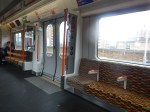
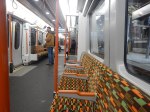
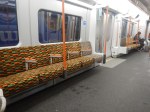
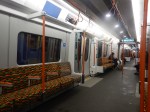
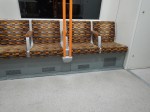
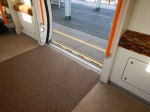
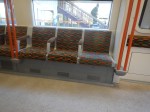
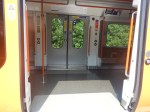
Distancing at two-metres will reduce the capacity dramatically, but with wide doors and common sense, this layout could allow social distancing to work.
Siemens Desiro City Suburban Interior
These pictures show the interior of the two Siemens Desiro City fleets; Thameslink‘s Class 700 trains, Great Northern‘s Class 717 trains and South Western Railway‘s Class 707 trains.
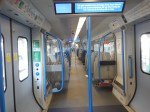
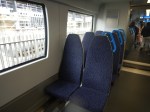
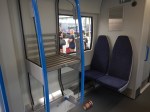
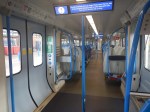
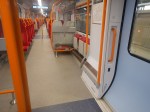
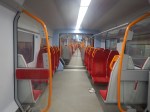
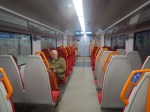
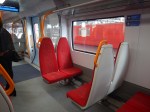
As with the London Overground layout, as the trains are fairly spacious with wide doors, social distancing could probably be made to work at reduced capacity.
Four Seats And A Table
These pictures show a selection of trains, where you have four seats around a table.
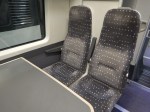
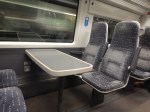
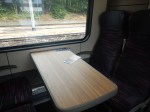
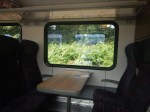
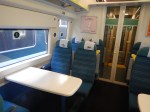
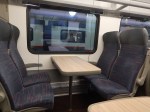
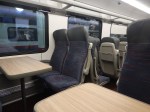
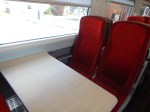
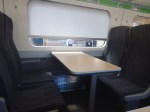
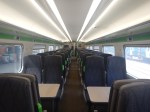
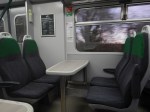
Trains include Greater Anglia’s Class 379 trains, Class 745 trains, Class 755 trains, and a selection of Class 800 trains, Class 377 trains from various operators and a superb reconditioned Class 150 train from Great Western Railway.
Could these be made to work, if there was only one person or self-isolating group living together at each set of four seats?
Designing For A Pandemic
These are my thoughts on various topics.
Seating Layouts
Consider.
- As the pictures show, maintaining social distancing will be difficult on some trains.
- Could the number of seats in use, be determined by the avert level of the pandemic?
- Could seats have lights on them to show their status?
- Will companies insist on reservations?
As to the last point, some train companies are already doing this!
Luggage
Will there be limits on the luggage you can take?
Entering And Leaving The Train
Would someone with a dangerous infectious disease be more likely to pass it on, when entering or leaving a train, through a narrow doorway?
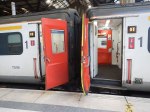
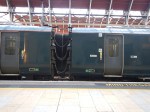

I believe coaches with narrow single end doors make social distancing impossible.
- Passengers get stuck in the bottleneck that these doors create.
- Passengers are entering and leaving through the same crowded door.
- Anybody in a wheelchair, pushing a child in a buggy or dragging a large suitcase, will make the bottleneck worse.
They are not fit for purpose in a post-COVID-19 world!
It might be possible to make the doors work using a traffic light system, which allowed passengers to leave, before any passengers were allowed to enter.
But any safe system, would be likely to increase dwell times in stations.
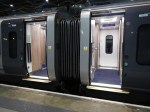
These pictures show the doors and entry and exit for Greater Anglia’s Class 745 and Class 755 trains.
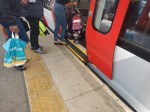
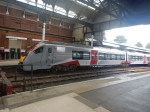
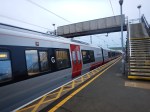
These trains have been designed to be able to run London and Norwich services over a distance of more than a hundred miles, so the trains could be considered InterCity services in all but name.
Note.
- All doors are double and lead into a wide and spacious lobby.
- Entry and exit is level, as there is a gap filler between train and platform.
- Entry and exit in a wheelchair, pushing a buggy or wheeling a large suitcase doesn’t
Greater Anglia’s new trains would appear to be better in a post-COVID-19 world.
I also think, that these trains are better designed for the disabled, those with young children, and the elderly and just plain worn-out.
Finding A Seat
If you watch people entering a train, they often take forever to find their seat and sit down. Especially, if they’ve got a massive suitcase that won’t fit in the space provided.
Rules on boarding a train and how much luggage you can bring will be developed.
Toilets
Will visiting the toilet still be allowed? Or will toilets even be removed?
Flexibility
I think a degree of flexibility must be built into the design.
I mentioned lights on seats to show which could be used, that could be lit up according to the threat level.
Conclusion
Travelling will get more complicated.
Delivery Drone Flies Medical Supplies To Britain’s Isle of Wight
The title of this post, is the same as that of this article on Reuters.
This is the introductory paragraph.
A new drone service will reduce delivery times for urgent medical supplies to a hospital on the Isle of Wight, which lies about 8 kilometres off the south coast of England.
In some ways the most remarkable thing about this project, was that the drone was developed by Southampton University to deliver medical supplies in remote parts of Africa.
- It is twin-engined.
- It has a range of 100 km.
- It can carry a 100 kg payload.
- It can take off and land on short grass runways.
More details can be found on this page of the Southampton University web site.
This is a video of the first delivery.
Is The New Routemaster A Better Bus For COVID-19?
I went to the Angel today and rode on a New Routemaster.
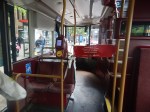

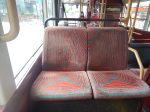
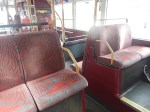
It almost seemed it was a bus designed for social distancing.
- I sat in one of the sets of four seats on the lower deck, by myself.
- The other set, also had a single occupant.
- The driver is safely behind a barrier and two metres from passengers.
- Entry and exit is by rear and centre doors only.
- The buses were designed for entry and exit at all doors.
I’d certainly be happy to travel on one of these buses.
Zero Carbon? Not Here! Carbon-Fibre Bogie Frame
When I was at University in the 1960s, the big UK engineering project was the Rolls-Royce RB-211 turbofan engine.
One of the features of the engine was a carbon-fibre fan blade, which saved weight and thus made the engine lighter and more efficient.
However the blades were found to shatter with bird strikes and titanium had to be used instead.
At Liverpool University, we knew something was wrong, as a fellow student on our course was the son of the Manager of Tesco in Derby. What used to happen to Tesco’s out-of-date chickens? They ended up at Rolls-Royce, where they were used to test jet engines for bird-strikes. He told us the story of the failed testing one liquid lunch-time.
That was over fifty years ago and the RB-211 has morphed into the successful Rolls-Royce Trent engine, which first ran in 1990 and is still going strong.
Carbon-fibre has gone its own way and is used in many applications from cars to tennis rackets and golf clubs.
The title of this post is the same as that of this article on Rail Engineer.
The article describes work at Birmingham University to create a carbon-fibre bogie frame.
This paragraph from the article describes the outcome.
A major achievement is that the mass of the frame as built is 350kg, compared to the steel equivalent of 936kg. By the time the metal fittings were installed and paint applied, the mass had increased to 940kg compared with the steel equivalent of 1468kg, a reduction of over half a tonne per bogie.
Lighter bogies mean lower track-access charges.
I will be interesting to see how this project ends, when a prototype has been running in a real train.
A Bus For The Twenty-First Century
What puzzles me, is why bus drivers in London, seem to be suffering more from COVID-19 infection, than drivers elsewhere!
In London, all buses have two or three doors and contactless ticketing, whereas in many parts of the UK, there is often only one door and no contactless ticketing.
This must mean, that there is generally less interaction between the driver and passengers in the capital. So logic would say, that outside of London, there should be more passing of infections between everybody on the bus.
An Observation In Manchester
Ten years ago, I observed behaviour on a single-door Manchester bus going to Oldham, with a union rep for bus drivers, who by chance happened to be sitting beside me.
The scrum as passengers entered and left the bus by the same door was horrific and the rep told me, that the local riff-raff were always trying to nick the driver’s money.
He told me, that a London system based on contactless ticketing was union policy and would cut attacks on staff, which he said had virtually stopped in London.
A Bus For The Twenty-First Century
The government has said that millions will be available for new zero-carbon buses, powered by hydrogen. I doubt that batteries will be able to provide enough power for many years.
It is my belief that given the new circumstances, that the bus should also have the following features.
- It should be as infection-unfriendly as possible, as COVID-19 won’t be the last deadly infection.
- Contactless ticketing by credit card or pass.
- Full CCTV to identify non-payers or those with stolen cards.
- Two doors with one in the middle for entry and one at the back for exit.
- It would be possible on some routes for both doors to be used for entry and exit.
- Wheelchairs would enter and leave by the middle door, where the ramp would be fitted.
I would put the stairs to the top deck on the left hand side of the bus, with the foot of the stairs leading directly into the lobby by the middle door.
The Van Hool ExquiCity
The Van Hool ExquiCity is an alternative solution, that is already running in Belfast, where it is named Glider.
It is probably best described as a double-ended articulated bus, that runs on rubber tyres, that thinks it’s a tram.
This press release from Ballard is entitled Ballard-Powered Fuel Cell Tram-Buses From Van Hool Now in Revenue Service in France, describes the latest hydrogen-powered version of the Exquicity, which is now in service in Pau in France.
- Each bus appears to be powered by a 100 kW hydrogen fuel cell.
- The buses are over eighteen metres long.
- Twenty-four metre double-articulated tram-buses are available.
- The buses seat 125 passengers
- The buses have a range of 300 kilometres between refuelling.
I like the concept, as it brings all the advantages of a tram at a lower cost.
Here’s a video.
It certainly seems a quiet bus.
I desperately need to get to Pau to see these vehicles.
Conclusion
We could design a new bus for the twenty-first century, that tackles the problems facing the bus industry.
- Climate change and global warming.
- Control of deadly infections like COVID-19.
- Efficient, fast ticketing.
- Attacks on staff.
- Petty crime.
- Access to public transport for the disabled, the elderly and those with reduced mobility.
We certainly have the skills to design and manufacture a suitable bus.
 The Anonymous Widower