London has a rail capacity problem, for both freight and passenger trains.
This report from Network Rail is entitled The London Rail Freight Strategy (LRFS).
One of the secondary recommendations of the report is to improve the capacity to handle trains with heavy axle weight restrictions.
The report explains it like this.
In consultation with train drivers for the Freight Operating Companies and Network Rail structural engineers, this study has identified a list of Heavy Axle Weight restrictions on routes used by freight in London, which are known to negatively impact the movement of heavier trains around the
network.
The resulting proposal, as part of the LRFS, is for packages of works to enable the removal of these restrictions to be progressed.
A general package of cross-London interventions, targeting structures across a variety of routes, has been outlined for development. In addition, a large stretch of the Gospel Oak-Barking Line, where Heavy Axle Weight traffic is subject to a blanket 20mph speed restriction, should be the focus of a dedicated package of works to facilitate the removal of that restriction and to strengthen the route so that it is capable of accommodating future
rail freight growth.
Although these proposed packages of works should address the structures currently known to cause speed restrictions that negatively impact freight operations in London, maintaining the infrastructure to a level that can safely accommodate Heavy Axle Weight loads is an ongoing challenge for
Network Rail.
There are no permanent fixes when dealing with structures that have been bearing railway traffic since the nineteenth century. Ongoing maintenance funding to prevent the need for HAW speed restrictions to be imposed in the first place is just as critical as interventions to remove existing ones.
It sounds to me that, as with Gauge Improvements Across London, there needs to be a full survey to identify all the places, where heavy axle weight is a problem.
It does sound from the report, that some of the remedial works will not be trivial.
Conclusion
I don’t think Network Rail will be keen to rebuild all the freight routes through London.
Related Posts
These are related posts about the London Rail Freight Strategy (LRFS).
Decarbonisation Of London’s Freight Routes
Doubling Harlesden Junction
East Coast Main Line South Bi-Directional Capability
Gauge Improvements Across London
Gospel Oak Speed Increases
Headway Reductions On The Gospel Oak To Barking, North London and West London Lines
Kensal Green Junction Improvement
Longhedge Junction Speed Increases
Moving The West London Line AC/DC Switchover To Kensington Olympia
Moving The West London Line AC/DC Switchover To Shepherd’s Bush
Nunhead Junction Improvement
Stratford Regulating Point Extension
Will Camden Road Station Get A Third Platform?
Will Clapham Junction Station Get A Platform 0?
June 27, 2021
Posted by AnonW |
Transport/Travel | Freight, Gospel Oak And Barking Line, London Rail Freight Strategy, North London Line, West London Line |
18 Comments
London has a rail capacity problem, for both freight and passenger trains.
This report from Network Rail is entitled The London Rail Freight Strategy (LRFS).
One of the secondary recommendations of the report is to use the bi-directional capability of the East Coast Main Line to create another freight route through London.
The report explains it like this.
The southern end of the East Coast Main Line, from Kings Cross to Stoke Tunnel (about five miles south of Grantham), is due to be the first part of a national main line to be fully converted to European Train Control System (ETCS) digital signalling.ETCS, because it does not rely on fixed lineside equipment facing one way or another, is bi-directional by nature.
This presents an opportunity for freight to make use of a new routeing at the southern end of the East Coast Main Line, which current signalling and track layout do not permit.
This strategy therefore proposes installing new track layout features that would facilitate this routeing for freight trains, enabling them to take advantage of the bi-directional capability brought about through ETCS deployment.
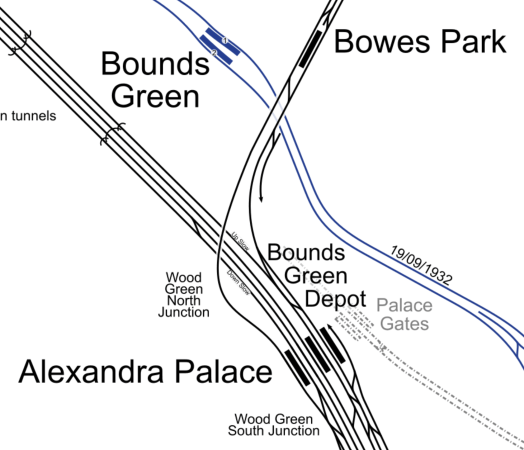
The main expected change would be the creation of a facing crossover at Bowes Park, to enable southbound freight trains to run onto the Down Enfield Viaduct in the up direction, before continuing onwards to the terminal at Ferme Park or accessing the Gospel Oak-Barking Line at Harringay.
This example shows an advantage of digital in-cab signalling.
This map from cartometro, shows the lines between Bowes Park and Alexandra Palace stations.
Freight trains coming from the North regularly take the Hertford Loop Line and arrive in North London at Bowes Park
Currently, they sneak down the Eastern side of the East Coast Main Line and then take a route across London, which probably uses the North London Line.
What is proposed is that with an extra crossover just South of Bowes Park station, freight trains will crossover and take Enfield Viaduct the wrong way to the Western side Alexandra Palace station.
The Enfield Viaduct is the track taken from Alexandra Palace station to Bowes Park station, by trains going to Enfield. It takes a bit of a loop to the West.
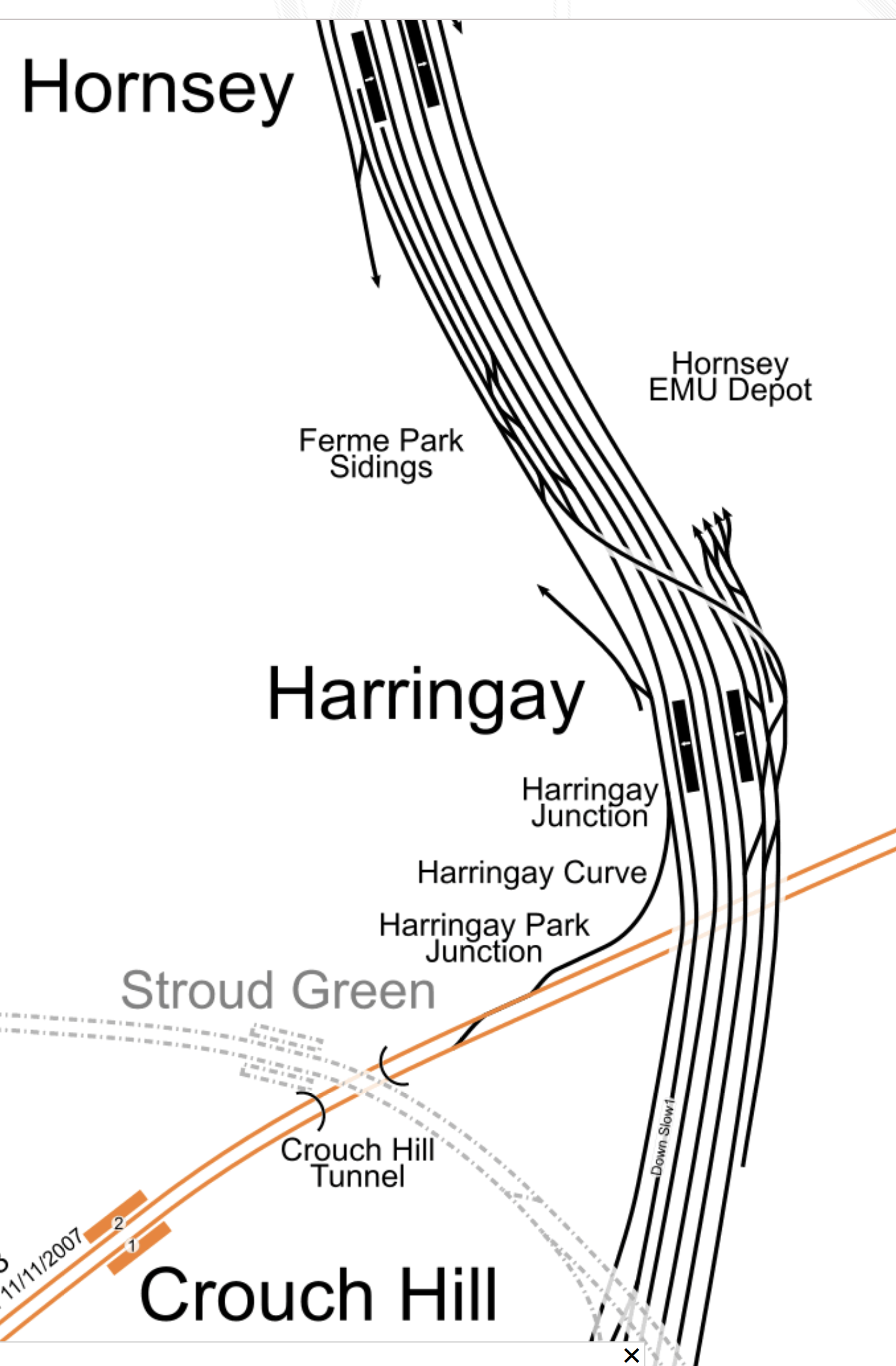
This second map from cartometro, shows the lines South of Alexandra Palace stations.
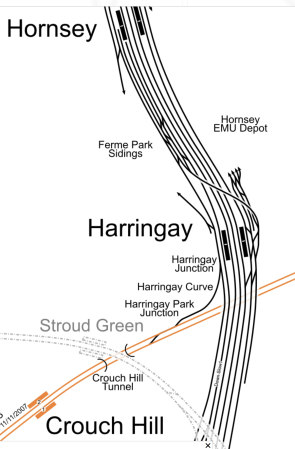
Note.
- Hornsey is the next station to the South of Alexandra Palace.
- The Eastern side of the East Coast Main Line is crowded with maintenance depots for trains.
- The orange line is the Gospel Oak to Barking Line.
By the use of digital signalling a new freight route through North London can been created.
Conclusion
How many other places can this technique be used?
Related Posts
These are related posts about the London Rail Freight Strategy (LRFS).
Decarbonisation Of London’s Freight Routes
Doubling Harlesden Junction
Gauge Improvements Across London
Gospel Oak Speed Increases
Headway Reductions On The Gospel Oak To Barking, North London and West London Lines
Heavy Axle Weight Restrictions
Kensal Green Junction Improvement
Longhedge Junction Speed Increases
Moving The West London Line AC/DC Switchover To Kensington Olympia
Moving The West London Line AC/DC Switchover To Shepherd’s Bush
Nunhead Junction Improvement
Stratford Regulating Point Extension
Will Camden Road Station Get A Third Platform?
Will Clapham Junction Station Get A Platform 0?
June 27, 2021
Posted by AnonW |
Transport/Travel | Alexandra Palace Station, Digital Signalling, East Coast Main Line, Freight, Gospel Oak And Barking Line, London Rail Freight Strategy, North London Line |
15 Comments
London has a rail capacity problem, for both freight and passenger trains.
This report from Network Rail is entitled The London Rail Freight Strategy (LRFS).
One of the secondary recommendations of the report is to increase speed through Gospel Oak.
The report explains it like this.
This proposal would see the current 20mph line speeds through Gospel Oak increased, through an upgrade to the junction immediately to the west of the station. Improving the flow of traffic through this critical flat junction, where the North London Line and Gospel Oak-Barking Line meet, would be of benefit for the wider operations and performance of these orbital routes. Freight trains in particular, which run non-stop through Gospel Oak, using all available routes, would see a notable uplift to how quickly they are able to pass through the area.
This would not only contribute to achieving the fast end-to-end cross-London paths that are a priority for freight but would also reduce the time trains would occupy the junction, increasing performance resilience at Gospel Oak, the impact of which would drive improvement right across the North London Line and Gospel Oak and Barking Line.
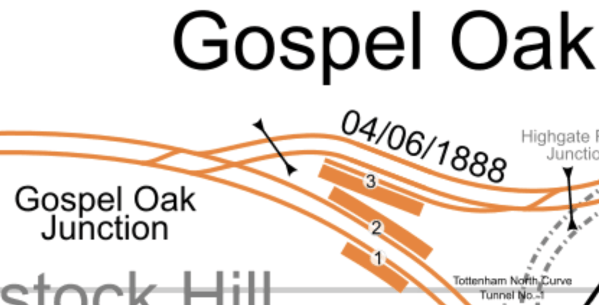
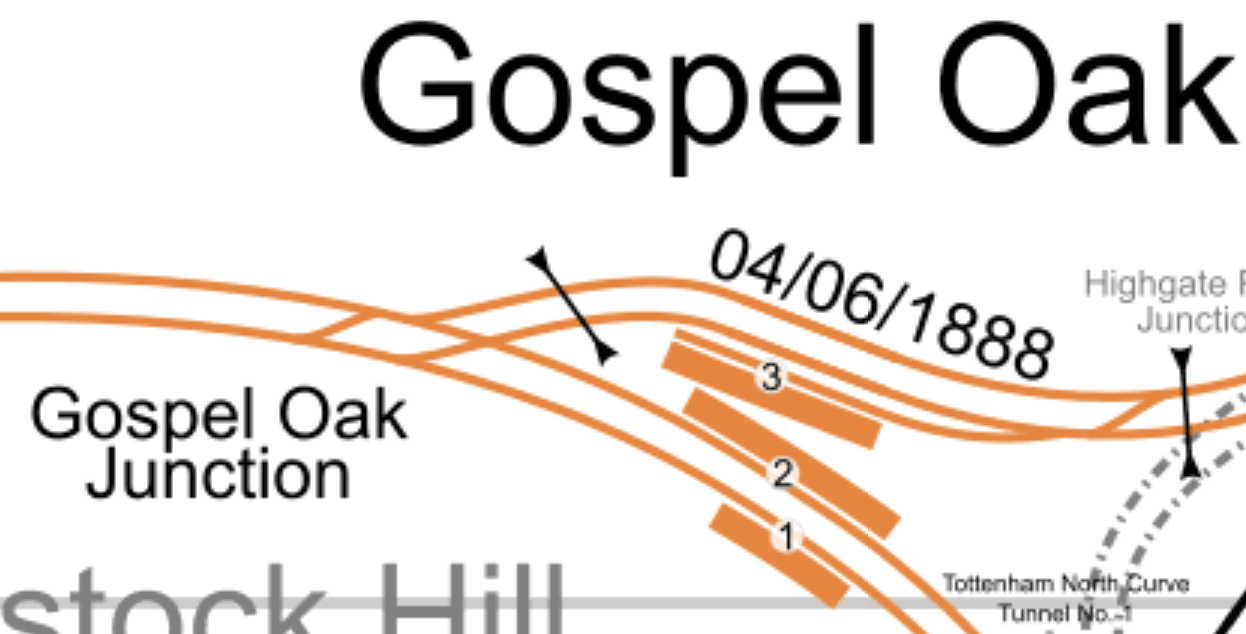
This map from cartometro shows the track layout at Gospel Oak.
Note.
- The double-track North London Line passing through Platforms 1 and 2 at Gospel Oak station.
- The double-track Gospel Oak and Barking Line passing to the North of the station.
- Platform 3 is a West-facing bay platform for services to Barking.
- There is no Westbound connection to Platform 3.
- All tracks in the map are hace 25 KVAC overhead electrification.
The two double-track railways merge west of the station at Gospel Oak junction.
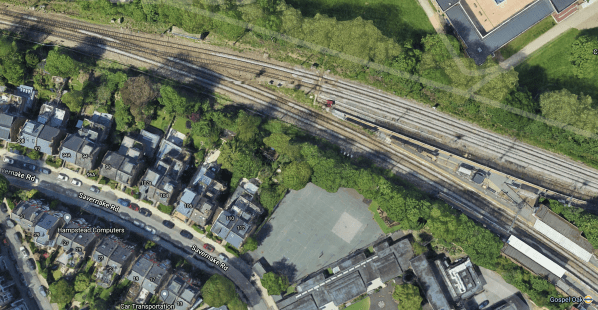
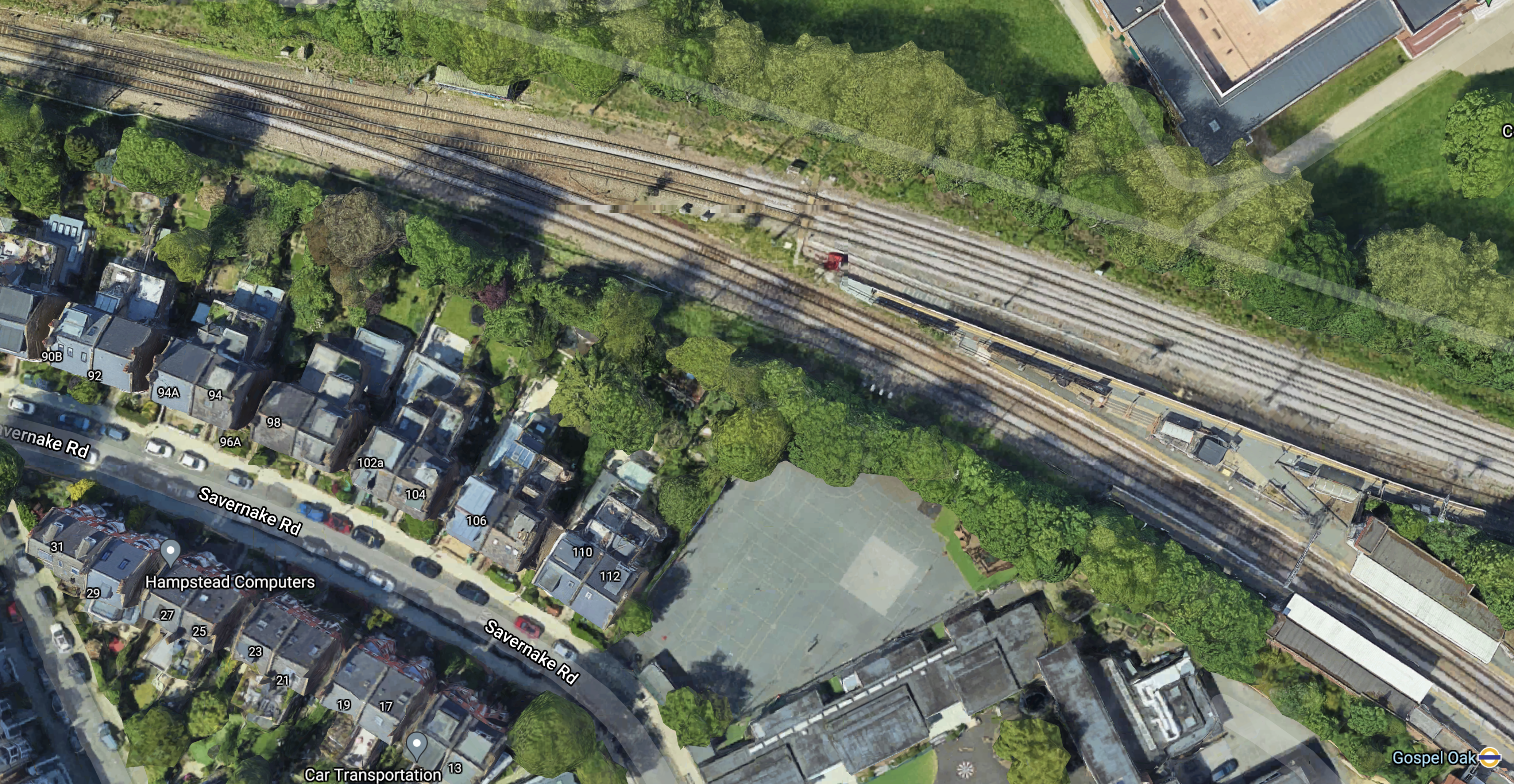
This Google map shows the same area.
Note.
- Gospel Oak junction is in the North-West corner of the map.
- Platform 1 and 2 of Gospel Oak station are in the South-East corner of the map.
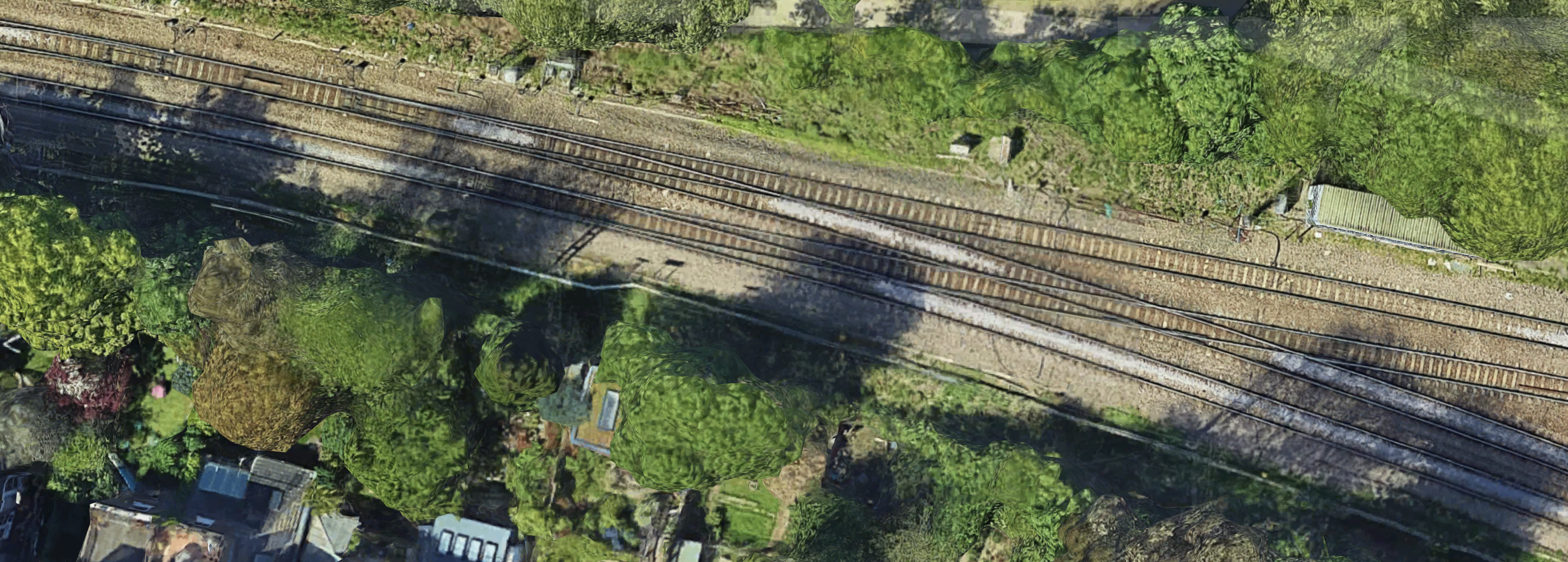
This Google map shows the junction to a larger scale.
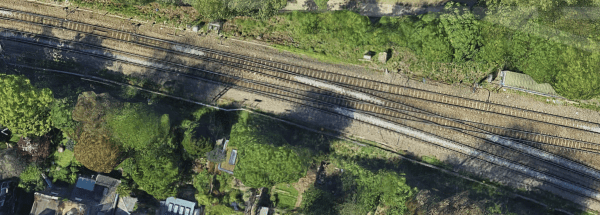
There would appear to be space to the North of the junction for expansion.
It might even be possible to squeeze in another line, so that trains can go straight through at a faster speed.
Conclusion
This looks like another junction, that could be easy to improve on an engineering basis.
But whether the locals will accept it quietly could be another matter.
Related Posts
These are related posts about the London Rail Freight Strategy (LRFS).
Decarbonisation Of London’s Freight Routes
Doubling Harlesden Junction
East Coast Main Line South Bi-Directional Capability
Gauge Improvements Across London
Headway Reductions On The Gospel Oak To Barking, North London and West London Lines
Heavy Axle Weight Restrictions
Kensal Green Junction Improvement
Longhedge Junction Speed Increases
Moving The West London Line AC/DC Switchover To Kensington Olympia
Moving The West London Line AC/DC Switchover To Shepherd’s Bush
Nunhead Junction Improvement
Stratford Regulating Point Extension
Will Camden Road Station Get A Third Platform?
Will Clapham Junction Station Get A Platform 0?
June 27, 2021
Posted by AnonW |
Transport/Travel | Gospel Oak And Barking Line, Gospel Oak Station, London Overground, London Rail Freight Strategy, North London Line |
17 Comments
London has a rail capacity problem, for both freight and passenger trains.
This report from Network Rail is entitled The London Rail Freight Strategy (LRFS).
One of the recommendations of the report is to reduce headway on the Gospel Oak To Barking, North London and West London Lines.It says this about the reducing the headway.
These are improvements on which this strategy is dependent, but are expected to be realised through wider
enhancement programmes, so are not being directly proposed by the LRFS.
Later in the report, this paragraph is expanded.
Signalling enhancements to facilitate consistent 3-minute headways on the three orbital lines where these are not currently feasible will be necessary, if growth akin to the timetable solution identified by the capacity analysis for this study is to be realised.
It is not the role of the LRFS to specify the nature of these upgrades, however it is expected that the required headway reductions are most likely to be achieved in a more manageable and cost-effective way through the deployment of European Train Control System (ETCS) digital signalling.
Currently, in the UK, this type of signalling is working successfully on Thameslink and is currently being rolled out on Crossrail and the Southern section of the East Coast Main Line.
Conclusion
Full digital signalling would appear to be the solution.
But then it is to many capacity problems around the UK rail network.
Related Posts
These are related posts about the London Rail Freight Strategy (LRFS).
Decarbonisation Of London’s Freight Routes
Doubling Harlesden Junction
East Coast Main Line South Bi-Directional Capability
Gauge Improvements Across London
Gospel Oak Speed Increases
Heavy Axle Weight Restrictions
Kensal Green Junction Improvement
Longhedge Junction Speed Increases
Moving The West London Line AC/DC Switchover To Kensington Olympia
Moving The West London Line AC/DC Switchover To Shepherd’s Bush
Nunhead Junction Improvement
Stratford Regulating Point Extension
Will Camden Road Station Get A Third Platform?
Will Clapham Junction Station Get A Platform 0?
June 22, 2021
Posted by AnonW |
Transport/Travel | Crossrail, Digital Signalling, East Coast Main Line, ERTMS, Freight, Gospel Oak And Barking Line, London Rail Freight Strategy, North London Line, Thameslink, West London Line |
18 Comments
The title of this post, is the same as that of this article on the Barking And Dagenham Post.
This is the first two paragraphs.
The largest mobile crane in the country has swung into action to help extend a railway line.
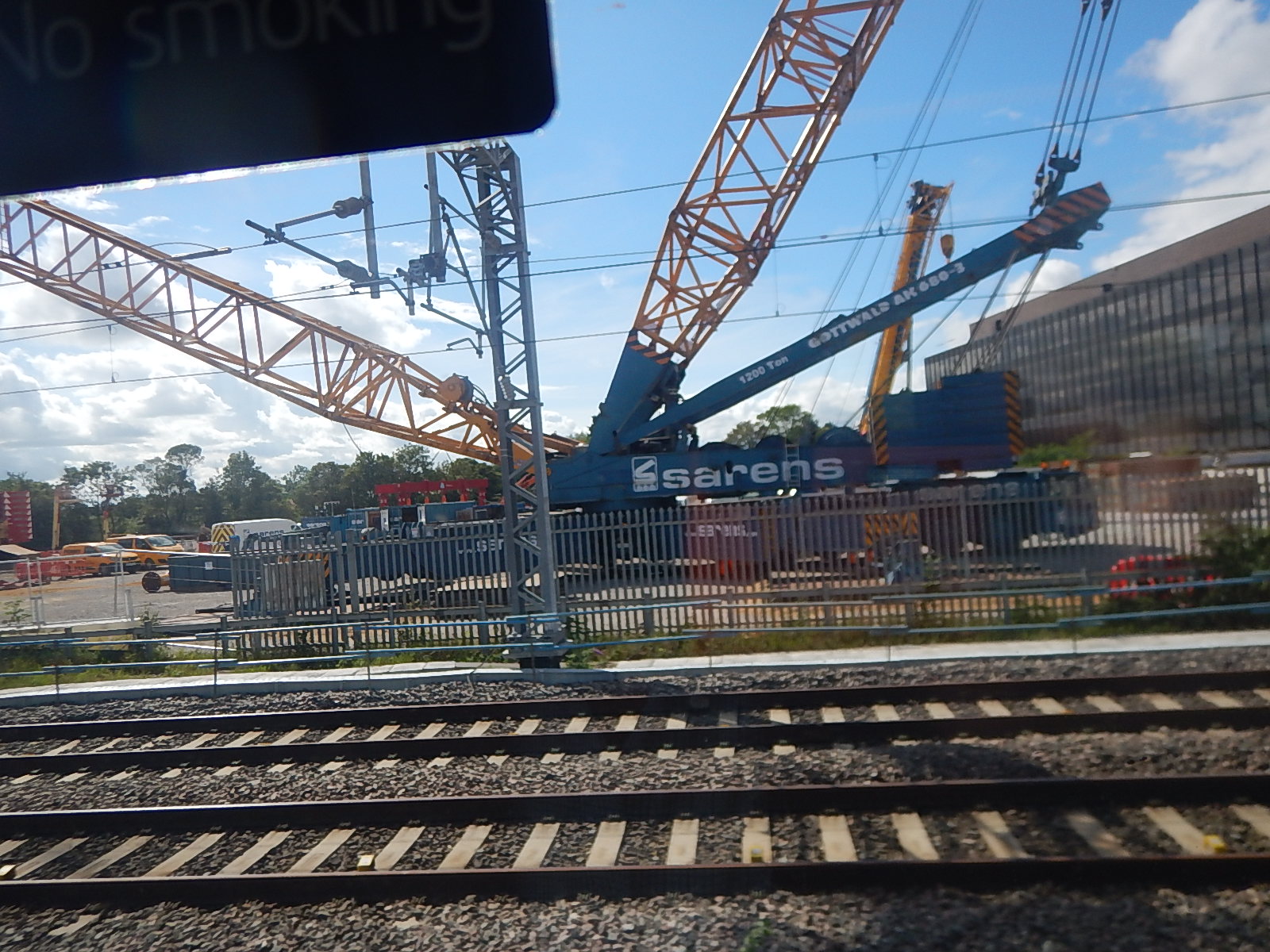
The Gottwald AK680 – which has the capacity to lift 1,200 tonnes – installed steel beams for the remaining viaduct spans as part of the Barking Riverside extension (BRE) project.
This crane certainly seems to get about.
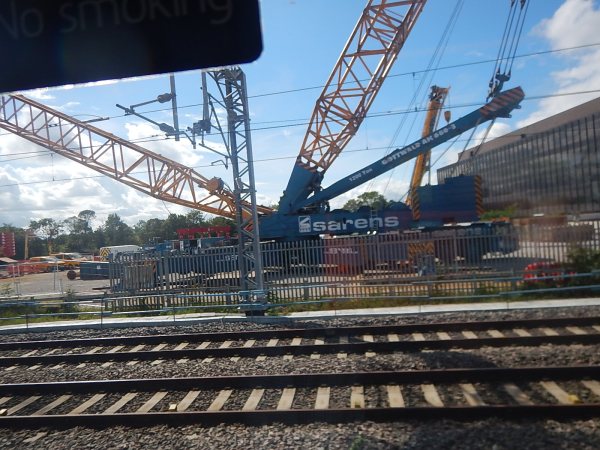
I think this picture shows the same crane in action at Bletchley in August. It was certainly claimed as the UK’s largest mobile crane.
Perhaps we need a rail-mounted version!
I always remember, a North Sea Oil project manager telling me, that as cranes got large it eased and speeded up construction.
This article on Vertikal gives more details of the crane in action.
March 20, 2021
Posted by AnonW |
Transport/Travel | Barking Riverside, Bletchley Viaduct, Construction, Gospel Oak And Barking Line |
1 Comment
The title of this post, is the same as that of this article on Ian Visits.
These are the first two paragraphs.
A sleepy railway station in East London is due to get a lot busier as a large housing development is to be built next to it.
The former Dagenham Stamping Plant car works site has been cleared, and has now been bought by Peabody housing association for development. The initial phase will see 1,550 affordable homes built, supported by an £80 million grant from the Mayor’s Affordable Housing Programme.
There is a lot of housing under construction the area and the c2c lines and the London Overground are being expanded to cope.
But there is still only two trains per hour (tph) through Dagenham Dock and Beam Park, as opposed to the four tph, that will run to Barking Riverside.
The simple solution would be to improve the Fenchurch Street and Grays service.
- Currently it is two tph.
- The service calls at Limehouse, West Ham, Barking, Dagenham Dock, Rainham and Purfleet.
- Renwick Road and Beam Park will be added to this service, when and if, they are built.
It needs to have the same frequency as Gospel Oak to Barking which is four tph.
So how could this frequency increase be provided?
For a start, the bay platform at Grays could probably handle four tph with improvement and the route possibly with some signalling improvements could probably cope.

The bay platform at Grays station would probably need lengthening.
It’s just where do you terminate the trains at the Western end?
Fenchurch Street is probably at capacity, as it handles 8 tph in the Off Peak.
- 4 tph – Shoeburyness
- 2 tph – Southend Central
- 2 tph – Grays
But the station handles up to 20 tph in the Peak.
Could it be that with the installation of full digital ERTMS signalling on this route, that four tph between Fenchurch Street and Grays could run all day?
A Possible Crossrail Branch
Crossrail is a herd of testosterone-loaded elephants in the room, that have been locked up by some very poor decision making from the Mayor and Transport for London.
- If ERTMS signalling is one of the keys to unlocking capacity on the tunnels for Crossrail and Thameslink, could its application to c2c services open up possibilities for serious new services in East London.
- As I said, ERTMS signaling could open up the capacity into Fenchurch Street, but would it also allow Grays to be a terminal for Crossrail?
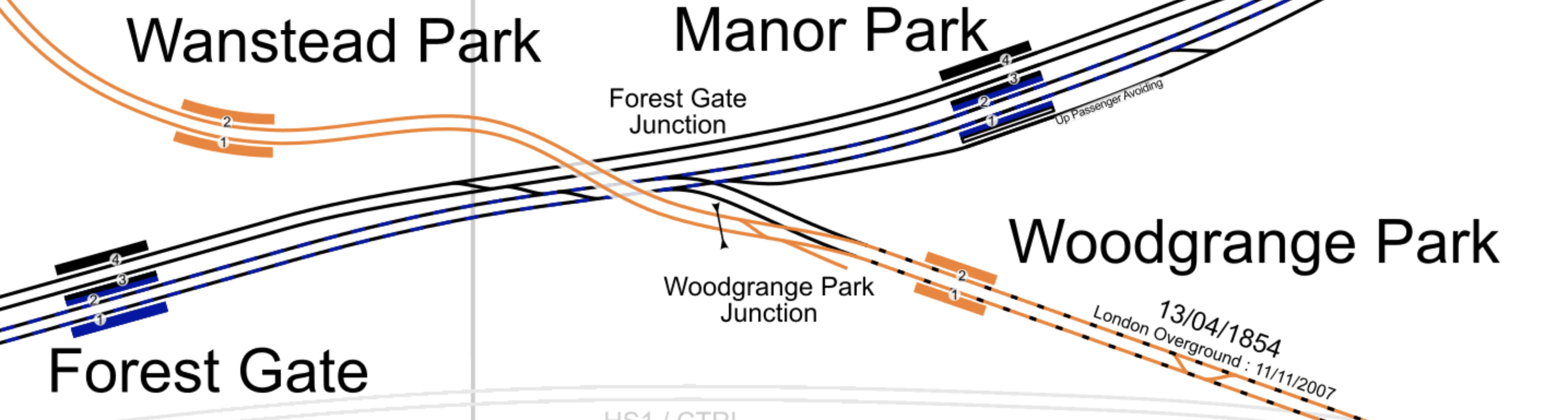
This map from cartometro.com shows Forest Gate Junction, where the Gospel Oak to Barking Line connects to the lines into Stratford and Liverpool Street.

Note.
- The orange tracks are the Gospel Oak to Barking Line (GOBLin).
- Gospel Oak is to the North West and Barking is to the South East.
- The mauve-blue tracks are Crossrail, through Manor Park and Forest Gate stations.
- The black track are the fast lines into Liverpool Street station.
- Forest Gate Junction in the middle is regularly used by c2c trains accessing Liverpool Street, when there are engineering works.
I believe that with ERTMS signalling four or possibly six Crossrail tph could travel between Stratford and Barking stations via Maryland, Forest Gate and Woodgrange Park stations.
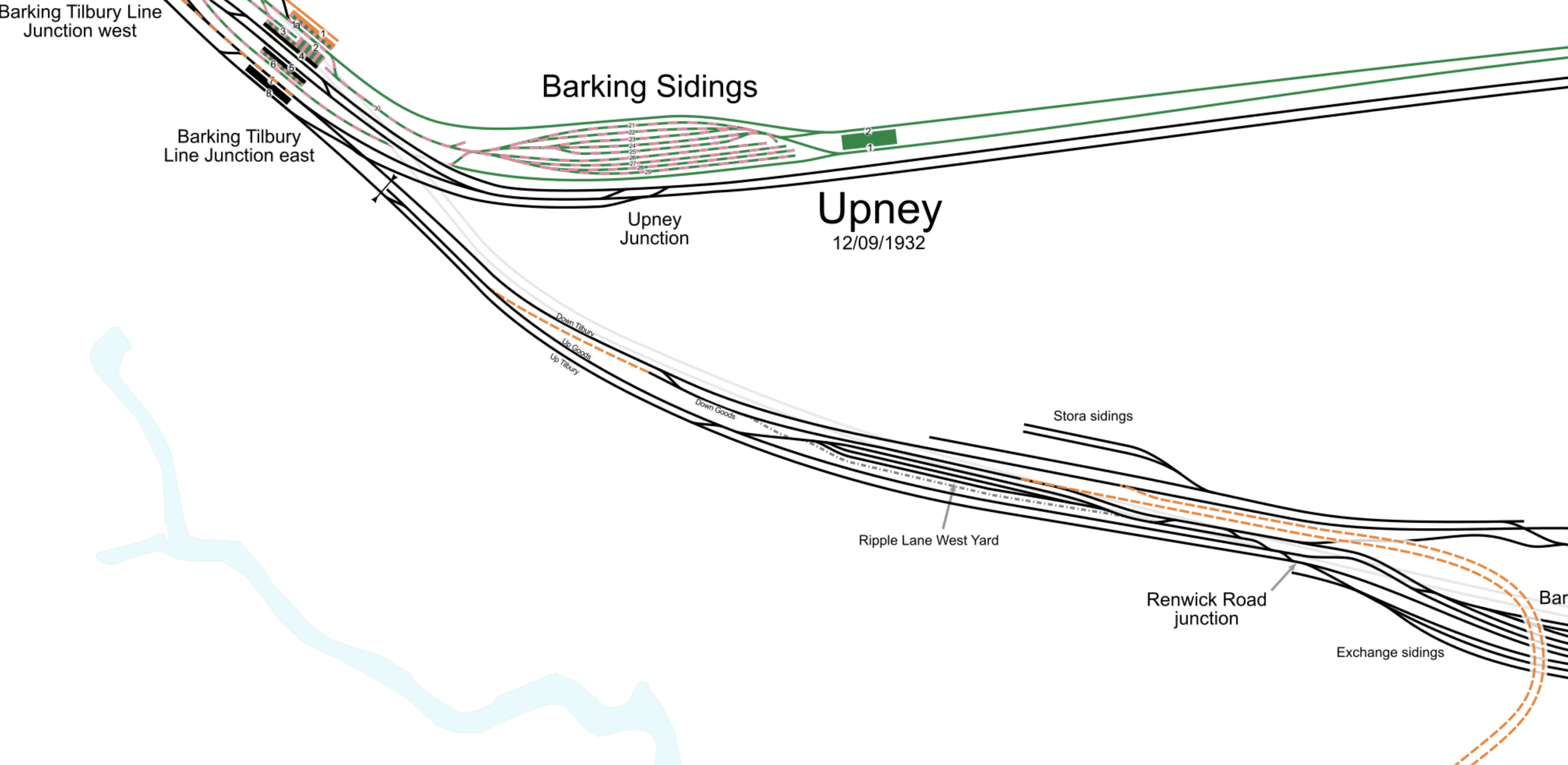
This second map from cartometro.com shows the lines through Barking station.

Note.
- Barking station is in the North-West corner of the map.
- The orange platform on the North side of Barking station is Platform 1, which is the current terminal of the GOBLin.
- After the Goblin is extended to Barking Riverside, the GOBLin services will share Platforms 7 and 8 with the Fenchurch Street to Grays services.
- Platforms 7 and 8 are on the South side of the station and they are connect to the GOBLin lines by a flyover.
- To the East of the station, the GOBLin route is shown in orange.
- The GOBLin turns South to Barking Riverside station, which is by the Thames.
I suspect that there is capacity for more trains.
- There will only be six tph through Platforms 7 and 8 at Barking station.
- There will be four tph over the flyover and through Woodgrange Park station.
I believe that terminating four Crossrail tph at Grays could be an interesting possibility.
March 18, 2021
Posted by AnonW |
Transport/Travel | Barking Riverside Station, Beam Park Station, c2c, Crossrail, ERTMS, Gospel Oak And Barking Line, Grays Station, Housing, Renwick Road Station |
Leave a comment
The title of this post is the same as that of this article on Railnews.
The article tells the story of one of the worst rail cock-ups of recent years.
A rogue wagon on a freight train ripped up four kilometres of the Gospel Oak to Barking Line on the night of the 23rd of January.
And it was only yesterday, that the line fully reopened.
This is the last sentence of the article.
The cost of the repairs and resulting disruption has not been revealed.
Effectively, four kilometres of new railway don’t come cheap!
February 20, 2020
Posted by AnonW |
Transport/Travel | Freight, Gospel Oak And Barking Line, London Overground, Rail Accidents |
2 Comments
The title of this post is the same as rgis article on the Ham and High.
This is the introductory paragraph.
The government has launched an investigation into how a derailed freight train travelled 2.5 miles before the problem was flagged up to the driver.
The article gives some more details.
- The accident happened on Thursday 23rd of January.
- The train derailed near Wanstead Park station.
- The train finally stopped between Leyton Midland Road and Walthamstow Queens Road.
- The train was carrying construction from Barkingspoil to the landfill site at Calvert in Buckinghamshire.
The derailment caused a lot of damage as pictures and this paragraph in the article show.
Across the two and a half mile stretch, there are 39 new pieces of rail – each 216m long – that require replacing, as well as 5,300 concrete sleepers and 900 wooden sleepers.
Work to replace 10,000 tonnes of ballast will need to take place, as well as putting replacement timber into 10 bridges.
At least, as they have just relaid this section of railway for the Gospel Oak to Barking electrification, there will hopefully be no nasty surprises in the rebuilding process.
This map from carto.metro.free,fr shows the track layout between South Tottenham station in the West and Blackhorse Road station in the East.
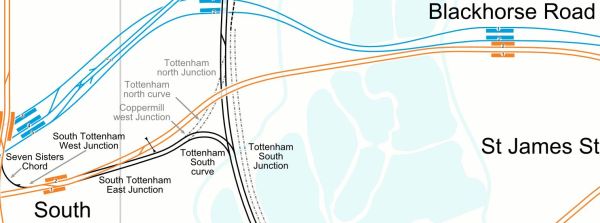
Note the two crossovers either side of South Tottenham station, which are used to reverse the train between the two platforms.
I suspect that London Overground, wish there are crossovers at Blackhorse Road station, so that passengers could use the interchange with the Victoria Line.
But crossovers are expensive can cause operational problems.
At least, there are no crossovers in the section of track destroyed by the freight train.
February 6, 2020
Posted by AnonW |
Transport/Travel | Freight, Gospel Oak And Barking Line, South Tottenham Station |
4 Comments
Most Monday mornings, I go to LEON on Moorgate for breakfast.
I go to that branch, mainly because I can get a proper china mug for my tea and also because a cheery member of staff usually has what I want ready within a minute of my entering the store.
One day, I’ll confuse them by having something different! But then she looks the sort, who enjoys a joke!
To get to Moorgate station, I can take a bus, but I usually go via the Northern City Line from Essex Road station, as it’s quicker in the Peak and drops me in the right side of Moorgate for LEON.
Today, the train was very full and it looked like you’d have had trouble squeezing in any more.
Since the new Class 717 trains have been introduced ridership has grown and the trains are getting more crowded in the Peak. This is despite an 11% increase in capacity, compared to the older Class 313 trains.
Currently, there are the following Off Peak services into Moorgate station.
- Four trains per hour (tph) – Welwyn Garden City
- Four tph – Hertford North, Watton-at-Stone and Stevenage.
There are also extra services in the Peak.
Various improvements and developments will affect the number of passengers going to and from Moorgate.
Improvements To Stevenage Station
Stevenage station is a bottleneck on one leg of the services of the Northern City Line to and from Moorgate station.
An additional platform with full step-free access, is being added to the station and should open this year, to terminate services from Moorgate station.
Currently, services that stop at Stevenage station, that are going North include.
- One tph – LNER to Leeds or Harrogate.
- One tph – LNER to Lincoln or York
- Four tph – Thameslink to Cambridge.
- Two tph – Thameslink to Peterborough.
These will be joined in Autumn 2021 by East Coast Trains to Edinburgh at a frequency of five trains per day.
I suspect a lot of passengers going between the North and Hertfordshire and Cambridge will change at Stevenage, rather than Kings Cross.
The works at Stevenage also give the impression, that they could handle more than the four tph, that run on the route.
Improvements To Highbury & Islington Station
Highbury & Islington station is going to get more escalators and step-free access to the four deep-level platforms at some point and this will surely attract more passengers to use both the Victoria and the Northern City Lines.
Frequency increases are also planned for the North and East London Lines, in the next year.
Will the Northern City Line be able to handle the extra passengers?
A Second Entrance At Walthamstow Central Station
Walthamstow Central station is one of the constraints on even more trains on the ever-welcoming Dear Old Vicky and may have had money allocated for a second entrance with more escalators and much-needed lifts.
As I said with Highbury & Islington station, will the Northern City Line be able to handle the extra passengers?
Rebuilding Of Essex Road Station
I think that Essex Road station could be a good investment for a creative property developer.
- The building has little if any architectural merit.
- The location is convenient on a busy road Junction.
- Large numbers of buses pass the station, but the positioning of bus stops could be improved.
- The station needs step-free access.
- A large number of flats could be built on the site, with good access to the station.
- Car parking is terrible locally.
I could see this station being transformed.
But if it were to be improved with much better access, it would further increase the number of passengers using the services into Moorgate.
The Gospel Oak And Barking Line
If you are going between Barking and the West End, lots of passengers in the Peak seem to change to the Victoria Line at Blackhorse Road station and numbers doing this seems to have increased since the Gospel Oak and Barking Line was electrified and now, the route has double the capacity it had before.
Also are more passengers needing the City walking across at Highbury & Islington station.
It should not be forgotten, that the Gospel Oak and Barking Line is being extended to Barking Riverside with a same platform interchange to c2c’s services to and from Grays.
An increase in frequency between Barking and Gospel Oak is also planned.
Developments on the Gospel Oak to Barking Line will increase the number of passengers going to and from Moorgate station.
Crossrail
Consider.
- The route between Moorgate and Highbury & Islington stations will become an important link between the Victoria Line and Crossrail, as there is no direct connection between the two lines.
- The short route will also link the North London Line to Crossrail.
- I suspect too,that passengers from Hertfordshire will go all the way to Moorgate for Crossrail.
In addition, when Crossrail opens, Moorgate station will be fully step-free with umpteen escalators and lifts.
Will there be enough capacity and services on the Northern City Line?
Conclusion
Rough calculations and my instinct suggest that there will need to be an increase of services into Moorgate station.
Currently, in the morning Peak, twelve tph or a train every five minutes run into Moorgate station.
- This frequency is easily handled in a two platform station.
- Lines with modern signalling on the London Underground can handle up to thirty-six tph in a two-platform station.
- The route is double-track between Moorgate and Alexandra Palace stations, where the route splits into two.
Twenty or more tph could be run on this simple route, with modern signalling.
January 13, 2020
Posted by AnonW |
Food, Transport/Travel | Breakfast, Class 717 Train, Crossrail, Essex Road Station, Gospel Oak And Barking Line, Highbury And Islington Station, Leon Restaurants, Moorgate Station, Northern City Line, Stevenage Station, Victoria Line, Walthamstow Central Station |
Leave a comment
The title of this post, is the same as that of this article on New Civil Engineer.
This seems to be the curse of so many rail and I suspect road and other projects in the UK.
- As it’s a new rail line, this one is not down to British Rail or their predecessors.
- It appears, that it is Thames Water and BT.
- Nothing in the article gives any details of when the utilies were installed.
At least the contractors and the utility owners seem to be getting on with sorting out the problems.
I’ve always felt that in the past, when large projects were undertaken, the builders felt that there was no need to properly document everything, as the team, who did the work, would still be around twenty years in the future, if the project have to be revisited.
Unfortunately, this time, there will be a need for an accurate survey and a redesign.
But at least it is a site with plenty of space.
December 12, 2019
Posted by AnonW |
Transport/Travel | Barking Riverside, Gospel Oak And Barking Line |
1 Comment


 The Anonymous Widower