Doubts Arise About A third Runway At Heathrow
I have always been sceptical about a third runway at Heathrow and put down my thoughts in Will The Third Runway At Heathrow Be Actually Built In The Near Future?.
Media reports are now saying that there should be more consultation, due to the election stopping the publication of updated forecasts for passengers and pollution. The Labour Party also seems to be against the idea.
By the end of 2019, Crossrail and Thameslink will be fully operational and I believe that they will push everybody including politicians, airline boses and other business leaders to seriously rethink their positions. The statements of Willie Walsh; the Chairman of the airline group;IAG seems increasingly sceptical about Heathrow’s third runway.
2019 also marks the date when Gatwick Airport can start to think about developing a second runway.
In Could Thameslink Connect To Heathrow?, I showed that it would be possible to create a high-capacity link between Heathrow and Gatwick via Thameslink.
- The link would connect Gatwick, Heathrow, HS1 and HS2.
- No expensive infrastructure would be needed.
- This link could easily accommodate four trains per hour and possibly double that, when Heathrow rebuilds its terminals to make it a greener airport, more reliant on rail.
It could be in place in 2020.
Conclusion
All of these forces will kick the third runway even further into the future.
HS2’s Depot North Of Crewe
This article on Rail Technology Magazine is entitled Maynard: HS2 will not deliver full potential unless east-west links improved.
The article relates to a debate in the House of Commons, where Paul Maynard, who is the Minister for Rail, reiterated the Gpvernment’s commitment to Northern Powerhouse Rail (NRP), or HS3.
He then went on to say, that the site of the depot in the Crewe area would be at Wimboldsley.
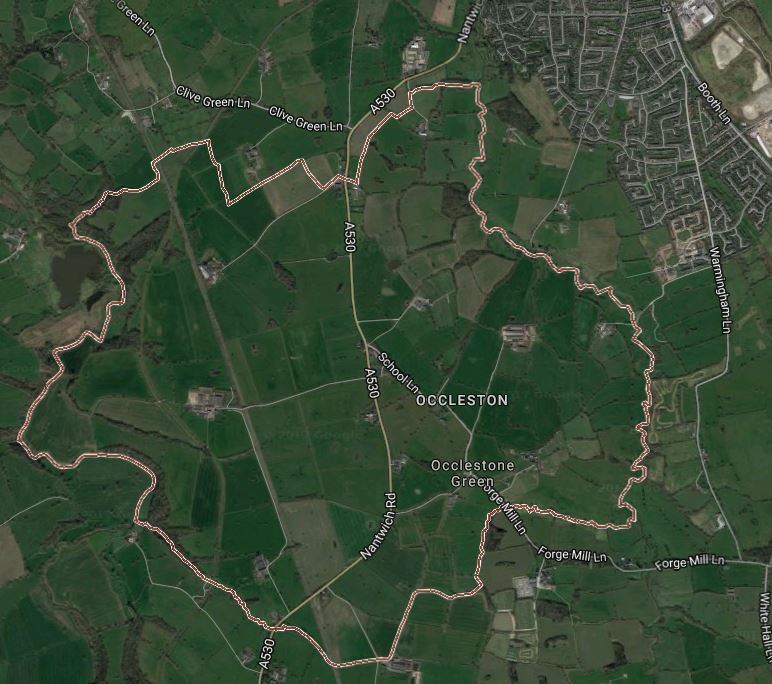
This Google Map shows the area.
Note.
- The line drawing out Wimbordsley
- The West Coast Main Line going North-South across the map.
- Crewe is a few miles to the South.
- The town in the North-East corner is Middlewich.
They certainly seem to have chosen an area which is mainly agricultural land.
17 Tube Stations That Face Chronic Overcrowding If Crossrail 2 Is Stopped
The title of this post is the same as that of an article in today’s Standard.
This is the first two paragraphs.
Hundreds of thousands more Londoners will suffer chronic overcrowding on the Tube if Crossrail 2 does not go ahead, it was claimed today.
Transport for London released a list of 17 Underground stations that could buckle under the strain of too many commuters within a few years.
It then lists the stations.
- Euston
- King’s Cross St. Pancras
- Liverpool Street
- London Bridge
- Victoria
- Waterloo
- Finsbury Park
- Stockwell
- Stratford
- Oxford Circus
- Highbury & Islington
- Clapham Common
- Clapham North
- Clapham South
- Holborn
- Warren Street
- Leicester Square
It then quotes Caroline Pidgeon, who obtained the list, as follows.
Overcrowding on the Underground is already a daily battle, with many passengers facing regular delays to simply get through barriers at stations.
Unless Crossrail 2 is built these delays will increasingly build up until drastic measures are necessary at 17 key Tube stations, not to mention Clapham Junction railway station.
“Planning ahead for Crossrail 2 is not an optional extra for London’s transport network but of vital importance to keep London moving.
She has certainly highlighted a serious problem.
Call For Crossrail 2
Two years ago to the day, I wrote a post called Call For Crossrail 2 in response to a letter in The Times, from a wide cross section of business leaders calling for a start to be made on the line.
In the post, I talked about improving various stations, just by building Crossrail 2, so in the following notes on the list of crowded stations, I will refer to this post several times in the following.
Euston
Euston tube station is a particular problem in that in the next decade or so, the following will or could happen.
- HS2 will arrive at the station.
- Euston main line station will be rebuilt.
- Crossrail 2 will pass under the station.
- A connection will be created to Euston Square station for the Circle and Metropolitan Lines.
- There might even be an extension of the Docklands Light Railway to Euston.
- Step-free access must be added for all platforms.
Hopefully, the rebuilding for whichever comes first of HS2 or Crossrail 2, will make provision for even the most fanciful of expansions.
One Transport for London engineer told me that one of the main reasons for building HS2 and terminating it at Euston, is to be able to sort out the dreadful Euston tube station.
Kings Cross St. Pancras
Kings Cross St. Pancras tube station had a pretty good makeover around the time of the 2012 London Olympics, but it does suffer congestion and travellers have to walk long distances.
The Wikipedia entry for Kings Cross St. Pancras tube station has a section for Crossrail 2. This is said.
Since 1991, a route for a potential Crossrail 2 has been safeguarded, including a connection at King’s Cross St Pancras and Euston, forming the station Euston King’s Cross St Pancras. The proposed scheme would offer a second rail link between King’s Cross and Victoria in addition to the Victoria line. The locations for any new stations on the route will depend on the loading gauge of the final scheme. In the 2007 safeguarded route, the next stations would be Tottenham Court Road and Angel.
There is also a proposal to reopen the closed York Road tube station. In the Wikipedia entry for York Road station under Proposed Reopening, this is said.
One of London’s largest redevelopment projects, King’s Cross Central, began construction in 2008 across the road from the station. Islington council and Transport for London commissioned a study in 2005 to consider the possible reopening of the station. At the same time, however, it was recognised that other transport priorities reduced the likelihood of such a project moving forward in the near future. The site would need extensive overhauls to bring the station up to modern day standards, at a cost estimated at £21 million in 2005. Local political groups have been keen to see the station reopened in order to reduce passenger congestion at King’s Cross St. Pancras and to encourage development in the surrounding community. The Islington Liberal Democrats advocated the reopening of the station in their 2006 local election manifesto, and at least one candidate for the Islington Conservative Party similarly campaigned for the station to be reopened. However, to date, the reopening proposal has not been taken forward.
I wonder if York Road tube station will ever be reopened.
Liverpool Street
The Liverpool Street station complex will be even bigger and busier after Crossrail opens.
The main difference will be that the current Shenfield Metro will now disappear into the ground at Stratford and go under Central London to Heathrow and Reading.
Crossrail 2 will effectively channel the Lea Valley services, that current go into Liverpool Street station under London to emerge in the Wimbledon area.
Effectively, Crossrail and Crossrail 2 major effect on Liverpool Street station are to free up capacity in both tracks and platforms, thuis allowing more longer distance services to use the station.
London Bridge
London Bridge station is being rebuilt and expanded, but little seems to be planned for London Bridge tube station to cope with more passengers.
In Call For Crossrail 2, I said this about Crossrail 2 and the Northern Line.
Crossrail 2 will have interchanges with the Northern Line at Angel, Kings Cross St. Pancras, Euston, Tottenham Court Road, Tooting Broadway and possibly Clapham Junction. So it looks like that Crossrail 2 will certainly make journeys easier for users of the Northern Line.
This should mean that travellers on the Northern Line will be able to avoid a congested London Bridge tube station.
Victoria
Victoria tube station is being extended and rebuilt, which should result in sufficient capacity for more than a few years.
In Call For Crossrail 2, I said this about Crossrail 2 and the Victoria Line.
Crossrail 2 will effectively by-pass the central part of the Victoria Line as the two lines connect at Tottenham Hale, Seven Sisters, Kings Cross, Euston and Victoria.
This should take some of the pressure from Victoria tube station.
Waterloo
Waterloo tube station is a very busy tube station, as it has to cope with all the passengers using Waterloo station.
Crossrail 2 will allow passengers to bypass Waterloo, when travelling to and from Central London.
However, three major improvements will be delivered this year.
- The old Eurostar platforms are being brought back into use.
- Extra capacity is being added to the Underground station.
- I also think that when they have completed the improvements at the Bank end of the Waterloo and City Line.
- Will improvements follow at the Waterloo end?
I think Waterloo shouldn’t be judged until the current round of work is completed.
Finsbury Park
Finsbury Park station is a station that suffered badly when the Victoria Line was tunnelled through in the 1960s.
Lifts are being installed, but extra services will be added.
- Thameslink will call regularly at the station.
- The services on the Northern City Line will become the Great Northern Metro with an increased frequency.
Crossrail 2 will provide relief for Finsbury Park, as it provides a by-pass for the Victoria Line.
But the station needs to have quite a bit of rebuilding.
Stockwell
Stockwell tube station is where the Victoria and Northern Lines meet South of Victoria.
This map from carto.metro.free.fr shows the lines at Stockwell station.
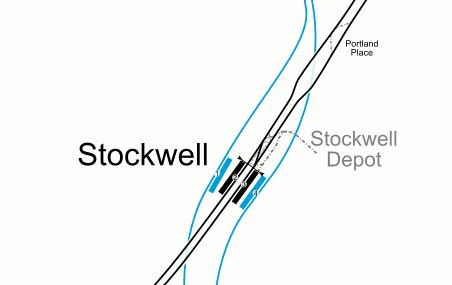
I’m not sure how Crossrail 2 helps here, but I suspect Transport for London hope that the new line will divert passengers away from Stockwell.
Stratford
Stratford station is another station that will be partially bypassed by Crossrail 2.
I do think that after Crossrail opens, that changes will be made at Stratford station to perhaps move some Liverpool Street services to Stansted and Cambridge.
This would bring more services to some not very busy platforms.
In West Anglia Route Improvement – The High Meads Loop, I described how it might all work.
This map from carto.metro.free.fr shows the lines in this area.
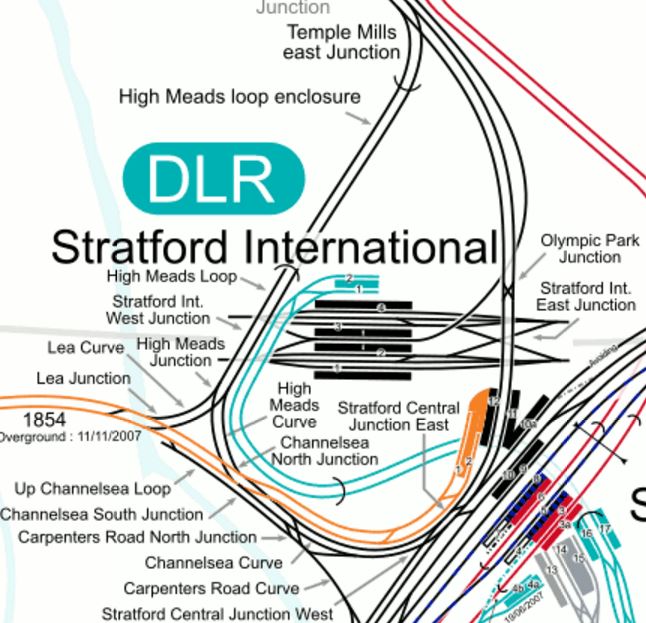
Trains from Cambridge and Stansted would arrive at Temple Mills East Junction and would go round the High Meads Loop dropping and picking up passengers in Platforms 11 and 12 bwfore returning North.
An extra platform could even be added to serve services in Stratford International station.
The tunnels under the platforms at Stratford station would probably need improvement, but who knows how Eastenders will duck and dive after Crossrail opens.
As an example, passengers from Shenfield to Canary Wharf will probably use the cross-platform change at Whitechapel station, rather than pick up the Jubilee Line or the DLR at Stratford.
Oxford Circus
Oxford Circus tube station has needed improvement for years.
Crossrail will give some relief, as there will be new additional entrances to Tottenham Court Road and Bond Street stations closer to Oxford Circus.
I did look at what might happen in What Will The Elizabeth Line Do For Oxford Street?.
I came to this conclusion about Crossrail 2 and Oxford Street.
Crossrail 2 has just one interchange in the Oxford Street area at Tottenham Court Road station.
I would be very surprised in that in the massive rebuilding of the current station for Crossrail, that provision hasn’t been made to connect to Crossrail 2.
There have been surface issues around the station concerned with Crossrail 2, but given good planning of the project, I feel that the building of Crossrail 2 would only effect the area in a similar way to the replacement of a major block on Oxford Street.
Crossrail 2 will have two major effects.
- It will bring large numbers of visitors to the Oxford Street area.
- Just as Crossrail and the Central Line will work as a high-capacity pair, it will work closely with the Victoria Line to relieve that line.
This leads me to the conclusion, that the wider Oxford Street area needs to be and will be pedestrianised.
In some ways preparation for the pedestrianisation has already started by reorganising the buses.
Oxford Circus tube station is also high on Transport for London’s improvement list.
This map from carto.metro,free.fr shows the lines through the station.
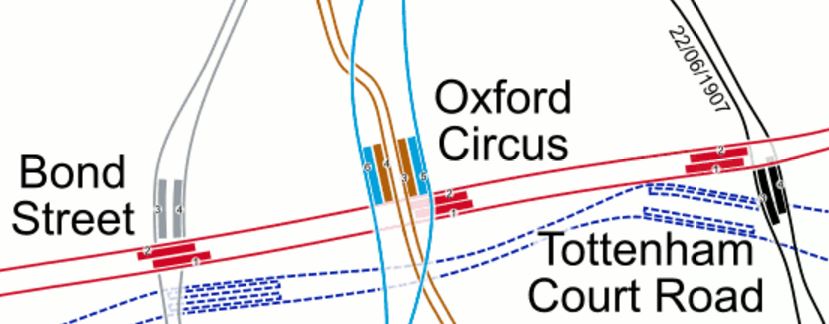
I suspect that if developers were interested in rebuilding any of the buildings on the South side of Oxford Street or perhaps even around the BBC to the North, that there could be arm-twisting and deal-making to sneak new entrances into Oxford Circus tube station.
Highbury & Islington
Highbury & Islington station, is one of my local ones and it is getting some much-needed improvement.
- The Northern City Line will be getting frequent new Class 717 trains to create the Great Northern Metro.
- Highbury Corner will be remodelled to improve pedestrian access to the station.
- Bus and taxi access is being improved..
But nothing has been announced about improving the chronic access to the two deep-level lines at the station.
Speaking to staff at the station, they feel that a solution is possible, using the second entrance on the other side of the road.
In some ways the Great Northern Metro with its cross-platform interchange with the Victoria Line could be the saviour of this station, as it gives direct access to the City and to Crossrail at Moorgate station.
One of London’s forgotten lines could be riding to the rescue.
Clapham Common
Clapham Common tube station is one of my least favourite. This picture shows why.
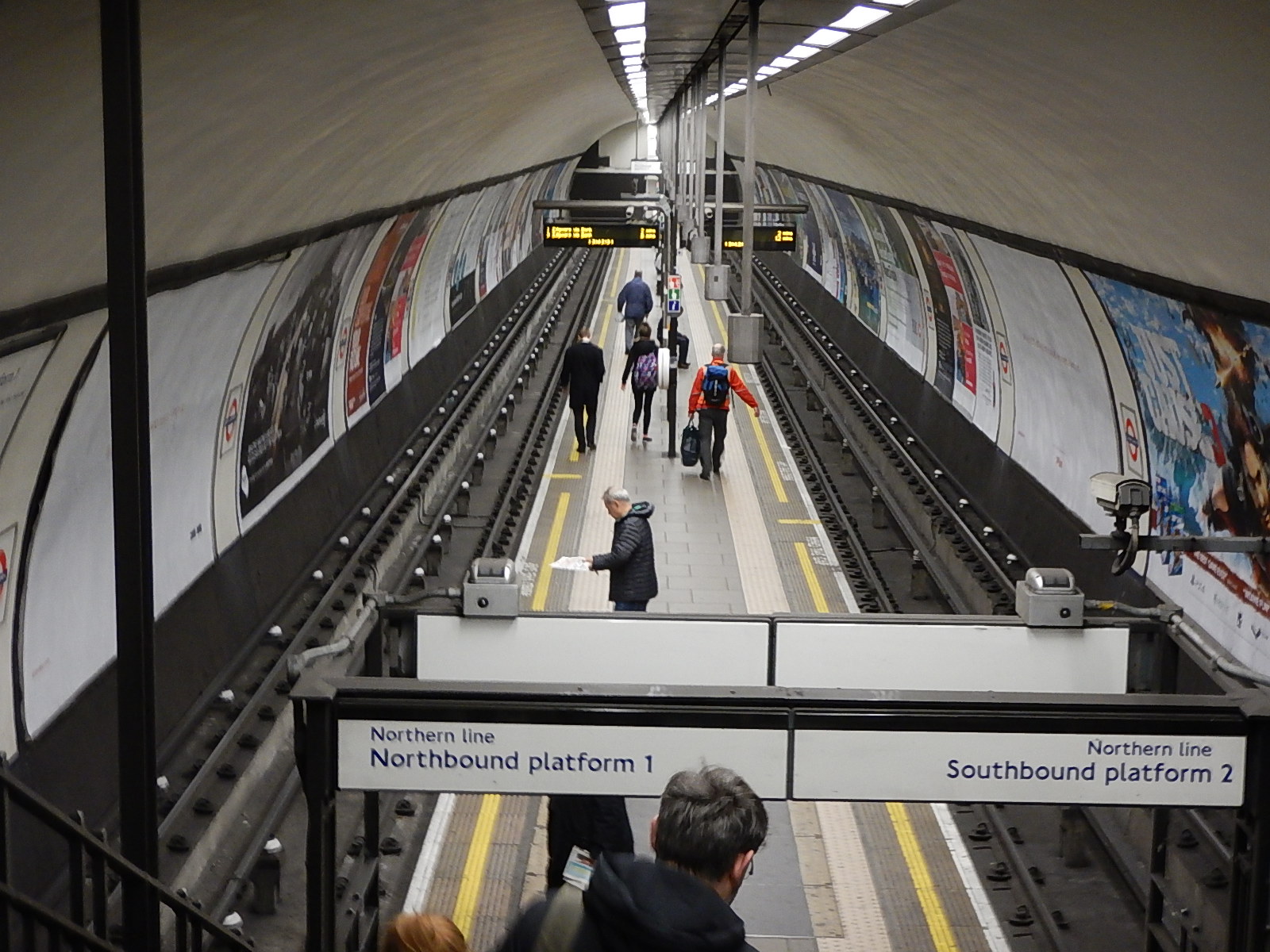
It’s downright dangerous now, so when the Northern Line frequency is increased will the station cope?
Clapham North
Clapham North tube station is another dangerous island platform.
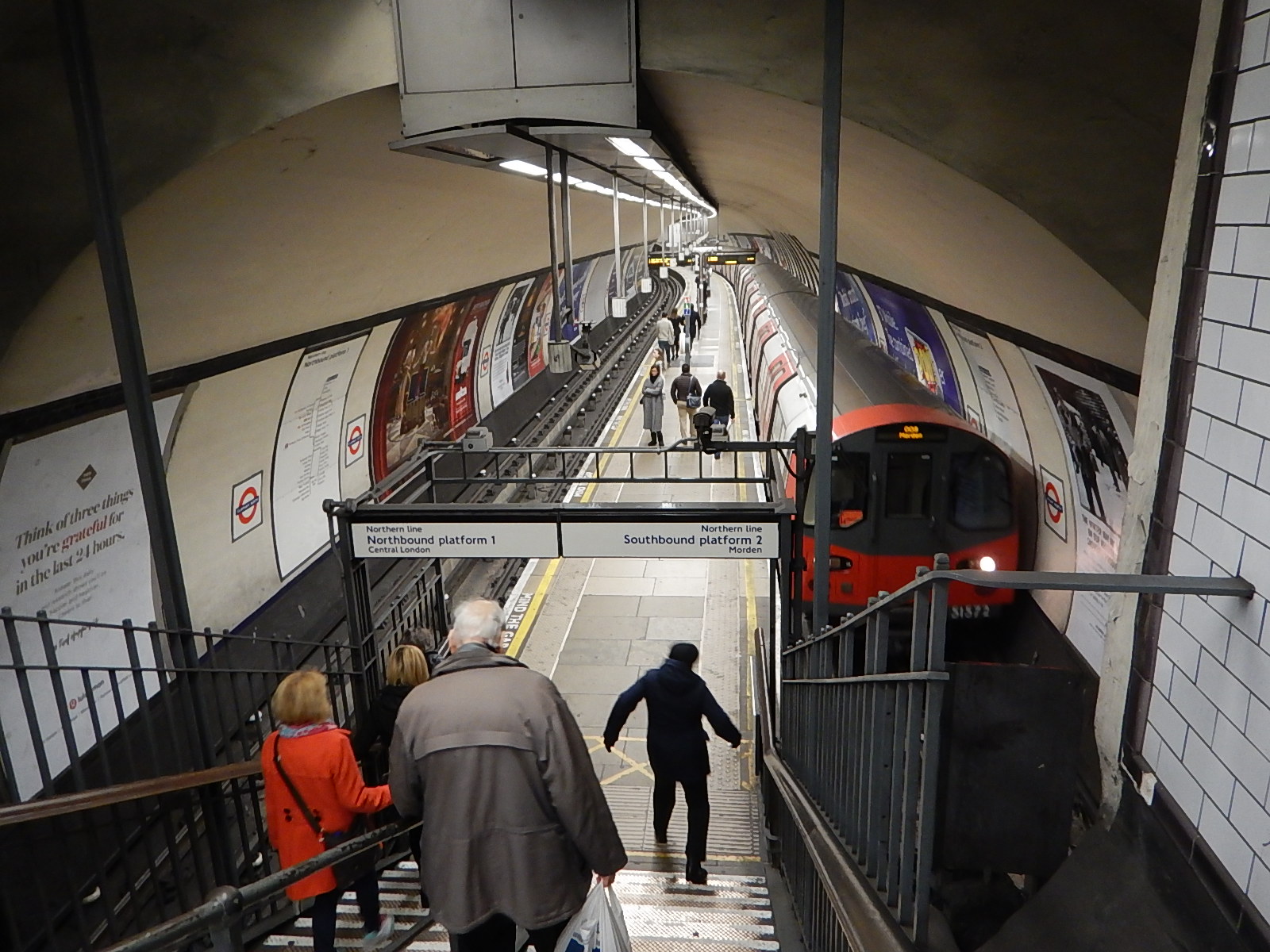
But at least the station has escalators.
In A Journey Round The Clapham Stations, a post I wrote in December 2015, I said this.
Having seen Clapham North and Clapham Common stations today, I do wonder if a diversion could be dug as at Angel, Bank and London Bridge, to create safe new stations. This new tunnel could surely be part of the works to add step-free access to one or both stations and connect the tunnels to Clapham High Street station.
What with the Northern Line Extension to Battersea, the rebuilding of Bank and Camden Town stations and all the resignalling of the past few years, the Northern Line could at last be fulfilling its potential.
This could go a long way to sorting the problem of the Clapham stations.
Clapham South
Clapham South tube station is not as bad as the other two Clapham stations discussed earlier.
Crossrail 2 may reduce the level of overcrowding on the Northern Line trains through the three Clapham stations, as passengers could change at Balham or Tooting Broadway stations to and from the new high-capacity line.
However, nothing short of some serious building work will solve the island platform problems at Clapham Common and Clapham North stations.
Holborn
Holborn tube station is very busy, but is one that could benefit from Crossrail, due to that line’s relationship with the Cerntral Line.
Crossrail 2 will certainly benefit the station, as it will relieve the pressure on the Piccadilly Line.
But Transport for London have published plans to add a second entrance and full step-free access. This is a 3-Dview of the plans.

Note the second entrance will be in Procter Street.
The only problem is that it could be 2021 before a decision is made.
However as a Piccadilly Line station, Holborn will benefit from the New Tube For London, before the upgrade.
Warren Street
Warren Street tube station is another Central London station on the Victoria Line, that could benefit from Crossrail 2’s duplication of the Victoria Line.
Leicester Square
Leicester Square tube station is just one stop on the Northern Line from the major new interchange of Tottenham Court Road station, which will be served by both Crossrail and Crossrail 2.
The station has needed more capacity since I first used it in the 1950s.
It needs step-free access.
This map from carto.metro.free.fr shows the lines around Leicester Square station.
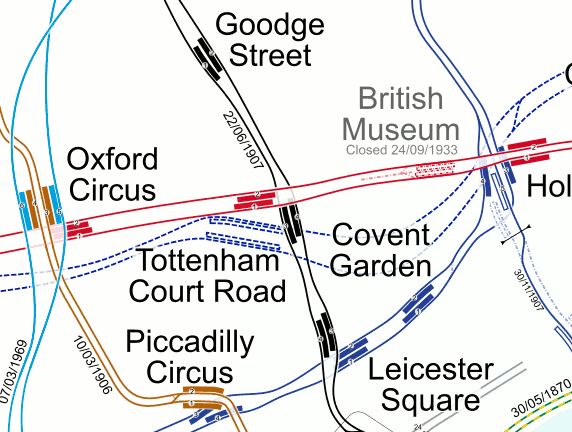
There is quite a tight knot of stations, of which only Tottenham Court Road has both escalators and lifts, although Goodge Street and Covent Garden have lifts only.
Leicester Square is an unusual station in that both the Northern and Piccadilly Lines are accessed by short passages and a short staircase from a fair-sized lobby at the bottom of a long set of escalators.
Clapham Junction
Clapham Junction station is the only non-Underground station in the seventeen stations named, where overcrowding could become chronic if Crossrail 2 is not built.
It is the busiest station by number of trains in Europe, so it must be difficult to keep on top of increasing numbers of passengers.
In the Wikipedia entry for the station under Future Proposals, this is said.
In 2007 the alignment of one of the two variants of Crossrail 2, that via the station rather than Putney and Wimbledon, was safeguarded. The Department for Transport and Transport for London continue to discuss proposal for a Clapham Junction Northern Line extension and its London Underground alignment has been legally reserved through Battersea Park, and would connect Clapham Junction to the London Underground for the first time.
Government and Network Rail funding for in the early 2010s of £50 million of improvements was granted. This comprised an upgrade to the main interchange: new entrances and more retail.
Surely something needs to be done, if Crossrail 2 is not built.
My proposals would include.
- Developing the West London Line services.
- Extending the Northern Line from Battersea Power Station station.
- Improving the frequency of trains into Waterloo.
- Make the station subway step-free.
There may be a need for more platforms, but the London Overground found this difficult.
This map from carto.metro.free.fr shows the platforms in the station.
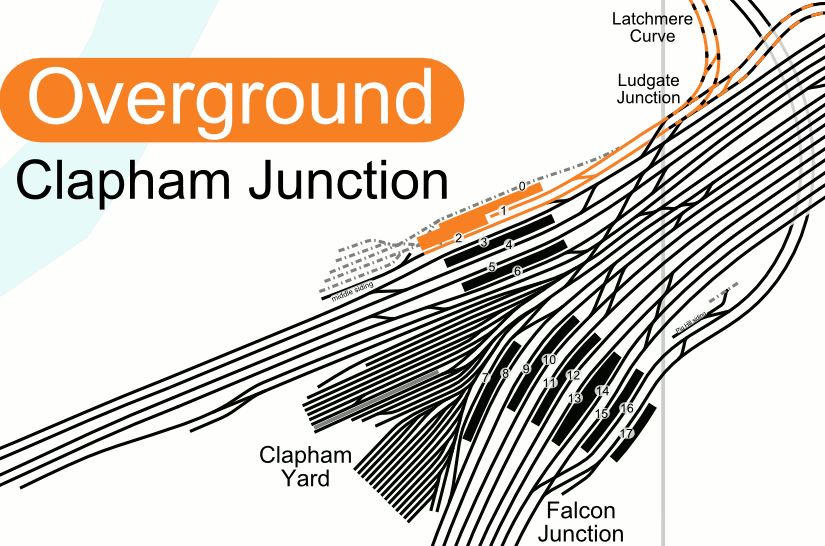
Simple it isn’t!
Conclusions
It surprised me how many of these stations will need substantial building work to cure the overcrowding.
Note.
- Every Victoria Line station between Oxford Circus and Finsbury Park is on the list.
- Four Northern Line stations between Stockwell to Clapham South is on the list.
- I think this shows how the designers of the Northern and Victoria Lines didn’t expect the traffic the lines now handle.
But overall, I think it shows how when you design a station, you don’t cut corners.
I also think to blame all these problems on the uncertainty about Crossrail 2, is probably a bit strong.
Consider.
- Liverpool Street will probably have enough capacity when Crossrail opens, especially as the station will incorporate Moorgate and be substantially step-free.
- The new London Bridge effectively adds high-frequency rail lines to Blackfriars, Cannon Street, Charing Cross and St. Pancras and when Thameslink and Southeastern are fully developed, the station will cope.
- Victoria shouldn’t be judged until the current upgrade is complete.
- Waterloo shouldn’t be judged until the current upgrade is complete.
- Finsbury Park shouldn’t be judged until the current upgrade is complete.
- Stratford will probably have enough capacity when Crossrail opens, especially as the station is substantially step-free.
- Oxford Circus should see improvement when Crossrail opens, especially as there’ll be new step-free entrances to Tottenham Court Road and Bond Street, that will be closer to Oxford Circus, than the current stations.
- Highbury & Islington should see marginal improvement, when the Northern City Line is updated.
However, nothing short of substantial construction will sort Euston, Clapham Common, Clapham North, Holborn, Leicester Square and Clapham Junction.
Simon Jenkins Questions Southern HS2 Terminal
Simon Jenkins in the Standard has a piece today entitled It’s Not Too Late To Make HS2 Somehow Work For London, by proposing even at this late stage the Southern terminal of HS2 be moved from Euston station to Old Oak Common station.
He makes these points against choosing Euston.
- HS2 has never had many friends among politicians, railway buffs or think-tanks.
- Serious questions must be asked about HS2’s most costly and controversial feature, the line’s route into Euston from its last stop at Old Oak Common in west London.
- Euston is London’s worst station, with the worst connections.
- The new Euston will need a costly new tunnel under Primrose Hill, incidentally wiping out hundreds of houses.
- It will claim seven of Virgin’s platforms at Euston, thus reducing station capacity.
- For some time, smart money in HS2 circles has been on the line stopping at Old Oak Common, at least “temporarily”
- Successive plans for a new station have been submitted to Camden council and then withdrawn.
- Either way, choosing Euston will mean a decade of chaos.
Against these points he says this in favour of Old Oak Common station.
Meanwhile, a terminus at Old Oak Common is plausible. The old Great Western Railway depot and marshalling yard has become London’s largest regeneration area since Canary Wharf. Its acres of tracks include lines to Paddington, Euston and Heathrow, as well as stations on Crossrail and the Central and Bakerloo lines. The site is near the North Circular and the M40, and is within spitting distance of the M1 and M4. Passengers on HS2 heading for the City would find it more convenient to join Crossrail at Old Oak Common, rather than trundle their bags down crammed access tunnels at Euston.
He makes strong arguments and personally, I would not be against what he says, as getting to Old Oak Common station will be easy for me on the North London Line.
But once Crossrail 2 is built, then Euston will be just two stops away from an enlarged Dalston station at the end of my road.
Conclusion
I can’t lose on house prices!
Capacity Crunch At Chester – HS2
The Capacity Crunch At Chester article in the July 2017 Edition of Modern Railways didn’t say much about HS2.
This is said about HS2 services and North Wales.
There are aspirations in North Wales for additional services to Crewe by 2027, when HS2 is due to begin operating between London and Crewe.
This is said about Liverpool and Chester and HS2.
Liverpool City Region’s rail strategy envisages Chester-Crewe electrification enabling Merseyrail services to Crewe, connecting East Wirral and Ellesmere Port to HS2.
And then there is The Constellation Partnership.
This is a massive project to take advantage of the opportunities of Crewe being just 55 minutes away from London.
This is their mission statement.
This is a boundary breaking partnership between two Local Enterprise Partnerships (LEP) and seven Local Authorities, with strong Ministerial backing from Government, and a unified fast-track approach to plan-led economic development, making it all the more powerful an investment proposition.
These partners share a single vision – a single economic footprint creating a coherent investment market boosted by the international investment magnet of High Speed Rail connectivity. This is an unbeatable growth opportunity for investors.
With powerful Government backing, the partnership’s ambition is to deliver 100,000 new homes and 120,000 new jobs by 2040.
The partners range from Stafford in the South to Warrington in the North and from Stoke-on-Trent in the East to Chester in the West.
Liverpool To Crewe Via Chester
Merseyrail’s new Stadler FLIRTs are being designed, so that they can eventually run on both 750 VDC third-rail and 25 KVAC overhead electrification, so if Crewe to Chester is electrified, Liverpool will get its wish of direct services from East Wirral and Ellesmere Port to Crewe.
Chester To Crewe
If the line is electrified, which I feel will happen, Chester to Crewe probably needs a service of four trains per hour (tph), to take passengers to HS2.
Two of these services will probably go to Liverpool and the other two to North Wales.
But because of the connectivity at Chester, services could also come from Shrewsbury or Wrexham.
Conclusion
Don’t underestimate the effects HS2 will have on trains in the Mersey Dee area.
Birmingham Airport Mulls Plan For Terminal Inside HS2 Station
This is the title of an article in Construction News.
This Google Map shows Birmingham Airport, the current Birmingham International station, the NEC, with the M42 Motorway going North-South down the Eastern side.
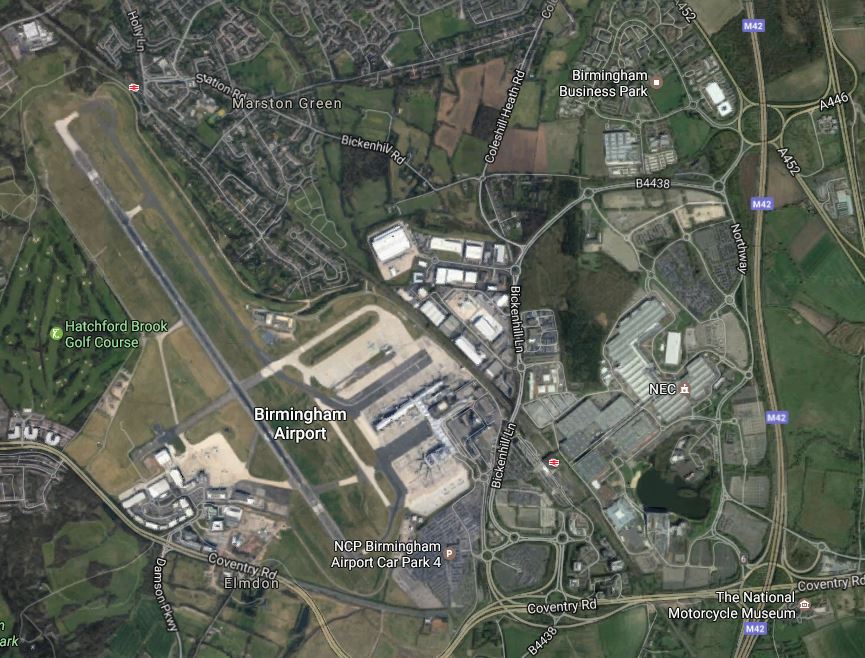
Currently, it is planned that the Birmingham Interchange station for HS2, would be on the other side of the M42 to the NEC.
Surely, the Construction News headline is indicating that something better can be done.
In an ideal world, Birmingham Airport would have one station for HS2, West Coast Main Line and local train and tram services, with a step-free lift/escalator connection between all platforms and both Departures and Arrivals at the Airport.
Borders Railway Extension Prospects Studied
This is the title of a news item on the BBC web site.
This is the first two paragraphs.
A new study is to look at the possibility of extending the Borders Railway beyond Tweedbank to Carlisle.
Transport Scotland has announced it intends to award the contract to look at wider transport issues across the south of the country to Jacobs UK Ltd.
I have this belief, that it would be in everybody’s interest to see Carlisle developed as an interchange between all the lines meeting in the city.
In September 2015, I wrote If Manchester Victoria And Birmingham New Street Were The First Two Courses, Is Carlisle The Third?, which details how Network Rail are spending £14.7million to improve Carlisle station.
Rail Services From Carlisle
Carlisle has its fair share of touristic rail lines in addition to the West Coast Main Line between Glasgow and the South.
- Barrow-in-Furness via the Cumbrian Coast Line
- Glasgow via the Glasgow South Western Line.
- Leeds via the Settle to Carlisle
- Newcastle via the Tyne Valley Line
The Settle and Carlisle has recently been rebuilt and Northern are providing better services on all the English routes, they service.
What is missing is a connection to Edinburgh via the Borders Railway!
What would it do for Carlisle’s position as a tourist destination to have a connection to the Borders and the Scottish Capital?
HS2
In any discussion of rail services North of London, HS2 always makes an appearance. I reckon that the journey time from London to Carlisle will drop by at least thirty minutes, so will be under three hours.
Conclusion
I come to the conclusion, that extending the Borders Railway to Carlisle is not solely a Scottish project, but an English one as well!
HS2 Potential To Northern Connectivity Not To Be Underestimated, Says Percy
This is the title of an article in Rail Technology Magazine.
Rail and road connectivity is not a simple matter.
Although there is a need for East-West routes across the North, there is also the need for better High Speed Rail connections between pairs of cities like.
- Newcastle and Leeds
- Leeds and Nottingham
- Sheffield and Nottingham
- Birmingham and Manchester
- Leeds and Sheffield
- Birmingham and Leeds.
- Birmingham and Preston
All these connections will be provided by HS2.
Of the other major links that are needed.
- Manchester and Sheffield
- Manchester and Leeds
- Blackpool and Leeds
- Leeds and Hull
- Liverpool and Manchester
The first three are very difficult because of the terrain.
Because Leeds has good High Speed Rail connectivity to the cities East of the Pennines via HS2, the Leeds-Manchester route is probably the most important.
As High Speed Rail is a long term project, it will tend to grow, where the returns and needs are greatest.
Extending The Docklands Light Railway West From Bank Station
Two possible routes have been proposed foe extending the Docklands Light Railway to the West
Whether either is worth developing, I don’t know.
But consider.
- The Thameslink Programme will improve access between London Bridge and Charing Cross stations, which could take pressure off the Jubilee Line.
- The Thameslink Programme will improve Southeastern services into Cannon Street and Charing Cross stations.
- Charing Cross station has a couple of spare platforms, that some would like to re-use.
- Euston and St. Pancras stations have bad access to Canary Wharf and South East London.
- The Bakerloo Line Extension has been given the green light.
- Crossrail connects Canary Wharf to Bond Strreet, Heathrow, Liverpool Street and Paddington.
But the big issue, is what happens about Crossrail 2.
I feel that the more likely extension to the West is to go from Bank to Euston via City Thameslink and Holborn and/or Tottenham Court Road stations and finish by going on to St. Pancras.
It could link HS2 at Euston and European services at St. Pancras to the following.
- Thameslink at City Thameslink station.
- Crossrail at Tottenham Court Road station.
- Bank and Canary Wharf stations.
It would also provide a decent link between the long distance services at Euston, Kings Cross and St. Pancras.
These factors would also influence the design of the DLR Extension.
- The DLR has all the agility of a mountain coat to climb hills and turn sharply, so it might be possible to squeeze it through places impossible for a Crossrail or an Underground line.
- 3D-design techniques are getting better every year.
- Tunnel boring machines are getting more accurate.
- Escalators are getting longer.
So could we see the extension going from Bank to City Thameslink as a traditional extension and then going in a long double-track loop via some or all of the following stations.
- Holborn
- Tottenham Court Road
- Oxford Circus
- Regents Park
- Euston
- St. Pancras
- Covent Garden
It would all depend on where they could squeeze the tracks through.
- Stations could be island platforms between the tracks.
- Platform edge doors could be fitted.
- Escalators and lifts could link the platforms to existing station.
There’s no reason why the line should be designed traditionally for the DLR.
 The Anonymous Widower