Will High Speed 2 Have Go-Anywhere Trains?
I ask this question as after writing Plans For Toton Station For HS2 Are Beginning To Emerge, I started to think about the specification of the trains that will work on HS2.
Extending North |From Toton Or East Midlands Hub Station
Extending HS2 to Sheffield from Toton will eventually be via a dedicated High Speed Line, where the trains can run at their design speed of 225 mph.
But Toton HS2 to Sheffield via Chesterfield will be linked by the Erewash Valley Line, where trains will be able to travel at least as fast as 125 mph.
The Erewash Valley Line will probably be electrified before HS2 opens to Toton HS2 around 2030, to bring Sheffield consistently under two hours from London.
Extending North From Crewe
Similarly Crewe to Liverpool will not be getting a dedicated High Speed Line, but there is already a route where at least 125 mph is possible.
As passengers won’t want to change trains, Liverpool will get two trains per hour (tph)from London on HS2.
The only work needed North of Crewe would be to create extra and longer platforms at Liverpool Lime Street, provided that the new HS2 trains can work on classic high speed lines like the West Coast Main Line.
These improvements at Liverpool Lime Street are actually underway and knowing Scousers as I do, you could bet your house on it being ready in 2027, as they would want to have HS2 services at the same time as Manchester, if not a couple of years before.
Learning From The French
We should also look at how the French do things.
If you travel from Biarritz to Paris via a TGV, the service runs on both High Speed and classic lines.
From the Liverpool and Sheffield examples, I suspect that we will adopt a similar philosophy.
Consider when HS2 opens, the places that could be served directly from Crewe.
- Runcorn and Liverpool
- Manchester Piccadilly, if there is platform space.
- Warrington, Preston, Carlisle, Glasgow and Edinburgh – Why not?
- Chester and Holyhead – If the North Wales Coast Line is electrified, as has been threatened!
Note most of the West Coast Main Line routes are covered.
Can this explain the decision to combine the HS2 and West Coast Main Line franchises and the early extension of HS2 to Crewe?
The new franchise could even use the same 225 mph trains for HS2 at a slower speed on the West Coast Main Line to replace the Pendelinos.
The only disadvantage would be that the new trains couldn’t take advantage of the more generous HS2 loading gauge, unless of course the classic lines, where they are to run have their gauges enhanced. This may already be the case, as many of these routes have a loading gauge of W10 to take large freight containers.
The Trains For HS2 And West Coast Main Line
I think we’ll be seeing a very interesting specification for the HS2 trains.
- 225 mph capability on High Speed Lines
- 140 mph Pendolino performance on classic lines where possible.
- Short and long trains. Class 800 trains and others seem to be ordered this way, as five and nine/ten car units.
- Automatic coupling and uncoupling of units, just as Class 395 trains do now!
As the trains won’t be delivered for nearly ten years, wouldn’t be surprised to see that they have a 100 mph independently-powered capability of perhaps 100 miles. This would enable the trains to reach places like Aberdeen, Barrow in Furness, Blackpool, Inverness and Lincoln from the West Coast Main Line or Phase 1 of HS2.
Expanding The High Speed Network
It may seem strange to use perhaps onboard energy storage to extend services away from HS2. But this capability would probably only be given to the shorter trains that can join and split at Crewe or Birmingham International for fast running to and from London. Generally, when operating on onboard energy storage, the trains will be travelling at slower speeds. so less energy is needed.
This would mean that places like Barrow-in-Furnace, Blackpool, Cleethorpes and Lincoln could be easily added to the high speed network.
The High Speed network could also be expanded by improving the current network with selective electrification and the capability for higher line speeds.
All of these improvements on the classic lines, would mean that local and freight trains were able to provide a better service too!
Coupled with HS2, they would make a wonderful marketing opportunity.
I estimate the following using new trains and HS2 from Crewe, when Phase 2a of HS2 is complete.
- Glasgow-London would take under four hours for the journey as opposed to just over four and a half hours now.
- Liverpool-London would come down from two hours twelve minutes to one hour 33 minutes.
- Preston-London would down from two hours fifteen minutes to under a hundred minutes.
- Wigan-London would come down from just over two hours to just 87 minutes.
And some commentators and politicians doubt HS2 is needed.
Conclusion
Certainly, the decision to extend as fast as possible to Crewe was a very good idea.
Consider going from Euston to Glasgow in say 2028.
- The train would run from Euston to Crewe at full speed of 225 mph stopping if required at Old Oak Common and Birmingham International in a time of 58 minutes.
- From Crewe to Glasgow, the train would run at least at 125 mph stopping as appropriately.
- Selective improvements and in-cab signalling would reduce journey times from those of today to the North of Crewe.
Ten years or so later, the journey time will be even faster as the High Speed line was extended past Crewe.
Plans For East Midlands Hub Station For HS2 Are Beginning To Emerge
East Midlands Hub (Toton) station depending on who’s writing the words is beginning to emerge from HS2’s plans. (I shall use Toton HS2 in this post, to emphasise I mean the HS2 station.) Wikipedia says this about the station.
It is intended to be located on the existing railway sidings in Toton, situated between Nottingham and Derby. A connection to the Nottingham tram system and new connections to existing rail services are proposed, to link the station to Nottingham, Derby and Leicester railway stations. The station would be located adjacent to the M1 motorway in Nottinghamshire, close to the border with Derbyshire.
This Google Map shows the location.
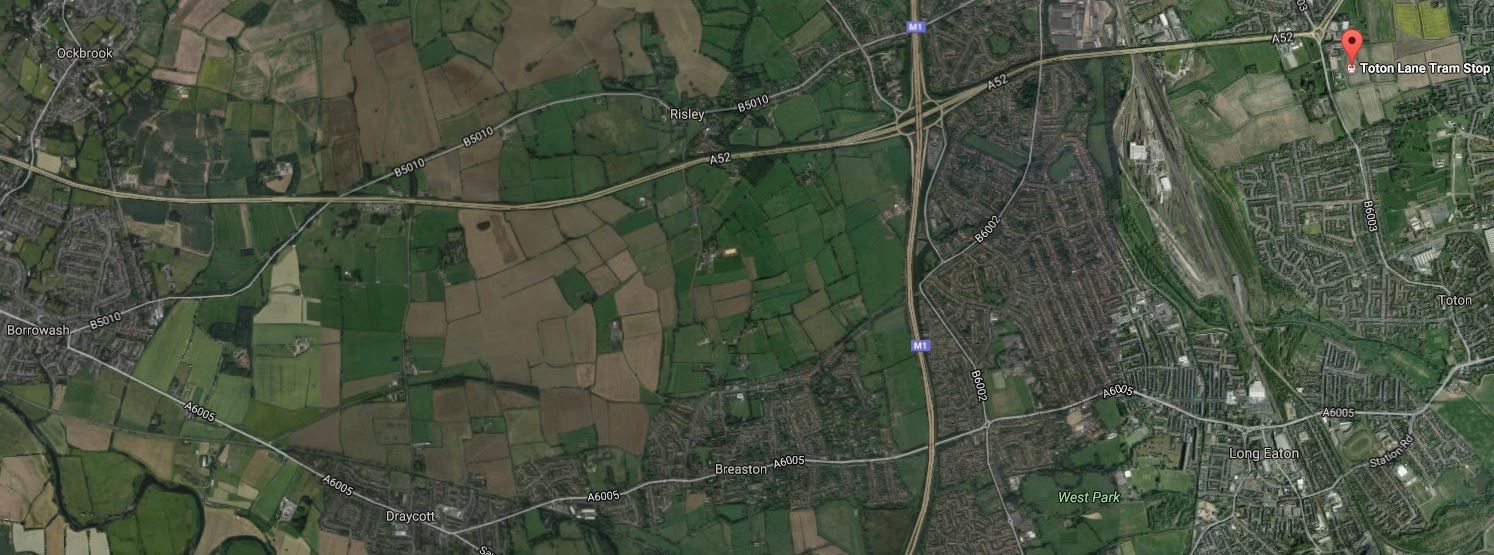
The red arrow marks Toton Lane Tram Stop, which is a Psrk-and-Ride terminus of the Nottingham Express Transit. Between the tram stop and the M1, the Erewash Valley Line passes through in a North-South alignment. South of the East-West A52 is the site of Toton Sidings, which is proposed for the new Toton HS2 station.
I think that HS2 have made a good start in the planning of the connections at this station.
Link To Nottingham Express Transit
Extension of route 1 to serve HS2 at Toton and Derby is a section in the Wikipedia entry for the Nottingham Express Transit.
This is said.
News that a station for the proposed HS2 line (the East Midlands Hub) is likely to be built on the site of Toton sidings, only a short distance from the Toton Lane terminus has fuelled speculation that the line could be extended to the new station. In November 2015 there was a proposal for the tram network to be extended from Toton to Derby. Two routes were later proposed by the D2N2 local enterprise partnership for the route to Derby. The first route would be via the A52 while the second would be via Borrowash and Spondon.
This is not a cheapskate extension to connect Nottingham to HS2, but a proper solution, that creates a high-capacity link running from Nottingham to Derby via the new Toton HS2 station.
- The A52 is the East-West road connecting Derby and Nottingham, which is clearly shown on the Google Map.
- Borrowash is a village at the Western edge of the Google Map, with Spondon, which has a station on the Midland Main Line to Derby, just off the map to the West.
I wouldn’t rule out the possibility of extending the trams from Toton HS2 using tram-trains to go via Long Eaton and Spondon to Derby.
- Tram-trains could use existing track between Toton HS2 and Derby, provided it was electrified.
- Daul-voltage tram-trains would be needed to work on main line and tramway electrification.
- Journey time from Derby to Toton HS2 could be around 20 minutes.
- Network Rail’s plan to move Long Eaton station should make this easier.
- A high frequency service could be run.
- Extra stops could be introduced.
- There are tram-train versions of the Alstom Citadis trams used in Nottingham.
Tram-trains would need 25 KVAC electrification along the route between Toton HS2 and Derby stations. But surely the Midland Main Line electrification will have got to these two stations by 2026 or so!
Nottingham To Derby Via Toton HS2
Nottingham and Derby are two very different cities, but both are successful in their own ways.
Currently, there are about three direct trains per hour (tph) between the two cities.
- Birmingham-Coventry has 7 tph
- Birmingham-Wolverhampton has 9 tph and the Midland Metro.
- Manchester-Leeds has 8 tph
- Leeds-Bradord has 6 tph
Nottingham and Derby get a very raw deal and working on the London Overground/Merseyrail principle of Turn-Up-And-Go , Derby and Nottingham need a four tph connecting service to give passengers something that is acceptable.
As with Birmingham-Woverhampton, a mix of heavy rail, tram and perhaps tram-train might give the two cities the service to Toton HS2 and between themselves, that they need.
Bssed on good practice in London, Birmingham and Liverpool, I would provide the following minimum service.
- 4 tph – Express heavy rail stopping at Beeston, Toton HS2, Long Easton and Spondon.
- 4 tph – Tram-train stopping everywhere between Hucknall and Derby via Beeston, Toton HS2, Long Eaton and Spondon.
- 3 tph – Extra long distance trains calling at both, which would probably also stop at Toton HS2.
It would be a darn site better than what is currently provided.
A Notts/Derbys Crossrail
There might even be a case for a Newark to Burton-on-Trent service via Nottingham, Toton HS2, Long Eaton and Derby. It would be Notts/Derbys version of Crossrail, feeding passengers from all over the area to HS2.
Nottingham City Centre To London In Under 90 Minutes
Currently Nottingham to London takes one hour forty minutes by the fastest trains. But after HS2 opens, it would take 30 minutes from Nottingham to Toton HS and the 52 minutes by HS2 to London.
So even if the classic service to St. Pancras gets faster and more frequent, will passengers opt for the quicker HS2 from Toton HS2?
If say Toton HS2 to London was four tph and run on almost a Turn-Up-And-Go basis, and the connections to Derby and Nottingham were upwards of six tph, the classic trains will have to work hard to maintain market share.
Derby to London wouldn’t show the same improvement as Nottingham to London, but the service could be more frequent and probably well under ninety ,minutes.
The big winners would be the passengers from the Far West of Derby to the Far East of Nottingham.
Using The Erewash Valley Line
Network Rail is improving the Erewash Valley Line. Under Future is a section in the Wikipedia entry for the line.
This is said.
Network Rail as part of a £250 million investment in the regions railways has proposed improvements to the junctions at each end, resignalling throughout, and a new East Midlands Control Centre.
As well as renewing the signalling, three junctions at Trowell, Ironville and Codnor Park will be redesigned and rebuilt. Since the existing Midland Main Line from Derby through the Derwent Valley has a number of tunnels and cuttings which are listed buildings and it is a World Heritage Area, it seems that the Erewash line is ripe for expansion.
It would seem that Network Rail are creating a 125 mph-plus line between East Midlands Parkway and Chesterfield stations. Is this part of a pragmatic philosophy to improve services from London to Chesterfield and Sheffield.
- Derby to Chesterfield along the Derwent Valley will not be electrified because of heritage and engineering reasons.
- Derby to Sheffield via Chesterfield will be served by bi-mode or other independently-powered trains.
- The Erewash Valley Line will be electrified and could even be cleared to allow 140 mph running.
- London to Sheffield trains would go via East Midlands Parkway, Long Eaton, Toton HS2 and Chesterfield.
Even if HS2 isn’t built, Chesterfield and Sheffield would get a vastly improved service to London.
When HS2 is built to Toton HS2, HS2 can take advantage of the Erewash Valley Line to create faster services to the North.
Extending HS2 To Sheffield
If HS2 can get to Toton HS2 in 52 minutes, surely this could mean a London-Sheffield time of well under two hours once the Erewash Valley Line is electrified, even if passengers had to change trains.
But I think we know enough about the dynamics of High Speed Trains, that can run at 225 mph on High Speed Lines to get them to run at 125 or even 140 mph on high standard main lines, like the Midland Main Line.
After HS2 opens to Toton HS2, Chesterfield and Sheffield would get a better service from London in three ways.
- Direct from London on the Midland Main Line.
- By HS2 with a change at Toton HS2 to a classic service.
- By HS2 direct.
All services would use the electrified Erewash Valley Line to get to Chesterfield.
It should be noted that from 2020, London-Norwich will be on a frequency of 3 tph. Surely, the much larger Sheffield needs 4 tph to and from London.
Using The Robin Hood Line
The Robin Hood Line goes between Nottingham in the South to Mansfield Woodhouse and Worksop in the North.
- It is an underdeveloped line with diesel multiple units running to a frequency of 2 tph.
- The Southern end of the line connects to the tracks through Toton HS2, so it wouldn’t be difficult to use the new station as an additional terminus for the Robin Hood Line.
- At the Northern end, there is scope to develop new branches.
I can envisage Nottingham developing the Robin Hood Line into a suburban network feeding passengers to both the City Centre and Toton HS2.
Extending HS2 to North Nottinghamshire And Lincoln
In After The Robin Hood Line Will Nottingham See The Maid Marian Line?, I wrote about an article in the Nottingham Post is entitled Hopes HS2 could see ‘Maid Marian Line’ opened to passengers.
There is a freight only line, that if reopened to passenger traffic would allow trains to connect from Toton HS2, through Ilkeston and Langley Mill to North Nottinghamshire and all the way across Lincolnshire to Lincoln, thus giving a large area direct access to HS2.
Lincoln to London would be under two hours with a change at Toton HS2.
Will All Sorts Of Towns And Cities Get The Benefit Of Direct HS2 Trains?
I have mentioned a lot of stations at various town and cities in this post.
To take Langley Mill station as an example, currently this gets at least one fast train a day to and from St. Pancras.
When the new HS2 trains are running between London, Chesterfield and Sheffield via Toton HS2, will they do the same thing?
If they do, then stations like Ilkeston, Langley Mill and Alfreton could get a direct HS2 service to and from Birmingham and London.
One of the things to note, is that the new trains will be much faster at stopping and getting on their way again, than the current generation of trains, so adding stops between Toton HS and Sheffield. won’t delay the service like it does today.
As I said earlier, I believe there could be a similar connecting service from Toton HS2 to Lincoln, calling at Kirkby-in-Ashfield, Mansfield, Gainsborough, Lincoln and Cleethorpes.
The train to Lincoln would probably be a short five can train and it would couple and uncouple with a similar train at Toton for the express journey South.
Other destinations from Toton HS, might include Doncaster, Doncaster Airport and Hull.
It’s one thing for a short train to trundle round Nottinghamshire and Lincolnshire at 100 mph, but when on HS2, you probably need two trains coupled together to maximise the use of a limited number of train paths.
Connections could also be created using slower trains! But they wouldn’t be so sexy!
A New City At Toton
The Sunday Times has an article this week, which was entitled Next Arrival On The HS2 Line: A Brand New City.
It is an interesting proposition.
- There’s certainly space between Derby and Nottingham.
- Birmingham will be 19 minutes away by HS2.
- London will be within the hour.
- The M1 will pass right through the city.
But above all we need more housing.
Conclusion
The HS2 station at East Midlands Hub or Toton HS2, is a lot more than a HS2 station for Nottingham and Derby.
I would do the following.
- Electrify to Sheffield on the Erewash Valley Line and between Derby and Nottingham.
- Extend the Nottingham Express Transit to Derby via Toton HS2 using tram-train technology.
- Run a 4 tph express local service between Derby and Nottingham via Toton HS2.
- Make sure that HS2 reaches Toton HS2 as soon as possible.
- Build the new city at Toton.
Surely because the Nottingham-Derby area has a lot to gain from HS2, it would probably be very beneficial for HS2’s revenue.
After The Robin Hood Line Will Nottingham See The Maid Marian Line?
This article in the Nottingham Post is entitled Hopes HS2 could see ‘Maid Marian Line’ opened to passengers.
There is a freight only line between Kirkby-in-Ashfield station on the Robin Hood Line and Pye Bridge on the Erewash Valley Line.
The proposal would allow trains to go between Kirkby-in-Ashfield via Pinxton and Selston to Langley Mill and Ilkeston and then on to Nottingham.
I’ve been here before in September 2015 in a post called Expanding The Robin Hood Line.
But the new baby elephant in the room is the new Ilkeston station, which hopefully opens on the 2nd of April 2017.
Given Chris Grayling’s thoughts, that I wrote about in Government Focuses On New Stations And Trains, could it be that if extra trains can be found, that to provide a second train per hour between Nottingham and Ilkeston, a second route to Kirkby-in-Ashfield and on to to Mansfield and Worksop, is opened up the Erewash Valley Line.
The route could even terminate on the proposed extension of the Robin Hood Line to Ollerton.
The route from Nottingham to Ollerton would be.
- Nottingham
- Toton for HS2
- Ilkeston
- Langley Mill
- Selston – New station
- Pinxton- New station
- Kirkby-in-Ashfield
- Sutton Parkway
- Mansfield
- Mansfield Woodhouse
- Shirebrook
- Warsop- New station
- Edwinstowe – New station
- Ollerton – New station
I think it is likely that this route could be developed.
- The track is all there and is used by freight trains and/or for driver training.
- An hourly service on this route would mean additional services for many of the stations on the route.
- The only problem would be finding some suitable diesel trains for the route.
- It could probably be trialled to Mansfield or with a simple station at Ollerton.
- The track from Ollerton appears to be intact all the way to Lincoln.
But the clincher is that it would provide connectivity for HS2 all the way from Worksop and Mansfield to Lincoln and Grimsby.
HS2 is needed, but we must make sure that the benefits of the line are spread to all parts of the country.
If this route to Lincoln could be developed as a 100 mph line, the time from Lincoln to London with a change to HS2 at Toton could be likely to be under two hours.
In Government Focuses On New Stations And Trains, Chris Grayling mentioned the route from Grimsby to Sheffield. Surely creating this route from Lincoln to Toton via Ollerton for HS2, is what really improves train transport in North Lincolnshire.
What Is Happening At Old Oak Common?
I ask this question as I have just read this article on the New Civil Engineer web site which is entitled Old Oak Common Megadeck Momentum Slows.
This is said.
Momentum for the 7ha deck to be built over the Crossrail depot in the new Old Oak and Park Royal development in west London has slowed according to the chief executive of the regeneration body in charge of the work.
Sadiq Khan is blaming Boris, as any politician would.
It is truly a massive site, as this Google Map shows.
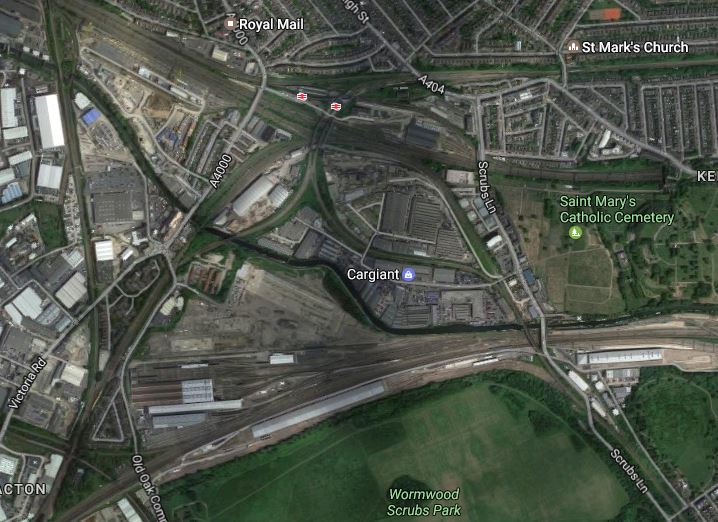
The two stations at the top of the map is Willesden Junction station.
Running across the map is the Great Western Main Line, with the various depots and Cargiant to the North.
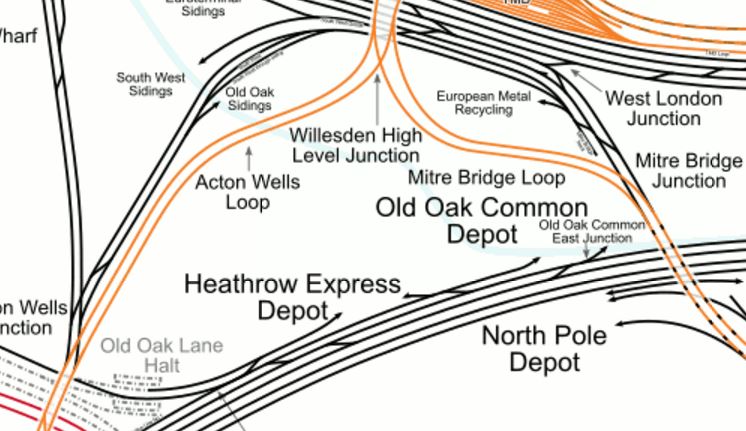
This map from carto.metro.free.fr shows the lines in the area.
This aerial view of the area is from Crossrail.
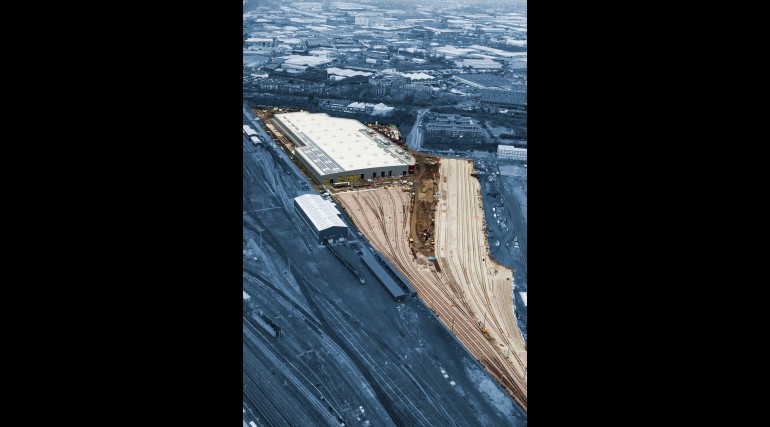
The megadeck is needed to go over much of this area, so that housing and other developments can be built.
European Rules On Platforms Threaten To Slow Down HS2
This is the headline on an article in today’s Sunday Times.
It’s all about people in wheel-chairs having level access to the trains. This is possible on many trains in the UK, but on the Continent, it is generally impossible.
It is probably, yet more fall-out from the different ways the UK and everybody else built their railways.
We went for a small loading gauge, which was probably logical to the engineers at the time, except for Brunel, who wanted a broader track gauge and bigger tunnels and bridges.
Everybody else coming several years later went for their own gauges, many of which were larger.
We even built larger gauge railways in Ireland and India.
So everywhere you are getting problems to create a standard that is acceptable to all.
In the December 2016 Edition of Modern Railways, there is an article by Roger Ford entitled Electrical Clearances: The Plot Thickens. This would appear to be another manifestation of the same problem.
We will have to find a solution, as otherwise places like Liverpool, which will not have a dedicated high speed station, will not get a high speed service, as the high speed trains will always have to stop at high speed platforms.
In my view, this is a problem, where politicians should be banned from having an opinion. We need to have platform heights at x, y and z and be xx away from any electrical wires.
Give a simple standard to the train building companies and the engineers and see what they come up with!
Could Old Oak Common Be London’s Super Hub Station?
Old Oak Common station is going to be a very important rail hub in the future, with all the services that various companies and organisations would like to see serving the proposed station.
This map shows some of the existing and proposed rail lines in the area.
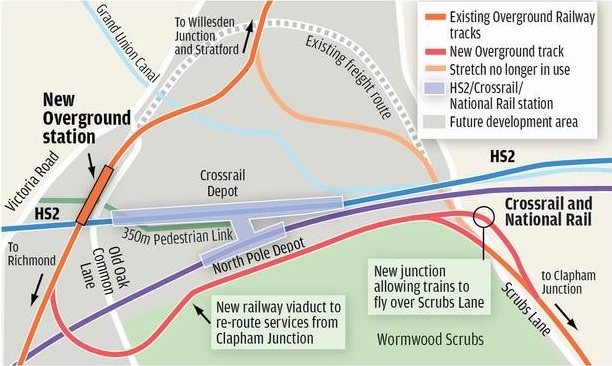
Rail Lines At Old Oak Common
Current Plans
I’ll now list the lines shown in the map or that go through the area. and are listed in Wikipedia, as having connections at the proposed Old Oak Common station.
1. Bakerloo Line
The Bakerloo Line will call
2. Central Line
The Central Line will call.
The Central Line acts as a loop from Crossrail through Central London, serving stations not on the direct route, in Central London between Stratford and Bond Street.
I wrote about the relationship between Crossrail and the Central Line in Ducking And Diving Between Crossrail And The Central Line.
3. Crossrail
Crossrail goes through the area and development of a station has been proposed.
4. Great Western Main Line
The Great Western Main Line goes through the area and local and other services may call.
5. HS2
HS2 will be building a station at Old Oak Common.
6. North London Line
The North London Line is consulting on a new station as I wrote about in Should An Overground Station Be Built At Hythe Road?
The North London Line acts as another East-West line across London and will probably have a frequency of upwards of the current 4 trains per hour (tph) between Richmond and its Eastern connection to Crossrail at Stratford.
7. West Coast Main Line
The West Coast Main Line goes through the area and local and other services may call.
8. West London Line
The West London Line will call and this line gives an easy route to Balham, Clapham Junction and East Croydon stations, which by-passes Central London.
I suspect that the frequency of trains on this route will be increased.
Eight lines is an large amount of connectivity.
Other Possibilities
If that isn’t enough connectivity, there are also these extra possibilities.
1. Chiltern Railways
Chiltern Railways have ambitions to use Old Oak Common station as another London terminus, with perhaps 2 tph.
I wrote about it in Linking Chiltern To Crossrail.
2. Dudding Hill Line
The Dudding Hill Line, runs to the West of Old Oak Common station. It could be electrified and have a station that is connected to Old Oak Common station.
For various reasons, both the Brent and Cricklewood \curves would be electrified, thus giving fully electrified access to and from North and South on the Midland Main Line.
3. Gospel Oak To Barking Line
Transport for London have published ideas to extend the Gospel Oak to Barking Line along an electrified Dudding Hill Line.
Suggestions have talked about 4 tph between Hounslow and Gospel Oak stations.
4. Heathrow Express
Heathrow Express uses the Crossrail route, so it could call.
5. Midland Main Line
If Chiltern can justify using Old Oak Common station, I suspect that services on the Midland Main Line can make the same arguments for using Old Oak Common station as a terminal.
Consider.
- Electrification of the Dudding Hill Line makes this possible.
- St. Pancras which is very much A Fur Coat And No Knickers Station, is short of capacity.
It would give passengers from the East Midlands much better access to London and the South East.
6. Thameslink
There are no plans to link Thameslink to Old Oak Common station, but why not?
I proposed this in Will The Third Runway At Heathrow Be Actually Built In The Near Future?
Under Integration With Both HS1 And HS2, I said this.
It would be possible to do the following.
- Arrange for Heathrow Express and/or Crossrail to call at Old Oak Common for HS2.
- Terminate some Thameslink services at Old Oak Common, thus linking HS1 and HS2.
- Build an easy entrance at St. Pancras to Thameslink close to Eurostar.
- It goes without saying, that Old Oak |Common will make interchange easy between the umpteen lines meeting there.
The Dudding Hill Line would be electrified.
This proposal and the related electrification of the Dudding Hill Line would do the following.
- Give Chiltern, Crossrail, GWR and Heathrow Express a connection to HS1.
- Give Thameslink a better connection to HS2 and the West Coast Main Line
- Create a fast ink between HS1 and HS2.
What could a Thameslink service to Old Oak Common station look like?
- I would terminate 4 tph trains at Old Oak Common to give an adequate level of service.
- It might be advantageous to use eight-car Class 700 trains on this route, so that all trains North of Cricklewood could be twelve-car trains.
- Could the trains going to Old Oak Common be the Wimbledon Loop trains?
- There could be advantages in having 2 tph between Old Oak Common and London Bridge.
Obviously, passenger statistics would determine the services required.
Old Oak Common As An Airport Hub
If all or some of these plans come to pass, Old Oak Common station will be well-connected to the following airports.
- Birmingham – Under 50 minutes by HS2.
- City – Under 20 minutes by Crossrail
- Gatwick – Under 50 minutes by Thameslink
- Heathrow – Around 20 minutes by Crossrail and around 15 minutes by Heathrow Express
- Luton – Under 30 minutes by Midland Main Line.
- Manchester – Around an hour by HS2.
- Southend – Around 80 minutes by Crossrail and Greater Anglia.
- Stansted – Around 55 minutes by Crossrail and Stansted Express.
The figures are very much my best estimates, as the Thameslink and HS2 web sites don’t have simple journey time calculators as does the Crossrail web site.
But these timings do show some interesting facts, that will effect the developments of airports in Southern England.
- Birmingham Airport is a practical alternative for those living with easy access to the HS2 stations at Euston or Old Oak Common.
- Gatwick access needs to be faster to compete with Heathrow and Luton.
- When HS2 reaches Manchester Aiorport, it will be a practical alternative for Middle England.
- Southend Airport will be good for those East of London, but the journey time needs to be cut, by running faster trains to London.
- Stansted Airport needs a faster connection to London and they will push for the four-tracking of the West Anglia Main Line.
There will be a massive battle for passengers and Network Rail will be under tremendous pressure to perform.
Rail Companies, Lines And Terminals, Without A Direct Connection To Old Oak Common Station
There is quite a few, even if you cut out train operators like Arriva Trains Wales, Scotrail, Northern and TransPennine, that don’t serve London.
1. Caledonian Sleeper
With all its connectivity, would Old Oak Common be the logical destination for the Caledonian Sleeper?
Could Old Oak Common, be London’s hub for all sleeper trains?
2. Circle, District And Metropolitan Lines
There are various ways to get on the Circle, District and Metropolitan Lines depending on where you want to go.
Just as the Central Line acts as a loop from Crossrail, the Sub-Surface Lines have various loops running parallel to Crossrail through Central London.
- Circle and Metropolitan Lines, running North of Crossrail, from Paddington to Whitechapel.
- Circle and District Lines, running South of Crossrail, from Paddington to Whitechapel.
- District Line, running, South of Crossrail, from Ealing Broadway to Whitechapel.
My prediction in Is Whitechapel Station Going To Be A Jewel In The East?, seems to becoming true.
3. c2c
As I said in Will c2c Push For Access To Stratford And Liverpool Street?, c2c needs a connection to a station on Crossrail.
With some reorganisation of services, I believe that it might possible to have a 4 tph service to Stratford and Liverpool Street stations, which would give passengers in the c2c area, access to Crossrail
4. East Coast Main Line
These are routes between Old Oak Common and Kings Cross station for the East Coast Main Line.
- Crossrail to Farringdon and then the Metropolitan Line
- North London Line to Highbury and Islington and then the Victoria Line.
- Bakerloo Line to Oxford Circus and then the Victoria Line.
- Crossrail to Tottenham Court Road and then a 10, 73 or 390 bus.
- Narrow boat on the canals.
- If Thameslink should in the future serve Old Oak Common, that can be taken to St. Pancras Thameslink, followed by a walk.
None of the routes are of the best.
If you had plenty of time, Tottenham Court Road station and then a bus would be a good route, as the bus drops you in the front of Kings Cross station, with totally flat access to the trains. If you’re early and it’s sunny, you can sit in the best Waiting Room at a London station.
For local services on the East Coast Main Line, there are two slower alternatives.
- Crossrail to Moorgate and then use the Great Northern Metro.
- Thameslink to St. Pancras Thameslink, cross to the other platform and take Thameslink to Cambridge or Peterborough.
The second route, would be much easier, if St. Psncras had an island platform for Thameslink. At least it’s only escalators and lifts.
There is one development, that might happen, that could improve journeys to and from Kings Cross station. That is the reopening of Maiden Lane station.
5. Jubilee Line
The Jubilee Line has interchanges with Crossrail at Bond Street, Canary Wharf and Stratford stations, with an interchange with Thameslink at London Bridge station.
It also has a step-free interchange with the Bakerloo Line at Baker Street station.
The Jubilee Line also acts as a loop from Crossrail serving stations away from the main route through Central London between Stratford and Bond Street.
6. London Bridge, Cannon Street And Charing Cross
I have grouped all these three stations together as the rebuilding of London Bridge station and the Thameslink Programme have connected these three stations in a way that will change passenger patterns dramatically for users of these three stations.
For myself, it will mean that to access any trains from Cannon Street and Charing Cross or on Thameslink going South, I will probably use a bus to the superb London Bridge station with all its escalators and lifts, rather than fight my way through Central London.
Others will also choose to go direct to London Bridge, possibly by using the Jubilee or Northern Linse. It will be interesting to see how passenger usage changes at Cannon Street and Charing Cross stations.
London Bridge shows what could have been done, if they’d spent the money wisely at the dreadful St. Pancras.
There are four main routes between London Bridge and Old Oak Common stations.
- Bakerloo Line to Waterloo and then the Jubilee Line.
- Crossrail to Bond Street and then the loop of the Jubilee Line.
- Crossrail to Farringdon and then Thmeslink
- If Thameslink serves Old Oak Common, there could even be a direct train.
I suspect there are other routes and it will all be down to personal preference and where you catch your next train in London Bridge.
Cannon Street station could almost be considered a London Bridge North station.
- It has seven terminal platforms. Try fitting more into London Bridge.
- It is within easy walking distance of much of the City of London.
- On a nice day, many might even walk from Cannon Street to Moorgate for Crossrail, as this route could be pedestrianised.
- It has access to the Circle and District Lines, which with a change at Paddington give access to Crossrail and Old Oak Common station.
- In a few years time, it will have good access to the Northern and Central Lines at Bank station.
Cannon Street station will become more important, as Network Rail and the various operators learn how to use the new infrstructure.
Sometimes, I struggle to see the point of Charing Cross station, but as it’s a very busy station others certainly see the station’s purpose.
It’s on the Bakerloo, Circle, District and Northern Lines, so getting to Old Oak Common won’t be a problem.
Transport for London are looking to take over South London inner suburban routes, so I think we’ll see changes in the management of Cannon Street and Charing Cross stations if this happens.
7. Northern Line
Both branches of the Northern Line are directly connected to Crossrail.
- Tottenham Court Road station connects to the Charing Cross Branch.
- Moorgate station connects to the Bank Branch.
Connections to the Northern Line might improve, if two separate lines are created
8. Piccadilly And Victoria Lines
The Piccadilly and Victoria Lines share three interchanges, but unfortunately they have no interfaces with Crossrail and only one poor one with Thameslink.
The best bet is to get on the Bakerloo Line and change at either Oxford or Picadilly Circus.
9. Victoria
Victoria station is another tricky station from which to get to and from Old Oak Common.
- Bakerloo Line to Oxford Circus and then Victoria Line.
- Crossrail to Paddington and then Circle or District Line.
As some services out of Victoria stop at stations served by the West London Line, it is possible to use that line to by-pass Central London.
10. Waterloo
Like London Bridge, Waterloo station is very well connected to Crossrail and the Old Oak Common hub.
- Bakerloo Line direct.
- Crossrail to Bond Street and then the loop of the Jubilee Line.
- Crossrail to Tottenham Court Road and then the Northern Line.
As some services out of Waterloo stop at stations served by the West London Line, it is possible to use that line to by-pass Central London.
Conclusions
I have come to the following conclusions.
Everybody will want to be connected to Old Oak Common station.
Groups of lines across London are emerging.
- East to West – Crossrail, Central, District, Metropolitan, North London, Gospel Oak To Barking, Dudding Hill.
- North to South – Thameslink, West London,East London, Northern.
- North-East to South-West – Crossrail 2, Piccadilly, Victoria.
- North-West to South-East – Bakerloo, Jubilee
A very strong grid with good interchanges is probably the main objective.
Looking at these groups, makes me think, that actions are suggested, that would strengthen the network.
- Build Crossrail 2
- Increase the capacity on the Bakerloo Line
- Split the Northern Line into Charing Cross and Bank branches.
London will quickly fill the extra capacity.
Will The Third Runway At Heathrow Be Actually Built In The Near Future?
If nothing else the 25th ofSeptember 2026 statement by the Government, stated that the UK is going to build another runway in the South-East.
But I have my doubts, that a third runway will be open at Heathrow in the near future.
Building The Third Runway
As I said in Building The Third Runway At Heathrow, I don’t believe that the actual construction of the Airport would present any problems for any large construction company or more likely consortium. This is illustrated today, by this article on the BBC, which is entitled New Heathrow runway may be built above the M25, which says to me that engineers are looking for easier and more affordable ways to build the new runway.
Rebuilding The Current Terminals
Heathrow are also disclosing a master-plan, for rebuilding a lot of the airport to make it more efficient and up with the best.
- There will be two main terminals; Heathrow West and Heathrow East with satellites in between handling the actual planes.
- These two terminals and the satellites will be between the two existing runways, with a passenger and baggage transport system beneath.
- Terminal Five will become Heathrow West.
- An extended Terminal Two will become Heathrow East.
- Crossrail, Heathrow Express and the Underground will serve both main terminals.
- A Terminal Six would be mainly for the third runway, would effectively be part of Heathrow West.
I believe that this rebuilding could start well before the third runway is even given the go-ahead, as many of the works will be within the current Airport boundary.
Rail Links To The Airport
Part of the master-plan is extensive rail links to the Airport.
- Crossrail, Heathrow Express and the Underground will serve London.
- There will be rail links to both the West and South.
- There will be a rail link to both HS1 and HS2.
- Could we even see a rail-based cargo transport system running under all the terminals, bringing in supplies for the terminals and the planes?
This map from carto.metro.free.fr shows the current rail links at Heathrow.
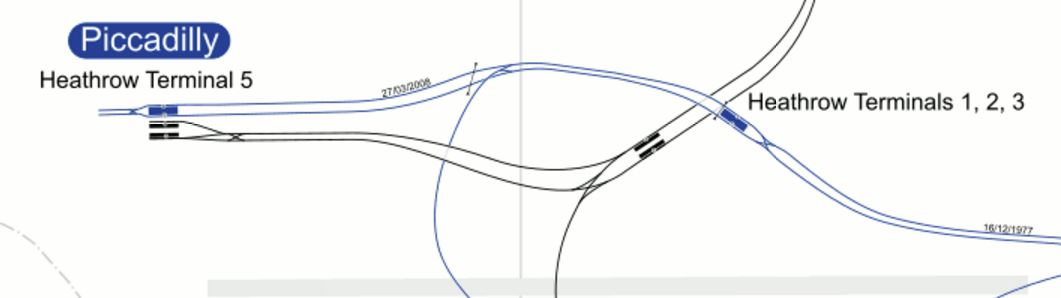
Rail Lines At Heathrow
Note.
- The Piccadilly Line is shown in blue.
- The lines going South lead to Terminal Four.
- Crossrail has Terminal Four as its terminus
- The Heathrow West and Heathrow East concept fits the rail lines well.
- Terminal Five station is ready for access from the West.
I think just as Gatwick are embracing rail with a vengeance, rail can be a major force in the development of Heathrow.
We could even be seeing the current rail line through Terminals Two and Five becoming a high-capacity rail line connecting all the terminals to the West, East and South.
A Greener Airport
If as many of the traffic movements in and around the airport could be moved from polluting road transport to electric trains, Heathrow’s pollution footprint could be reduced.
As an example, you could envisage a factory in a low cost area by a rail line to the West of Heathrow creating airline meals. These would be packaged by flight number and then taken by electric cargo train direct to the appropriate terminal or satellite, ready for loading onto the plane.
Could we even see an airport, where very few trucks and service vehicles, use the runways and aprons? You certainly see a lot less vehicles on an airport, than you did decades ago.
I found this page on the Heathrow web site, which is entitled Our Vehicle Fleet Is Making The Switch.
This is a paragraph.
850 vehicles in the airside fleet at Heathrow are electric, making it one of the largest fleets of electric airside vehicles in Europe. As well as electric tugs that move baggage around the airfield, we use electric cars and vans to transport our people. We are trialling electric specialist ground support vehicles such as belt loaders, cargo loaders and push back tractors.
I was surprised to see pushback tractors mentioned, as some weigh up to fifty tonnes. But according to the Wikipedia entry for pushback, there are interesting developments in this field. This is said about robotic push back tractors.
The Lahav Division of Israel Aerospace Industries has developed a semi-robotic towbarless tractor it calls Taxibot that can tow an aircraft from the terminal gate to the take-off point (taxi-out phase) and return it to the gate after landing (taxi-in phase). The Taxibot eliminates the use of airplane engines during taxi-in and until immediately prior to take-off during taxi-out potentially saving airlines billions of dollars in fuel that is used. The Taxibot is controlled by the pilot from the cockpit using the regular pilot controls.
Even as a trained Control Engineer and a private pilot with over a thousand hours in command, I can’t help but wonder at the concept.
As a final thought, surely if all unnecessary vehicles could be removed from air-side, this must improve safety and security.
What too, would low or even zero carbon operations, do for the image of the airport?
Travelling To The Airport
One consequence of the rebuilding of the terminals with rail links to both London and the West, will be a reduction in the number of travellers, who drive or are driven to to the airport.
In the London Olympics every event ticket came with a London Travelcard, so that you used public transport. Could we see public transport tickets bundled in with air tickets to cut the need for vehicles to drive to and from the airport?
I certainly think, that we’ll see rail-connected parking to the airport, just because land close to an airport is so expensive.
Local Transport To The Airport
I suspect that a lot of journeys to and from the airport are quite local, as they concern local residents, employees or travellers perhaps spending a night after or before a flight close to the airport.
These journeys have not been forgotten in the master-plan, as it talks of improving bus services.
But the most interesting development is the ULTra PRT system, I talked about in A Visit To Heathrow Terminal 5.
A Heathrow-wide system has been proposed. This is said in Wikipedia.
In May 2013 Heathrow Airport Limited announced as part of its draft five year (2014-2019) master plan that it intended to use the PRT system to connect terminal 2 and terminal 3 to their respective business carparks. The proposal was not included in the final plan due to spending priority given to other capital projects and has been deferred.
There have been suggestions that they will extend the service throughout the airport and to nearby hotels using 400 pods.
The system at Heathrow may not be built, but expect something like it at an airport near you.
Imagine turning up in a convenient car park or train station, with family and baggage, ready to travel on holiday. You scan your pre-printed boarding pass or click one on your phone and a pod arrives, which takes you to the satellite your flight will use.
As they travelled, passengers could scan passports and they would be given up-to-date flight information.
Flying is a total pain, best summed up by the old pilot’s moto.
Time to spare, go by air!
A decent system to bring people to the airport, could make flying more of a pleasure.
Integration With Thameslink
I believe that it would be possible to have a direct Thameslink connection into Heathrow using the |Dudding Hill Line to link to Crossrail.
In Could Thameslink Connect To Heathrow?, I show how it would be possible to create a four tph service between Heathrow and Thameslink.
This could create an easy link to and from Gatwick and Luton Airports and Kings Cross, St. Pancras and London Bridge stations.
Integration With HS2
I’m taking this first, as it’s probably easier than linking to HS1
When Phase 2 of HS2 opens, services Northward from Old Oak Common station are proposed to be.
- Birmingham – 3 tph
- Edinburgh – 2 tph
- Glasgow – 2 tph
- Leeds – 3 tph
- Liverpool – 2 tph
- Manchester – 3 tph
- Newcastle – 2 tph
- Preston – 1 tph
- Sheffield – 2 tph
- York – 1 tph
I estimate that Heathrow to Old Oak Common will be about 20 minutes by Crossrail and Heathrow Express.
As changing planes at Heathrow, according to the Airport takes between 75 and 90 minutes, using HS2 would be competitive.
,Especially if the interchange at Old oak Common was well-designed.
Leeds will be about ninety minutes from Old Oak Common. so if the interchange timings are right, a passenger could be in the centre of Leeds around two hours after coming through Arrivals at Heathrow. A chauffeur-driven Ferrari couldn’t do that legally.
Integration With HS1
This is more difficult, as neither Crossrail nor Heathrow Express serves St. Pancras.
There are a choice of routes.
- Crossrail to Farringdon and then Thameslink or the Metropolitan Line to Kings Cross St. Pancras.
- Heathrow Express to Paddington and then a taxi.
- Heathrow Express to Paddington and then the Metropolitan Line
- Piccadilly Line to Kings Cross St. Pancras.
Interchange could have been designed to be a lot better.
I seem to remember that original plans for the Heathrow Express envisaged St. Pancras as a second London terminal, using the Dudding Hill Line.
But this route is probably impossible owing to there not being enough platforms at St. Pancras, which is A Fur Coat And No Knickers Station.
As there are other operators, who need extra platform space at St. Pancras, perhaps a couple of extra platforms could be built.
But I doubt it!
If Heathrow were to be linked to Thameslink, as I indicated earlier, this would solve the problem.
Terminals And The Third Runway
Extra terminal capacity, will be able to handle more passengers, but will the runways be able to handle the extra planes?
I suspect there are various strategies, that will keep the number of flights within the capacity of a two-runway airport.
- Larger aircraft with more capacity, will make better use of slots. 737s and A320s are carrying more passengers.
- Quieter aircraft, linked to better air traffic control, might givenoise and capacity advantages. Thuis page on the Heathrow web site, is entitled Steeper approach trial report.
- Reorganisation of air cargo to release slots.
- Use of Crossrail and/or Heathrow Express to connect to HS1 and HS2.
The more Heathrow use their intelligence, the further into the future the date for the third runway will recede.
Looking At The Cash Flow
Obviously, I don’t have any figures, but sorting out the terminals early and creating extra passenger capacity, may give Heathrow better cash flow to generate the vast sums needed to build the completely new Terminal Six and the third runway.
I’d love to see their full cash flow, but I suspect that the third runway, will only be needed when to expand the traffic, they need m the slots it will deliver.
The early costs would and could be.
- Fighting the protestors and the politicians.
- Obtaining Planning Permission.
- Buying up the private .properties in the way.
- Rolling out an anti-pollution philosophy.
- Creating Heathrow West (Terminal Five) and Heathrow East (An Extended Terminal Two)
- Extending the rail network.
- Professional fees.
Perhaps by the early 2020s, they would have a strong cash flow and ownership of all the land they might need.
Then at an appropriate time, they would build the new runway and any terminals needed, in the space they had acquired.
As today’s article on the BBC indicated, they wouldn’t even have to build a tunnel for the M25.
It would hopefully be a large, but reasonable straightforward construction operation.
The Opposition Is Gathering
This article in the Independent is entitled Heathrow expansion: Airlines react to Government’s airport decision.
- Stewart Wingate of Gatwick of Gatwick is quoted as being disappointed and saying he’ll read the Government’s reasons in detail.
- Dame Carolyn McCall of easyJet, said their planned move to Heathrow is contingent on the right deal.
- Willie Walsh of BA’s parent said he was pleased a decision had been made.
- Craig Kreeger of Virgin Atlantic, said: “We support expansion, provided it delivers for our customers.”
- Nick Burton of Luton Airport said that we must now focus on demand before the new runway is built in 10-15 years time.
- Charlie Cornish, chief executive of Stansted’s owner, Manchester Airports Group, said that we should make the best use of the runways we’ve got.
That doesn’t sound like a vote of confidence to me.
And I haven’t included all those who will lose their homes, the environmental protesters and those like me who don’t like Heathrow’s attitude.
The statistics are also not on Heathrow’s side either, as traffic is growing fast and another runway is needed soon, with a second one perhaps ten years later, to satisfy rising demand for air travel.
So What Could Happen?
Much of this is speculation, but Nostradamus couldn’t predict this one.
- In The Planemakers’ View On The South East’s New Runway, I quoted from an article in The Times, which said that Heathrow’s hub model is superseded by the views of the planemakers, who think it’s all about point-to-point flights in appropriate aircraft.
- Gatwick could probably apply for permission for a second runway in 2019.
- Luton, Southend and Stansted Airports are ambitious and want to expand.
- Better rail services to Stansred Airport have been announced.
- Luton Airport wants a better rail service.
- Birmingham Airport gets a connection to HS2 in the mid-2020s.
- Eurostar and other companies will increasingly add rail services to Europe.
These and other factors will eat into Heathrow’s market share, thus delaying that crucial point, where the third runway needs to be built.
But that doesn’t really solve the short term problem The only way to satisfy that is to create a runway in the South-East as soon as possible.
And the only place that can be built is Gatwick.
The growth in air traffic will continue and a few years later, Heathrow will get its runway.
Are You Annoyed By Noisy Trains At The Bottom Of Your Garden?
I have just found this document on the European Parliament web site, which is entitled Reducing Railway Noise Pollution.
It is a fascinating document and this is the abstract.
12 million EU inhabitants are affected by railway noise during the day and 9 million during the night. This study lists measures, funding and regulations to reduce it. The introduction of modern rolling stock will lower noise most significantly. In the short run, the replacement of cast iron by composite brake blocks on rail freight cars is most important. Developing a regulation scheme for a staged process towards low-noise rolling stock is the heart of a rail noise abatement strategy.
Many of us in the UK, would think that we suffer badly from the noise of trains, but it would appear that Germany and other Central European countries suffer badly from all freight trains passing through. The Rhine Valley which has over 400 freighs trains a day, suffers badly from noise.
So how can we reduce noise?
- As the abstract says new rolling stock is the best way to reduce noise and many of our trains have been replaced with new or refurbished ones in the last few years.
- The report says that most (approximately 75%) of UK freight wagons have disc brakes or composite brake blocks. So that is good.
- In my view one of things that gets most complaints is noisy and smelly diesel locomotives, like the dreaded Class 66 locomotives. They may be liked by the freight companies, but they are not favourites of drivers and those living by the railway. More friendly types of diesel locomotives like the Class 68 are starting to appear and it can’t be too soon.
- Surprisingly, with electric trains, pantograph noise is a problem. I’d hand that and any other aerodynamic problems over to the engineers in Formula One and aircraft design. I have read that Bombardier’s new Aventra will be very clean aeodynamically, which must make for a reduction in noise.
Let’s hope that these small improvements continue to reduce the noise by trains.
The report also says this about physical noise barriers.
Noise barriers are a visual intrusion, particularly since they are a target for graffiti; they have a high cost, and cause problems for track access. Their effectiveness depends on their absorption properties, their height, and the proximity of the barrier to the noise source and/or to the receiver.
I am not a fan, as they ruin my taking of photographs.
After The Northern Hub, Is Network Rail Planning A Midland Rail Hub?
The study on Network Rail’s web site is entitled West Midlands and Chilterns Route Study, proposes a concept of a Midland Rail Hub.
By adding the following infrastructure.
- Bordesley Chords and new platforms at Moor Street
- More tracks through Water Orton
- Kings Norton upgrade
- Snow Hill Platform 4
- Begin rollout of Digital Railway
Network Rail feel, it will bring the following benefits.
- Up to 10 extra trains every hour
- More freight trains
- New journey opportunities between East and West Midlands
- Unlocking new jobs
- Maximising benefits of HS2.
It doesn’t appear to be as radical as the Northern Hub.
These are my notes and thoughts on the various proposals.
Bordesley Chords
This Google Map shows the Bordesley area of Birmingham.
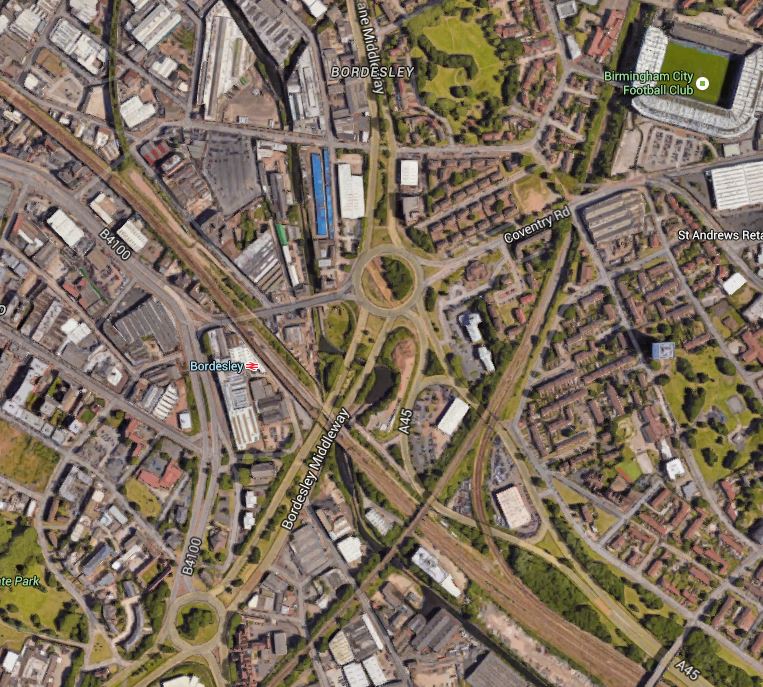
Bordesley Chords
In the top-right or north-eastern corner of the map is Birmingham City Football Ground.
In the middle of the map is Bordesley Circus, which is a roundabout, that is one of the most dangerous for pedestrians in the country. When I was last there, it was being improved and I wrote My Least Favourite Roundabout Gets Pedestrian Lights. I hope they’re working on Tuesday, 13th December, when I’ll be going to see Ipswich play.
Bordesley station, which is one of the worst stations in the UK, lies to the South-West of this roundabout and is on the Chiltern Main Line into Birmingham Moor Street station, although services don’t stop.
Running almost North-South across the map is the Camp Hill Line, which incidentally passes behind the stands at the football ground.
Where it crosses the Chiltern Main Line, there is a chord allowing limited connection between North and East.
I would assume that as the report says Bordesley Chords, that there will be some extra connectivity between these two lines.
Under the future of the Camp Hill Line on Wikipedia, this is said.
The reinstatement of local rail services to the former Camp Hill Line has been a long term aspiration of the City, and during 2007, Birmingham City Council announced that they were looking into the possibility of reopening the line between Kings Norton and Birmingham Moor Street via the construction of a railway viaduct from Sparkbrook to Bordesley, where trains would be taken into the “old” Birmingham Moor Street station. In October 2007, a 1500-name petition was handed in to the council asking for the line to be re-opened. In 2013 the proposal was shelved indefinitely.
As Kings Norton is to the South, this would need a West to South connection at Bordesley.
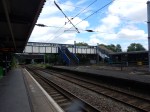
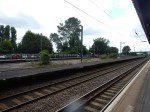
These pictures show the area from a Chiltern Train going into Moor Street.


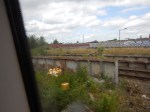
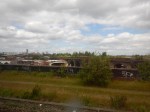
Salubrious it is not! There is certainly a lot of space on the North side, but there might be less on the South. This Google Map shows the area between the station and where the two lines cross.
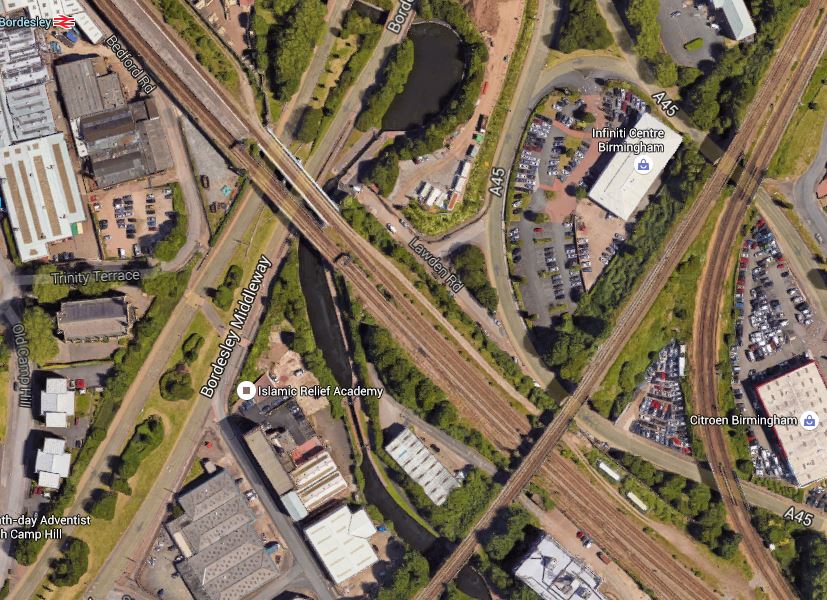
Bordesley Station And Chords
Note the double-track chord between the Camp Hill Line to the North and the Chiltern Main Line to the East. This chord gives services from the Chiltern Main Line to access Birmingham New Street station. If you take a train from Oxford to Birmingham New Street, it will take this chord, if it doesn’t go via Coventry.
From what I have seen in Manchester and some parts of London, the area could surely be put to a better purpose, perhaps driven by a rebuilt Bordesley station, with regular services to Moor Street, Kings Noton and Solihull. The area does have the added factor of water in the shape of one of Birmingham’s numerous canals.
Hopefully, the first piece of development in a very run-down area, the sorting of a decent walking route between Bordesley station and Birmingham City Football Ground has been completed.
New Platforms At Birmingham Moor Street Station
This Google Map shows Birmingham Moor Street station.
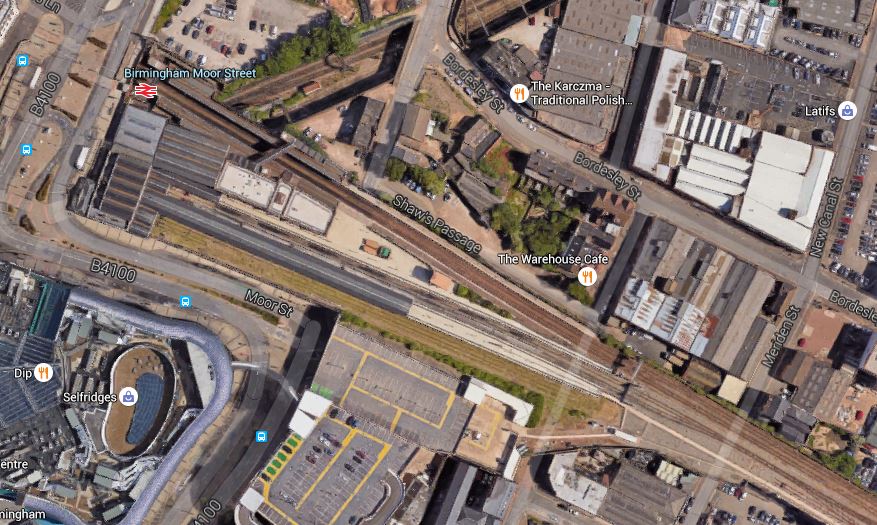
Birmingham Moor Street Station
The most northerly pair of platforms in the station are numbered 1 and 2 and are for the through lines to Birmingham Snow Hill station.
Over the last few years, work has opened the next pair of bay platforms 3 and 4. On my last trip to Birmingham in June, I arrived in Platform 4.
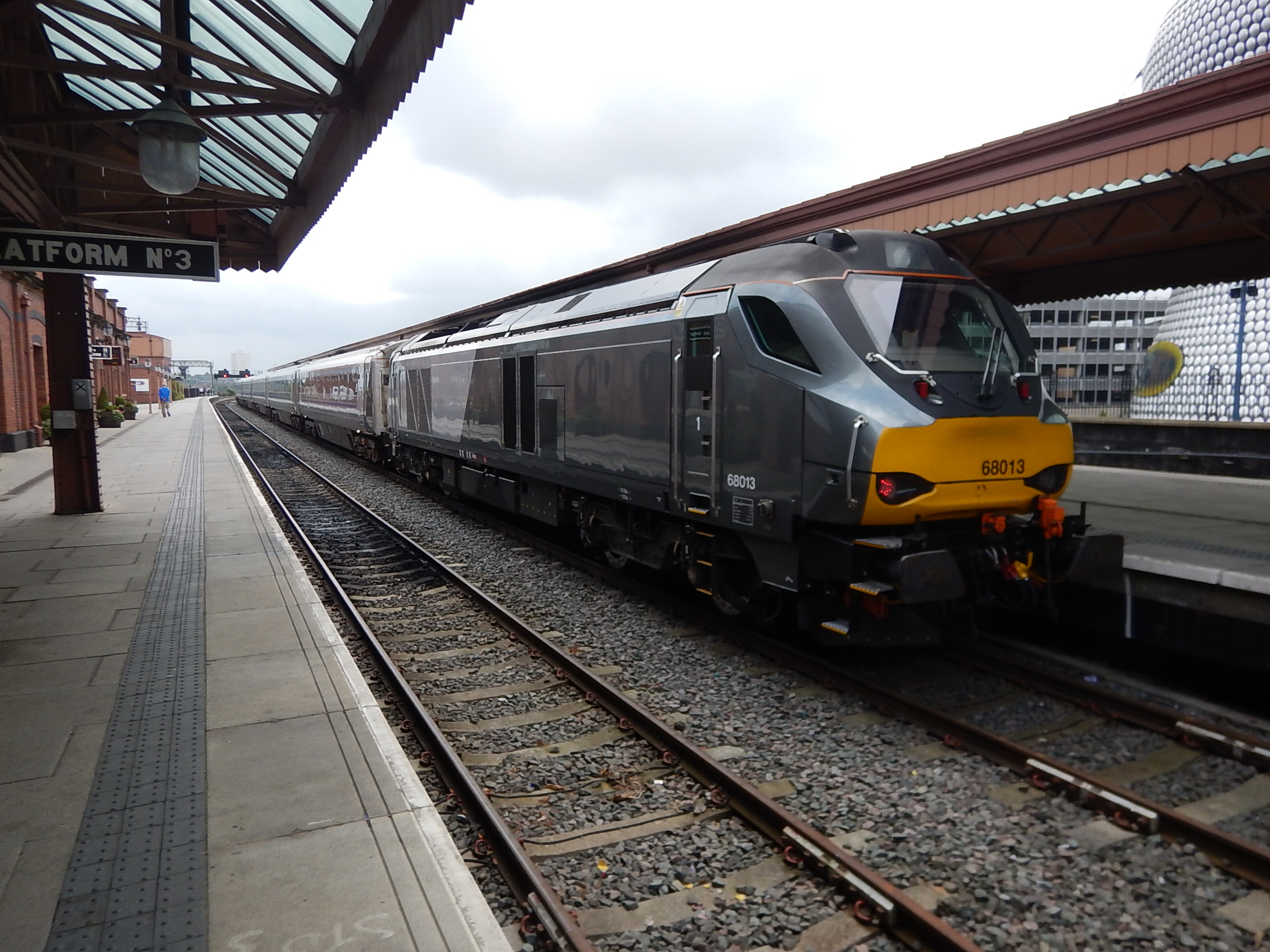
A Chiltern Main Line Train In Platform 4 At Birmingham Moor Street Station
Platform 5 on the other side of Platform 4 may have been reinstated, but there doesn’t seem to be any trains using it, as yet!
The map shows that there would appear to be space to open Platforms 3, 4 and 5, but could a clever architect squeeze in a Platform 6?
These pictures show the space for a possible Platform 5 and 6.

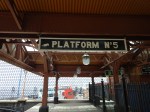

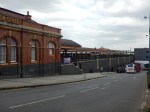

There would certainly appear to be space to shoe-horn two tracks and a new Platform 6 between the current Platform 5 and the retaining wall.
As the pictures show, Platform 5 is a platform that is long enough for any train currently envisaged that might call at Moor Street station.
Looking at the map of the station, it might even be possible to make Platform 6 even longer, if this were thought to be needed.
More Tracks Through Water Orton
This Google Map shows Water Orton station and the lines through it.

Lines Through Water Orton Station
If you look up services from Water Orton and Coleshill Parkway stations, they are certainly of the turn-up-and-wait-forever variety.
Water Orton has one train every two hours to Birmingham, but at least Coleshill Parkway has a train every half-hour.
Perhaps more lines through Water Orton will enable more trains through the area.
Looking at the rail map of Birmingham, it would be possible to go from Water Orton via the Camp Hill Line to Kings Norton and if the North to West chord was built at Bordesley to Moor Street.
It would certainly be the view of many, including myself, that a Parkway station needs a train or tram every fifteen minutes.
Kings Norton Upgrade
If the Camp Hill Line is reopened to passenger trains, then Kings North station will be the terminus.
This Google Map shows the station.
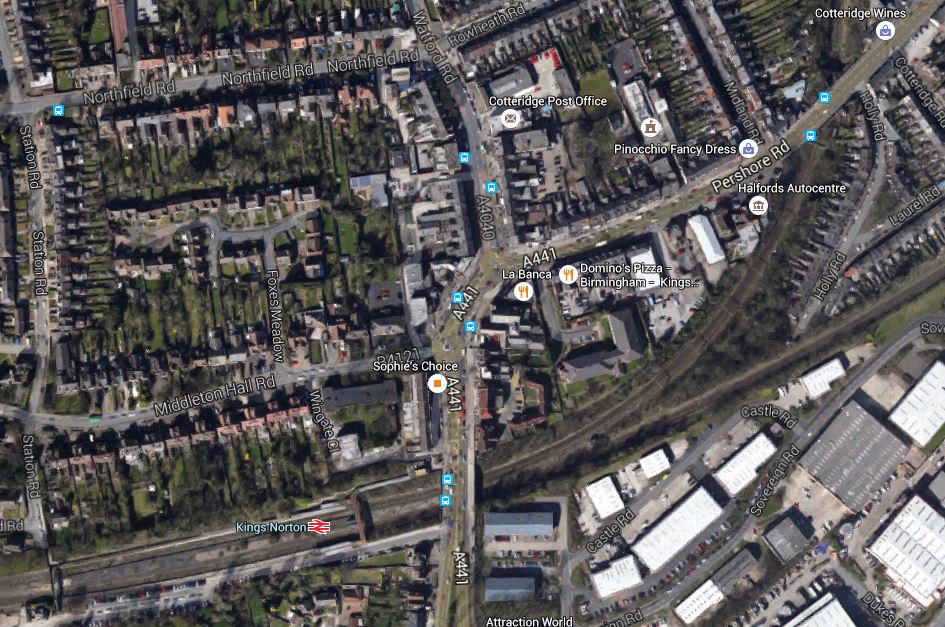
Kings Norton Station
It is a large station with an unused island platform in the middle.
These pictures show Kings Norton station.
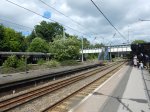
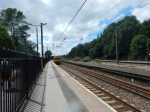
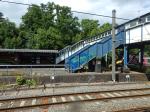

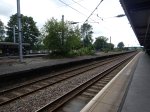
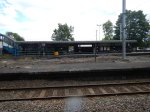
There is certainly work to be done.
But the station also has a lot of potential and space that can be utilised. It might even be possible to fit in a bay platform to turn trains back to Moor Street and New Street.
Birmingham Snow Hill Platform 4
Wikipedia says this about platforms at Birmingham Snow Hill station,
The present Snow Hill station has three platforms for National Rail trains. When it was originally reopened in 1987 it had four, but one was later converted in 1999 for use as a terminus by Midland Metro trams. The original tram terminus closed in November 2015, in order for the extension of the Midland Metro through Birmingham city centre to be connected. This includes a dedicated embankment for trams alongside the station, and will also include a new through stop serving Snow Hill. This will eventually allow the fourth platform to be returned to main-line use.
As the Midland Metro now has its own new platform outside the station, the fourth platform can soon be converted back to heavy rail use.
These pictures show the current state of the closed tram platform.


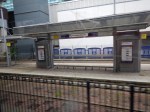

I don’t think that converting it back to heavy rail will be the most difficult of jobs.
Birmingham Station Connectivity
Although, not on the Network Rail infrastructure list, I feel that to gain the full benefits of HS2, then the line must be properly connected to Moor Street and New Street stations.
I can easily walk between Moor Street and New Street stations, but I do feel that Birmingham’s solution of using the Midland Metro as a link and to the Curzon Street HS2 station, is not the way to do it.
It needs some form of people mover. Perhaps a travelator would be better.
City Centre Ticketing
In Liverpool, a ticket to Liverpool stations, allows you to use the Underground to any of the other stations in the City Centre.
In London, many visitors by rail, add a Travelcard to their rail ticket.
Perhaps, in Birmingham, a ticket to Birmingham stations, should include the Midland Metro in the City Centre? Or a simple add-on for the Metro between Jewellery Quarter and Five Ways could be added for a few pounds.
At present, you have to buy a separate ticket. How visitor-friendly is that? At least a short journey is only a pound
If Birmingham is to make the most out of the opportunity of HS2, then they must use easy and understandable ticketing.
Chiltern’s Superb Trains
My trip down to Birmingham was in a Class 168 train, which although was a good experience for a diesel multiple unit, was spoilt as one engine went AWOL and we were late in to Moor Street.
But going home to London, I rode in what I think are one of the best long distance trains anywhere in Europe; Chiltern’s rakes of Mark 3 coaches pulled and pushed by a modern Class 68 locomotive.
- Nearly every seat gets a table and a window aligned to it.
- The seats are spcious and comfortable.
- The ride is the superb one, you always get from a Mark 3 coach.
- Trolley-service of drinks and a buffet on most services.
- Free wi-fi.
- London to Birmingham return for £19.20 with a Railcard.
- I’ve never travelled on Chiltern’s Mark 3 coaches and been unable to read my paper flat in front of me on the table.
The experience may be slower than Virgin’s, but give me Standard Class on Chiltern against First on Virgin every time between London and Birmingham.
The only problem, is that Marylebone station, isn’t as accessible as Euston from where I live. However, when Crossrail opens, times will be within a few minutes.
I can’t help feeling that Transpennine’s decision to use Class 68 locomotives and rakes of new CAF Mark 5 coaches across the Pennines, was influenced by the success of Chiltern’s flagship service and its superb rolling stock.
I’m looking forward to riding the CAF coaches in a few years, to see how they stand up to an almost forty year old British Rail coach.
I wonder how many Spanish engineers have ridden Chiltern’s trains?
I also feel that the Class 68 locomotive is an asset to a passenger service, in that so many diesel locomotives look dirty and smelly, but Class 68s seemed to have been designed to keep clean and also look how a locomotive should; powerful, purposeful and sleek.
For those, who don’t like that the trains are still diesel-hauled, there is even a Spanish solution for that, if the lines ever get electrified, in the shape of the new Class 88 electro-diesel locomotive, which is a sister of the Class 68 locomotive.
And of course, if Chiltern need some more trains and can’t find the Mark 3 coaches, they can always buy some new coaches from CAF.
Conclusions
It’s a very sensible plan and it will open up all sorts of possibilities for Birmingham.
The chords at Bordesley and the extra tracks through Water Orton would seem to open up a new route for trains across the city from Moor Street band Kings Norton to Water Orton and Nuneaton.
- New subsurban services could link Nuneaton and Kings Norton to Moor Street.
- Cross-country services might use Moor Street with a reverse, rather than New Street.
- Extra services from Moor Street to Nuneaton might take pressure off the heavily-loaded New Street to Birmingham route.
- How would the new station at Kenilworth station fit in?
But there are railways all over this area and I’m sure that the Bordesley and Water Orton improvements, will not be the last.
Already there is talk of reopening, the Sutton Park Line and the Stonebridge Railway.
I asked about Kenilworth station. I don’t know, but after Bordesley and Water vOrton are upgraded, there would be the possibility of a Warwickshire Circle, starting and finishing at Moor Street.
- Moor Street
- Solihull
- Warwick Parkway
- Warwick
- Leamington Spa with a reverse.
- Kenilworth
- Coventry
- Coventry Arena
- Bedworth
- Bermuda Park
- Nuneaton
- Coleshill Parkway
- Water Orton
- Moor Street
It would be a route, where several stations could be reopened or built from scratch. Leamington Spar incidentally already has a bay platform for the reverse.
I also think, that one of the biggest beneficiaries of all this will be Chiltern Railways.
Consider.
- Their two Birmingham termini of Show Hill and Moor Street are getting extra capacity.
- Moor Street will become a big terminal with two through and four bay platforms, all of which will be able to handle the longest Chiltern trains.
- Birmingham New Street station lacks capacity.
- The Birmingham New Street to Coventry route is seriously crowded.
- In Will Chiltern Railways Get A Second London Terminal At Old Oak Common?, I talked about Network Rail’s ideas to link the Chiltern route to the new station.
- Banbury station has been upgraded for more traffic.
- Chiltern will be running to Oxford station by the end of this year.
- Chiltern have plans in hand to run to Milton Keynes station.
We’ll certainly see extra services from London to Birmingham and possibly beyond, but will we see a triangular route going between London – Oxford – Birmingham – London?
It will depend on whether the passengers want it, but from Chiltern’s point of view, it might mean that their platforms in London, Oxford and Birmingham, and their trains, saw higher utilisation.
I suspect too, that the Oxford -Birmingham leg has more paths available and that Chiltern’s capacity problems are mainly at the London end of the Chiltern Main Line, especially now, that Banbury has been remodelled.
Chiltern Railways are an ambitious company and if they get a second terminal in London at Old Oak Common, they will certainly use it profitably.
I think that the Network Rail report shows that a few simple improvements, when thought through and executed with care can produce improvements not suspected in the original plans.
But all rail planning has to discount the London Overground Syndrome, where new stations, routes and trains, attract more passengers than originally expected.
 The Anonymous Widower