Ban Gas Hobs And Heating In Six Years, Ministers Told
The title of this post is the same as that as an article on the front page of yesterday’s copy of The Times.
This is the first paragraph.
Gas boilers and cookers should be banned in new homes within six years to meet Britain’s legally binding emissions targets, the government’s climate change advisory body recommends today.
I don’t like gas, as I find that naked gas flames affect my health, so I cook electric.
In addition to its role in carbon dioxide production, I don’t like the safety problems with gas.
Would the Grenfell disaster have been so serious, if there had been no gas in the building?
The Hundred Mile City
I heard about The Hundred Mile City on the BBC London News
It will never happen!
- Can you imagine all London Boroughs agreeing to it?
- Negotiation would be like Brexit squared.
- Armies of Nimbys and the Council For The Fossilisation Of England would have a field day.
- Linear cities were proposed for Londonn to Southampton and Ipswich to Felixstowe in the 1960s.
On the other hand, as a child, I had dreams of a circular railway through where I lived in Cockfosters, as getting to Central London was fast, but getting to my friends and relatives in Edgware and Enfield was slow.
Note that the plans involve a circular monorail. Monorails are not very common, except at theme parks. That is an idea from well into the last century.
Today, we would use tram-trains, as they are so much more functional and easily extended.
Building Under The Wires At Barking Riverside
I went to Barking Riverside yesterday, where they are building over 10,000 housing units and took these pictures where the EL1 buses from Barking station turn round.
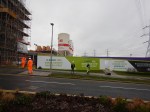




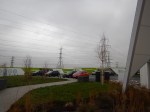
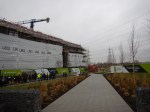
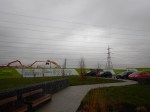
As the pictures show, there are a lot of high voltage cables running over the site.
The East London Transit
The EL1, EL2 and EL3 buses of the East London Transit connect the area to Barking station.
When I last came to this area, the buses weren’t to the high standard of New Routemasters.
Towers At Lewisham Station – 2nd February 2019
Lewisham station is becoming increasingly surrounded by tower blocks.





With the Bakerloo Line Extension planned to reach the new station around 2030, surely it is time to rebuild the station with more blocks over the tracks.
Kidbrooke Village
Kidbrooke Village is a new housing estate next to Kidbrooke station. Previously, the site was occupied by the Ferrier Estate.








The estate has over five thousand units and several towers.
I think we’re going to see a lot more developments like this.
- Good quality housing (Hopefully!)
- Local employment.
- Shops
- Parkland
I think that a railway station with a frequent well-connected service is essential. Kidbroke has a train every ten minutes in both directions, with a choice of three London terminals.
Developers like a rail service, as it makes units easier to sell or rent and the amount of car parking can be reduced.
Hopefully Kidbrooke will be turned into a thriving community.
Can Abandoned Mines Heat Our Future?
The title of this post, is same as that of the title of a public lecture I attended at The Geological Society this afternoon.
This page on the Geological Society web site, gives a summary of the lecture and details of the speaker; Charlotte Adams of Durham University.
The Concept
The basic concept is simple.
- Abandoned coal mines had their pumps turned off when they are closed and the worked areas have flooded with water, that is now at temperatures of around 12 to 20°C.
- As fifteen billion tonnes of coal have been extracted from UK coalfields, that is a lot of space to flood. An estimate of around two billion cubic metres is given.
- This means that the water holds somewhere between 27.9 and 46.5 GWH of energy in the form of heat.
- Heat pumps would be used to upgrade the temperature of this water, to provide hot water at useful temperatures for space heating.
For those unfamiliar with the concept of a heat pump, Wikipedia gives a good explanation, of which this is the first paragraph.
A heat pump is a device that transfers heat energy from a source of heat to what is called a heat sink. Heat pumps move thermal energy in the opposite direction of spontaneous heat transfer, by absorbing heat from a cold space and releasing it to a warmer one. A heat pump uses a small amount of external power to accomplish the work of transferring energy from the heat source to the heat sink.
In connection with this project, the heat source is the warm water in the mines and the heat sink is the water that is circulated to heat the buildings.
Wikipedia goes on to say this.
In heating mode, heat pumps are three to four times more effective at heating than simple electrical resistance heaters using the same amount of electricity. However, the typical cost of installing a heat pump is also higher than that of a resistance heater.
Wikipedia also has a section, which descries the use of heat pumps in district heating.
It should also be noted, that as with lots of technology, heat pumps are much improved, from the one I installed in a swimming pool in the 1980s.
Gas Is Replaced By Renewable Energy
The electricity to drive the heat pumps could be derived from renewable sources such as hydroelectric, solar, wave or wind.
Effectively, the system is using intermittent sources of electricity to create a constant source of heat suitable for space heating.
Would The Mines Run Out Of Heat Or Water?
As I understand it, the water in the mine will continue to be heated by the heat in the mines. The father of a friend, who came with me to the lecture was a coal miner and my friend confirmed it was hot in a coal mine.
The water will of course continue to flood the mine and the water pumped to the surface will probably be returned.
So the system will continue to supply heat for space heating.
How Long Will The System Supply Heat?
The system has the following characteristics.
- It is electro-mechanical.
- It is powered by electricity.
- Water is the heat transfer medium.
- Additives like anti-freeze will probably be applied to the water used for heat transfer.
There is no reason the system can’t be designed, so that it supplies heat for many years with regular maintenance and updating.
How Does The System Compare To Bunhill 2 Energy Centre?
In Bunhill 2 Energy Centre, I described Islington’s Bunhill 2 Energy Centre which uses heat generated in the Northern Line of the London Underground to provide district heating.
I am fairly sure that a lot of similar technology will be used in both applications.
This page on Wikipedia is entitled London Underground Cooling.
There is a section, which is entitled Source Of The Heat, where this is said.
The heat in the tunnels is largely generated by the trains, with a small amount coming from station equipment and passengers. Around 79% is absorbed by the tunnels walls, 10% is removed by ventilation and the other 11% remains in the tunnels.
Temperatures on the Underground have slowly increased as the clay around the tunnels has warmed up; in the early days of the Underground it was advertised as a place to keep cool on hot days. However, over time the temperature has slowly risen as the heat sink formed by the clay has filled up. When the tunnels were built the clay temperature was around 14ºC; this has now risen to 19–26ºC and air temperatures in the tunnels now reach as high as 30ºC.
So one big difference is that the Underground is warmer than the mine and this should make it a better heat source.
I feel that engineers on both projects will benefit from the ideas and experience of the others.
Would Infrastructure Funds Back This Technology?
In the UK, there are several infrastructure funds set up by companies like Aberdeen Standard, Aviva, Gresham House and L & G.
In World’s Largest Wind Farm Attracts Huge Backing From Insurance Giant, I explained why Aviva had invested nearly a billion pounds in wind farms to support pensioners and holders of their insurance policies.
Comparing the risk of using abandoned mines to heat buildings and that of offshore wind turbines generating electricity, my engineering knowledge would assign a greater risk to the turbines, providing both were built to the highest possible standards.
It’s just the onshore and offshore locations and the vagaries of the weather!
I think it is true to say, that infrastructure funds will back anything, where there is an acceptable long-term income to be made, commensurate with the costs and risk involved.
But then Government or any public or private company or organisation should not pay over the odds for the energy delivered.
Conclusion
Charlotte Adams in her lecture, asked if abandoned mines can heat our future.
The answer could well be yes, but there are other sources of heat like the London Underground, that can also be used.
World’s Largest Wind Farm Attracts Huge Backing From Insurance Giant
The title of this post, is the same as that of an article in the Business pages of yesterday’s copy of The Times.
It is not often that three words implying something big appear in the same sentence, let alone a headline! Such repetition would more likely appear in a tabloid to describe something sleazy.
Until recently, wind power was just something used by those in remote places. I remember a lady in Suffolk, who had her own turbine in the 1980s. She certainly lived well, although her deep freeze was in the next door farmer’s barn.
Now, with the building of the world’s largest wind farm; Hornsea, which is sixty miles off the coast of East Yorkshire, wind farms are talked of as creating enough energy for millions of homes.
Hornsea Project 1 is the first phase and Wikipedia says this about the turbines.
In mid 2015 DONG selected Siemens Wind Power 7 MW turbines with 154 metres (505 ft) rotor turbines for the project – around 171 turbines would be used for the wind farm.
Note that the iconic Bankside power station, that is now the Tate Modern had a capacity of 300 MW, so when the wind is blowing Hornsea Project 1 is almost four times as large.
When fully developed around 2025, the nameplate capacity will be around 6,000 MW or 6 GW.
The Times article says this about the funding of wind farms.
Wind farms throw off “long-term boring, stable cashflows”, Mr. Murphy said, which was perfect to match Aviva policyholders and annuitants, the ultimate backers of the project. Aviva has bought fixed-rate and inflation-linked bonds, issued by the project. While the coupon paid on the 15-year bonds, has not been disclosed, similar risk projects typically pay an interest rate of about 3 per cent pm their bonds. Projects typically are structured at about 30 per cent equity and 70 per cent debt.
Darryl Murphy is Aviva’s head of infrastructure debt. The article also says, that Aviva will have a billion pounds invested in wind farms by the end of the year.
Call me naive, but I can’t see a loser in all this!
- Certainly, the UK gets a lot of zero-carbon renewable energy.
- Aviva’s pensioners get good, safe pensions.
- Turbines and foundations are built at places like Hull and Billingham, which sustains jobs.
- The need for onshore wind turbines is reduced.
- Coal power stations can be closed.
The North Sea just keeps on giving.
- For centuries it has been fish.
- Since the 1960s, it has been gas.
- And then there was oil.
- Now, we’re reaping the wind.
In the future, there could be even more wind farms like Hornsea.
Ease Of Funding
Large insurance companies and investment funds will continue to fund wind farms, to give their investors and pensioners a return.
Would Aviva be so happy to fund a large nuclear power station?
Large Scale Energy Storage
The one missing piece of the jigsaw is large scale energy storage.
I suspect that spare power could be used to do something useful, that could later be turned into energy.
- Hydrogen could be created by electrolysis for use in transport or gas grids.
- Aluminium could be smelted, for either use as a metal or burnt in a power station to produce zero-carbon electricity.
- Twenty-four hour processes, that use a lot of electricity, could be built to use wind power and perhaps a small modular nuclear reactor.
- Ice could be created, which can be used to increase the efficiency of large gas-turbine power plants.
- Unfortunately, we’re not a country blessed with mountains, where more Electric Mountains can be built.
- Electricity will be increasingly exchanged with countries like Belgium, France, Germany, Iceland, Norway and The Netherlands.
There will be other wacky ideas, that will be able to store GWhs of electricity.
These are not wacky.
Storage In Electric Vehicles
Consider that there are three million vehicles in the UK. Suppose half of these were electric or plug-in hybrid and had an average battery size of 50 kWh.
This would be a total energy storage of 75,000 MWh or 75 GWh. It would take the fully developed 6GW Hornsea wind far over twelve hours to charge them all working at full power.
Storage In Electric And Hybrid Buses
London has around 8,500 buses, many of which are hybrid and some of electric.
If each has a 50 kWh batttery, then that is 425 MWh or .0.425 GWH. If all buses in the UK were electric or plug-in hybrid, how much overnight electricity could they consume.
Scaling up from London to the whole country, would certainly be a number of GWhs.
Storage In Electric Trains
I also believe that the average electric train in a decade or so could have a sizeable battery in each coach.
If we take Bombardier they have an order book of over four hundred Aventra trains, which is a total of nearly 2,500 coaches.
If each coach has an average battery size of 50 kWh, then that is 125 MWh or 0.125 GWh.
When you consider than Vivarail’s two-car Class 230 train has a battery capacity of 400 kWh, if the UK train fleet contains a high-proportion of battery-electric trains, they will be a valuable energy storage resource.
Storage in Housing, Offices and Other Buildings
For a start there are twenty-five million housing units in the UK.
If just half of these had a 10 kWh battery storage system like a Tesla Powerwall, this would be a storage capacity of 125 GWh.
I suspect, just as we are seeing vehicles and trains getting more efficient in their use of electricity, we will see buildings constructed to use less grid electricity and gas.
- Roofs will have solar panels.
- Insulation levels will be high.
- Heating may use devices like ground source heat pumps.
- Battery and capacitors will be used to store electricity and provide emergency back up.
- Electric vehicles will be connected into the network.
- The system will sell electricity back to the grid, as required.
Will anybody want to live in a traditional house, that can’t be updated to take part in the energy revolution?
Will The Electricity Grid Be Able To Cope?
National Grid have been reported as looking into the problems that will happen in the future.
- Intermittent power from increasing numbers of wind and solar farms.
- Charging all those electric vehicles.
- Controlling all of that distributed storage in buildings and vehicles.
- Maintaining uninterrupted power to high energy users.
- Managing power flows into and out of the UK on the various interconnectors.
It will be just like an Internet of electricity.
And it will be Europe-wide! and possibly further afield.
Conclusion
The UK will have an interesting future as far as electricity is concerned.
Those that join it like Aviva and people who live in modern, energy efficient houses will do well.
Could Hydrogen Replace Natural Gas In Domestic Properties?
This post was suggested by this article on the Chronicle Live, which is entitled Thousands of Tyneside Homes Could Be Fuelled By Hydrogen Under £22bn Plan.
This is the first three paragraphs.
Thousands of homes across Tyneside and the wider North East could be converted to run on hydrogen in an effort to hit climate change targets.
The H21 North of England report, published today, has called for more than 700,000 homes across Tyneside and Teesside to be converted to run on hydrogen by 2034.
The moves have been proposed by Northern Gas Networks, which supplies gas to the North East, and its North West and Midlands counterpart Cadent, in association with Norwegian energy company Equinor.
It would be feasible to convert houses from natural gas to hydrogen.
In fact, there is a small proportion of hydrogen in natural gas anyway.
But just because it is feasible, it doesn’t mean it is a good idea.
Who Pays?
Consumers would feel, that they shouldn’t pay any more.
Conversion
I remember being converted from town to natural gas in the 1970s.
We only had an ancient gas cooker and conversion was not a problem, but what will happen, if your boiler or cooker is not convertible?
New Technologies
I don’t like gas cookers, so in my current house, I only have a four-year-old modern boiler, so houses like mine wouldn’t be a problem.
Also according to various people, I’ve met, the trend in cookers is to go to induction appliances, which would take a variable out of the conversion equation.
I see lots of new housing and other construction, advertised as low energy, with high insulation levels and solar panels everywhere.
Add in innovative district heating systems and I can see new housing being built without the need of a gas supply.
This must surely be safer, as gas does seem to cause a lot of deaths in homes.
Just Say No!
So what happens, if you say no and your area is being converted to hydrogen?
Do you lose your gas supply?
Creation Of The Hydrogen
This article on the Internet is entitled Northern Gas Networks: One Company’s Ambitious Plan To Cut Carbon Emissions For An Entire Nation.
This is said about the creation of the hydrogen.
The first step is getting access to enough hydrogen. The most widely used method to produce hydrogen is steam-methane reforming, which involves reacting methane (CH4) with high-temperature steam (H2O), which creates carbon dioxide (CO2) and hydrogen (H2). But hydrogen isn’t a clean fuel if that carbon dioxide is put into the atmosphere. So the reactor which produces hydrogen will have to be paired with carbon capture and storage, a process where carbon dioxide is captured before it enters the air, and then pumped underground for safe, permanent storage.
Companies, politicians and academics have been waffling on about carbon capture and storage for decades and I believe at the present time, it is one of those technologies, which is akin to burning large numbers of fifty pound notes.
I do think that at some point in the future, a clever chemist will design a chemical plant, where carbon dioxide goes in one end and sheets, rods or components of carbon fibre, graphene or other carbon form come out the other end.
In my view it is much better to not create the carbon dioxide in the first place.
The obvious way is to use surplus wind power to electrolyse water and produce hydrogen. It is a clean process and the only by-product is oxygen, which no-one has yet flagged up as dangerous.
Conclusion
The objective of this project may be laudable, but there is a lot of development and thinking that needs to be done.
Tottenham Hale Station Becomes Clearer
I went to Tottenham Hale station this morning and took these two series of pictures.
These were of the station itself.



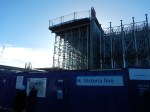
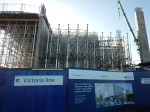



Note.
- The new step-free footbridge.
- The giant box of the new station under the scaffolding.
- The angular roof of the bus station.
These pictures show the construction site of a new tower on the other site of the tracks.



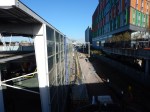
Note.
- A 32-storey tower is going on the site, so the foundations will be deep.
- The third track and the new platform 3 at Tottenham Hale station.
- The concrete structure between the tracks and the tower could be demolished.
This Google Map shows the area.
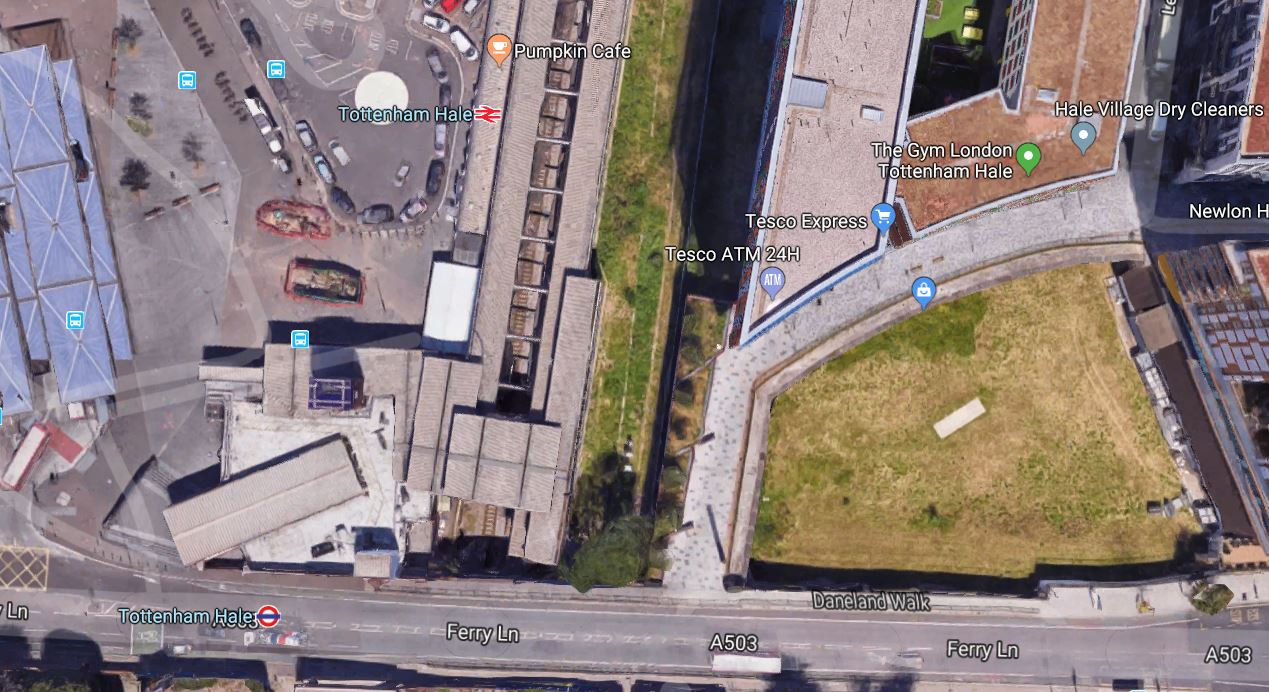
The new tower is going into the green space in the bottom-right of the map.
West Anglia Four-Tracking
It is an ambition of Newtwork Rail, Greater Anglia and Stansted Airport to have four tracks on the West Anglia Main Line.
It very much looks as if, the building of this tower will enable a fourth track to be threaded through alongside the third track being constructed at the present time for the new service between Stratford to Meridian Water stations.
I think though, that the bridge could be a bigger problem, as this picture shows.
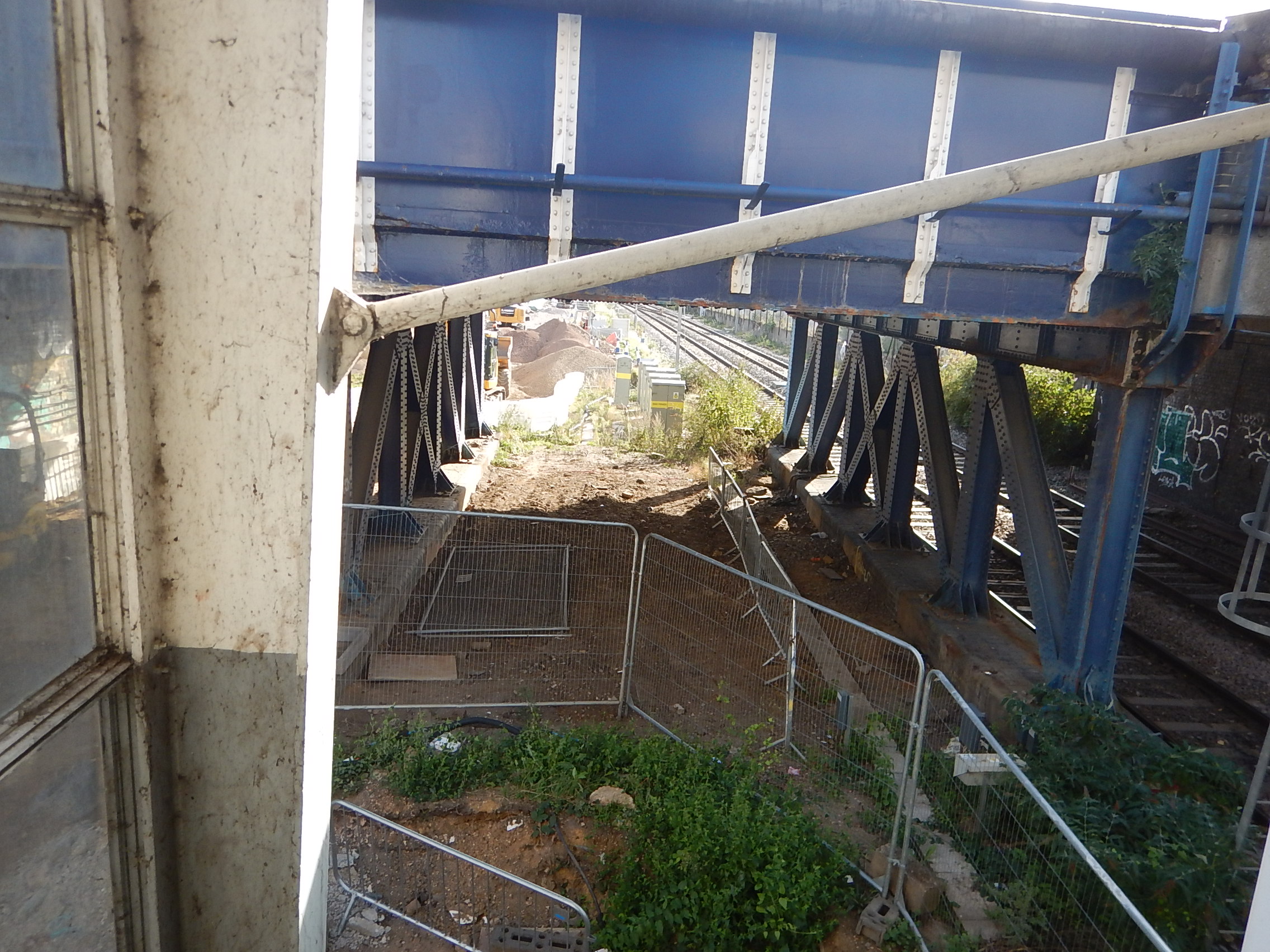
Could it be considered a bridge on crutches?
But a well-designed replacement bridge would probably allow a fourth track to be laid underneath!
 The Anonymous Widower