World’s Largest Wind Farm Attracts Huge Backing From Insurance Giant
The title of this post, is the same as that of an article in the Business pages of yesterday’s copy of The Times.
It is not often that three words implying something big appear in the same sentence, let alone a headline! Such repetition would more likely appear in a tabloid to describe something sleazy.
Until recently, wind power was just something used by those in remote places. I remember a lady in Suffolk, who had her own turbine in the 1980s. She certainly lived well, although her deep freeze was in the next door farmer’s barn.
Now, with the building of the world’s largest wind farm; Hornsea, which is sixty miles off the coast of East Yorkshire, wind farms are talked of as creating enough energy for millions of homes.
Hornsea Project 1 is the first phase and Wikipedia says this about the turbines.
In mid 2015 DONG selected Siemens Wind Power 7 MW turbines with 154 metres (505 ft) rotor turbines for the project – around 171 turbines would be used for the wind farm.
Note that the iconic Bankside power station, that is now the Tate Modern had a capacity of 300 MW, so when the wind is blowing Hornsea Project 1 is almost four times as large.
When fully developed around 2025, the nameplate capacity will be around 6,000 MW or 6 GW.
The Times article says this about the funding of wind farms.
Wind farms throw off “long-term boring, stable cashflows”, Mr. Murphy said, which was perfect to match Aviva policyholders and annuitants, the ultimate backers of the project. Aviva has bought fixed-rate and inflation-linked bonds, issued by the project. While the coupon paid on the 15-year bonds, has not been disclosed, similar risk projects typically pay an interest rate of about 3 per cent pm their bonds. Projects typically are structured at about 30 per cent equity and 70 per cent debt.
Darryl Murphy is Aviva’s head of infrastructure debt. The article also says, that Aviva will have a billion pounds invested in wind farms by the end of the year.
Call me naive, but I can’t see a loser in all this!
- Certainly, the UK gets a lot of zero-carbon renewable energy.
- Aviva’s pensioners get good, safe pensions.
- Turbines and foundations are built at places like Hull and Billingham, which sustains jobs.
- The need for onshore wind turbines is reduced.
- Coal power stations can be closed.
The North Sea just keeps on giving.
- For centuries it has been fish.
- Since the 1960s, it has been gas.
- And then there was oil.
- Now, we’re reaping the wind.
In the future, there could be even more wind farms like Hornsea.
Ease Of Funding
Large insurance companies and investment funds will continue to fund wind farms, to give their investors and pensioners a return.
Would Aviva be so happy to fund a large nuclear power station?
Large Scale Energy Storage
The one missing piece of the jigsaw is large scale energy storage.
I suspect that spare power could be used to do something useful, that could later be turned into energy.
- Hydrogen could be created by electrolysis for use in transport or gas grids.
- Aluminium could be smelted, for either use as a metal or burnt in a power station to produce zero-carbon electricity.
- Twenty-four hour processes, that use a lot of electricity, could be built to use wind power and perhaps a small modular nuclear reactor.
- Ice could be created, which can be used to increase the efficiency of large gas-turbine power plants.
- Unfortunately, we’re not a country blessed with mountains, where more Electric Mountains can be built.
- Electricity will be increasingly exchanged with countries like Belgium, France, Germany, Iceland, Norway and The Netherlands.
There will be other wacky ideas, that will be able to store GWhs of electricity.
These are not wacky.
Storage In Electric Vehicles
Consider that there are three million vehicles in the UK. Suppose half of these were electric or plug-in hybrid and had an average battery size of 50 kWh.
This would be a total energy storage of 75,000 MWh or 75 GWh. It would take the fully developed 6GW Hornsea wind far over twelve hours to charge them all working at full power.
Storage In Electric And Hybrid Buses
London has around 8,500 buses, many of which are hybrid and some of electric.
If each has a 50 kWh batttery, then that is 425 MWh or .0.425 GWH. If all buses in the UK were electric or plug-in hybrid, how much overnight electricity could they consume.
Scaling up from London to the whole country, would certainly be a number of GWhs.
Storage In Electric Trains
I also believe that the average electric train in a decade or so could have a sizeable battery in each coach.
If we take Bombardier they have an order book of over four hundred Aventra trains, which is a total of nearly 2,500 coaches.
If each coach has an average battery size of 50 kWh, then that is 125 MWh or 0.125 GWh.
When you consider than Vivarail’s two-car Class 230 train has a battery capacity of 400 kWh, if the UK train fleet contains a high-proportion of battery-electric trains, they will be a valuable energy storage resource.
Storage in Housing, Offices and Other Buildings
For a start there are twenty-five million housing units in the UK.
If just half of these had a 10 kWh battery storage system like a Tesla Powerwall, this would be a storage capacity of 125 GWh.
I suspect, just as we are seeing vehicles and trains getting more efficient in their use of electricity, we will see buildings constructed to use less grid electricity and gas.
- Roofs will have solar panels.
- Insulation levels will be high.
- Heating may use devices like ground source heat pumps.
- Battery and capacitors will be used to store electricity and provide emergency back up.
- Electric vehicles will be connected into the network.
- The system will sell electricity back to the grid, as required.
Will anybody want to live in a traditional house, that can’t be updated to take part in the energy revolution?
Will The Electricity Grid Be Able To Cope?
National Grid have been reported as looking into the problems that will happen in the future.
- Intermittent power from increasing numbers of wind and solar farms.
- Charging all those electric vehicles.
- Controlling all of that distributed storage in buildings and vehicles.
- Maintaining uninterrupted power to high energy users.
- Managing power flows into and out of the UK on the various interconnectors.
It will be just like an Internet of electricity.
And it will be Europe-wide! and possibly further afield.
Conclusion
The UK will have an interesting future as far as electricity is concerned.
Those that join it like Aviva and people who live in modern, energy efficient houses will do well.
Could Hydrogen Replace Natural Gas In Domestic Properties?
This post was suggested by this article on the Chronicle Live, which is entitled Thousands of Tyneside Homes Could Be Fuelled By Hydrogen Under £22bn Plan.
This is the first three paragraphs.
Thousands of homes across Tyneside and the wider North East could be converted to run on hydrogen in an effort to hit climate change targets.
The H21 North of England report, published today, has called for more than 700,000 homes across Tyneside and Teesside to be converted to run on hydrogen by 2034.
The moves have been proposed by Northern Gas Networks, which supplies gas to the North East, and its North West and Midlands counterpart Cadent, in association with Norwegian energy company Equinor.
It would be feasible to convert houses from natural gas to hydrogen.
In fact, there is a small proportion of hydrogen in natural gas anyway.
But just because it is feasible, it doesn’t mean it is a good idea.
Who Pays?
Consumers would feel, that they shouldn’t pay any more.
Conversion
I remember being converted from town to natural gas in the 1970s.
We only had an ancient gas cooker and conversion was not a problem, but what will happen, if your boiler or cooker is not convertible?
New Technologies
I don’t like gas cookers, so in my current house, I only have a four-year-old modern boiler, so houses like mine wouldn’t be a problem.
Also according to various people, I’ve met, the trend in cookers is to go to induction appliances, which would take a variable out of the conversion equation.
I see lots of new housing and other construction, advertised as low energy, with high insulation levels and solar panels everywhere.
Add in innovative district heating systems and I can see new housing being built without the need of a gas supply.
This must surely be safer, as gas does seem to cause a lot of deaths in homes.
Just Say No!
So what happens, if you say no and your area is being converted to hydrogen?
Do you lose your gas supply?
Creation Of The Hydrogen
This article on the Internet is entitled Northern Gas Networks: One Company’s Ambitious Plan To Cut Carbon Emissions For An Entire Nation.
This is said about the creation of the hydrogen.
The first step is getting access to enough hydrogen. The most widely used method to produce hydrogen is steam-methane reforming, which involves reacting methane (CH4) with high-temperature steam (H2O), which creates carbon dioxide (CO2) and hydrogen (H2). But hydrogen isn’t a clean fuel if that carbon dioxide is put into the atmosphere. So the reactor which produces hydrogen will have to be paired with carbon capture and storage, a process where carbon dioxide is captured before it enters the air, and then pumped underground for safe, permanent storage.
Companies, politicians and academics have been waffling on about carbon capture and storage for decades and I believe at the present time, it is one of those technologies, which is akin to burning large numbers of fifty pound notes.
I do think that at some point in the future, a clever chemist will design a chemical plant, where carbon dioxide goes in one end and sheets, rods or components of carbon fibre, graphene or other carbon form come out the other end.
In my view it is much better to not create the carbon dioxide in the first place.
The obvious way is to use surplus wind power to electrolyse water and produce hydrogen. It is a clean process and the only by-product is oxygen, which no-one has yet flagged up as dangerous.
Conclusion
The objective of this project may be laudable, but there is a lot of development and thinking that needs to be done.
Tottenham Hale Station Becomes Clearer
I went to Tottenham Hale station this morning and took these two series of pictures.
These were of the station itself.



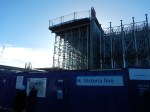




Note.
- The new step-free footbridge.
- The giant box of the new station under the scaffolding.
- The angular roof of the bus station.
These pictures show the construction site of a new tower on the other site of the tracks.




Note.
- A 32-storey tower is going on the site, so the foundations will be deep.
- The third track and the new platform 3 at Tottenham Hale station.
- The concrete structure between the tracks and the tower could be demolished.
This Google Map shows the area.
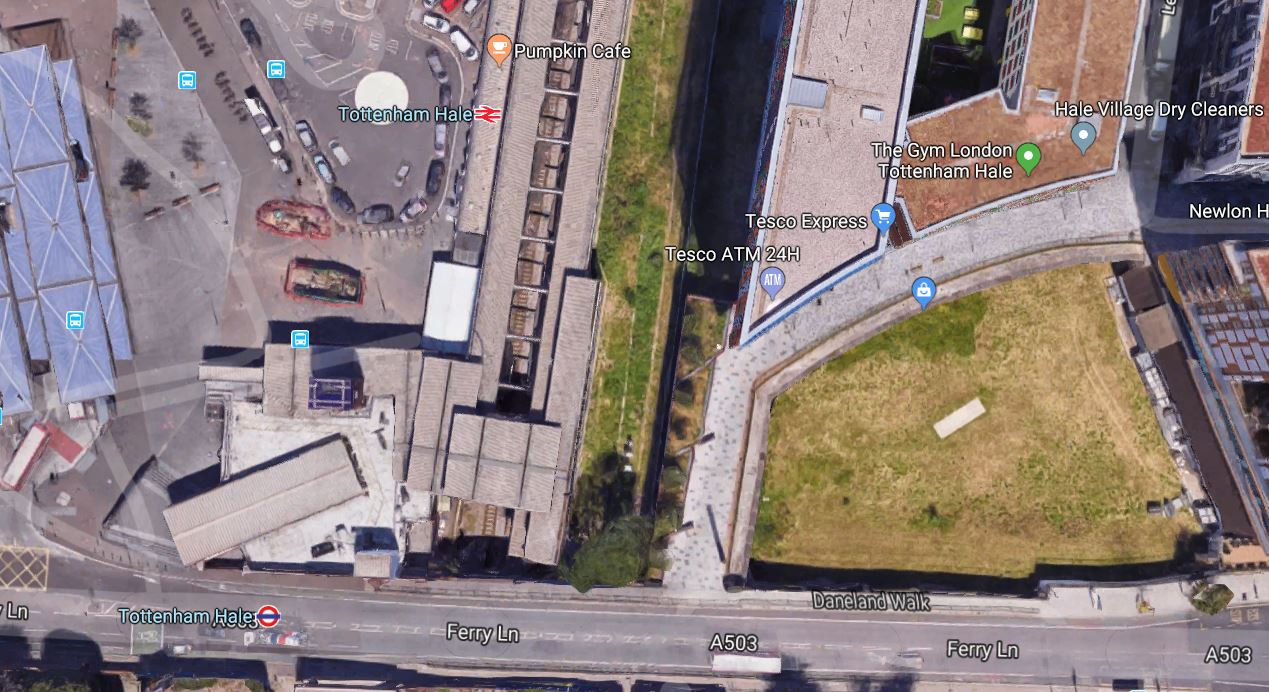
The new tower is going into the green space in the bottom-right of the map.
West Anglia Four-Tracking
It is an ambition of Newtwork Rail, Greater Anglia and Stansted Airport to have four tracks on the West Anglia Main Line.
It very much looks as if, the building of this tower will enable a fourth track to be threaded through alongside the third track being constructed at the present time for the new service between Stratford to Meridian Water stations.
I think though, that the bridge could be a bigger problem, as this picture shows.
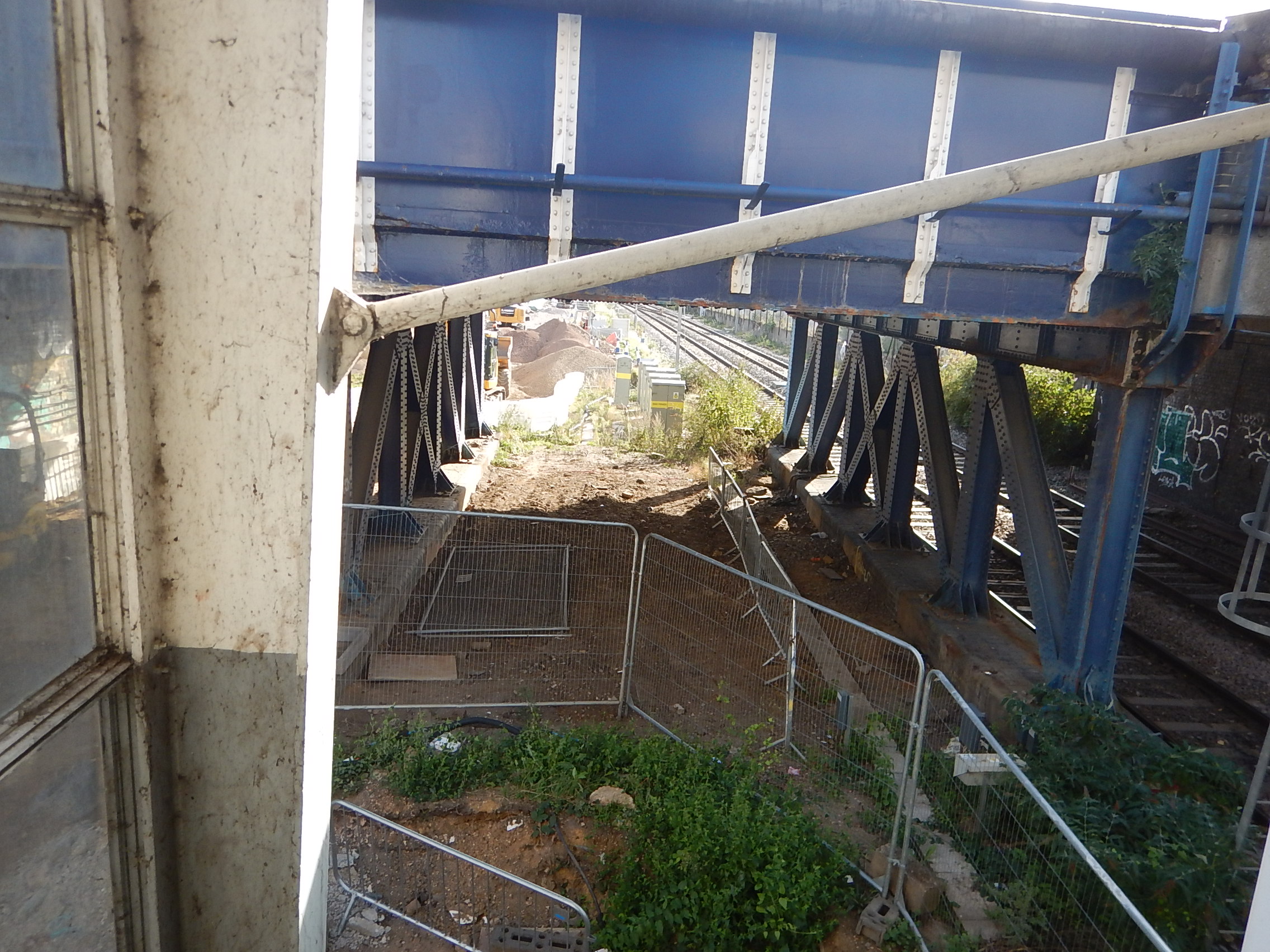
Could it be considered a bridge on crutches?
But a well-designed replacement bridge would probably allow a fourth track to be laid underneath!
Windsor Link Railway Becomes Serious
I’ve always thought that the thinking behind the Windsor Link Railway was something of which I could approve.
It is a simple idea to connect Windsor’s two rail links and in a second phase provide Western rail access to Heathrow Airport.
This article on Global Rail News is entitled Consortium Submits Proposal For Windsor Link Railway In The UK.
This is the first two paragraphs of the article.
A consortium including global investor Meridiam has submitted a market-led proposal to the UK government to build the Windsor Link Railway.
Phase 1 of the project will cost £370 million and will see a new rail tunnel constructed in Windsor – as well as new houses – to connect the South Western and Great Western main lines. Phase 2 will connect Heathrow to the west.
I detailed the route in Walking The Proposed Route Of The Windsor Link Railway.
But what impressed me about the proposal, was the opportunities that it gives for new housing.
New housing is mentioned in my extract from the Global Rail News article and I put forward my thoughts in Is This One Of The Most Valuable Sites For New Development In The UK?.
This was my conclusion two years ago, when I wrote that post.
The Windsor Link Railway, is a project that must be judged as a whole.
But do that and there is a lot of money to be made from property development, which would more than pay for the railway.
If anything, after the wedding of the Duke and Duchess of Sussex, there is more money to be made from the Windsor Link Railway.
I am not surprised,, Meridiam have backed the project.
L&G To Build 3,000 Affordable Homes By 2022
The title of this post, is the same as that of this article on Construction News.
This is said.
Legal & General is to start building affordable homes with the aim of delivering 3,000 a year by 2022.
The firm said it will target affordable housing due to underinvestment in the sector.
L&G is aiming to become the “leading affordable housing provider in the UK” by drawing on its £15bn investment programme, according to chief executive Nigel Wilson.
It looks like the story could be better than the headline.
Existing EVs Could Steer Energy To 300,000 Homes
The title of this post, is the same as this article on the Utility Week web site.
This is the opening two paragraphs.
Existing electric vehicles (EVs) in the UK could contribute more than 114MW to the National Grid, enough to power over 300,000 homes.
Research commissioned by Ovo Energy suggests the figure could be achieved based on the current 19,000 Nissan Leaf EVs registered in the UK using new vehicle-to-grid (V2G) chargers.
The article goes on to discuss this in detail.
So what is vehicle-to-grid?
Wikipedia has this summary.
Vehicle-to-grid (V2G) describes a system in which plug-in electric vehicles, such as electric cars (BEV), plug-in hybrids (PHEV) or hydrogen Fuel Cell Electric Vehicles (FCEV), communicate with the power grid to sell demand response services by either returning electricity to the grid or by throttling their charging rate.
Vehicle-to-grid can be used with gridable vehicles, that is, plug-in electric vehicles (BEV and PHEV), with grid capacity. Since at any given time 95 percent of cars are parked, the batteries in electric vehicles could be used to let electricity flow from the car to the electric distribution network and back. This represents an estimated value to the utilities of up to $4,000 per year per car.
If you are thinking about buying an electric car or van, read the article and other sources. Wikipedia seems a good start.
At its simplest, it would appear that if you buy an electric vehicle, it would be prudent to fit a V2G charger in your garage or parking space.
I would expect, that the charging system is sophisticated, so that if you want to use the car, there is sufficient charge and the power hasn’t been sold back to the grid.
It will be very interesting to see how this technology develops.
Elizabeth Line Delivery To Top Original Forecasts On New Homes Created With Property Values Expected To Soar
The title of this post is the same as this article on City AM.
This is the first three paragraphs.
The number of homes and jobs created due to the development of the £14.8bn Elizabeth Line is set to greatly surpass expectations, according to a new report by commercial property agency GVA.
The research, commissioned by Crossrail, found that the impact of the new railway on the creation of new homes and impact on property value, is set to be significantly greater than GVA originally predicted in a 2012 report.
GVA expects 90,599 new homes along the route by 2021 – higher than the 57,000 new homes predicted in the previous report. GVA also expects a £10.6bn increase in property values within 1km of an Elizabeth Line station by 2021.
Although, there are lies, damned lies and forecasts from property consultants, the significance here, is that both surveys were done by the same company.
From personal experience, I know that London’s last big railway project, the Overground, had a similar beffect.
I think these and other rail developments will increase property development and values in the next few years.
- Birmingham electrification and new train fleet.
- Blackpool and North-West electrification.
- Edinburgh Glasgow Improvement Program
- Exeter local services expansion.
- Hasting’s HighSpeed services from St. Pancras
- Manchester Metrolink expansion.
- Merseyrail’s new train fleet.
- Midland Metro expansion.
- Ordsall Chord
- Southend Branch improvement and new trains.
- Thameslink
- Tyne and Wear Metro’s new train fleet
Before buying a house look at what is happening to the trains and trams.
Westminster Proposes A Voluntary Mansion Tax
This may seem a bit strange for the Tories’ flagship Council, but it does seem well researched, according to a report in today’s Sunday Times.
Any house worth over £10 million would be put in a new band above Council Tax Band H and the owners would pay double the Band H rate of tax, which is currently £1,376 a year.
Westminster has 2,000 properties in this band, that are worth over £10 million and the scheme would raise £2.75 million, if everybody paid the extra, which would be voluntary.
It’s an interesting concept, that has been well-thought out.
But like most radical plans, I doubt it will see the light of day!
London’s Housing Market Is Changing
This article in Construction Enquirer is entitled Quintain launches London’s largest build to rent site.
Quintain are to build thousands of rental homes at Wembley Park around Wembley Stadium.
Reading the article, they seem to be making a professional job of it.
- 3,000 houses will start construction this year.
- 5,000 houses will be built over seven years.
- There will be a primary School, a seven acre park and a landscaped square.
- Four companies will share the building.
- Quintain have even set up their own company to manage the properties and their rental.
- Brent Council seem to have given the development their blessing.
Looking back to the 1970s, when C, myself and our three boys were looking for somewhere to live, and were unable to get a mortgage because my income wasn’t in any way guaranteed, we had no option but to rent.
We had one choice of a quality development in London, where we could rent and that was the Barbican.
I don’t think we’d have gone to Wembley, but we would have loved to have had a choice.
I suspect we could see other developments like this all over the country.
Everyone will benefit.
Development At The Royal Arsenal
The historic Royal Arsenal site at Woolwich is being developed.
Wikipedia gives a good summary of present day developments.
This is the summary.
The sprawling Arsenal site is now one of the focal points for redevelopment in the Thames Gateway zone, but the links to its historic past are not lost. Many notable buildings in the historic original (West) site are being retained in the redevelopment; the site includes Firepower – The Royal Artillery Museum telling the story of the Royal Artillery, and Greenwich Heritage Centre which tells the story of Woolwich, including the Royal Arsenal. Parts of the Royal Arsenal have been used to build residential and commercial buildings. One of the earliest developments was Royal Artillery Quays, a series of glass towers rising along the riverside built by Barratt Homes in 2003.
Underneath the latest developments is the new Woolwich station for Crossrail.
These are some pictures I took.











According to Wikipedia it is one of the biggest concentrations of Grade I and Grade II listed buildings converted for residential use.
This aerial picture shows the site from the South East.
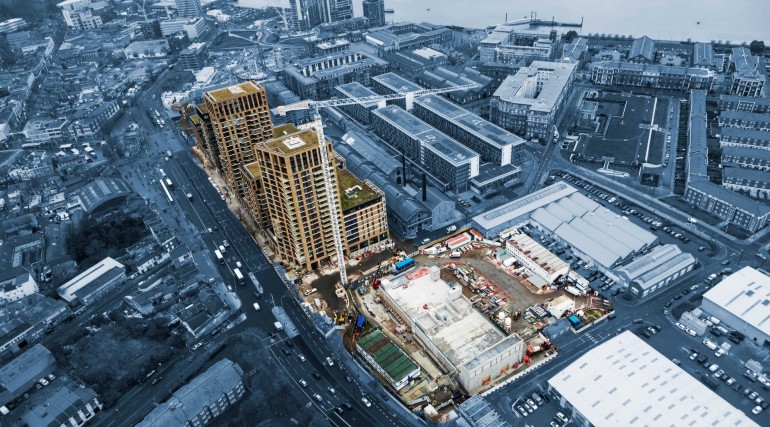
The station is behind the towers along the main road.
Woolwich Station As An Interchange
Woolwich station has not been designed as an intended interchange, but it is only a short walk away from Woolwich Arsenal station, which has connections to Southeastern and DLR services.
As the walking connection passes several useful shops including a large Marks and Spencer food store, who knows how people will use the interchange?

