Marsh Barton Station – A Ride-To-Work Station
According to this article on pbctoday, work has started at the new Marsh Barton station in Exeter.
This first paragraph from the article makes it clear.
Graham has commenced works on the construction of the new £16m Marsh Barton railway station in Exeter.
This Google Map shows the location.
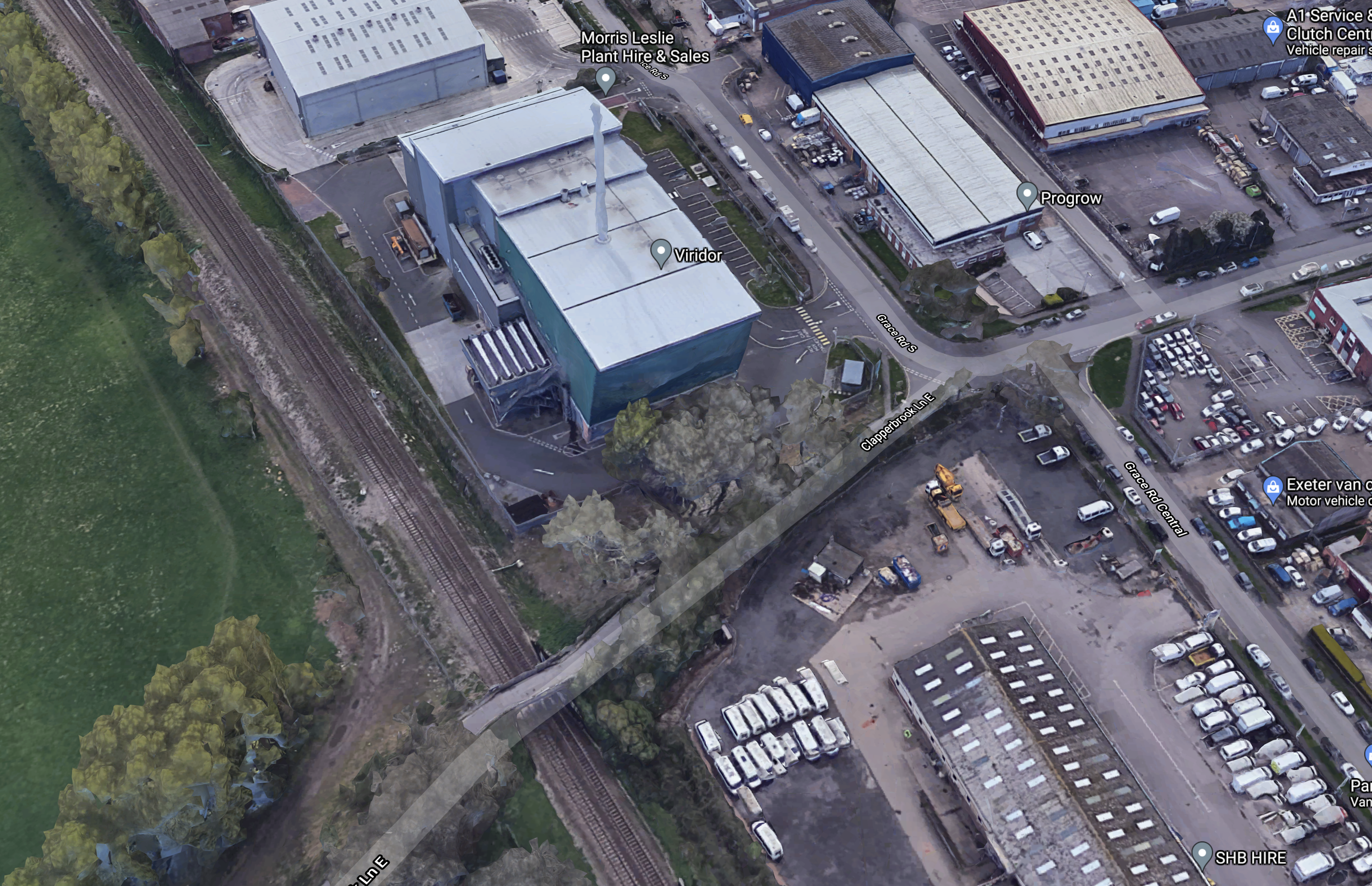
Note.
- The Riviera Line between Paignton and Exeter towards the Western side of the map.
- Clapperbrook Lane running to the South-West corner of the map over the railway.
- The large blue-clad building with the chimney, is the Viridor energy-from-waste plant.
- Marsh Barton itself is a large trading estate to the North-East of the railway.
The station will be built where Clapperbrook Lane crosses the railway,
This document of the Devon County Council (DCC) web site gives more details about the station.
This image from the DCC document shows how the completed station will look.
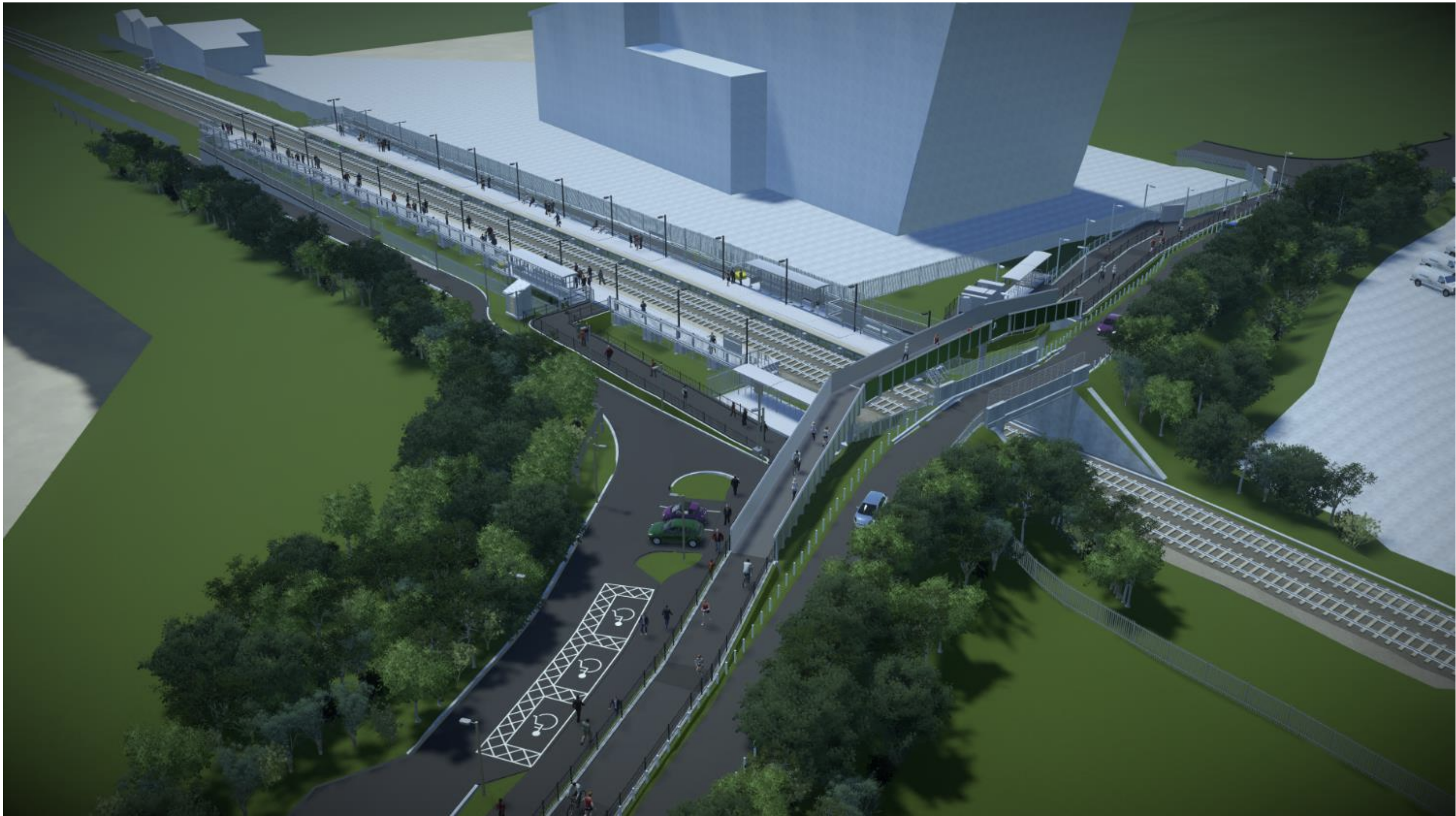
These are my thoughts.
Crossing The Tracks
A cycle and foot bridge will be built parallel to the current Clapperbrook Lane East Bridge over the railway.
The DCC document says this about the bridge.
The key changes from the previous proposal relates to the ramps and access
between the two platforms. The previous design included ramps running parallel to
the railway, with long ramps and imposing structures due to Network Rail
requirements for their asset. The redesign now includes the ramps and a new bridge
constructed parallel to Clapperbrook Lane. This will instead be a Devon County
Council-owned asset and allows Devon County Council standards to be applied for
their pedestrian bridges. This is more in line with preferences expressed by disability
groups who supported shorter length but slightly steeper gradient with resting
platforms.
It looks to me that the final design will be much more aesthetically-pleasing than some of the structure Network Rail have erected lately.
These pictures show Network Rail’s traditional approach at Horden station.

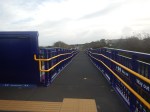
I feel the Devonian approach could be better, when I see it.
From the Google Map 3D image of the station, it looks like the bridge could be already under construction, so I don’t think, I’ll have long to wait.
The Platforms
The DCC document says that there will be two 124 metre long platforms, which will take six-car local trains.
- 3 x 2-car Class 150 trains will be 120.2 metres long
- 3 x 2-car Class 156 trains will be 138.2 metres long
- 2 x 3-car Class 165 trains will be 137.1 metres long
- 1 x 5-car Class 800 train is 130 metres long
It strikes me that although 124 metres can accommodate a formation of three Class 150 trains, it might be too short in the future.
Especially, as trains likely to be available in battery-electric versions, which will surely be used to decarbonise the Riviera Line in the future, all have cars of 23 metres or longer.
Both platforms appear to have just a single waiting shelter.
Cycle Parking
There are twenty parking spaces for cycles on each side of the line.
The DCC document says this about local housing and cycling.
The station will be within reasonable cycling distance of the 2,500 dwelling South
West Exeter strategic allocation and Alphington village and so forms an important
part of mitigating traffic impacts on routes on the western side of the city.
Is there enough provision for the secure storage of cycles?
Disabled Parking
There are just three parking spaces for disabled passengers.
Car Parking
There are no generally-available car parking spaces.
The DCC document says this about car parking.
The scheme will also support aims for low-car development aspirations as part of the
emerging Liveable Exeter housing plans, which includes proposals for strategic
levels of housing in the Marsh Barton area, all within easy walking distance of the
station.
But will the station persuade local residents to forgo driving into Exeter and use the train?
Who Will Use The Station?
The DCC document talks of Marsh Barton station being a destination station for those who work in the area.
It also says this about leisure use.
In addition, the existing Clapperbrook Lane adjacent to the station provides an important link into the Riverside Valley multi-use trail network for leisure trips as well as commuter journeys to RD&E and County Hall, within a short walk/cycle distance of the station. Being located adjacent to a high quality, attractive cycle network offers huge potential to improve integration between rail and cycling.
Currently the lane is very popular with over 400 cyclists per day recorded crossing the rail bridge; however, it is narrow with poor visibility and although lightly trafficked is not suitable for all young families, people with disabilities or people less confident on bicycles.
I have a feeling that the station will need some extra facilities to attract more passengers. Ideas like a drop-off and pick-up facility, a warm place to wait and perhaps a local shuttle bus come to mind.
But as I said in the title it is very much a Ride-To-Work station.
Conclusion
The station has an interesting feature in the bridge over the railway, which gives full step-free access.
But I do feel that some of the details of the station will need some extra thought.
From other pages on the web, it appears the station is being constructed under a Design and Build contract with experienced station builder; Graham Construction. So hopefully, the details will be properly sorted.
The proof of the quality of the design will be in the usage figures.
Headbolt Lane Station Fly-Through
I had to show this Merseytravel YouTube video, as I feel the new Headbolt Lane station uses some interesting ideas.
This Google Map shows Headbolt Lane and the railway.
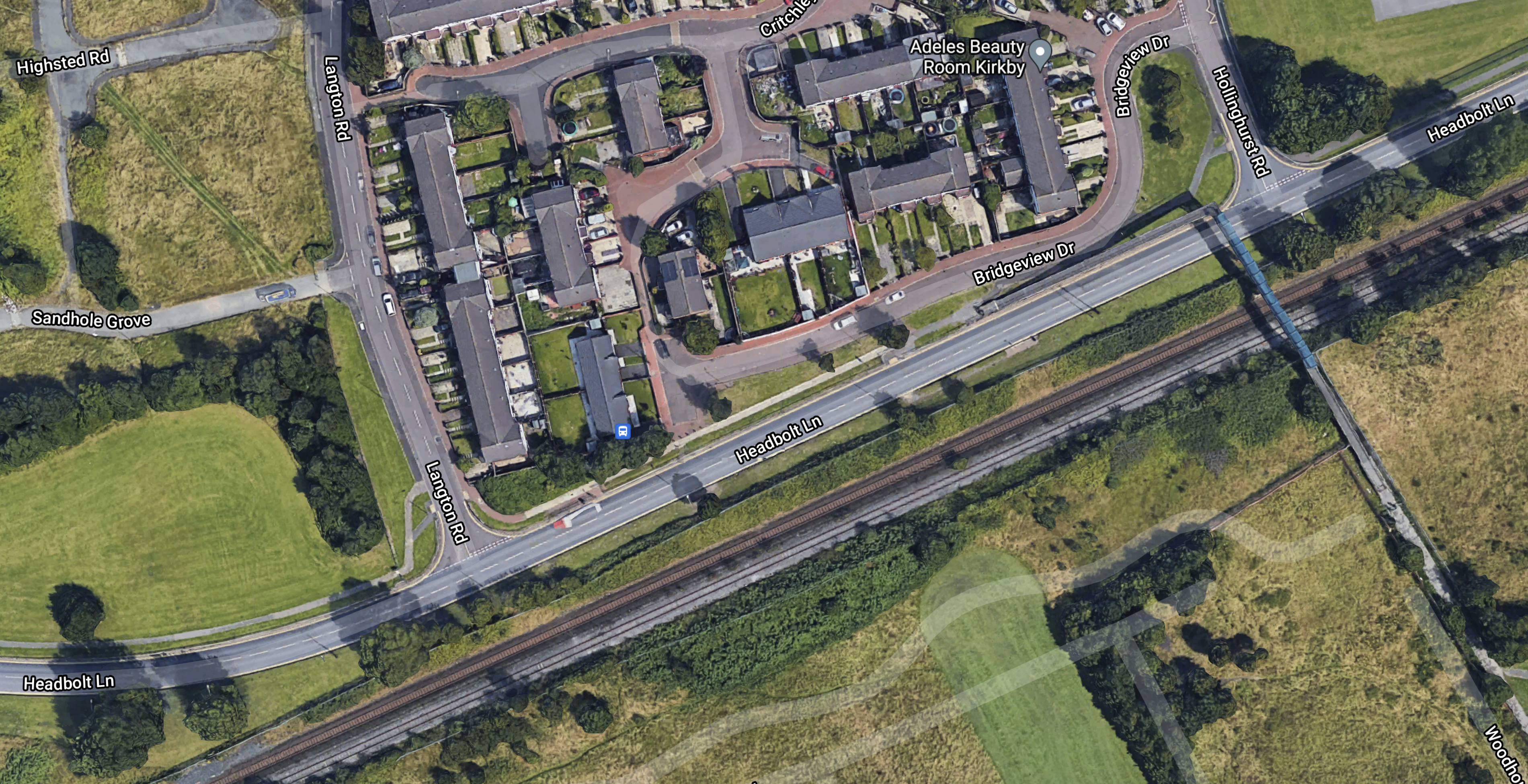
Note.
- The footbridge over the railway. I took the pictures from and around this bridge in Merseyrail To Skelmersdale – Headbolt Lane Station.
- The footbridge can’t be seen in the YouTube video.
Liverpool is to the West and Wigan is to the East.
These are my thoughts.
Is The Station North Or South Of The Railway?
As it is called Headbolt Lane, the station must have good access from that road, otherwise travellers will get rather confused.
So until proven otherwise, I will assume that the station must be to the North of the railway.
Which Way Is Liverpool In the Video?
If the station is North of the railway, then in the first part of the video, the visualisation approaches the station from the North and Liverpool is to the right and Wigan is to the left.
If that is right, then the yellow bus always points towards Liverpool.
How Many Platforms?
Wikipedia says that Headbolt Lane station will have three platforms.
From the video there will be two platforms for trains to and from Liverpool, although the current layout at Kirkby station makes do with just one platform.
There would also appear to be a single platform for trains to and from Wigan, Bolton and Manchester.
But there is a second Eastern track shown in the video, which possibly indicates provision has been made for a second platform for services in that direction.
Wot No Bridge?
It would appear that there is no bridge over or subway under the railway.
But it does appear that the platform layout shown allows passengers to walk between the ends of the tracks on the level to the platform or platforms on the side of the station away from the station building.
Will There Be A Second Entrance To The Station On The Other Side Of The Tracks?
The layout would allow this and it could be useful for those passengers living or working on that side of the railway.
Is The Platform Layout Unique?
I have travelled widely looked at railway stations all over the world.
But I can’t remember seeing a layout like this.
The layout does have advantages.
- An expensive bridge with lifts will not be needed.
- There is nothing mechanical or electrical to go wrong.
- Extra platforms can be added if required.
- It can also be used as a simple step-free way to cross the railway.
I suspect that the layout could be used in other places.
Train Frequencies To Liverpool
The current service between Kirkby station and Liverpool is four trains per hour (tph), which is handled on a single platform.
One platform at Headbolt Lane would surely be sufficient, but a second platform must surely allow extra services and provide more resilience in case of train failure.
Train Frequencies To Wigan, Bolton And Manchester
The current service between Kirkby station and Manchester is one tph, which is handled on a single platform.
One platform at Headbolt Lane would surely be sufficient and could easily handle two tph.
Are two platforms provided for Liverpool services, so that extra services could be run in the Peak or to provide more resilience, should a train fail in the station.
A Service To Skelmersdale
Consider.
- Skelmersdale is about five miles North of the line between Headbolt Lane and Wigan.
- One of Merseyrail’s current Class 507 trains covers the 5.5 miles between Kirkby and Sandhills station in twelve minutes.
- The proposed layout of Headbolt Lane station does not allow direct services between Liverpool and Skelmersdale.
These distances and timing would mean the following.
- A single shuttle train between Headbolt Lane and Skelmersdale could run a two tph service.
- A pair of shuttle trains between Headbolt Lane and Skelmersdale could run a four tph service.
Passengers would need to change trains at Headbolt Lane station.
This may seem less passenger-friendly than a direct service, but it could be the most affordable option.
And it could always be improved with modifications at Headbolt Lane station.
Is There A Role For Battery-Electric Trains?
Consider.
- For Health and Safety reasons, it is very unlikely that any new third-rail track will be laid in the UK.
- The distance between the current Kirkby station and the new Headbolt Lane station is about 1.5 miles.
- The distance between Headbolt Lane and Skelmersdale stations is less than eight miles.
- I suspect Headbolt Lane and Skelmersdale stations would both have good power supplies.
- Merseyrail’s new Class 777 trains have a battery capability.
Would this allow the following?
- Liverpool and Headbolt Lane services to use battery power between Kirkby and Headbolt Lane station. All charging would be done between Liverpool and Kirkby.
- The shuttle train between Headbolt Lane and Skelmersdale would work on battery power, with batteries charged at both ends of the route.
There is also the possibility, that the Headbolt Lane and Manchester Victoria service could be run using battery-electric Class 331 trains.
- Headbolt Lane and Manchester Victoria will be a 28.5 mile service with a couple of miles of electrification at the Manchester end.
- I estimate that the battery-electric Class 331 trains will have sufficient range to handle this route with charging at Headbolt Lane station.
- Currently, trains from Manchester Victoria take over ten minutes to turnround at Kirkby station.
- Provision for a charger could be built into Headbolt Lane station.
It would be a simple way to electrify the Kirkby and Manchester Victoria service.
In addition, battery-electric Class 331 trains are likely to have longer battery range than the Class 777 trains.
So might it be better if the Headbolt Lane and Skelmersdale shuttle was worked by battery-electric Class 331 trains.
If the two East-facing platforms at Headbolt Lane station were to be fitted with charging facilities, this would give an increased level of reliability.
Could Northern’s Manchester Victoria Service Terminate At Skelmersdale?
If both services were to be run by Northern’s battery-electric Class 331 trains, this could be a possibility.
- A reverse would be needed at Headbolt Lane station.
- I estimate that 2tph on the route would fit together well.
- Trains would be charged at Skelmersdale station.
- Chargers might not be needed at Headbolt Lane station.
In addition, a two tph service would fit in well with four or six tph to Liverpool.
Conclusion
It’s almost as if Headbolt Lane station could consist of three elements.
- The station facilities, bus interchange and car parking.
- A two-platform station for Merseyrail services to Liverpool
- A two-platform station with charging facilities for Northern services to Blackburn, Bolton, Manchester Victoria, Skelmersdale and Wigan.
All services from Headbolt Lane station will be run by battery-electric reains.
Costs have been saved by the following.
- Not having a bridge over the tracks.
- Maintaining the separation between Northern and Merseyrail services.
- Not electrifying between Kirkby and Headbolt Lane stations.
- Not electrifying the Skelmersdale Branch.
The whole station appears to have been designed on a single level.
Plans For New West Midlands Railway Station With £400k Land Deal At Aldridge
The title of this post, is the same as that of this article on Rail Advent.
This is the two introductory paragraphs.
Plans for a new railway station at Aldridge in the West Midlands have moved on another stage after the West Midlands Combined Authority agreed a £400k investment to purchase the land.
Plans to upgrade train services in the Black Country include new stations at Darlaston and Willenhall along with Aldridge.
I predicted this station could be built in Green Light For Revived West Midlands Passenger Service.
The Location Of The Station
This Google Map shows a possible location of the new Aldridge station.
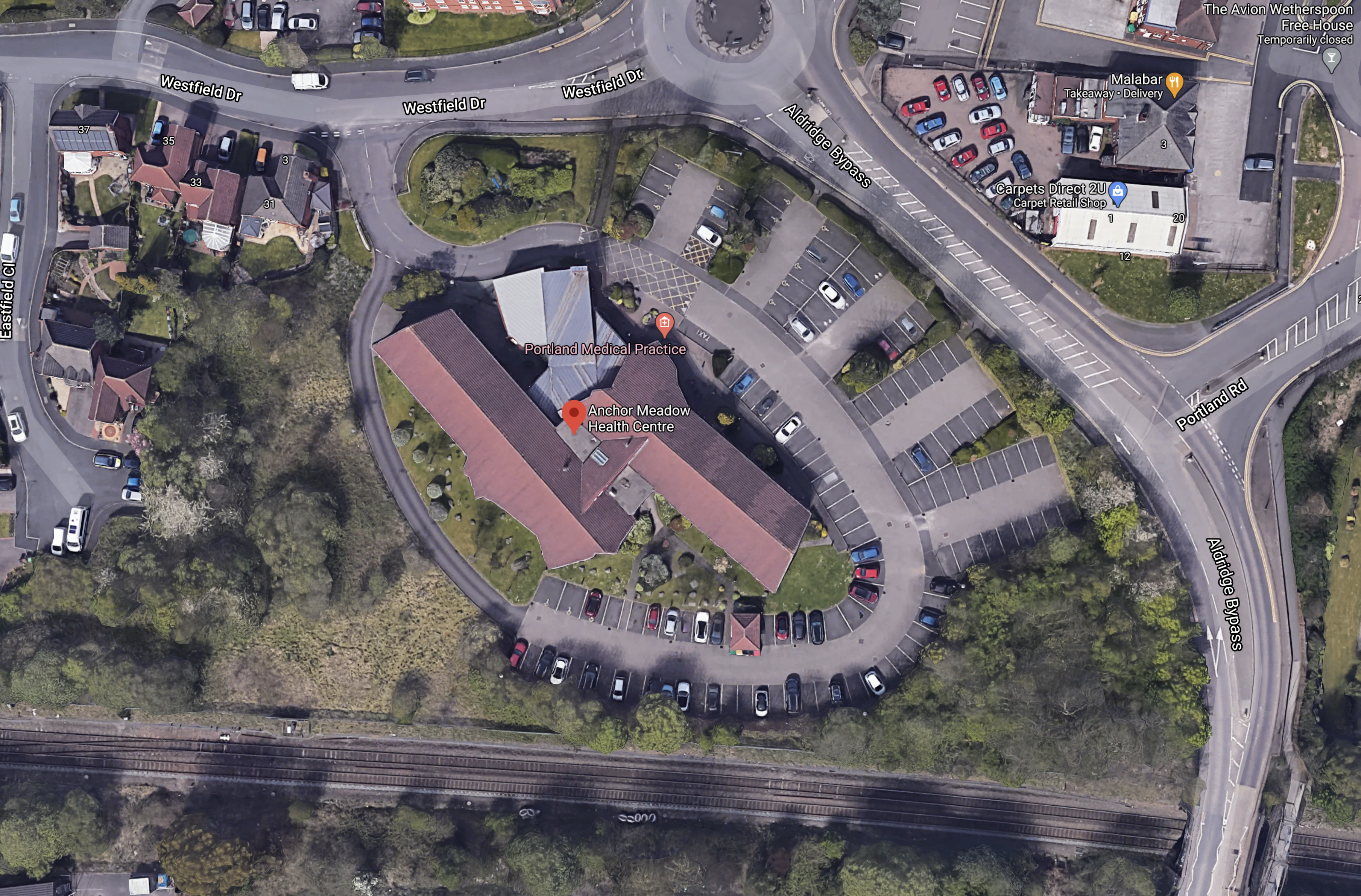
Note
- The Sutton Park Line is double track and not electrified.
- The road running South of the railway is called Station Road, which is a bit of a giveaway, as to the location of the former station.
- There is a crossover visible in the image,
The Rail Advent article says this about the location, of the station.
The land needed for the station in owned by the NHS and is situated next to the Anchor Meadow Health Centre, designs are still being worked on, but are expected to include a 150 space car park
The Anchor Meadow Health Centre is on the North side of the railway, marked by a red arrow and surrounded by an access road.
- It could have a single platform, alongside the Health Centre.
- There would be no need for an expensive bridge.
The station could be designed to be converted into a two-platform station if a full service were to be run on the Sutton Park Line at a future date.
Battery-Electric Operation
Consider.
- Aldridge station is probably no more than about five miles from Walsall station and its electrification.
- The extended service from Birmingham New Street and Walsall cstations could be run by a battery-electric train.
- West Midlands Trains have ordered Class 730 trains, which can be fitted with batteries.
From my experience of talking to passengers, who have regularly used battery trains, I believe they attract passengers, because of their lack of noise and pollution.
A New Reston Station
This page on the Scotland’s Railway web site, gives an overview of the project to build a new Reston station on the East Coast Main line about 3.5 miles North of Berwick-upon-Tweed station.
This is the project summary given on the web page.
Network Rail has developed proposals to create a new station at Reston in the Scottish Borders.
We worked with local partners and stakeholders to develop plans for the station and liaised with the local community in advance of submitting a planning application to Scottish Borders Council.
Planning consent was granted in February 2021 and the team are gearing up to deliver a challenging programme of work to create the new station.
The page also says that work on the station started in March 2021. Certainly, by May 2021, there was quite a bit happening.
This Google Map shows the village of Reston.
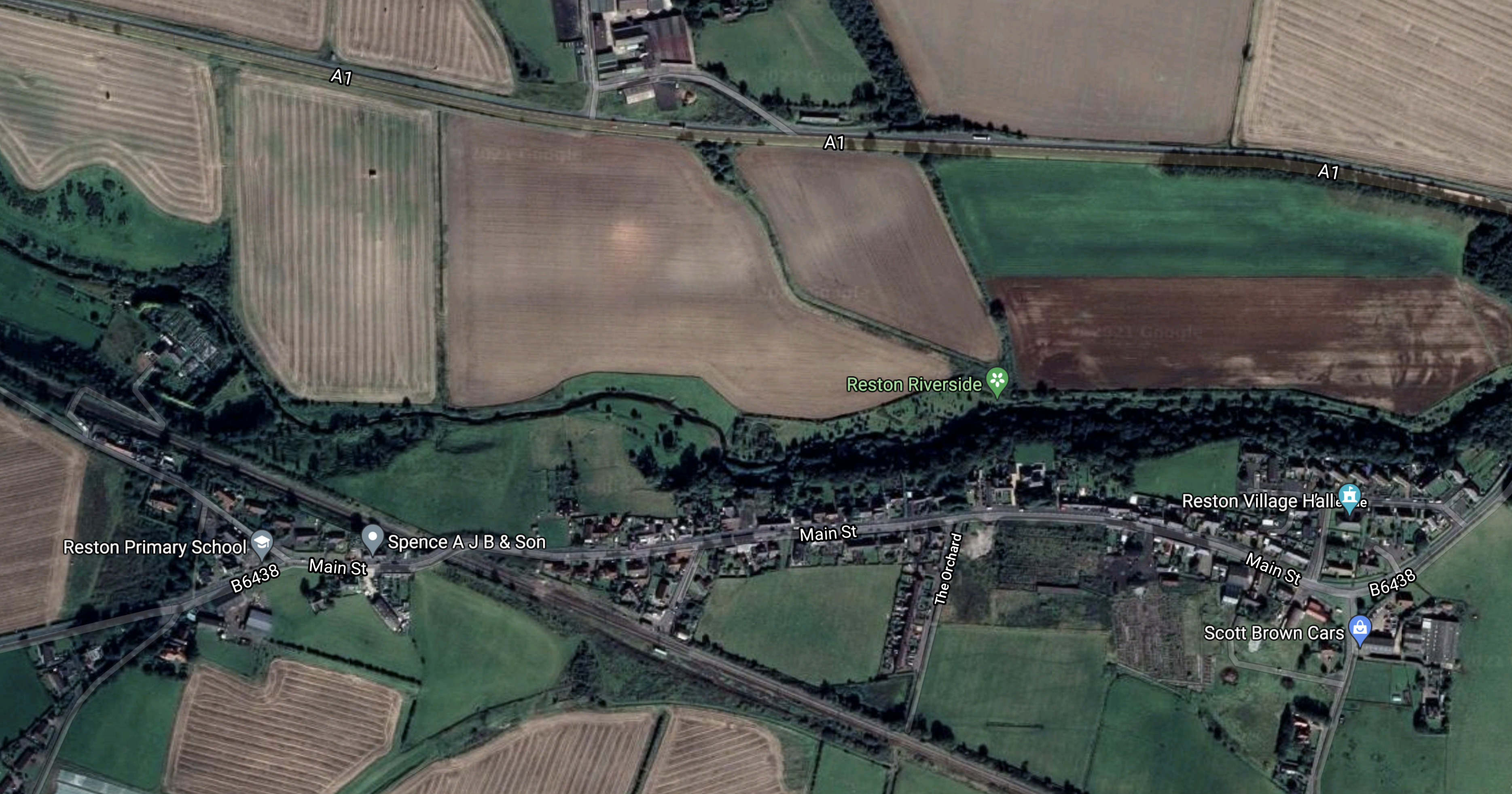
Note.
- The A1 running East-West at the top of the map.
- Main Street running East-West across the middle of the map.
- The East Coast Main Line runs North West-South East across the South-West corner of the map.
The station would appear to be East of the road called The Orchard.
Station Facilities
Looking at the video the station appears to have the following facilities.
- Two platforms.
- About seventy car-parking spaces, which is designed to be expanded
- Five disabled car-parking spaces.
- Electric car charging.
- Bicycle storage
- Full step-free access, at the South-Eastern end of the station.
There does not appear to be any avoiding line for freight trains or a bay platform to reverse trains.
But there appear to be a pair of crossovers to the North of the station site.
Distances Between Reston Station And Selected Towns
This are road distances between Reston station and selected towns.
- Duns – 10 miles
- Galashiels – 38 miles
- Hawick – 47 miles
- Kelso – 26 miles
Are there plans for new housing in the area?
Services Between Newcastle And Edinburgh
The following services run between Edinburgh and Newcastle.
- CrossCountry – 1 tph – Plymouth and Edinburgh/Glasgow – Stops at Alnmouth (irregular), Berwick-upon-Tweed (irregular), Dunbar (1tp2h)
- East Coast Trains – 5 tpd – London Kings Cross and Edinburgh – Stops at Morpeth
- LNER – 1 tph – London Kings Cross and Edinburgh – Stops at Berwick-upon-Tweed
- LNER – 1 tph – London Kings Cross and Edinburgh – Stops at Alnmouth (1tp2h)
- TransPennine Express – 1 tph – Liverpool Lime Street and Edinburgh – Stops at Morpeth
Note.
- tpd is trains per day.
- tph is trains per hour.
- tp2h is trains per two hours.
- All services are run by 125 mph trains
- All services stop at Edinburgh and Newcastle.
- A typical service averages around 88.9 mph between Edinburgh and Newcastle.
The timetable appears to be arranged to ensure at least 4 tph between Edinburgh and Newcastle.
I have a few thoughts.
How Many Services Should Call At Reston?
On an urban line, stopping frequencies of services of up to four or even six tph are common, which would probably be in excess of what is needed at Reston.
Most rural main or secondary lines have frequencies of one or two tph.
I would suggest that if you’re designing and building a station, that will cost several million pounds, then the station must have at least an hourly service, but that two tph would be much more preferable.
In an ideal world, there might be two tph.
- A slow train that stopped at all the larger stations, which could include East Linton, Dunbar, Berwick-upon-Tweed, Almouth and Morpeth.
- A fast train that stopped just once at Reston station between Edinburgh and Newcastle.
Note.
- Like Reston station, East Linton station is also under construction.
- Reston station, is likely to have a selection of buses to Galashiels and other towns in the Borders.
- Reston station has space for a sensible amount of parking.
I would also expect bus and train services to obey these conditions.
- Be timetabled to arrive and leave at the same time each hour.
- Run from early until late.
- Provide an easy interchange, so that travellers don’t have to endure too much unfriendly weather.
- Have a comprehensive ticketing system to attract passengers.
I also think that a warm waiting room and cafe should be provided.
Will Reston Station Have A Direct Service To London And The South?
Both of LNER’s services between Edinburgh and London call at York, Darlington and Newcastle, with only one service calling at Berwick-upon-Tweed.
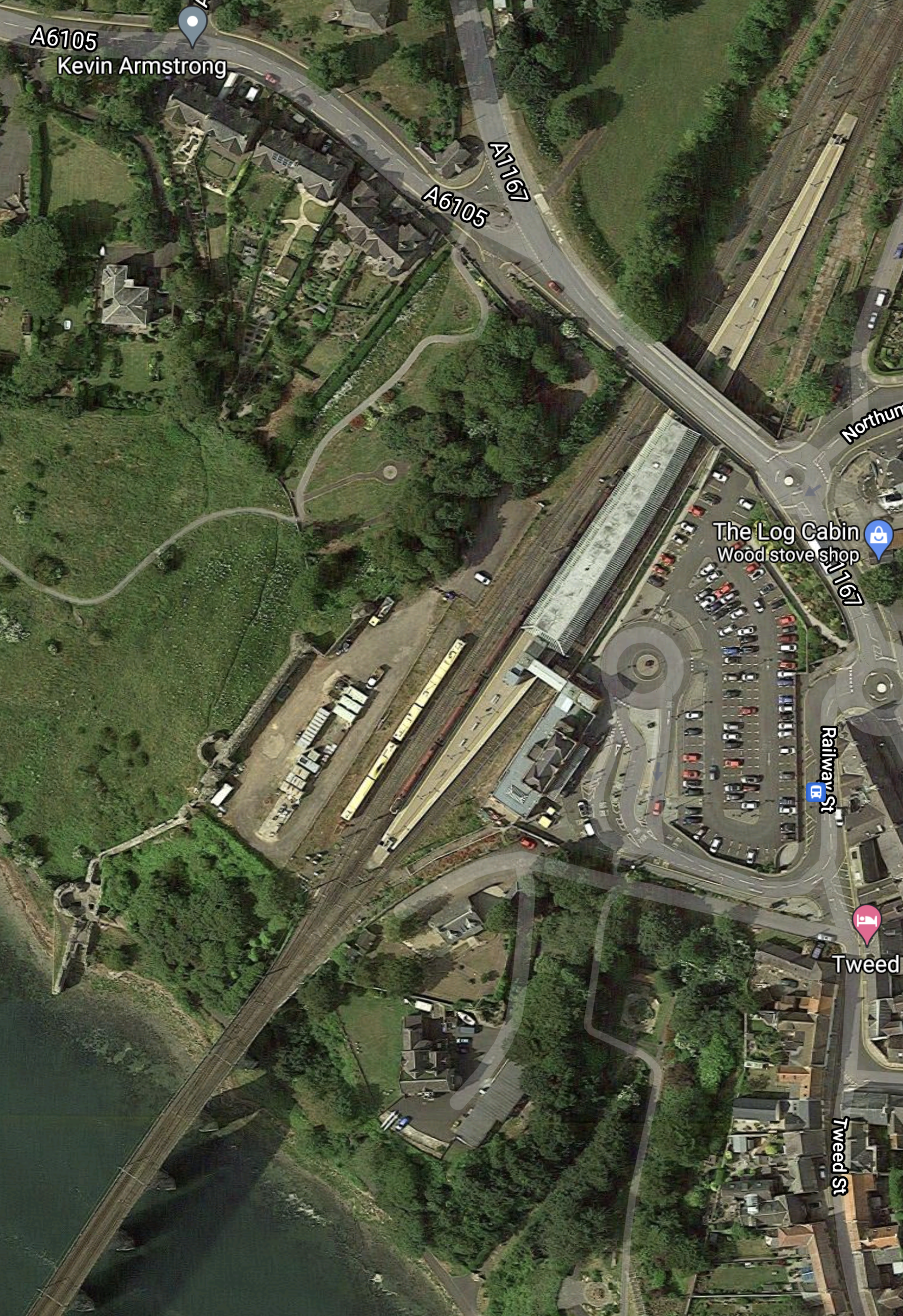
This Google Map shows the location of Berwick-upon-Tweed station.
Note.
- The long island platform between the tracks.
- There are 124 parking spaces.
- The A1 is some distance away to the West.
It all looks very cramped.
So if, one of LNER’s London services stopped at Reston, would it be better for all travellers and operators.
I would suggest that it would probably be ideal if one of LNER’s two services stopped at Berwick-on-Tweed and the other stopped at Reston.
It would also probably be a good idea for ticketing to consider Reston as a Berwick-on-Tweed station.
Will ERTMS Signalling Be Used Between Edinburgh and Newcastle?
I don’t think this is a question of will, but more one of when.
- It will enable trains to run at up to 140 mph.
- It will handle trains efficiently, when they are running at different speeds.
- It will allow the increasing of the frequency of trains on the double-track route.
- All trains on the route will probably be fitted with equipment to run under in-cab digital ERTMS signalling in a few years.
I would expect that ERTMS signalling could be used to run an increasingly complex pattern of trains between Edinburgh and Newcastle.
Will There Be 140 mph Running Between Edinburgh and Newcastle?
I have flown my helicopter along the route between Edinburgh and Newcastle and ridden it in a 125 mph train many times.
Given how Network Rail have squeezed increased speeds out of routes like the Midland Main and Great Eastern Main Line, I have no doubt that some 140 mph running will be possible between Edinburgh and Newcastle.
I estimate that with a substantial amount of 140 mph running between Edinburgh and Berwick-on-Tweed could save as much as fifteen minutes on current timings.
What Trains Will Be Used Between Edinburgh and Newcastle?
Consider.
- It is a fully-electrified double-track railway.
- There will be 125 mph and possibly 140 mph express trains passing through.
I suspect that to avoid getting in the way of the expresses, trains with at least a 110 mph capability would be needed.
Some of the redundant Class 350 trains would probably do fine.
How Will LNER’s Extra Paths Affect Trains Between Edinburgh and Newcastle?
In the December 2020 Edition of Modern Railways, there is an article, which is entitled LNER Seeks 10 More Bi-Modes.
This is the last paragraph.
Infrastructure upgrades are due to prompt a timetable recast in May 2022 (delayed from December 2022), from which point LNER will operate 6.5 trains per hour out of King’s Cross, compared to five today. As an interim measure LNER is retaining seven rakes of Mk. 4 coaches hauled by 12 Class 91 locomotives to supplement the Azuma fleet and support its timetable ambitions until new trains are delivered.
In A New Elizabethan, I suggest that one of these extra paths could be used to run a third hourly service between London King’s Cross and Edinburgh.
I would think it likely, that it only would only stop at Newcastle, if it provided a fast service between the two capitals.
Is Reston Station About Borders Unemployment?
This post has been up for a few days now and there have been comments about the cost of this station and the more-than-adequate car-parking provision for the small villages.
This article on the Southern Reporter is entitled Unemployment In Borders Up Almost 120% Year On Year.
Could it be that one of the purposes with its expandable car-parking is to allow people to get to jobs in Edinburgh and Newcastle?
- It should also be noted that Britishvolt are planning to build a £4 billion battery factory at Blyth, which according to reports will employ between three and five thousand people.
- It is a distance of seventy miles and Google says it will take nearly an hour-and-a-half.
- I suspect a 110 mph train between Reston and Bebside stations on the Northumberland Line would take about forty-five minutes.
- Bebside station is on the Northumberland Line and will have a shuttle bus to the Britishvolt factory.
- Porterbrook are developing a battery/FLEX version of their 110 mph Class 350 trains.
By choosing to build a station will the possibility of large amounts of parking are the Scottish Government doing the best for the unemployed in the Borders?
You can imagine a scenario in the employment office at Britishvolt.
- They are getting a lot of letters and e-mails asking about jobs.
- Someone does a bit of counting and realises their planned car-park is too small.
- Problems are outlined to ministers in the UK and Scottish Governments.
- The reopening of the Northumberland Line and the building of Reston station do appear to have been accelerated.
Perhaps the rail developments are a small price for both governments to pay to secure a £4 billion investment,
Conclusion
There’s a lot more to Reston station, than first appears.
Work Has Started At Brent Cross West Station
I was alerted to the fact that work had started at Brent Cross West station by this article on Rail Advent.
The article didn’t say much, except that work had started, track had been moved to allow construction of the £40 million station and the station should open next year.
So I went and had a look.
I took these pictures from a Thameslink train going North through the station site.

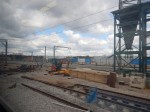
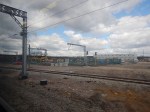
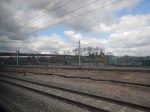
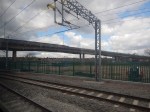
I was sitting on the right-hand side of the train and looking to the East.
I then changed trains at Mill Hill Broadway station and took a few more pictures going South.

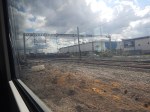
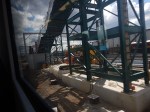
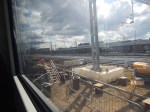

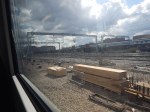


Again, I was sitting on the right-hand side of the train, but this time looking West.
This Google Map shows the area.
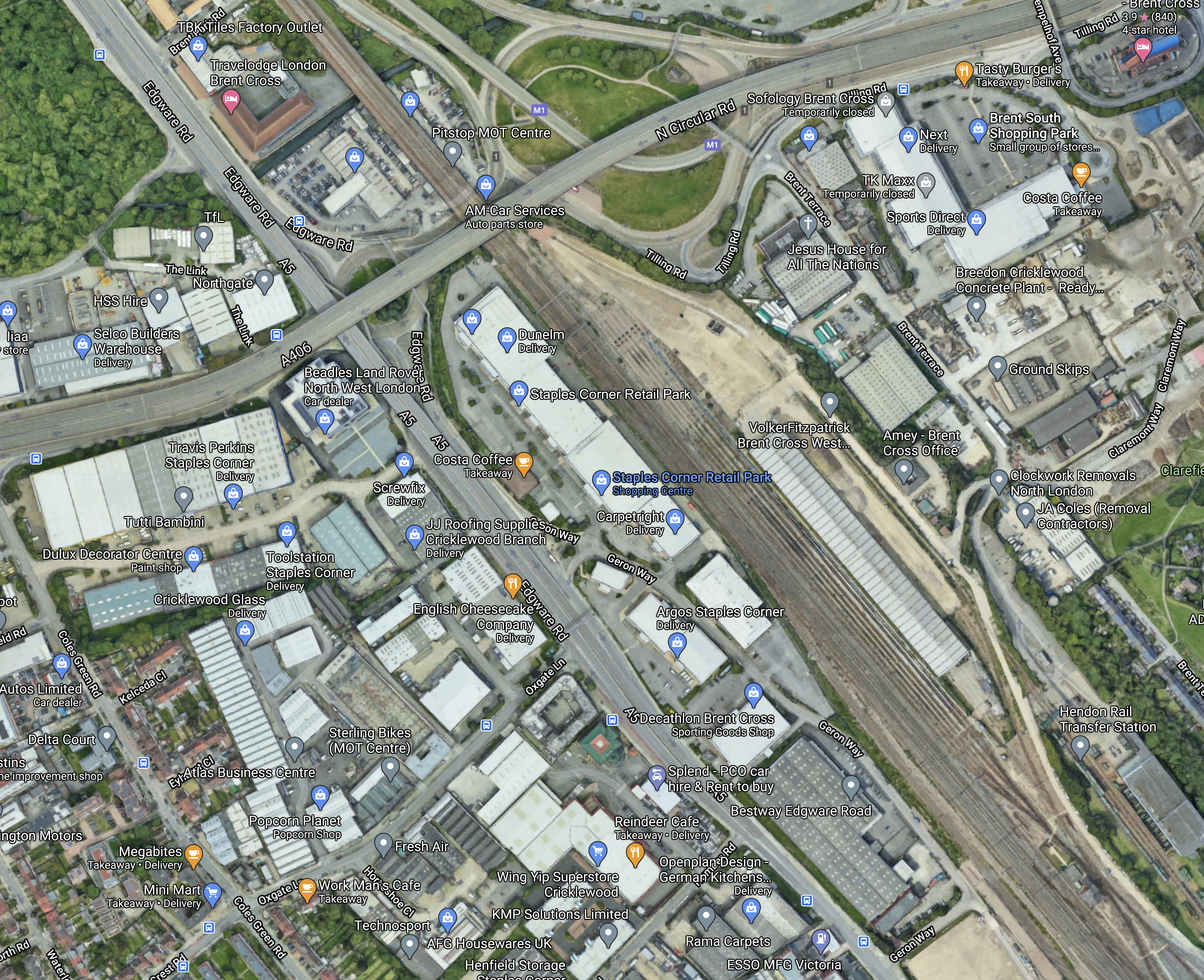
Note.
- The map was probably created a few months ago.
- There is still a shed from the Cricklewood TMD still standing, which I didn’t see.
- The Brent Cross Flyover can be clearly seen in the images and the map.
Work underway includes.
- Creation of the new track layout.
- Building of two wide platforms either side of the tracks i was on.
- The width of the platforms may indicate island platforms.
- Building a temporary footbridge, so workers can cross the tracks.
- There appear to be a support installed for the station footbridge.
One impression, I got today, is that it is a large site and this may enable the building of a relatively simple station.
Beeching Reversal – Reopening Sawston Station
This is one of the Round 3 bids of Beeching Reversal projects that the Government and Network Rail are proposing to reverse some of the Beeching cuts.
Sawston is a village in South Cambridgeshire, which is shown in this Google Map.
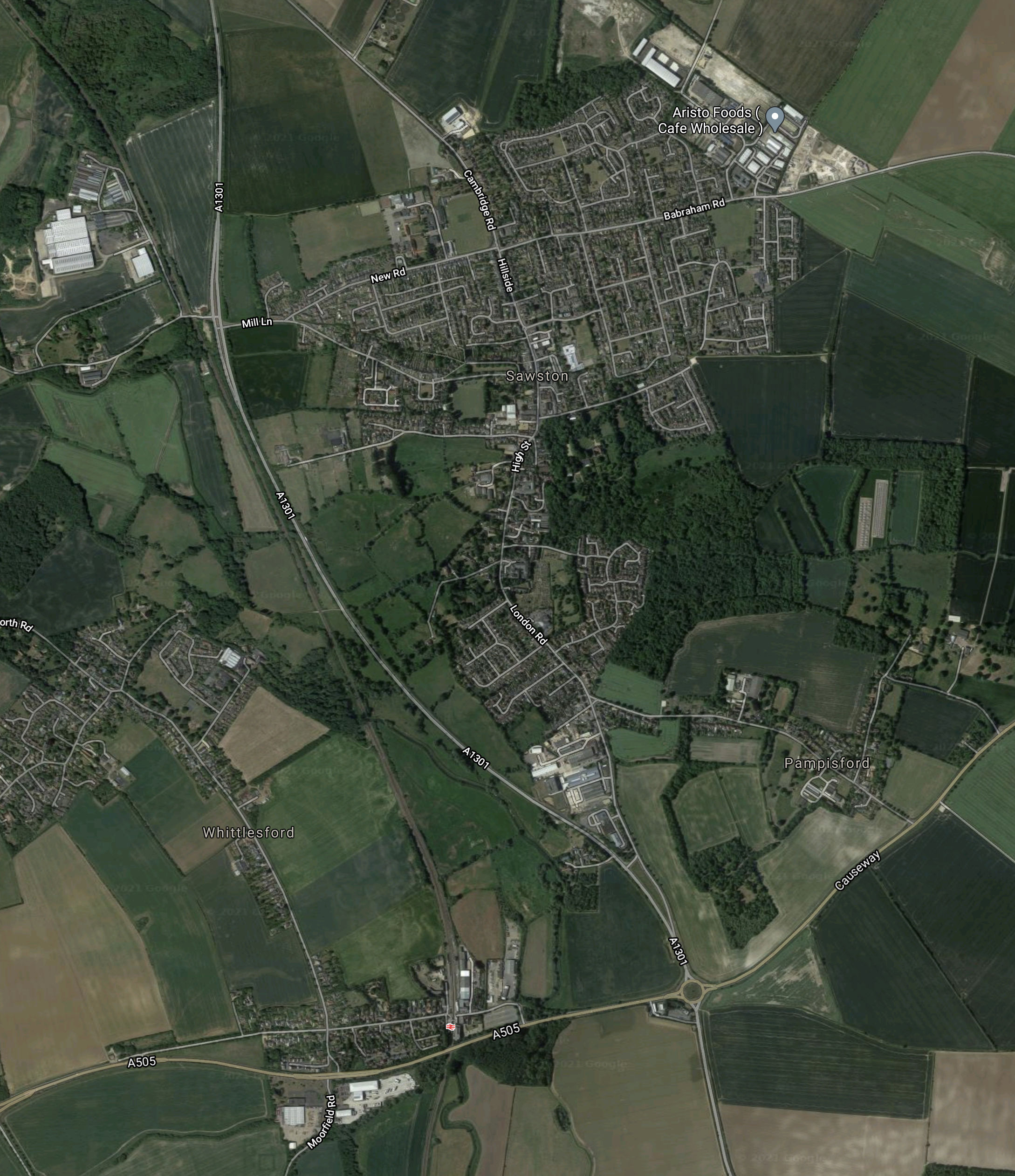
Note.
The West Anglia Main Line and the A1301 road both run North-South to the West of the village.
The railway calls at Whittlesford Parkway station at the bottom of the map.
The A505, which is a main route between West Suffolk and the M11 and the A1 (M) runs across the bottom of the map.
The new Sawston station is proposed to be in Mill Lane close to the old Spicers factory.
This second Google Map shows the area of the proposed station.
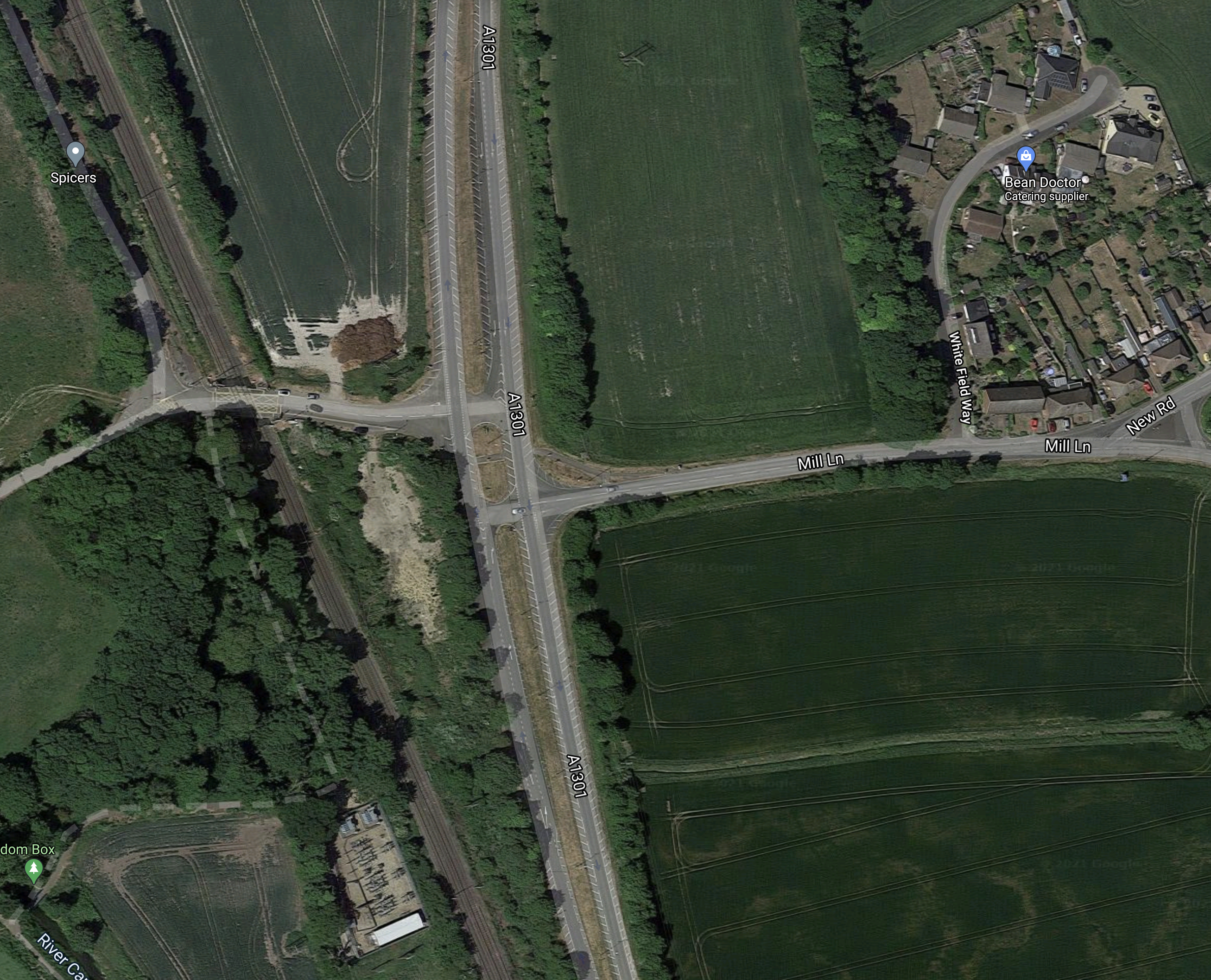
Note.
- There would appear to be space for a station.
- The site is not far from the Western edge of the village.
- There is already a comprehensive road junction, that would serve the station.
This third Google Map shows the area of the Whittlesford Parkway station.
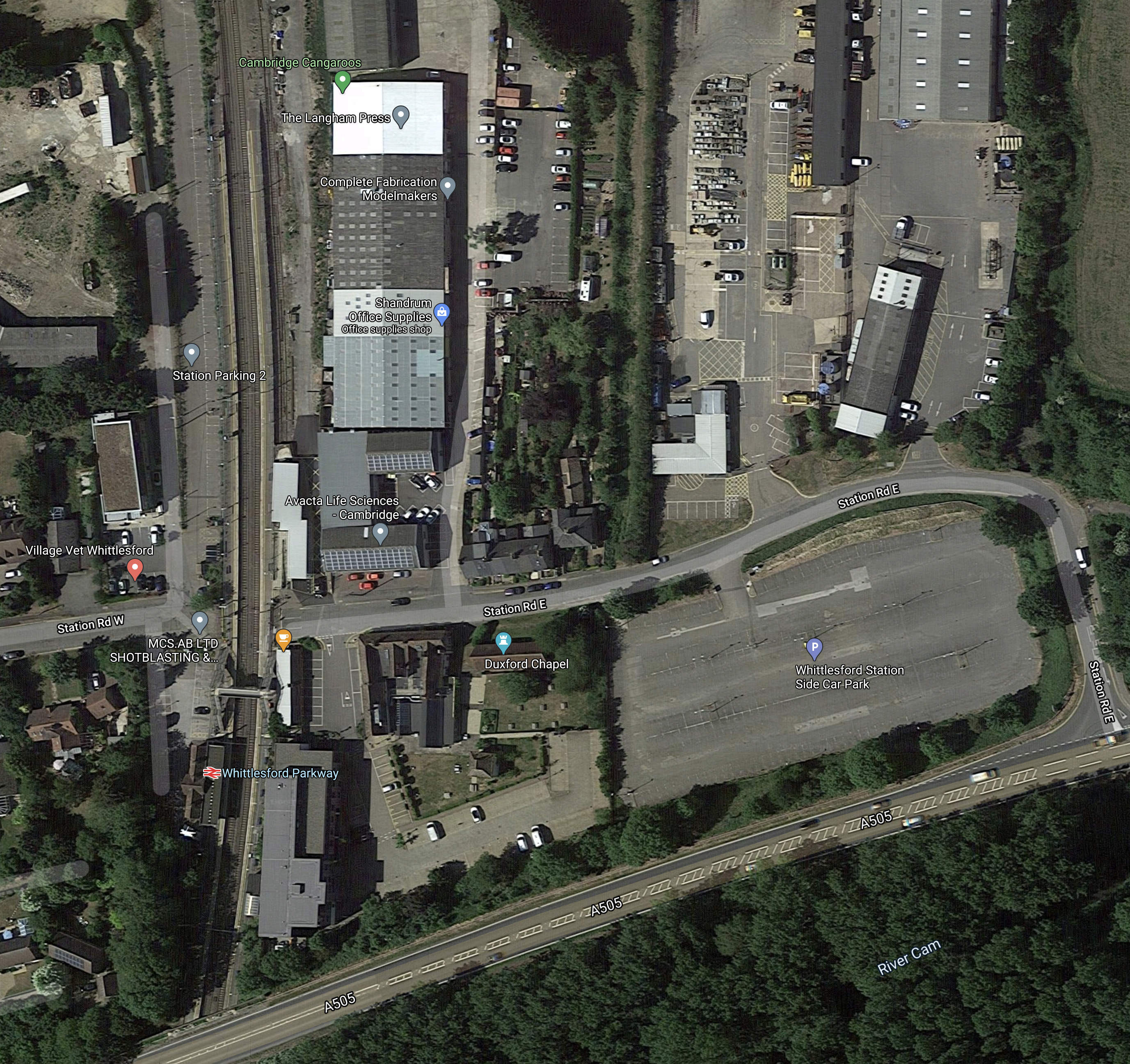
Note.
- The station running North-South towards the West of the map.
- The large car-park to the East of the station.
- The smaller car-park to the West of the station.
- The station has a Holiday Inn hotel.
I have used the station hundreds of times and I believe that it could be made into a first class transport hub for commuters and visitors to Cambridge.
- It has good road connections to North Hertfordshire, West Suffolk and North West Essex.
- It has large amounts of car parking, that ten years ago was rarely full.
- A step-free footbridge with lifts, needs to be added.
- There needs to be better bus connections to local villages.
- There needs to be a bus connection to the Imperial War Museum Duxford.
I don’t believe massive amounts of money would be needed to realise the full potential of this station.
Services through Whittlesford Station And The Proposed Site Of Sawston Station
Currently, the following services run through Whittlesford station in the Off Peak.
- Greater Anglia – 2 tph – Liverpool Street and Cambridge North
- Greater Anglia – 1 tph – Stansted Airport and Norwich
- CrossCountry – 3 tpd – Stansted Airport and Birmingham New Street
Note.
- tph is an abbreviation for trains per hour.
- tpd is an abbreviation for trains per day
- All Greater Anglia services call at Whittlesford Parkway, Cambridge and Cambridge North stations and will probably call at Cambridge South station, when it opens.
- The CrossCountry service only calls at Audley End station between Stansted Airport and Cambridge.
I believe that the minimum services should be as follows to provide an adequate service, after the opening of Cambridge South station.
- 4tph – Whittlesford Parkway and Cambridge North stopping at Cambridge South and Cambridge.
- 2 tph – Liverpool Street and Cambridge North stopping at Whittlesford Parkway, Cambridge South and Cambridge.
- 1 tph – Stansted Airport and Norwich stopping at Whittlesford Parkway, Cambridge South, Cambridge and Cambridge North.
- 1 tph – Stansted Airport and Birmingham New Street stopping at Whittlesford Parkway, Cambridge South, Cambridge and Cambridge North.
There could even be a Cambridgeshire Metro serving all stations between Stansted Airport and Ely.
- All services could be run by electric or bi-mode trains.
- Possible stops would be Elsenham, Newport, Audley End, Great Chesterford, Whittlesford Parkway, Shelford, Cambridge South, Cambridge, Cambridge North and Waterbeach.
- As they do now some fast services would skip smaller stations.
- More important stations like Audley End, Whittlesford Parkway, Cambridge South and Cambridge North would get a 4 tph service to Cambridge
- Other stations would get an appropriate service.
- I would also like to see two fast tph between Cambridge and King’s Lynn, Liverpool Street, Norwich, Peterborough and Stansted.
I think that such a timetable would be possible, if the performance of Greater Anglia’s new trains were to be used to the full.
Could An Extra Stop Be Added At The Proposed Site Sawston Station?
Each extra stop adds extra time to the timetable.
Consider.
- The faster Liverpool Street and Whittlesford Parkway takes sixty minutes with six stops.
- The slower Liverpool Street and Whittlesford Parkway takes seventy-four minutes with twelve stops.
- Greater Anglia’s trains through Whittlesford Parkway and the proposed Sawston station will probably be 100 mph Class 720 trains.
I think it would be reasonable to assume that every extra stop would add 120-150 seconds to the journey time.
As Cambridge South station will be added anyway, will passengers mind up to five minutes added to the timetable?
I doubt with the faster accelerating trains, that there would be a problem about an extra stop at Sawston, but the lengthening of journey times between Cambridge and London may be a problem.
A Possible Alternative Solution
Could there be a possible alternative solution based on improving facilities and services at Whittlesford Parkway station?
- The service at Whittlesford Parkway station would be increased to 4 tph to Cambridge North, with stops at Shelford, Cambridge South and Cambridge.
- The service at Whittlesford Parkway station would be increased to 2 tph to Stansted Airport, with stops at Audley End.
- A step-free bridge with lifts must be installed.
- An improved bus-service between Sawston and Whittlesford Parkway is needed.
- An improved bus-service between the Imperial War Museum Duxford and Whittlesford Parkway is needed.
- Both bus services could be back-to-back and probably should be run every fifteen minutes.
- As it serves a museum, why not run some heritage buses in the Summer?
- There should be good cycling provision between Whittlesford Parkway station and Sawston and other surrounding villages.
I very much feel, that improving Whittlesford Parkway station, may be a better value solution, than building a new station at Sawston!
Conclusion
Building a new station at Sawston may not be the best way to improve public transport in the area.
Plans Submitted To Build Railway Station At Bebside In Northumberland
The title of this post, is the same as that of this article on ITV.
There is a picture of a double-track railway line with this caption.
The proposal includes a two-platform railway station, lifts, parking and a pedestrian and cycle footbridge over the A189 Spine Road to connect the station to Blyth next to Asda.
This Google Map shows the location.
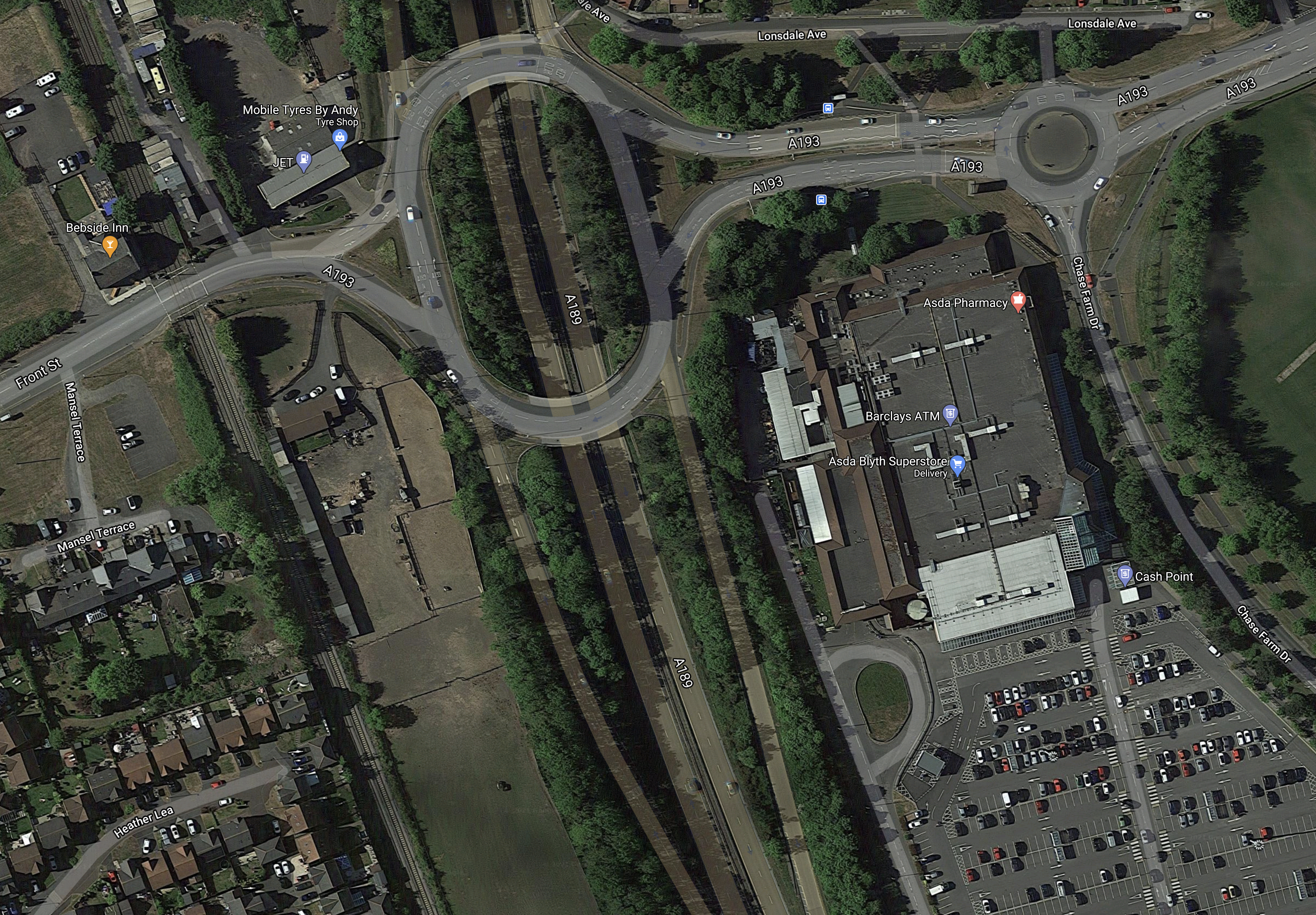
Note.
- The A189 dual-carriageway road running North-South.
- The Asda Blyth Superstore to the East of the road.
- The Northumberland Line running down the Western side of the map.
If you click on the map to show it in a large size, you’ll see the Bebside Inn in the North-West corner, next to the railway and a level crossing.
The station appears to be being built South of the level crossing.
It looks to be a very suitable place for a new station.
The Welsh Find A Use For Japanese Knotweed
I had to laugh at a story, which is the secondary story in this article on Rail News, which is entitled New Station Opens Quietly – And Knotweed Is Useful At Last.
The main story is about the opening of Bow Street station to the North of Aberystwyth.
When the London Overground took over the Lea Valley Lines, I comforted a semi-distraught London Overground manager, who had just found that one station was totally overrun with this heinous invader. It was so bad, he couldn’t even check how bad it was!
But it does seem, that the Welsh have come up with a solution on the line of Make The Bugger Work.
This is the paragraph, which describes the solution.
Bow Street has also made use of a plant pest which had been growing in the area, because 5000 cubic metres of Japanese Knotweed was treated and re-used for fill at the site, saving 400 lorry loads which would otherwise have been taken to landfill.
It’s very innovation and totally appropropriate.
Station Reopening At Bow Street Brings First Trains For 56 Years
The title of this post, is the same as that of this article on the BBC.
Hopefully, I shall be able to visit this summer.
It must be around sixty years since I was last in that area. I can remember my father driving his MG Magnette (676 RME) on the beach at Borth, whilst we spent a few days at a B & B in Savage’s Garage in Aberystwyth.
Railfuture North East – New Station At Team Valley
When I wrote Beeching Reversal – Ferryhill Station Reopening, I used this document from Railfuture, for information.
The document lists a series of campaigns and a New Station At Team Valley was one.
This is their summary of this campaign.
Construct a new Station at Team Valley where ECML passes through Team Valley near the site of
the former Low Fell station. The station could be served by a new local service from York or
Darlington to Newcastle via the ECML, the existing TransPennine Express services, the new Teesside
– Tyneside service via the Stillington freight line, or by an extension of the proposed local service
from Northumberland. This proposal is particularly relevant because the roads into
Newcastle from the south are congested at peak times and there are air quality issues to the extent
that the City Council is considering charging arrangements to help limit the traffic flow
These are my thoughts.
Location Of The Station
This map clipped from Wikipedia, shows the location of Low Fell station on the 1911 Railway Clearing House map.
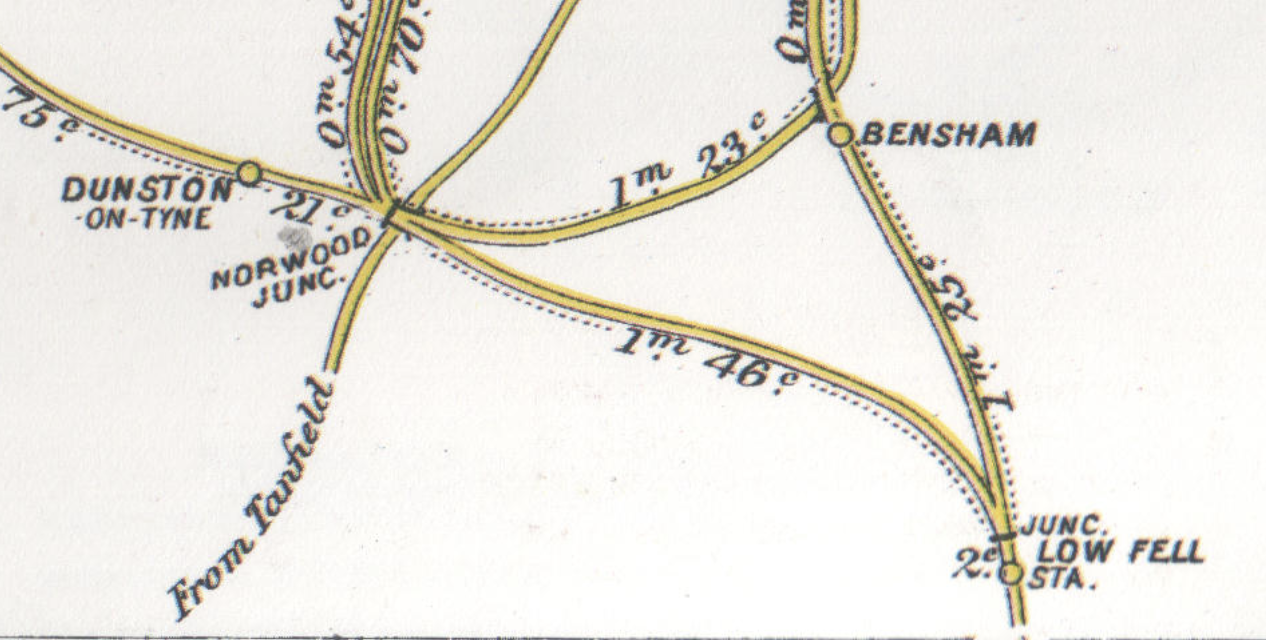
Note.
- The still-open Dunston station in the West.
- Low Fell station at the Southern junction of the triangular junction.
This Google Map shows the same lines today.
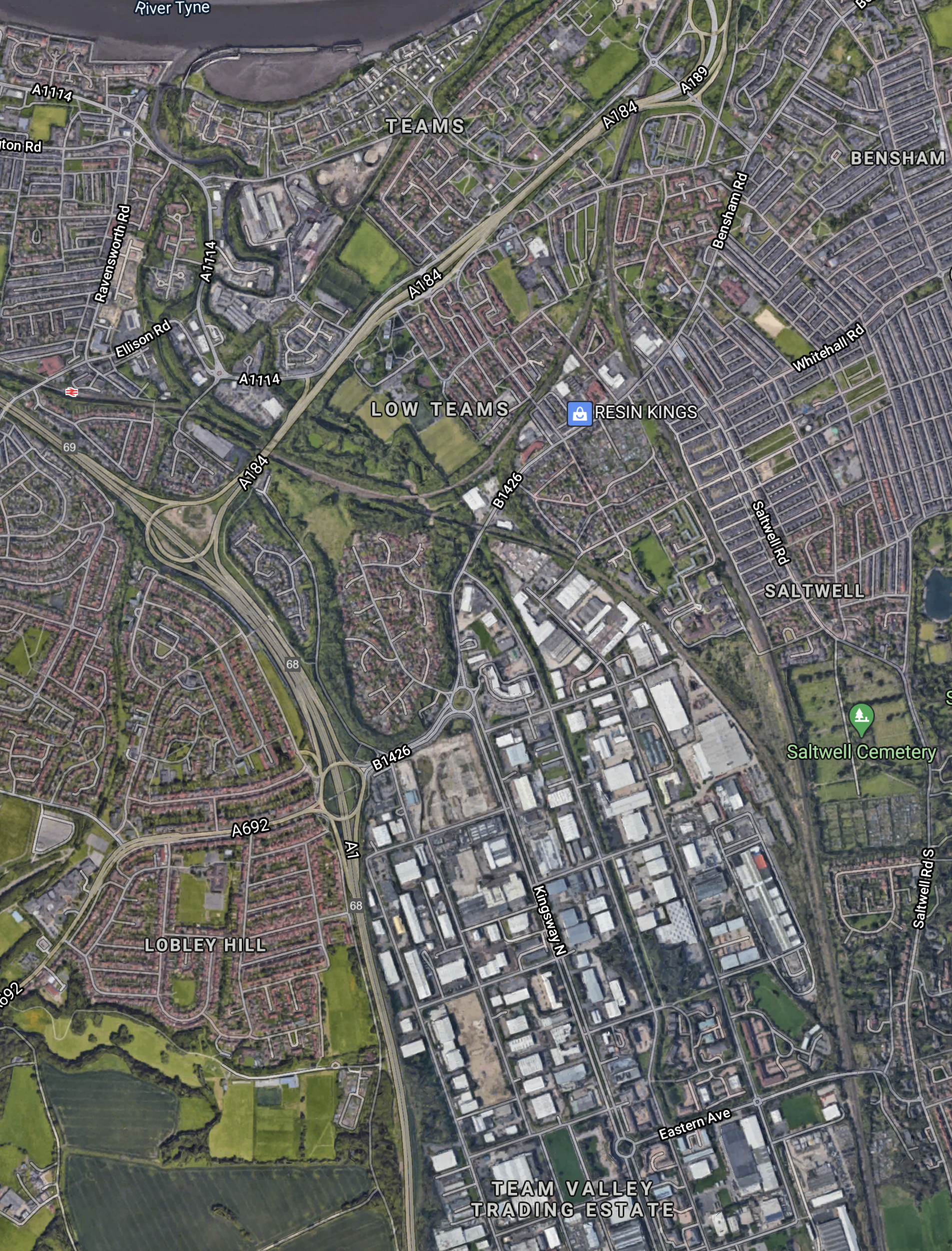
Note.
- Dunston station towards the North-East corner of the map.
- The triangular junction can be picked out.
- The Team Valley, where according to Wikipedia, there are 20,000 jobs and large retail stores.
- The East Coast Main Line passing down the Eastern side of Team Valley.
This second Google Map shows, where the station might have been.

Note.
- The giveaway is the road leading to the bridge is called Station Road.
- A Royal Mail site with lots of red vans is in the South-West corner of the map.
- But was the station North or South of Eastern Avenue?
There’s certainly a lot of space.
Reasons For The Station
This Google Map sums up the reasons for the station.
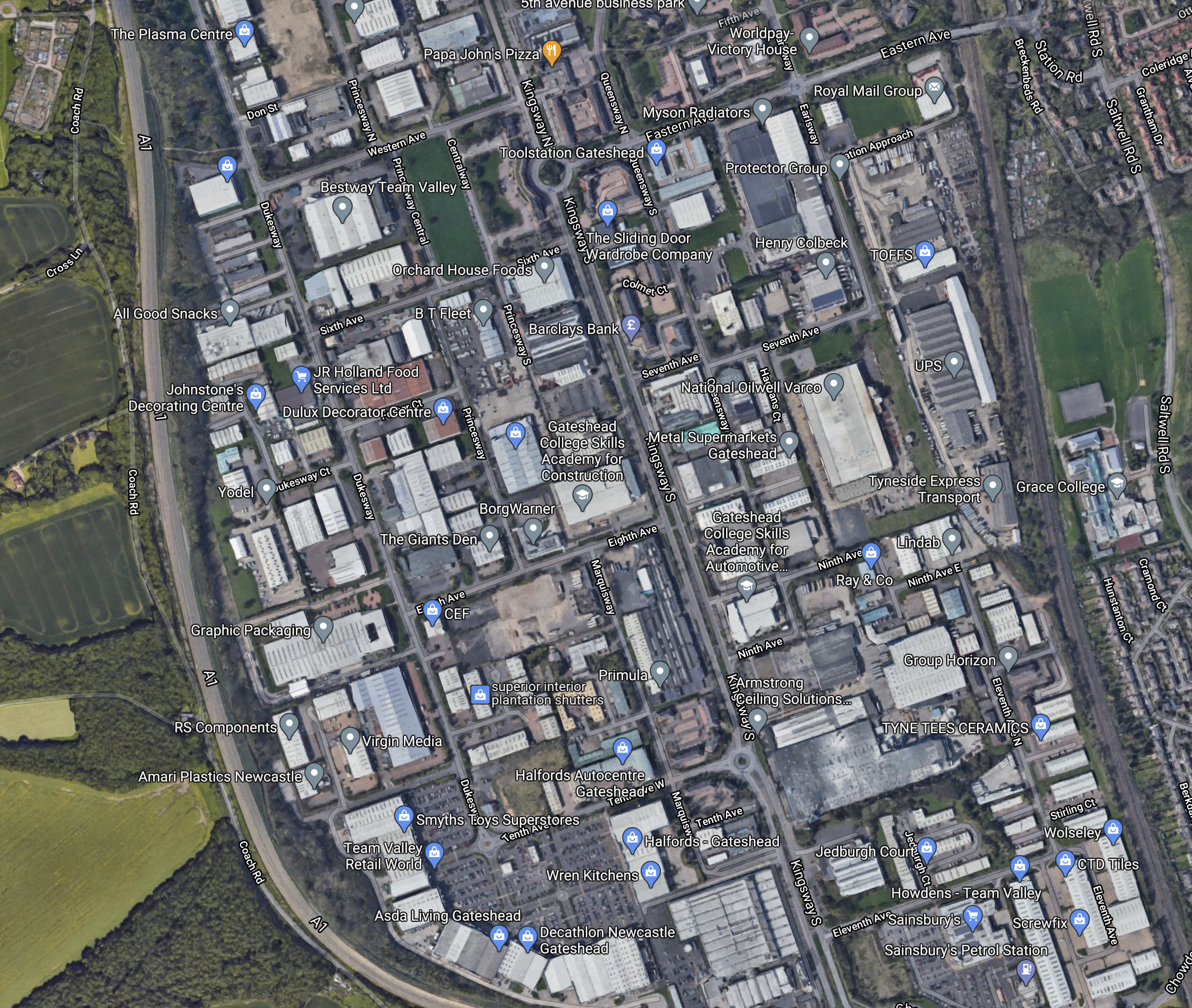
Note.
- The East Coast Main Line running down the East side of the site.
- There are a lot of businesses in Team Valley.
- If 20,000 work at the site, how many visitors does it get in a day?
Several trading estates and large shopping centres have railway stations in the UK. So why not Team Valley?
I can understand why Railfuture said this in their proposal.
This proposal is particularly relevant because the roads into Newcastle from the south are congested at peak times and there are air quality issues to the extent that the City Council is considering charging arrangements to help limit the traffic flow
I certainly can’t fault Railfuture’s desire to see a station at Team Valley
Current Passenger Train Services Through Team Valley
These services currently pass the location of the proposed Team Valley station.
- LNER – London Kings Cross and Edinburgh via York, Darlington. Newcastle and Berwick-upon-Tweed
- LNER – London Kings Cross and Edinburgh via Peterborough, Newark North Gate, Doncaster, York, Darlington, Durham and Newcastle
- CrossCountry – Plymouth and Edinburgh via Totnes, Newton Abbot, Exeter St Davids, Tiverton Parkway, Taunton, Bristol Temple Meads, Bristol Parkway, Cheltenham Spa, Birmingham New Street, Derby, Chesterfield, Sheffield, Wakefield Westgate, Leeds, York, Darlington, Durham and Newcastle
- CrossCountry – Southampton and Newcastle via Birmingham New Street, Derby, Sheffield, Doncaster, York, Darlington and Durham
- TransPennine Express – Liverpool Lime Street and Edinburgh via Newton-le-Willows, Manchester Victoria, Huddersfield, Leeds, York, Darlington, Durham, Newcastle and Morpeth
- TransPennine Express – Manchester Airport and Newcastle via Manchester Piccadilly, Manchester Oxford Road, Manchester Victoria, Huddersfield, Dewsbury, Leeds, York, Northallerton, Darlington and Durham
Note.
- All trains have a frequency of one train per hour (tph)
- All trains call at York, Darlington and Newcastle.
- I have missed out some of the intermediate stations, where trains don’t call at least hourly.
- I have missed out stations South of Birmingham New Street.
- A few Northern Trains services pass through at Peak times or to go to and from depots.
I suspect some of these services could stop and to encourage commuters to and from Newcastle, Durham and Darlington to swap from car to train,
I also suspect that Team Valley station needs a frequency of at least two tph and if possible four! Four tph would give a Turn-up-and-Go service to Darlington, Newcastle and York.
Planned And Possible Future Passenger Train Services Through Team Valley
From various sources, these services are either planned or possible.
High Speed Two
High Speed Two are planning the following services, that will pass through.
- Birmingham Curzon Street and Newcastle via East Midlands Hub, York, Darlington and Durham.
- London Euston and Newcastle via Old Oak Common, East Midlands Hub and York.
- London Euston and Newcastle via Old Oak Common, East Midlands Hub, York and Darlington.
Note.
- All trains have a frequency of one tph.
- All trains call at York, East Midlands Hub, York and Newcastle.
- All trains will be 200 metres long.
It is extemely unlikely, that these trains will stop in Team Valley station, but I would feel, that the platforms should be able to accommodate these trains and other long trains, to future-proof the design and to cater for possible emergencies, diversions or engineering works.
The longest trains on the route would probably be one of the following.
- A pair of five-car Class 800 trains or similar, which would be 260 metres long.
- A High Speed Two Classic-Compatible train, which would be 200 metres long.
Unless provision needed to be made for pairs of High Speed Two Classic-Compatible trains.
East Coast Trains
From next year, East Coast Trains, intend to run a five trains per day (tpd) service between London and Edinburgh via Stevenage, Newcastle and Morpeth.
These will pass straight through Team Valley station.
Northern Powerhouse Rail
Northern Powerhouse Rail has an objective to to run four tph between Leeds and Newcastle in 58 minutes.
At present there are only three tph on this route, two tph from TransPennine Express and one tph from CrossCountry. All three services stop at Leeds, York, Darlington, Durham and Newcastle.
Northern Powerhouse Rail need to decide the stopping pattern for their four tph between Leeds and Newcastle, some of which could call at Team Valley
In Beeching Reversal – Ferryhill Station Reopening, I did a similar analysis to this for Ferryhill station and concluded that the fourth service should be a London Kings Cross and Edinburgh with just two stops at Newcastle and Leeds.
Railfuture’s Proposals
Railfuture said this in their document about services to Team Valley
The station could be served by a new local service from York or
Darlington to Newcastle via the ECML, the existing TransPennine Express services, the new Teesside
– Tyneside service via the Stillington freight line, or by an extension of the proposed local service
from Northumberland.
There are four services here.
- A local service from York or Darlington to Newcastle via the ECML.
- The existing TransPennine Express services.
- The new Teesside– Tyneside service via the Stillington freight line
- By an extension of the proposed local service from Northumberland.
I shall cover these three services in the next three sections.
A New Local Service From York Or Darlington To Newcastle Via The ECML
This service could have the following characteristics.
- It could call at York, Darlington, Northallerton, the new Ferryhill station, Durham, Chester-le-Street and Team Valley stations.
- It could be hourly or two tph.
- The Southern terminal could be York, Darlington or possibly Leeds.
- The route would be fully electrified, if the route between Leeds and York were to be finally wired.
If the Southern terminal were Leeds this would give Northern Powerhouse Rail, their fourth service between Leeds and Newcastle.
The Existing TransPennine Express Services
TransPennine Express runs these two services through Team Valley station.
- Liverpool Lime Street and Edinburgh via Newton-le-Willows, Manchester Victoria, Huddersfield, Leeds, York, Darlington, Durham, Newcastle and Morpeth
- Manchester Airport and Newcastle via Manchester Piccadilly, Manchester Oxford Road, Manchester Victoria, Huddersfield, Dewsbury, Leeds, York, Northallerton, Darlington and Durham
Note.
- You can make arguments for either or both trains to stop at Team Valley station.
- Both trains connect to Manchester Victoria, Huddersfield, Leeds, York, Darlington, Durham and Newcastle.
- You can argue for direct connections to Edinburgh, Liverpool Lime Street and Manchester Airport.
The arguments will be partly settled by the number of tickets purchased.
Tyneside And Teesside Via Ferryhill And The Stillington Freight Line
Will this proposed service call at Team Valley station?
- As this is likely to be the faster service between Tyneside and Teesside, I suspect this service will be a prime candidate to call at Team Valley station.
- It is also favoured to call by Railfuture.
It would be useful to know how many people from Teesside regularly go to Team Valley to work or buy something.
A Service To Northumberland
This would be a new service on a disused freight line to Ashington and Blyth.
Little has been settled yet about this line.
If trains went South of Team Valley, where would they terminate?
Thoughts On The Trains
It is likely, that Cross Country, East Coast Trains, High Speed Two, LNER andTransPennine Express will be running trains capable of 125 mph on the East Coast Main Line through Team Valley station.
In Beeching Reversal – Ferryhill Station Reopening, I said this about the trains for any passenger service that uses the East Coast Main Line between Newcastle and Ferryhill.
I also feel that as some of these services will be running on the East Coast Main Line between Ferryhill and Newcastle, it probably would be desirable for these services to be run by Hitachi’s Regional Battery Trains, which would be capable of maintaining the maximum speed for the route, as all the other passenger services can at present!
Increasingly, in the UK, over the last few years, we have seen increasing numbers of 110 mph local trains working on high speed lines, like the East Coast Main Line, Great Western Main Line, Midland Main Line and West Coast Main Lines, as these increase the capacity and mix better with 125 mph expresses.
But it is my belief that in the future we’ll be seeing more 125 mph services on main lines to increase the capacity.
- Great Western Railway are already running Class 800 trains to Oxford and Bedwyn from Paddington.
- In Call For ETCS On King’s Lynn Route, I wrote about using 125 mph trains to speed up all services into Kings Cross.
- When High Speed Two trains start sharing the East and West Coast Main Lines, all services would probably need to be fast services on the shared lines.
The specification of Hitachi’s Regional Battery Train is shown in this Hitachi infographic.

I am certain, that the train could be built to this specification for high speed routes, like the ones I indicated earlier to Bedwyn, Oxford, Kings Lynn and to share with High Speed Two.
- 125 mph on electrified lines.
- 140 mph on electrified lines with full in-cab digital ERTMS signalling.
- 100 mph on battery power for 56 miles (90 kilometres)
Many places in the UK, will join Bedwyn, Oxford and Thanet in having high speed commuter services to their regional large city.
Could There Be A Combined Service?
As I said earlier, Railfuture are proposing these four services in the North East.
- A local service from York or Darlington to Newcastle via the ECML.
- The existing TransPennine Express services.
- The new Teesside– Tyneside service via the Stillington freight line
- By an extension of the proposed local service from Northumberland.
In the same document, they also say this about a Newcastle and Berwick service via Morpeth.
Developing a North of Morpeth Local Service by extending local Newcastle – Morpeth services to
Berwick offering an hourly service calling at all stations, possibly linking to similar service from
Berwick to Edinburgh. This service need not terminate in Newcastle and could be extended to serve
Team Valley and areas in County Durham that are on electrified lines.
It strikes me, that if you add up all their proposals, Railfuture could be proposing a Berwick and York service with the following characteristics.
Hourly or two tph.
Northern terminus of Berwick or Blyth.
Southern terminus of Leeds, York or Darlington.
Routing via East Coast Main Line to the North of Ferryhill station.
Routing via East Coast Main Line or Stillington Line and Eaglescliffe to the South of Ferryhill station.
Calling at York, Northallerton, Darlington, Ferryhill, Chester-le-Street, Team Valley, Newcastle, Manors, Ceamlington, Morpeth, Pegswood, Widdrington, Acklington, Alnmouth and Chathill.
Trains would be a version of Hitachi’s Regional Battery Train or something like it, with the specification I proposed earlier.
- 125 mph on electrified lines.
- 140 mph on electrified lines with full in-cab digital ERTMS signalling.
- 100 mph on battery power for 56 miles (90 kilometres)
- A four or five car train would probably be sufficient.
It would effectively be a High Speed Metro. And probably, one of the first of many, that will be built around the world.
Conclusion
A new station at Team Valley seems a sensible idea.
As my logic shows, I think that between Berwick and York, is a section of line, that might be able to support a High Speed Metro.
 The Anonymous Widower