£9.2m Electricity Research Project To Save 39,000 Tonnes Of C02 Gets Go-Ahead
The title of this post, is the same as that of this press release on National Grid.
These four paragraphs detail the project.
National Grid Electricity Transmission (NGET) has been successful in securing £8.12m of funding from Ofgem’s Network Innovation Competition (NIC) to research the uprating of overhead lines, with the remainder being funded by National Grid.
The RICA (Retro-Insulated Cross-Arms) research project will commence in early 2021 and aims to develop an innovative method for uprating overhead lines, allowing the voltage on 275kV overhead lines to be increased to 400kV. This potentially paves the way for uprating 400kV lines to 550kV in the future.
By removing the suspended insulators on these overhead lines and instead insulating the cross arms, the wires will be held higher and further apart, thereby enabling an increased voltage to be carried.
Uprating lines in this way could allow 45% more power to be carried on some existing routes and support significant reductions in UK CO2 emissions – 39,000 tonnes. This could deliver up to £286m of efficiencies to consumers and with future development, it could open the door to ultra-high voltage networks in the UK.
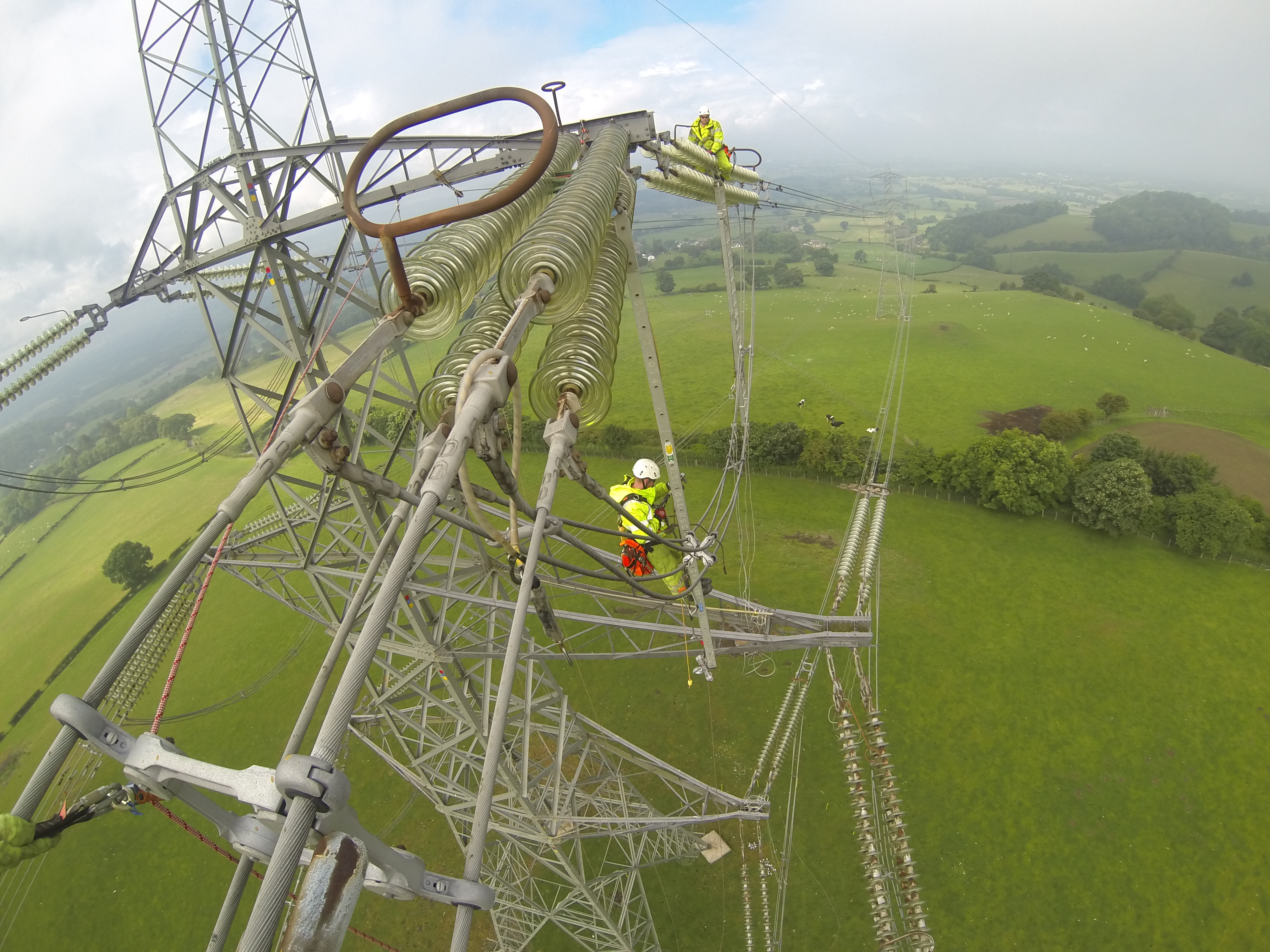
This is a National Grid picture of fitters installing the new system.
Note.
- Surely, if you can increase the capacity of an electricity line by 45 %, by using innovation and just changing the insulators, this would be much cheaper, than adding another high voltage line.
- It would also incur less legal costs and disruption, than a second line.
I like this idea and hopefully it will please the Nimbies.
More About RICA
This web page is the RICA web site.
This document gives a lot more information.
Conclusion
It appears to be a simple solution to increasing the capacity of the grid.
I’d like to see some recent results.
SSE Partners With Bord na Móna On 800MW Onshore Wind JV In Ireland
The title of this post, is the same as that of this press release from SSE.
These four bullet points, act as sub-headings.
- Leading low-carbon energy companies SSE Renewables and Bord na Móna continue to progress their respective portfolios in Ireland, by partnering to develop new onshore wind energy projects across the Midlands.
- More than €1 billion could be invested by the joint venture partnership to develop up to 800MW of new renewable energy projects, enough to provide power to over 450,000 homes.
- Onshore wind farm projects to be developed as part of the portfolio will include Lemanaghan Wind Farm in north-west Offaly, Littleton Wind Farm in Tipperary, and Garryhinch Wind Farm on the Laois Offaly border.
- The partnership has the potential to support hundreds of jobs across the Midlands during construction and operation of the onshore wind projects.
Note.
- It is a 50:50 project between SSE Renewables and Bord na Móna.
- It will deliver 800 MW of onshore wind energy.
These link to the three web sites for the wind farms.
- Lemanaghan Wind Farm will be 80-100 MW
- Littleton Wind Farm will be 60-80 MW
- Garryhinch Wind Farm will be 60-80 MW
These must be the first phases, as they are nowhere near 800 MW.
There is an interesting comparison to be made here.
- As I said in Wind Farm: Yorkshire Moors Could Get England’s Biggest Wind Farm, it looks like a 304 MW wind farm on England will be controversial.
- The 539 MW Whitelee Wind Farm near Glasgow is the largest onshore wind farm in the UK.
- The republic of Ireland is building three schemes totalling 800 MW in the Irish Midlands.
So why does England object?
Wind Farm: Yorkshire Moors Could Get England’s Biggest Wind Farm
The title of this post, is the same as that, of this article on the BBC.
This is the sub-heading.
The largest onshore wind farm in England could be built on moorland in the Pennines if plans get the go-ahead.
These are the first two paragraphs.
Calderdale Windfarm Ltd is exploring options for 65 turbines on Walshaw Moor, near the Walshaw Dean reservoirs above Hebden Bridge in Calderdale.
The company said the scheme would generate enough electricity to power more than 286,000 homes a year.
The Calderdale Wind Farm has a web site, which adds these details about the proposals.
- The 65 wind turbines will generate up to 302 MW of electricity.
- There will be a 150 MW battery on site.
- £2.5 million per year will be put in a Community Benefit Fund.
- Up to 300,000 trees will be planted across the site.
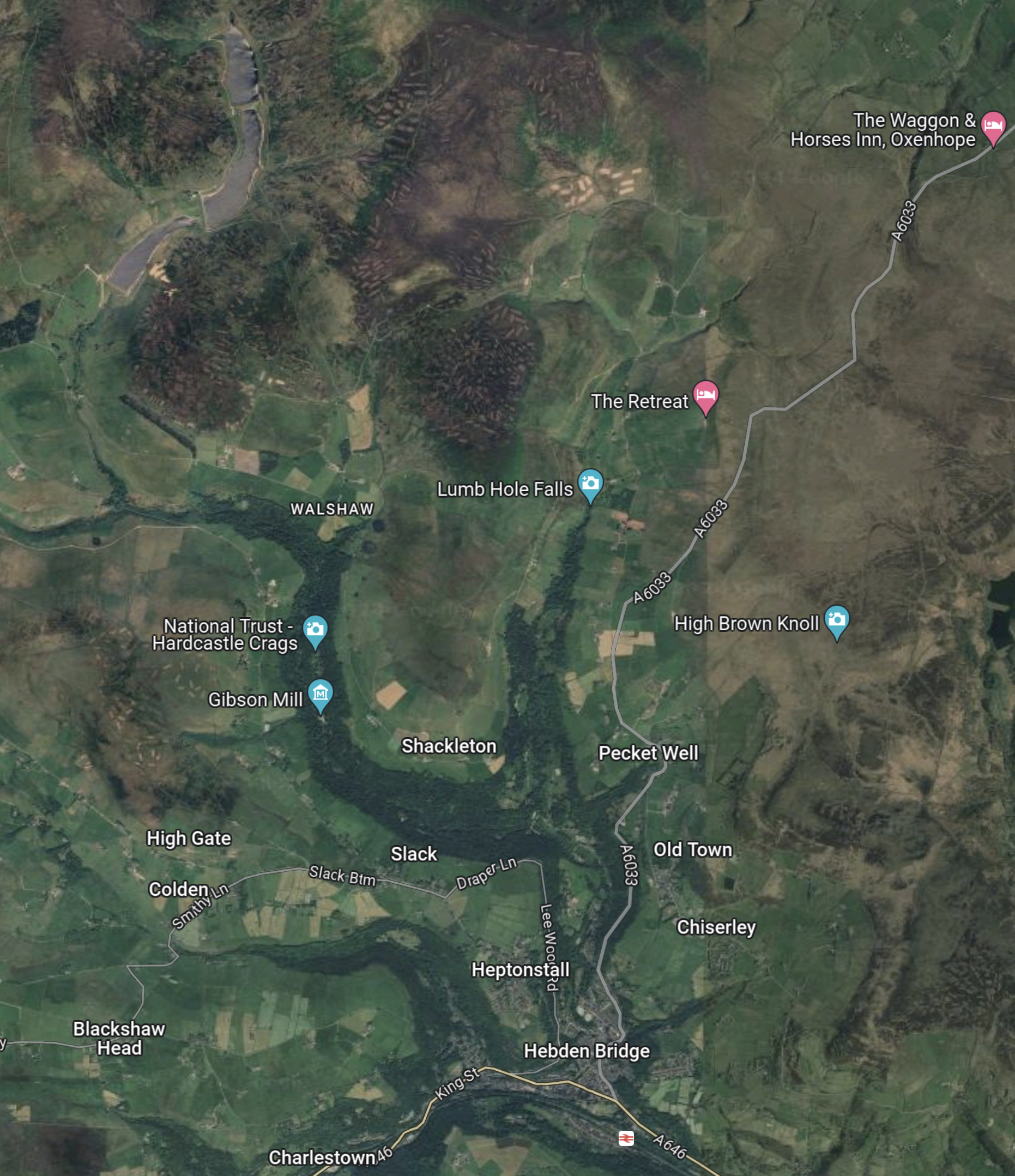
This Google Map shows the Walshaw Dean reservoirs and Hebden Bridge.
Note.
- Walshaw Dean reservoirs are in the North-West corner of the map.
- Hebden Bridge is at the bottom of the map.
- Hebden Bridge station on the Calder Valley Line is also marked.
- This will be a very unusual wind farm for England.
It could also be a controversial wind farm.
These are some of my thoughts and those of the BBC article.
Environmental Opinions
These five paragraphs indicate both sides of the environmental argument.
Environmental campaigners warned the development would disturb peat bogs, releasing carbon into the atmosphere.
A spokesperson for Calderdale Windfarm, which is backed by Worldwide Renewable Energy (WWRE), said the proposal was an “incredibly exciting opportunity”.
“During a cost-of-living crisis, with ongoing energy security challenges and the climate emergency, the UK needs to explore how it can generate more carbon-free renewable electricity,” the firm said.
“But our proposals are at a very early stage and we recognise there will be a range of views about the merits of our proposal.
“We look forward to continuing to work with the local community, environmental groups, local councillors and others over the coming months to help shape the final design of the project.”
The £2.5 million per year Community Benefit Fund could be the clincher.
The Site Has A Battery
In my view, it is good practice to fit every wind farm with a battery, if this is practical and cost-effective.
As most batteries associated with wind farms, seem to be able to replace the wind farm for two hours, I wouldn’t be surprised to see the battery specified as a 150 MW/300 MWh unit.
A battery this size would improve the stability of the electricity supply in the area.
How Will Calderdale Wind Farm Be Connected To The Grid?
This question is answered in the page of FAQs.
We already have an offer from the Distribution Network Operator Energy North West to connect into the local electricity network substation at Padiham. Negotiations are also ongoing about an alternative connection via a new substation and that would go into National Grid which would connect into existing 440 KV pylons.
Padiham is a few miles away to the West, so the second option may need a smaller number of pylons.
The grid connection and associated infrastructure would be subject to a separate planning application to the wind farm.
Is Calderdale Wind Farm Just Wind Turbines?
This question is answered in the page of FAQs.
- No. Alongside our proposals for onshore wind we are also exploring the potential for the inclusion of battery storage and solar panels on southern slopes.
- As we develop the proposals further, we will be able to confirm whether we will be including other renewable technologies as part of the proposals.
I wouldn’t be surprised to see solar panels floated on the reservoirs. This also has the secondary benefit of reducing evaporation.
How Will Calderdale Wind Farm Benefit Calderdale?
This question is answered in the page of FAQs.
If consented, Calderdale Wind Farm would represent an investment of circa £500m into the local economy. Calderdale Wind Farm will support the local economy and present many opportunities for years to come.
Community Benefit Fund
Around 16,500 households in Calderdale are living in fuel poverty, with around 1,200 of these being in the HX7 postcode area. As part of our proposals for Calderdale we are exploring a community benefit fund to provide support to these households across the 30-year operational lifetime of Calderdale Wind Farm.
This fund would represent £75m worth of funding across a 30-year timeframe that would be paid to Calderdale Council to help relieve fuel poverty for the operational lifetime of the Calderdale Wind Farm.
We want to work closely with the communities in and around Calderdale to ensure they benefit from the project to help address identified local challenges such as the current energy and cost of living crisis.
Socio Economic Impacts
A socio-economic report produced by Biggar Economics suggests that the project would be a significant boost to both the Calderdale and wider regional economy if it goes ahead. The report estimates that Calderdale Wind Farm would generate at least £2.2million GVA for Calderdale through the design, build and operational lifetime of the windfarm.
This is surely going to level-up Calderdale.
Is This Going To Impact My Walking Route?
This question is answered in the page of FAQs.
As we develop our proposals, we will design the scheme and placement of the wind turbines and associated infrastructure to minimise any disruption to existing paths and trails. Our team has taken into consideration the importance of preserving the natural beauty and accessibility of the area in our early stage designs, which will evolve as we undertake further work ahead of a planning submission.
While there might be temporary adjustments or diversions to certain paths during the construction phase to ensure safety, these changes will be communicated well in advance, and we will strive to keep any inconveniences to a minimum.
Once operational the moor will continue to be accessible to members of the public.
As part of our commitment to community consultation, we want to hear your thoughts on the proposals, if you have any specific concerns about how the wind farm might affect your walking routes please let us now, community input is vital to designing a scheme that works seamlessly with the local environment.
It does look like the impact will not be all that great.
Is Grouse Shooting On Walshaw Moor Expected To Continue If Calderdale Wind Farm Is Approved?
This question is answered in the page of FAQs.
WWRE and Calderdale Wind Farm Ltd are pleased to confirm that the approval of the wind farm would result in the end of grouse shooting on Walshaw Moor.
This could face a lot of opposition from the shooting lobby.
Who Are WWRE?
The Calderdale wind farm has a page of FAQs.
In response to who are the funding partners of the project, this is said.
WWRE Global is a UK based company that was looking at projects in Spain and registered with Companies House in Gibraltar. With its investors and opportunities its current operations are focused on helping to deliver new renewable energy infrastructure in locations across the UK, which is why the business is now listed at Companies House in London.
WWRE Global is responsible for delivering investment opportunities for Energy Horizon II Investment Company and managing the planning and consenting process.
WWRE Global has a web site.
When Will The Wind Farm Be Built?
This question is answered in the page of FAQs.
Calderdale Wind Farm is a fully funded project, and it is envisaged the construction would commence within 12 months of any planning permission being granted and conditions being discharged. At this stage it is expected that construction could take up to two years.
WWRE Global certainly seem to want to get on with it.
Objectors
Use Google to search for news about Calderdale wind farm and you get a lot of objectors.
Conclusion
This is a bold and scientifically-correct proposal and it will be a close decision, as to whether the wind farm gets built or not!
LionLink: Proposed Windfarm Cabling Sites In Suffolk Are Revealed
The title of this post, is the same as that of this article on the BBC.
This is the sub-heading.
National Grid has revealed where it wants to build energy infrastructure for cabling between the UK and the Netherlands.
These four paragraphs describe the project.
The power line, called LionLink, would connect offshore wind farms in the North Sea.
The energy company wants the cables to reach land at either Walberswick or Southwold, both in Suffolk.
A converter station would be built on the outskirts of nearby Saxmundham and could cover a six-hectare area.
That would then connect to a substation being built at the village of Friston, also in Suffolk, as part of the offshore wind plans.
But the plans have brought the Nimbies out in force.
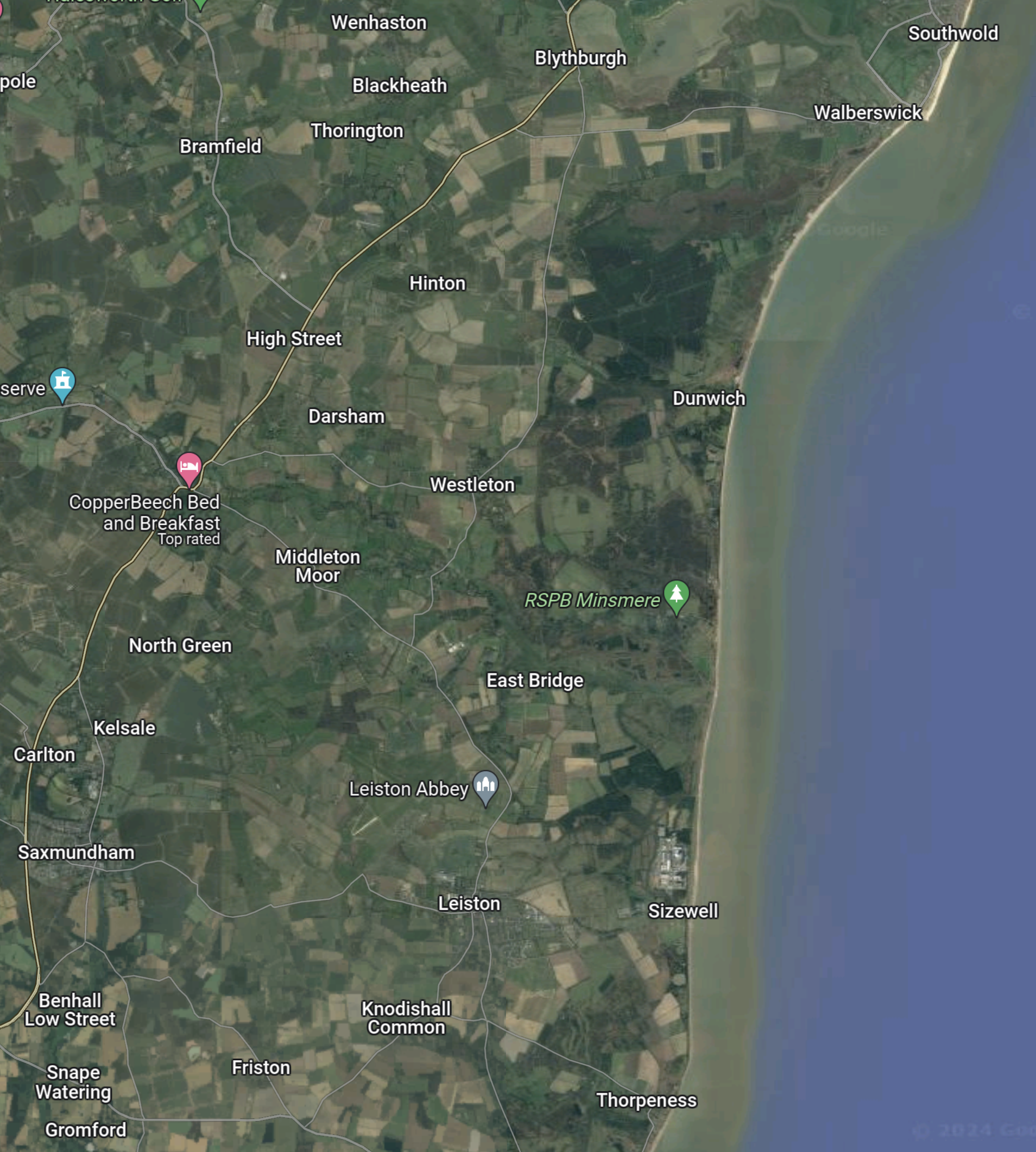
This Google Map shows the Suffolk Coast, to the South of Southwold.
Note.
- Southwold and Walberswick in the North-East corner of the map.
- Saxmundham is just up from the South-West corner of the map, with Friston to its East.
- Sizewell with the 1.2 GW Sizewell B nuclear power station is on the coast directly East of Saxmundham.
- Sizewell B is planned to be joined by the 3.2 GW Sizewell C nuclear power station.
- LionLink is likely to have a capacity of 2 GW.
- I also believe that at least another GW of offshore wind power will be squeezed in along this section of coast.
The Sizewell site is connected to the National Grid at Bullen Lane substation to the West of Ipswich.
These pictures show the pylons that were built in the 1960s to connect Sizewell A to the National Grid.
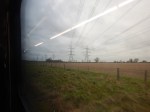
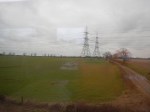





I doubt, they would be allowed to be erected today.
One alternative would be to use T-pylons, like these built to connect Hinckley Point C to the National Grid.

There is more on T-pylons in this press release from National Grid, which is entitled National Grid Energise World’s First T-Pylons.
This Google Map shows the area between Ipswich and the coast.
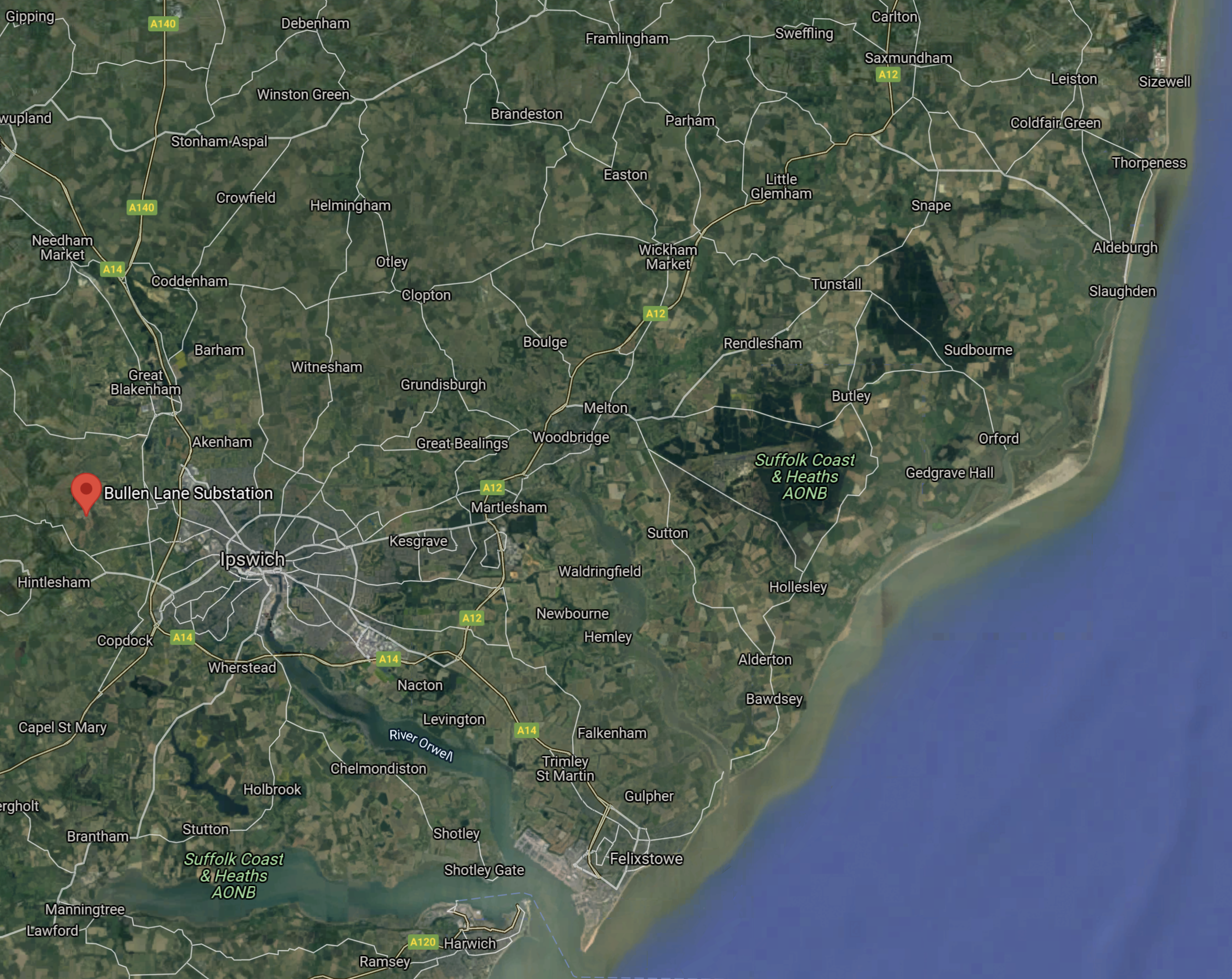
Note.
- Sizewell is in the North-East corner of the map.
- Felixstowe, Harwich and Freeport East are at the mouth of the rivers Orwell and Stour.
- The Bullen Lane substation is to the West of Ipswich and shown by the red arrow.
Looking at maximum power flows in Suffolk and Somerset, we get.
- North-East Suffolk to the National Grid at Bullen Lane – 7.4 GW.
- Hinckley Point C to the National Grid – 3.26 GW.
I am led to the conclusion, that there need to be a doubling of the pylons between North-East Suffolk and Bullens Lane.
I can understand why the Nimbies have been aroused.
I believe that National Grid will have to take the undersea route along the coast of Essex and Suffolk, to get the electricity to its markets.
Why Firms Are Racing To Produce Green Ammonia
The title of this post, is the same as that of this article on the BBC.
This is the sub-heading.
In the 19th Century, Europeans realised what the Inca had known long before. Bird droppings, or guano, made a fantastic fertiliser.
These are the first three paragraphs.
And so sprang up a gigantic industry dedicated to the harvesting of guano from Latin American bird colonies, where there were huge piles of the stuff.
It was so rich in ammonia, the key ingredient, that a mere whiff could induce coughing and sneezing. Not exactly a pleasant cargo to ferry across the world.
As demand for fertiliser rose in the early 1900s, someone began to think, “Perhaps there’s another way?” That someone was Fritz Haber, a German chemist who, along with Carl Bosch, developed the Haber-Bosch process for synthesising ammonia.
This Wikipedia entry describes the Haber-Bosch process.
This is the first paragraph.
The Haber process, also called the Haber–Bosch process, is the main industrial procedure for the production of ammonia. The German chemists Fritz Haber and Carl Bosch developed it in the first decade of the 20th century. The process converts atmospheric nitrogen (N2) to ammonia (NH3) by a reaction with hydrogen (H2) using an iron metal catalyst under high temperatures and pressures. This reaction is slightly exothermic (i.e. it releases energy), meaning that the reaction is favoured at lower temperatures and higher pressures. It decreases entropy, complicating the process. Hydrogen is produced via steam reforming, followed by an iterative closed cycle to react hydrogen with nitrogen to produce ammonia.
These companies are mentioned in the BBC article.
Starfire Energy
This is their web site.
Their home page has a title of Modular, Variable-Rate Ammonia (NH3) Production and this description of their technology.
We are scaling up technologies to make and use carbon-free ammonia fuel. Rapid Ramp is a variable-rate ammonia production process engineered into a modular plant design. Prometheus Fire is a lower temperature, high flow ammonia cracking process that allows ammonia to be used like natural gas, but with no CO2 emissions.
According to the co-founder of the company, Starfire’s process can use intermittent power, like wind and solar.
Could a farmer make their own fertiliser with a containerised system and say a 5MW wind turbine or a small solar farm?
Atmonia
This is their web site.
This description of their process is on their home page.
Atmonia is developing a nitrogen electrolyser with our patented catalyst. The technology uses only air, water and electricity for direct ammonia production. This enables zero carbon ammonia production, when applying renewable electricity.
Could a farmer make their own fertiliser with a containerised system and say a 5MW wind turbine or a small solar farm?
Jupiter Ionics
This is their web site.
Their home page has an endless video and this statement.
We’re commercialising carbon-neutral, electrochemical technology for sustainable agriculture, ammonia-fuelled transport and renewable energy exports.
These three paragraphs in the BBC article, say more about the process used by Jupiter Ionics.
Jupiter Ionics is currently planning to build an ammonia production module on the megawatt scale, which could produce a tonne per day.
Jupiter Ionics’ technology differs from Starfire Energy and Atmonia’s in that it uses lithium as a mediator to break apart nitrogen molecules, which naturally exist as strongly bonded pairs of nitrogen atoms, to form lithium nitride. This then reacts with hydrogen to make the ammonia.
Within the next 12-18 months, Jupiter Ionics aims to scale up its equipment so that it can produce a kilogram of ammonia per day. A grape farmer in the state of Victoria who has solar panels on his land is hoping to trial the system, says Prof MacFarlane.
It appears that Starfire Energy, Atmonia and Jupiter have containerised systems, that can take air, water and electricity and can create sizeable quantities of ammonia for fertiliser or a fuel.
This page on the Ammonia Energy Association web site is entitled Amogy: Ammonia-Powered Tractor, where this is said, alongside a picture of a standard John Deere tractor.
Earlier this month, Amogy demonstrated a new ammonia-powered tractor in Stony Brook, New York. A 100 kW ammonia-to-power system was successfully integrated into a John Deere mid-size standard tractor, which can operate on liquid ammonia fuel for a period of several hours. The tractor conversion demonstration was made possible by significant seed funding secured in late 2021.
The unique system is comprised of a standard liquid-storage tank and highly efficient ammonia-cracking modules integrated into a hybrid fuel cell system, which can provide consistent primary power for several hours per refueling. Therefore, the pioneering vehicle maintains the functionality and duration requirements operators rely on to support farming tasks, which has never been offered with other alternative energy solutions. The ammonia-powered tractor was driven for separate periods, with a refueling session in between. Refueling a tractor with liquid ammonia is fast and simple, similar to gas or diesel refueling.
This is Amogy’s web site.
I can also see a problem, if every farmer of a certain size wants to make their own ammonia for both fertiliser and fuel.
The NIMBYs will have a field day, but at least the countryside’s low-life won’t be nicking your diesel.
Nitricity
The BBC article also talks about Nitricity.
As Josh McEnaney, president and chief executive of Nitricity in the US, explains, spreading ammonia on fields results in greenhouse gas emissions that could be avoided if we took a more direct approach to applying nitrogen, the crucial element that promotes plant growth, to the soil.
His company is developing a system that uses solar-powered plasma cells to fix nitrogen from the air. This is then used to make nitric acid, which can be applied to the soil. Early experiments with tomato plants yielded success and the company is now trialling its technology with suppliers for the US fast food chain Chipotle.
“We don’t require any hydrogen production,” says Dr McEnaney. “We go straight for the fertiliser.”
This is the Nitricity web site.
Two Experts Give Their Views
The BBC article finishes with the views of two experts.
Bill David at the University of Oxford points out that, around the world, there is already lots of infrastructure designed to store and transport ammonia.
He praises large projects for manufacturing ammonia using renewable energy, such as the one in Uzbekistan that will reportedly spew out 454,000 tonnes of ammonia per year with the help of 2.4 gigawatts of wind energy.
While ammonia can be used as a fuel, it can also be cracked to release hydrogen, which may itself be burned as a fuel, points out Lindsey Motlow, senior research associate at Darcy Partners, a technology firm that works with the oil and gas industry.
“We’re seeing real progress in [the] development of ammonia cracking technology,” she says.
Conclusion
According to the BBC article, two percent of the carbon dioxide emitted on the planet comes from the creation of fertiliser.
So it looks like we can either fry or starve, if we don’t address the problem of zero-carbon fertiliser.
But the downside could be every farm having its own wind turbine.
The BBC article and the related web sites are a must-read.
Vestas and Vattenfall Sign 1.4 GW Preferred Supplier Agreement For UK Offshore Wind Project And Exclusivity Agreements For 2.8 GW For Two Other UK Projects
The title of this post, is the same as that of this press release from Vestas.
These are the first two paragraphs.
Vattenfall, one of Europe’s largest producers and retailers of electricity and heat, and Vestas have signed agreements to elevate the partnership between the two companies and their offshore wind business towards 2030. The agreements are another step in the right direction for offshore wind energy in the UK and follow the UK Government’s recent announcement about the parameters for the next Contracts for Difference Auction round, which sent a very positive signal to renewable energy investors.
The agreements for the three projects include a preferred supplier agreement (PSA) for the 1,380 MW Norfolk Vanguard West project, comprising 92 of Vestas’ V236-15 MW offshore wind turbine. Vattenfall and Vestas have further signed exclusivity agreements for the Norfolk Vanguard East and Norfolk Boreas projects with a total installed capacity of 2,760 MW. The two latter projects will potentially feature up to 184 V236-15 MW turbines. Once installed, the agreements also include that Vestas will service the projects under long-term Operations and Maintenance (O&M) service contracts. The agreements are another step forward for what will be one of the largest offshore wind zones in the world, with a capacity to power over 4 million UK homes.
It looks like Norfolk Boreas is back on Vattenfall’s list of active projects.
Vattenfall’s Norfolk zone now includes the following.
- Norfolk Vanguard West – 92 x V236-15 MW – 1380 MW
- Norfolk Vanguard East – 92 x V236-15 MW – 1380 MW
- Norfolk Boreas – 92 x V236-15 MW – 1380 MW
Note.
- All turbines appear identical.
- The deal includes long-term Operations and Maintenance (O&M) service contracts.
- 276 identical turbines plus service contracts looks like a good deal for Vestas.
Since I wrote Vattenfall Stops Developing Major Wind Farm Offshore UK, Will Review Entire 4.2 GW Zone in July 2023, which has this sub-heading.
Vattenfall has stopped the development of the Norfolk Boreas offshore wind power project in the UK and will review the way forward for the entire 4.2 GW Norfolk Zone, the Swedish energy company revealed in its interim report.
I have written the following posts.
- November 2023 – Aker Solutions Gets Vattenfall Nod To Start Norfolk Vanguard West Offshore Platform
- November 2023 – Norfolk Boreas Windfarm Work Could Resume After Energy Price Rise
- December 2023 – SeAH To Deliver Monopiles For Vattenfall’s 2.8 GW Norfolk Vanguard Offshore Wind Project
- Earlier in March 2023, I wrote Vattenfall Selects Norfolk Offshore Wind Zone O&M Base
It appears that with the deal announced with Vestas, Vattenfall now have everything they need to develop 4.2 GW of offshore wind.
- The O & M base will be Great Yarmouth.
- SeAH will build the monopile foundations on Teesside. Will all monopiles be identical?
- An energy price rise could change the cash flow of the project.
- Aker Solutions will build the offshore substations.Will all sub-stations be identical?
- Vestas will build the wind turbines.Will all turbines be identical?
Nothing has been said since July 2023 about how the power will be brought ashore.
In February 2022, I wrote Norfolk Wind Farms Offer ‘Significant Benefit’ For Local Economy, where I published this map from Vattenfall, which shows the position of the farms and the route of the cable to the shore.
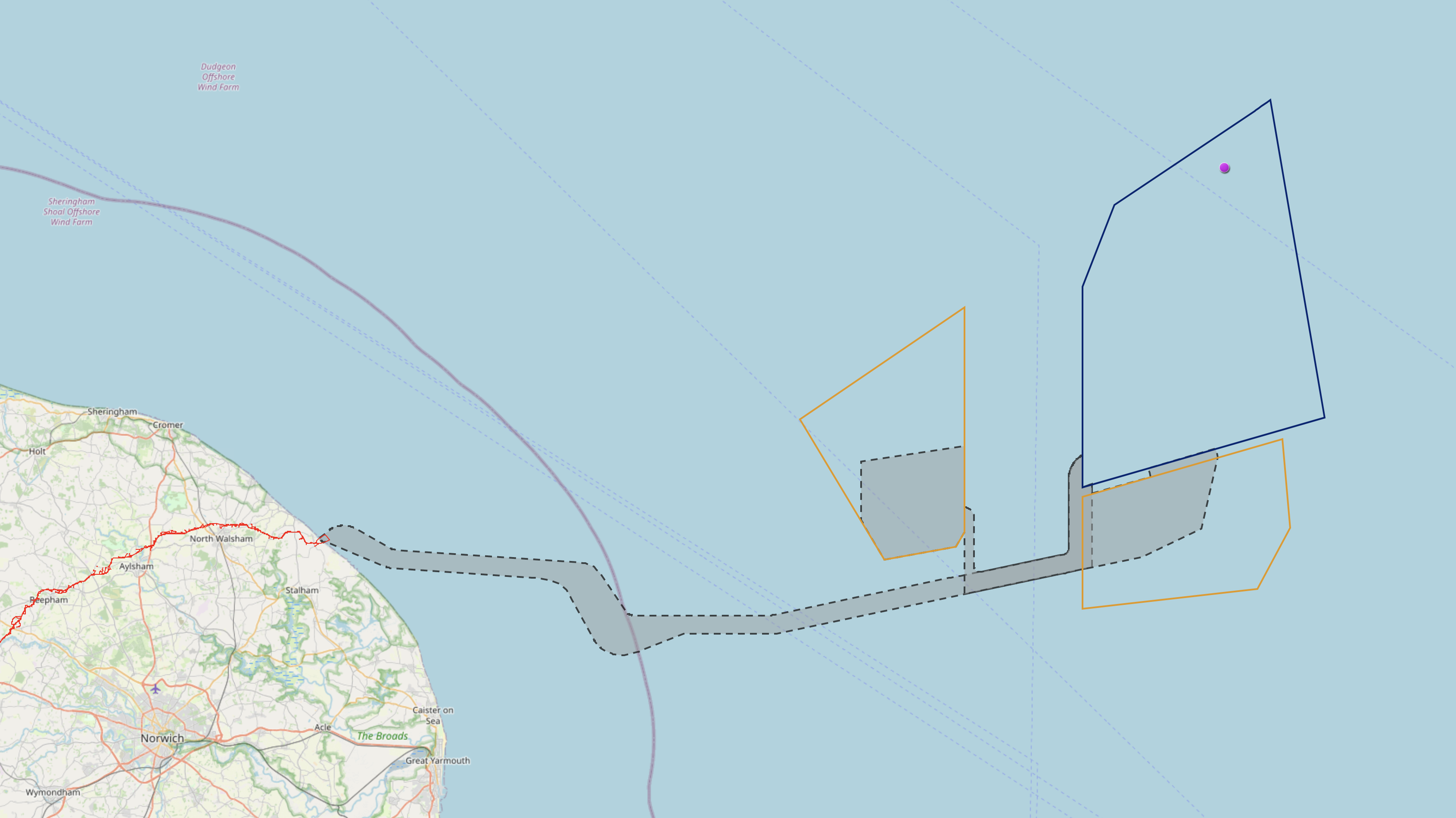
Note.
- The purple line appears to be the UK’s ten mile limit.
- Norfolk Boreas is outlined in blue.
- Norfolk Vanguard West and Norfolk Vanguard East are outlined in orange.
- Cables will be run in the grey areas.
- Cables to deliver 4.1 GW across Norfolk to the National Grid, will bring out the Nimbys in droves.
Landfall of the cables will be just a few miles to the South of the Bacton gas terminal.
In SeAH To Deliver Monopiles For Vattenfall’s 2.8 GW Norfolk Vanguard Offshore Wind Project, I asked if there could be an alternative approach.
Consider.
- If Vattenfall develop all three wind farms; Boreas, Vanguard East and Vanguard West, they will have 4.2 GW of capacity, when the wind co-operates.
- But East Norfolk is not noted for industries that need a large amount of electricity.
- I also feel, that the locals would object to a steelworks or an aluminium smelter, just like they object to electricity cables.
But would they object to a 4 GW electrolyser?
Could this be Vattenfall’s alternative approach?
- A giant electrolyser is built close to the landfall of the cable to the wind farms.
- The hydrogen could be piped to Bacton, where it could be blended with the UK’s natural gas.
- Bacton also has gas interconnectors to Balgzand in the Netherlands and Zeebrugge in Belgium. Could these interconnectors be used to export hydrogen to Europe?
- The hydrogen could be piped to Yarmouth, where it could be exported by tanker to Europe.
There would be only a small amount of onshore development and no overhead transmission lines to connect the wind farms to the National Grid.
There would be even less onshore development, if the electrolyser was offshore.
From their decisions, Vattenfall seem to have a new plan.
Vattenfall Stops Developing Major Wind Farm Offshore UK, Will Review Entire 4.2 GW Zone
The title of this post, is the same as that of this article on offshoreWIND.biz.
This is the sub-heading.
Vattenfall has stopped the development of the Norfolk Boreas offshore wind power project in the UK and will review the way forward for the entire 4.2 GW Norfolk Zone, the Swedish energy company revealed in its interim report.
This is the first paragraph.
The developer said that the decision to stop the project was made due to ”challenging market conditions”, adding that ”financial frameworks have not adapted to reflect the current market conditions” so far.
Vattenfall are also complaining about inflation and cost increases if up to 40 %.
I have my thoughts.
Great Yarmouth Support Base
In some ways, I find this decision to pull out strange, as it was only in March this year that Vattenfall signed a contract with Peel Ports to build a support base for their Norfolk wind farms at Great Yarmouth.
I don’t think that Peel Ports will be too bothered, as they are a well-funded company and there are plenty of wind farm proposals in the sea around Norfolk, who could use a base at Great Yarmuth.
Cable Routes And Nimbys
These Norfolk wind farms have suffered opposition from Nimbys to the cable route, that will be taking the electricity away from the coast. This may have increased the cost of delivery of the electricity to market.
An Offshore Cable Route
In January 2022, I wrote Is There A Need For A Norfolk-Suffolk Interconnector?, where I analysed the amount of energy, that will be produce in Norfolk and Suffolk.
This was my conclusion.
I believe there are a lot of possibilities, that would meet the three objectives, I stated earlier.
-
- Avoid as much disruption on the land as possible.
- Create the capacity to deliver all the energy generated to customers, either as electricity or hydrogen.
- Create an expandable framework, that would support all the wind farms that could be built in the future.
In addition, simple mathematics says to me, that either there will need to be extra capacity at both Bicker Fen and Bullen Lane substations and onward to the rest of the country, or a large electrolyser to convert several gigawatts of electricity into hydrogen for distribution, through the gas network.
Note.
- An offshore Multiple Purpose Interconnector (MPI) could be built between Bicker Fen in Lincolnshire and the Isle of Grain.
- An electrolyser could be built offshore, joined to the MPI and connected to the Bacton gas terminal.
- There could be local offshore hydrogen storage.
- Bicker Fen is connected to the Viking Link to Denmark.
- An offshore link could have its Southern end at the Isle of Grain, from where the electricity can be exported to Germany, by the NeuConnect interconnector, that is under construction.
There must be sufficient capacity, so that all energy is delivered to customers, as either electricity or hydrogen.
I’ve always favoured delivering electricity from these and other East Anglian wind farms with an offshore cable route away from the coast between perhaps Bicker Fen in Lincolnshire and the the Isle of Grain, from where the electricity can be exported to Germany, by an interconnector, that is being built.
Competition From Scotland
National Grid are improving the offshore grid between Scotland and Humberside, so perhaps Vattenfall might have a competition problem, when it comes to selling their electricity.
If you have no market for a product, then the price drops.
Is East Anglia A Bad Place To Have Surplus Electricity?
Consider.
- It should also be remembered that East Anglia has no heavy electricity users.
- There are also no substantial mountains for building large pumped-storage hydro schemes, as Scotland is proposing to do.
- The construction of Sizewell C will add more electricity to the area.
In my view the best thing to do would be to build a giant electrolyser near the Bacton gas terminal.
Was It A Mistake For Vattenfall To Make A Bid?
Looking at the delivery problems for the Norfolk wind farms, I think that Vattenfall made a bad decision to bid for them.
- The wind farms are too far North to serve London and the South-East and to export the electricity to the Continent.
- They are also too far South to serve the industry in the North around the Humber and the Tees.
It looks an obvious case of wrong Location, Location and Location.
Could Norfolk Boreas And Norfolk Viking Work Economically?
I suspect these ideas could help.
- A Multiple Purpose Interconnector (MPI) would be built between Bicker Fen in Lincolnshire and the Isle of Grain.
- The MPI would connect to any wind farms on the route.
- An offshore electrolyser opposite Bacton would be connected to the MPI to use surplus electricity to generate hydrogen, which would be distributed through the gas grid.
The whole network of wind farms, interconnectors, electrolysers and storage needs to be comprehensively designed, so that it provides the South-East corner of England, with enough reliable electricity and hydrogen.
Gore Street Energy Storage Fund’s Portfolio Increases To Over 1GW
The title of this post, is the same as that of this article on the Solar Power Portal.
By any measure a GW is a substantial amount of power and the article gives all the figures for the fund.
One thing, I feel, I can say, is that large grid-connected lithium-ion batteries, as deployed by Gore Street, are more reliable than the similar smaller batteries in e-bikes and e-scooters.
The media and especially the financial pages would have had a field day, if a lithium-ion battery caught fire. Certainly Gore Street and others building large batteries, don’t seem to have any planning permission problems from Nimbys.
EuroLink, Nautilus And Sea Link
EuroLink, Nautilus and Sea Link are three proposed interconnectors being developed by National Grid Ventures.
EuroLink
EuroLink has a web site, where this is said.
To support the UK’s growing energy needs, National Grid Ventures (NGV) is bringing forward proposals for a Multi-Purpose Interconnector (MPI) called EuroLink, which will deliver a new electricity link between Great Britain to the Netherlands.
EuroLink could supply up to 1.8 gigawatts (GW) of electricity, which will be enough to power approximately 1.8 million homes, as well as contribute to our national energy security and support the UK’s climate and energy goals. We’re holding a non-statutory public consultation to inform you about our EuroLink proposals, gather your feedback to help refine our plans and respond to your questions.
Note, that EuroLink is a Multi-Purpose Interconnector (MPI) and they are described on this page of the National Grid website.
In EuroLink’s case, this means it is basically an interconnector between the UK and The Netherlands, that also connects wind farms on the route to the shore.
- Coastal communities get less disruption, as the number of connecting cables coming ashore is reduced.
- Less space is needed onshore for substations.
- Electricity from the wind farms can be directed to where it is needed or can be stored.
As an Electrical and Control Engineer, I like the MPI approach.
The technology to implement the MPI approach is very much tried and tested.
There are many references to EuroLink terminating at Friston.
Nautilus
Nautilus has a web site, where this is said.
Nautilus could connect up to 1.4 gigawatts (GW) of offshore wind to each country through subsea electricity whilst connecting to offshore wind farm/s at sea. By combining offshore wind generation with interconnector capacity between the UK and Belgium, Nautilus would significantly reduce the amount of infrastructure and disruption required both onshore and offshore.
With this new technology, we hope to reduce the impact of infrastructure on local communities and the environment, as well as support the government’s net zero and energy security targets. We are already working closely with other developers in the area to coordinate activities and minimise impact on local communities. We believe that through improved coordination, the UK government can achieve and support the co-existence of renewable energy with coastal communities.
Nautilus is another MPI.
This is said on the web site.
Last year, National Grid Ventures ran a non-statutory consultation for Nautilus, which proposed a connection at Friston.
NGV holds a connection agreement on the Isle of Grain in Kent as part of its development portfolio and we are currently investigating if this could be a potential location for Nautilus. Until this is confirmed to be technically feasible, Nautilus will be included as part of our coordination work in East Suffolk.
So it looks like, Nautilus could connect to the UK grid at Friston or the Isle of Grain.
Sea Link
Sea Link has a web site, and is a proposed interconnector across the Thames Estuary between Suffolk and Kent.
This is said on the web site about the need for and design of Sea Link.
The UK electricity industry is evolving at pace to help lead the way in meeting the climate challenge, whilst also creating a secure energy supply based on renewable and low carbon technologies.
The demands on the electricity network are set to grow as other sectors of the economy diversify their energy consumption from using fossil fuels towards cleaner forms, the move towards electric vehicles being just one example.
Where we’re getting our power from is changing and we need to change too. The new sources of renewable and low-carbon energy are located along the coastline. We need to reinforce existing transmission network and build new electricity infrastructure in these areas in order to transport the power to where it’s needed. This is the case along the whole of the East Coast including Suffolk and Kent.
To allow this increase in energy generation, we need to reinforce the electricity transmission system. Sea Link helps to reinforce the electricity network across Suffolk and Kent.
Our proposals include building an offshore high voltage direct current (HVDC) link between Suffolk and Kent with onshore converter stations and connections back to the national electricity transmission system.
On the web site, in answer to a question of What Is Sea Link?, this is said.
Sea Link is an essential upgrade to Britain’s electricity network in East Anglia and Kent using subsea and underground cable. The proposal includes approximately 130km of subsea cables between Sizewell area in East Suffolk and Richborough in Kent. At landfall, the cables would go underground for up to 5 km to a converter station (one at each end). The converter station converts direct current used for the subsea section to alternating current, which our homes and businesses use. A connection is then made to the existing transmission network. In Suffolk, via the proposed Friston substation; in Kent via a direct connection to the overhead line between Richborough and Canterbury.
Note, that from Kent electricity can also be exported to the Continent.
All Cables Lead To Friston In Suffolk
It looks like EuroLink, Nautilus and Sea Link could all be connected to a new substation at Friston.
But these will not be the only cables to pass close to the village.
This Google Map shows the village.
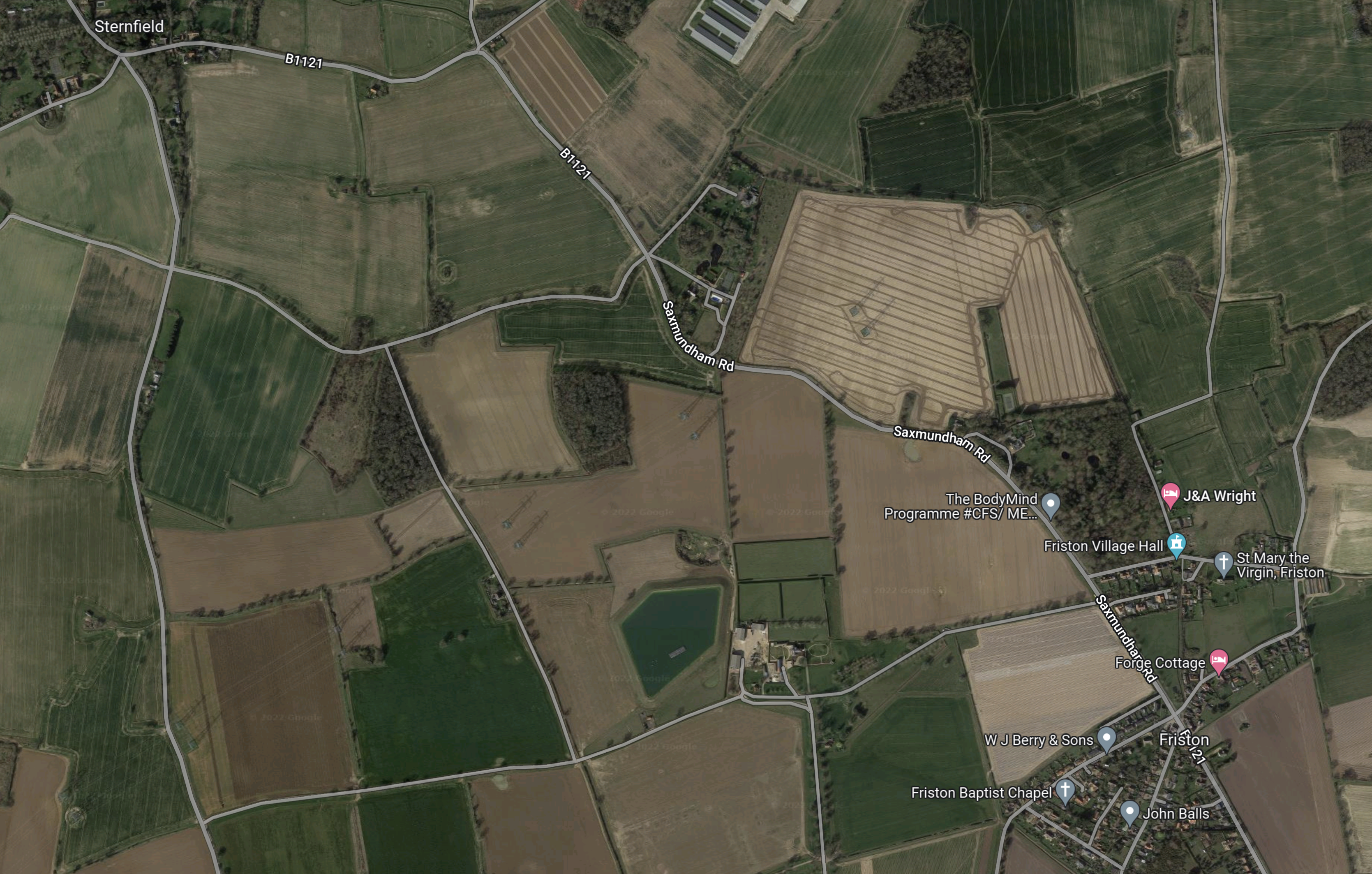
Running South-West to North-East across the map can be seen the dual line of electricity pylons, that connect the nuclear power stations at Sizewell to the UK electricity grid.
Has Friston been chosen for the substation, so that, the various interconnectors can be connected to the power lines, that connect the Sizewell site to the UK electricity grid.
This would enable EuroLink, Nautilus and/or Sea Link to stand in for the Sizewell nuclear stations, if they are shut down for any reason?
It does appear from reports on the Internet that the Friston substation is not welcome.
Exploring Opportunities For Coordination
The title of this section is a heading in the EuroLink web site, where this is said.
In response to stakeholder feedback, NGV’s Eurolink and Nautilus projects and NGET’s Sea Link project are exploring potential opportunities to coordinate. Coordination could range from co-location of infrastructure from different projects on the same site, to coordinating construction activities to reduce potential impacts on local communities and the environment.
That sounds very sensible.
Are The Tories Bluffing About Fracking?
I’ve just listened to a Treasury Minister (Chris Philp (?)) on the BBC and he didn’t mention fracking.
But he did mention more oil and gas in the North Sea, where there is a project agreed between the British and Scottish governments called INTOG, which aims to innovatively cut carbon emissions in the North Sea and possibly extract smaller amounts of gas and oil from existing wells.
As you know, I think fracking is irrelevant. It will take a few years to deliver substantial amounts of gas and we can extract more from the North Sea and by repurposing existing wells.
We might even find one or two existing wells, that could be converted to much-needed gas storage.
I also believe that the cash flow in taxes and leases from offshore wind will be astronomic and it can be used to finance borrowing. We did the same with Artemis to finance the company against future sales. But we were only borrowing millions. We used to parcel up all our leases from companies like Shell, NASA and BP and effectively sell them to Lloyds Bank at a discount.
I’m sure that a clever banker could find a mechanism, that converts future income from offshore wind into a magic money tree for today. Is that what Kwasi Kwarteng has done, in order to cut taxes?
The one problem with offshore wind with the public, is that putting in the cables arouses the NIMBYs. It should also be born in mind, that a lot of the grid connections, go through Tory seats, where NIMBYs are very much against more cables.
So I do wonder, if Moggy has announced the start of fracking to give the NIMBYs a target, so they allow the efficiency of offshore oil and gas to be improved and offshore wind farms to be built without hindrance.
Perhaps Moggy should concentrate on the most important thing that our offshore wind industry needs. This is an innovative pricing mechanism for energy storage, that does the following.
- Allows investors to get a similar return on energy storage to that that they get for offshore wind farms, onshore solar farms and interconnectors.
- Encourages the building of more energy storage.
- Assists in the development of novel energy storage ideas.
As one estimate says we need 600 GWh of energy storage in the UK, sorting this pricing mechanism, can’t come soon enough.
The previous government was talking about this, as I wrote in Ministerial Roundtable Seeks To Unlock Investment In UK Energy Storage.
So continue the conversation, Moggy!
 The Anonymous Widower