ILI Group To Develop 1.5GW Pumped Storage Hydro Project
The title of this post, is the same as that of this article on Solar Power Portal.
These are the first two paragraphs.
Clean energy developer ILI Group has begun the initial planning phase for a new pumped storage hydro project in Scotland.
The Balliemeanoch project at Loch Awe, Dalmally in Argyll and Bute will be able to supply 1.5GW of power for up to 30 hours. It is the third and largest of ILI’s pumped storage hydro projects, with the other two being Red John at Loch Ness and Corrievarkie at Loch Ericht.
It is a big scheme at 45 GWh.
The ILI Group has an extensive web site, that is worth a read.
- This page describes pumped storage.
- This long document from the company is part of their submission to the Government.
The company seems to be going in the right direction.
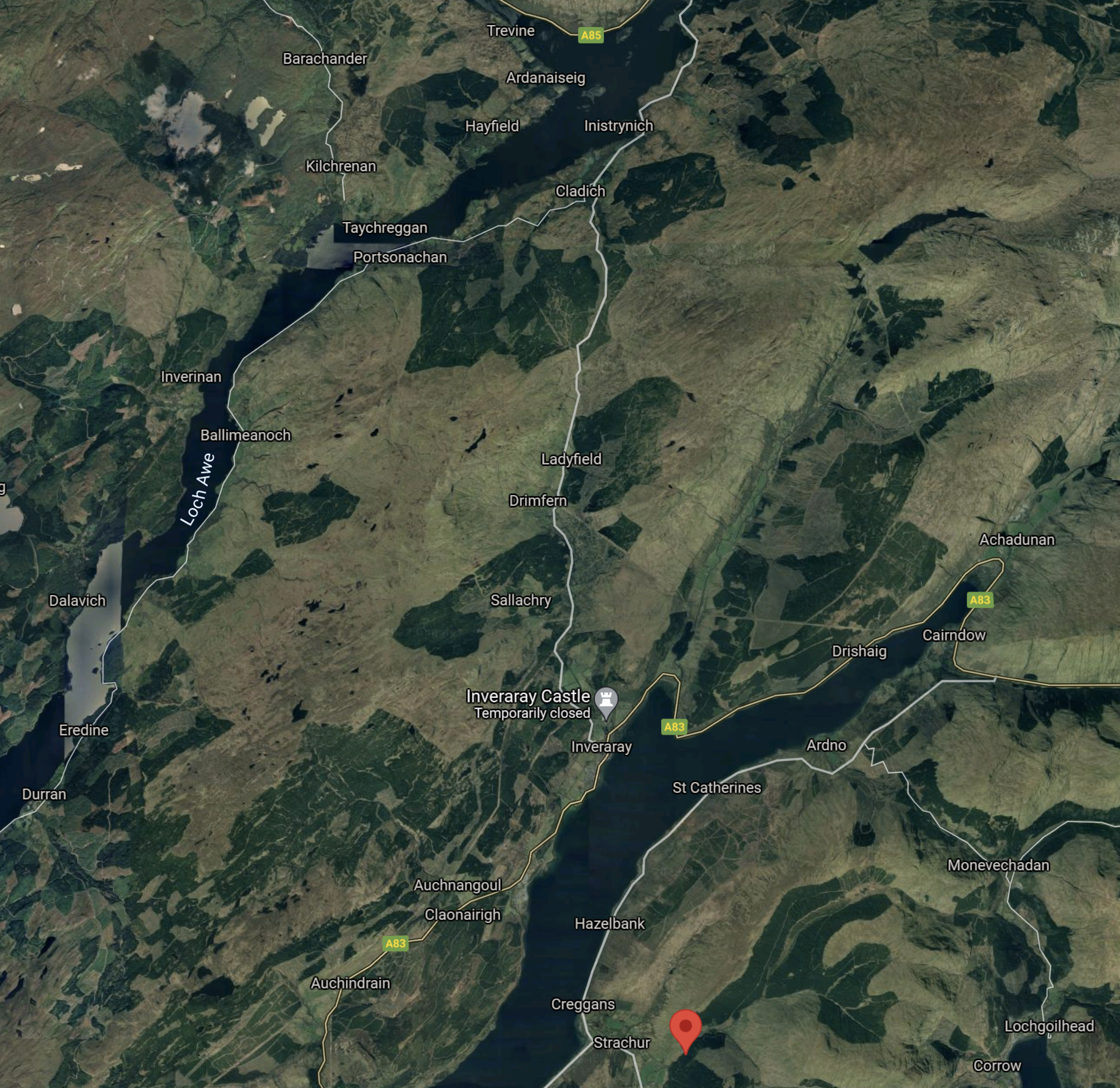
This Google Map shows the Loch Awe area.
Note.
- Loch Awe is in the North West corner of the map.
- Loch Fyne is the large loch in the South East corner of the map.
- Balliemeanoch is marked by the red arrow.
I am a bit puzzled as to the layout of the scheme.
But I have now noticed a Ballimeanoch close by Loch Awe.
This is a map of its location.
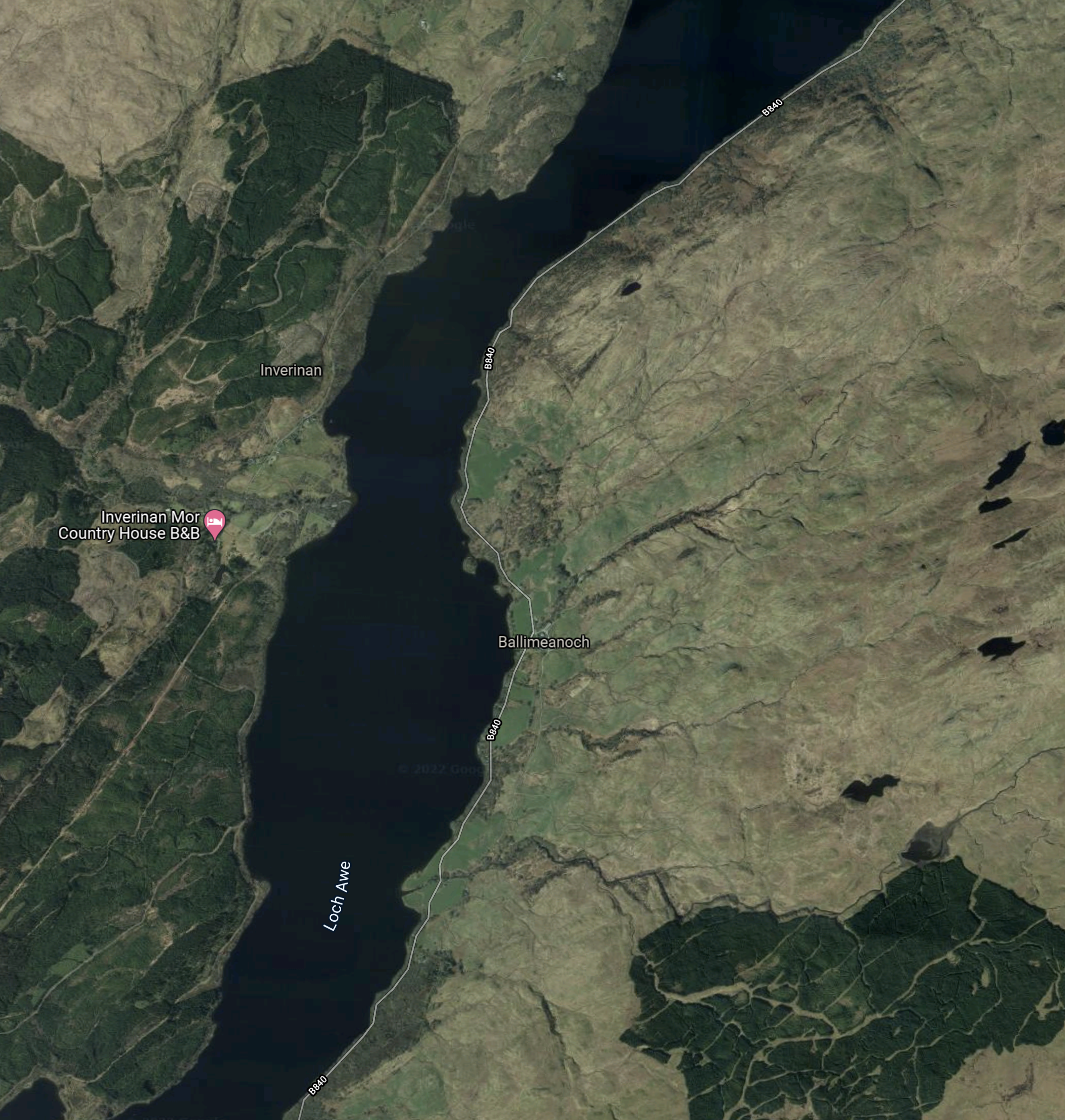
I suspect that is the correct location of the pumped storage scheme.
I shall be interested to see the layout of the full scheme.
SSE Renewables Launches 1.5GW Coire Glas Construction Tender
The title of this post, is the same as that of this article on renews.biz.
These are the first two paragraphs.
Hydro construction companies have been invited to submit tenders for construction of SSE Renewables’ proposed 1500MW pumped hydro storage scheme at Coire Glas, in Scotland.
Coire Glas, on the shores of Loch Lochy near Invergarry, would be the first large-scale pumped hydro storage scheme to be built in the United Kingdom for more than 30 years.
There appears to be global interest and six shortlisted bidders.
- The ANDRITZ HYDRO and Voith Hydro partnership
- The Bechtel, Acciona Construcción and Webuild S.p.A consortium
- The BAM Nuttall, Eiffage Génie Civil and Marti Tunnel consortium
- The Dragados and BeMo Tunnelling UK consortium
- GE Hydro France
- STRABAG UK
Bidders like these probably wouldn’t bother to get involved unless they knew that funding of the project was in place and it was pretty certain that the project will be constructed.
In World’s Largest Wind Farm Attracts Huge Backing From Insurance Giant, I talk about how Aviva are funding the Hornsea wind farm.
I believe, that insurance and pension companies like abrdn, Aviva and L & G could find a way of financing a scheme like Coire Glas.
Conclusion
It looks to me, that it’s almost certain that Scotland will get a 1.5GW/30 GWh pumped-storage system at Coire Glas.
Coire Glas could supply slightly more power than Sizewell B nuclear power station for twenty hours.
Now that’s what I call backup!
Power Storage Is The Next Big Net Zero Challenge
The title of this post, is the same as that of this Opinion from Bloomberg.
This is the sub-heading.
Britain’s pioneering plans for renewable energy show the global need could be massive. The means don’t yet exist.
The opinion is very much a well-written must-read.
One new project the article mentions is a 30 GWh pumped storage project at Coire Glas in the Scottish Highlands, that is planned by SSE.
I discuss this scheme in The Coire Glas Pumped Storage Scheme.
Bloomberg didn’t say it, but this pumped storage scheme could give the UK energy security.
Drax’s Plans For Cruachan
Cruachan Power Station is a pumped-storage hydroelectric power station in Argyll and Bute, Scotland.
- It can generate 440 MW of power.
- It has a storage capacity of 7.1 GWh.
- The power station is owned by Drax.
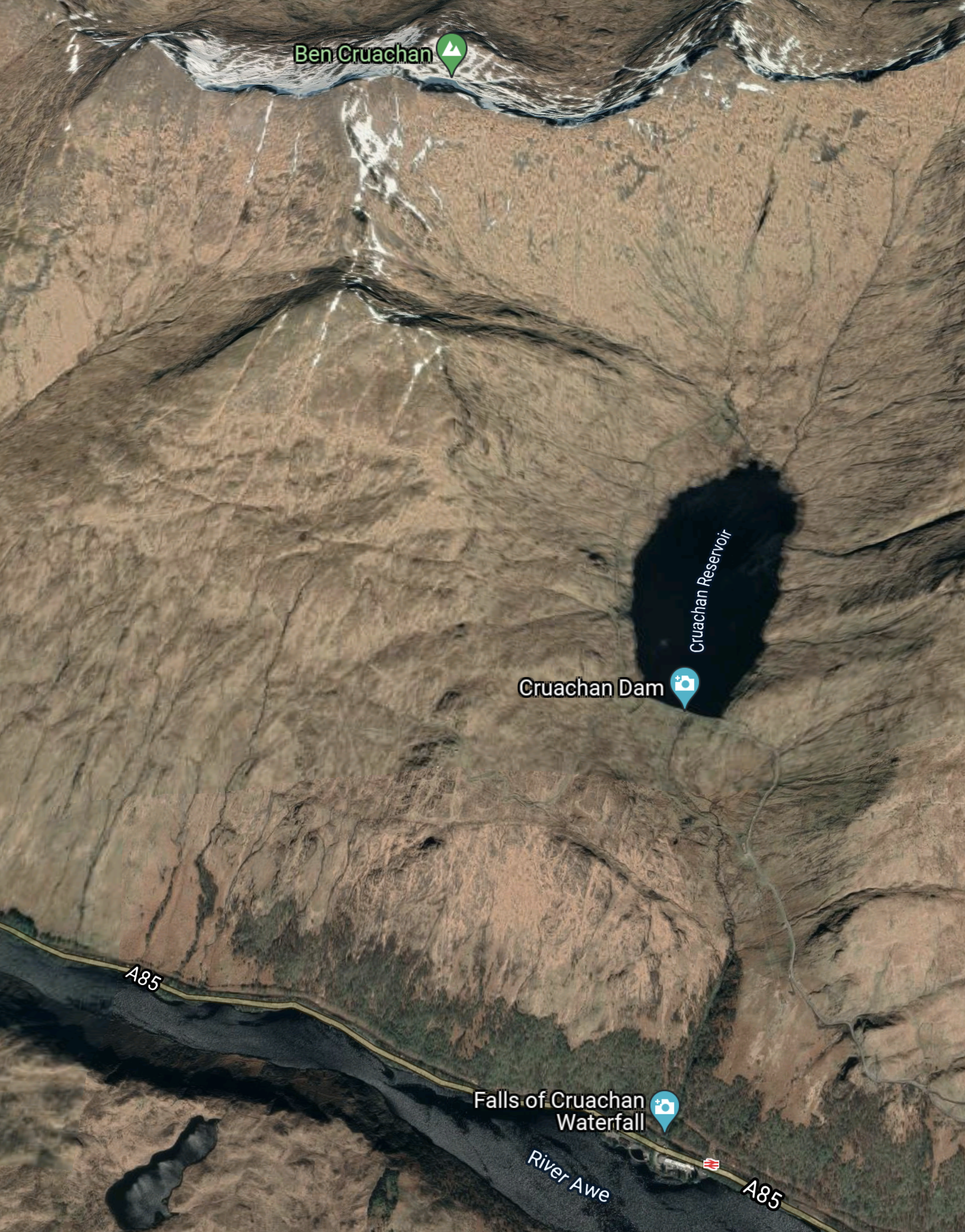
This Google Map shows the area around the power station.
Note.
- Cruachan Reservoir is the upper reservoir for the power station.
- The River Awe is the lower reservoir.
- The turbines for the power station are in a hollowed-out Ben Cruachan.
- There is a visitor centre, which is two-hundred metres from the Falls of Cruachan station, that can be seen on the map, by the river.
More information on visiting can be found at the Visit Cruachan web site.
This second map shows the Southern part of the Cruachan Reservoir to a larger scale.
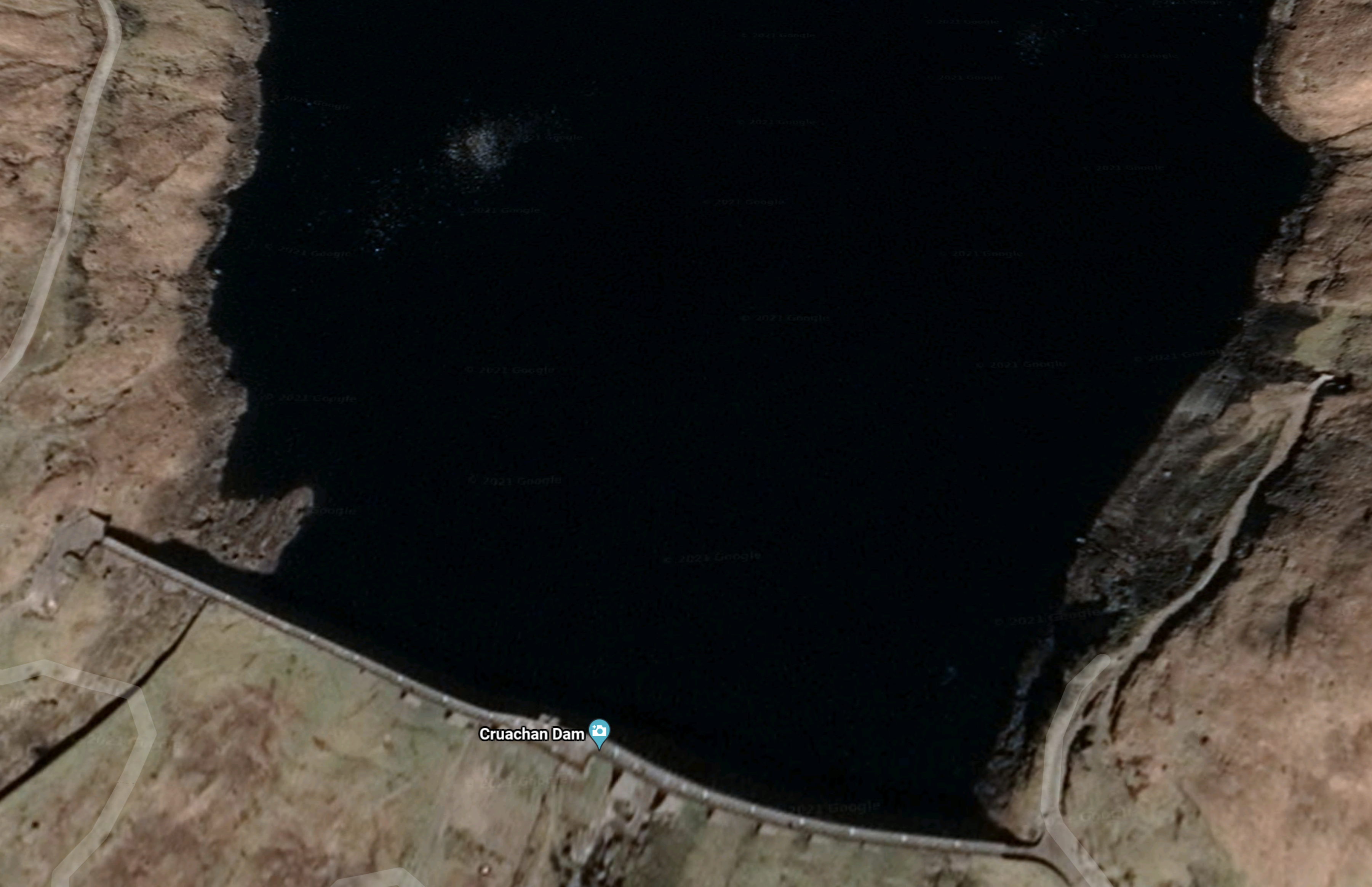
Note the strength of the dam.
The Operation Of Cruachan Power Station
Wikipedia says this about the operation of Cruachan power station.
The station is capable of generating 440 megawatts (590,000 hp) of electricity from four turbines, two of 100 megawatts (130,000 hp) and two of 120 megawatts (160,000 hp) capacity, after two units were upgraded in 2005. It can go from standby to full production in two minutes, or thirty seconds if compressed air is used to start the turbines spinning. When the top reservoir is full, Cruachan can operate for 22 hours before the supply of water is exhausted. At full power, the turbines can pump at 167 cubic metres (5,900 cu ft) per second and generate at 200 cubic metres (7,100 cu ft) per second.
What I find surprising, is that they only upgraded two turbines to 120 MW. I would suspect that there was some other factor that stopped all turbines from being upgraded.
So I would be very surprised if Drax upgraded the power of the existing station.
The Wikipedia extract claims that the Cruachan power station can provide power for 22 hours, if the reservoir, which has a capacity of 7.1 GWh is full. A simple calculation gives an average output in 323 MW. Does that indicate an efficiency of 73.4 %, by dividing 323 by 440.
But no pumped storage system of the 1950s is 100 % efficient. The Ffestiniog Power Station, which opened two years before Cruachan has an efficiency of 73 %. , which appears to be in line with the figures for Cruachan.
Cruachan Power Station And Nuclear Power
Wikipedia says this about Cruachan power station and Hunterston A nuclear power station.
Construction began in 1959 to coincide with the Hunterston A nuclear power station in Ayrshire. Cruachan uses cheap off-peak electricity generated at night to pump water to the higher reservoir, which can then be released during the day to provide power as necessary.
Note.
- Hunterston A power station closed in 1990.
- Hunterston B power station closed a few days ago.
- Scotland now only has one nuclear station at Torness.
It looks like the method of operation will have to change.
Cruachan Power Station And Wind Power
The obvious replacement source of energy at night to replace the nuclear power is wind power.
As I write this the UK is generating 8.5 GW of power from wind turbines.
Surely, enough can be diverted to Cruachan to fill the Cruachan Reservoir.
Cruachan 2
Drax’s plans for Cruachan are based around the building of a second underground power station, which is not surprisingly called Cruachan 2. This page on the Drax web site describes Cruachan 2.
- It will be a 600 MW power station.
- It will be to the East of the current power station.
- More than a million tonnes of rock would be excavated to build the power station.
The existing upper reservoir, which can hold 2.4 billion gallons of water, has the capacity to serve both power stations.
I think it is reasonable to assume the following about Cruachan 2.
- Design of the turbines will have improved in the sixty years since the Francis turbines for the original power station were ordered and designed.
- The turbines will now be precisely computer-controlled to optimise the operation of the power station.
- The turbines will have a faster response, than even that of Cruachan 1, which will help to match output to demand.
But most importantly, I suspect that the efficiency will be higher due to improved turbine design.
I can do a simple calculation, where I will assume the following figures for the two power stations.
- Cruachan 1 – 440 MW – Efficiency – 73 % – Full Power – 323 MW
- Cruachan 2 – 600 MW – Efficiency – 80 % – Full Power – 480 MW
It looks to me that 1040 MW can be used to store water in the reservoir and at this rate it would take 6.8 hours to fill the reservoir. With just Cruachan 1 in operation, filling the reservoir would take sixteen hours.
It looks like with moderate winds generating sensible amounts of electricity, it should be possible to fill the reservoir overnight using both Cruachan 1 and Cruachan 2.
When running flat-out, the combined station can generate 803 MW. At that rate it will generate the power for just under nine hours.
The Wikipedia entry for Francis turbines says this.
Francis turbines are the most common water turbine in use today, and can achieve over 95% efficiency.
Applying 95 % Efficiency to Cruachan 2 would give the following.
- An output of 570 MW for Cruachan 2.
- A total output of 1010 MW for the combined station.
- This would mean the combined station could deliver 1.01 GW for just over seven hours.
Modern control technology would probably be used to ensure that the output of the combined Cruachan station filled in the gaps between demand and supply.
Could The Size Of Cruachan Reservoir Be Increased?
This would increase the amount of energy stored.
I suspect that it probably can’t be increased, as any increases would have been done by now.
Conclusion
It looks like very good engineering to me.
- There is a good chance, that on most nights, the reservoir will be filled using wind energy
- The maximum output of the Cruachan power station has been more than tripled from 323 to 1010 MW.
- There has been no increase in the size of the Cruachan reservoir.
Scotland will now have a GW-sized hydro-electric power station.
Future Offshore Wind Power Capacity In The UK
I am building this table, so that I can get a feel for the electricity needs of the UK.
According to Wikipedia, on February 2020, there were thirty six offshore wind farms consisting of 2180 turbines with a combined capacity of 8113 megawatts or 8.113 gigawatts.
Currently, these offshore wind farms are under construction, proposed or are in an exploratory phase.
- Triton Knoll – 857 MW – 2021 – Under Construction
- Hornsea Two – 1386 MW – 2022 – Under Construction
- Moray East – 960 MW – 2022 – Under Construction
- Neart Na Gaoithe – 450 MW – 2023 – Under Construction
- Seagreen Phase 1 – 1075 MW – 2023 – Under Construction
- Dogger Bank A – 1200 MW – 2023/24 – Proposed
- Dogger Bank B – 1200 MW – 2024/25 – Proposed
- Dogger Bank C – 1200 MW – 2024/25 – Proposed
- Moray West – 1200 MW – 2024/25 – Exploratory
- Hornsea Three – 2400 MW – 2025 – Proposed
- East Anglia One North 800 MW – 2026 – Exploratory
- East Anglia Two – 900 MW – 2026 – Exploratory
- East Anglia Three – 1400 MW – 2026 – Exploratory
- Sofia Offshore Wind Farm Phase 1 – 1400 MW – 2023/2026 – Under Construction
- Hornsea Four – 1000 MW (?) – 2027 – Exploratory
- Rampion Two Extension – 1200 MW – Exploratory
- Norfolk Vanguard – 1800 MW – Exploratory
- Norfolk Boreas – 1800 MW – Exploratory
Note.
- The date is the possible final commissioning date.
- I have no commissioning dates for the last three wind farms.
- Wikipedia says that the Hornsea Four capacity is unknown by Ørsted due to the ever increasing size of available wind turbines for the project.
I can total up these wind farms by commissioning date.
- 2021 – 857 MW
- 2022 – 2346 MW
- 2023 – 1525 MW
- 2024 – 1200 MW
- 2025 – 6000 MW
- 2026 – 4500 MW
- Others – 5800 MW
I can draw these conclusions.
- Total wind farm capacity commissioned each year is increasing.
- It looks like there will be a capacity to install up to 5000 or 6000 MW every year from about 2025.
- If we add my figures for 2021-2026 to the 8113 MW currently installed we get 24541 MW.
- Adding in 6000 MW for each of the four years from 2027-2030 gives a total of 48541 MW or 48.5 GW.
As I write this on a Sunday afternoon, wind power (onshore and offshore) is supplying 13 GW or forty-four percent of our electricity needs.
I have further thoughts.
Parallels With North Sea Oil And Gas
I was very much involved in the development of North Sea oil and gas, as my software was used on a large number of the projects. I had many discussions with those managing these projects and what was crucial in shortening project times was the increasing availability of bigger rigs, platforms and equipment.
Big certainly was better.
I believe that as we get more experienced, we’ll see bigger and better equipment speeding the building of offshore wind farms.
Reuse of Redundant North Sea Oil And Gas Platforms
Don’t underestimate the ability of engineers to repurpose redundant oil and gas platforms for use with windfarms.
Electrolysers on the platforms can convert the electricity into hydrogen and use redundant gas pipes to bring it ashore.
Some processes like steelmaking could use a lot of hydrogen.
Platforms can be used as sub-stations to collect electricity from windfarms and distribute it to the various countries around the North Sea.
Hydrogen
Some processes like steelmaking could use a lot of hydrogen. And I don’t think steelmakers would be happy, if the supply was intermittent.
So why not produce it with giant electrolysers on redundant oil and gas platforms and store it in redundant gas fields under the sea?
A large store of hydrogen under the sea could have the following uses.
- Steelmaking.
- Feedstock for chemical manufacture.
- Transport
- Power generation in a gas-fired power station, that can run on hydrogen.
It would just need a large enough hydrogen store.
Energy Storage
This large amount of wind power will need a large amount of energy storage to cover for when the wind doesn’t blow.
Some of this storage may even be provided by using hydrogen, as I indicated previously.
But ideas for energy storage are coming thick and fast.
The North Sea Link To Norway
The North Sea Link is much more important than an interconnector between Blyth in Northumberland and Norway.
- At the Norwegian end the link is connected to a vast pumped storage energy system in the mountains of Norway.
- This pumped storage system is filled in two ways; Norwegian rain and snow and UK wind power through the interconnector.
- In times of need, we can draw electricity through the interconnector from Norway.
- It has a capacity of 1.4 GW.
- It was delivered on time for a cost of around €2 billion.
It can almost be thought of as an international bank of electricity and is probably one of the most significant pieces of European infrastructure built in recent years.
There are also plans to build NorthConnect, that would connect Peterhead in Scotland to Norway.
Conclusion
It looks like we’ll be able to reap the wind. And possibly 50 GW of it!
Sun Cable’s Australia-Asia PowerLink
Two weeks ago, in How Clean Energy And Jobs Can Flow From Morocco to The UK, I talked about a plan to generate electricity using solar arrays in Southern Morocco and use an underwater interconnector to bring it to the UK.
If you think that project was ambitious and distinctly bonkers, then that project is outshone by Sun Cable‘s Australia-Asia PowerLink, which is shown in this SunCable graphic.
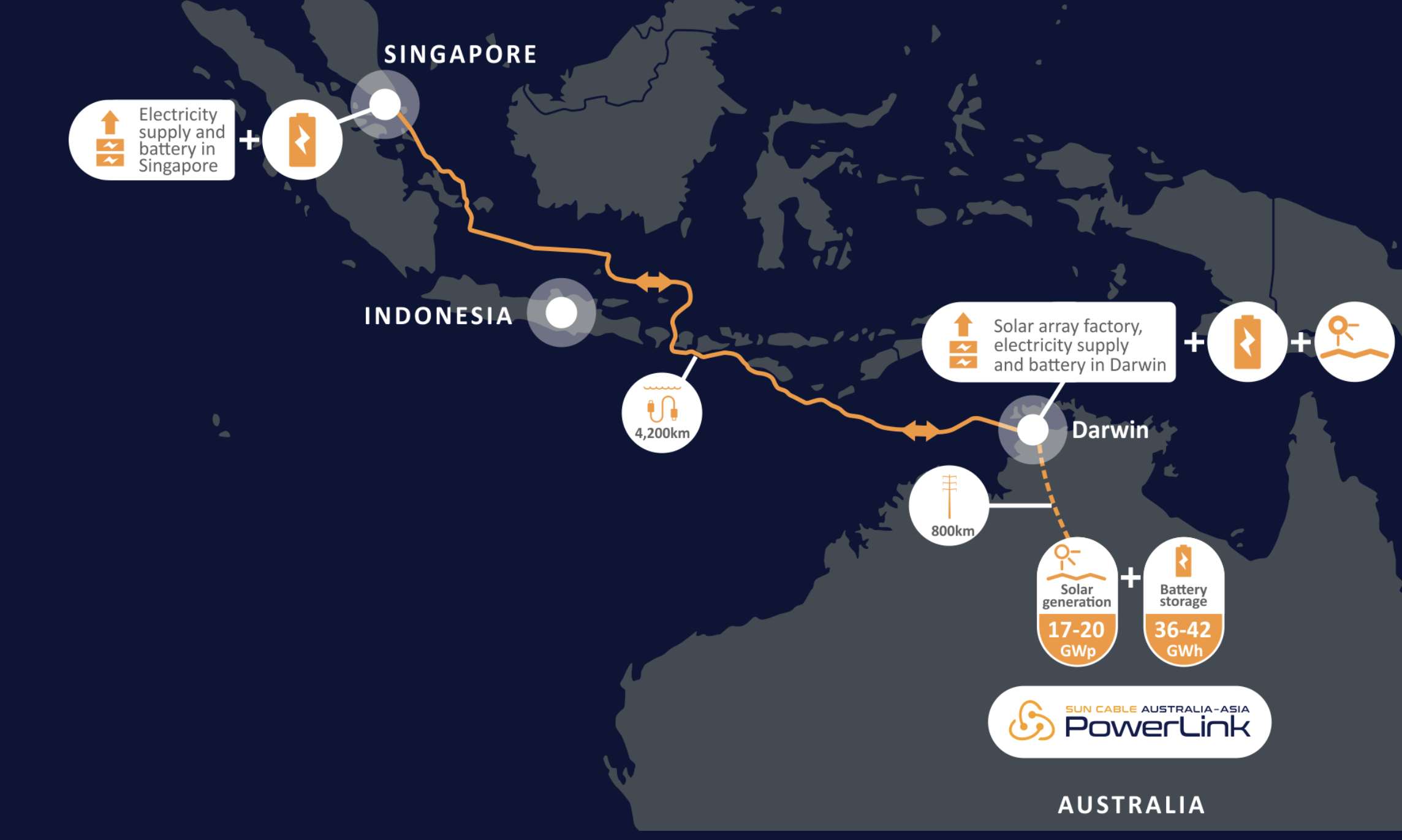
These are a few facts about the project.
- Electricity will be generated by solar panels in the Northern Territories of Australia.
- There will be 12,000 hectares of solar panels in Australia, which will create 3.2 GW of electricity for distribution.
- There will be a 36-42 GWh battery in Australia.
- There will be 4,200 km of submarine HVDC cable to deliver the electricity to Singapore and Indonesia.
- It looks like there will be batteries in Darwin and Singapore.
- The link could supply up to fifteen percent of Singapore’s electricity.
It is certainly an ambitious project, that will contain the world’s largest solar array, the world’s largest battery, and the world’s longest submarine power cable.
Note.
- Currently, the largest solar park in the world is Bhadia Solar Park in India, which is half the size of the solar array proposed.
- At 720 km, the North Sea Link is the largest undersea HVDC is operation.
- The largest battery in the UK is Electric Mountain in Snowdonia, which is only 9.1 GWh.
- A Tesla Megapack battery of the required size would probably cost at least ten billion dollars.
This is certainly, a project that is dealing in superlatives.
Is The Australia-Asia PowerLink Possible?
I shall look at the various elements.
The Solar Panels
I have flown a Piper Arrow from Adelaide to Cairns.
- My route was via Coober Pedy, Yulara, Alice Springs and Mount Isa.
- There didn’t seem to be much evidence of rain.
- The circle from South to East took four days of almost continuous flying, as Australia is not a small country.
- It left me with the impression of a flat featureless and hot country.
Having seen solar panels on flat areas in the UK, the Australian Outback could be ideal for solar farms.
Sun Cable are talking about 10,000 hectares of solar panels, which is roughly 38.6 square miles or a 6.2 mile square.
Given enough money to source the solar panels and install them, I would expect that the required solar farm could be realised.
The Cable
Consider.
- The North Sea Link is a 1.4 GW cable that is 720 km. long.
- I would size it as 10008 GW-km, by multiplying the units together.
- The Australia-Asia PowerLink will be 4200 km or nearly six times as long.
- But at 3.2 GW as opposed to 1.4 GW, it will have 2.3 times the capacity.
- I would size it as 13,400 GW-km.
Whichever way you look at it, the amount of cable needed will be massive.
The Battery
Currently, the largest battery in the world is the Bath County Pumped Storage Station, which has these characteristics.
- Peak power of 3 GW
- Storage capacity of 24 GWh.
Sun Cable’s 36-42 GWh battery will be the largest in the world, by a long way.
But I don’t think pumped storage will be suitable in the usually dry climate of Northern Australia.
The largest lithium-ion battery in the world is the Hornsdale Power Reserve in South Australia, which is only 150 MW/194 MWh, so something else will have to be used.
As Highview Power are building a CRYOBattery for the Atacama region in Chile, which I wrote about in The Power Of Solar With A Large Battery, I wonder, if a cluster of these could provide sufficient storage.
UK To Norway Sub-Sea Green Power Cable Operational
The title of this post is the same as that of this article on the BBC.
This is the first two paragraphs.
The world’s longest under-sea electricity cable, transferring green power between Norway and the UK, has begun operation.
The 450-mile (725km) cable connects Blyth in Northumberland with the Norwegian village of Kvilldal.
The BBC article is based on this press release from National Grid.
The link has been called the North Sea Link (NSL).
These are some thoughts.
What Is The Capacity Of The North Sea Link?
The National Grid press release says this.
[The link] will start with a maximum capacity of 700 megawatts (MW) and gradually increase to the link’s full capacity of 1400MW over a three-month period.
It also says this.
Once at full capacity, NSL will provide enough clean electricity to power 1.4 million homes.
It is more or less equivalent to two or three gas-fired power stations.
What Is The Operating Philosophy Of The North Sea Link?
The National Grid press release says this.
The Norwegian power generation is sourced from hydropower plants connected to large reservoirs, which can respond faster to fluctuations in demand compared to other major generation technologies. However, as the water level in reservoirs is subject to weather conditions, production varies throughout seasons and years.
When wind generation is high and electricity demand low in Britain, NSL will enable renewable power to be exported from the UK, conserving water in Norway’s reservoirs. When demand is high in Britain and there is low wind generation, hydro power can be imported from Norway, helping to ensure secure, affordable and sustainable electricity supplies for UK consumers.
It almost seems to me, that the North Sea Link is part of a massive pumped-storage system, where we can bank some of our wind-generated electricity in Norway and draw it out when we need it.
I would suspect that the rate and direction of electricity transfer is driven by a very sophisticated algorithm, that uses detailed demand and weather forecasting.
As an example, if we are generating a lot of wind power at night, any excess that the Norwegians can accept will be used to fill their reservoirs.
The Blyth Connection
This page on the North Sea Link web site, describes the location of the UK end of the North Sea Link.
These three paragraphs describe the connection.
The convertor station will be located just off Brock Lane in East Sleekburn. The site forms part of the wider Blyth Estuary Renewable Energy Zone and falls within the Cambois Zone of Economic Opportunity.
The converter station will involve construction of a series of buildings within a securely fenced compound. The buildings will be constructed with a steel frame and clad with grey insulated metal panels. Some additional outdoor electrical equipment may also be required, but most of the equipment will be indoors.
Onshore underground cables will be required to connect the subsea cables to the converter station. Underground electricity cables will then connect the converter station to a new 400kV substation at Blyth (located next to the existing substation) which will be owned and operated by National Grid Electricity Transmission PLC.
This Google Map shows the area.

Note.
- The light grey buildings in the North-West corner of the map are labelled as the NSL Converter Station.
- Underground cables appear to have been dug between the converter station and the River Blyth.
- Is the long silver building to the West of the triangular jetty, the 400 KV substation, where connection is made to the grid?
The cables appear to enter the river from the Southern point of the triangular jetty. Is the next stop Norway?
Britishvolt And The North Sea Link
Britishvolt are are building a factory at Blyth and this Google Map shows are to the North and East of the NSL Converter Station.
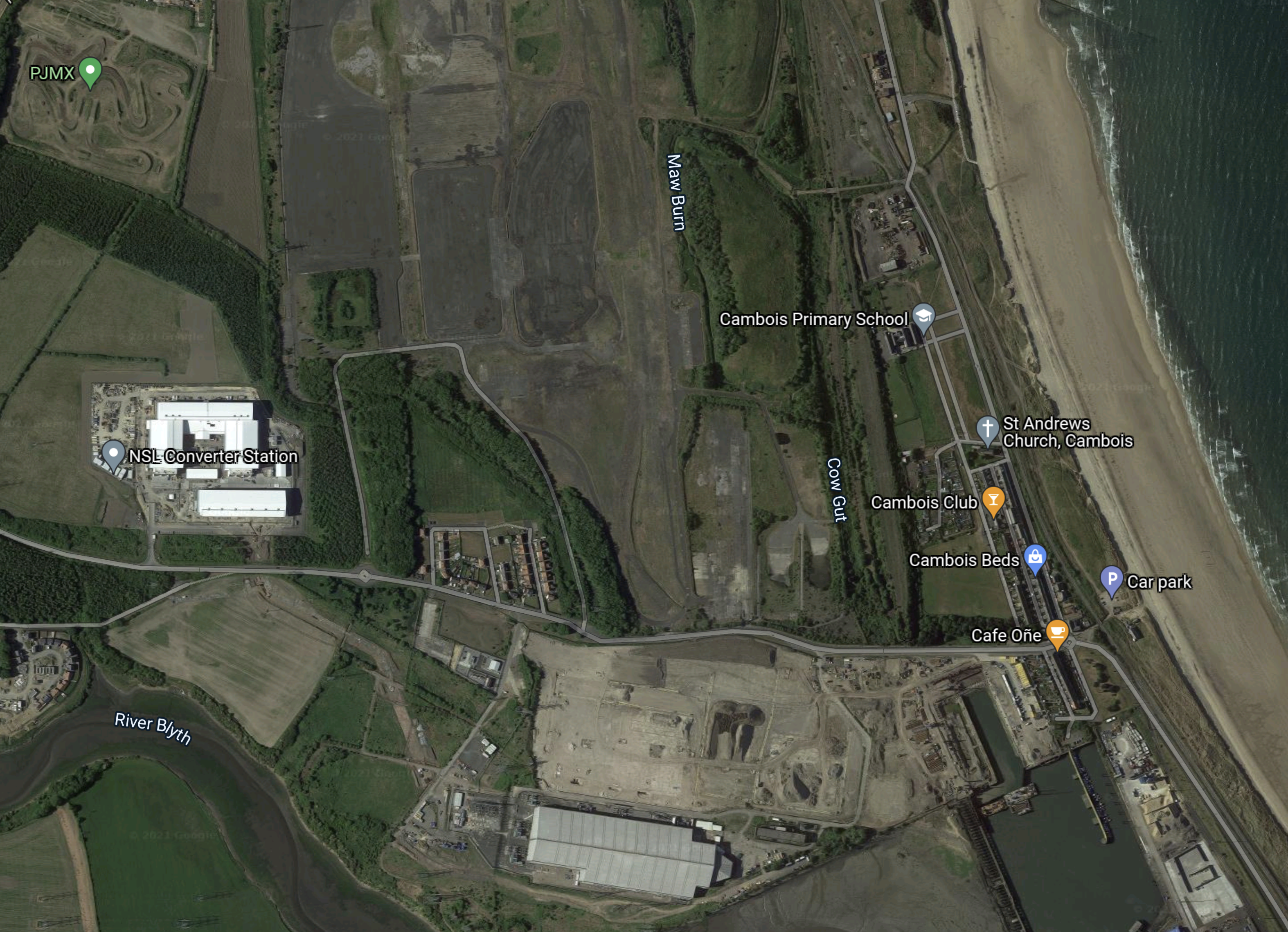
Note the light-coloured buildings of the NSL Converter Station.
I suspect there’s plenty of space to put Britishvolt’s gigafactory between the converter station and the coast.
As the gigafactory will need a lot of electricity and preferably green, I would assume this location gives Britishvolt all they need.
Where Is Kvilldal?
This Google Map shows the area of Norway between Bergen and Oslo.
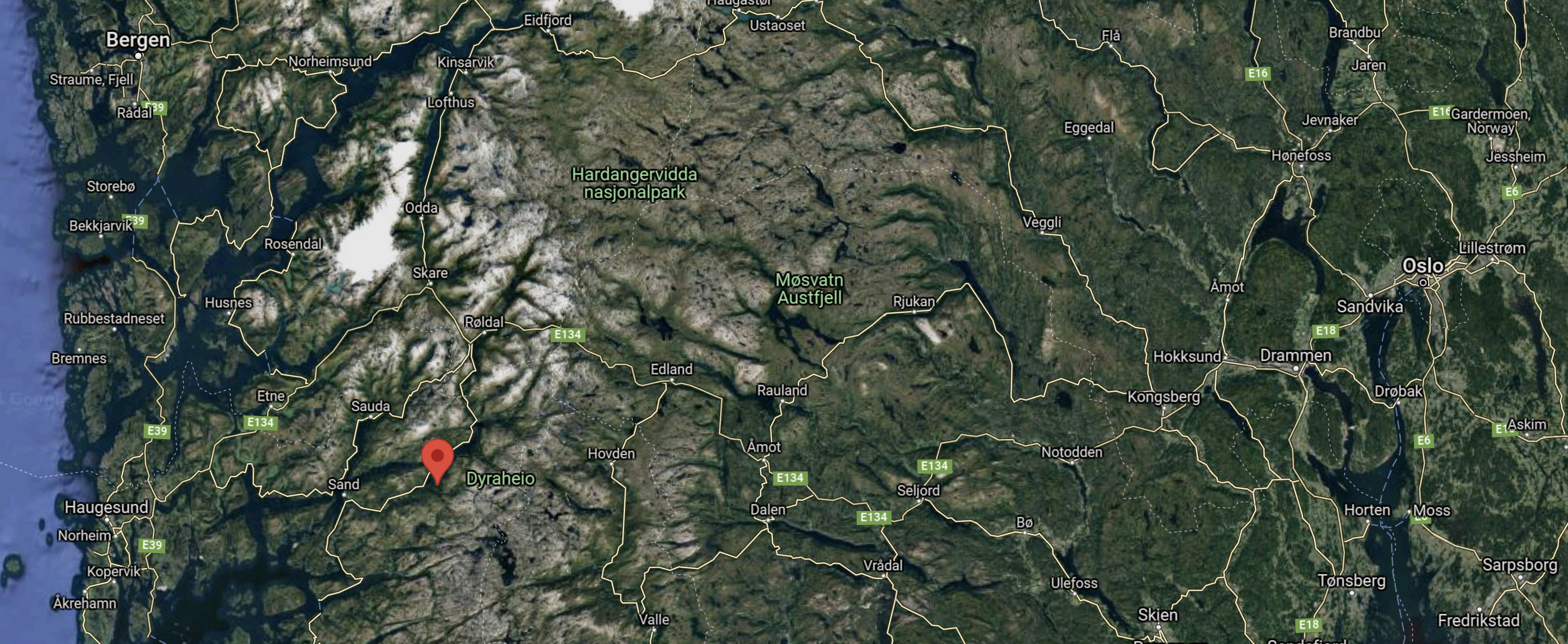
Note.
- Bergen is in the North-West corner of the map.
- Oslo is at the Eastern edge of the map about a third of the way down.
- Kvilldal is marked by the red arrow.
This second Google Map shows the lake to the North of Kvilldal.
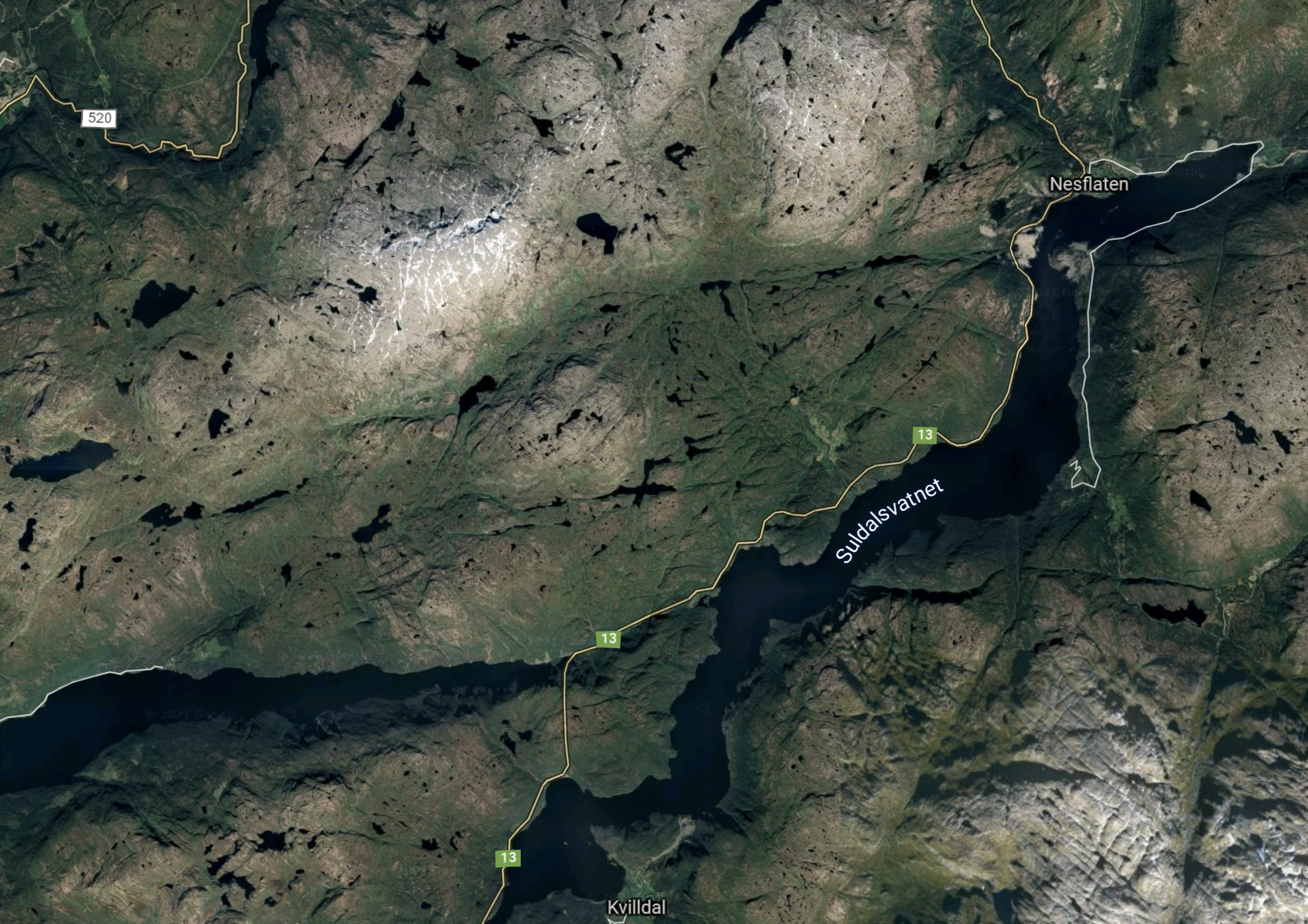
Note.
- Suldalsvatnet is the sixth deepest lake in Norway and has a volume of 4.49 cubic kilometres.
- Kvilldal is at the South of the map in the middle.
This third Google Map shows Kvilldal.
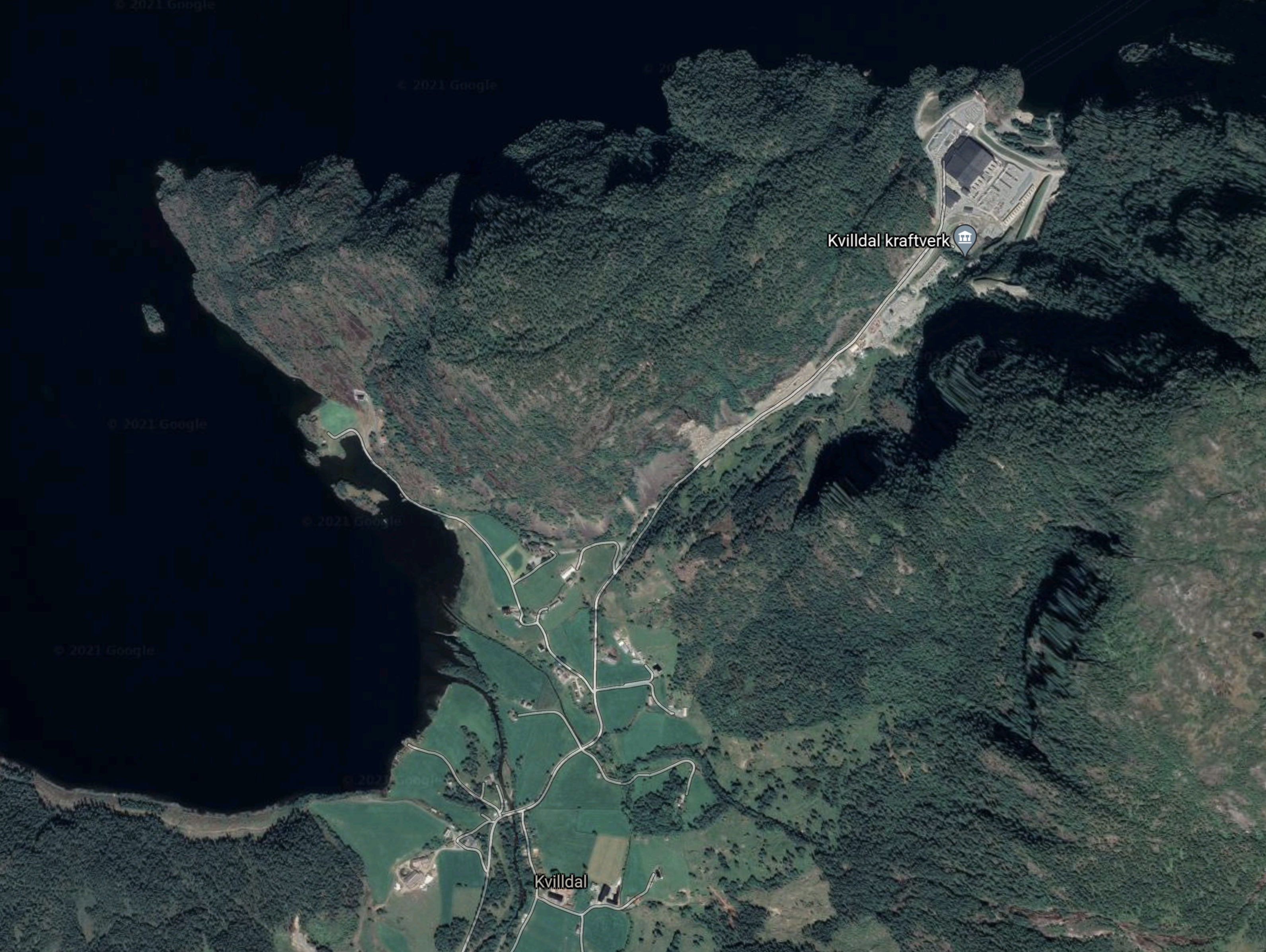
Note.
- Suldalsvatnet is the dark area across the top of the map.
- The Kvilldal hydro-electric power station on the shore of the lake.
- Kvilldal is to the South-West of the power station.
Kvilldal doesn’t seem to be the biggest and most populous of villages. But they shouldn’t have electricity supply problems.
Kvilldal Power Station And The North Sea Link
The Wikipedia entry for Kvilldal power station gives this information.
The Kvilldal Power Station is a located in the municipality of Suldal. The facility operates at an installed capacity of 1,240 megawatts (1,660,000 hp), making it the largest power station in Norway in terms of capacity. Statnett plans to upgrade the western grid from 300 kV to 420 kV at a cost of 8 billion kr, partly to accommodate the NSN Link cable] from Kvilldal to England.
This power station is almost large enough to power the North Sea Link on its own.
The Kvilldal power station is part of the Ulla-Førre complex of power stations and lakes, which include the artificial Lake Blåsjø.
Lake Blåsjø
Lake Blåsjø would appear to be a lake designed to be the upper reservoir for a pumped-storage scheme.
- The lake can contain 3,105,000,000 cubic metres of water at its fullest.
- The surface is between 930 and 1055 metres above sea level.
- It has a shoreline of about 200 kilometres.
This Google Map shows the Lake.
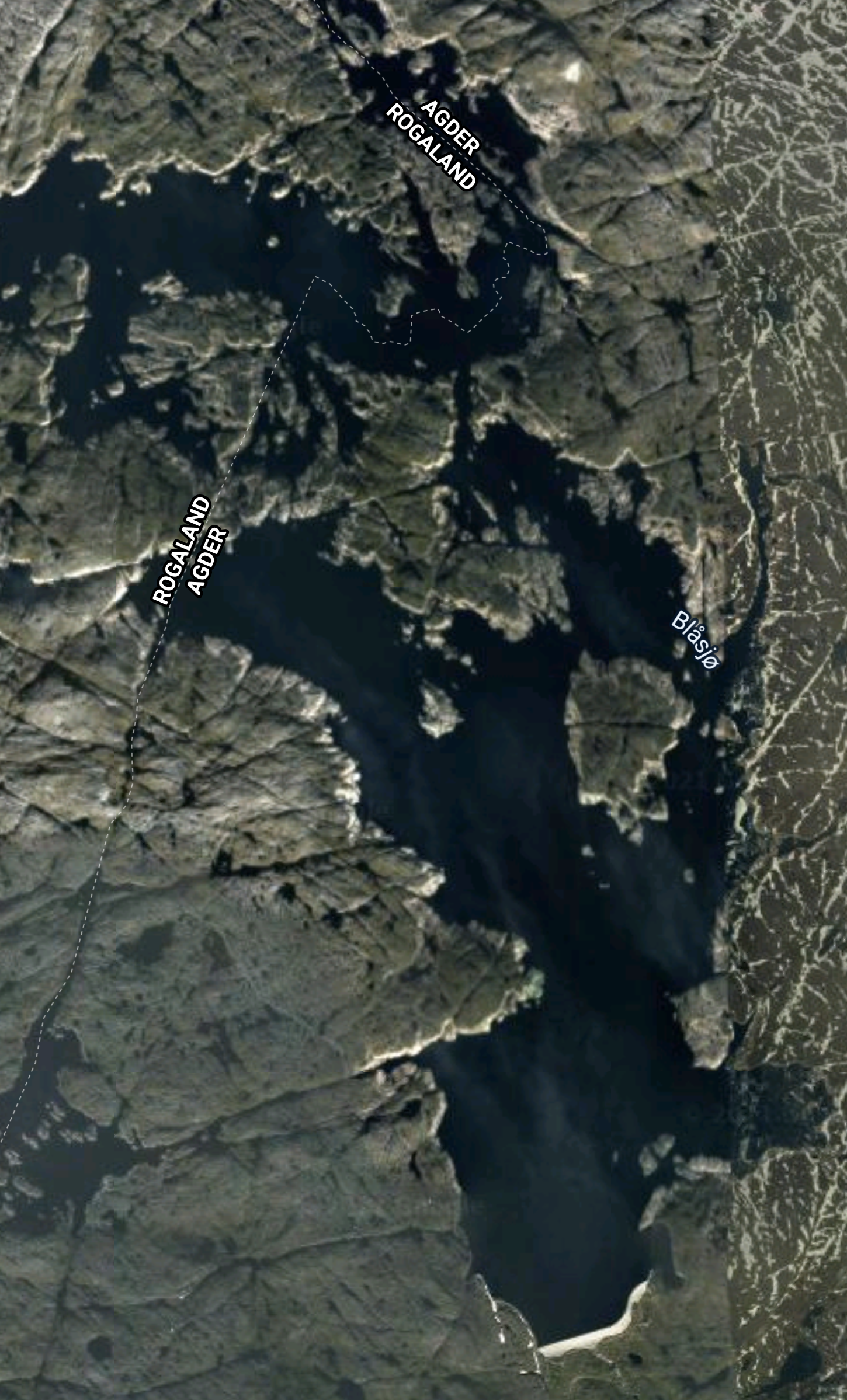
Note the dam at the South end of the lake.
Using Omni’s Potential Energy Calculator, it appears that the lake can hold around 8 TWh of electricity.
A rough calculation indicates that this could supply the UK with 1400 MW for over eight months.
The Wikipedia entry for Saurdal power station gives this information.
The Saurdal Power Station is a hydroelectric and pumped-storage power station located in the municipality of Suldal. The facility operates at an installed capacity of 674 megawatts (904,000 hp) (in 2015). The average energy absorbed by pumps per year is 1,189 GWh (4,280 TJ) (in 2009 to 2012). The average annual production is 1,335 GWh (4,810 TJ) (up to 2012)
This Google Map shows the area between Kvilldal and Lake Blåsjø.
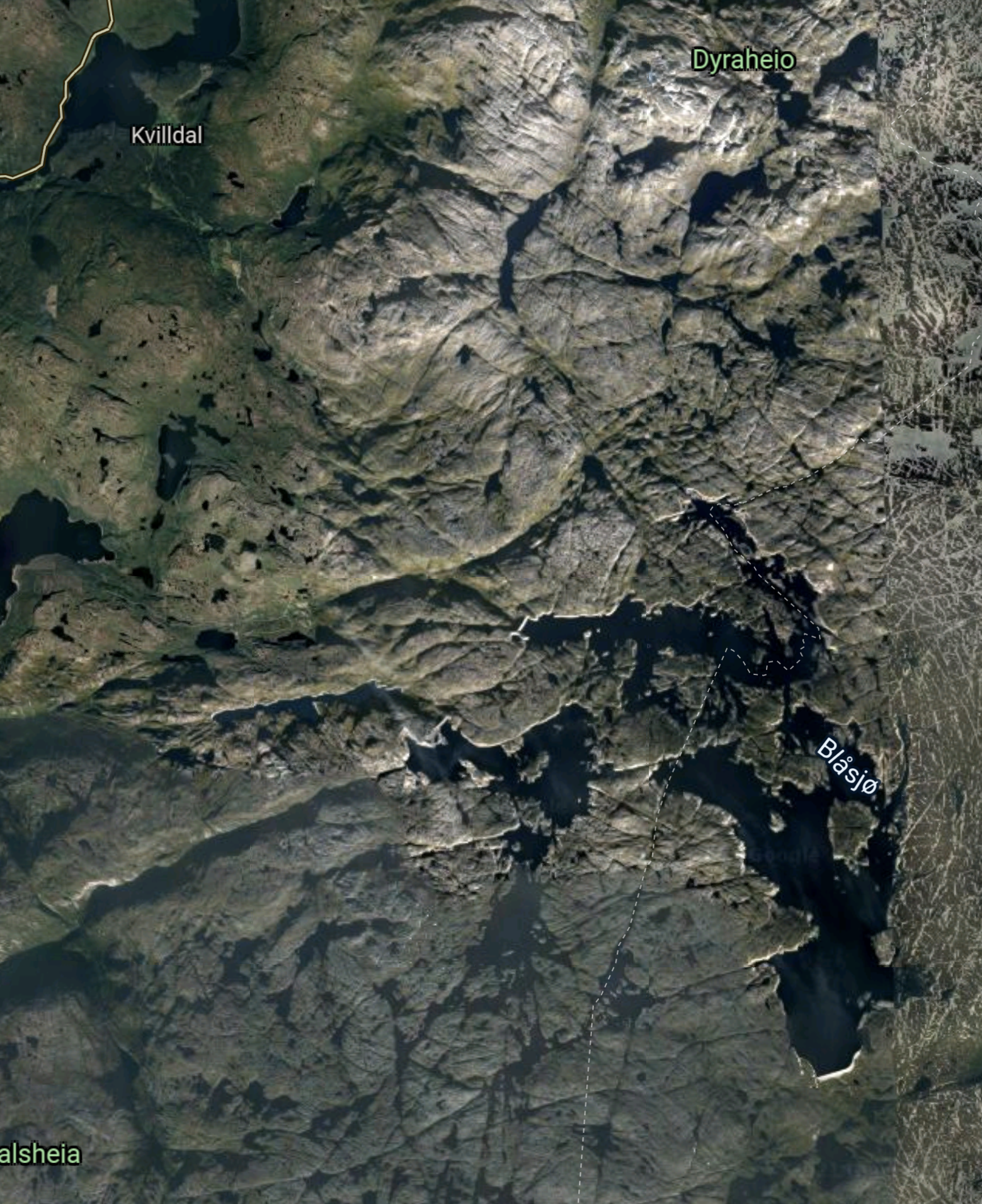
Note
- Kvilldal is in the North West of the map.
- Lake Blåsjø is in South East of the map.
This second Google Map shows the area to the South-East of Kvilldal.
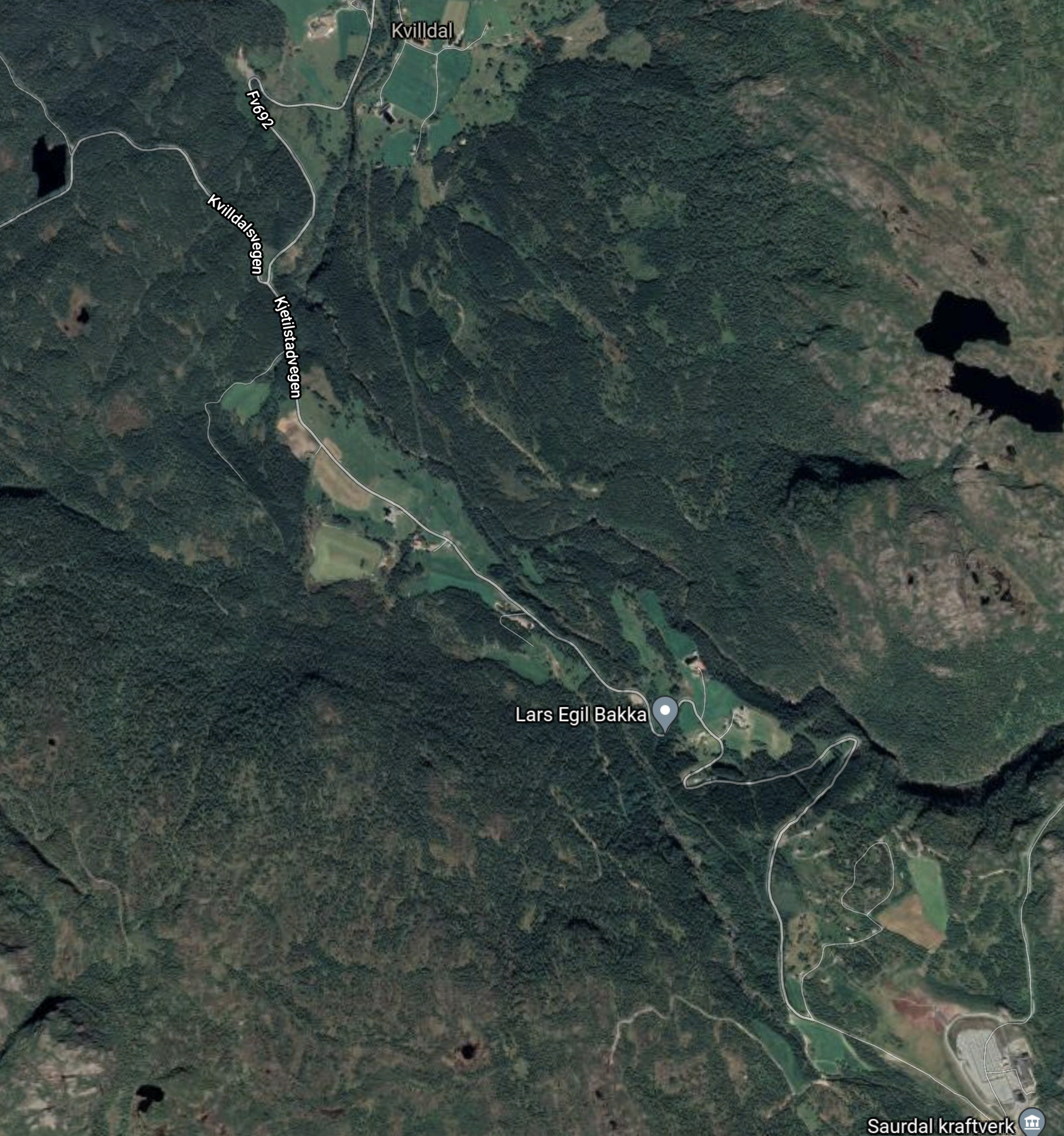
Note.
- Kvilldal is in the North-West of the map.
- The Saurdal power station is tight in the South-East corner of the map.
This third Google Map shows a close-up of Saurdal power station.

Saurdal power station is no ordinary power station.
This page on the Statkraft web site, gives a brief description of the station.
The power plant was commissioned during 1985-1986 and uses water resources and the height of fall from Lake Blåsjø, Norway’s largest reservoir.
The power plant has four generating units, two of which can be reversed to pump water back up into the reservoir instead of producing electricity.
The reversible generating units can thus be used to store surplus energy in Lake Blåsjø.
Is Lake Blåsjø and all the power stations just a giant battery?
Economic Effect
The economic effect of the North Sea Link to both the UK and Norway is laid out in a section called Economic Effect in the Wikipedia entry for the North Sea Link.
Some points from the section.
- According to analysis by the United Kingdom market regulator Ofgem, in the base case scenario the cable would contribute around £490 million to the welfare of the United Kingdom and around £330 million to the welfare of Norway.
- This could reduce the average domestic consumer bill in the United Kingdom by around £2 per year.
- A 2016 study expects the two cables to increase price in South Norway by 2 øre/kWh, less than other factors.
This Economic Effect section also talks of a similar cable between Norway and Germany called NorGer.
It should be noted, that whereas the UK has opportunities for wind farms in areas to the North, South, East and West of the islands, Germany doesn’t have the space in the South to build enough wind power for the area.
There is also talk elsewhere of an interconnector between Scotland and Norway called NorthConnect.
It certainly looks like Norway is positioning itself as Northern Europe’s battery, that will be charged from the country’s extensive hydropower and surplus wind energy from the UK and Germany.
Could The Engineering Be Repeated?
I mentioned NorthConnect earlier.
- The cable will run between Peterhead in Scotland and Samnanger in Norway.
- The HVDC cable will be approximately 665 km long.
- The cable will be the same capacity as the North Sea Link at 1400 MW.
- According to Wikipedia construction started in 2019.
- The cable is planned to be operational in 2022.
- The budget is €1.7 billion.
Note.
- Samnager is close to Bergen.
- NorthConnect is a Scandinavian company.
- The project is supported by the European Union, despite Scotland and Norway not being members.
- National Grid is not involved in the project, although, they will be providing the connection in Scotland.
The project appears to be paused at the moment, awaiting how North Sea Link and NordLink between Norway and Germany are received.
There is an English web site, where this is the mission statement on the home page.
NorthConnect will provide an electrical link between Scotland and Norway, allowing the two nations to exchange power and increase the use of renewable energy.
This sounds very much like North Sea Link 2.
And then there is Icelink.
- This would be a 1000-1200 km link between Iceland and the UK.
- It would have a capacity of 1200 MW.
- National Grid are a shareholder in the venture.
- It would be the longest interconnector in the world.
The project appears to have stalled.
Conclusion
I can see these three interconnectors coming together to help the UK’s electricity generation become carbon-free by 2035.
Cheesecake Energy Secures £1M Seed Investment
The title of this post, is the same as that of this Press Release from Cheesecake Energy.
This is the first paragraph.
Cheesecake Energy Ltd (CEL), a Nottingham, UK-based energy storage startup today announced it has raised £1M in Seed funding to fuel the development of its manufacturing capabilities and support product development of its eTanker storage system. The round was led by Imperial College Innovation Fund alongside prominent investors including Perivoli Innovations, former Jaguar Chairman, Sir John Egan and other angel investors.
And the third and fourth paragraphs describe the technology.
The company’s unique technology, dubbed eTanker, takes established compressed air energy storage concepts and revolutionises them by storing two-thirds of the electricity in the form of heat which can be stored at far lower cost. To store the energy, electric motors are used to drive compressors, which deliver high pressure air & heat into storage units. When the electricity is required, the high-pressure air and heat is passed back through the same compressor (but now working as a turbine), which turns a generator to produce electricity. The company believes its system will cut the cost of storing energy by 30-40% and offers a solution that can be used in several sectors including electric vehicle (EV) charging, heavy industry and renewable energy generation.
The startup has filed 10 patents for stationary, medium-long-duration, long-lifetime energy storage technology. It is based on innovative design work by CEL, a spin-out from over a decade of research at University of Nottingham. Employing circular economy principles, truck engines are converted into zero-emission electrical power-conversion machines for putting energy into and out of storage. Its technology brings together the low cost of thermal storage, the turnaround efficiencies of compressed air energy storage, together with the long life and robustness of a mechanical system, making a game-changing technology in a modular containerised package.
It all sounds feasible to me and if I’d have been asked, I’d have chipped in some of my pension.
The system in some ways can almost be considered a hybrid system that merges some of the principles of Highview Power’s CRYOBattery and Siemens Gamesa’s ETES system of heating large quantity of rock. Although, Cheesecake’s main storage medium is comptressed air, as opposed to the liquid air of the CRYOBattery.
One market they are targeting is the charging of fleets of electric vehicles like buses and from tales I have heard about operators of large numbers of electric buses, this could be a valuable market.
I also noted that the Press Release mentions a National Grid report, that says we will need 23 GW of energy storage by 2030. Assuming we will need to store enough electricity to provide 23 GW for five hours, that will be 115 GWh of energy storage.
At present, pumped storage is the only proven way of storing tens of GWh of energy. In 1984, after ten years of construction, Dinorwig power station (Electric Mountain) opened to provide 9.1 GWh of storage with an output of 1.8 GW.
So ideally we will need another thirteen Electric Mountains. But we don’t have the geography for conventional pumped storage! And as Electric Mountain showed, pumped storage systems are like Rome and can’t be built in a day.
Energy storage funds, like Gresham House and Gore Street are adding a large number of lithium-ion batteries to the grid, but they will only be scratching the surface of the massive amount of storage needed.
Note that at the end of 2020, Gresham House Energy Storage Fund had a fleet of 380 MWh of batteries under management, which was an increase of 200 MWh on 2019. At this rate of growth, this one fund will add 2GWh of storage by 2030. But I estimate we need 115 GWh based on National Grid’s figures.
So I can see a small number of GWh provided by the likes of Gresham House, Gore Street and other City funds going the same route.
But what these energy storage funds have proved, is that you have reliable energy storage technology, you can attract serious investment for those with millions in the piggy-bank.
I believe the outlook for energy storage will change, when a technology or engineering company proves they have a battery with a capacity of upwards of 250 MWh, with an output of 50 MW, that works reliably twenty-four hours per day and seven days per week.
I believe that if these systems are as reliable as lithium-ion, I can see no reason why City and savvy private investors money will not fund these new technology batteries, as the returns will be better than putting the money in a deposit account, with even the most reputable of banks.
At the present time, I would rate Highview Power’s CRYOBattery and Siemens Gamesa’s ETES system as the only two battery systems anywhere near to a reliable investment, that is as safe as lithium-ion batteries.
- Both score high on being environmentally-friendly.
- Both rely on techniques, proven over many years.
- Both don’t need massive sites.
- Both systems can probably be maintained and serviced in nearly all places in the world.
- Highview Power have sold nearly a dozen systems.
- Highview Power are building a 50 MW/250 MWh plant in Manchester.
- Siemens Gamesa are one of the leaders in renewable energy.
- Siemens Gamesa have what I estimate is a 130 MWh pilot plant working in Hamburg, which I wrote about in Siemens Gamesa Begins Operation Of Its Innovative Electrothermal Energy Storage System.
Other companies are also targeting this market between lithium-ion and pumped storage. Cheesecake Energy is one of them.
I believe they could be one of the winners, as they have designed a system, that stores both compressed air and the heat generated in compressing it. Simple but efficient.
I estimate that of the 115 GWh of energy storage we need before 2030, that up to 5 GWh could be provided by lithium-ion, based on the growth of installations over the last few years.
So we will need another 110 GWh of storage.
Based on 50 MW/250 MWh systems, that means we will need around 440 storage batteries of this size.
This picture from a Google Map shows Siemens Gamesa’s pilot plant in Hamburg.
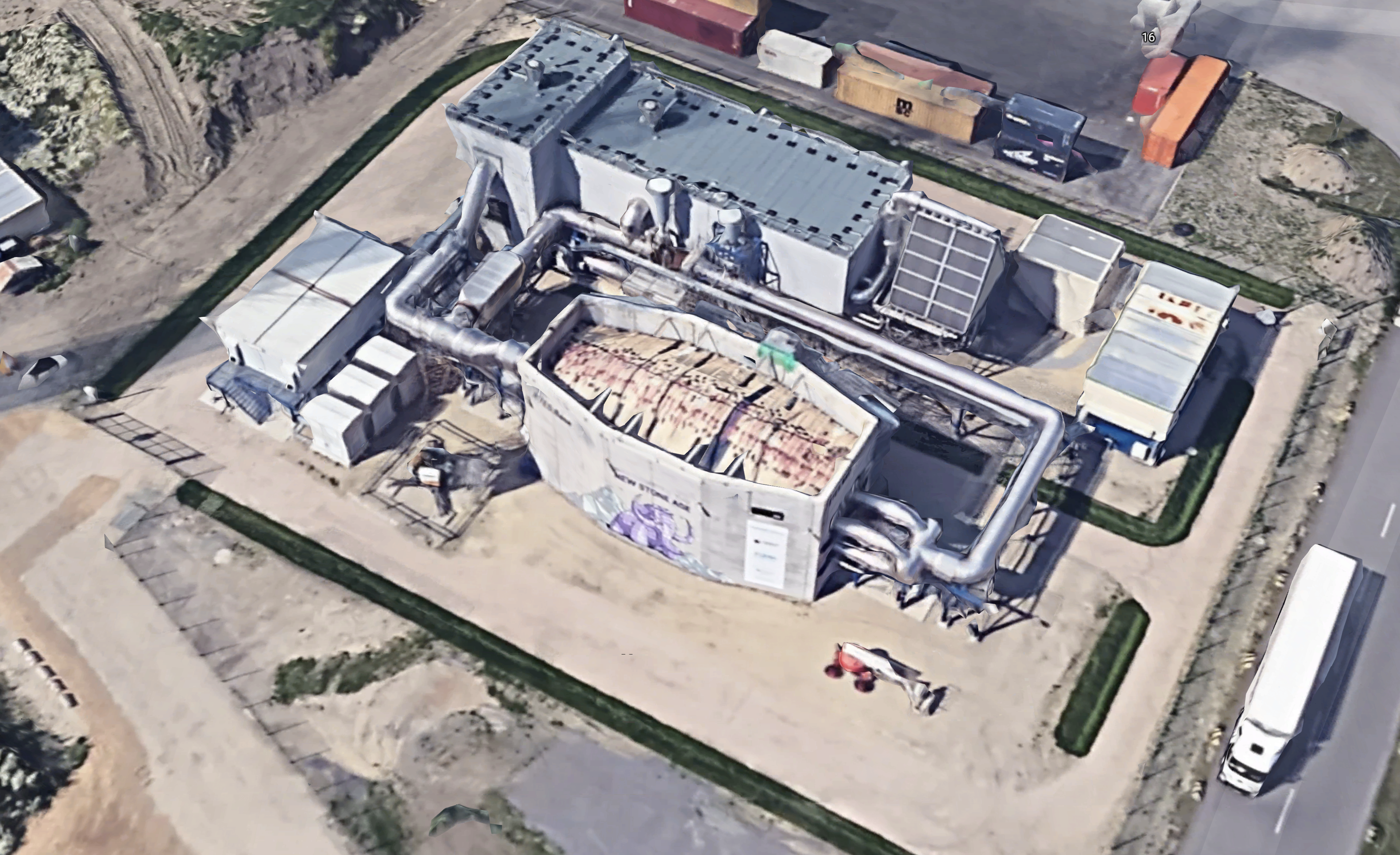
I estimate that this plant is around 130 MWh of storage and occupies a site of about a football pitch, which is one hectare.
I know farmers in Suffolk, who own more land to grow wheat, than would be needed to accommodate all the batteries required.
Conclusion
I believe that National Grid will get their 23 GW of energy storage.
The Immense Potential Of Solar Panels Floating On Dams
The title of this post, is the same as that of this article on the Anthropocene.
The article reviews the practice of floating solar panels on ponds, lakes and reservoirs.
I like the practice, as the two technologies are compatible.
- The panels reduce evaporation and help to curb algae growth.
- Floating panels are cooled by the environment and more efficient.
- Solar and hydro power can share electricity transmission systems.
But best of all. they use land twice.
The article claims that as much as forty percent of the world’s power can be generated this way.
The article is certainly an interesting read.
How Long-Duration Energy Storage Will Accelerate The Renewable Energy Transition
The title of this post, is the same as that of this article on Renew Economy, which is an Australian publication.
It is very much a must-read and although it was part-written by the President of Hydrostor, who are a Canadian long duration energy storage company, who store energy by compressing air in underground caverns.
The article gives some details on how investment is flowing into long duration energy storage.
We’re also seeing significant and sustained levels of investment in long-duration energy storage happen beyond Australia’s borders.
For example; Saudi Aramco Energy Ventures invested in Energy Vault to accelerate its global deployment of its energy storage solution; Bill Gates and Jeff Bezos invested in iron-flow batteries via Breakthrough Energy Ventures; Sumitomo Corporation invested in UK-start up Highview Power and their cryogenic liquified air storage system; and our team at Hydrostor closed a financing round including a strategic partnership with infrastructure investor Meridiam.
Big players like these, generally don’t back losers. Or at least they pour in more money and expertise, to make sure they succeed.
This paragraph also describes Hydrostor’s sale to Australia.
In 2020, Hydrostor’s 200 MW and 8 hours (or 1,600 MWh) A-CAES system was selected by New South Wales’ Transmission Network Service Provider, TransGrid, as the preferred option in its RIT-T process for reliable supply for Broken Hill.
They are also developing a large system in California.
With Highview Power having sold perhaps ten systems around the world, it does appear that long duration energy storage is taking off for Highview and Hydrostor, who both use that most eco-friendly of storage mediums – air.
The article is fairly scathing about developing more of the most common form of long duration energy storage – pumped storage using water. Especially in Australia, where water can be scarce. But with the world getting warmer, I don’t think we need to design systems, where all our stored energy can evaporate.
Conclusion
I agree very much with the writers of the article, that more long duration energy storage is needed, but that pumped storage is not the long term answer.
 The Anonymous Widower