More Than Four In Ten New Homes In England Built With Solar Power
The title of this post, is the same as this press release from Solar Energy UK.
These two paragraphs add some more detail.
The introduction of more stringent rules on energy efficiency for new homes in England has driven a surge in solar panel installations.
The proportion of new homes and buildings that come with solar photovoltaic panels included has risen by more than three times in the last twelve months.
It certainly appears that solar is now an essential part of a new house.
The article calls it a dramatic jump.
That is a dramatic jump compared to only 5,731 of 44,310 newbuilds sporting solar panels in the last quarter of 2023 – only 13%.
Will the next product to be installed in houses, be batteries for individual houses?
I’m certainly thinking of one to complement my solar panels.
Solar Farms And Biodiversity
The title of this post, is the same as that of this article on Solar Power Portal.
This is the sub-heading.
A number of academics around the UK are researching the impact of solar farms on biodiversity, and major studies have all drawn the same conclusion: when well-managed, solar farms are not harmful to biodiversity and can actively support the growth of nature in an area.
Research at the Universities of Cambridge, Exeter, Keele and Lancaster is covered in the article.
This is the second post, I’ve written with the same title of Solar Farms And Biodiversity. in the other post, I talk about hares, which were not talked about in today’s post.
On this page on the lightsource bp web site, this is said about brown hares at Wilburton Solar Farm.
According to the Hare Preservation Trust, the population of the Brown Hare in the UK has declined by more than 80% over the last 100 years, and in some areas may even be locally extinct. But at Wilburton Solar Farm, the Brown Hare is thriving. Before the installation of the solar farm, the local gamekeeper had only observed three or four Brown Hares on site, but since the solar farm has been established, he has regularly seen more than 50.
From my observations of hares over the years, I suspect that solar farms could be an ideal habitat for hares.
Will 2025 Be A Bumper Year For Solar?
The title of this post, is the same as that of a sub title of this this article on Solar Power Portal, which is entitled Two Solar NSIPs Granted Development Consent.
This is the sub heading of the main article.
The Department for Energy Security and Net Zero (DESNZ) has granted development consent orders (DCOs) to the Heckington Fen Solar and West Burton Solar solar PV power plants.
This paragraph, gives a brief description of the two projects.
The two developments, both located in Lincolnshire, England, are classified as Nationally Significant Infrastructure Developments (NSIPs) as their proposed generation capacity is over 50MW. Combined, the Heckington Fen Solar and West Burton Solar projects will have a generation capacity of almost 1GW.
But it was the prominent sub-title in the article, that prompted me to write this post.
These were the three paragraphs, the author used to answer their question.
This year so far has already seen significant movement on several large-scale solar projects, with more to come throughout 2025.
Last week, international renewable energy developer Ørsted announced proposals for a 320MW solar PV power plant in East Yorkshire, the Kingfisher Solar Farm, for which public consultations are set to begin on 3 February. Meanwhile, Elements Green has opened the second phase of statutory consultations for its 800MW Great North Road Solar and Biodiversity Park, which will run until 20 February.
Plans for another proposed 800MW development, EDF Renewables UK’s Springwell Solar Farm, will be examined by the planning inspectorate following the successful submission of a DCO application for the project.
I also wrote UK Solar Deployment Poised To Increase 50% YoY, Following Rapid Growth In The Second Half Of 2024, just over a week ago, where I predicted a large growth in steel aolar panels on industrial and architect-designed buildings.
Conclusion
There may be a lot of new solar power generated in the UK in 2025, but because some of it will be roof-mounted and structural, we won’t see as much as we have in the past.
UK Solar Deployment Poised To Increase 50% YoY, Following Rapid Growth In The Second Half Of 2024
The title of this post, is the same as that of this article from Solar Power Portal.
This is the sub-heading.
Josh Cornes, analyst at Solar Media Market Research, looks at what 2025 might hold for the solar industry.
The first four paragraphs give some interesting statistics.
The UK is forecast to add between 3-3.5GWp-dc of capacity in 2025, just shy of the huge numbers seen in 2015 and huge growth on 2024.
The UK added around 2.3GWp-dc in 2024, exceeding original expectations with the help of a push in ground mounted projects toward the back end of the year. This equates to around 20% growth on the 1.9GW that was added in 2023.
Approximately 20% of the 2.3GW deployed in 2024 came from residential rooftop installations, continuing the boost in this sector, first highlighted by the near 200% year-on-year (YoY) increase from 2022 to 2023. Commercial rooftops also contributed 20% of installations in 2024 with a slight increase of 10% YoY.
Large-scale ground-mount installations in 2024 saw the largest growth, making up 60% of the annual capacity. This uptick has continued to be driven by projects with Contracts for Difference (CfD), with rounds AR4 and AR5, and even AR6, accounting for nearly 850MW of the 1.3GW added.
It is a well-written article, that should be read in full.
Summarising 2024
In 2024 solar installations broke down as follows.
- Ground-mounted -1.38 GW
- Residential rooftops – 0.46 GW
- Commercial rooftops – 0.46 GW
Which adds up to the total installed solar capacity of 2.3 GW.
3.5 GW of total solar is scheduled to be installed in 2025, which at that rate until the end of 2030 would add 21 GW of total solar power.
But the UK will get help from what I think is one of the best solar ideas, which surprisingly comes from The University of Swansea in Wales.
This Google Map shows the three large solar roof panels on Denmark Hill station in London.
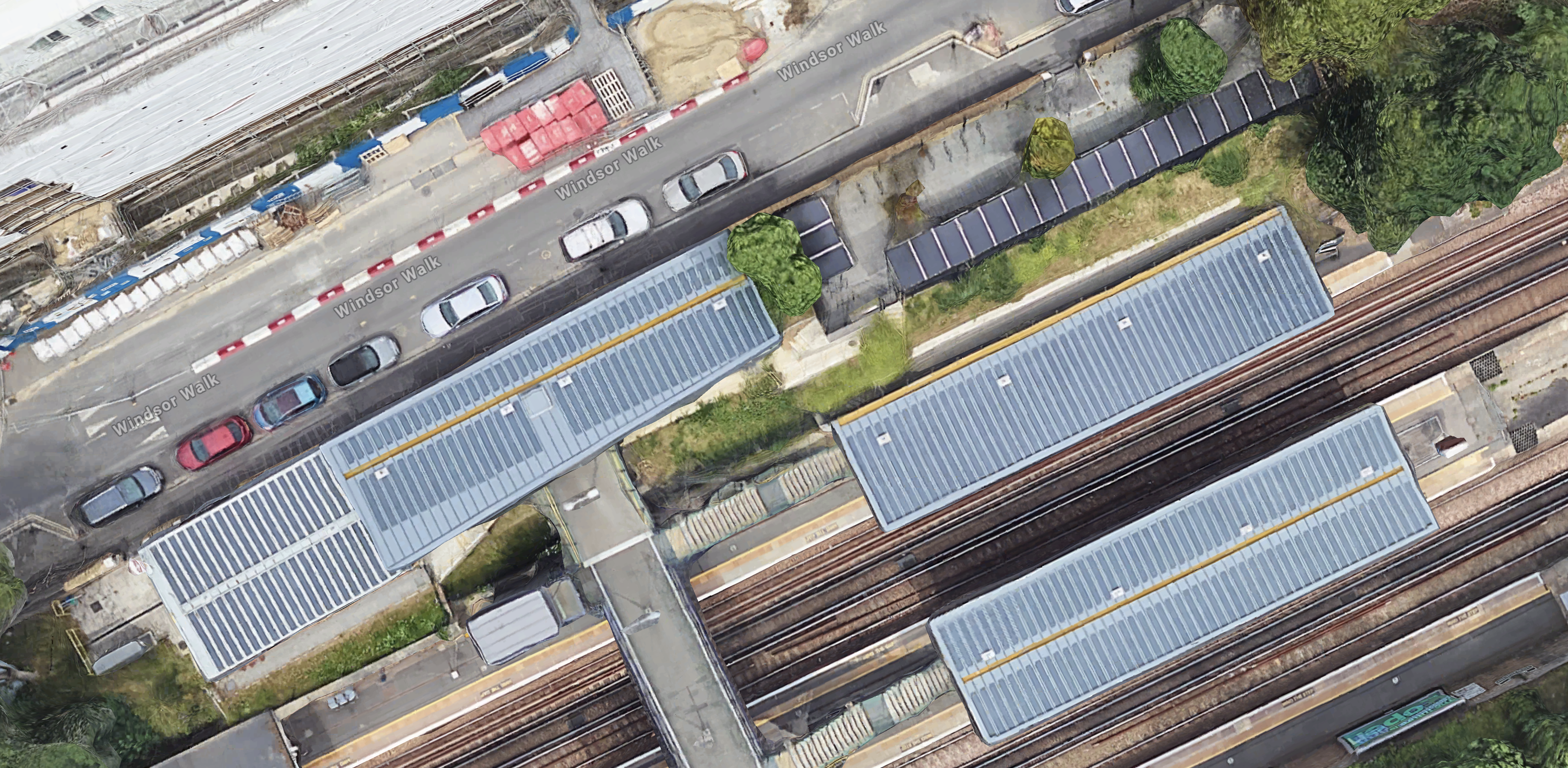
Note.
- The three large panels are flat.
- The panels are built on a steel substrate.
- Two provide shelter for three platforms.
- The third panel provides shelter for entering passengers.
These pictures show the panels from various angles.
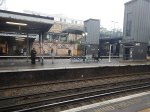
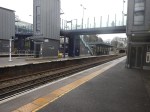
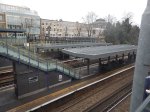
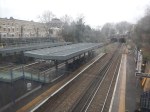
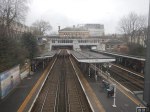
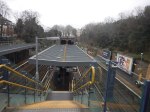
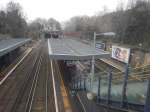
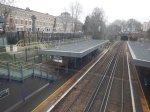
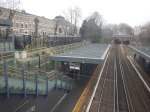
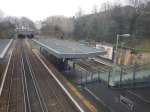
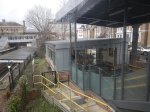
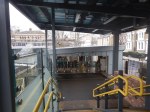
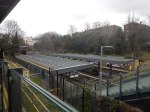
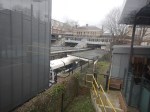


So often, a small improvement opens up a large opportunity.
This page on the Kalzip web site which is entitled Modernisation of Denmark Hill Station, gives more details of the station project.
Over the years, I put up a few steel-roofed buildings in my time and I helped design a few with a client in the 1970s, that could have benefited from solar panels like these.
Project Fortress
Project Fortress is described like this in its Wikipedia entry.
Project Fortress (formerly Cleve Hill Solar Farm) is a photovoltaic power station under construction on the Graveney marshes between Faversham and Whitstable, Kent in the UK.
Once operational, it will be the largest solar farm in the UK, generating 373 MW of electricity from 900 acres (360 ha) of vertical solar panels and will also include 700 MWh of battery storage. Because of its size, it is a nationally significant infrastructure project so outside the standard local planning procedure.
Electricity will be exported from the project via the 400 kV National Grid substation at Cleve Hill, constructed to serve the London Array offshore wind farm that lies to the north. Here, a battery array will be placed, that will charge from the sunlight during the day and release the energy at night when it is needed.
It is one of the very few co-located solar farms and lithium ion batteries that are co-located with a wind farm in the UK.
We need more of these to balance our power supplies and improve their quality.
Octopus Energy Generation Acquires 252MW Solar And Storage Projects
The title of this post, is the same as that of this article on Solar Power Portal.
These two introductory paragraphs add more detail.
The generation arm of British energy major Octopus Energy has announced that it has acquired four new solar projects across England as part of a plan to invest £2 billion into renewable energy projects by 2030.
Four new solar farms currently under development have been acquired from renewable energy developer BayWa.re, with a combined generation capacity of 222MW. One of the sites will also play host to a 30MW battery energy storage system (BESS).
On Sunday, there was an Interview with Greg Jackson, who is the boss of Octopus in the Sunday Times, which was entitled Octopus Boss: Split UK Into Price Zones Or Bills Will Keep Rising.
I think we should watch, where Greg splashes his money.
Agrivoltaics Deal To Bring 9,000 Sheep To 1GW Solar Park
The title of this post, is the same as that of this article on Solar Power Portal.
When I saw the title, I felt I just had to call it out.
A 1GW Solar Park
Normally, a 50-100 MW solar farm is considered large for the UK, so a 1 GW solar farm must be truly enormous, by any standards.
According to the heading of the Great North Road Solar and Biodiversity Park web site, which says this.
Elements Green is developing proposals for a new solar and energy storage park located to the northwest of Newark-on-Trent, Nottinghamshire.
With a potential generation capacity of around 800 megawatts (MW) AC of solar energy, the scheme has the potential to provide enough clean, affordable energy to meet the power needs of approximately 400,000 homes while avoiding more than 250,000 tonnes of CO₂ emissions every year.
The size appears to be around 800 MW.
But that is still large!
The Project Area
This article on the BBC is entitled Survey Suggests Opposition To Major Solar Farm, has this as a caption to the first picture.
The solar project is made up of around 1.5 million panels covering 7,000 acres.
That is around eleven square miles or a 3.3 mile square.
A Map Of The Project
This map of the project was clipped from the Elements Green web site.
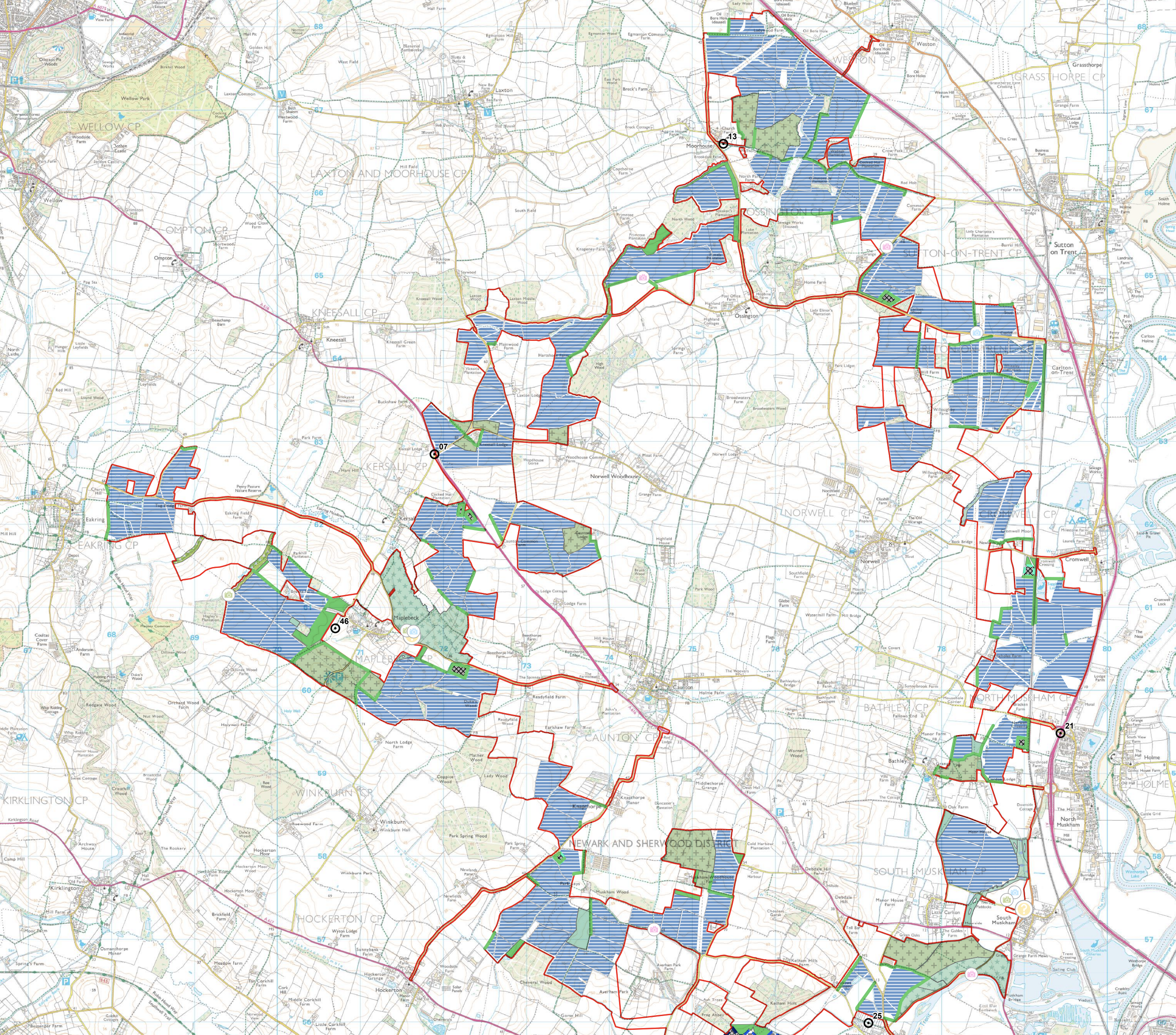
Note.
- The blue areas are solar panels.
- The red line at the right hand side is the A1 Great North Road.
- There is a lot of space for more solar panels.
It could be even bigger than 1 GW.
There Is Opposition To The Wind Farm
This article on the BBC is entitled Survey Suggests Opposition To Major Solar Farm.
This is the sub-heading,
A consultation about a major solar farm in Nottinghamshire has shown the scale of the opposition it faces to being built.
These two paragraphs detail the scale of the opposition.
The consultation, held in January and February, found 54% of respondents opposed the scheme, with 16% supporting the current plan.
Among the main reasons people gave for opposing the scheme were its visual and ecological impact.
The reasons for opposition are typical.
These two paragraphs describe the actions of the developer.
Having received the backing in principle of several key nature charities and trusts, the Great North Road Solar Park project will be renamed ‘Great North Road Solar and Biodiversity Park’, with a new logo to reflect this.
Communities who were consulted on the original proposals in early 2024 expressed a strong desire to protect and enhance their natural environment. Acting upon this feedback, developer Elements Green has formed partnerships with the RSPB, Sherwood Forest Trust, Nottinghamshire Wildlife Trust, and The Trent Rivers Trust, to ensure that nature benefits from their ambitious project.
I suspect that some of the opposition groups have labelled the last paragraph as green-washing.
Nine Thousand Sheep!
Usually, when large numbers of sheep are mentioned on the Internet, it’s usually something a bit coarse.
But in this project, it’s only letting sheep, do what they do well ; act as green lawnmowers, have lambs and provide meat and wool to increase the bottom line.
Where Is The Connection To The Grid?
The FAQs section of the Great North Road Solar and Biodiversity Park web site has this question.
Why has Elements Green chosen this location for the solar park?
This answer is given.
A key factor influencing the location of GNR Solar and Biodiversity Park is the availability of a connection at National Grid’s Staythorpe substation. The closure of fossil fuel power stations has created capacity on the grid. This would enable GNR Solar and Biodiversity Park to continue the tradition of power generation in the area using a clean, renewable resource.
In addition, a range of planning and environmental factors such as the existing land use, quality of land, as well as designations and planning and technical constraints have also informed our choice of location for the scheme.
So if you’re near the site of a disused coal- or gas-fired power station, don’t expect it to be developed as agricultural land, woodland or housing.
The Wikipedia entry for Staythorpe power station, reveals there is a 1,850 MW gas-fired power station on the site.
The Great North Road Solar and Biodiversity Park would appear to have a very able gas-fired back-up,
No Battery Or Energy Storage Is Mentioned
In an idealised day, there is a period of light and a period of darkness.
A battery would allow any excess electricity generated in the day to be used at night.
Google searches reveal energy storage could be fitted.
One of Highview Power’s environmentally-friendly 200 MW/3.25 GWh liquid-air batteries could be a starting point for a one GW solar or wind farm.
Could A Wind Farm Be Added To The Solar Farm?
In An Excursion To Retford And Worksop, I noticed a large hybrid solar and wind farm alongside the railway.
As the Great North Road Solar and Biodiversity Park uses a lot of land, would some be available for a sprinkling of wind turbines?
Conclusion
Looking at the map, you can understand some peoples’s enthusiasm for large solar farms and large onshore wind farms, as they can be so easily connected to the infrastructure of a decommissioned coal- or gas-fired power station.
Buccleuch Group Submits Plans For 39MW Solar, 10MW Storage Development
These are the two introductory paragraphs.
Solar and storage developer Buccleuch Group has submitted a planning application for a new solar plus storage development near Kettering, Northamptonshire.
The Oakley Bush solar and battery energy storage system (BESS) project is a proposed 39MW solar development, with a 10MW BESS proposed for the site. The application area, which covers 150 hectares of land on the Boughton Estate, could play host to as many as 130,000 ground-mounted solar modules, positioned around 3.5 metres above the ground.
The development is interesting for two reasons.
It Is Being Built With Both Solar Panels And A BESS
As a Control Engineer, I believe renewable power systems should have a battery, to even out the power.
The Batteries Could Be Vanadian Flow Batteries
The article says this about, the use of vanadium flow batteries.
According to the application documentation provided to Kettering District Council, two BESS technologies are being considered for use on-site: lithium-ion batteries or vanadium flow batteries. If vanadium flow batteries are used, the site could have an energy capacity of up to 50MWh, although this will be lower if lithium-ion batteries are used.
In a presentation given at a public information event for the project earlier this year, the developers noted that vanadium flow battery technology is being considered due to its significantly lower fire risk and longer lifespan than lithium-ion batteries. An operational lifespan of 40 years is expected for the site, with construction expected to take 18 months if planning consent is granted.
Note.
- Vanadium flow batteries appear to be larger.
- Vanadium flow batteries have a lower fire risk.
- Vanadium flow batteries have a longer life span, than lithium-ion.
With other batterers coming through, I wouldn’t be surprised to see costs, performance and reliability of batteries improve.
Bord Gáis Energy Acquires Leading Irish Solar PV Installer Swyft Energy
The title of this post, is the same as that of this news item from Centrica.
This is the sub-heading.
Bord Gáis Energy today announced the acquisition of Swyft Energy, a leading solar PV provider in Ireland for an undisclosed sum.
Note.
- Bord Gáis Energy is a subsidiary of Centrica.
- Swyft Energy has this web site.
These three paragraphs give more details of the acquisition.
Bord Gáis Energy already operates in the solar PV market: directly to residential customers, and through its partnership with Irish Farmer’s Association delivering solar PV to farms across Ireland, helping farmers transition to green energy. The acquisition of Swyft Energy now brings deeper solar PV capability to residential as well as business and farming customers of Bord Gáis Energy, as the company transitions to a green energy business.
Swyft Energy, a technology-led solar PV and boiler installation company, brings over six years of experience in delivering customer-focused solutions using a digital-first platform. This acquisition enhances Bord Gáis Energy’s highly skilled workforce and strengthens its customer proposition.
With a target of 10,000 installations over the next 5 years, this will allow Bord Gáis Energy to compete better for the growing demand for solar energy in residential, commercial and agricultural sectors. Customers can save an average of 50-70% on their electricity bills with the installation of rooftop solar panels.
The deal certainly looks a good fit between two ambitious companies, who are operating in similar areas of the Irish market.
I have my thoughts and observations.
Are Bord Gáis Energy And Swyft Energy Stronger Together?
Do both companies feel, that by working together, they will be stronger from a financial point of view?
It wouldn’t be unusual for this to be a reason behind a deal like this.
Centrica Are Making Lots Of Deals At The Present Time
Centrica are also continuing, the tendency to expand, that they’ve shown in recent weeks.
These are some of the deals I have noted.
- Aberdeen’s Exceed Secures Centrica Rough Contract
- HiiROC Partners With Siemens To Boost Clean Hydrogen Production
- Centrica Strikes 200MW Lithuanian Green Power Deal
- Centrica And Coterra Energy Announce Natural Gas Sale And Purchase Agreements
- Centrica And European Energy Sign Agreement On Måde Green Hydrogen Facility
- Recurrent Energy’s Middle Road Project Sold To Centrica
- Team GB And ParalympicsGB Athletes Find New Career Pathway At Centrica
- UK Infrastructure Bank, Centrica & Partners Invest £300M in Highview Power Clean Energy Storage Programme To Boost UK’s Energy Security
Centrica certainly have been busy expanding.
Energy Storage In The Island Of Ireland
It is generally accepted, that if you have a lot of renewable energy, then you need a lot of energy storage, to bridge the gaps in wind and solar.
In the Wikipedia entry for Energy In Ireland, there is a section called Energy Storage.
It seems to me, that Ireland could be short on energy storage, so is it likely that the enlarged Bord Gáis Energy will look for possibilities for energy storage.
Recently, Centrica formed a business relationship with Highview Power, who are developing environmentally-friendly liquid-air batteries. These smaller and more affordable batteries might be suitable for the island of Ireland.
Conclusion
There’s more to this deal, than at first meets the eye.
German Firm Plans To Build Britain’s Biggest Solar Farm
The title of this post, is the same as that as this article on The Times.
These three paragraphs outline the project.
The developers behind a controversial solar power project in Oxfordshire have submitted a planning application for what is thought will be the largest such scheme in western Europe.
The site in Botley West is being developed by Photovolt, a German company, and could generate 840 megawatts (MW) of electricity, enough to power about 330,000 homes.
However, the project has sparked a backlash among some local residents, who argue the scheme will blight the landscape.
A map shows the site and it is certainly a large one.
- The Botley West site will cover a total of about 3,200 acres.
- It will pass through 15 villages.
- About 1,235 acres will not be covered with solar panels.
- It has a web site, which gives more information.
- There is also a Stop Botley West web site.
I can certainly understand the opposition.
These are my thoughts.
I Would Add A Battery To The Panels
An added battery would undoubtedly smooth the output of the solar panels. Especially, when the sun is not out to play!
A total capacity of 840 MW is planned for Botley West and in my opinion as a Control Engineer, a sizeable battery is needed.
I would not use a Battery Energy Storage System or BESS based on lithium-ion batteries, as I believe that Highview Power’s liquid air batteries and others offer cost and environmental advantages. But that is one for the accountants and the environmentalists!
I Might Add A Few Appropriately-Sized Wind Turbines To The Farm
In Skegness Wind Turbine Trial To Light Up Pier In UK First, I discuss using small, vertical wind turbines from a Norwegian company called Ventum Dynamics.
This picture shows a Ventum Dynamics turbine on Skegness Pier.
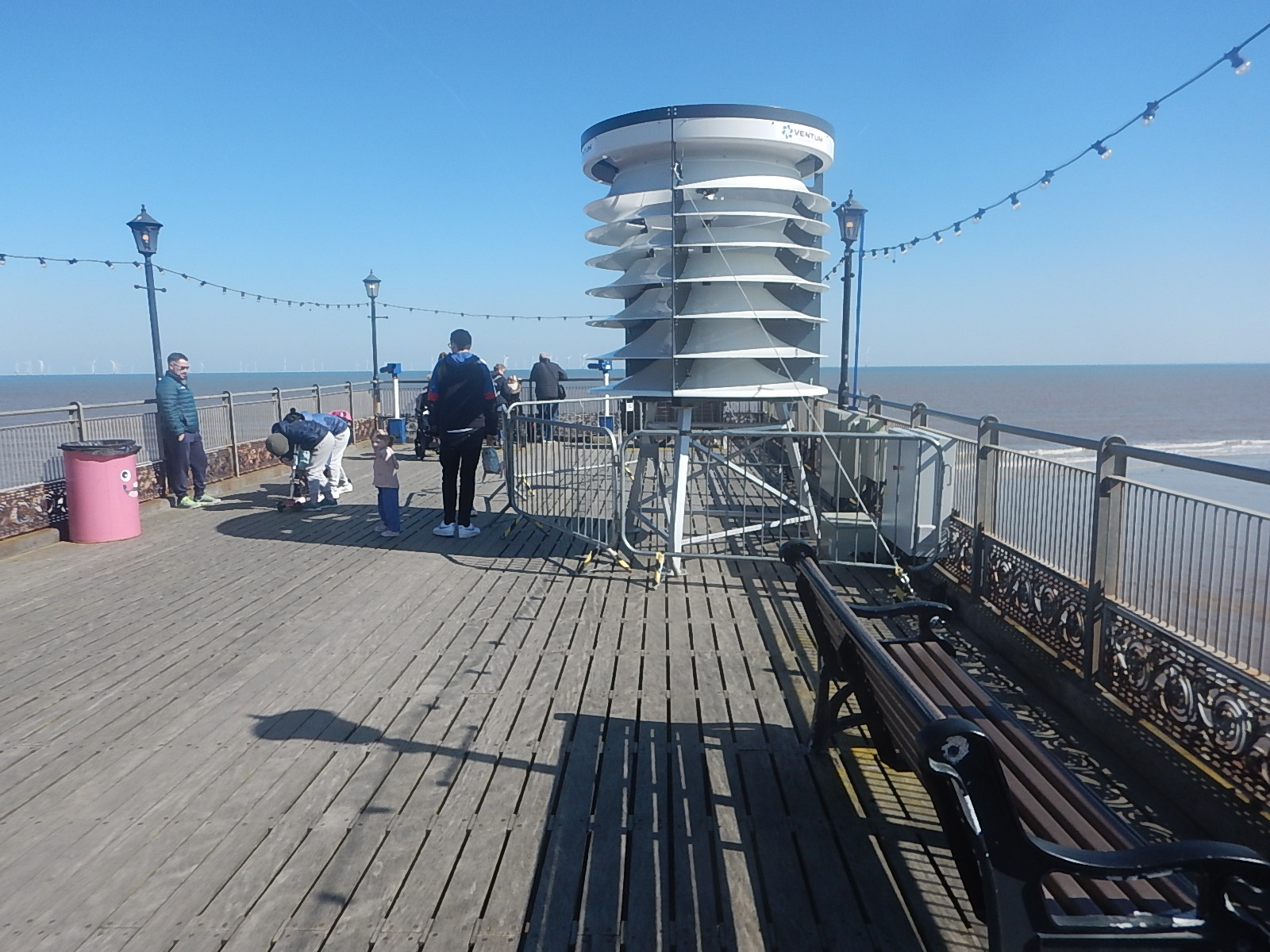
On the Ventum Dynamics web site, there are several pictures of buildings with flat roofs, that have several turbines on each.
Surely, if you’re installing a comprehensive electrical network, then it should be used to collect all the electricity it can.
I believe that Ventum’s turbines could be alternated in a line with trees, so that they merged more into the countryside. Some experiments need to be done.
I Would Also Fit Solar Roofs To Suitable Buildings
Every little helps!
Conclusion
When mixing solar panels and wind turbines into the countryside, you need to be bold and discard preconceived ideas.

