Cathays Station To Go Step-Free
This document on the Government web site is entitled Access for All: 73 Stations Set To Benefit From Additional Funding.
Cathays station is on the list.
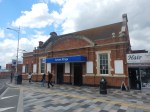
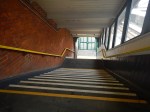
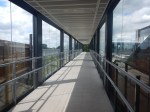
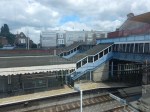
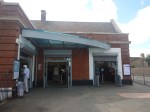
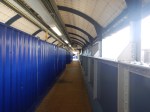
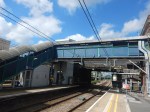
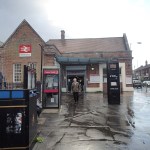
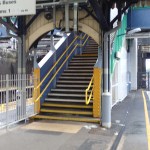
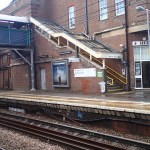
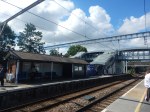
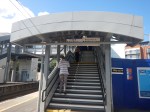
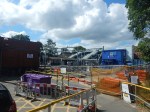
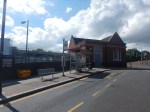
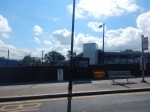
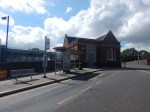
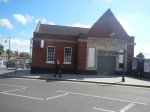
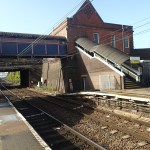
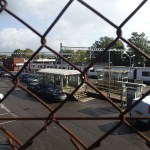
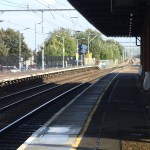
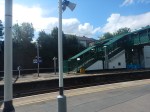
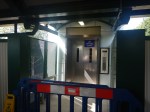
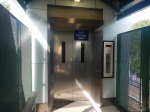
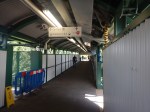
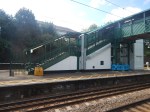
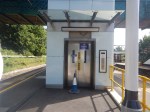
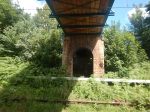
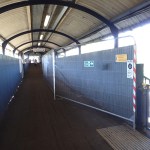
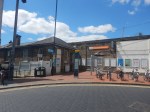
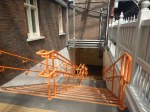
These pictures show the station and the current bridge,
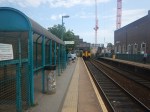
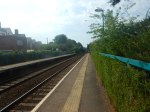
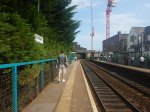

This Google Map shows the station and its surroundings.
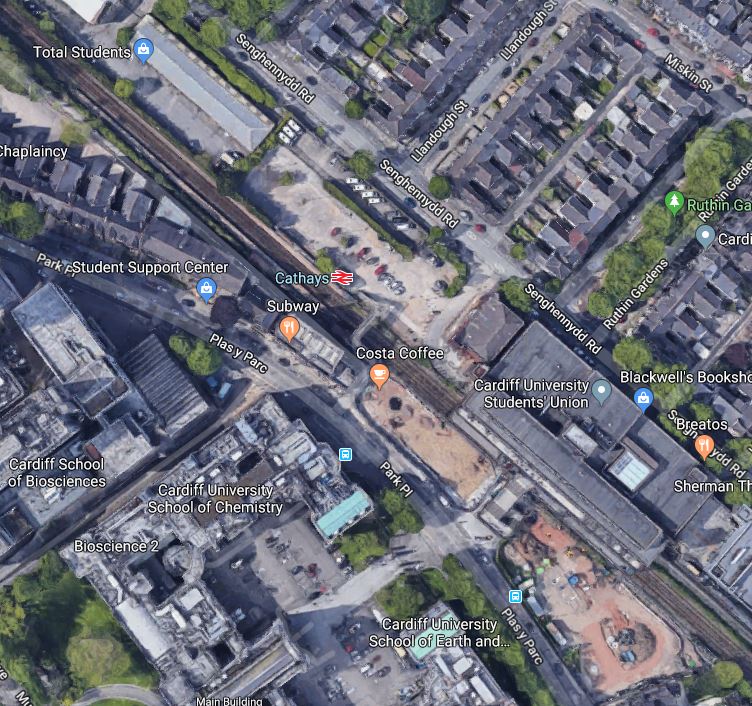
Note.
- As I went through I noticed a lot of development North of the station.
- The map shows developments to the South.
- There appears to be a lot of student accommodation in the area.
All this must add up to a large increase in passenger numbers at the station.
But the biggest driver of passenger numbers, will be the trains through the station, as shown on this map.

Twelve trains per hour (tph) will go through the station, when the South Wales Metro is fully developed.
- South to Barry Island, Bridgend, Cardiff Bay, Cardiff Central, Pearth and Rhoose Airport.
- North to Aberdate, Merthyr Tydfil, Pontypridd and Treherbert.
Cathays station will be busy, with a very busy bridge, handling twice as many trains, as it does now!
I have been sent a map of the proposed works and facilities for the South Wales Metro. This snippet shows Cathays station.
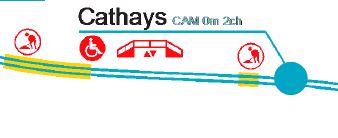
Note.
- Cathays station is shown with a PRM-compliant bridge with step-free access from street to train.
- There is a long and a short break in the electrification to the West of the station.
Cathays station is more complicated than it first appears.
Installing The Step-Free Access
I think that space for a footbridge could be tricky.
The platforms are narrow.
Is there enough space to add lifts to the existing bridge?
It could be difficult to keep the current bridge open, whilst a new one is installed.
In Winner Announced In The Network Rail Footbridge Design Ideas Competition, I wrote how the competition was won by this bridge.
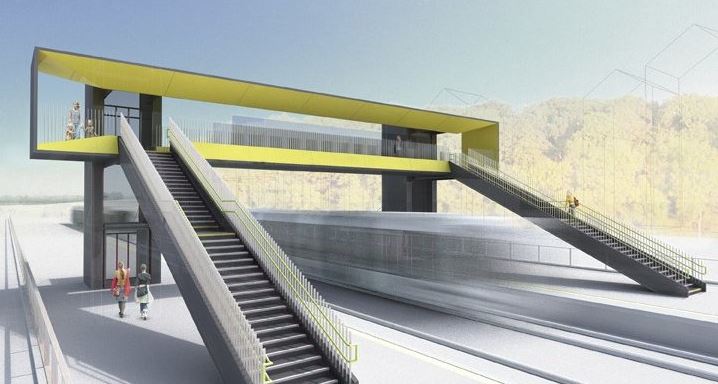
It might be possible to squeeze in an asymmetric version of this bridge. Or one, where the steps went out to the side!
Electrification And Property Development To The West Of Cathays Station
To the West of Cathays station, Corbett Road crosses the railway., as this Google Map shows.
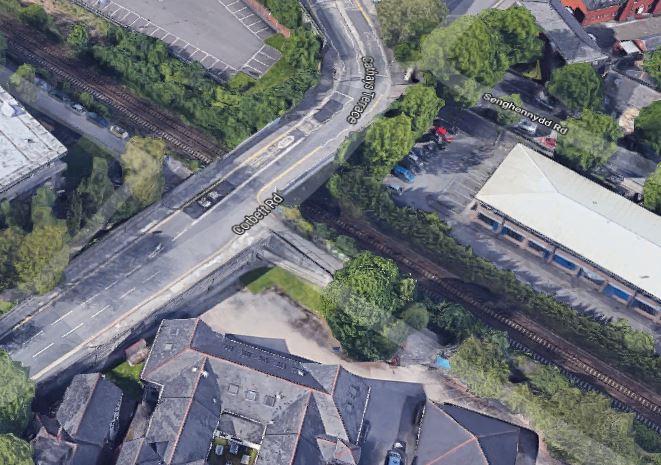
This is probably the shorter break in the electrification.
The second one could be more innovative.
This Google Map shows the railway, as it runs through Cardiff University between Cathays and Llandaf stations.
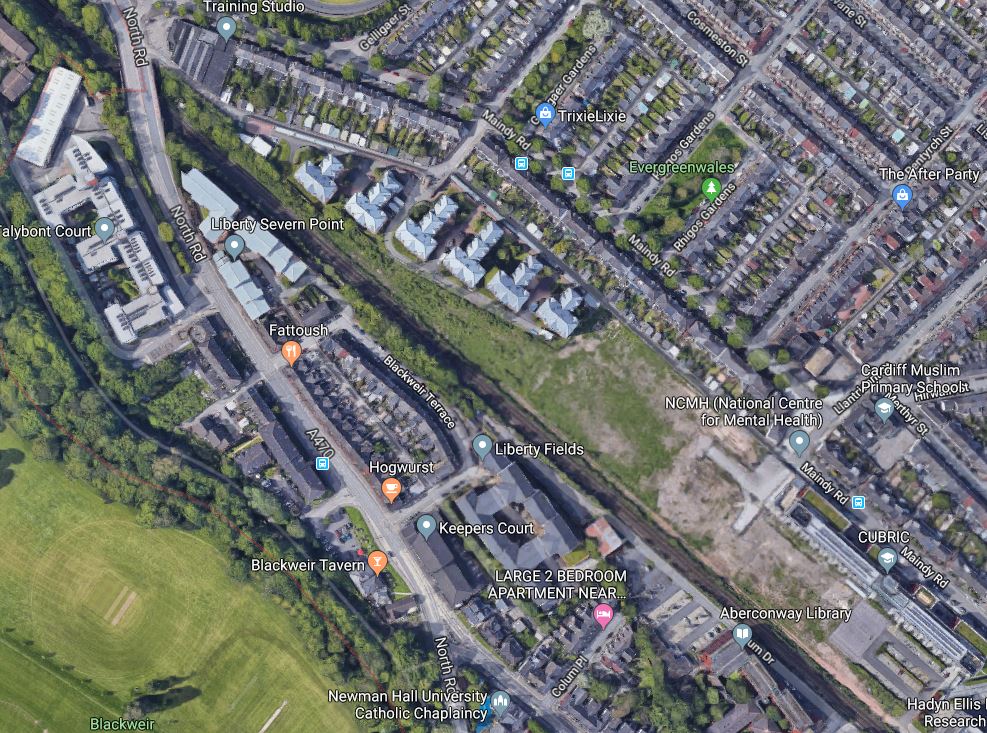
Note, what looks to be a large development site on the North side of the tracks.
Could it be that the University plans to build over the railway?
It would certainly maximise land use and perhaps make it easier for the University to construct the buildings it needs.
A New Station At Gabalfa
A new Gabalfa station is also proposed between Cathays and Llandaf stations.
Conclusion
It looks like there is a lot happening around Cathays station.
T
and there a
No Progress At Syon Lane Station
I visited Syon Lane station this morning and there has been no progress on the footbridge, that Network Rail say will be installed by late summer.
Over the weekend various works were done along the line, including some conductor rail replacement.
There’s another blockade next weekend, so I’ll see what happens then!
Conclusion
The longer it goes without any visible progress, does it make it more likely, that some form of prefabricated bridge will be assembled like giant Lego?
I can’t see how, if a traditional footbridge is used, it can be built to their timescale.
Irlam Station To Go Step-Free
This document on the Government web site is entitled Access for All: 73 Stations Set To Benefit From Additional Funding.
Irlam station is on the list.
These pictures show the station and the current subway.

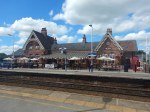

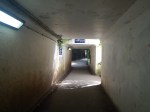

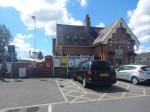
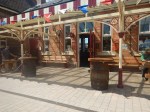
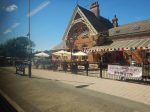
The station was a total surprise, with a large pub-cafe and a lot of visitors and/or travellers sitting in the sun.
I had an excellent coffee and a very welcoming gluten-free blueberry muffin!
This Google Map shows the station.
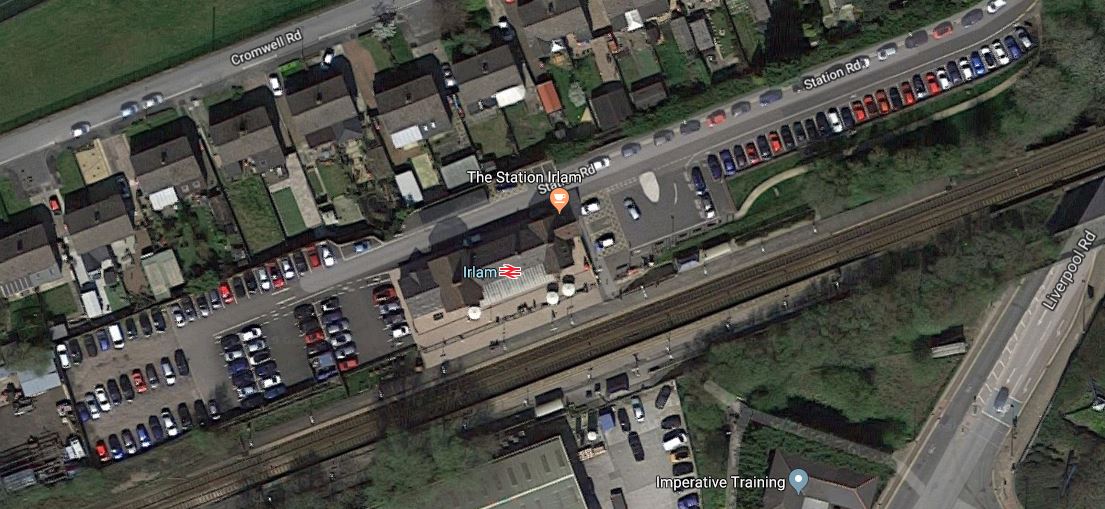
It is one of those stations where commuters have to cross the railway either on the way to work or coming home.
So a step-free method of crossing the railway is absolutely necessary.
The Current And Future Rail Service
As the station lies conveniently between Liverpool and Warrington to the West and Manchester and Manchester Airport to the East, it must be a station with tremendous potential for increasing the number of passengers.
At the moment the service is two trains per hour (tph) between Liverpool Lime Street and Manchester Oxford Road stations.
- Oxford Road is probably not the best terminus, as it is not on the Metrolink network.
- When I returned to Manchester, many passengers alighted at Deansgate for the Metrolink.
- On the other hand, Liverpool Lime Street is a much better-connected station and it is backed up by Liverpool South Parkway station, which has a connection to Merseyrail’s Northern Line.
- The current service doesn’t serve Manchester Piccadilly or Airport stations.
A guy in the cafe also told me that two tph are not enough and the trains are often too short.
Merseyrail work to the same principle as the London Overground and other cities of four tph at all times and the frequency certainly draws in passengers.
Whilst I was drinking my coffee, other trains past the station.
- One tph – Liverpool Lime Street and Manchester Airport
- One tph – Liverpool Lime Street and Norwich
Modern trains like Northern’s new Class 195 trains, should be able to execute stops at stations faster than the elderly diesel trains currently working the route.
So perhaps, after Irlam station becomes step-free, the Manchester Airport service should call as well.
As Liverpool Lime Street station has been remodelled, I can see a time in the not too distant future, when that station can support four tph, that all stop at Irlam station.
The Manchester end of the route could be a problem, as services terminating at Oxford Road have to cross the busy lines of the Castlefield Corridor.
So perhaps all services through Irlam, should go through Deansgate, Manchester Oxford Road and Manchester Piccadilly stations to terminate either at the Airport or perhaps Stockport or Hazel Grove stations.
But would this overload the Castlefield Corridor?
Battery/Electric Trains
If you look at the route between Liverpool Lime Street and Manchester Oxford Road stations, the following can be seen.
- Only about thirty miles between Deansgate and Liverpool South Parkway stations is not electrified.
- The section without electrification doesn’t appear to be particularly challenging, as it is along the River Mersey.
It is my view, that the route between Liverpool and Manchester via Irlam, would be an ideal route for a battery/electric train.
A train between Liverpool Lime Street and Manchester Airport stations would do the following.
- Run from Liverpool Lime Street station to Liverpool South Parkway station using the installed 25 KVAC overhead electrification.
- Drop the pantograph during the stop at Liverpool South Parkway station.
- Run from Liverpool South Parkway station to Deansgate station using battery power.
- Raise the pantograph during the stop at Deansgate station.
- Run from Deansgate station to Manchester Airport station, using the installed 25 KVAC overhead electrification.
The exact distance between Deansgate and Liverpool South Parkway stations is 28.2 miles or 45.3 kilometres.
In 2015, I was told by the engineer riding shotgun on the battery/electric Class 379 train, that that experimental train was capable of doing fifty kilometres on battery power.
There are at least four possible trains, that could handle this route efficiently.
- Porterbrook’s proposed batteryFLEX train based on a Class 350 train.
- A battery/electric train based on the seemingly unwanted Class 379 train.
- A battery/electric version of Stadler’s Class 755 train.
- I believe that Bombardier’s Aventra has been designed so that a battery/electric version can be created.
There are probably others and I haven’t talked about hydrogen-powered trains.
Battery power between Liverpool and Manchester via Irlam, appears to be very feasible.
Tram-Trains
As my train ran between Manchster and Irlam it ran alongside the Metrolink between Cornbrook and Pomona tram stops.
Manchester is very serious about tram-trains, which I wrote about in Could A Class 399 Tram-Train With Batteries Go Between Manchester Victoria And Rochdale/Bury Bolton Street/Rawtenstall Stations?.
Tram-trains are often best employed to go right across a city, so could the Bury tram-trains go to Irlam after joining the route in the Cornbrook area?
- Only about thirty miles between Deansgate and Liverpool South Parkway stations is not electrified.
- The route between Liverpool and Manchester via Irlam doesn’t look to be a very challenging line to electrify.
- The total distance bettween Liverpool Lime Street and Manchester Victoria station is only about forty miles, which is a short distance for a tram-train compared to some in Karlsruhe.
- Merseyrail’s Northern Line terminates at Hunts Cross station, which is going to be made step-free.
- There is an existing step-free interchange between the Liverpool and Manchester route via Irlam and Merseyrail’s Northern Line at Liverpool South Parkway station.
- Class 399 tram-trains will have a battery capability in South Wales.
- Class 399 tram-trains have an operating speed of 62 mph, which might be possible to increase.
- Stadler make Class 399 tram-trains and are building the new Class 777 trains for Merseyrail.
I think that Stadler’s engineers will find a totally feasible and affordable way to link Manchester’s Metrolink with Liverpool Lime Street station and Merseyrail’s Northern and Wirral Lines.
I can envisage the following train service running between Liverpool and Manchester via Irlam.
- An hourly service between Liverpool Lime Street and Nottingham, as has been proposed for the new East Midlands Franchise.
- A four tph service between Liverpool Lime Street and Manchester Airport via Manchester Piccadilly.
- A tram-train every ten minutes, linking Liverpool Central and Manchester’s St Peter’s Square.
- Tram-trains would extend to the North and East of Manchester as required.
- All services would stop much more comprehensively, than the current services.
- Several new stations would be built.
- In the future, the tram-trains could have an interchange with High Speed Two at Warrington.
Obviously, this is just my speculation, based on what I’ve seen of tram-train networks in Germany.
The possibilities for the use of tram trains are wide-ranging.
Installing Step-Free Access At Irlam Station
There would appear to be two ways of installing step-free access at Irlam station.
- Add lifts to the existing subway.
- Add a separate bridge with lifts.
These are my thoughts on each method.
Adding Lifts To The Existing Subway
Consider.
- The engineering would not be difficult.
- Installaton would probably take a number of weeks.
- There is good contractor access on both sides of the railway.
There are similar successful step-free installations around the UK
The problem is all about, how you deal with passengers, whilst the subway is closed for the installation of the lifts.
Adding A Separate Bridge With Lifts
Consider.
- There is a lot of space at both the Eastern and Western ends of the platform to install a new bridge.
- Adding a separate bridge has the big advantage, that during the installation of the bridge, passengers can use the existing subway.
- Once the bridge is installed, the subway can be refurbished to an appropriate standard.
Passengers will probably prefer the construction of a new bridge.
In Winner Announced In The Network Rail Footbridge Design Ideas Competition, I wrote how the competition was won by this bridge.
So could a factory-built bridge like this be installed at Irlam station?
There is certainly space at both ends of the platform to install such a bridge and the daily business of the station and its passengers would be able to continue unhindered, during the installation.
I’m also sure, that the cafe would be happy to provide the daily needs of the workforce.
Conclusion
From a station and project management point-of-view, adding a new factory-built bridge to Irlam station is the easiest and quickest way to make the station step-free.
It also appears, that Network Rail have made a wise choice in deciding to put Irlam station on their list of stations to be made step-free, as the station could be a major part in creating a new high-capacity route between Liverpool and Manchester.
This could also be one of the first stations to use an example of the new bridge.
- Installation would be quick and easy.
- There is no site access problems.
- There station can remain fully open during the installation.
- All stakeholders would probably be in favour.
But above all, it would be a superb demonstration site to bring those from stations, where Network Rail are proposing to erect similar bridges.
My First Ride In A Class 195 Train
Today, I rode the ten o’clock Virgin to Manchester Piccadilly station.
I then waited for one of the new Class 195 trains going South to Manchester Aurport station.
These pictures show the Class 195 train.
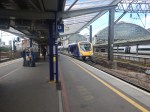
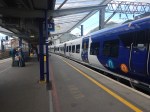
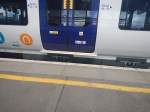
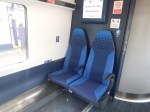

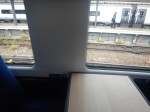
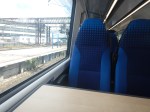
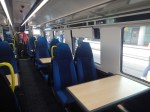
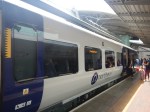
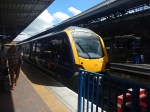
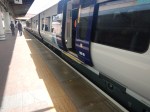
These are my views on various aspects of the train.
Noise, Vibration And Harshness
The Class 195 train is a diesel multiple unit, with an MTU engine and a ZF Ecolife transmission.
Wikipedia describes the transmission as is a 6 speed transmission for city buses. It also lists these features.
- Boosted operating economy, longer service life, and higher temperature resistance for operation with Euro 5 (1st generation) and Euro 6 (2nd generation) compatible engines.
- An integral retarder,
- Longer operational intervals between oil changes.
- Higher torque capacity.
It looks like ZF have created a sophisticated and very efficient gearbox for diesel buses and trains.
During today, I rode also rode in Class 156 and Class 175 trains, that are also diesel powered.
I would put the noise, vibration and harshness of the diesel engine and the transmission of the Class 195 trains, as worse than that of the Class 175 train and better than than that of the Class 156 train.
I am surprised that the Class 195 train doesn’t use a hybrid electric transmission, which are starting to be developed by MTU and will be retrofitted into various diesel multiple units like Porterbrook’s Class 170 trains, as I talked about in Rolls-Royce And Porterbrook Launch First Hybrid Rail Project In The UK With MTU Hybrid PowerPacks.
I said this in the linked post.
As I understand it, the current hydraulic traction system will be replaced by an electric one with a battery, that will enable.
- Regenerative braking using a battery.
- Battery electric power in urban areas, stations and depots.
- Lower noise levels
- Lower maintenance costs.
This should also reduce diesel fuel consumption and carbon emissions.
As the Class 195 train has a similar electric cousin; the Class 331 train, I would have felt that it would be possible to fit the Class 195 trains with an MTU Hybrid PowerPack or similar.
This should reduce, what to me, are unacceptable noise levels.
As the MTU Hybrid PowerPack has been developed, at the same time as the Class 195 train, which uses a traditional MTU engine, I wouldn’t be surprised if the Class 195 train has been designed to be retrofitted with the more efficient MTU Hybrid PowerPack.
Interior Design
The designj of the interior is disappointing in some of the details and I would rate it inferior to the Class 385 trains, built for ScotRail by Hitachi.
The most annoying aspect is that the seats and windows are not aligned, as they are in Hitachi’s design.
This picture taken in a Chiltern Railways Mark 3 carriage, shows the alignment done in a better manner.
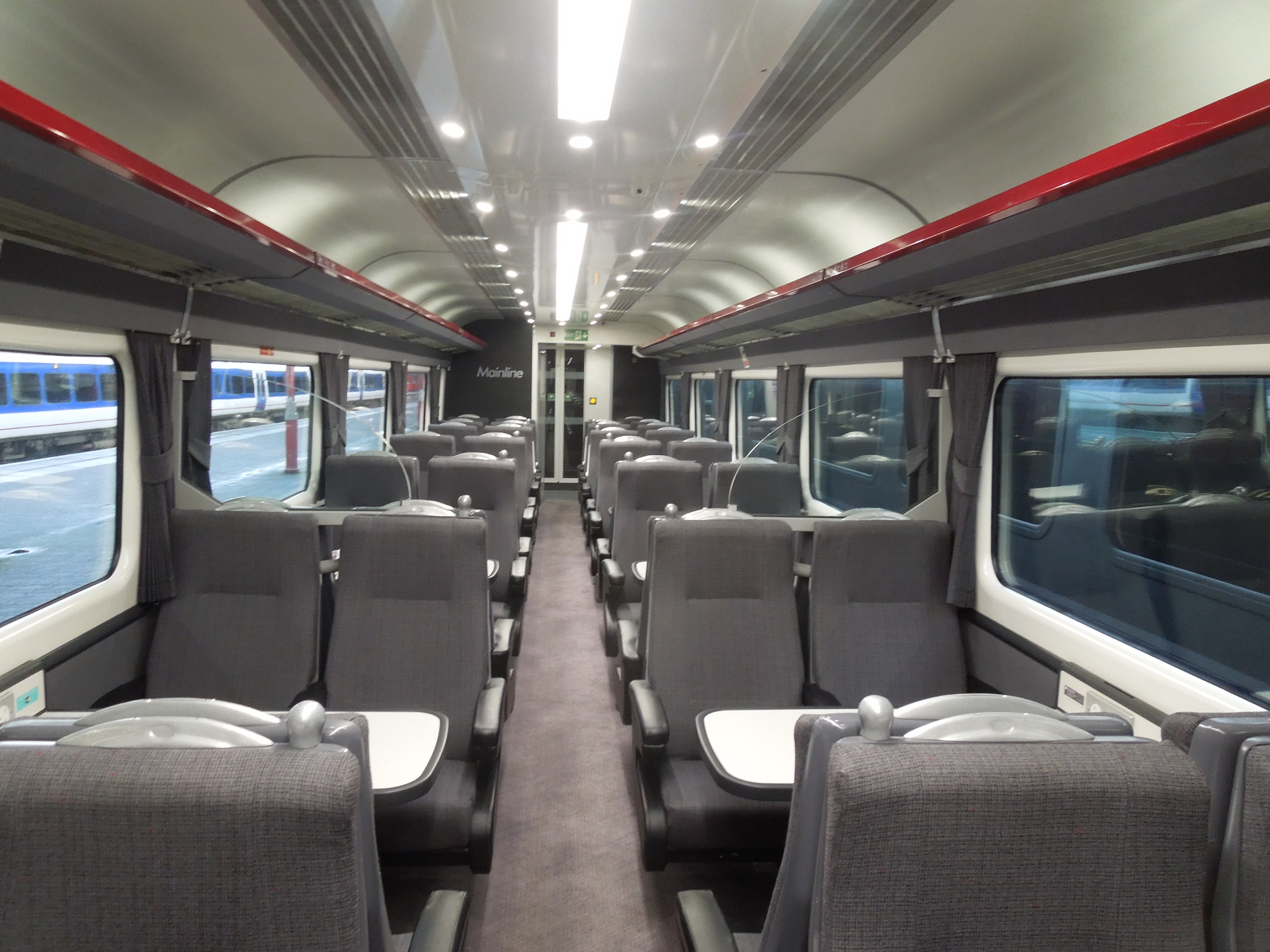
But I believe, that it can be done better still.
Entrance And Exit
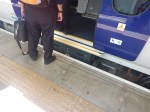
As the pictures show, there is a big gap and a high step getting into the train. I know that the platform at Manchester Piccadilly is not easy, but the gap was still large on the straight platform at Manchester Airport.
With any new train, a passenger in a wheelchair, should be able to push themselves into and out of the train.
They certainly can’t in a Class 195 train.
Conclusion
I was rather disappointed with the Class 195 train.
Good points were the number of tables and build quality.
Bad points were the noise, vibration and harshness, execution of the interior design and entry and exit.
Compared to the Class 385 train, which I would score at 8/10, the Class 195 train, is no better than 6/10.
In some ways though, my biggest disappointment, is that they didn’t get the smaller points of the design right first time!
Seven Kings Station – 2nd July 2019
Seven Kings station appears to be substantially complete, as these pictures show..
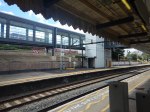
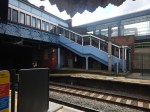

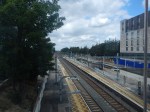
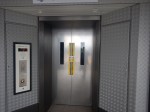

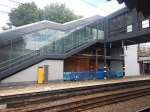

A new bridge with lifts has been added to supplement the current stairs, which have been refurbished.
Brentwood Station – 2nd July 2019
I took these pictures of Brentwood station today.
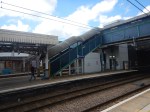
For comparison, this second set of pictures were taken in October 2014 and I posted them in Before Crossrail – Brentwood Station.
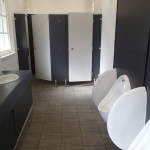
Note the excellent toilets.
There is still work to do to finish the station.
The biggest problem appears to be squeezing the lifts into the structure.
There is this article on Essex Live, which is entitled Brentwood Station Lift Fiasco Is Penalising Buggy-Users And Disable People.
This is said in the article.
Network Rail has previously said that the decision to not install a lift on platform four was “not taken lightly.”
But, the discovery of power cables and a disused culvert underneath where the lift shaft would go led to Network Rail’s conclusion that a lift could not be installed there.
I’m afraid that station modifications are liberally sprinkled with stories like this.
Harold Wood Station – 2nd July 2019
Harold Wood station appears to be progressing towards completion.
These pictures were taken today.
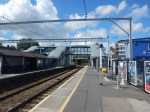
For comparison, this second set of pictures were taken in October 2014 and I posted then in Before Crossrail – Harold Wood .
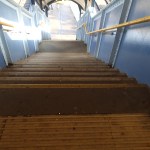
In the related post, I said this.
The station has toilets but a bad bridge and no lifts.
It won’t take much to get it ready for Crossrail.
It appears that the following work has been done.
- A temporary (?) step-free entrance has been built.
- A new bridge has been put in place.
- The platforms have been extended.
But the lift installation need finishing and the old station building needs refurbishing.
The station has the air of an overrunning refurbishing project or one that has run out of money.
Gidea Park Station – 2nd July 2019
Gidea Park station is now almost ready to become step-free.
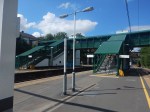
There is still a bit of testing and decorating to finish off and hopefully everything in the station will be fully operational in a few weeks.
Compare the pictures, with these of the bridge, that I took in October 2014.
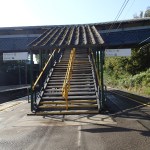
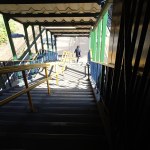
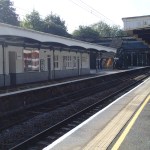
The pictures come from Before Crossrail – Gidea Park, where I said this.
One of the station staff told me, that the bridge had obvious corrosion problems and it was being replaced with one with lifts.
It appears that the contractors have taken the old footbridge, refurbished it with all the care that the Scots use on the Forth Railway Bridge and added a pair of new lift towers to give step-free access to the platforms.
This method probably took longer than replacing the whole structure with a new bridge, but I suspect that the contractors were able to keep the station open at all times.
I have to add a tail-piece.
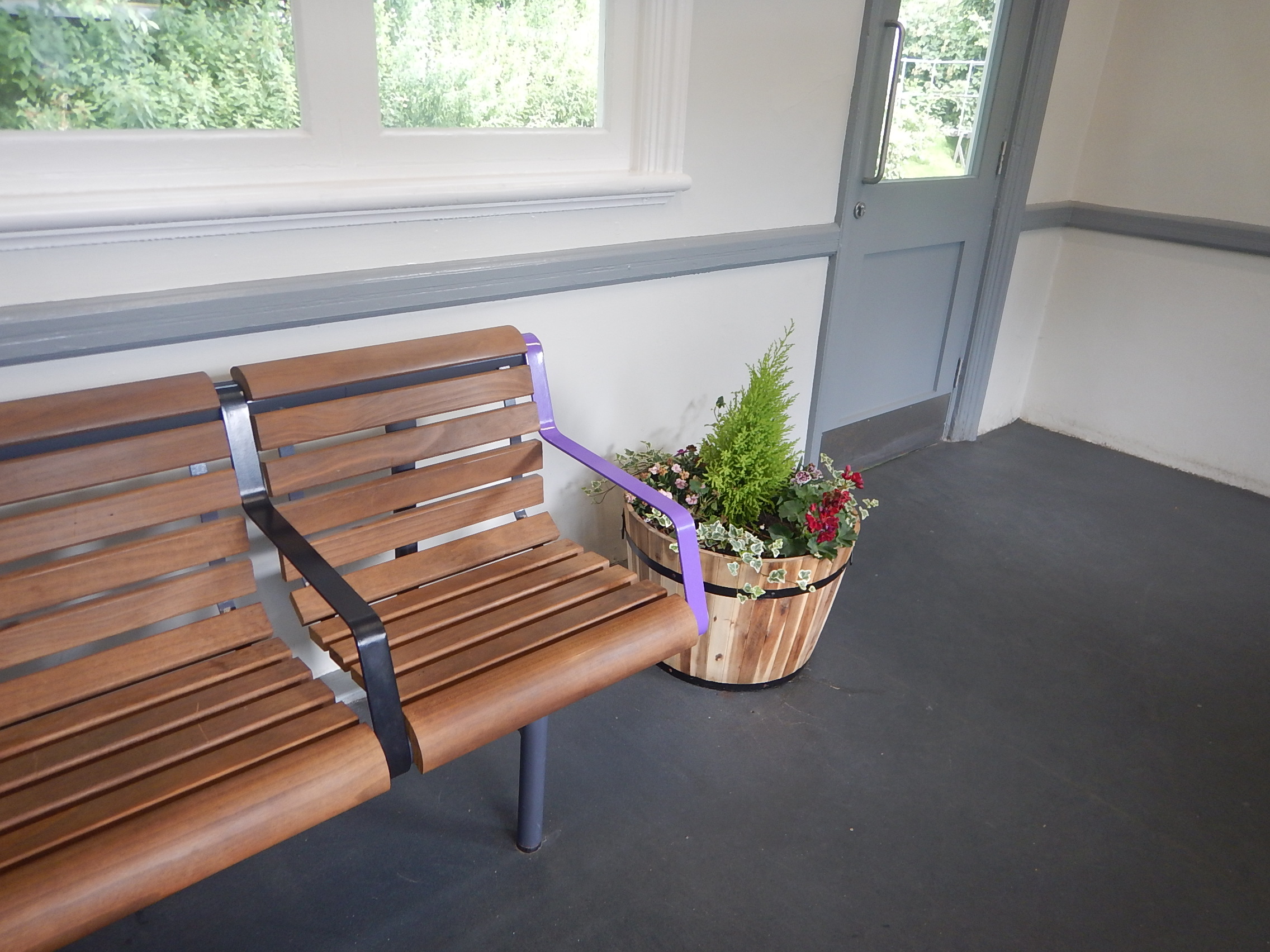
This picture was taken in the waiting room.
But then the station had a florist when I visited in 2014. Perhaps, it still does!
Ilford Station – 2nd July 2019
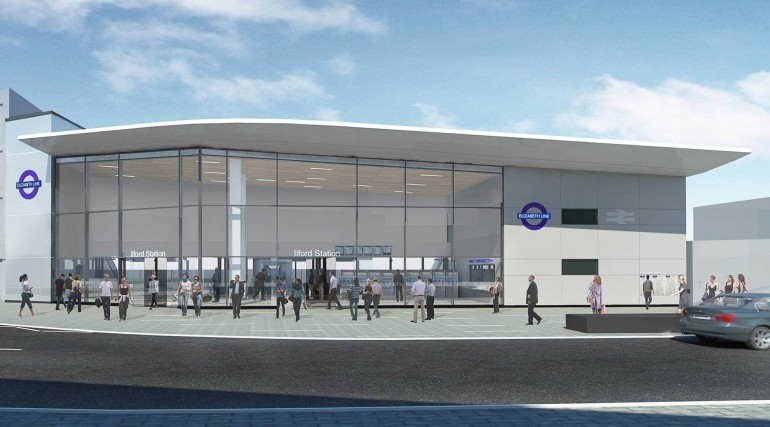
Work is underway at Ilford station to rebuild the main station entrance and create a modern glass-fronted station.
This page on the Crossrail web site, which is entitled Ilford Station, lists these features.
- A new spacious, modern and bright station building on Cranbrook Road
- A new waiting room and benches on platforms
- Improved customer information, lighting and wayfinding signage
- Newly painted walls and tiled floor and ceiling
- Two new ticket machines, four new ticket gates and a wide aisle gate
- A new waiting room and benches on platforms.
This image is also shown.
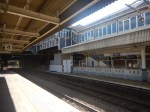
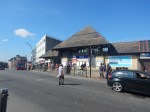
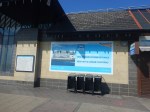
I took these pictures of the station today.


This Google Map shows the station.
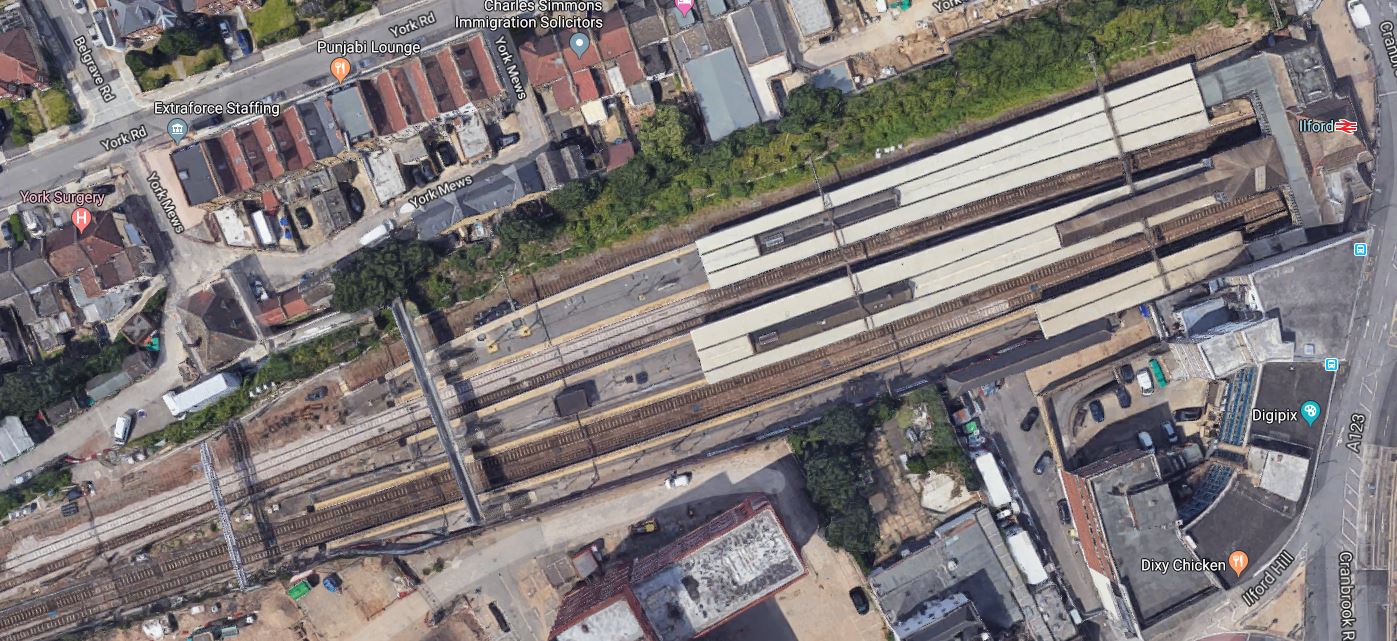
Note the disused Platform 5 in the pictures and at the Northern side of the station in the map, for which I can’t find any future plans.
- Perhaps it could be made into an operationally-useful bay platform? After all, it appears to be full length.
- Could it be filled in to create a wide platform with a waiting room and a coffee kiosk?
- Could it be used for bicycle parking?
I would wait until Crossrail is fully-open and see what is most needed.
Note too, the last picture with the footbridge over the station to the York Road entrance on the right. This picture shows the York Road entrance.

It was a shrewd move to build this second entrance, as it can function as the station entrance, whilst the main entrance on Cranbrook Road is rebuilt.
There would also appear to be plans to put a third entrance on the Southern side of the footbridge, which connects to Ilford Hill.
In my view, a station can never have too many entrances.
Conclusion
Will a new station attract more passengers to use Crossrail?
Major Upgrade Planned For Norwood Junction Railway Station
The title of this post is the same as that of this article on IanVisits.
Ian introduces his article like this.
A somewhat shabby, and yet quite busy station in South London could get a major makeover if plans by Network Rail are approved.
The proposals are part of the wider plan to clean up the mess of tracks around Croydon to boost the capacity of the lines through the area, but it is also a stand-alone project.
Ian also has this visualisation of the upgraded Norwood Junction station.
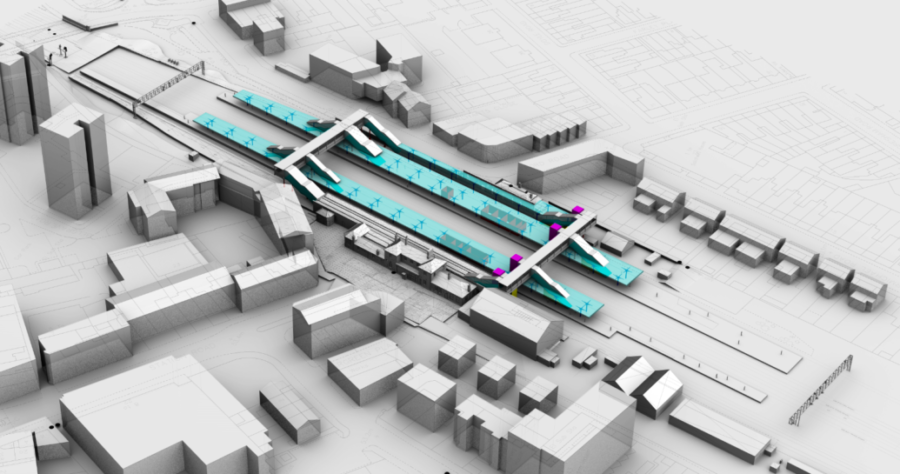
Note.
- London Bridge station is to the left with East Croydon station to the right.
- The Main station entrance is on the near side, with the Clifford Road station entrance on the far side.
- Platform 1 & 2 is the highlighted island platform on the near side.
- Platform 3 & 4 is the highlighted island platform on the far side.
It looks expensive with two step-free bridges.
Both bridges have four sets of steps to.
- The Main Station Entrance.
- The Northbound Platform 1 & 2,
- The Southbound Platform 3 & 4
- The Clifford Road Entrance.
In addition, the Southern bridge has four lifts to the two entrances and two platforms.
These pictures show the current state of the station.
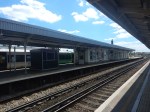
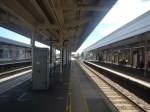
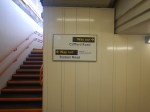
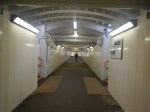
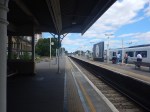
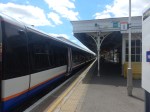
Currently, the station has three island platforms.
- They are connected by a well-lit, step-only subway.
- Some platforms are too short for twelve-car trains.
- The wooden buidings need a quality makeover. Where is Terry Stollery, when you need him?
- In the new layout, the central island platform will be removed, to allow a pair of fast lines through the station.
- One advantage of the subway is during the station upgrade, it can still be used to access the middle platforms, thus easing construction and causing less disruption for passengers.
After the upgrade, the layout will be as follows.
- Platforms 1 & 2, which are currently Platforms 2 & 3, would be for Northbound trains, with perhaps Platform 1 for stopping and Overground services and Platform 2 for limited-stop and Thameslink services.
- Platforms 3 & 4, which are currently Platforms 5 & 6, would be for Southbound trains, with perhaps Platform 3 for stopping and Overground services and Platform 4 for limited-stop and Thameslink services.
The subway will probably be closed.
Improved Train Services
For people like me, who live on the Overground, North of Norwood Junction station, hopefully it will solve the problem of getting to Gatwick Airport.
- It’ll just be a walk across the platform at Norwood Junction station, instead of a tram between West Croydon and East Croydon stations.
- In the future, would the cross-platform interchange help travellers between Crossrail and Gatwick and the South Coast?
- The Zeus of the Timetables could even make it better, by increasing the frequency of Thameslink trains between Norwood Junction and Gatwick Airport stations to match the four trains per hour (tph) between Dalston Junction and West Croydon stations.
Note that the day, I took the pictures Bedford and Highbury & Islington trains were in the current Platforms 2 & 3.
Up here in sometimes-forgotten Dalston, I’ll certainly give this new layout at Norwood Junction station, a high score, if the trains are changed to use it to advantage.
Norwood Junction Will Become A Major Interchange!
The walk-across interchange between Northbound services on platforms 1 & 2 and Southbound services on platforms 3 & 4, will mean that the station, will become the station where travellers will prefer change trains.
Suppose you were travelling from Luton to Epsom.
The Journey Planner on http://www.national.co.uk, suggests a double change at Farringdon and Carshalton, with a journey time of 1 hour and 51 minutes.
The upgraded Norwood Junction station, would allow the journey to be done in two legs.
- Luton and Norwood Junction – one hour and three minutes.
- Norwood Junction and Epsom – 29 minutes.
It could be quicker and it is a cross-platform change, where hopefully, there will be a climate-controlled waiting room and a coffee stall.
Current frequencies going North are as follows.
- Anerley – Six tph
- Balham – Two tph
- Battersea Park – Two tph
- Bedford – Two tph
- Brockley – Six tph
- City Thameslink – Two tph
- Clapham Junction – Two tph
- Crystal Palace – Two tph
- Dalston Junction – Four tph
- Farringdon – Two tph
- Flitwick – Two tph
- Forest Hill – six tph
- Gypsy Hill – Two tph
- Haggerston – Four tph
- Harlington – Two tph
- Harpenden – Two tph
- Highbury & Islington – Four tph
- Honor Oak Park – Six tph
- Leagrave – Two tph
- Hoxton – Four tph
- London Blackfriars – Two tph
- London Bridge (Non-stop) – Two tph
- London Bridge (Stopping) – Three tph
- London St. Pancras – Two tph
- London Victoria – Two tph
- Luton – Two tph
- Luton Airport Parkway – Two tph
- New Cross Gate – Six tph
- Penge West – Six tph
- Rotherhithe – Four tph
- Shadwell – Four tph
- Shoreditch High Street – Four tph
- St. Albans City – Two tph
- Streatham Hill – Two tph
- Surrey Quays – Four tph
- Sydenham – Six tph
- Wandsworth Common – Two tph
- Wapping – Four tph
- West Norwood – Two tph
- Whitechapel – Four tph
Current frequencies going South are as follows.
- Carshalton Beeches – Two tph
- Cheam – Two tph
- Coulsdon Town – Two tph
- Earlswood – Two tph
- East Croydon – Six tph
- Epsom – Two tph
- Ewell East – Two tph
- Gatwick Airport – Two tph
- Horley – Two tph
- Purley – Four tph
- Purley Oaks – Two tph
- Redhill – Two tph
- Reedham – Two tph
- Salfords – Two tph
- South Croydon – Two tph
- Sutton – Two tph
- Waddon – Two tph
- Wallington – Two tph
- West Croydon – Eight tph
In addition these services pass through.
- Bedford and Brighton – Two tph
- Cambridge and Brighton – Two tph
- London Brifge and Caterham & Tattenham Corner – Two tph
- London Bridge and Uckfield – Two tph
- Peterborough and Horsham – Two tph
It is a very comprehensive list of services and possible destinations.
I believe that if a few more trains stopped at Norwood Junction station, there could be at least two tph to every station connected to Norwood Junction station, with these higher frequencies to the more important stations.
- Bedford – Four tph
- Brighton – Four tph
- Canada Water – Four tph
- City Thameslink – Eight tph
- Clapham Junction – Four tph
- Crystal Palace – Four tph
- Dalston Junction – Four tph
- East Croydon – Eight tph
- Epsom – Four tph
- Farringdon – Eight tph
- Finsbury Park – Four tph
- Gatwick Airport – Four tph
- Highbury & Islington – Four tph
- London Blackfriars – Eight tph
- London Bridge (Non-stop) – Four tph
- London Bridge (Stopping) – Four tph
- London St. Pancras – Eight tph
- London Victoria – Four tph
- Luton – Four tph
- Luton Airport Parkway – Four tph
- St. Albans City – Four tph
- Stevenage – Four tph
- Sutton – Four tph
- Welwyn Garden City – Four tph
- West Croydon – Eight tph
- West Hampstead Thameslink – Four tph
- Whitechapel – Four tph
These frequencies could be attained, by stopping a few extra services at Norwood Junction station.
It is certainly comprehensive and getting to most important areas of Central London is direct or a single change.
- The step-free changes to Crossrail at Farringdon and Whitechapel will allow simple access to Canary Wharf, the City,, Heathrow, Paddington, the West End and all the towns and cities on the branches.
- The Bakerloo Line Extension will connect at New Cross Gate.
- The Central Line doesn’t connect
- The Circle, District, Hammersmith & City and Metropolitan lines connect at Farringdon, Kings Cross St. Pancras, London Blackfriars and Whitechapel.
- The Jubilee Line connects at Canada Water, London Bridge and West Hampstead Thameslink.
- The Northern Line connects at Kentish Town, Kings Cross St. Pancras and London Bridge
- The Piccadilly Line connects at Finsbury Park and Kings Cross St Pancras.
- The Victoria Line connects at Finsbury Park, Highbury & Islington and Kings Cross St. Pancras.
But there are some important places that are not well-connected or have difficult interchanges to Norwood Junction station.
- Euston station, High Speed Two and the West Coast Main Line.
- Cannon Street, Charing Cross and Waterloo mean a complicated interchange at London Bridge.
- The connections to Great Northern services, the North London Line and the Victoria Line at Highbury & Islington need serious improvement.
- South East London needs going to London Bridge and coming out again!
Radical thinking and serious improvement is needed.
Milton Keynes Central and East Croydon
This is a useful service for some..
It calls at Bletchley, Leighton Buzzard, Tring, Berkhamsted, Hemel Hempstead, Watford Junction, Harrow & Wealdstone, Wembley Central, Shepherd’s Bush, Kensington (Olympia), West Brompton, Imperial Wharf, Clapham Junction, Balham, Streatham Common, Norbury, Thornton Heath, Selhurst.
But, it has problems.
- It has a high level of cancellation.
- It has a totally inadequate hourly frequency.
- It has no connection to the North London Line at Willesden Junction.
- It blocks a platform at East Croydon, when it turns round.
In his report on Southern, Chris Gibb recommended that the service be the responsibility of the London Overground. I wrote about this in Gibb Report – East Croydon – Milton Keynes Route Should Be Transferred To London Overground.
To connect High Speed Two at Old Oak Common, there needs to be a four tph service between Croydon and Old Oak Common.
Transport for London are proposing a new Hythe Road station on the West London Line..
- It will be a seven hundred metre walk to the High Speed Two station. That is too long!
- There will be a bay platform to turn trains from Clapham Junction.
- Trains still won’t be able to call at Willesden Junction for the North London Line.
I think that building Hythe Road station is a bad idea.
This map shows the lines in the area.
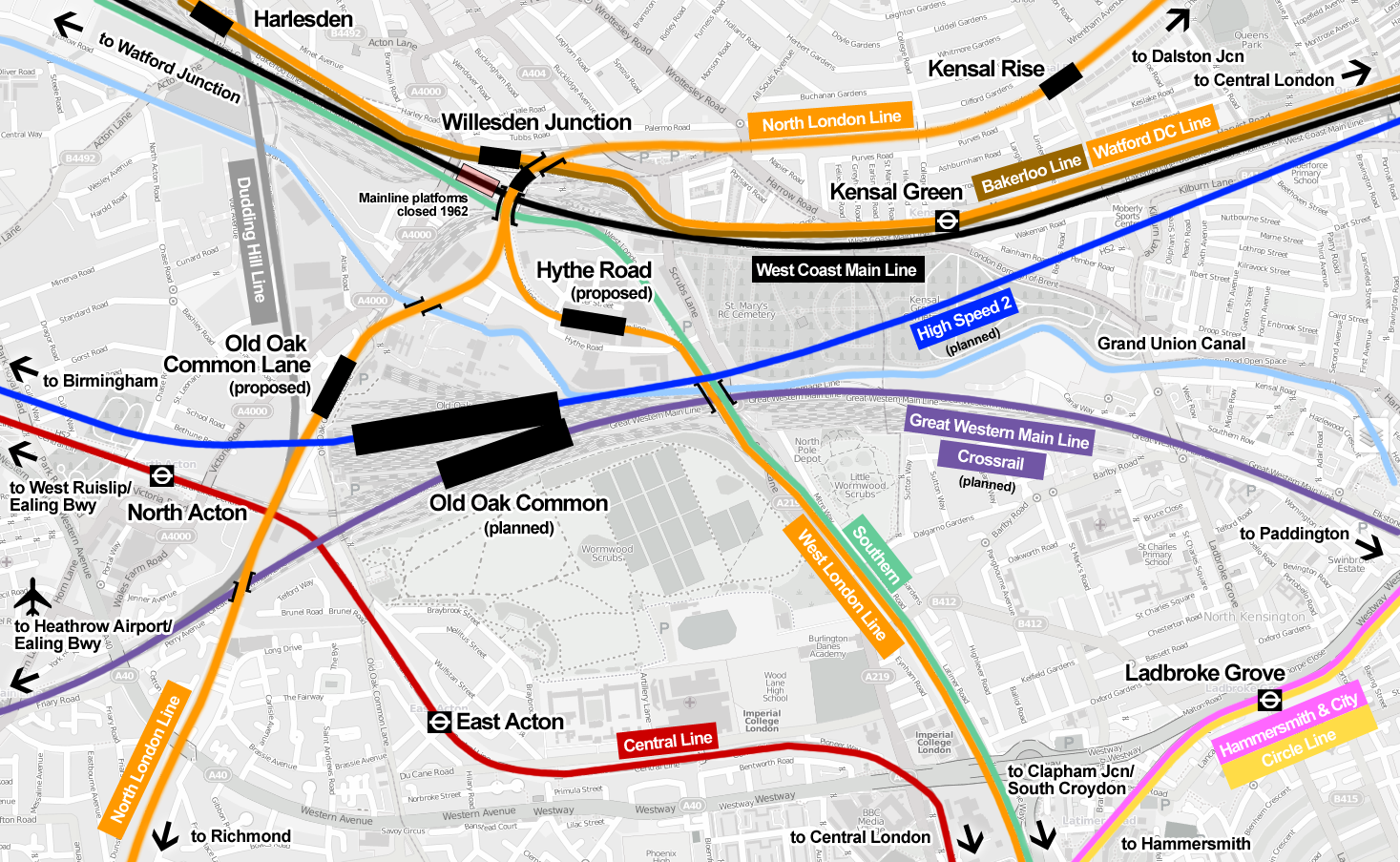
Surely, the West London Line should have been re-routed over the Eastern end of Old Oak Common station at right angles, which would have the following benefits.
- Quick and easy interchange with High Speed Two, the Great Western Main Line and Crossrail.
- The ability to add bay platforms to terminate services.
- Sharing of station services with the other stations.
Perhaps, though this practical passenger and operator-friendly idea would have ruined the architect’s vision.
Or is it, that the current track layout to connect to the West Coast Main Line only allows crap solutions.
Surely, the amount of money being spent on High Speed Two allows the best to be done everywhere.
London Overground principles say that services must be at least four tph.
The simplest way to do this would be to extend the current Stratford and Clapham Junction service via Willesden Junction to Croydon.
- It would call at Balham, Streatham Common, Norbury, Thornton Heath, Selhurst, if it followed the current route.
- I doubt that East Croydon station could handle four tph terminating at the station.
But why not use the route taken by London Victoria and West Croydon services via Wandsworth Common, Balham, Streatham Hill, West Norwood, Gipsy Hill, Crystal Palace, and Norwood Junction, to terminate at West Croydon?
- This route calls at Norwood Junction, with all its connectivity.
- If needed, there is space for a new platform at West Croydon.
I’ve no idea, what will happen, but the upgrade at Norwood Junction station should help.
Suppose you were going between Gatwick and High Speed Two.
- The standard route will be Thameslink and Crossrail with a change at Farringdon.
- A surface route with a change at Norwood Junction could be an alternative.
The second may be more pleasurable.
Upgrading The Station
In Winner Announced In The Network Rail Footbridge Design Ideas Competition, I wrote how the competition was won by this bridge.
So could two factory-built bridges like this be installed at Norwood Junction station?
- The design is adaptable to multiple spans over the tracks.
- Lifts could be left out for one bridge.
- Once the site is prepared, I believe the bridges can be quickly installed, probably from a train with a crane.
- The bridge is probably more affordable, than a traditional design.
During the installation period, the existing subway can be used for platform access.
Conclusion
Obviously, I am speculating that the new footbridge system will be used at Norwood Junction station.
But the new platform and track layout at the station, will certainly improve services on these routes.
- Between East Croydon and London Bridge stations.
- Between East Croydon and the London Overground and Crossrail.
- Between the Overground and Gatwick Airport station and the South Coast.
All of the interchanges will be step-free and some will be cross-plsatform.
Are
 The Anonymous Widower