Rival Site For £100m Powys Rail Testing Project
The title of this post, is the same as that of this article on Powys County Times.
This is the first two paragraphs.
Plans to build a £100 million rail testing centre on the edge of Powys could be derailed by a rival plan in England, it has emerged.
The major testing facility at the former Nant Helen open cast mining site on the border between Powys and Neath Port Talbot could face a rival application from German multinational Siemens, which has earmarked a site in Lincolnshire for a rival bid.
It seems, you wait many years for a rail test track and then two come along at the same time.
Electrifying Wales
I would not be surprised to learn that Wales wants to decarbonise their railways.
At present, Wales only has the following electrified railways either in operation or under construction.
- The South Wales Main Line between the Severn Tunnel and Cardiff.
- The South Wales Metro based on local railways around Cardiff and Newport is being created and will be run by electric trains.
There is no more electrification planned in the future.
Hitachi’s Specification For Battery Electric Trains
Recently, Hitachi have released this infographic for their Regional Battery Train.

This gives all the information about the train and a definitive range of 90 km or 56 miles.
The Welsh Rail Network
If you look at the network of services that are run by Transport for Wales Rail Services, they connect a series of hub stations.
Major hubs include the following stations.
- Cardiff Central – Electrified
- Chester
- Hereford
- Shrewsbury
- Swansea
Smaller hubs and termini include the following stations.
- Aberystwyth
- Birmingham International – Electrified
- Birmingham New Street – Electrified
- Blaenau Ffestiniog
- Carmarthen
- Crewe – Electrified
- Fishguard Harbour
- Hereford
- Holyhead
- Llandudno Junction
- Manchester Airport – Electrified
- Manchester Piccadilly – Electrified
- Machynlleth
- Milford Haven
- Newport – Electrified
- Pembroke Dock
Running Welsh Routes With Electric Trains
These routes make up the Welsh rail network.
Chester And Crewe
Consider.
- The route between Chester and Crewe is without electrification.
- Crewe and Chester are 21 miles apart.
I believe that if a battery-electric train, with a range of 56 miles, can leave Chester and Crewe with full batteries, that it will be possible to run between Chester and Crewe stations.
Chester And Holyhead via Llandudno Junction
Consider.
- All services between Llandudno Junction and England call at Chester.
- All services running to and from Holyhead call at Llandudno Junction.
- The route between Chester and Holyhead is without electrification.
- Chester and Llandudno Junction are 54 miles apart.
- Llandudno Junction and Holyhead are 40 miles apart.
I believe that if a battery-electric train with a range of 56 miles can leave Chester, Llandudno Junction and Holyhead with full batteries, that it will be possible to run between Chester and Holyhead stations.
Chester And Liverpool Lime Street
Consider.
- The route between Runcorn and Liverpool Lime Street is electrified.
- The route between Chester and Runcorn is without electrification.
- Chester and Runcorn are 14 miles apart.
I believe that if a battery-electric train, with a range of 56 miles, can leave Chester and Runcorn with full batteries, that it will be possible to run between Chester and Liverpool Lime Street stations.
Chester And Manchester Airport
Consider.
- The route between Warrington Bank Quay and Manchester Airport is electrified.
- The route between Chester and Warrington Bank Quay is without electrification.
- Chester and Warrington Bank Quay are 18 miles apart.
I believe that if a battery-electric train, with a range of 56 miles, can leave Chester and Warrington Bank Quay with full batteries, that it will be possible to run between Chester and Manchester Airport stations.
Chester And Shrewsbury
Consider.
- The route between Chester and Shrewsbury is without electrification.
- Chester and Shrewsbury are 42 miles apart.
I believe that if a battery-electric train with a range of 56 miles, can leave Shrewsbury and Chester with full batteries, that it will be possible to run between Chester and Shrewsbury stations.
Llandudno And Blaenau Ffestiniog
Consider.
- The route between Llandudno and Blaenau Ffestiniog is without electrification.
- Llandudno and Blaenau Ffestiniog are 31 miles apart.
I believe that if a battery-electric train with a range of 56 miles, can leave Llandudno and Blaenau Ffestiniog with full batteries, that it will be possible to run between Llandudno and Blaenau Ffestiniog stations.
Machynlleth And Aberystwyth
Consider.
- The route between Machynlleth and Aberystwyth is without electrification.
- Machynlleth and Aberystwyth are 21 miles apart.
I believe that if a battery-electric train with a range of 56 miles, can leave Machynlleth and Aberystwyth with full batteries, that it will be possible to run between Machynlleth and Aberystwyth stations.
Machynlleth And Pwllheli
Consider.
- The route between Machynlleth and Pwllheli is without electrification.
- Machynlleth and Pwllheli are 58 miles apart.
I believe that if a battery-electric train with a range of upwards of 58 miles, can leave Machynlleth and Pwllheli with full batteries, that it will be possible to run between Machynlleth and Pwllheli stations.
Machynlleth And Shrewsbury
Consider.
- The route between Machynlleth and Shrewsbury is without electrification.
- Machynlleth and Shrewsbury are 61 miles apart.
I believe that if a battery-electric train with a range of upwards of 61 miles, can leave Machynlleth and Shrewsbury with full batteries, that it will be possible to run between Machynlleth and Shrewsbury stations.
Shrewsbury and Birmingham International
Consider.
- The route between Birmingham International and Wolverhampton is electrified.
- The route between Shrewsbury and Wolverhampton is without electrification.
- Shrewsbury and Wolverhampton are 30 miles apart.
I believe that if a battery-electric train, with a range of 56 miles, can leave Shrewsbury and Wolverhampton with full batteries, that it will be possible to run between Shrewsbury and Birmingham International stations.
Shrewsbury And Cardiff Central via Hereford
Consider.
- All services between Cardiff Central and Shrewsbury call at Hereford.
- The route between Cardiff Central and Newport is electrified.
- The route between Newport and Shrewsbury is without electrification.
- Shrewsbury and Hereford are 51 miles apart.
- Hereford and Newport are 44 miles apart.
I believe that if a battery-electric train, with a range of 56 miles, can leave Shrewsbury, Hereford and Newport with full batteries, that it will be possible to run between Shrewsbury and Cardiff Central stations.
Shrewsbury And Crewe
- The route between Shrewsbury and Crewe is without electrification.
- Shrewsbury and Crewe are 33 miles apart.
I believe that if a battery-electric train with a range of upwards of 61 miles, can leave Shrewsbury and Crewe with full batteries, that it will be possible to run between Shrewsbury and Crewe stations.
Shrewsbury and Swansea
Consider.
- The Heart of Wales Line between Shrewsbury and Swansea is without electrification.
- Shrewsbury and Swansea are 122 miles apart.
- Trains cross at Llandrindod and wait for up to eleven minutes, so there could be time for a charge.
- Shrewsbury and Llandrindod are 52 miles apart.
- Swansea and Llandrindod are 70 miles apart.
It appears that another charging station between Swansea and Llandrindod is needed
I believe that if a battery-electric train, with a range of 56 miles, can leave Shrewsbury, Swansea and the other charging station, with full batteries, that it will be possible to run between Shrewsbury and Swansea stations.
Swansea And Cardiff Central
Consider.
- The route between Swansea and Cardiff Central is without electrification.
- Swansea and Cardiff Central are 46 miles apart.
I believe that if a battery-electric train, with a range of 56 miles, can leave Swansea and Cardiff Central with full batteries, that it will be possible to run between Swansea and Cardiff Central stations.
Swansea And Carmarthen
Consider.
- The route between Swansea and Carmarthen is without electrification.
- Swansea and Carmarthen are 31 miles apart.
I believe that if a battery-electric train, with a range of 56 miles, can leave Swansea and Carmarthen with full batteries, that it will be possible to run between Swansea and Carmarthen stations.
Swansea And Fishguard Harbour
Consider.
- The route between Swansea and Fishguard Harbour is without electrification.
- Swansea and Fishguard Harbour are 73 miles apart.
- Tramins could top up the batteries during the reverse at Carmathen.
- Swansea and Carmarthen are 31 miles apart.
- Carmarthen and Fishguard Harbour are 42 miles apart.
I believe that if a battery-electric train, with a range of 56 miles, can leave Swansea, Carmathen and Fishguard Harbour with full batteries, that it will be possible to run between Swansea and Fishguard Harbour stations.
Swansea And Milford Haven
Consider.
- The route between Swansea and Milford Haven is without electrification.
- Swansea and Milford Haven are 72 miles apart.
- Tramins could top up the batteries during the reverse at Carmathen.
- Swansea and Carmarthen are 31 miles apart.
- Carmarthen and Milford Haven are 41 miles apart.
I believe that if a battery-electric train, with a range of 56 miles, can leave Swansea, Carmathen and Milford Haven with full batteries, that it will be possible to run between Swansea and Milford Haven stations.
Swansea And Pembroke Dock
Consider.
- The route between Swansea and Pembroke Dock is without electrification.
- Swansea and Pembroke Dock are 73 miles apart.
- Tramins could top up the batteries during the reverse at Carmathen.
- Swansea and Carmarthen are 31 miles apart.
- Carmarthen and Pembroke Dock are 42 miles apart.
I believe that if a battery-electric train, with a range of 56 miles, can leave Swansea, Carmathen and Pembroke Dock with full batteries, that it will be possible to run between Swansea and Pembroke Dock stations.
Other Routes
I have not covered these routes.
- Borderlands Line
- Cardiff Valley Lines, that will be part of the South Wales Metro
- Routes on the electrified South Wales Main Line, that are to the East of Cardiff.
The first will run between Chester and the electrified Merseyrail system and the others will be electrified, except for short stretches.
Stations Where Trains Would Be Charged
These stations will need charging facilities.
Aberystwyth
Aberystwyth station only has a single terminal platform.
I’ve not been to the station, but looking at pictures on the Internet, I suspect that fitting a charging facility into the station, wouldn’t be the most difficult of engineering problems.
Birmingham International
Birmingham International station is fully-electrified and ready for battery-electric trains.
Blaenau Fflestiniog
Blaenau Ffestiniog station has a single terminal platform.
My comments would be similar to what, I said for Aberystwyth station. I would hope a standard solution can be developed.
Cardiff
Cardiff station is fully-electrified and ready for battery-electric trains.
Chester
Chester station has two through platforms and one bay platform, that are used by Trains for Wales.
- The through platforms are bi-directional.
- The bay platform is used by services from Liverpool Lime Street and Manchester Airport and Piccadilly.
- The station is a terminus for Merseyrail’s electric trains, which use 750 VDC third-rail electrification.
- Some through services stop for up to seven minutes in the station.
This Google Map shows the station.
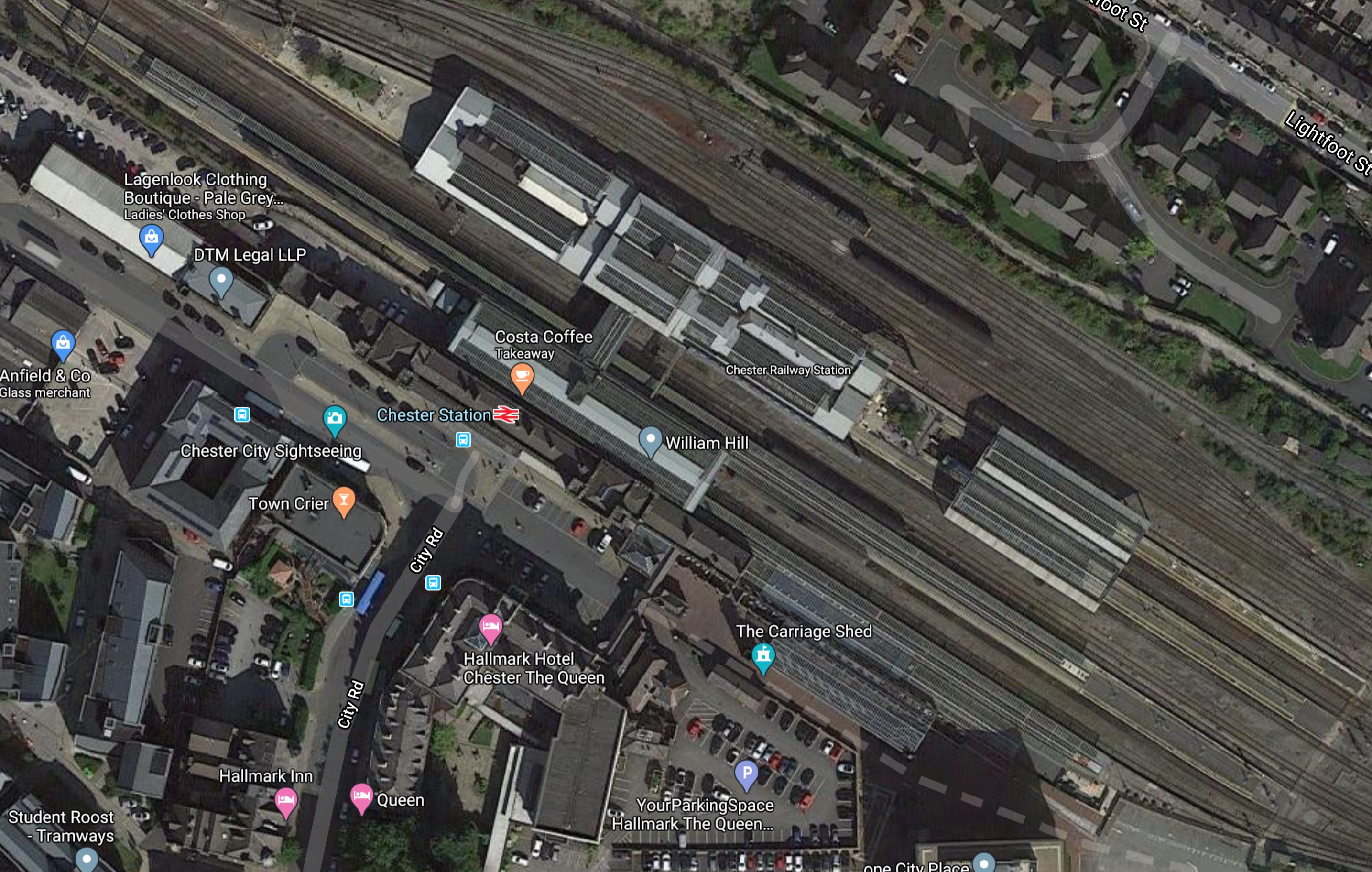
There is plenty of space.
The simplest way to charge trains at Chester would be to electrify the two through platforms 3 and 4 and the bay platform 1.
I would use 750 VDC third-rail, rather than 25 KVAC overhead electrification.
- I’m an engineer, who deals in scientifically-correct solutions, not politically-correct ones, devised by jobsworths.
- Maintenance staff at the station will be familiar with the technology.
- Station staff and passengers will know about the dangers of third-rail electrification.
- Trains connect and disconnect automatically to third-rail electrification.
- Trains don’t have to stop to connect and disconnect, so passing trains can be topped-up.
- Hitachi with the Class 395 train and Alstom with the Class 373 train, have shown even trains capable of 140 mph can be fitted with third-rail shoes to work safely at slower speeds on lines electrified using third-rail.
- Modern control systems can control the electricity to the third-rail, so it is only switched on, when the train completes the circuit.
I have a vague recollection, that there is an avoiding line at Chester station, so trains can go straight through. Perhaps that should be electrified too.
Carmarthen
Carmarthen station is a two platform station, with a rather unusual layout, that I wrote about in Changing Trains At Carmarthen Station.
I took these pictures when I passed through in 2016.



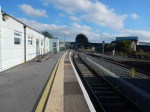
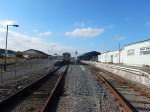
Note the unusual step-free crossing of the tracks.
This Google Map shows the layout at the station.
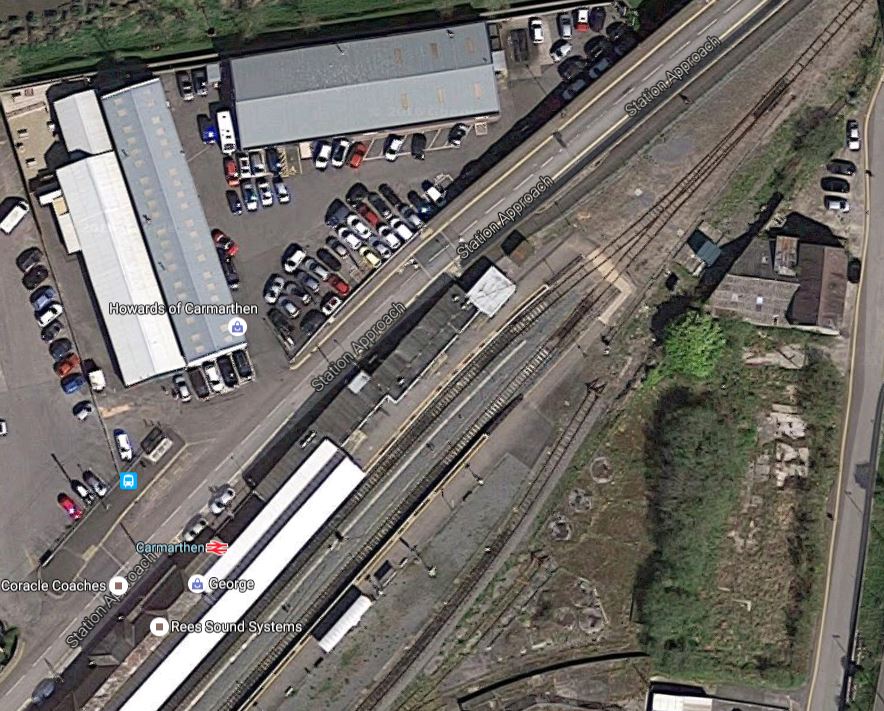
I believe it is another station, where third-rail electrification could be the solution.
- Most trains seem to reverse at the station, which gives time for a full charge.
- Others terminate here.
but would they still allow passengers to cross the line as they do now, whilst trains are being charged?
Crewe
Crewe station is fully-electrified.
- Trains for Wales seem to use Platform 6 for through trains and the bay Platform 9 for terminating trains.
- Both platforms appear to be electrified.
- Terminating trains appear to wait at least 9-11 minutes before leaving.
It does appear that Crewe station is ready for battery-electric trains.
Fishguard Harbour
Fishguard Harbour station only has a single terminal platform.
My comments would be similar to what, I said for Aberystwyth station. I would hope a standard solution can be developed.
Hereford
Hereford station has four through platforms.
This Google Map shows the station.
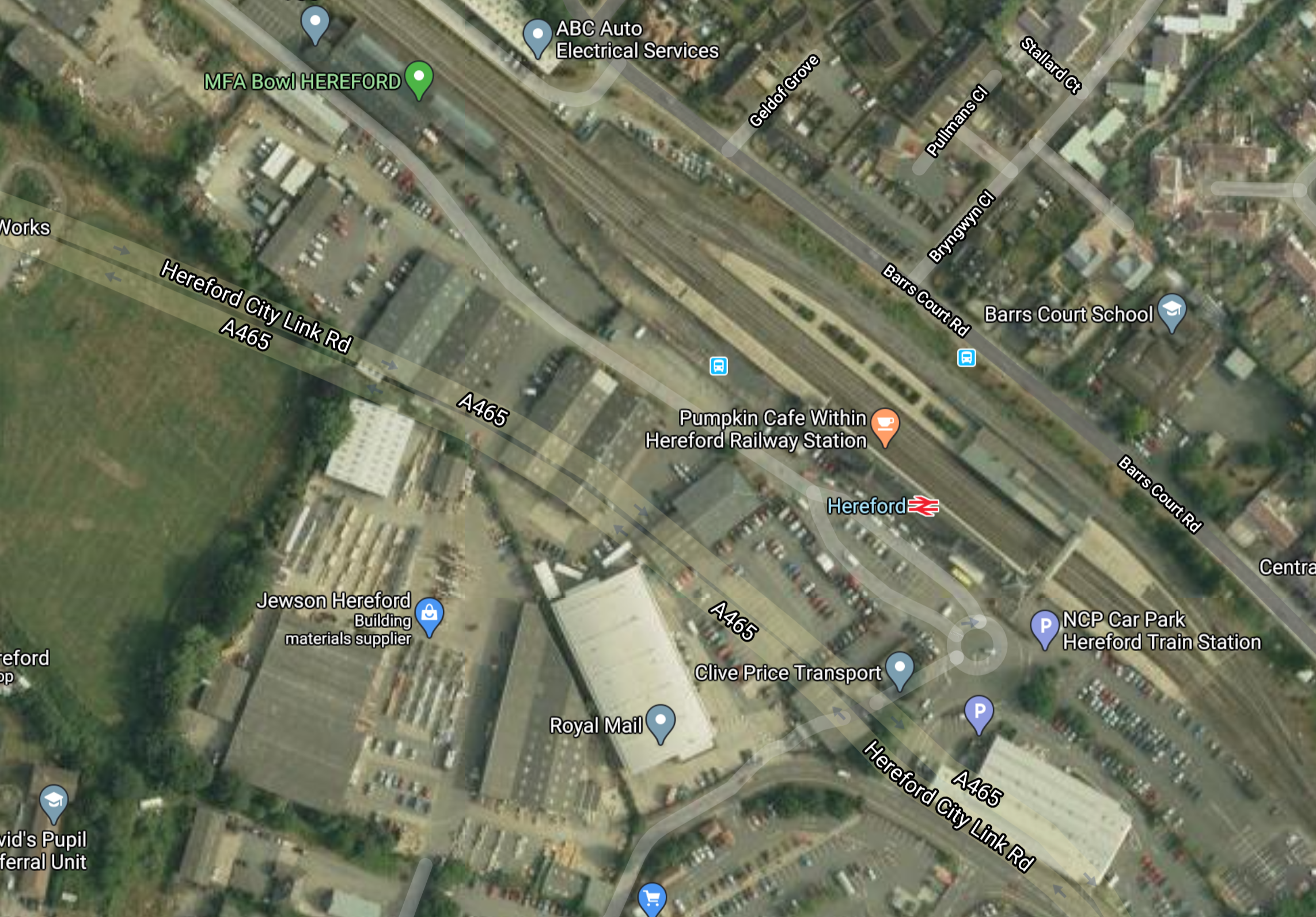
There is plenty of space.
As with Chester, I would electrify this station with 750 VDC third-rail equipment.
But the electrification wouldn’t be just for train services in Wales.
- West Midlands Trains, run an hourly service to Birmingham New Street and there is only a forty-one mile gap in the electrification between Hereford and Bromsgrove.
- Great Western Railway’s service to London, has a massive ninety-six mile run to the electrification at Didcot Junction, which could be bridged by installing charging facilities at Worcestershire Parkway and/or Honeybourne stations.
Both services have generous turnround times at Hereford, so would be able to leave fully-charged.
Distances from Hereford station are as follows.
- Abergavenny – 24 miles
- Bromsgrove – 41 miles
- Great Malvern – 21 miles
- Honeybourne – 48 miles
- Ludlow – 13 miles
- Newport – 44 miles
- Shrewsbury – 51 miles
- Worcester Parkway – 33 miles
Hereford station could be a serious battery-electric train hub.
Holyhead
Holyhead station has three terminals platforms.
My comments would be similar to what, I said for Aberystwyth station. I would hope a standard solution can be developed.
Liverpool Lime Street
Liverpool Lime Street station is fully-electrified and ready for battery-electric trains.
Llandrindod
Llandrindod station has two through platforms.
I took these pictures at the station as I passed through in 2016.



The Heart of Wales Line is certainly a route, that would benefit from larger trains. Zero-carbon battery-electric trains would surely fit well in the area.
This Google Map shows the station.
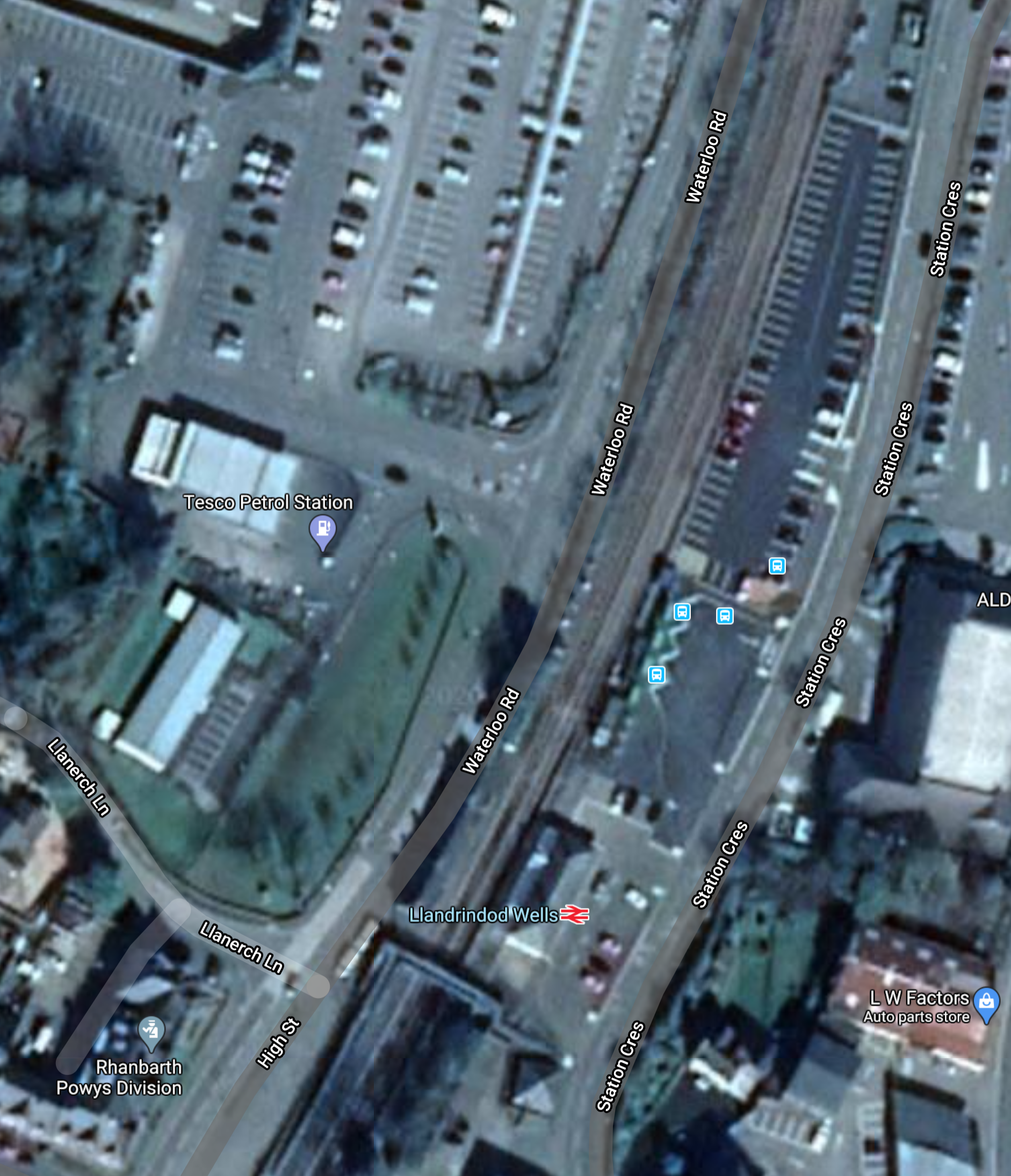
It would appear that, it is another station, that could be fitted with third-rail electrification to charge the trains.
Distances from Llandrindod station are as follows.
- Shrewsbury – 52 miles
- Llandovery – 27 miles
- Llanelli – 59 miles
- Swansea – 70 miles
It would appear that a second station with charging facilities or bigger batteries are needed.
Llandudno Junction
Llandudno Junction station has four platforms.
This Google Map shows the station.
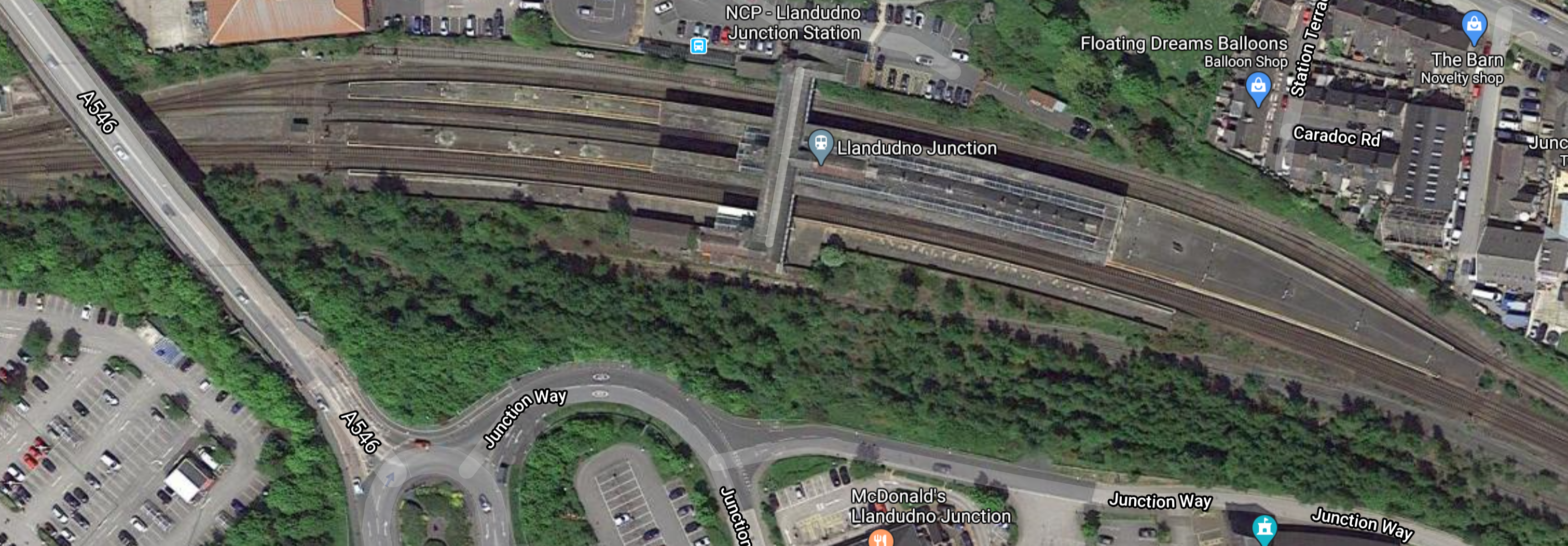
There is plenty of space.
As at Chester, the simple solution would be to electrify the platforms used by trains, that will need charging.
Butb there may also be a wider plan.
Llandudno Junction station is at the Western end of a string of five closely-spaced stations with Prestatyn station in the East.
- Llandudno Junction and Prestatyn are eight miles apart.
- Trains take twenty-three minutes to pass through this section.
- Some trains do a detour to Llandudno station before continuing.
- For part of the route, the railway lies between the dual-carriageway A55 road and the sea.
So why not electrify this section of railway between Llandudno Junction and Prestatyn stations?
- Either 750 VDC this-rail or 25 KVAC overhead electrification could be used.
- Prestatyn and Chester are 46 miles apart.
- Llandudno Junction and Holyhead are 40 miles apart.
If third-rail electrification were to be used, it might be advantageous to electrify to Llandudno station.
- It would be less intrusive.
- It would be quieter in an urban area.
- It would give the trains to Blaenau Ffestiniog trains a good charge.
But above all third-rail electrification might cost a bit less and cause less disruption to install.
Machynlleth
Machynlleth station is where the Aberystwyth and Pwllheli services split and join.
This Google Map shows the station.
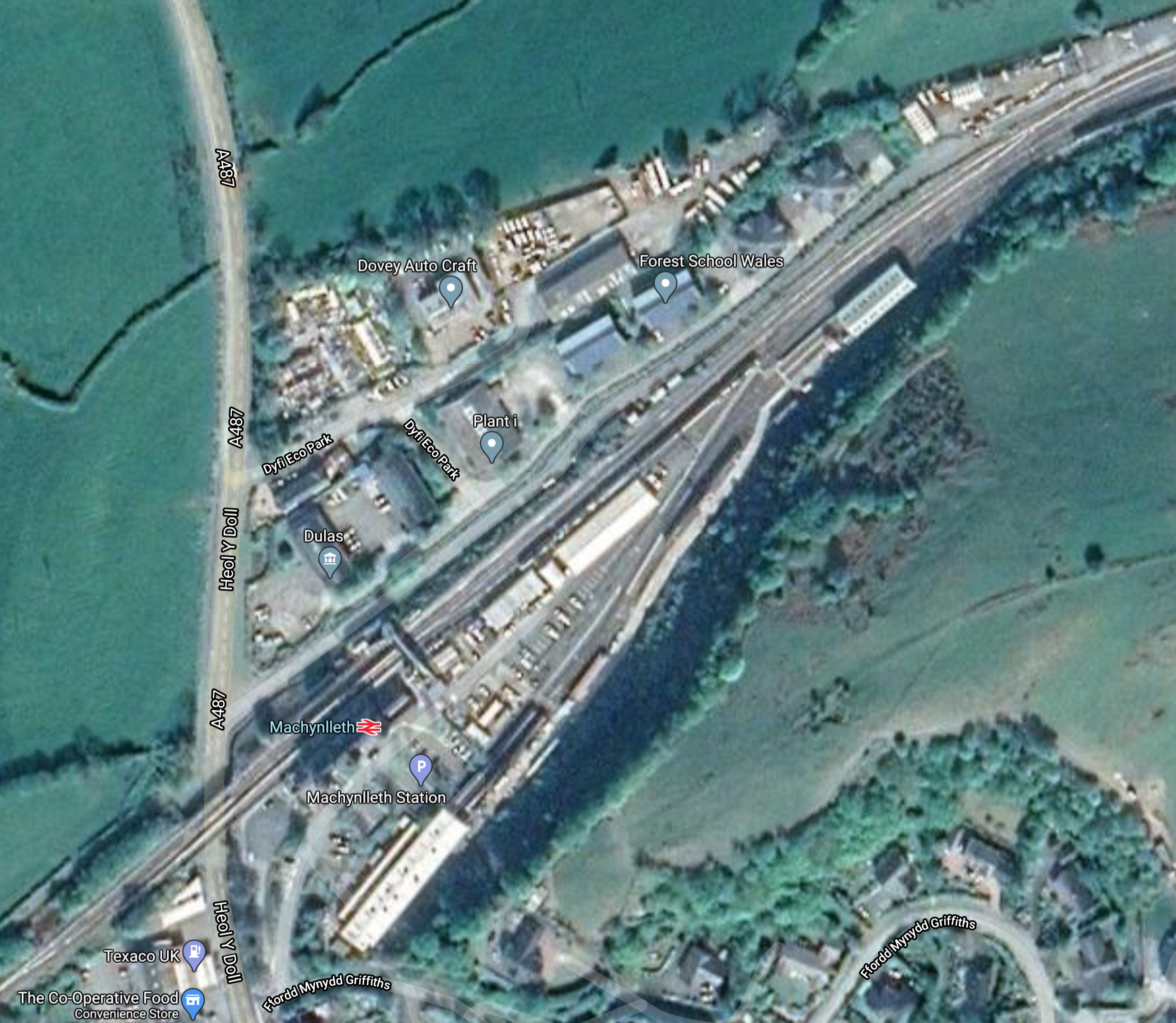
Consider.
- There is a train depot by the station.
- Will there be a good power supply at the station to charge the trains?
- Machnylleth and Pwllhelli are 58 miles apart.
- Machynlleth and Shrewsbury are 61 miles apart.
I think that Machynlleth might be pushing things too far, without extra stations with charging facilities.
One solution might be to develop the Riding Sunbeams concept and electrify the route between Newtown and Dovey Junction via Machynlleth, using third-rail technology powered-by solar or wind power.
Another solution would be batteries with a larger capacity.
Manchester Airport
Manchester Airport station is fully-electrified and ready for battery-electric trains.
Manchester Piccadilly
Manchester Piccadilly station is fully-electrified and ready for battery-electric trains.
Milford Haven
Milford Haven station only has a single terminal platform.
My comments would be similar to what, I said for Aberystwyth station. I would hope a standard solution can be developed.
Pembroke Dock
Pembroke Dock station only has a single terminal platform.
My comments would be similar to what, I said for Aberystwyth station. I would hope a standard solution can be developed.
Pwllheli
Pwhelli station is a only has a single terminal platform.
This Google Map shows the location of the station.
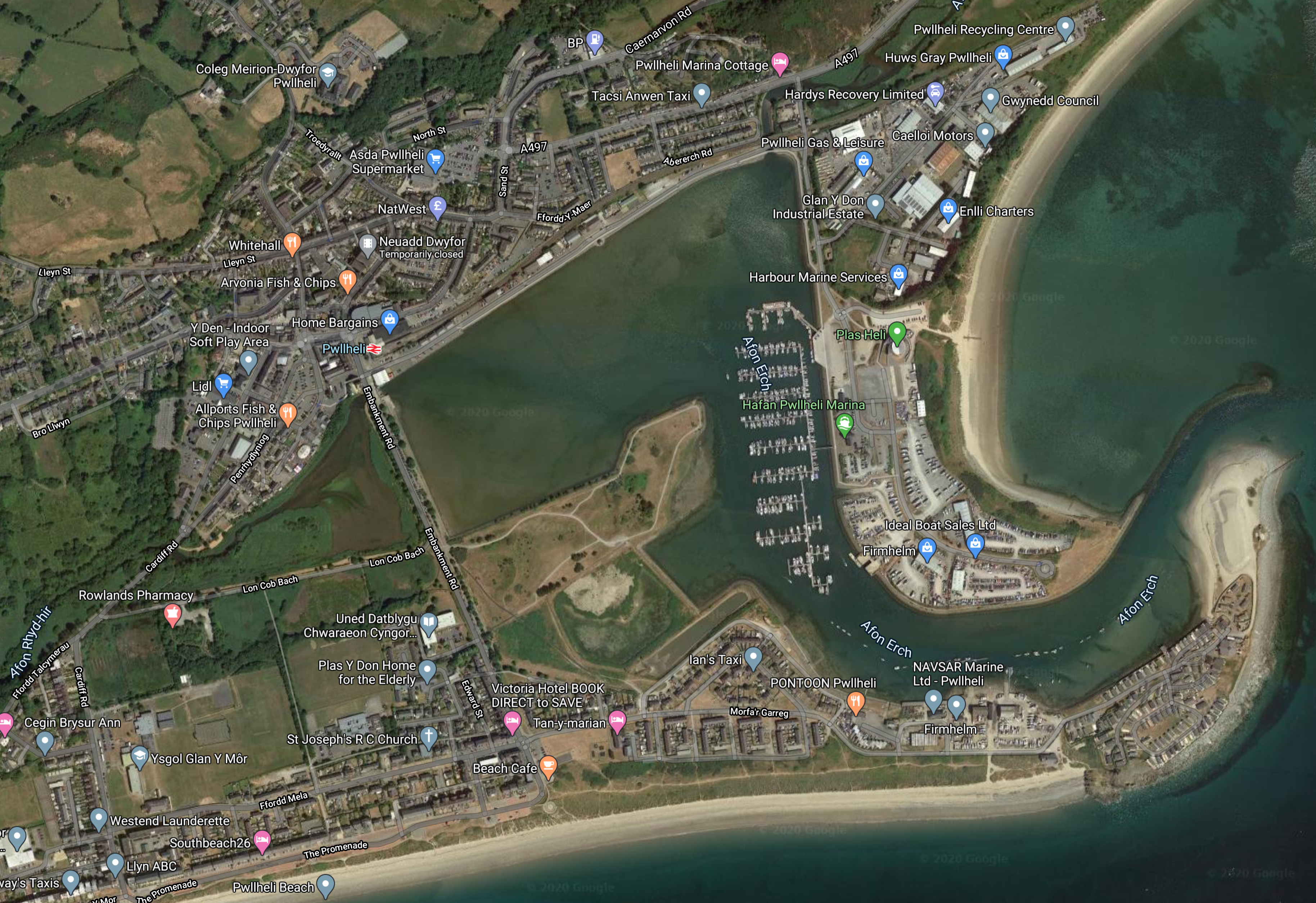
The stsation is at the North West corner of the bay.
My first reaction, when I saw this was that I have to go.
So I took a closer look at the station instead.

I suspect that fitting a charging facility into the station, wouldn’t be the most difficult of engineering problems. Although, there might be a problem getting a good enough connection to the National Grid.
Shewsbury
Shrewsbury station is a five-platform station.
This Google Map shows the station’s unusual location over the River Severn.
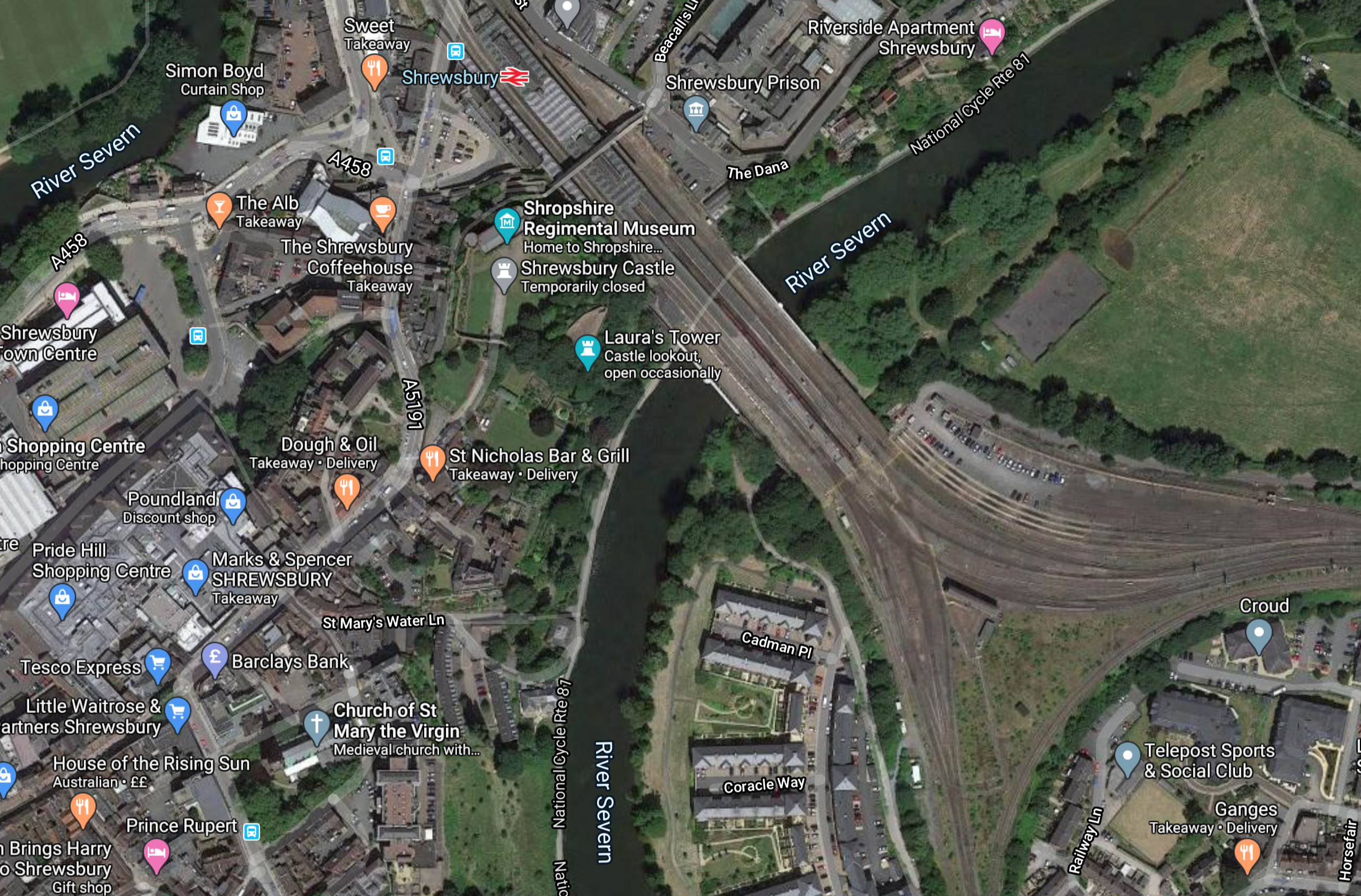
It must be one of few stations in the world, where trains enter the station from three different directions.
- From Crewe and Chester to the North.
- From Hereford and Wales to the South.
- From Birmingham and Wolverhampton in the East.
Adding electrification to all or selected platforms should allow trains to recharge and be on their way.
- Under current timetables, dwell times in Shrewsbury are up to eight minutes.
- I would suspect the train times could be adjusted, so that trains left the station with full batteries.
With battery-electric services to Aberystwyth, Birmingham International, Birmingham New Street, Cardiff Central, Chester, Crewe, Hereford, Holyhead, London Euston, Manchester, Pwllheli and Swansea, it will be a very important station.
Swansea
Swansea station has four terminal platforms.
A charging facility could be added to an appropriate number of platforms.
Or perhaps, the last few miles of track into the station should be electrified, so trains could charge on the way in, charge in the station and charge on the way out.
Third Rail Electrification
I have suggested in this post, that 750 VDC third-rail electrification could be used in several places.
I will repeat what I said earlier, when discussing Chester station.
- I’m an engineer, who deals in scientifically-correct solutions, not politically-correct ones, devised by jobsworths.
- Maintenance staff at the station will be familiar with the technology.
- Station staff and passengers will know about the dangers of third-rail electrification.
- Trains connect and disconnect automatically to third-rail electrification.
- Trains don’t have to stop to connect and disconnect, so passing trains can be topped-up.
- Hitachi with the Class 395 train and Alstom with the Class 373 train, have shown even trains capable of 140 mph can be fitted with third-rail shoes to work safely at slower speeds on lines electrified using third-rail.
- Modern control systems can control the electricity to the third-rail, so it is only switched on, when the train completes the circuit.
Third-rail electrification should be seriously considered.
A Standardised Terminal Solution
In this post, I mentioned that the following stations could be powered by a scandalised solution, as they are all one platform, terminal stations.
- Aberystwyth
- Blaenau Ffestiniog
- Fishguard Harbour
- Holyhead
- Milford Haven
- Pembroke Dock
- Pwllheli
The system might also be applicable at Carmarthen and Swansea.
My view is that Vivarail’s Fast Track charging based on third-rail technology would be ideal. I discussed this technology in Vivarail Unveils Fast Charging System For Class 230 Battery Trains.
Conclusion
With a bit of ingenuity, all train services run by Transport for Wales, can be run with battery-electric trains.
Rugby Is A Team Game And So Is Formula One!
On Saturday morning, the Japanese rugby team, showed how teamwork is important, as they hardly seemed to make a mistake.
The Welsh and the Australians, both played their parts in an excellent match.
And then we had the Russian Grand Prix at lunchtime!
Mercedes got the teamwork like clockwork and they won.
As to Ferrari, the two drivers felt out with each other and Vettel didn’t obey team orders.
I have watched Formula One for many years, and every so often Ferrari seem to lose the plot!
Transport for Wales Is Invading England
There is an article in the July 2019 Edition of Modern Railways, which is entitled TfW Targets Swansea To Bristol Services.
This is the first paragraph.
Transport for Wales Rail Services is aiming to start an open access service between Swansea and Bristol Temple Meads, commencing in December 2020.
These are characteristics of the proposed service.
- Hourly service
- Calls at Neath, Port Talbot Parkway, Bridgend, Cardiff Central, Newport, Severn Tunnel Junction and Filton Abbey Wood stations.
- Sixteen services per day will run Monday to Saturday in both directions, with twelve services on Sundays.
- Trains will be Class 170 or Class 175 diesel trains.
Looking at current times of sections of the route, I suspect that services could take a few minutes under two hours and would need four trains.
Reasons given for planning the service include.
- Long-term political pressure.
- Welsh ministers abandoning plans for the £1.6 billion M4 Relief Road around Newport.
- Cross-Severn road traffic has increased after abolition of tolls.
- Main roads on either side of the Severn are congested.
- Increased house sales in South Wales to people who work in the Bristol area.
Incidentally, before I read the article, if you asked me, I’d have thought there would be a direct service.
My only thought about the service, is that as there will be electrification between Bristol and Cardiff, why not run a proper fast bi-mode train like a Hitachi Class 800 train or a Stadler Class 755 train. The latter of which Transport for Wales have on order, for delivery in 2023.
The Class 755 train or its Welsh cousin, could be an interesting option.
- The distance without electrification between Cardiff and Swansea is 46 miles.
- Transport for Wales tri-mode version of the Class 755 train could have three batteries and a diesel engine in the four slots in the powrpack car.
Could it have the capability of jumping the gap.
Birmingham Services
The article also says that, Transport for Wales are also planning to extend their services that terminate at Birmingham to Coventry.
- Holyhead and Birmingham New Street takes three hours.
- Aberystwyth and Birmingham New Street takes three hours
- Pwllheli and Birmingham New Street takes five hours
As Birmingham and Coventry takes twenty minutes or perhaps a convenient hour to go to Coventry and return with a relaxed turnround, does the extension make these three long services simpler to operate?
Extra positioning services from Crewe to Coventry in the morning and return in the evening are also proposed.
These would also suggest that improving the ease of operation of these services is the reason for the extension to Coventry.
Liverpool Services
The article also says that these services to Liverpool will be added in 2022.
- An hourly service to Llandudno.
- A two-hourly service to Cardiff.
It isn’t said, if one of these services is an extension to the recently launched Liverpool and Chester service.
Conclusion
The Welsh are getting ambitious.
Speculation Increases Over Use Of HSTs
The title of this post, is the same as that of this article on Rail Magazine
This is the second paragraph.
GWR and ScotRail are both introducing modified four and five-coach HSTs on various duties, with GWR’s operating regional services and ScotRail’s Inter7City sets to be used on its core inter-city routes.
I’ve yet to take a ride in either of the GWR oe Scotrail version of the trains and I shall be looking forward to riding both, later in the year.
I’ve only seem one close-up once at Dundee.
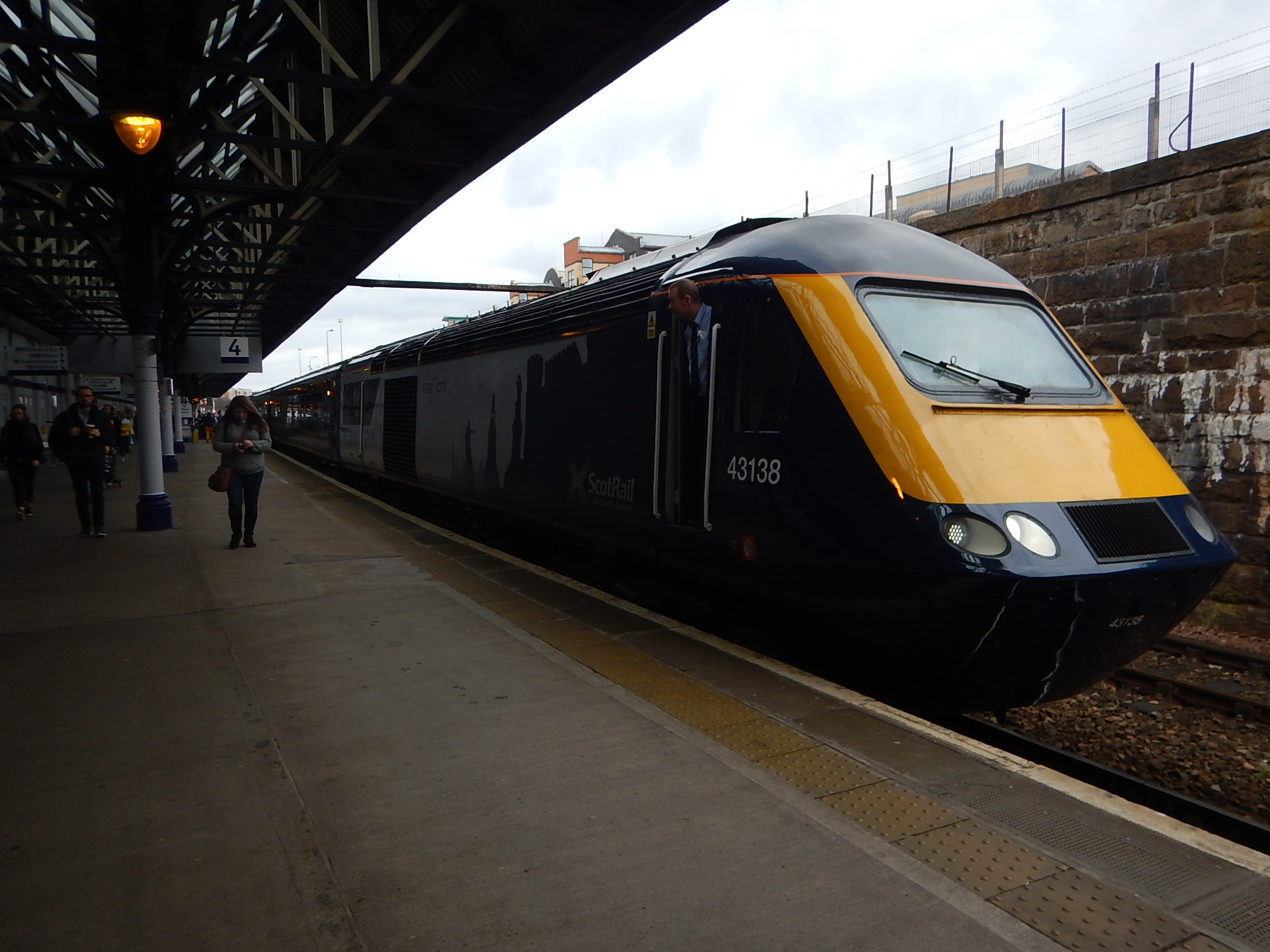
But they seem to be very slow in coming in to service.
Abellio Scotrail’s Proposed Fleet
Abellio Scotrail seem to have 54 Class 43 locomotives and 121 Mark 3 coaches, which according to Wikipedia, will be formed into 26 sets: 17 five-car and 9 four-car trains.
Routes include connecting Scotland’s seven cities.
GWR’s Proposed Fleet
Great Western Railway seem to have retained 24 Class 43 locomotives and 48 Mark 3 coaches, which will be formed into 11 four-car trains.
Routes include between Cardiff and Penzance.
Will These Short HSTs Be Successful?
A number of factors will come into play.
- The trains are liked by passengers and drivers.
- They are an ideal size for a lot of routes.
- They have an excellent ride.
- They have a lot of capacity for oversized baggage, like bicycles, surf boards, sporting equipment and even some urgent or perishable freight.
Only time will tell, but it is my view, they have a good chance of being a success.
Do Short HSTs Have Any Problems?
The two big problems are their age and that they are diesel-powered I wouldn’t be surprised to see some of the new franchises in the next few years, deciding to go all electric, with only a small number of diesel or hybrid trains.
Would Short HSTs be able to get an exception on heritage grounds?
The technology now is at a level, that by 2030, the UK railways could be diesel-free, with all trains electric, battery or zero-carbon hybrid.
Are There Any Other Routes Where Short HSTs Could Be Used?
I will break them down by franchis, in this incomplete list.
East Midlands Railway – Norwich And Derby
This new route for East Midlands Railway will be created by splitting the current service between Norwich and Liverpool Lime Street stations.
- The route is 152 miles long.
- I estimate that current trains will take three hours.
- The service needs four-car trains at certain times.
Would it be possible for Short HSTs to do a Norwich and Derby round trip in six hours?
GWR – Cardiff And Portsmouth
If the Castles can work Cardiff and Penzance, could they work Cardiff and Portsmouth?
Scotrail – Far North Line
What has surprised me is that Abellio Scotrail are not going to use their Inter7City trains between Inverness and Wick stations on the Far North Line.
- The distance is 174 miles
- The current trip takes four and a quarter hours
- The round trip is nine hours.
So could a short HST do the round trip in eight hours?
A single train could then run to the following schedule.
- Leave Inverness at 0600.
- Return from Wick at 1000.
- Leave Inverness at 1400
- Return from Wick at 1800
The train would arrive back in Inverness at 2200.
In Is This The Most Unusual Idea For A New Railway Service in The UK?, I wrote about a proposal to introduce Class 230 trains between Wick and Thurso at the far north of Scotland.
This Far North Metro, would sit well with a two train per day service to Inverness.
- Mark 3 carriages have large windows for sightseeing.
- A buffet and small bar could be provided.
- The trains have space for parcels, urgent and perishable freight.
- The service could link with the ferries to the Orkneys.
A subsidiary objective would be to bring some prosperity to a remote region.
Scotrail – Kyle Of Lochalsh Line
If Short HSTs can work their magic on the Far North Line, I just wonder if they could provide services on the Kyle Of Lochalsh Line.
- The distance is 83 miles
- The current trip takes two hours and forty minutes.
So could a short HST do the round trip in six hours?
As with the Far North Line, there would be a much improved service for both those that live along the line and the many visitors.
Transport for Wales – Cardiff And Holyhead
Transport for Wales run a two-hourly service between Cardiff and Holyhead stations. The rolling stock for some services will be a rake of four Mark 4 carriages, a Class 67 locomotive and a driving van trailer.
Isn’t this in effect a train with a similar purpose to a Short HST?
Obviously, Transport for Wales have got good reasons for not running Short HSTs on this route, but the choice of rolling stock does show similar thinking that led to the creation of the Short HST.
Transport for Wales – Heart Of Wales Line
The Heart Of Wales Line runs between Llanelli in West Wales and Craven Arms in England.
- It is around 150 miles long.
- Trains take a few minutes over four hours between Swansea and Shrewsbury stations.
It is one of those rail lines, that could be a serious tourism asset.
Would Short HSTs add to the experience?
Transport for Wales -North Wales Main Line
The North Wales Main Line is another line, where iconic Short HSTs might attract passengers.
Conclusion On Routes
There are certainly several places where Short HSTs could be gainfully employed.
Could Any Other Trains Be Used?
The specification could be something like this.
- Four or five carriages.
- Diesel, diesel bi-mode or hydrogen bi-mode.
- Quality interior
- 100, 110 or 125 mph top-speed.
Trains could be either new build or a rebuilt and/or refurbished older train.
Class 802 Train
Hitachi’s Class 802 train is in service.
- It meets the specification.
- It can seat somewhere between 326-342 passengers.
- It can use electrification if it exists.
It would do a good job.
Class 755 Train
Stadler’s Class 755 train will soon be in service.
- It meets the specification.
- It is only a 100 mph train, but I suspect it can be uprated to 125 mph, as the electric version can handle this speed.
- A four-car train can seat 227 passengers.
- It can use electrification if it exists.
It should do a good job.
Could HSTs Have Any Parcel Or Freight Applications?
This is always being suggested, but anything concerning freight or parcels must have the following characteristics.
- They must be reliable.
- They must be able to stick to a timetable.
- They must have a hard-wearing interior, as they will have a hard life.
- The small single doors would need to be replaced.
- They must be able to accept standard freight pallets.
- They must be quick and easy to load.
My biggest worry would be over the last two points. Would the trains just need three much modification to make them suitable for freight and parcels.
Could HSTs Have Heritage Applications?
Already a rake of Mark 3 coaches is going to be used with the 60163 steam locomotive.
But could HSTs in their own right find use in the heritage sector?
I think, that there could be space in the market for a few HSTs, which may have the sort of appeal to the younger generation, that steam trains had to my generation.
After all, I’ve had some of the best meals in my life in an HST.
Conclusion
They may be applications, but each will only use small numbers of trains.
So I’m afraid that some of these trains will go to scrap.
But then no-one can say, that they haven’t done well!
If This Is The End For The £1.3bn M4 Relief Road, Radical Thinking Is Needed
The title of this post is the same as that of this article on Wales Online.
The article is a good analysis of one of South Wales’ major transport problems; How do you relieve capacity on the ageing M4 around Newport?
I haven’t been on that section of road for perhaps twenty years or even longer, but I can’t ever remember the road, not being full of traffic.
Abolition Of Tolls Not The Smartest Move
This is a subsection of the article about the abolition of tolls on the Severn Crossing, where this is one sentence.
The abolitions of tolls, as predicted, have already driven a 20% rise in traffic levels on the existing M4, which will only put more pressure on its resilience.
Any sensible person could have told you that.
Surely, the extra capacity should have at least been planned before the tolls were abolished.
But then politicians like buying votes with unsustainable decisions that benefit their electorate.
As another example, look at the problems, Sadiq Khan’s fare freeze has caused Transport for London. But then you can’t expect a lawyer and politician to get their sums right. My late wife was a lawyer and many of our friends in Suffolk were in the same profession. Few had any clue about handling numbers properly.
£100m Train Test Complex Plans For Neath Valley Backed
The title of this post is the same as that of this article on the BBC.
This much-needed project, which some wag has called Project Hornby, seems to be moving on..
This brief description is from the article.
The complex would allow trains to be tested on special tracks – laid out on 4.5 mile (7.3km) and two mile (3.1km) ovals – at speeds of up to 100mph (160kph).
It will certainly test their ability to go round corners.
Hopefully, the test track will shorten the time, it takes new and updated trains into service.
Global Centre Of Rail Excellence Takes A Step Forward With Formal Partnership Arrangements
The title of this post is the same as that of this article on Wales Online.
This is the first two paragraphs.
The planned £100m Global Centre of Rail Excellence on the border of Neath Port Talbot and Powys will take a step closer to reality when councillors meet to formalise partnership arrangements next week.
Plans for the centre which were announced by the Welsh Government last summer involve a new facility to test trains in the UK.
In my view this centre is much needed, so that trains manufactured and modified in the UK, can be adequately tested in as short a time as possible.
Sending trains to be tested half-way across Europe, as currently sometimes happens, is not an efficient method of getting trains into service.
Severn Toll Change
The title of this post is the same as that of a short article in the February 2019 Edition of Modern Railways.
This is the first paragraph.
There are concerns that the removal of toll charges on the M4 Severn Crossings on 17 December could result in a loss of rail freight traffic to road. The toll, for westbund vehicles only, was £16.70 per Heavy Goods Vehicle last year. It had been reduced from £20 in January 2018, when VAT ceased to be levied because the motorway bridges had passed from private to public ownership.
It now appears that it is now cheaper to get wine from Felixstowe to a warehouse in Avonmouth, by using a train to Cardiff and then using trucks, than by using a train to Bristol and a shorter truck journey.
Surely, the longer journeys by both diesel truck and probably diesel train, creates more carbon dioxide.
Obviously, the UK and Welsh Governments didn’t assess the carbon emission consequences of abolishing the tolls on the Severn Bridges.
I also wonder, if more people will now drive between South Wales and England, because of the incentive of a toll-free crossing, which will further increase carbon-dioxide emissions.

